Small Apartment Balcony Ideas That Actually Make the Space Usable
My first apartment balcony was 6 feet by 4 feet, faced a parking lot, and had a rusted railing I was too intimidated to touch. For the first year, it held a recycling bin and a dead basil plant. It wasn’t until I got frustrated enough to actually measure the thing that I turned it into a spot I used every single morning. That’s the real question most people are asking when they search for small apartment balcony ideas: not “how do I make it pretty,” but “how do I make 30 square feet actually functional without it looking like a storage overflow zone.”
I’ve redone three balconies since that first one, in three different apartments, and I’ve made every mistake in the book — including buying a table that was two inches too deep to let the door swing open. Here’s what I’ve learned actually works.
What This Style Is and Who It’s For
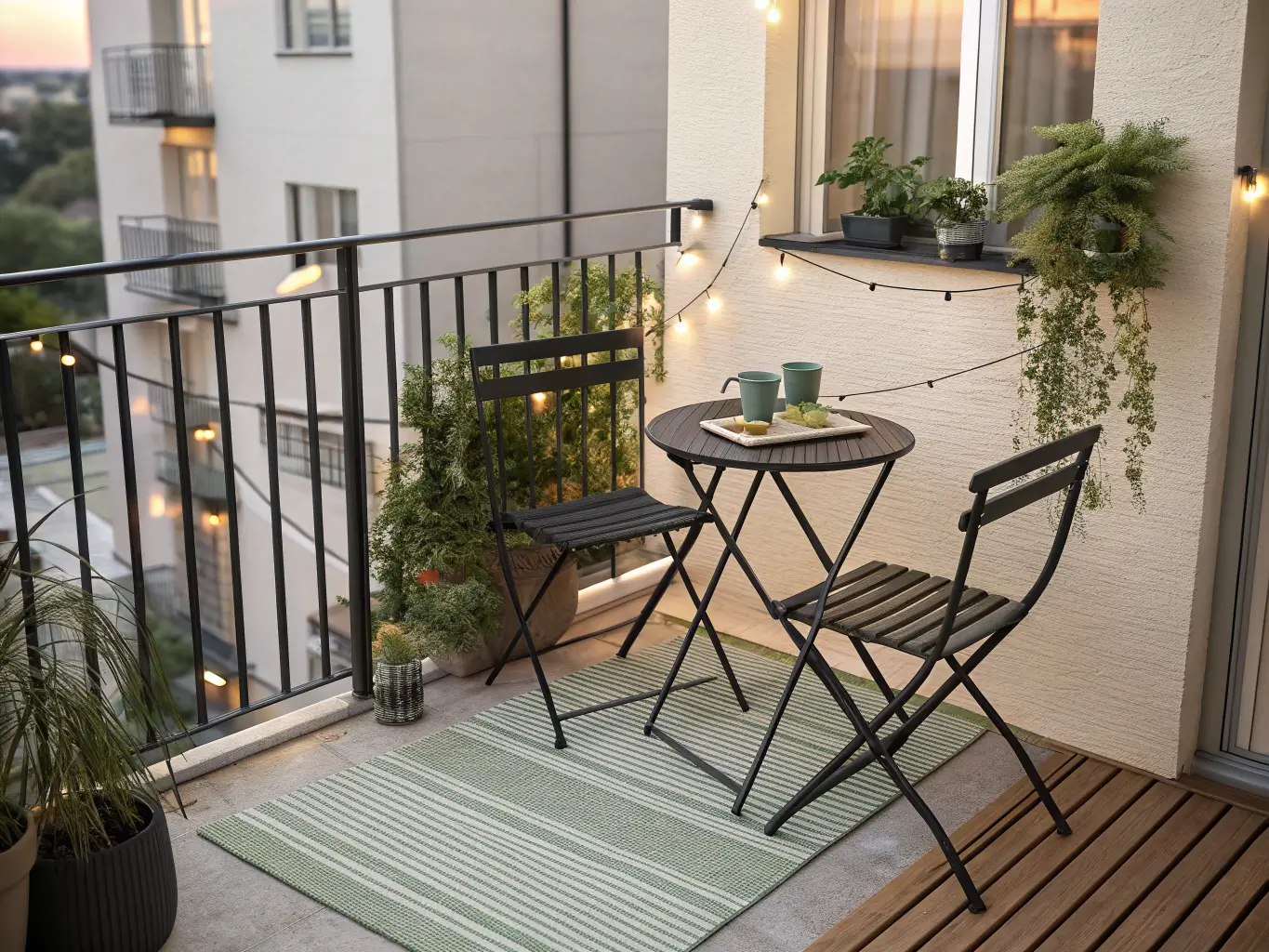
The look that works best on small balconies is a mix of compact café styling, urban garden, and cozy lounge — think a Parisian bistro corner crossed with a plant lover’s ledge. It’s not minimalism for minimalism’s sake. It’s minimalism because you have no choice, and then you layer in enough texture and greenery that it doesn’t feel bare.
This approach is built for renters, apartment dwellers, and anyone who wants a coffee nook or a reading corner rather than a full outdoor living room. It works on balconies from 20 to 80 square feet, and the same principles — vertical storage, railing use, compact furniture — scale down for narrow side balconies and even Juliet balconies with almost no floor space at all.
Time and cost, realistically:
– A basic refresh (bistro set, rug, string lights, a few plants) takes 2–6 hours and runs $100–$300
– A fuller setup with storage seating, planters, a privacy screen, and better lighting takes one to two weekends and costs $300–$900
– Add modular seating, a cantilever umbrella, or deck tiles and you’re at $900+
Most people land in the middle tier. That’s where the balcony stops looking like a leftover space and starts looking like a room.
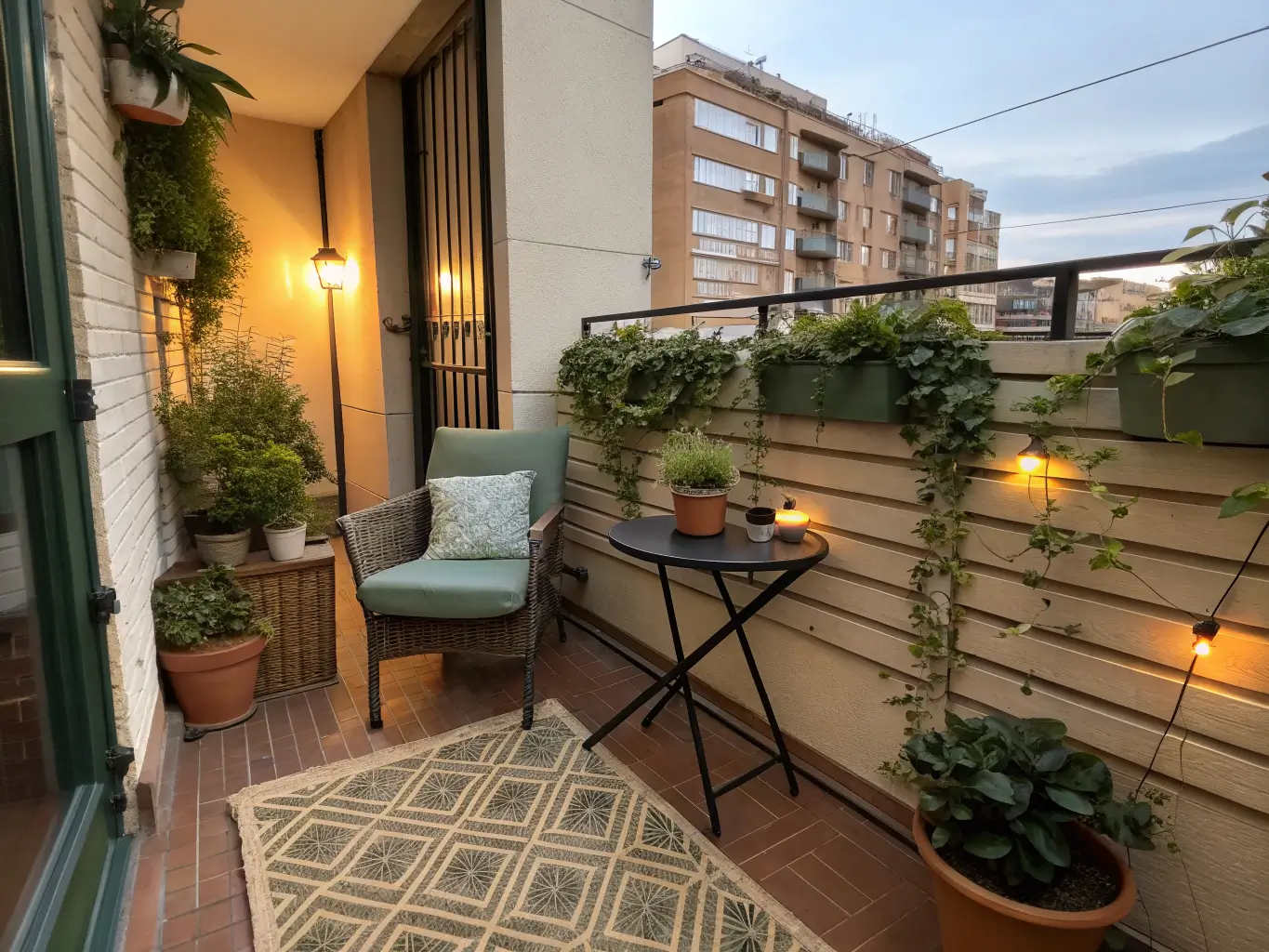
The Core Pieces That Make a Small Balcony Work
The anchor: a folding bistro set. I resisted this for years because I thought it looked like a coffee shop cliché. Then I bought one — a $70 powder-coated black set from a hardware store — and it’s the single piece that gets used most in every apartment I’ve had since. It folds flat against the wall when I want the floor clear, and it gives the space a reason to exist beyond “place where plants live.”
If your balcony is deep enough (I’d say 5 feet or more front to back), swap the bistro set for a small loveseat, chaise, or bench with two folding chairs instead. Lounging beats sitting upright at a table if you have the room for it.
Other essentials:
– An outdoor rug — this is the fastest way to make bare concrete look intentional. A 4×6 in a flatweave pattern runs $40–$80 and instantly “defines” the space, the way a rug in a living room tells your brain where the seating area starts.
– Railing planters instead of floor pots — they keep your walking space clear and add greenery at eye level
– Vertical greenery — a trellis, a tiered plant stand, or a simple shelf system so plants stack up instead of spreading out
– String lights — cheap, instantly makes the balcony feel like part of the apartment rather than an afterthought
– A small side table — even a $15 folding tray table gives you somewhere to put a coffee mug without balancing it on the railing
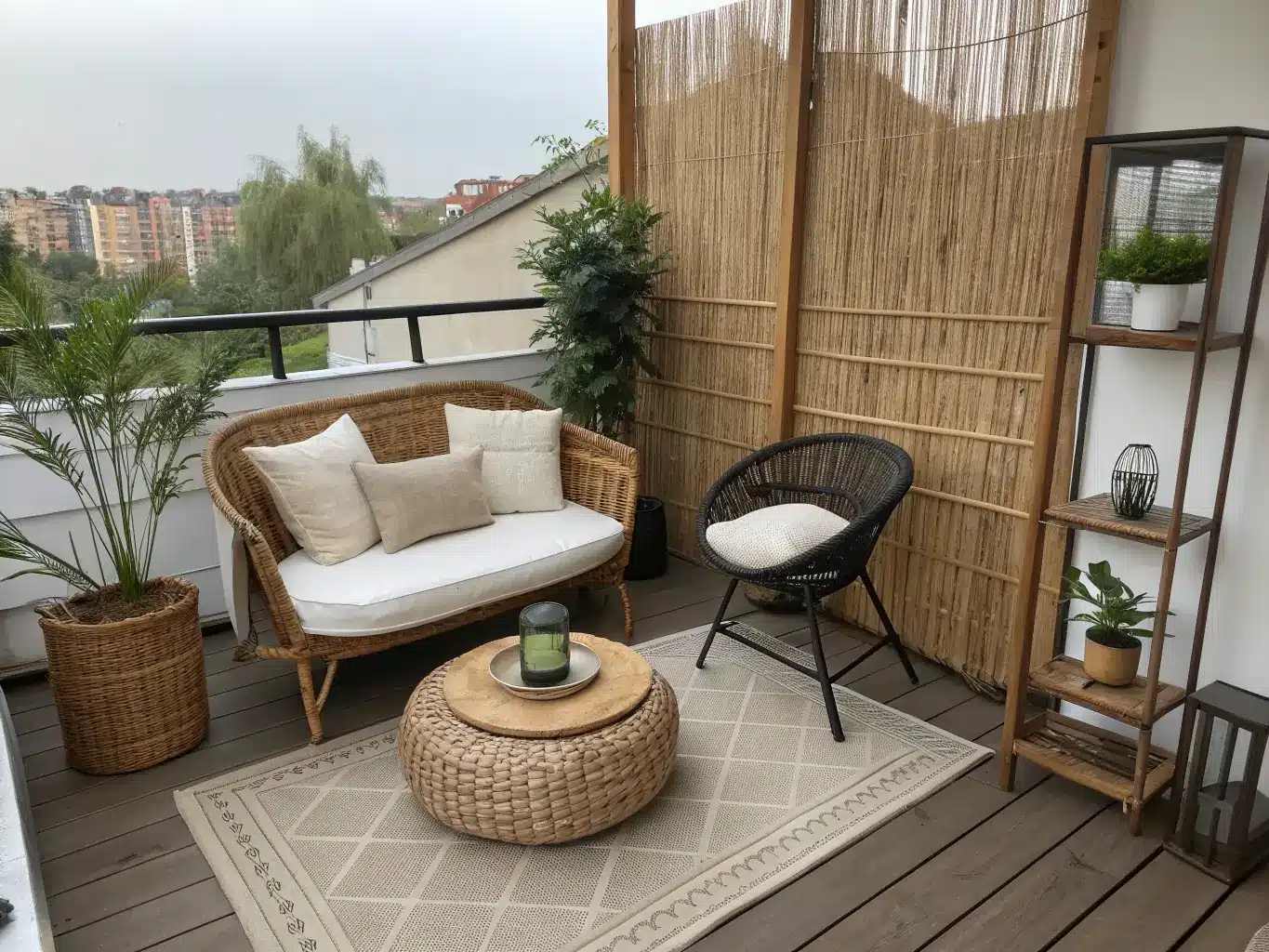
Optional Upgrades Worth Considering
Once the basics are in place, here’s where you can go further:
– Privacy screens in bamboo reed, woven fabric, or wood slats — block sightlines from neighbors without fully closing yourself in
– A cantilever umbrella if your balcony gets brutal afternoon sun and floor space allows a base
– Outdoor curtains or roll-up shades — softer than a hard screen, and easy to remove when you move out
– Peel-and-stick deck tiles if you’re tired of looking at plain gray concrete — this is the closest thing to a real flooring upgrade for renters
– Textural extras — throw pillows, a woven basket for gardening tools, a lantern instead of a candle that’ll blow out in the wind
I added peel-and-stick teak-look tiles to my current balcony last spring. It took an afternoon, cost about $90 for a 30-square-foot space, and it’s the upgrade that gets the most comments from anyone who sees photos of the place.
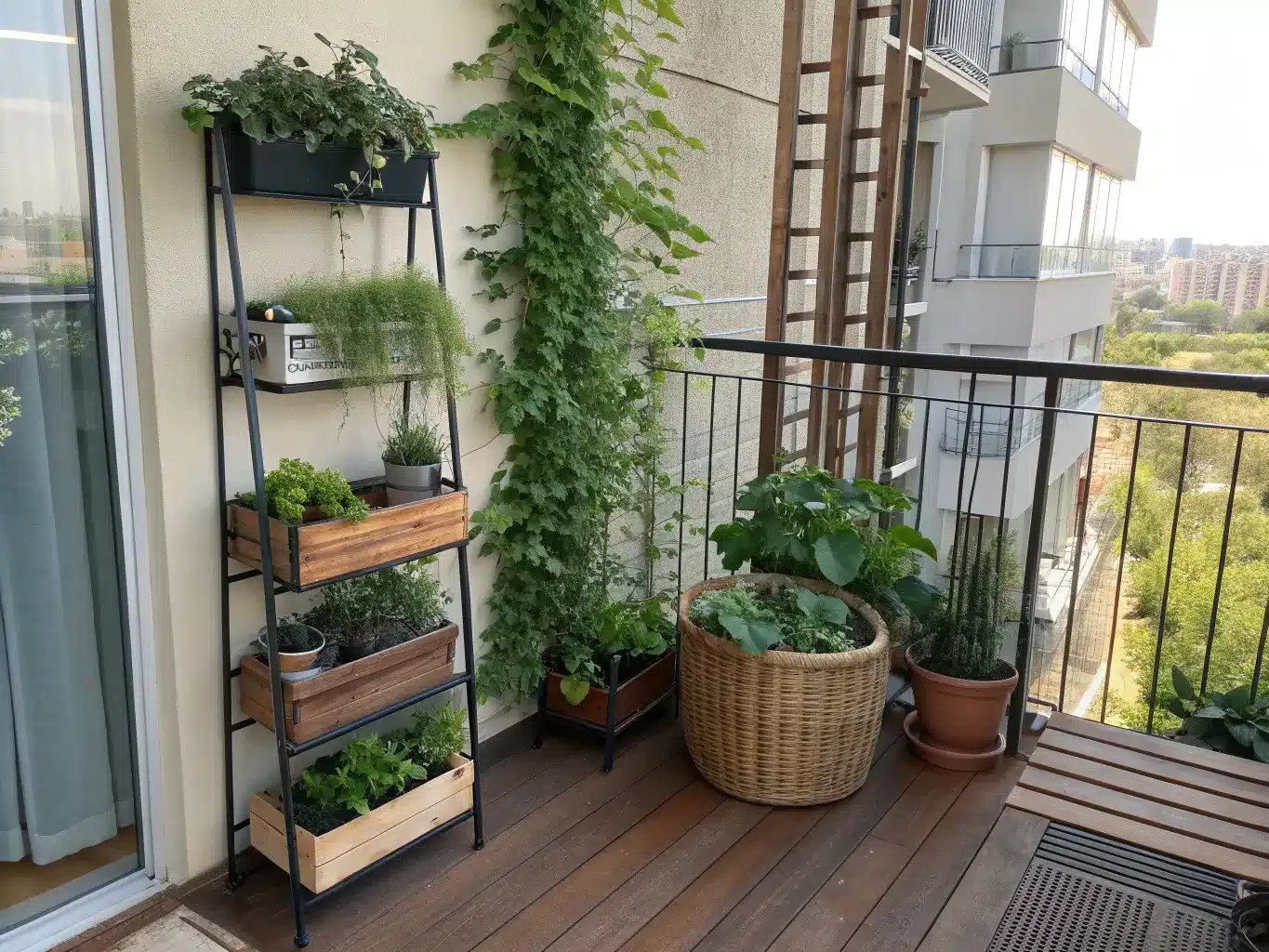
How to Actually Put It Together
Prep first. Clear everything off the balcony and measure the usable depth and width — not just the total square footage, but how much room you have once you account for the door swing and railing thickness. I once bought a bistro table that measured fine on paper but blocked my sliding door from opening past 12 inches. Measure the door swing. I mean it.
Decide what the balcony is for before you buy anything — coffee spot, reading nook, plant room, or mini dining area. Trying to make one small balcony do all four usually means it does none of them well.
Then build in this order:
1. Flooring first — rug, tiles, or deck squares go down before anything else so the rest of the design has a base to sit on
2. Largest furniture piece next — the bistro table, bench, or loveseat, positioned to keep the center of the space open
3. Plants in three layers — railing height, floor height, and wall height, so the greenery reads as full instead of scattered
4. Lighting last — string lights or a lantern, placed around the furniture and plants rather than fought around
5. One or two soft accents to finish — a pillow pair, a throw blanket, a small tray. Stop there.
That last point matters more than people think. My instinct every time is to keep adding — one more pillow, one more little statue, one more candle. The balconies that actually look good are the ones where I forced myself to stop at “enough.”
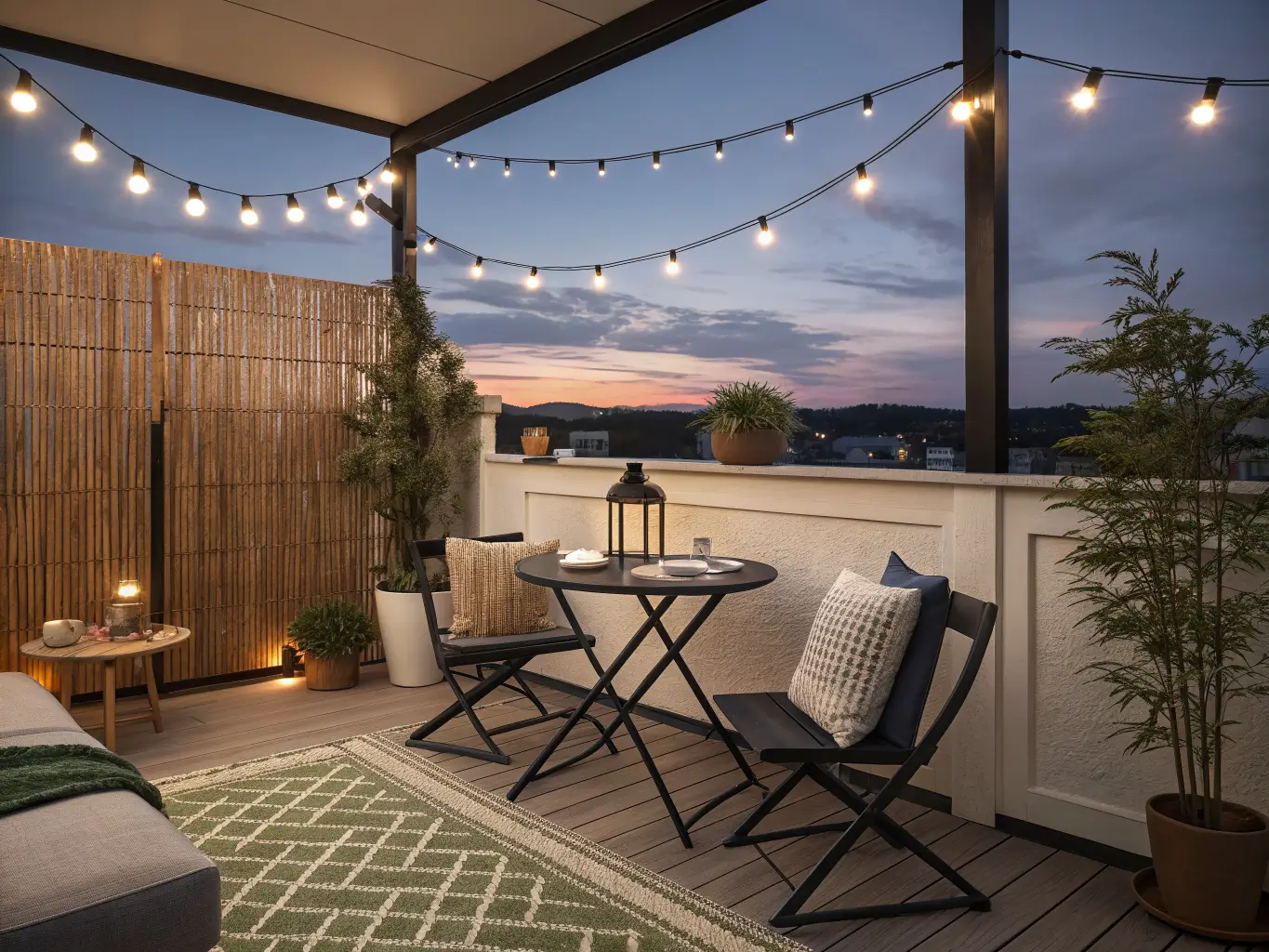
Mistakes I’ve Made So You Don’t Have To
– Buying furniture that’s too big. I once bought a rattan chair that looked compact in a showroom and turned out to eat half my walking path. Measure twice, buy once.
– Ignoring the railing and walls. For a full year I only used floor space, which meant the balcony felt cramped even with just two pots on it. Rail planters and a wall-mounted trellis freed up more floor than I expected.
– Too many colors and materials at once. Terracotta pots, a blue rug, silver furniture, and yellow cushions doesn’t read as “eclectic” on 40 square feet — it reads as cluttered. Pick 2–4 tones max.
– Non-weatherproof fabric. I lost a set of $60 cushions to one thunderstorm because I didn’t check if they were rated for outdoor use. Look for “outdoor polyester” or “solution-dyed” on the tag.
– Over-screening the space. A full privacy wall can make a small balcony feel like a box. Layered plants and a partial reed screen block the worst sightlines while keeping light and air moving through.
Keeping the Palette and Style Consistent
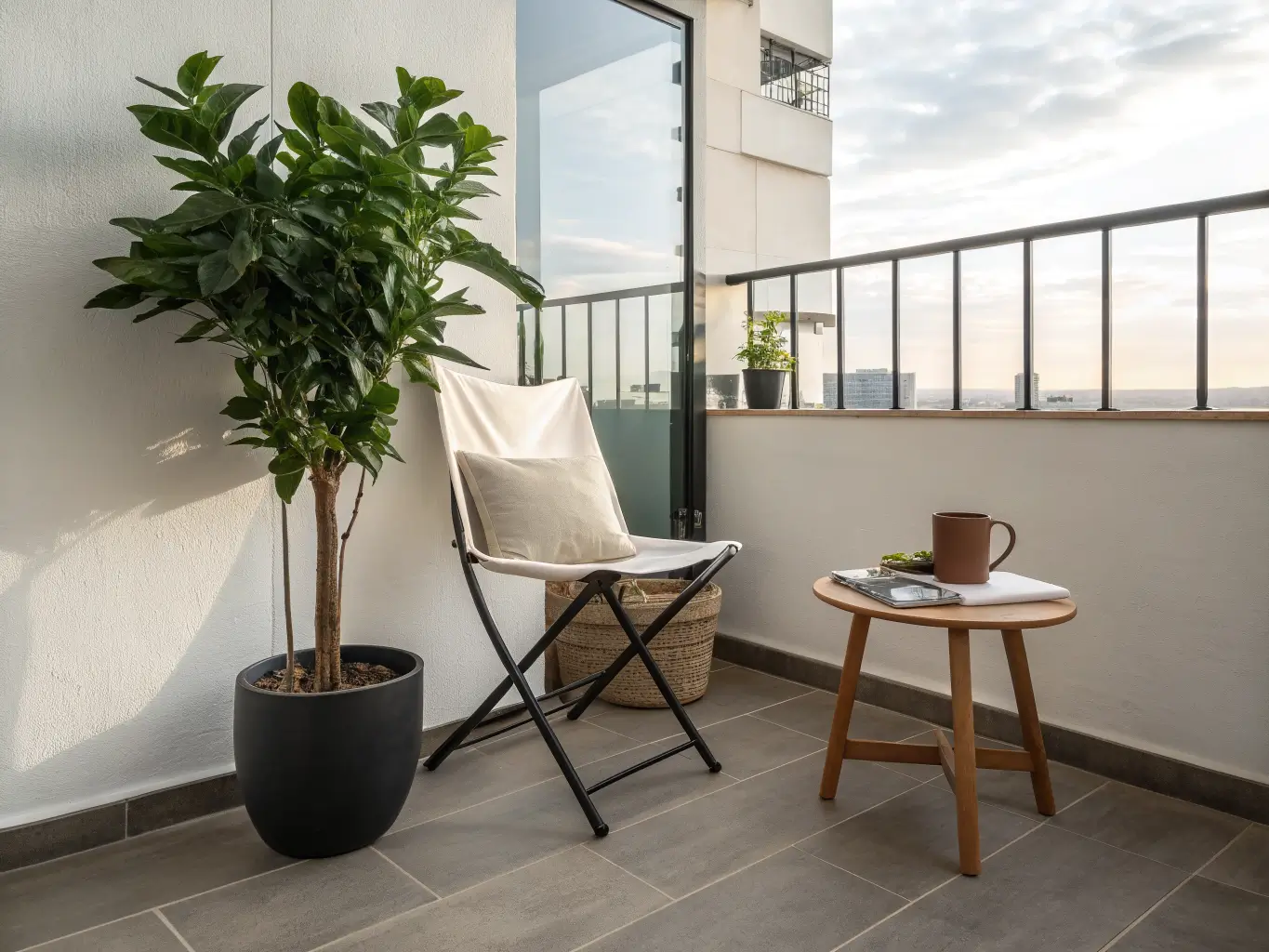
Pick one signature material and repeat it everywhere — matte black metal, bamboo, teak-look wood, whatever fits your interior — across the furniture, the planters, and the small accents. That repetition is what makes a tiny space look styled instead of accidental.
Stick to a tight palette of 2–4 tones. My go-to is wood, matte black, sage green, and cream — it shows up in the planters, the cushions, and the furniture frame, and nothing ever looks out of place because nothing is fighting for attention.
And treat the balcony as an extension of whatever room it connects to. If your living room leans warm and neutral, don’t make the balcony bright turquoise. Matching the palette to what’s just inside the door makes the transition feel seamless instead of like stepping into a different apartment.
Updating It Through the Seasons
– Spring/summer: brighter cushions, flowering plants like petunias or geraniums, lighter linen-look textiles
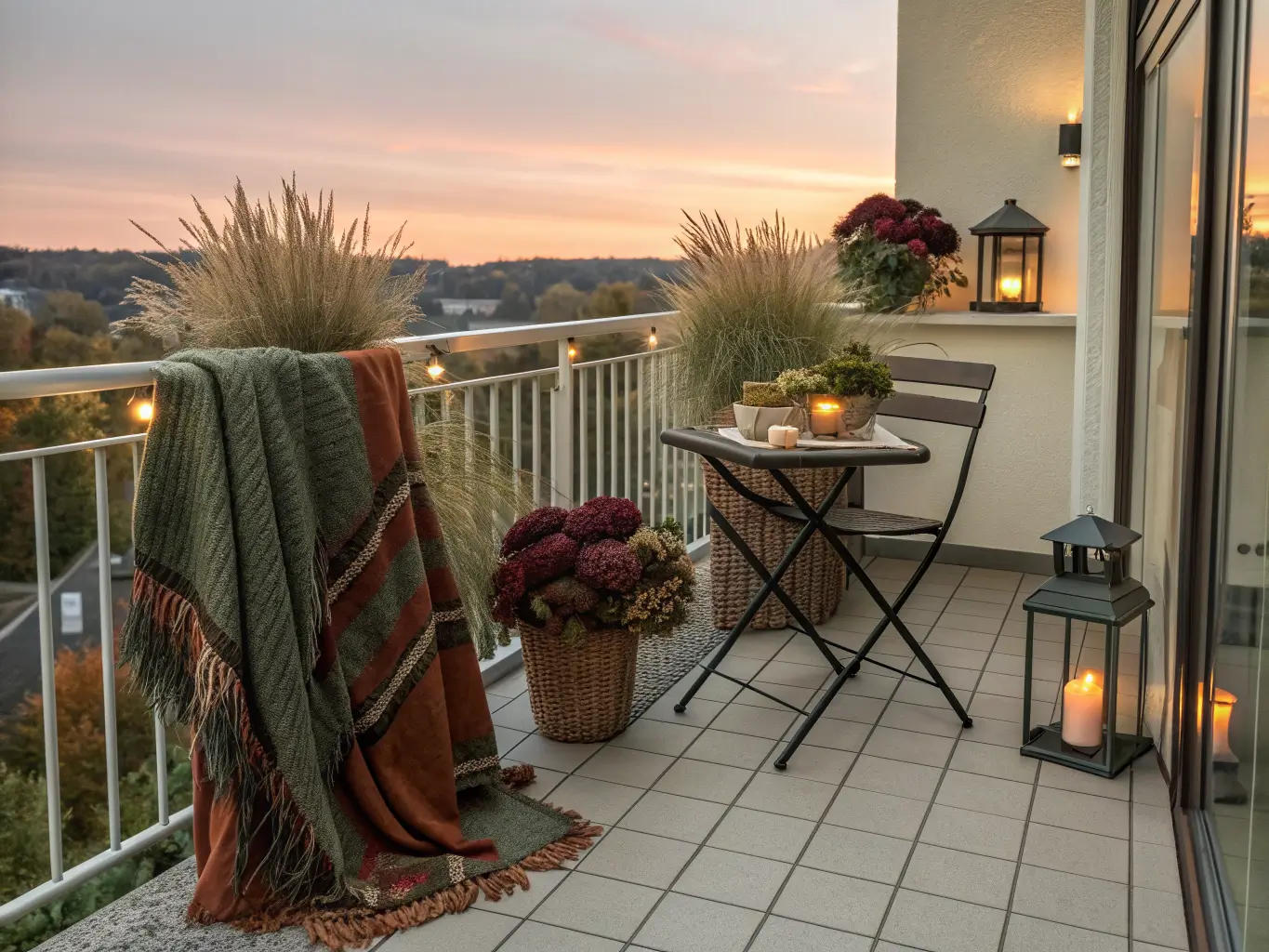
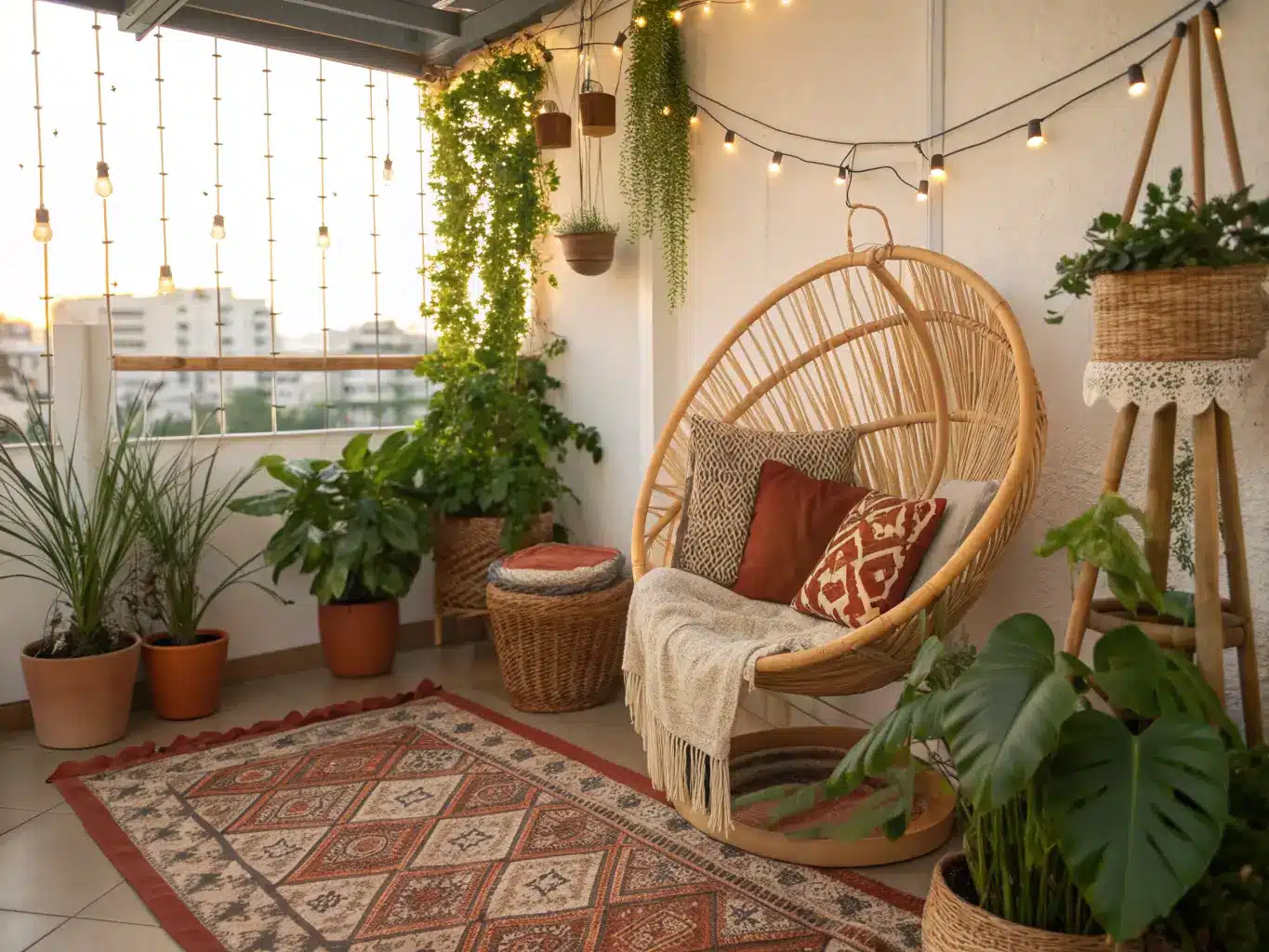
– Fall: swap in rust and olive tones, add a blanket over the chair arm, bring out a lantern for early sunsets
– Winter: lean on evergreens and durable textiles; in colder climates, less styling and more weatherproofing is the smart move
– Budget approach: upgrade one thing at a time — new planters this month, a better rug next season — instead of trying to redo the whole balcony in one go
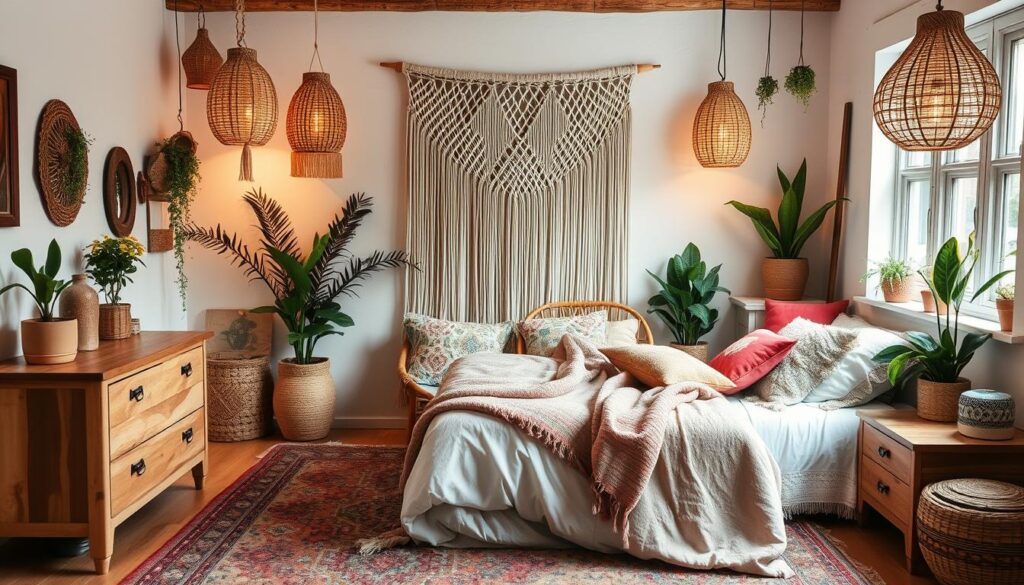
A few directions worth trying if you want to push the style further: boho balcony garden (woven rattan, layered greenery, warm textures), minimalist urban oasis (matte black planters, one clean plant wall, nothing else), or coastal small balcony (white and sand tones, light wood, ceramic pots). All three work within the same small-space rules — vertical layering, a tight palette, furniture that doesn’t block the door.
The balcony that started as a recycling bin holder is long gone. What replaced it, eventually, across three apartments and a lot of trial and error, is a 15-minute-coffee spot every morning before work. That’s the whole point of doing this — not a magazine photo, just a spot you actually use.