Coast Chic Bedrooms: A Complete Guide to Getting the Look Right (Without the Shells)
If you’ve ever tried to do “coastal” and ended up with a bedroom that looks like a gift shop threw up on your duvet, you know the problem. Anchors on the throw pillows. A ship’s wheel over the bed. Rope everywhere. That’s nautical, and it’s not what I mean when I say coast chic bedroom.
I redid my own bedroom this way two years ago, after living with a heavy espresso-wood sleigh bed and navy walls that made the room feel like a cave. It took me a full weekend, one regrettable furniture purchase, and a lot of trips to return things before I landed on what actually works. Here’s everything I learned.
What Coast Chic Actually Means
Coast chic sits between coastal, modern coastal, and what some people call California coastal. It’s the grown-up version of beach house decor — light, textural, and calm, without a single starfish in sight.
The difference between coastal and nautical comes down to literalness. Nautical decor tells you it’s about the beach with anchors, stripes, and ship imagery. Coastal decor just feels like the beach — through light, texture, and a palette pulled from sand and water, not through props.
This style works for:
– Primary bedrooms that get decent natural light
– Guest rooms you want to feel fresh and uncomplicated
– Small city bedrooms that need visual breathing room
– Actual beach houses (obviously)
– Anyone tired of dark, heavy furniture swallowing their space
It’s genuinely a year-round look. Unlike a beachy theme that feels silly in January, coast chic reads as just “bright and calm,” which works in every season.
The Real Cost and Time Commitment
Be honest with yourself about scope before you start pinning inspiration photos.
– Styling refresh only (new bedding, pillows, a rug, curtains): $250–$2,500, doable in an afternoon
– Furniture swap included (new bed frame, dresser, lighting): $1,500–$8,000+, plan on a weekend minimum
– Wall treatments like shiplap, tongue-and-groove paneling, or limewash: add 1–3 days and intermediate DIY skill, or hire it out
I started with the styling-only version — new bedding and a rug — spent about $600, and honestly could’ve stopped there. I didn’t. I replaced my bed frame six months later once I’d saved up, and that’s the order I’d recommend to anyone: soft goods first, furniture when you can afford to do it right.
The Palette: Where Most People Go Wrong
Coastal doesn’t mean “everything blue.” That’s the fastest way to make a room feel cold and one-note.
Pick one core palette and stick to it:
– White + sand + blue — the classic, safest option
– White + driftwood + soft green — softer, more botanical
– Ivory + taupe + navy — deeper, works well if your room doesn’t get much light
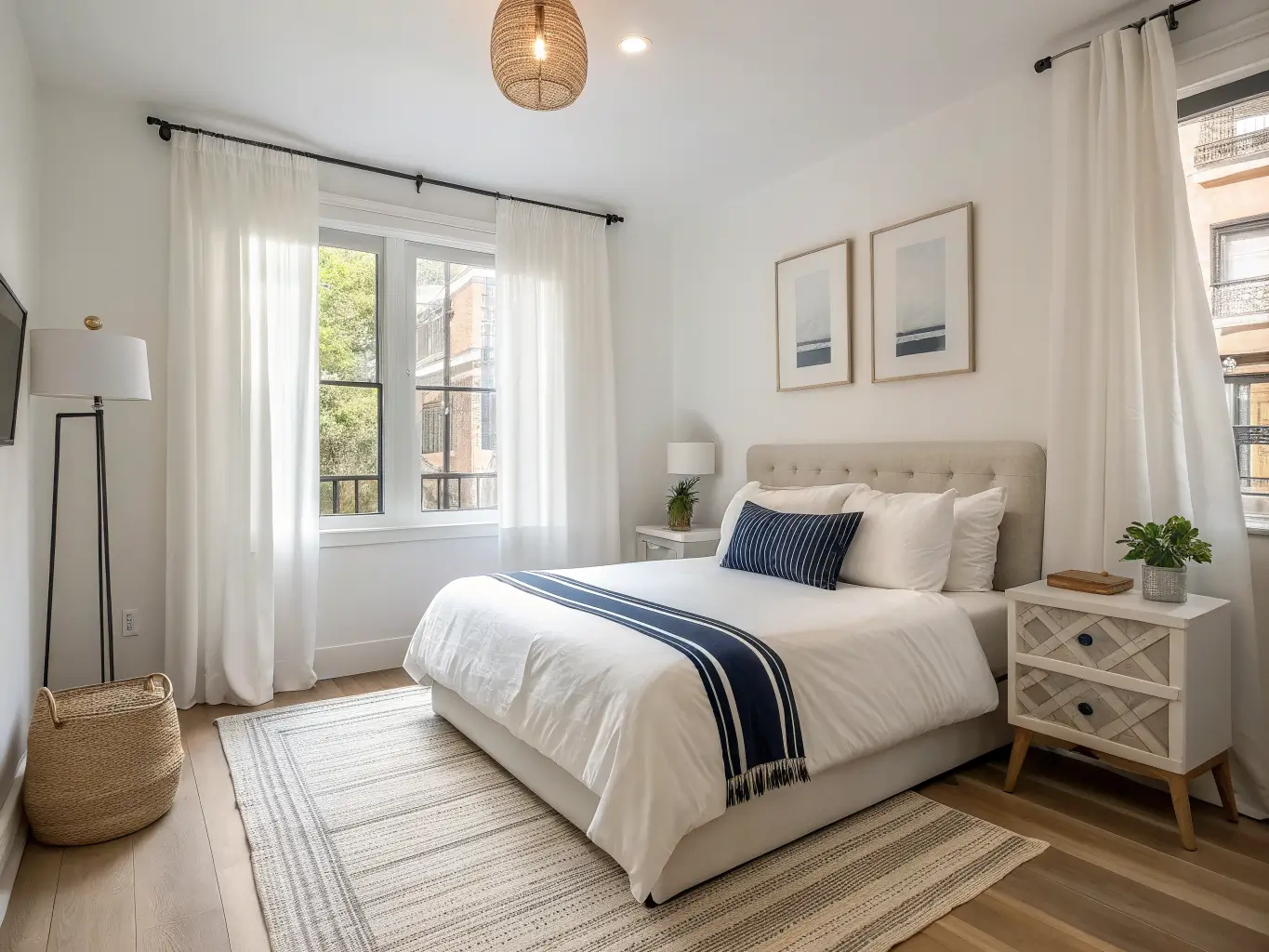
Whichever you choose, anchor the room in white or ivory bedding first. This is the single biggest thing that keeps coastal decor from looking busy. Every pattern or color you add after that reads as an accent, not a competing statement.
Then add exactly one stronger accent color — navy, coral, or sea-glass green — and repeat it two or three times around the room. One accent color, repeated, looks intentional. Three accent colors, scattered, looks like you couldn’t decide.
The Pieces That Actually Make This Style Work
The bed frame is your hero piece
This is where I made my first mistake. I bought an all-white metal frame thinking “coastal means white,” and it looked sterile, almost clinical, next to my linen bedding. It went back within two weeks.
What actually works:
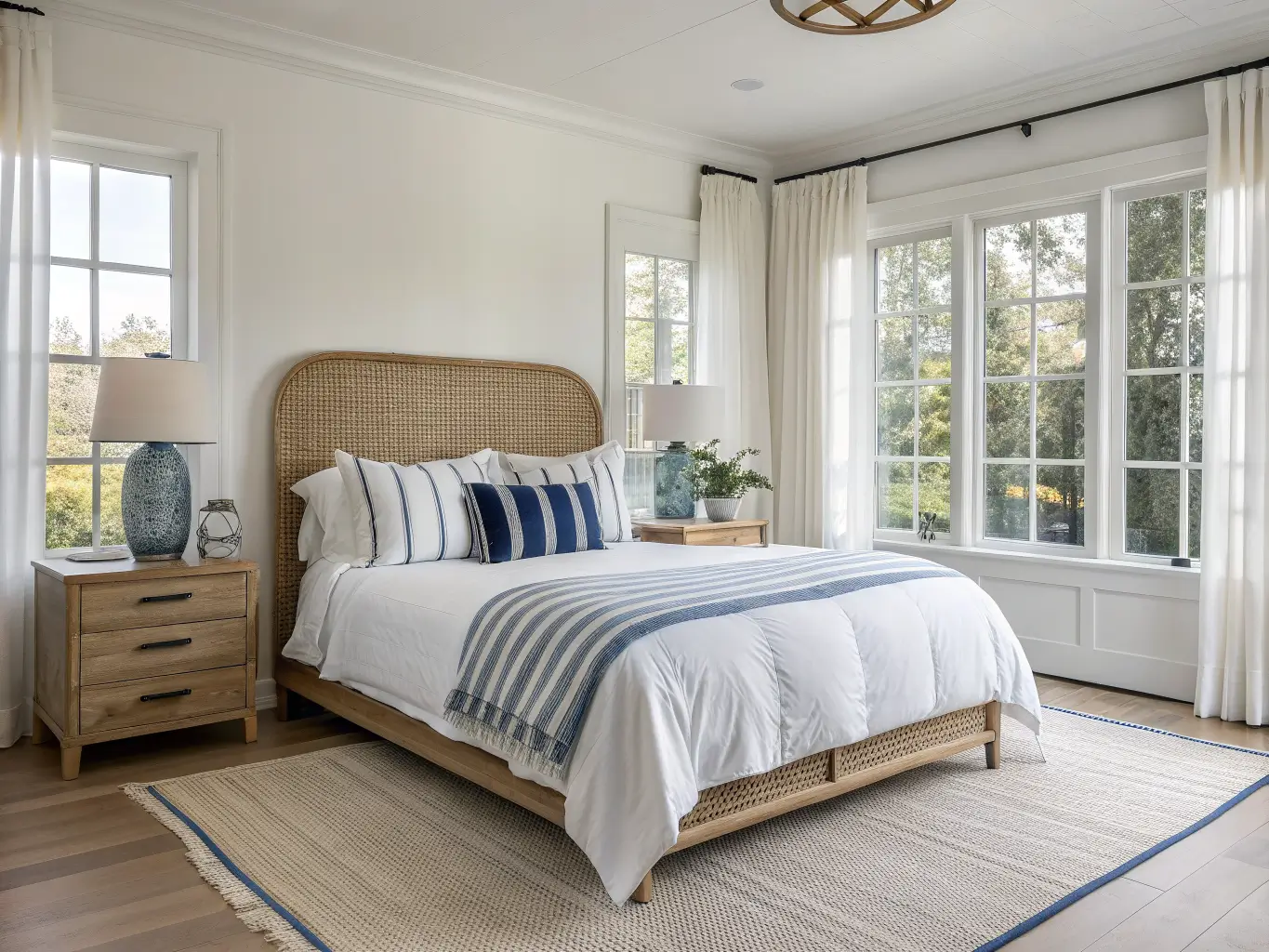
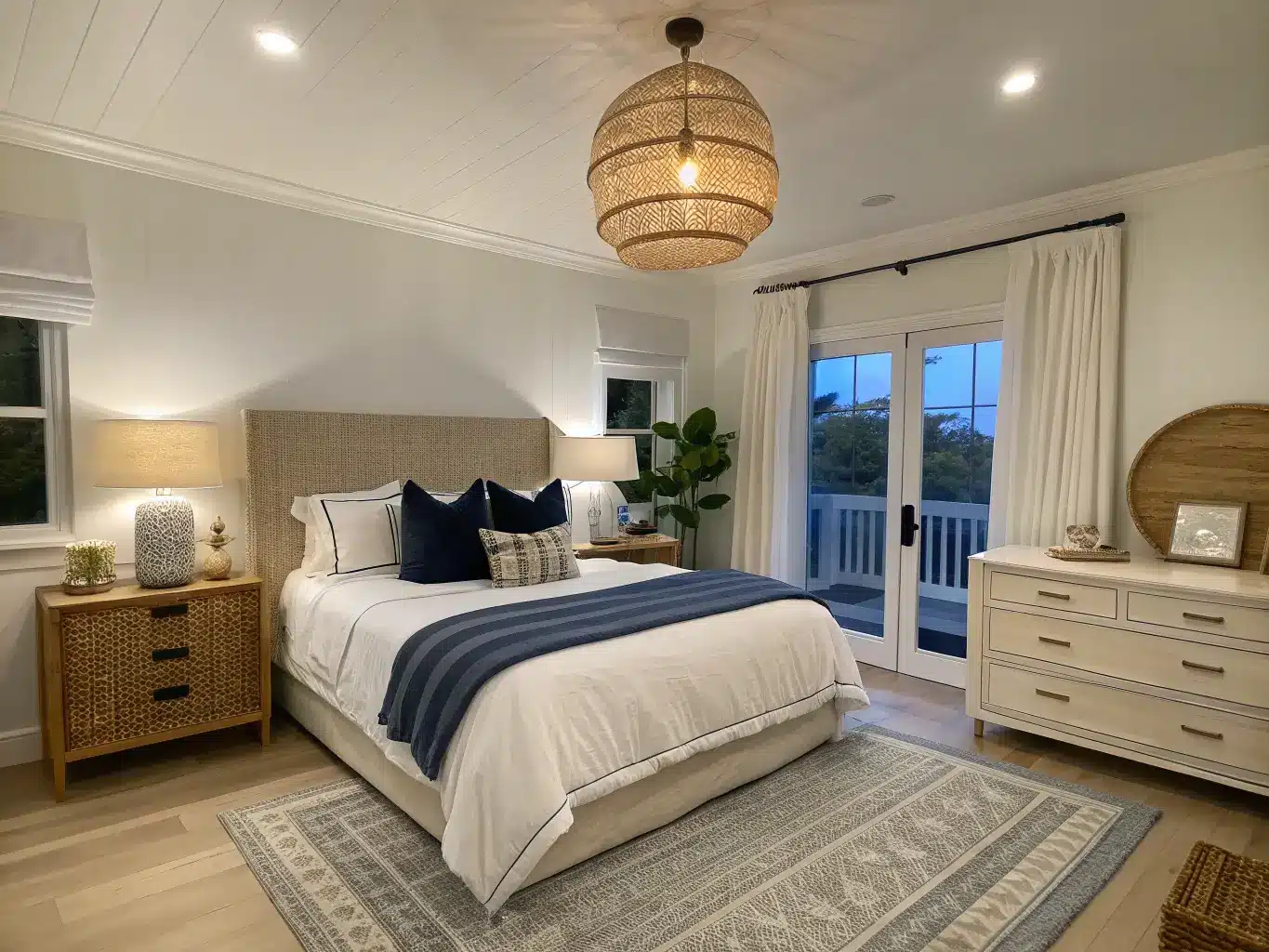
– Rattan or cane headboard — this is the single most-requested piece in coastal bedrooms right now, and for good reason. It brings texture without adding visual weight.
– Whitewashed or pale wood frame — simpler, still warm
– Upholstered frame in a natural linen — softer silhouette, good if you want something less textural than rattan
I ended up with a wicker headboard on a simple wood frame. It cost $480, and it’s done more for the room than anything else I bought.
Bedding: layer, don’t match
– Base layer: crisp white duvet cover, washed linen sheets underneath
– Pattern layer: one patterned element — blue-and-white stripe, a scalloped edge, a subtle coastal print
– Texture layer: a muslin or waffle-weave throw folded at the foot
Skip anything with an actual shell or anchor printed on it. If you want a seaside reference, let it be a texture or a color, not an image.

Rug: go natural fiber, always
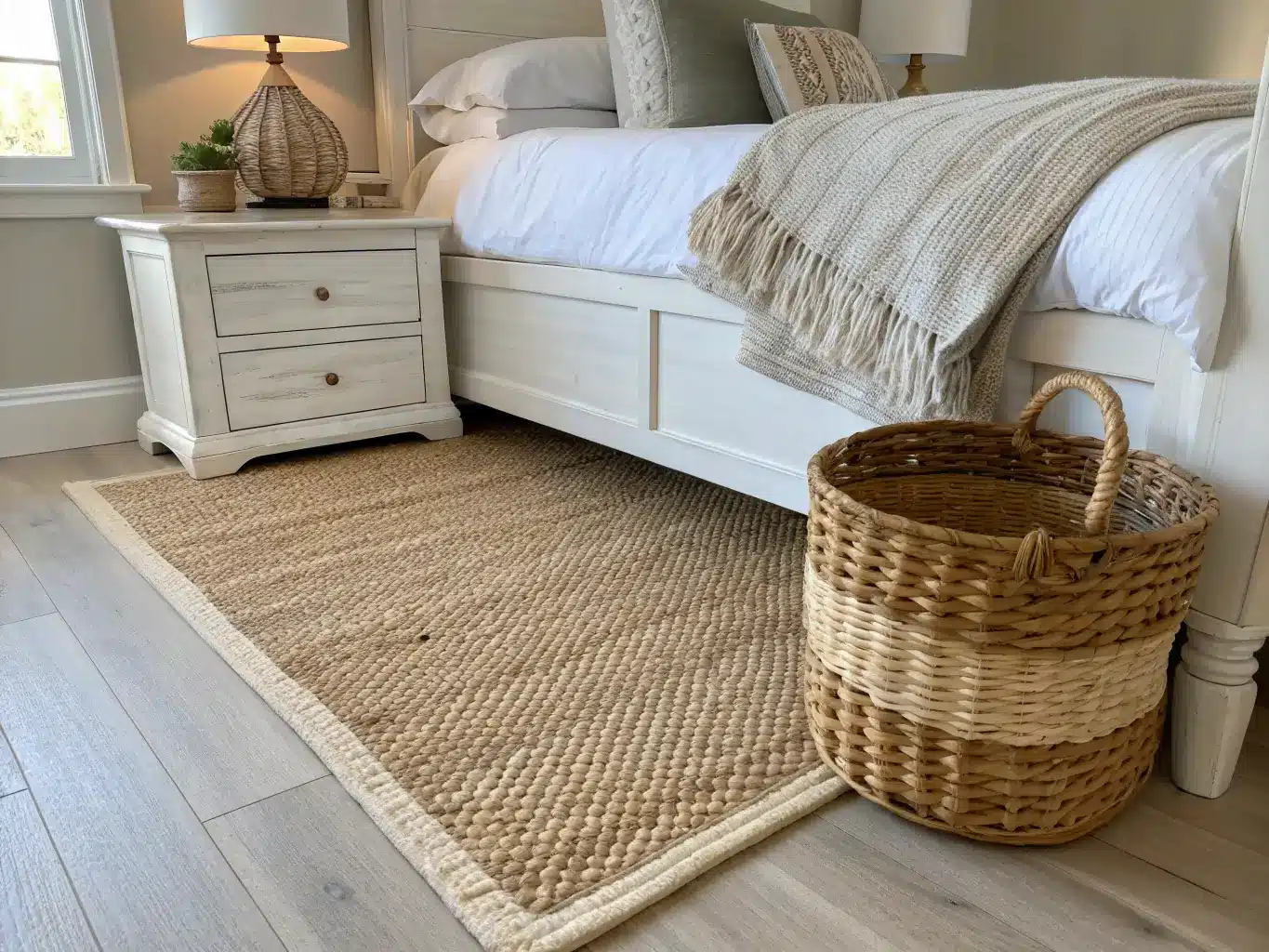
A jute rug under the bed does two things at once — it grounds the room (white and pale wood can float without something textural at floor level) and it reinforces the natural-material theme. Budget $150–$400 depending on size; an 8×10 jute rug runs closer to $250 at most retailers.
Curtains: sheer or nothing
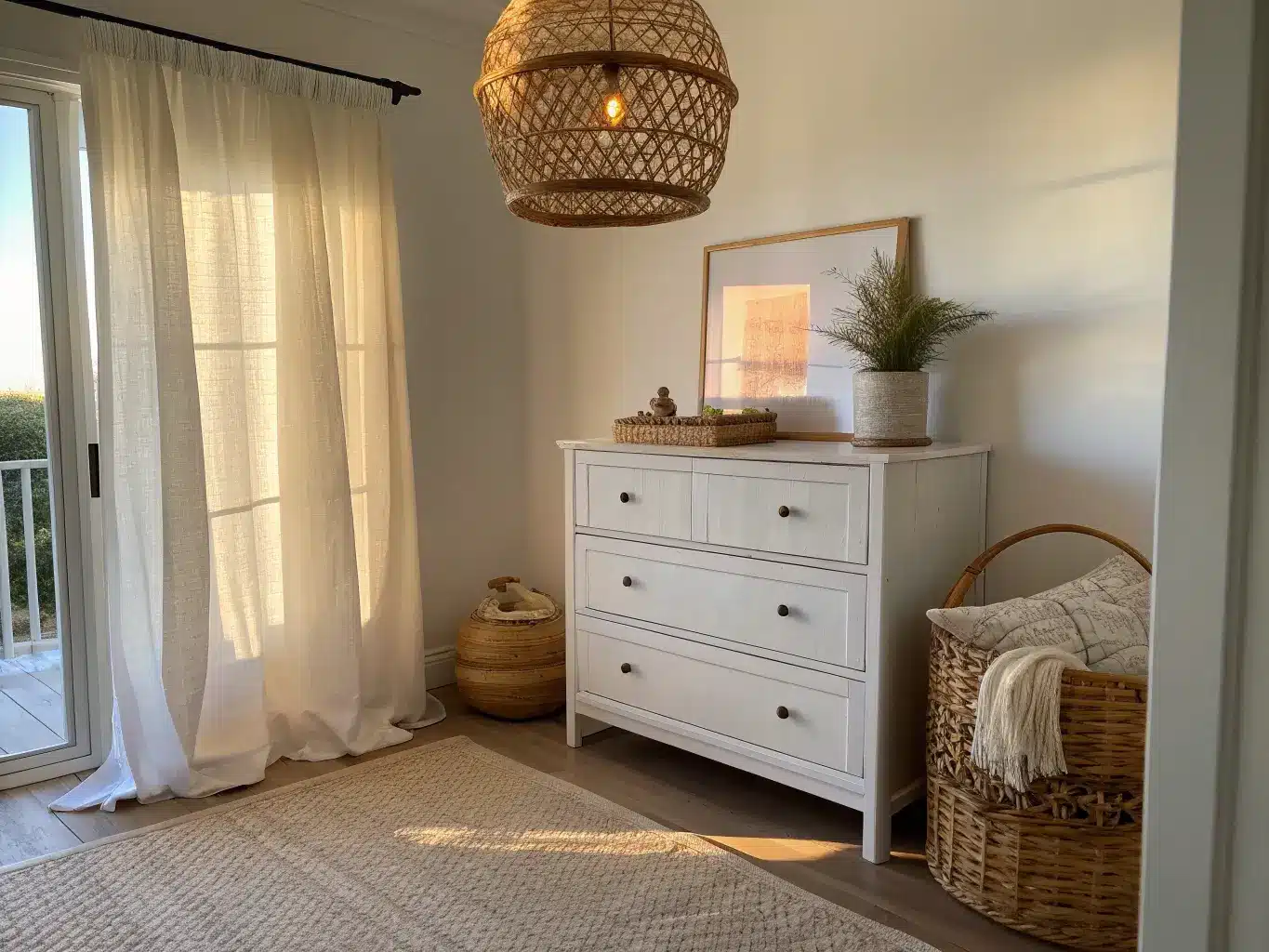
Sheer linen or voile curtains are non-negotiable for this look. Blackout drapes, especially in a dark color, kill the airy feeling instantly — no matter how good the rest of the room looks. If you need light control for sleeping, add a discreet white roller shade underneath sheers rather than switching to heavy drapery.
Lighting: layer small sources
Skip the single overhead fixture as your only light. Add:
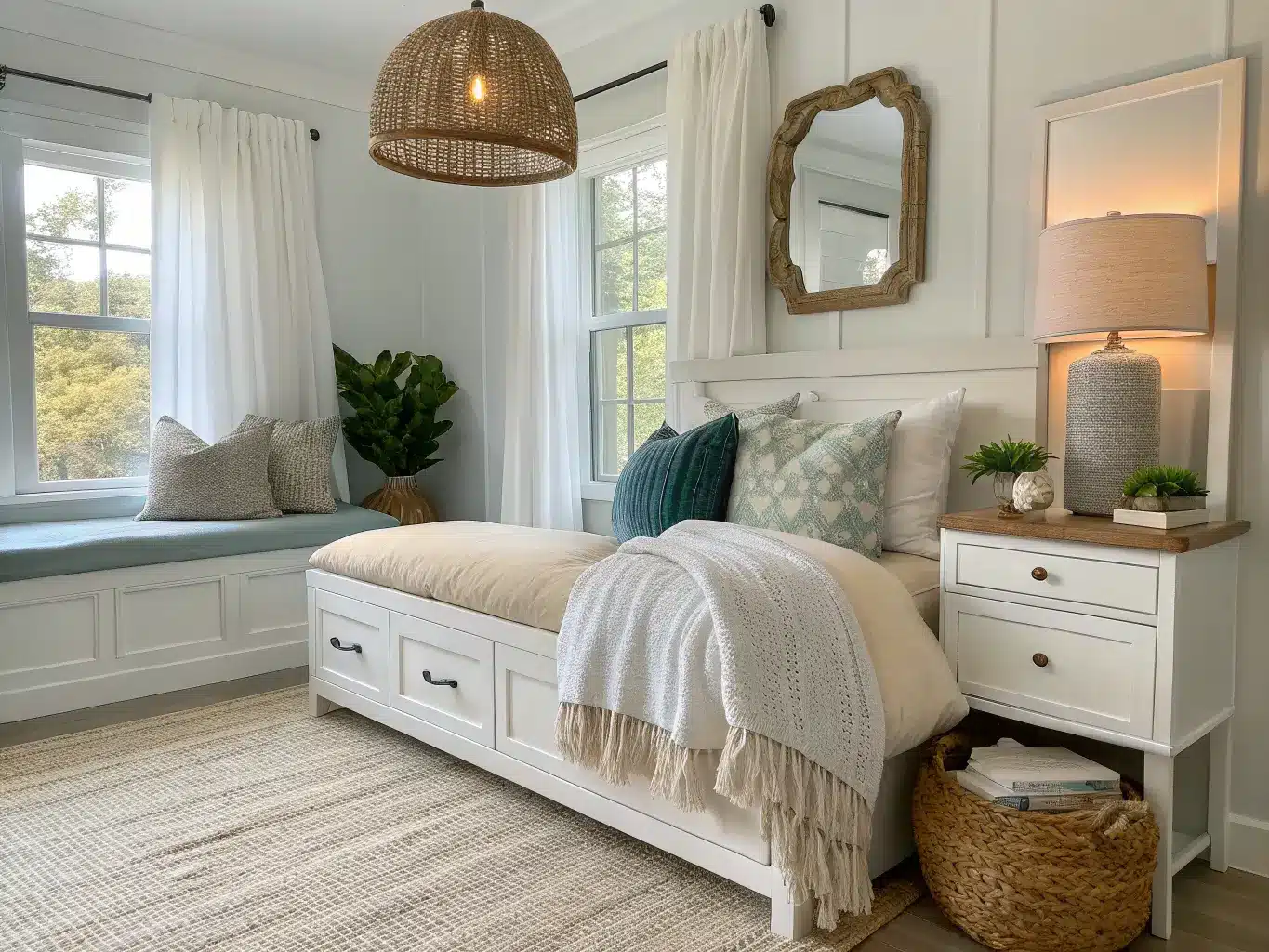
– A paper or rattan pendant as the main fixture
– Two matching bedside lamps with cane or linen shades
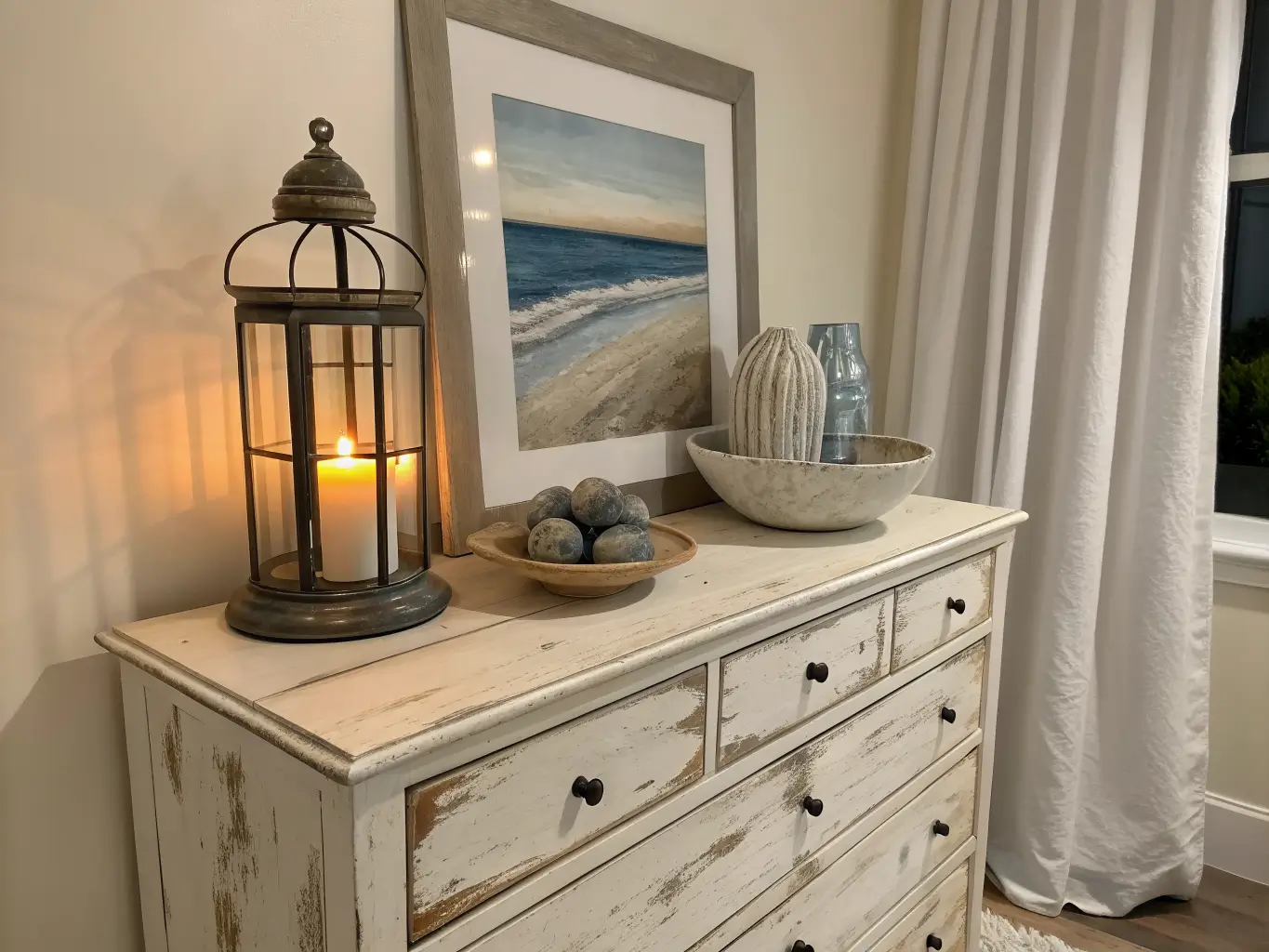
– A small lantern-style accent light on the dresser if there’s room
This layering is what makes the room feel finished at night instead of just lit.
Storage and extras
A whitewashed dresser or an aged-wood chest keeps storage in line with the palette. If your room’s big enough, add a bench at the foot of the bed — upholstered in a natural linen or woven rattan bench both work. This is the difference between a bedroom that looks styled and one that looks like a hotel suite. Small rooms should skip this; it’ll just create clutter and bottleneck the walking path.
Texture Is Doing More Work Than Color
Here’s the thing nobody tells you when you start this style: the colors are almost secondary. Texture is what sells coastal. I could take my bedroom, swap every pale blue accent for sea-glass green, and it would still read as coastal — because the linen, jute, and rattan aren’t going anywhere.
Aim for three texture families in every coastal room:
1. A soft textile (linen sheets, a cotton throw)
2. A natural fiber (jute rug, seagrass basket)
3. A tactile decorative material (rattan headboard, cane lampshade, wicker bench)
Repeat materials at least twice — rattan headboard and a rattan lampshade, jute rug and a woven basket in the corner. Repetition is what makes a room feel curated instead of assembled from a dozen different catalogs.
Setting Up the Room, Step by Step
1. Clear the room and find your anchor wall — usually the headboard wall or the wall with the window.
2. Deal with walls first if you’re changing them. White paint in an eggshell or matte finish is the easy option. If you want more texture, tongue-and-groove paneling or a limewash finish (plan a full weekend, intermediate skill) gives real depth to an otherwise plain wall.
3. Decide your lane — classic coastal, modern coastal, or coastal boho — before you buy a single accessory. This keeps you from ending up with a mismatched pile of “beachy” items that don’t actually belong together.
4. Start with bedding. White duvet, linen sheets, one patterned layer.
5. Add the rug.
6. Bring in the bed frame if the current one is too dark or heavy for the room.
7. Layer lighting — pendant plus two bedside lamps, minimum.
8. Finish with one or two statement accessories. A seagrass-framed mirror, one piece of real coastal artwork (not a “Life is Better at the Beach” sign), a single driftwood object on the dresser. Stop there. This is the step where people overdo it.
9. Add a bench or chair only if the room has the square footage to support it without crowding the walking path.
Mistakes I’d Flag Before You Make Them
– Going too literal. Shells, anchors, “beach house” signage — this reads as theme decor, not style. Current coastal design has moved away from this hard, and it dates a room fast.
– All-cool-color palettes. Too much blue with no warm wood or natural fiber to balance it makes a room feel flat and a little cold, even in a sunny space.
– Heavy, dark furniture. A dark wood dresser or a black metal bed frame fights everything else you’re doing. If you can’t replace it yet, at least paint it white or swap it to a room where it makes more sense.
– Blackout curtains in a dark color. Kills the light. Kills the mood. Use a discreet shade for light control instead.
– Skipping texture and relying on color alone. A pale blue room with cotton-poly bedding and a laminate dresser isn’t coastal — it’s just light blue. The natural materials are what make it read as coastal.
– Cluttering every surface. Three or four intentional pieces beat twelve small trinkets every time.
Keeping It Fresh Without Starting Over
You don’t need to redecorate seasonally, but small swaps keep the room from feeling static:
Spring and summer:
– Swap in lighter linen bedding
– Add pale blue or sea-glass green accent pillows
– Bring in a small piece of actual sea glass or a bowl of smooth stones on the dresser
Fall and winter:
– Layer in a heavier quilt
– Shift the accent color to deeper navy
– Add a thicker knit throw at the foot of the bed for texture and warmth
Budget-friendly refresh order, cheapest to most impactful:
1. New pillow covers and a throw — $50–$150
2. Curtains — $80–$250
3. A lampshade swap to cane or rattan — $40–$100
4. New rug — $150–$400
5. Bedding — $150–$500
Do these five before you touch furniture. I promise the room will feel 80% different for 20% of the cost of replacing the bed frame.
Mixing Coast Chic With Other Styles
You don’t have to do this style in isolation:
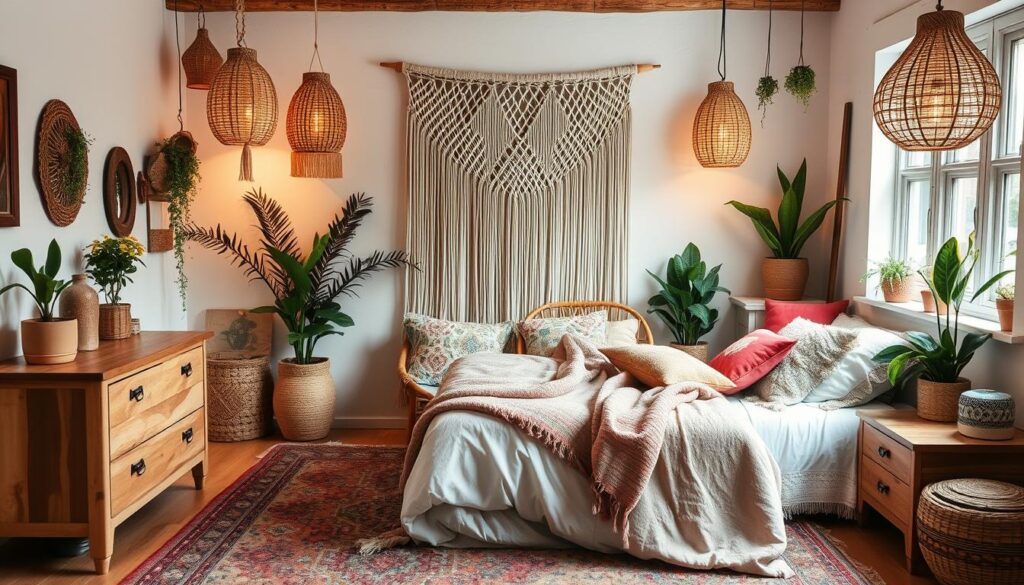
– Coastal + boho: Add macramé wall hangings, more rattan, relaxed unstructured linens. Leans warmer and more layered.
– Coastal + modern: Cleaner lines, walnut or whitewashed wood furniture, brass hardware, minimal accessories. Leans more restrained.
– Coastal + rustic: Weathered, reclaimed wood pieces, earthier browns mixed into the palette, simple utilitarian forms instead of curved or delicate ones.
My own room ended up somewhere between straight coastal and coastal modern — I kept the palette pale and the materials natural, but I skipped the macramé and heavier boho layering because my room’s small and it would’ve felt cluttered fast. That’s the real skill in this style: knowing which version fits your actual space, not just which one looks best in a photo.