Before you touch paint or furniture, know what you’re signing up for.
Time: A weekend gets you a solid room refresh — paint, textiles, lighting, accessories. A full home or exterior update (new tile, stucco, architectural changes) runs 1 to 3 months.
Cost: A decor-only refresh lands around $300–$1,500 for paint, pottery, and textiles. A more thorough room makeover with new furniture and lighting is closer to $2,500–$10,000+. If you’re talking new construction or a major renovation with tile roofing and stucco exteriors, you’re in $500,000 to several million territory depending on size and region.
Best room size: Medium to large rooms with good natural light show this style off best, but I’ve done a Mediterranean-leaning studio apartment with a lighter palette and just a few oversized pieces instead of lots of small ones. It works if you edit hard.
DIY skill level: Decorating is beginner to intermediate — anyone can swap paint and textiles. Architectural work like arched openings, real stucco, or a tile roof is expert territory. Hire out for that part.
Seasonal appeal: Year-round, especially in warm climates. The whole point of the style is natural light and indoor-outdoor living, so it doesn’t really go dormant the way, say, a heavy farmhouse look can in summer.
What Actually Defines Mediterranean Design
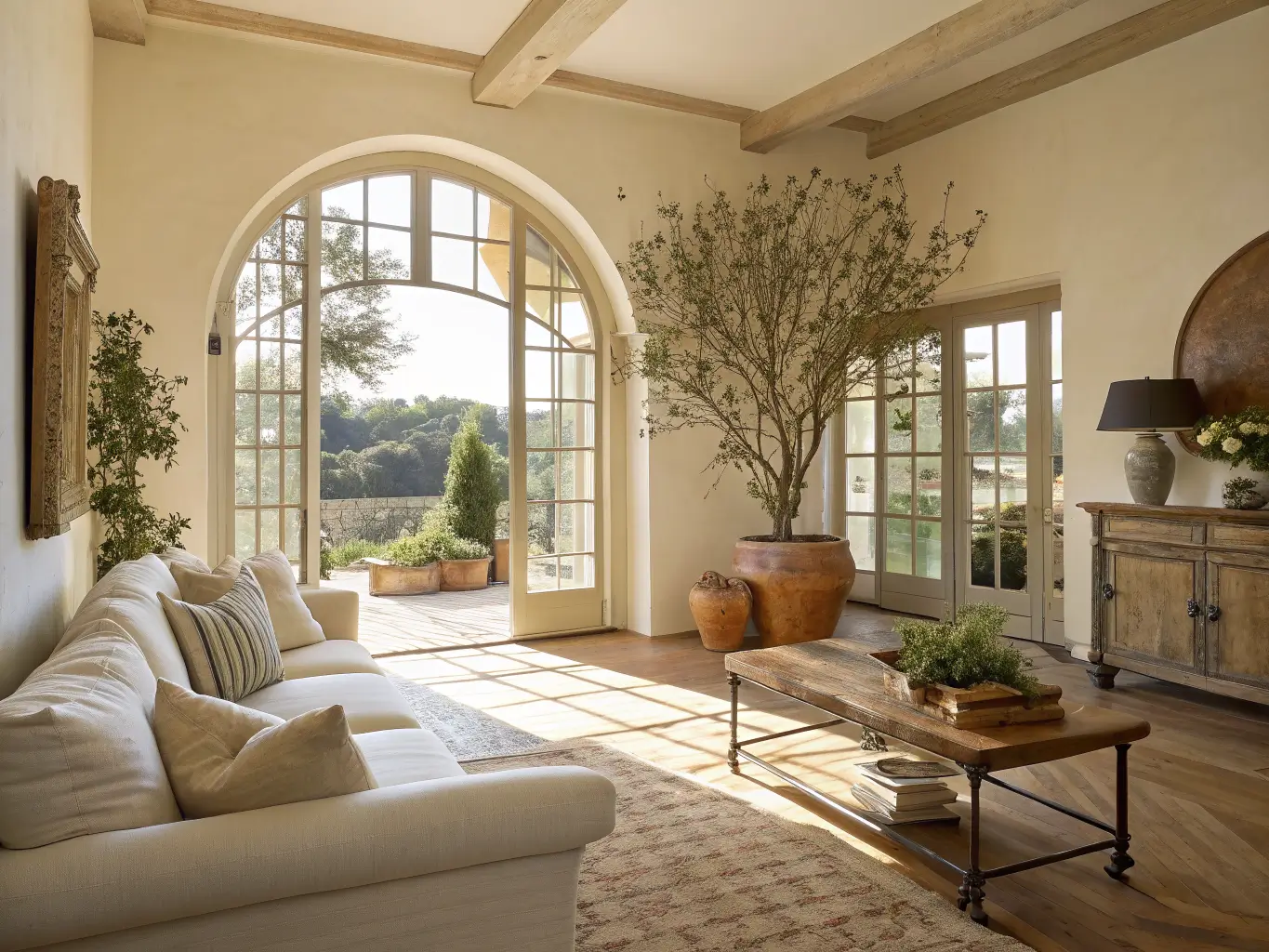
Core style: Think of it as a blend — Spanish Colonial arches, Italian warmth, Greek whitewash, Moorish tile work — filtered into what’s now often called modern Mediterranean or Mediterranean Revival. It’s less ornate than the Old World version your grandparents might picture, more about simplified forms with the same warm materials.
Colors and materials that make it read as Mediterranean:
– Warm white, cream, sand, beige as your base
– Terracotta, ochre, and olive green as your workhorses
– Earthy brown throughout wood tones
– Blue or soft turquoise used sparingly if you want a coastal lean
– Materials: stucco, natural stone, terracotta tile, wood, wrought iron, ceramic, linen, rattan, gravel
Who it’s for: People who want warmth and elegance without formality. If you like a room that looks a little sun-faded and relaxed rather than crisp and staged, this is your style.
Where it works best: Living rooms, kitchens, dining rooms, entryways, patios, courtyards, sunrooms. It’s especially at home in California, Florida, Texas, and the Southwest — anywhere the light and climate match the materials.
The worth having Pieces
Every Mediterranean room I’ve built or seen work well shares the same bones.
Architectural hero features — you don’t need all of these, but even one changes the room:
– An arched doorway, or an arched mirror if you can’t change the architecture
– Exposed wood beams
– Plaster or stucco-textured walls (limewash paint gets you 80% of the way there without construction)
– Wide windows or French doors that open the room toward outside
Furniture that carries the look:
– Low, substantial seating — nothing spindly or delicate
– A solid wood dining table, ideally with some grain and imperfection visible
– A carved wood console for an entryway or behind a sofa
– Upholstered pieces in linen or cotton, not velvet or leather
– Wrought-iron or dark metal accent tables
– Terracotta planters (I have three different sizes clustered by my front door — cost me under $60 total from a garden center, not a decor shop)
– Ceramic vases, ideally hand-thrown or at least irregular-looking
– Woven baskets for storage and texture
– Striped or textured throw pillows — skip printed florals here
– Jute or wool rugs
– Lantern-style light fixtures
– Hand-thrown pottery, even just a bowl on a console
Outdoor essentials, if you have any outdoor space at all:
– Courtyard-style seating — a small bistro set or built-in bench works
– Clay pots, unglazed if possible
– An olive tree or citrus tree (a potted Meyer lemon does double duty as decor and something you can actually use)
– A pergola if you’re building
– A small fountain or water feature if space and budget allow
Optional Layers That Take It Further
Once the essentials are in place, these add depth without pushing into clutter.
Seasonal accents: Lemon, fig, rosemary, and lavender branches in spring and summer — I cut rosemary from my own yard and just stick it in a ceramic pitcher, costs nothing. Switch to heavier wool throws and slightly darker ceramics in fall and winter, but keep the same earthy palette. Don’t introduce cool tones just because it’s December.
Organic touches: Unfinished wood, rough stone, sand-textured plaster, seagrass, linen curtains, anything with visible age or patina. This is where the “lived-in” feeling comes from — a brand-new, perfectly smooth surface works against you here.
Metallic accents, used sparingly: Wrought iron, aged bronze, blackened steel, antique brass. Save these for light fixtures, cabinet pulls, and mirror frames. The second you add polished chrome or bright gold, the whole look shifts toward something else entirely.
Pro Styling Tips That Make the Difference
– Layer rough against smooth. Pair a limewashed or stucco-textured wall with linen upholstery, a glazed ceramic lamp, and a woven jute rug. That contrast in texture is doing more work than any color choice.
– Keep the palette warm and restrained. Neutral base, then terracotta, olive, or blue in small doses — not all three competing on the same wall. My second attempt at this room failed specifically because I used terracotta pillows, an olive rug, AND blue tile trim in one space. Pick your accent, mostly stick to it.
– Give the room one focal point. A fireplace, an arched opening, a big mirror, a statement lantern-style chandelier, or one oversized terracotta vessel on the floor. One. Not four competing “statement pieces.”
– Build visual flow from inside to outside. If your patio has terracotta pavers, echo that warm tone somewhere just inside the door. Repeated materials and colors make small spaces feel connected to bigger ones, which is the whole psychological trick behind indoor-outdoor living.
Setting Up the Room: Step by Step
Prep the space first. Pull out anything overly glossy, cold, or ultramodern — glass-and-chrome coffee tables, high-gloss black furniture, cool-gray textiles. These fight the warmth this style depends on. Decide your dominant finish combination up front: I’d go with warm white walls, wood furniture, and black or iron hardware as the baseline, then build from there.
Place your largest pieces first — sofa, dining table, console, bed, or patio seating — before you touch a single accessory. Add one or two textural anchors early: a jute rug, a terracotta floor pot in the corner, a carved wood bench by the entry.
Then build in this order:
1. Base palette — warm white, sand, cream, or pale beige on walls and largest surfaces.
2. Natural materials — bring in wood, stone, clay, ceramic, and iron through furniture and hard surfaces.
3. Color accents in small doses — olive branches, one or two blue ceramic pieces, striped textiles, a terracotta bowl. This is maybe 10% of what’s in the room, not 40%.
4. Layered lighting — lantern pendants, wall sconces, table lamps with ceramic bases. Use warm-temperature bulbs, around 2700K, never daylight-toned bulbs. This single swap changed my room more than any furniture purchase did.
5. Highlight the best feature — if you have a patio view, an arched doorway, or one textured wall, arrange seating and lighting to point toward it instead of competing with it.
Where People Go Wrong
I’ve made most of these mistakes myself, so consider this the shortcut around them.
– Too much bright white or gray. This is the single biggest thing that flattens the style. Mediterranean warmth comes from cream and sand tones, not stark white. If your “warm white” paint chip still reads cool next to a wood floor, it’s the wrong white.
– Over-decorating. More terracotta pots and woven baskets doesn’t equal more Mediterranean — past a certain point it just reads as a showroom display. Cap it at a few strong pieces per surface.
– Mixing in sleek contemporary furniture without texture. A glass dining table with steel legs just doesn’t sit right next to a wrought-iron lantern, no matter how much you want it to work.
– Ignoring indoor-outdoor connection. This isn’t optional flavor — it’s central to the whole architectural tradition. Even in an apartment, that might mean sheer linen curtains that let light flood in, or arranging seating to face your one decent window.
– Going too busy with pattern in small rooms. Bold Moroccan or Spanish tile patterns are pleasant, but confine them to a backsplash, an entry floor, or a single niche. Tile the whole small bathroom in a busy pattern and it stops feeling curated and starts feeling like a lot.
Keeping It Cohesive Over Time
Repeat a small material set — wood, clay, linen, iron, stone — rather than constantly introducing new textures. Consistency is what makes a room feel designed instead of accumulated.
Stay in one temperature family. Warm neutrals and earthy accents throughout; resist the urge to bring in a trendy cool-gray accent chair because it was on sale.
Edit ruthlessly. One to three objects per surface, max. Every time I’ve cluttered a console or mantel past that, the room reads busier and cheaper, not richer.
Budget Moves and Seasonal Updates
You don’t need a renovation to get this look. Here’s what actually moves the needle for cheap:
– Paint in warm white or cream (a gallon of good limewash-effect paint runs $40–$80 and reworks a room more than almost anything else on this list)
– Terracotta pots, even plastic ones from a garden center, grouped in odd numbers
– Linen-look curtain panels instead of whatever synthetic ones came with the place
– Warm bulbs swapped in everywhere — this is a $20 fix that changes the entire mood of a room
– Woven baskets and a jute or wool rug
Seasonally: citrus branches in spring and summer, rosemary and olive greenery that can stay out year-round, heavier wool throws and slightly deeper ceramic tones once it gets cold. Don’t overhaul the palette each season — just adjust the texture weight.
Cross-style blends, if pure Mediterranean feels like too much of a leap:
– Mediterranean + Coastal: add pale wood, soft blue, and lighter, breezier textiles for a beachier feel
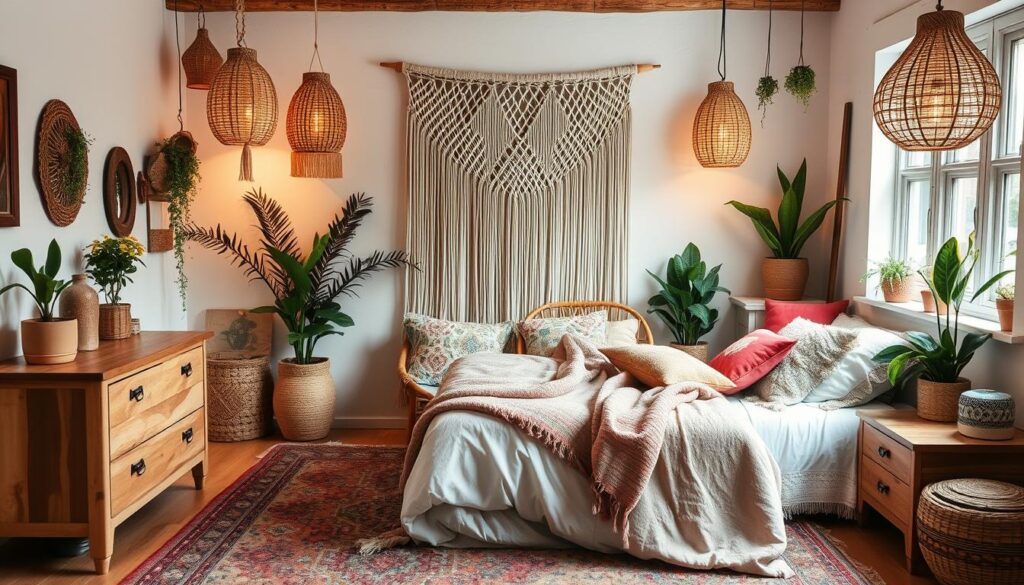
– Mediterranean + Boho: layer rugs, bring in more handmade ceramics, loosen up the textiles
– Mediterranean + Modern: simplify the architecture, cut the accessory count way down, and let clean-lined furniture do the work while the materials (wood, stone, plaster) stay Mediterranean
Common Questions
What’s the difference between Mediterranean and Spanish style?
Spanish style, particularly Spanish Colonial Revival, is really one regional branch of the broader Mediterranean umbrella — it leans more specifically into red-tile roofs, wrought iron, and courtyard layouts. Mediterranean as a category also pulls in Italian, Greek, and Moorish influences, so it’s a bit more varied in its material palette.
Are Mediterranean homes expensive to build?
New construction with a tile roof, stucco exterior, and architectural details like arched openings costs more than a standard build due to the specialized materials and labor. But decorating an existing space in the style is genuinely affordable — most of what makes a room read as Mediterranean is paint, textiles, and a few well-chosen accessories.
What kind of roof do Mediterranean homes have?
Classically, a low-pitched or flat roof with terracotta or clay barrel tiles. That’s an exterior/architectural feature, though — it won’t affect your ability to decorate an interior in this style at all.
Are Mediterranean homes good for hot climates?
Yes, and that’s actually the origin of a lot of these design choices. Thick stucco walls, tile floors, and shaded courtyards were developed specifically to stay cool in hot weather, which is why the style took off in places like Southern California and Florida.
New mom embracing the chaos and creativity! 💕 Sharing budget-friendly tips for cooking, DIY hacks, home decor, fashion, and making every moment stylish and affordable