Small Backyard Ideas That Actually Make the Space Feel Bigger
My backyard is 340 square feet. I know this because I measured it three times, convinced I’d made an error that would explain why my first attempt at furnishing it looked like a furniture showroom exploded in a parking spot. I hadn’t made an error. The yard is just small, and I’d made every mistake in the book trying to fix that with more stuff.
If you’re staring at a tiny backyard wondering how to make it look bigger, feel finished, and actually get used, the answer isn’t more furniture or more plants. It’s the opposite. Here’s what I learned after redoing mine twice.
What This Style Actually Is
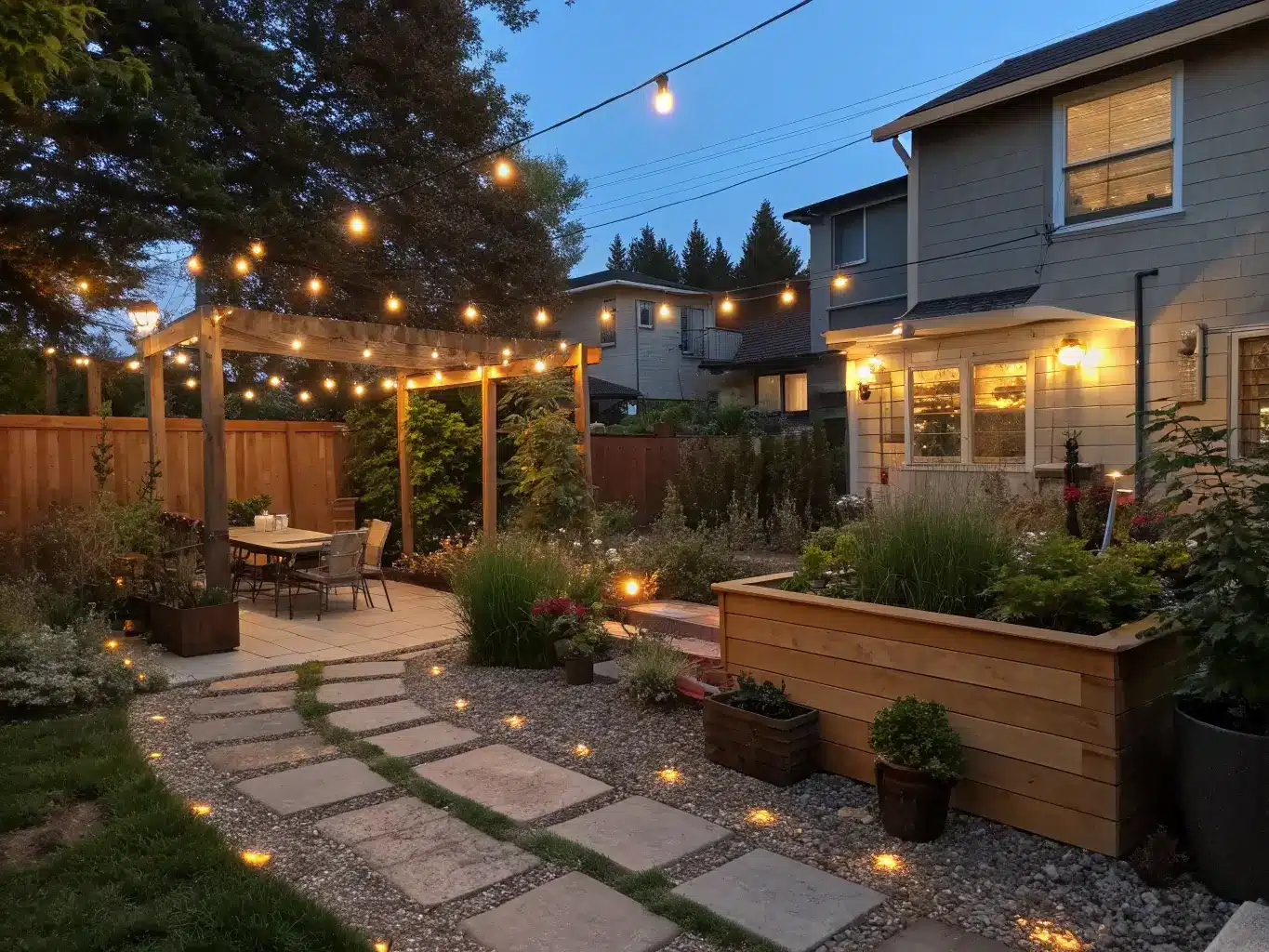
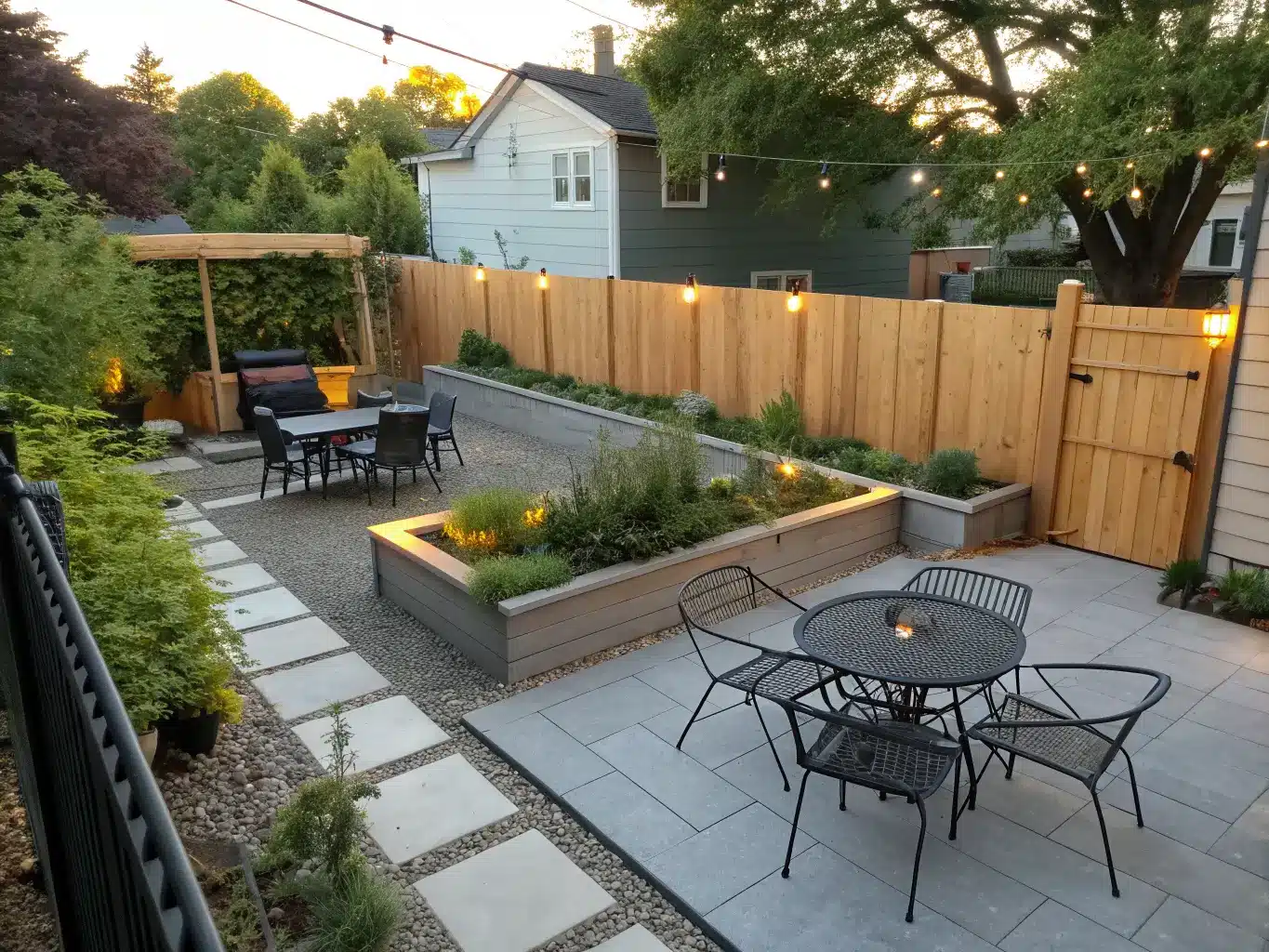
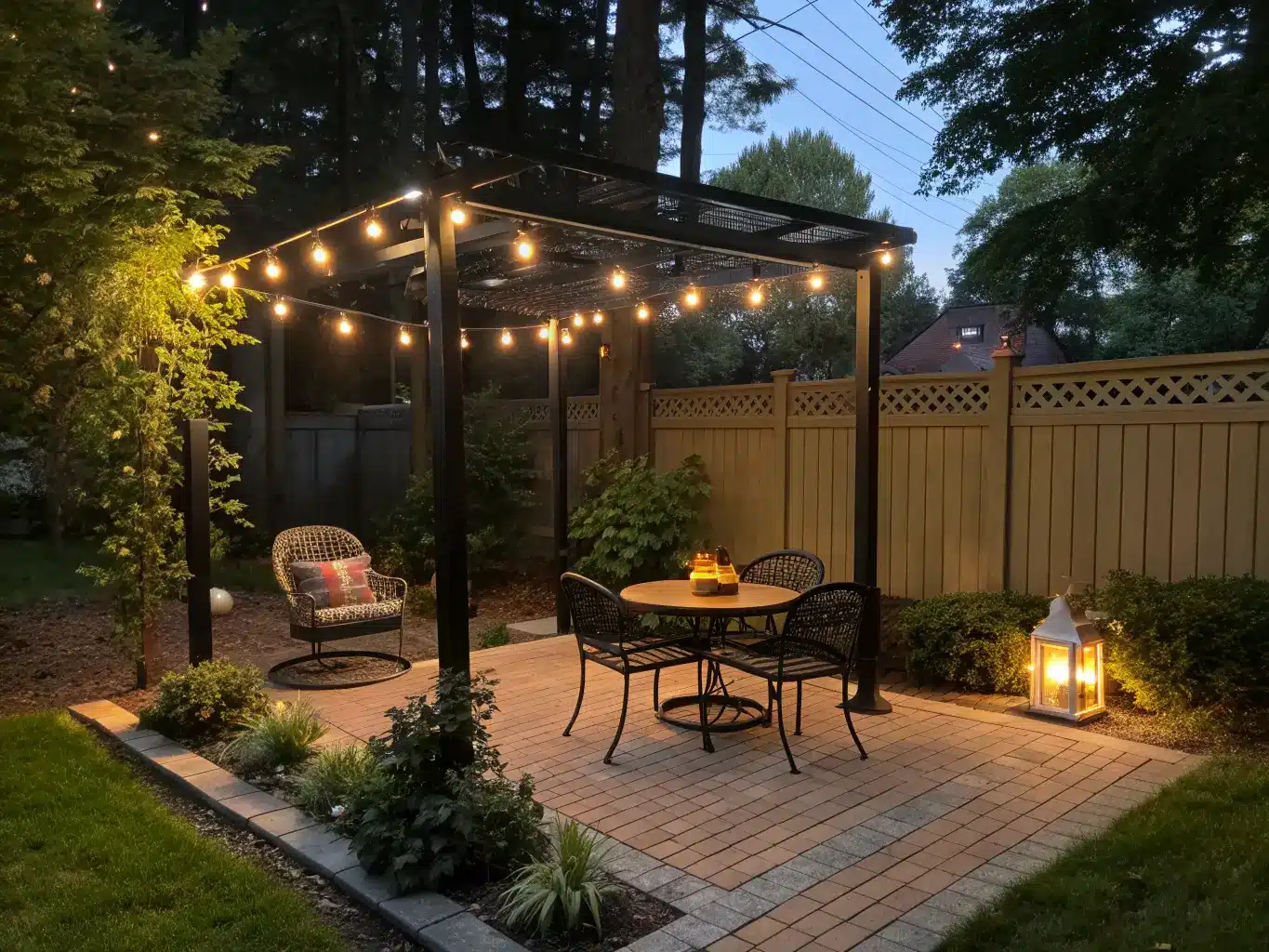
The best small backyards right now aren’t styled around one look — they’re organized around zones. A dining corner here, a lounge nook there, a garden strip along the fence. Think of it less like landscaping and more like furnishing a studio apartment: everything has to earn its spot, and nothing can block the flow.
Materially, this usually means warm neutrals, charcoal, black metal furniture frames, natural wood, and a tight band of greens. Composite decking, gravel, pavers, and ceramic planters do the heavy lifting. It’s a look, but more than that, it’s a strategy — restraint over abundance.
This approach works best for:
– Yards under 1,000 square feet, including narrow side yards and courtyard-style lots
– Renters who need furniture and planters that can move with them
– Families juggling dining, play, and garden space in one small footprint
– Anyone tired of a yard that looks cluttered no matter what they do
Time, Cost, and Skill Level — What to Actually Expect
Time:
– A weekend covers a simple refresh — cleanup, furniture placement, planters, lighting, mulch.
– One to two weeks if you’re adding pavers, a small pergola kit, or a raised bed.
– Several weeks for anything involving drainage, irrigation, or a plunge pool.
Cost:
– Budget refresh ($150–$800): string lights, a couple of planters, outdoor pillows, mulch, a compact bistro set.
– Mid-range makeover ($1,000–$5,000): a small patio, gravel path, raised beds, a pergola kit, a vertical garden structure.
– Premium upgrade ($5,000+): custom hardscaping, built-in seating, integrated lighting, a petite plunge pool.
I spent about $600 on my first pass — mostly on a bistro set I later sold for $80 because it was too bulky for the space. More on that below.
Skill level: Styling, container planting, mulch, and lighting are beginner-friendly. Edging, raised beds, gravel paths, and basic pergola kits are intermediate. Drainage, retaining walls, and pool installs are expert territory — hire that part out.
The Must-Have Pieces
You don’t need everything on this list. You need the right handful, chosen for your specific yard.
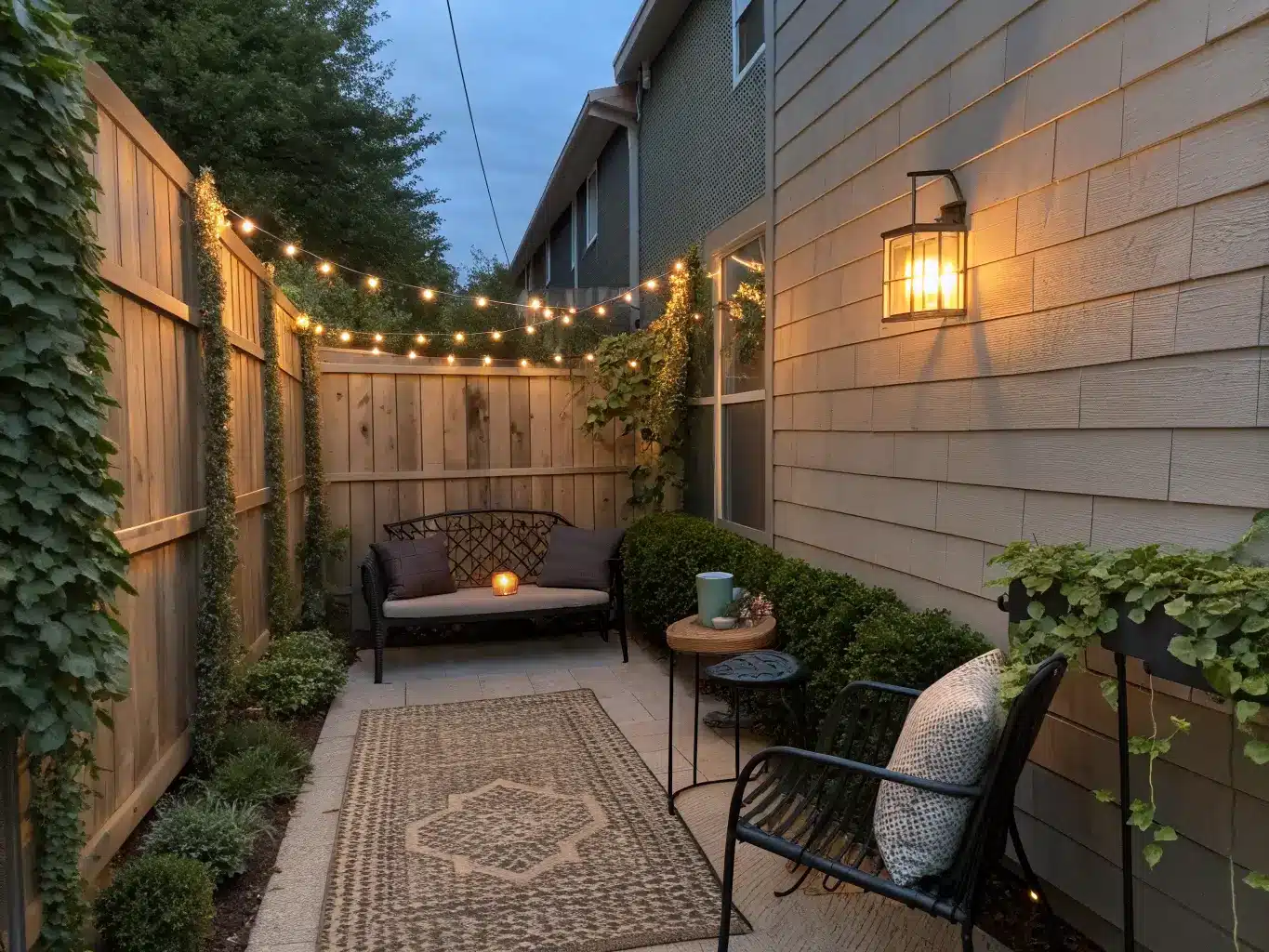
– One focal feature. A bistro set, a small bench nook, a pergola, or a fire feature. Pick one thing the eye lands on first — not three competing for attention.
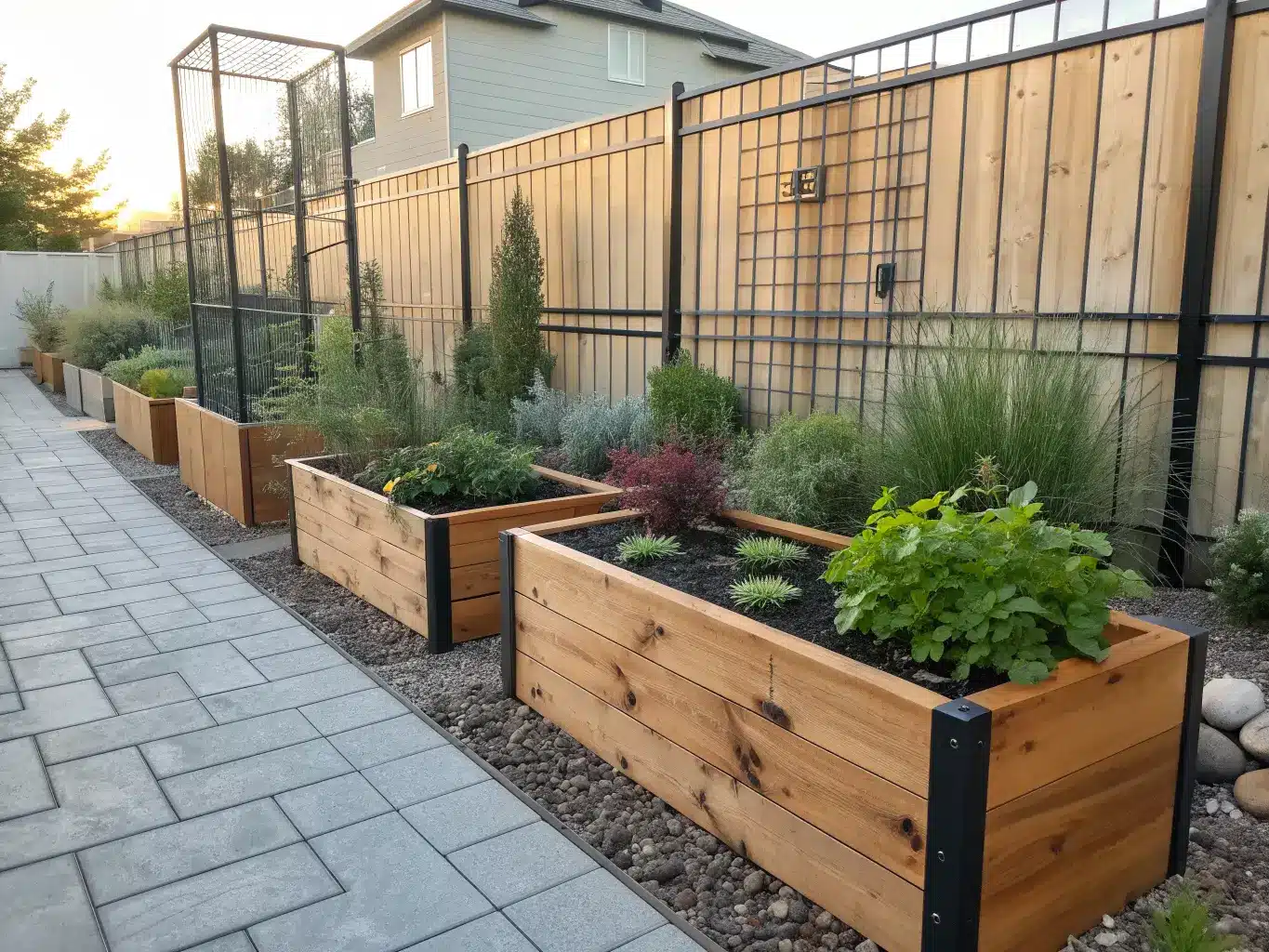
– A vertical planting structure. Trellises, wall-mounted planters, or a climbing vine support. This is the single biggest thing I got wrong originally — I kept buying pots for the ground and running out of room.
– A defined ground plane. Gravel, pavers, stepping stones, or a small patio pad. Grass alone reads as “unfinished yard”, not “outdoor room.”
– A raised bed or container cluster. Raised planters add real greenery without eating your whole footprint the way an in-ground garden bed does.
– Layered lighting. String lights plus one or two lanterns or path lights. Layered, not just one strand looped once.
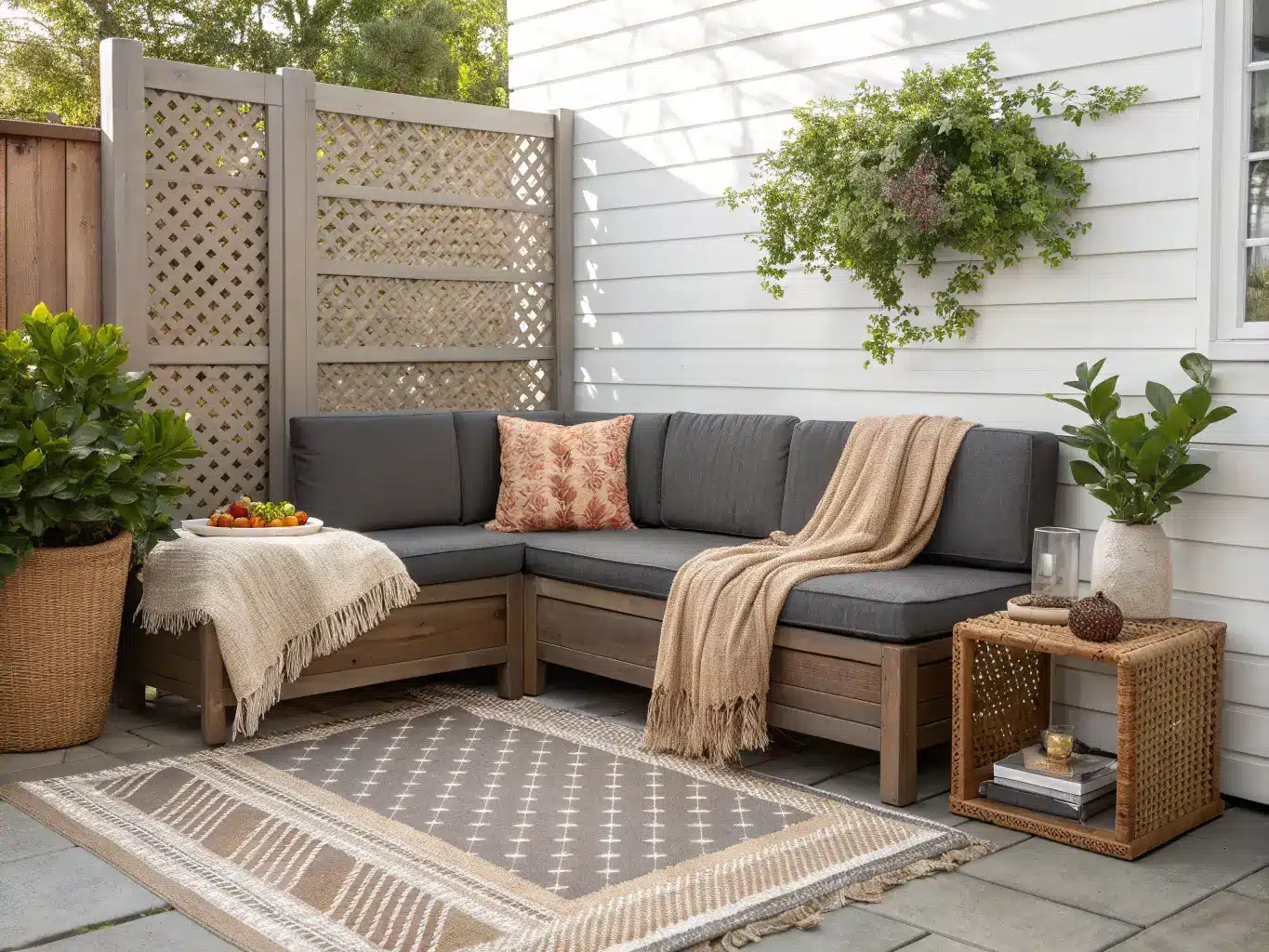
– Weather-resistant soft furnishings. Outdoor cushions, a rug, maybe a throw. This is what makes a bare patio look like a finished room instead of a slab with chairs on it.
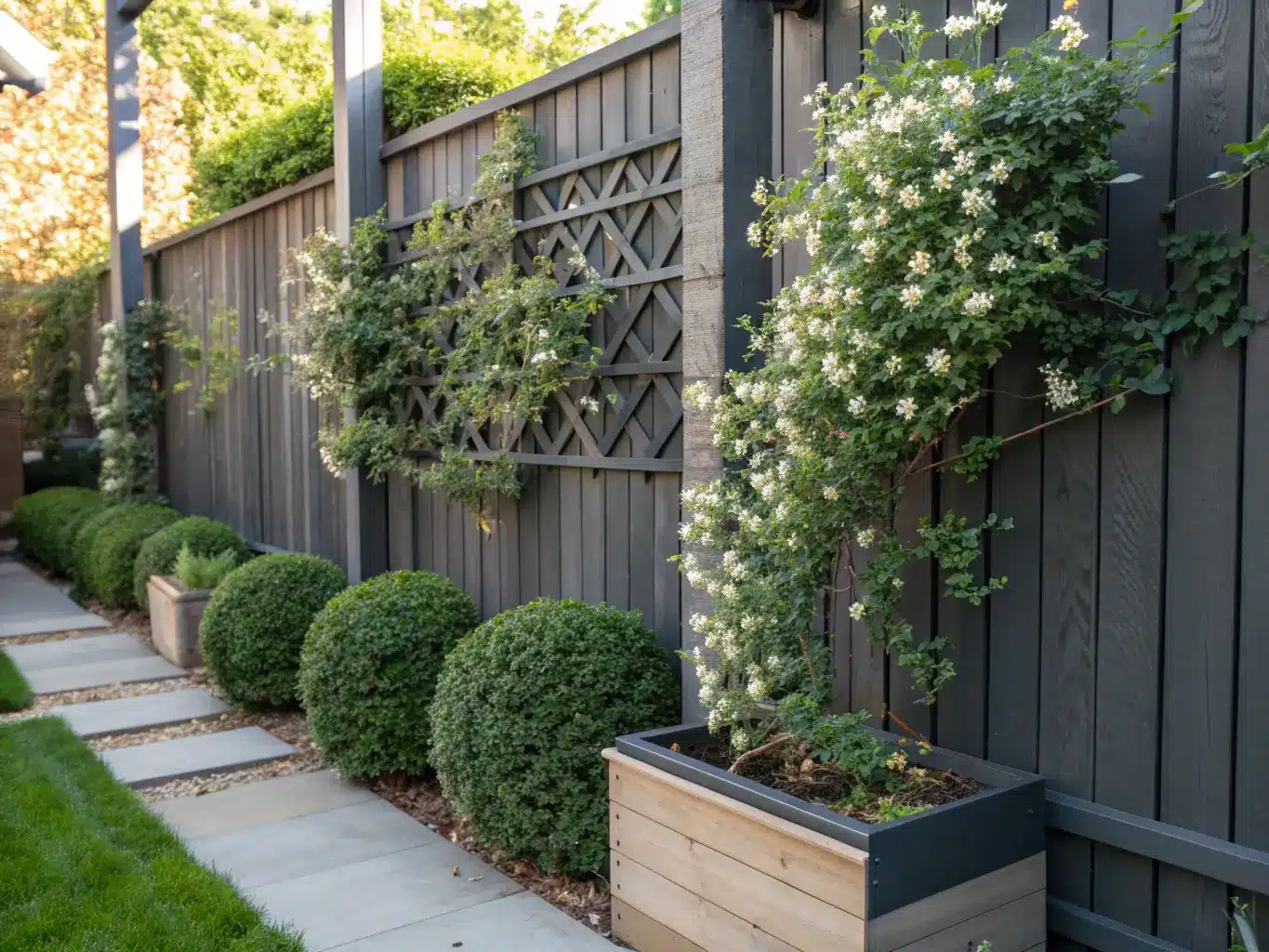
– A privacy element. Lattice, a screen panel, or layered planting along the property line.
Putting It Together: Layout, Height, and Color
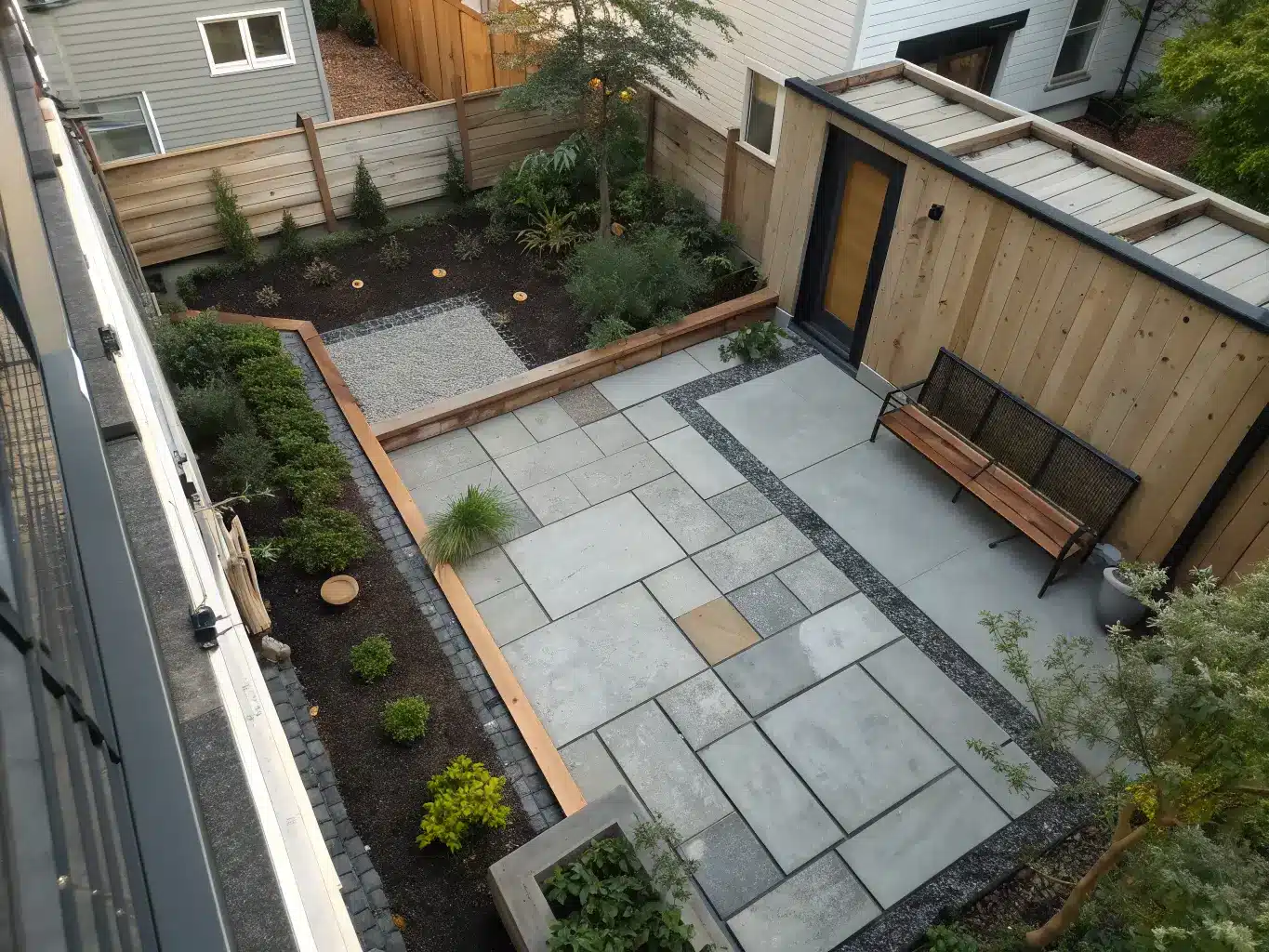
Start with the ground, not the furniture. Decide on pavers, gravel, or a small patio pad before you buy anything else. This becomes your anchor and tells you how much usable space you’re actually working with.
Place your biggest item first. Pergola, bench, or dining set — whatever it is, place it, then build everything else around it. I did this backwards the first time, buying pillows and lanterns before I’d committed to furniture placement, and ended up with accessories that didn’t match the scale of anything.
Keep the center open. This is the single most useful rule I’ve applied. Push planting and furniture to the perimeter and leave the middle of the yard breathable. A small yard with an open center reads as bigger than a small yard packed edge to edge — even if the packed one technically has more “stuff” in it.
Use height on purpose. Taller plants, a trellis, or a pergon draw the eye up and off the ground plane, which tricks the brain into perceiving more space. A flat yard with everything under two feet tall looks like a checkerboard. Add one or two taller elements — a small tree, a trellis with a climbing vine, a vertical planter — and the whole thing feels less cramped.
Pick 2–3 material tones and stop. Wood plus black metal. Concrete plus greenery. Pick a lane. My biggest early mistake was mixing a natural wood bench, a white bistro set, terra cotta pots, and gray gravel — four different tones fighting each other in 340 square feet. I repainted the bench black and swapped the terra cotta for matching charcoal planters, and the yard immediately looked twice as organized without changing a single square foot of space.
Repeat your plants. Three of the same ornamental grass reads calmer than one each of five different plants. Repetition is what makes a small garden look curated instead of leftover.
Common Mistakes (I Made Most of These)
– Packing in too many features. I tried to fit a dining set, a lounge chair, a fire bowl, and a raised bed into one yard at the same time. It looked like storage. I removed the lounge chair and the yard breathed again.
– Too much plant variety. Different textures and species everywhere reads as noise, not lushness.
– Oversized furniture. That bistro set I mentioned had a 42-inch table — fine for a patio, wrong for a walkway you also need to use to get to the garden hose. Measure your circulation path before you buy anything with legs.
– No vertical interest. Everything at ankle height flattens the whole space visually.
– Designing before deciding on function. Figure out if this yard is for dining, lounging, gardening, or the dog before you buy a single planter. Otherwise you end up with a beautiful space nobody actually uses.
– Skipping privacy. An exposed yard, no matter how well styled, never feels finished. Even a single lattice panel with a climbing jasmine changes the whole feeling of enclosure.
Keeping It Fresh Without Starting Over
Once the bones are right, updates should be small and cheap.
Seasonally: swap pillow covers, rotate in potted mums for fall or bulbs for spring, switch out an herb pot, restyle the string lights. None of this touches the hardscape.
Budget-wise: fresh mulch, a coat of paint on the fence, solar path lights, or a simple DIY trellis go a long way before you ever need to touch pavers or decking again.
Cross-style riffs, if you want to shift the mood without a redo:
– Boho-coastal: woven textures, pale wood, airy planting
– Modern-garden: black metal furniture, concrete planters, restrained greenery
– Farmhouse-cottage: wood benches, raised beds, dense flowering borders
Low-maintenance swaps worth considering: artificial turf inserts in high-traffic zones, native plants instead of thirsty ornamentals, and grouped containers instead of in-ground beds. All three cut upkeep while keeping the yard looking intentional rather than neglected.
Quick Answers to What People Actually Ask
How do I make a small backyard look bigger? Open center, perimeter planting, vertical height, and a tight 2–3 tone palette. In that order.
Cheapest way to landscape a small backyard? Mulch, a gravel path, and container gardening. Skip hardscape until you’ve lived with the layout for a season.
Are pergolas worth it in a small yard? Yes, if it’s the one focal feature — not stacked on top of three other big-ticket items.
How do you create privacy in a small backyard? Lattice, a screen panel, or layered planting along the fence line. You don’t need a full hedge — one well-placed panel does more than people expect.
Is artificial grass a good idea? For high-traffic strips or awkward slivers where real grass struggles, yes. I wouldn’t do a whole yard in it, but as an accent it saves real maintenance headaches.