Grey Couch Living Room Ideas: How to Style One Without It Looking Cold or Boring
Here’s the problem with grey couches: everyone tells you they’re “versatile,” and then you buy one, get it home, and it just sits there looking like a big grey lump in your living room. I know because that’s exactly what happened to me with my first one — a light dove-grey sofa from a big box store that I thought would go with everything. It technically did. It also looked like nobody lived there.
The fix isn’t the couch. It’s what you put around it. A grey couch is a blank canvas, not a finished room, and treating it like the whole design is the single biggest reason grey living rooms end up feeling flat, cold, or forgettable.
What Makes a Grey Couch Work (and Who This Is For)
Grey earns its reputation as the safe choice because it genuinely goes with almost anything — camel, navy, sage, terracotta, black and white, blush. It doesn’t lock you into a color story the way a bold emerald or mustard sofa does. That’s real, and it’s why I’d still recommend grey to almost anyone who isn’t 100% sure what direction they want long-term.
It’s the right call if:
– You rent and need furniture that’ll work in the next place too
– You like to change up pillows, art, and accessories seasonally without buying new furniture
– You’re not ready to commit to a trend color for a piece you’ll own for 8-10 years
It’s the wrong call if you actually love color and were only picking grey because you thought it was the “safe” or “correct” designer choice. A living room should look like you, not like a showroom default.
Grey works in small apartments, mid-size family rooms, and big open-plan great rooms alike, which is part of why IKEA, Wayfair, Lowe’s, and Rooms To Go all keep grey sofas and sectionals as core inventory — this isn’t a fading trend, it’s a permanent category.
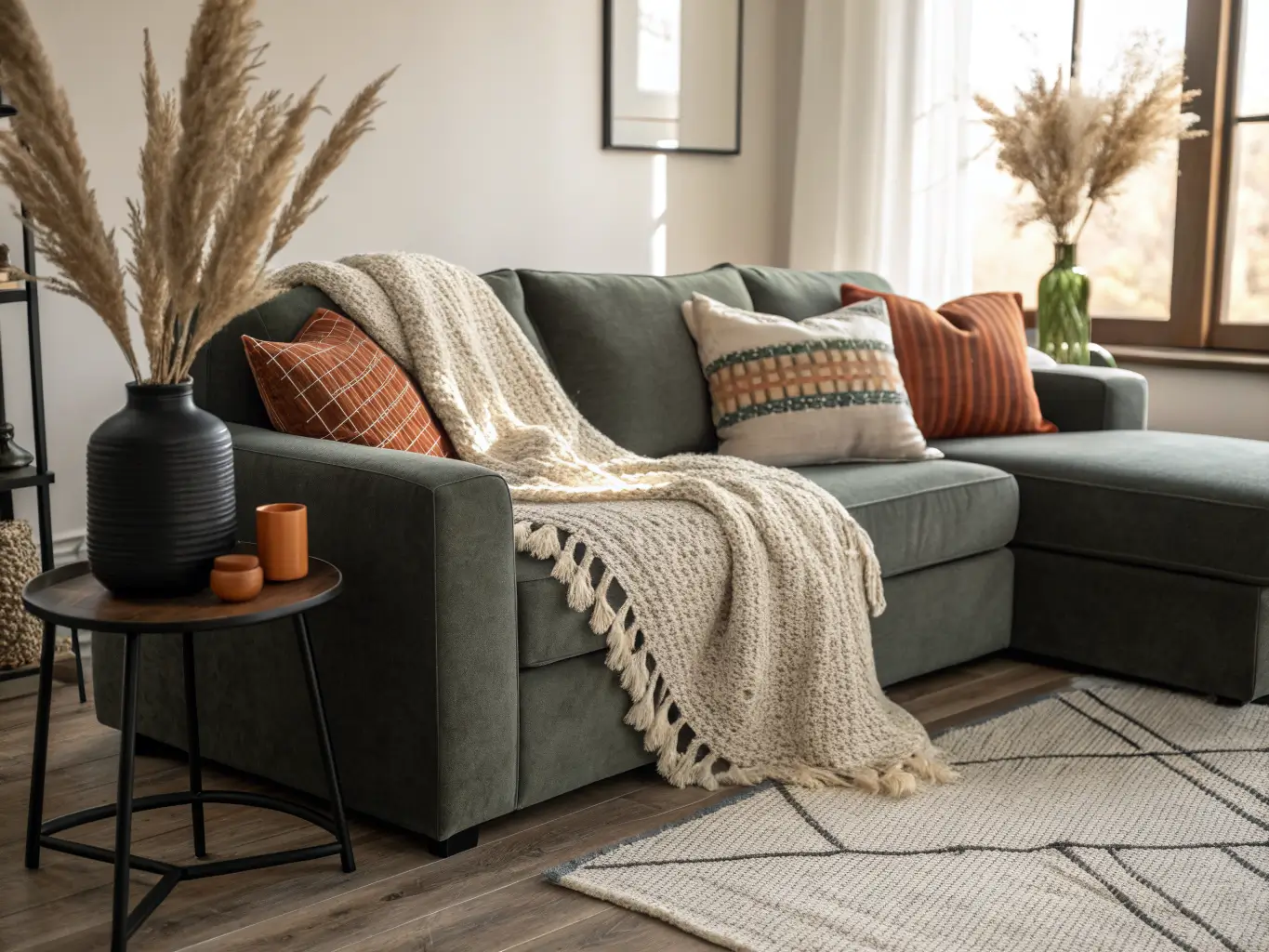
The Pieces That Actually Make a Grey Living Room Feel Finished
Don’t buy the sofa and call it done. Here’s what you need layered around it:
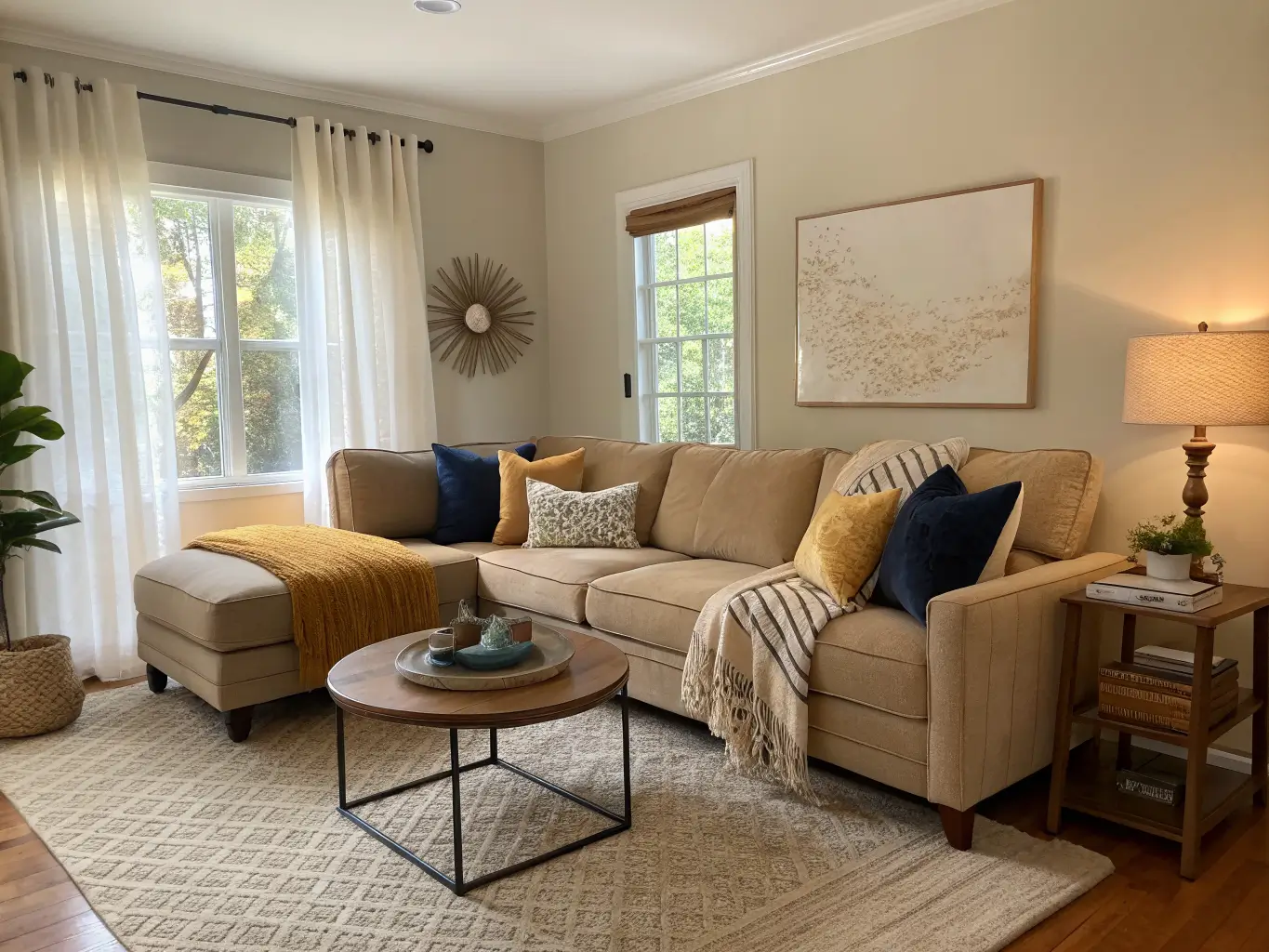
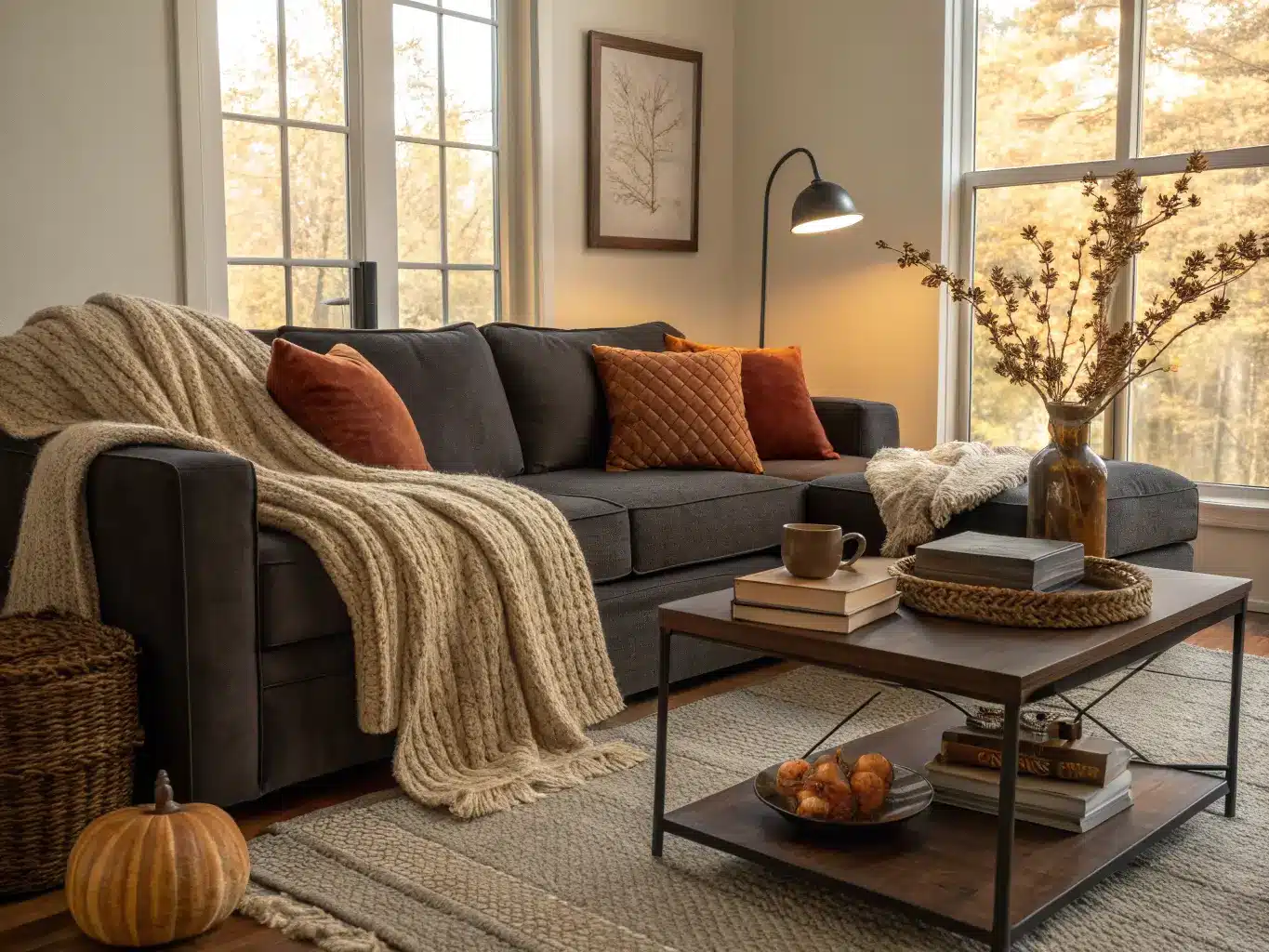
– Throw pillows — mix a solid, a pattern, and a texture. I run mustard velvet, a small navy-and-cream stripe, and a chunky cream knit on my charcoal sectional. Three is the minimum for it to look styled instead of accidental.
– A throw blanket — chunky knit or woven cotton, draped over one arm, not folded in a perfect square. Perfect squares read like a hotel.
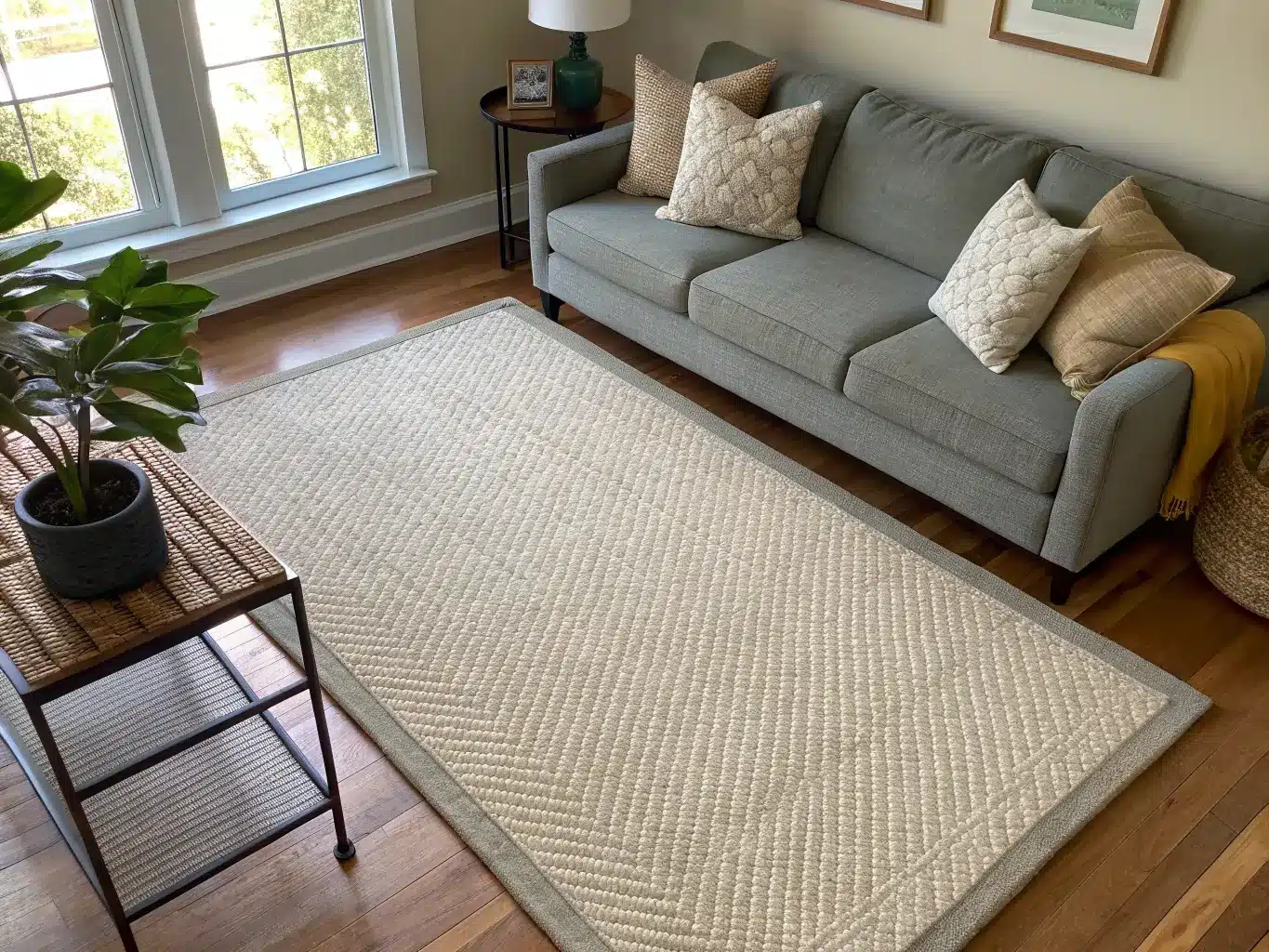
– An area rug — jute, wool, or flatweave in cream, taupe, or a muted pattern. This is not optional. A rug is what stops the sofa from floating in the middle of the room.
– A coffee table with real material presence — natural wood or a black metal frame. Glass tables disappear next to a grey sofa and leave the room feeling unanchored.
– A lamp with warm-toned hardware — brass, matte black, or warm gold. Cool chrome next to grey upholstery is where “cold room” complaints usually start.
– One piece of large-scale wall art. Not three small frames. One big thing.
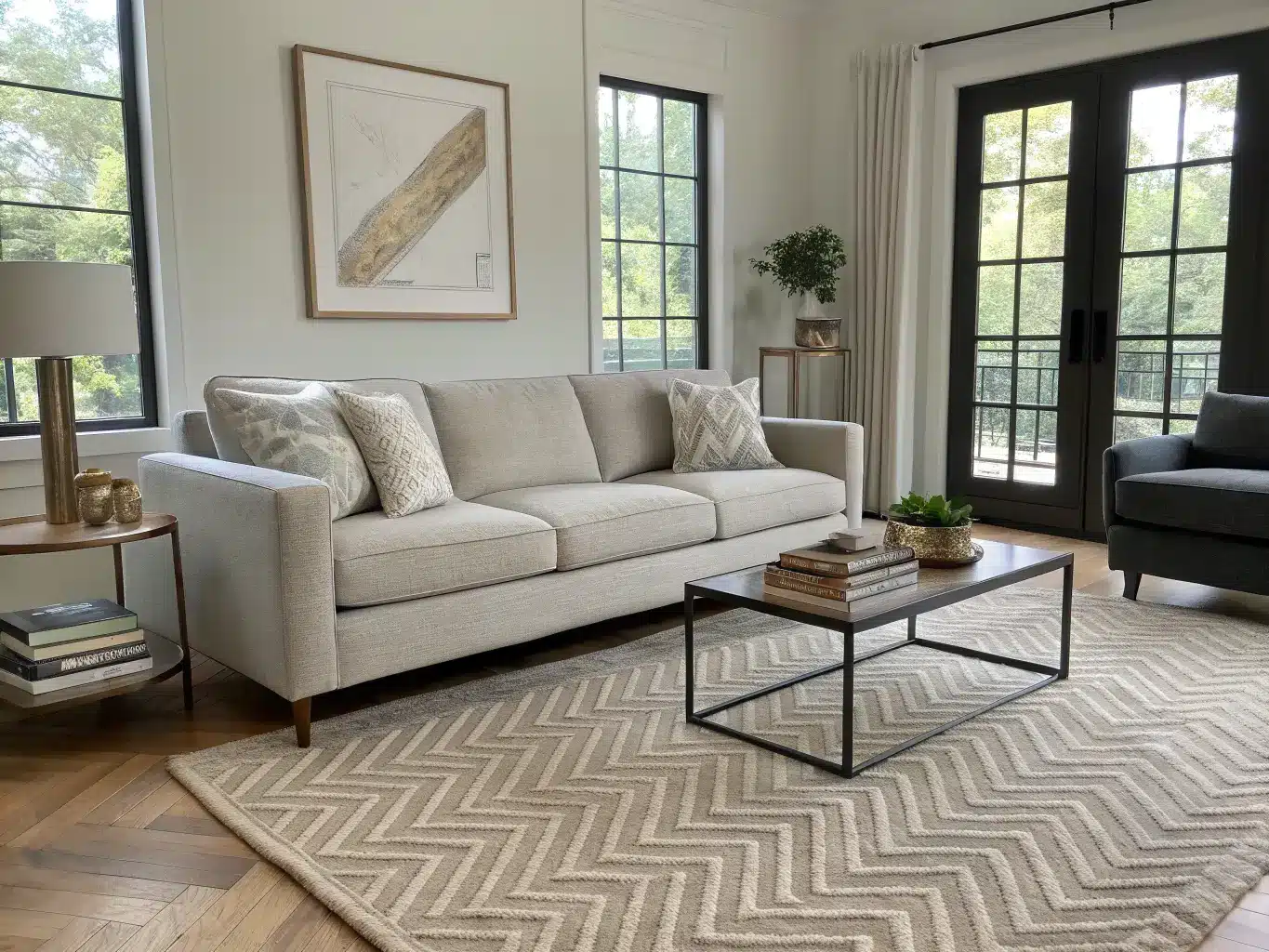
How to Actually Put It Together
Step 1: Figure out your grey’s undertone before you buy anything else.
This is the step everyone skips and it’s the reason accent colors sometimes look “off” without people knowing why. Hold a white sheet of paper next to your sofa in daylight. If it looks slightly blue or cool, you’ve got a cool grey — pair it with navy, emerald, black-and-white, or blush. If it looks slightly brown or yellow, that’s a warm greige — pair it with camel, terracotta, rust, or mustard. My current sectional is a warm greige, and the first time I tried icy blue pillows on it, they looked slightly dirty rather than crisp. Swapped to mustard and cream and it clicked immediately.
Step 2: Set the rug first, then build out from the sofa.
The rug defines the seating zone. Rule of thumb: front legs of the sofa and chairs should sit on the rug, not floating off the edge. A rug that’s too small is the single most common reason a grey living room looks disconnected — I made this mistake for two years with a 5×7 under a sectional that needed an 8×10, and the room never sat right until I sized up.
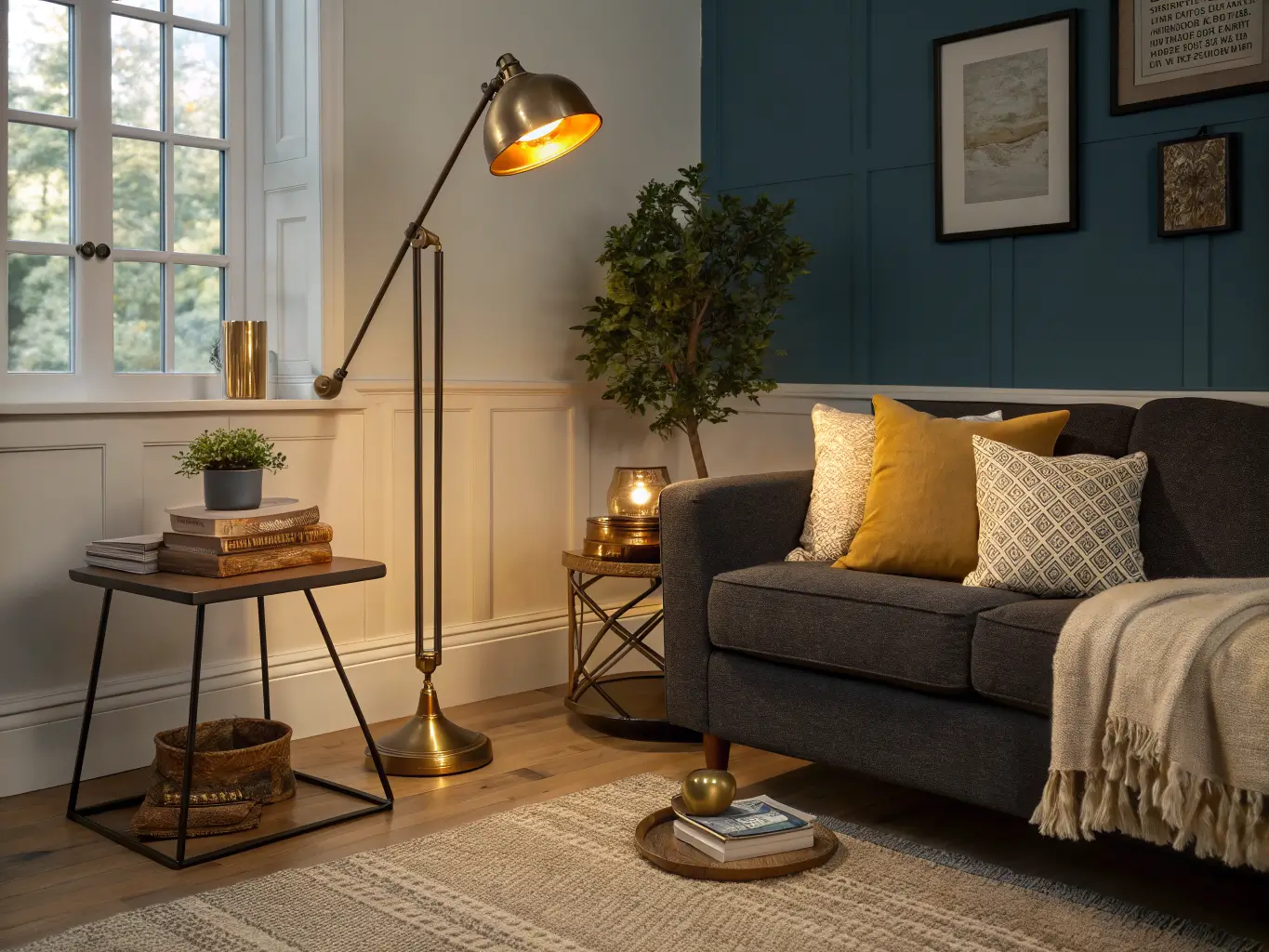
Step 3: Layer pillows in three tiers.
Base neutral (cream or oatmeal), accent color (sage, terracotta, navy — whatever matches your undertone), and one small pattern or texture pillow. Stop there. More than five or six pillows on a standard sofa starts eating your actual seating space.
Step 4: Add one strong material contrast.
Wood, jute, brass, or black metal. Pick one and repeat it — a wood coffee table plus wood picture frames plus a wood-framed mirror ties the room together far better than wood, rattan, marble, and chrome all competing at once.
Step 5: Finish with one or two focal accessories, not ten small ones.
A 5-foot piece of framed art over the sofa. A 4-foot fiddle-leaf fig or olive tree in the empty corner. A single sculptural floor lamp. That’s it. Grey rooms get cluttered fast because people try to compensate for the “plainness” of the sofa with more stuff, when what it actually needs is fewer, bigger, better-chosen pieces.
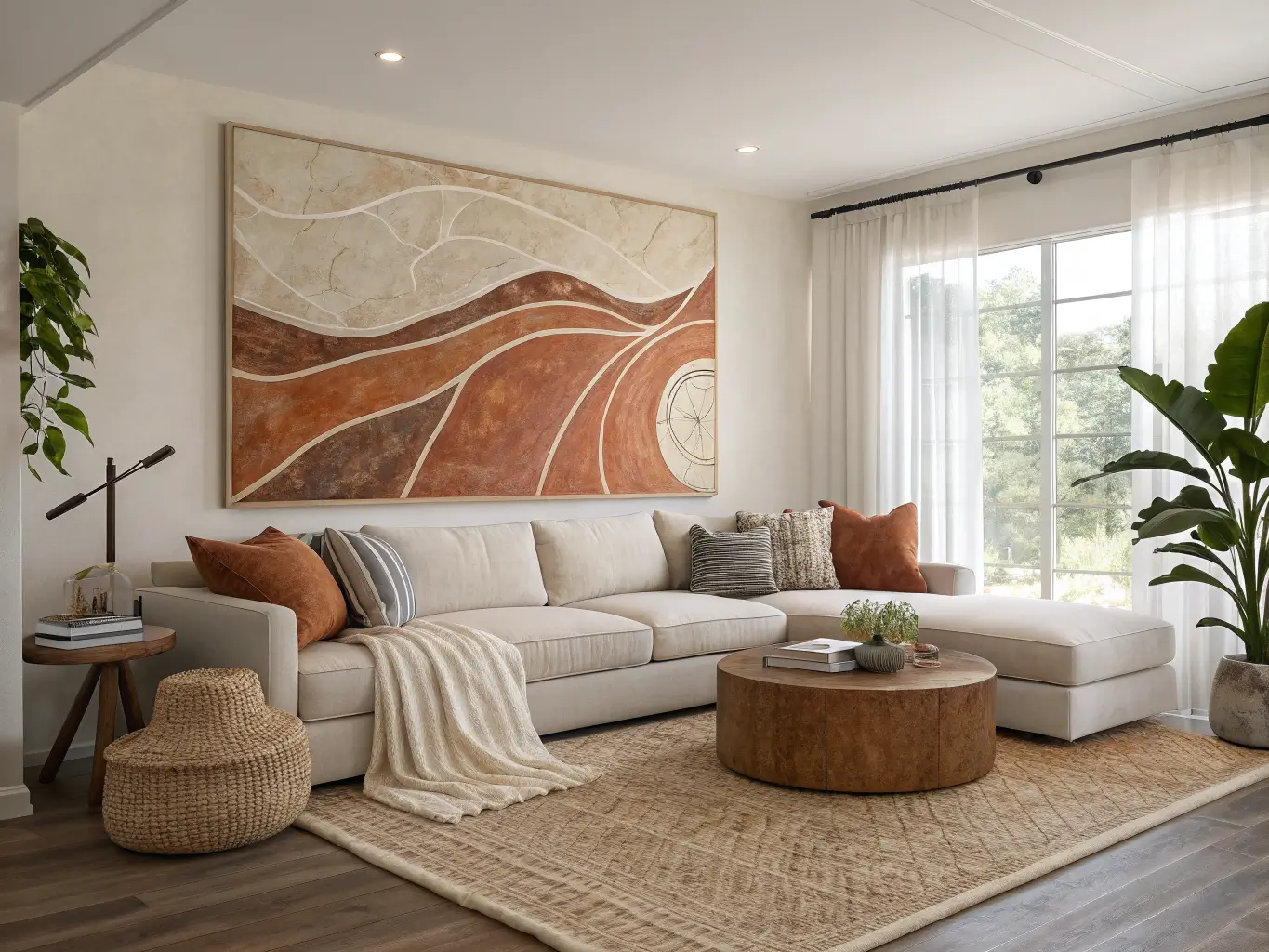
Budget: Where to Spend and Where to Save
Budget refresh ($75–$250): New pillow covers, one good throw, maybe a rug pad or small decor swap. This is where I’d start if your grey couch is fine but the room around it feels stale.
Mid-range update ($700–$2,500): This covers a new grey sofa or sectional plus a proper rug, coffee table, lamp, and wall art. Sofas in this range commonly run 80–86.5 inches, sectionals up to 102+ inches with a chaise.
Full room styling ($3,000+): Bigger modular sectionals (some run 128 inches), upgraded upholstery like corduroy or leather, and coordinated lighting and art throughout.
Spend on: the rug and the sofa itself — these are the two biggest visual surfaces in the room and cheap versions of both show their cheapness fast.
Save on: pillow covers, throws, and small decor. These are exactly the things you’ll want to swap seasonally anyway, so there’s no reason to over-invest.
Mistakes I See Constantly (and Made Myself)
– Going full grey-on-grey. Grey walls, grey sofa, grey rug — technically coordinated, actually lifeless. You need at least one real contrast color or the room reads as one flat block.
– Ignoring the undertone. Covered above, but it’s worth repeating because it’s the number-one reason people say their accent colors “don’t look right” without knowing why.
– Undersizing the rug. If it doesn’t reach the front legs of your seating, size up.
– Skipping texture entirely. A grey velvet sofa with a smooth cotton rug and no wood or metal anywhere just feels sterile, no matter how good the color palette is on paper.
– Over-accessorizing. The neutral sofa is already doing a lot of visual work as an anchor. Piling twelve small objects around it competes with that instead of supporting it.
Easy Seasonal and Style Swaps
You don’t need new furniture to change the whole feel of a grey living room. Swap the soft goods:
– Fall/winter: rust, chocolate, camel, thicker knit throws and corduroy pillow covers
– Spring/summer: sage, blush, pale blue, linen textures, lighter rug if you layer one
Cross-style directions if you want to shift the whole vibe:
– Coastal: white, sand, pale blue, jute and rattan
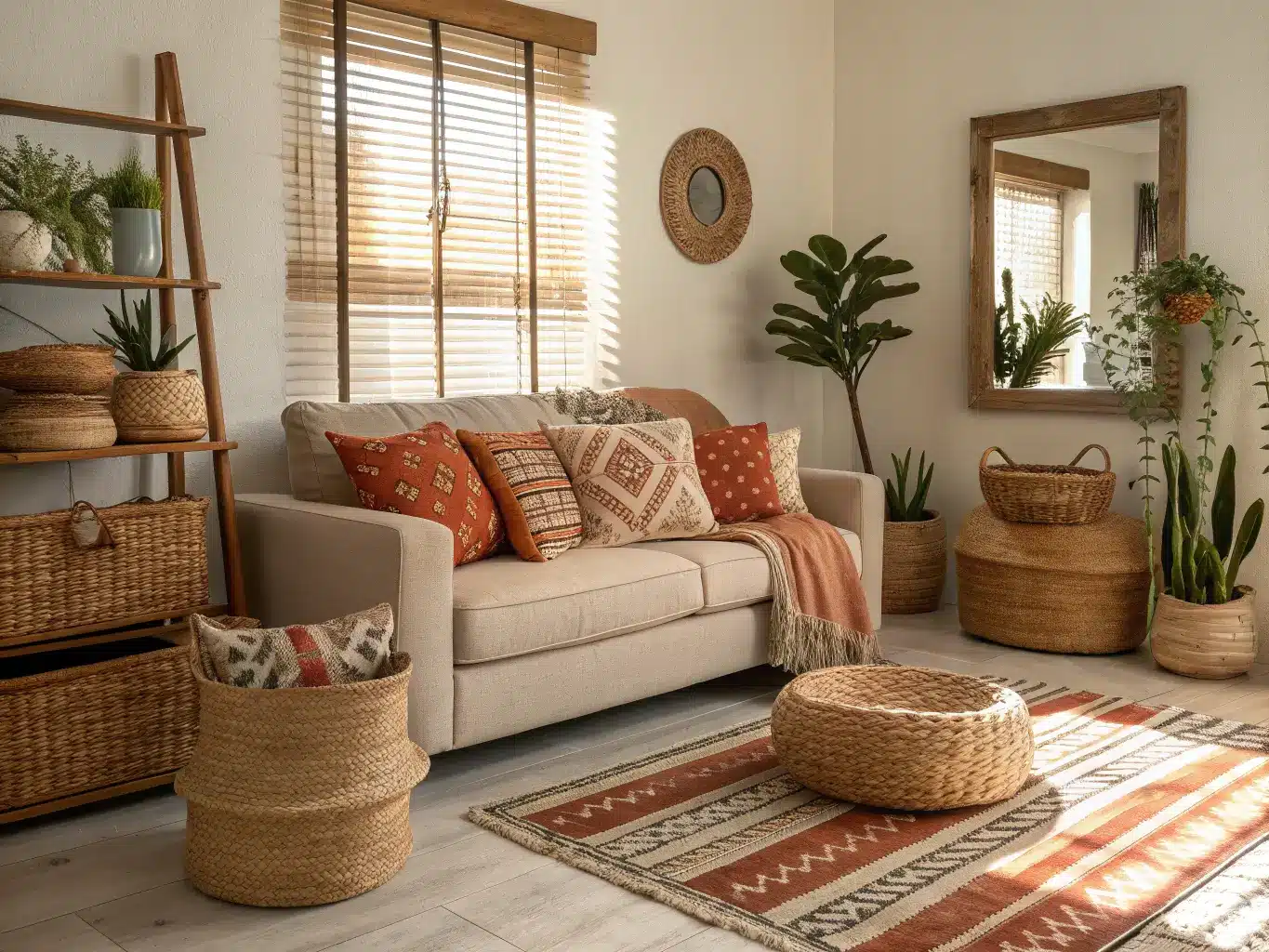
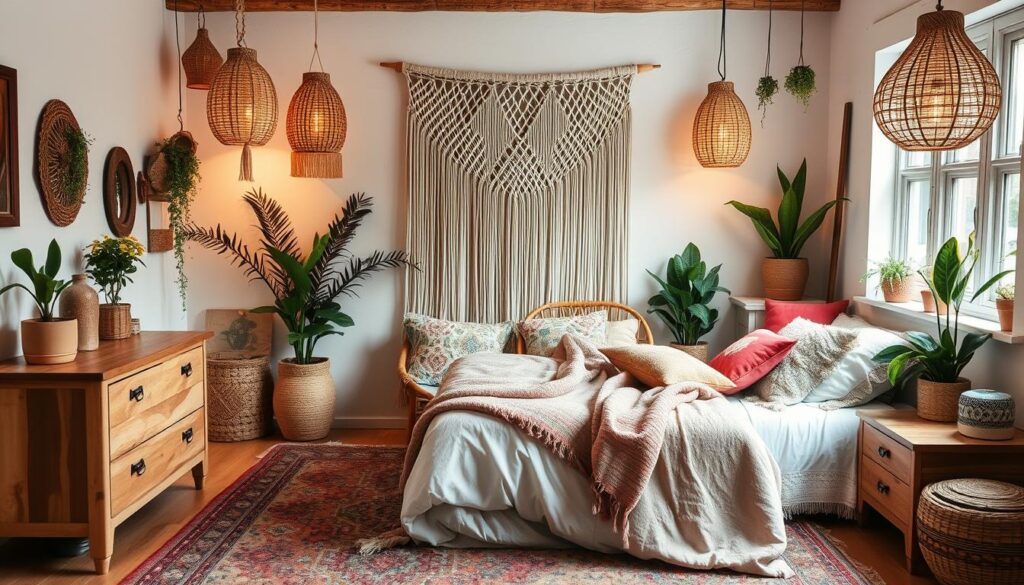
– Boho: terracotta, rattan baskets, layered textiles, lots of plants
– Modern: black accents, clean-lined tables, minimal art, nothing fussy
– Warm transitional: cream, camel, walnut wood, brass fixtures
I’ve cycled my own living room through three of these four looks on the same charcoal sectional over five years, just by changing pillows, a rug, and the art on the wall. The couch was never the problem. It was never going to be the whole room, either — it was just supposed to hold everything else up.