New Mediterranean Interior Design: A Complete Guide to the Warm, Textured Look Taking Over 2026
New Mediterranean interior design is the answer if you’re tired of stark white minimalism but don’t want your living room to look like a Tuscan restaurant from 2003. I went through both extremes before I landed here — first an all-white “quiet luxury” phase that felt like living in a hospital, then an overcorrection into terracotta pots and blue-and-white everything that read more Epcot than Positano. What finally worked was something in between: plaster walls, worn wood, linen, and just enough color to feel warm instead of sterile.
That in-between is what people now call New Mediterranean. It’s not a remodel-only style, and it’s not a five-minute Pinterest refresh either. Here’s exactly how to do it.
What New Mediterranean Style Actually Is
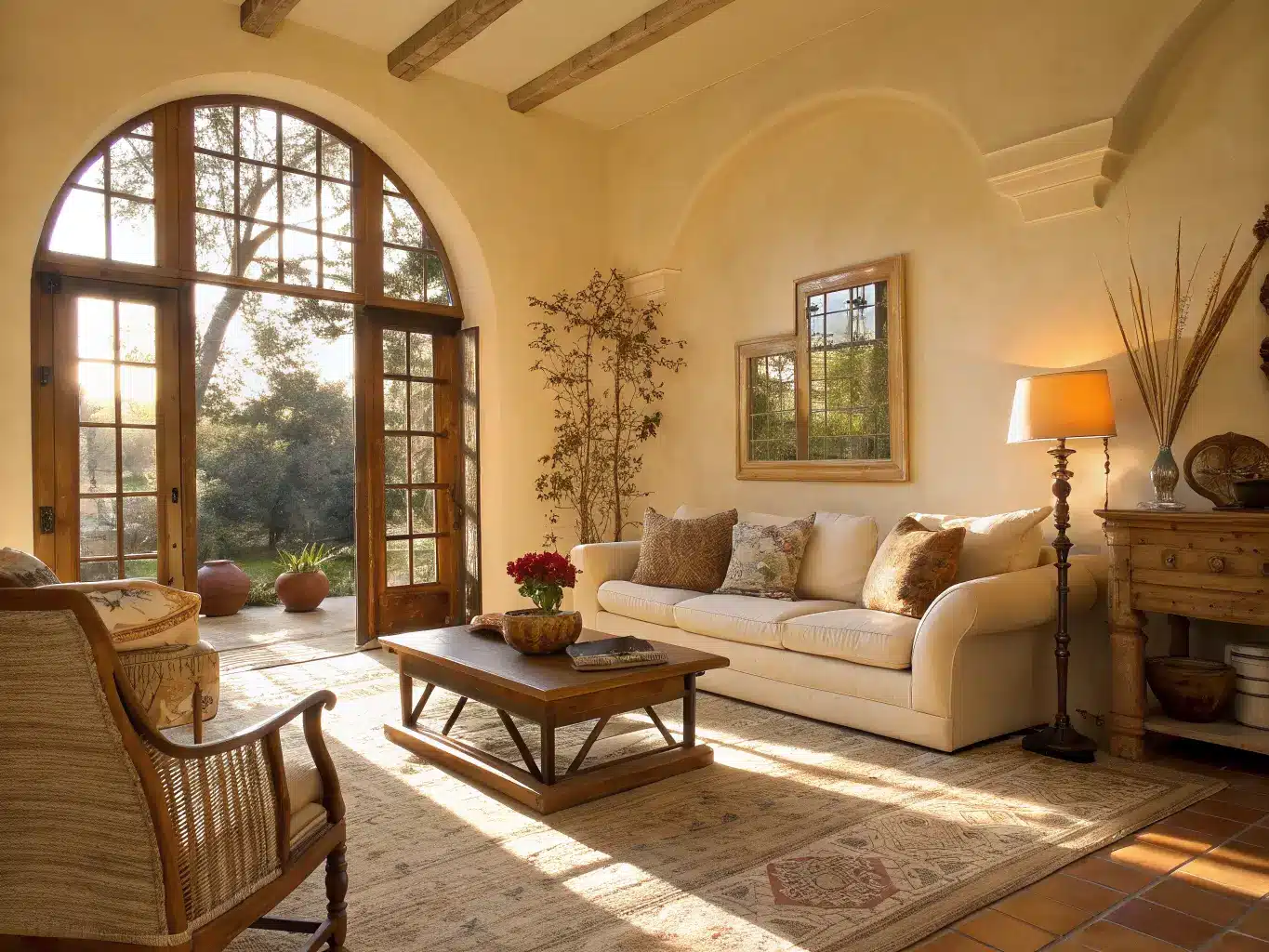
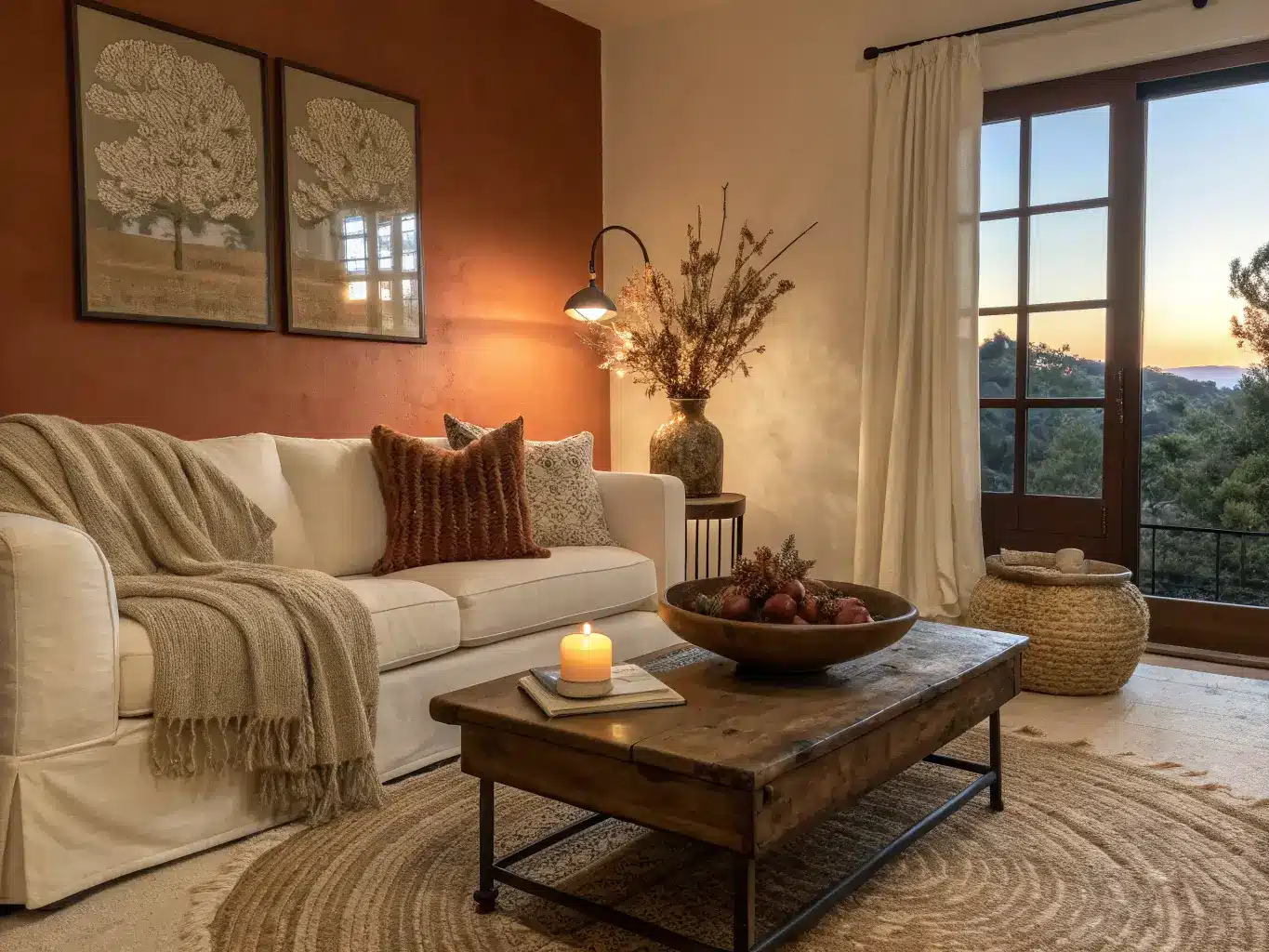
Think of it as coastal minimalism, warm minimalism, and Old World Mediterranean references — Spain, Italy, Greece, Morocco, southern France — filtered through a modern, unfussy lens. It keeps the sun-bleached warmth of the Mediterranean without the heavy carved wood, ornate tile murals, or gift-shop nautical props that made “Mediterranean style” feel dated for the last twenty years.
The palette: warm white, cream, sand, terracotta, olive, sage, warm brown, with a little muted Aegean blue used sparingly as an accent, not a theme.
The materials: limewash or plaster, travertine, limestone, terracotta tile, natural wood, rattan, jute, linen, rope, aged ceramic, wrought iron, brass.
Who it’s for: anyone who wants a room that feels calm and lived-in but still lifted — not the cold minimalism of stark modern design, and not the ornament-heavy version of classic Mediterranean.
Where it works: living rooms, dining rooms, kitchens, primary bedrooms, entryways, and any indoor-outdoor zone — sunrooms, patios, breakfast nooks. It genuinely performs best in a room with real natural light. I tried this palette in a north-facing guest room with one small window and it just looked muddy. Save the deep plaster tones for a room that gets sun.
Time, Cost, and Skill Level — What to Actually Expect
Time: A styling-only refresh — new textiles, ceramics, lighting, a rug — takes one weekend. If you’re painting, sourcing furniture, and layering in new textiles properly, budget 1–3 weeks. This is a look built through layering, not a single weekend Amazon haul, so don’t rush the sourcing.
Cost, broken into real tiers:
– Budget refresh ($300–$1,500): textiles, baskets, ceramics, a lighting swap, some olive branches or greenery. This is where I started — a $40 jute rug from a home goods store and a couple of hand-thrown mugs did more for the room than I expected.
– Mid-range update ($1,500–$8,000): add a large wool or jute rug, a statement pendant light, a solid wood coffee table, plaster-effect paint, and two or three quality accent chairs instead of a full new furniture set.
– Higher-end reworkation ($8,000+): true limewash or plaster walls, terracotta or stone flooring, custom millwork, arch details, structural changes.
Skill level: Beginner to intermediate if you’re just styling. Intermediate to expert if you’re touching limewash, real plaster, tile work, ceiling beams, or arches — hire this part out unless you’ve done it before. I attempted a DIY limewash sample on a foyer wall once and it streaked so badly I had to skim-coat and start over. Plaster finishes are one of those things that look simple and are not.
Seasonal appeal: Year-round. Olive, terracotta, sand, and stone don’t read as seasonal the way, say, a farmhouse plaid does — they just feel warm in every month.
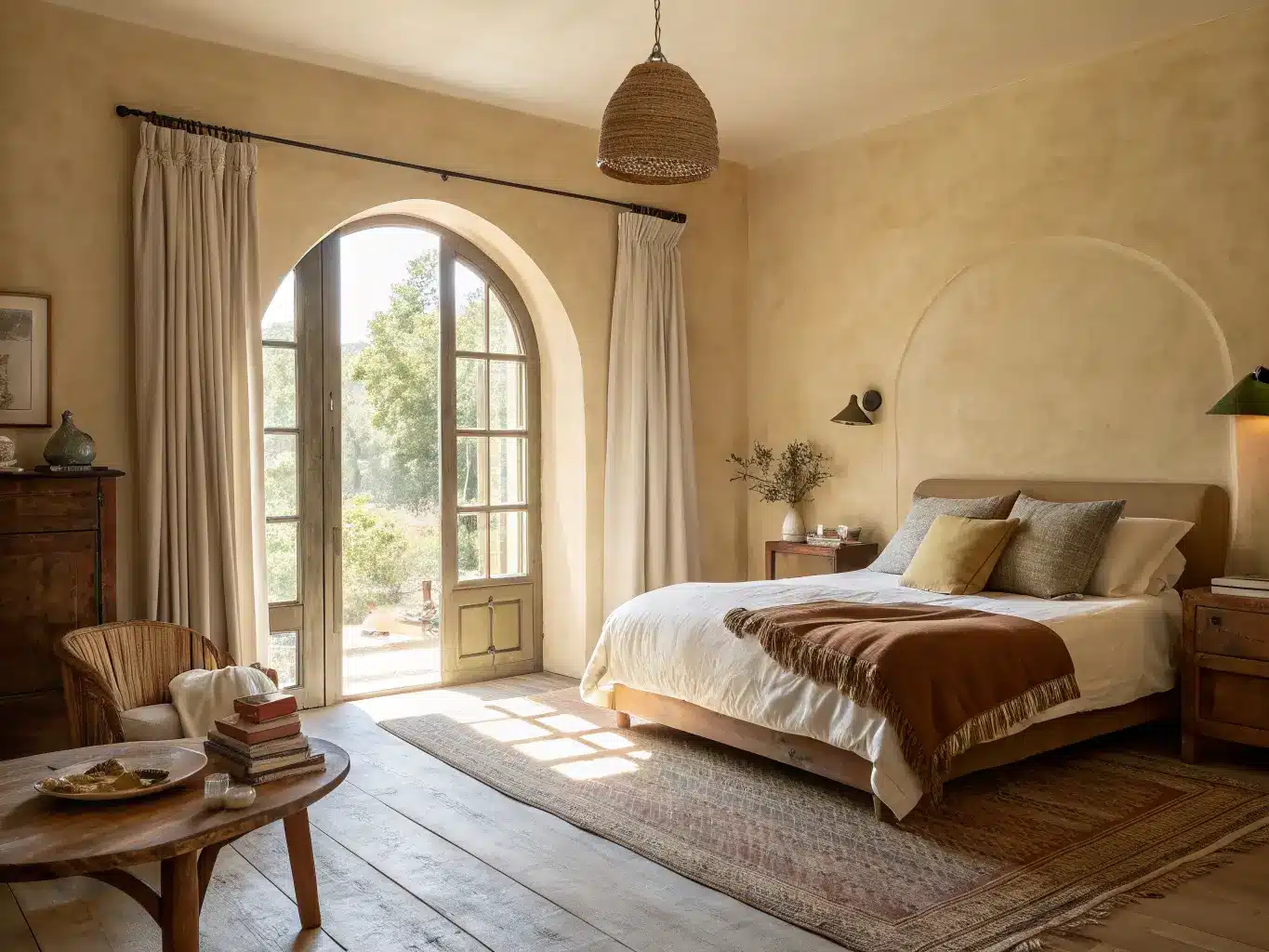
The worth having Pieces That Make This Style Work
Hero surfaces
These are the foundation, and they matter more than any accessory:
– Limewash, plaster, or whitewashed walls
– Terracotta tile flooring, or terracotta-toned accessories if you can’t redo floors
– Stone countertops (travertine or limestone read the most current)
– Warm wood flooring or exposed beams
Hero furniture
Skip the matching furniture set entirely. This style wants mixed-era pieces that look collected, not purchased as a unit.
– A low-profile sofa in linen or boucle
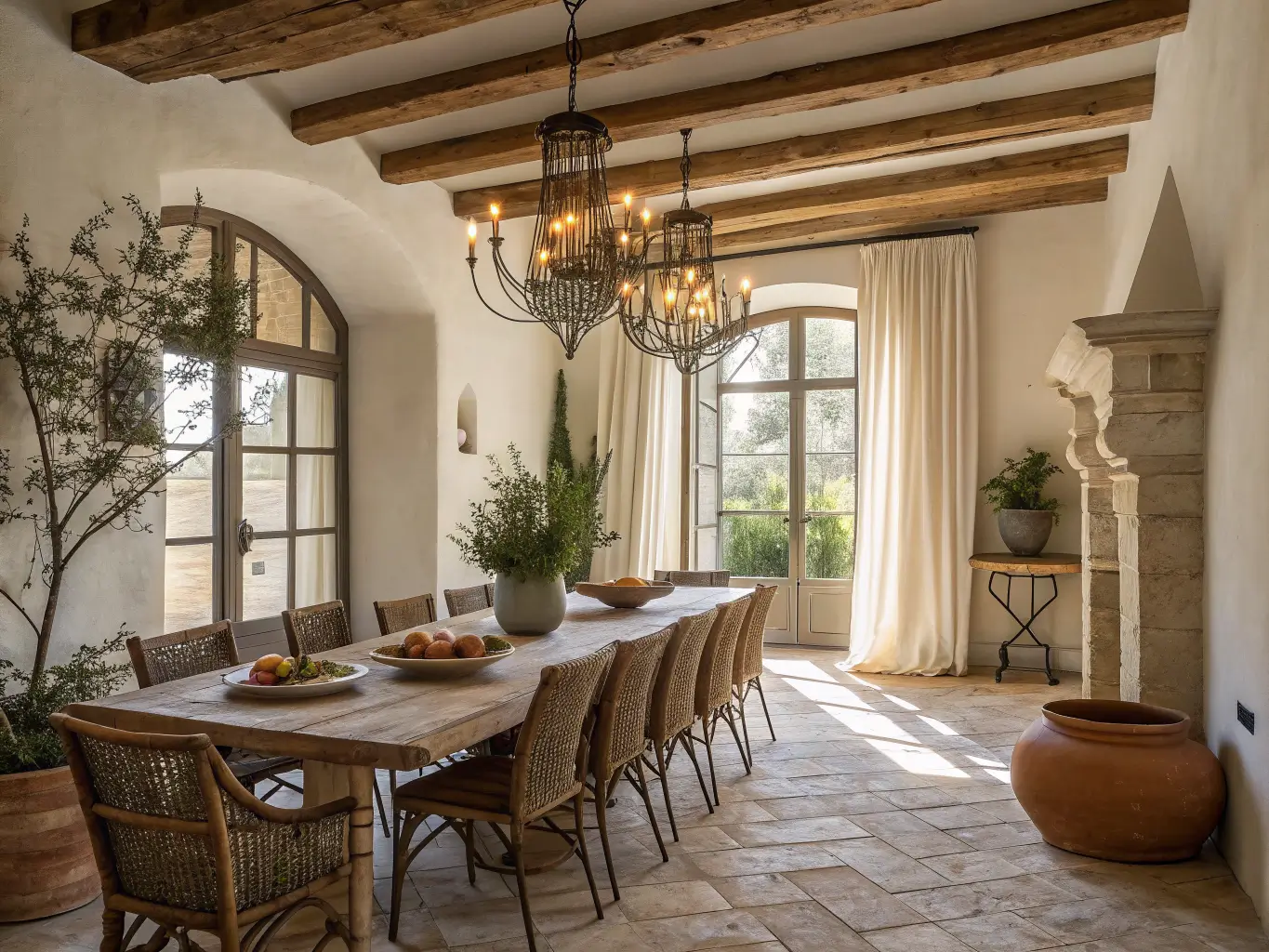
– A reclaimed-wood dining table with visible grain
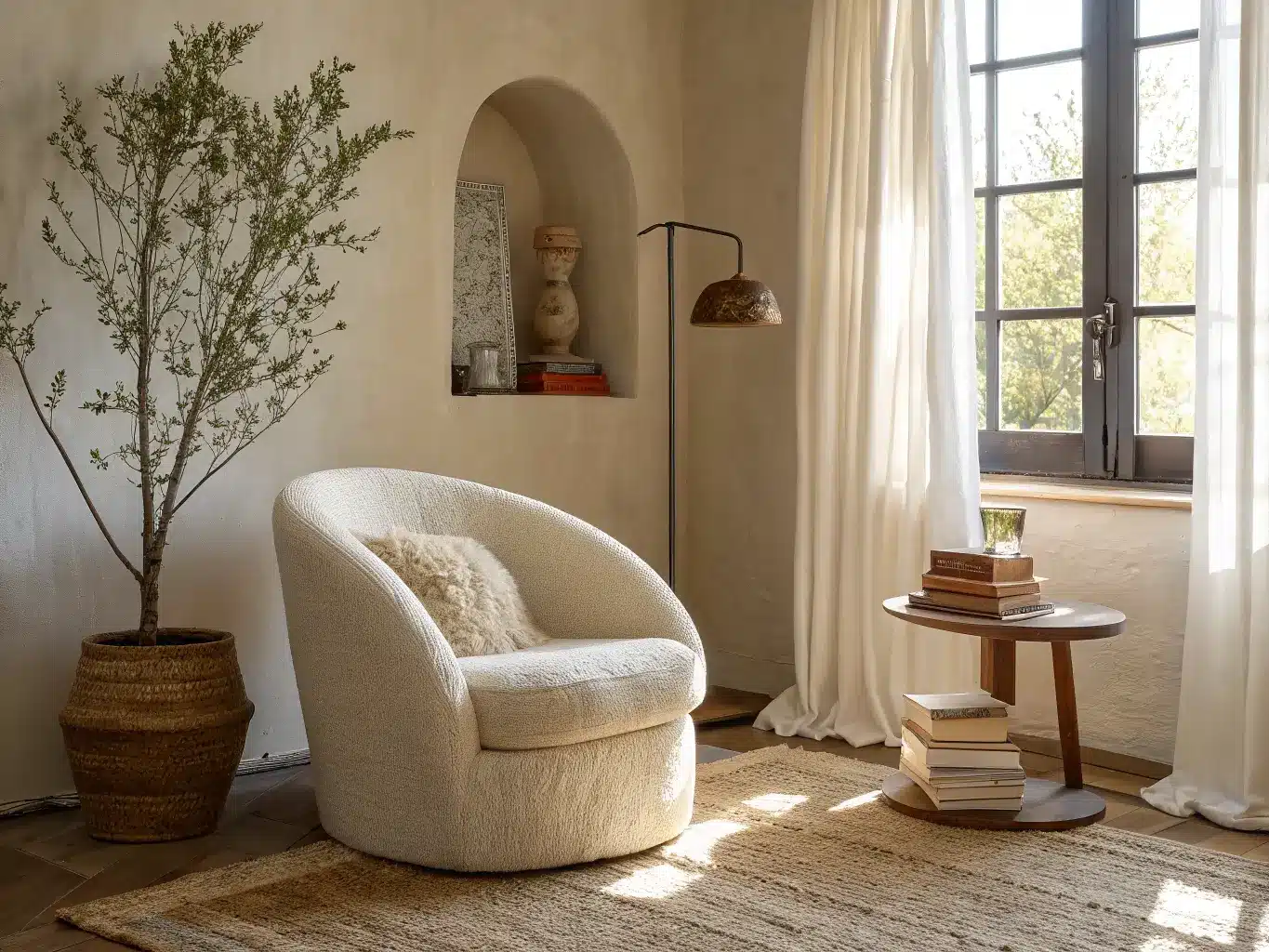
– Curved accent chairs — the soft, rounded silhouettes that have been everywhere the last few years actually suit this style well
– A rustic wood coffee table, ideally something with some age or wear to it
Signature accessories
– Hand-thrown ceramics (uneven, slightly imperfect ones — perfect symmetry looks mass-produced and works against the vibe)
– Aged urns or vessels
– Woven baskets
– Fresh or dried olive branches
– Jute rugs
– Ribbed or smoked glassware
– Sculptural table lamps in plaster or ceramic
Lighting
This is where I see people get lazy and just leave their builder-grade flush mounts in place, which instantly kills the mood. Go for:
– Oversized pendants in rattan, plaster, paper, or aged metal
– Wrought-iron chandeliers
– Warm ambient bulbs (look for 2700K, never the cooler 4000K+ bulbs — that blue-white light fights everything else you’re doing)
Architectural details
If your space has them, lean in: arches, arched mirrors, recessed wall niches, open shelving, exposed beams. If it doesn’t, an arched mirror is the single easiest way to fake the architectural softness this style depends on. I bought a $180 arched mirror for my entryway and it did more work than any other single purchase in that room.
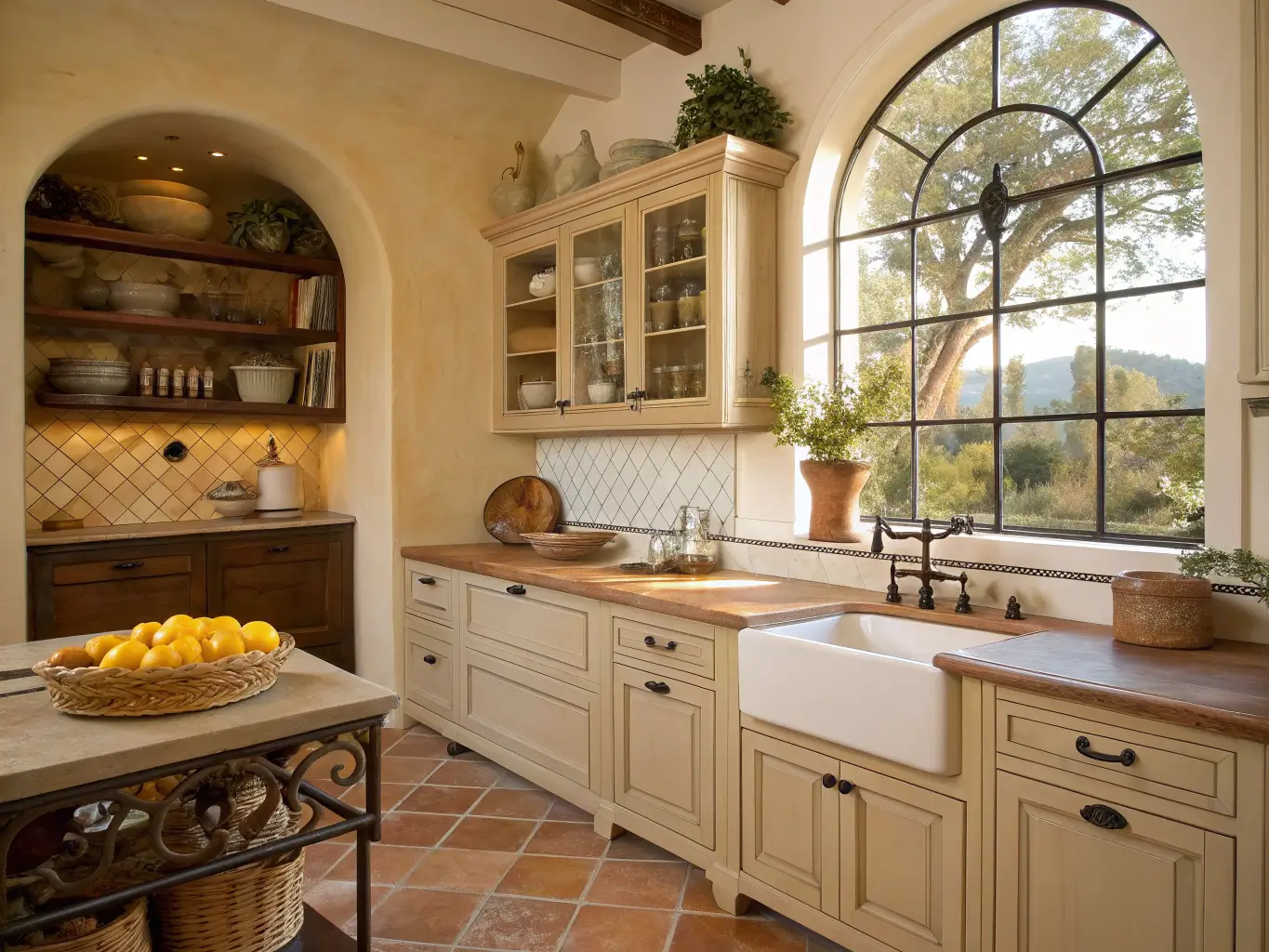
Optional Layers That Push the Look Further
Once the basics are in place, these add depth without tipping into clutter:
– Seasonal accents: olive branches in spring/summer, dried grasses and fig branches with candlelight in fall/winter
– Organic touches: raw-edged ceramics, handmade textiles, imperfect pottery arranged asymmetrically — a light Wabi-Sabi influence
– Metallic accents: small amounts of brass, wrought iron, or aged bronze for contrast; a little Murano glass adds an unexpected, more playful note
– Color accents: muted blue-green, clay red, or a deeper olive, used in small doses so the room stays airy rather than heavy
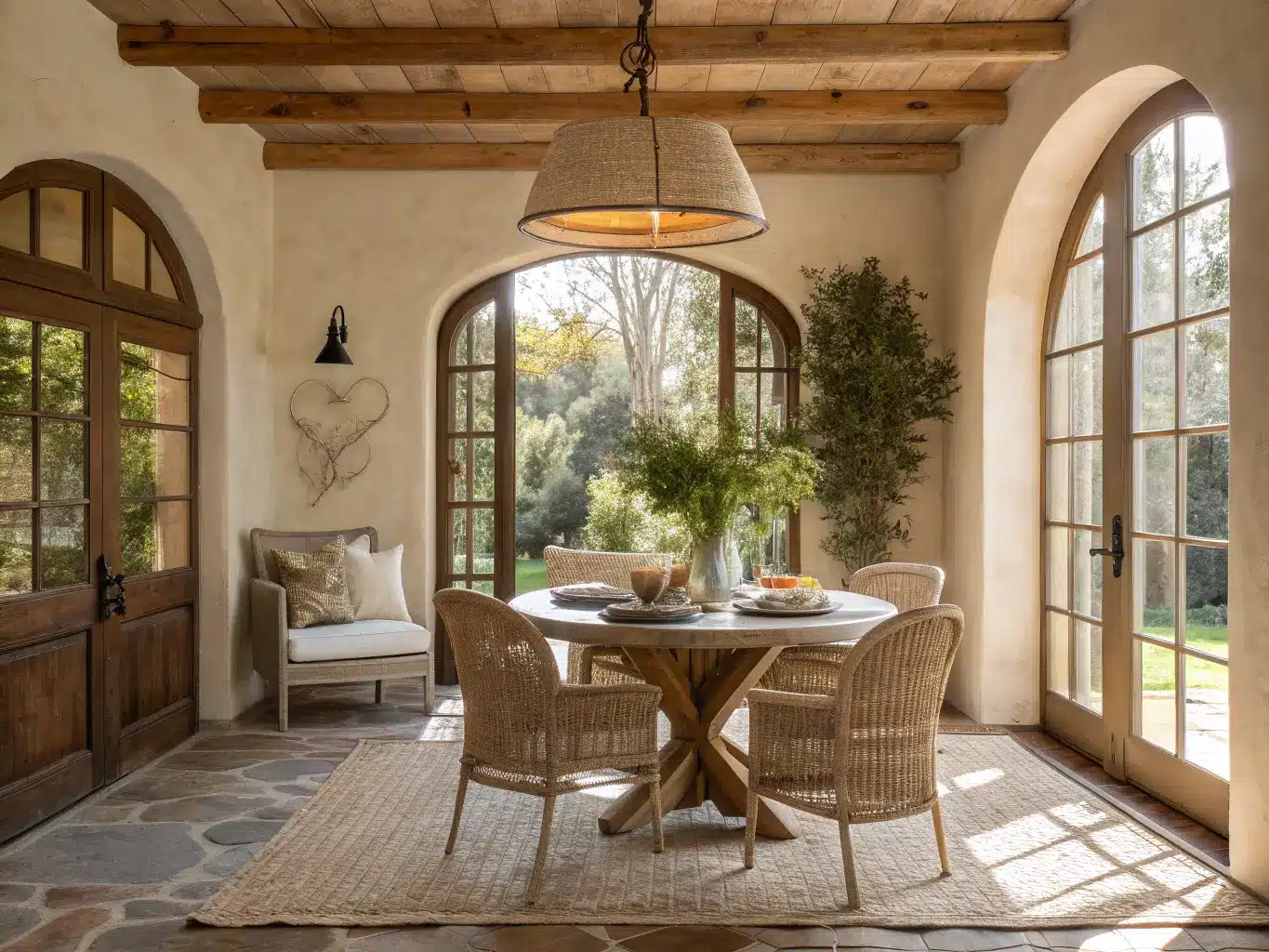
How to Actually Put It Together
Layer texture before pattern. This style is built on plaster, wood grain, woven fiber, stone, and linen. If you reach for pattern, keep it minimal and earthy — a simple stripe or a faded vintage rug motif, not a busy print.
Keep contrast soft. Warm white walls, terracotta accents, sand-colored textiles, brown wood — then ground the room with one or two small darker touches in iron or bronze. Think a black iron floor lamp or bronze drawer pulls, not a whole dark accent wall.
Embrace asymmetry. Don’t center everything. A slightly off-center gallery of ceramics on a shelf looks more “collected over time” than three matching vases lined up with a ruler.
Let architecture lead. If your room already has arches, beams, or big windows, resist the urge to decorate around them heavily. Quiet the surrounding decor so the structure gets the attention.
Bring the outdoors in. Ditch heavy blackout drapes for sheer linen panels or nothing at all. This style leans on sunlight doing a lot of the visual work — a dark, curtained room undercuts the whole point.
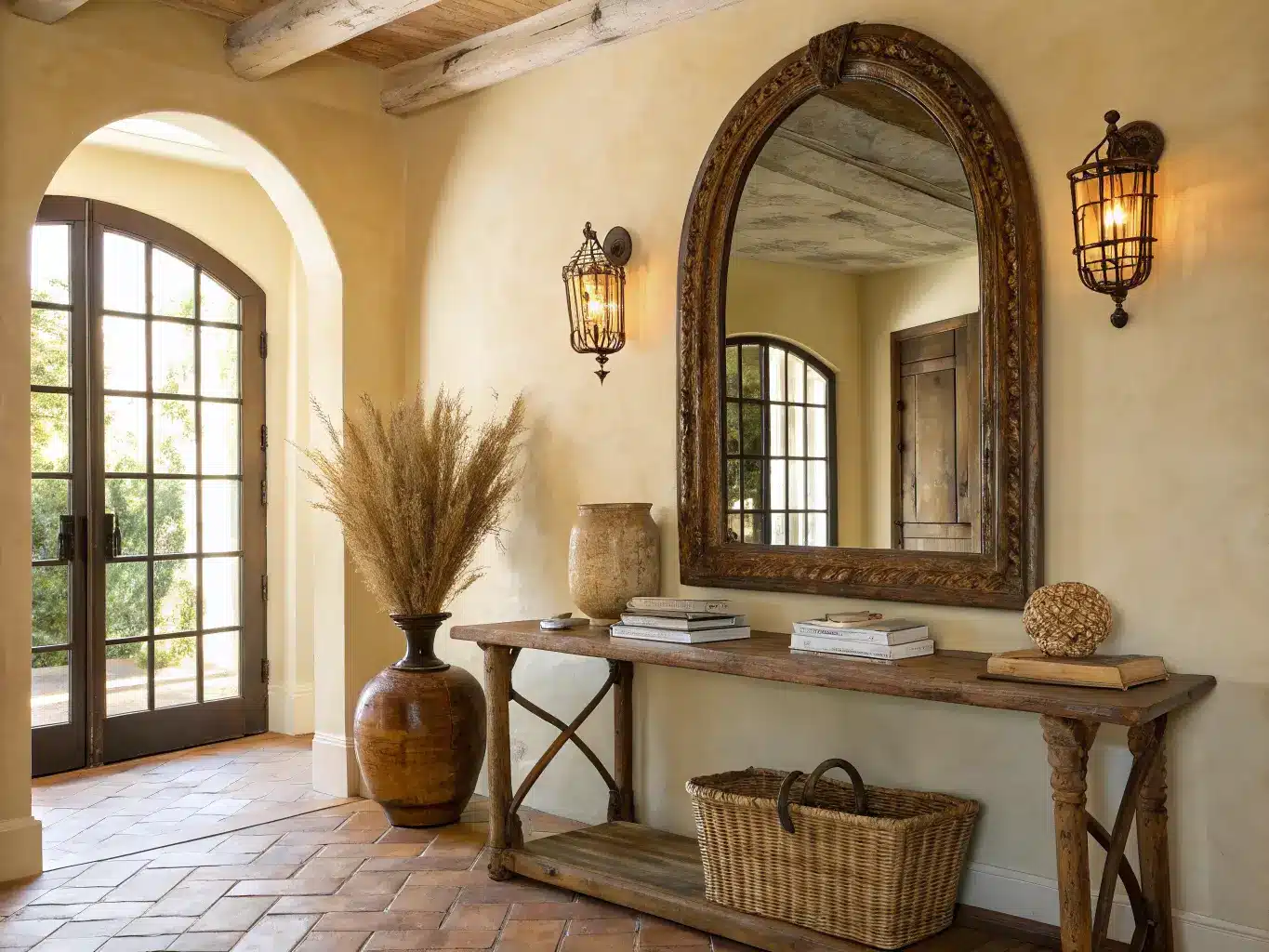
Setting Up the Room, Step by Step
1. Clear out anything cold, shiny, or overly ornate first. Glossy black furniture, mirrored accent tables, high-shine metallics — these fight the tactile, sun-washed quality you’re going for. I had a lacquered black console that I loved in isolation but that looked completely wrong once the rest of the room went warm and matte. It’s now in a different room entirely.
2. Establish your neutral base. Plaster-effect walls, cream textiles, natural wood — get this right before you add any accent color.
3. Place the big grounding pieces first: sofa, table, rug, lighting. Everything else gets arranged around these.
4. Layer in the smaller stuff last: ceramics, baskets, branches, books, small sculptural objects.
5. Open the room up visually. Pull back heavy drapes, clear windowsills, let light actually hit the plaster and wood — that’s where this style photographs (and lives) best.
When you’re accessorizing, pick one hero texture to lead — limewash walls or terracotta tile are the two most defining choices right now. Add one visibly grained wood piece so the room doesn’t go flat. Mix in rattan, jute, and linen to soften the harder plaster and stone surfaces. And save room for a few story objects — actual heirloom pottery, a piece from a trip, something an artisan made — instead of filling every surface with generic decor. A room with three objects that mean something beats a room with fifteen objects that don’t.
The Mistakes That Make This Look Dated Instead of Current
I’ve made most of these myself, so consider this the shortcut past my trial and error:
– Over-theming it. Fishing nets, starfish, heavy blue-and-white nautical stripes — that’s old Mediterranean-by-way-of-craft-store, not this. The 2026 version is more restrained and far less literal.
– Going too cold. Flat white paint with no texture kills the whole effect. This style needs the depth of limewash, plaster, or at minimum a warm off-white with a matte, slightly textured finish — not builder’s white in eggshell.
– Clashing styles too hard. A glossy glam mirrored bar cart or an ultra-industrial black metal shelving unit will fight this palette instead of complementing it. Keep additions in the same material family: wood, stone, natural fiber, aged metal.
– Overcrowding surfaces. This isn’t a maximalist style. It wants breathing room. If a shelf looks full, remove one object — it usually looks better.
– Faking the materials. Laminate that’s printed to look like wood grain, or plastic “woven” baskets, read as cheap immediately next to real linen and real ceramic. Spend on the materials that get touched and seen up close; save on the stuff in the background.
Keeping the Look Cohesive Over Time
Stick to your anchor palette — warm white, cream, sand, terracotta, olive, brown — and treat blue as a rare accent, not a recurring color. Repeat materials across the room so it feels like one thought instead of scattered purchases: if you’ve got a rattan pendant in the dining area, echo that same material in a woven basket or chair in the living room. And edit ruthlessly. Every few months, walk through and pull one thing off every surface that’s earned its spot through habit rather than actually adding something.
Updating It Seasonally and on a Budget
Seasonal swaps are cheap and fast: olive branches and dried florals with a heavier linen or wool throw for fall and winter, then lighter linens and simple ceramic bowls for spring and summer. None of this requires new furniture.
Budget-friendly moves that actually work:
– Plaster-effect paint instead of true plaster — several brands now make a limewash-look paint that gets you 80% of the texture for a fraction of the cost and labor
– Terracotta-toned accessories (planters, vases, table linens) instead of ripping out flooring
– One good lamp or one good rug instead of five small purchases spread thin
Blending with other styles if you don’t want to go all-in:
– + Coastal: brighter overall, more sea-glass blue, airier linens
– + Boho: more handwoven texture and pattern, but keep the palette disciplined so it doesn’t spiral into visual noise
– + Organic Modern: lean into arches, sculptural furniture forms, and raw stone surfaces for something sleeker and more architectural
The whole point of New Mediterranean is that it looks unforced — like the room evolved instead of got decorated. That takes more restraint than people expect going in. Add slower than you think you should, and let the materials do the talking instead of the accessories.
More Ideas to Explore
Keep the momentum going: Farmhouse Garden Design: A Complete Guide to Getting the Look Right covers another angle worth a look.