What a Japandi Lamp Is, and Who It’s For
Japandi is the mashup of wabi-sabi (the Japanese appreciation for imperfect, natural, weathered things) and Scandinavian function — simple forms, no fuss, everything earning its place. Applied to lighting, that means:
Materials: rice paper, linen, bamboo, rattan, wood, ceramic, matte metal
Colors: warm white, cream, sand, taupe, greige, walnut brown, matte black used sparingly
Shapes: cylinders, lanterns, columns, soft rounded forms — nothing sculptural or fussy
This is the style for someone who wants a room to feel settled rather than styled. If your current lamp has a chrome base and a bright white shade, you already know the mismatch I mean. It works in a studio apartment just as well as it does in a big living room, because the goal isn’t to fill space — it’s to make the space feel intentional.
Best rooms for it: living rooms, bedrooms, reading corners, entryways, dining tables. Basically anywhere you sit still long enough to notice the light.
The Pieces That Actually Make It Work
You don’t need all three of these at once, but a full Japandi lighting scheme uses layers instead of one central fixture. That’s the biggest mental shift — stop thinking “what’s my room’s main light” and start thinking “what are my three light sources.”
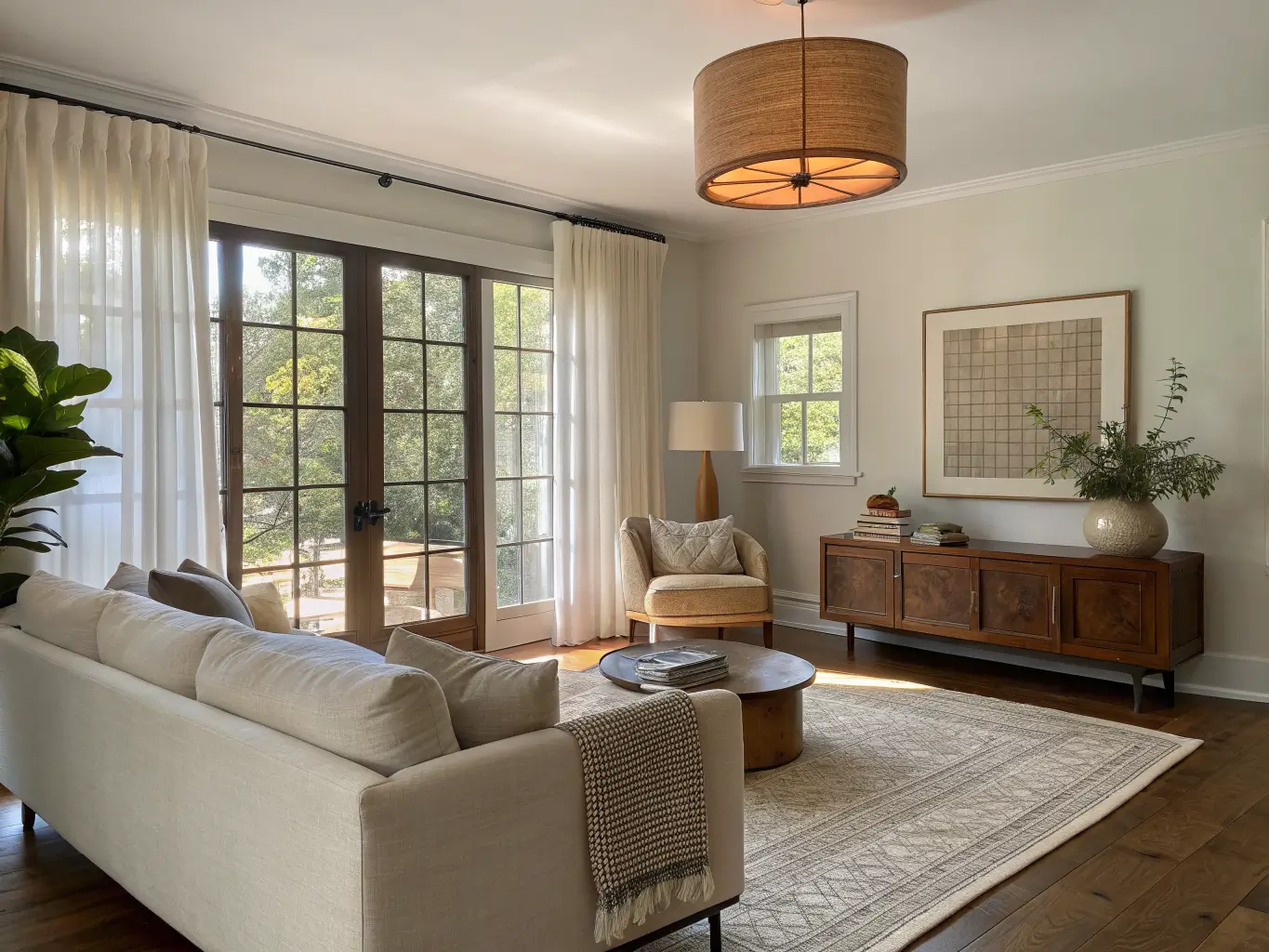
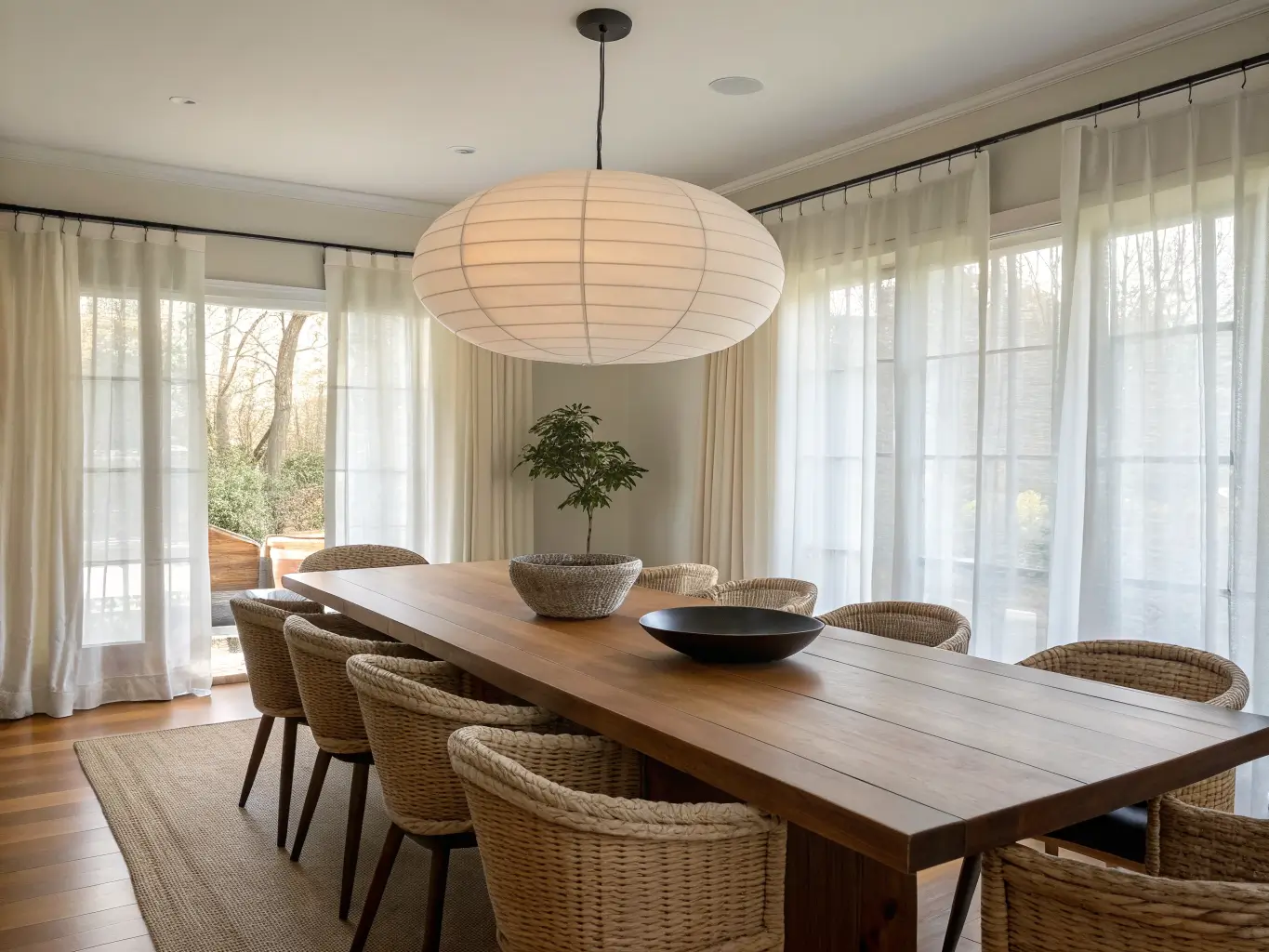
The pendant — rice paper, linen, or paper-mâché shade, hung as ambient overhead light. This is your hero piece if you’re doing one thing. Budget $80–$250 for something with real texture, not a flat printed paper substitute.
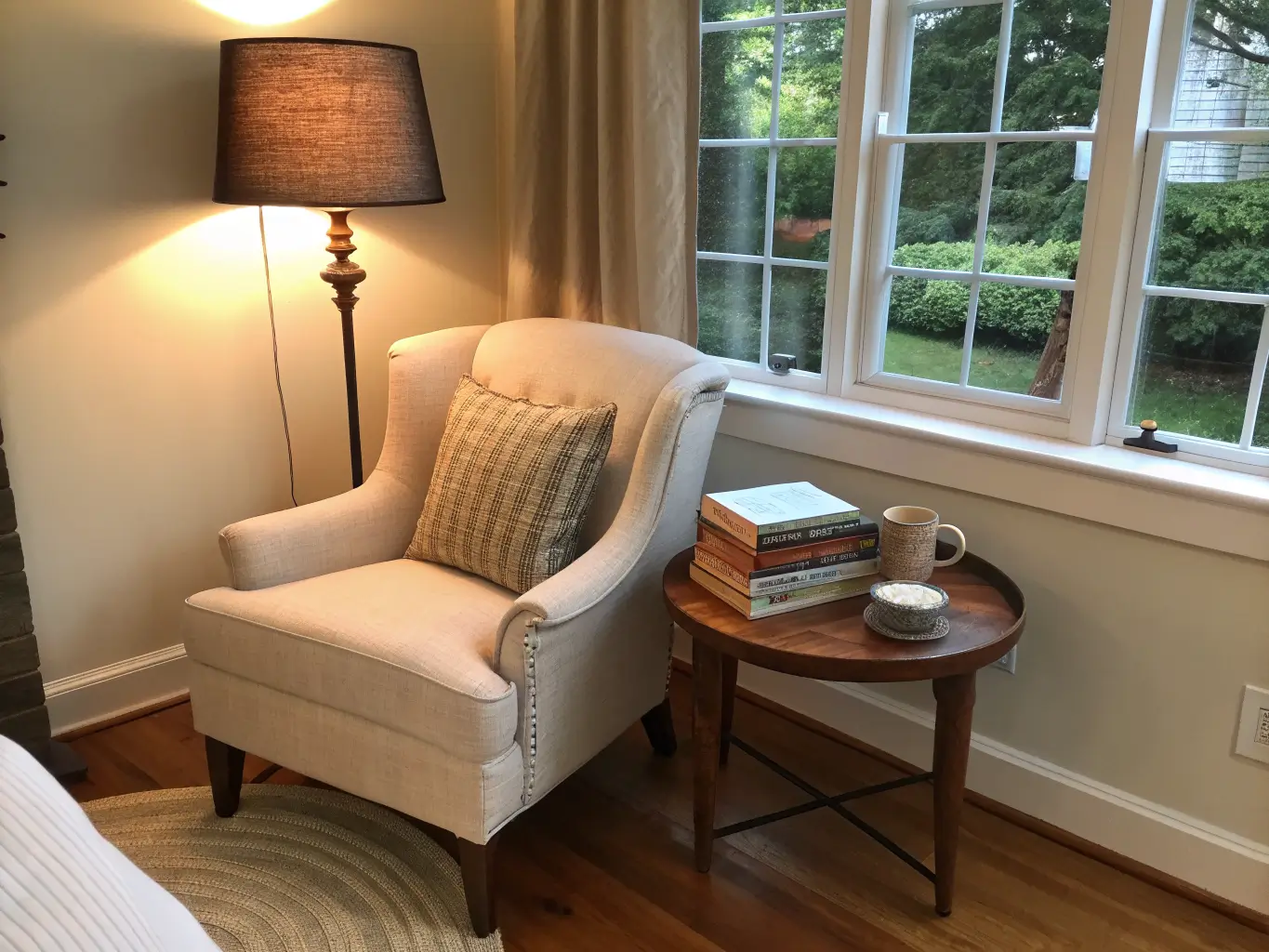
The floor lamp — wood base, fabric or paper shade, tucked into a corner or angled slightly forward of your seating. This is task-and-mood light combined. $120–$350 gets you something solid; IKEA’s basic wood-and-paper options start lower but the paper tends to yellow faster.
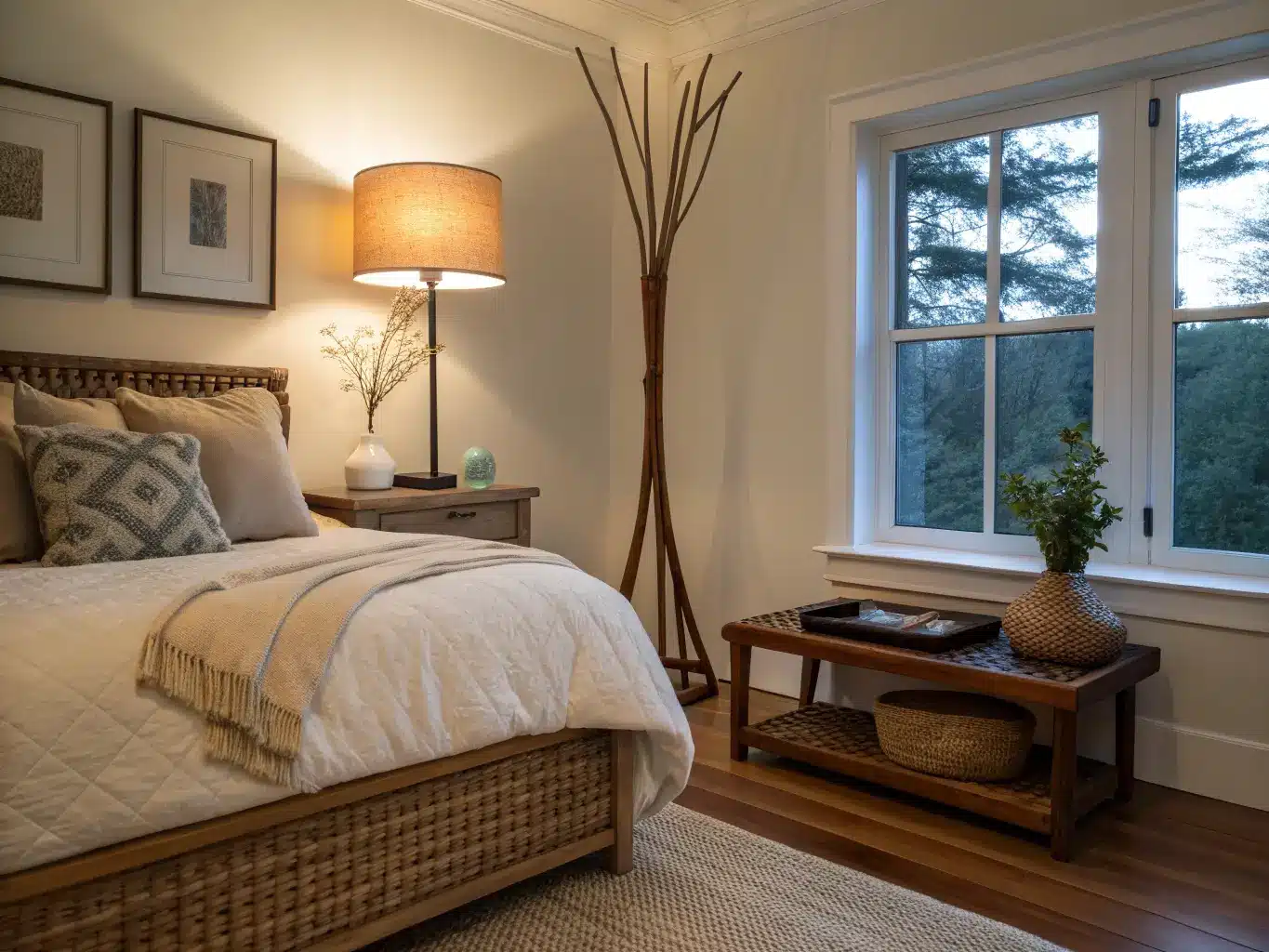
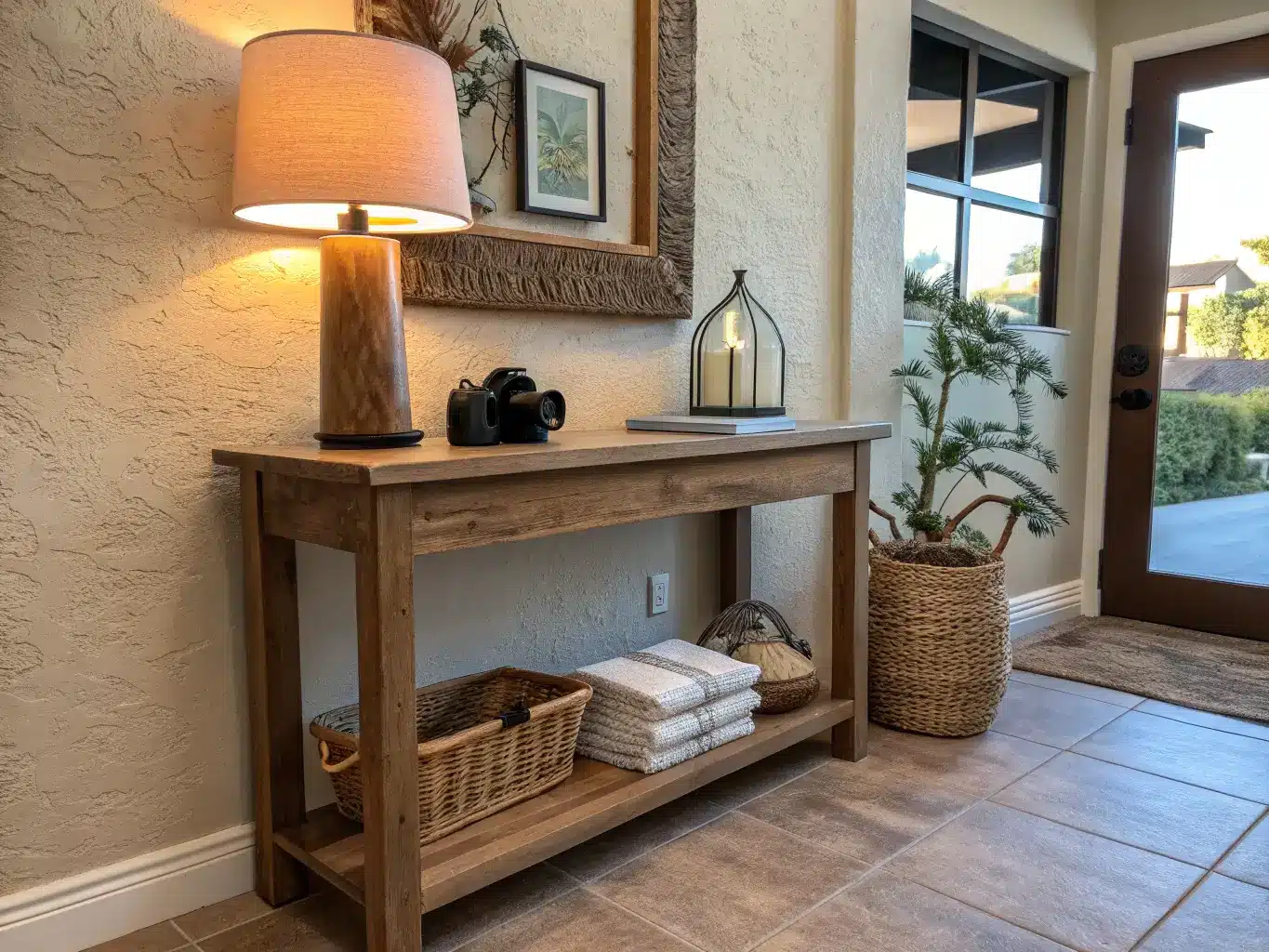
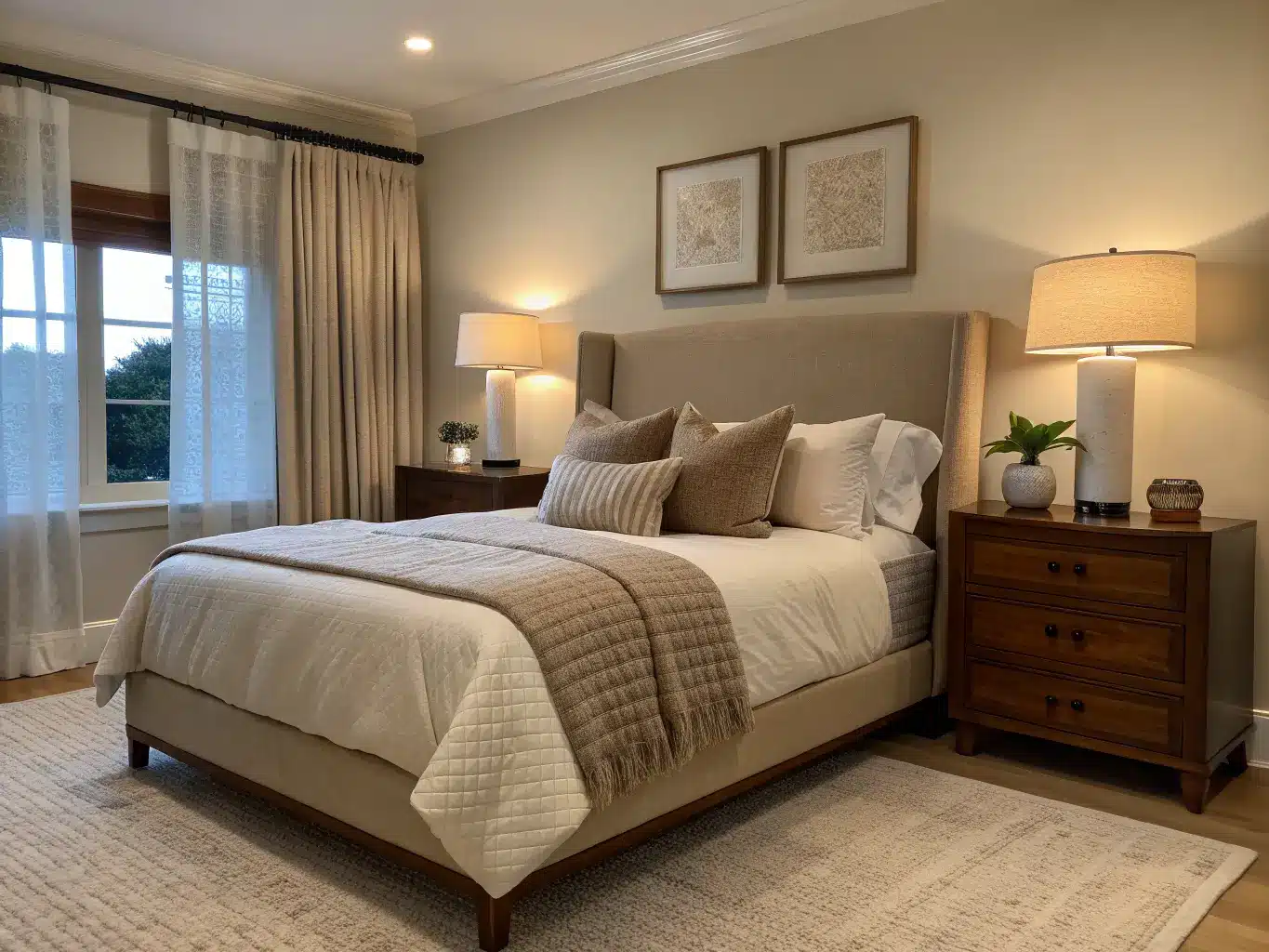
The table lamp — ceramic, wood, or matte metal base with a soft diffusing shade, for consoles, nightstands, side tables. $40–$120 for entry level, and honestly this is where I’d spend least, because you’ll probably want two (nightstands come in pairs) and the design payoff per dollar is lower than the pendant.
The bulb — this is the part I got wrong the first time, so pay attention here. 2700K is the number to remember. Anything creeping toward 3000K starts to feel neutral instead of warm; 4000K and up reads office, not living room. Look for CRI 90+ on the packaging — it affects how true colors look under the light, and cheap bulbs skip this spec because most people don’t know to check.
For brightness: around 800 lumens for your main ambient fixture, 400–600 lumens for a bedside or accent lamp. Dimmable where you can manage it — a $15 in-line dimmer switch on a lamp cord is one of the cheapest upgrades in this whole list.
How to Put a Japandi Lighting Scheme Together
Start big, then work down. Place your pendant or floor lamp first — these anchor the room — and add the table lamp last as a secondary glow, not competition.
Match materials across the room, not just within the lamp. If your lamp base is oak, and your coffee table is a cool gray laminate, they’re going to argue with each other visually. I learned this the hard way in my own living room: bought a beautiful walnut-base lamp, put it next to a black metal side table, and it looked like two different rooms got mashed together. Swapped the side table for a lighter wood one and the whole corner suddenly made sense.
Placement specifics that matter:
– Pendant over a dining table: bottom of the shade should sit 30–36 inches above the tabletop
– Bedside lamp: shade should land around 24–28 inches above the nightstand surface — close to seated eye level, so it lights your book without shining in your eyes
– Floor lamp: place it in a corner or just forward of your sofa so light washes up the wall instead of pooling straight down on the floor
Keep the surrounding decor sparse. One vase, one small stack of books, maybe a ceramic tray — that’s the ceiling, not the floor, for how much you put around a Japandi lamp. The lamp should read as the moment of interest in that corner, not one object among ten.
Palette discipline: pick two or three neutral families and repeat them. Cream + oak + matte black. Or beige + walnut + linen. Don’t introduce a fourth undertone or the room starts to feel like it’s negotiating with itself.
Budget: Where to Spend, Where to Save
Spend on the pendant. It’s the fixture you’ll look at most and the one hardest to fake with a cheap version — paper and linen shades show their quality (or lack of it) immediately, especially with light behind them.
Save on table lamps, especially if you need two for a bedroom. A $50 ceramic base with a linen shade does 90% of what a $200 one does, and nobody’s inspecting your nightstand lamp up close.
Don’t cheap out on the bulb. This is the $8 difference between a lamp that makes your room feel warm and one that makes it feel like a hallway. Buy the 2700K, high-CRI bulb every time, even in the budget lamp.
Rough total for a starter setup — one pendant, one floor lamp, two table lamps, decent bulbs throughout — lands around $400–$600. You can do it in stages; I did the pendant first, lived with it for two months, then added the floor lamp once I knew the room’s mood.
Mistakes People Make With This Style
Cool white bulbs. I already told you about mine. It’s the single most common thing that makes a “Japandi” room look like nothing in particular.
Bare bulbs, no shade or diffuser. Exposed filament bulbs are having a moment in industrial and mid-century spaces, but they undercut the entire point of Japandi — soft, diffused, no glare. If you can see the bulb, it’s not doing its job here.
Overdecorating around the lamp. Patterned throw pillows, a gallery wall, three plants and a candle all in the same corner as your beautiful new linen-shade lamp — it gets lost. Japandi needs negative space to read as Japandi.
Glossy or synthetic finishes. Chrome bases, plastic shades, high-gloss ceramic — they all fight the natural-material logic of the style. If it reflects light sharply instead of softening it, it’s probably wrong for this look.
Wrong scale. An oversized pendant in a room with 8-foot ceilings will dominate everything below it. A tiny lamp on a large nightstand disappears. Measure your space before you fall for a photo online — a lamp that looks perfect in a wide-open showroom shot can be totally wrong in your actual room dimensions.
Keeping It Fresh Without Starting Over
You don’t need a new lamp every season — that’s not really the spirit of the style anyway. Small, cheap adjustments do more:
– Swap the shade, not the lamp. A linen shade over the same base changes the whole character for $20–$40.
– Change the bulb if you inherited a lamp with the wrong temperature — this alone can fix a fixture you were about to get rid of.
– Rotate textiles seasonally — deeper taupe and moss tones near the lamp in winter, lighter linen and cream in summer — while leaving the lamp itself as the constant.
– Add one lamp at a time if you’re building the full layered scheme. I spread mine over about four months, and it gave me time to actually notice what the room needed instead of guessing all at once.
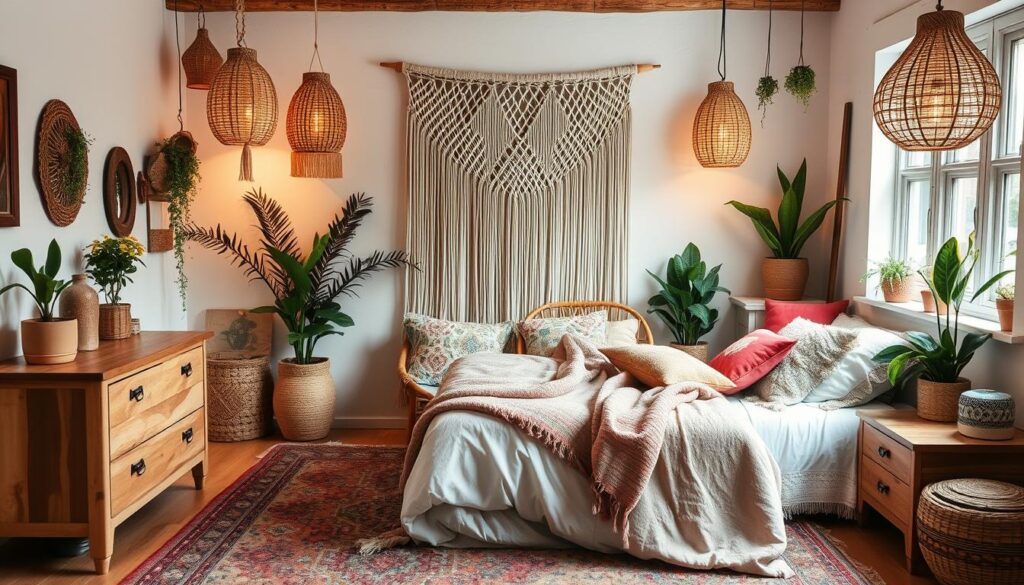
Japandi lighting also plays well with Scandinavian, wabi-sabi, soft modern, and even a little bit of boho if you lean into rattan and paper textures. It’s not a rigid rulebook — it’s a set of instincts about warmth, material, and restraint. Once you’ve got the bulb temperature and the material logic right, you can mix in almost anything else and it’ll still hold together.
The Japandi Lamp Guide: How to Pick, Place, and Style Warm Minimalist Lighting
I replaced my first Japandi lamp because I bought the wrong bulb. Not the wrong lamp — a genuinely nice rice paper pendant — but I put a 4000K LED in it and it looked like a dentist’s waiting room. That’s the thing nobody tells you about a Japandi lamp: the fixture is only half the equation. The light coming out of it matters just as much, and most of the mistakes I made (and see other people make) come down to getting that second half wrong.
If you’re trying to bring that calm, warm, uncluttered look into a room — the one that blends Japanese minimalism with Scandinavian ease — the lamp is usually where to start. It’s a small purchase that reorganizes how a whole room feels. Here’s what actually works.
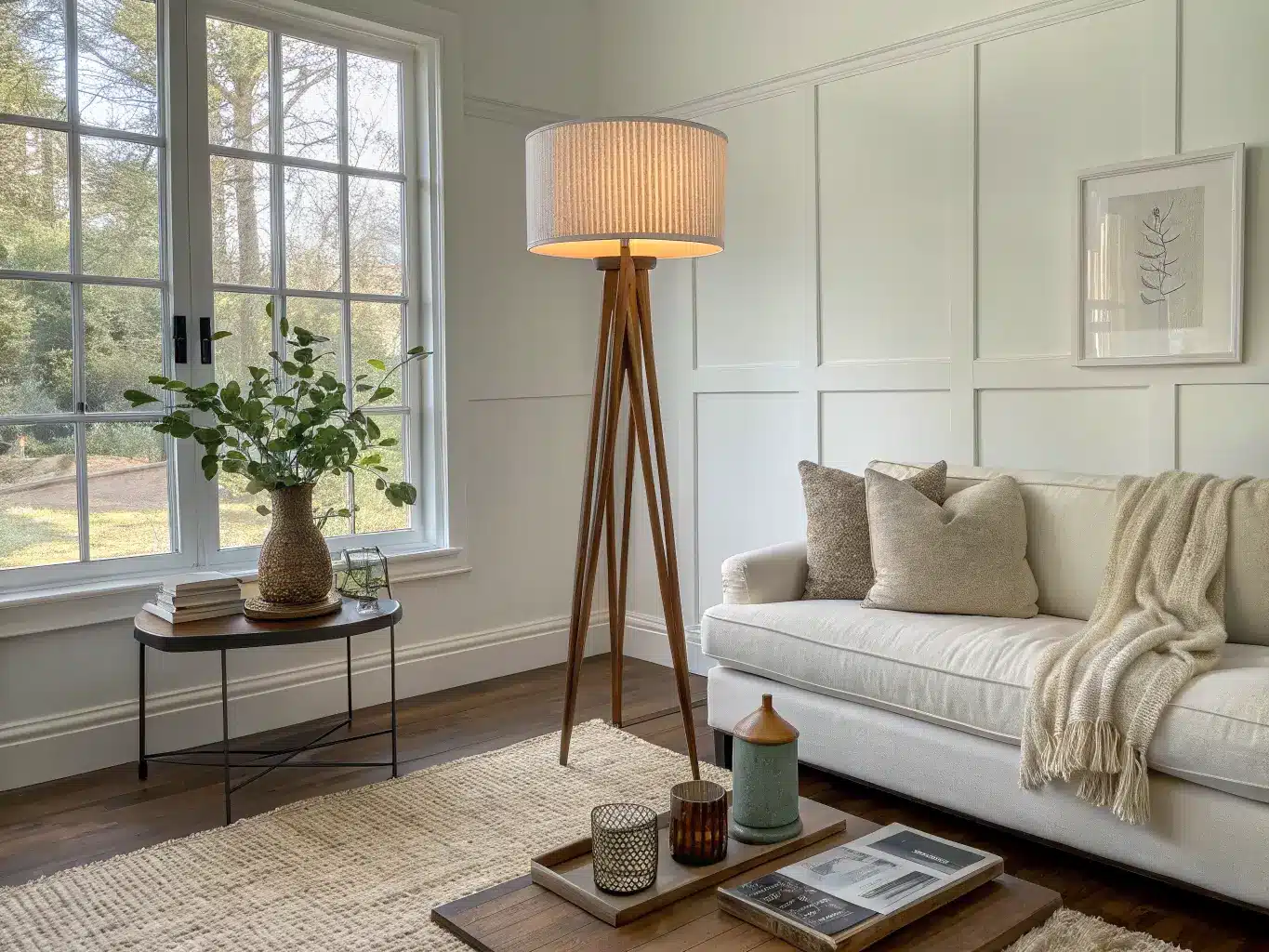
Final Styling Note
The light coming out of it matters just as much as the fixture itself. If you remember one thing: keep it warm (2700K), keep it diffused, and keep the materials natural.
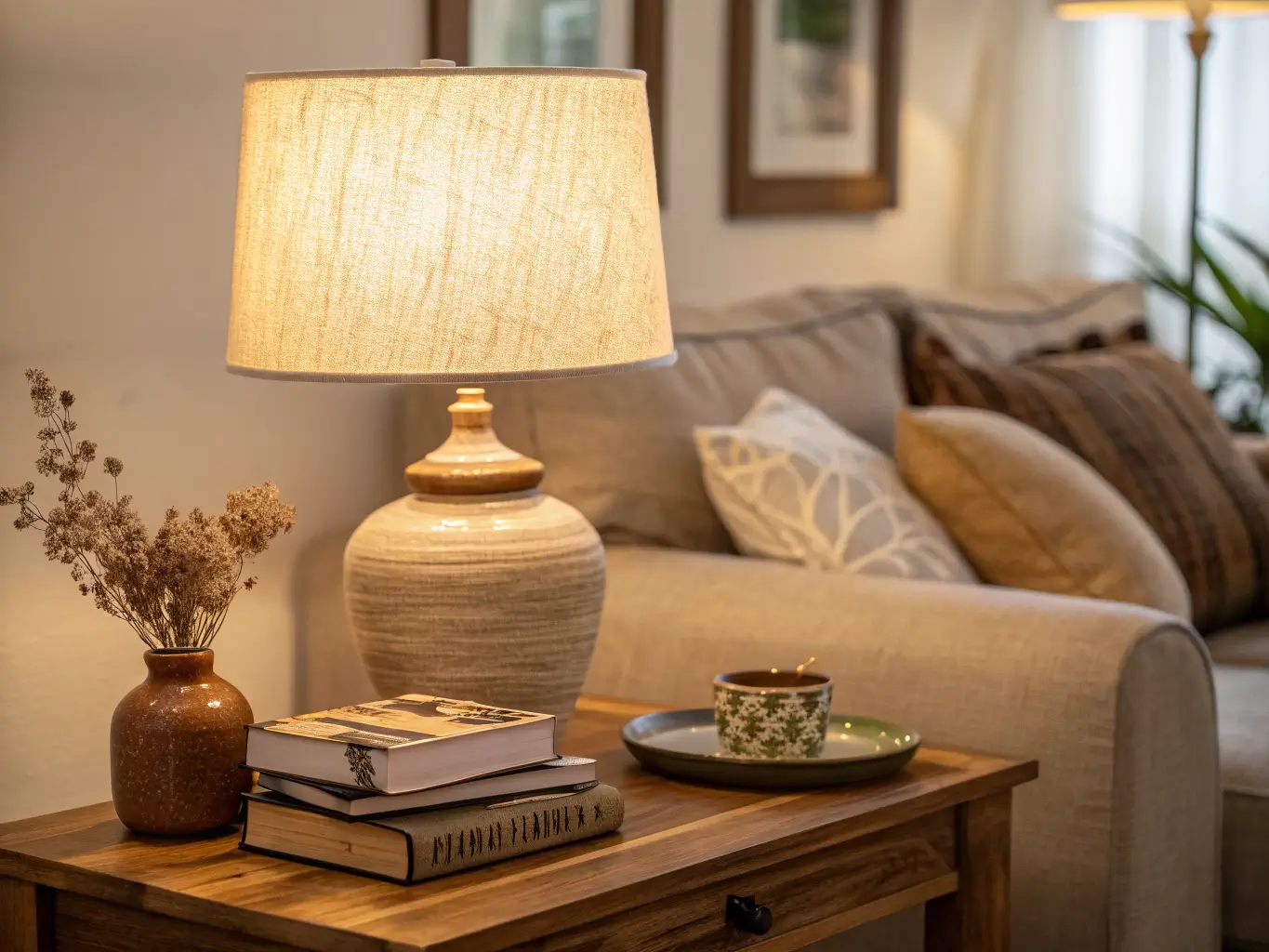
More Ideas to Explore
Keep the momentum going: New Mediterranean Interior Design: A Complete Guide to the Warm, Textured Look Taking Over 2026 covers another angle worth a look.