What “Old Money” Actually Means as a Style
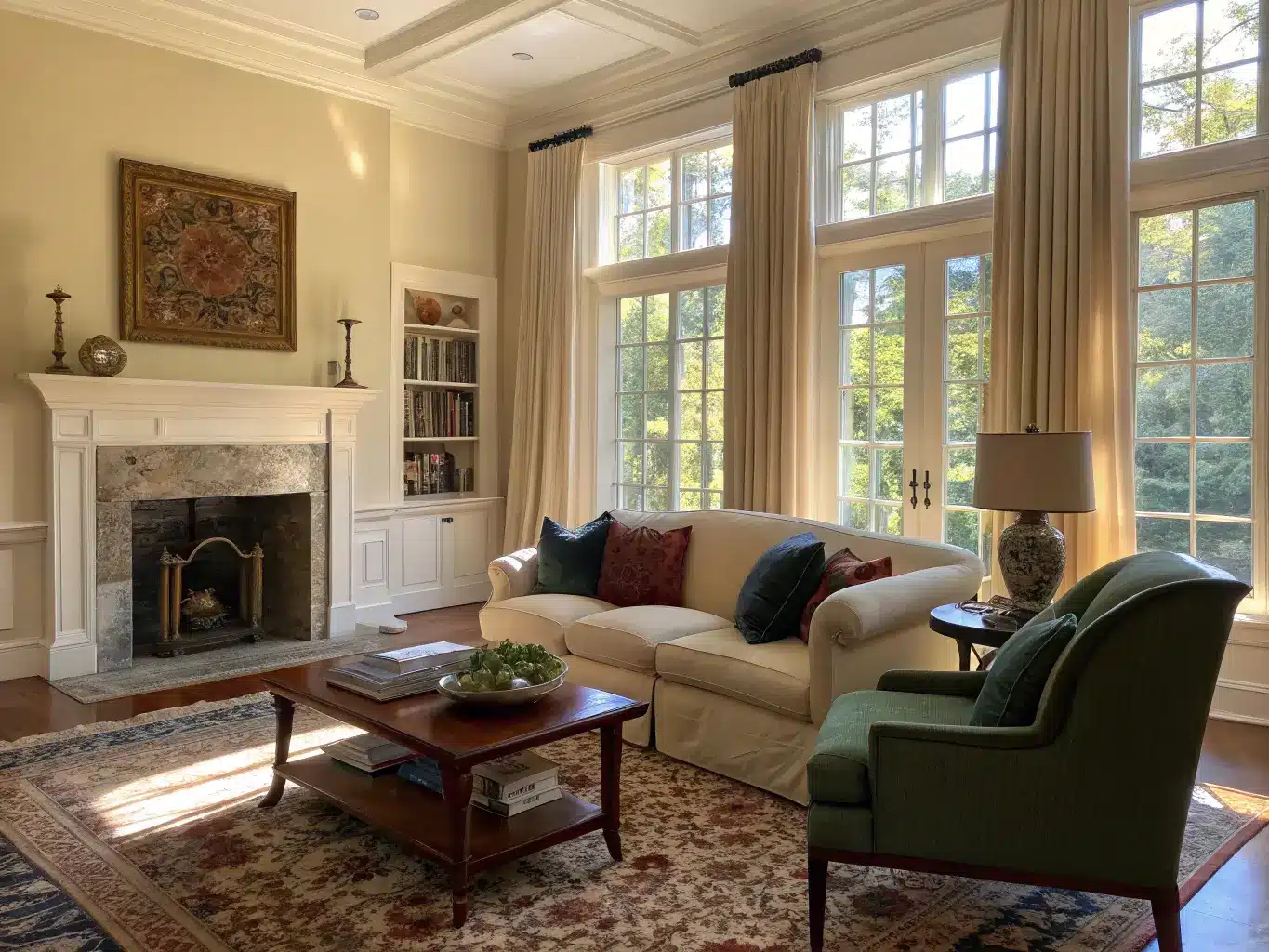
An old money living room doesn’t announce itself. That’s the whole point. No logos, no glossy showroom furniture, nothing that looks like it arrived last week in a box. When I finally figured out how to get this look in my own space, the biggest shift wasn’t buying nicer things — it was buying fewer, older-feeling things and stopping myself from matching everything.
If your living room feels flat, trendy, or somehow both “done” and “off,” you’re probably dealing with a matched-set problem, not a money problem. I’ve built this look twice now — once in a rental with almost no budget, once in a house where I could actually paint and add trim — and the fundamentals were identical both times.
This isn’t about spending the most. It’s classic traditional design with quiet luxury instincts — restraint, craftsmanship, and a room that looks like it was assembled by three generations, not one Saturday at a furniture showroom.
The colors that make it work:
– Warm cream, ivory, taupe, beige
– Soft gray
– Deep navy, forest green, burgundy, olive
– Muted browns
The materials that make it read as expensive:
– Solid wood — mahogany, walnut, cherry, oak
– Marble or stone
– Velvet, linen, wool
– Brass and aged bronze (never chrome)
– Leather with actual patina, not the stiff kind
– Sisal or jute for grounding rugs
This look is built for medium to large living rooms, ideally with a fireplace or built-in shelving to anchor symmetry. It works in open-plan spaces too, but you’ll need a large rug to visually wall off the seating area — otherwise the furniture just floats.
Setup Time and Real Costs
Here’s the honest breakdown, because “it depends” isn’t useful:
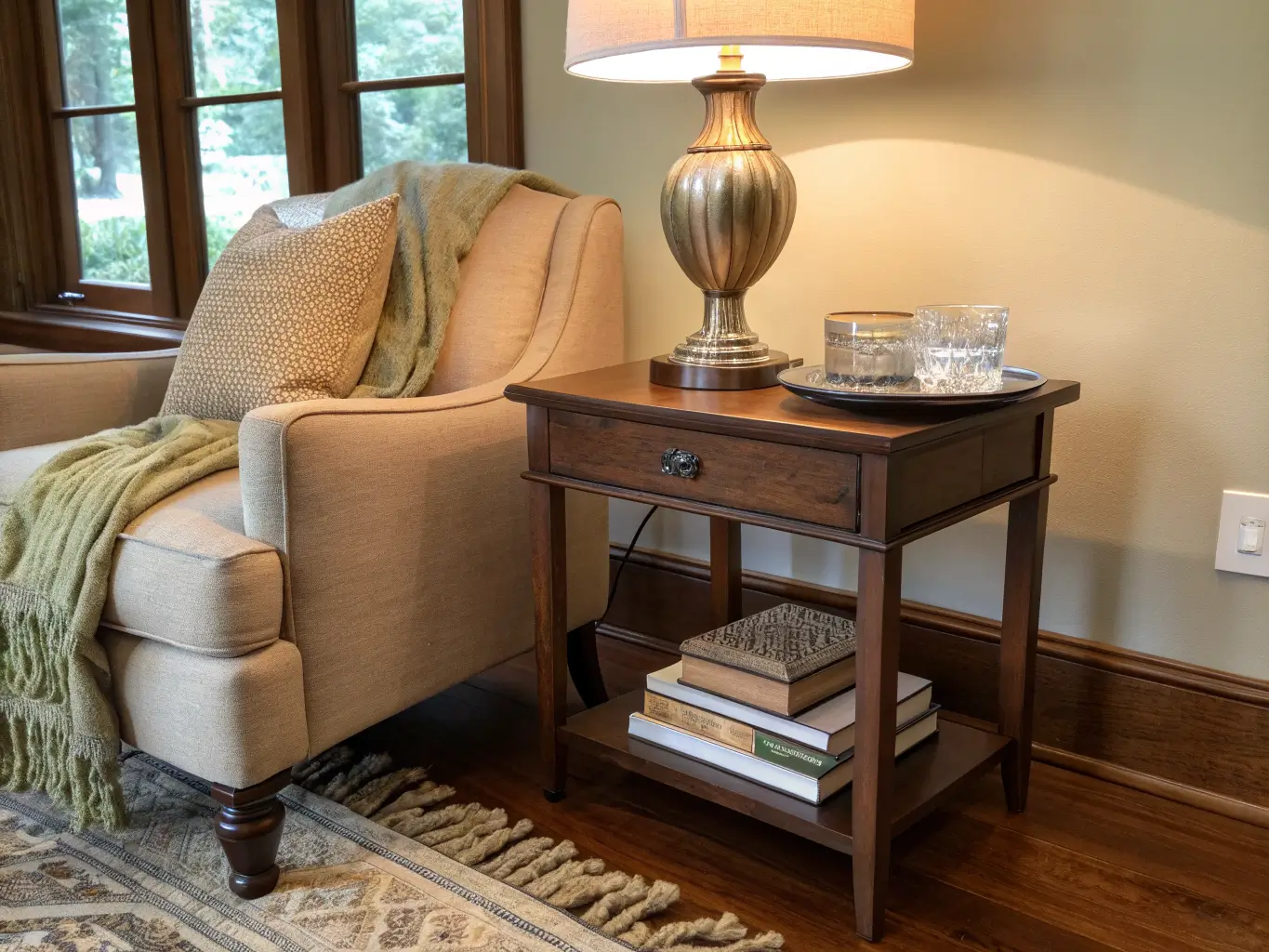
– Budget refresh: $300–$1,500. This is thrifted art, secondhand wood furniture, vintage lamps, and good textiles. I bought a solid mahogany side table off Facebook Marketplace for $40 that would’ve been $400 new — it just needed a light sanding and a coat of wax.
– Mid-range refresh: $1,500–$6,000. A new sofa, a real rug, drapery, layered lighting, a few accent pieces.
– Higher-end: $6,000+. Custom upholstery, marble tables, antique rugs, moldings or paneling added to the room itself.
Timeline-wise, if you’re reusing what you own and thrifting the rest, you can refresh a room in 1–3 days. If you’re waiting on custom drapery or hunting the right antique rug, budget 1–2 weeks. This style is not a one-shot makeover — it’s built gradually, and honestly, it should look like it was.
The Must-Have Pieces
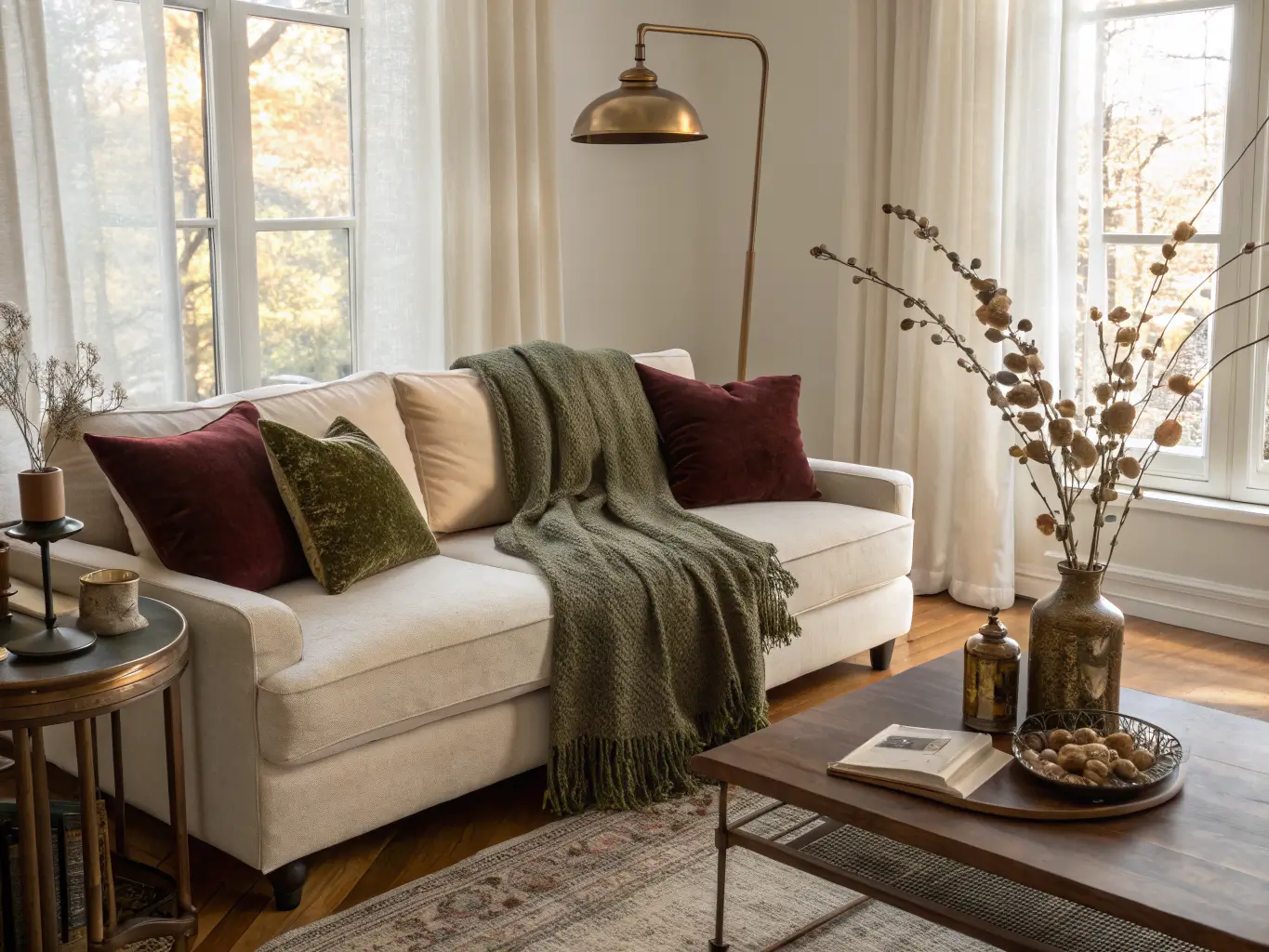
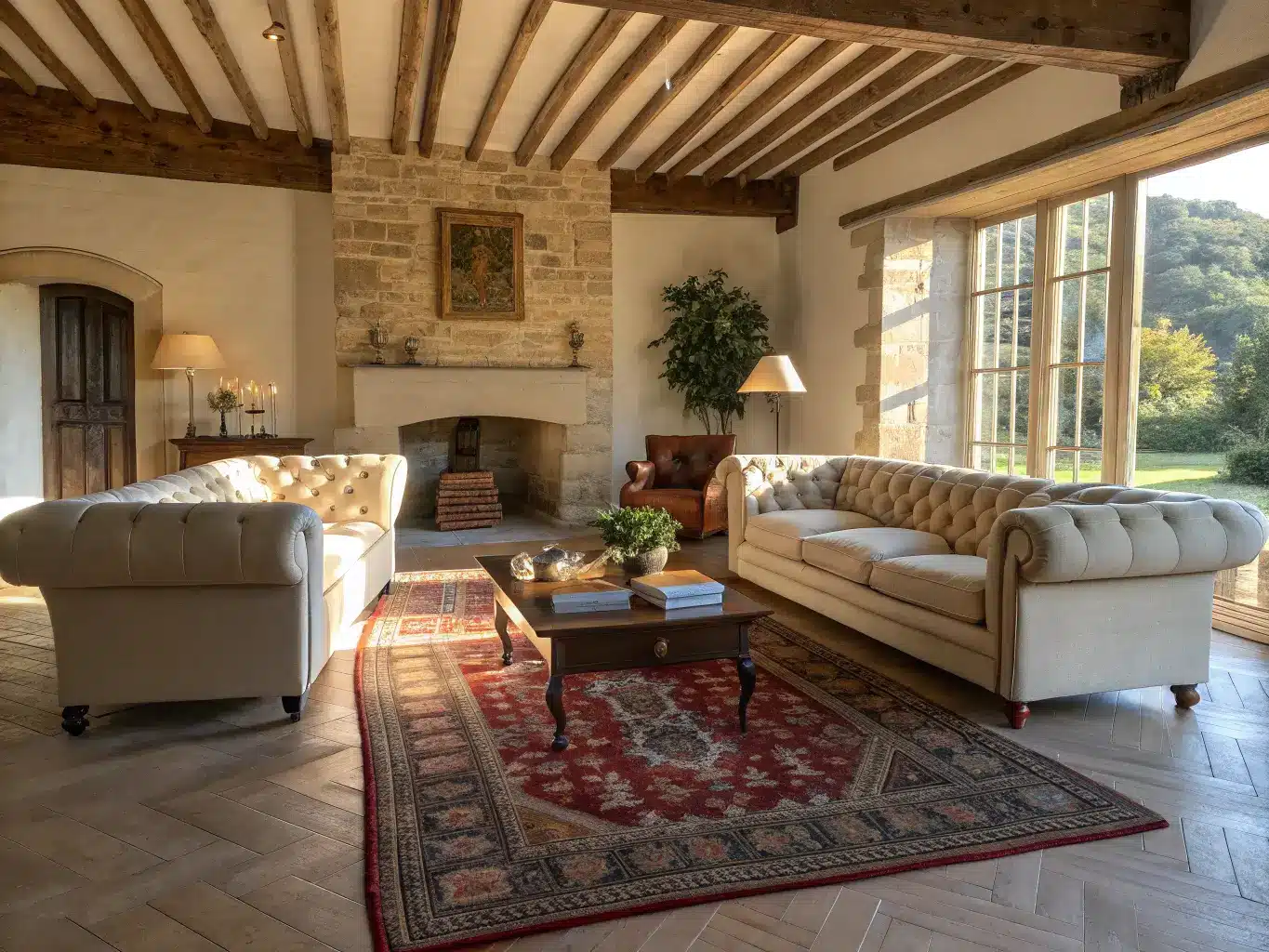
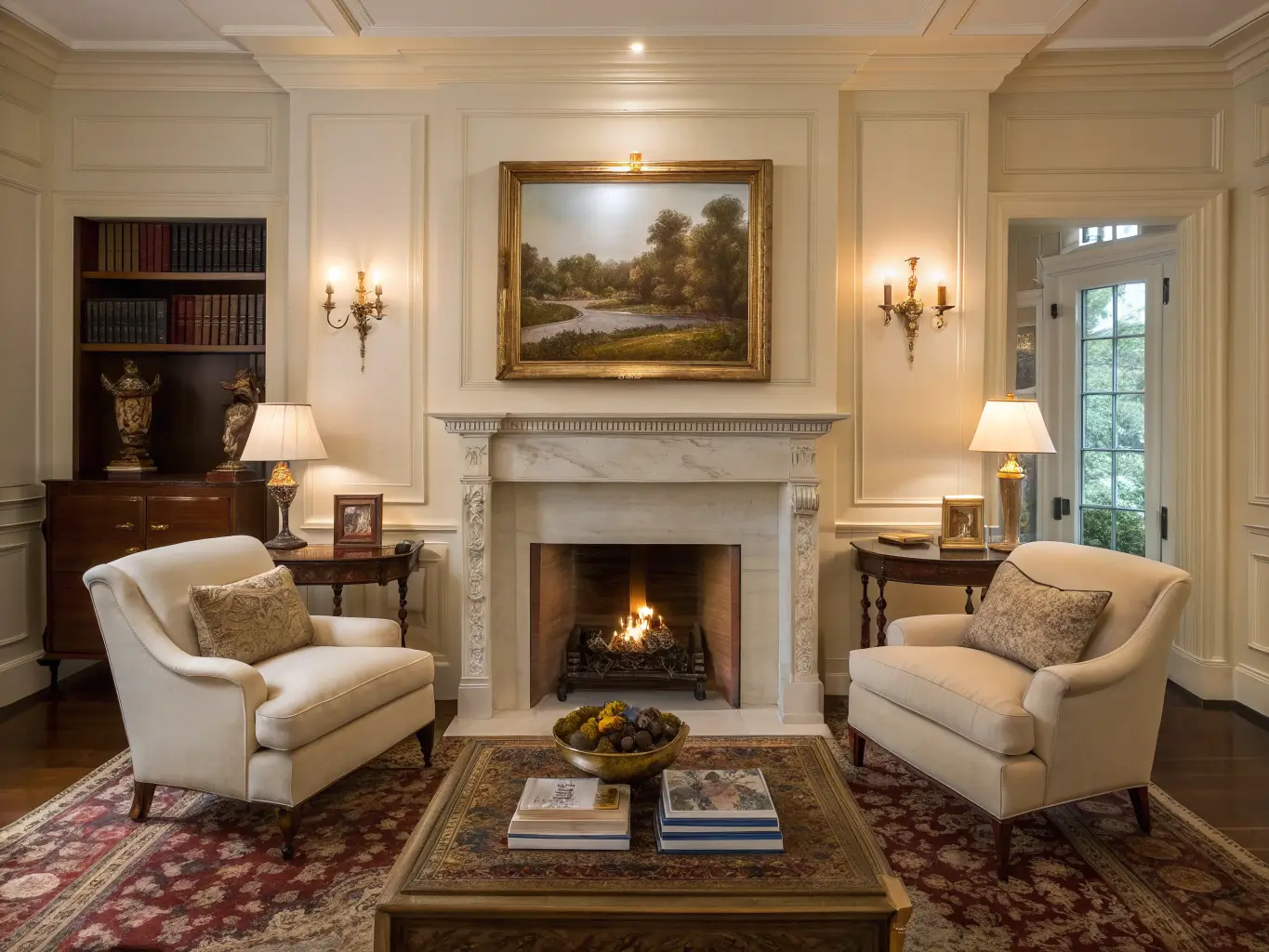
Seating is your hero. Think camelback sofas, Chesterfield sofas, wingback chairs, skirted armchairs — tailored lines, not overstuffed sectionals. Cream, taupe, or soft beige upholstery in velvet or linen. My first sofa attempt was a gray linen sectional that I thought was neutral enough. It wasn’t. It read modern, not classic, because of the shape — low arms, no skirt, no structure. I sold it eight months later and bought a secondhand camelback in cream linen for less than I lost on the sectional.
Anchor surfaces — a solid-wood or marble-top coffee table as the room’s center, plus side tables that feel substantial. Skip the thin, leggy Scandinavian side tables here. You want weight.
The rug is where most people get it wrong (more on that below). The classic old-money move is layering a jute or sisal base rug with a Persian or Oriental rug on top — it adds texture, history, and warmth in one move.
Lighting, layered:
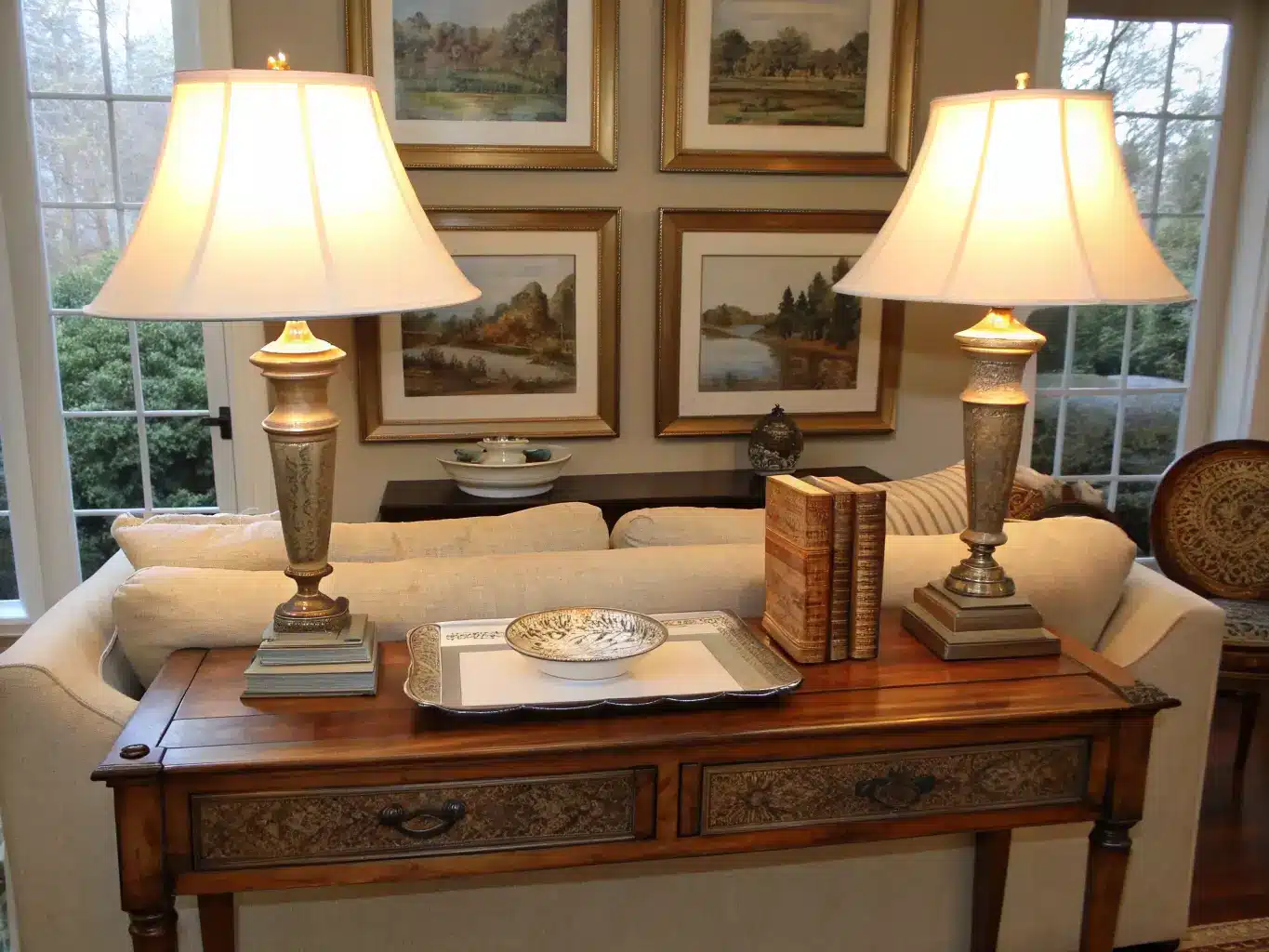
– Table and floor lamps with ceramic, brass, or urn-style bases, linen or parchment shades
– Warm bulbs, specifically 2700K–3000K — anything cooler kills the mood instantly
– Dimmers on everything you can
– One chandelier or a pair of sconces as a quiet focal point, not a statement piece
Wall decor — framed art, oil portraits, botanical prints, classic landscapes. Bookshelves styled with actual stacked books, framed photos, a few collected objects. Skip the oversized trendy graphic prints entirely; they date a room fast.
Signature accessories — brass candlesticks, porcelain bowls, a silver tray, leather-bound books, vintage prints. The goal is that everything looks like it could have been inherited. If it looks like it came from a “shop the look” link, it’s wrong for this room.
How to Actually Put the Room Together
Work in this order — I learned this the hard way after rearranging my own living room three separate times before landing on it:
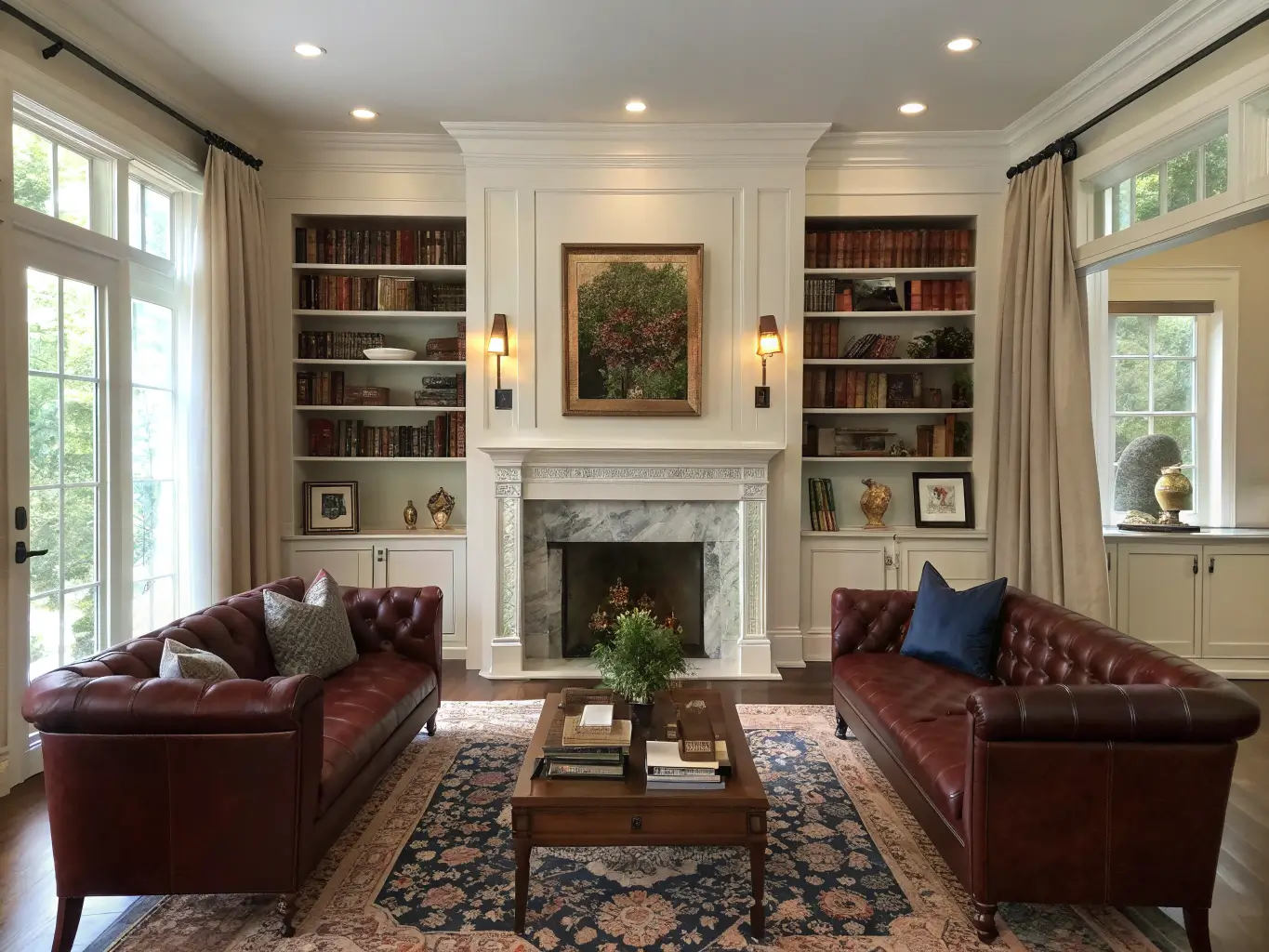
1. Rug first. Size it so the front legs of your sofa and chairs sit on it, or so it fully contains the seating group. A too-small rug is the single most common mistake in this style — it makes an otherwise good room look thrown together.
2. Seating second. Place your sofa and chairs around the rug, not around the TV.
3. Coffee table third, centered in the seating group.
4. Lamps fourth, at varying heights — table lamp, floor lamp, maybe a sconce.
5. Art and smaller objects last. Books, frames, trays — add these in layers and stop before it looks staged.
Use symmetry deliberately. Matching lamps, paired chairs, identical sconces flanking a fireplace — this is what makes traditional rooms feel intentional instead of accidental. Every focal point (fireplace, art grouping, statement sofa) should have something balancing it on either side.
Stick to three or four dominant shades total. The depth in these rooms comes from texture and material variation, not more colors. A useful formula: one warm neutral base (cream walls or a beige sofa), one darker anchor (a navy or forest-green chair, a dark wood table), and one muted accent (a burgundy pillow, an olive throw).
Where to Spend and Where to Save
Spend on:
– The sofa — this gets used and seen the most
– The rug, if it’s the Persian or Oriental layer
– Lighting fixtures with real brass, not brass-finish plastic
Save on:
– Side tables and coffee tables — secondhand wood is everywhere and usually better made than new
– Art — vintage frames and prints from estate sales or thrift stores often look more “collected” than anything new anyway
– Accessories — candlesticks, trays, and books are cheap secondhand and instantly look aged
One source I trust on this point put it well: you can build real old-money texture with around $300 in secondhand wood pieces from Facebook Marketplace or a vintage store. I’ve done exactly this. My favorite lamp in the house cost $22 at an estate sale and needed a $15 linen shade to look right.
Mistakes That Ruin the Look
– Undersized furniture. A small rug or coffee table makes the whole room feel fragmented and modern instead of grounded. Go bigger than feels comfortable.
– Matching too much. A matched sofa-and-loveseat set, a matched lamp-and-shade-and-table trio bought as a bundle — this reads as showroom, which is the opposite of old money. Buy pieces separately, from different sources, over time.
– Too much shine. Glossy lacquer, chrome, high-shine metallics — these push a room toward flashy “new money” territory instead of quiet restraint. Brass should look aged, not polished to a mirror finish.
– One overhead light and nothing else. Layered lighting at different heights is non-negotiable here. A single ceiling fixture flattens the whole room.
– Clutter instead of curation. Old money rooms have edited objects with presence — a few great things, not a shelf crammed with random decor. If you can’t explain why an object is on the shelf, it probably shouldn’t be.
Keeping the Room Fresh Without Breaking the Look
Seasonal swaps are easy and cheap: velvet pillows and heavier throws in fall and winter, lighter linen and fresh branches in spring and summer. Keep the same underlying palette — you’re shifting texture and weight, not color.
Repeat your metals on purpose. If you’ve got brass in a lamp base, echo it in a picture frame or a tray somewhere else in the room. Don’t let five different metal finishes compete.
Cross-style pairings that actually work:
– Old money + traditional — the safest, most authentic combination
– Old money + modern — keep the classic bones (sofa shape, rug, lighting) and introduce one contemporary piece, like a sleeker lamp
– Old money + coastal — cream and soft blue with natural fiber rugs, keeping the symmetry intact
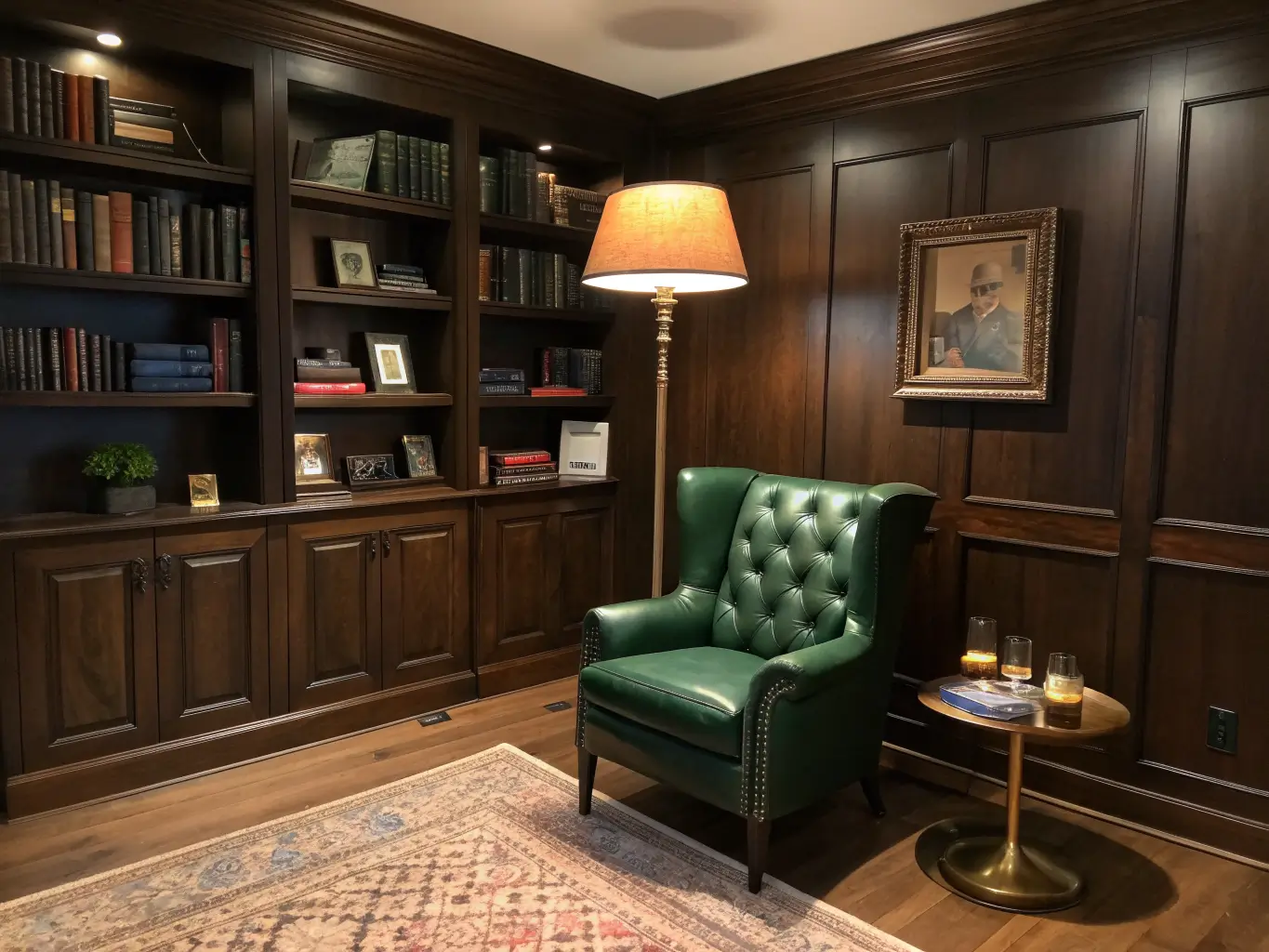
– Old money + library style — darker woods, more books, leather seating, moodier lighting for a study-like feel
The room should keep evolving in small ways — a new frame here, a swapped-out lamp there — the same way an actual inherited room would. That slow, uneven layering is what separates this style from every other trend that peaks and looks dated two years later.
The Old Money Living Room: A Complete Guide to the Quiet Luxury Look That Doesn’t Cost a Fortune