Boho Bedroom Curtain Ideas: A Complete Guide to Layering, Fabric, and Color
I redid my bedroom curtains four times before I got the boho look right, and every failed attempt taught me something the mood boards never mention. If you’re staring at your bare windows wondering what curtains actually make a bedroom feel boho instead of just “beige and vaguely ethnic,” I can save you the trial and error.
The short version: it’s not one curtain, it’s a layer. And the fabric matters more than the pattern.
What Makes a Curtain Read as Boho (And Why One Panel Isn’t Enough)
Boho bedroom curtains aren’t a single product — they’re a system. The style is built on texture, imperfection, and layering, so a single flat panel almost never gets you there, no matter how good the print is.
My first attempt was one pair of rust-colored polyester curtains from a big box store. They had a nice color. They looked like a hotel. The fabric was too stiff, too flat, too done. Boho lives in soft, uneven, slightly rumpled fabric — think linen that’s a little wrinkled, gauze that moves when the AC kicks on.
This style works for:
– Renters who want major visual impact without touching walls
– Anyone mixing global or vintage-inspired pieces already
– People who want a bedroom that feels layered and personal, not showroom-perfect
Where it shines: primary bedrooms, guest rooms, teen rooms, and especially small-to-medium spaces where a floor-length curtain adds height and softness the room is otherwise missing. It also works beautifully hung over a bed as a canopy if you want that slouchy, tent-like effect.
The Core Pieces You Actually Need
The sheer base layer
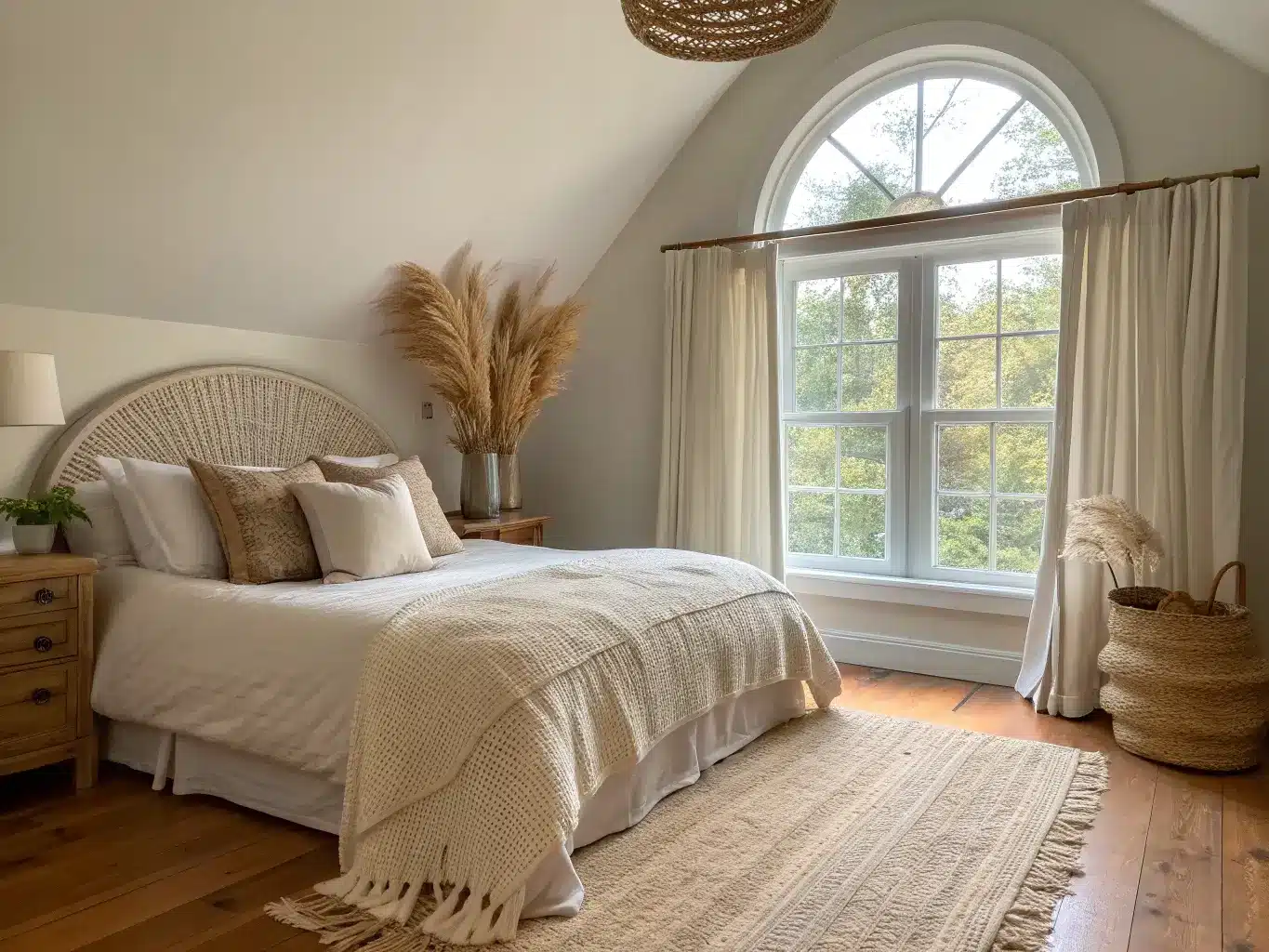
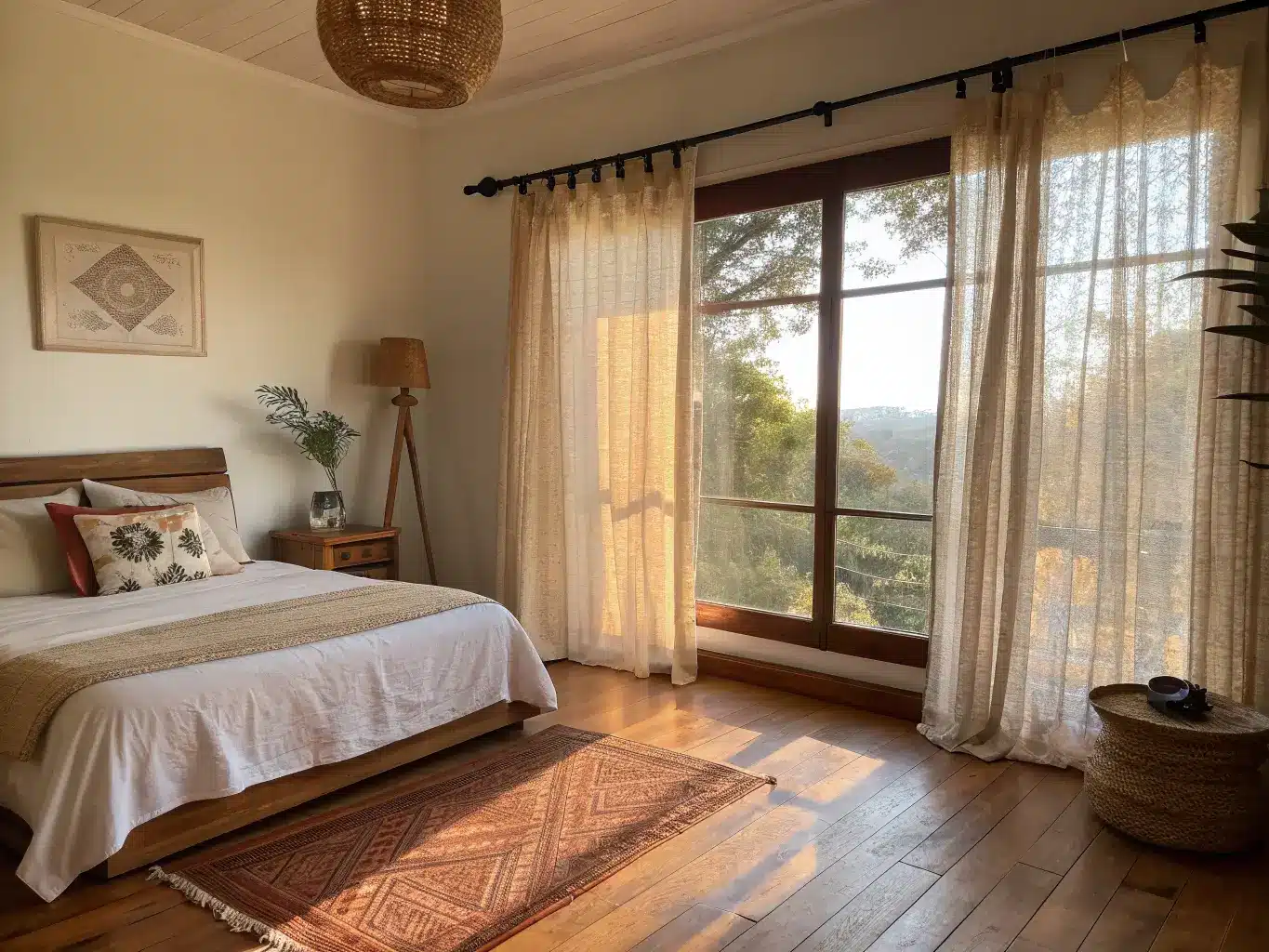
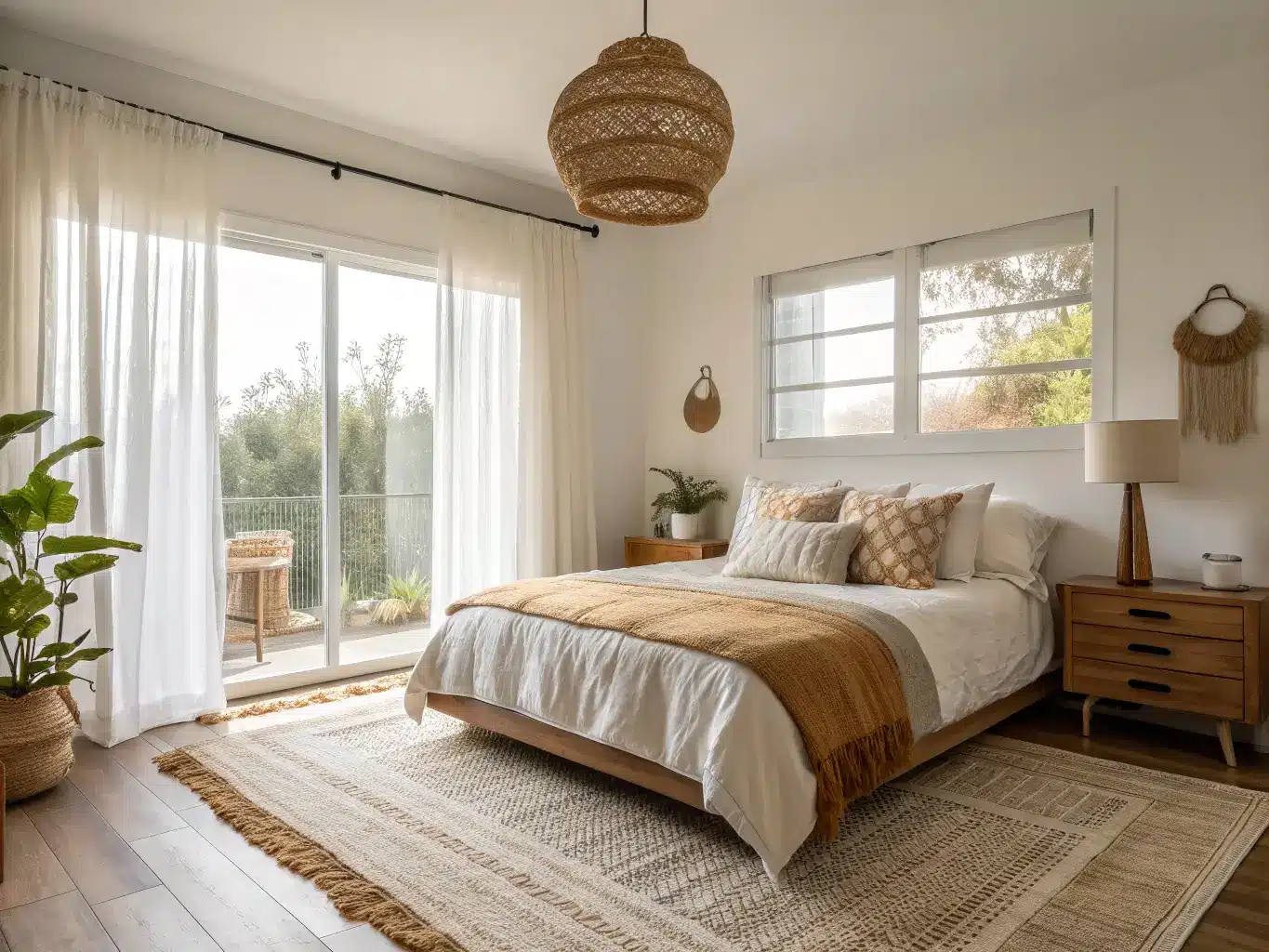
Start with something light — linen, gauze, or a sheer cotton blend in white, cream, oatmeal, or soft gray. This is what filters daylight and gives the window that soft, glowy look boho rooms are known for. Budget pair: $25–$50 at most mass retailers.
The heavier outer layer
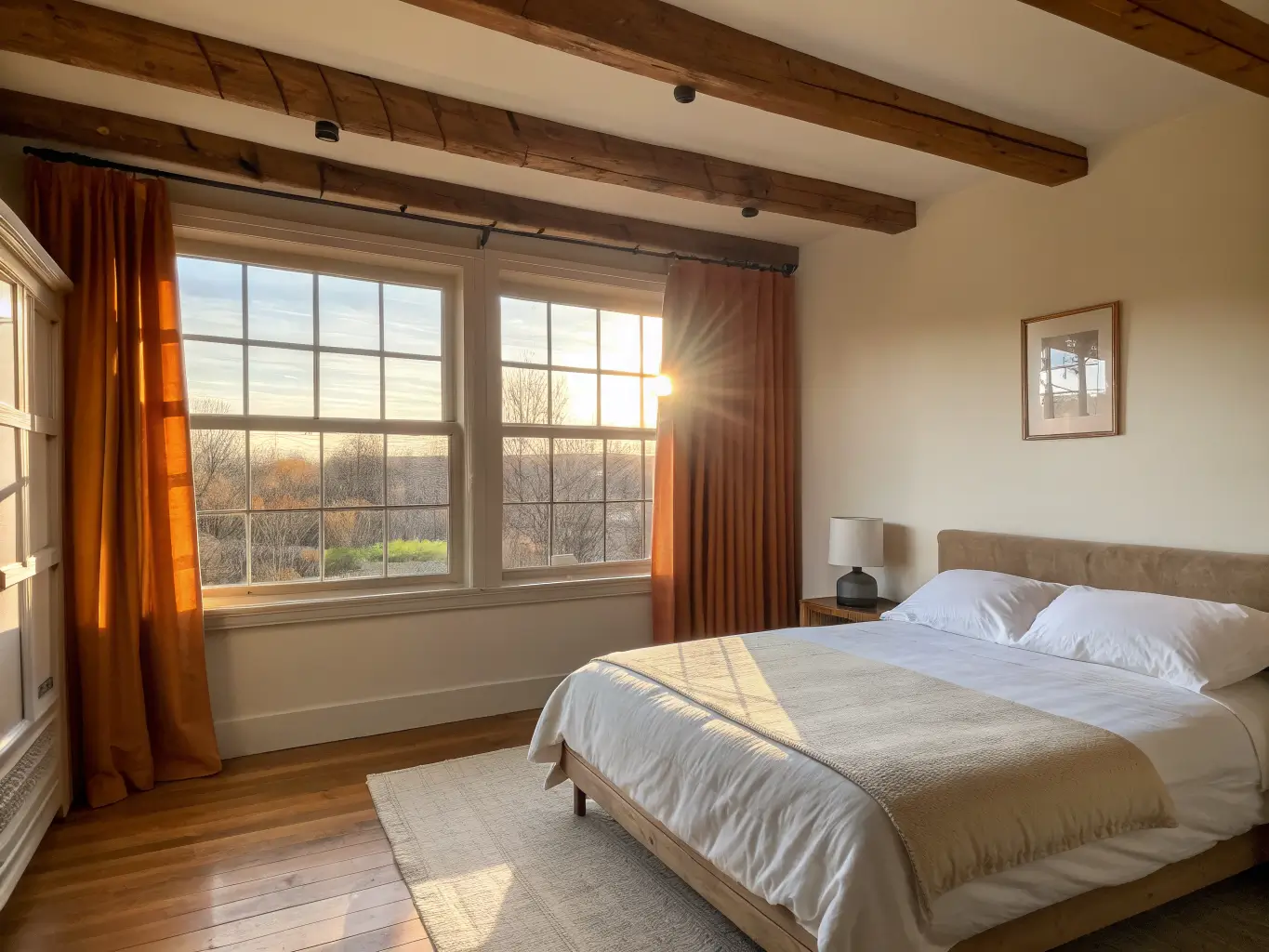
This is where you get privacy and, if you need it, actual darkness for sleeping. Linen-look blackout panels, block-print cotton, or a solid in clay, rust, or olive work well here. Expect $80–$220 for a decent pair with real weight to the fabric.
Macramé panels or valances
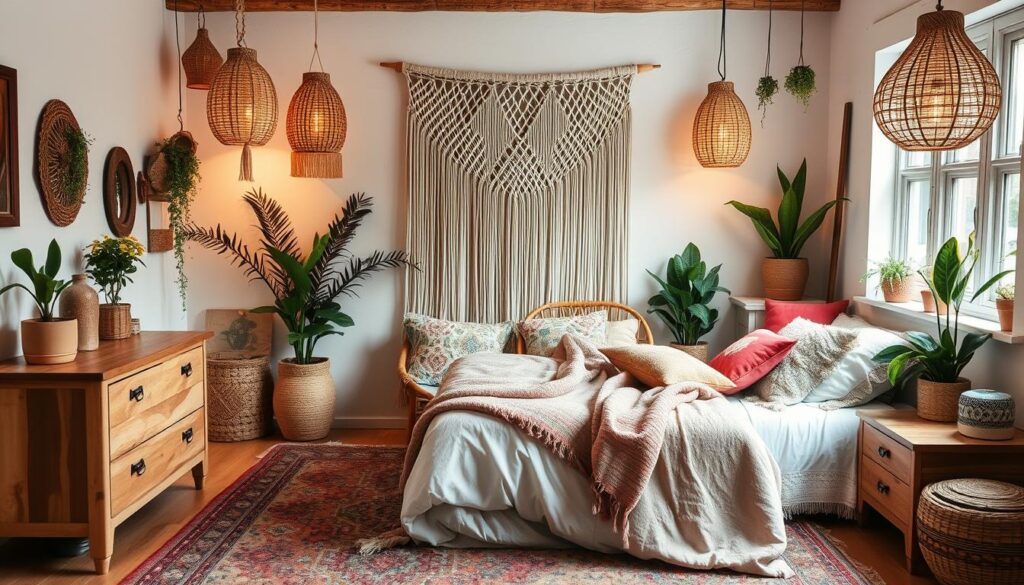
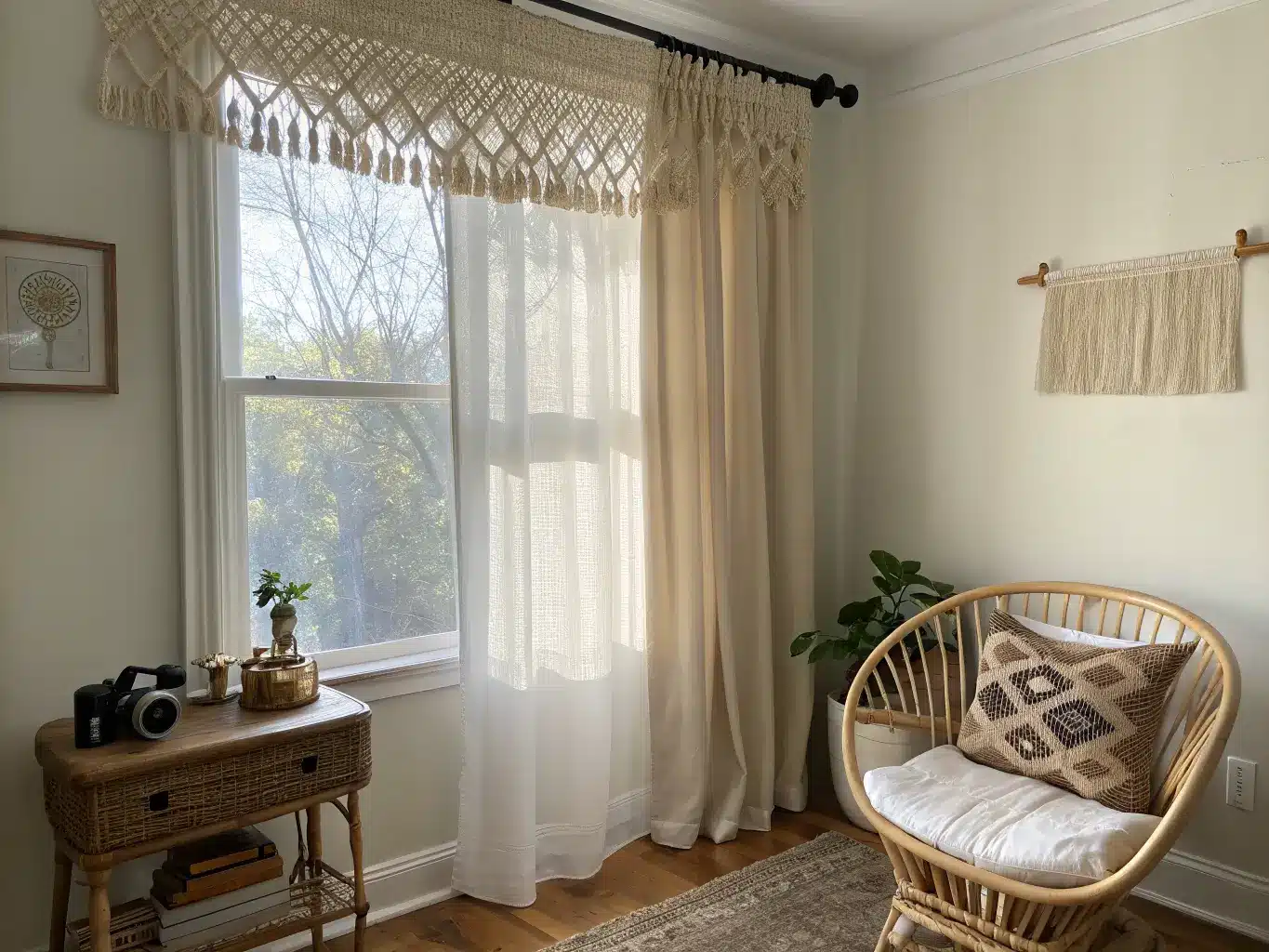
The most identifiable “boho” element there is — knotted cotton cord, fringe, visible handwork. Not always practical alone (more on that below), but incredible as an accent layer or top treatment.
Hardware that doesn’t undercut the look
A natural wood, bamboo, or rattan rod does more for the boho identity than people expect. I swapped a chrome rod for a $22 unfinished wood one from a hardware store and the whole window looked different — warmer, less builder-grade.
Tie-top or tab-top headers
Skip pinch-pleat or grommet styles if you want that relaxed, undone quality. Tie-tops fall in soft, irregular folds instead of crisp repeating pleats — small detail, big mood difference.
Budget: What to Spend, What to Skip
– Budget tier ($25–$80): Ready-made sheer or cotton panels from mass retailers. Fine for the sheer layer; skip this tier if you need blackout performance, the linings are usually thin.
– Mid-range ($80–$220): Linen-look, embroidered, or block-print curtains with blackout lining. This is where most people should land for their main layer — good fabric weight, real light control.
– High-end ($220–$600+): Handmade macramé, custom-length linen, artisan block print. Worth it if your windows are oversized or extra-tall and you need custom lengths anyway.
Spend on: the outer, most visible layer and the rod. Save on: the sheer inner layer — cheap gauze looks the same as expensive gauze once it’s hung and catching light.
How to Put It Together
Measure before you shop. Boho curtains want fullness — hanging them flat against the glass kills the whole vibe. Floor-length, around 96 inches, is the sweet spot for most standard bedroom windows. A slight puddle (an extra inch or two pooling on the floor) reads intentional and relaxed, not like you bought the wrong size.
Mount the rod high. Install it 4–6 inches above the window frame, wider than the frame too. This makes the ceiling feel taller and the whole window treatment feel more generous, even in a small room.
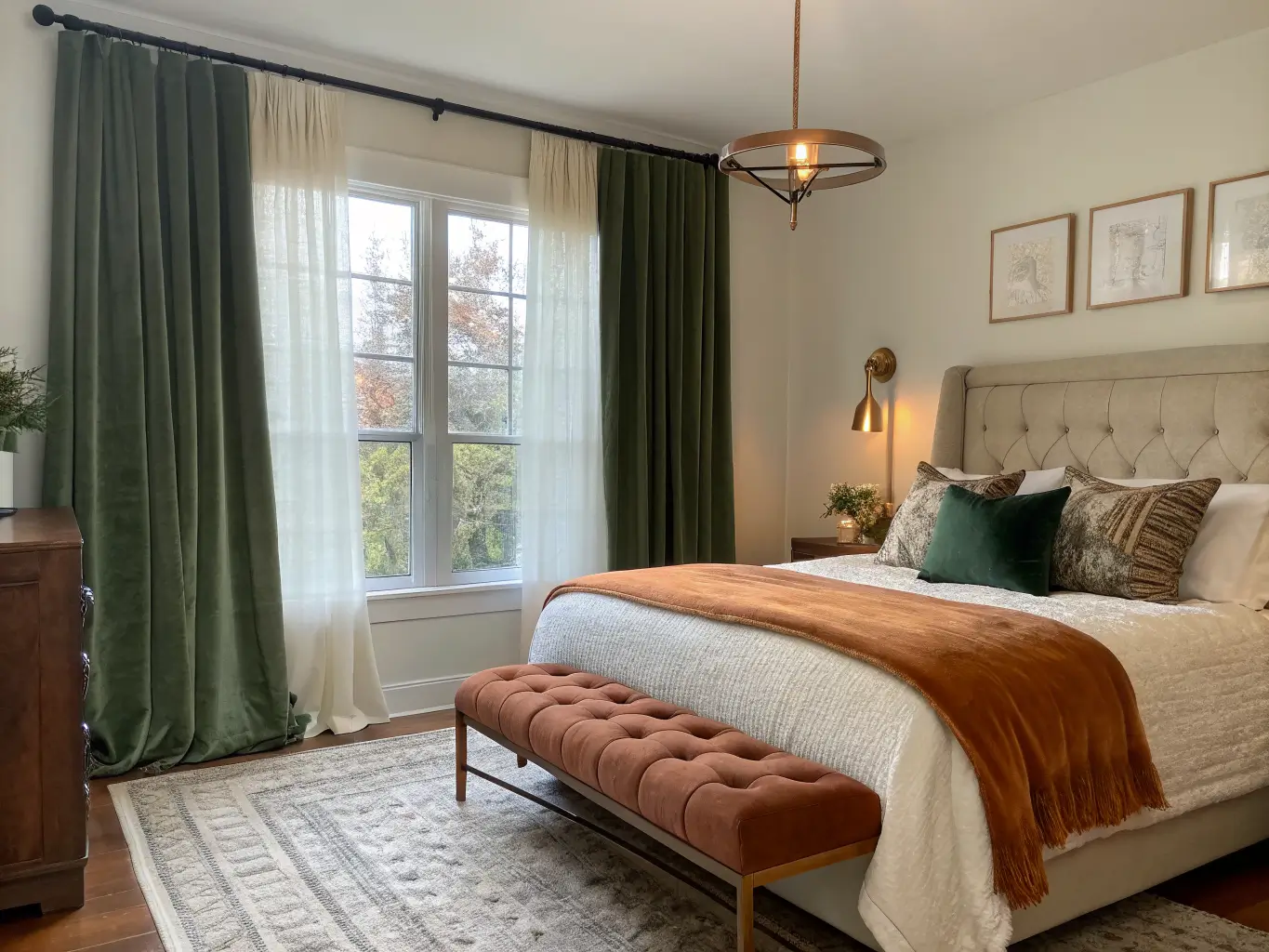
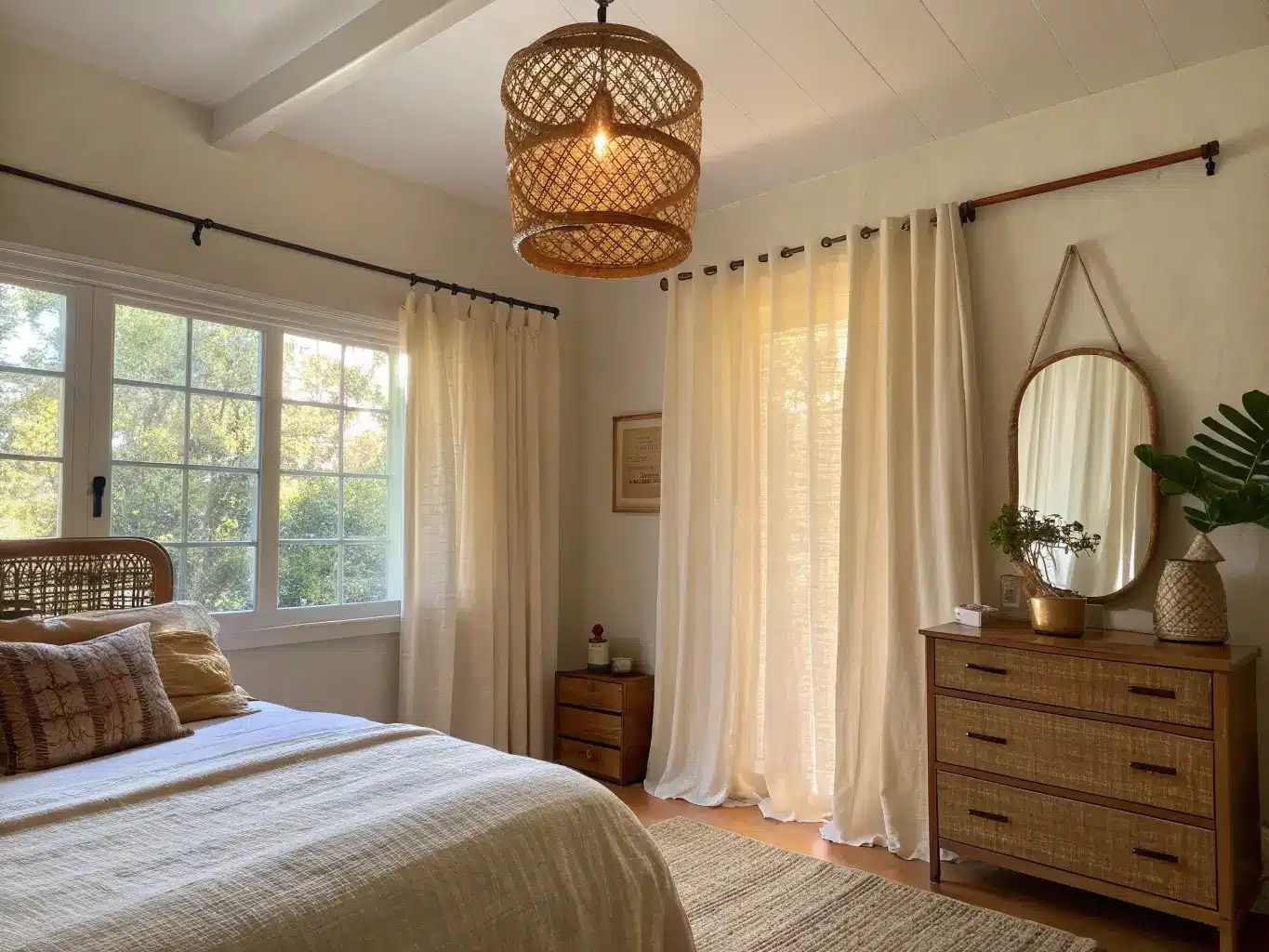
Use two rods if you’re layering. One closer to the window for sheers, one further out for the heavier panel. This is the single biggest upgrade I made — my bedroom went from “curtains” to “styled window” the day I added the second rod.
Pick one hero texture and build around it. Mine is a rust block-print linen panel. Everything else in the room — a jute rug, a cane nightstand, a rattan pendant light — supports that one textural choice instead of competing with it.
Echo one curtain color elsewhere in the room. A throw pillow, a lamp base, a rug border. This is what makes the curtains feel connected to the room instead of like a swatch that wandered in from somewhere else.
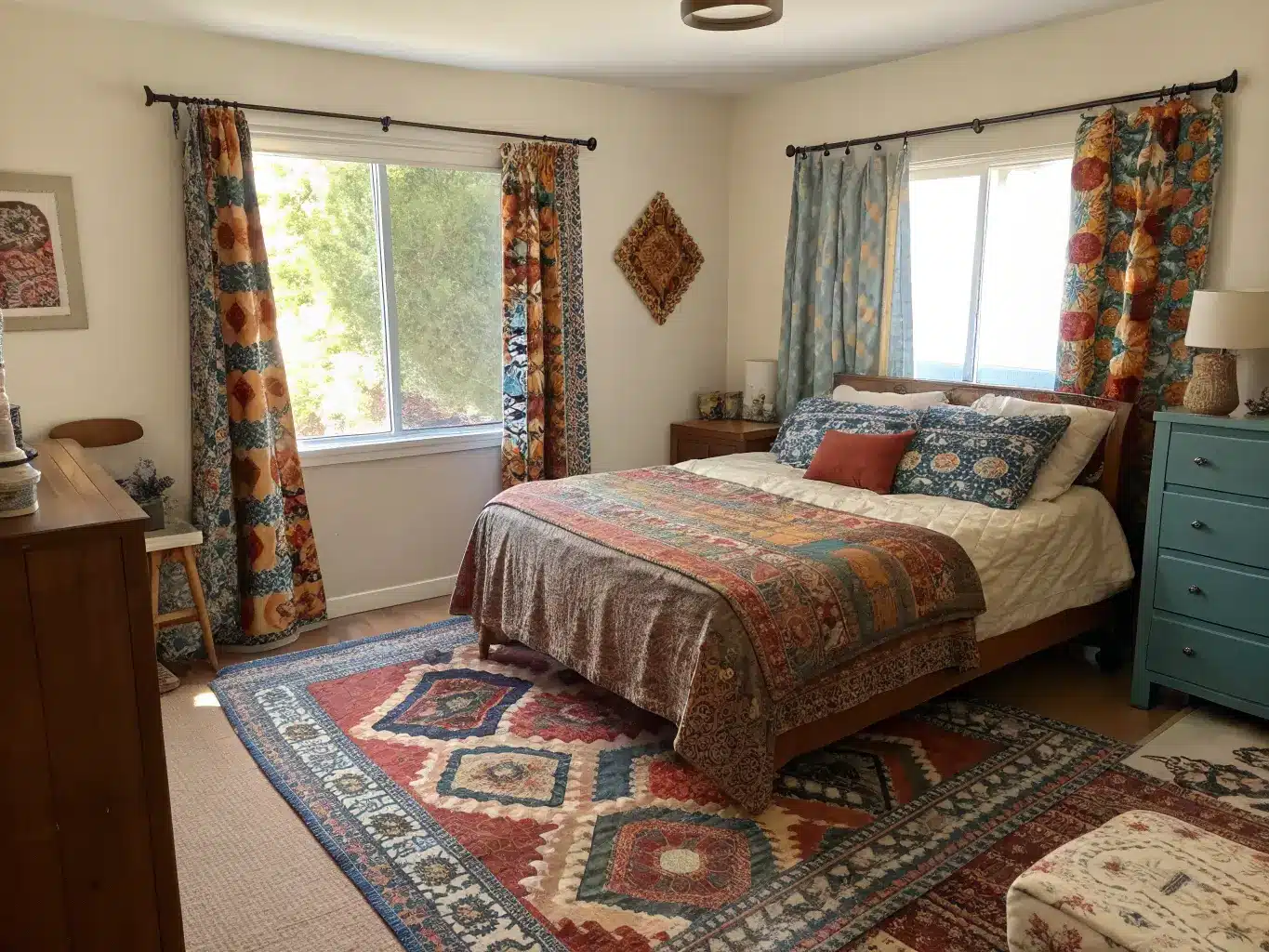
Keep the palette to 3–4 colors, max. Ivory, rust, olive, and a touch of brass is a full palette. Adding a fifth or sixth color is usually where boho tips into cluttered.
Common Mistakes (I’ve Made Most of These)
– Too many patterns fighting each other. My second attempt paired ikat curtains with a paisley duvet and a Moroccan-tile rug. It was a lot. Pick one pattern to lead — let everything else be solid or subtly textured.
– Curtains that stop at the sill. Cropped curtains make a boho bedroom look unfinished, almost like the project got abandoned halfway. Go floor-length.
– Sheers with no backup plan. Gorgeous in photos, useless at 6 a.m. when the sun comes in and you have nothing blocking it. If you need real darkness, layer in a lined panel — don’t rely on sheers alone.
– Fabric that’s too structured. Stiff, heavy drapery fabric fights the whole relaxed premise of boho. If you can’t easily crease it in your hand, it’s probably too formal for this look.
– A cheap thin rod holding up heavy layered panels. It’ll sag within a season. Spend the extra $15–20 on a sturdier rod if you’re doubling up fabric.
Is Macramé Actually Practical for a Bedroom?
Honestly, not as your only curtain. Macramé is open-weave by nature, so it doesn’t block light or offer privacy on its own. I love mine as a valance layered above a solid linen panel, or as a doorway treatment for a closet — it’s the texture that makes people notice the window, but it needs a working partner behind it.
Seasonal and Budget Refreshes
Spring/summer: swap in lighter sheers, white or botanical-print panels, let more light move through the room.
Fall/winter: bring in rust, terracotta, olive, or a velvet panel for warmth — velvet in a deep jewel tone also adds real insulation against cold windows.
On a tight budget: add tassel trim to plain curtains with fabric glue, switch to clip rings for an instant tailored-but-relaxed look, or thrift a vintage scarf to layer as a valance. A $6 trim can change a flat $20 curtain completely.
Cross-style combos worth trying:
– Boho + coastal: white linen sheers, driftwood-toned rod, sandy neutrals
– Boho + French country: soft floral panels, muted cream, antique gold hardware
– Boho + minimalist: one solid oatmeal panel, one textural detail like fringe, nothing else
My honest advice after redoing this room too many times: buy the sheer layer cheap, spend real money on the outer layer and the rod, and resist adding a sixth color. That’s the whole formula.