What Mediterranean Style Actually Is
Mediterranean design pulls from Spain, Italy, Greece, southern France, and sometimes Morocco and Turkey — basically anywhere that sun, stone, and the sea have shaped how people build and furnish homes for centuries. It’s coastal, rustic, old-world, and a little bit modern-organic all at once.
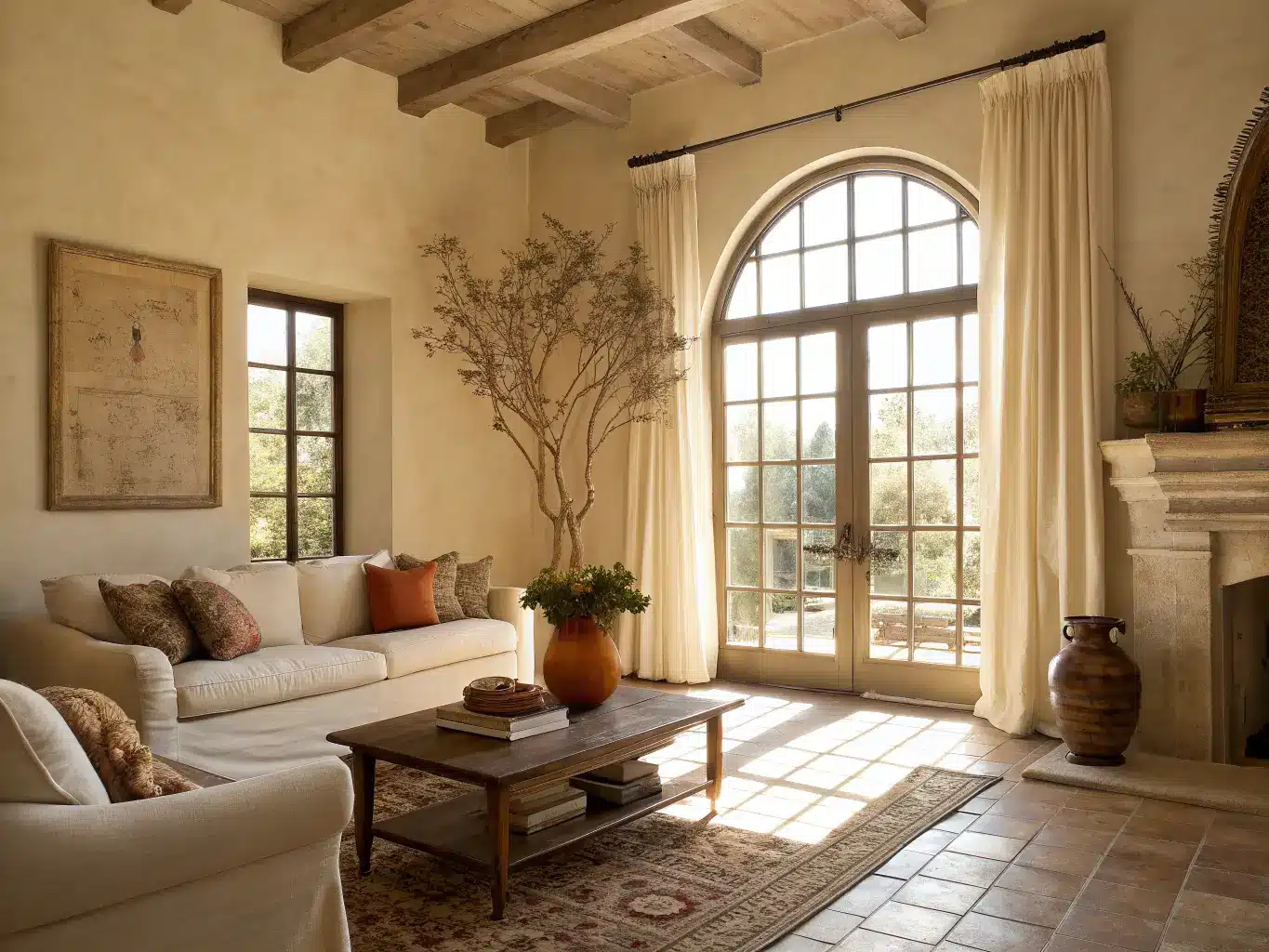
The colors: warm white, cream, sand, terracotta, clay red, ochre, olive green, sea blue, and muted brown. Not bright. Not saturated. Sun-faded, like a wall that’s been baking for decades.
The materials: plaster or stucco, limestone, travertine, terracotta, ceramic tile, natural wood, wrought iron, linen, cotton, rattan, and stone. If a material looks synthetic or too perfect, it doesn’t belong here.
This look is for people who want their home to feel warm and touchable rather than sleek and showroom-perfect. It works in living rooms, kitchens, dining rooms, bedrooms, patios, entryways, and bathrooms — really anywhere you can lean into natural light and a connection to the outdoors, even if that “outdoors” is just a window with decent sun exposure.
Quick Snapshot Before You Start
– Time: A weekend if you’re just styling with what you own or can thrift. Plan on 1–4 weeks if you’re repainting, adding tile, or changing out lighting and hardware.
– Cost: A decor-only refresh runs $500–$2,500 — think paint, textiles, ceramics, and a few key furniture swaps. A more authentic overhaul with plaster finish, stone-look tile, and custom lighting runs $3,000–$15,000+, mostly driven by limewash application, tile installation, and solid wood furniture.
– Space: Works in a studio apartment just as well as a sprawling open-plan house, as long as there’s daylight.
– Skill level: Styling is beginner-friendly. Plaster finishes, arches, and tile work lean intermediate to expert — hire this out unless you’ve done it before.
– Season: Year-round. Nothing about this style is tied to a holiday or a season, which is part of why I like it.
The worth having Pieces That Make the Style Read Correctly
If you only do five things, do these:
– Limewashed or plaster-look walls. This is the single biggest signal of the style right now. Matte, cloudy, slightly uneven wall color instantly reads more Mediterranean than any accessory you could buy. I used a limewash paint kit (around $120 for a gallon plus the application tool) on one accent wall instead of committing the whole room, and it changed the entire space.
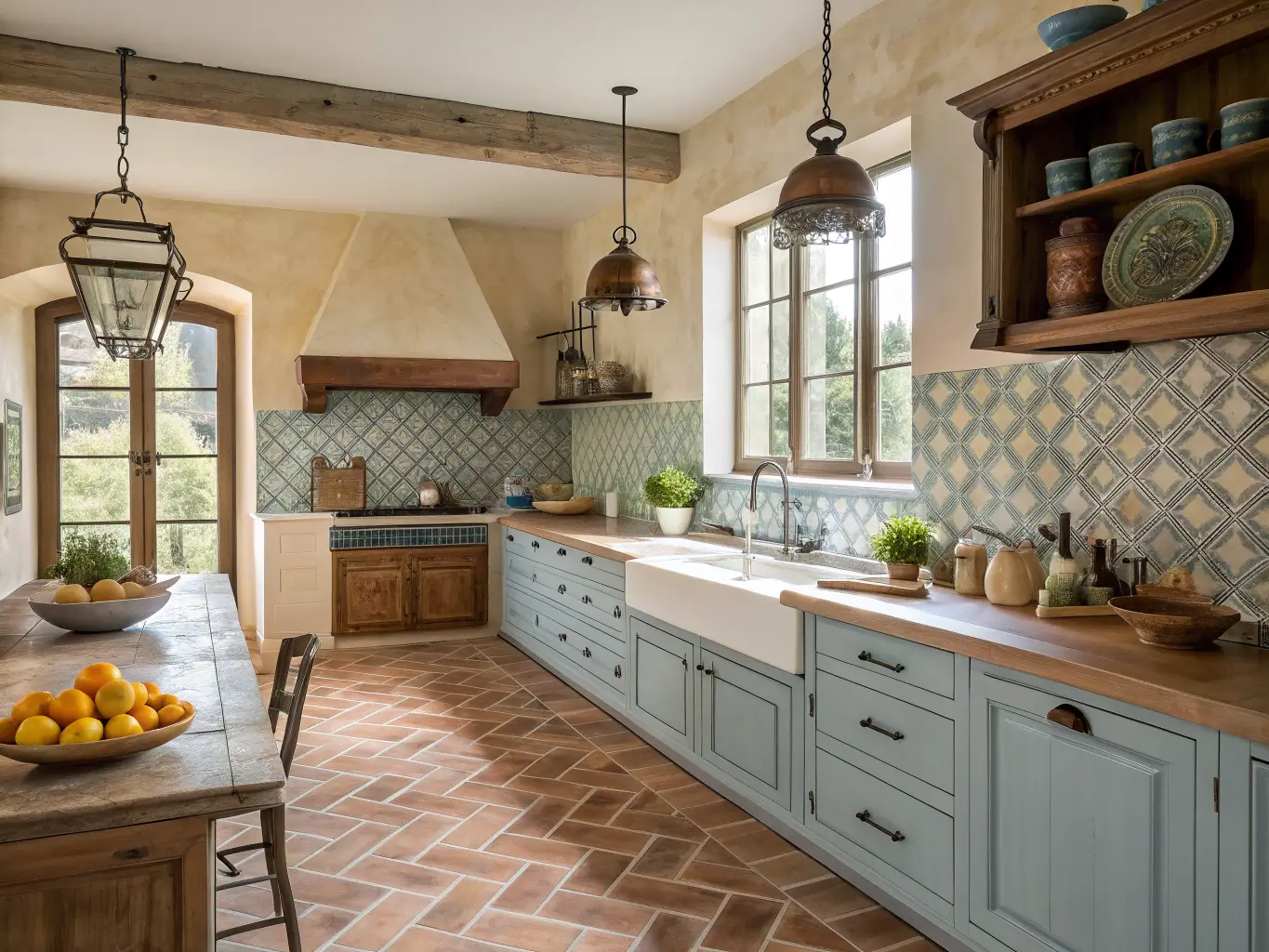
– Terracotta or ceramic tile somewhere — flooring, a backsplash, a tabletop, or even just a few decorative tiles mounted as art.
– Natural wood furniture with visible grain or a slightly weathered finish. A carved wood dining table or a rough-edged sideboard does more work than five throw pillows.
– Wrought iron or dark metal accents — sconces, a mirror frame, curtain rods, a stair rail.
– Stone elements, even small ones: a travertine coffee table, a limestone-look tray, a stone vessel sink if you’re renovating a bathroom.
– Linen and cotton textiles — a slipcovered sofa, breezy unlined curtains, a washed linen throw.
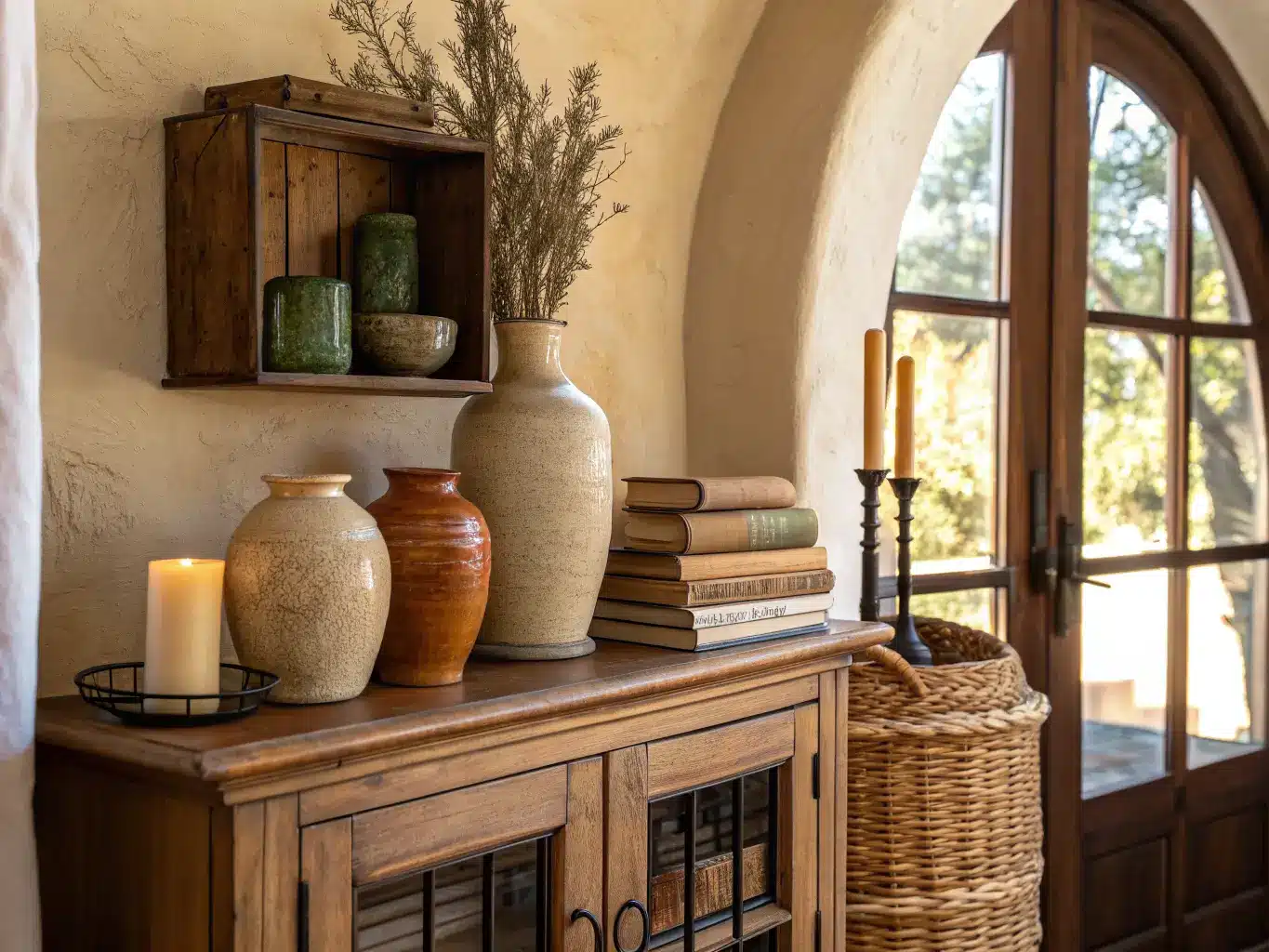
– Ceramics and pottery with an artisanal, hand-thrown look: amphora vases, pedestal planters, chunky bowls.
– Arched forms — an arched mirror, a niche cut into a wall, an arched cabinet door. Architecture is doing half the work in authentic Mediterranean spaces.
– Plants and olive branches. A few fresh olive branches in a tall ceramic vase cost me $9 at a flower market and look better than almost anything else in my living room.
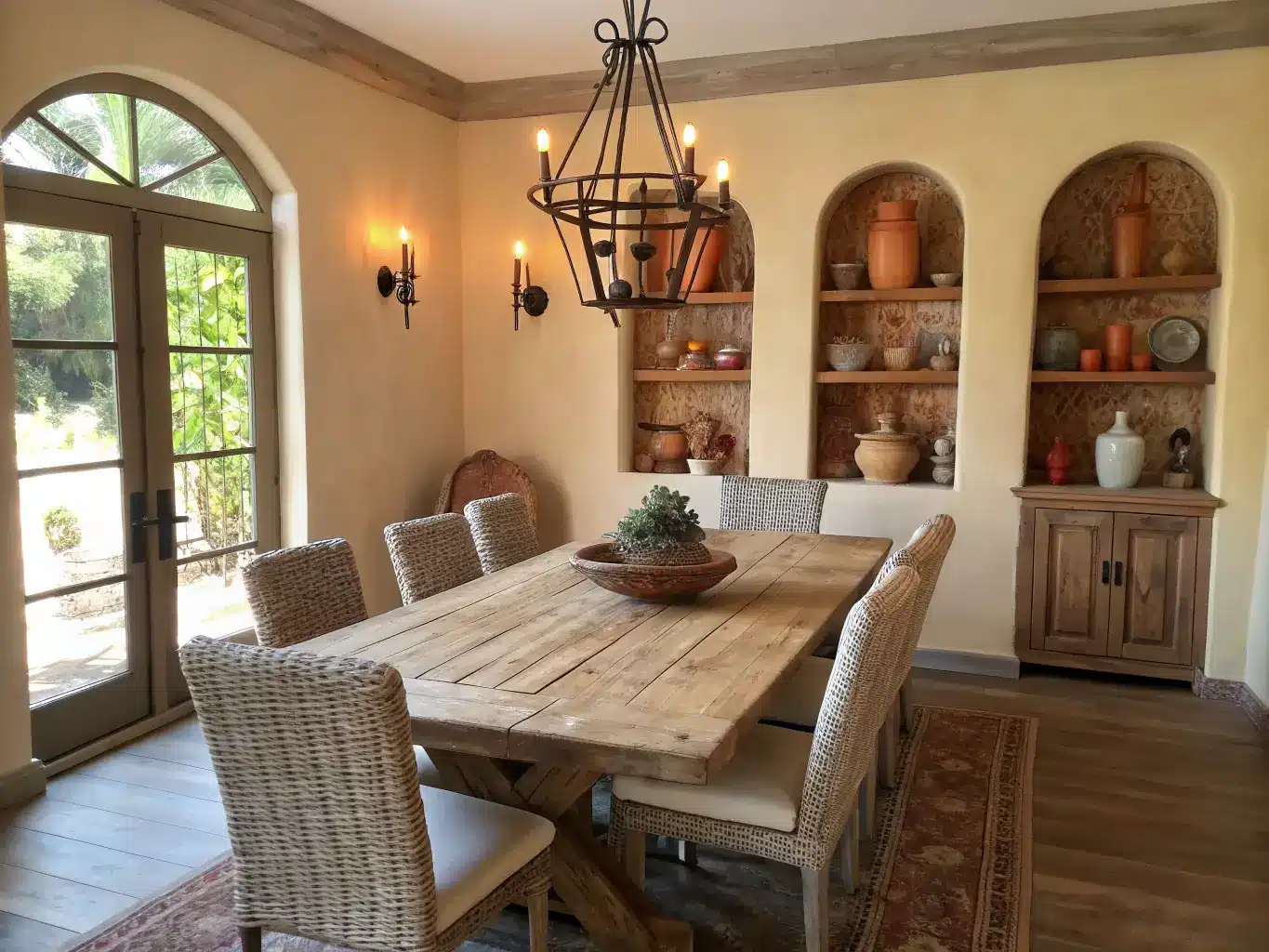
Optional Layers for a More lifted Look
Once the basics are in place, these push the room toward what I’d call “refined Mediterranean” instead of rustic Mediterranean:
– Travertine trays, marble candle holders, or alabaster lamps for a more luxe, modern-organic finish.
– Aged brass or blackened metal hardware on cabinets and light fixtures — warm metals, not chrome.
– Woven accents: a jute rug, a rattan pendant light, seagrass storage bins.
– Seasonal styling with actual food — a bowl of lemons, a few stems of rosemary, dried eucalyptus. Cheap, real, and it changes with the seasons without you doing any real work.
– Low-contrast patterned textiles from Moroccan or Spanish tile motifs if you want to bring in more pattern without overwhelming the palette.
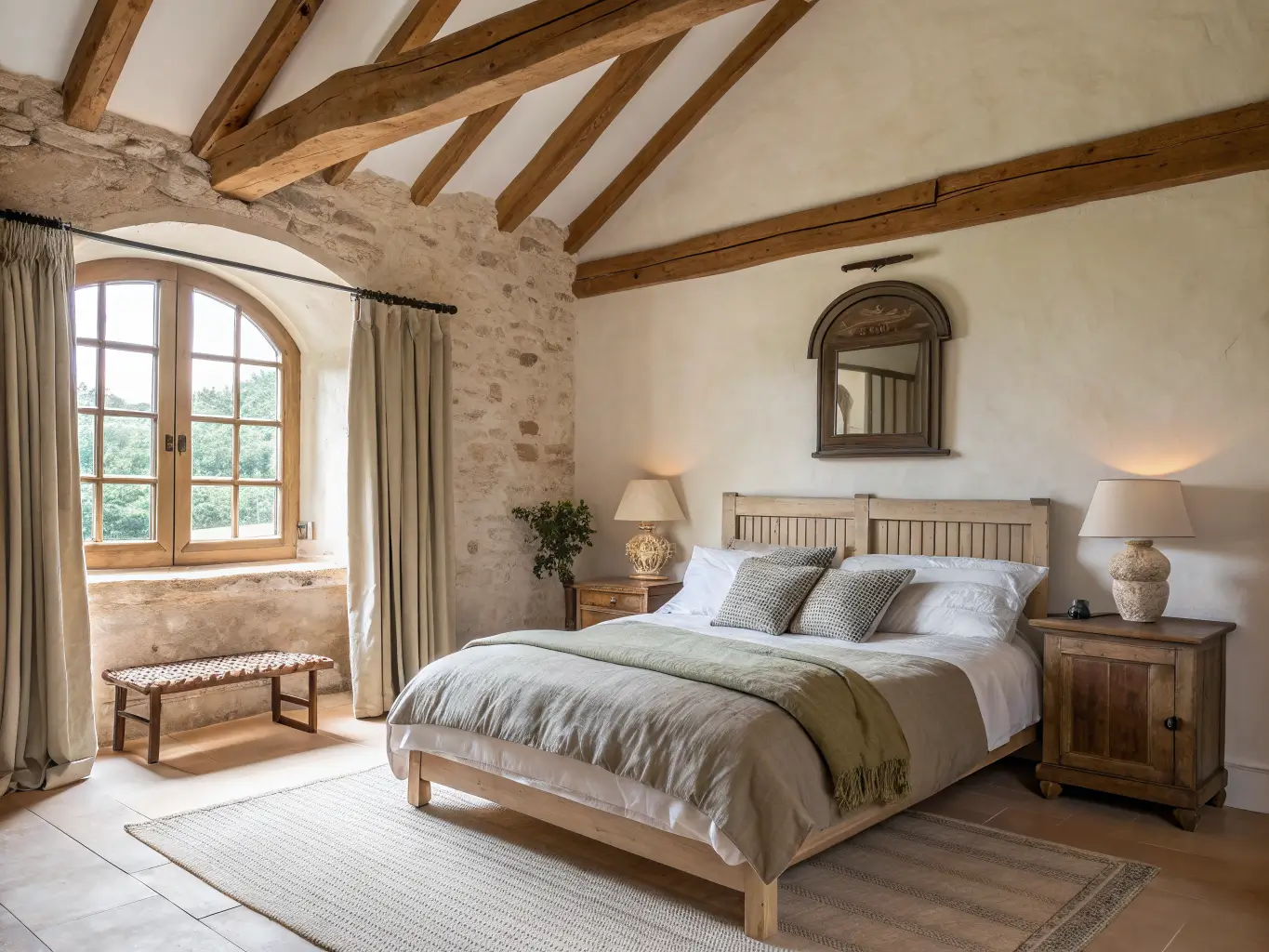
How to Actually Put the Room Together
Start with texture, not color
This was my biggest mistake the first time around. I picked my wall color first, then tried to layer texture on top, and the room still felt flat. Mediterranean interiors are defined by surface — plaster, stone, tile, wood, woven fiber — more than by color choice. Pick your materials first. Color follows.
Keep the base palette quiet
White, cream, sand, warm beige — that’s 80% of the room. Then add terracotta, olive, or sea blue in small, repeated doses: a cushion here, a vase there, a runner on the table. If you’re reaching for more than two accent colors, pull one back.
Rule of thumb: if you can count more than three colors in a room at a glance, it’s too many for this style.
Pick one focal point and let it do the talking
An arched mirror over the console. A patterned tile backsplash in the kitchen. A fireplace with a plastered surround. Choose one strong feature and build quietly around it — don’t compete with it.
Mix hard and soft on purpose
Every hard surface needs a soft partner. Stone table, linen runner. Tile floor, wool or jute rug. Wood chair, woven cushion. This contrast is what keeps the room from feeling like a cold Italian villa in winter versus a warm one in July.
Orient toward the light
If your seating can face a window, patio door, or balcony, turn it that way. Mediterranean design leans hard on indoor-outdoor flow — even in an apartment with no actual patio, pulling furniture toward natural light does a lot of the same work.
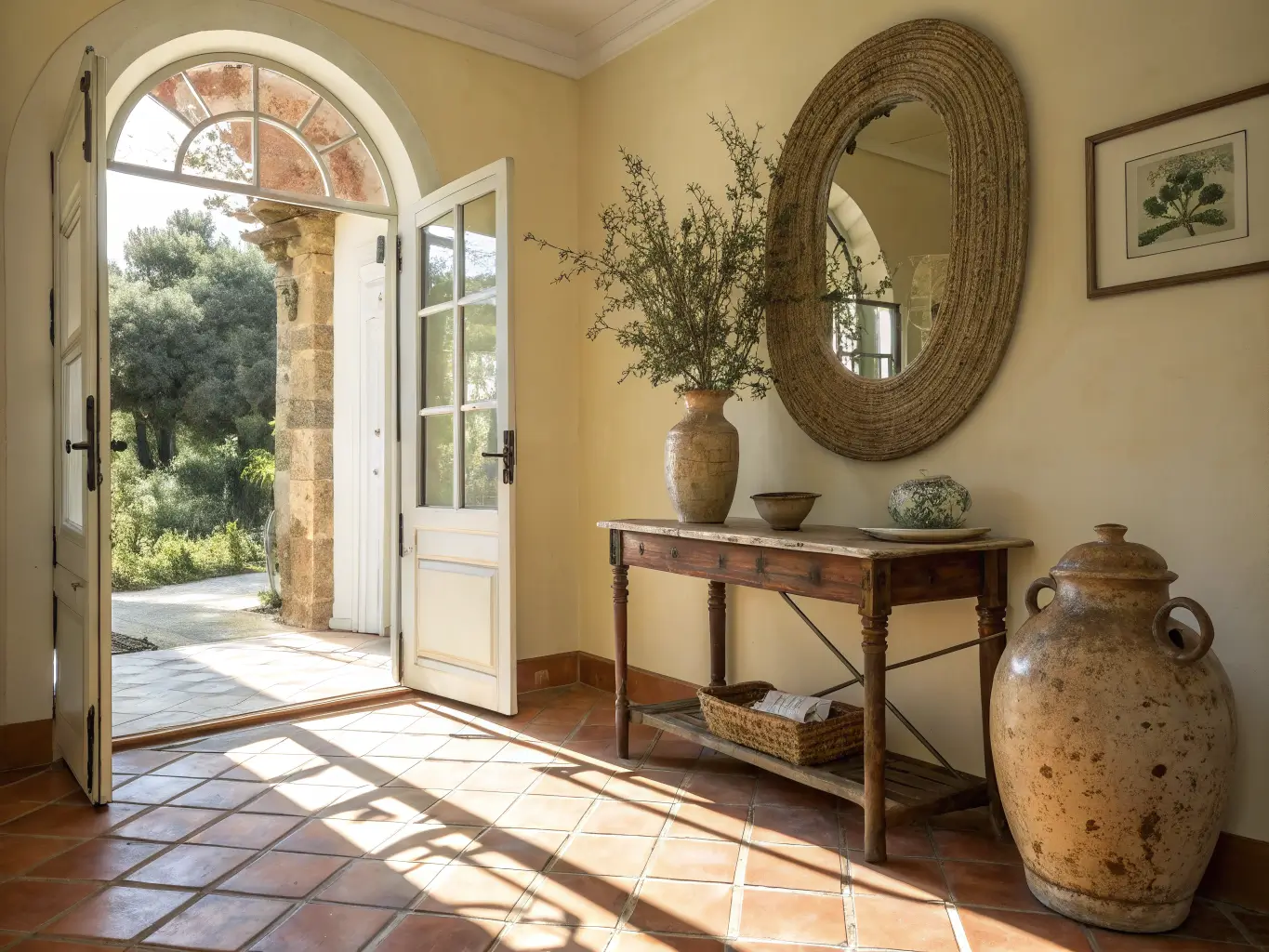
Styling Room by Room, Step by Step
1. Walls and floor first. Get your wall finish and flooring settled before buying a single accessory. These are your hardest costs to change later.
2. Anchor piece next. One major wood or linen furniture item — a dining table, a slipcovered sofa, a carved bed frame.
3. One signature material, prominently placed. Terracotta tile in the entry, a travertine coffee table in the living room, plastered walls in the bedroom. Pick your moment.
4. Curved shapes to soften it. An arched mirror, a rounded console table, a curved lamp base. Mediterranean rooms lean on curves to offset all that stone and wood.
5. Style surfaces in threes. On any shelf or table, use pottery, books, and one textured natural object like a basket or a linen-wrapped box. Leave gaps. Don’t fill every inch.
6. Repeat your accent colors. If you’re using terracotta, let it show up in at least two or three spots in the room — not just one lonely throw pillow doing all the work alone.
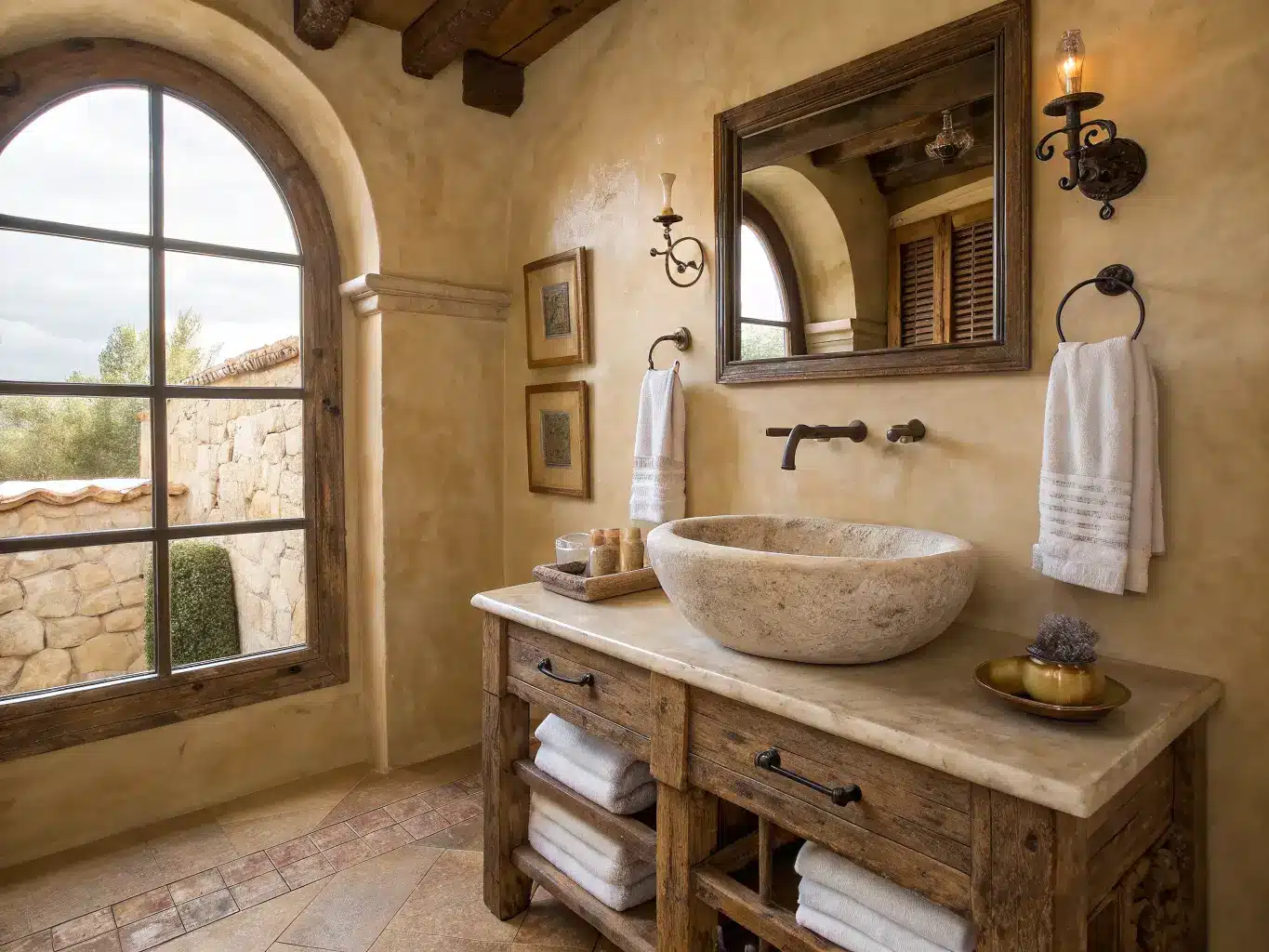
Mistakes I See Constantly (And Made Myself)
– Leaning into seaside clichés. Anchors, shell decor, nautical stripes — none of that is Mediterranean, it’s coastal kitsch. Skip it entirely.
– Going too saturated with color. A full cobalt blue accent wall isn’t Mediterranean, it’s just blue. The palette should look sun-faded, like it’s been bleached by years of afternoon light.
– Making it too polished. I once bought a set of perfectly matched, brand-new ceramic vases and they looked wrong the second I put them on the shelf — too uniform, too new. I swapped two of them for mismatched thrifted pieces and the shelf immediately looked better. This style wants a little imperfection.
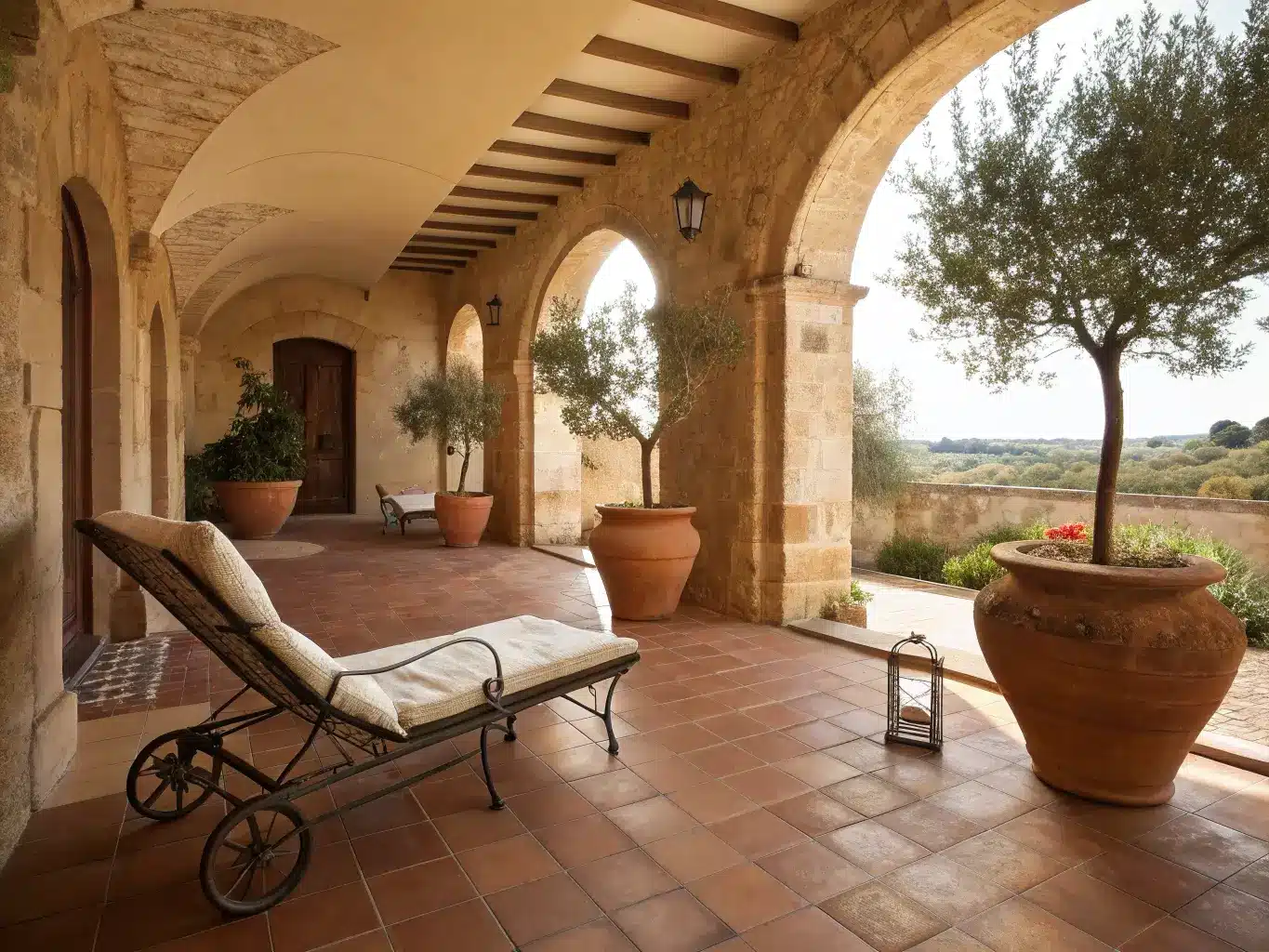
– Ignoring architecture entirely. You can buy every piece on this list and still miss the mark if you ignore your actual walls and doorways. An arch, exposed beam, or textured wall plane matters as much as any accessory.
– Mixing every region at once. Spanish tile, Greek blue, Moroccan pattern, and Italian pottery all in one room reads as confused, not layered. Pick a lead influence — Spanish, Italian, Greek, or Moroccan — and let the other cues stay minor.
Keeping the Room Cohesive Over Time
Stick to a warm, earthy family of tones across every major surface, even as you swap pieces in and out. Repeat one or two core finish pairings — plaster plus wood, or stone plus linen — so new additions always have something to relate to.
And edit constantly. Mediterranean rooms should feel collected over years, not stocked in one trip. Give your objects space. A shelf with three well-chosen pieces and visible breathing room beats a shelf with ten.
Updating It Through the Seasons Without Starting Over
– Spring/summer: lighter linen slipcovers, fresh olive branches, citrus in a bowl on the counter.
– Fall/winter: swap in deeper clay and olive-toned textiles, heavier wool throws, dried branches instead of fresh.
– Budget moves: limewash-effect paint (way cheaper than real plaster), peel-and-stick terracotta or zellige-look tile for a backsplash refresh, thrifted wood furniture, vintage ceramic vessels from estate sales, and rattan pendant lights that run $40–$80 instead of custom fixtures.
If you want to push it further, this style blends well with a few others:
– Mediterranean + minimalism: fewer objects, more plaster and stone, cleaner furniture lines.
– Mediterranean + coastal: lighter blues, more rattan — just keep the base grounded in clay and sand so it doesn’t slide into beach-house territory.
– Mediterranean + boho: more woven texture, layered rugs, handmade ceramics — just watch the clutter, since boho and restraint don’t always play nice together.
Common Questions
What is Mediterranean interior design? A style built around warm, sun-faded color, natural materials like plaster, stone, terracotta, and wood, and a strong connection to natural light and outdoor space.
What colors are used in Mediterranean interior design? Warm white, cream, sand, terracotta, clay red, ochre, olive green, and sea blue — used in a mostly neutral base with small color accents.
How do you make a house look Mediterranean? Start with wall finish (limewash or plaster look), add terracotta or stone materials, bring in natural wood furniture, and layer in linen textiles and ceramics.
What’s the difference between Mediterranean and Spanish style? Spanish style is one regional flavor within the broader Mediterranean umbrella, often with more ornate tile work and darker wood. Mediterranean design more broadly pulls from Italy, Greece, and southern France too.
How do you decorate a modern Mediterranean living room? Lean into plaster walls, a linen sofa, a stone coffee table, and minimal but well-chosen accessories — fewer objects, better materials.
What flooring works best? Terracotta tile, limestone, travertine, or wide-plank natural wood.
Is Mediterranean decor still in style in 2026? Yes — it’s actually trending toward a more refined version, with less literal seaside theming and more focus on authentic materials like limewash, stone, and reclaimed wood.
How do you get the look in a small room without remodeling? Paint one wall with limewash-effect paint, add a terracotta or stone tabletop accessory, swap in linen textiles, and bring in a few ceramic pieces and an olive branch. You don’t need new floors to shift the feel.
More Ideas to Explore
Keep the momentum going: Fall Decor on Front Porch: A Real Guide to Getting It Right Without Overspending or Overdoing It covers another angle worth a look.