Neoclassical interior design draws inspiration from ancient Greek and Roman aesthetics, blending timeless elegance with modern sensibilities. Characterized by symmetry, refined proportions, and sophisticated architectural details, this style transforms living spaces into havens of understated luxury. From ornate moldings and graceful arches to carefully curated color palettes and statement lighting, neoclassical interiors celebrate craftsmanship and balance. Whether you’re drawn to soft ivory tones, gilded accents, or sculptural elements, these 27 inspiring ideas will help you bring classical grandeur into your contemporary home.
1. Almond Ivory Elegance
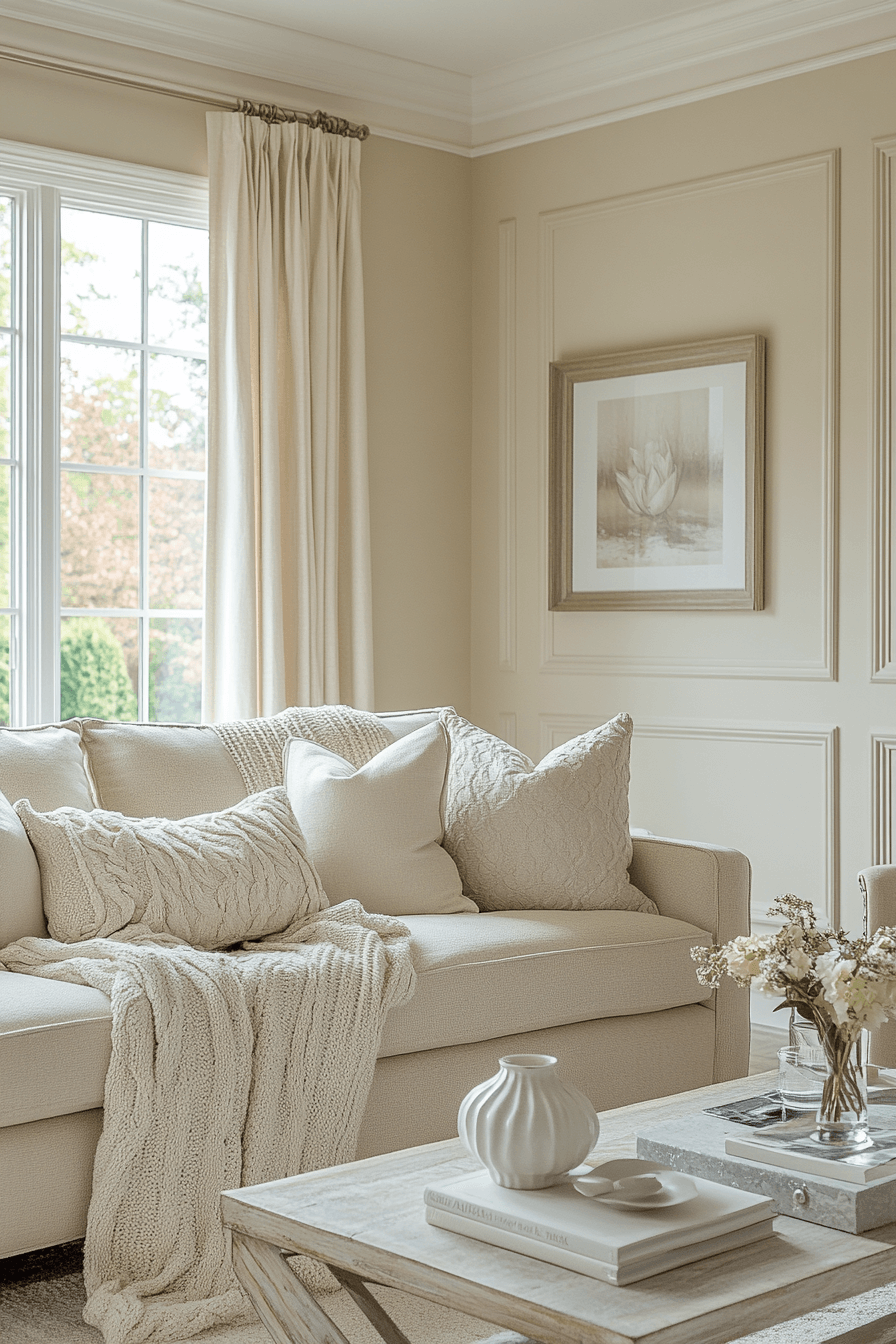
Muted ivory and sand tones set a serene foundation for a neoclassical interior, allowing ornate trim and architectural symmetry to take center stage. The restrained palette highlights craftsmanship without distracting from the room’s proportions. Layered textiles and subtle metallic touches introduce depth while maintaining calm cohesion. When paired with crisp white moldings, the effect feels timeless and elevated. This gentle color story reinforces balance, grace, and classical order. Discover how soft neutrals redefine refined living.
★ Steal This Look
- Paint Color: Sherwin-Williams Alabaster SW 7008
- Furniture: Louis XVI-style bergère chairs with carved wood frames, marble-topped console table, gilded mirror with pediment
- Lighting: Crystal chandelier with brass accents, wall sconces with silk shades
- Materials: Plaster crown molding, honed marble, silk damask, antique brass, limed oak
There’s something quietly powerful about a room that whispers rather than shouts; this palette lets the craftsmanship do the talking while you simply breathe easier.
2. Framed Wall Precision
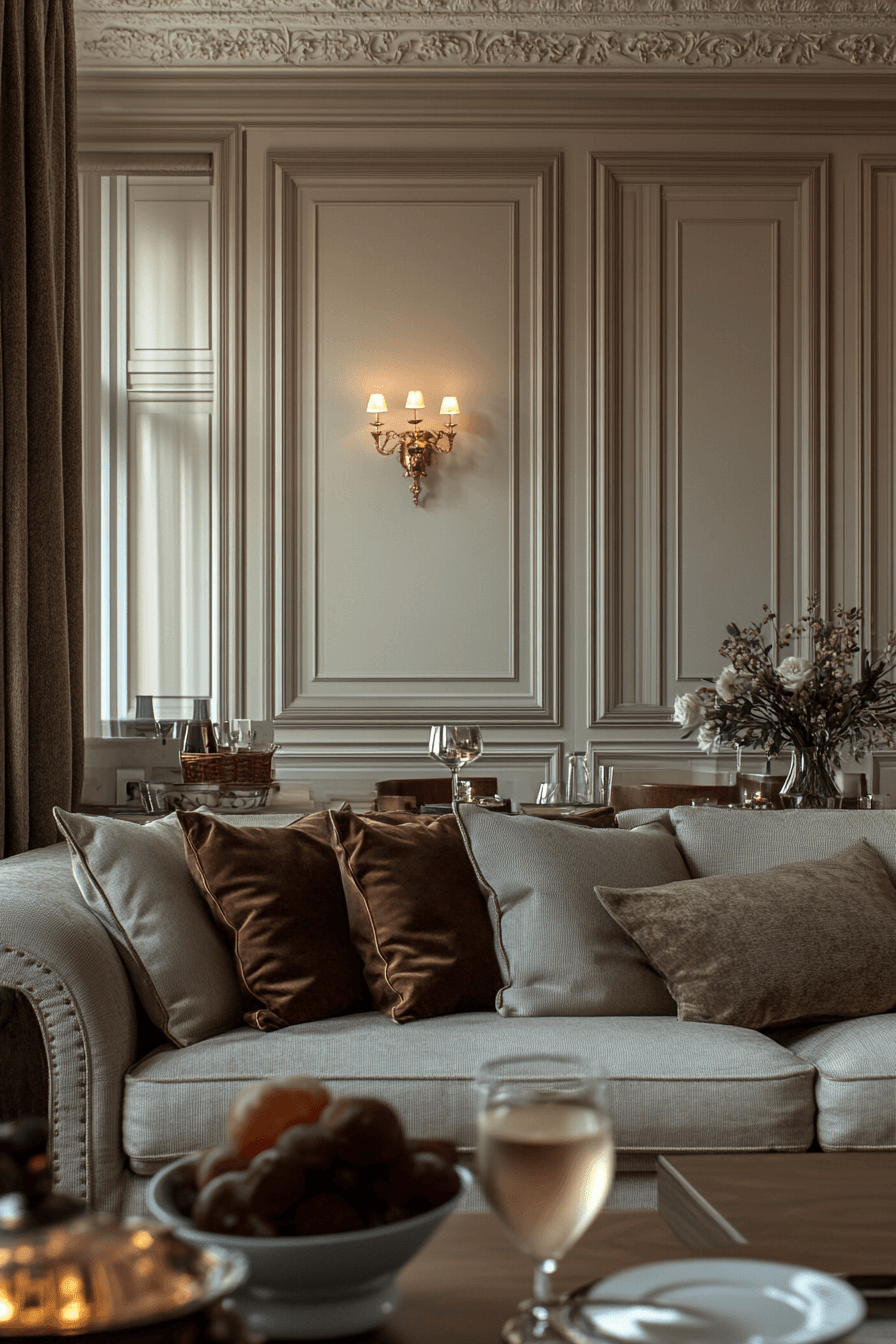
Dimensional wall framing introduces rhythm and structure to a neoclassical interior through carefully scaled paneling. The raised detailing echoes classical architecture while feeling fresh in modern settings. Painted in cohesive tones, the panels create elegant shadow play that enhances depth. Art and lighting stand out beautifully against this architectural backdrop. The result feels tailored, poised, and enduring. Explore the transformative power of structured walls.
🖼 Steal This Look
- Paint Color: Benjamin Moore Chantilly Lace OC-65
- Furniture: Louis XVI-style bergère chair with tapered legs, marble-top console table with brass trim
- Lighting: Crystal wall sconce with candle-style arms, aged brass finish
- Materials: Raised MDF wall panels, plaster crown molding, silk damask upholstery, antique brass hardware
There’s something quietly powerful about walking into a room where the walls themselves feel dressed—like the architecture is wearing a perfectly tailored coat.
3. Graceful Arch Transitions
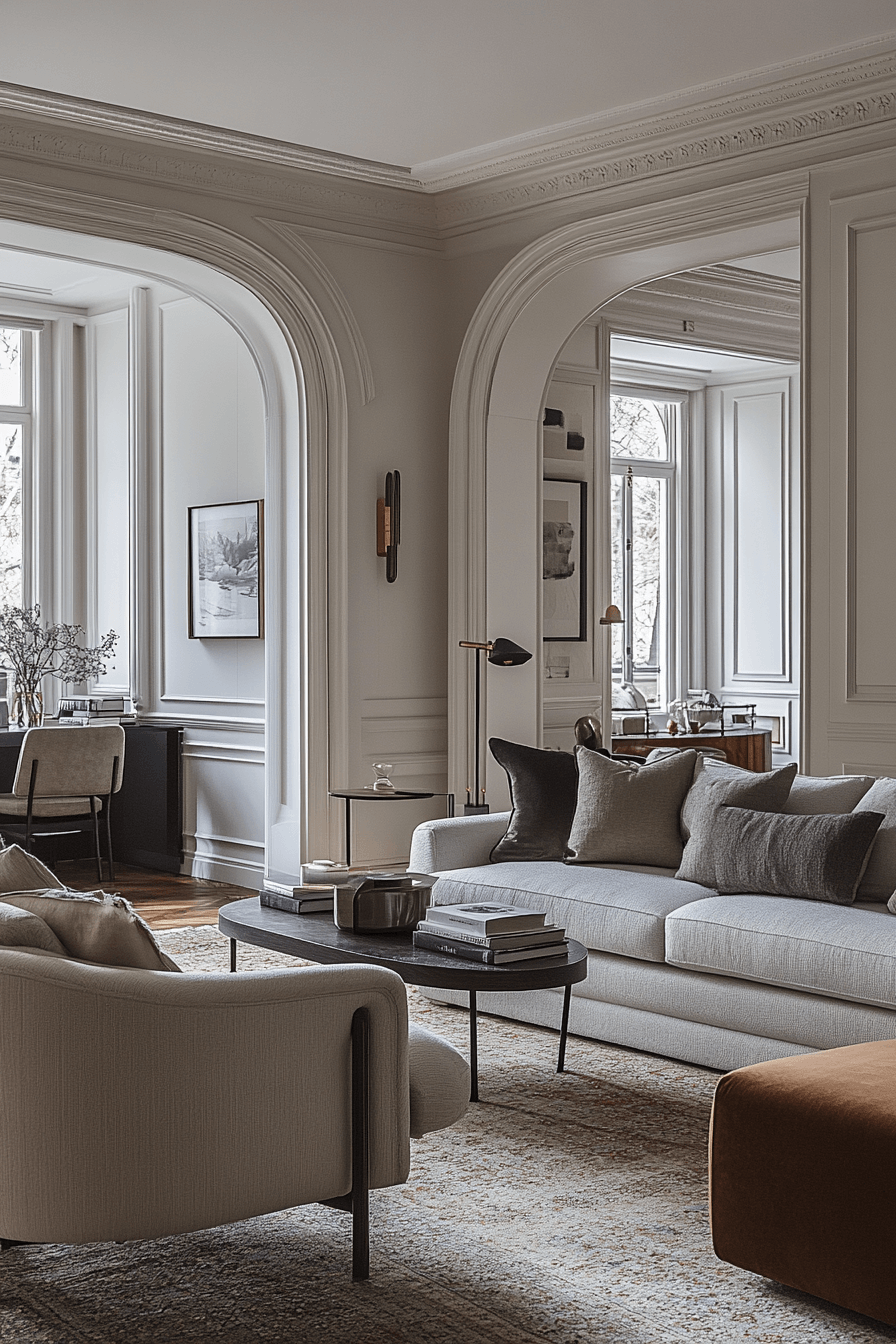
Graceful arch motifs soften linear architecture within a neoclassical interior, creating flow between rooms. These curved elements reference Roman influence while maintaining contemporary restraint. Integrated with crown molding and subtle trim, they frame views with sophistication. Natural light filters through arched transitions beautifully, amplifying their elegance. The balance of curve and line defines harmony. Bring sculptural softness into your classical spaces.
💡 Steal This Look
- Paint Color: Farrow & Ball Joa’s White 226
- Furniture: tufted linen settee with turned legs, marble-topped console table with brass gallery rail
- Lighting: brass picture light with pleated silk shade, crystal-trimmed wall sconce
- Materials: plaster archway with egg-and-dart crown molding, honed Carrara marble, aged brass hardware, Belgian linen
There’s something quietly theatrical about walking through an arched threshold—it slows your step and elevates the everyday into something ceremonial.
4. Golden Neutral Glow

Warm metallic detailing introduces luminous contrast to a neoclassical interior grounded in muted tones. Gold accents along mirrors, lighting, and hardware provide understated glamour. The interplay between matte surfaces and polished metal creates subtle richness. Architectural symmetry remains the focal point while metallic touches add sparkle. The space feels regal yet controlled. Elevate your home with refined gilded accents.
🏠 Steal This Look
- Paint Color: Behr Wheat Bread 720C-3
- Furniture: tufted velvet settee with carved wood legs, marble-top console table with brass detailing, gilt-framed floor mirror
- Lighting: crystal chandelier with aged brass arms, wall sconces with gold leaf backplates
- Materials: warm plaster walls, burnished brass hardware, antiqued mirror glass, silk damask upholstery, honed marble
This is the look that whispers old money rather than shouting it; the restraint is what makes it feel truly aristocratic.
5. Sculpted Stone Hearth
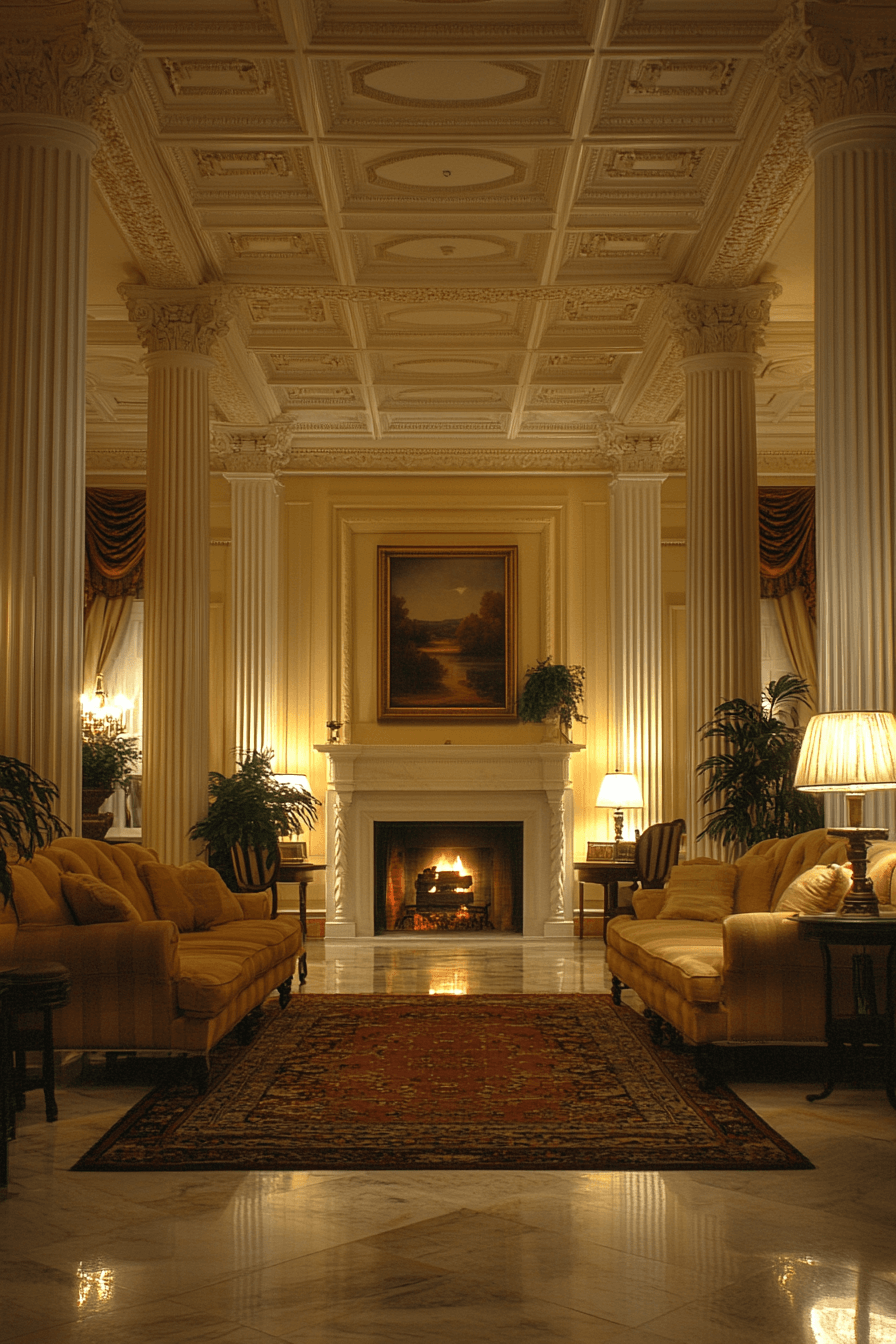
A sculpted stone fireplace becomes the focal anchor of a neoclassical interior, drawing attention with elegant fluting and proportion. Vertical detailing enhances ceiling height and reinforces symmetry. The organic veining of marble contrasts with structured paneling for visual balance. This feature blends warmth with grandeur effortlessly. Classical inspiration meets contemporary polish in a seamless way. Reimagine your hearth as an architectural statement.
★ Steal This Look
- Paint Color: Valspar Elegant Ivory 7002-8
- Furniture: tufted linen settee in cream, carved mahogany console table, gilded accent mirror with fluted frame
- Lighting: crystal and brass torchiere floor lamp, candle-style wall sconces with aged bronze finish
- Materials: Carrara marble with grey veining, fluted limestone, burnished brass, silk damask upholstery
There’s something timeless about running your hand along cool, fluted stone while firelight dances above—this is where architecture becomes emotion.
6. Grand Panel Proportion
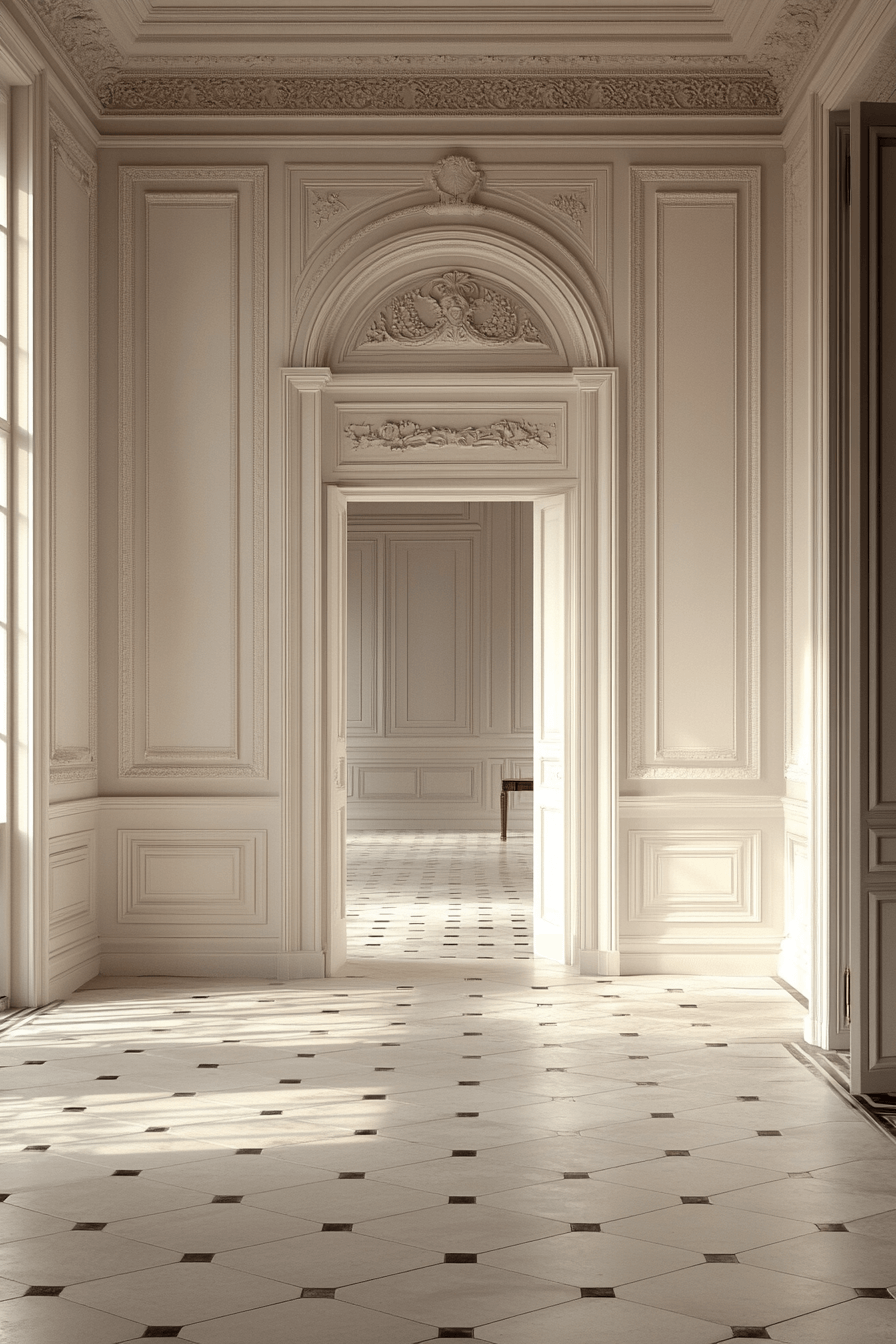
Expansive wall panels emphasize proportion and clarity within a neoclassical interior. Their larger scale amplifies height and creates gallery-like sophistication. Soft hues or dramatic tones both enhance their commanding presence. Minimal furnishings allow the architecture to breathe. The room feels organized, intentional, and stately. Frame your space with bold yet elegant geometry.
🏠 Steal This Look
- Paint Color: PPG Timeless White PPG1095-1
- Furniture: Louis XVI-style settee with carved wood frame and neutral upholstery, marble-top console table with brass legs
- Lighting: Crystal chandelier with candle-style arms and aged brass finish
- Materials: Plaster wall panels with crown molding, polished marble, gilded wood accents, silk drapery
There’s something almost meditative about walking into a room where the walls do the heavy lifting—I’ve always found that when the architecture speaks this clearly, you barely need anything else.
7. Tonal Harmony Revival
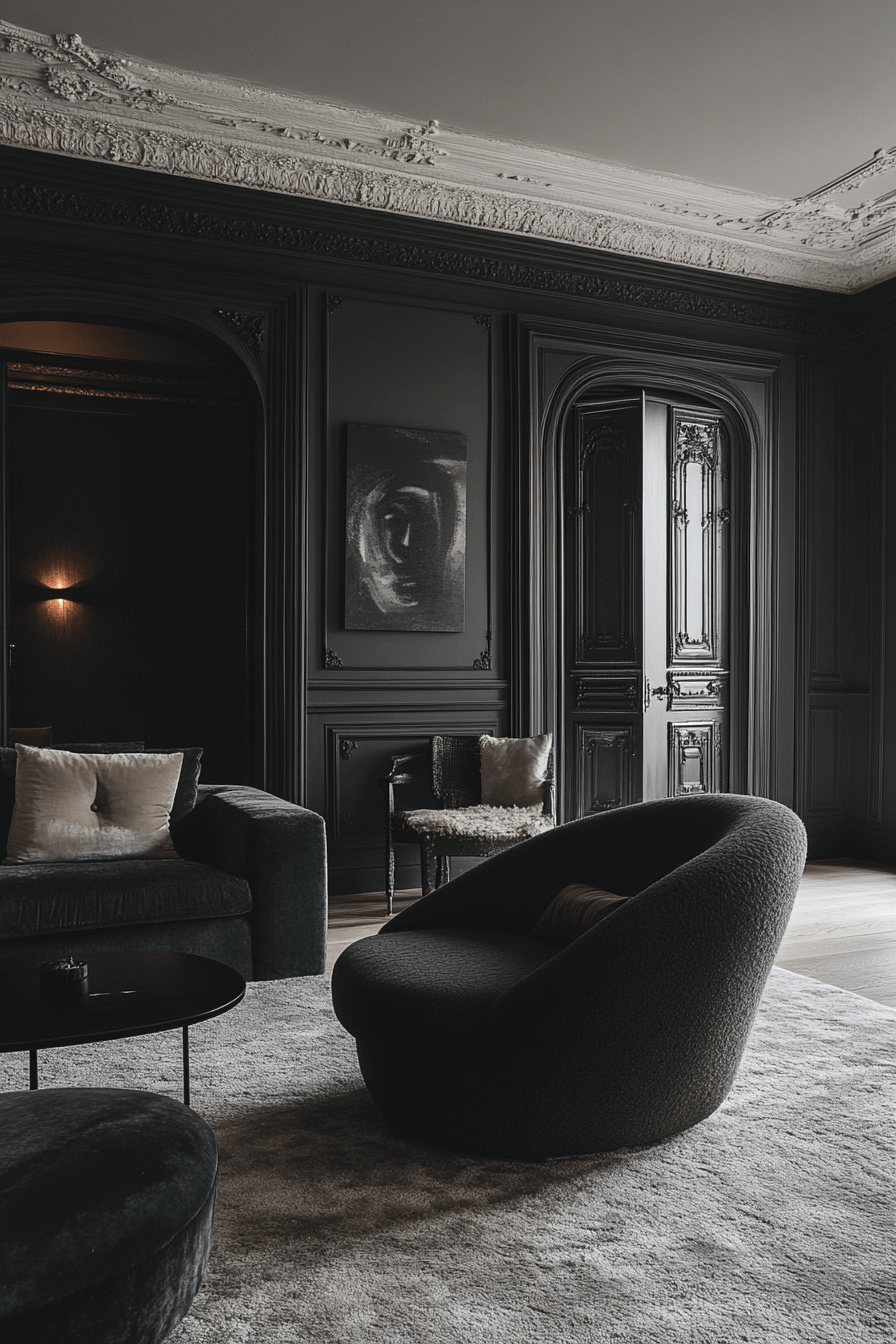
A single-tone palette unifies architectural detailing in a neoclassical interior, letting moldings and cornices stand out subtly. Layered shades within the same hue add depth without visual noise. Texture becomes the primary storyteller in this refined approach. The design feels cohesive, calming, and elevated. Classical ornamentation appears fresh against a monochrome canvas. Experience timeless sophistication through tonal harmony.
🌟 Steal This Look
- Paint Color: Dunn-Edwards Gallery White DEW 380 for walls, Dunn-Edwards Droplets DEW 381 for ceiling, Dunn-Edwards Droplets DEW 381 for trim and moldings
- Furniture: Louis XVI-style bergère chairs in cream linen, marble-topped console with gilt bronze mounts, pedestal dining table with turned legs
- Lighting: Crystal chandelier with brass arms and candle-style bulbs, wall sconces with silk shades
- Materials: Plaster crown moldings, honed Carrara marble, silk velvet upholstery, gilt bronze hardware, bleached oak parquet
There’s something almost meditative about walking into a room where every surface whispers the same color story—your eye finally rests, and the millwork gets its moment to shine.
8. Brushed Gold Refinement

Delicate metallic hints provide subtle radiance inside a neoclassical interior without overwhelming its calm foundation. Light-catching details on frames and fixtures add dimension. These touches complement soft creams, sage, or muted greys beautifully. The restrained shimmer reinforces elegance over extravagance. Luxury feels intentional and measured. Refine your classical aesthetic with controlled brilliance.
🏠 Steal This Look
- Paint Color: Clare Paint Penthouse CC-02
- Furniture: cream velvet tufted settee with carved wood legs, antique brass console table with marble top
- Lighting: brushed gold chandelier with candle-style arms and silk shades
- Materials: brushed gold leaf, Calacatta marble, silk velvet, aged oak
This is the gold that whispers rather than shouts. I keep coming back to brushed finishes because they catch morning light like old Parisian apartments—lived-in, loved, quietly magnificent.
9. Streamlined Column Presence

Modernized column elements reinterpret classical silhouettes in a neoclassical interior, blending tradition with contemporary restraint. Streamlined capitals and simplified bases maintain architectural presence without heaviness. Integrated into shelving or room dividers, they feel sculptural and relevant. Their repetition enhances rhythm and balance. The effect is structured yet airy. Rediscover the column through a modern lens.
★ Steal This Look
- Paint Color: Fine Paints of Europe Satin White 9003
- Furniture: Minimalist console table with fluted column legs, low-profile sectional in warm ivory linen
- Lighting: Slim brass picture lights and recessed ceiling spots highlighting column forms
- Materials: Plaster-finished columns, brushed brass accents, honed marble surfaces, sheer wool drapery
There’s something quietly powerful about walking into a space where classical bones meet modern breathing room—it feels timeless without trying too hard.
10. Ceiling Medallion Accent
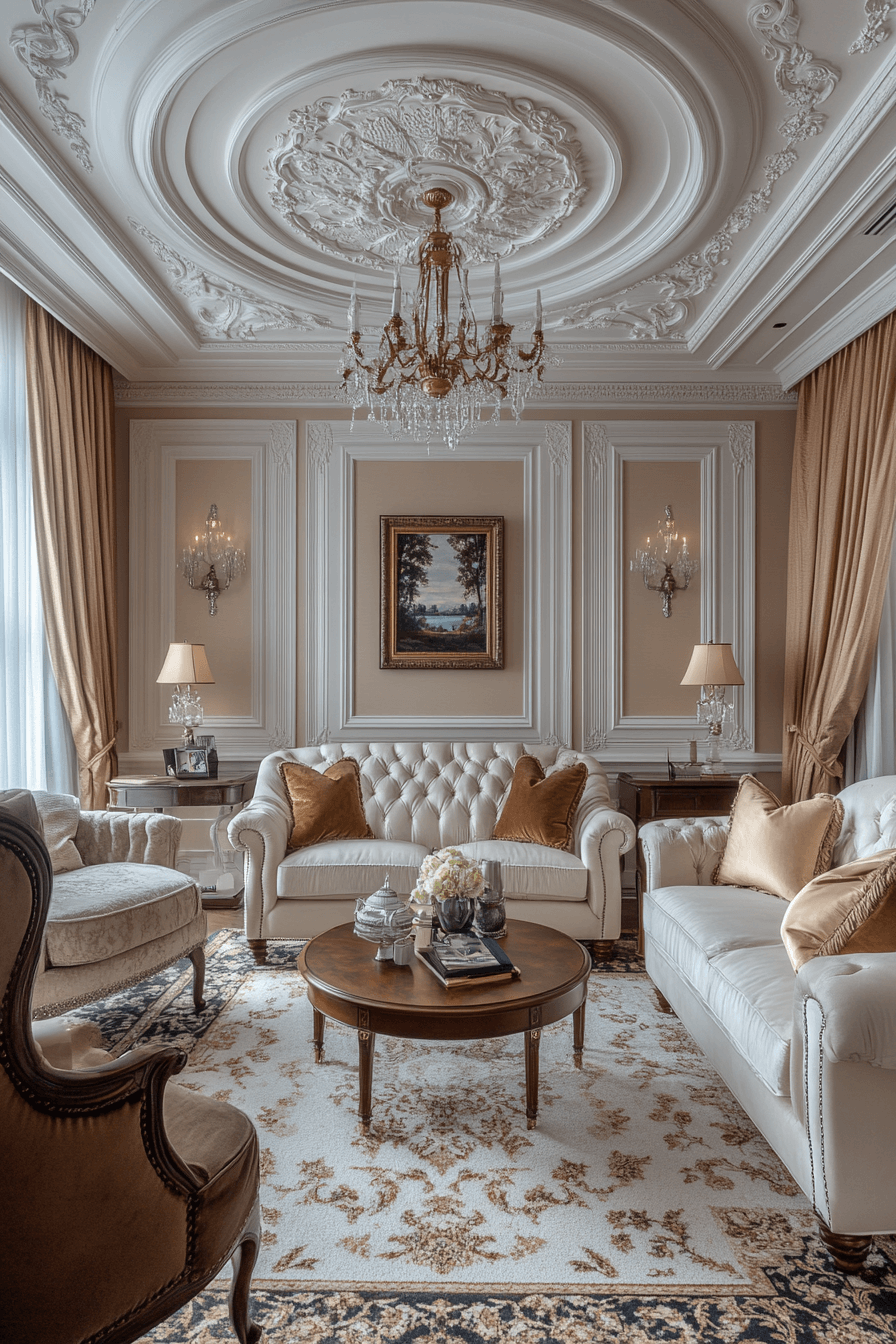
Ceiling ornamentation introduces heritage charm into a neoclassical interior with sculptural medallions. These details frame lighting fixtures elegantly and emphasize vertical volume. Whether minimal or ornate, the medallion adds finish and depth overhead. Paired with streamlined chandeliers, the look bridges eras seamlessly. Attention shifts upward, celebrating proportion and form. Add timeless character above eye level.
🏠 Steal This Look
- Paint Color: Backdrop Plaster OF-35
- Furniture: Louis XVI-style bergère chairs with gilded wood frames and cream silk upholstery, paired with a marble-top console table
- Lighting: Streamlined crystal chandelier with brass arms, suspended from ornate plaster ceiling medallion
- Materials: Plaster medallion with acanthus leaf detailing, honed Carrara marble, gilt bronze, silk damask, aged oak parquet
There’s something quietly theatrical about looking up and finding sculpture overhead—it’s the kind of detail that makes guests pause mid-conversation.
11. Layered Ivory Depth
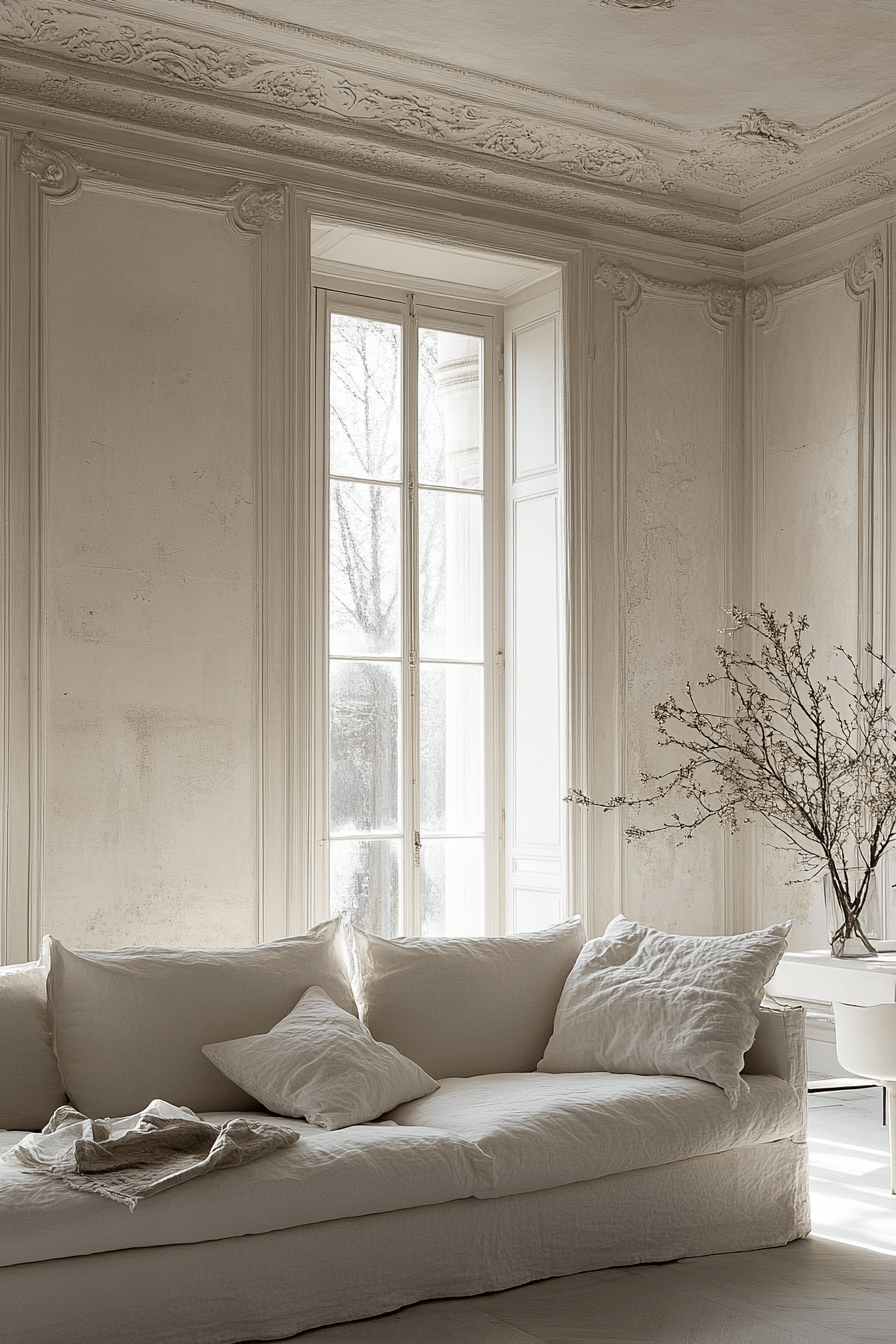
Layered whites create dimension and drama inside a neoclassical interior without relying on bold color. Textural contrasts between plaster, fabric, and molding keep the palette dynamic. Crisp surfaces highlight architectural precision. The serene foundation allows furnishings to shine gracefully. The result feels airy yet rich in detail. See how white becomes the ultimate design statement.
✎ Steal This Look
- Paint Color: Sherwin-Williams Alabaster SW 7008
- Furniture: Louis XVI-style bergère chairs in cream linen, marble-topped console with gilt legs, carved mahogany demilune table
- Lighting: crystal chandelier with candle-style arms, brass wall sconces with silk shades
- Materials: plaster crown molding, Belgian linen, Carrara marble, gilt bronze, hand-tufted wool
This is the quiet confidence I love about true neoclassical work—no color needed when shadow, texture, and proportion do the talking. The room feels like a breath held just long enough to notice every carved edge.
12. Reflective Grandeur
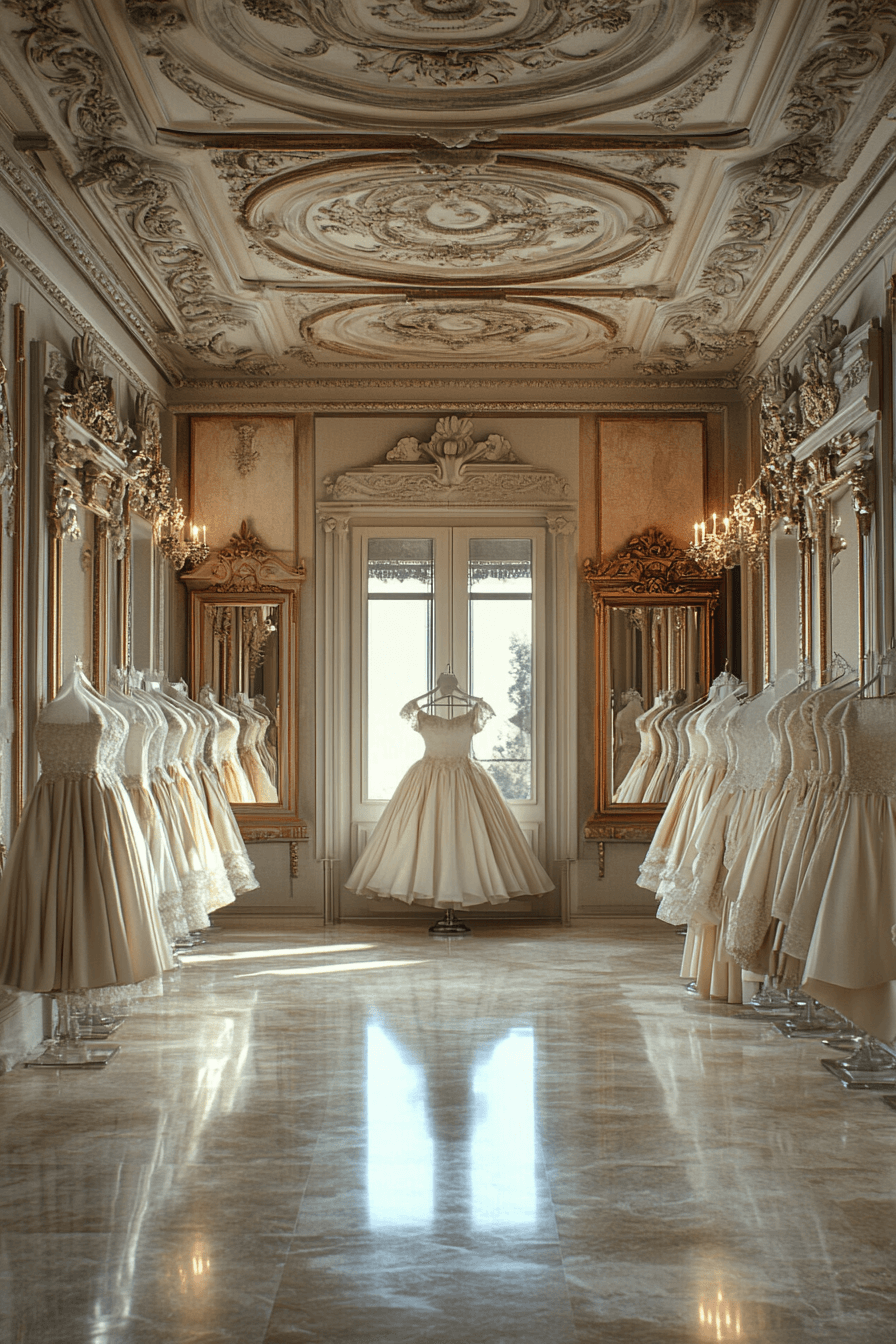
Oversized reflective surfaces amplify scale and symmetry within a neoclassical interior. Carved or gilded frames echo classical heritage while brightening the room. Mirrors enhance depth and double architectural impact. Positioned thoughtfully, they anchor focal points beautifully. Their presence feels balanced and grand. Reflect timeless elegance throughout your space.
★ Steal This Look
- Paint Color: Benjamin Moore White Dove OC-17
- Furniture: ornate gilt console table with marble top, carved mahogany settee with velvet upholstery, pedestal display tables for sculpture
- Lighting: crystal chandelier with brass arms, wall-mounted gilt sconces with candle-style bulbs
- Materials: gold leaf, Carrara marble, Venetian glass, carved wood, silk damask
There’s something undeniably theatrical about walking into a room where a towering gilt mirror catches the chandelier’s glow—it’s the closest most of us get to living in a palace.
13. Polished Heritage Contrast
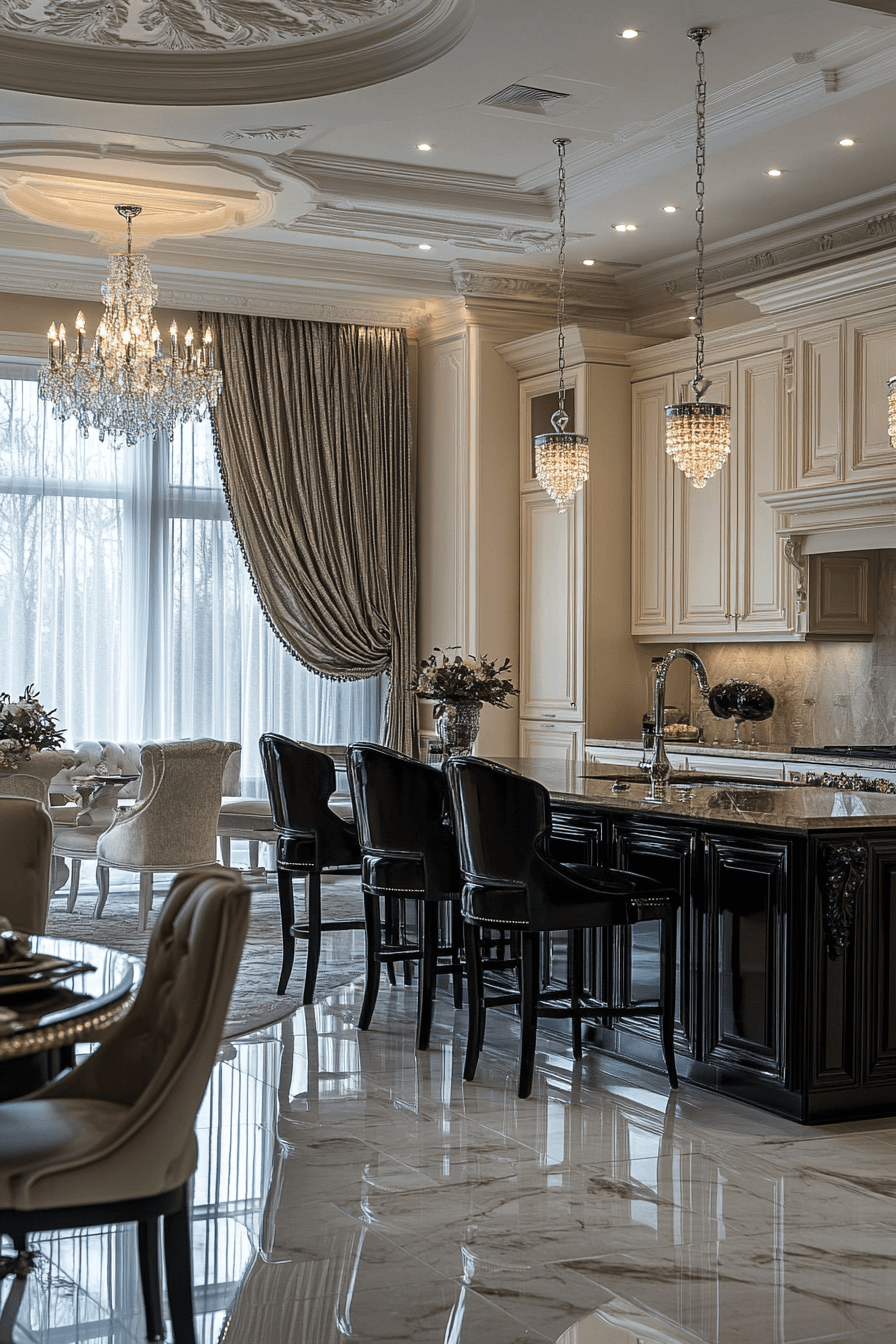
Polished finishes merge heritage elements with contemporary sheen in a neoclassical interior. Glossy trim and cabinetry reflect light against traditional forms. The contrast between sleek surfaces and intricate detailing feels intentional. This layered approach keeps the style relevant. Classical lines gain a modern edge without losing integrity. Blend history with modern polish effortlessly.
🎨 Steal This Look
- Paint Color: Farrow & Ball Off-Black No. 57
- Furniture: Mahogany breakfront cabinet with brass hardware, tufted velvet settee in emerald, marble-top console table with fluted legs
- Lighting: Crystal chandelier with polished brass arms, wall-mounted sconces with mirrored backplates
- Materials: High-gloss lacquered millwork, polished Calacatta marble, antiqued mirror, silk damask, gilded plaster moldings
There’s something quietly rebellious about taking your grandmother’s formal dining room and giving it a mirror-shine lacquer treatment—it respects the bones while refusing to whisper.
14. Parquet Pattern Prestige
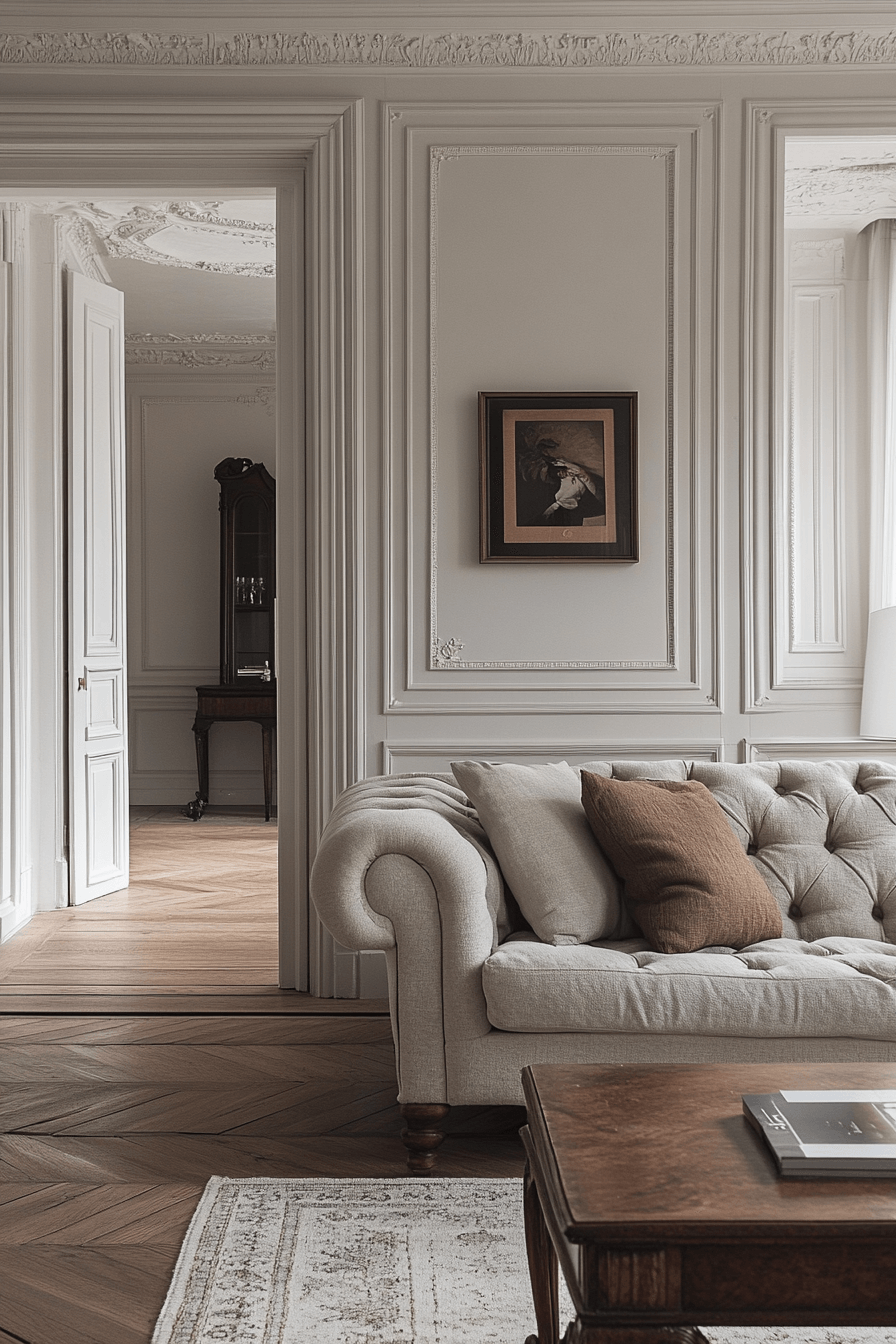
Geometric wood flooring patterns introduce refined movement to a neoclassical interior. Chevron or herringbone layouts echo historical craftsmanship. Light or dark finishes both highlight structural symmetry. The floor anchors furnishings and enhances spatial balance. This foundation ties together architectural and decorative elements. Step into elegance grounded in tradition.
🎨 Steal This Look
- Paint Color: Behr Swiss Coffee 12
- Furniture: Louis XVI-style giltwood console table with marble top, tufted linen settee in cream
- Lighting: crystal and brass empire chandelier with candle-style bulbs
- Materials: herringbone oak parquet in warm walnut finish, gilded moldings, Carrara marble, silk damask upholstery
There’s something quietly commanding about walking into a room where the floor itself is the architecture. I always pause at the threshold of herringbone—it’s like the house is offering a formal bow.
15. Sculpted Trim Layers

Carefully layered molding profiles add texture and depth to a neoclassical interior without overwhelming its simplicity. Tone-on-tone application creates subtle sculptural shadows. The repetition reinforces proportion and harmony. Decorative detail feels edited rather than excessive. Classical influence appears fresh and disciplined. Discover how minimal molding achieves maximum elegance.
✎ Steal This Look
- Paint Color: Valspar Gallery White 7006-14
- Furniture: Louis XVI-style upholstered bergère with carved walnut frame, marble-top console table with gilt bronze mounts
- Lighting: crystal empire chandelier with brass chain suspension
- Materials: plaster crown molding with egg-and-dart detail, limed oak parquet, silk damask upholstery, antique brass hardware
This is the room that taught me restraint has more impact than ornament—every layer of trim earns its place through proportion alone.
16. Curved Silhouette Classic
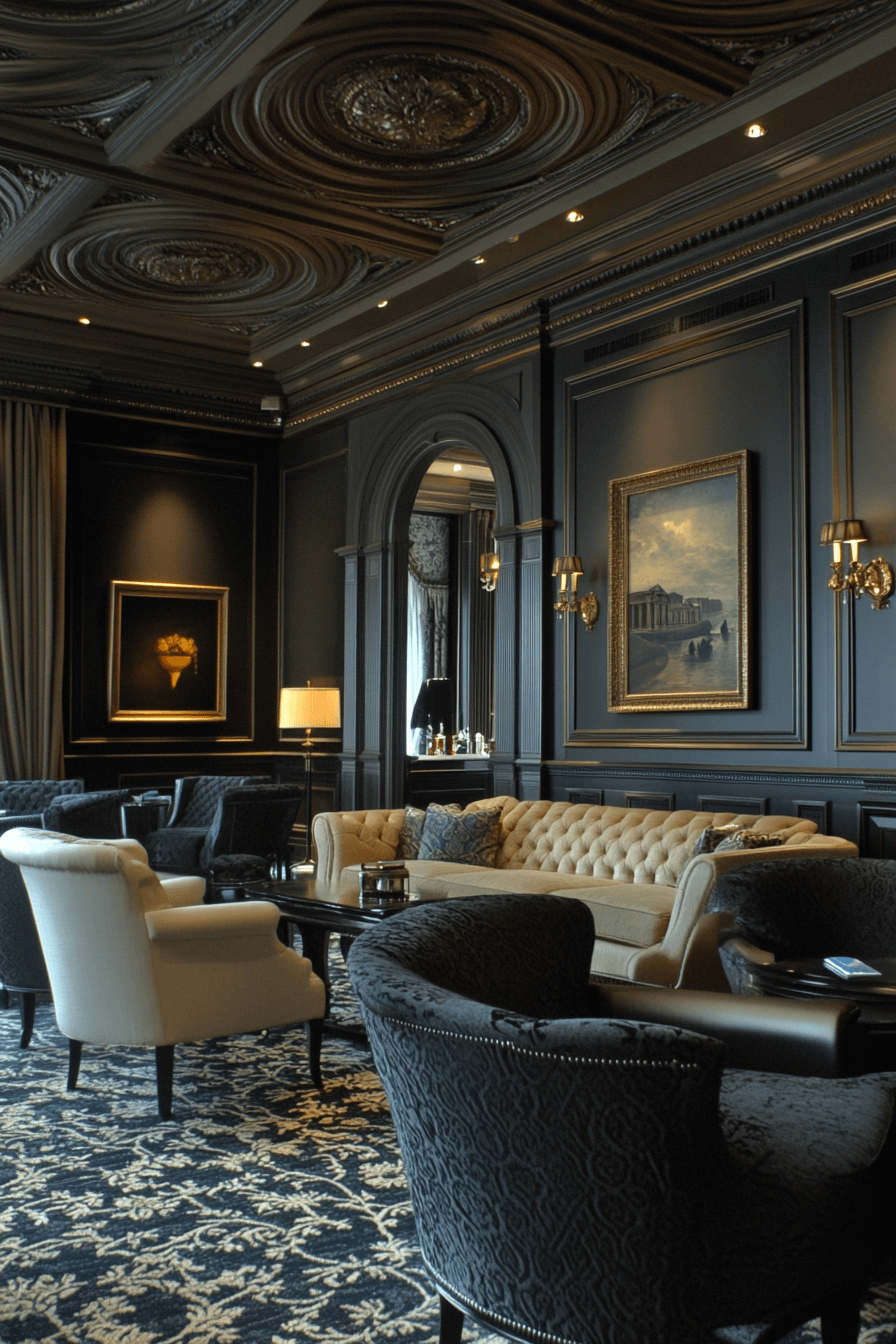
Curved seating silhouettes soften structured architecture within a neoclassical interior. Rounded sofas and sculpted armchairs introduce comfort and visual flow. The contrast between straight trim and gentle curves enhances dimension. Upholstered in linen or velvet, these pieces feel timeless. Balance between structure and softness defines the room. Invite graceful curves into classical living.
🌟 Steal This Look
- Paint Color: PPG Timeless Taupe PPG1096-4
- Furniture: curved camelback sofa with rolled arms, barrel-back accent chairs with turned legs
- Lighting: crystal drum chandelier with brass chain
- Materials: polished marble, gilded mirror frames, tufted velvet, fluted wood trim
There’s something inherently gracious about a curved sofa—it invites conversation without demanding it, and in a neoclassical space, it honors the era’s obsession with harmonious proportions.
17. Marble Textile Harmony
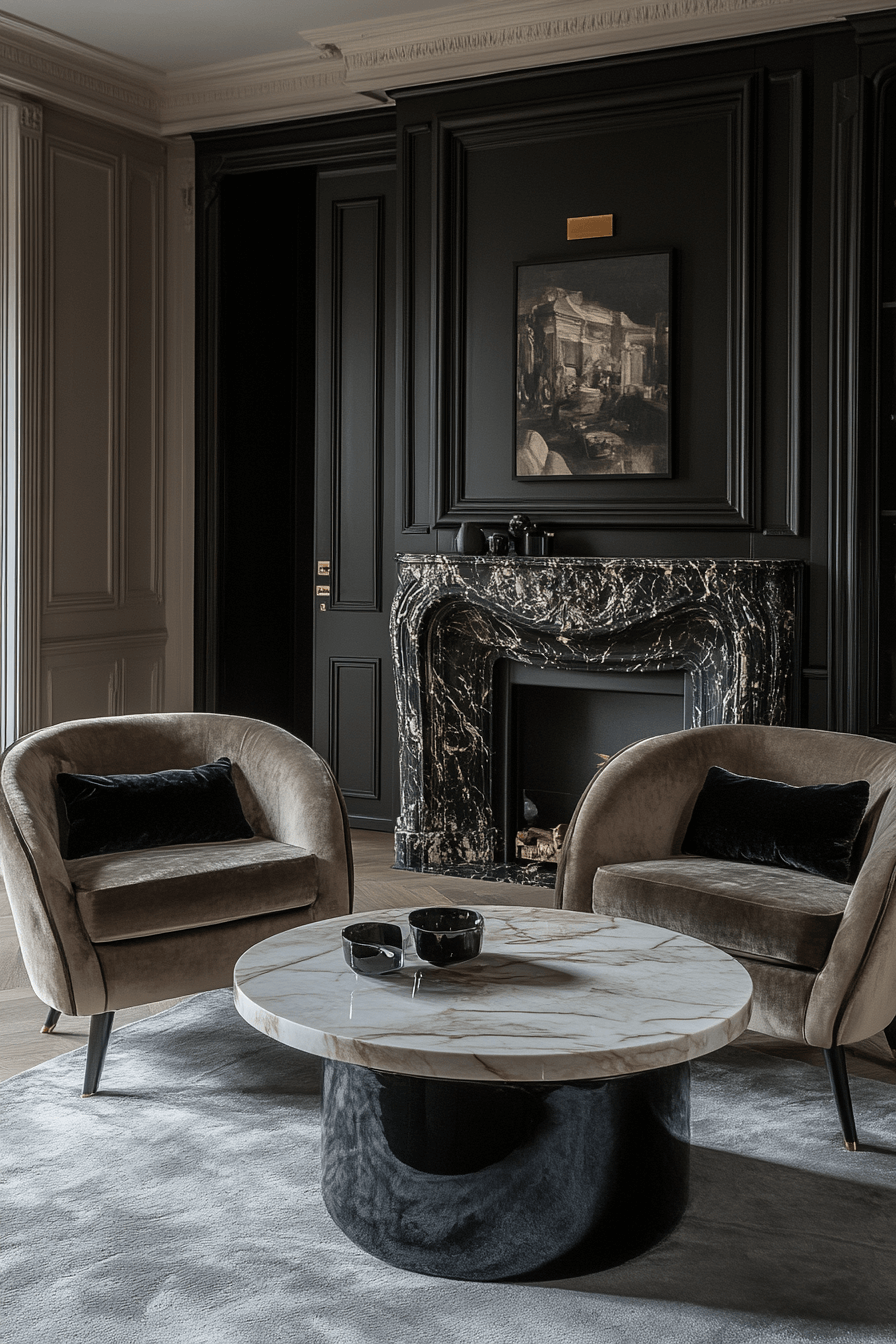
The pairing of stone and plush textiles enriches a neoclassical interior with tactile contrast. Marble surfaces add permanence while velvet layers introduce warmth. Together, they create cohesion between hard and soft materials. Ornate trim and paneling frame the materials beautifully. The result feels indulgent yet composed. Experience material harmony at its finest.
★ Steal This Look
- Paint Color: Dunn-Edwards Whisper White DEW 340
- Furniture: tufted velvet settee with carved wood legs, marble-top console table with brass inlay
- Lighting: crystal chandelier with candle-style bulbs and aged brass chain
- Materials: Carrara marble, crushed velvet in deep teal or burgundy, gilded picture frame molding, silk damask drapery
This is the neoclassical tension I love most: the stone whispers permanence while the velvet invites you to linger. It’s museum-quality restraint meets living-room comfort.
18. Taupe Greige Balance
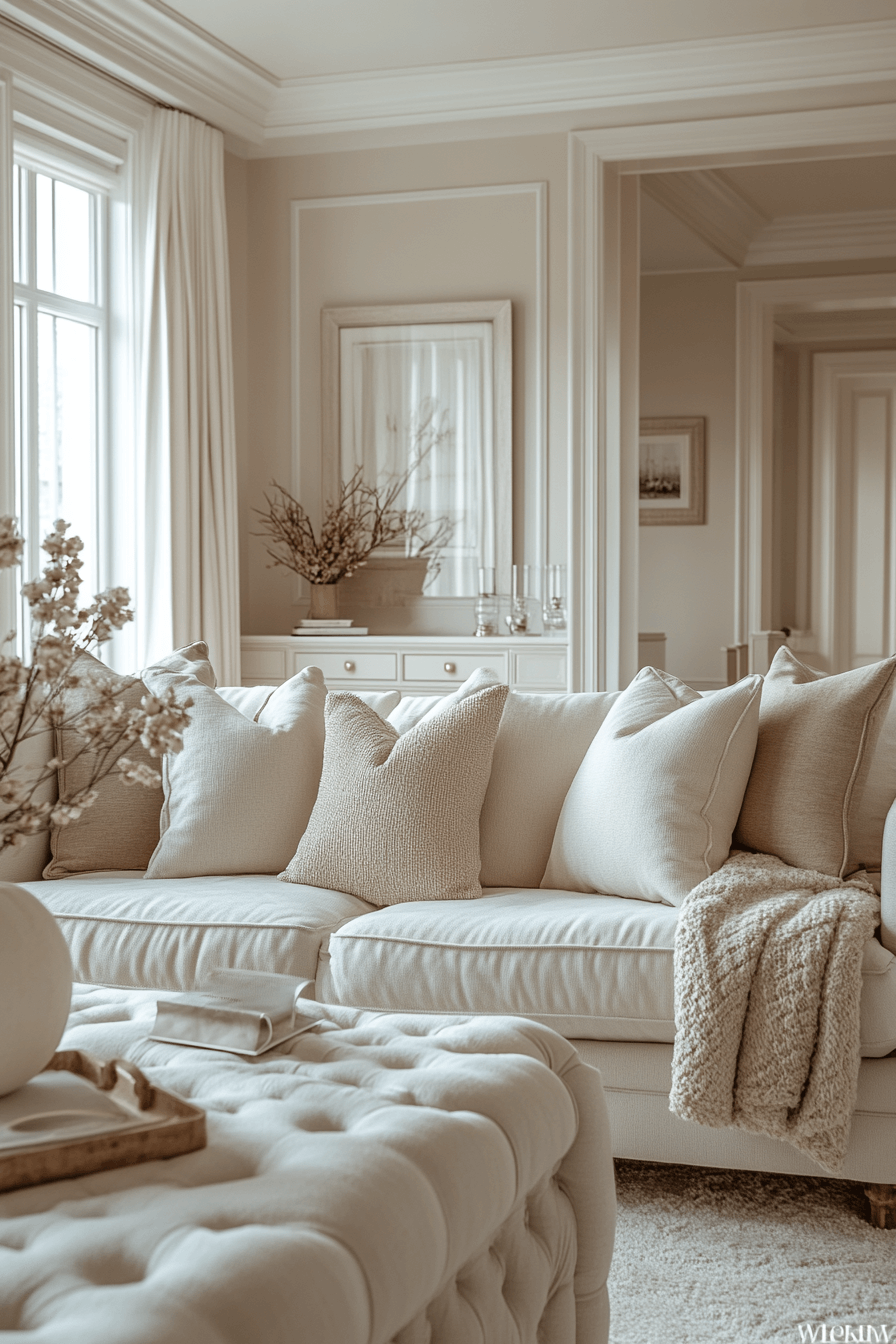
Restrained hues such as taupe and warm grey define a calm neoclassical interior focused on proportion. The subtle palette allows decorative elements to shine quietly. Architectural lines remain crisp and intentional. Layered textures prevent monotony. The ambiance feels tranquil yet sophisticated. Perfect your palette with quiet precision.
🏠 Steal This Look
- Paint Color: Clare Paint Chai CL-06
- Furniture: tufted linen settee with turned wood legs, marble-topped console with brass gallery rail, cane-back bergère chairs
- Lighting: crystal drum chandelier with aged brass chain
- Materials: unlacquered brass, Carrara marble, raw silk, ebonized walnut, plaster relief
This palette whispers rather than shouts, and that’s exactly the point—I’ve always found the most memorable neoclassical rooms are the ones that let you exhale the moment you enter.
19. Chandelier Centerpiece Drama
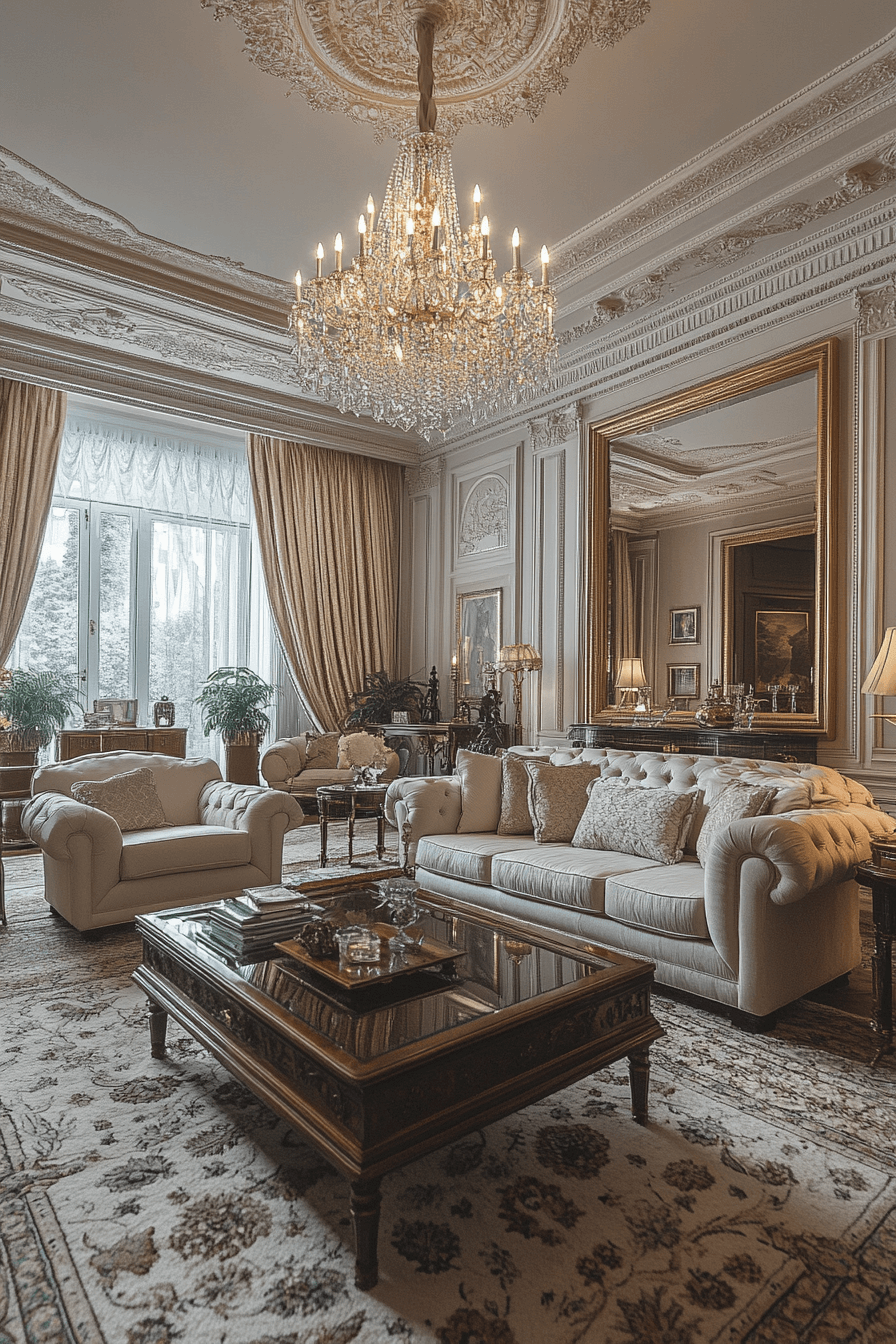
An eye-catching chandelier anchors the volume of a neoclassical interior with luminous presence. Cascading crystals or sculptural metalwork draw attention upward. The fixture balances ornate detailing below. Light and sparkle enhance symmetry. The atmosphere becomes grand without excess. Illuminate your space with timeless drama.
🎨 Steal This Look
- Paint Color: Fine Paints of Europe Hollandlac Brilliant Ivory White W1001
- Furniture: Louis XVI-style gilt console table with marble top, carved mahogany dining chairs with silk upholstery, Empire-style pedestal dining table
- Lighting: Baccarat-style 12-light crystal chandelier with bronze d’ore mounting, cascading prisms, and candle-style bulbs
- Materials: Venetian plaster walls, gilded bronze accents, Carrara marble, silk damask, crystal prisms, mahogany with brass inlay
There’s nothing quite like the moment you flip the switch and watch a proper crystal chandelier transform a room into something straight out of a Parisian hôtel particulier.
20. Modernized Classical Scale
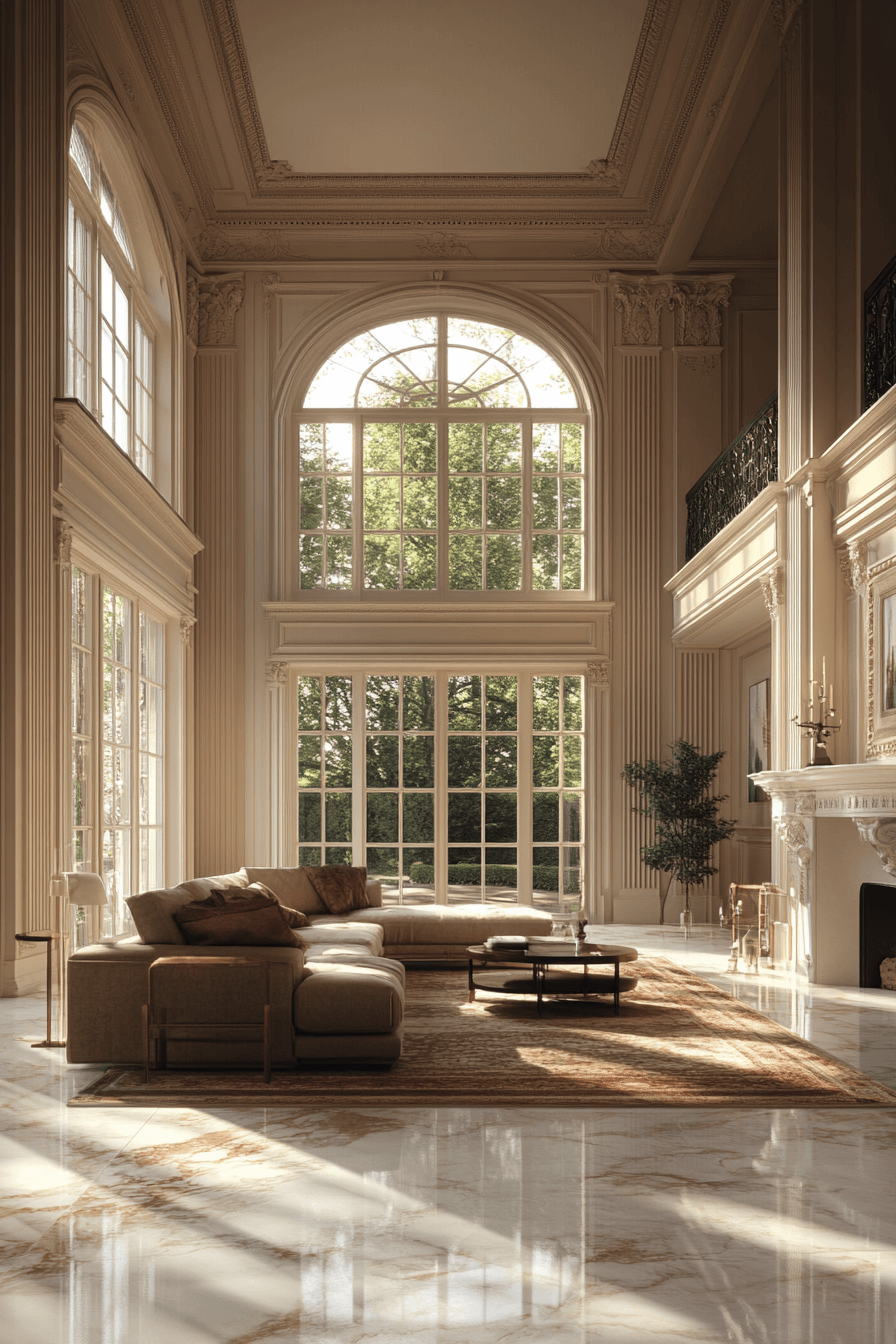
Expansive ceilings and generous window placements modernize classical scale within a neoclassical interior. The open proportions feel breathable and dignified. Minimal furnishings keep the look current. Architectural detail remains the hero. Tradition and comfort coexist seamlessly. Celebrate spacious elegance in every corner.
★ Steal This Look
- Paint Color: Backdrop Limewash Plaster LW-01
- Furniture: Low-profile linen sectional in warm ivory, paired with a single sculptural marble plinth side table
- Lighting: Oversized arched floor lamp in aged brass with linen drum shade
- Materials: Venetian plaster walls, honed Carrara marble, unbleached Belgian linen, warm white oak flooring
There’s something quietly powerful about a room that doesn’t try too hard—just honest materials, perfect proportions, and light doing all the work.
21. Ornamental Frame Elegance
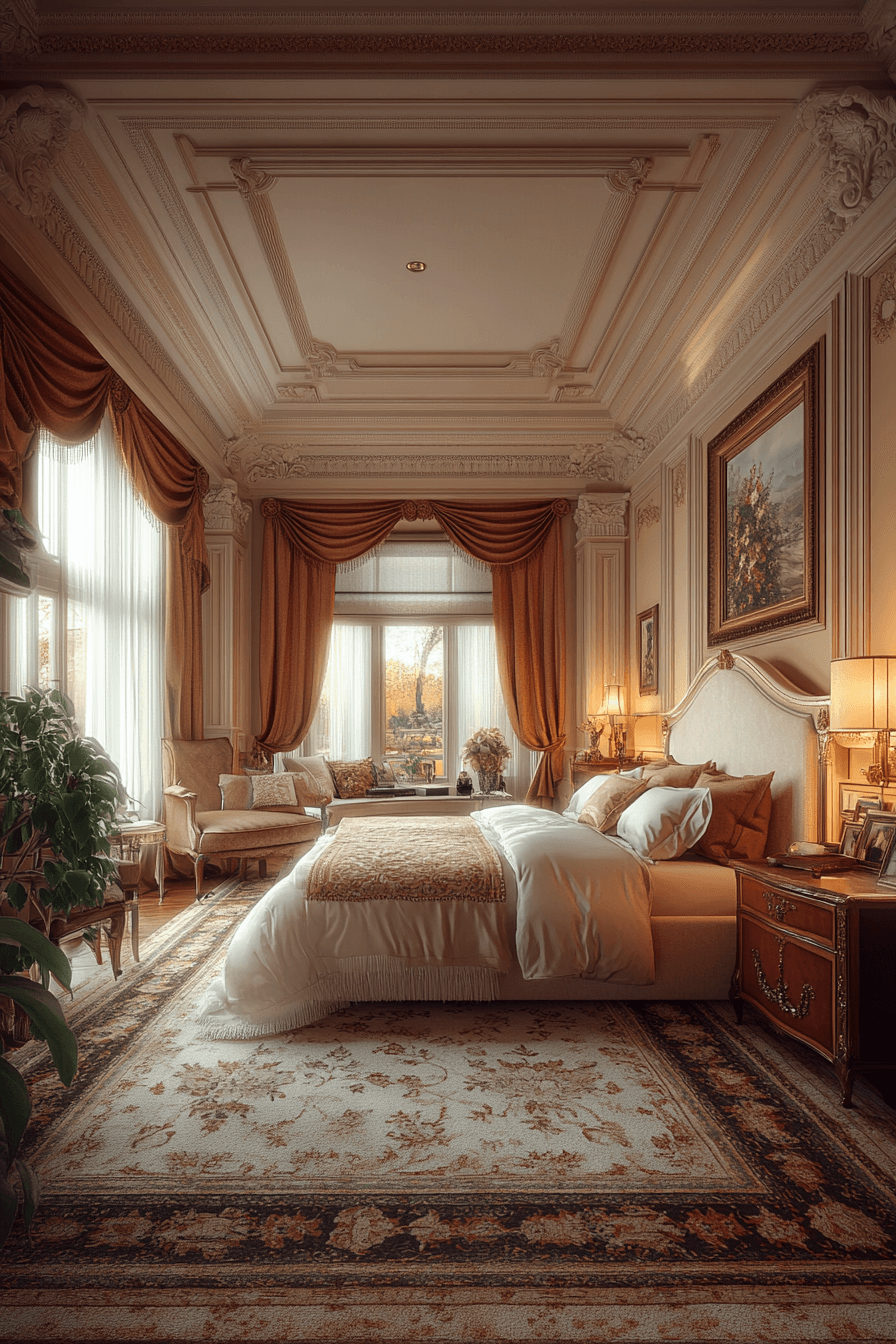
Thoughtfully proportioned trim enhances structure in a neoclassical interior without overpowering simplicity. Cornices and moldings frame each space like fine jewelry. Balanced application preserves harmony. Painted in subtle contrast, they define zones gracefully. The detailing elevates the everyday into something refined. Embrace the artistry of proportion.
✎ Steal This Look
- Paint Color: Sherwin-Williams Alabaster SW 7008 for walls, Sherwin-Williams Pure White SW 7005 for ornamental trim
- Furniture: Louis XVI-style bergère chairs with carved wood frames, mahogany console table with brass inlay, marble-topped side table with tapered legs
- Lighting: Crystal chandelier with brass arms and candle-style bulbs, wall-mounted sconces with pleated silk shades
- Materials: Plaster crown moldings with acanthus leaf detailing, gilded picture frames, honed Carrara marble, silk damask upholstery, polished brass hardware
There’s something quietly powerful about walking into a room where the architecture itself feels dressed for dinner—this is the neoclassical gift of everyday ceremony.
22. Limewash Texture Luxury
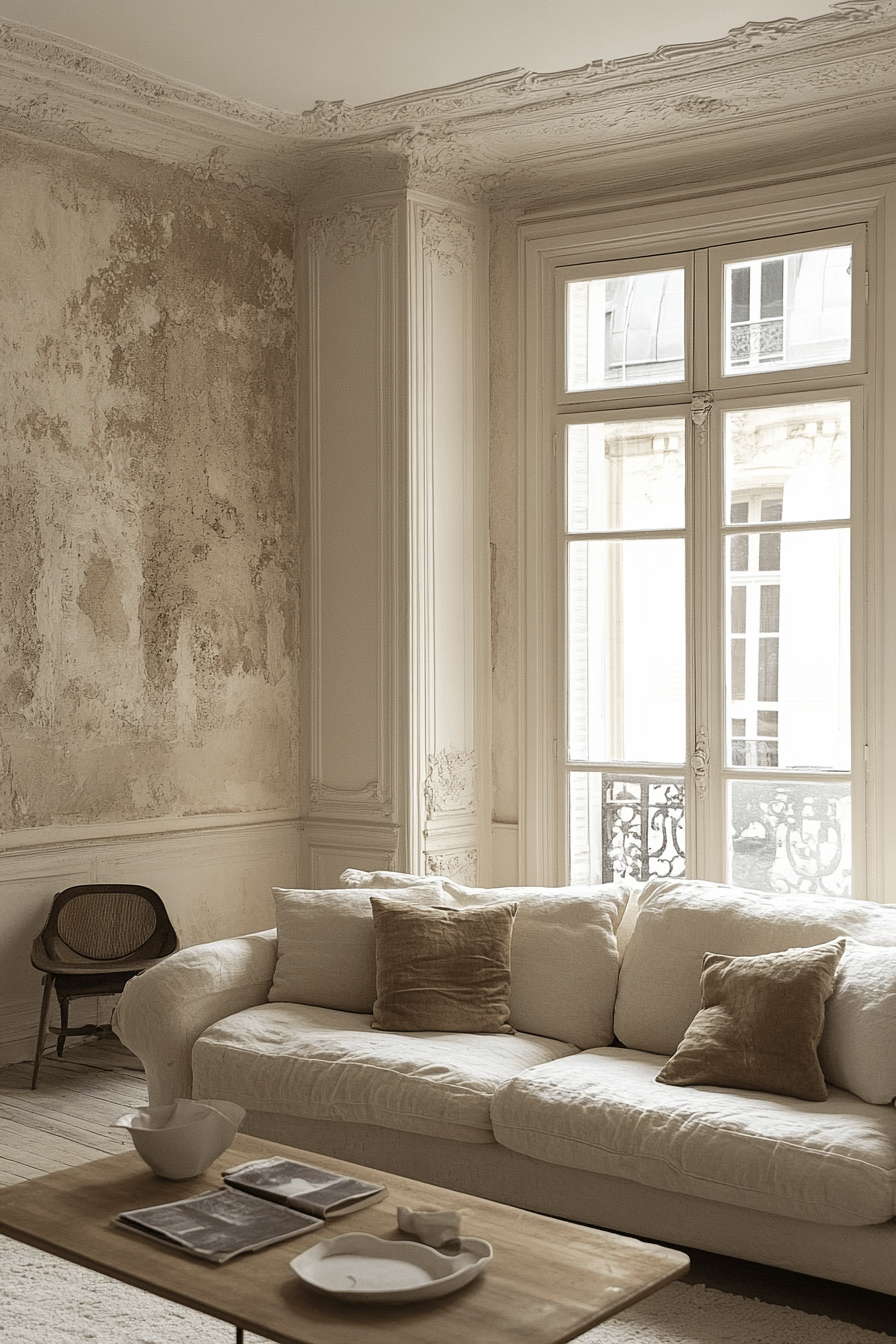
Textured finishes such as limewash or plaster add tactile interest to a neoclassical interior. Light plays beautifully across nuanced surfaces. The organic finish contrasts smooth moldings elegantly. Depth emerges without distracting from structure. The atmosphere feels layered and authentic. Introduce texture with classical refinement.
🌟 Steal This Look
- Paint Color: Benjamin Moore White Dove OC-17
- Furniture: carved mahogany console table with marble top, tufted linen settee in ivory, giltwood mirror with ornate crest
- Lighting: crystal chandelier with aged brass frame, wall sconces with fabric shades
- Materials: hand-applied limewash plaster, honed Carrara marble, antique brass, silk velvet, gilded wood
There’s something quietly luxurious about running your hand across a limewashed wall and feeling its living texture—it’s the antidote to sterile, flat paint in a formal space.
23. Tapered Leg Tradition

Tapered furniture legs echo Greco-Roman influence within a neoclassical interior. Their elegant narrowing shape adds lightness and poise. Paired with symmetrical layouts, the design feels disciplined yet inviting. Warm woods or painted finishes keep them timeless. The subtle detail reinforces proportion. Rediscover this iconic silhouette.
🎨 Steal This Look
- Paint Color: Farrow & Ball Drop Cloth No. 283
- Furniture: Mahogany console table with slender tapered legs, paired with matching tapered-leg dining chairs in warm walnut finish
- Lighting: Brass candlestick floor lamp with pleated silk shade
- Materials: Book-matched walnut veneer, honed Carrara marble tops, aged brass hardware, crisp linen upholstery
There’s something quietly powerful about walking into a room where every piece seems to stand at attention—tapered legs give furniture that same poised, intentional posture.
24. Reinvented Heritage Seating
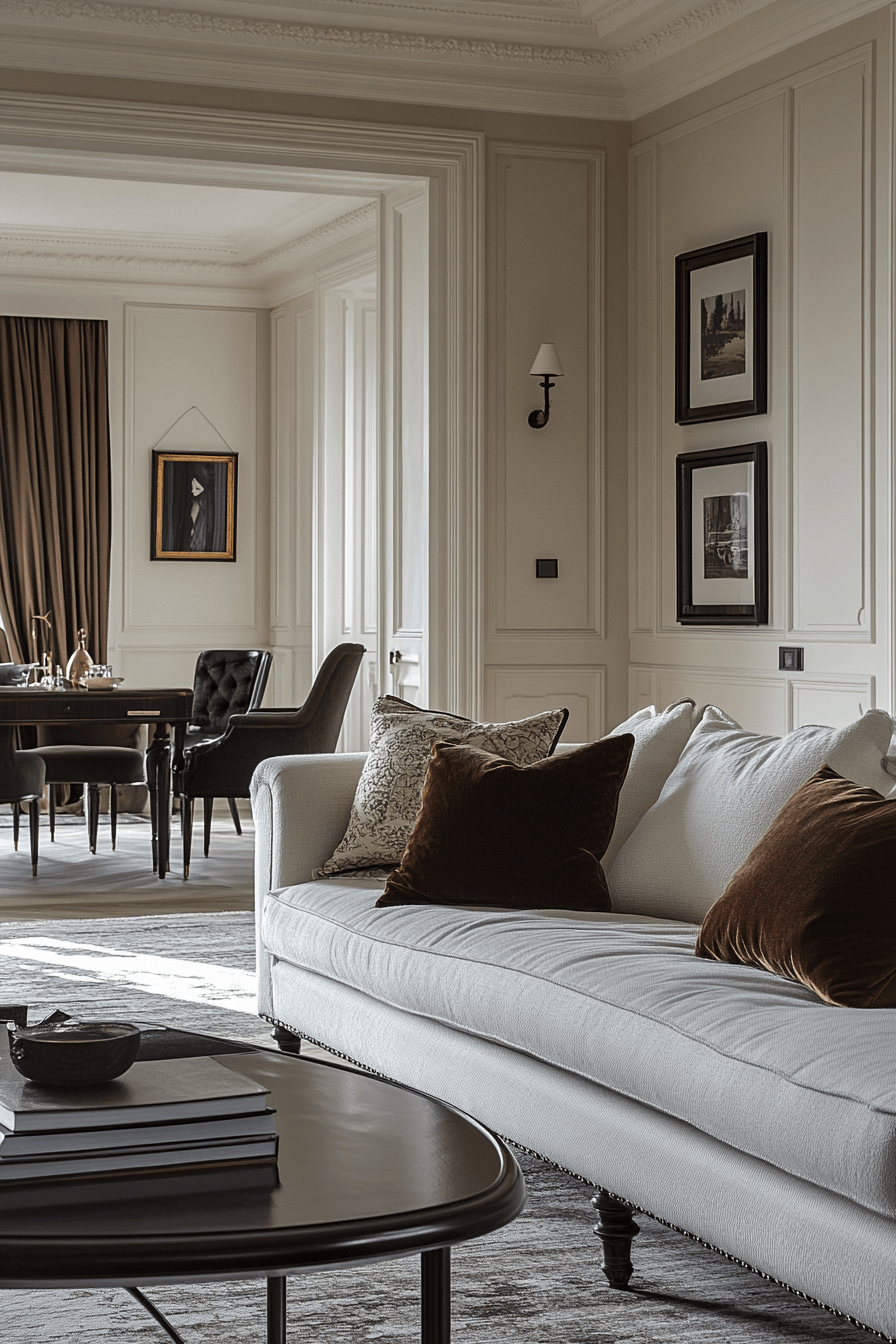
Classic furniture shapes reimagined in contemporary fabrics refresh a neoclassical interior beautifully. Updated finishes breathe new life into traditional forms. The blend of old and new feels curated rather than nostalgic. Ornate backdrops highlight the contrast effectively. The space gains depth and character. See how reinvention enhances heritage.
🏠 Steal This Look
- Paint Color: Behr Swiss Coffee 12
- Furniture: Louis XVI-style bergère chairs reupholstered in charcoal velvet, giltwood console table with marble top
- Lighting: crystal chandelier with aged brass canopy
- Materials: damask velvet, gilt bronze, Carrara marble, aged oak parquet
There’s something quietly rebellious about a formal silhouette slouched in velvet—like wearing couture to brunch. It makes the room feel lived-in, not museum-bound.
25. Luminous Formal Living
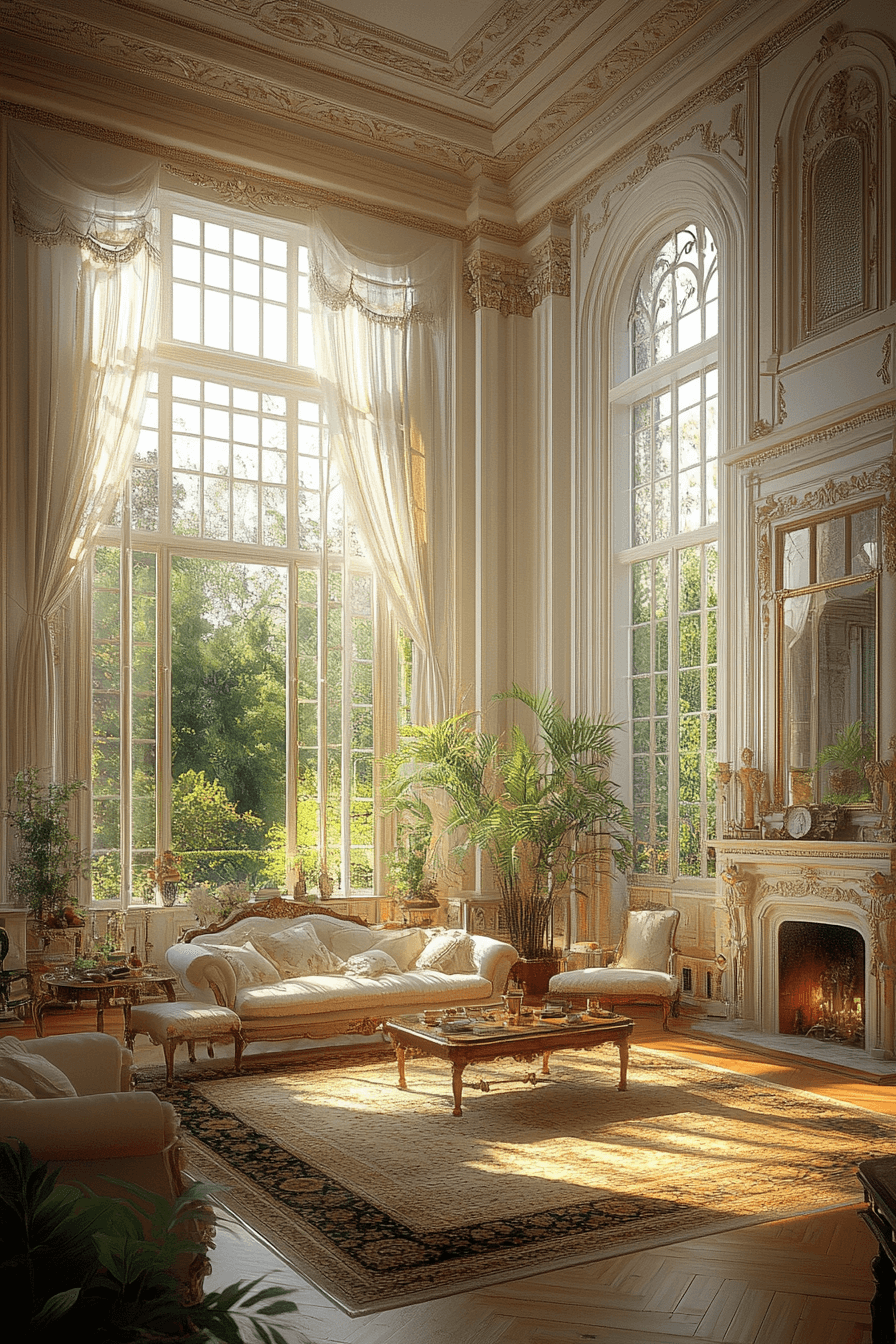
Abundant natural light softens architectural formality in a neoclassical interior. Sheer drapery filters brightness while preserving elegance. Moldings and trims glow gently under daylight. The room feels open yet structured. Airy ambiance balances classical order. Invite graceful light into your refined retreat.
🌟 Steal This Look
- Paint Color: Valspar Swiss Coffee 7002-16
- Furniture: cream linen rolled-arm sofa with carved wood legs, pair of bergère chairs in soft sage velvet, marble-top console with brass accents
- Lighting: crystal chandelier with candle-style bulbs, brass picture lights above moldings
- Materials: plaster crown moldings, silk sheer drapery, honed Carrara marble, aged brass, limed oak flooring
This is the room where morning coffee becomes ceremony—the kind of light that makes you want to linger in your robe just to watch it move across the walls.
26. Defined Cornice Lines
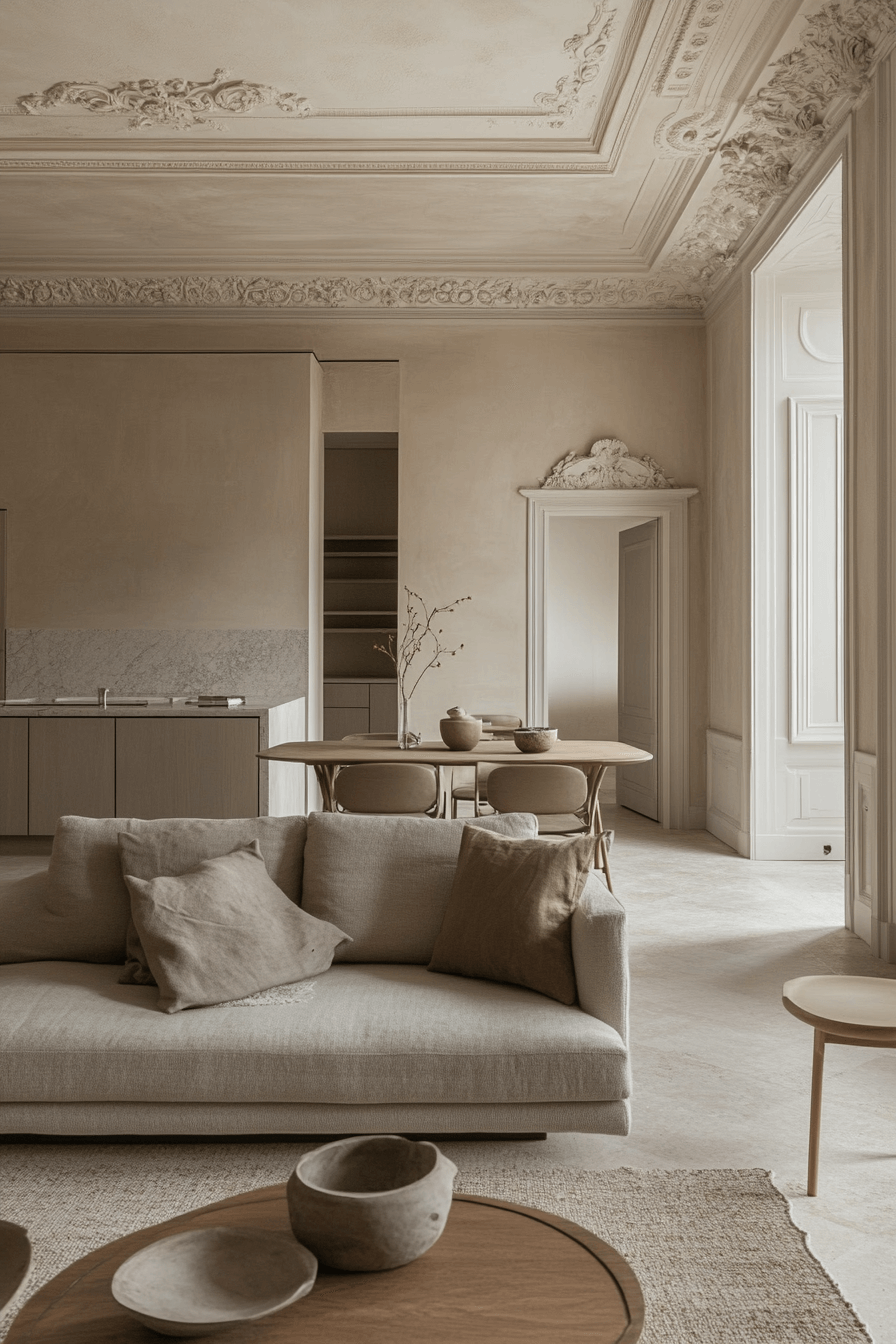
Simplified cornice lines bring crisp definition to a neoclassical interior. Clean edges frame ceilings without ornate distraction. Tone-on-tone painting enhances subtle depth. Decorative furnishings stand out against the structured border. The result feels sharp and sophisticated. Frame your rooms with modern precision.
🏠 Steal This Look
- Paint Color: PPG Timeless White PPG14-15
- Furniture: tufted linen settee with carved wood legs, marble-top console table with brass trim
- Lighting: crystal drum chandelier with clean geometric frame
- Materials: plaster crown molding, brushed brass hardware, honed Carrara marble, Belgian linen
There’s something deeply satisfying about that crisp shadow line where wall meets ceiling; it reads as expensive restraint rather than budget minimalism.
27. Bronze Shadow Sophistication
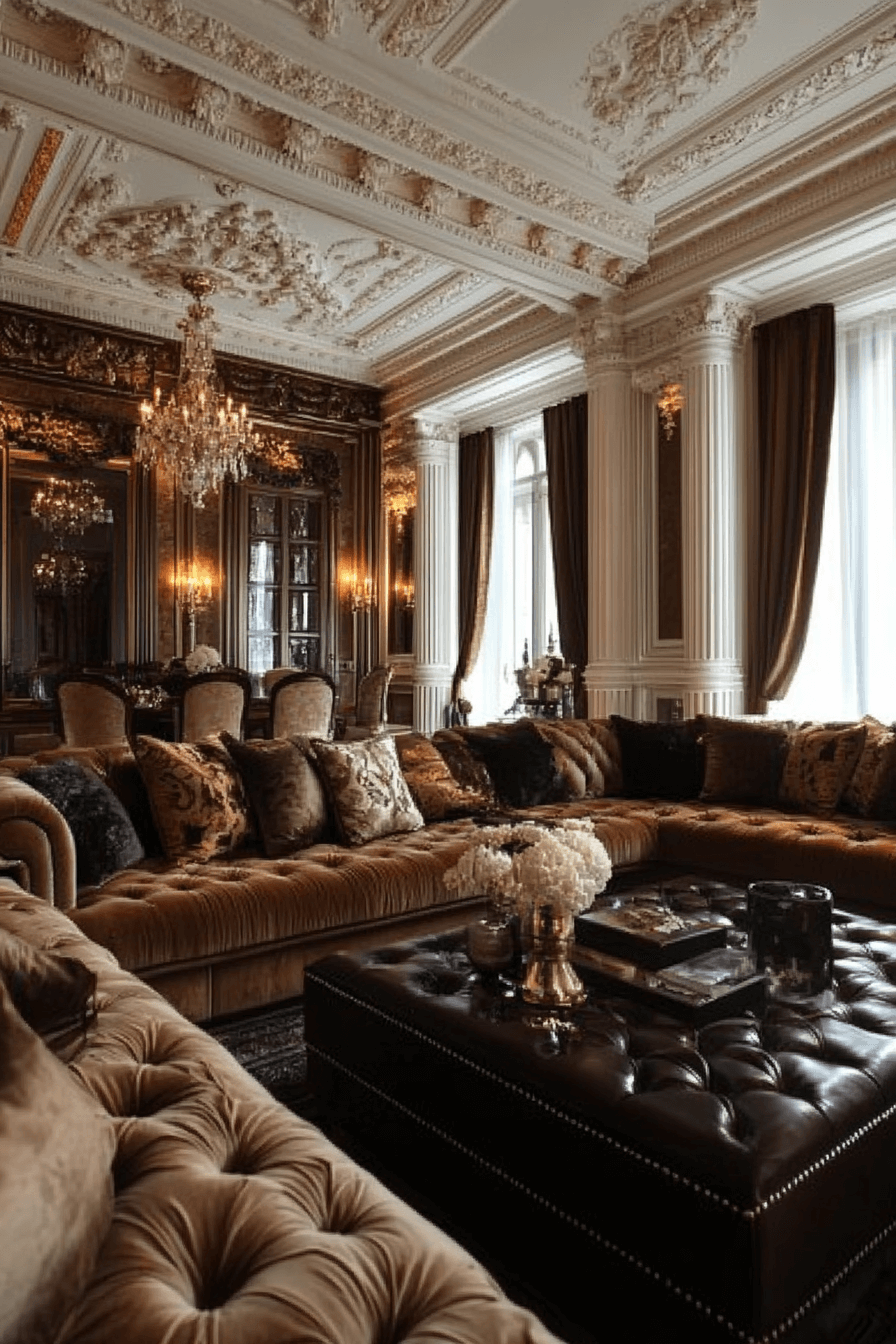
Dark bronze finishes introduce moody richness into a neoclassical interior. The deeper metallic tone contrasts beautifully with ornate detailing. Bronze lighting and hardware feel weighty yet refined. The interplay of shadow and structure adds intrigue. This dramatic variation respects tradition while embracing depth. Discover how bronze reshapes classical elegance.
🌟 Steal This Look
- Paint Color: Dunn-Edwards Bronze Age DE6212
- Furniture: mahogany console table with fluted legs, tufted velvet settee in deep forest green, gilded mirror with ornate crest
- Lighting: bronze chandelier with candle-style arms and crystal droplets, bronze wall sconces with fabric shades
- Materials: burnished bronze hardware, dark walnut parquet flooring, heavy silk drapery, aged brass accents
There’s something quietly powerful about bronze in a neoclassical space—it feels like inherited wealth without the stuffiness, the metal equivalent of a perfectly tailored midnight blue suit.