Discover the art of Japanese apartment design, where simplicity meets sophistication in every carefully considered detail. From minimal layouts and warm wood tones to zen-inspired spaces and clever storage solutions, Japanese interiors offer a masterclass in creating calm, functional living environments. Whether you’re drawn to the serene beauty of tatami-inspired rooms or the modern fusion of Japandi style, these 27 inspiring ideas will help you transform your home into a peaceful sanctuary that balances tradition with contemporary comfort.
1. Minimal Japanese Apartment Living
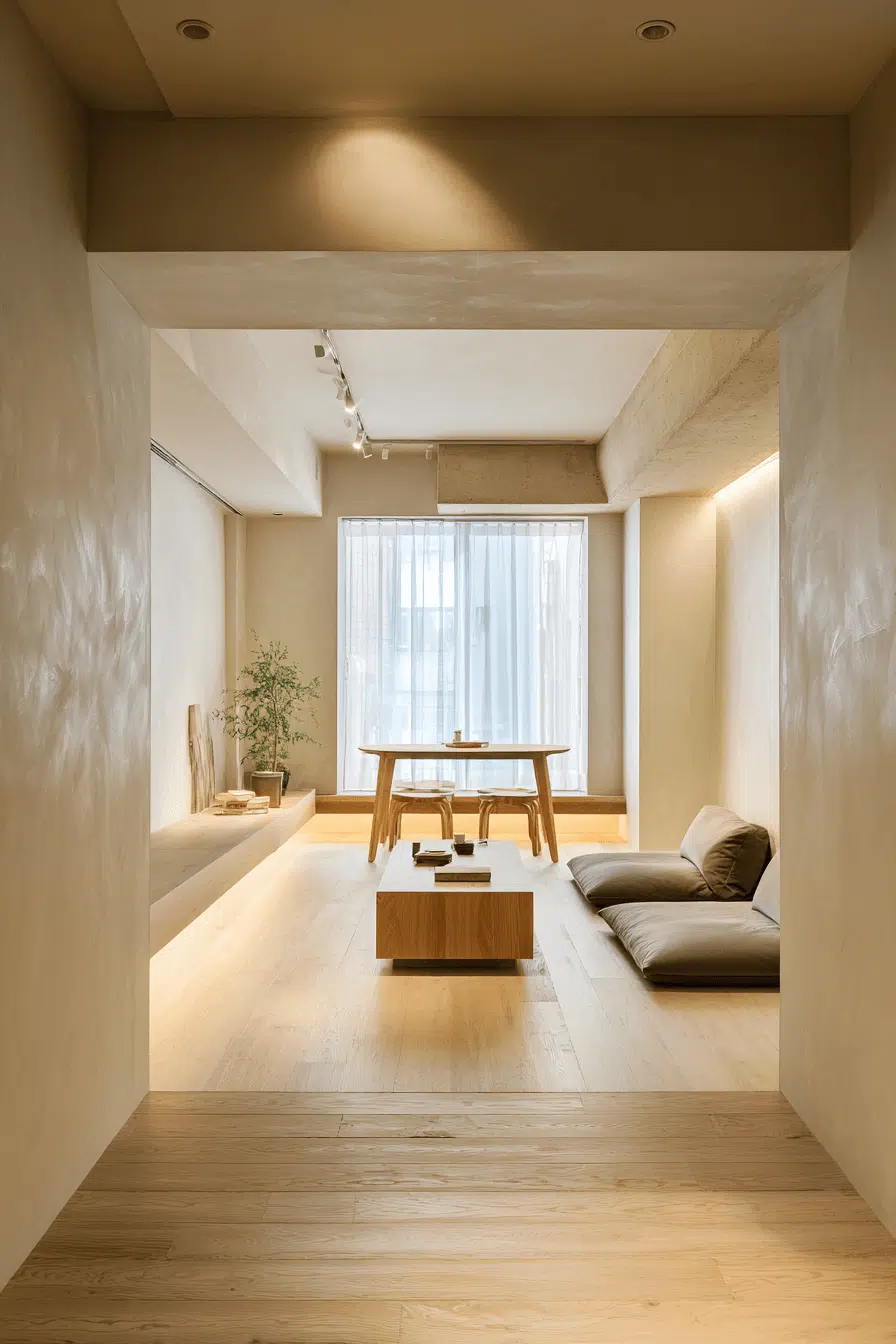
A minimal Japanese apartment embraces simplicity and intentional design, which is why it feels calming from the moment you enter. The layout avoids excess, allowing open floor space and natural light to flow freely. Soft neutrals and low-profile furnishings create a grounded, peaceful atmosphere. Built-in storage keeps surfaces clean and distraction-free. This approach works beautifully in a japanese apartment because it balances function with serenity. If you love spaces that feel effortless and light, explore more minimalist ideas today.
🖼 Steal This Look
- Paint Color: Sherwin-Williams Natural Linen SW 9109
- Furniture: low-profile platform bed or floor-level modular sofa, built-in tatami-inspired storage benches, floating wall-mounted desk
- Lighting: paper lantern pendant or shoji screen floor lamp with warm LED
- Materials: light ash wood, rice paper, natural linen textiles, unglazed ceramics, woven rush
There’s something almost meditative about walking into a space where everything has earned its place. This look asks you to slow down—and actually listen to your room.
2. Modern Neutral Japanese Interior
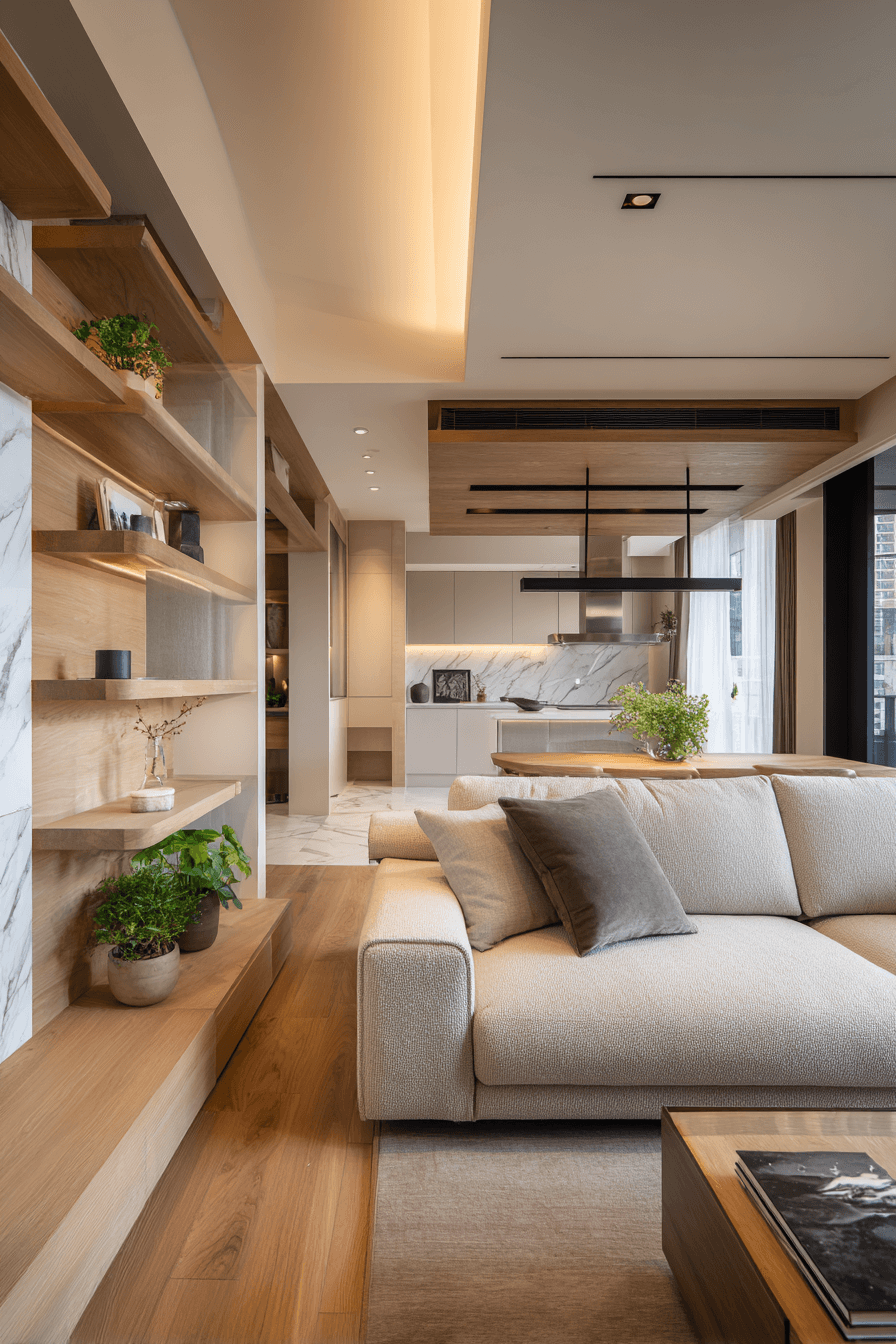
A modern neutral palette brings harmony to a japanese apartment through warm whites, soft greys, and pale wood tones. Subtle layering prevents the design from feeling flat while maintaining visual calm. Streamlined furniture paired with tactile fabrics adds quiet sophistication. The architecture becomes the focal point rather than heavy decoration. The entire space feels cohesive and thoughtfully composed. Discover how to recreate this balanced neutral look in your own home.
🌟 Steal This Look
- Paint Color: Benjamin Moore White Dove OC-17
- Furniture: low-profile platform bed with integrated headboard, floor-hugging walnut nightstands, minimalist floating vanity
- Lighting: paper globe pendant light, recessed cove lighting, slim linear floor lamp
- Materials: white oak, shoji paper, linen, matte concrete, unglazed ceramic
This palette rewards patience; the warmth emerges from material interplay rather than color alone, so invest in touchable textures you notice over time.
3. Light Wood Japanese Style
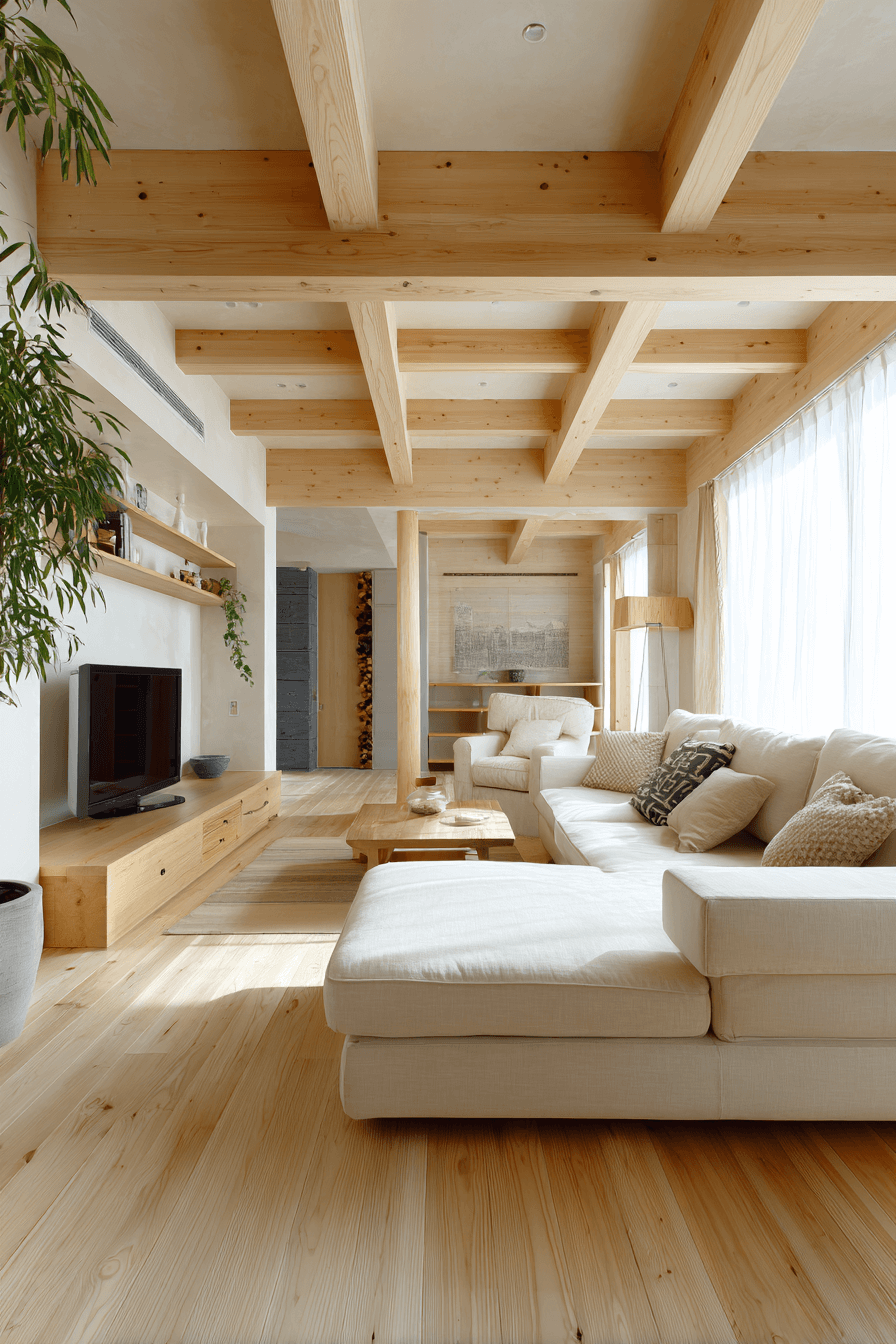
Light wood finishes instantly warm a japanese apartment while keeping the aesthetic refined. Pale oak or ash tones reflect light and make compact rooms feel more expansive. When paired with clean silhouettes and soft textiles, the result feels fresh yet cozy. Natural materials connect the interior to nature without overwhelming the design. The atmosphere is relaxed, practical, and elegant. Tap to explore more light wood styling ideas.
🎨 Steal This Look
- Paint Color: Farrow & Ball Pointing 2003
- Furniture: low-profile platform bed with pale oak frame, floating nightstands, streamlined dresser with minimal hardware
- Lighting: paper lantern pendant or slim wooden floor lamp with rice paper shade
- Materials: bleached oak, raw linen, unbleached cotton, woven rush, matte ceramic
There’s something deeply grounding about waking up surrounded by pale wood—it feels like the room itself is breathing. This look rewards restraint; every piece earns its place.
4. Clean Line Japanese Living
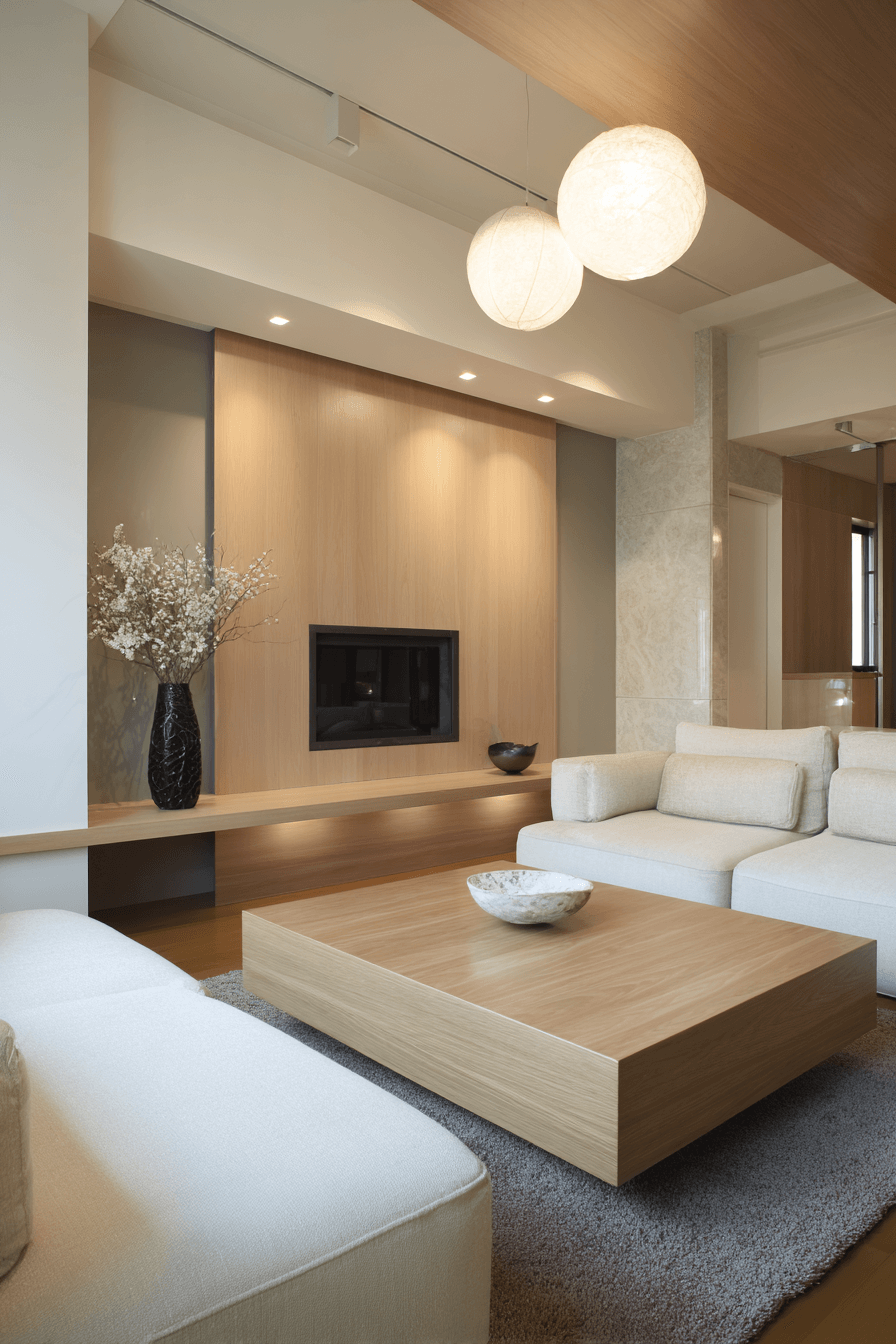
Clean-lined interiors define modern Japanese living by focusing on clarity and proportion. Smooth surfaces and subtle detailing maintain structure without excess. In a japanese apartment, this simplicity allows quality materials to stand out. The open layout supports movement and visual flow. Each element feels deliberate and balanced. Bring this streamlined aesthetic into your space today.
🌟 Steal This Look
- Paint Color: Behr Swiss Coffee 12
- Furniture: low-profile walnut platform sofa with clean rectangular arms, floor-hugging oak coffee table with visible joinery, modular tatami-inspired storage ottomans
- Lighting: paper cylinder pendant with black steel frame, indirect LED cove lighting along ceiling perimeter
- Materials: unbleached linen upholstery, raw white oak, shoji paper, matte black steel, natural sisal
There’s something almost meditative about walking into a room where every line has purpose—this look rewards restraint with an unmistakable sense of calm.
5. Soft Beige Japanese Apartment
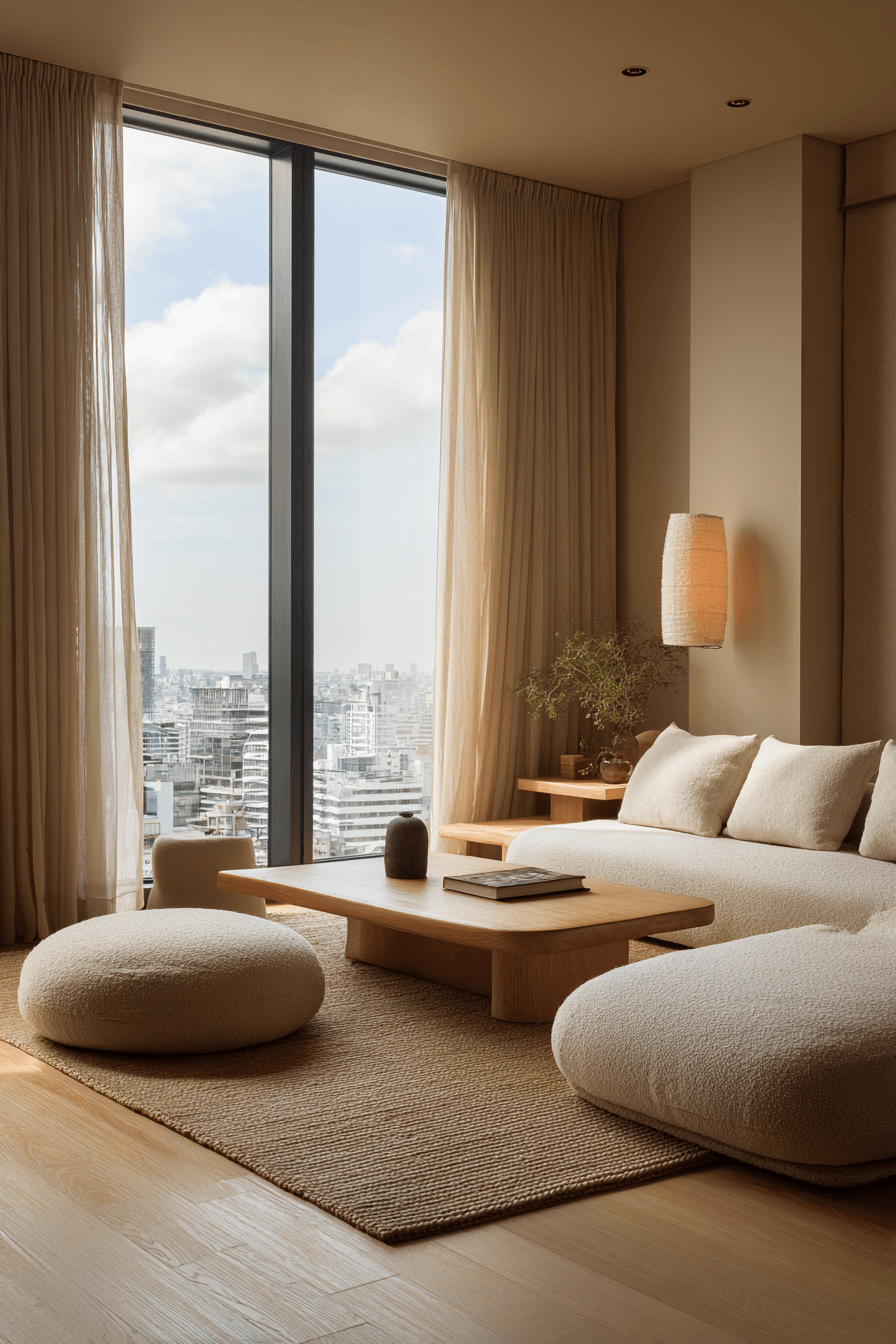
A soft beige palette creates warmth and timeless appeal in a japanese apartment. Layering cream and sand tones adds depth while preserving tranquility. Low seating and thoughtful spacing nod to tradition while staying modern. Natural light enhances the calming atmosphere. The result feels cozy, refined, and uncluttered. Explore this soothing beige approach for your home now.
★ Steal This Look
- Paint Color: Valspar Cozy Beige 3003-10C
- Furniture: Low-profile platform bed with clean lines, floor-level coffee table in light ash wood, modular floor cushions in oatmeal linen
- Lighting: Paper-and-bamboo Shoji pendant with warm LED, slim floor lamp with rice paper shade
- Materials: Raw linen textiles, light oak wood grain, unglazed ceramic, woven rush tatami-inspired flooring
There’s something deeply restorative about coming home to this palette after a chaotic day—the beige doesn’t fight for attention, it simply holds space for you to breathe.
6. Zen Inspired Japanese Layout
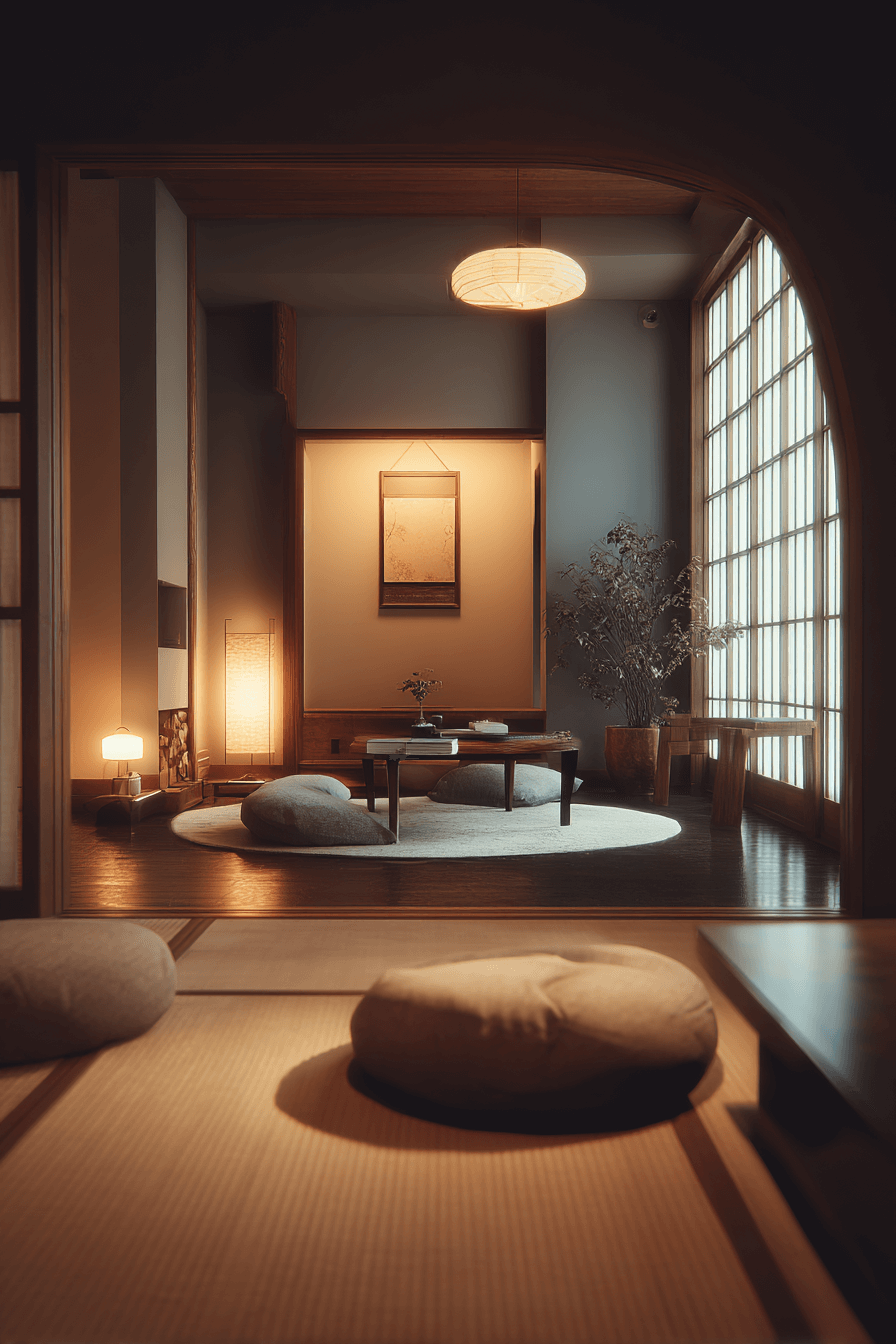
A zen-focused layout elevates any japanese apartment by emphasizing openness and mindful spacing. Furniture placement allows for smooth circulation and visual balance. Neutral tones and gentle textures reinforce the tranquil mood. This arrangement minimizes distraction and supports calm living. Even smaller layouts feel expansive with this intentional approach. Create your own peaceful retreat today.
✎ Steal This Look
- Paint Color: PPG Silvery Moon 30-23 for soft gray walls, PPG Warm Stone 30-16 for warm neutral accents
- Furniture: low-profile platform bed with clean lines, floor-level modular seating, simple wooden side tables, shoji-inspired room divider
- Lighting: paper lantern pendant lights, minimalist floor lamps with rice paper shades, indirect LED cove lighting
- Materials: unfinished cedar, tatami mat textures, linen upholstery, unglazed ceramics, bamboo accents
There’s something almost meditative about walking into a space where every object earns its place—this layout taught me that less truly becomes the backdrop for more meaningful living.
7. Warm Minimal Japanese Space
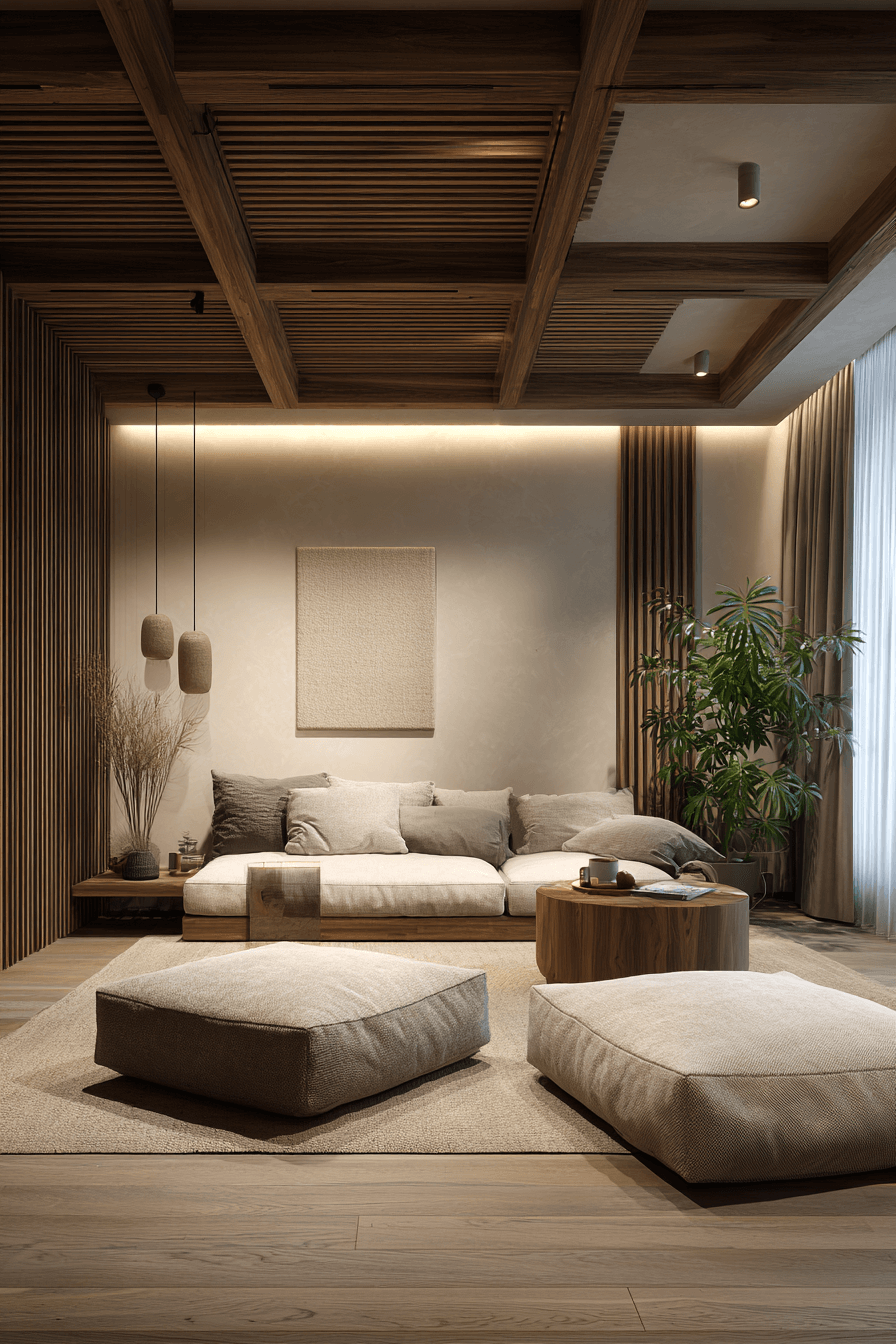
Warm minimalism blends simplicity with comfort in a japanese apartment. Soft lighting and low-profile seating keep the look inviting rather than stark. Decor remains restrained, focusing on quality over quantity. The clean layout prevents visual overload in compact spaces. The overall atmosphere feels calm yet welcoming. Discover how to style minimalism with warmth now.
💡 Steal This Look
- Paint Color: Dunn-Edwards Swiss Coffee DEW341
- Furniture: Low-profile platform bed with clean lines, floor cushions or zabuton seating, simple wooden side table with straight edges
- Lighting: Paper lantern pendant light or shoji-style floor lamp with warm 2700K bulb
- Materials: Light oak or ash wood, natural linen textiles, rice paper, unglazed ceramic, woven rush or tatami
This look feels like a deep exhale after a long day. The restraint isn’t empty—it’s intentional space for your mind to rest.
8. Japandi Japanese Apartment Style
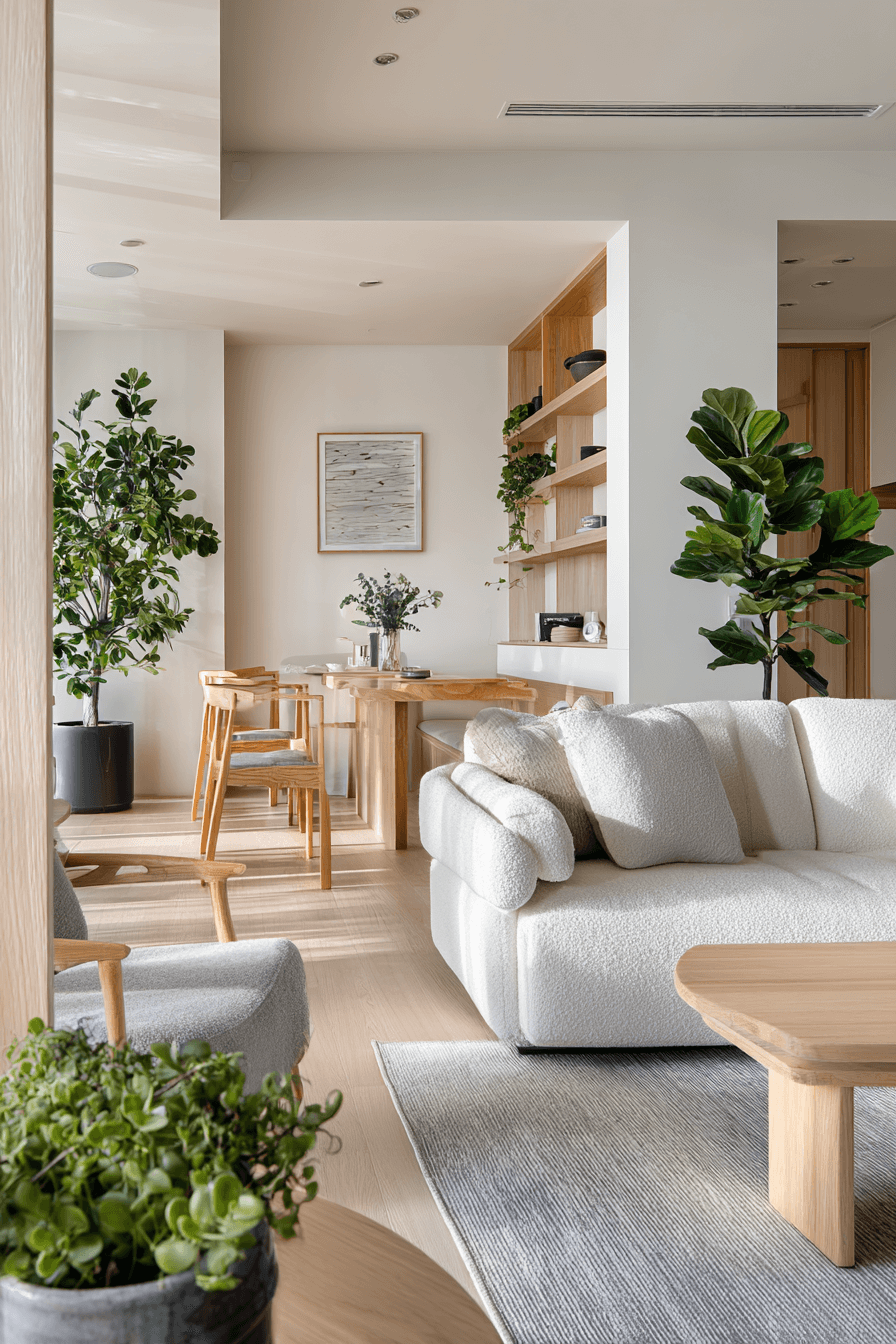
Japandi influence beautifully merges Japanese restraint with Scandinavian comfort in a japanese apartment. Clean lines meet cozy textures for balanced harmony. Neutral tones dominate, accented with subtle contrast for depth. The fusion feels structured yet approachable. Function and comfort coexist effortlessly. Explore how to bring Japandi balance into your apartment today.
💡 Steal This Look
- Paint Color: Clare Paint Whipped CODE
- Furniture: low-profile platform bed with light oak frame, streamlined modular sofa with tapered legs, floating walnut nightstand
- Lighting: paper lantern pendant with black metal frame, slim arc floor lamp with linen shade
- Materials: raw oak, unbleached linen, matte black metal, rice paper, hand-thrown ceramics
There’s something quietly grounding about coming home to this kind of restraint—every object earns its place, and somehow that makes the whole apartment feel lighter.
9. Tokyo Modern Apartment Vibe
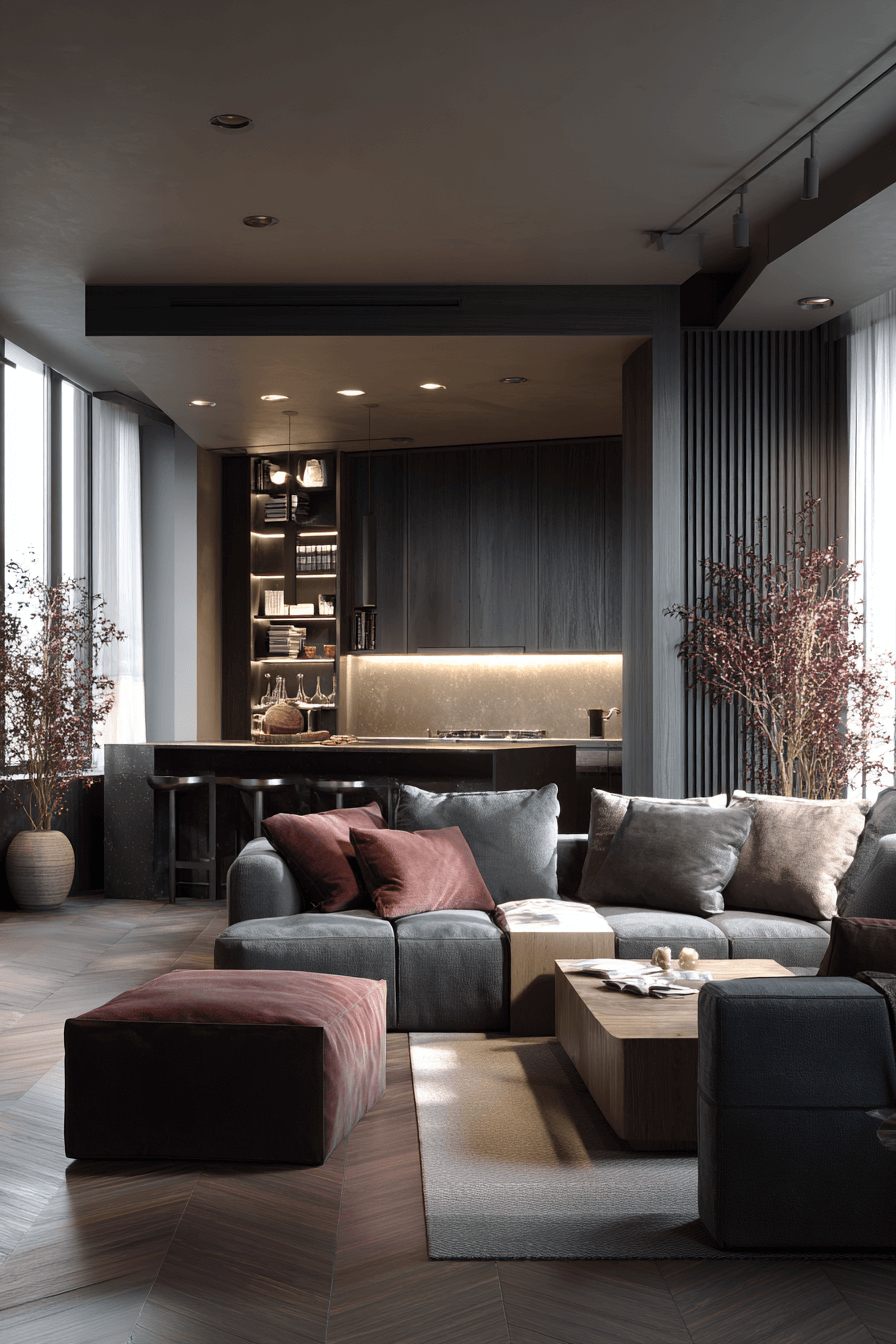
A Tokyo-inspired modern vibe highlights efficiency in a japanese apartment. Compact furnishings and smart storage keep the space streamlined. Minimal accents add character without clutter. Urban practicality blends with calm interior design. The result feels organized and contemporary. Channel this sleek city style into your own space now.
🖼 Steal This Look
- Paint Color: Fine Paints of Europe Sling 4003, a warm off-white with subtle grey undertone matching the light neutral walls typical of Tokyo modern apartments
- Furniture: low-profile platform bed or floor-level modular sofa, wall-mounted desk with integrated storage, floating nightstands, slim-profile dining set with bench seating
- Lighting: linear LED pendant with paper-inspired diffuser, compact adjustable wall sconces, under-cabinet task lighting
- Materials: light ash wood, white oak veneer, matte black metal frames, rice paper or washi-inspired panels, textured linen upholstery, polished concrete or light grey tile flooring
There’s something almost meditative about paring down to what you truly need—this look rewards restraint with surprising breathing room.
10. Compact Japanese Studio Living
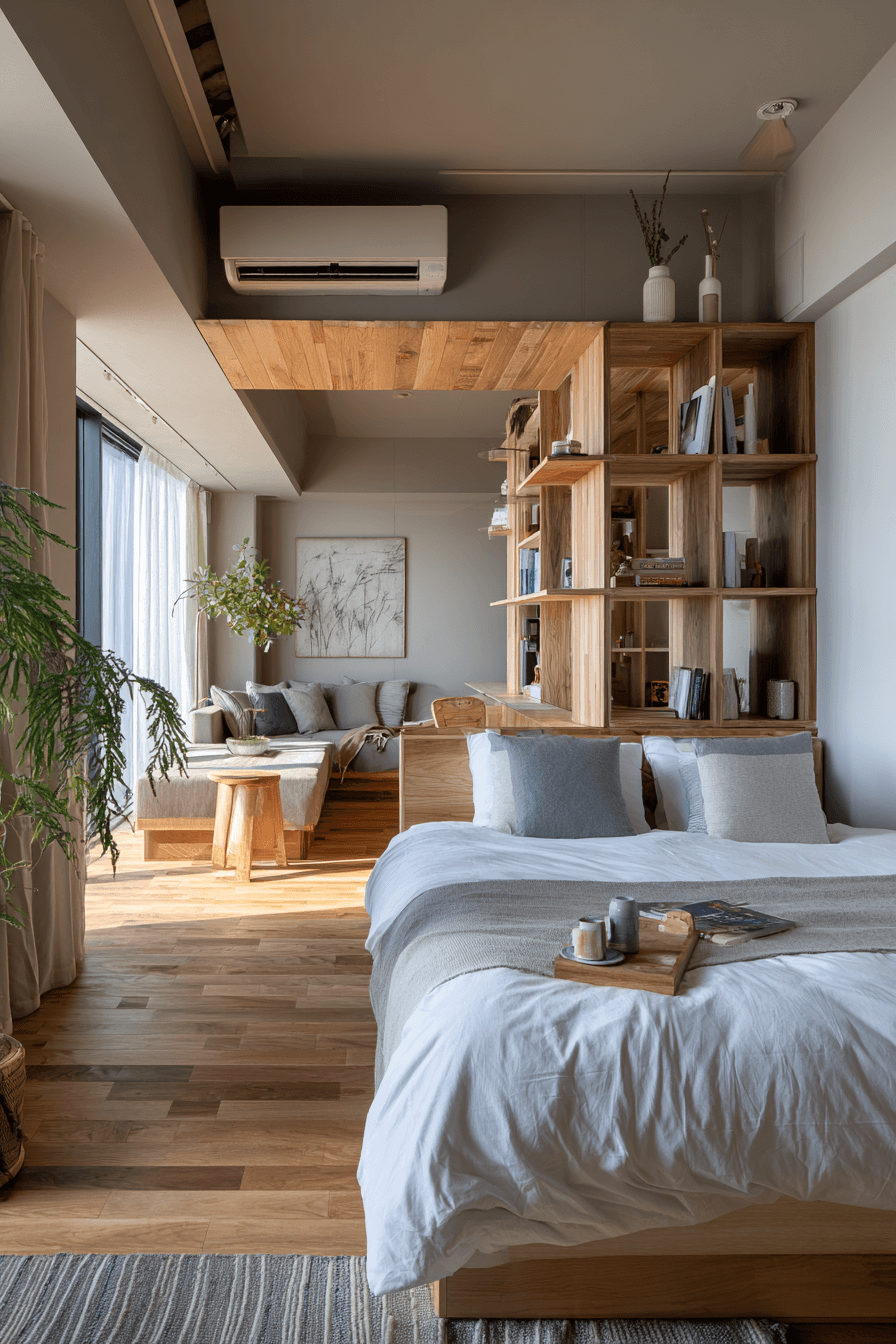
Compact studio living proves that thoughtful zoning can transform a japanese apartment. Rugs or low shelving define areas without blocking light. Multifunctional furniture maximizes flexibility. Open sightlines keep the layout cohesive. The studio feels intentional rather than cramped. Unlock smart studio styling ideas today.
✎ Steal This Look
- Paint Color: Backdrop Kinfolk 01 — warm off-white with subtle cream undertone, matches the soft neutral walls visible that maximize light reflection in compact spaces
- Furniture: low-profile platform bed with built-in storage drawers, floor-level modular shelving units, nesting side tables, wall-mounted drop-leaf desk
- Lighting: paper lantern pendant (chōchin style), slim LED floor lamp with rice paper shade, under-shelf LED strip lighting
- Materials: light ash wood, tatami-inspired woven textures, unbleached linen, translucent shoji paper, matte black metal accents
There’s something quietly satisfying about a studio where every piece earns its keep—the low shelving here doesn’t just store, it defines where living ends and rest begins without ever closing you in.
11. Open Plan Japanese Apartment
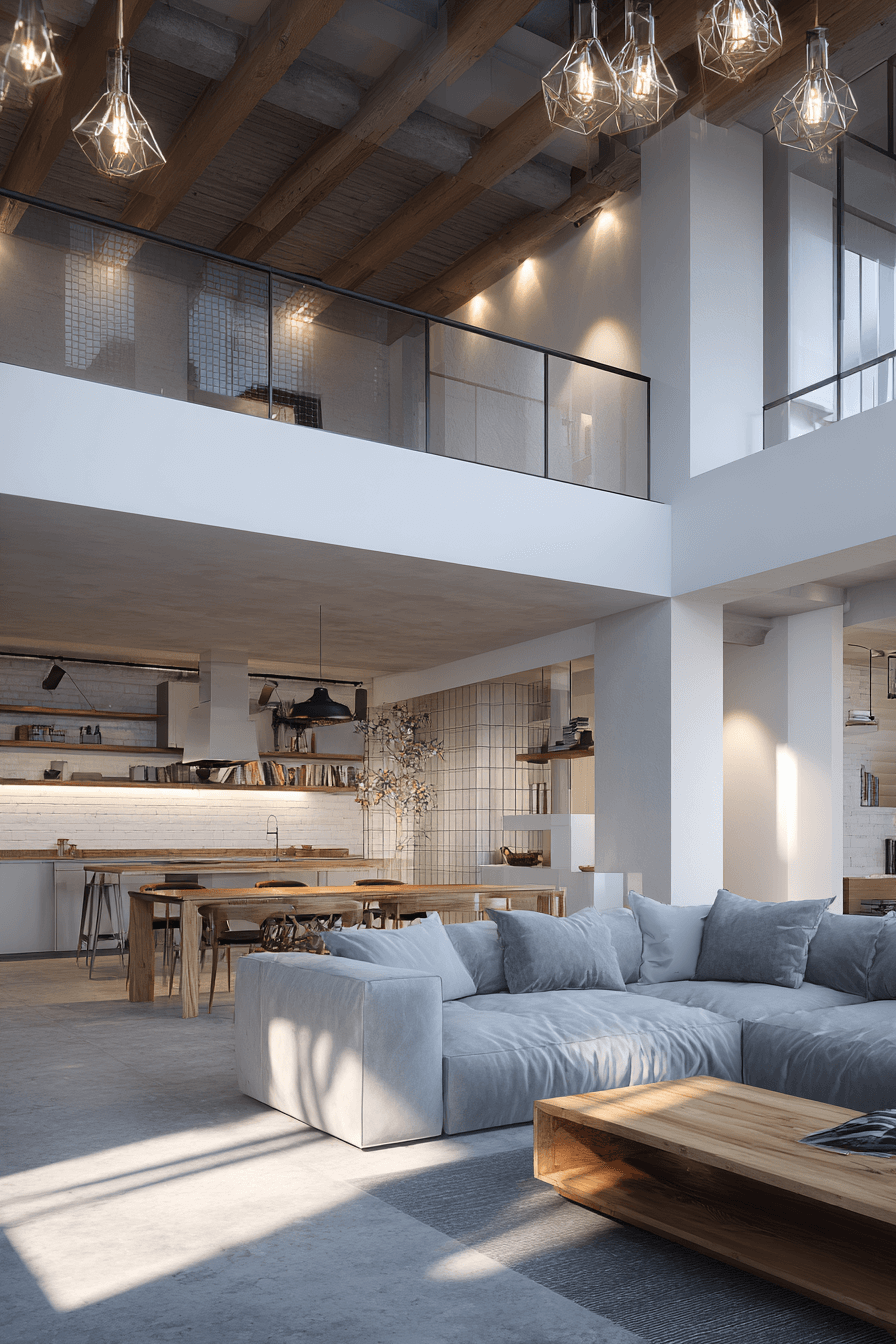
Open-plan living enhances connection and flow within a japanese apartment. Removing unnecessary partitions allows light to travel freely. A consistent palette unifies each zone seamlessly. Simple furnishings maintain balance across the space. The design feels airy and harmonious. Embrace open and connected living now.
🏠 Steal This Look
- Paint Color: Sherwin-Williams Alabaster SW 7008
- Furniture: low-profile platform bed with integrated storage, modular floor seating with clean lines, floating wall-mounted desk
- Lighting: paper lantern pendant clusters, linear LED cove lighting, slim-profile floor lamps with rice paper shades
- Materials: light ash wood, tatami-inspired woven textures, matte black metal accents, shoji screen room dividers
There’s something deeply calming about walking into a space where every zone breathes together—this open plan captures that Japanese philosophy of ma, the meaningful space between things.
12. Tatami Inspired Modern Room
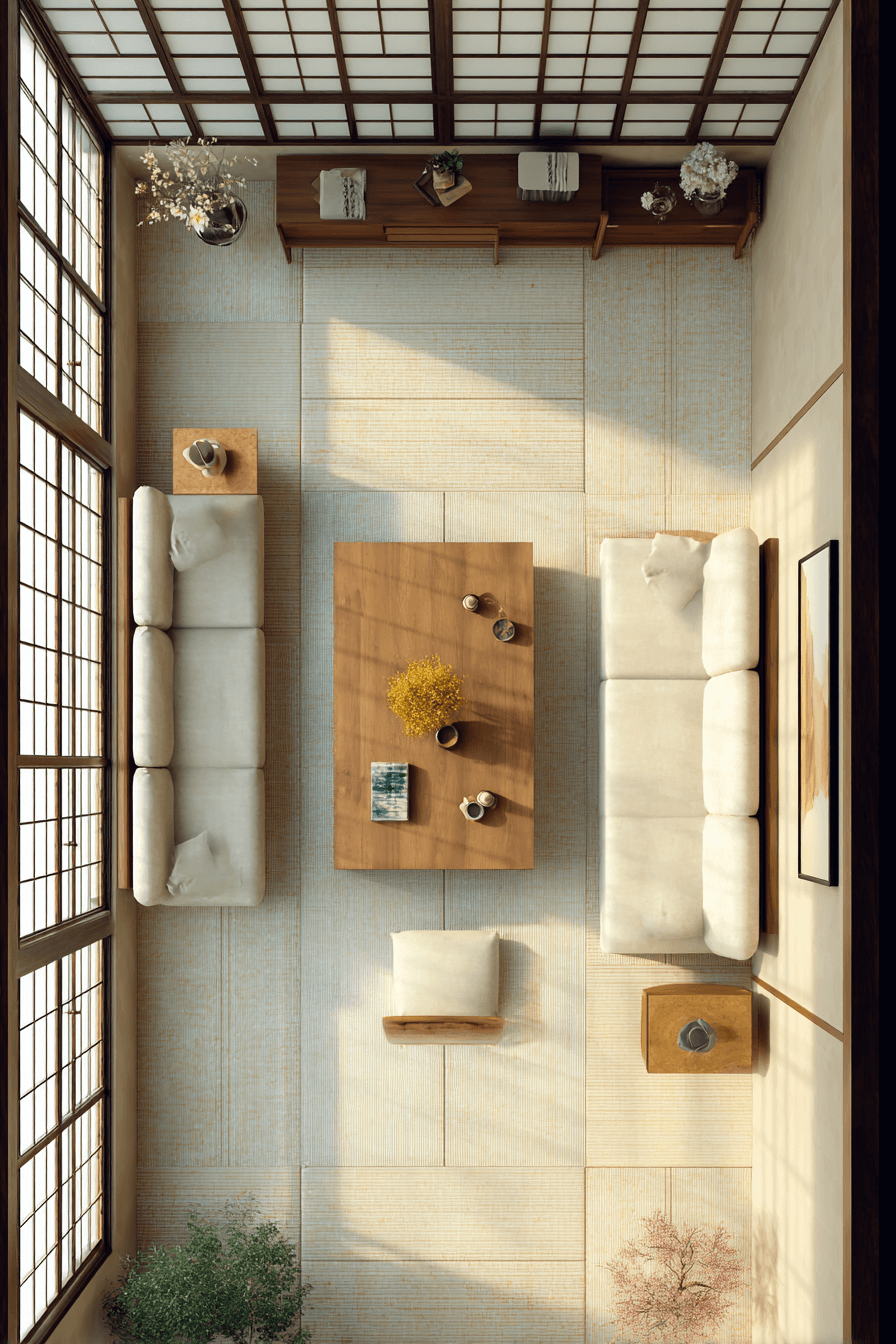
A tatami-inspired room introduces subtle tradition into a modern japanese apartment. Low design elements encourage grounded comfort. Neutral tones keep the look contemporary. Cultural influence blends effortlessly with modern lifestyle needs. The space feels serene and meaningful. Explore this elegant blend of tradition and modernity today.
✎ Steal This Look
- Paint Color: Benjamin Moore White Dove OC-17
- Furniture: low-profile platform bed with clean lines, floor-level modular seating, low walnut coffee table
- Lighting: paper lantern pendant lights, slim linear floor lamps
- Materials: natural woven rush tatami mats, light oak, raw linen, unglazed ceramic
There’s something deeply settling about a room that meets you closer to the floor—this look rewards restraint with genuine peace.
13. Sliding Panel Japanese Design
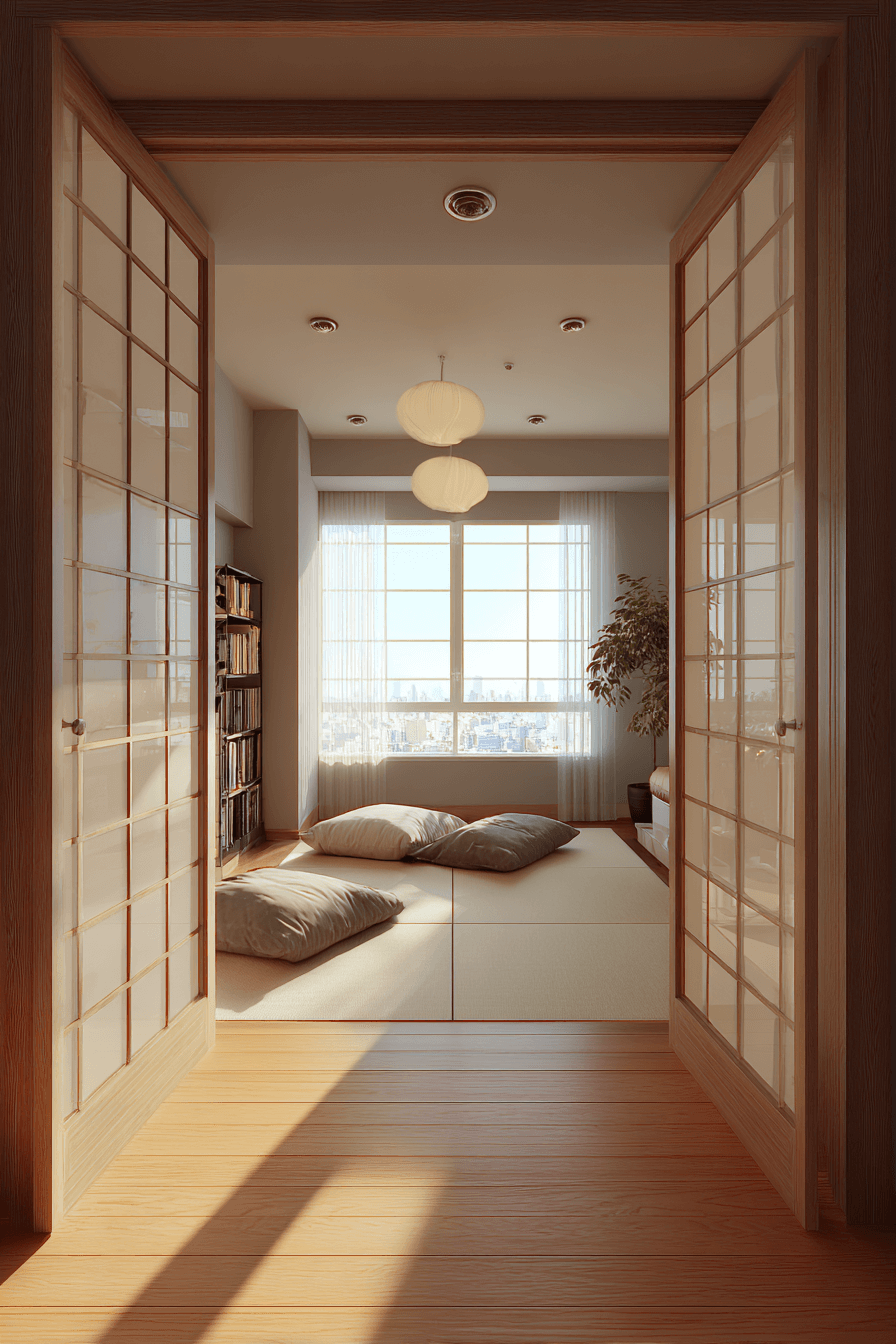
Sliding panels offer flexible functionality in a japanese apartment. They allow spaces to shift without permanent barriers. Clean finishes keep the design sleek and current. This adaptability is ideal for compact layouts. The result feels organized yet dynamic. Discover how sliding elements can enhance your home.
🎨 Steal This Look
- Paint Color: Farrow & Ball Wimborne White No.239
- Furniture: low-profile platform bed with built-in storage, floor-level modular seating, minimalist tatami-compatible coffee table
- Lighting: paper lantern pendant with warm LED, slim recessed ceiling spots
- Materials: shoji paper panels, light oak or ash wood frames, natural linen, rice paper textures, matte black metal hardware
There’s something deeply calming about shifting a panel and watching a room transform—it’s the quiet magic of Japanese living where space breathes with you.
14. Low Profile Japanese Furniture
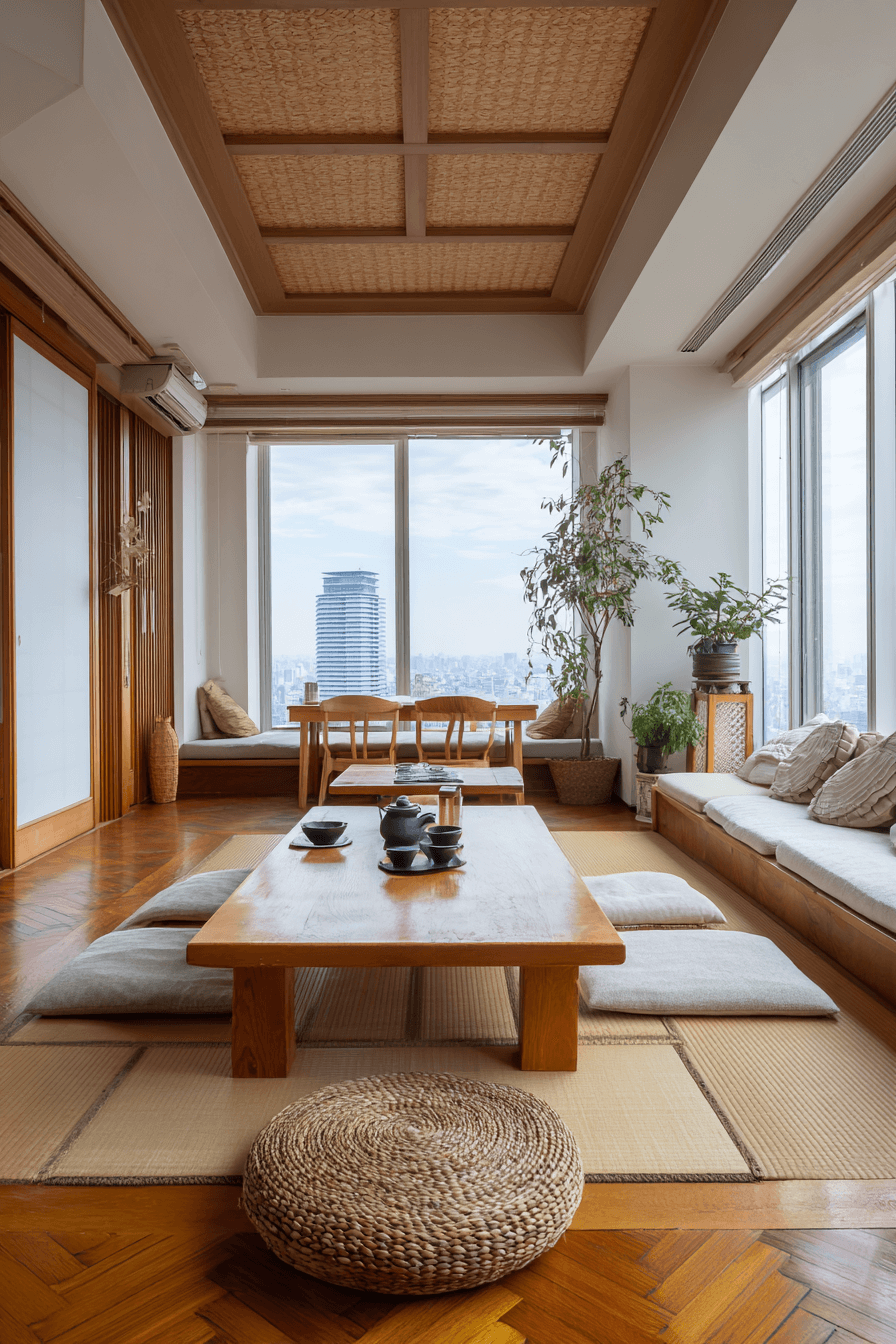
Low-profile furniture enhances openness in a japanese apartment. Seating and tables closer to the floor visually extend vertical space. The grounded look feels minimal yet comfortable. This approach blends cultural influence with contemporary style. Rooms feel larger and more breathable. Elevate your space with low-profile design today.
🖼 Steal This Look
- Paint Color: Behr Soft Focus PPU5-09
- Furniture: tataki platform bed frame, zaisu floor chairs, chabudai low dining table
- Lighting: shoji paper pendant light, washi floor lamp
- Materials: light ash wood, natural linen, rice paper, tatami mat texture
There’s something instantly calming about sitting closer to the floor—it forces you to slow down and actually notice your space rather than perch above it.
15. Japanese Monochrome Interior
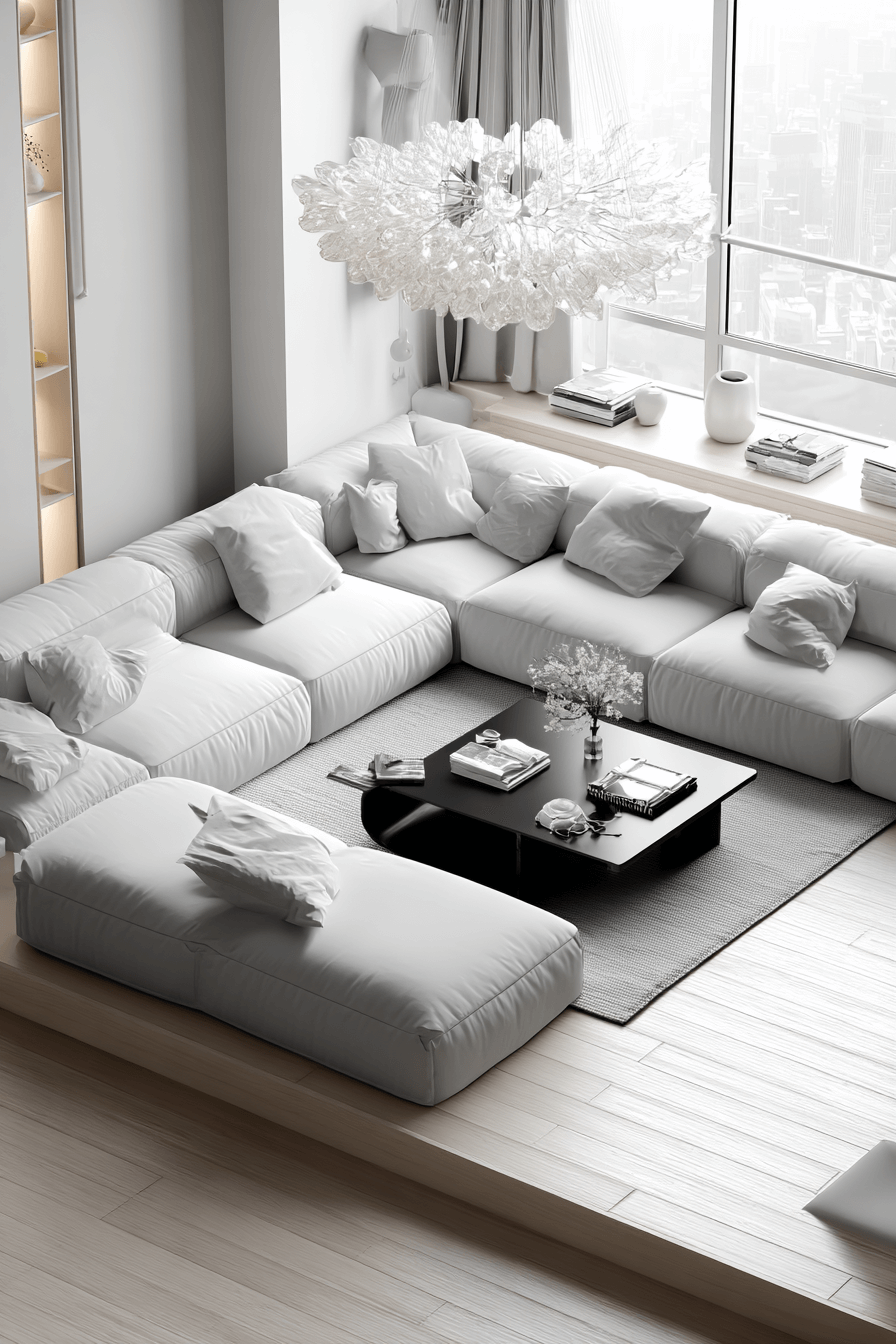
A monochrome palette of layered whites and greys creates refined clarity in a japanese apartment. The cohesive color story keeps everything unified. Subtle texture prevents flatness. Simplicity becomes the defining feature. The result feels clean and sophisticated. Try this crisp monochrome aesthetic now.
🖼 Steal This Look
- Paint Color: Valspar Ultra White 7006-24
- Furniture: low-profile platform bed with clean lines, floor-level modular storage units, minimalist low dining table with floor cushions
- Lighting: paper lantern pendant lights, slim linear LED ceiling fixtures, small ceramic table lamps
- Materials: bleached oak, raw linen, rice paper, unglazed ceramic, light concrete
This is the kind of space that feels like a deep exhale—every object earns its place, and the quiet becomes luxurious rather than empty.
16. Warm Grey Japanese Apartment
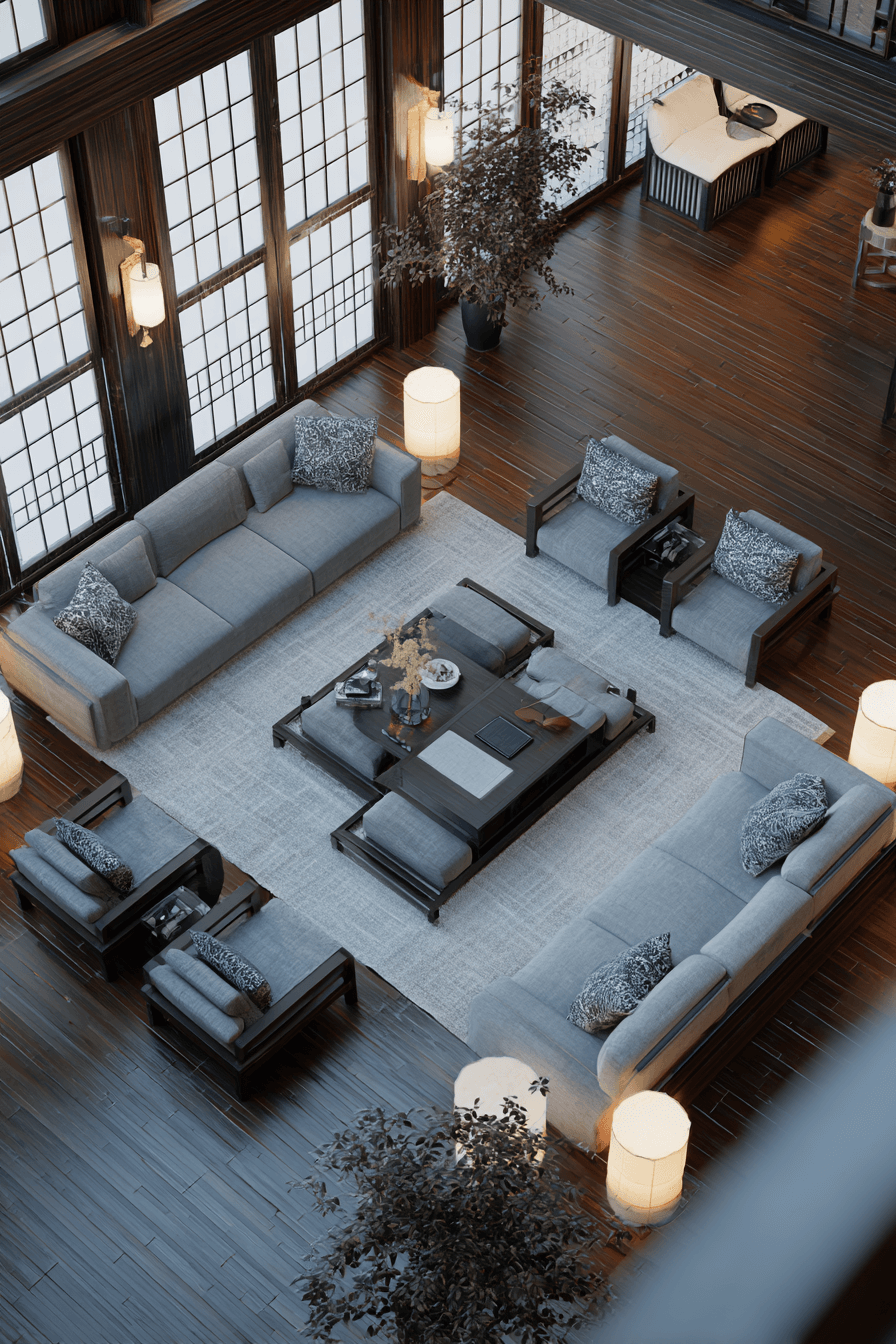
Warm greys paired with wood accents introduce depth without overpowering a japanese apartment. Layered tones maintain calm while adding dimension. The palette feels modern yet timeless. Contrast remains gentle and balanced. The design feels thoughtful and serene. Explore warm grey harmony in your space today.
🎨 Steal This Look
- Paint Color: PPG Warmstone PPG1005-4
- Furniture: Low-profile walnut platform bed with integrated headboard storage, floor-hugging ash wood nightstands
- Lighting: Paper lantern pendant with warm LED bulb, minimalist brass floor lamp with rice paper shade
- Materials: Sliding shoji screens, tatami mat flooring, unbleached linen textiles, raw cedar beams
This is the grey for people who find cool tones sterile—it’s like morning light through rice paper, quietly sophisticated without trying too hard.
17. Calm White Japanese Space
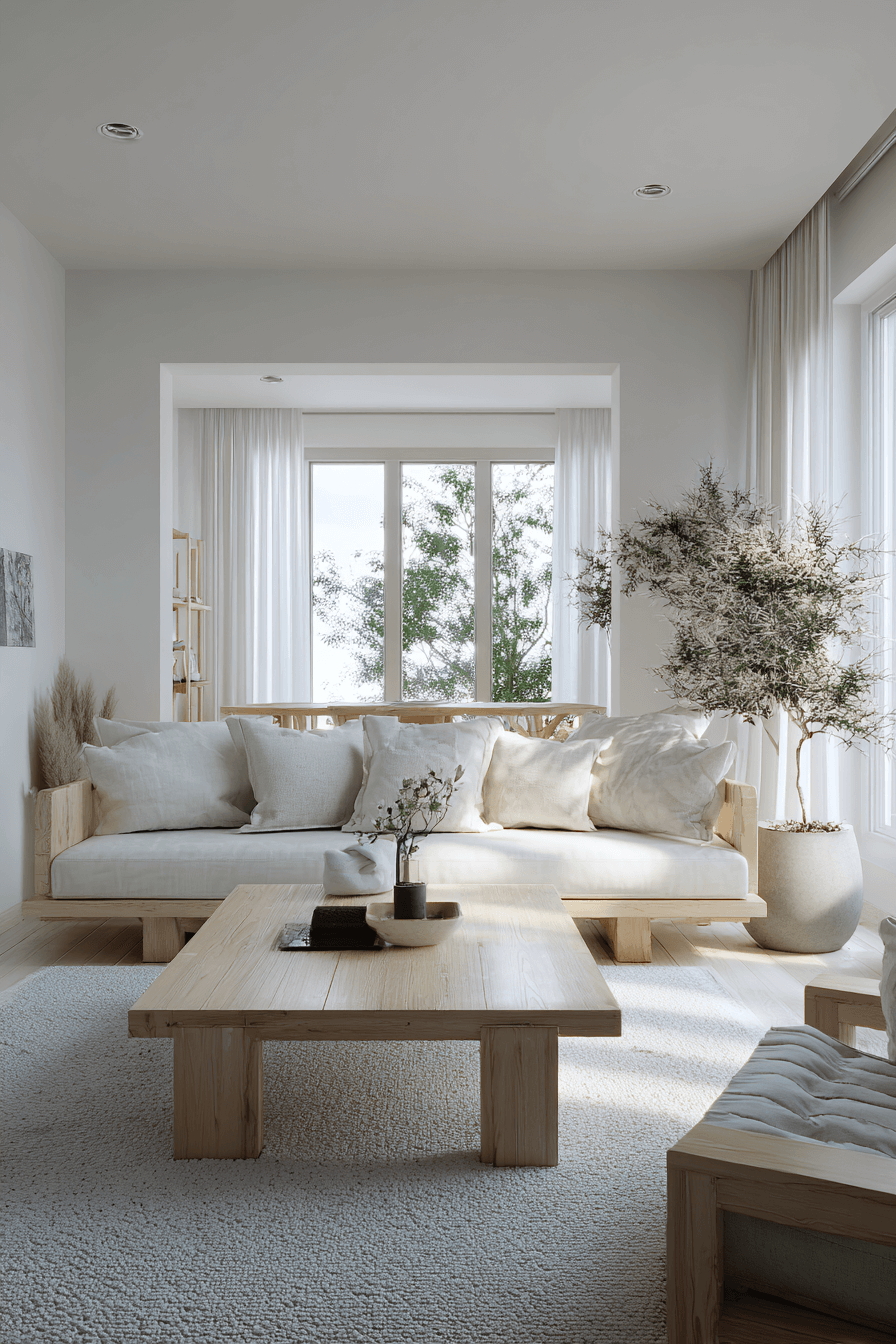
A bright white interior amplifies openness in a japanese apartment. Light-reflecting walls enhance spaciousness. Clean lines keep the aesthetic cohesive. The layout feels airy and uncluttered. Brightness becomes a design asset. Create your own serene white sanctuary now.
🎨 Steal This Look
- Paint Color: Dunn-Edwards Whisper White DEW 340
- Furniture: low-profile platform bed with integrated storage, floor-level tatami-style seating, minimalist floating vanity
- Lighting: paper lantern pendant lights, recessed cove lighting, slender linear floor lamps
- Materials: white oak, rice paper, natural linen, matte ceramic, light bamboo
There’s something deeply restorative about walking into a space that breathes—this all-white Japanese approach feels like a visual exhale after a cluttered day.
18. Natural Texture Japanese Style
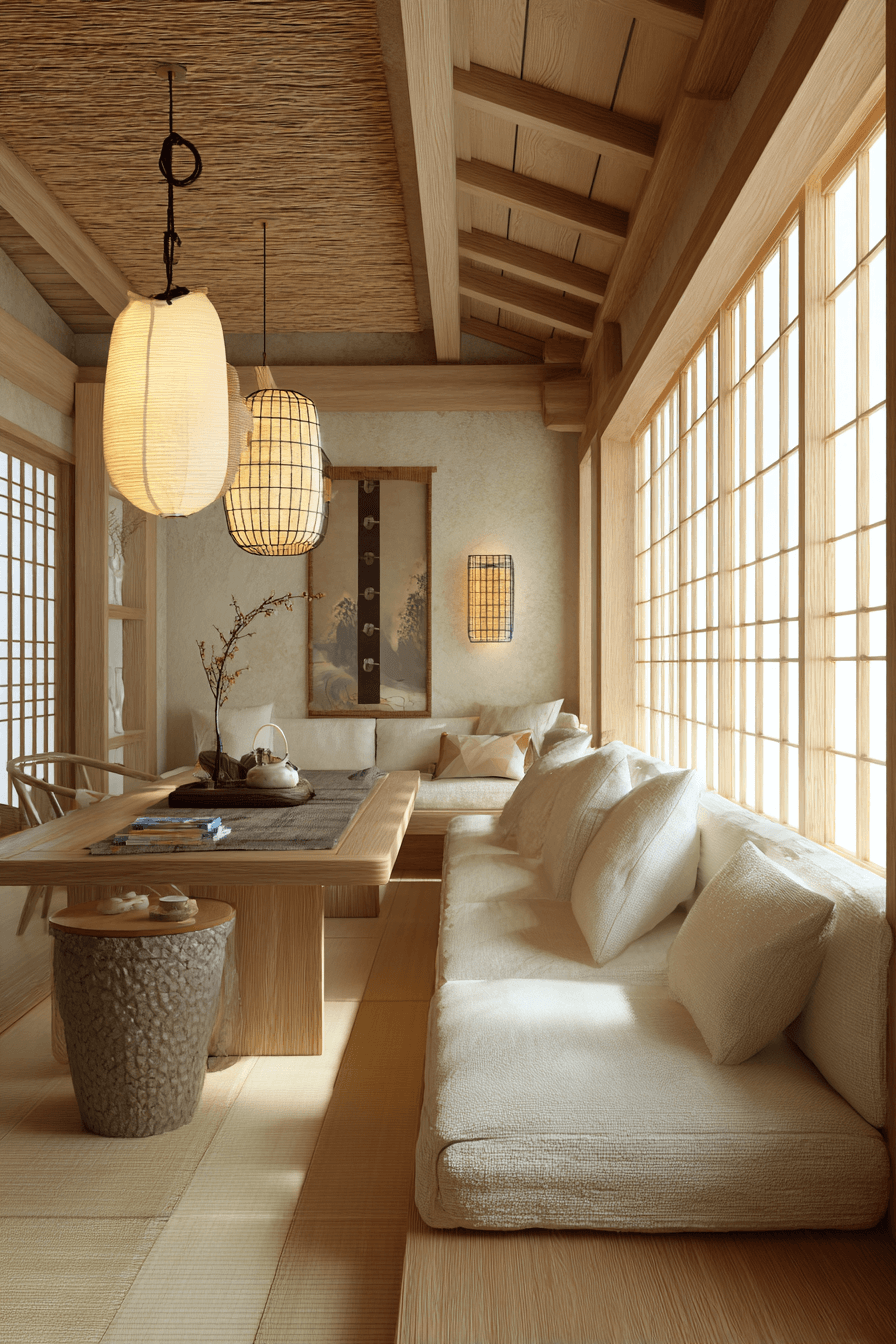
Natural textures bring softness and warmth into a japanese apartment. Linen, woven materials, and smooth wood surfaces create balance. These elements enrich minimal design without clutter. The layering adds quiet sophistication. The atmosphere feels organic and refined. Embrace textured simplicity today.
🏠 Steal This Look
- Paint Color: Clare Paint Whipped CODE
- Furniture: low-profile platform bed with clean lines, floor-level walnut nightstand, woven rush room divider
- Lighting: paper shoji pendant lamp, warm diffused glow
- Materials: raw linen bedding, unfinished oak, handwoven tatami, unglazed ceramic, cotton canvas
This look asks you to slow down and actually touch your surroundings. There’s something grounding about waking up to linen that wrinkles honestly and wood that shows its grain.
19. Soft Lighting Japanese Interior
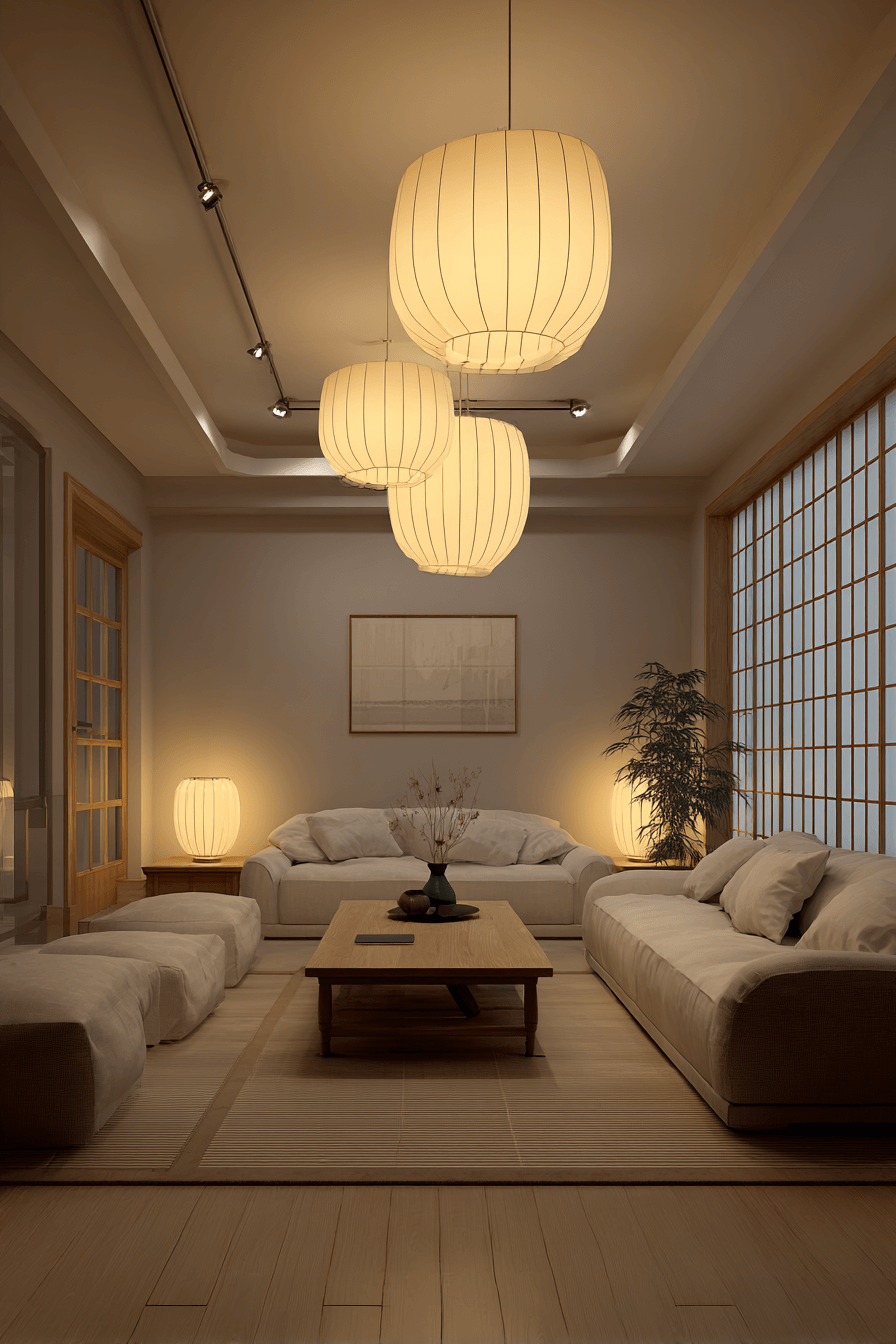
Layered lighting transforms the ambiance of a japanese apartment effortlessly. Warm-toned lamps create a soft glow. Indirect lighting prevents harshness. The atmosphere becomes intimate and inviting. Light enhances calm and relaxation. Perfect your lighting approach now.
🏠 Steal This Look
- Paint Color: Fine Paints of Europe Satingloss 7502 Warm White
- Furniture: Low-profile platform bed with clean lines, floor-level tatami-style seating, minimalist wooden side tables with paper lantern accents
- Lighting: Paper andon floor lamps with warm LED bulbs, rice paper pendant lights, indirect cove lighting along ceiling edges
- Materials: Shoji paper screens, natural cedar wood, woven rush tatami, unbleached linen textiles, matte ceramic
This is the lighting scheme I crave after chaotic days—there’s something deeply human about being surrounded by warmth that seems to emanate from the walls themselves rather than blast from above.
20. Modern Genkan Entry Design
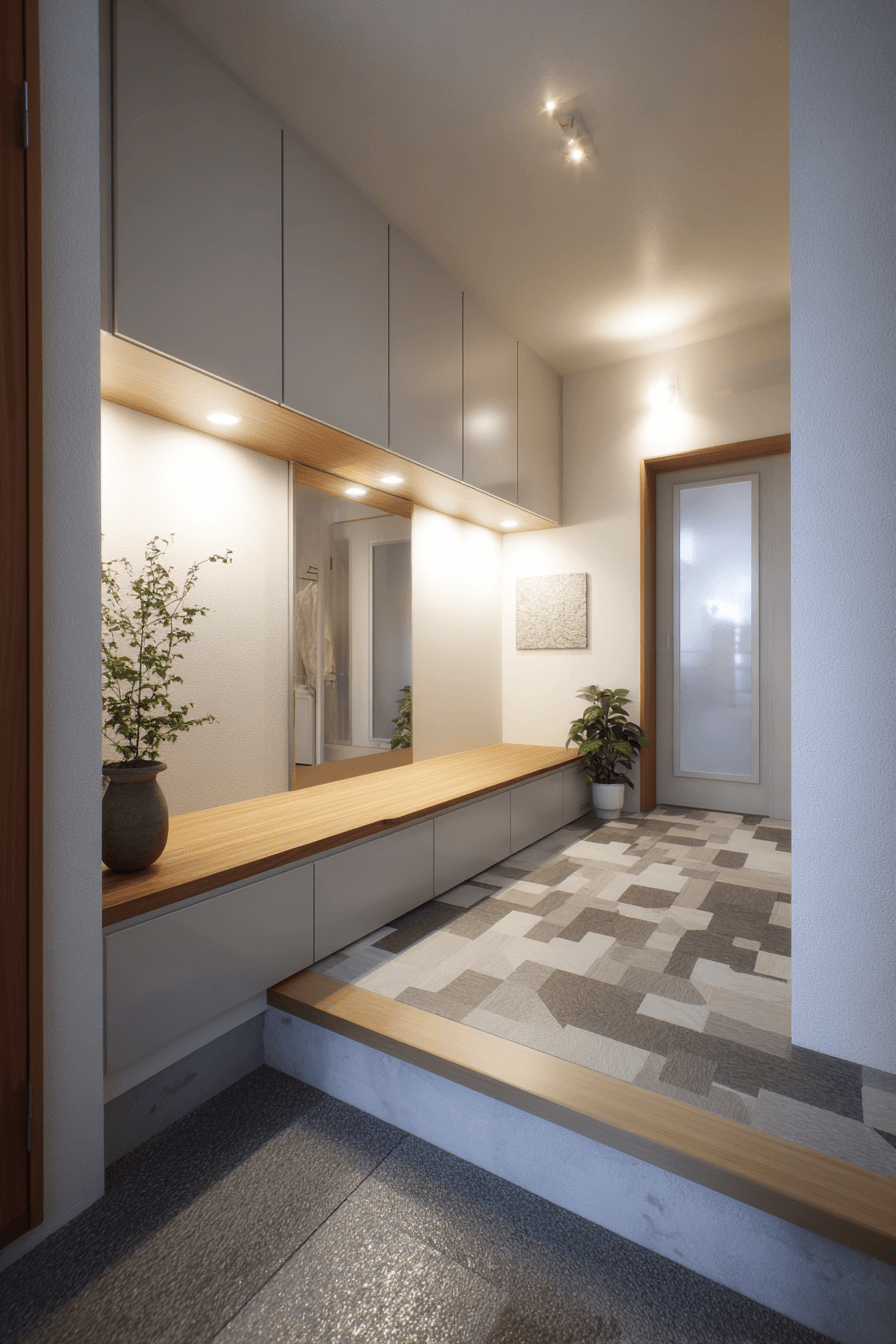
A modern genkan entry sets an organized tone in a japanese apartment. Defined flooring and discreet storage keep clutter contained. The transition from outdoors to indoors feels intentional. Cleanliness and order take priority. The entry becomes both practical and welcoming. Upgrade your entryway design today.
🖼 Steal This Look
- Paint Color: Backdrop Kinfolk BT-05
- Furniture: low-profile shoe cabinet with sliding doors, floating bench with hidden compartment, minimalist coat hooks
- Lighting: recessed ceiling spotlights, slim linear LED strip along shoe cabinet toe kick
- Materials: polished concrete or large-format stone tile for genkan zone, light oak for storage, woven tatami-textured mat, brushed brass hardware
This is the handshake your home offers every time you walk through the door. I’ve seen cramped Tokyo entries feel expansive simply because everything tucks away—the bench, the shoes, even the keys disappear into millwork.
21. Built In Storage Japanese Style
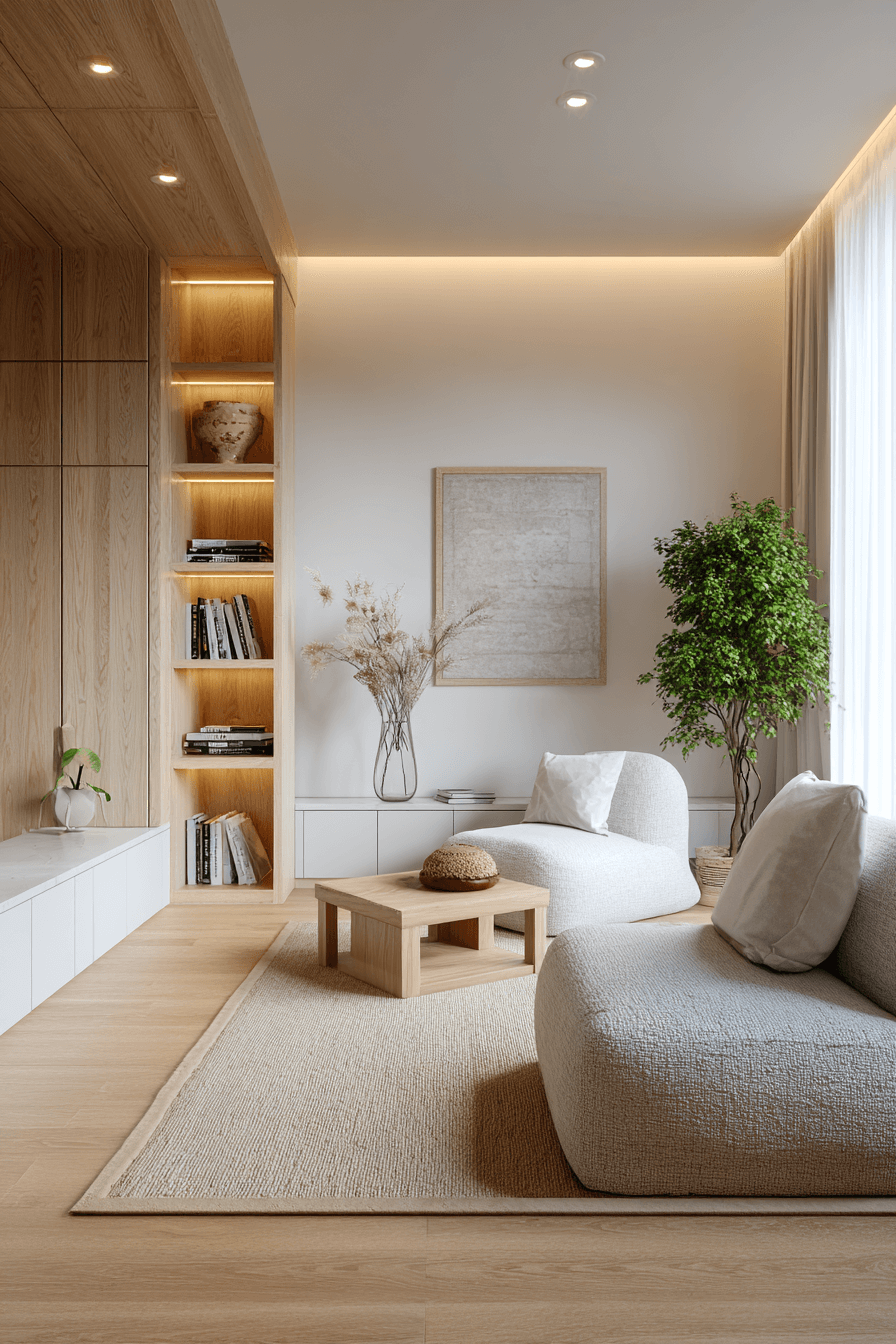
Built-in storage keeps a japanese apartment streamlined and cohesive. Seamless cabinetry blends into walls. Every inch serves a purpose. Compact layouts benefit from hidden functionality. The design feels polished and efficient. Discover smarter storage solutions now.
🏠 Steal This Look
- Paint Color: Sherwin-Williams Shoji White SW 7042
- Furniture: floor-to-ceiling built-in tatami storage platform with sliding shoji panel doors, low-profile modular shelving with concealed compartments
- Lighting: recessed LED cove lighting along cabinet tops, paper lantern pendant over seating area
- Materials: bleached ash wood veneer, rice paper, natural linen, matte black steel hardware
There’s something almost meditative about opening a seamless wall panel to reveal deep storage—like the room itself is keeping your secrets.
22. Minimal Japanese Dining Nook
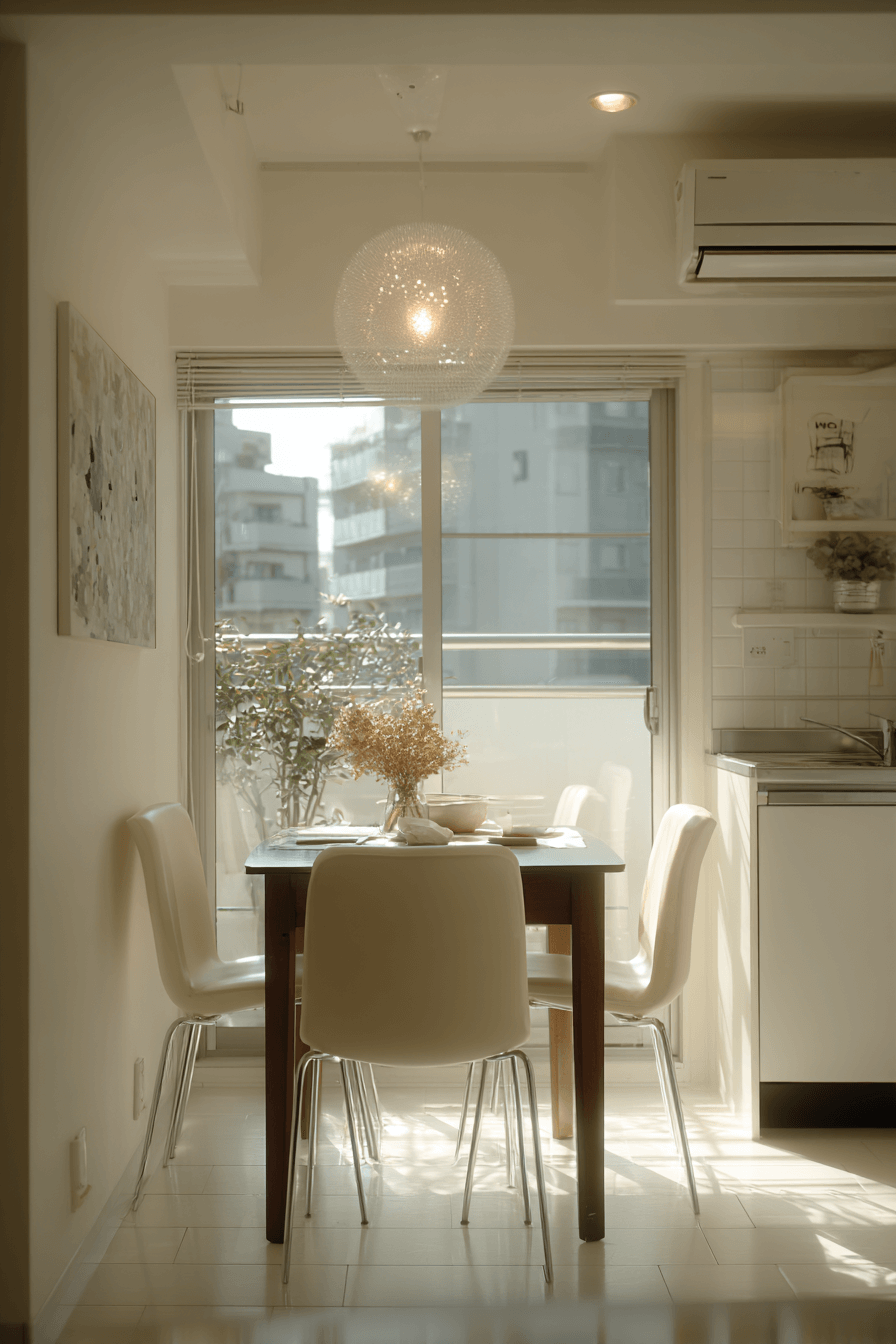
A minimal dining nook maintains flow in a japanese apartment. Compact tables and simple seating preserve openness. Neutral tones connect the space to surrounding areas. The layout supports everyday use without heaviness. It feels refined and practical. Style your dining space with simplicity today.
✎ Steal This Look
- Paint Color: Benjamin Moore Simply White OC-117
- Furniture: Low-profile walnut dining table with clean joinery, backless wooden benches with rounded edges
- Lighting: Paper-and-bamboo pendant light with diffused glow, hung low over table
- Materials: Unfinished cedar, woven rush, matte ceramic, raw linen
There’s something deeply calming about eating at a table low enough to feel grounded—these nooks invite slower meals and real conversation.
23. Modern Washitsu Accent Room
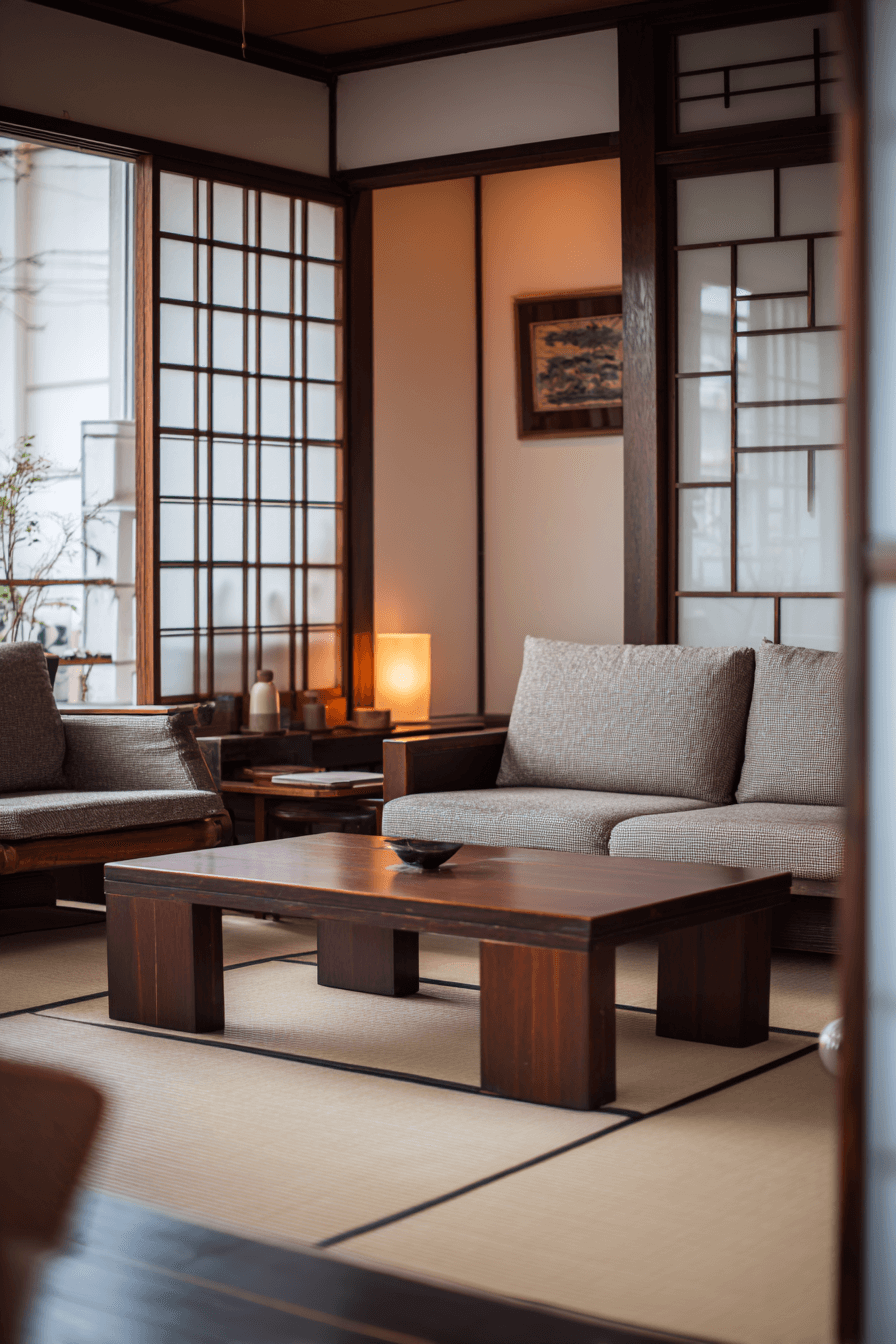
A modern washitsu accent introduces quiet tradition into a contemporary japanese apartment. Clean finishes keep it updated. The space remains flexible and calming. Heritage meets modern restraint seamlessly. It adds character without clutter. Explore this timeless design touch now.
✎ Steal This Look
- Paint Color: Farrow & Ball Shadow White 282
- Furniture: low-profile chabudai dining table with zaisu floor chairs, built-in tokonoma alcove shelving
- Lighting: paper andon floor lantern, recessed cove lighting along ceiling perimeter
- Materials: tatami mat flooring, shoji screen dividers, untreated cedar beams, raw linen cushions
This look works because it respects the Japanese principle of ma—the meaningful void. You’re not decorating a room; you’re shaping emptiness into something breathable.
24. Quiet Luxury Japanese Apartment
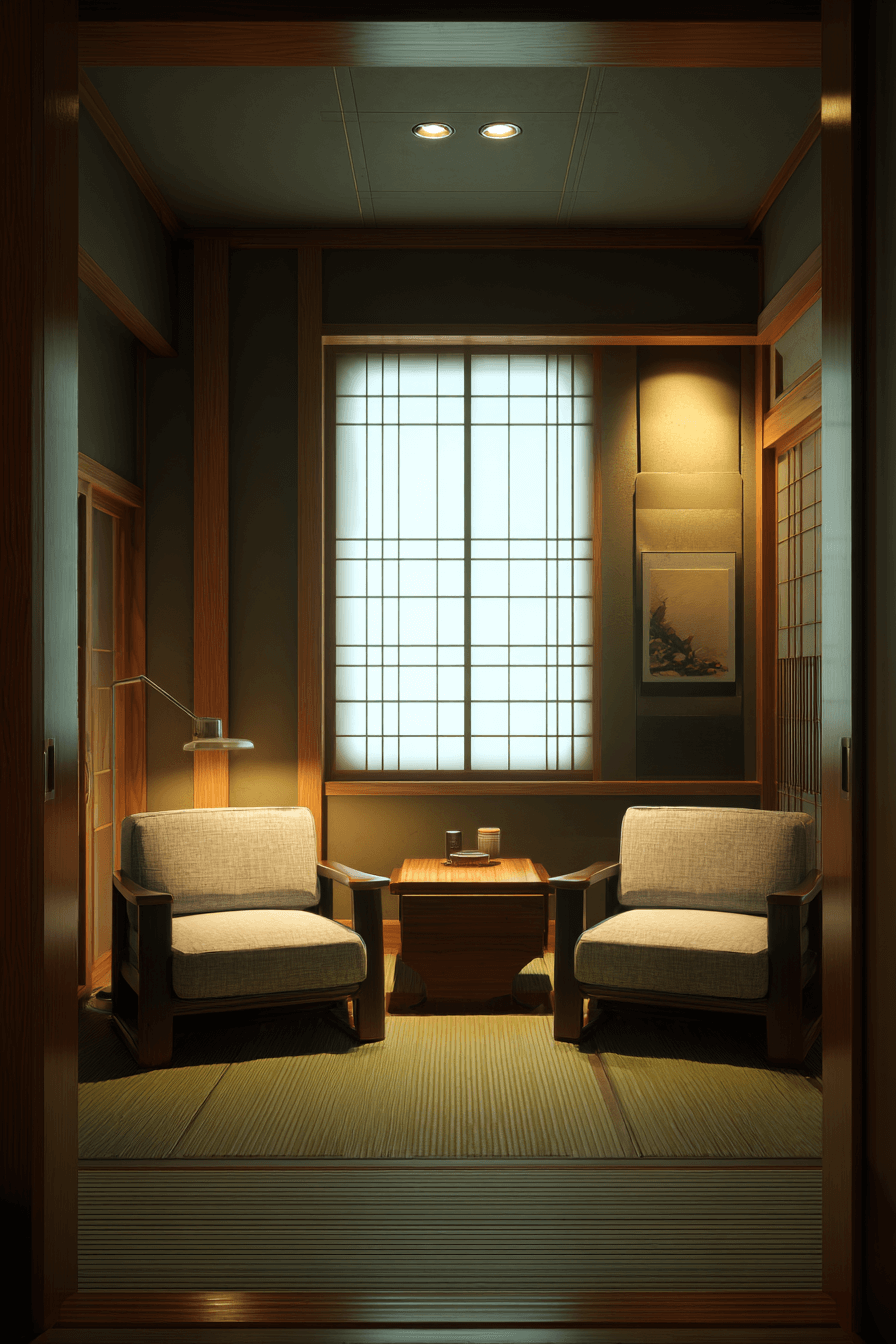
Quiet luxury focuses on material quality in a japanese apartment. Smooth surfaces and understated finishes create refinement. Decor remains subtle and intentional. The balance feels restrained yet elevated. Calm sophistication defines the atmosphere. Experience quiet luxury in your space today.
★ Steal This Look
- Paint Color: Behr Whisper White HDC-MD-08
- Furniture: low-profile walnut platform bed with integrated nightstands, floor-hugging linen sofa with clean lines
- Lighting: paper globe pendant light with warm LED, minimalist brass floor lamp with rice paper shade
- Materials: natural walnut wood, handwoven rush tatami, raw linen, unglazed ceramic, brushed brass accents
There’s something almost meditative about walking into a space where every object earned its place. This look isn’t about having less—it’s about choosing pieces that feel inevitable.
25. Minimal Japanese Bathroom Style
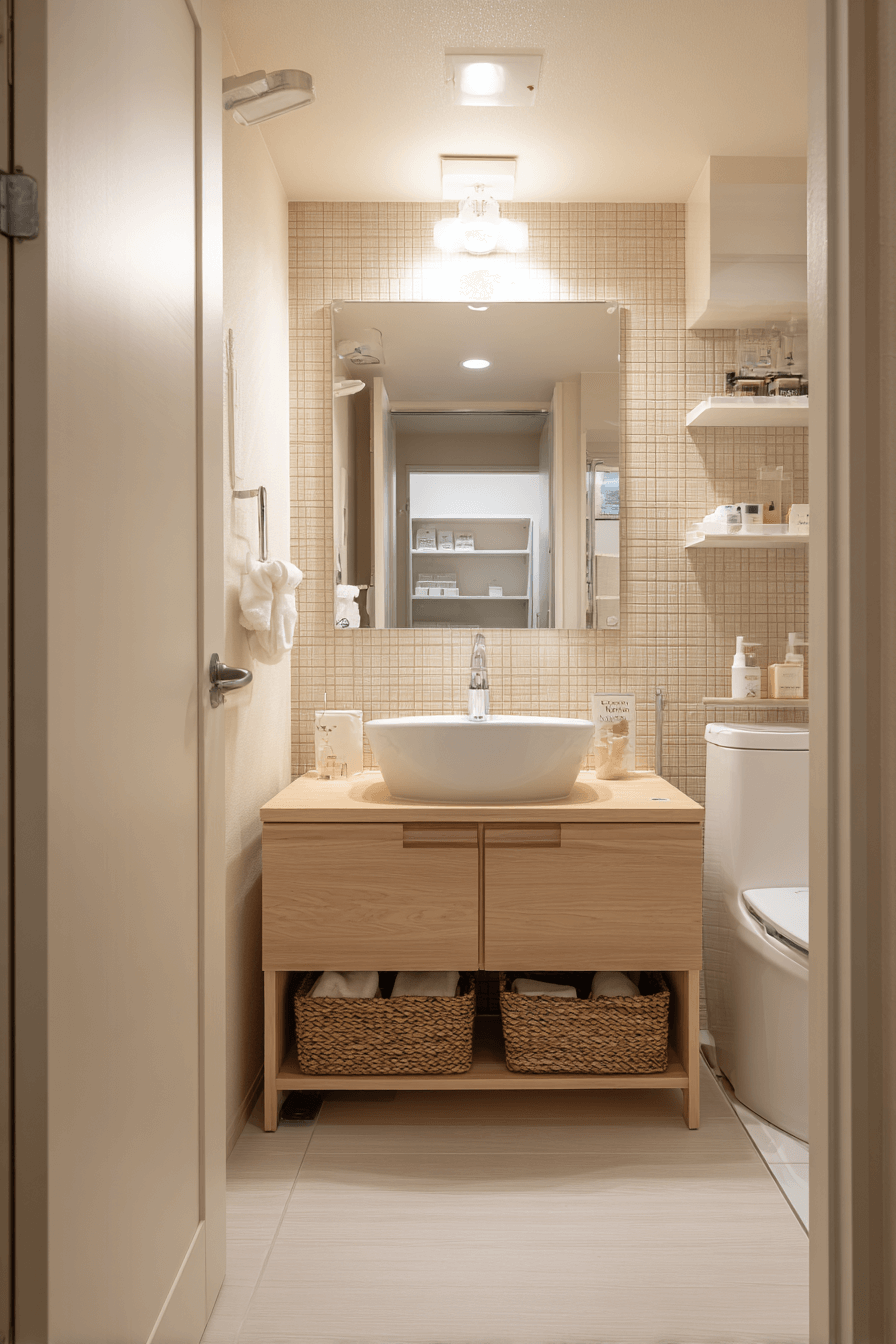
Minimal bathroom design in a japanese apartment emphasizes efficiency and clarity. Clean surfaces reduce visual noise. Thoughtful layout planning maximizes functionality. The space feels spa-like and composed. Practical beauty defines the design. Refresh your bathroom with simplicity now.
🖼 Steal This Look
- Paint Color: Valspar Polished Silver 4004-1B
- Furniture: floating teak vanity with integrated sink, wall-mounted toilet, open cedar shelving
- Lighting: recessed LED soffit lighting, backlit mirror panel
- Materials: large-format matte porcelain tile, hinoki cypress accents, brushed nickel fixtures, frameless glass shower partition
This bathroom strips away everything non-essential until only peace remains—the kind of space where a single stem in a ceramic vase becomes the entire decor.
26. Sleek Japanese Kitchen Design
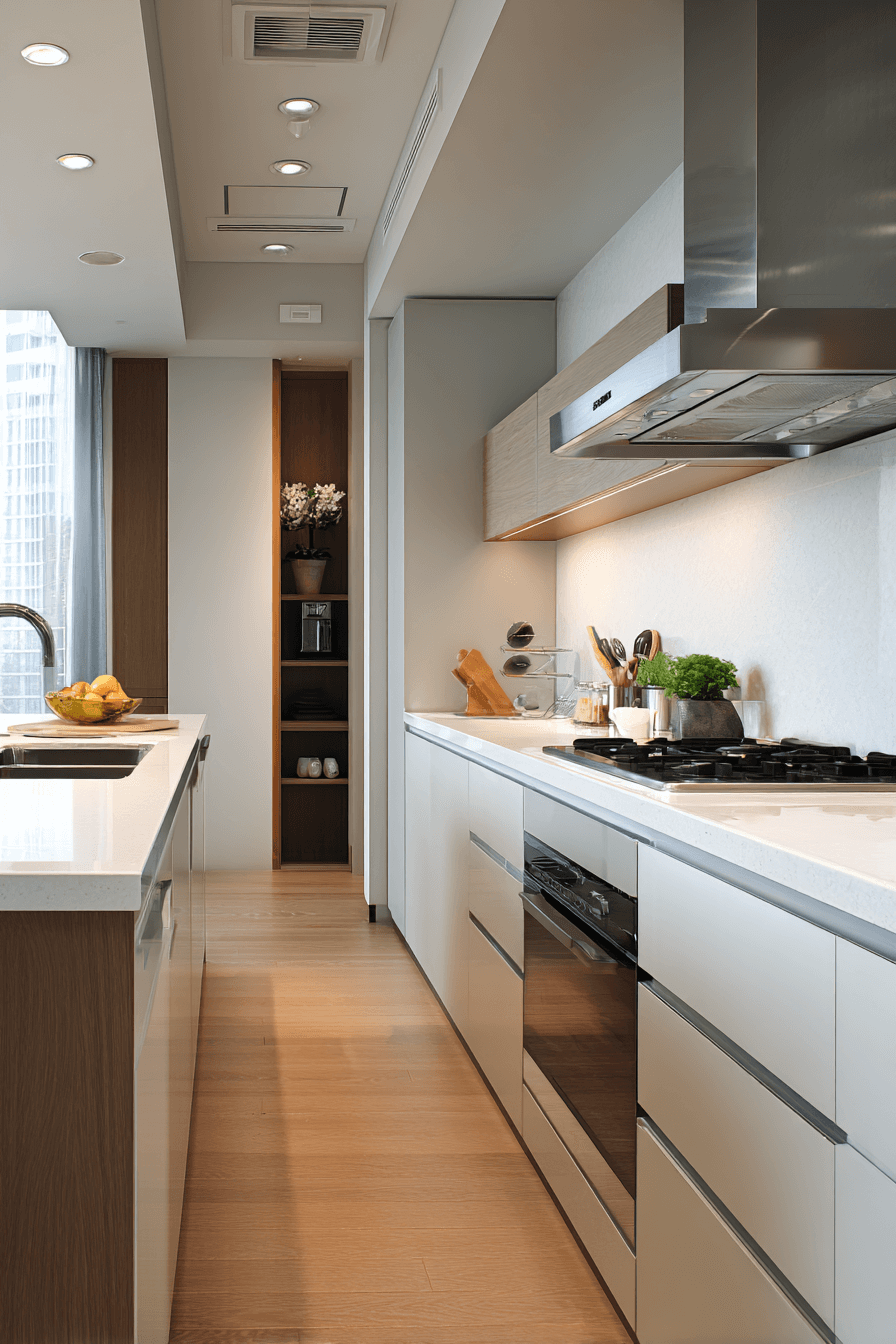
A sleek kitchen design keeps a japanese apartment functional and refined. Streamlined cabinetry hides clutter. Neutral palettes enhance cohesion. Efficient layouts support everyday cooking. The space feels organized and inviting. Elevate your kitchen with modern simplicity today.
💡 Steal This Look
- Paint Color: PPG Chinese Porcelain PPG1160-6
- Furniture: handleless flat-panel cabinets in warm white oak veneer, integrated appliance panels, floating open shelving in natural ash
- Lighting: recessed LED downlights with warm 2700K output, slim under-cabinet LED strips, single sculptural pendant over island in matte black or paper shade
- Materials: quartz composite countertops in soft concrete gray, brushed stainless steel appliances, woven rush or linen textural accents, unglazed ceramic dishware
There’s something deeply calming about opening a drawer and hearing that soft magnetic catch—these kitchens reward daily rituals with quiet precision, not drama.
27. Contemporary Japanese Bedroom Style
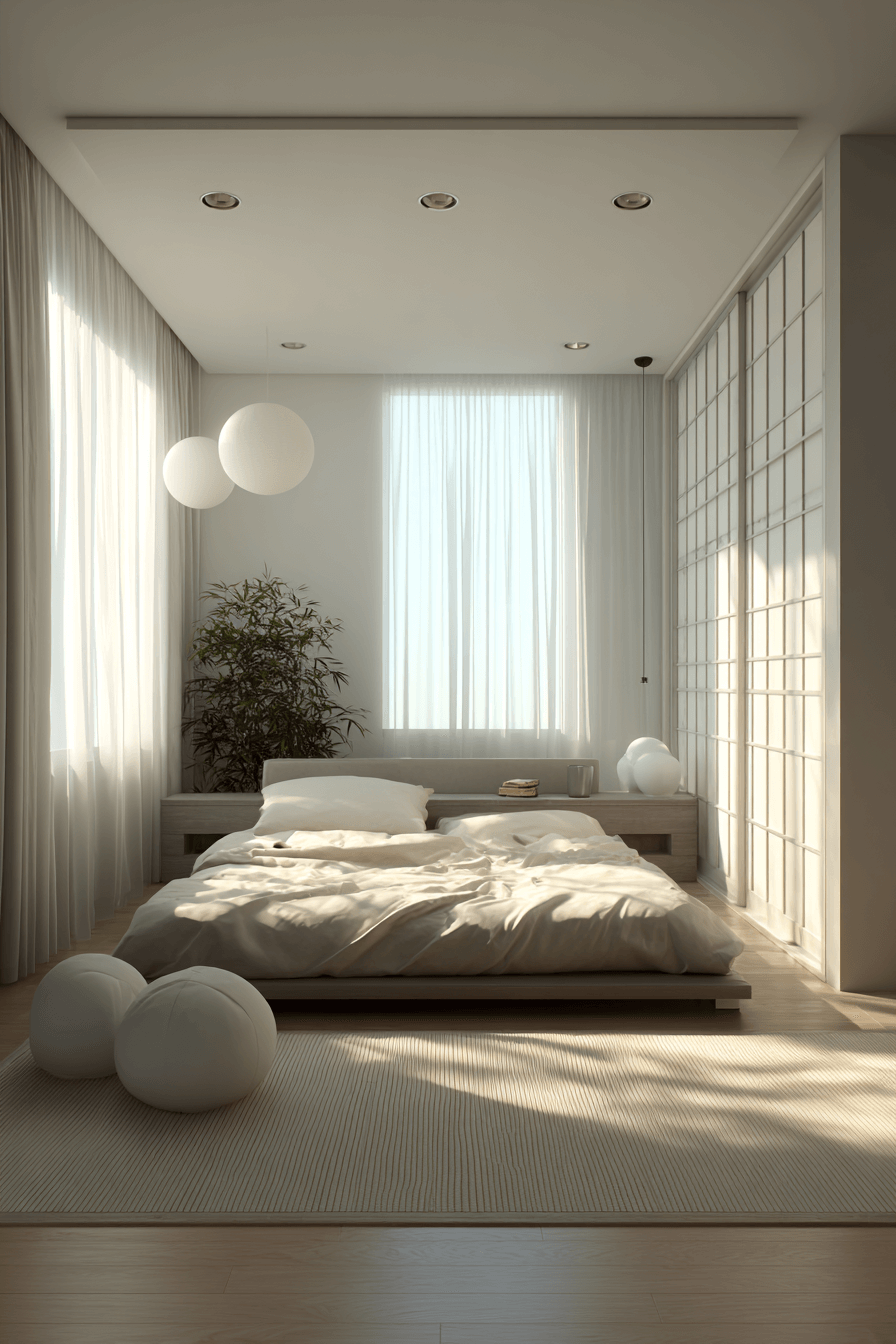
A contemporary Japanese bedroom centers around low beds and soft neutral palettes. The layout promotes rest and openness. Textured layers add warmth without clutter. Simplicity enhances relaxation. The atmosphere feels peaceful and grounded. Transform your bedroom into a calm retreat now.
✎ Steal This Look
- Paint Color: Dunn-Edwards Whisper White DEW340
- Furniture: Low platform bed frame in light oak, minimalist nightstands with clean lines, floor-level storage bench
- Lighting: Paper lantern pendant light or shoji screen table lamp with warm LED
- Materials: Light oak wood, natural linen bedding, woven rice paper, tatami-inspired textures, unbleached cotton
There’s something deeply restorative about sleeping closer to the floor—it strips away the noise and lets the room breathe around you.
Conclusion
Creating a Japanese apartment is about embracing the profound wisdom of minimalism, where every element serves both function and beauty while cultivating inner peace. These 27 ideas demonstrate that Japanese design isn’t about austerity — it’s about intentional living that transforms small spaces into sanctuaries of calm. Whether you incorporate natural materials, sliding shoji screens, or the gentle glow of paper lanterns, the key lies in creating flow and balance that honors both tradition and modern life. Remember that the most authentic Japanese apartments evolve gradually, becoming more peaceful and purposeful over time. Start with one or two elements that resonate with your spirit, then build your zen sanctuary layer by layer. Your apartment should be more than just a place to live — it should be your daily retreat that brings the timeless wisdom of Japanese design into your modern lifestyle.