Modern Japanese House Style: A Complete Guide to Getting the Look Right
A modern Japanese house doesn’t happen by accident. I learned that the hard way, three years ago, when I dragged home a glossy black lacquer sideboard because it “looked Japanese” and it sat in my living room for two months looking like a prop from a hotel lobby. Wrong finish, wrong proportions, wrong everything. Once I swapped it for a low ash-wood console with visible grain, the whole room settled down. That’s the thing about this style — it’s not about adding Japanese-looking objects. It’s about restraint, material honesty, and knowing when to stop.
If you’ve been searching “modern Japanese house” or “how do you decorate a modern Japanese house,” you’re probably picturing that calm, low-slung, wood-and-concrete look you’ve seen in architecture photos — the kind of room where nothing shouts but everything feels considered. Here’s how to actually build it.
What You’re Working With: Time, Cost, and Skill Level
Time: A single-room refresh takes 1–3 days if you’re mostly swapping textiles, lighting, and decor. A full-home pass — decluttering, furniture changes, adding screens or wood slat details — runs 1–3 weeks.
Budget: This style scales enormously.
– $500–$2,500 gets you a legitimate styling refresh: linen textiles, a paper pendant light, plants, ceramics, a new rug.
– $5,000–$25,000+ covers real furniture investment — low-profile sofas, solid wood tables, custom sliding screens, maybe some joinery work.
– If you’re building from scratch in Japan, modest-to-mid-range homes in the Tokyo area commonly run ¥30 million to ¥80 million, with luxury builds pushing past ¥100 million. Obviously most of us reading this aren’t building in Tokyo, but it’s a useful reference point for how “modern Japanese” scales from styling project to architecture.
Space size: This style was built for small to medium homes. It’s essentially a design language for making limited square footage feel calm and generous. That said, it works beautifully in larger homes too — you just use it to carve out quiet zones instead of filling every room with volume.
Skill level: Decor-only styling is beginner to intermediate. The moment you start talking built-ins, shoji-style dividers, or a tsuboniwa courtyard, you’re in intermediate to expert territory — bring in a contractor or a very patient weekend.
Seasonal appeal: Year-round. There’s no “Japanese house Christmas edition.” The palette and materials are neutral enough to carry through every season, which is part of why I never get tired of mine.
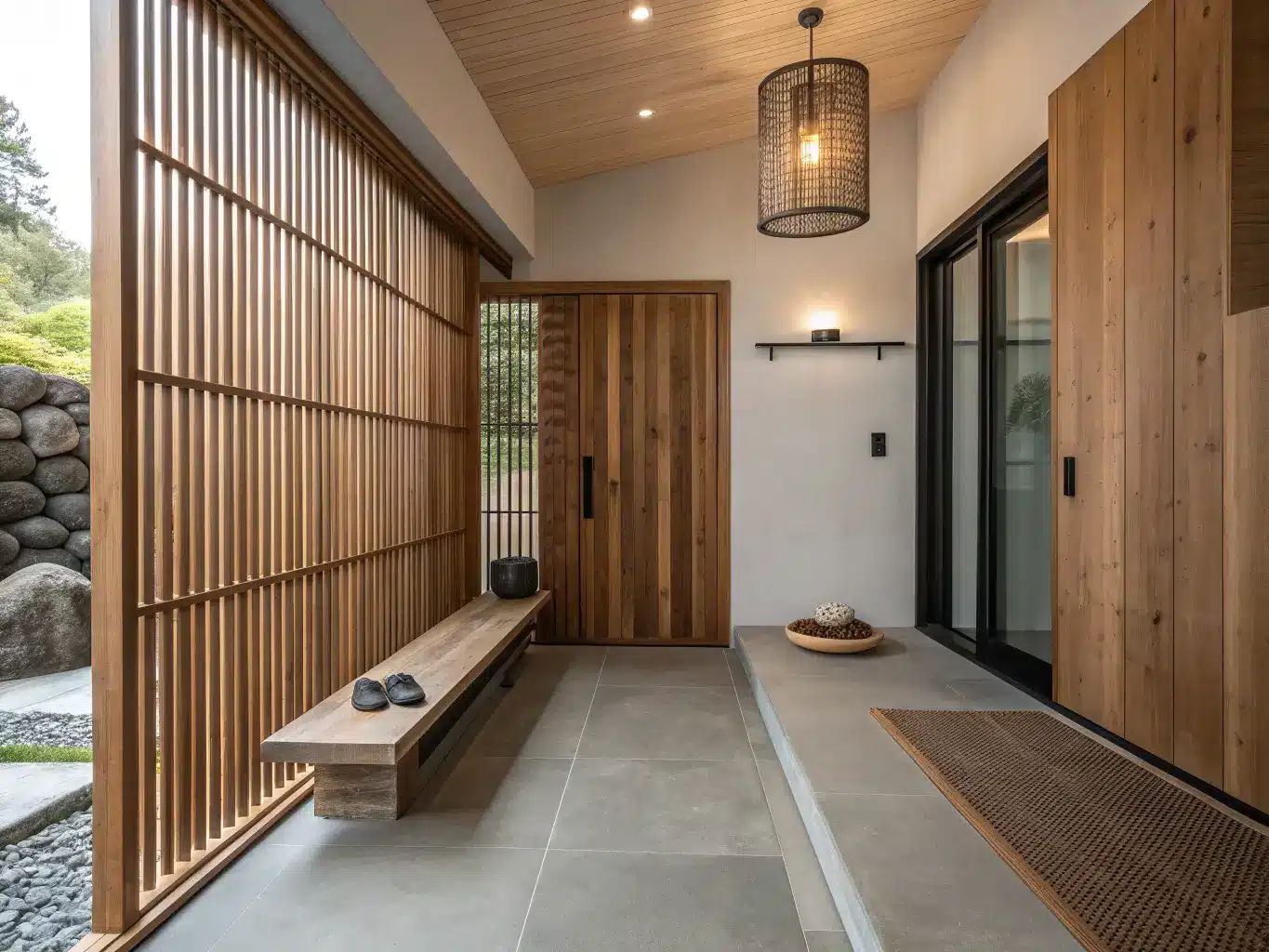
What This Style Actually Is
Modern Japanese design is a hybrid — part minimalism, part traditional Japanese restraint, part that Japandi-adjacent calm you’ve probably seen all over Pinterest. It borrows the bones of traditional Japanese homes — low seating, sliding partitions, courtyard views — and drops them into a contemporary architectural shell.
Color palette:
– Warm white
– Soft gray
– Bamboo beige
– Charcoal
– Blackened wood
– Muted clay
– Deep brown
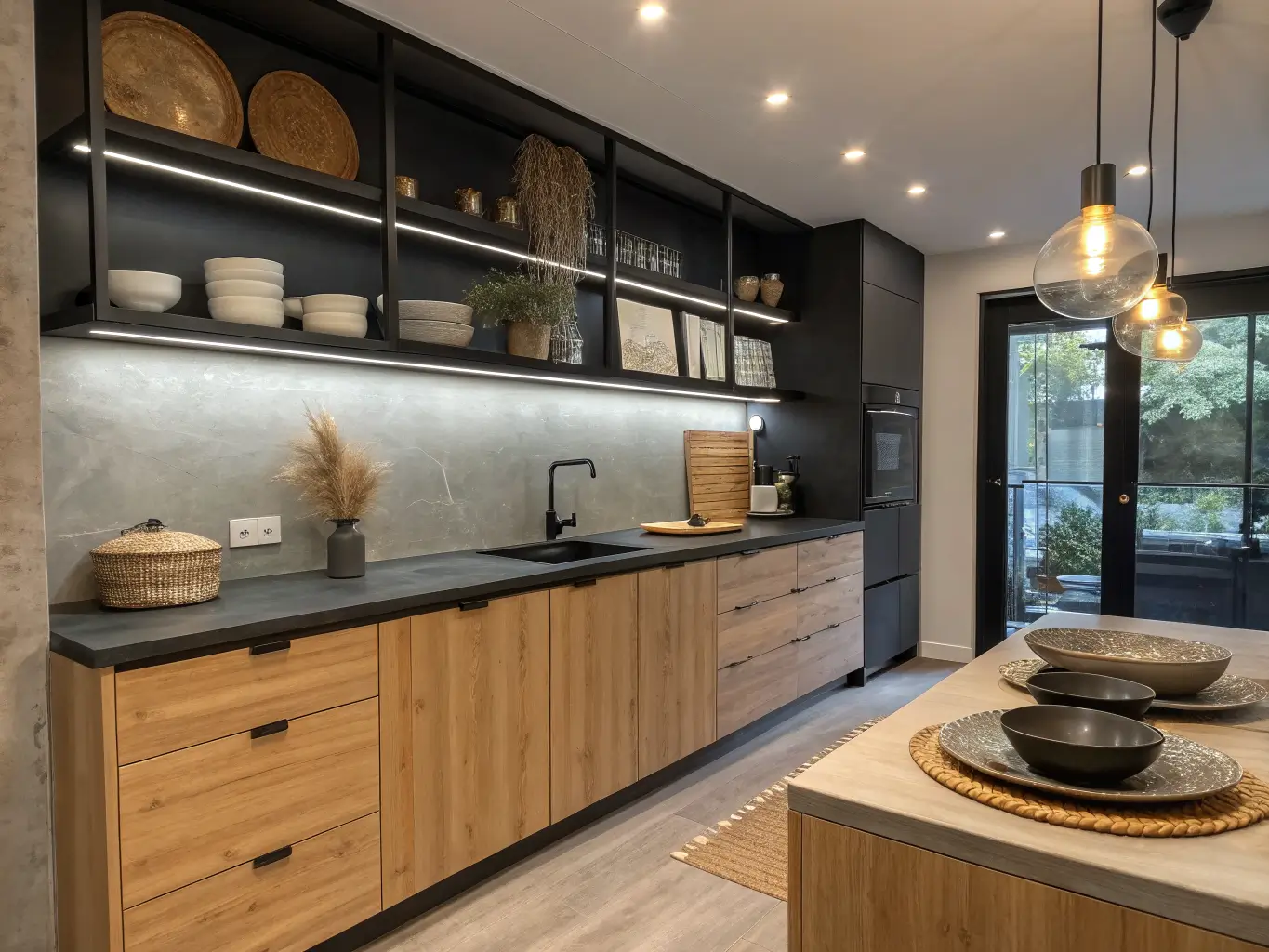
Newer interpretations are leaning harder into dark concrete paired with lighter wood tones — a contrast that reads as more architectural and less “spa brochure.”
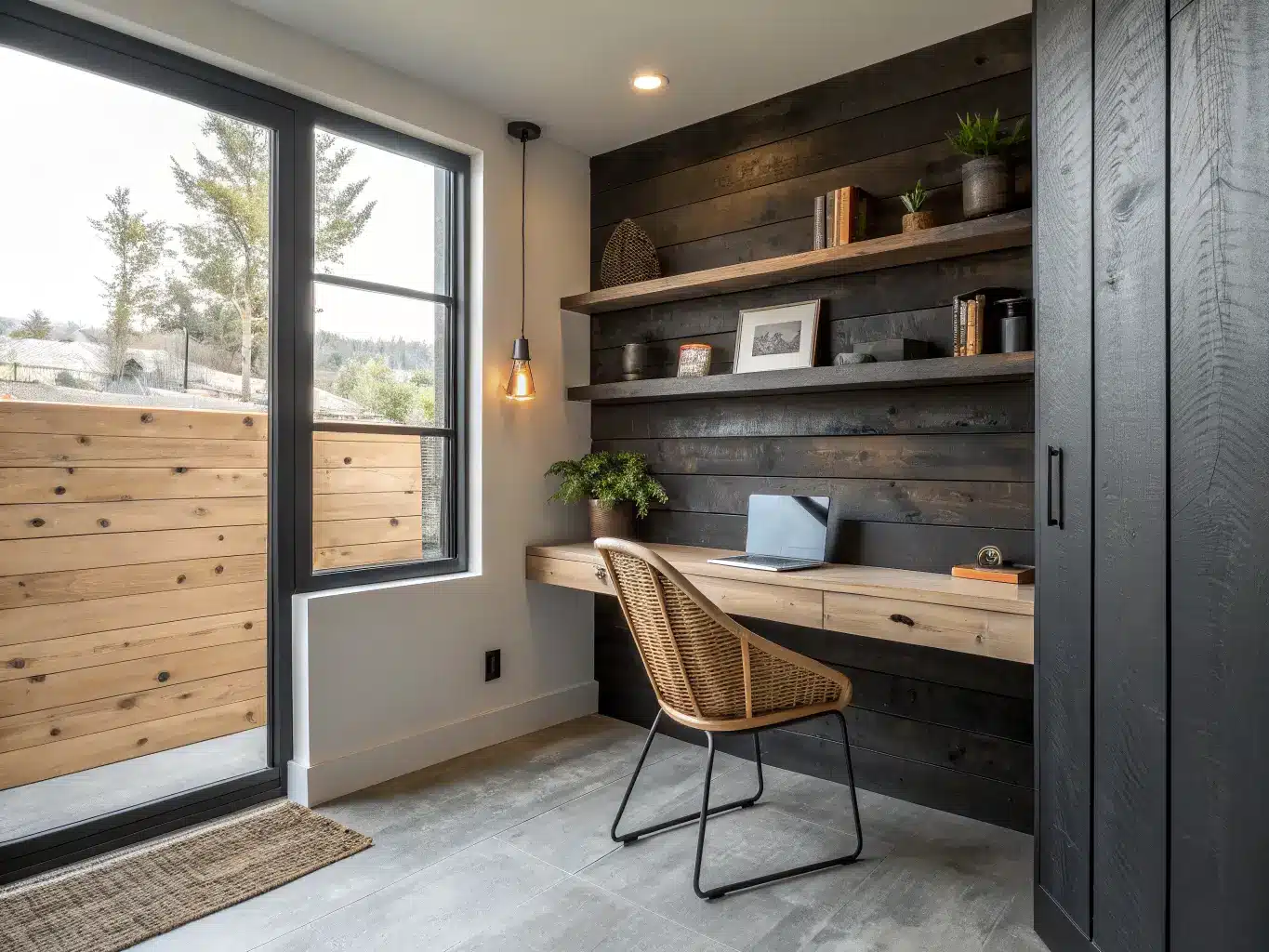
Core materials: wood, bamboo, stone, concrete, steel, glass, and shoji-inspired translucent panels. If you want the more current, slightly edgier version, add shou sugi ban (charred cedar), matte black metal trim, and flush hardware.
Who it’s for: Anyone who wants a home that feels uncluttered without feeling empty, who likes natural materials over synthetic ones, and who’s working with a smaller footprint and wants it to feel intentional instead of cramped.
Where it works best: Living rooms, entryways, kitchens, bathrooms, bedrooms, courtyards — basically anywhere light and storage are already a challenge, because this style solves both.
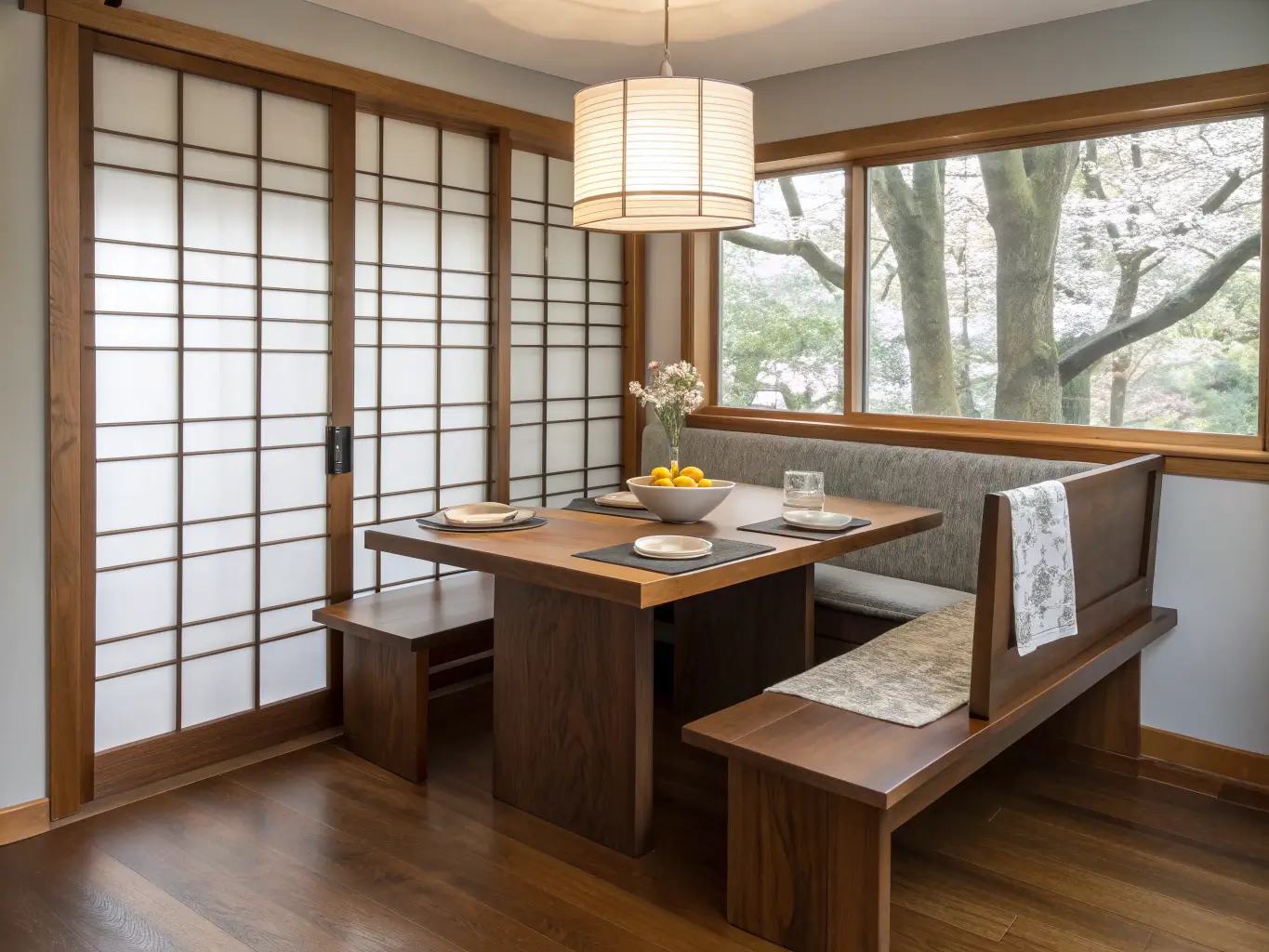
The Pieces That Actually Make the Look Work
You don’t need forty things. You need the right eight or nine.
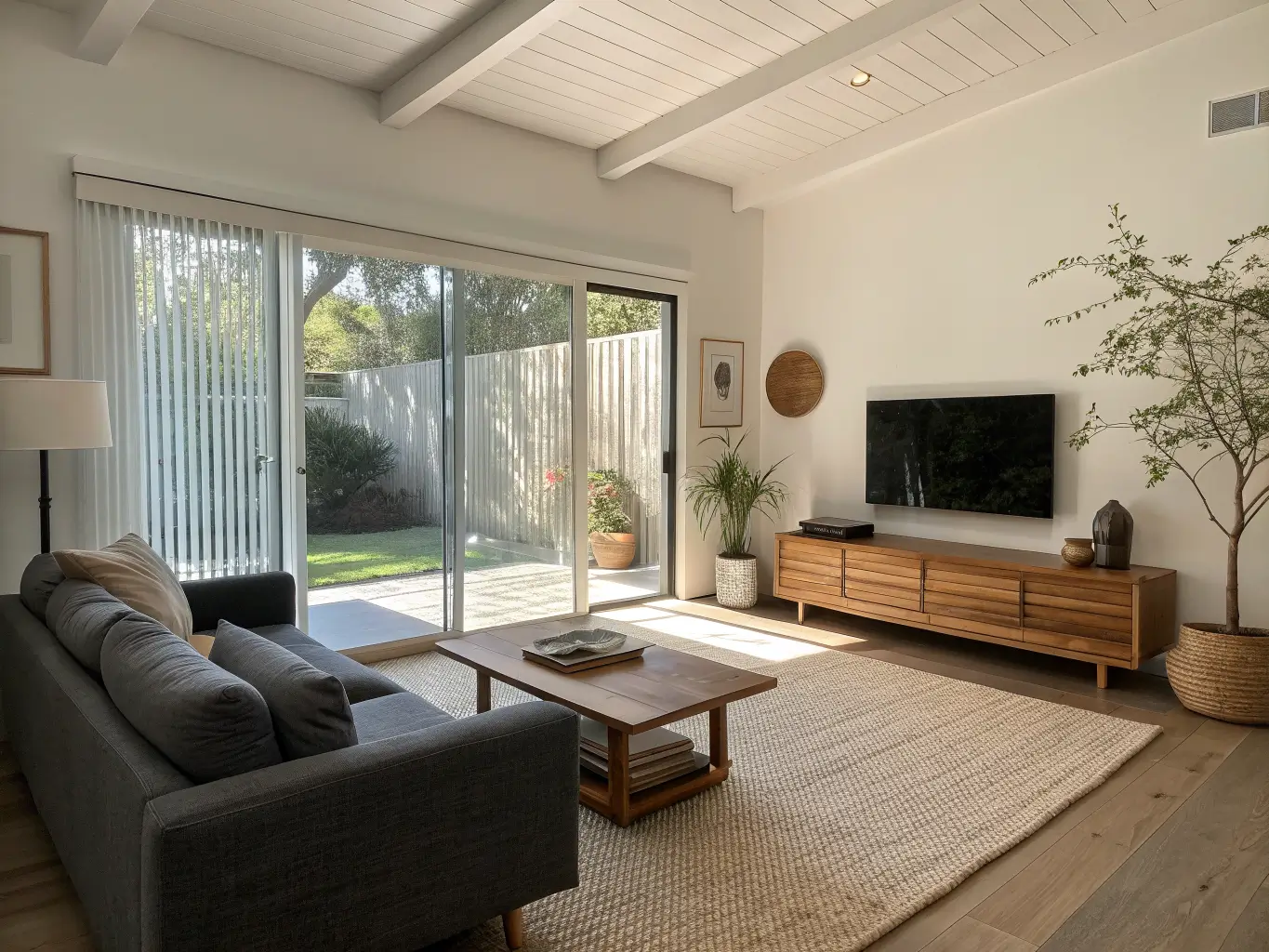
– A low-profile sofa or platform seating. Anything with a tall, boxy back kills the effect immediately. You want a silhouette that sits close to the ground and reads as grounded, not stacked.
– A solid wood dining table or bench in oak, ash, walnut, or cedar. Clean edges, visible grain, no ornate legs.
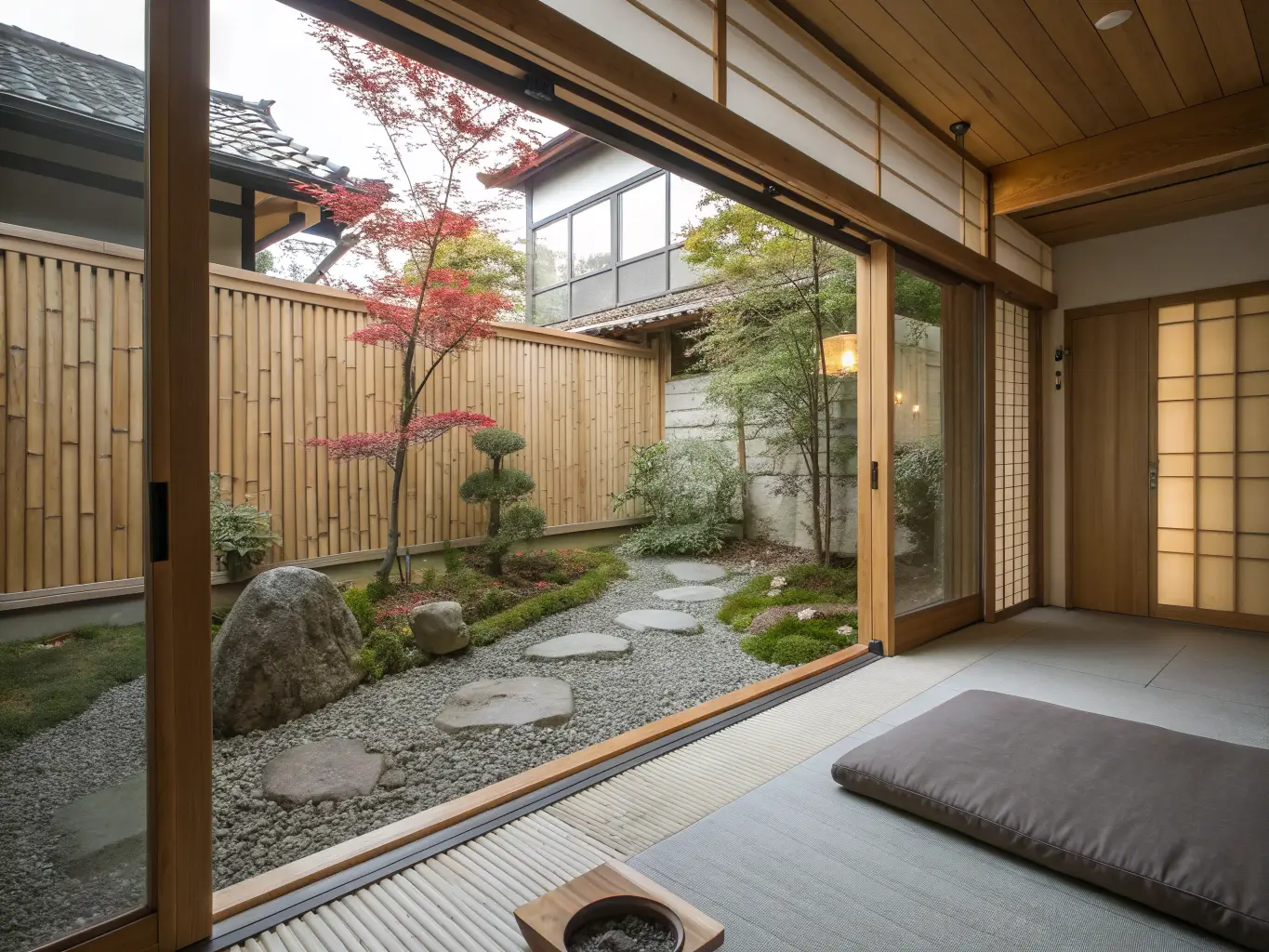
– A sliding or screen divider. A shoji-style panel, ribbed glass, or a slatted wood screen does more to define this style than almost anything else. It creates separation without walls.
– A natural-fiber rug or tatami-style mat. Keep it low-contrast — you’re not looking for a pattern statement, you’re looking for texture underfoot.
– Diffused lighting. Paper lanterns, linen shades, warm-white recessed lights. No harsh overheads, no bare bulbs.
– Indoor greenery — bamboo, Japanese maple, a bonsai, even a single branch arrangement in a ceramic vase.
– Stone or unglazed ceramic objects — a shallow tray, a tea vessel, something with a matte, slightly imperfect surface.
– A soaking tub, if you’re touching the bathroom. A deep freestanding tub, hinoki-inspired if your budget allows it, is the single biggest signature move for a spa-like bathroom in this style.
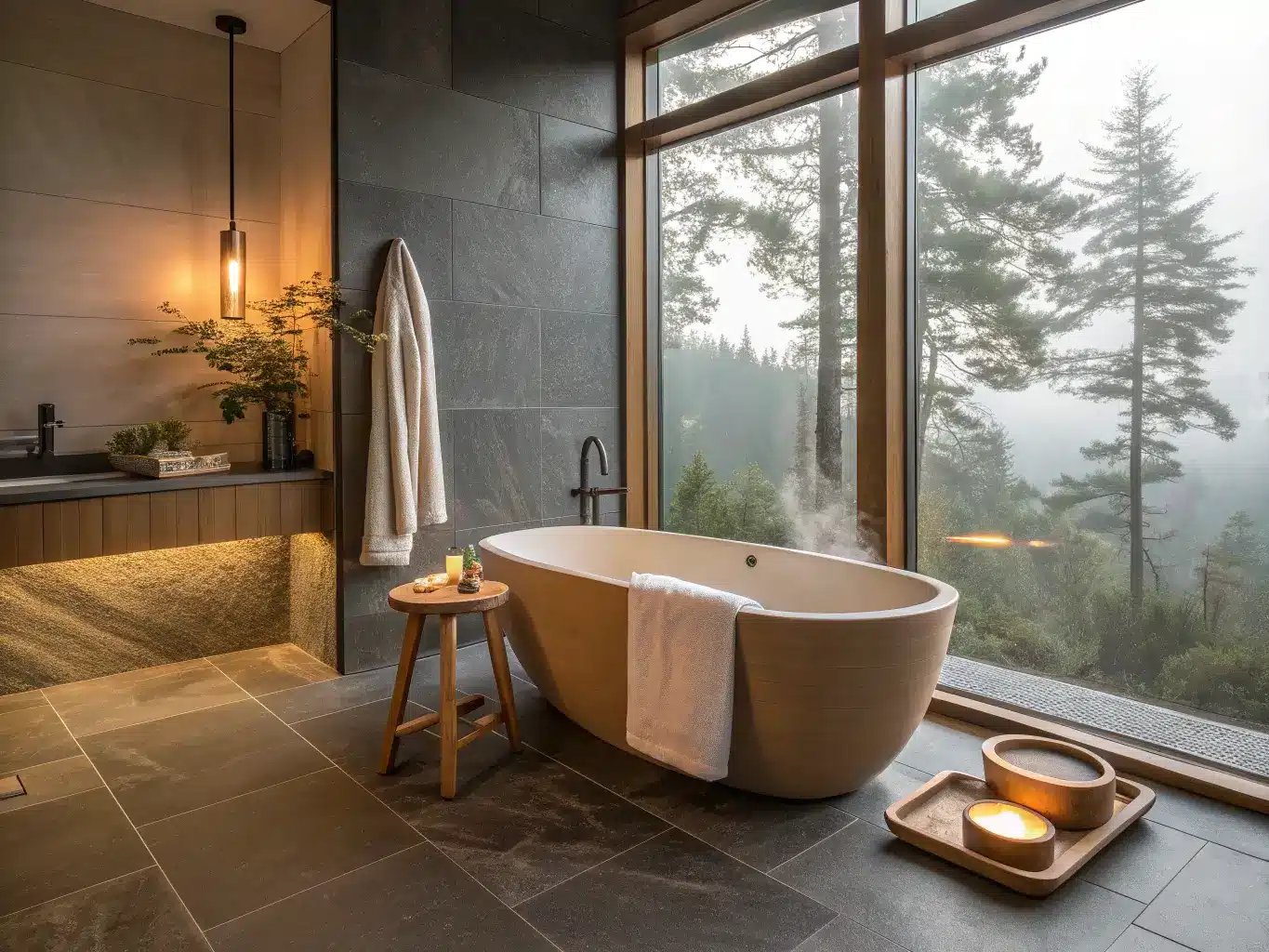
Optional Layers Worth Adding Later
Once the essentials are in place, these push the look from “nice” to “considered”:
– Shou Sugi Ban finishes — charred wood on a feature wall or console. I did this on a single console table with a torch and steel wool (yes, actually charred it myself, badly, on the second attempt) and it’s now the thing everyone asks about.
– A mini tsuboniwa courtyard corner — gravel, one stone, one plant, tucked into a patio edge or even a windowsill.
– Muted metallics — blackened steel or brushed bronze on fixtures, never anything with shine.
– Seasonal branches — cherry blossom in spring, ornamental grasses in summer, maple in fall, pine in winter.
– Textural layering — linen, wool, paper, wood grain, stone. Skip pattern almost entirely.
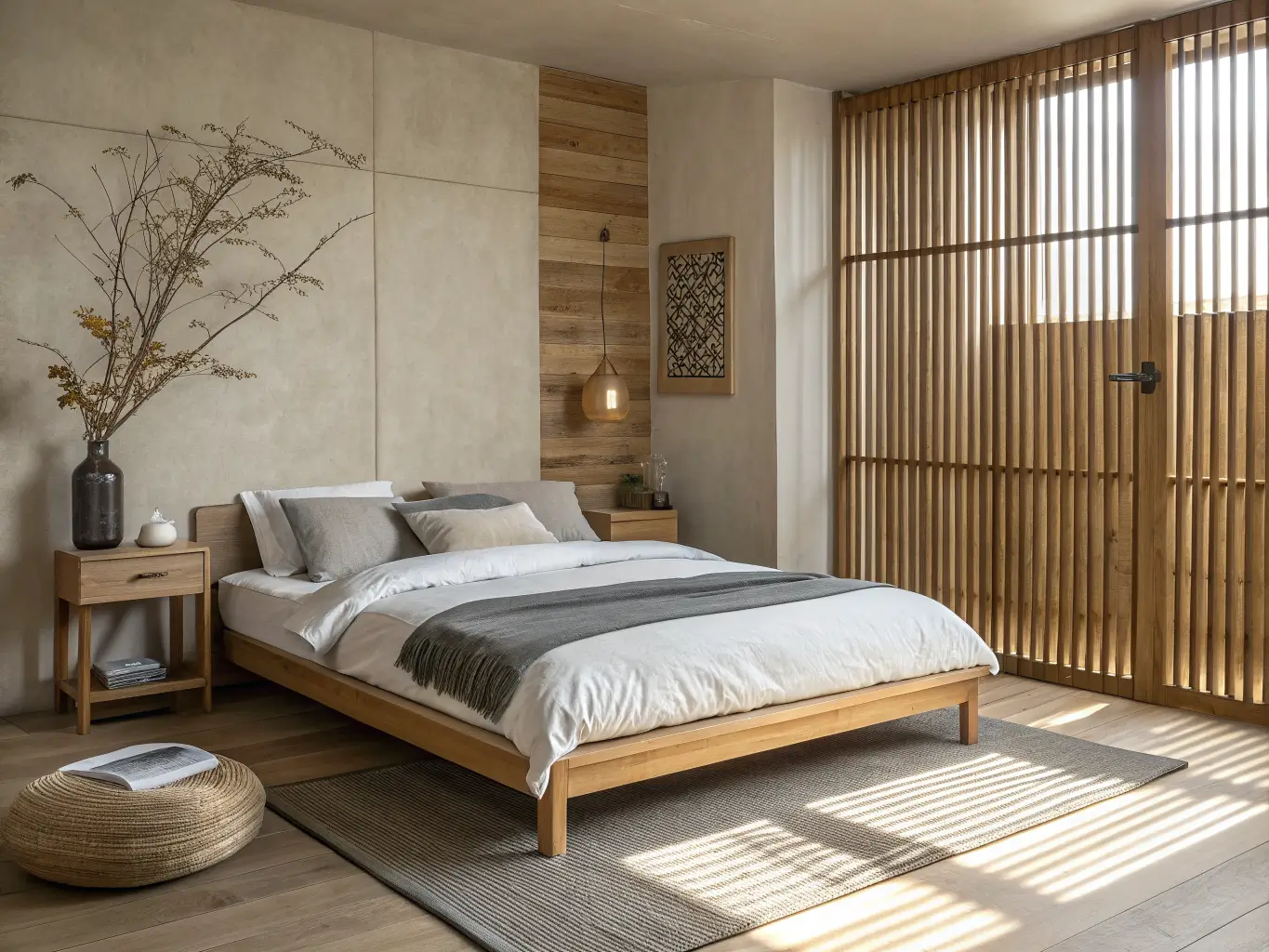
How to Actually Build the Room
Start empty. Clear out anything that doesn’t earn its place. This is uncomfortable if you’re used to a fuller room, but it’s non-negotiable here.
Set your base palette first — white, beige, gray, or clay walls, paired with wood floors or wood-look surfaces. Don’t add a single decor piece until this foundation is settled.
Pick one hero material contrast. Cedar against concrete. Ash wood against black steel. Pick it early and let it repeat through the room instead of introducing five different combinations.
Bring in low furniture and keep the center of the room open. This is where people struggle most — the instinct is to fill the middle of the room with a coffee table, a rug, an ottoman. Resist it. Open floor space is doing real design work.
Layer in your screening element — slats, ribbed glass, a sliding panel — to create zones without adding bulk.
Finish with restraint: one sculptural object, one plant grouping, one soft lighting zone. That’s it. If you’re adding a fourth “final touch,” you’ve gone too far.
Where People Go Wrong
Overfurnishing. This is the single biggest killer of the look. The calm comes from what’s not there.
Mixing too many wood tones. I did this early on — oak floors, a walnut table, a cedar bench, all in the same room — and it looked like I’d bought furniture from three different stores without a plan (because I had). Pick one or two wood families and stick with them.
Glossy finishes. High-shine surfaces fight the tactile, matte quality this style depends on. If it reflects light like a mirror, it doesn’t belong.
Oversized furniture. A deep, puffy sectional in a Japanese-style room looks like a mistake, not a statement. Scale everything down.
Being too literal. You don’t need a full tatami room and a traditional alcove and a rock garden to make this work. Real contemporary Japanese homes mix Japanese elements with Western comfort — a good rule of thumb is roughly 80% Japanese-minimal, 20% Western comfort. A few well-chosen pieces beat a theme park version every time.
Keeping It Looking Intentional Over Time
Repeat your materials. Pick two or three — say, oak, plaster, and matte black metal — and let them show up in every room. This is what makes a whole house feel like one coherent idea instead of a room-by-room experiment.
Cluster, don’t scatter. Group your ceramics and objects in small arrangements rather than spreading one item per surface.
Update lighting and textiles before you touch anything structural. A new linen throw and a warmer bulb temperature will do more for the mood of a room than a new piece of furniture.
Budget and Seasonal Refreshes
Cheap updates that actually matter:
– New cushion covers in linen or raw cotton
– A paper pendant light ($40–$150)
– One new ceramic vase
– A bamboo tray and floor cushion set
Seasonal rotation:
– Swap in lighter linen textiles for summer
– Shift to wool throws and deeper wood accents for winter
– Rotate branch arrangements with the seasons — this alone keeps the space feeling alive without buying new furniture
If you want to push the style in a different direction:
– Japandi — add Scandinavian warmth through pale oak and simple wool textures
– Modern Zen — lean harder into stone, water features, and spa minimalism
– Quiet luxury — richer wood tones, dark concrete, and hidden storage for a more lifted, expensive-feeling version
For exteriors, the current direction is dark concrete facades, warm cedar cladding, floating decks, slatted timber screens, and deep roof overhangs — worth knowing even if you’re only styling indoors, since it tells you where the aesthetic is headed.
The whole point of this style is that it rewards editing, not accumulating. Every time I’ve made a room in my house feel more “modern Japanese,” it’s been by removing something, not buying something.
More Ideas to Explore
Keep the momentum going: Fall Coffee Table Decor: A Simple Styling Formula That Actually Works covers another angle worth a look.