French bangs come from a deep triangle section that runs back toward the crown, which is why they sit fuller across the brow than a regular fringe. Cut dry with soft corners, they need a flat brush most mornings and a trim every three to six weeks. Here’s how that works across lengths, textures and colors.
1. Jaw-Length Bob With French Bangs
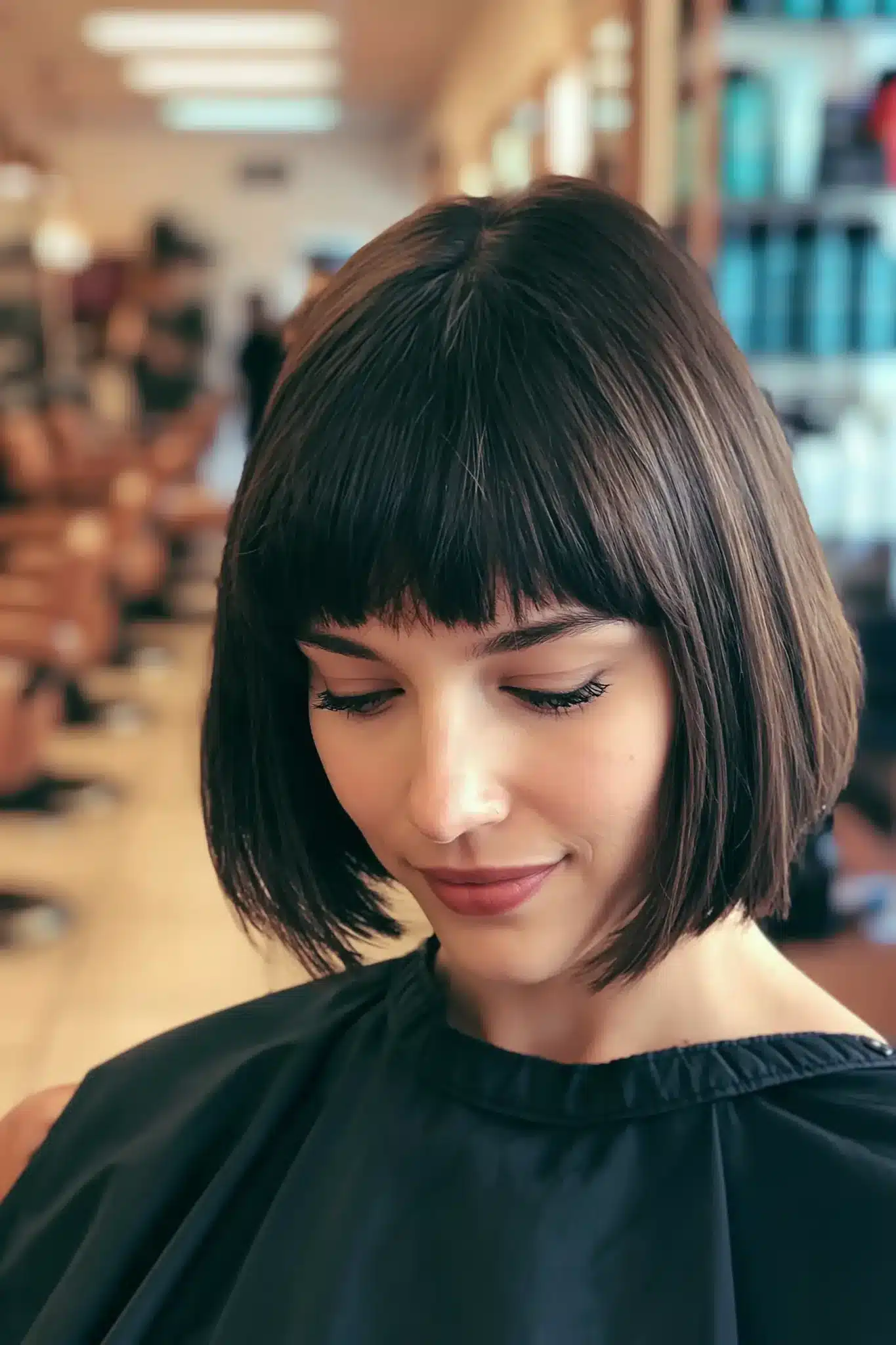
On a jaw-length bob, French bangs sit full and straight across the brow, with the corners softened into the bob. With the shears flat, I cut the bob on dry hair, then cut the fringe at the brow from a deep section and point cut the corners. Oval and heart faces with medium density and 1A to 1C texture hold the shape. Use a flat brush to dry the fringe down and send the bob under. Trim every four weeks.
2. Fine Hair With Wispy French Bangs
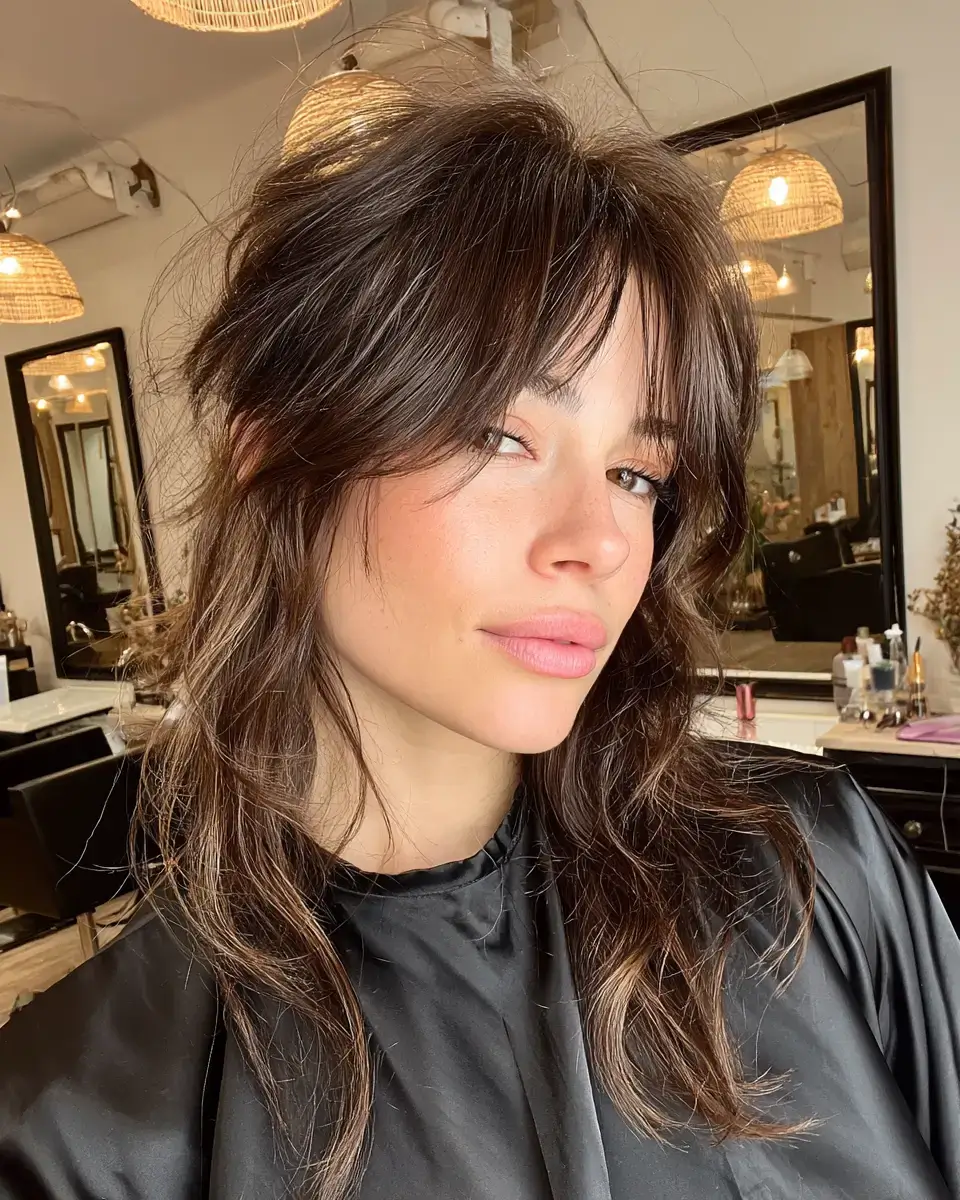
On fine hair, wispy French bangs hold onto the deep section of a French fringe but thin the ends so the brow peeks through. Working dry, I take a triangle section back to the crown, cut at the brow and point cut until the strands come apart. Oval and round faces with fine density and 1A to 2A texture suit it. Use a flat brush to blow-dry down and leave out heavy product. Trim every four weeks.
3. French Bangs Long Hair With Face-Framing Layers

French bangs long hair looks best when face framing layers begin at the temple, right where the fringe ends. On dry hair I cut the fringe at the brow from a deep section, then point cut the face frame from the cheekbone to the collarbone. Round and square faces with medium density and 1A to 2B texture suit it. Dry the fringe down and roll the layers out with a round brush. Trim every six weeks.
4. French Bangs, Curtain Style
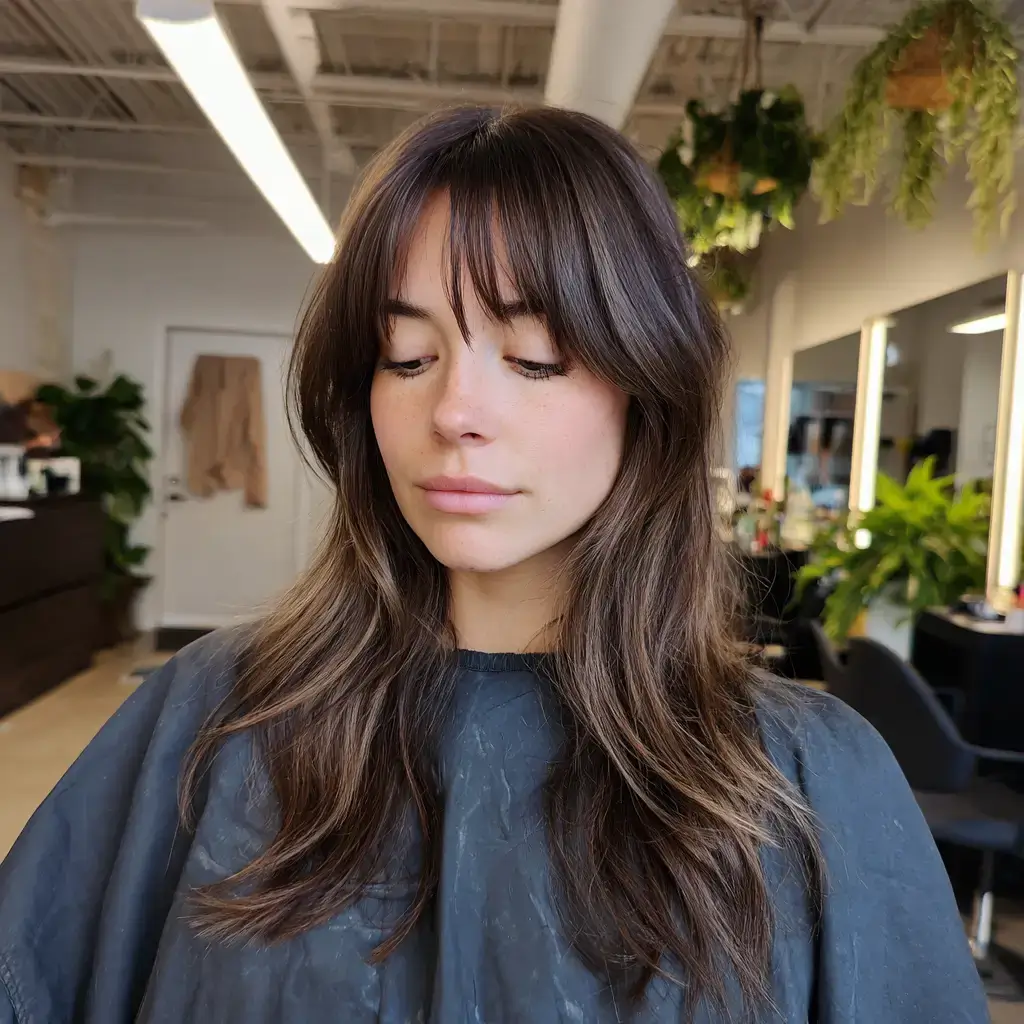
Curtain style French bangs keep a French fringe’s full density but part at the center and angle toward the cheekbone. Working dry, I take a deep triangle section, cut the center at the bridge of the nose and angle each side down to the cheekbone. It suits medium to thick density and 1A to 2B texture on oval and heart faces. Use a round brush to blow each side out. Trim every five weeks.
5. Thick Hair With French Bangs
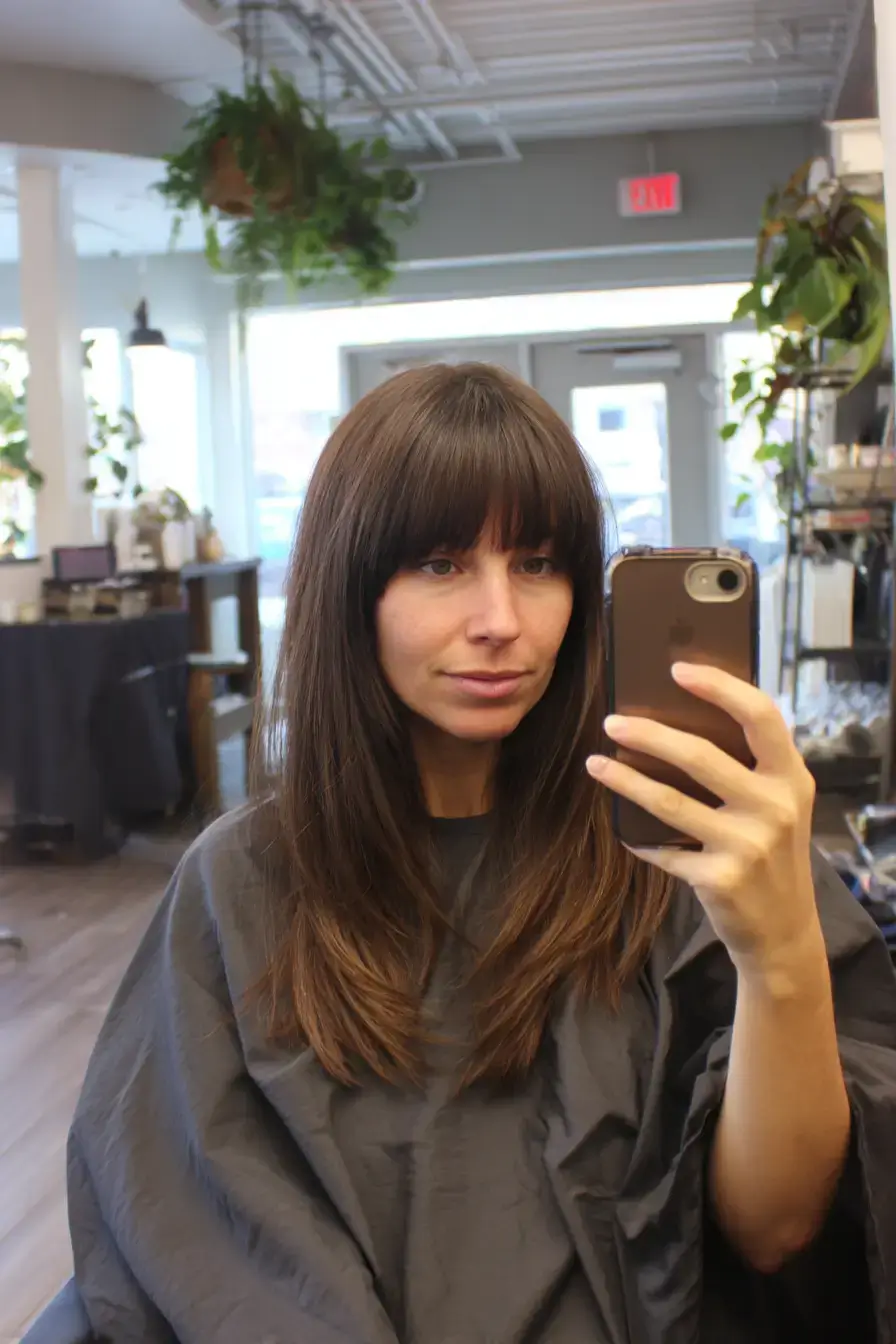
Since the fringe is meant to look full, thick hair handles French bangs well, though the interior needs weight taken out so it lies down. On dry hair I cut a deep section at the brow, then point cut the underside and leave the surface alone. Oval and oblong faces with thick density and 1A to 2B texture suit it. Use a flat brush and smoothing cream to blow-dry down. Trim every three weeks.
6. Lob With Wispy French Bangs
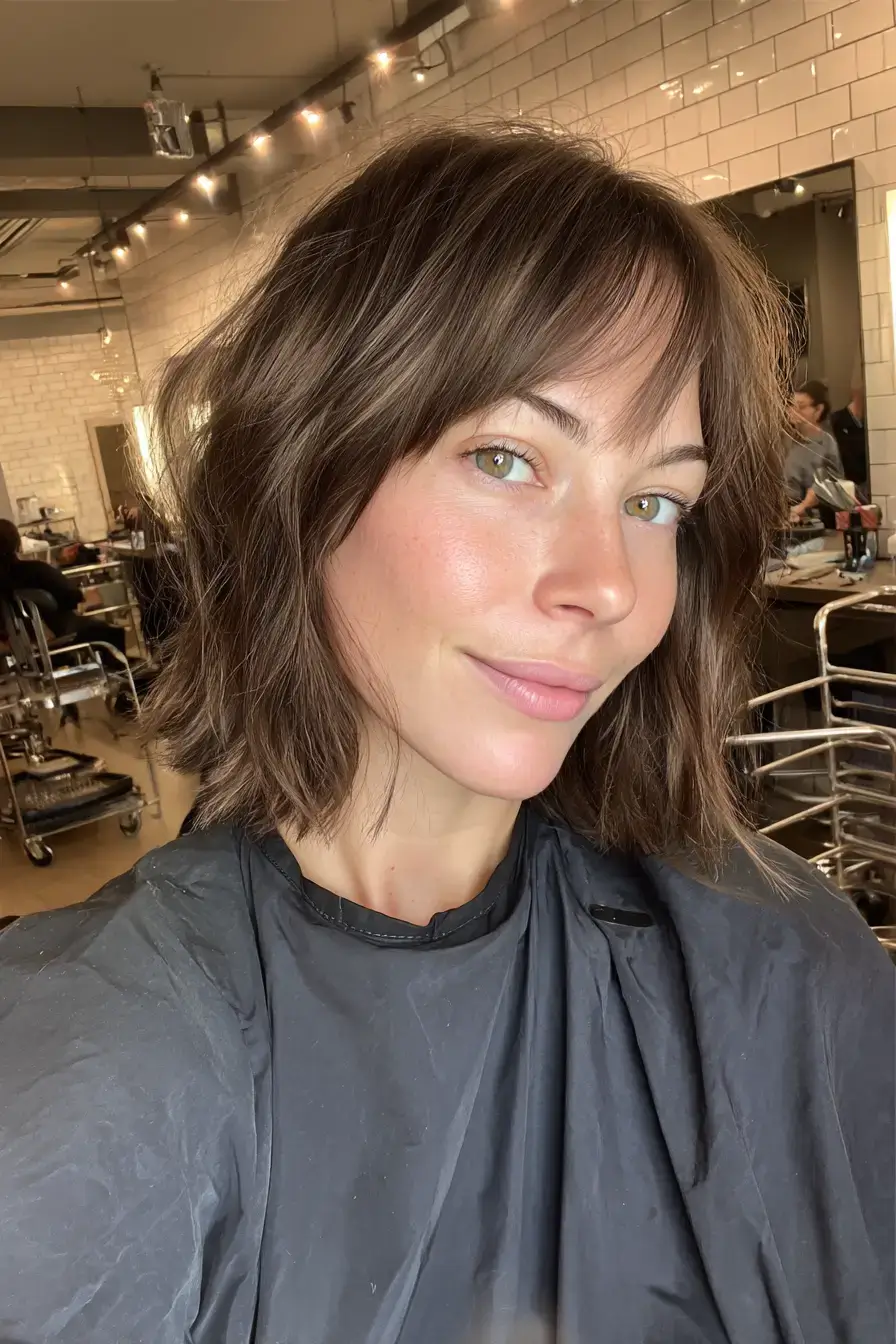
On a lob, wispy French bangs combine a soft, thinned fringe with a perimeter at the collarbone. Working dry, I cut the perimeter, then take a deep triangle section, cut it at the brow and point cut until the fringe looks soft. It suits fine to medium density and 1A to 2B texture on oval and square faces. Dry the fringe down and smooth the lob with a round brush. Trim every five weeks.
7. French Bangs for Wavy Hair
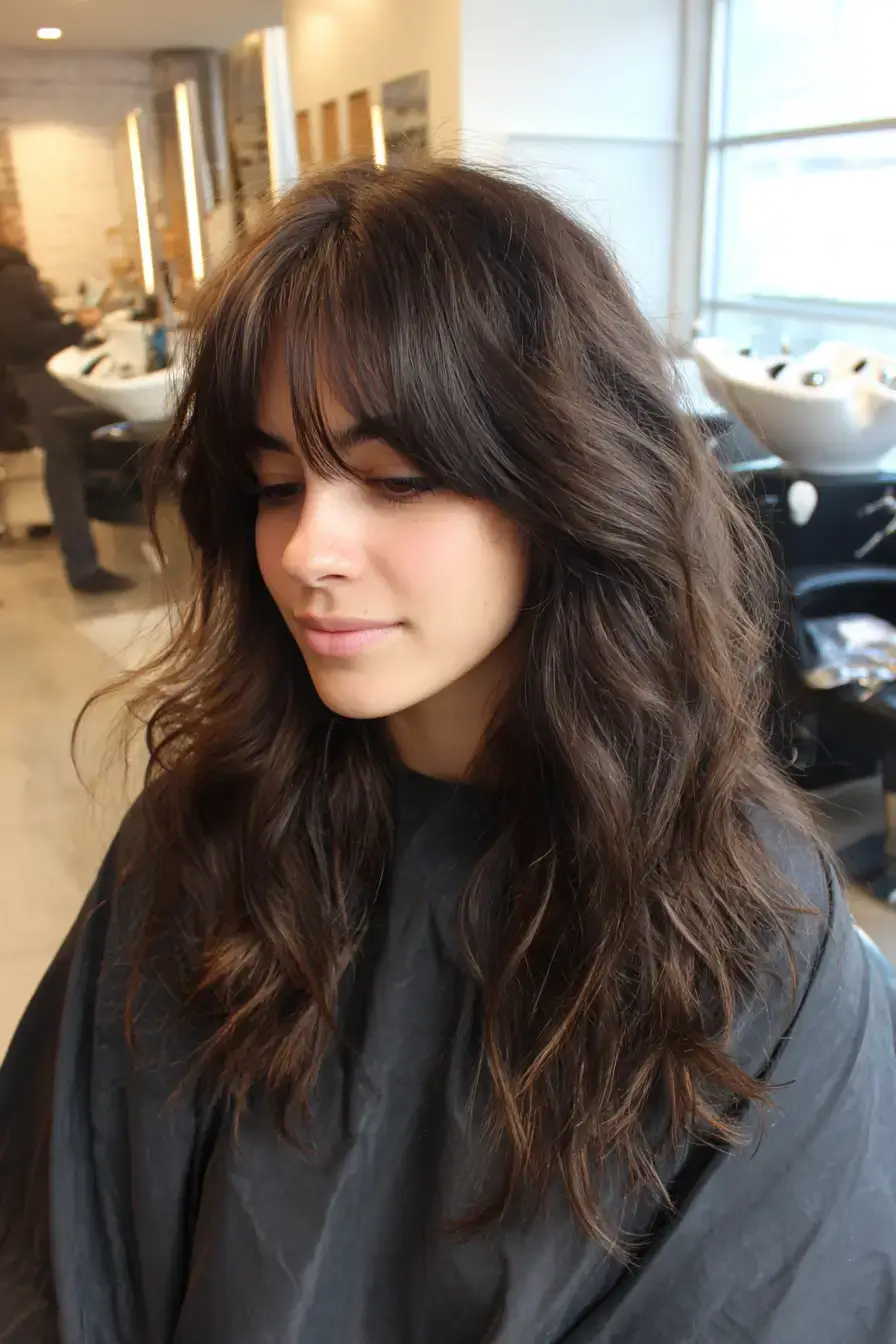
On wavy hair I cut French bangs half an inch below the brow, since the bend pulls them up. Working dry from a deep section, I point cut the ends and check the length again after the wave sets. Oval and heart faces with medium density and 1C to 2B texture suit it. Work a light cream into the fringe and air-dry it with the rest, or dry just the fringe with a flat brush. Trim every four weeks.
8. French Bangs for Over-50 Women
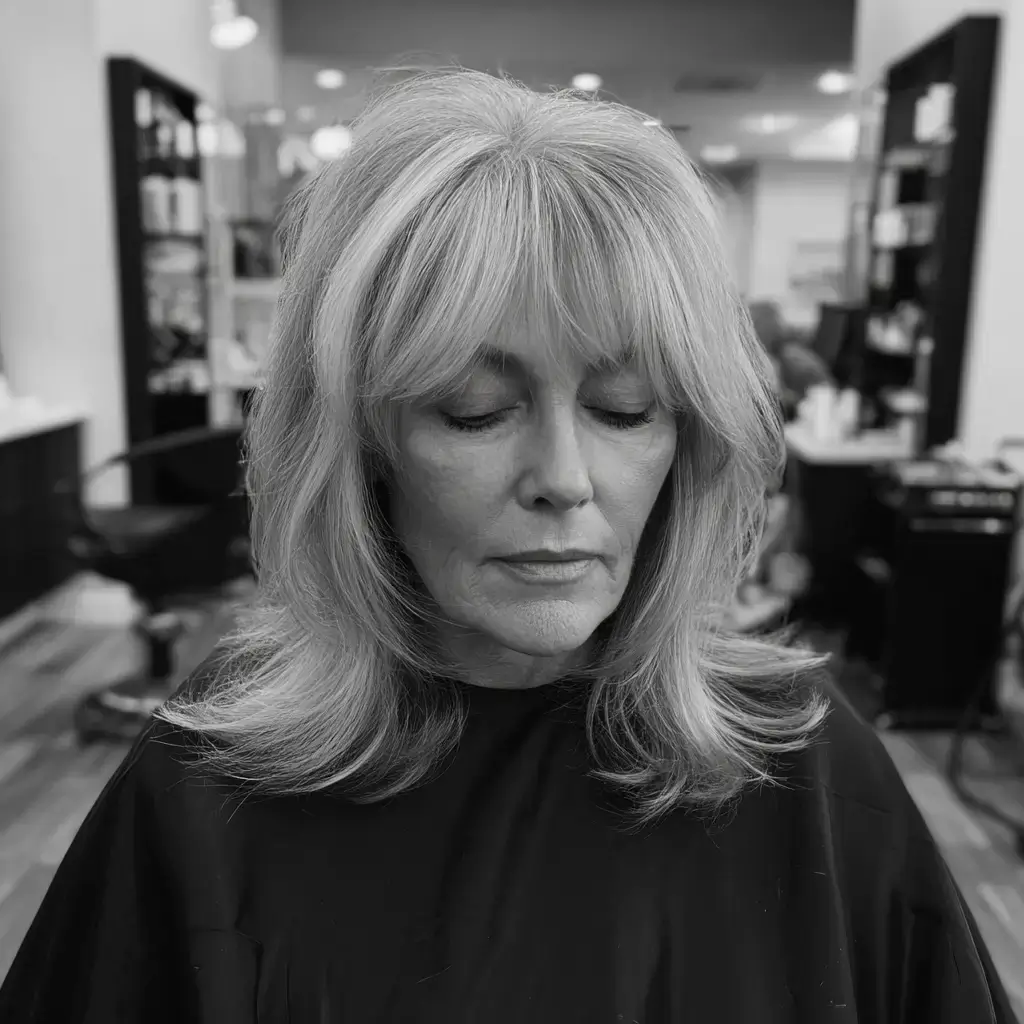
For women over 50, French bangs work when the fringe lands just below the brow and the corners soften out toward the temple. On dry hair I cut a deep section, point cut the outer third and keep the center fuller. Most face shapes work, with fine to medium density and 1A to 2A texture. Use a flat brush to blow-dry down, with volumizing mousse at the root. Trim every four weeks.
9. French Bangs Long Hair With a Blunt Perimeter

French bangs long hair with blunt ends creates two clean lines, at the brow and at mid-back. Working dry, I cut the perimeter blunt, then cut the fringe with the shears flat from a deep triangle section. Oval and heart faces with medium to thick density and 1A to 1C texture suit it. Use a flat brush to dry the fringe down and flat iron the lengths. Trim every six weeks.
10. Pixie With French Bangs
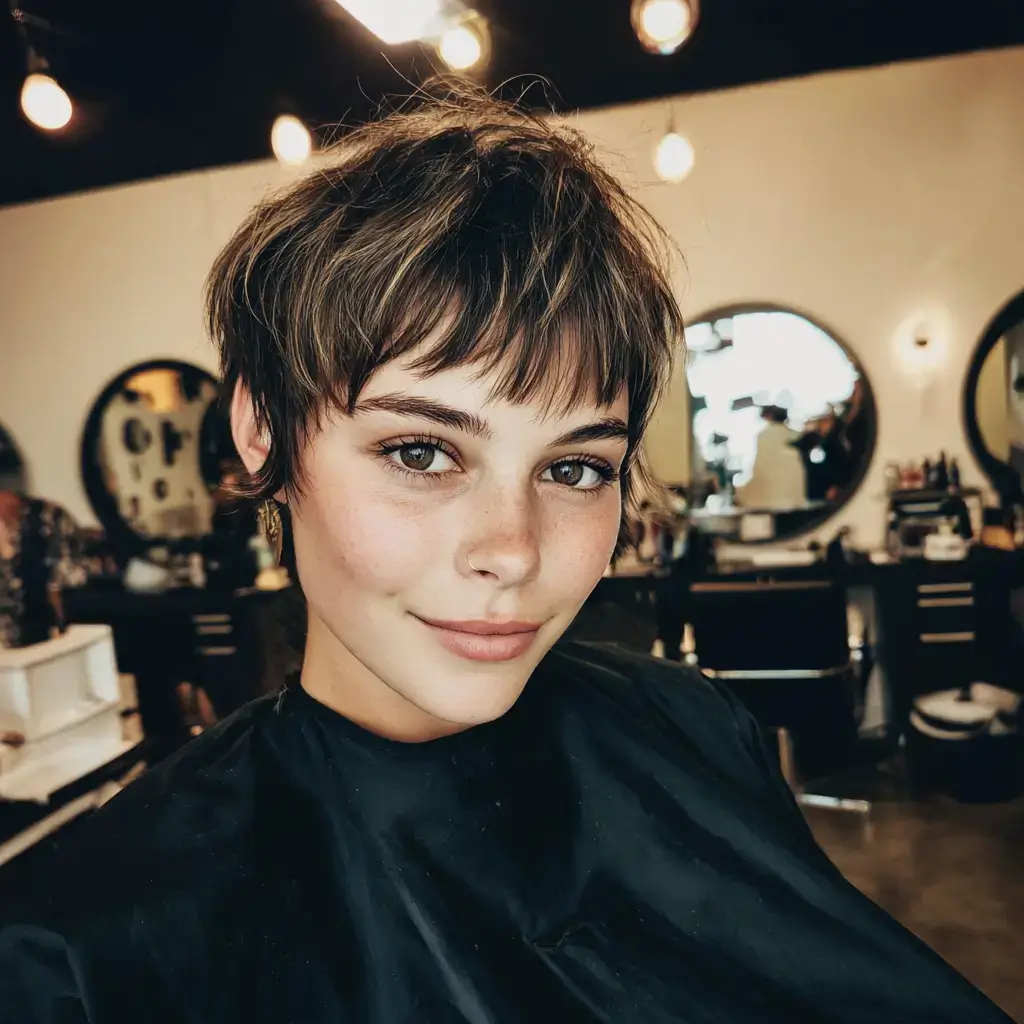
On a pixie, French bangs are the fullest fringe a short cut can hold, taken from a deep section and cut straight at the brow. On dry hair I taper the nape and sides and cut the top to three inches, then cut the fringe full and soften its corners. It suits medium to thick density and 1A to 2A texture on oval and heart faces. Use a flat brush to dry the fringe down. Trim every three weeks.
11. Layered Wispy French Bangs
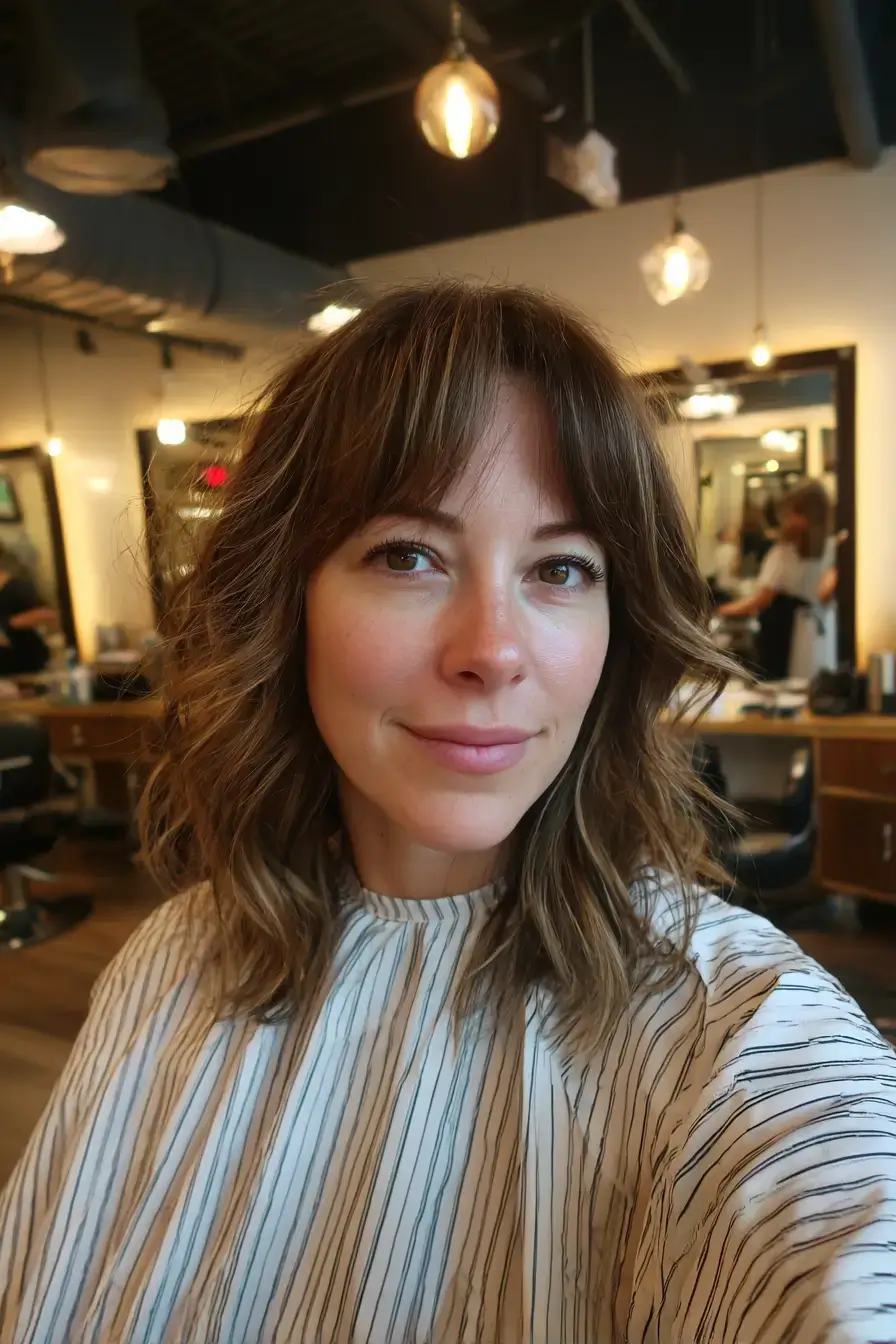
With wispy French bangs with layers, a thinned fringe links into cheekbone layers so the front looks like one soft piece. Working dry, I cut a deep section at the brow, point cut it thin, then cut layers from the cheekbone downward. Round and square faces with fine to medium density and 1B to 2B texture suit it. Dry the fringe down and the layers back off the face. Trim every five weeks.
12. Round-Face French Bangs
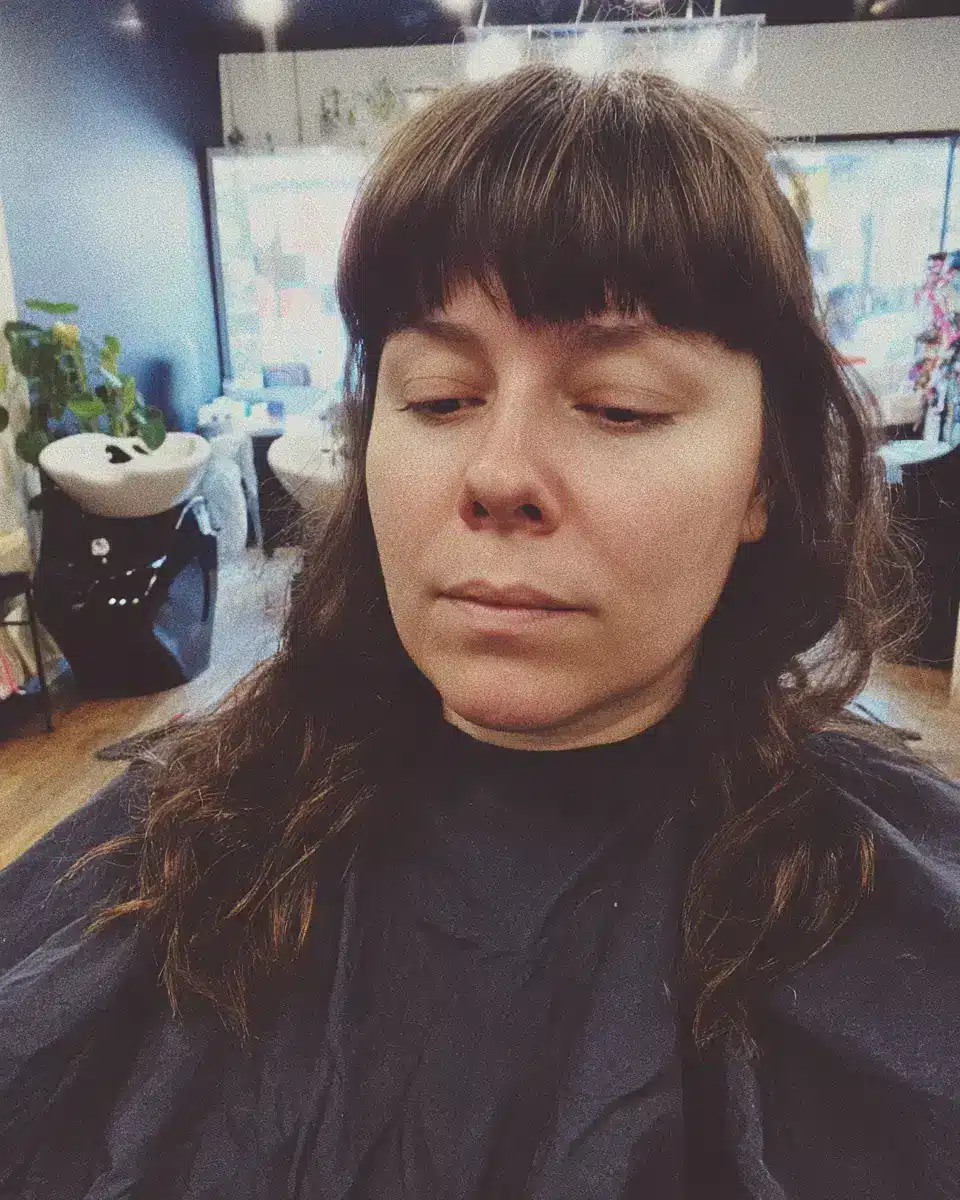
French bangs suit a round face when the sides are cut a little longer, which lengthens the shape instead of widening it. On dry hair I cut the center at the brow from a deep section, then angle the sides down beyond the arch. It suits medium density and 1A to 2B texture. Dry the center down and the sides back off the face. Trim every four weeks.
13. French Bangs for Curly Hair
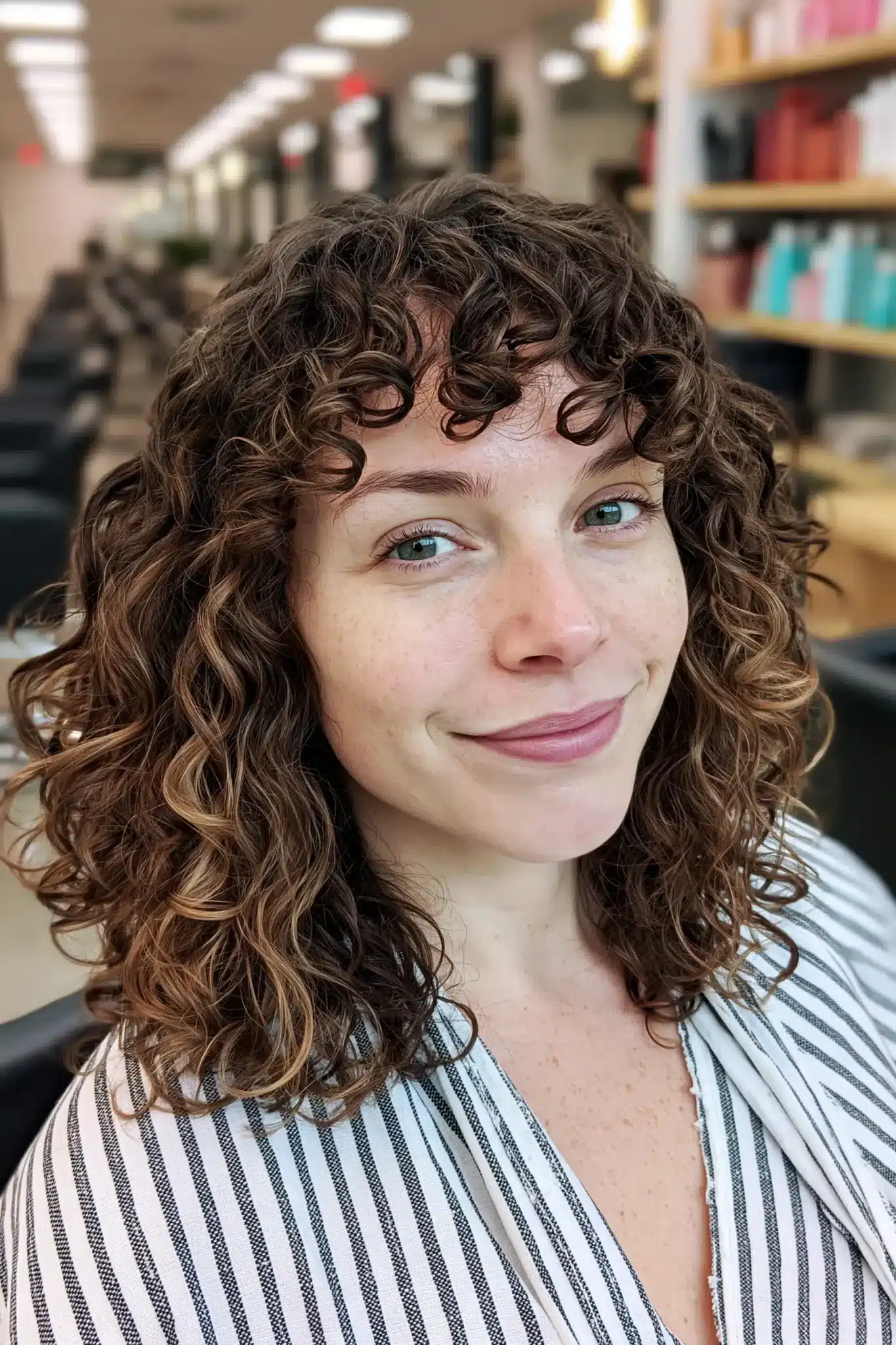
French bangs work on curly hair when every curl is cut dry from a deep section, an inch and a half longer than the goal. I go curl by curl at the bridge of the nose and let the fringe spring up to the brow. Oval and heart faces with medium to thick density and 3A to 3C texture suit it. Use curl cream and diffuse the fringe forward on low. Trim every five weeks.
14. French Bangs on Copper Hair

Copper with French bangs places the brightest color across eye level. On dry hair I cut the fringe at the brow from a deep section and soften the corners, then put a level seven copper on the root and a demi through the ends. It suits medium density and warm skin tones. Dry the fringe down and finish using shine serum. Refresh the tone every five weeks; trim the fringe every four.
15. Air-Dry French Bangs Long Hair
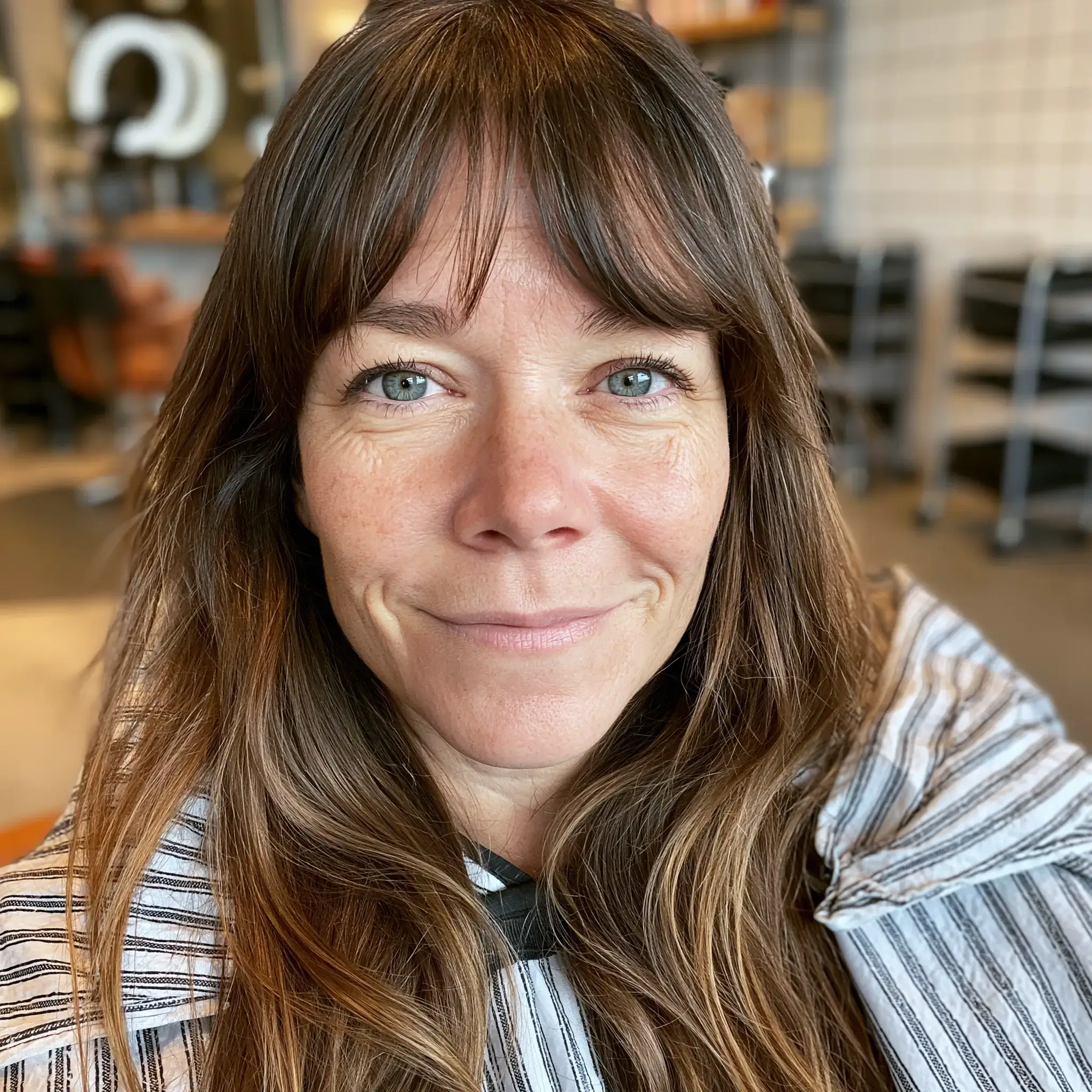
For French bangs long hair that air-dries, the fringe has to be point cut so it lies flat with no brush. Working dry, I cut a deep section at the brow, point cut the ends, then add one long layer at the collarbone. Any face shape works, with fine to medium density and 1C to 2B texture. Put a light cream on the damp fringe, press it down with your fingers and leave it alone. Trim every five weeks.
16. Pixie Bob With Wispy French Bangs
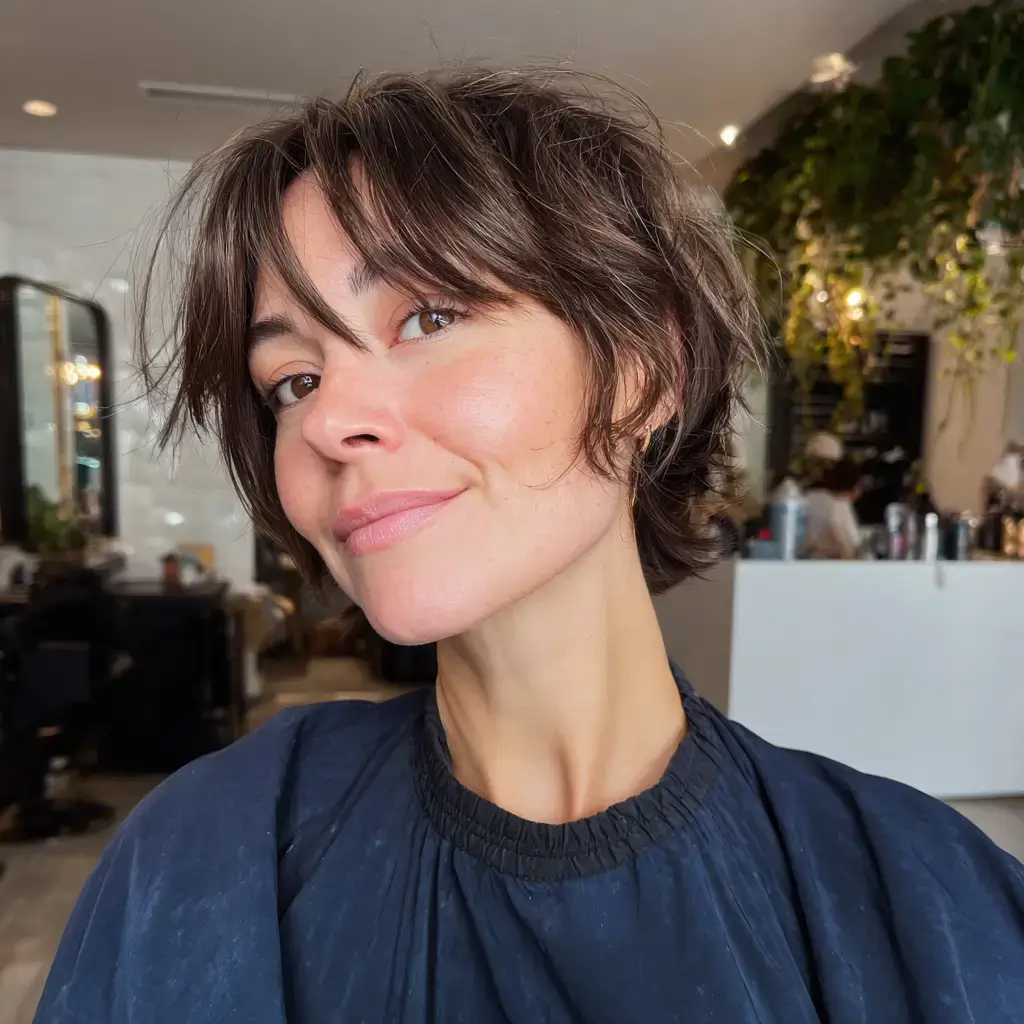
On a pixie bob, wispy French bangs put a thinned fringe over a graduated nape and a front that ends at the earlobe. On dry hair I taper the nape, graduate up to the occipital and angle the front to the earlobe, then cut the fringe from a deep section and point cut it thin. It suits fine to medium density and 1A to 2A texture on oval and heart faces. Dry the fringe down and the front under. Trim every four weeks.
17. Shag With French Bangs

This shag with French bangs sets razored crown layers with a full fringe that blends into the shortest layer. Working dry, I razor the crown and point cut the ends, then cut the fringe at the brow from a deep section. Oval and square faces with medium to thick density and 1B to 2B texture suit it. Rough-dry using sea salt spray and brush the fringe down. Trim every five weeks.
18. Oval-Face French Bangs
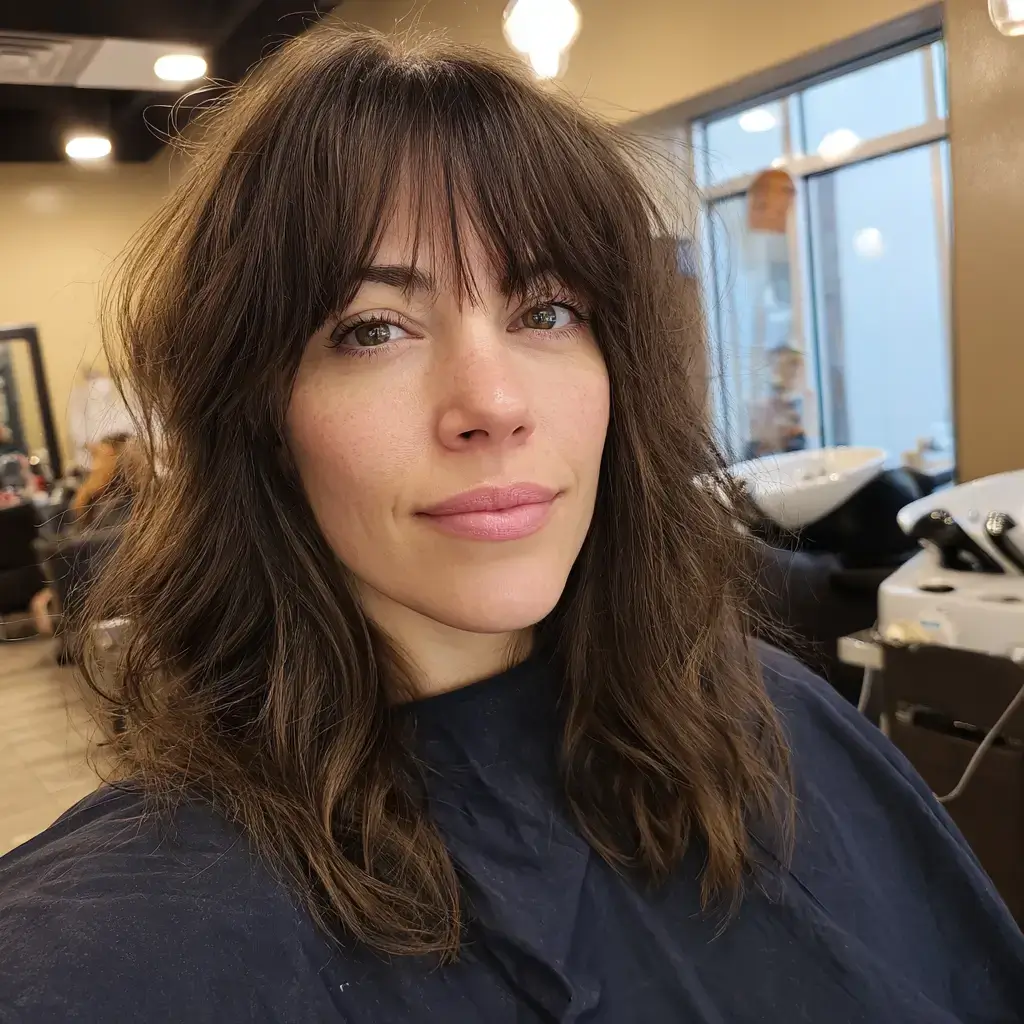
French bangs work at any depth on an oval face, so I cut the fullest version from a section that runs back to the crown. With the shears flat, I cut at the brow on dry hair and soften just the corners. It suits medium to thick density and 1A to 2A texture. Use a flat brush to blow-dry down and set it with a light spray. Trim every four weeks.
19. French Bangs on Dark Brunette Hair
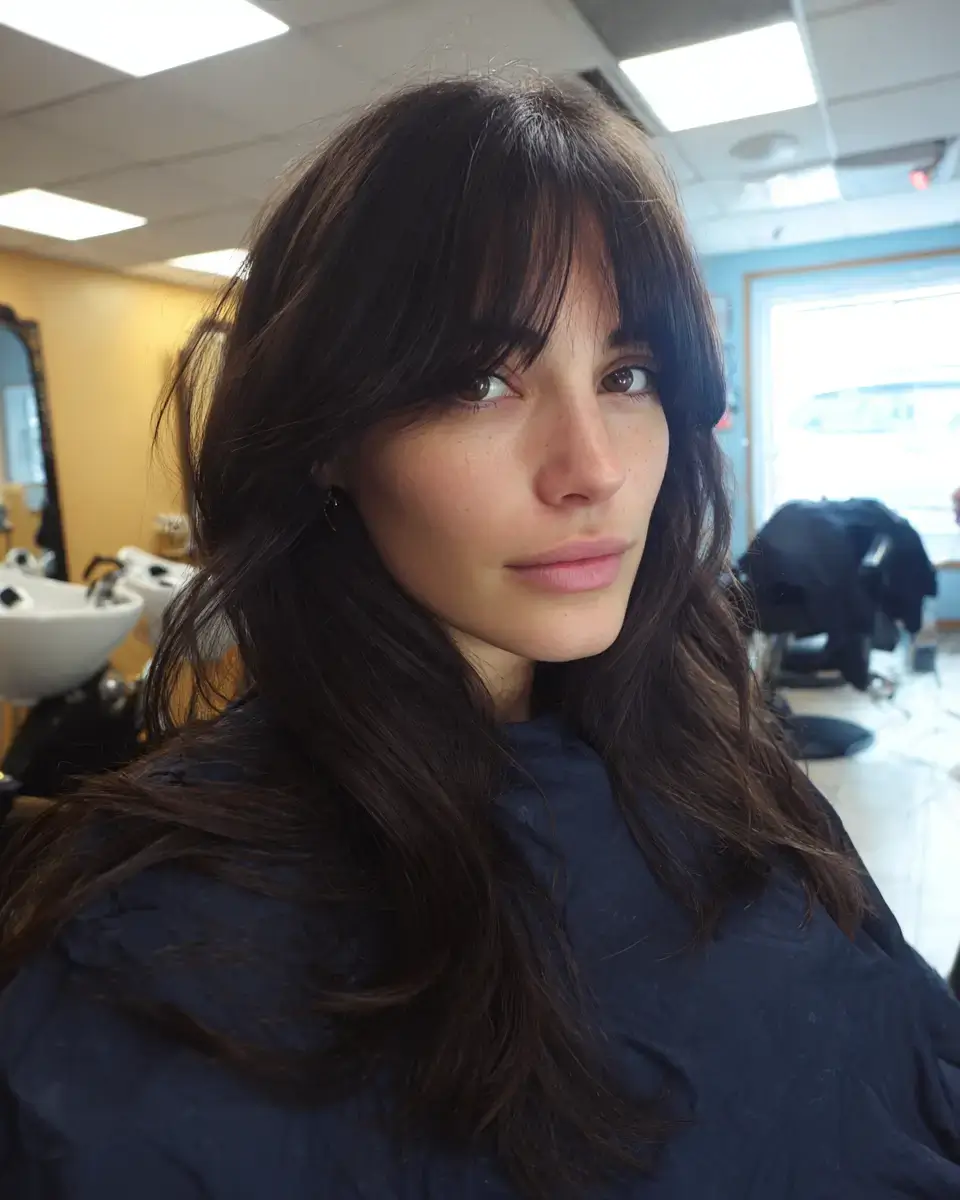
Dark brunette French bangs look like a single solid line across the brow against the skin. With the shears flat, I cut the fringe from a deep section on dry hair and soften the corners, then apply a level four demi root to end. It suits medium to thick density and cool or neutral skin tones. Dry the fringe down and finish using serum. Refresh the tone every eight weeks.
20. Balayage French Bangs Long Hair

With French bangs long hair and balayage, I leave the fringe a shade darker than the ends so it works as a frame. On dry hair I cut the fringe at the brow from a deep section, then hand paint the lengths to level nine while the fringe stays at seven. It suits medium density and 1A to 2B texture. Dry the fringe down and the lengths smooth. Refresh every twelve weeks.
21. Wispy French Bangs for Over-60 Women
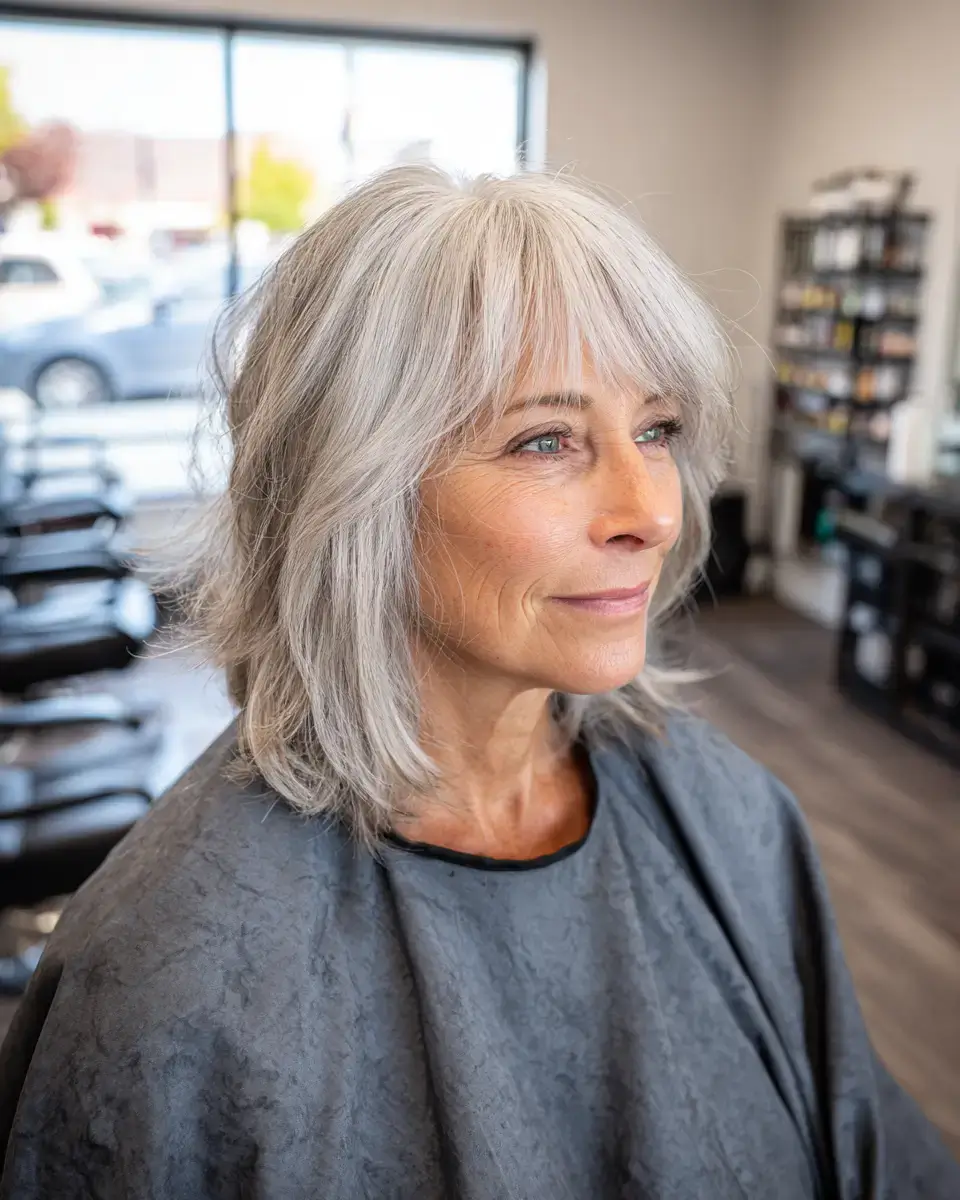
For women over 60, wispy French bangs soften the forehead but keep enough weight that the fringe won’t vanish as the hair gets finer. Working dry, I cut a deep section at the brow and point cut lightly. Any face shape works, with fine to medium density and 1A to 2A texture. Use a flat brush to blow-dry down, with mousse at the root. Trim every four weeks; gloss every eight.
22. Sleek Blunt Lob With French Bangs
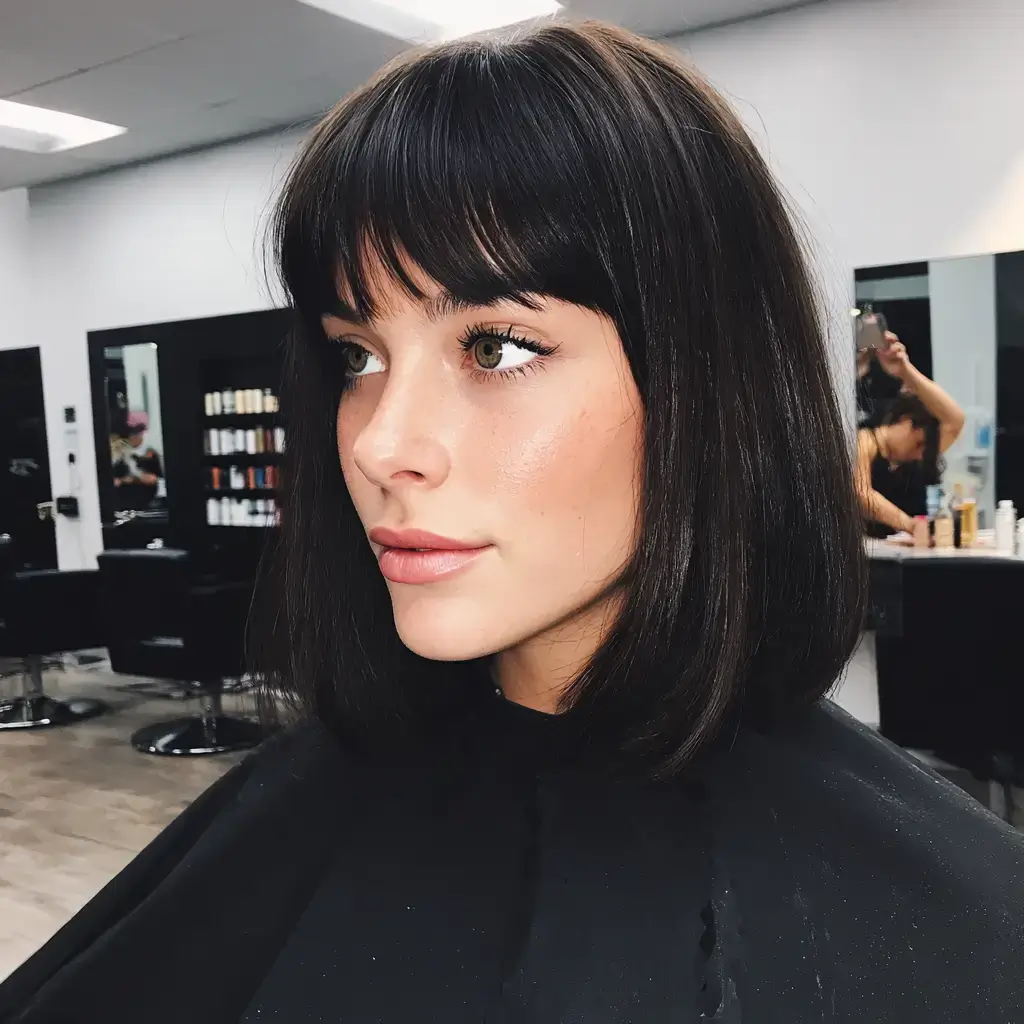
This sleek blunt lob with French bangs puts a full fringe against a collarbone-length perimeter with no layers. With the shears flat, I cut the perimeter on dry hair, then cut the fringe at the brow from a deep section. Oval and heart faces with medium density and 1A to 1C texture suit it. Use a paddle brush to blow-dry flat, flat iron the lengths and brush the fringe down. Trim every five weeks.
23. Square-Face French Bangs
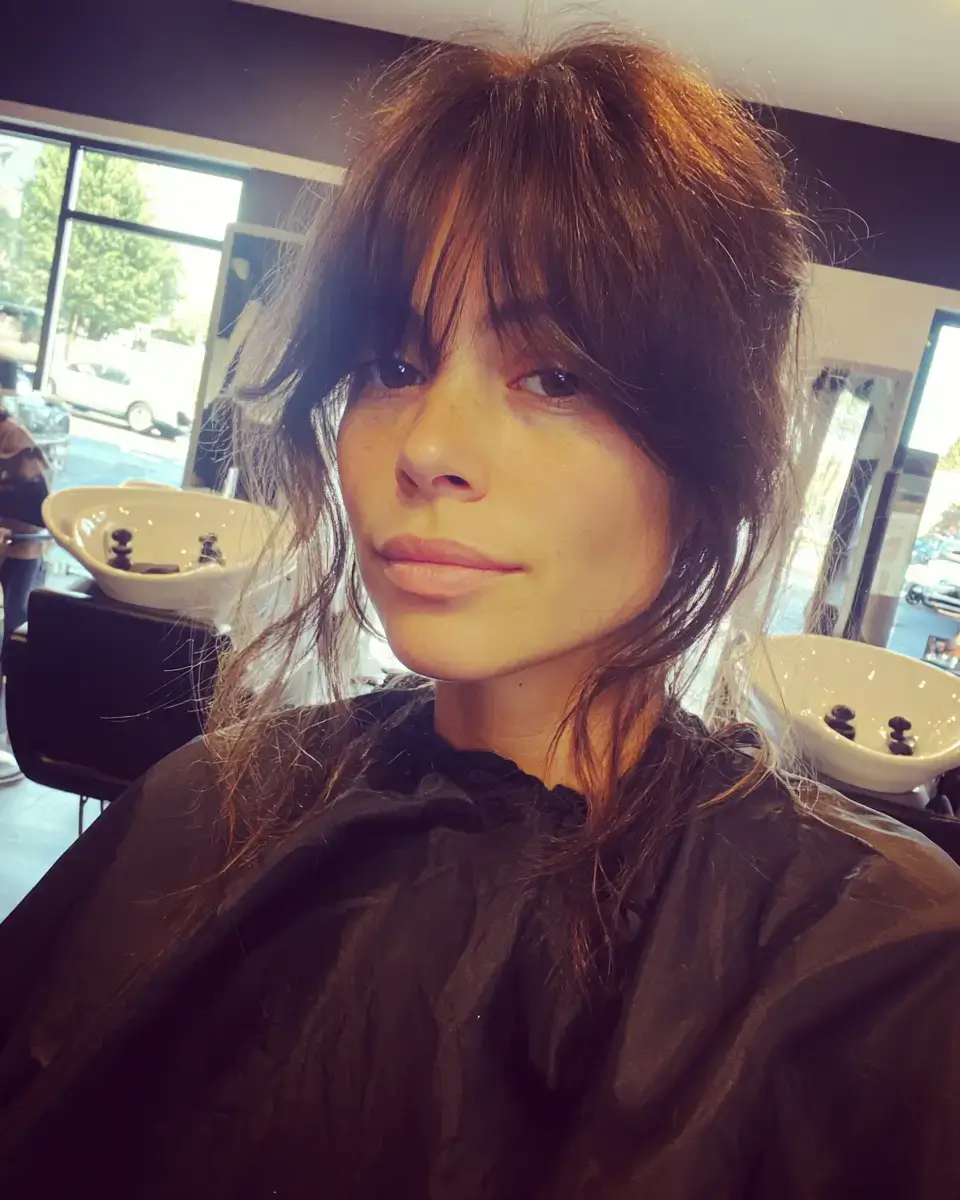
French bangs soften a square jaw when the fringe has a slight curve and the corners drop below the arch. On dry hair I cut the center at the brow from a deep section, angle the sides down and point cut the corners. It suits medium density and 1A to 2B texture. Use a flat brush to blow-dry down. Trim every four weeks.
24. French Bangs on Platinum Hair
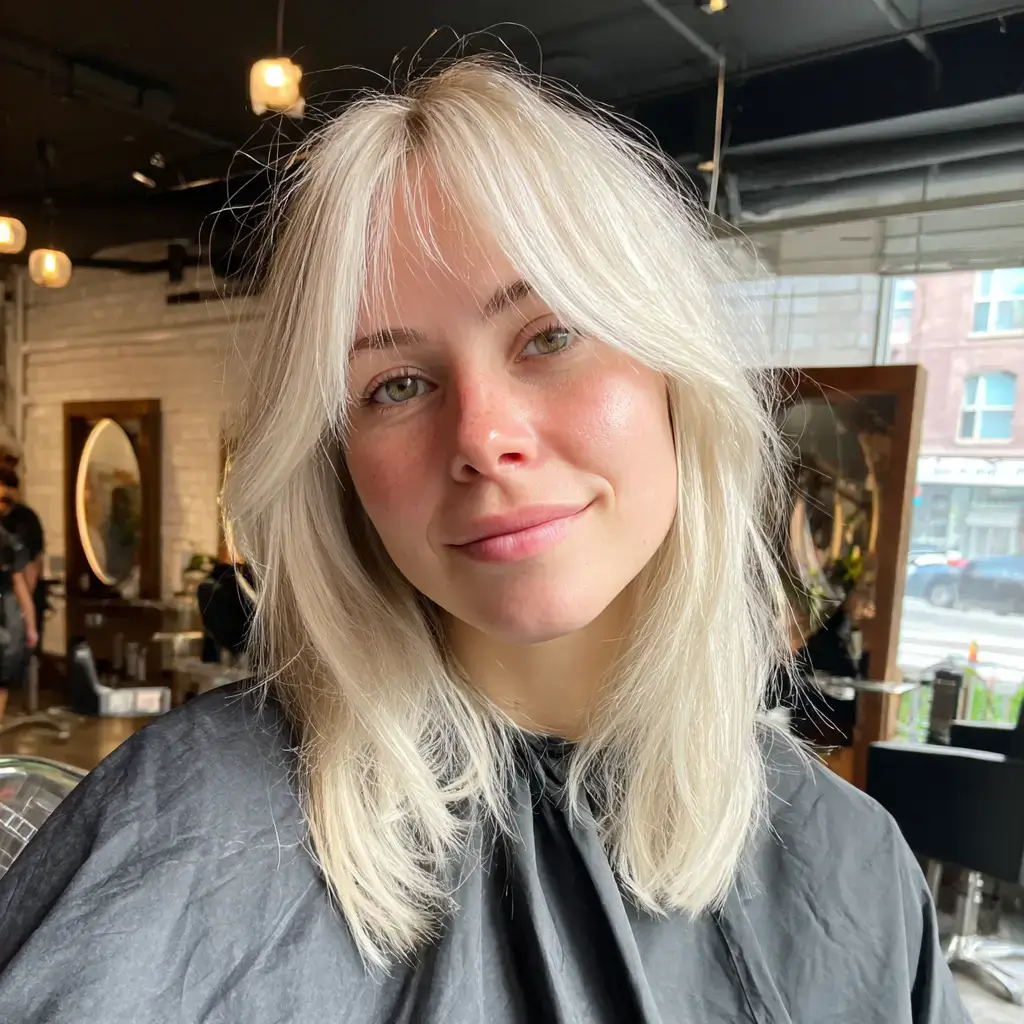
On platinum, French bangs get cut after toning, since lightening changes the way a full fringe sits. I lift to level ten and tone violet, then cut the fringe at the brow from a deep section on dry hair. It suits medium density and cool skin tones. Dry the fringe down and use a bond builder once a week. Retouch every five weeks.
25. Long Straight Hair With Wispy French Bangs

On long straight hair, wispy French bangs hold onto the deep section but thin the ends so the fringe has movement. Working dry, I cut at the brow from a triangle running back to the crown, then point cut until single strands come apart. Oval and oblong faces with fine to medium density and 1A to 1C texture suit it. Use a flat brush to dry the fringe down and flat iron the lengths. Trim every four weeks.
If this fits, also read short hair with bangs and inverted bob haircuts.
French bangs carry their look from the center that dips slightly and the sides that soften, because that soft middle is what keeps them from reading heavy. A round brush through the fringe is the only step.