Quick Style Snapshot
Time: A mantel refresh — new art, candles, a stack of books, some logs in the firebox — takes 1 to 3 hours. That’s it. If you’re painting the surround, adding floating shelves, or building out alcove cabinetry, budget 1 to 2 days, more if you’re waiting on paint to cure between coats.
Cost: I did my first fireplace refresh for about $180 — a thrifted mirror ($40), a bundle of birch logs ($25), two ceramic vases from a home store clearance section ($30), and a gallon of paint for the surround ($45), plus candles. A more polished version — large-scale art or a real mirror, sconces, new shelving, a professional mantel repaint — runs $300 to $1,500. Full built-ins, a stone or tile surround replacement, or an electric insert push you past $1,500 fast, and that’s before labor if you’re not doing it yourself.
Space size: Doesn’t matter much. Small rooms actually benefit from a fireplace focal point because it gives your eye one place to land instead of bouncing around. Larger rooms can extend the fireplace into a full wall moment with built-ins on either side.
Skill level: Styling the mantel is beginner-friendly — anyone can do it in an afternoon. Painting the surround or hanging floating shelves is intermediate. Alcove built-ins or swapping a surround for stone or tile is expert territory, or at least “hire someone” territory.
Seasonal appeal: Year-round, and that’s the beauty of it — you’re not redecorating the whole room every season, just rotating what’s on the mantel.
What Style Direction Actually Works Right Now
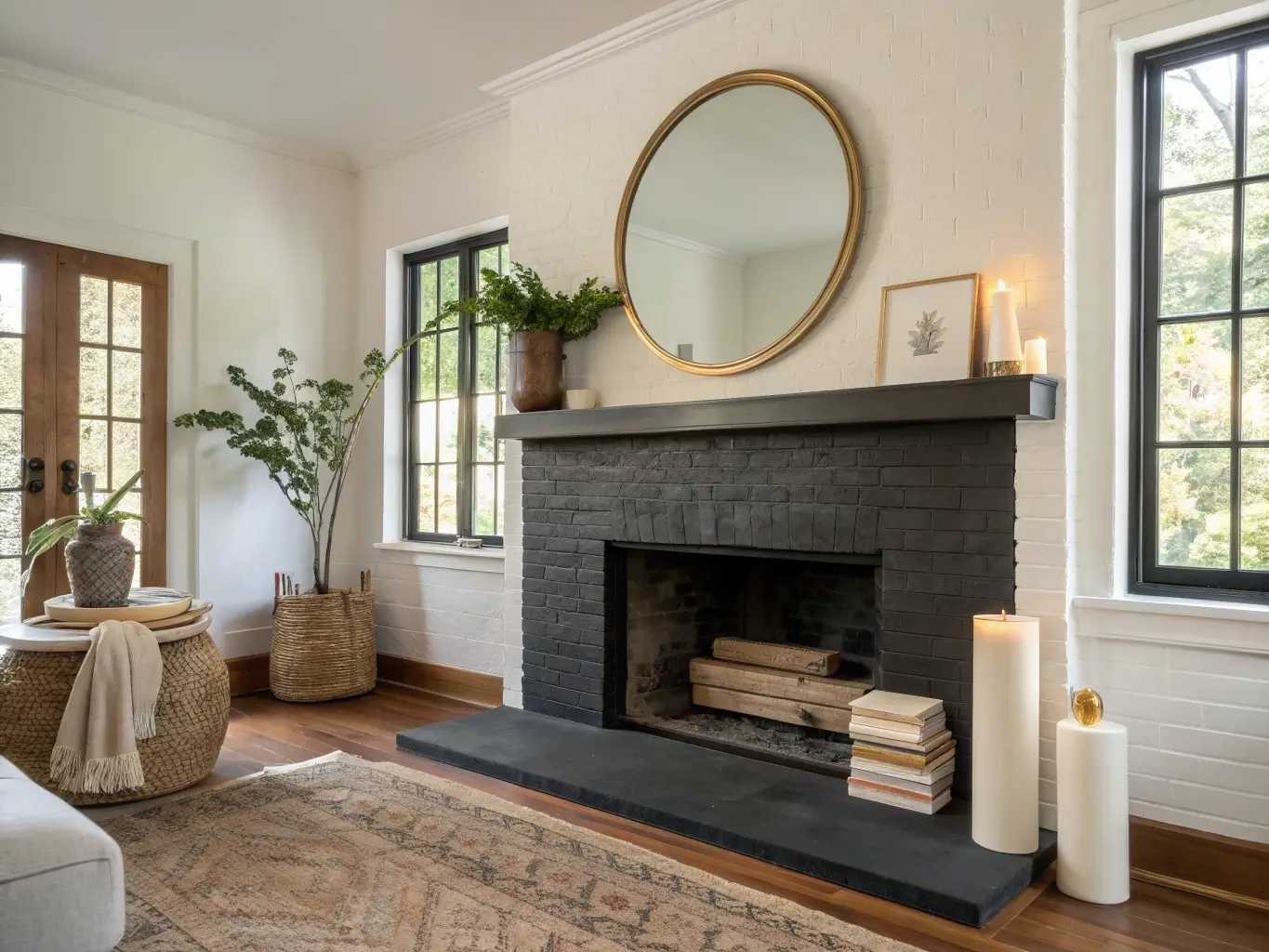
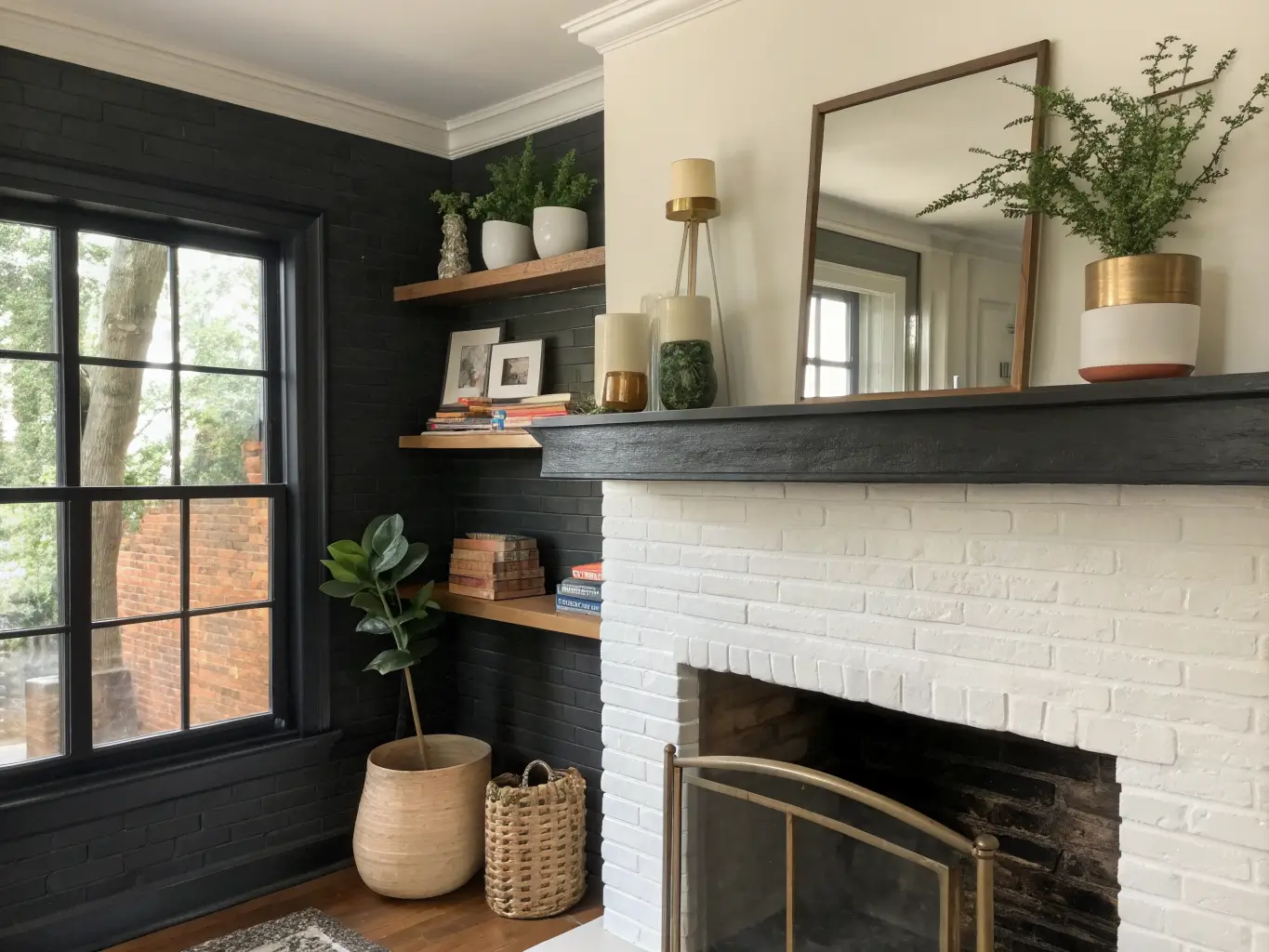
The fireplace styling that reads current isn’t ornate. It’s modern organic and transitional — clean lines, natural texture, a little warmth. Think painted plaster surrounds, a warm white or greige wall, brass candlesticks next to a raw wood log basket. Traditional fireplaces (brick, carved wood mantels) are getting a twist rather than a gut renovation — people are painting old brick surrounds black or a deep charcoal instead of ripping them out.
Colors that are working: warm white, greige, charcoal, black, muted green, deep blue.
Materials showing up again and again: plaster, painted wood, stone, brick, jute, brass, raw wood.
This is for you if you want a focal point without a renovation — renters with a nonworking fireplace, homeowners who don’t want to touch the masonry, anyone who wants the living room to have a “moment” without ripping out drywall.
The Must-Have Pieces
Every fireplace styling that works has one thing: a clear hero piece. Everything else supports it.
Pick one anchor:
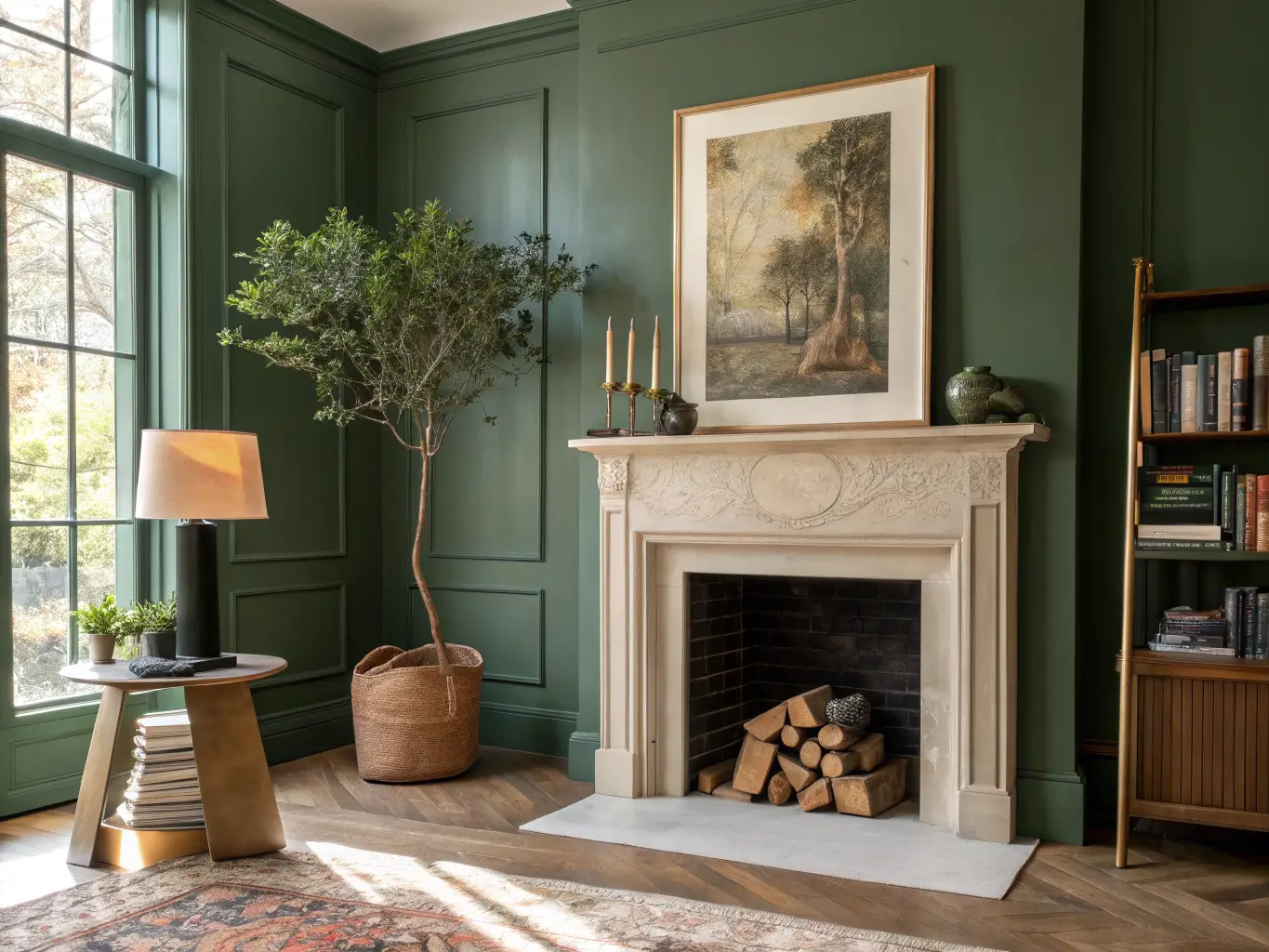
– An oversized mirror above the mantel (my favorite move — it bounces light and doubles the room visually)
– A large piece of art
– A statement mantel shelf, especially a thick raw-wood slab if your current one’s thin and builder-grade
– A painted or plastered surround that contrasts with the wall
Then layer in the supporting cast:
– Candles (pillar candles in varying heights, not the tiny votive kind that disappear visually)
– A table lamp if the mantel is deep enough
– Ceramic vases, stacked books, a small sculptural object
– Houseplants or dried stems — I keep a small olive branch stem in a stoneware vase on mine because live plants near a working flue is a bad plan
– A woven log basket, even if you never burn anything
For the firebox itself, if it’s decorative or unused:
– Decorative logs (birch logs are the easiest — they look intentional, not like you forgot to clean out ash)
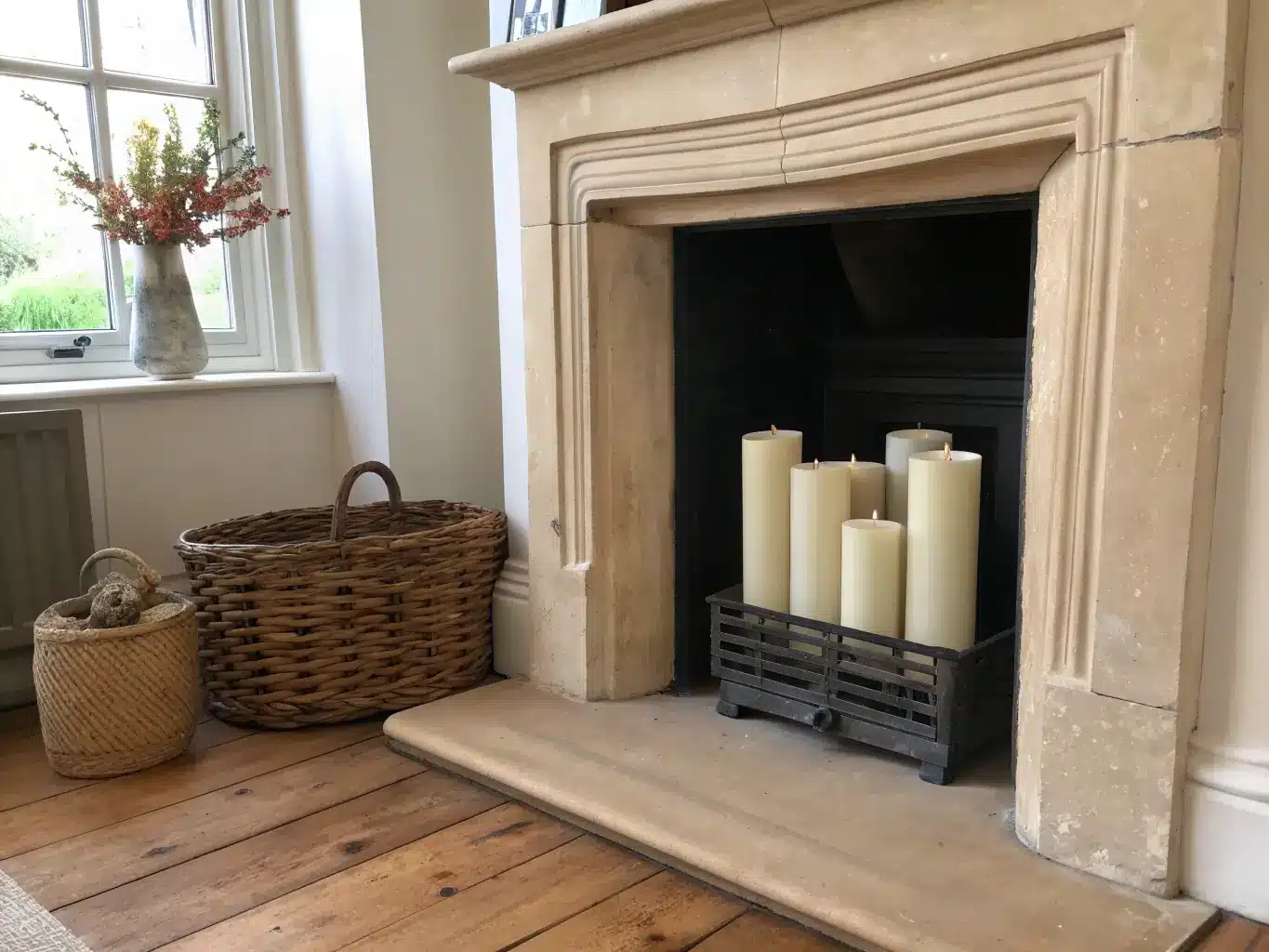
– A cluster of pillar candles set directly on the firebox floor
– A stack of books or a large basket
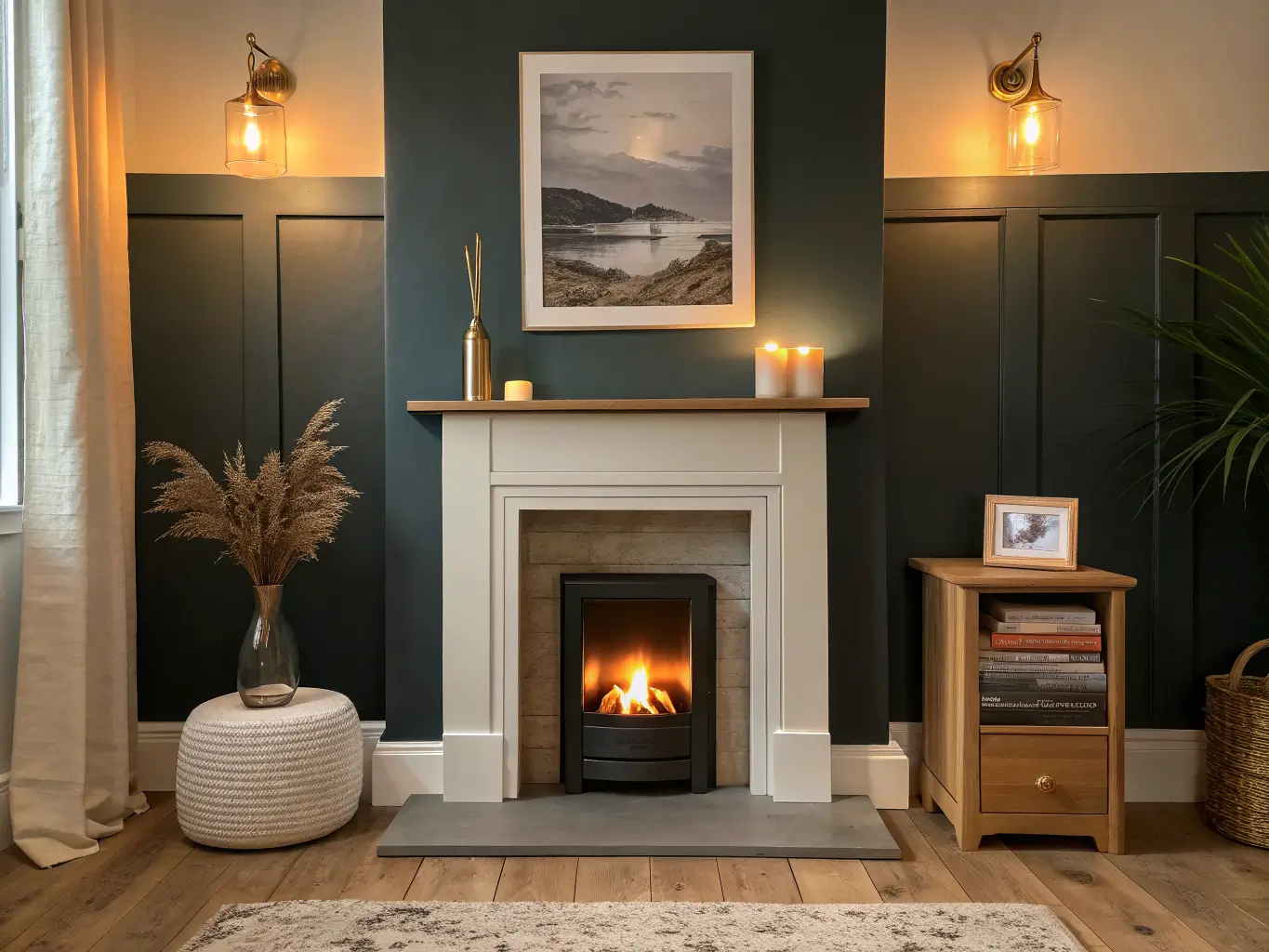
– An LED flame insert if you want ambiance without the mess
Architectural add-ons, if you’re ready for a bigger project: alcove shelving, floating shelves, or full built-ins flanking the fireplace. This is the move if your fireplace is on an otherwise blank wall and the room needs more structure.
Optional Enhancements Worth Considering
Once the basics are handled, this is where you make it feel like yours instead of a showroom.
Seasonal accents — swap these out, don’t buy new furniture every quarter:
– Fall: small pumpkins, dried wheat stems, warm-toned candles
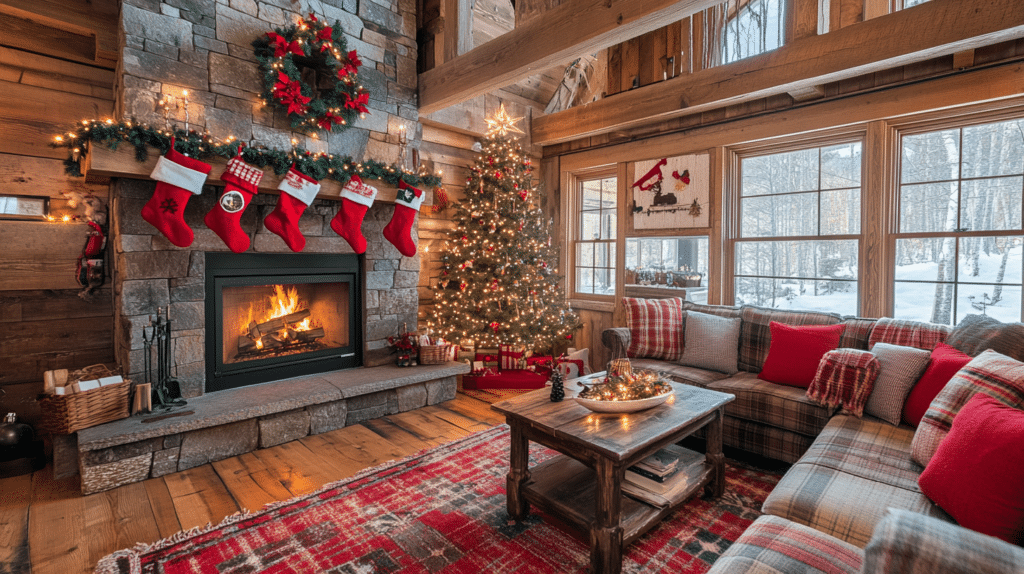
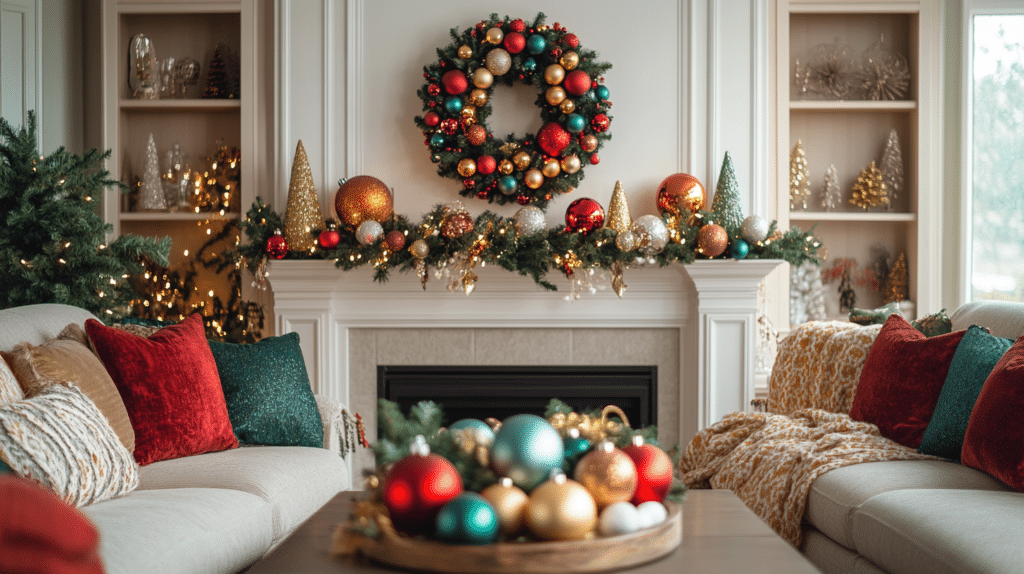
– Winter: a simple garland, string lights tucked into greenery, white pillar candles
– Spring/summer: fresh or dried florals in a stoneware vase, lighter linen textures nearby
Organic touches
that soften a hard stone or brick surround: driftwood on the mantel, a small potted succulent, a jute rug in front of the hearth, raw-edge wood shelving instead of painted MDF.
Metallic accents
for contrast: brass candlesticks against a matte black surround are close to foolproof. A mercury glass mirror also does quiet, expensive-looking work without costing much — I found mine at an estate sale for $35 and it’s done more for that room than anything else I own.
How to Actually Put It Together
Layer vertically, back to front
Tallest element goes at the back — that’s your mirror or art. Medium-height objects (vases, a lamp, a stack of three books) go in front of that. Small stuff — candles, a single small object — goes at the edges. This is the difference between a mantel that looks curated and one that looks like a shelf where mail accumulates.
Get the scale right
This is where most people mess up. A small piece of art over a big mantel just looks lost. Rule of thumb: your art or mirror should be about 80% of the mantel’s width — close to full width, but with a little breathing room on each side. If your mantel is 60 inches wide, you want art in the 45-to-50-inch range, not a 24-inch frame floating in the middle looking apologetic.
Use contrast to make the surround pop
Paint the surround a different value than the wall behind it. Light wall, dark surround (or the reverse) turns a forgettable fireplace into the room’s actual focal point. I painted my brick surround a flat matte black — Behr’s “Cracked Pepper” in a matte finish — against warm white walls, and it went from “dated builder brick” to the thing everyone asks about when they walk in.
Tie it back to the room
Repeat the fireplace’s dominant material or color somewhere else nearby — a brass lamp near a brass fireplace screen, the same wood tone on your shelves as your mantel. Otherwise the fireplace reads as this separate little diorama instead of part of the room.
Setting Up the Scene: Step by Step
1. Clear everything off the mantel and out of the hearth. Start from zero. You can’t style over clutter.
2. Decide the firebox’s job. Functional (you actually burn fires), decorative-only, or storage/display. This decision changes everything downstream — you can’t put a basket of books in a fireplace you’re regularly using.
3. Choose your anchor first. Mirror, art, or a shelf redo. Don’t buy candles before you’ve picked this.
4. Build outward from there — lamps, candles, books, plants, and firebox filler last.
When I redid mine, I made the mistake of buying all the small stuff first — candles, a little ceramic bowl, a small framed print — before I’d committed to the mirror. Ended up with a mantel full of things that didn’t relate to each other because there was no anchor pulling it together. Had to basically start over once the mirror arrived.
Styling in Action
Start big, then edge downward in scale:
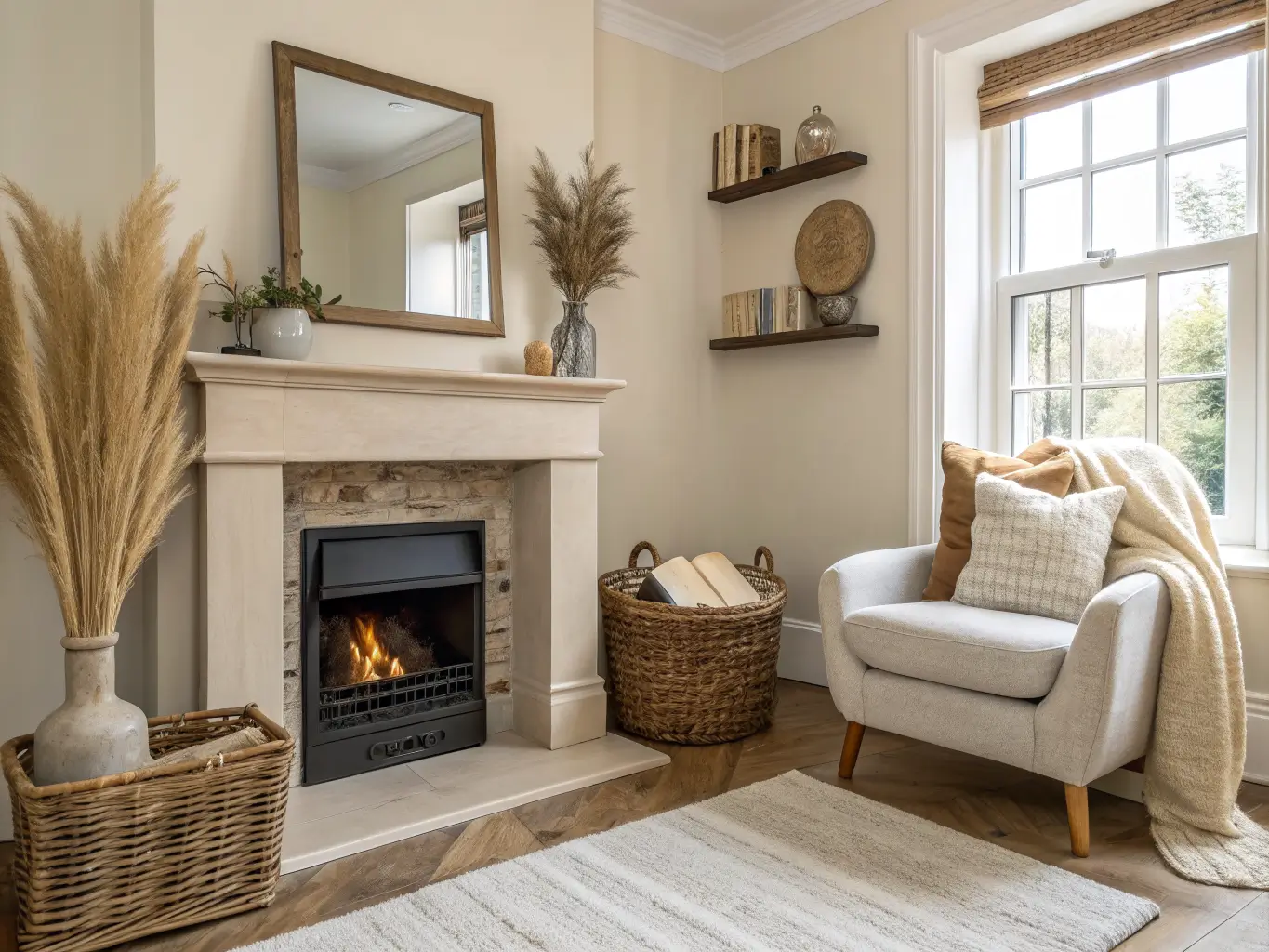
– Largest anchor first — the mirror or art goes up (or gets leaned, if you like that slightly undone look — leaning also makes it easier to swap seasonally)
– Add 2 to 4 medium objects with varied height and texture: a ceramic vase, a small stack of linen-bound books, a lamp if there’s room
– Fill the firebox with intention if it’s unused — logs, a candle cluster, or a low basket
– If the wall still feels bare, that’s your cue for built-ins or floating shelves rather than more mantel tchotchkes
– Address the firebox interior finish — black paint inside the opening reads clean and modern; leaving it its natural sooty brick can look neglected unless that’s clearly the intended rustic look
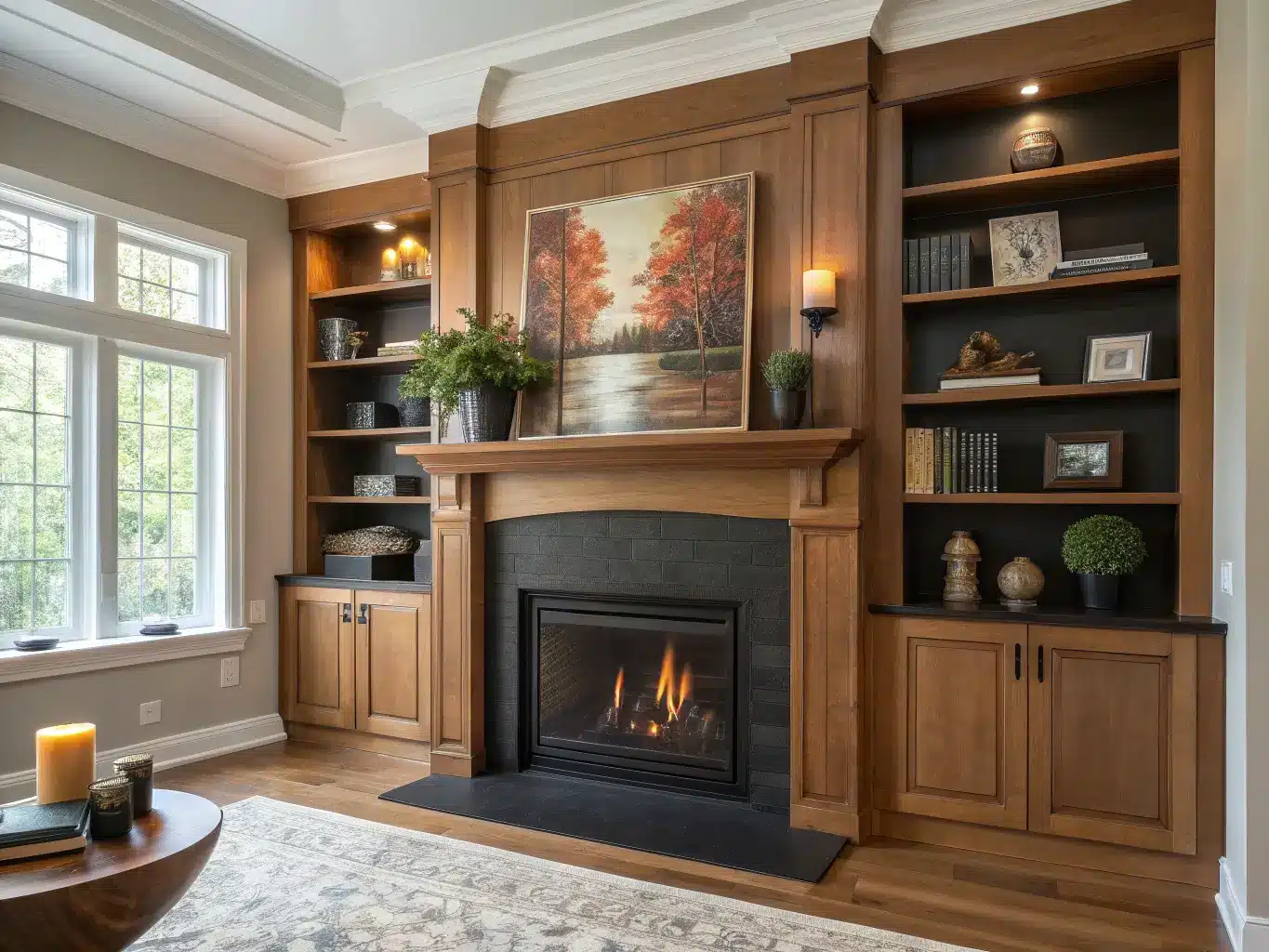
Mistakes I See Constantly (And Made Myself)
– Overcrowding the mantel. Six small objects in a row reads cluttered no matter how nice each one is individually. Fewer, bigger pieces beat many small ones.
– Undersized art or mirror. If you have to squint to find it above a big mantel, it’s too small. Go bigger than feels comfortable.
– No anchor at all — just a random collection of objects with nothing pulling focus. The eye needs one clear stopping point.
– Leaving the firebox empty and dark. This is the single most common thing I see in real living rooms. An empty black hole reads as neglected, not minimal. Fill it.
– Forcing a mismatch. An ornate carved Victorian surround in a stark modern room can work, but only if you commit to the contrast — a couple of modern black candlesticks, clean-lined furniture nearby. Half-committing just looks like an accident.
Keeping It Cohesive Over Time
Stick to 2 to 4 colors total across the fireplace vignette and repeat them elsewhere in the room — art frame, throw pillow, a vase. This is what makes a fireplace feel built into the room’s design instead of decorated in isolation.
Mix textures, but cap it around three: plaster, wood, and brass is a classic combination for a reason. Brick, linen, and ceramic is another one that never looks dated.
One trick I use: keep one side of the mantel slightly more open than the other. Perfect symmetry can look stiff. A tall vase and stack of books on the left, a smaller single object on the right with more negative space (the empty area your eye can rest on) around it — that asymmetry is what makes styled mantels look effortless instead of staged.
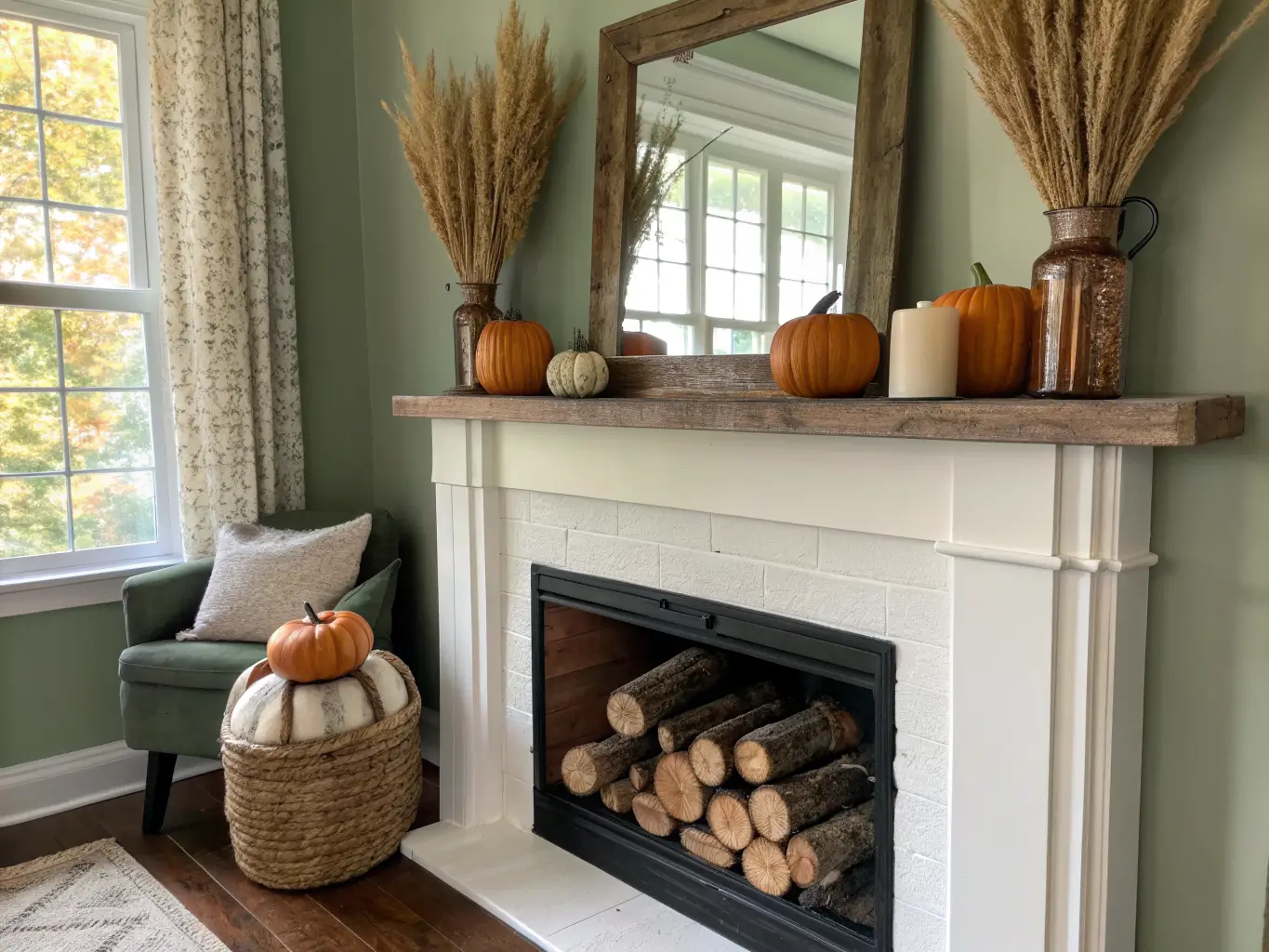
Seasonal and Budget Refreshes
You don’t need to buy new furniture every season. Swap:
– Art or a print in the frame
– Candle colors and scents
– A few dried or fresh stems
– A small garland for winter, nothing more
Budget-friendly upgrades that actually move the needle:
– A can of paint on the surround — under $50, biggest visual impact per dollar you’ll find in this whole list
– Peel-and-stick wallpaper on a fireplace-adjacent alcove wall
– A thrifted mirror instead of a new one (mine was a estate sale find, mentioned above — don’t sleep on estate sales for oversized mirrors, they’re usually underpriced because they’re awkward to transport)
– Secondhand books for that stacked-book look, spines turned in for a quieter, more monochrome effect if the covers are clashing
– Faux logs if you don’t want the mess of real ones sitting around unused
Style pairings that read well right now: farmhouse mantel with modern black hardware, Scandinavian simplicity with a rustic raw-wood shelf, a traditional carved surround with clean contemporary art hung above it instead of an ornate gilt frame.
The fireplace doesn’t need to be complicated. It needs one good anchor, a firebox that isn’t ignored, and colors that talk to the rest of the room. Everything else is just what you already own, arranged with a little more intention than before.