Fall Decor Pillows: A Room Refresh That Actually Works (Without Buying New Furniture)
I redecorate my living room for fall in about the time it takes to watch one episode of something. No painting, no new furniture, no rearranging the sectional for the third time this year. Just pillows. If you’ve ever wondered how people make their whole house feel like autumn overnight, this is usually it — and it’s the cheapest trick in the decorating book.
I used to think fall pillows meant a basket of orange squares with “GATHER” embroidered on them. I bought three of those exact pillows my first year in this house. They looked like a Michaels display, and by mid-November I was sick of them. What actually works is more restrained than that, and honestly easier to shop for once you know what you’re doing.
Quick Style Snapshot: What This Project Actually Involves
Time: A basic pillow swap takes 15–45 minutes. If you’re mixing covers, sizing up inserts, and restyling the whole sofa or bed, budget 1–2 hours. That’s it. This is the fastest seasonal update in home decor, full stop.
Cost: You can do this cheap or you can go nicer, and both work:
– Mass-market covers run $12–$18 each
– Handmade or Etsy-style covers start around $24.99 and climb from there
– Retailers are stocked deep right now — Crate & Barrel alone lists 45 fall throw pillow styles, Walmart has over 1,000, and Amazon returns 6,000+ results for “fall pillows.” There’s no shortage of options at any budget.
Space: Works in a studio apartment or a great room. Scale is the only variable — 2–3 pillows for a small loveseat, 5+ for a sectional.
Skill level: Beginner. You’re not sewing anything. You’re choosing covers, sizing inserts correctly, and arranging.
Longevity: Genuinely seasonal if you want it to be, but if you skip the literal pumpkin graphics and lean into texture and muted color, the same pillows can carry you straight into winter. I still have my rust corduroy lumbar pillow out in January.
The Design Identity: What “Fall Pillow” Style Actually Means
This isn’t one look — it’s a family of looks that all borrow from the same seasonal palette. You’ll see it labeled modern farmhouse, transitional, rustic, cozy minimal, or boho, but they’re all working from the same toolbox.
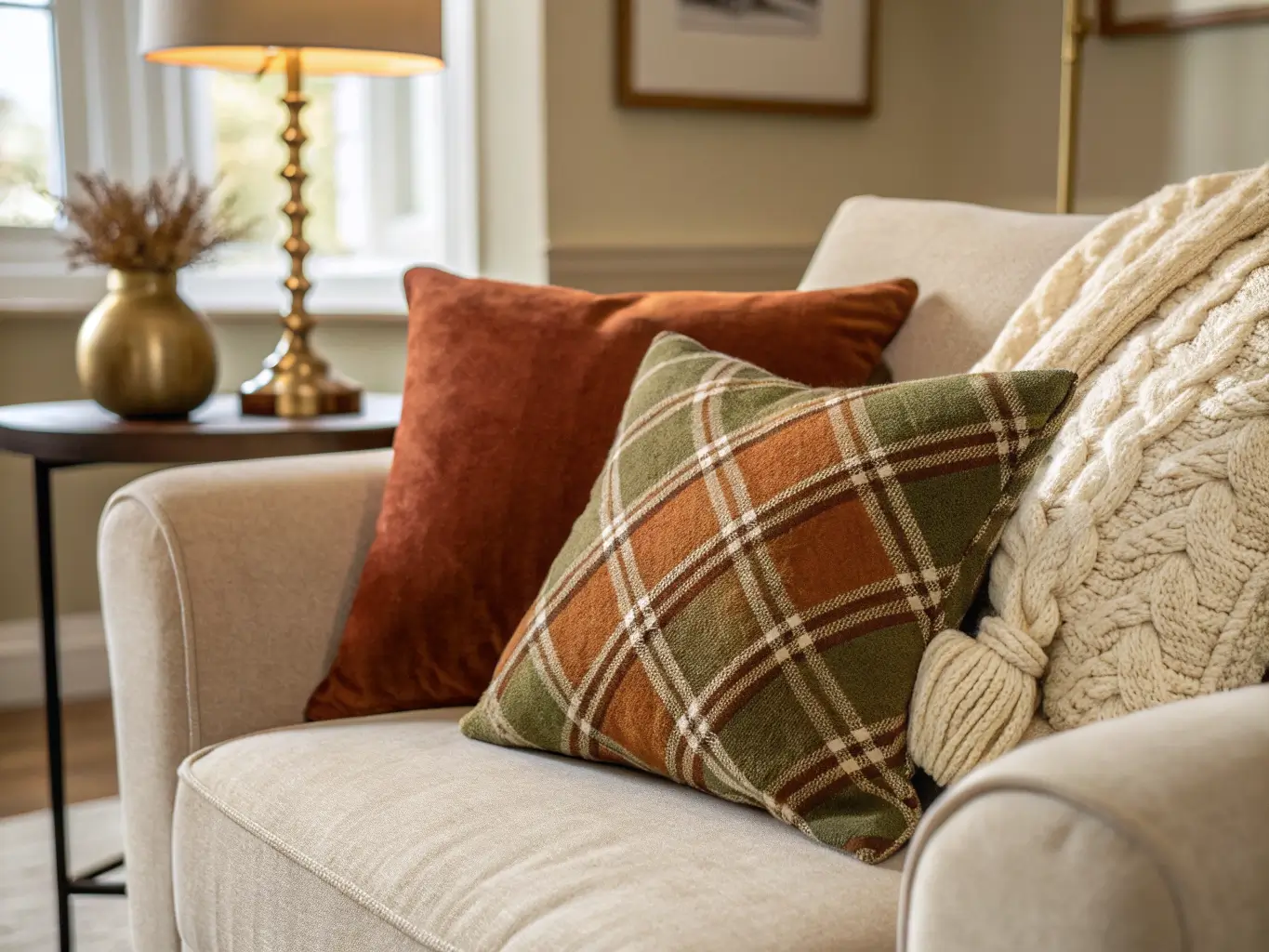
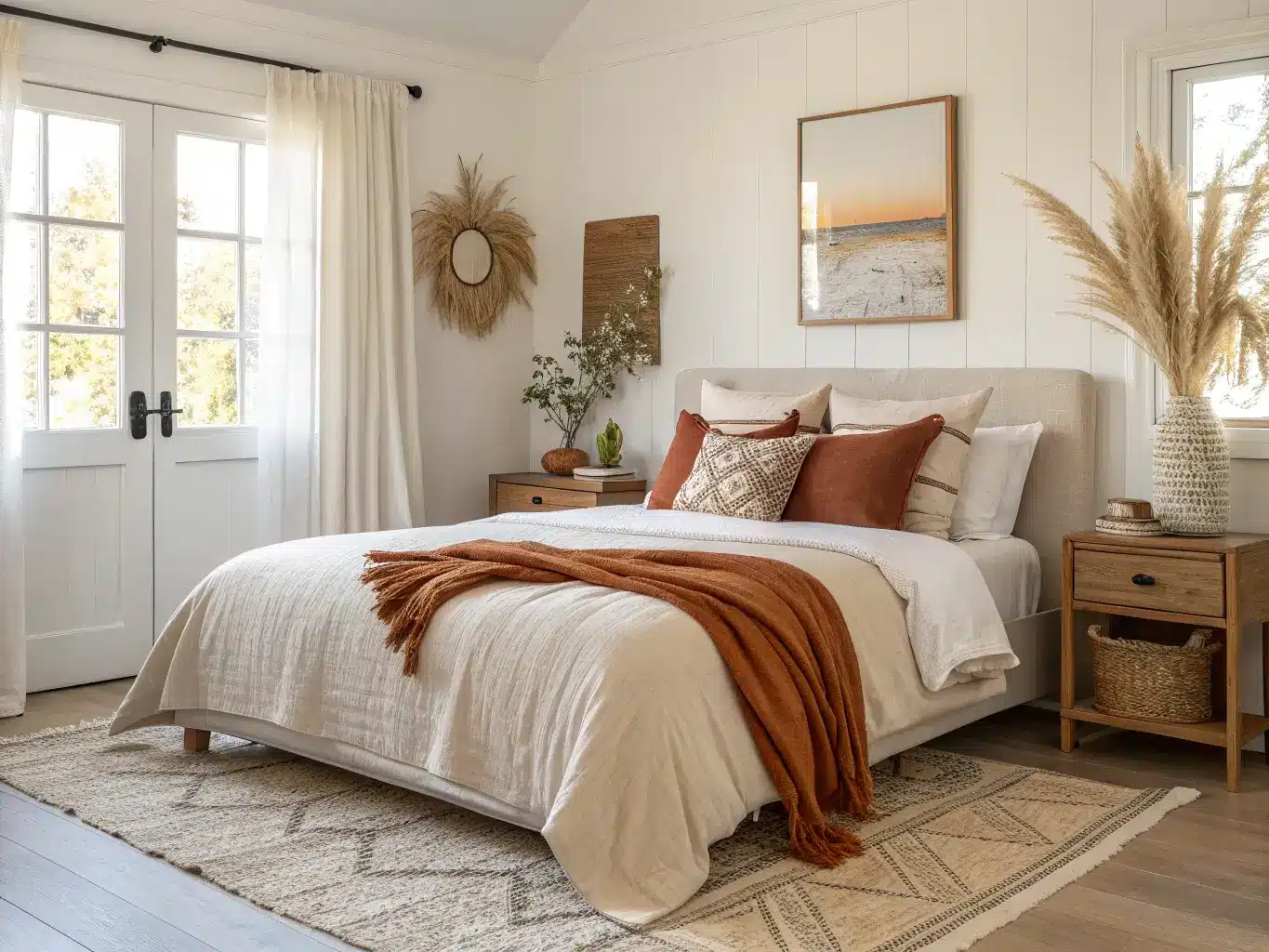
The colors that define fall right now: rust, terracotta, sage, gold, brown, cream, taupe, beige, ivory, oatmeal, and warm gray. Notice there’s no neon orange in that list. The fall palette people are actually buying is muted, not literal.
The fabrics that make it feel cozy instead of flat: velvet, corduroy, boucle, wool, faux fur, knit, tweed, seed stitch, washed linen, and cotton. Texture is doing more work than color here — a room full of solid cream pillows in five different textures looks richer than a room full of printed pumpkins.
Who this is for: renters who can’t paint, budget decorators, anyone who wants a fast reset without touching furniture. It works in living rooms, bedrooms, entry benches, reading nooks, porches, and covered patios — though outdoors you want to check the fabric is weather-resistant before you commit.
worth having Pieces: What to Actually Buy
Start with covers, not full pillows. This is the single biggest money-saver in seasonal decorating. Buy inserts once, buy covers every season. Covers store flat in a drawer; full pillows take up a closet shelf you don’t have.
Sizing that actually works in real rooms:
– 16×16 and 18×18 — standard accents, good for smaller sofas or layering
– 20×20 — the workhorse size for most couches
– 22×22 and 24×24 — bigger sofas or a more lounge-y, oversized look
– 12×20 lumbar — the detail piece that breaks up a row of squares
The insert trick nobody tells you upfront: size your insert 1–2 inches bigger than your cover. An 18-inch cover gets a 20-inch insert. A 20-inch cover gets a 22-inch insert. A 22-inch cover gets a 24-inch insert. This is the difference between a pillow that looks plump and expensive versus one that looks like a deflated balloon. I ignored this rule for years, used the “correct” matching size, and could never figure out why my pillows looked cheap even when they weren’t. Sizing up fixed it instantly.
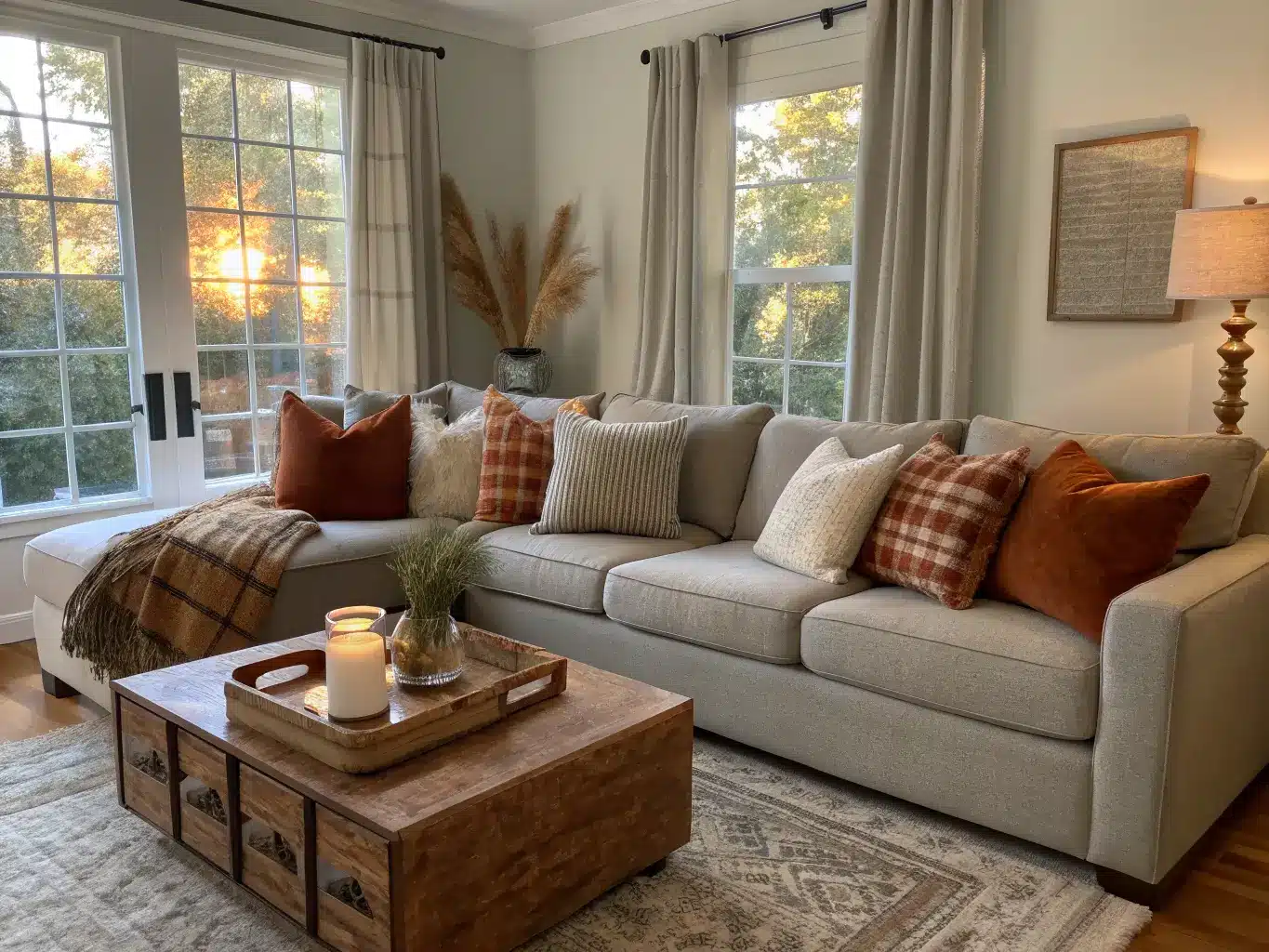
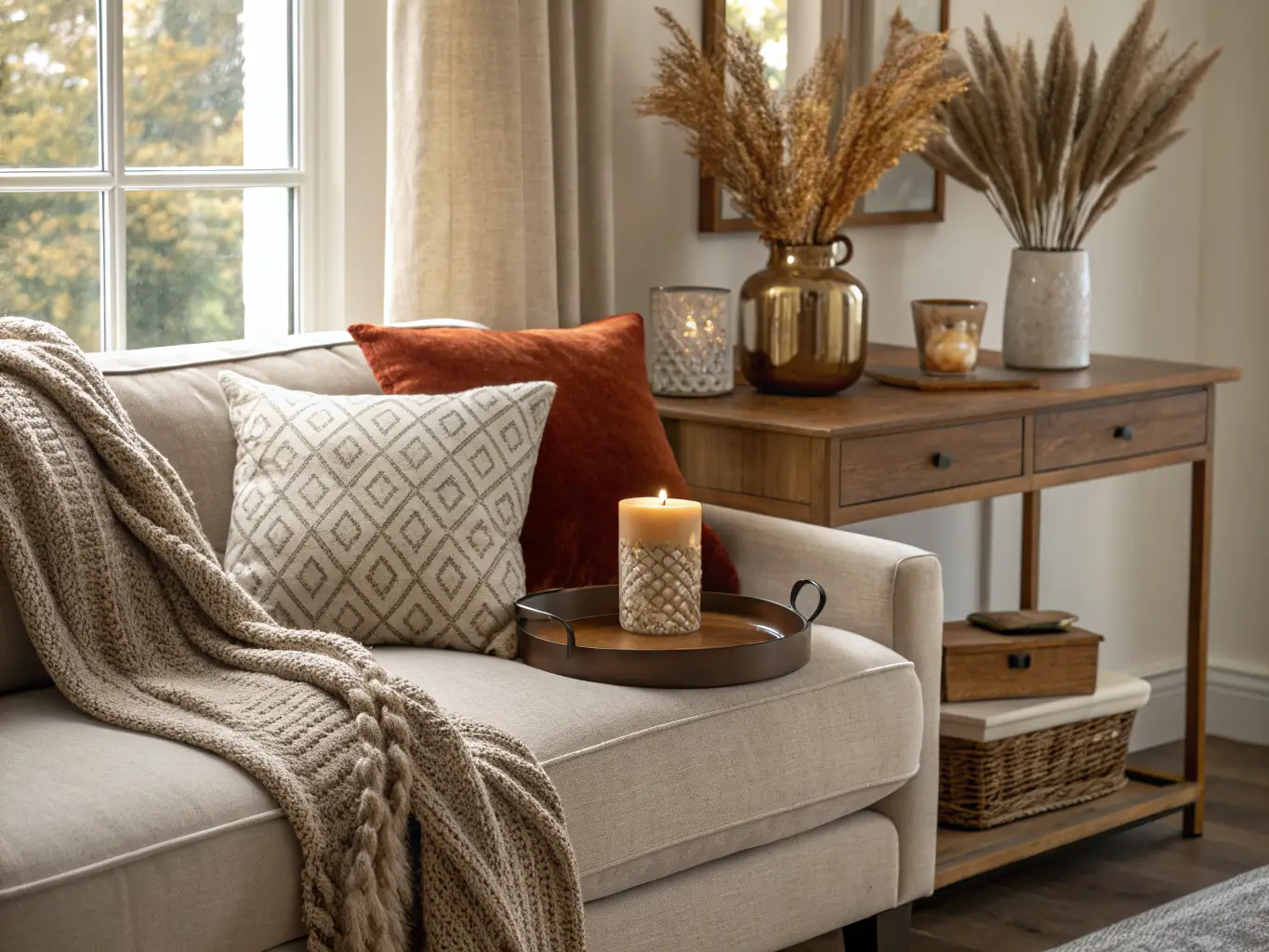
Complementary pieces to round out the vignette: a chunky knit throw, a wood tray on the coffee table, a couple of dried grass stems in a ceramic vase, mini pumpkins if you want a literal touch, and warm brass or bronze candle holders.
Signature patterns showing up everywhere right now: plaid, stripe, botanical print, subtle leaf motifs, cable knit, and faux leather. Pumpkin motifs are still around but skew more sophisticated — think a single embroidered outline, not a cartoon pumpkin face.
Optional Enhancements: The Details That Make It Look Intentional
If you want to go beyond the basics:
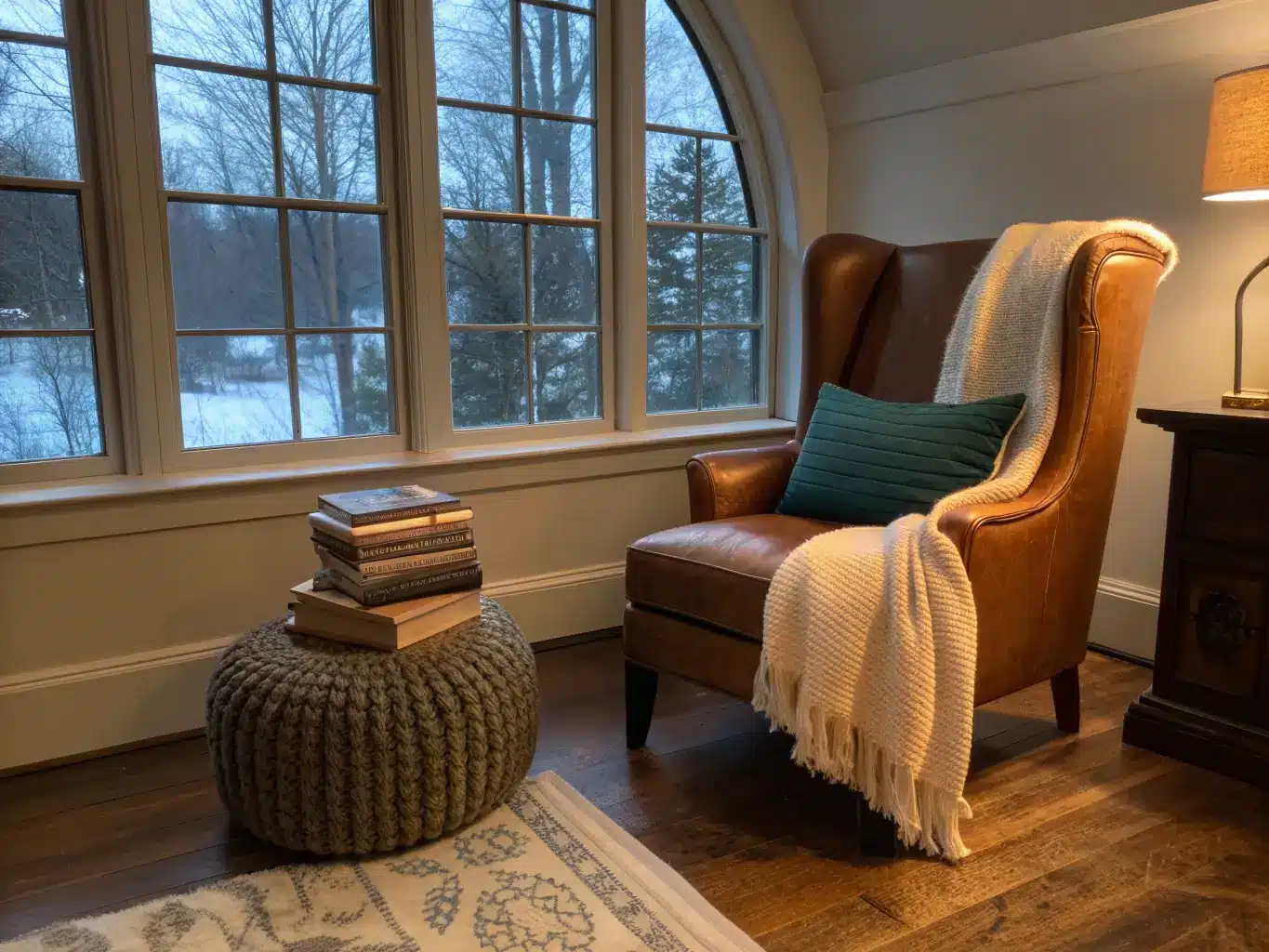
– Seasonal accents that don’t scream “seasonal”: subtle leaf embroidery, acorn or branch prints, muted pumpkin silhouettes. These read as fall without dating themselves to October specifically.
– Organic textures for a collected look: linen, wool, boucle, knit. This is what separates “I decorated for fall” from “I bought a themed pillow set.”
– Metallic and luxe touches: warm brass and bronze accessories pair beautifully with rust and cream pillows. Velvet with piping or contrast trim is where fall decor is heading this year — a step up from flat cotton prints, without going full glam.
Pro Styling Tips: The Formula I Actually Use
Here’s the method that stopped my pillow arrangements from looking random:
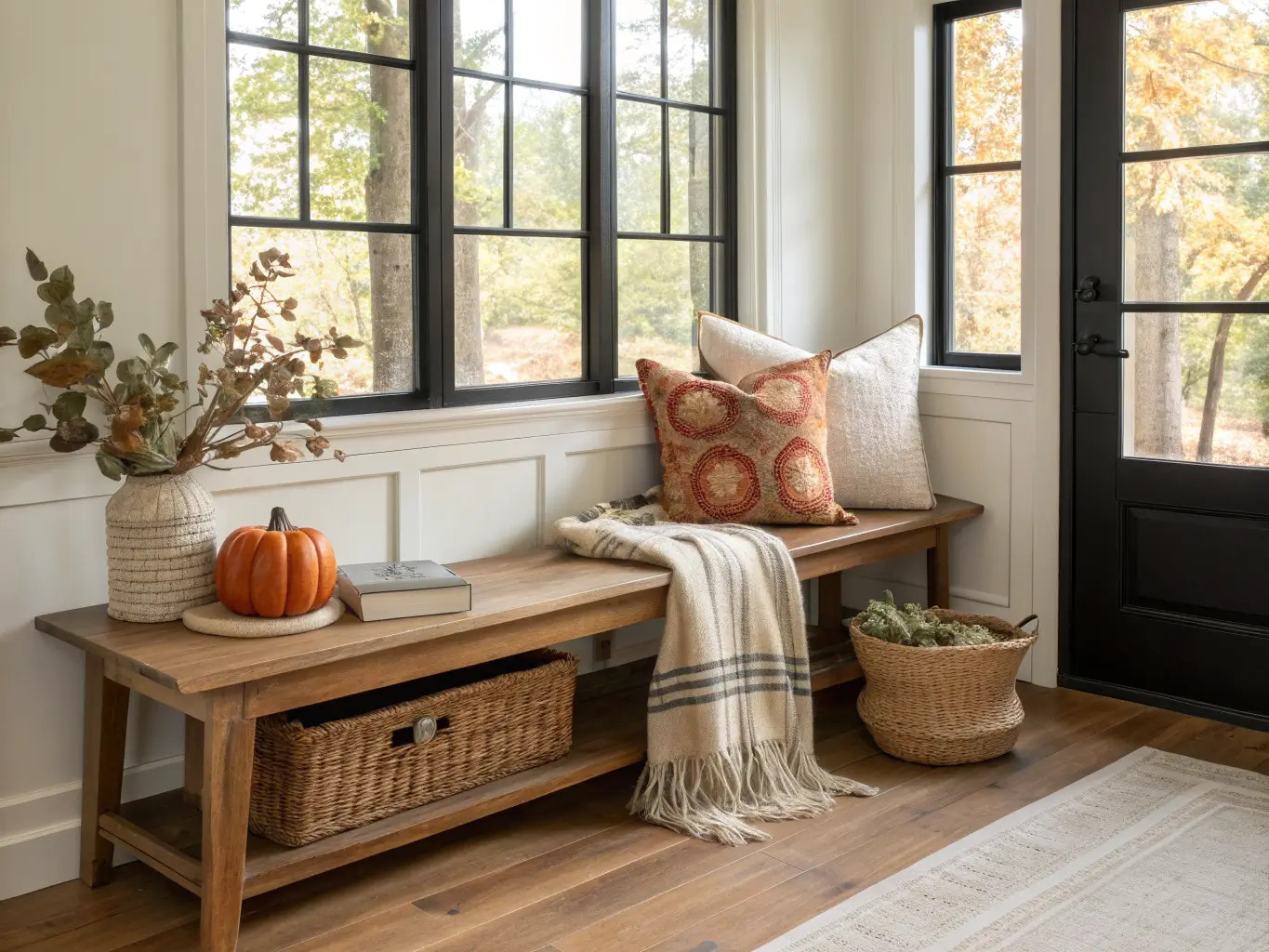
One solid, one pattern, one texture. Every grouping I style now follows this. A solid olive velvet pillow, a plaid cotton pillow, and a chunky knit pillow — that’s a complete, balanced trio. Skip this and you either end up with three patterns fighting each other or three solids that look flat.
Vary the scale of your patterns. One large-scale pattern (a big plaid or bold stripe), one small-scale pattern (a fine check or subtle print), one solid or heavily textured piece. This is the same rule interior stylists use for throw blankets and rugs — it just also applies to pillows.
Stick to odd numbers. Three to five pillows per sofa is the sweet spot. Two looks like an afterthought. Four looks accidentally even. I run five on my sectional (two 20x20s in the corner, two 18x18s in front, one lumbar in the middle) and it fills the space without looking overdone.
Building a neutral fall palette: ivory, beige, taupe, oatmeal, camel as your base, then one or two pillows in muted rust or sage for depth. This is the version that ages best — I’ve kept mine out from September through February some years.
Building a moodier, cozier palette: add deep emerald or plum into the brown-and-terracotta mix. This reads more “evening in a cabin” than “harvest festival,” and honestly, I like it better once the clocks change.

Setting It Up: Step by Step
Before you shop, do this:
1. Pull your summer pillows and sort them by cover type and insert size — you’ll likely be able to reuse inserts, which cuts your cost in half immediately.
2. Decide which direction you’re going: neutral fall, traditional harvest, modern rustic, or cozy layered. Trying to do all four at once is how you end up with a cluttered, theme-park version of fall.
3. Measure your sofa or bed before ordering anything. Standard sizing (16, 18, 20, 22, 24-inch squares, plus 12×20 lumbar) covers almost every situation, but knowing your seat depth and cushion width prevents ordering pillows that dwarf a loveseat or disappear on a huge sectional.
Building the arrangement:
1. Place your largest pillows first, in the back corners — 20 to 24-inch squares create depth and give you a base to build on.
2. Layer in one or two patterned pillows next: plaid, stripe, botanical, or a subtle fall motif.
3. Finish with a lumbar or smaller accent pillow in a different texture — velvet, boucle, knit, or faux leather — for contrast against the larger pieces.
4. Fluff and size up your inserts as noted above so nothing looks flat.
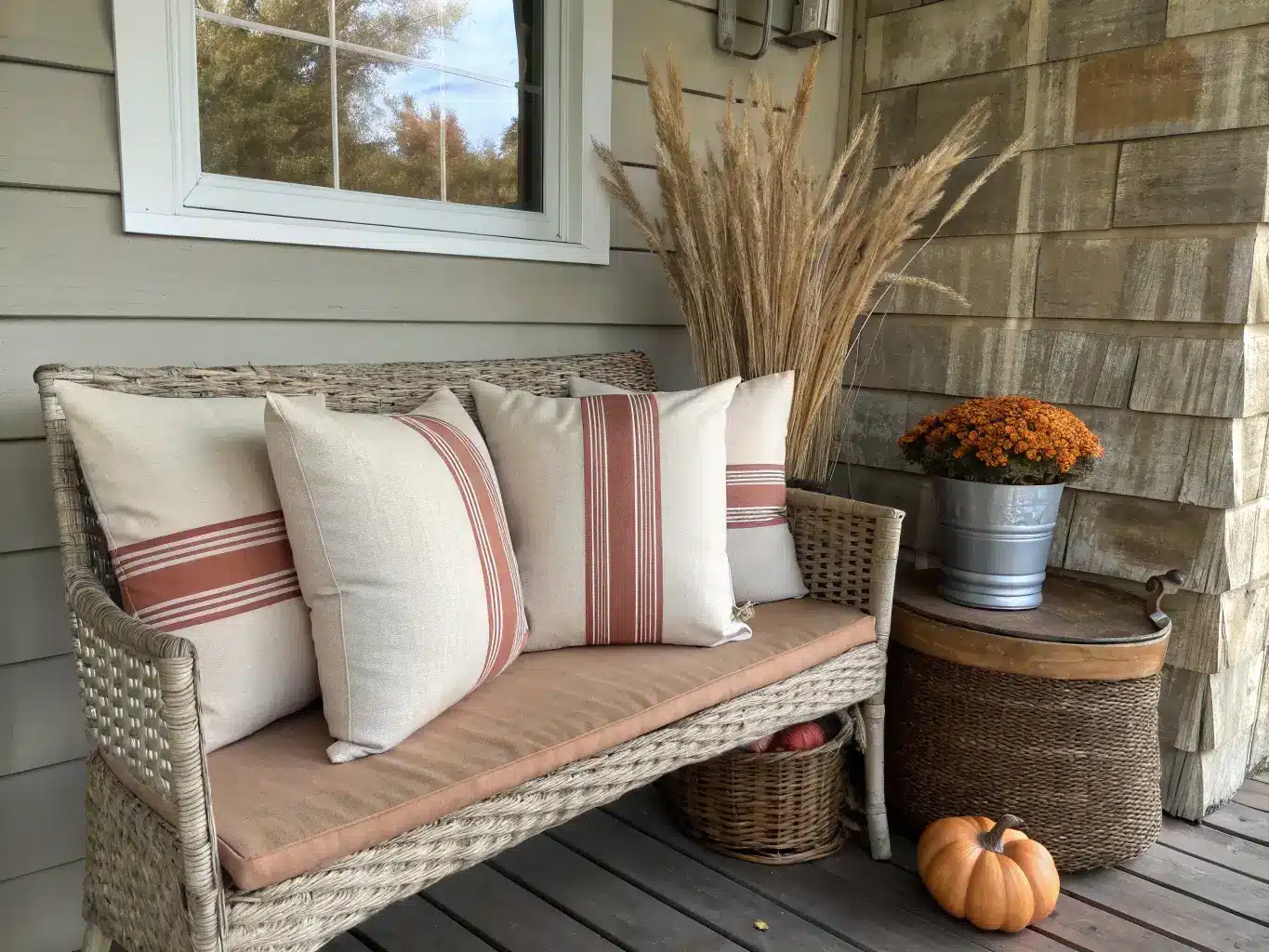
If you’re styling a covered porch or outdoor bench, confirm the fabric is rated for outdoor or at least weather-resistant. Dew alone will wreck a cotton velvet cover over a few weeks.
Common Mistakes I See (and Made Myself)
– Too many novelty graphics. A pillow that says “Pumpkin Spice Everything” in script font has a shelf life of about six weeks before it looks dated. Save the literal stuff for a small accent, not the whole arrangement.
– Matching too hard. I once bought a “coordinated set” — same plaid, three colorways. It looked like a hotel display, not a home. Vary the pattern and texture instead of just recoloring the same print.
– Skipping the insert upsize. Covered above, but worth repeating: this is the #1 fix if your pillows already look “off” and you can’t figure out why.
– One texture across the whole sofa. An entire couch of flat cotton pillows looks unfinished no matter how good the color story is. Mix in at least one knit, one velvet, and one linen or boucle piece.
Keeping It Cohesive as the Season Moves
Stick to 2–4 core colors across your pillows, throw, and any small accessories. The second you introduce a fifth unrelated color, the room stops looking styled and starts looking cluttered.
Let your solids and textures carry the visual weight while patterns stay limited to one or two pillows max. This keeps busy prints from overwhelming the room.
If your furniture already has a strong color — a navy sofa, a green velvet armchair — use your pillows to bridge that tone into the fall palette rather than ignoring it. I have a warm gray sofa, so my rust and sage pillows always get pulled toward the cooler side to stay connected to the base color instead of clashing with it.
Budget Moves and Seasonal Transitions
The cheapest refresh of all: swap covers only, keep your inserts. This is the whole game if you’re on a budget — a $15 cover reworks a pillow you already own.
Moving from early fall to late fall: swap out anything with bright orange or literal pumpkin prints for deeper rust, olive, brown, and cream. Same silhouette, moodier palette, and suddenly it reads more “November” than “September.”
Boho-meets-coastal version: washed linen, cream boucle, muted sage, soft tan, with one subtle plaid or stripe thrown in so it doesn’t read as purely summer leftover.
Modern farmhouse version: buffalo plaid, faux leather, cable knit, warm neutrals. This is the look most people picture when they think “fall pillow,” and it’s still everywhere for a reason — it’s foolproof.
A more lifted version: skip the graphic prints entirely and lean into piping, contrast trim, velvet, and wool. This is where a lot of higher-end fall decor is heading — quieter, more textural, less costume-y. It’s also the version most likely to survive into your winter decor without you having to change a thing.
The whole point of doing fall with pillows instead of anything bigger is that you can change your mind. Buy the terracotta lumbar pillow. If it’s too much once it’s actually on your sofa, it’s a $16 mistake, not a $600 one.
More Ideas to Explore
Keep the momentum going: Fall Decor Ideas for Living Room: A Room-by-Room Guide That Won’t Look Like Every Pinterest Board covers another angle worth a look.