A pixie bob sits right between a pixie and a bob, with a short tapered nape and a front that lands at the earlobe, so most mornings it only needs a few minutes with a small round brush. It’s easiest on straight to wavy hair, and the shape holds if you book a trim about every five weeks.
1. The Classic Pixie Bob
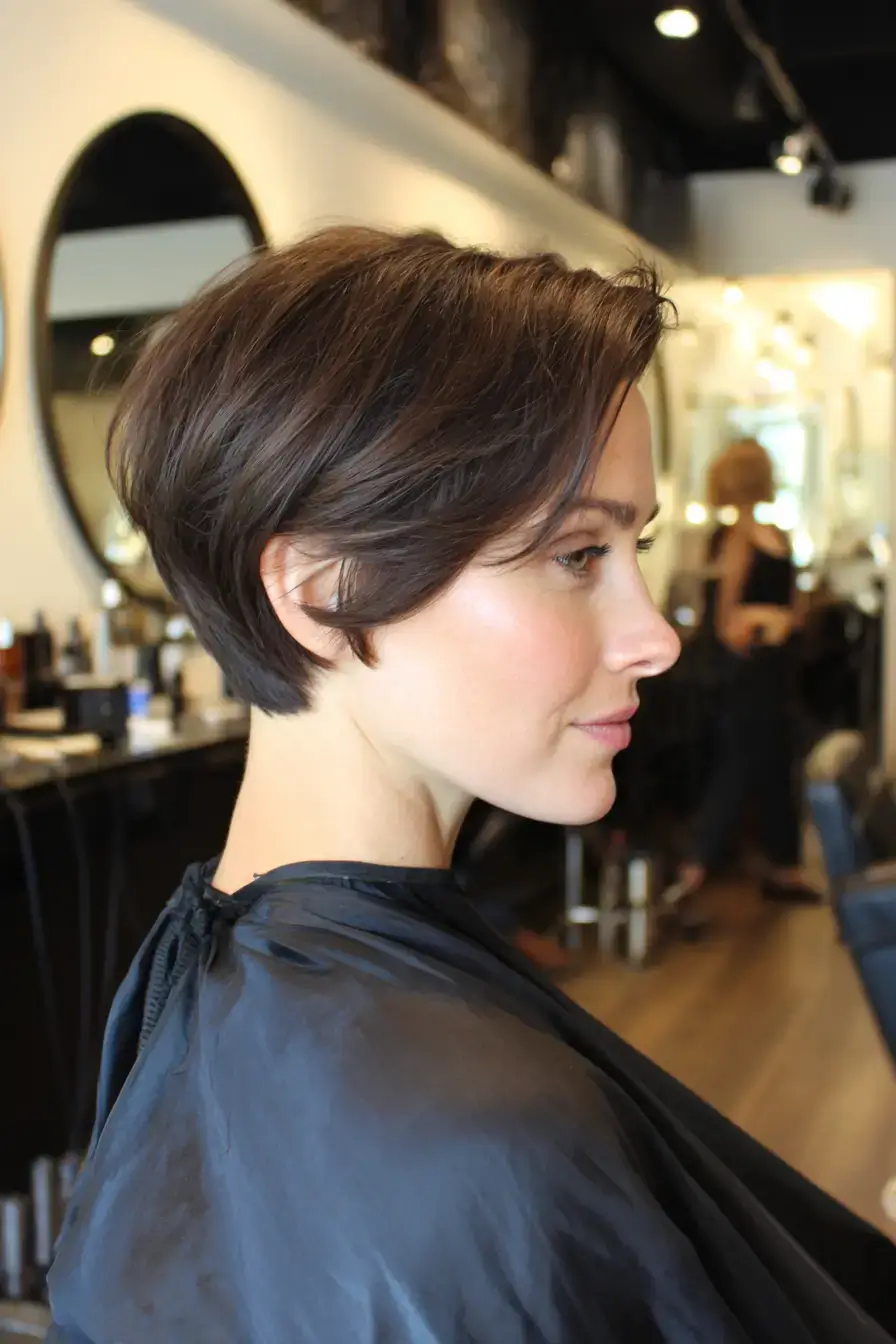
Halfway between a pixie and a bob, the classic pixie bob has a short tapered nape and a front that reaches the earlobe. Working on dry hair, I clipper-over-comb the nape, graduate up to the occipital, and angle the front down to the earlobe. Fine to thick density and 1A to 2A texture wear it well on oval and heart faces. Roll the front under with a small round brush as you blow-dry. Trim every five weeks.
2. Side-Swept Bang Pixie Bob Haircut
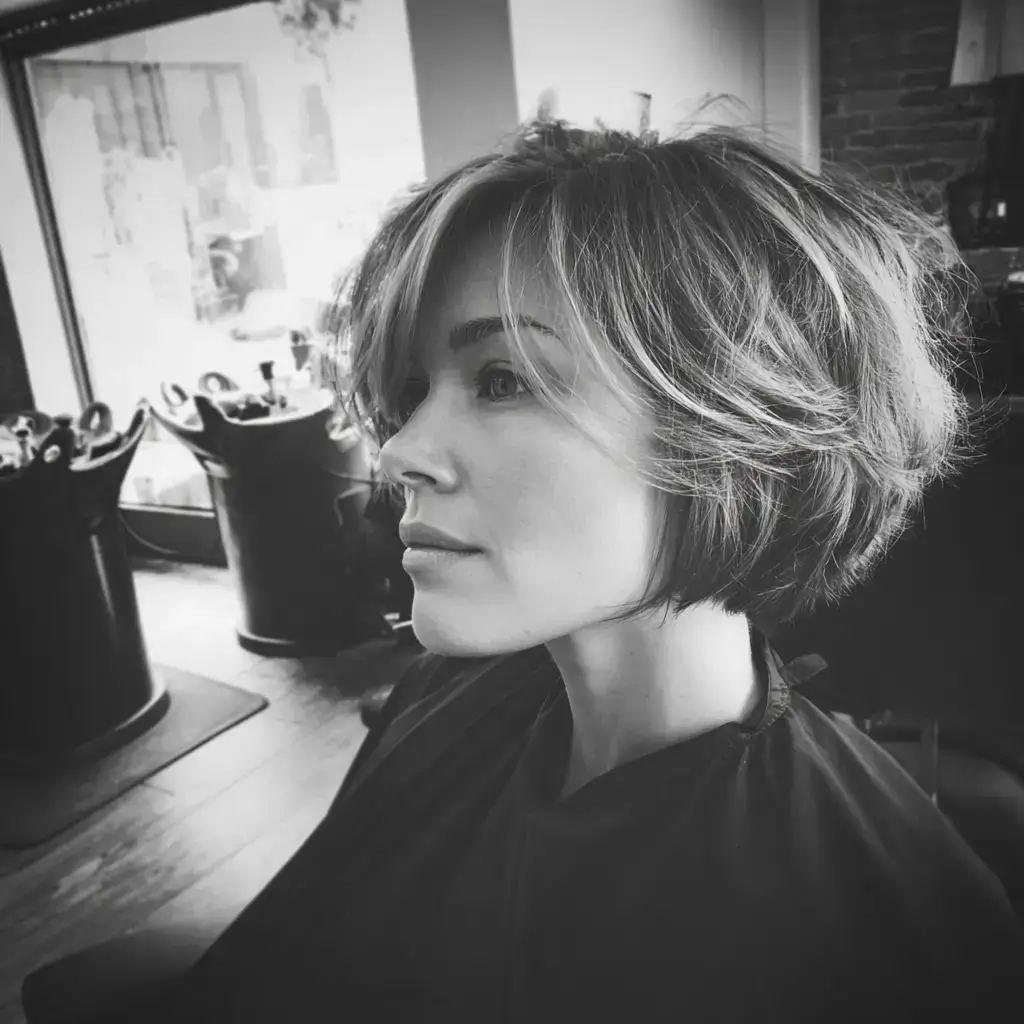
In this pixie bob haircut with side swept bangs, the front length continues into a fringe that hits the cheekbone. On dry hair I taper the nape, graduate to the occipital and angle the front to the earlobe, then cut the bangs from the part down to the cheekbone. Round and square faces with fine to medium density and 1A to 2A texture suit it. Use a flat brush to blow-dry the bangs across. Trim every five weeks.
3. Fine-Hair Pixie Bob
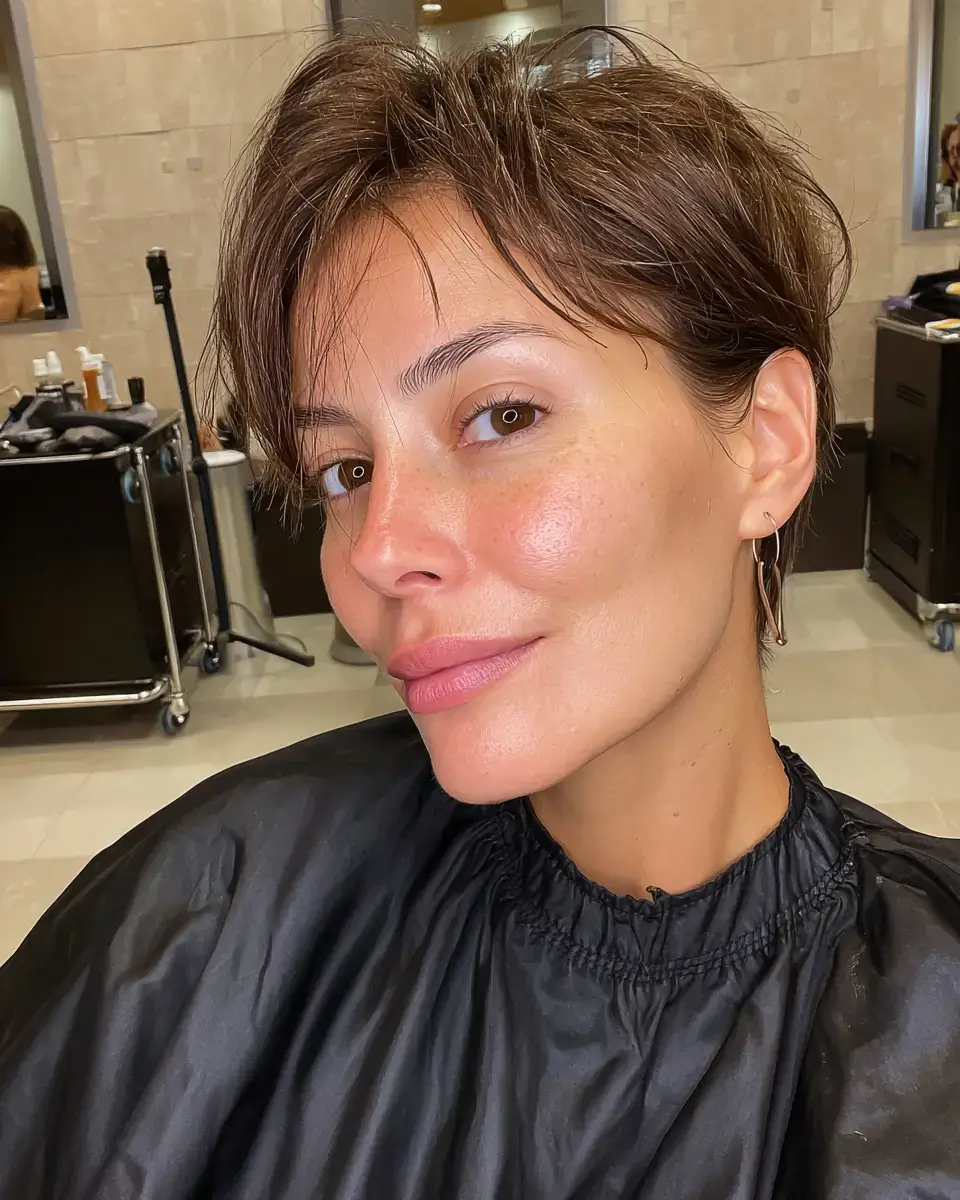
For fine hair, the pixie bob keeps a blunt front so the ends look thick, and the nape gets scissors instead of clippers. On dry hair I scissor cut the nape, graduate it softly, and cut the front at the earlobe with the shears held flat. Best for fine density and 1A to 2A texture on oval and round faces. Work mousse into damp roots, then lift the crown with a round brush as you dry. Trim every five weeks.
4. The Stacked Pixie Bob
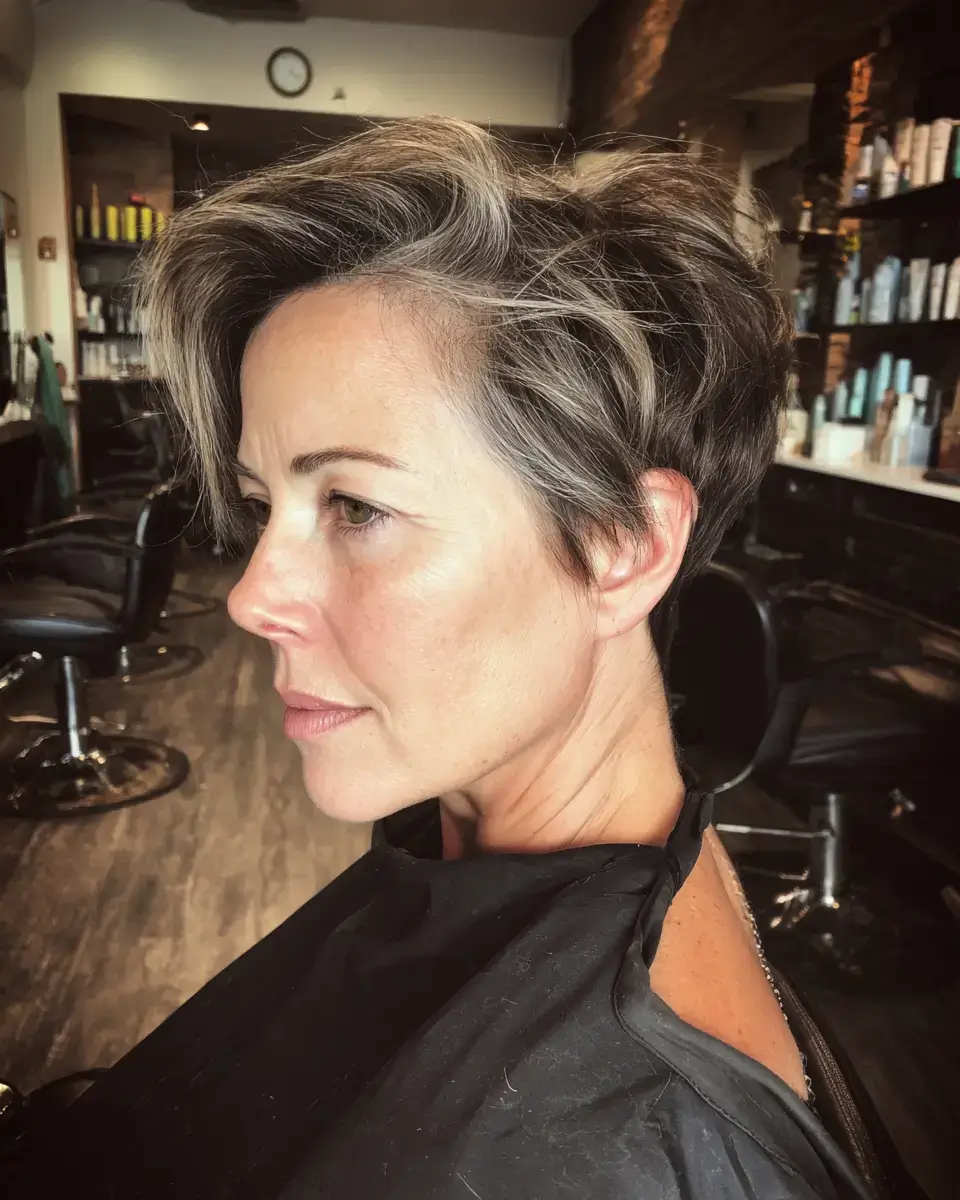
Graduation built through the back gives the stacked pixie bob a lifted nape, while the front stays at the earlobe. I taper the nape on dry hair, stack the graduation up to the crown in half-inch increments, then angle the front down. Fine to medium density and 1A to 2A texture work on round and oval faces. Dry the stack upward with a small round brush and turn the front under. Trim every four weeks.
5. Thick-Hair Pixie Bob Haircut
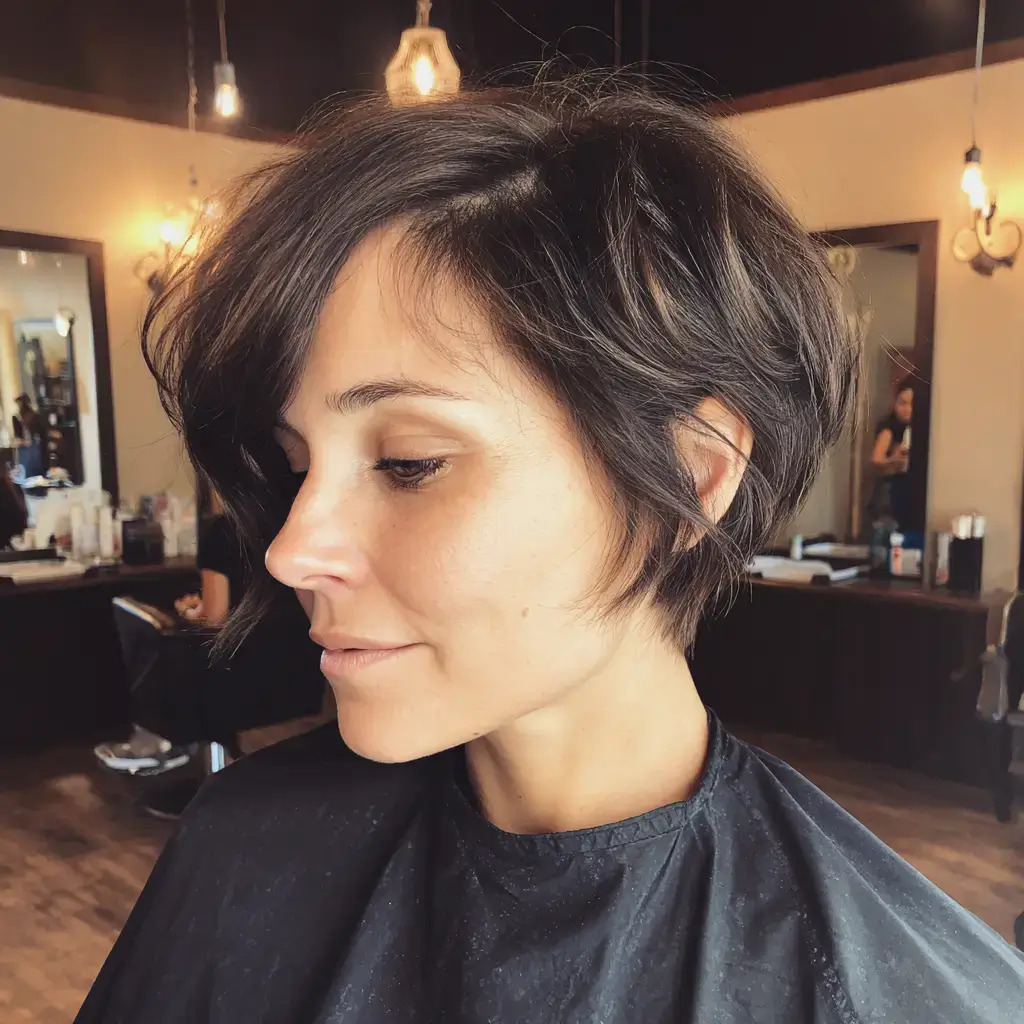
Without internal layers, a pixie bob haircut on thick hair pushes out at the back like a shelf. On dry hair I clipper the nape, graduate to the occipital and angle the front to the earlobe, then point cut internal layers beneath the weight line. It works for thick density and 1A to 2B texture on any face shape. Use smoothing cream and blow-dry flat with a paddle brush. Trim every five weeks.
6. Pixie Bob for Women Over 50
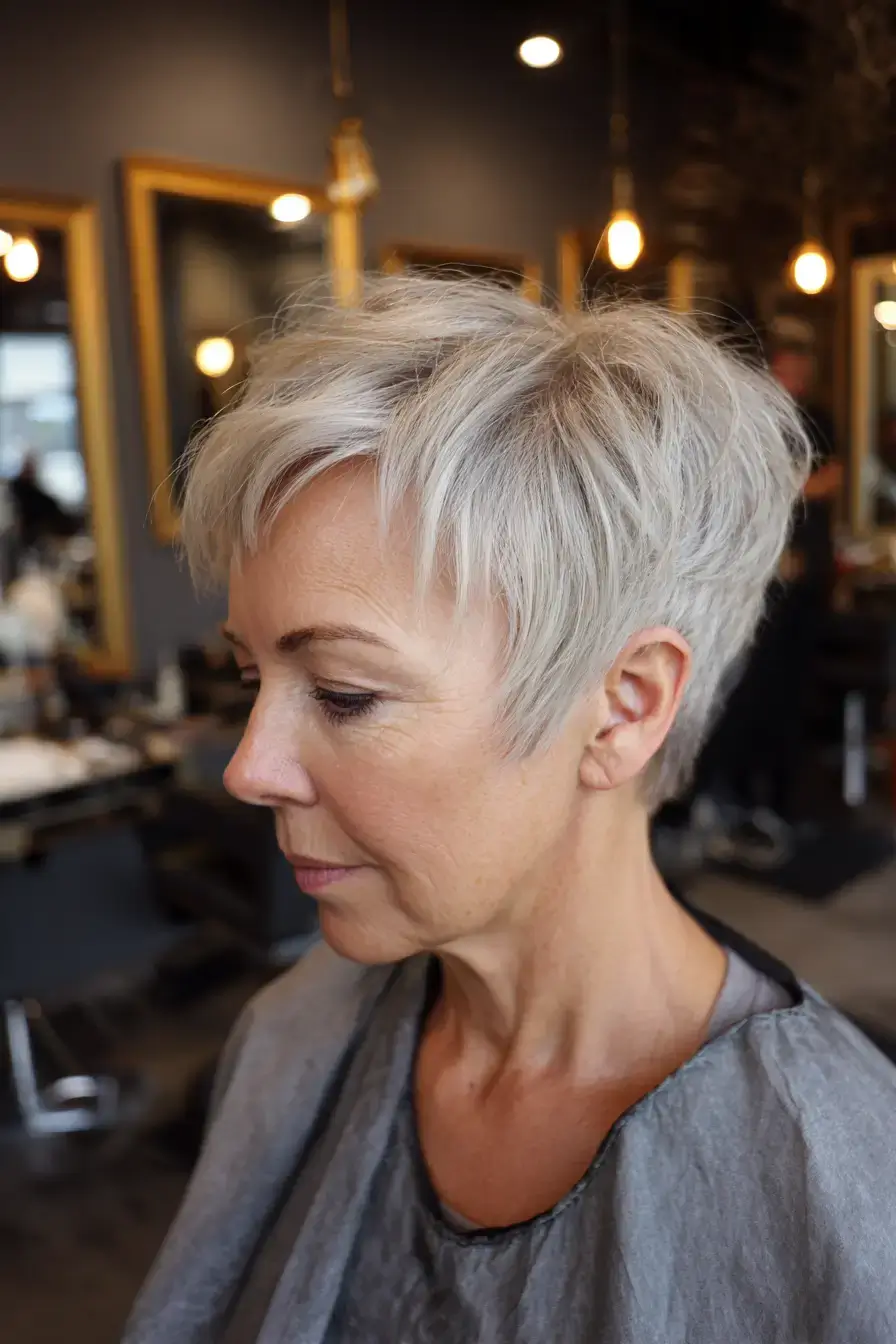
For the pixie bob over 50, I keep a soft nape, put the front at the earlobe, and add a side swept fringe to cover the forehead. Working dry, I scissor cut the nape, graduate it gently, angle the front down, and cut the fringe to the cheekbone. Most face shapes with fine to medium density and 1A to 2A texture can wear it. Use a volumizing mousse and a round brush to blow-dry. Trim every five weeks.
7. The Wavy Pixie Bob
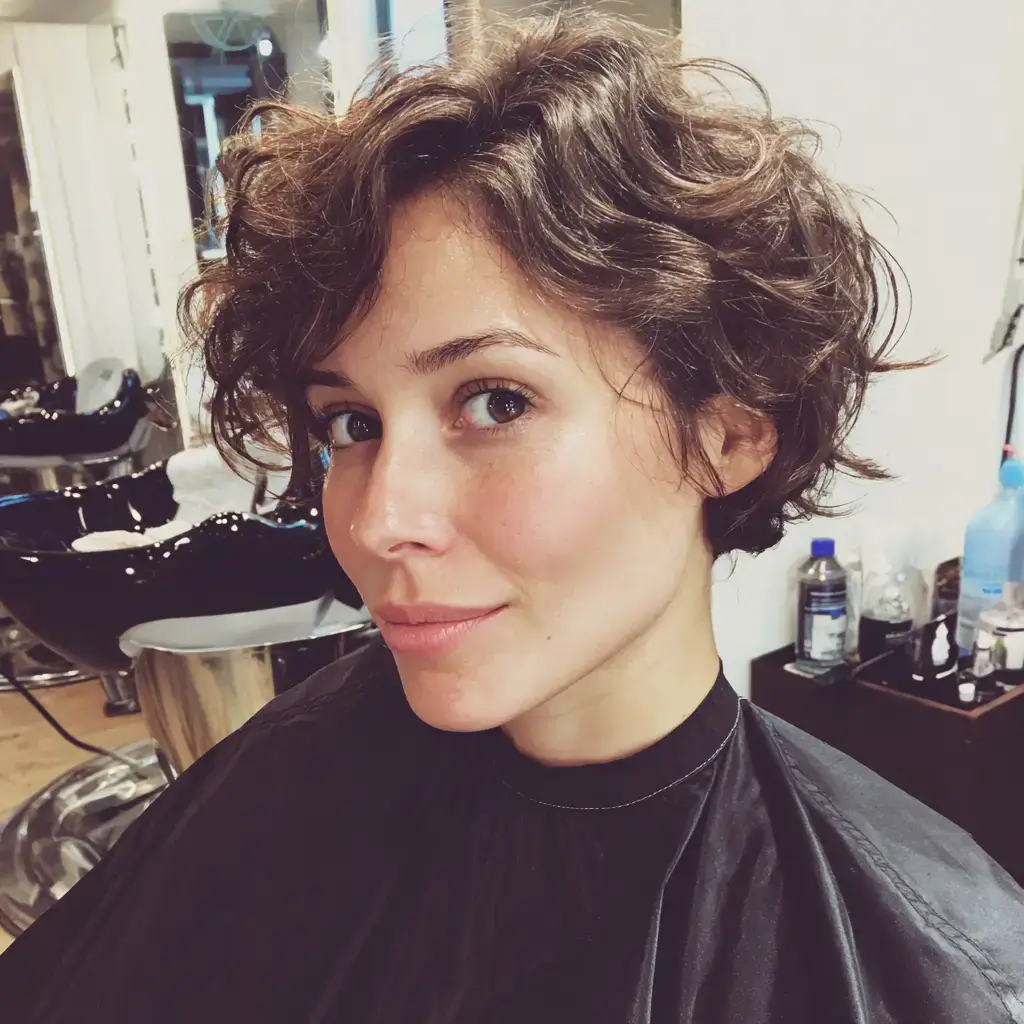
The bend in the front pieces of a wavy pixie bob makes the shape look softer than a straight blowout would. On dry hair I taper the nape, graduate to the occipital, angle the front to the earlobe and point cut the ends. Medium density and 1C to 2B texture suit it on oval and heart faces. Scrunch sea salt spray into damp hair, rough-dry, then twist the front pieces with paste. Trim every six weeks.
8. Curtain-Bang Pixie Bob
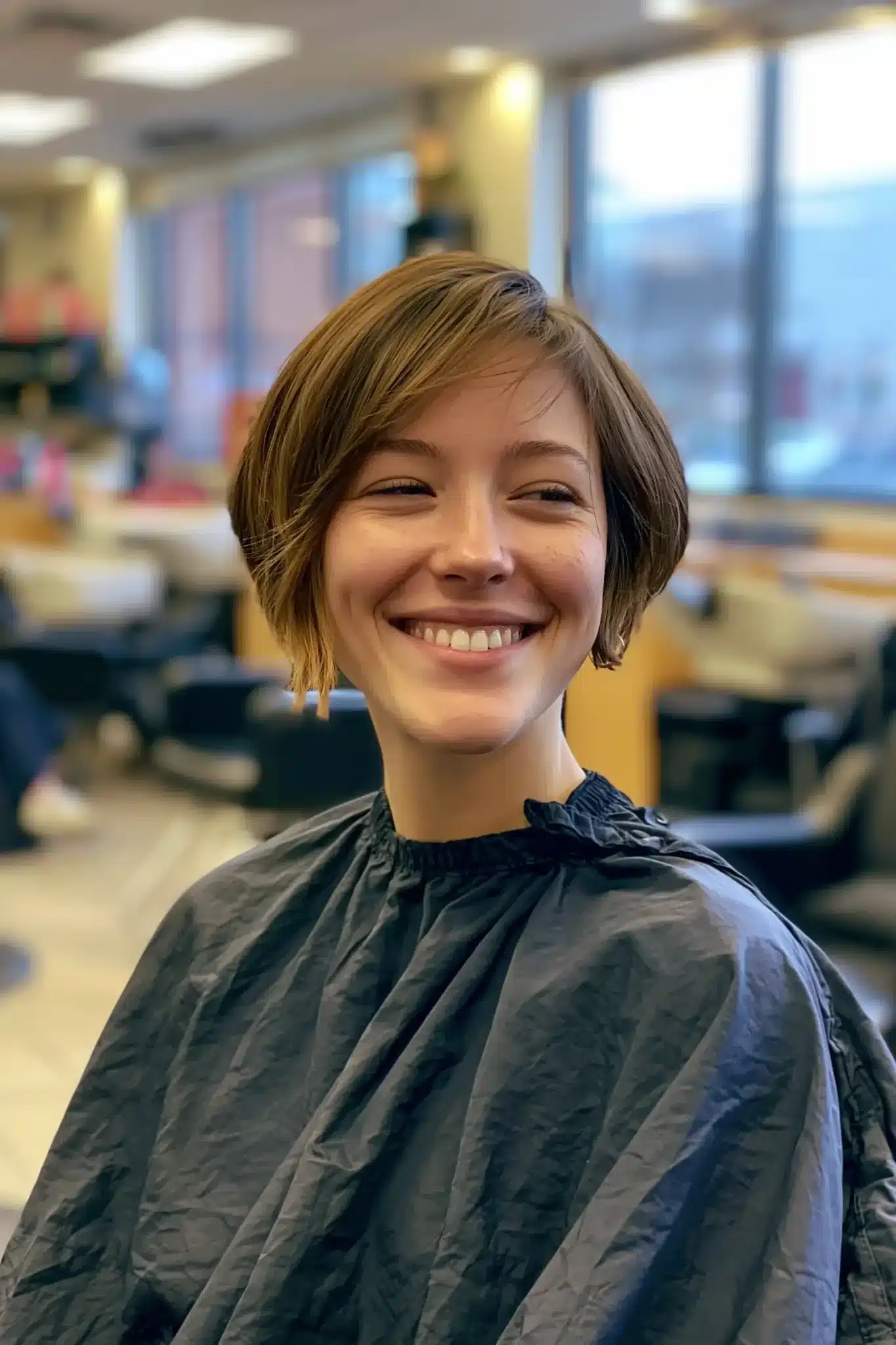
On a pixie bob, curtain bangs part in the center and drop to the cheekbone on each side. Working on dry hair, I taper the nape, graduate to the occipital and angle the front to the earlobe, then cut the bangs from brow to cheekbone. Round and square faces with fine to medium density and 1A to 2B texture suit it. Use a small round brush to blow-dry the bangs outward. Trim the bangs every five weeks.
9. The Textured Pixie Bob
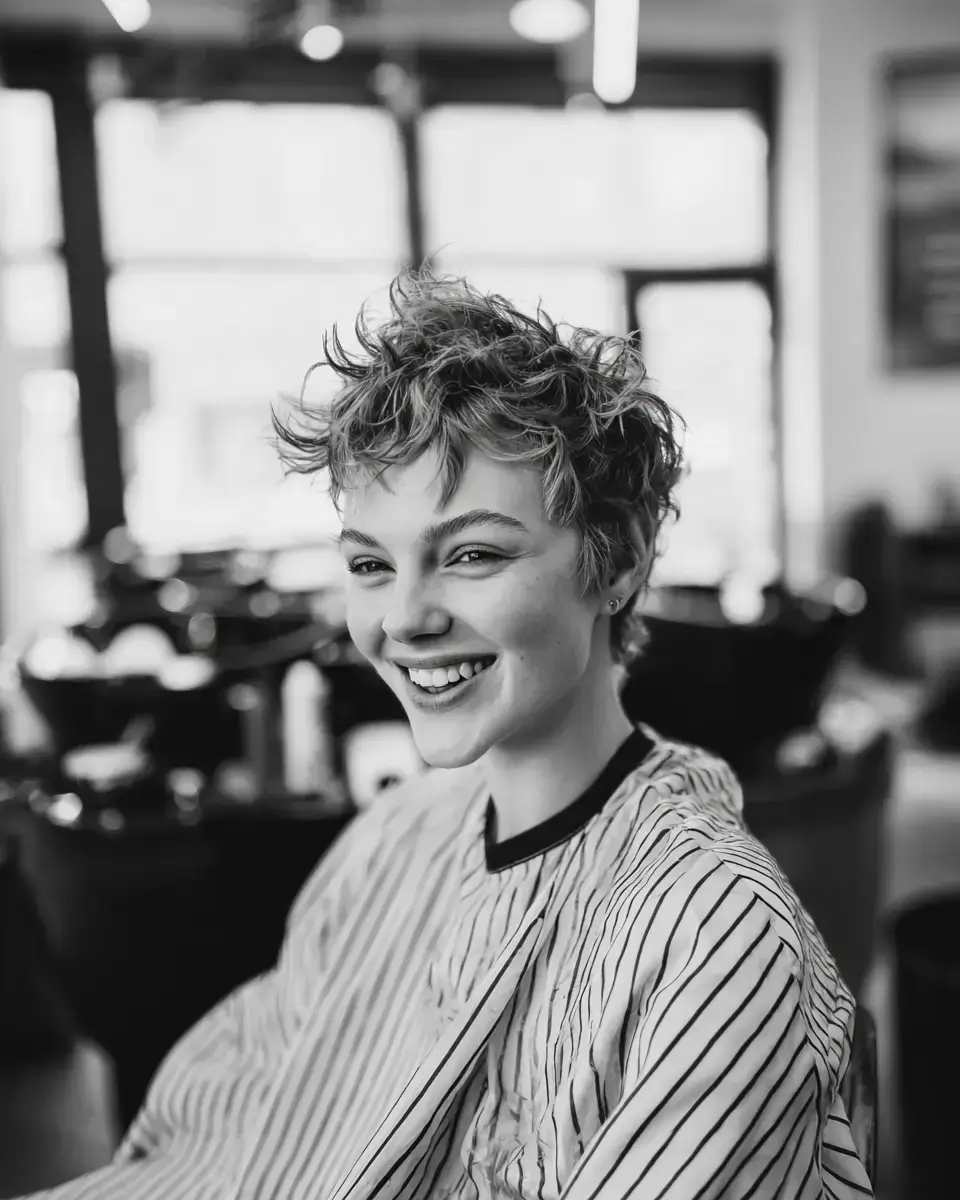
Deep point cutting through the ends lets the pieces of a textured pixie bob separate. On dry hair I clipper the nape, graduate to the occipital, angle the front to the earlobe, and point cut an inch into the ends. Oval and square faces with medium to thick density and 1A to 2B texture wear it well. Rough-dry using a texture spray, then piece out the ends with paste. Trim every five weeks.
10. Round-Face Pixie Bob
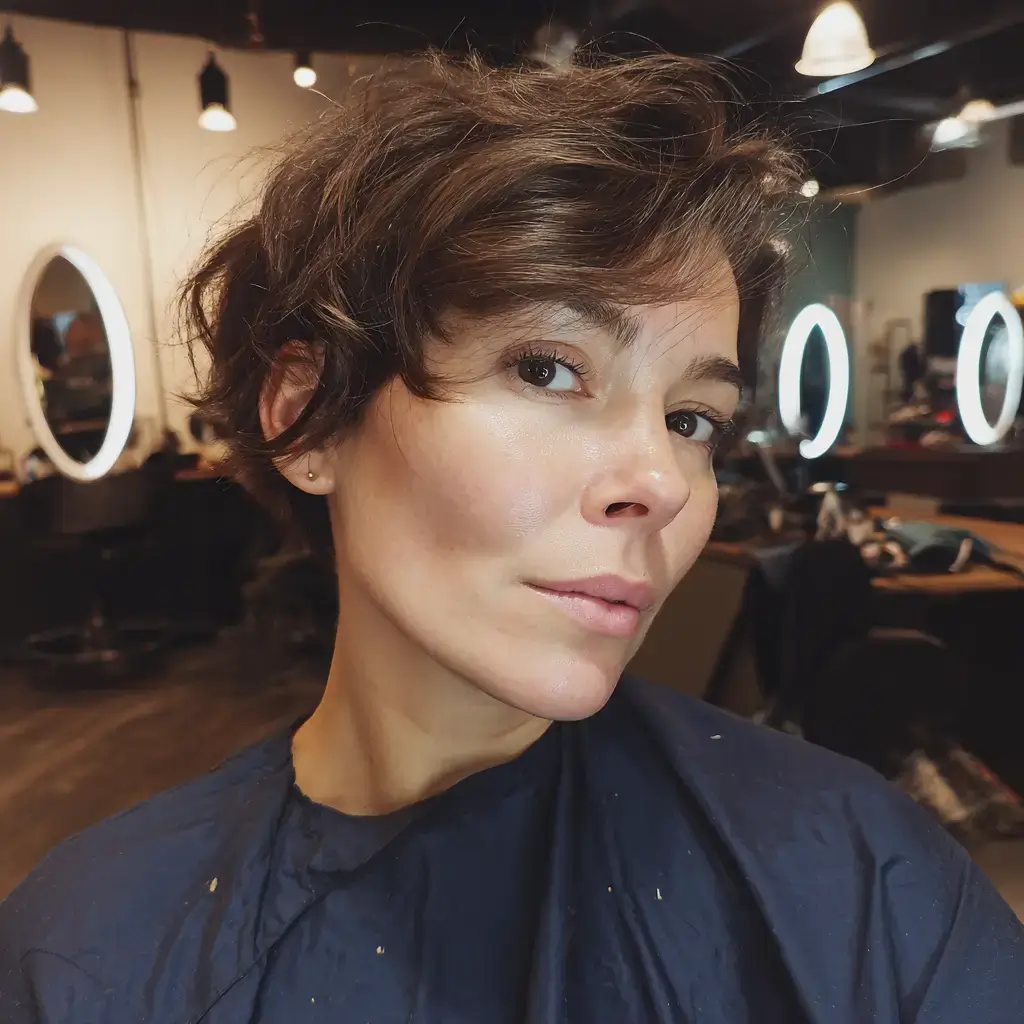
To make a round face read longer, the pixie bob keeps height at the crown and drops the front to the jaw. Working on dry hair, I taper the nape tight, graduate it high, and angle the front to the jaw. Fine to thick density and 1A to 2B texture all work. Lift the crown with a round brush as you dry and keep the front smooth and down. Trim every five weeks.
11. The Sleek Pixie Bob
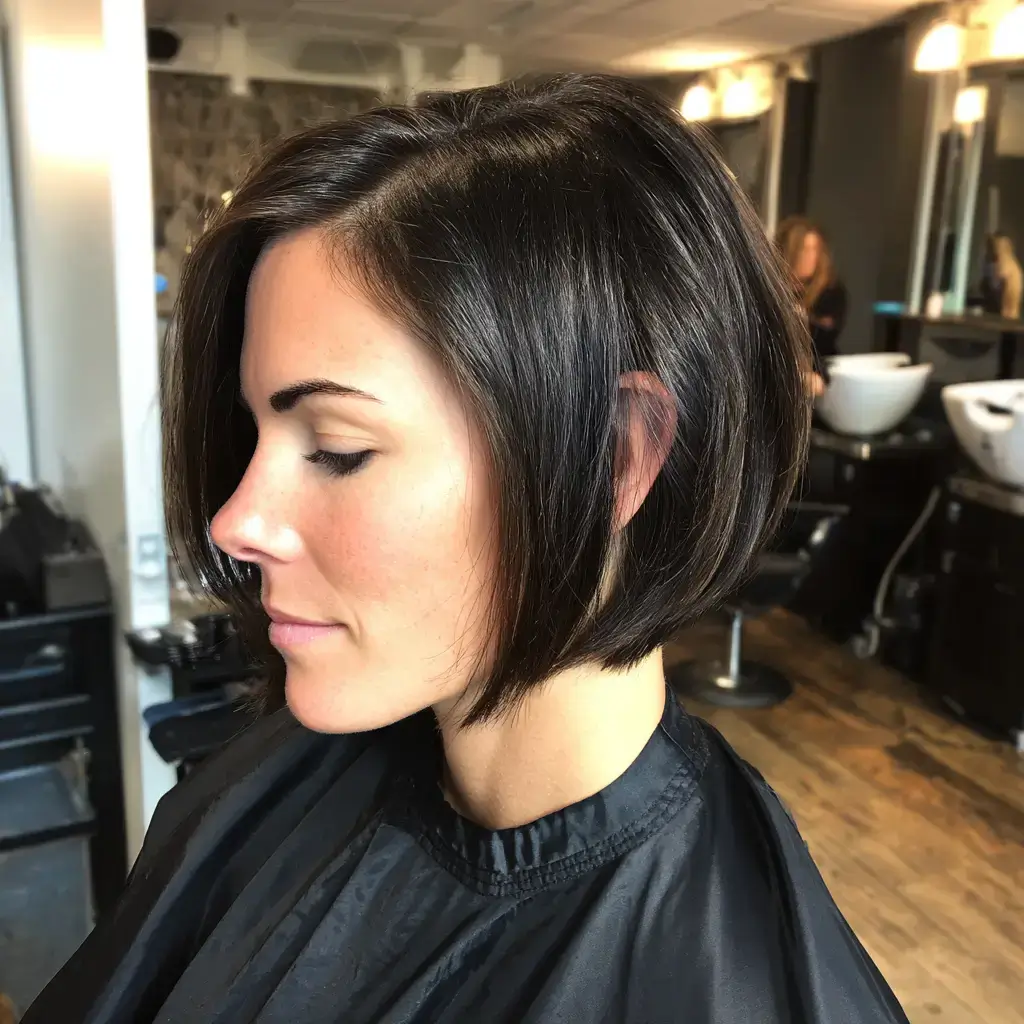
On a sleek pixie bob, the graduation shows as a single smooth curve running from the nape to the front. I clipper the nape on dry hair, graduate to the occipital, and angle the front to the earlobe with the shears flat. Fine to thick density and 1A to 1C texture suit it on oval and square faces. Paddle-brush it flat while drying, smooth it with a flat iron, and finish with serum. Trim every five weeks.
12. Pixie Bob for Women Over 60
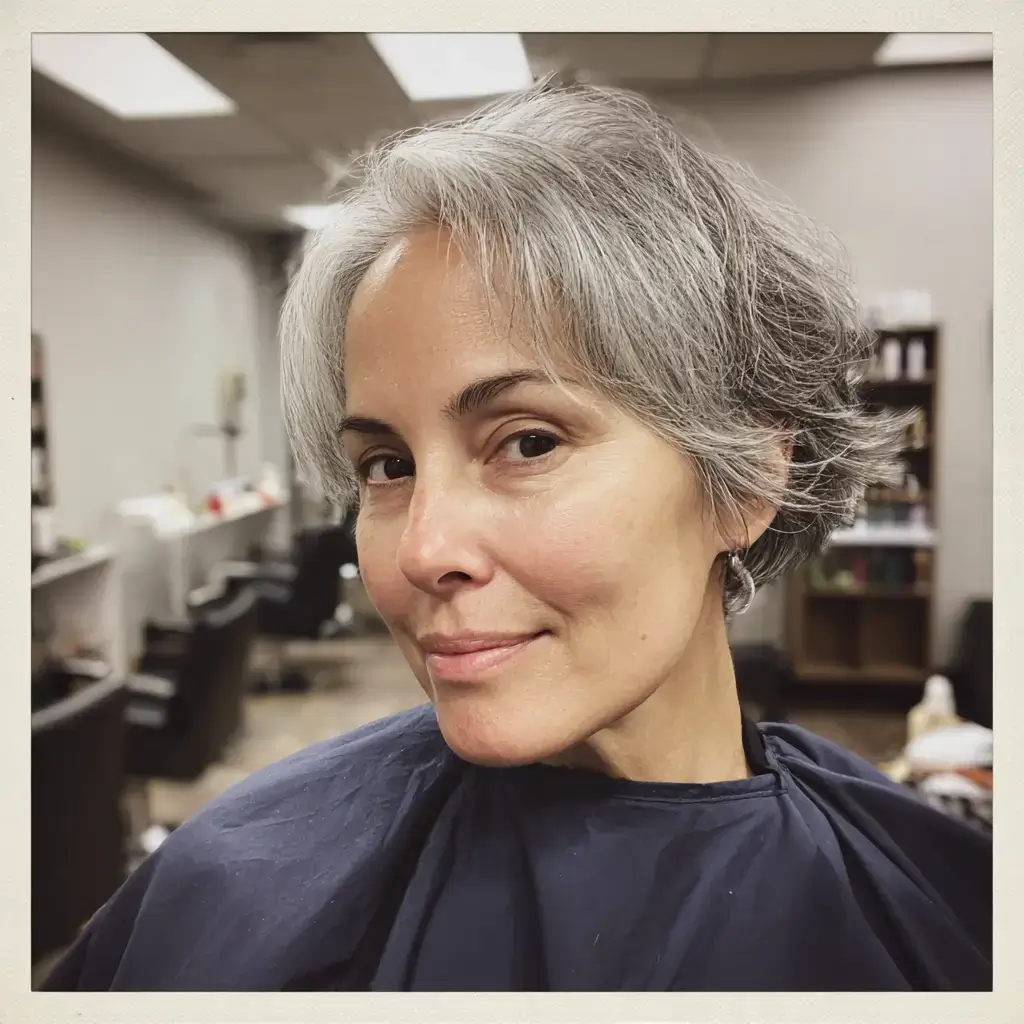
A pixie bob over 60 gets soft graduation, a front at the earlobe, and point cut ends so they keep their thickness. Working dry, I scissor cut the nape, graduate it in wide increments, and angle the front down. Any face shape with fine to medium density and 1A to 2A texture can wear it. Put mousse at the roots and blow-dry with a small round brush. Trim every five weeks and gloss every eight.
13. The Curly Pixie Bob
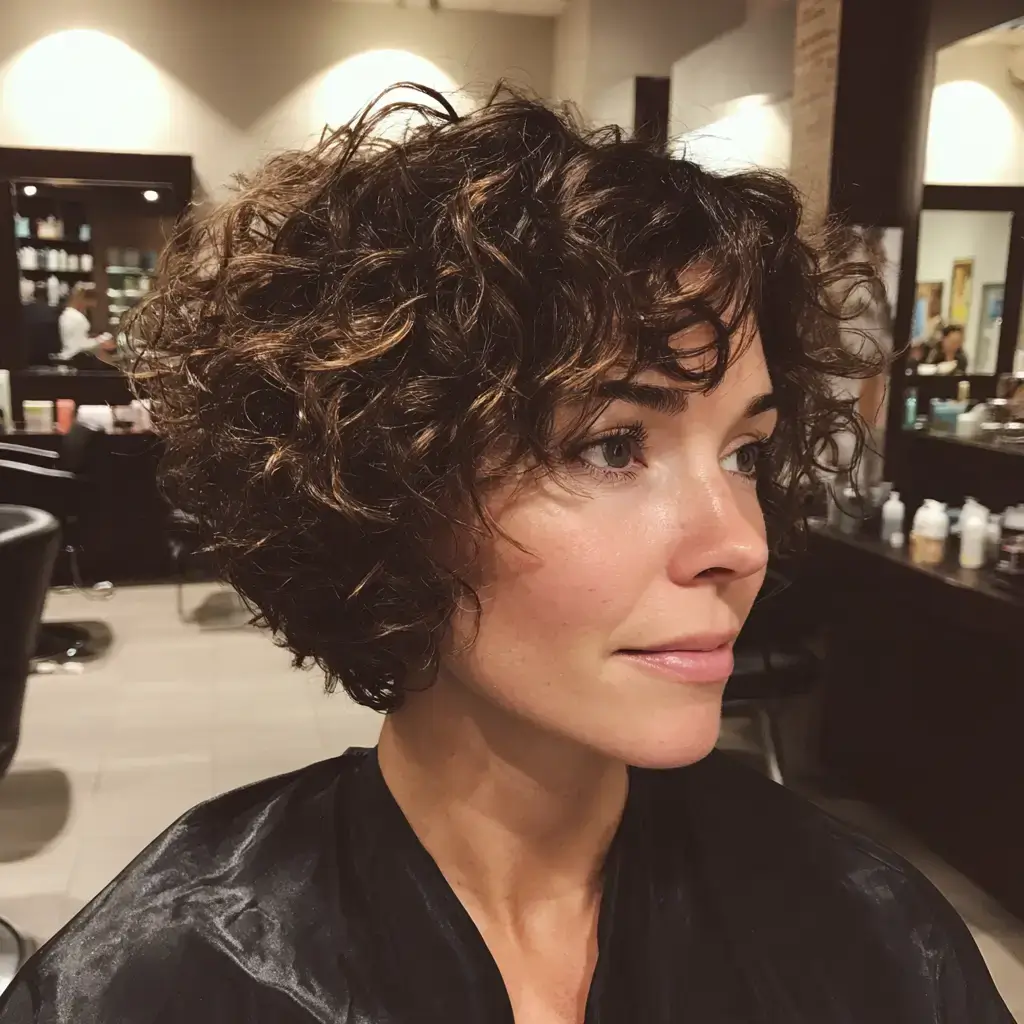
I cut a curly pixie bob dry, one curl at a time, so the graduation still reads after the curl springs up. On dry hair I work the nape curl by curl, graduate to the occipital, and leave the front at the earlobe. Medium to thick density and 3A to 3C texture suit it on oval and heart faces. Rake curl cream through wet hair, then diffuse on low. Trim every eight weeks.
14. Money-Piece Pixie Bob Haircut
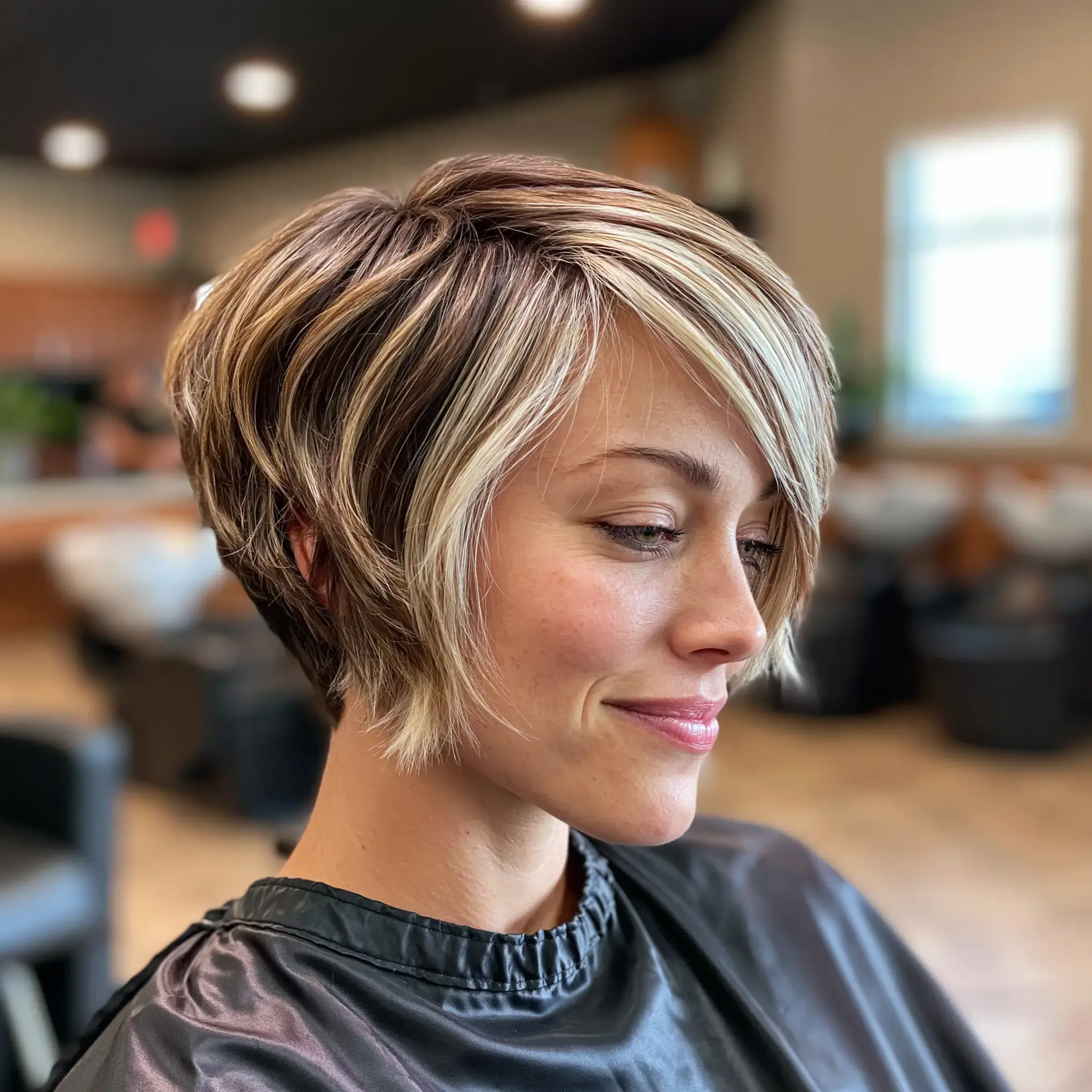
On a pixie bob haircut, a money piece brightens the front pieces right where they frame the face. On dry hair I taper the nape, graduate to the occipital and angle the front to the earlobe, then lift the two front sections to a level nine and tone them beige. Fine to medium density and 1A to 2B texture work. Use a round brush to blow-dry the front forward. Refresh every ten weeks.
15. Blunt-Fringe Pixie Bob

Against the graduated back, a blunt fringe on a pixie bob sets a straight line at the brow. Working dry, I clipper the nape, graduate to the occipital, angle the front to the earlobe, and cut the fringe at the brow holding the shears flat. Oval and oblong faces with fine to medium density and 1A to 1C texture suit it. Dry the fringe down using a flat brush. Trim the fringe every four weeks.
16. The Copper Pixie Bob
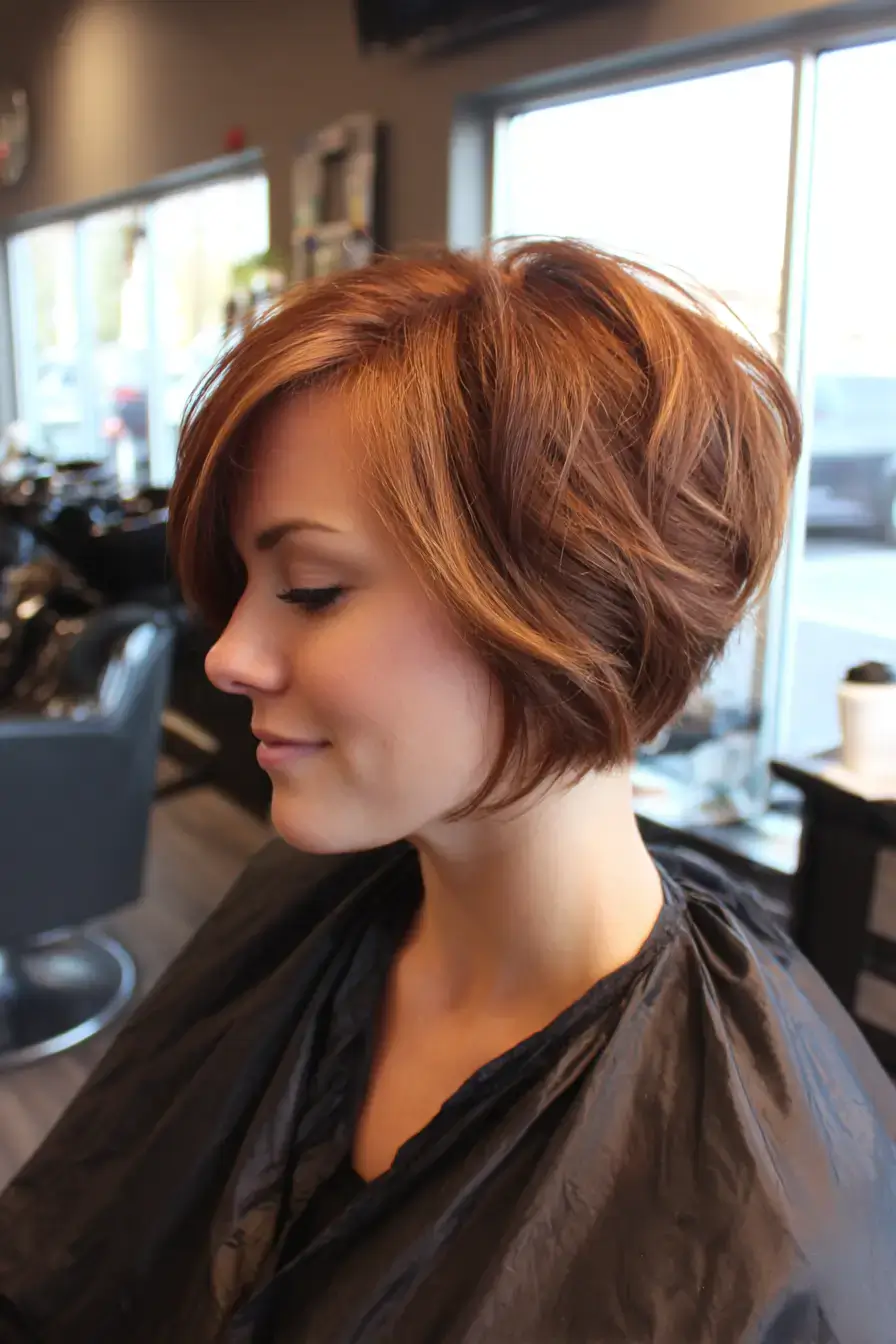
Along the curve of the graduation, copper on a pixie bob looks bright. On dry hair I taper the nape, graduate to the occipital and angle the front to the earlobe, then put a level seven copper at the root and a demi through the ends. It works with fine to medium density and warm skin tones. Use a round brush to blow-dry and finish with serum. Trim every five weeks and refresh the tone every five.
17. Balayage Pixie Bob
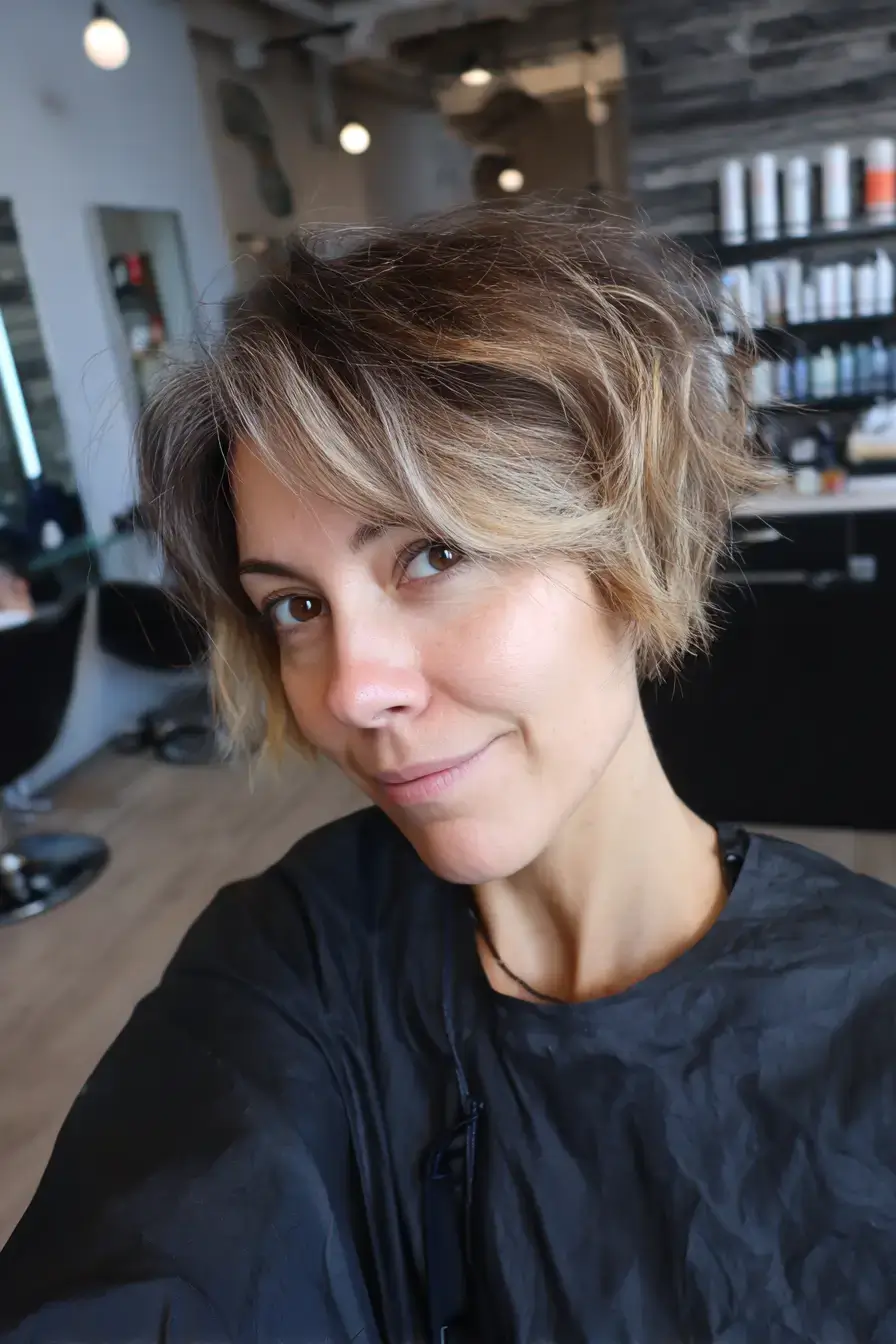
I paint balayage on a pixie bob only through the front pieces, so the short back stays dark. Working on dry hair, I taper the nape, graduate to the occipital, angle the front to the earlobe, and hand paint the front up to a level nine. Fine to thick density and 1A to 2B texture work. Dry the front forward with a round brush and finish with serum. Refresh every twelve weeks.
18. Square-Face Pixie Bob Haircut
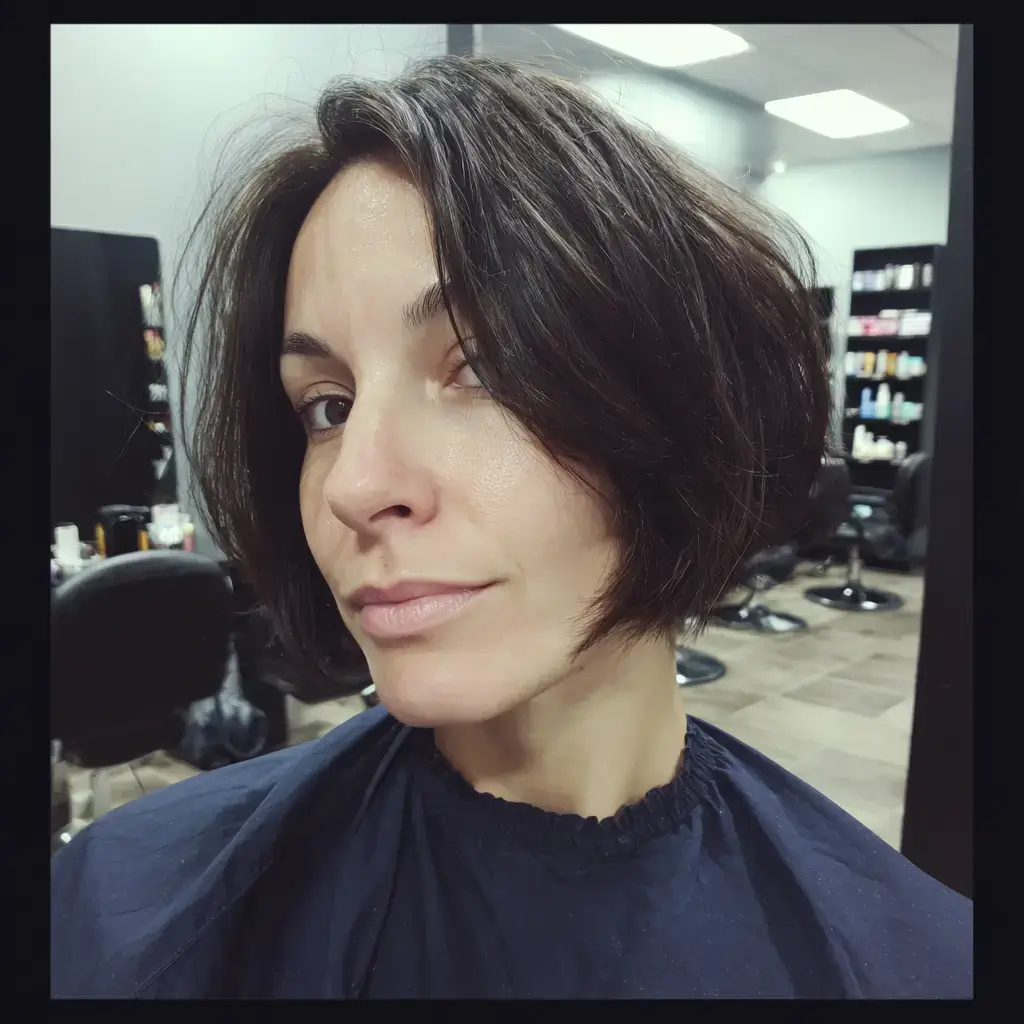
For a square face, the pixie bob haircut brings the front below the jaw and uses point cut face framing to soften the corners. On dry hair I taper the nape, graduate to the occipital, angle the front to an inch below the jaw, and point cut the face frame. Fine to thick density and 1A to 2B texture work. Roll the front under with a round brush while drying. Trim every five weeks.
19. Shadow-Root Pixie Bob
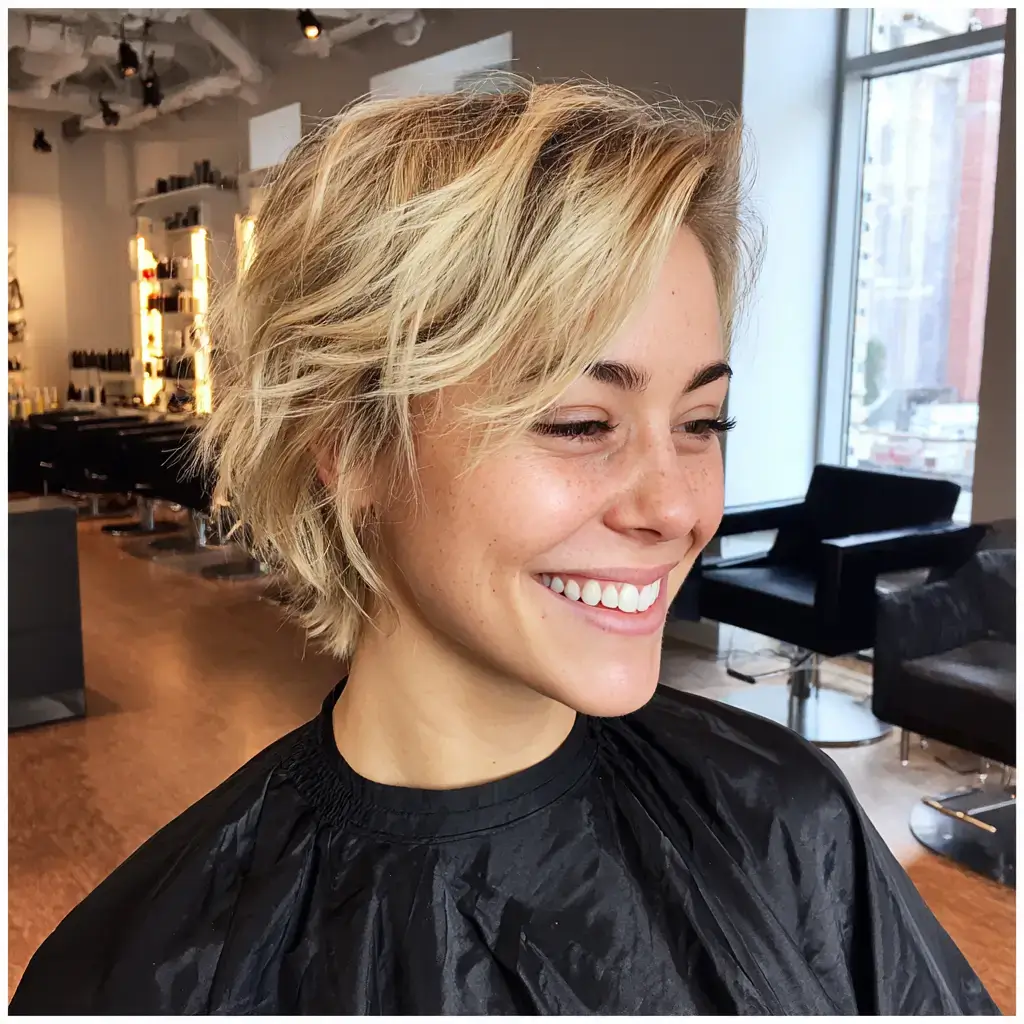
On a blonde pixie bob, a shadow root holds depth at the crown and keeps the front bright. Working dry, I taper the nape, graduate to the occipital and angle the front to the earlobe, then put a level six demi at the root and leave the lengths at level nine. Fine to medium density and 1A to 2B texture work. Blow-dry using a round brush. Trim every five weeks and refresh the root every ten.
20. Straight-Hair Pixie Bob
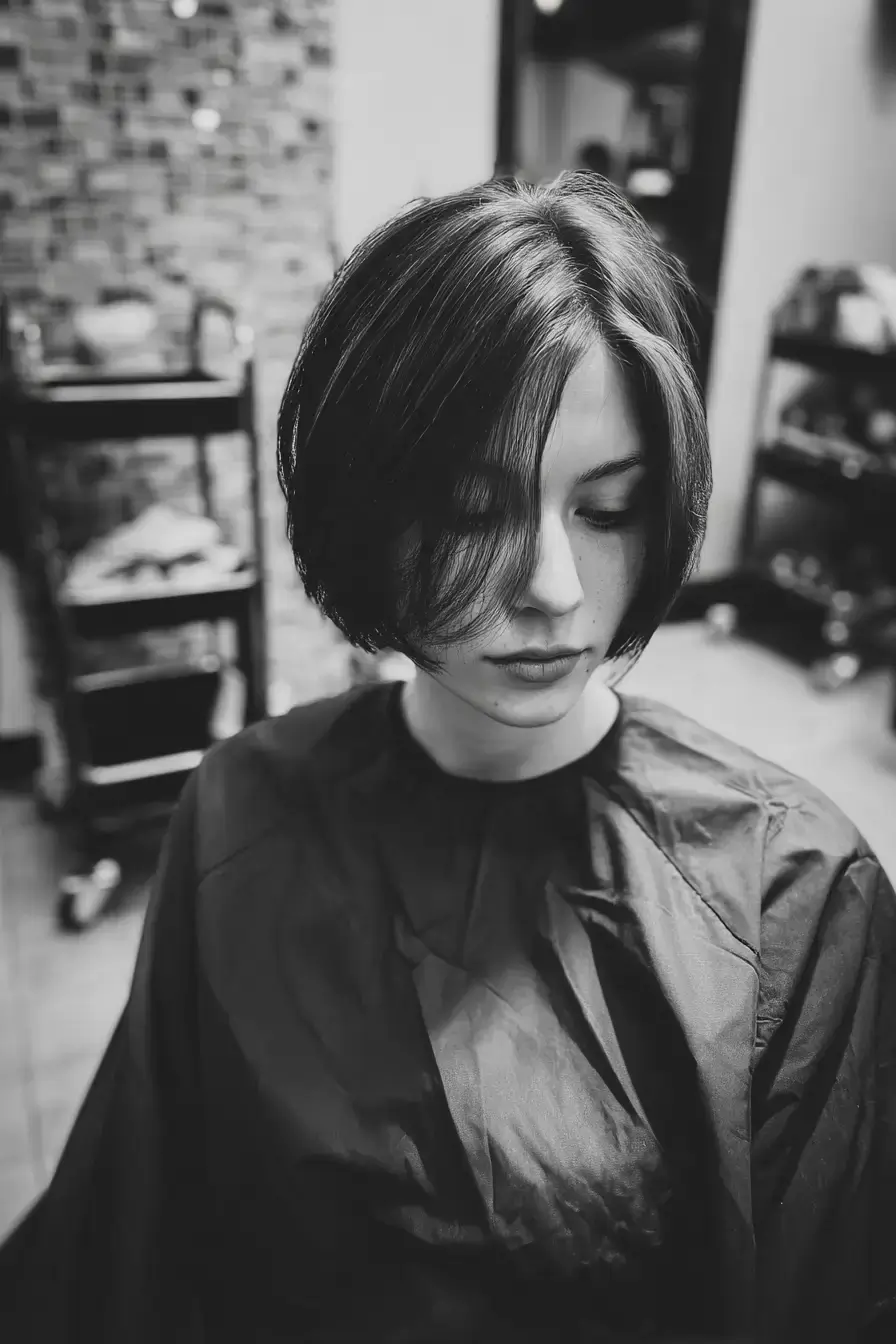
Every line of the graduation shows on straight hair, so a pixie bob there needs a clean cut. On dry hair I clipper the nape, graduate in quarter-inch increments, and angle the front to the earlobe with the shears flat. Oval and square faces with fine to medium density and 1A to 1C texture suit it. Paddle-brush it flat as you dry, then bend the front under with a flat iron. Trim every five weeks.
21. The Dark Brunette Pixie Bob
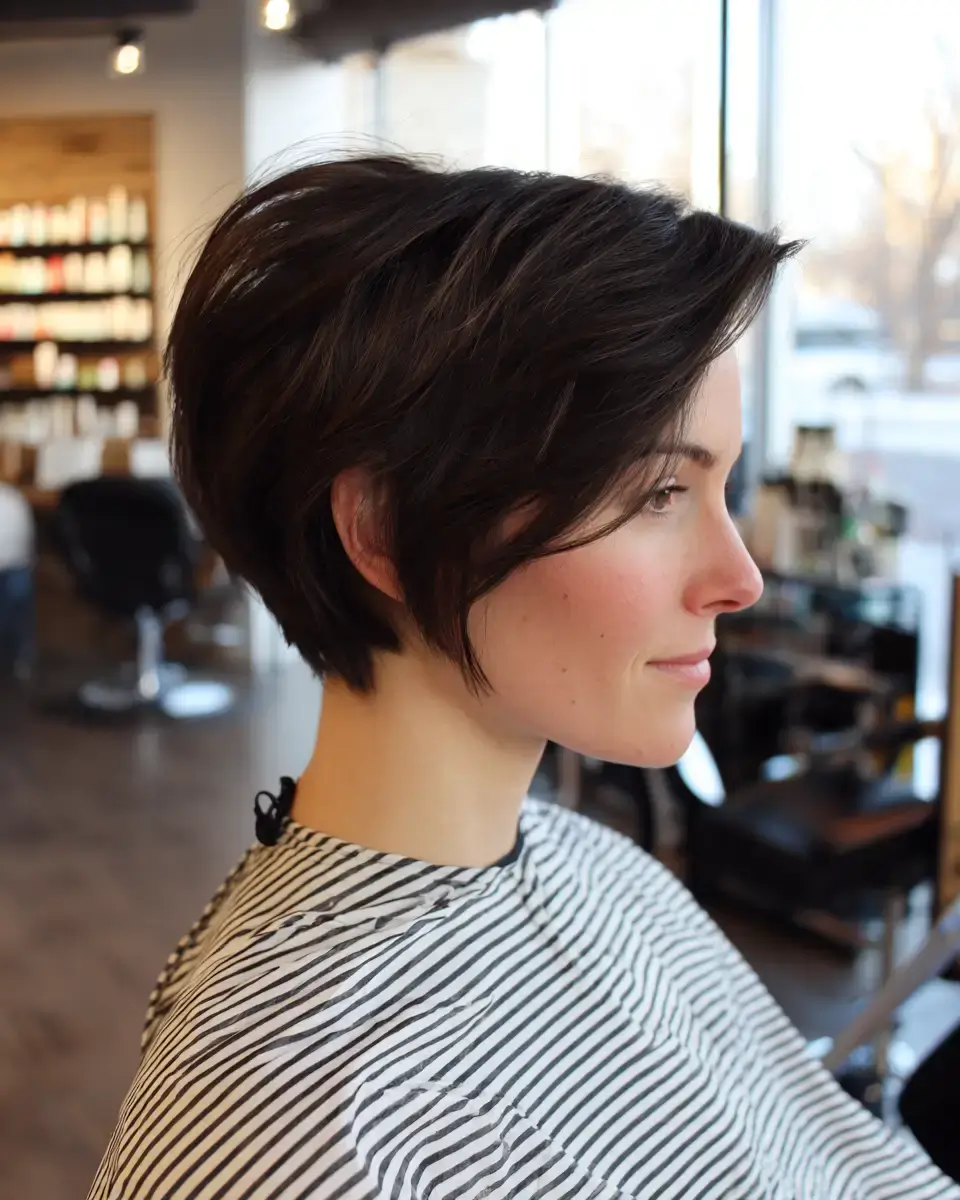
Against the skin, dark brunette makes the graduation curve of a pixie bob look sharp. Working on dry hair, I taper the nape, graduate to the occipital, angle the front to the earlobe, and apply a level four demi root to end. Fine to thick density and cool or neutral skin tones suit it. Paddle-brush it flat while drying and finish with serum. Refresh the tone every eight weeks.
22. Layered Pixie Bob
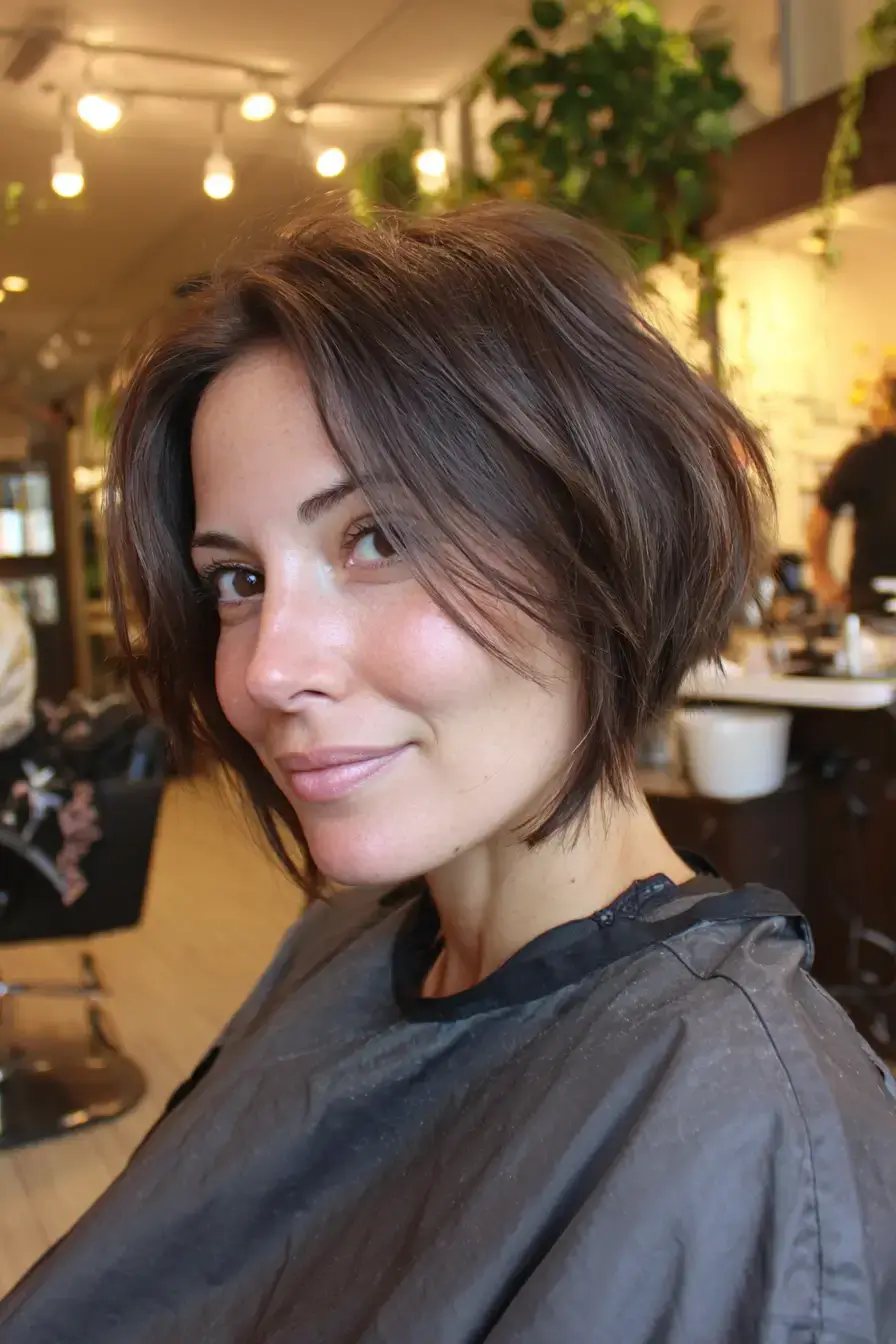
Running layers through a pixie bob gives the front movement while the graduated back stays untouched. On dry hair I taper the nape, graduate to the occipital and angle the front to the earlobe, then point cut layers from the cheekbone through the front. Most face shapes with medium to thick density and 1A to 2B texture can wear it. Rough-dry with volumizing spray and piece it out with paste. Trim every five weeks.
23. Air-Dry Pixie Bob
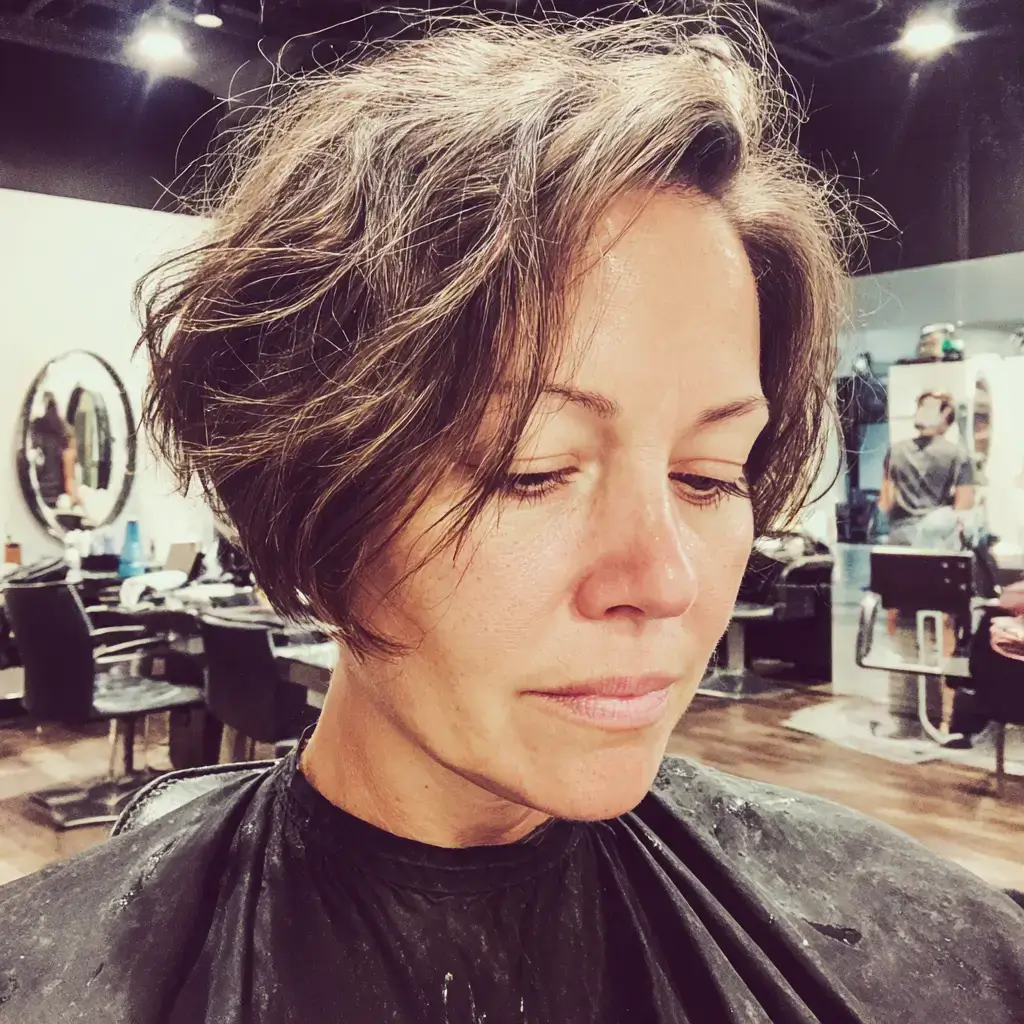
To let a pixie bob air-dry, I point cut the ends so the shape falls into place with no brush. Working dry, I taper the nape, graduate it softly, angle the front to the earlobe, and point cut deep into the ends. Any face shape with fine to medium density and 1C to 2B texture can wear it. Smooth a light cream through damp hair, finger the front forward, and leave it alone. Trim every six weeks.
24. The Platinum Pixie Bob
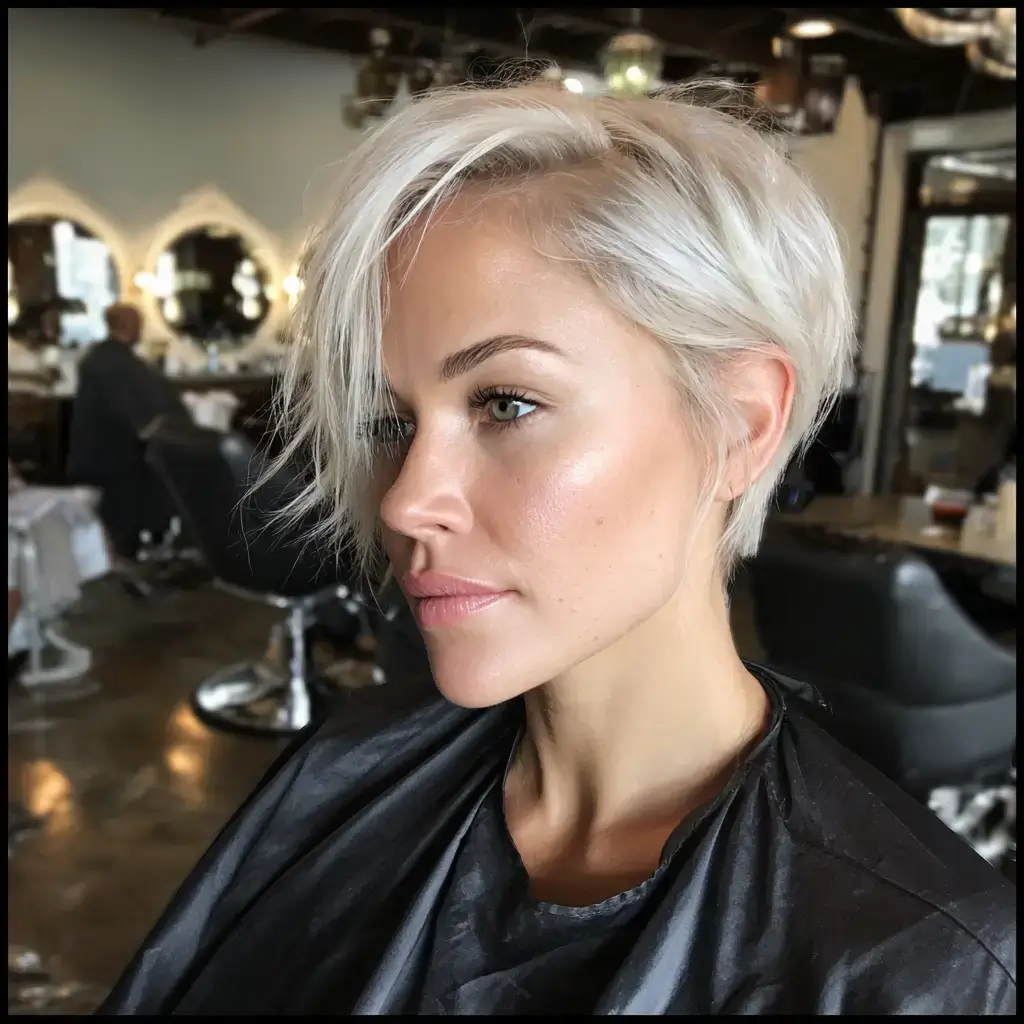
Because platinum shows the graduation of a pixie bob so clearly, the cut needs to be even. On dry hair I clipper the nape, graduate to the occipital and angle the front to the earlobe, then lift to a level ten and tone with violet toner. It works with fine to medium density and cool skin tones. Paddle-brush it flat while drying and use a bond builder weekly. Retouch every four weeks.
25. Pixie Bob With Face-Framing Pieces
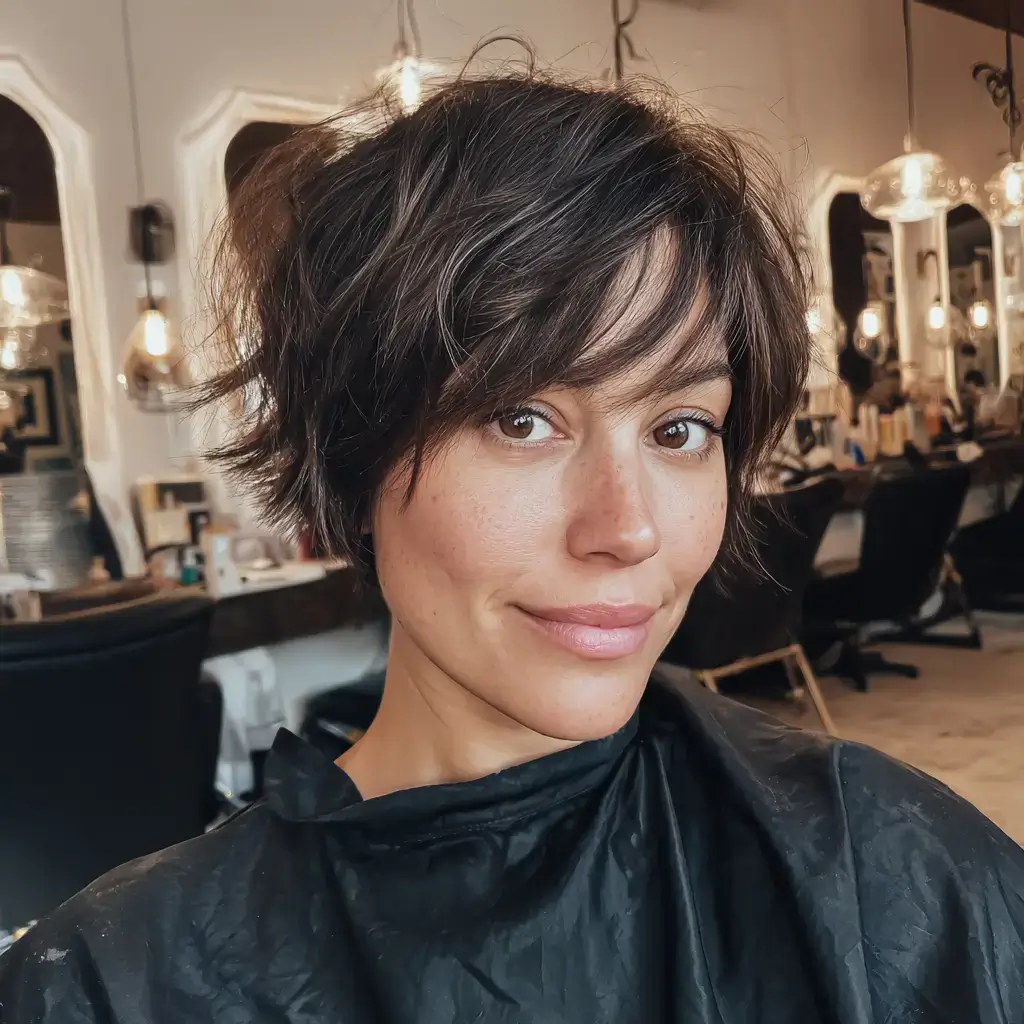
On a pixie bob, the face framing pieces are the longest hairs, left at the temples so they fall past the cheekbone. Working on dry hair, I taper the nape, graduate to the occipital and angle the front to the earlobe, leaving the temple pieces an inch longer and point cutting them. Square and round faces with fine to thick density and 1A to 2B texture suit it. Dry the pieces forward. Trim every five weeks.
If this fits, also read curly pixie cuts and pixie cut shaved sides.
A pixie bob sits right because the nape is tapered close while the front lands at the earlobe, so it reads as grown-out, not gamin. A flat brush through the front is the only step.