Cozy Living Room Design: A Complete Guide to Getting the Warm, Lived-In Look Right
Cozy living room design is the thing everyone wants and half the time gets wrong. I know because I spent two years with a living room that looked fine in photos and felt like a waiting room in person. Great sofa. Nice art. Zero warmth. It took me embarrassingly long to figure out the problem wasn’t my furniture — it was that I had one overhead light, a rug the size of a bath mat, and nothing soft to touch anywhere in the room.
Once I fixed those three things, the room actually changed. Not redecorated-changed. Felt-different-changed. That’s what this guide is about: the specific, unglamorous stuff that makes a living room feel like somewhere you want to sit for four hours on a Sunday.
What “Cozy” Actually Means (It’s Not a Style, It’s an Approach)
Here’s the confusion I ran into early: I kept searching “cozy living room style” like it was one aesthetic, similar to farmhouse or mid-century. It isn’t. Cozy is a comfort-first approach that layers on top of whatever style you already have — modern, cottage, Scandinavian, rustic, transitional. You’re not picking a lane. You’re adding warmth to the lane you’re already in.
The common thread across every cozy room that works:
– Warm neutrals and earthy color anchors — terracotta, mustard, deep green, inky blue, warm burgundy, camel, oatmeal, chocolate brown
– Tactile materials — wool, boucle, velvet, faux fur, chunky knits, linen, raw wood, rattan
– Layered, warm-toned lighting instead of one bright source
– Furniture arranged for conversation, not just TV-watching
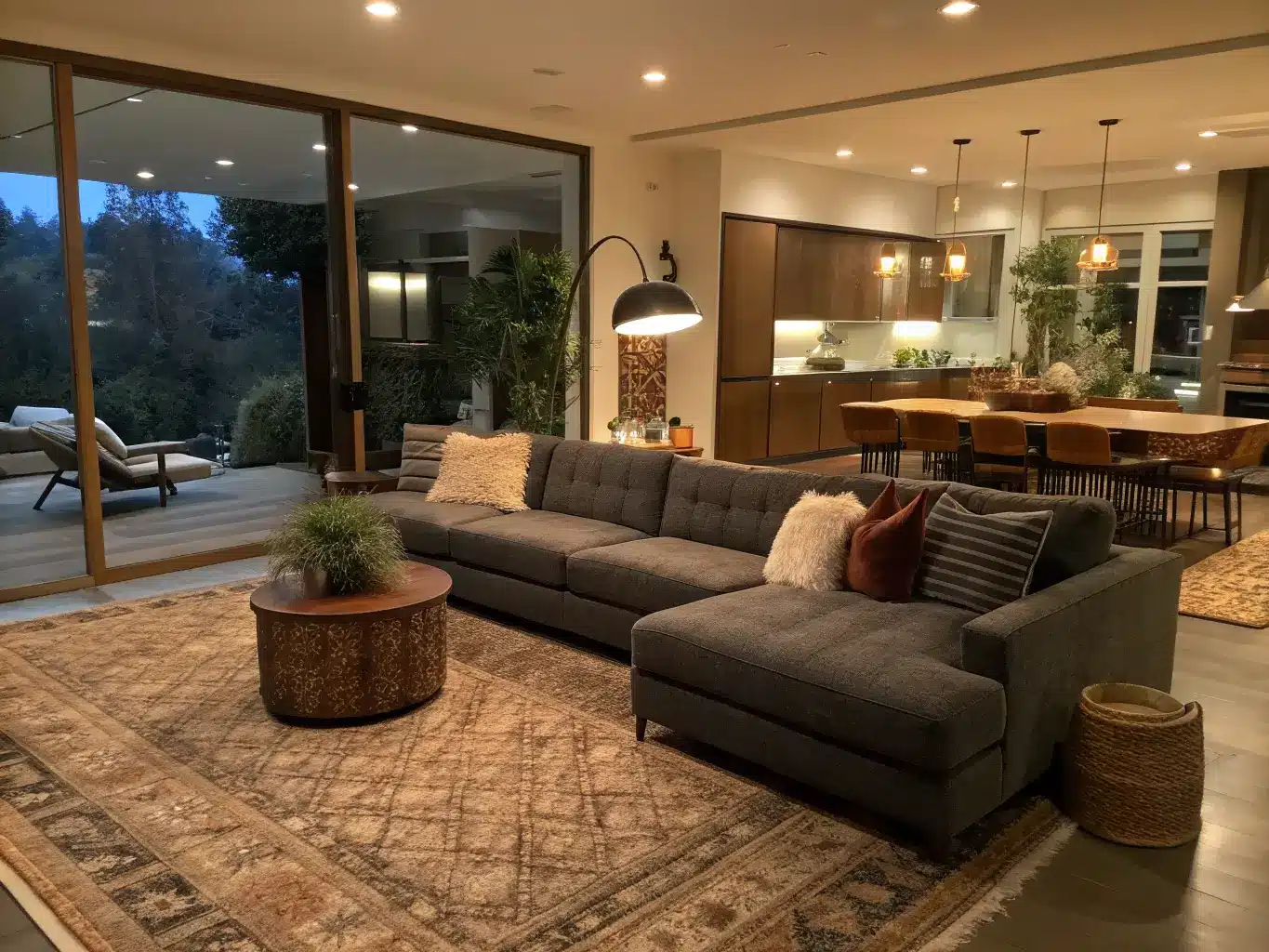
This works in almost any room size, but it’s genuinely easier in small-to-medium living rooms — intimate seating and layered light do a lot of the work for you. If you’ve got a big open-plan space, you’ll need to zone it (more on that below), or it’ll swallow the coziness whole.
Quick Snapshot Before You Start
Time: A full refresh takes about one weekend. A seasonal reset — swapping pillows, throws, and a few accents — takes 2 to 4 hours. This style moves fast because it’s built from seating, lighting, rugs, and textiles, not construction or built-ins.
Budget: You can do a real refresh for $250–$700 with new throw pillows, a blanket, a rug, and a couple of lamps. A full redesign with a sectional, large rug, layered lighting, and window treatments runs $1,500–$6,000+ depending on furniture quality. For reference:
– Throw pillows: $20–$80 each
– Throws/blankets: $30–$150
– Area rugs: $150–$1,200+
– Table or floor lamps: $50–$300+
– Sofas/sectionals: $800–$3,500+
Skill level: Beginner to intermediate. This is a layout-and-textiles project, not a carpentry project.
Best season: Year-round, but fall and winter are when this style really sings — warm palettes and soft lighting read as inviting in a way that lines up with the season anyway.
The Must-Have Pieces That Actually Make a Room Cozy
Seating you sink into, not perch on
Your sofa is doing more emotional labor than any other object in the room. A deep sofa, sectional, or a pair of plush armchairs should invite lingering — not formal posture. I learned this the hard way with a mid-century sofa I loved visually and never actually wanted to sit on for more than twenty minutes. Beautiful, but stiff. I sold it and bought a deep-seat sectional with a down-blend cushion, and suddenly people stopped leaving the room after dinner.
A rug big enough to matter
The single biggest mistake I made originally: my rug was too small. It sat in the middle of the seating area like an island, and the whole room felt disconnected because of it. The fix — a rug big enough that at least the front legs of every seating piece land on it. In a standard living room, that usually means an 8×10 or 9×12, not the 5×7 that looks “fine” in the store.
Lighting in layers, not just from the ceiling
This is the one that changes everything and gets skipped the most. Overhead lighting alone makes a room feel flat and a little clinical, no matter how nice your furniture is. You want:
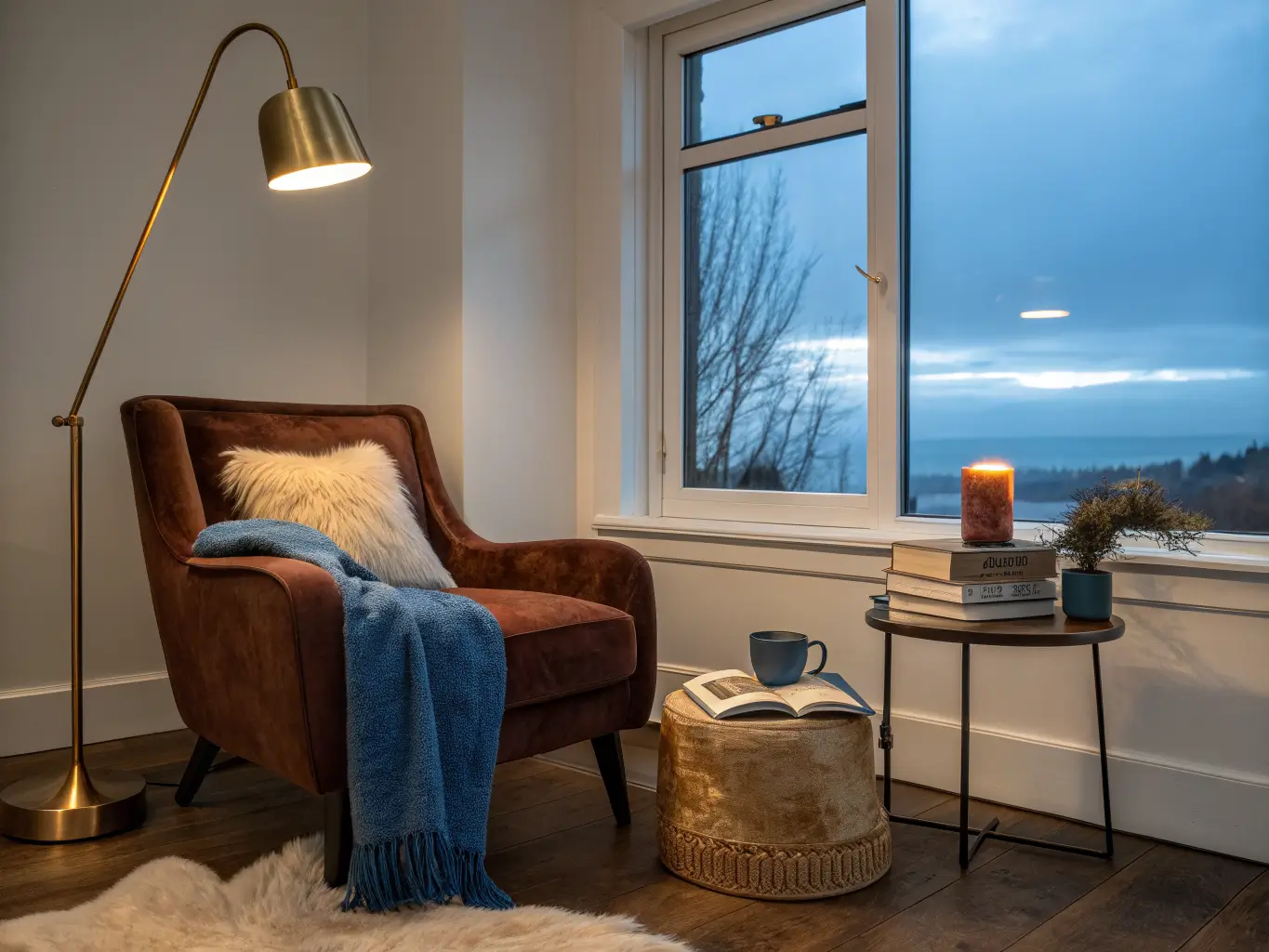
– A floor lamp near the reading chair
– A table lamp on each side table
– Wall sconces or candles for ambient fill
– Warm white bulbs, 2700K–3000K — anything cooler reads office, not living room
– Dimmers wherever you can put them
I switched every bulb in my living room from a cool 4000K to warm 2700K in one afternoon for under $40. It made a bigger visual difference than any piece of furniture I’ve bought.
Soft textures you can actually feel
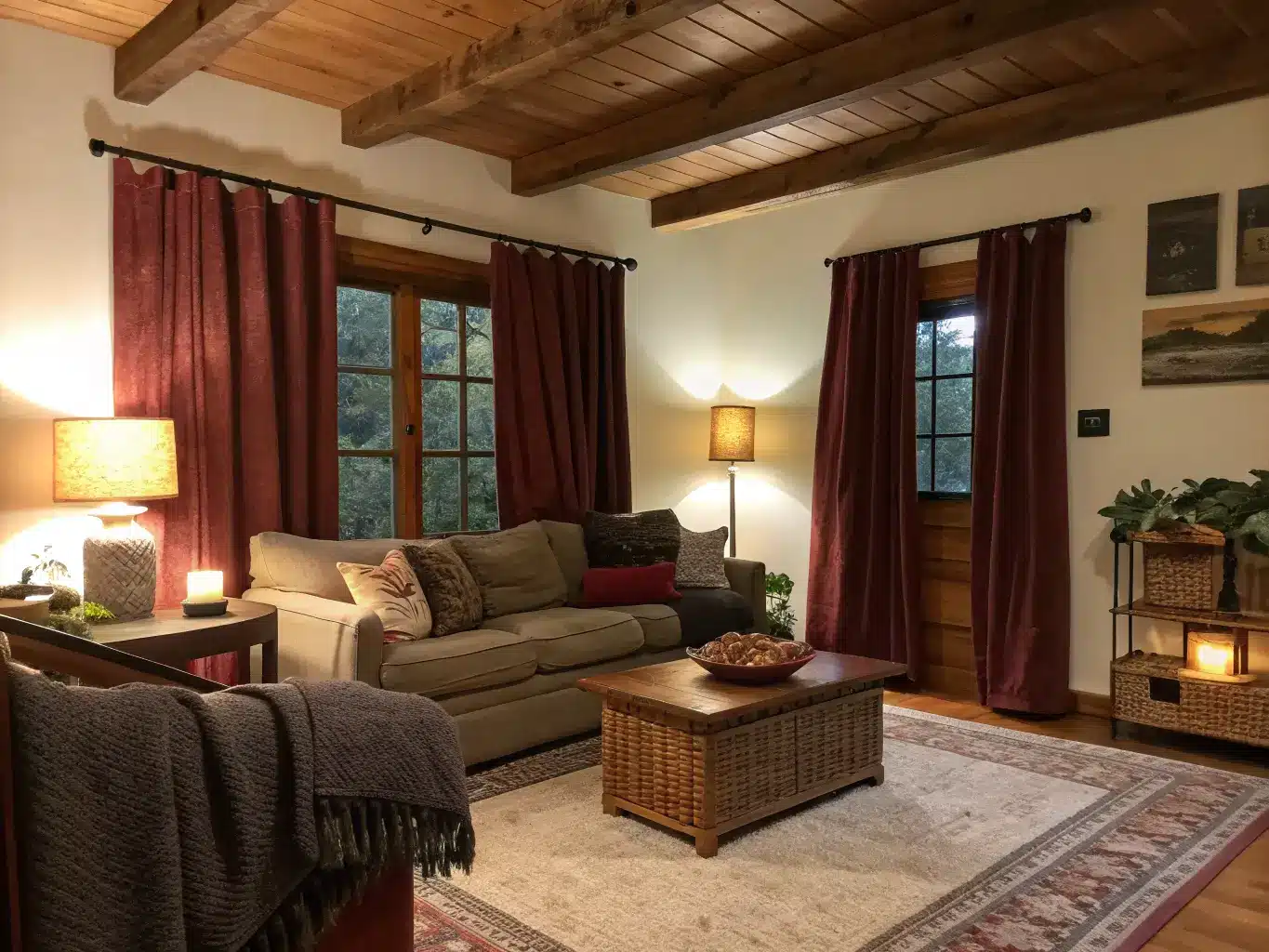
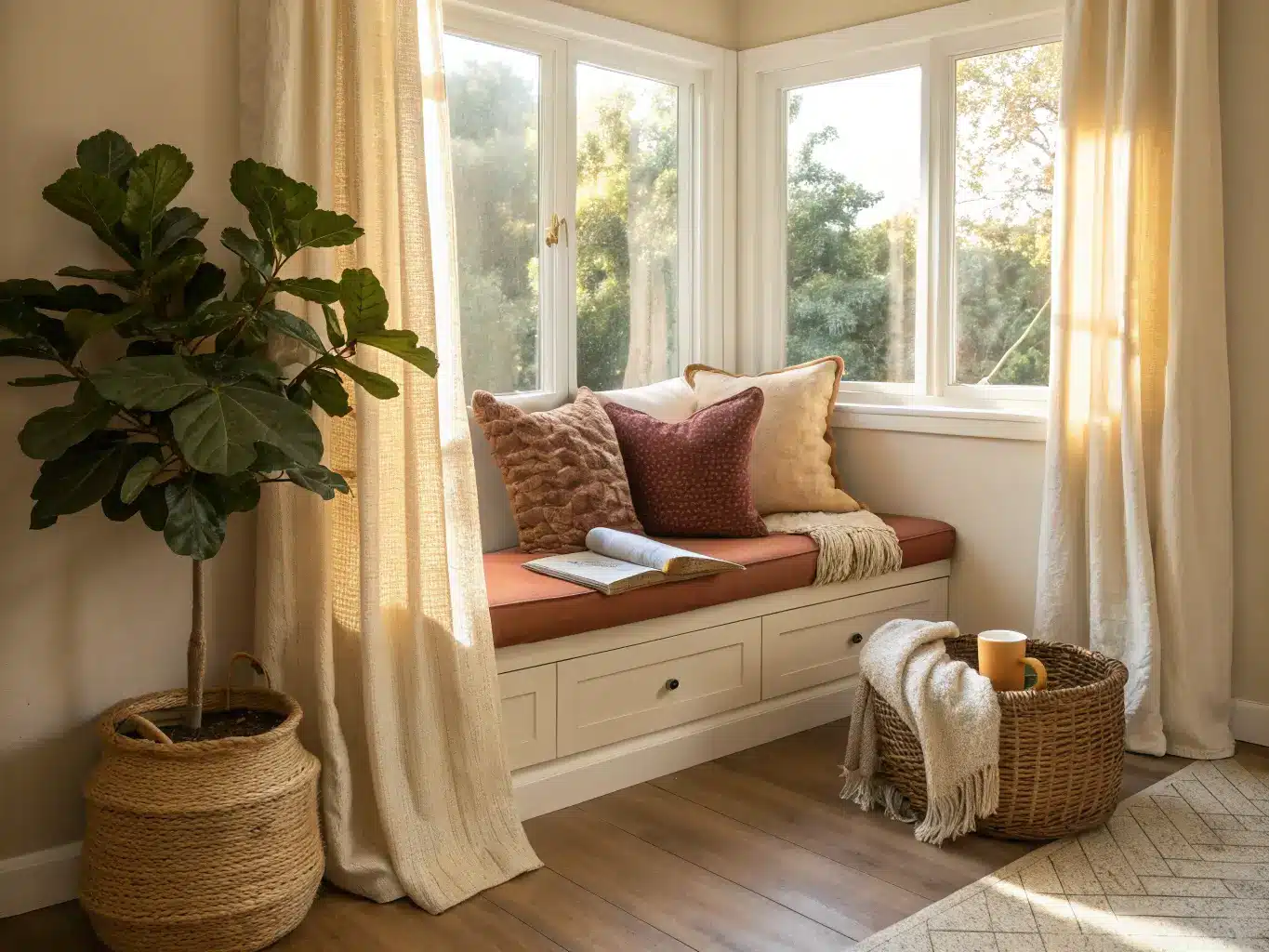
Throw pillows, blankets, and layered drapery aren’t decoration — they’re the mechanism that makes a room feel warm instead of styled. Mix your fabrics: velvet, wool, chunky knit, boucle, faux fur. Aim for at least three different textures visible from the main seating spot — say, a wool throw over the sofa arm, a velvet lumbar pillow, and a high-pile rug underfoot. That combination is what makes a room read as cozy even in a photo, not just in person.
Something soft in the middle of the room
An upholstered ottoman or a substantial coffee table makes the room feel usable — a place to put your feet up, not just a display surface. Ottomans especially soften a room visually in a way hard-edged coffee tables don’t.
Natural, imperfect touches
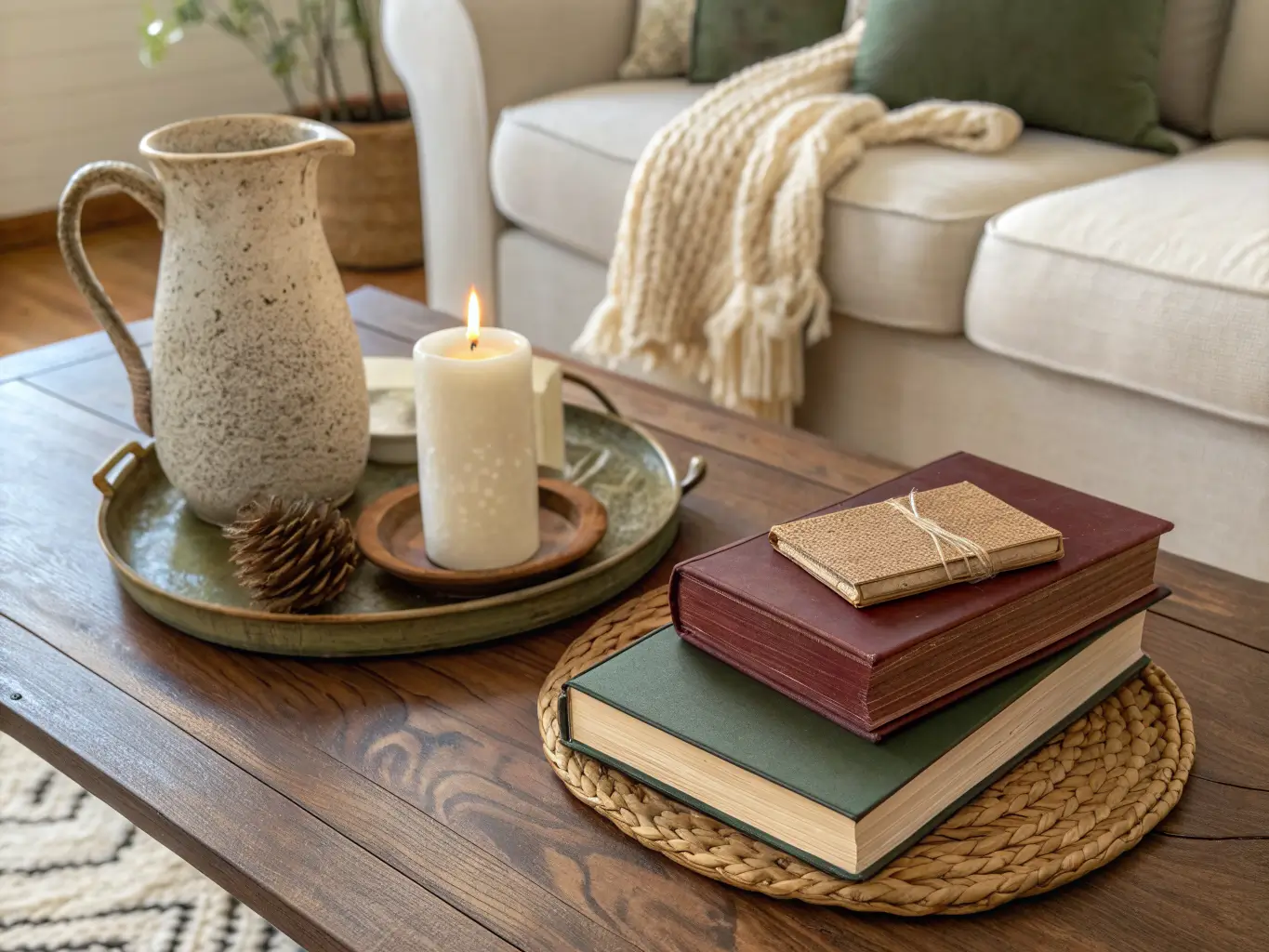
Houseplants, wood accents, stone, stacked books, personal objects. These keep a room from feeling like a showroom. My “fix” here was embarrassingly simple: I put my actual, well-worn paperbacks on the coffee table instead of the design books I never open. It sounds trivial. It reads as lived-in immediately.
Optional Layers Worth Adding
Once the basics are in place, these are the extras that push a good room into a great one:
– Seasonal swaps: heavier drapes and richer, darker pillow tones for fall/winter; lighter linen and cotton for spring/summer
– Organic accents: dried florals, branches, pinecones, woven baskets, ceramics
– A little metal: brass, aged gold, or blackened bronze in small doses — a lamp base, picture frames, a tray. Keep metal secondary. It sharpens the room, but too much and you lose the softness that makes it cozy in the first place
– Vintage and inherited pieces: framed family photos, a thrifted side table, your grandmother’s ceramic bowl. I found a chipped stoneware pitcher at an estate sale for $6 and it’s done more for that room than the $200 vase I almost bought instead
How to Actually Put It Together
Start with layout, not decor. Clear the room first so you can see it empty — you need that reset to layer without it turning cluttered. Place the big pieces in this order: sofa/sectional, armchairs, rug, coffee table or ottoman.
Arrange for conversation, not just for the TV. Push furniture into a semicircle, U-shape, or inward-facing cluster instead of lining everything against the walls. Keep the seating group within about 8–10 feet so people can actually talk without raising their voices. Floating the sofa a few feet off the wall, rather than backed against it, is a small move that makes the whole layout feel more intentional.
Build your palette from a warm base. Pick your dominant warm tone — walls, big upholstery, or a major textile — and repeat it two or three times around the room. Add one related accent color for depth. Resist the urge to add a fourth or fifth color; cohesive beats busy every time here.
Layer in the rug, sized to ground the whole seating area, not just sit under the coffee table.
Add pillows and throws in mixed textures, not five pillows in the same linen. Vary weight and texture — one chunky knit, one velvet, one patterned cotton.
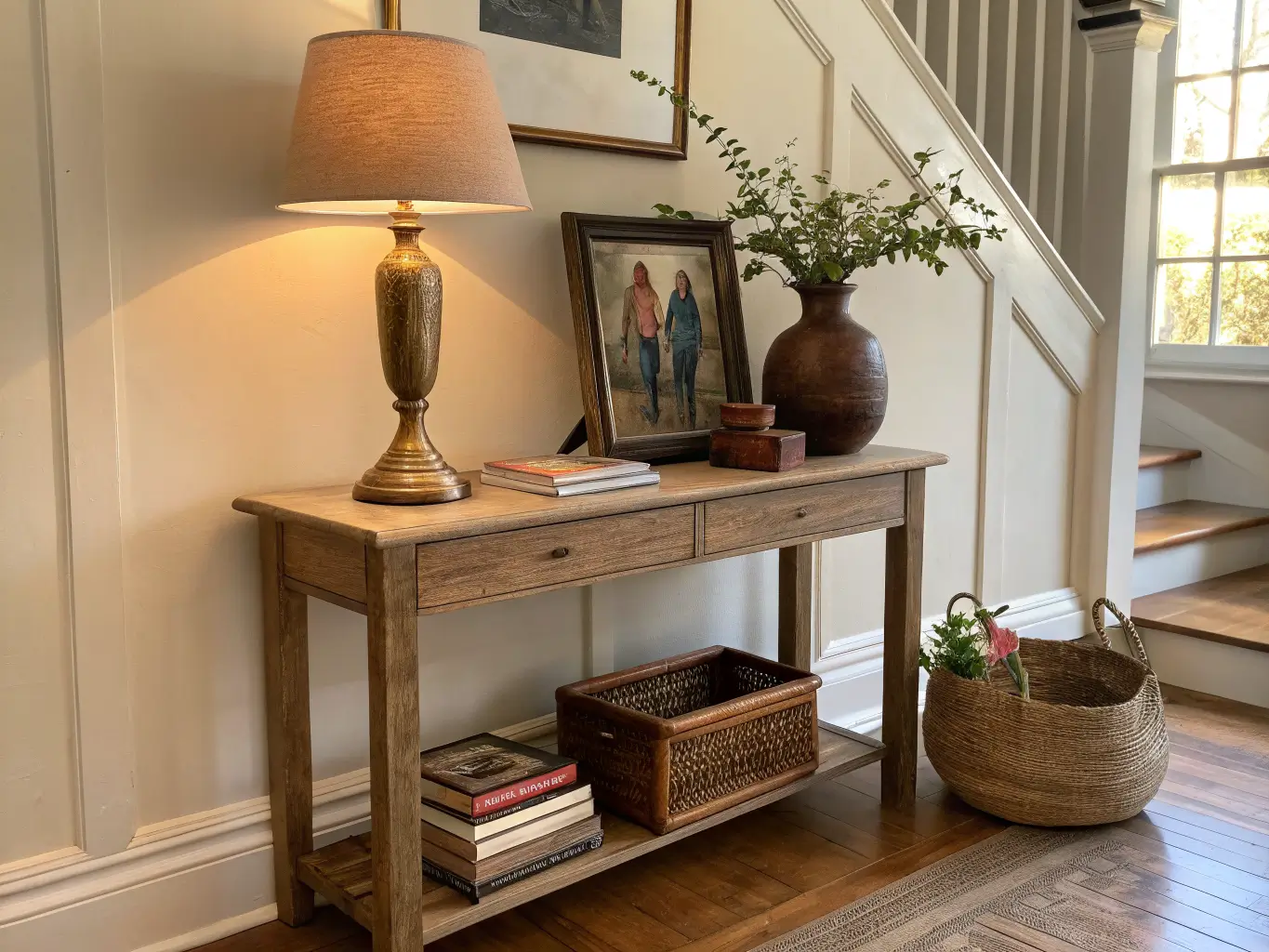
Style surfaces lightly. Books, a candle, one or two personal objects, a ceramic tray. This is where I overcorrected the first time — I piled every candle and coaster I owned onto one console table and it looked like a gift shop. Less is more here. Pick one surface to be the “collected” one and keep the rest clean.
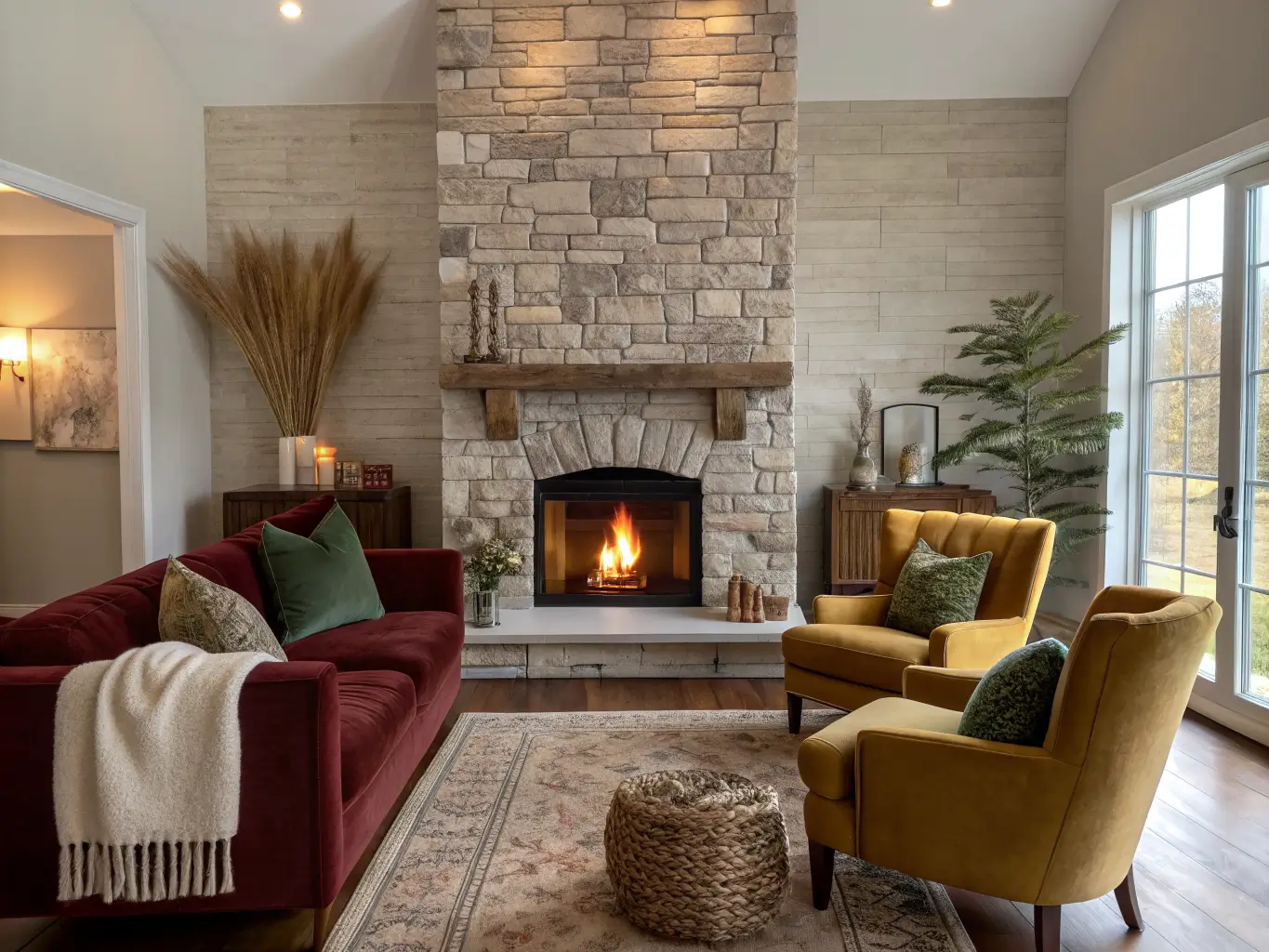
Give the room one focal point. A fireplace, a big piece of art, a lamp-lit reading corner. Cozy rooms feel intentional when your eye has one clear place to land first.
Mistakes That Quietly Kill the Cozy Factor
– Relying only on overhead light. Fastest way to flatten a room. Fix it with lamps and warm bulbs before you touch anything else.
– Choosing furniture for looks over comfort. If it’s not a place you’d actually curl up, it’s working against the whole point.
– Undersizing the rug. A too-small rug visually disconnects your furniture grouping no matter how good everything else looks.
– Overdecorating every surface. Cozy isn’t the same as cluttered. Leave breathing room — a few empty inches on every surface, a clear path to walk through.
– Skipping texture in a neutral palette. If your color scheme is quiet, texture has to do the work. All-neutral plus all-smooth surfaces reads cold, not calm.
Keeping It Fresh Without Starting Over
Stay consistent. Pick a warm-neutral base and repeat two or three core materials — say, wood, wool, and brass — throughout the room so it feels considered instead of random.
Edit seasonally. Swap out a few accessories every few months so it stays warm but doesn’t accumulate into clutter. I do this every fall: new pillow covers, one new throw, the candles come out, a couple of summer items go into storage.
Balance softness with structure. All plush, all the time starts to feel heavy. Mix your velvet and boucle with something clean-lined — a simple wood console, a black metal lamp — so the room doesn’t tip into overly soft.
Budget tiers for updates:
– Low ($20–$150): New pillow covers, a throw, warmer bulbs, a plant, a stack of books
– Mid ($150–$600): A new accent rug, a floor lamp, upgraded curtains, a bigger ottoman
– High ($600+): Reupholstering seating, layered window treatments (sheers plus heavier drapes), a room-anchoring rug
Cozy plays well with almost anything else you’re into stylistically — modern, minimalist, rustic, coastal, Scandinavian — as long as the palette stays warm and the textures stay soft. That’s really the whole rule. Keep it warm, keep it touchable, light it like you actually live there.