Stylish Small Bathroom Ideas That Actually Make the Room Feel Bigger
Stylish small bathroom ideas usually fall apart the moment they hit real life, because most “inspiration” photos are shot in bathrooms that aren’t actually small. Mine is. My primary bath is a 5×7 with a tub-shower combo, one tiny window, and a door that hits the toilet if you open it too fast. I’ve redone it twice — once badly, once right — and the difference between the two came down to a handful of decisions that had nothing to do with how much money I spent.
The good news: a small bathroom is one of the easiest rooms in the house to make look intentional. There’s less square footage to fill, which means fewer decisions and less room for the clutter that makes small spaces feel even smaller. Here’s how I’d approach it, room by room, dollar by dollar.
Quick Style Snapshot: Time, Cost, and Scope
Before you start pulling paint chips, figure out which project you’re actually doing. There are three tiers, and they don’t blend into each other gracefully.
Cosmetic refresh (1–3 days): new mirror, hooks, towels, a shelf, some storage baskets. No tools beyond a drill.
Style upgrade (1–3 weeks): floating vanity, better lighting, a medicine cabinet, new faucet, larger mirror. Some plumbing and electrical knowledge needed, or a handyman for a day.
Renovation-level update (weeks, contractor involved): new tile, wall-hung fixtures, built-ins, pocket doors, reconfiguring the shower.
Budget ranges I’d actually plan around:
Budget refresh: $150–$600. This is mirror, hooks, towels, a shelf, storage baskets, and small decor swaps.
Mid-range upgrade: $600–$2,500. Floating vanity, upgraded lighting, medicine cabinet, new faucet, bigger mirror.
Full renovation: $2,500–$10,000+. New tile, wall-hung toilet or vanity, pocket/sliding door, shower reconfiguration.
This approach works best for powder rooms, 5×7 baths, narrow full baths, and small en-suites — basically anywhere the layout forces every fixture to earn its spot. Skill level scales with the tier: decor and paint are beginner work, a vanity or lighting swap is intermediate, and anything involving tile or moving plumbing is expert territory (or a call to a contractor). And unlike a lot of home decor, this stuff doesn’t go out of style with the seasons — it’s about light, proportion, and storage, which matter in January the same as July.
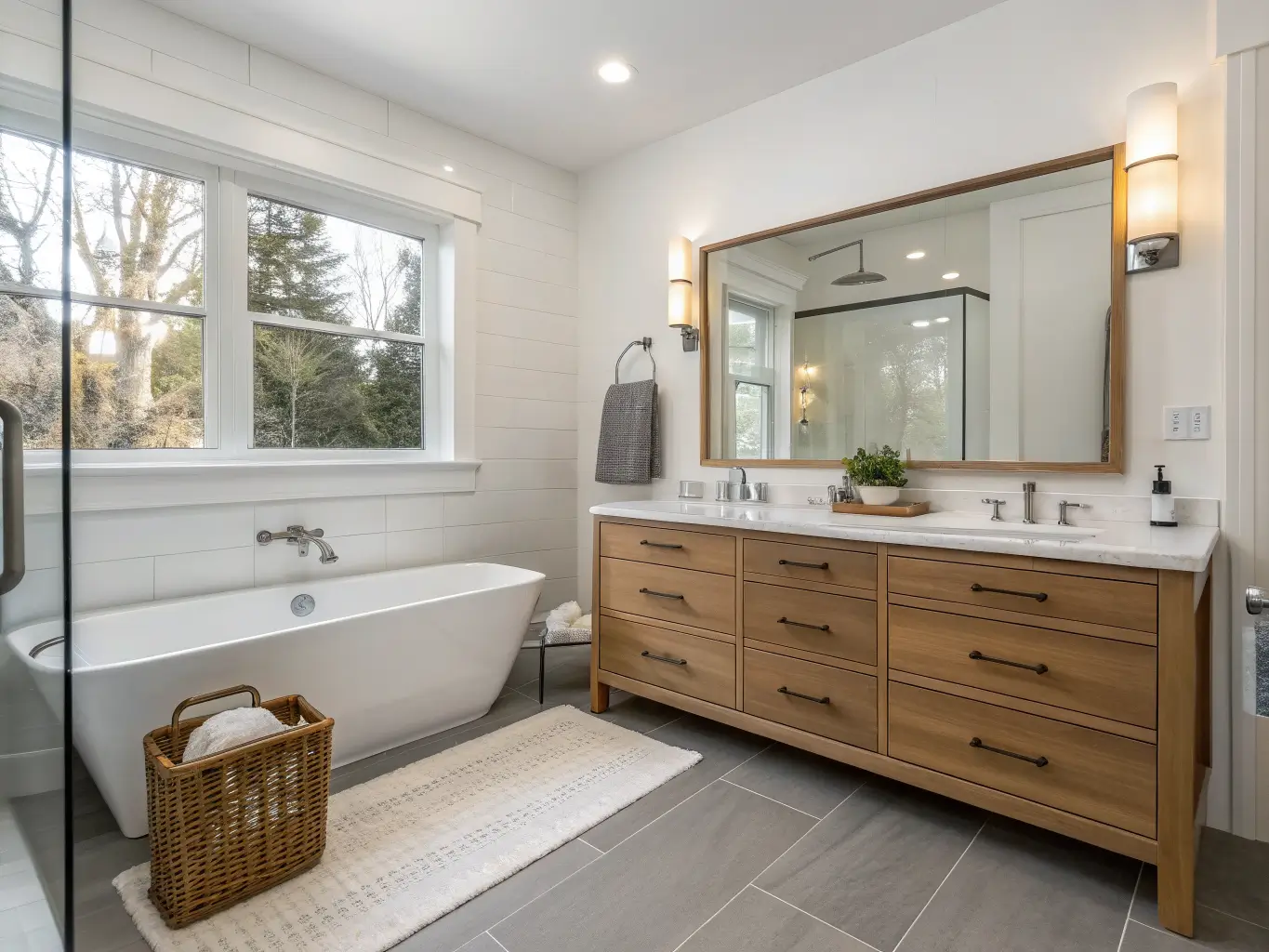
The Design Identity: Small-Space Modern, Not Fussy-Small
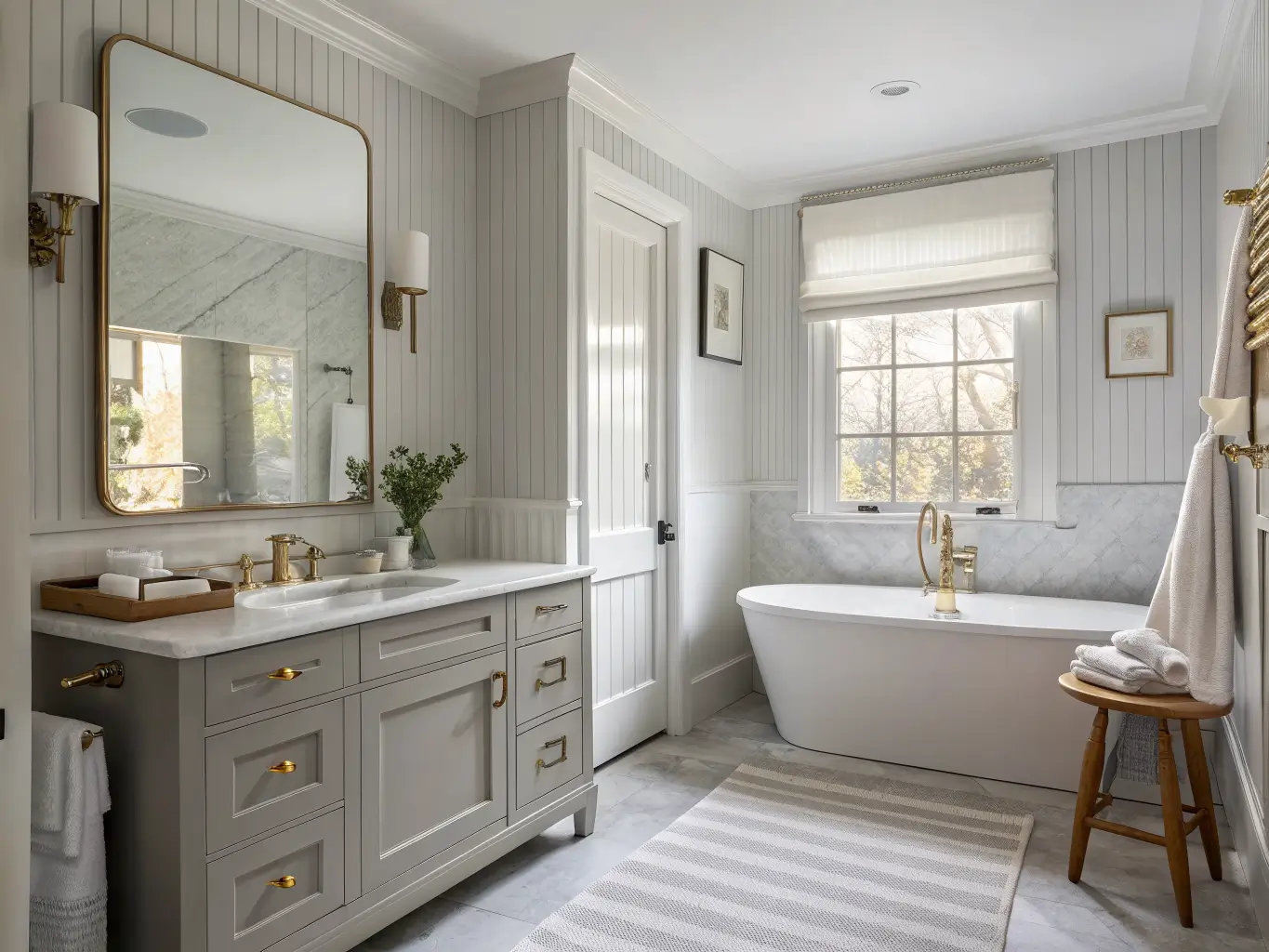
The style that actually works in tiny bathrooms is what I’d call small-space modern — airy, minimal, with storage that disappears into the walls instead of sitting on the floor. Within that, you can go a few directions: modern organic (wood tones, matte black, linen), monochrome (one color family top to bottom), coastal-neutral (pale blue, pearl white, light oak), or soft contemporary (warm white, brass, curved edges).
Colors that make a small bathroom read larger: warm white, pearl white, soft beige, pale gray, muted blue, or a full monochrome black-and-white scheme. I painted my first small bath a moody navy because I loved it in a magazine photo — the room felt like a closet within a week. Repainted it warm white with a satin finish and the same exact room photographed twice as large.
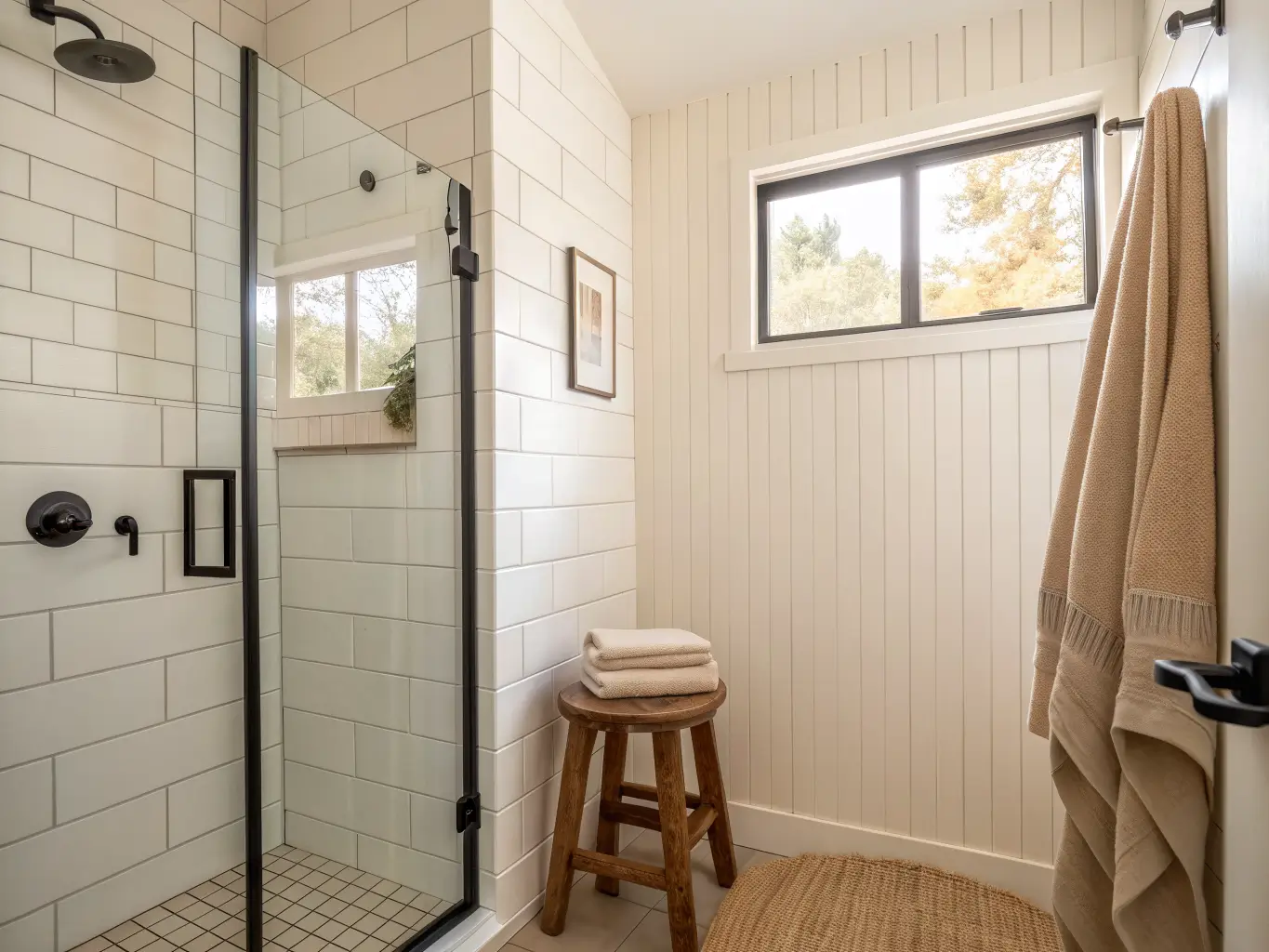
Materials that pull weight: large-format ceramic tile (fewer grout lines read as more space), glossy tile, mirror panels, brass or matte-black hardware, glass shower panels instead of curtains, wall-hung vanities, and natural wood or cane texture in the accessories to keep it from feeling sterile.
This whole approach is built for apartment dwellers, first-time homeowners, and renters who need a refresh that doesn’t involve breaking a lease agreement — plus anyone tired of a bathroom that feels cluttered no matter how much they clean it.
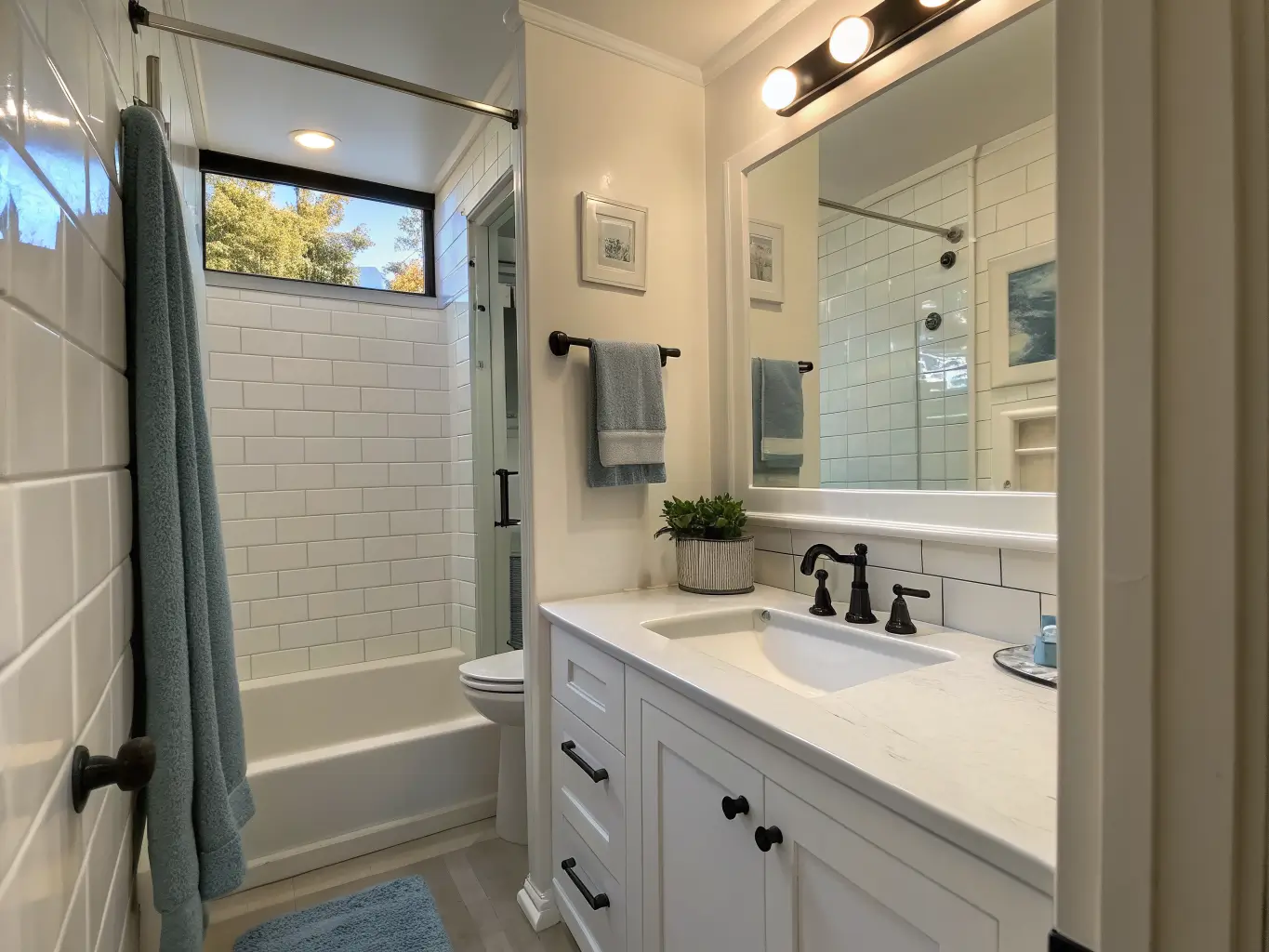
Must-Have Pieces for a Small Bathroom
If I had to redo my bathroom on a strict budget and could only buy a few things, this is the order I’d buy them in.
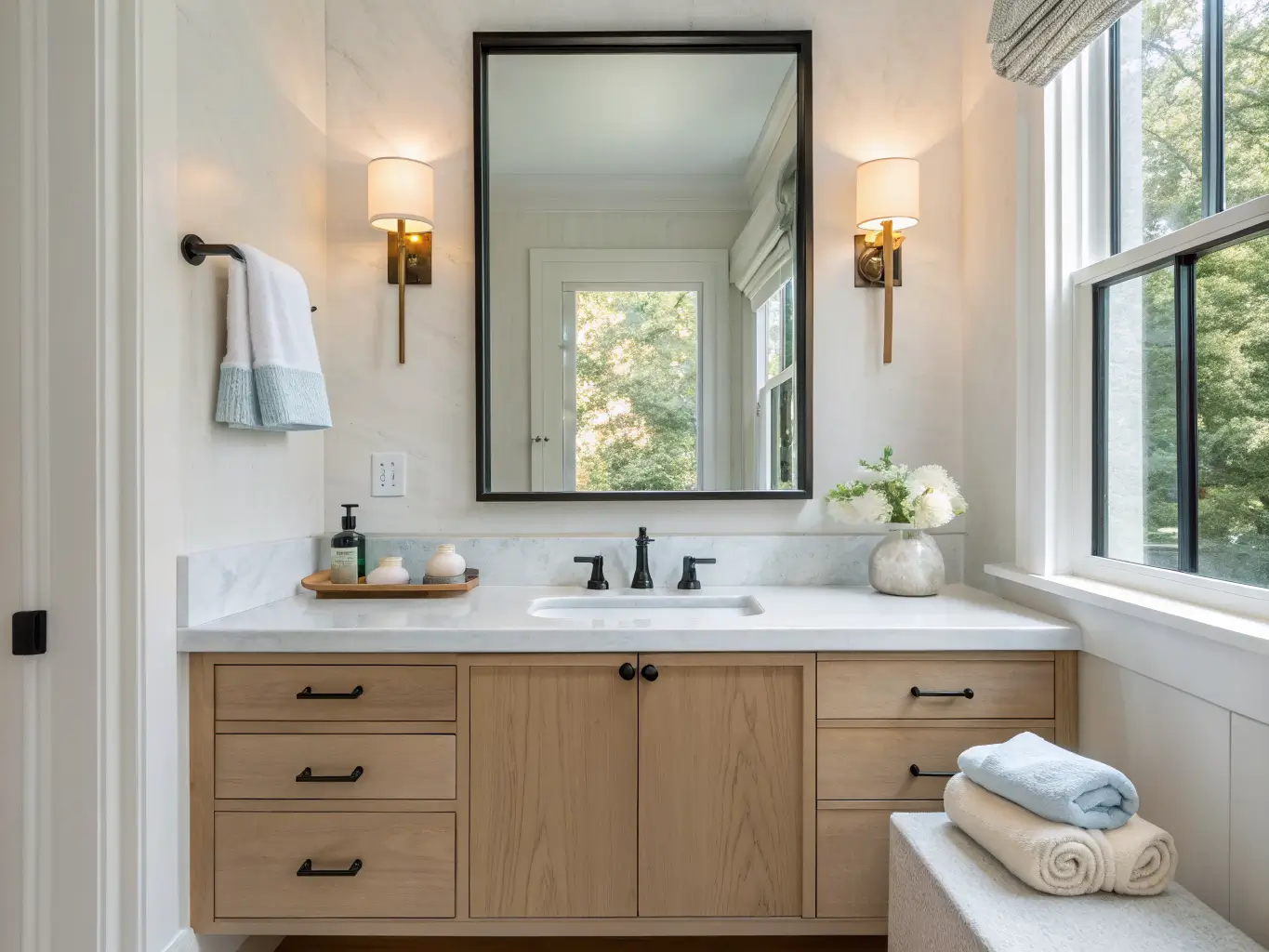
A mirror as large as the wall allows. Not a medicine cabinet mirror — a real, wall-filling mirror. Mine goes edge to edge above the vanity, and it single-handedly does more to open up the room than anything else I’ve bought.
A wall-mounted or floating vanity. Floating vanities free up the floor, and seeing floor space registers as “bigger” to your brain faster than any paint color will. Budget floating vanities start around $300–$500; nicer ones with a stone top run $800–$1,500.
A compact sink — a mini trough sink, console sink, pedestal, or small vintage-style basin — sized to your actual counter depth, not the biggest one that technically fits.
Slim, built-in storage: a recessed medicine cabinet, a niche cut into the shower wall, a floating shelf, or an over-toilet shelf. Anything that uses depth between the studs instead of floor space.
A glass shower door or a ceiling-mounted curtain rod with an extra-long curtain. Both draw the eye up and make the ceiling feel higher.
One coordinated hardware finish — faucet, towel ring, hooks, toilet paper holder, cabinet pulls, all matching. I learned this one the hard way: I had brushed nickel towel bars, a chrome faucet, and matte black hooks in my first pass. It looked like I’d raided three different stores, because I had.
Layered lighting: a vanity light plus a recessed can, or sconces flanking the mirror instead of one flush-mount overhead. Flat, single-source lighting is the fastest way to make a small bathroom feel like a motel.
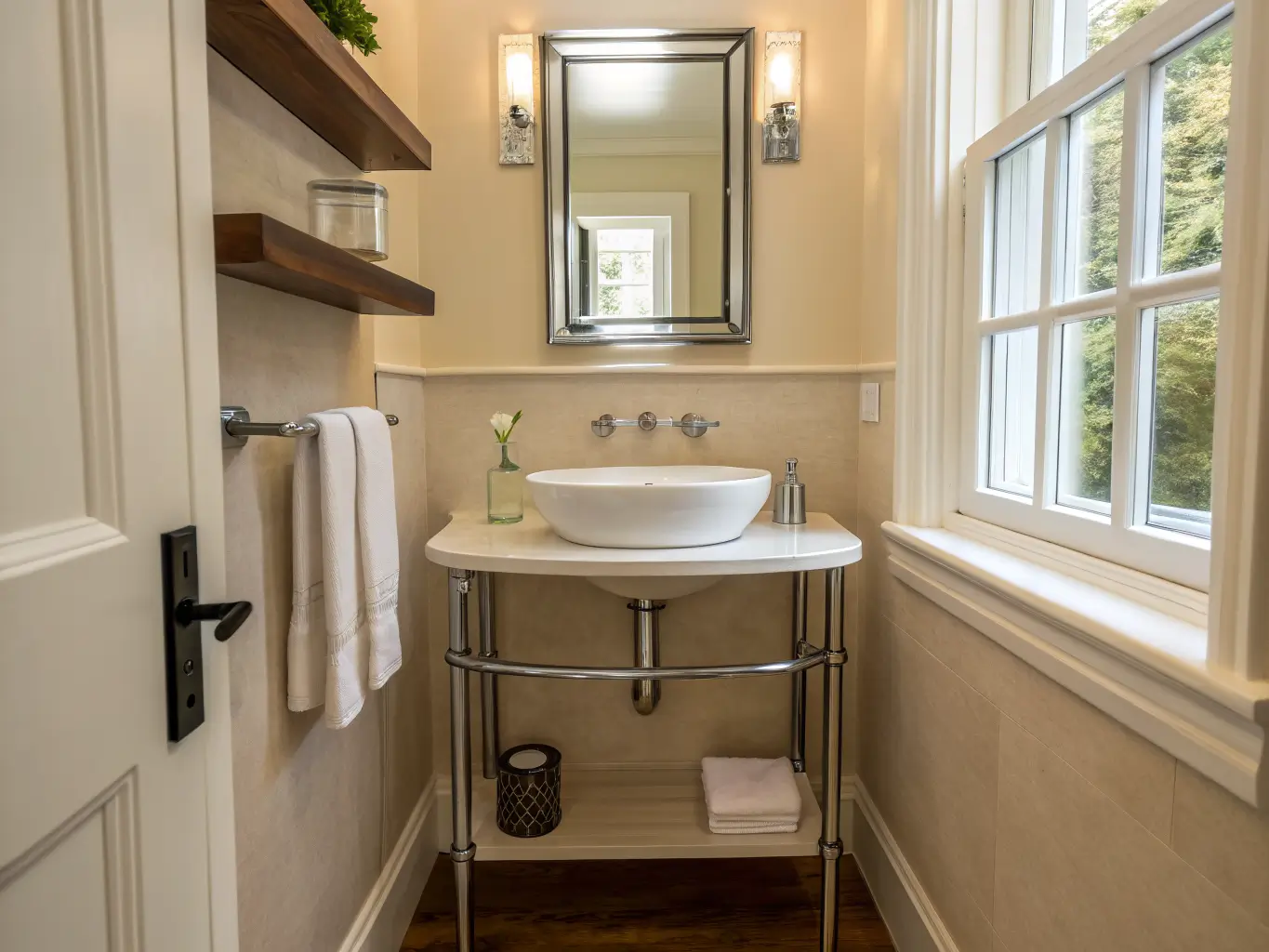
Optional Upgrades Worth Considering
Once the essentials are handled, these add personality without adding clutter:
Vertical-stripe wallpaper or vertically laid tile — draws the eye up, makes low ceilings feel taller.
Glossy paint or a high-sheen finish on trim or even walls, especially useful if your bathroom has a small or nonexistent window.
Statement wallpaper in a powder room specifically, since there’s no shower steam to worry about peeling it.
Wainscoting or faux paneling for texture that doesn’t compete for attention.
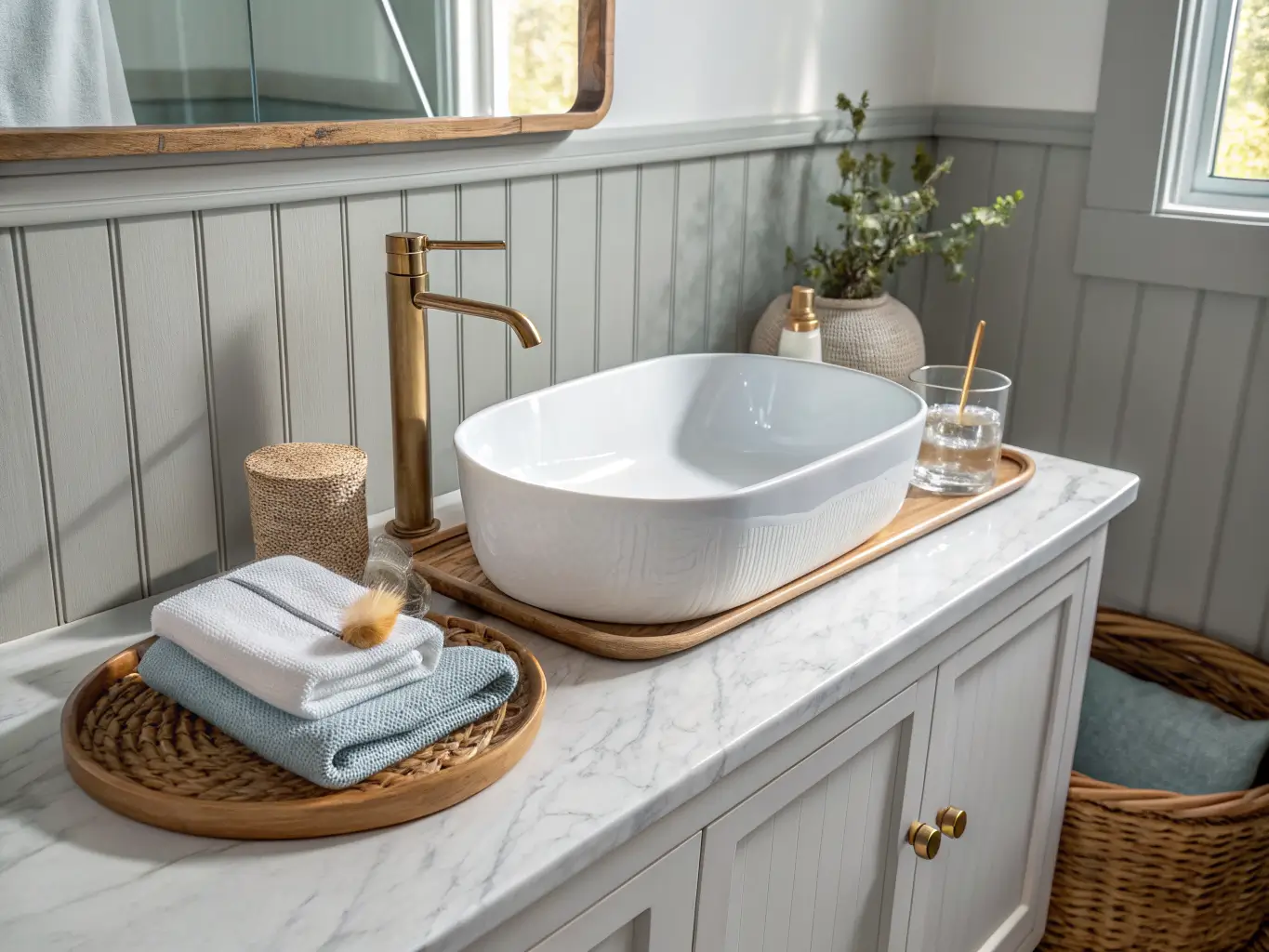
A small plant, wood stool, or woven basket — natural texture that keeps an all-white or monochrome bath from feeling clinical.
Fluted glass, ribbed tile, or a bone-inlay mirror frame if you want a touch of luxury without adding square footage of “stuff.”
A small gallery wall or single framed print — in a bathroom with no room for furniture, the walls are where personality lives.
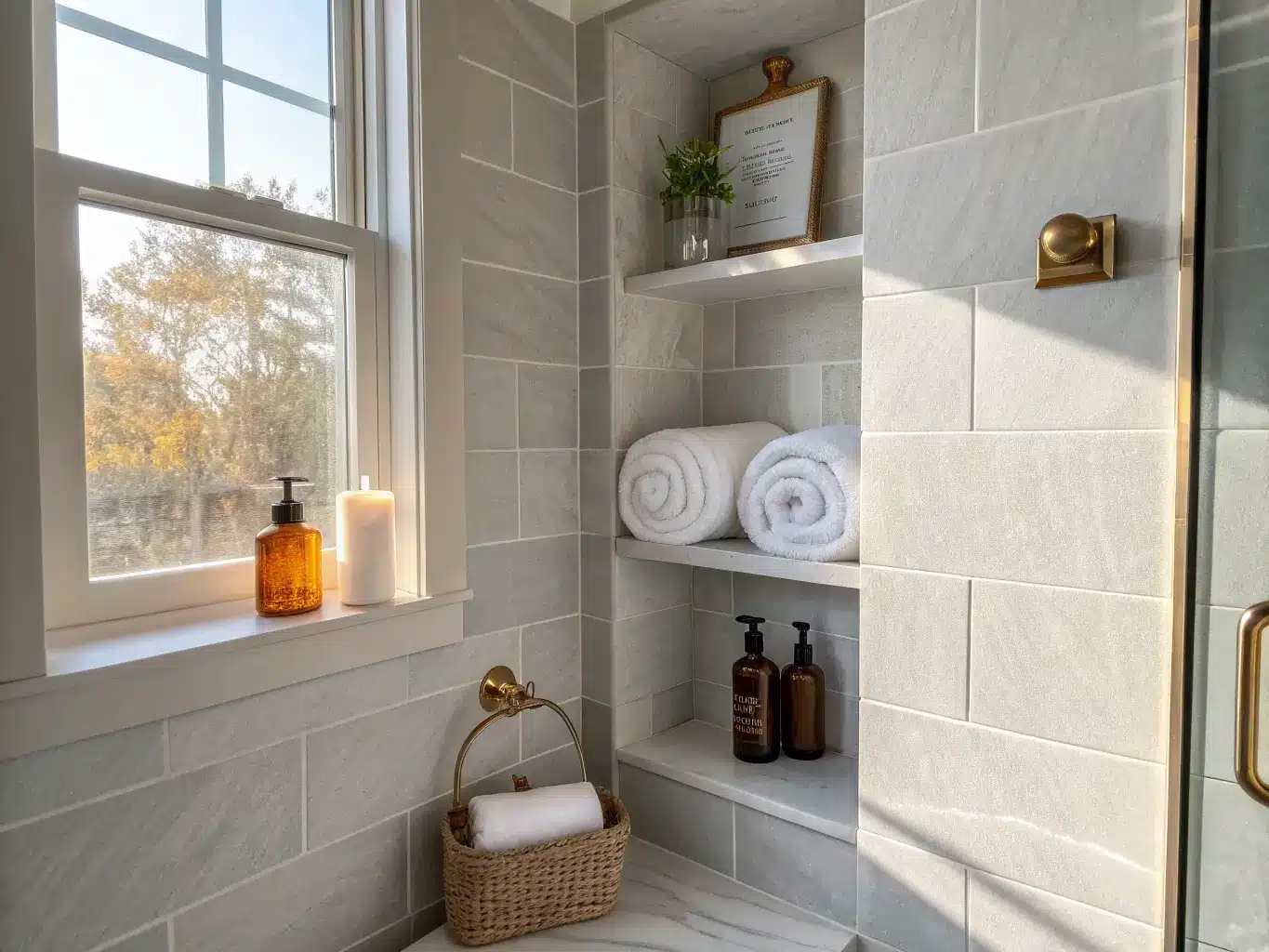
How to Put It Together: Order of Operations
Prep first. Clear the counters completely. Sort everything into keep, store, or toss. Measure your wall width, sink depth, and clearance zones before you buy anything — I bought a vanity once that was 2 inches too deep and it made the already-tight path to the shower nearly unusable. Decide your visual strategy up front: bright-and-airy, monochrome-luxe, warm-organic, or one-bold-accent. Pick one. Don’t try to do all four.
Then build in this order:
1. Anchor piece first — mirror, vanity, or tile treatment, whichever is the biggest visual investment.
2. Storage second — medicine cabinet, niche, shelf, wall basket.
3. Lighting third — sconces, overhead fixture, dimmer if you can swing it.
4. Tactile details last — towels, bath mat, soap dispenser, a tray, one or two decorative objects. Stop at two.
Use the walls aggressively. Over-toilet storage, hooks behind the door, slim ledges above eye level — anywhere that isn’t floor space is fair game.
Mistakes That Make a Small Bathroom Feel Smaller
A vanity that’s too deep for the room, eating into your walking path.
Too many small decor objects. A dish of soaps, three candles, a reed diffuser, and a stack of hand towels reads as clutter even if each item is nice on its own. Pick fewer, bigger things.
Ignoring lighting, especially in windowless bathrooms — this is the single most common mistake I see, because people assume decor fixes what light actually fixes.
Mixing finishes — three metals, two whites, and a wood tone all in one 35-square-foot room breaks the calm the space needs.
Leaving storage exposed. Open shelving stacked with product bottles is not the same as styled open shelving with three curated items.
Forgetting the ceiling. It’s a whole plane of the room most people never touch. Paint it, add a pendant, run tile up into it — anything besides flat white and a smoke detector.
Keeping It Cohesive Over Time
Repeat two to three core colors across towels, storage, wall finish, and hardware, and don’t deviate. Limit yourself to one hero pattern — one statement tile, one wallpaper, one bold textile. Treat empty counter and floor space as part of the design, not a gap you need to fill. And keep the small hardware matched: towel bars, hooks, and cabinet pulls in one finish pull a room together more than any single “statement” piece will.
Seasonal refreshes don’t need to touch the bones of the room — swap towels, the bath mat, soap bottles, and a small vase or plant, and leave the vanity and tile alone. Budget-friendly evolutions when you’re ready for more: a bigger mirror, new hardware, peel-and-stick wallpaper, or swapping open baskets for something with a lid.
If you want to lean into a specific look without a renovation:
Boho: natural fiber baskets, warm wood accents, a soft patterned hand towel.
Coastal: pearl white walls, pale blue accents, a breezy linen curtain, light oak stool.
Modern luxe: brass hardware, stone-look tile (even peel-and-stick), an oversized mirror, dark grout for contrast.
If a full renovation isn’t in the cards, spend your money on the mirror, the lighting, matched hardware, and one really good storage piece. Those four things did more for my bathroom than the $4,000 version of this project ever would have — I just didn’t believe it until I saw it.