Small Cabin Interior Design: How to Make a Compact Retreat Feel Bigger, Warmer, and Less Cluttered
My cabin is 340 square feet, and for the first year I owned it, it felt like a storage unit with a bed in it. I’d hung dark plaid curtains, bought a heavy oak coffee table because it “matched the cabin vibe,” and crammed in a bookshelf that blocked half the only window. It was rustic, sure. It was also a cave. The turning point was ripping out that bookshelf, painting the walls a warm white instead of leaving the honey-toned pine bare, and finally admitting that a small cabin interior lives or dies on light and restraint, not on how many “cozy” objects you can fit into it.
If you’re furnishing a weekend cabin, a rental in the woods, or a tiny home on a lake lot, the goal isn’t to look like a hunting lodge. It’s to get warmth and texture without the heaviness that makes small rooms shrink.
What This Style Actually Is
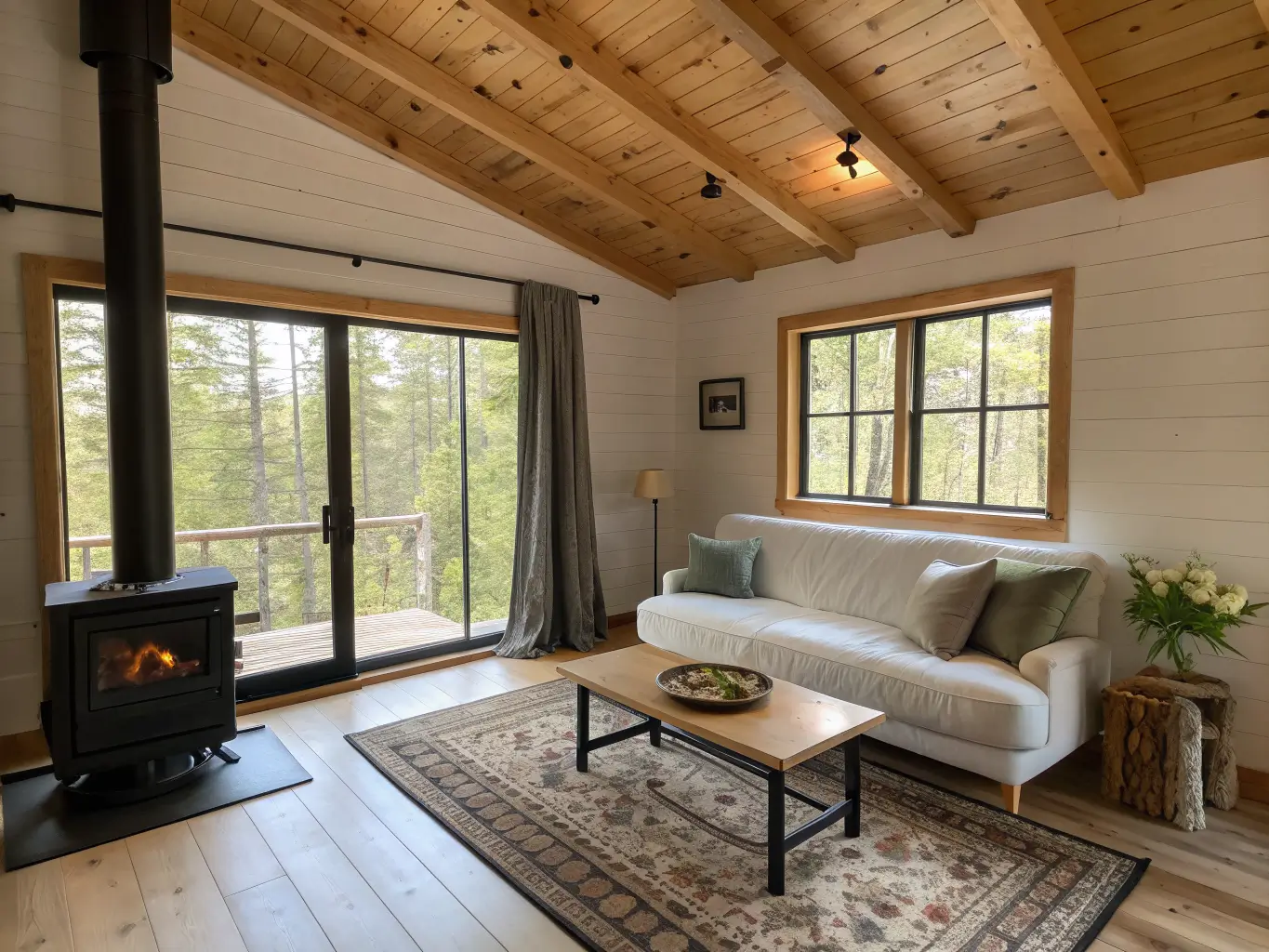
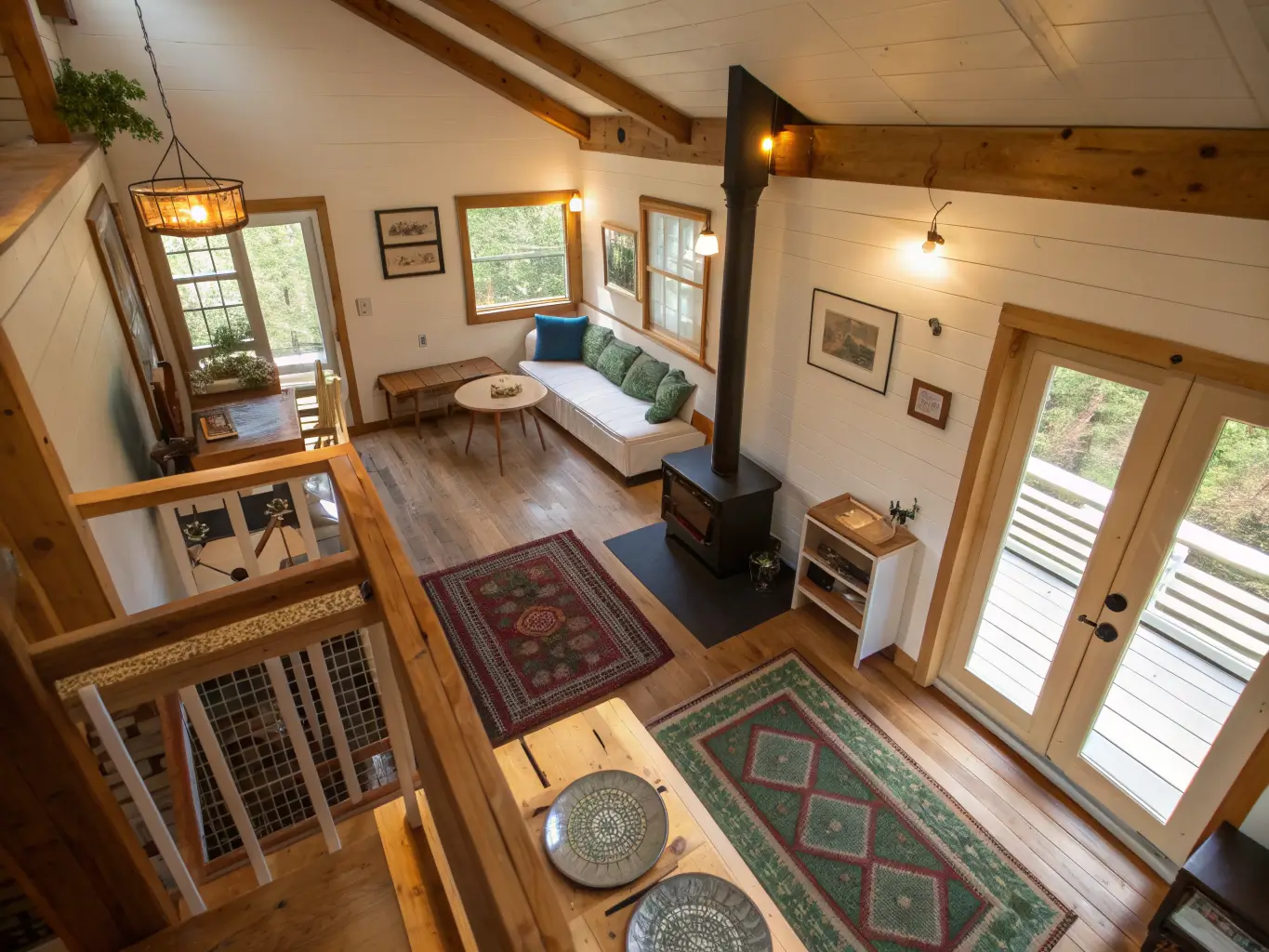
A small cabin interior done well is cozy rustic-leaning but modern — natural materials and simple lines, not dark log walls and antler chandeliers. Think warm white walls, exposed wood beams left natural, wool throws, and just enough leather and stone to keep it grounded. It’s built for people who want a low-clutter, timeless retreat: cabin owners, tiny-home dwellers, anyone furnishing a mountain or lake getaway who doesn’t want the place to feel dated in five years.
Where it works best: living rooms anchored by a stove or big window, lofts, sleeping nooks, compact kitchens, and small bathrooms — anywhere open layouts and smart storage matter more than square footage.
Quick Snapshot
– Time: 1–3 weekends for a styling refresh; 2–6+ weeks if you’re repainting, adding built-ins, or changing lighting and flooring
– Budget: $500–$2,500 for a decor-only refresh (paint, textiles, lamps, a mirror); $3,000–$15,000+ for furniture, lighting, shelving, and storage overhauls; custom built-ins push it higher
– Ideal size: 150–1,200 sq ft — studios, one-bedrooms, lofts, and open-plan micro-cabins benefit most
– Skill level: Beginner-to-intermediate for styling; intermediate-to-expert if you’re building millwork or rewiring lighting
– Season: Year-round, but the layered textiles and warm lighting really earn their keep in winter
Colors: warm white, cream, pale greige, soft taupe, sage or forest green, rust, navy, charcoal in small doses.
Materials: wood (pine, spruce, reclaimed), stone, wool, linen, cotton, leather, matte black metal, rattan and woven baskets.
The Pieces That Actually Make It Work
Hero pieces — buy these first:
– A storage sofa or sofa bed. In a small living room, a couch that doesn’t also hide blankets or hold a spare mattress is wasted square footage.
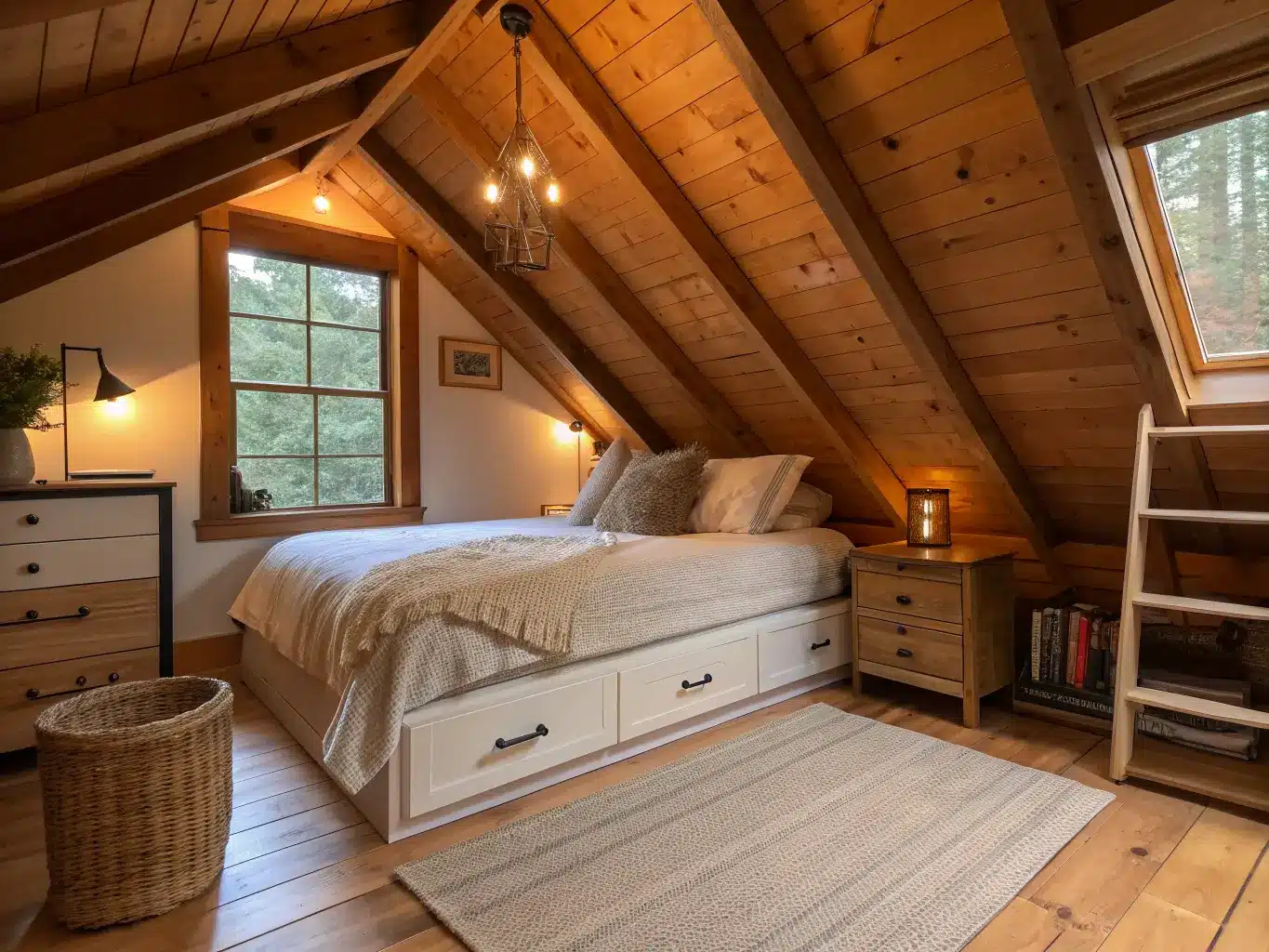
– A platform bed with built-in drawers, or a loft bed if your ceiling height allows it. Either way, you’re buying back floor space you’d otherwise lose to a dresser.
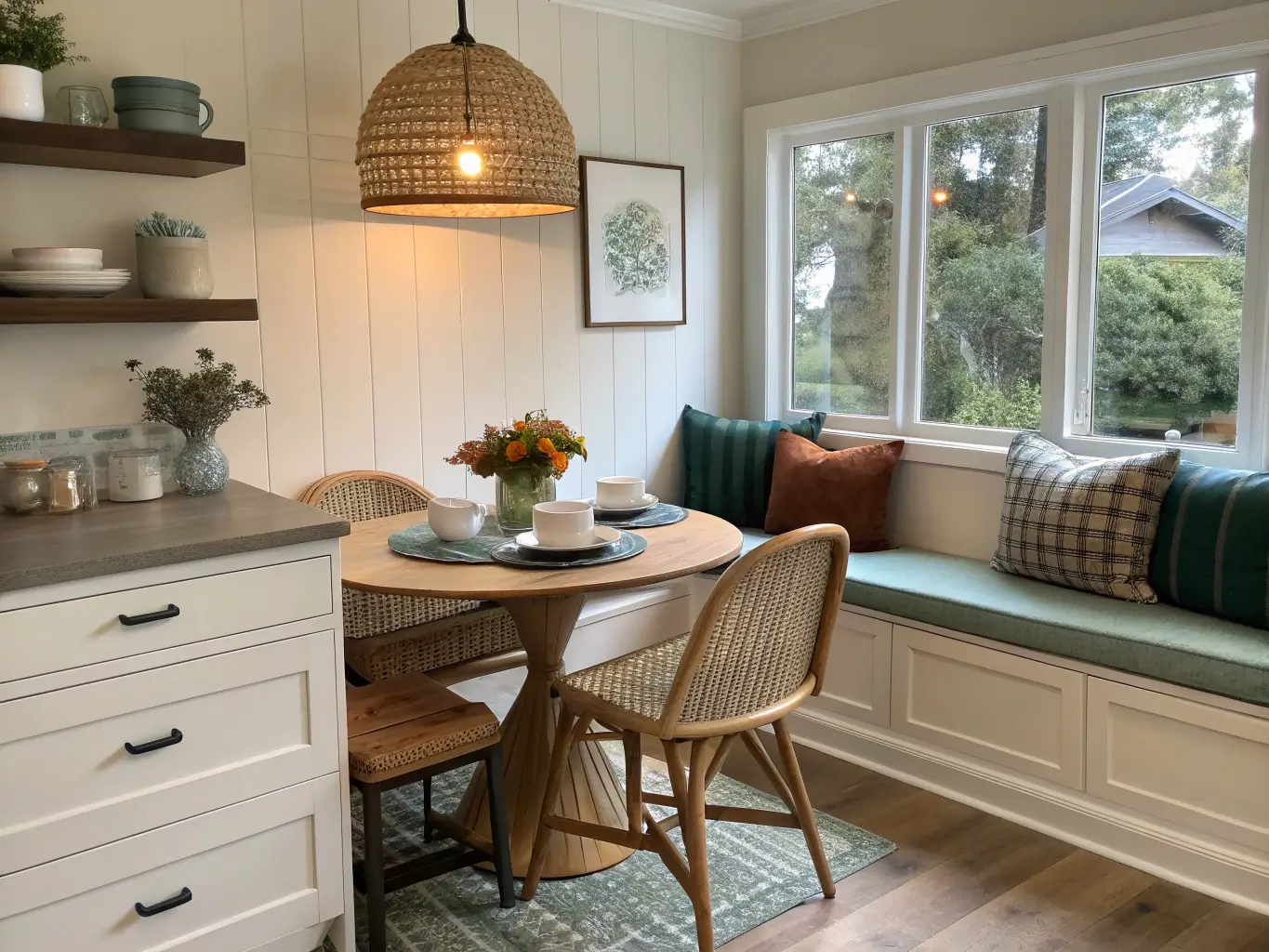
– Built-in bench seating with hidden storage along a dining wall or under a window. This is the single highest-value carpentry investment in a small cabin — seating and storage in the same footprint.
– A wood stove, or at minimum a fireplace-style focal point, if your layout and local code allow it. Cabins need one thing the eye lands on. Nine times out of ten, it should be this.
Complementary decor:
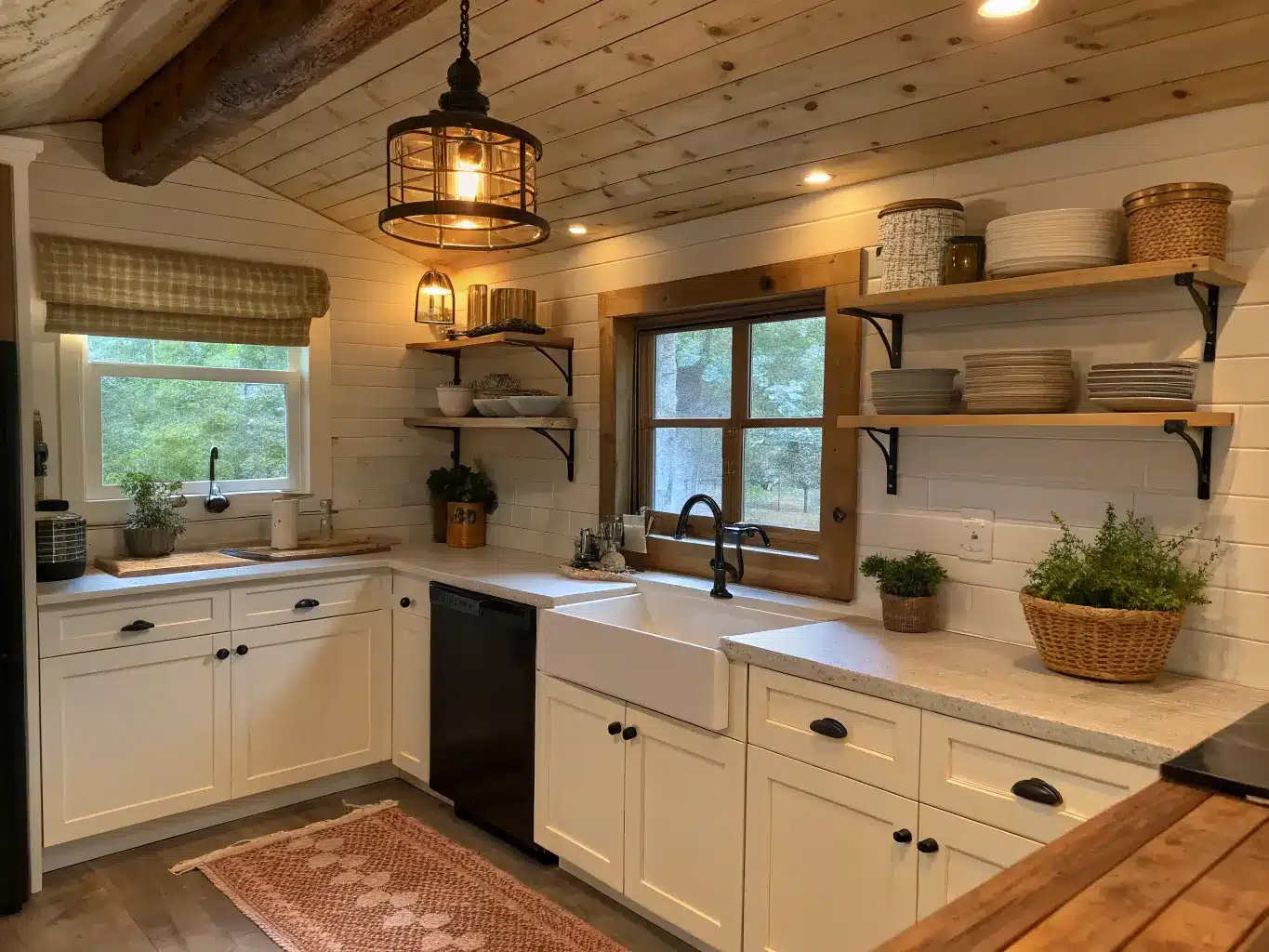
– Open shelving instead of upper cabinets in the kitchen — visually lighter, and it forces you to keep dishware edited.
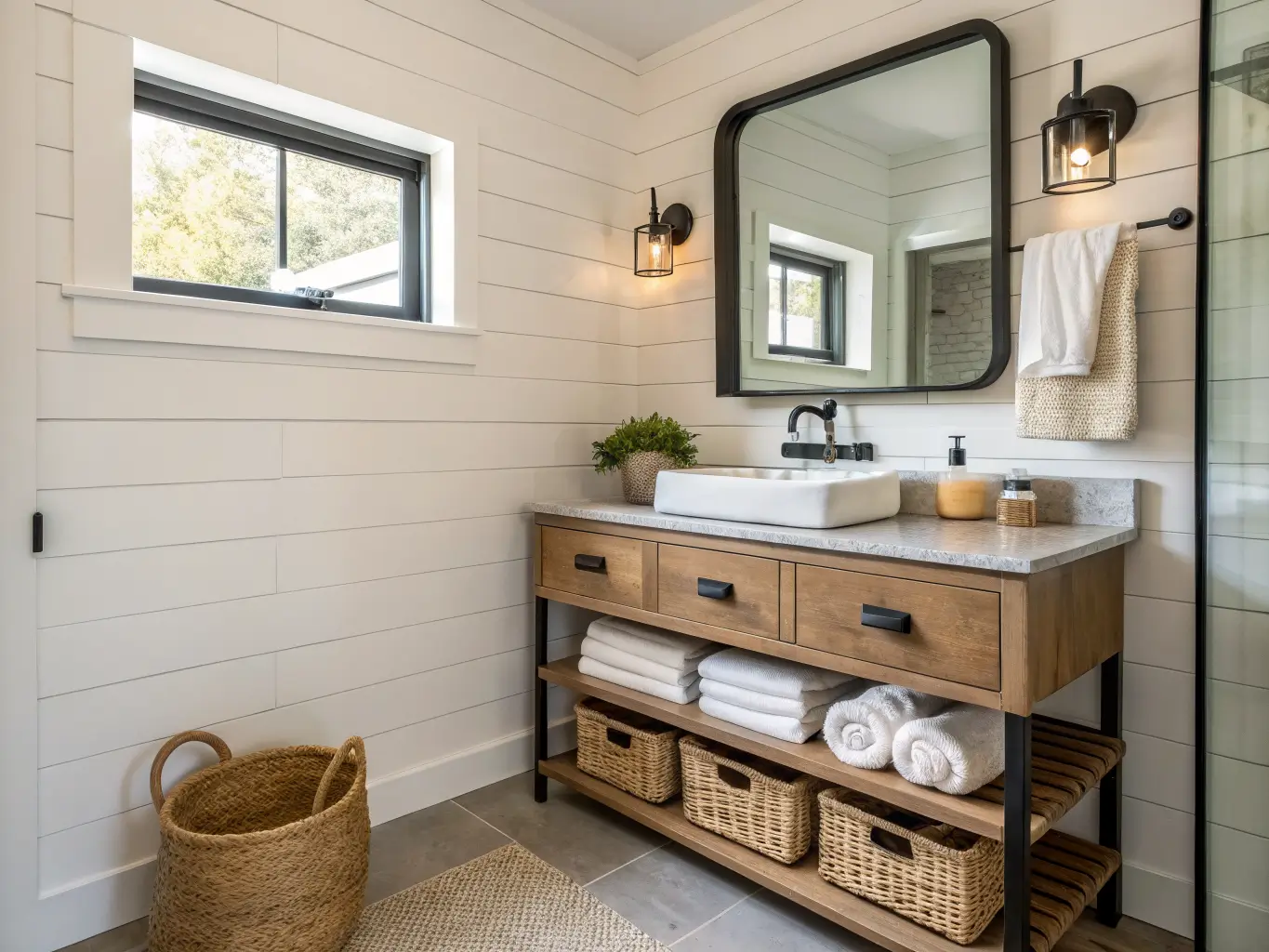
– One large mirror opposite your main window. I put a 30×40″ wood-framed mirror across from mine and the room genuinely reads brighter by early afternoon, not just “bigger.”
– A rug per zone. In an open-plan cabin, a rug under the dining table and a different one under the sofa does more to define “rooms” than any wall could.
– Layered lighting — ceiling fixture, wall sconces, table lamps. Non-negotiable, more on this below.
Signature accessories, used sparingly:
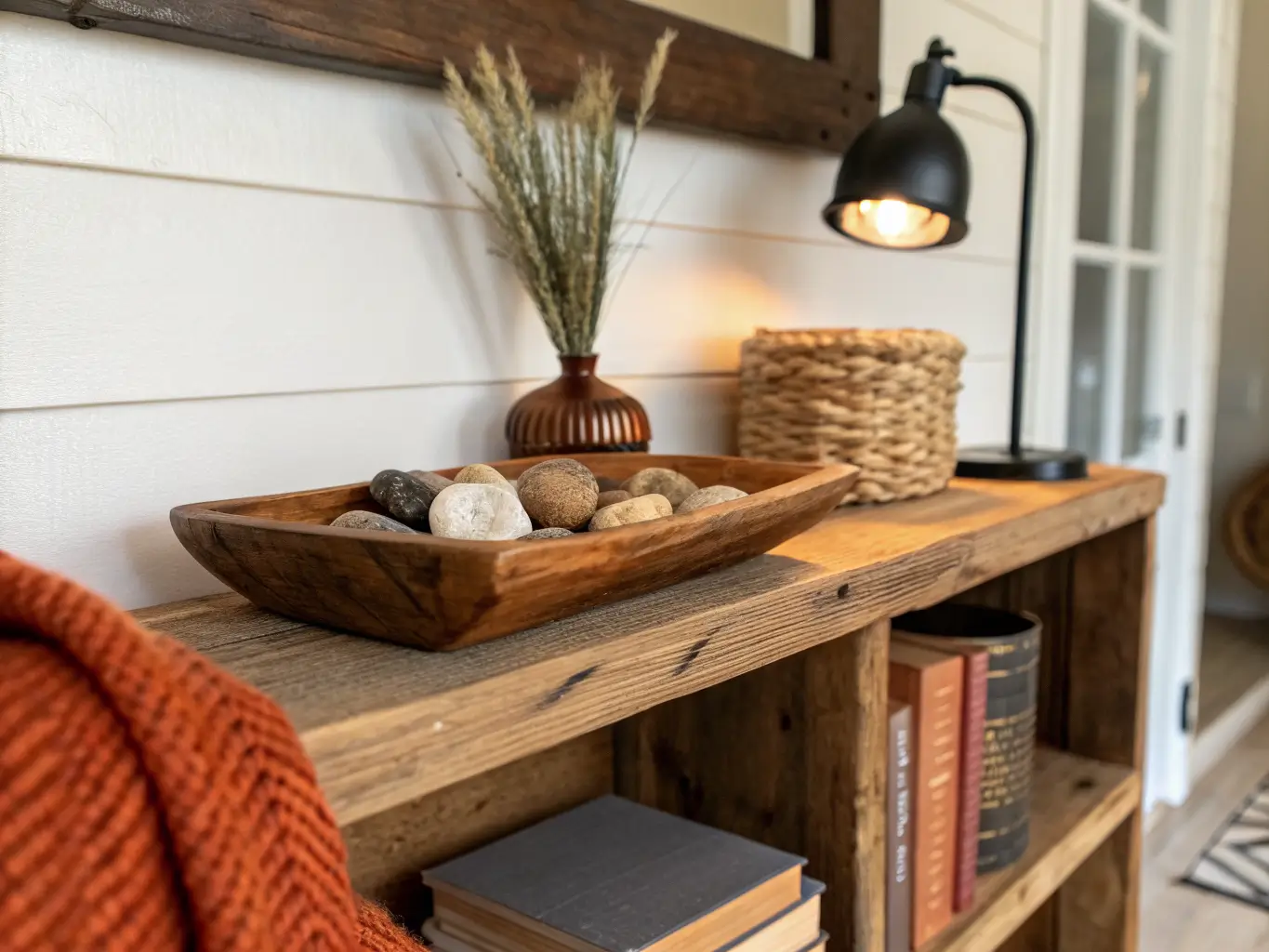
chunky knit throws, a wool blanket over the bench, linen curtains (not blackout-heavy plaid — too much pattern reads busy fast), a couple of leather pillows, one or two woven baskets, ceramic vases, and actual local craft or art rather than generic “cabin” decor. A reclaimed wood tray on the coffee table, a small dish of stones from a hike, one plant. That’s it — not five of each.
Optional Layers for Seasonal Depth
– Winter: heavier wool throws, a faux-fur pillow or two, candle lanterns, a few evergreen stems in a jug, amber glass on the shelf.
– Spring/summer: swap to lighter linen, a woven tray instead of the wood one, wildflowers, softer sage tones over the deep forest green.
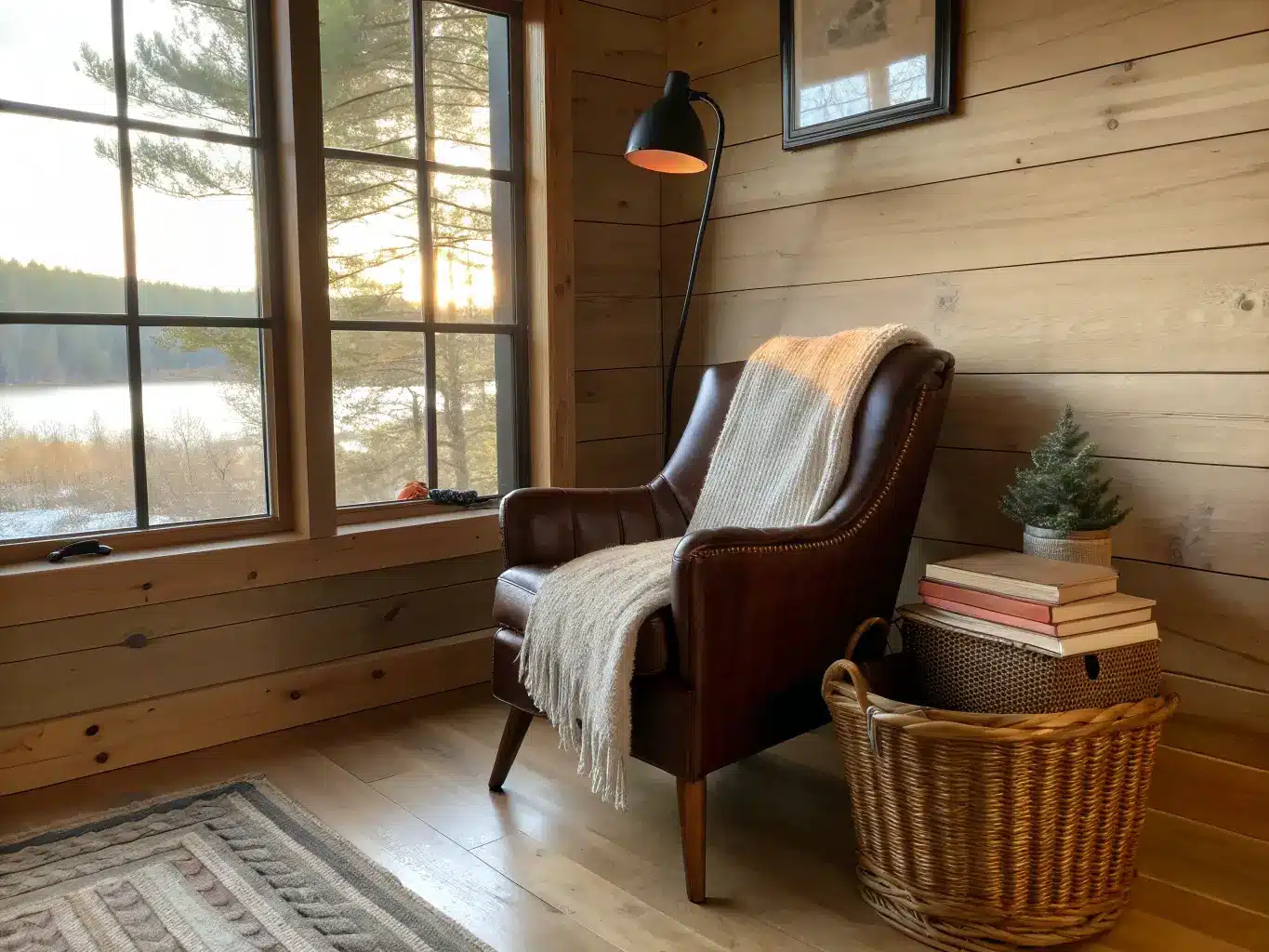
– Organic touches: driftwood, a small dried-grass bundle, a sheepskin thrown over the reading chair, a live plant if the light supports it.
– Metal accents: matte black or aged brass, used only on hardware, sconces, lamp bases, and the mirror frame. This is where I made my second mistake — I bought polished chrome cabinet pulls because they were on sale, and they look wrong in every cabin photo I have. Swap them for $4 matte black ones and the whole kitchen wall reads intentional instead of accidental.
How to Actually Put It Together
Start with the big stuff, not the throw pillows.
1. Pick a restrained palette first. Warm white or cream walls, natural wood tones, and one or two accent colors — I use forest green in my pillows and rust in one blanket, and that’s the full accent story. Adding a third accent color is how rooms start looking like a mood board instead of a home.
2. Place furniture with walking room built in. Leave at least 30 inches of clear path between major pieces. Choose sofas and chairs with visible legs rather than skirted bases — it lets light travel under the furniture instead of stopping at the floor, which matters enormously in a small footprint.
3. Make storage look deliberate. Baskets under the bench, open shelves with matched containers, drawers built into the platform bed. Storage that’s visible should look chosen, not shoved in.
4. Layer textiles last, and coordinate them. Rug, throw, cushions, curtains, bedding — pick one thread (a color, a texture) that repeats through all of them so it reads as one considered room instead of five separate purchases.
5. Finish with a handful of meaningful objects. A piece of local pottery, one framed landscape, a family item. Small cabins can hold maybe six to eight “look at me” objects total before it tips into clutter.
What to actually highlight: exposed beams, wood grain, the loft railing if you have one, the view out the biggest window. Architecture and craftsmanship carry a small cabin further than decor ever will.
Mistakes I’ve Made So You Don’t Have To
– Mixing styles. I tried adding a mid-century credenza to my “rustic cabin” living room because I liked it in the store. It fought with everything else. Pick one direction and stay in it.
– Going dark everywhere. Dark stained beams plus dark walls plus a dark rug reads like a cave, not cozy. Pick one dark element as an anchor — a black wood stove, a navy chair — and keep the rest light.
– Overfurnishing. If a piece doesn’t store something, seat someone, or actively support daily use, it’s taking up floor space you need. I got rid of a side table that existed purely to hold a lamp I could’ve wall-mounted instead.
– Skipping layered lighting. A single overhead fixture in a loft-ceiling cabin is flat and unflattering by 6 p.m. Add sconces at eye level and at least one warm-toned table lamp.
– Chasing trends on permanent finishes. Trendy tile or a bold accent wall dates fast. Spend the durable-finish budget (flooring, trim, wall paint) on something timeless, and save the trend experiments for pillows you can swap in a season.
– Ignoring vertical space. Wall-mounted shelving, tall narrow cabinets, hooks near the door — cubic footage matters as much as floor footage in a small cabin.
Keeping It Cohesive Over Time
Stick to one primary wood tone, one secondary texture, and one metal finish throughout the cabin. I run pine tones, wool texture, and matte black hardware through every room — bedroom, kitchen, living space — and it’s the reason the place reads as one home instead of a scrapbook.
Seasonal refresh, no new furniture required:
– Swap throw blankets and pillow covers with the season
– Change the centerpiece — pinecones in winter, wildflowers in a jug come June
– Rotate candle scents and colors
Budget moves that punch above their cost:
– Repaint one wall or the kitchen cabinets in a lighter neutral — $150–$300 in paint and a weekend
– Replace one dated light fixture — often the single biggest visual upgrade for under $200
– Add matching baskets across open shelving to instantly look more curated
– Hang one oversized mirror as your main “wow” upgrade instead of five small decor buys
If you want to bend the style:
– Cabin + Nordic: whitewash the wood, add wool, cut clutter to almost nothing
– Cabin + farmhouse: open shelving, bench seating, a vintage-style pendant over the table
– Cabin + modern: keep walls pale, furniture clean-lined, and let wood and stone textures do the “cabin” talking instead of ornamentation
The cabins that still look good ten years from now aren’t the ones that chased a trend — they’re the ones built on light walls, real materials, and furniture that actually earns its spot in the room.