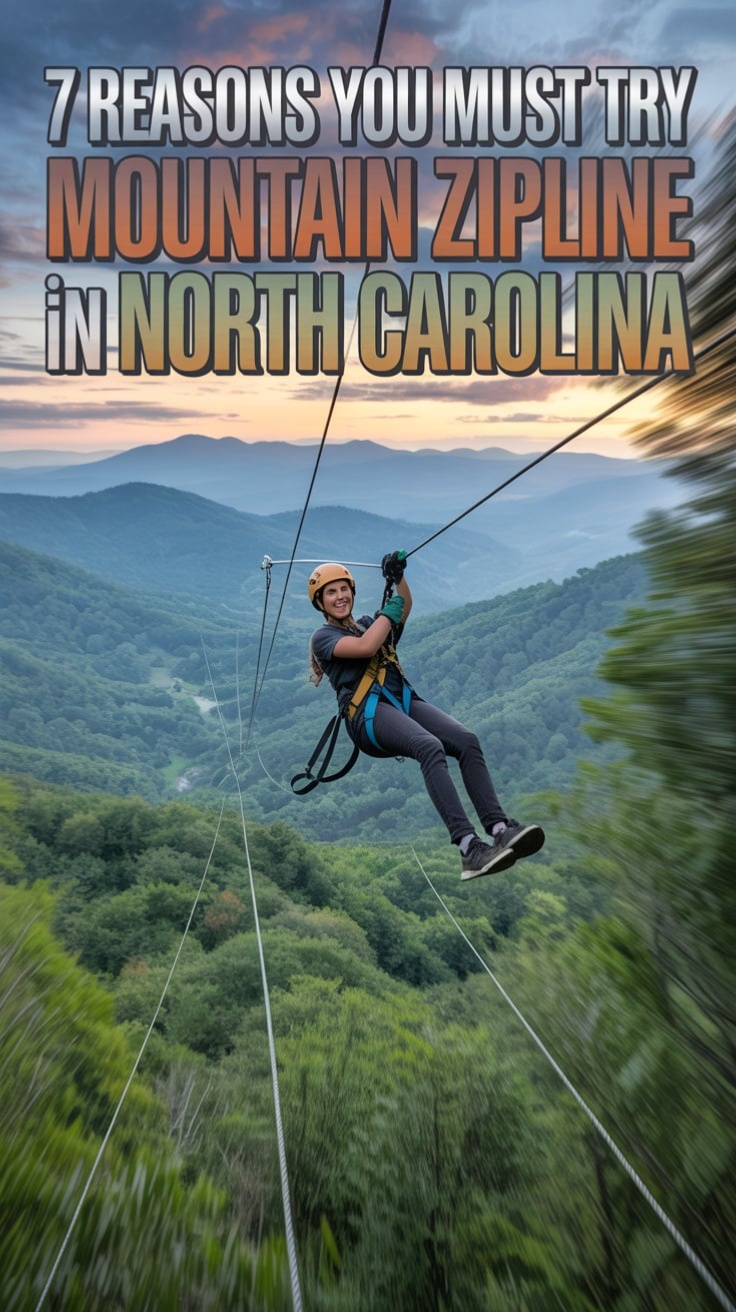
You’re standing at the edge of a platform 250 feet above the forest floor.
Your heart’s pounding.
Your hands are gripping the harness like it owes you money.
And then your guide gives the signal, and suddenly you’re flying.
The wind rushes past your face, the canopy blurs beneath you, and for the next 1,550 feet, nothing exists except pure adrenaline and the kind of mountain views most people only see in postcards.
This is zipline through the mountains in North Carolina.
And if you’ve been wondering whether it’s actually worth the hype—or whether you’re brave enough to try it—you’re in the right place.
Why North Carolina’s Mountain Ziplines Are Different (And Why You Should Care)
Most people think ziplining is just about the thrill.
They’re half right.
What makes North Carolina’s canopy tours stand apart isn’t just the rush of speed or the height.
It’s that these courses let you access landscapes most hikers will never see.
You’re not trudging uphill for hours to reach a viewpoint.
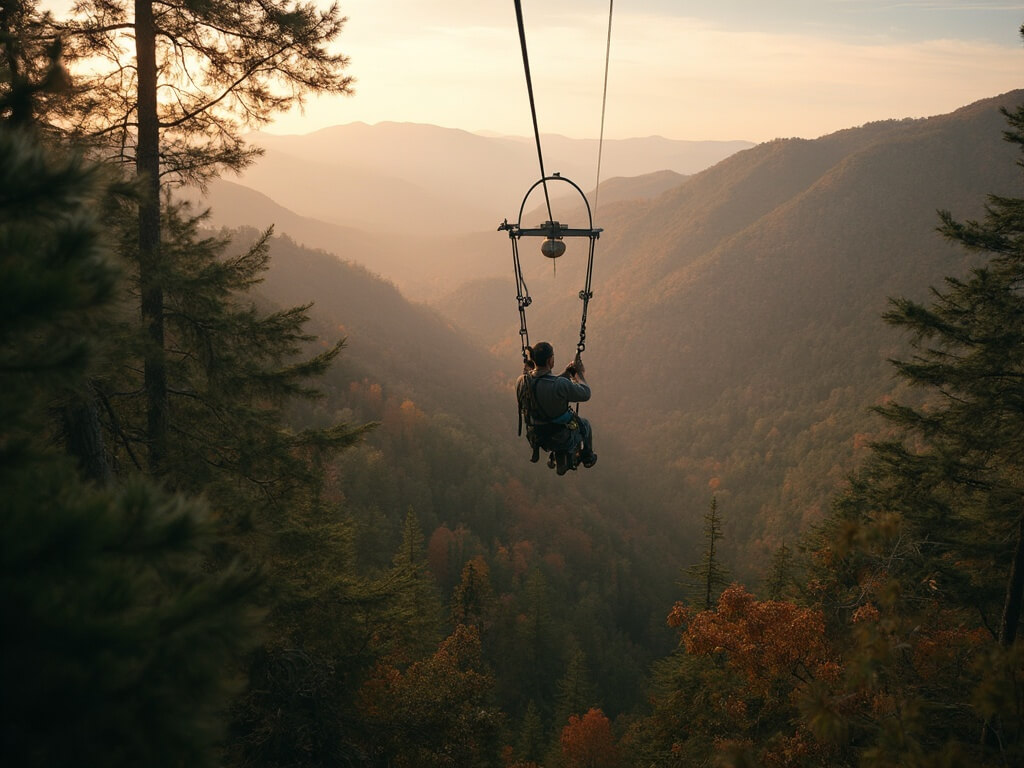
You’re flying through old-growth forests that have stood for centuries, gliding over waterfalls, and crossing ridgelines that stretch for miles in every direction.
The Blue Ridge and Smoky Mountains create terrain that’s perfect for zipline courses.
Steep valleys, dense canopies, dramatic elevation changes—all the ingredients that make for genuinely unforgettable experiences.
But here’s what really matters: these aren’t just thrill rides bolted onto a hillside.
The best operators in North Carolina have built courses that respect the landscape while giving you legitimate access to wilderness most of us never get to experience.
I learned this firsthand a few years back when I tried Sky Valley Zip Tours near Blowing Rock.
I’m not someone who gets nervous about heights, but standing on that first platform, I felt something shift.
Our guide, a woman named Sarah who’d been doing this for nearly a decade, walked us through the safety briefing with the kind of calm professionalism that actually made you trust you weren’t about to die.
What surprised me most wasn’t the ziplines themselves—it was the moment between lines when we stopped on a small platform surrounded by nothing but mountains.
The silence up there hits different.
You realize you’re genuinely suspended in this landscape that most people only experience from the valley floor.
That’s what separates a good canopy tour from a forgettable one.
The real value isn’t just adrenaline.
It’s access, perspective, and the kind of story you actually want to tell people at dinner.
Meet the Heavy Hitters: Where to Actually Zipline in NC
The North Carolina mountain zipline scene isn’t small.
But not all courses are created equal.
Here’s where the best operators are doing serious work.
Highlands Aerial Park: The Technical Choice for Views
Highlands Aerial Park sits at 4,000 feet elevation in the town of Highlands.
That altitude alone changes everything.
You get eight ziplines spanning up to 1,550 feet per line, with 17 different aerial elements between the ziplines themselves.
The courses reach heights of 250 feet, and the views of the surrounding highlands hit from almost every angle.
The park takes safety seriously—guides are present on every single tour, and the age and weight requirements are clearly defined (ages 8 and up, 70 to 250 pounds, minimum height 4’6″).
If you’re visiting with younger or smaller family members, this matters.
This is the course for people who want:
- Consistent, professional service
- Clear sightlines to mountain vistas between lines
- A structured experience that doesn’t require any improvisation
- Reliable weather policies and backup dates
The Gorge Zipline Canopy Tour: For People Who Actually Want a Challenge
The Gorge deserves its reputation.
This is America’s steepest and fastest canopy tour, and that’s not marketing speak.
Eleven ziplines, three rappels, a skybridge, and a 1,100-foot vertical descent through old-growth forests that sit on 18,000 protected acres of Game Lands.
Go here if you:
- Actually want to feel challenged, not just entertained
- Don’t have a fear of heights that makes speed feel unbearable
- Want a story that stands out (“Yeah, we did the fastest canopy tour in America”)
- Are willing to travel to Saluda (a smaller mountain town) for the experience
Sky Valley Zip Tours: The Family-Smart Option
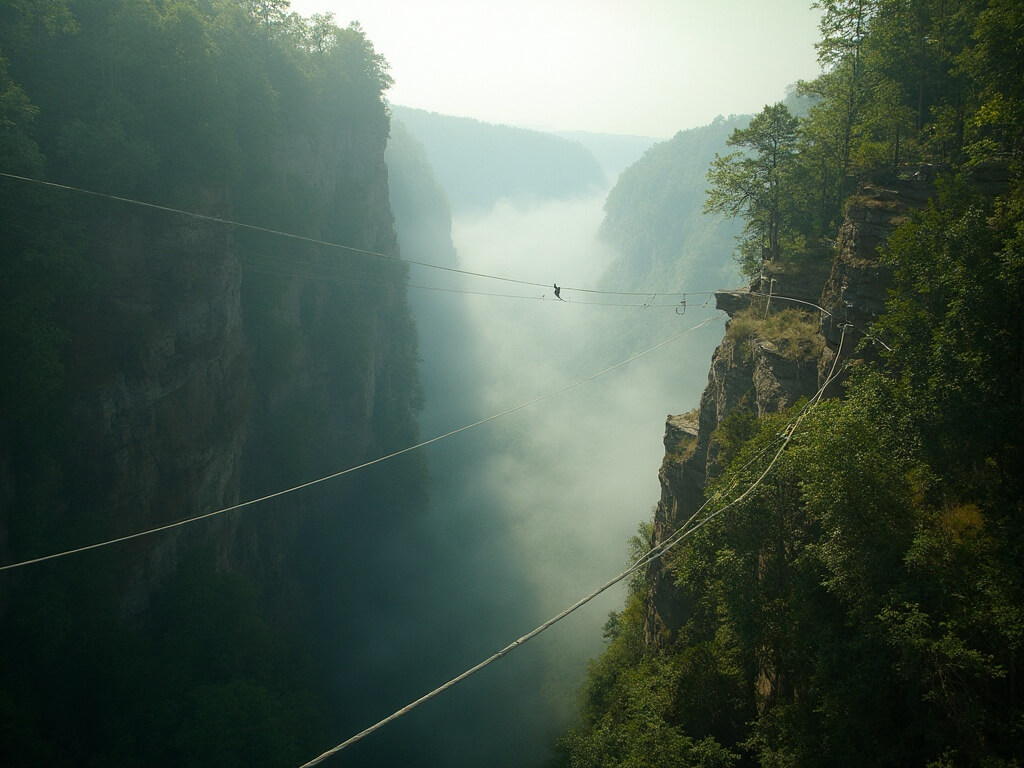
Sky Valley near Blowing Rock operates 140 acres with 10 ziplines, a cliff jump, and a swinging bridge.
The crucial bit for families: they run a dedicated “Whistle Pig” kids’ course for ages 4 to 10.
This isn’t just a shorter zipline bolted onto the main course.
It’s a separate experience designed specifically for younger children.
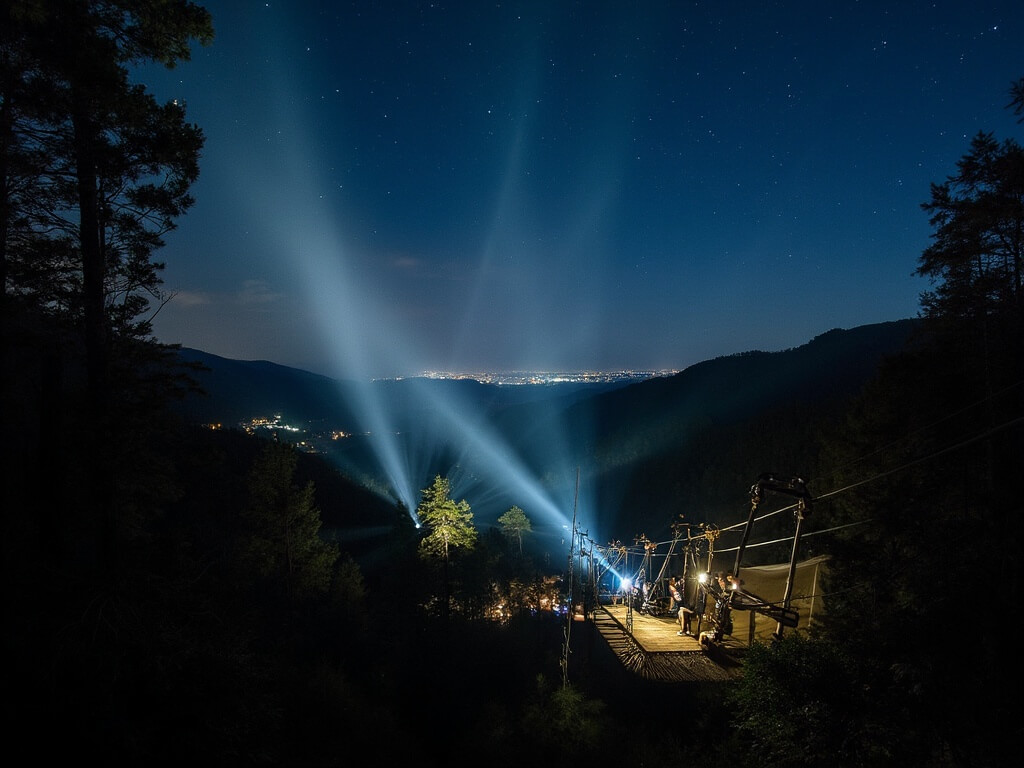
They also offer a “Night Flight Tour” where you’re ziplining under the stars.
This seems gimmicky until you actually do it.
Pick Sky Valley if:
- You’re bringing kids and want them to actually enjoy themselves, not just survive
- You want multiple difficulty options within one park visit
- The night tour appeals to you (it should)
- You’re comfortable with moderate heights and speeds but not extreme
Hawksnest Zipline: The Sheer Scale Play
Over four miles of ziplines.
Twenty individual lines.
Multiple tour options across varying difficulty levels.
Choose Hawksnest for:
- Pure variety in one location
- Groups and team-building scenarios
- Wanting to try multiple difficulty levels in a single visit
- Year-round activity planning (ziplines plus winter tubing)
Nantahala Outdoor Center: The Everything Operator
Nearly two miles of ziplines, but here’s the real appeal: integration with other activities.
Whitewater rafting, hiking, kayaking—all bundled into broader adventure packages focused on Smoky Mountain scenery.
Go to Nantahala if:
- You want to combine ziplines with other outdoor activities
- You’re planning multiple days and want variety built in
- Smoky Mountain access matters more than any single activity
What Actually Changes Between Operators (And Why It Matters)
Guide quality and consistency – Some parks rotate guides frequently; top operators keep experienced people leading tours.
Maintenance philosophy – Equipment inspection isn’t a checkbox; it’s a culture.
Course design – A good zipline course uses terrain thoughtfully. Bad courses fight the landscape. Great courses work with it.
Flexibility in conditions – Weather happens. Some operators cancel at the first sign of wind. Others have nuanced policies based on actual data and experience.
Real accessibility – Not just physical accessibility, but emotional accessibility.
The Practical Stuff Nobody Asks About Until Too Late
Physical and medical realities:
- Weight limits: ~70 to 250 pounds
- Height minimums: ~4’6″ to 4’8″
- Age minimum: Usually 8 years, some allow 4-year-old children on specific courses
What to actually wear:
- Closed-toe shoes only
- Fitted clothing—no loose or snag-prone gear
- Layer for cold at elevation and wind speed
Weather realities:
- Lightning = immediate closure
- Heavy wind/rain = likely delays or cancellations
- Spring–Fall = best conditions and scenery
The money part:
- Expect £55–£130 per person
- Group discounts available
- Book in advance during peak seasons
The Bigger Picture: Why North Carolina Ziplining Is Actually Growing
Post-2020 trends made outdoor activities more attractive.
More families, corporate groups, and multigenerational travelers are booking zipline tours as core trip activities.
Better infrastructure, improved technology, and experienced guides mean safer, more immersive experiences for everyone.
The quality floor has risen—and now that you know where the real operations are and what actually matters when picking between them, the actual question becomes simpler.
What to Bring, What to Leave Behind, and What You’ll Actually Regret Not Knowing
I made a mistake on my first canopy tour that nobody warns you about beforehand.
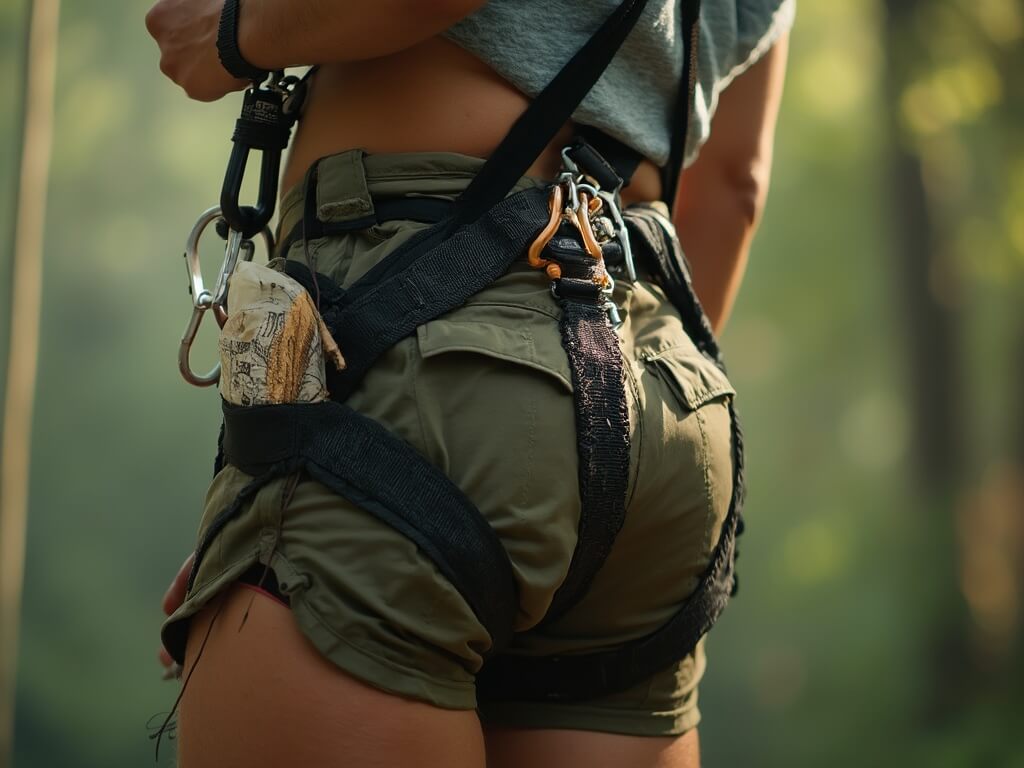
I wore cargo shorts with deep pockets and brought my wallet, keys, and a folded map I’d printed. Seemed reasonable at the time. Halfway through the second zipline, the map shifted in my pocket. It didn’t fall—the harness kept it secure—but knowing something loose was up there changed my mental state completely. I spent the next six lines thinking about it instead of enjoying the experience.
This is a stupid example of something important: what you bring matters as much as what you wear.
The gear checklist that actually matters:
Closed-toe shoes are mandatory, but people interpret that loosely. Don’t wear flip-flops that happen to have a toe box. Hiking boots are overkill. Actual athletic shoes with real ankle support and good grip solve the problem. You’ll be walking on platforms, not summiting mountains, but solid footing matters when you’re nervous.
Wear fitted clothing. Loose T-shirts flap in the wind and catch on harness systems. Baggy shorts or pants create unnecessary complications. You want to feel streamlined, not like you’re flying through air in pajamas.
Layers are non-negotiable. Mountain temperatures drop significantly as elevation increases. Blowing Rock sits at 4,000 feet. The Gorge sits even higher. That wind-chill from speed makes a 65-degree day feel like 45. Bring a lightweight jacket you can tie around your waist before starting.
Weather-appropriate outerwear matters, but check forecasts beforehand. Rain cancels tours for safety reasons. If there’s even a 40% chance, plan for rescheduling. Operations don’t move zipline dates lightly—it means lost revenue and complicated logistics—so if they’re canceling, conditions are genuinely unsafe.
What to leave in the car:
Phones, cameras, and valuables should stay locked away. Most parks have secure lockers. Use them without hesitation. A dropped phone from 200 feet doesn’t just break—it becomes a safety hazard for people below. Professional photos are available at most parks anyway, which means better quality pictures than you’d take one-handed while terrified.
Loose items in pockets (change, lip balm, gum) should be removed or secured in a way that’s actually secure. A coin falling at 40 miles per hour from height isn’t lethal, but it’s unnecessary risk.
Jewelry can snag on equipment. Wedding rings usually stay fine, but dangly earrings, bracelets, and necklaces create complications. Remove them before suiting up.
The Real Truth About Fear (And Why You Probably Won’t Actually Die)
Here’s what nobody tells you straight:
Everyone is scared the first time. Not everyone admits it, but they are. The people who say they weren’t scared are either lying or sociopaths. Real fear of heights exists for evolutionary reasons—it kept our ancestors from falling off cliffs. Feeling it doesn’t mean you can’t do this. It means you’re neurologically normal.
The fear operates on two different levels. The first is primal: your brain recognizes you’re suspended above ground and triggers an ancient alarm system. That’s not something you logic away. The second is practical: fear that the equipment might fail or someone didn’t do their job correctly. That one actually responds to information.
Here’s what actually alleviates the practical fear:
Understanding that accredited parks maintain equipment obsessively. Federal standards exist for zipline harness systems. Top-tier operators exceed those standards. Guides complete certifications that require both technical knowledge and first-aid training. Your guide isn’t a teenager hired yesterday. They’ve done this hundreds or thousands of times.
The harness system has redundancies built into redundancies. There’s a primary brake system and a backup. You’re clipped in at multiple points. If something incredibly unlikely happens (primary line failure), you don’t plummet. You’re still attached. Modern zipline systems haven’t had fatalities at accredited US parks in years.
The primal fear (the gut-level one) doesn’t fully disappear, and honestly, that’s fine. That’s the thing that makes it actually exhilarating rather than boring. Once you jump off the first platform and realize you’re still alive and moving, something shifts. The primal fear transforms into exhilaration.
By line three or four, most people stop being scared and start actually enjoying themselves. By line six or seven, they’re asking why they didn’t do this years ago.
What this means practically:
If you’re nervous, tell your guide. Good guides have practices for nervous riders. They’ll explain mechanics more thoroughly. They’ll let you control your start speed on the first line. They’re not rushing you. Their job includes making this work for you, not just moving bodies through lines.
If you have legitimate height phobia, check with operators about modified experiences or skip this entirely. There’s no shame in that. But normal nervousness is something literally everyone experiences and works through.
Building an Actual Itinerary (Not Just Picking a Single Park)
Most people book one zipline tour and think they’ve “done” ziplining in North Carolina. But the region has enough quality operators and surrounding activities that a real multi-day mountain adventure becomes possible.
The three-day mountain zipline itinerary:
Day one: Sky Valley Zip Tours near Blowing Rock. Start here rather than jumping straight into extreme terrain. Sky Valley offers moderate difficulty with solid infrastructure and professional guides.
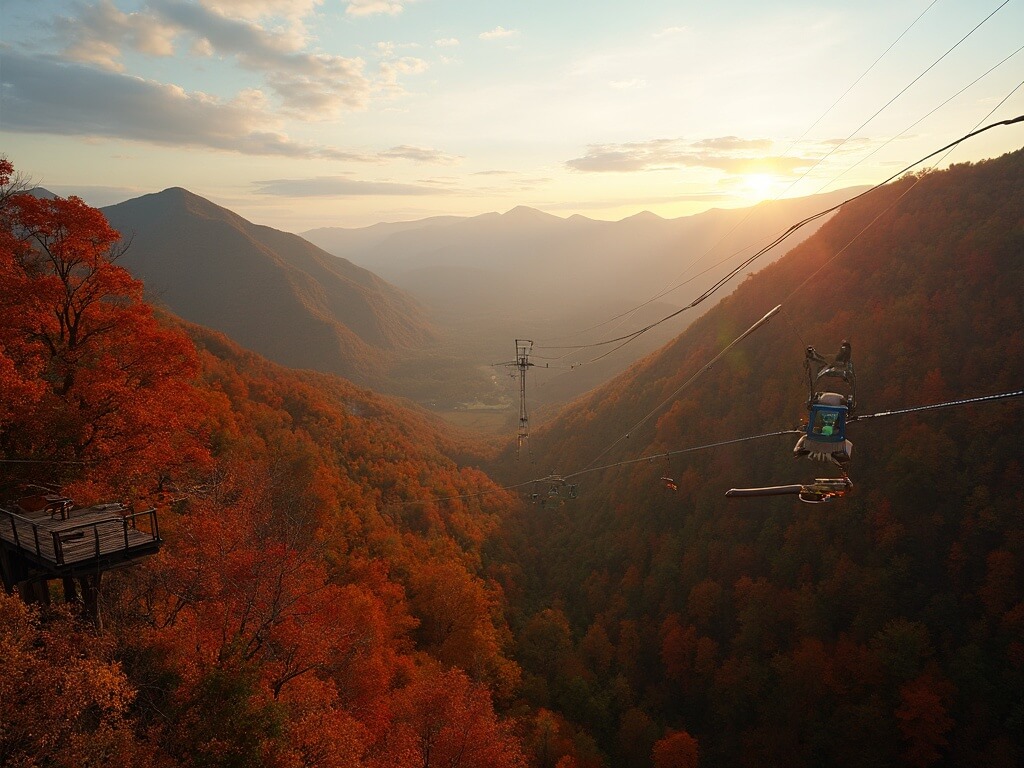
Day two: The Gorge Zipline Canopy Tour in Saluda. Now that you’ve done one course, jump to the genuinely challenging experience. The Gorge is where you understand that steepness and speed actually change the experience.
Day three: Highlands Aerial Park. By day three, you have a real reference point for comparing experiences. Highlands offers technical precision and consistent execution. The views are the star here.
Family-focused iteration:
- Day one: Sky Valley’s Whistle Pig course for kids
- Day two: Hawksnest with multiple course options
- Day three: Nantahala’s combo of ziplining and rafting/hiking
Why Timing Your Trip Actually Matters (And It’s Not What You Think)
Timing affects weather reliability, crowd density, and what the actual experience feels like.
Spring (March-May):
Weather is unpredictable. Afternoon thunderstorms are common. Flexible scheduling is key.
Summer (June-August):
Peak season. Crowds are heavy. Heat can be uncomfortable. Book early.
Fall (September-November):
The sweet spot. Weather is stable. Foliage is stunning. Crowds manageable.
Winter (December-February):
Limited availability. Ice is a concern. Call ahead for operations.
The real wildcard: sunrise and sunset tours:
Some parks offer them—ask specifically. Emotionally impactful and usually cheaper.
What Corporate Groups and Event Planners Need to Actually Know
The zipline industry is a growing destination for team-building.

Why companies choose ziplining:
- Forces collaboration
- Shared intense experience
- Real stories, real bonding
Logistics:
Parks offer event packages and group coordinators. Rates drop significantly with group size. Confirm insurance, gear needs, and schedule debriefs for post-event impact.
The Environmental Reality (And Why It Actually Matters)
The conservation angle:
The Gorge operates on protected Game Lands. Highlands Aerial Park utilizes land in a way that supports conservation over development.
The tree-damage question:
Good operators use strategic platform placement and non-damaging support methods. Ask about forest management practices. Specific answers reflect real commitment to environmental care.
The Technology Angle (Why Modern Equipment Actually Changes Everything)
What actually changed:
- Automated braking = smoother landings
- Ergonomic harnesses = comfort + safety
- Redundant systems = peace of mind
Booking implications:
Ask about equipment maintenance schedules and manufacturer quality. Modern gear from reputable sources matters more than you can see.
Making the Actual Decision (A Framework That Works)
Step one: Define your goal.
- Adrenaline? → The Gorge
- Family bonding? → Sky Valley, Hawksnest
- Views? → Highlands
- Activity mix? → Nantahala
Step two: Check practical constraints.
Step three: Research operator-specific details.
Step four: Call the operator directly.
Step five: Book and prepare.
The Honest Truth About After It’s Over
When it’s done, you’ll feel something unusual—a mix of pride and peace. You did something physically and emotionally brave. That mix of fear, achievement, and natural beauty creates a memory that sticks.
Final Logistics: Before You Book Anything
- Print confirmations
- Bring ID
- Show up early
- Wear correct gear
- Actually listen during the briefing
- Inform someone of your plans
Don’t overthink once you’re there. Follow your guide. Do the thing.
Ziplining in the North Carolina mountains offers not just thrills, but connection—to yourself, your group, and the land. It’s a rare blend of challenge and beauty. Don’t miss the season.
Explore more:
- Cabin interiors
- Rustic backyard ideas
- Rustic living room
- Small cabin interior
- Little cabin living room