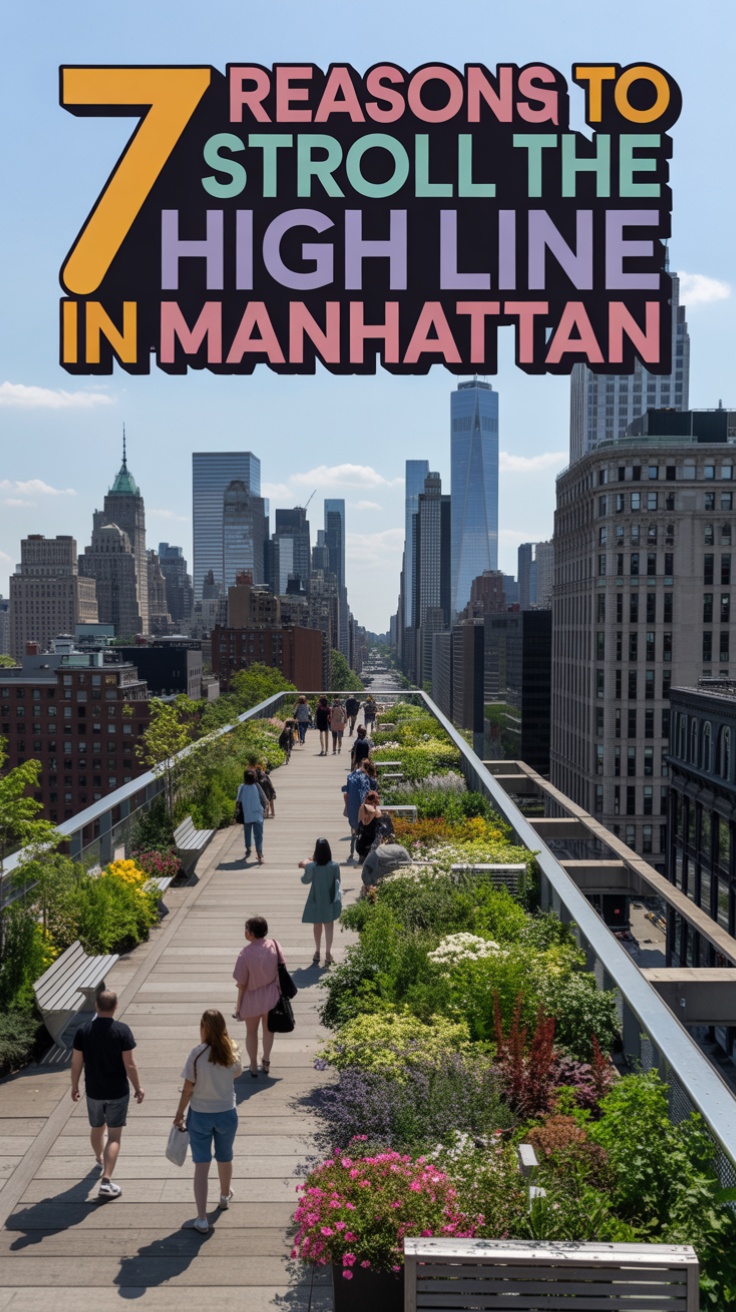
You’ve probably seen the photos.
The Instagram-perfect shots of people strolling through gardens suspended thirty feet above Manhattan’s chaotic streets, Hudson River glinting in the background, art installations framing everything like a carefully curated museum exhibit.
But here’s what nobody tells you: the High Line in Manhattan can feel less like a peaceful urban escape and more like navigating a particularly scenic cattle market if you don’t know what you’re doing.
I learned this the hard way on a Saturday afternoon in May, when I decided to experience this famous 1.45-mile elevated park without doing any real research.
What I discovered, though, was something far more interesting than just another tourist attraction.
What Exactly Is the High Line, and Why Should You Care?
The High Line NYC isn’t just a park.
It’s a resurrection story.
Back in the 1980s, a section of abandoned railroad sat decaying on Manhattan’s West Side—a relic of the New York Central Railroad freight system that once delivered supplies across the city.
Nobody wanted it.
The neighbourhood around it had seen better days.
Then, in 2009, something unexpected happened: a 1.45-mile stretch of this forgotten infrastructure became one of the most transformative public spaces in modern urban history.
Here’s what makes this different from every other park you’ve visited:
It wasn’t built from scratch.
The High Line Manhattan was designed by landscape architect Piet Oudolf, architecture firm Diller Scofidio + Renfro, and designer James Corner Field Operations to preserve the industrial history whilst creating something entirely new.
Think of it as archaeological restoration meets botanical artistry.
The whole thing opened to the public in phases between 2009 and 2014, and it fundamentally changed how people think about urban greenways.
In fact, the entire concept was inspired by the Coulée verte in Paris—another elevated linear park built on abandoned infrastructure.
But the High Line took that idea and made it distinctly, unapologetically Manhattan.
Why this matters to you:
The High Line isn’t pretending to be something it’s not.
It’s not trying to recreate nature.
It’s celebrating the meeting point between human design and natural growth, between history and modernity, between the gritty industrial city and something greener.
The Geography: Where the High Line Actually Goes and How to Navigate It
Let’s talk specifics, because this is where most people get confused.
The High Line stretches from Gansevoort Street and Washington Street in the Meatpacking District all the way north to 34th Street and 11th Avenue, near Hudson Yards.
That’s 1.45 miles.
It doesn’t sound like much, but trust me, the way you experience those miles matters entirely.
Here’s what you’re actually walking on:
The entire park sits thirty feet above street level—elevated on the original railroad viaduct.
This matters because it fundamentally changes your perspective.
You’re not observing Manhattan from within it; you’re observing it from above it, watching the city move below you whilst you move through a completely different ecosystem.
The southern entrance begins near the Whitney Museum of American Art.
This is important to know because it affects your entire visit strategy.
If you arrive at Gansevoort Street expecting a quiet morning stroll, you might find yourself fighting through crowds with the museum goers, the Chelsea Market visitors, and the Meatpacking District nightlife crowd recovering from Saturday evening.
The northern terminus at Hudson Yards is generally less crowded, which tells you something about foot traffic patterns.
Getting there is straightforward:
The closest subway station is 23rd Street on the 1 and C lines.
From there, it’s roughly a ten-minute walk to the southern entrance.
Most people don’t realise there are actually fifteen different access points scattered along the route, though only eight have elevators or ramps, which is critical if you’re with elderly relatives, using a pushchair, or managing mobility challenges.
The practical reality:
A brisk walk from one end to the other takes about thirty minutes if you’re moving with purpose.
But why would you?
Most visitors spend between two and three hours, stopping frequently to explore gardens, catch light at different angles, watch people, or simply sit on one of the many benches and process the peculiar experience of being suspended above one of the world’s most expensive cities.
The Gardens That Changed How I Think About Urban Design
This is where my personal experience becomes relevant.
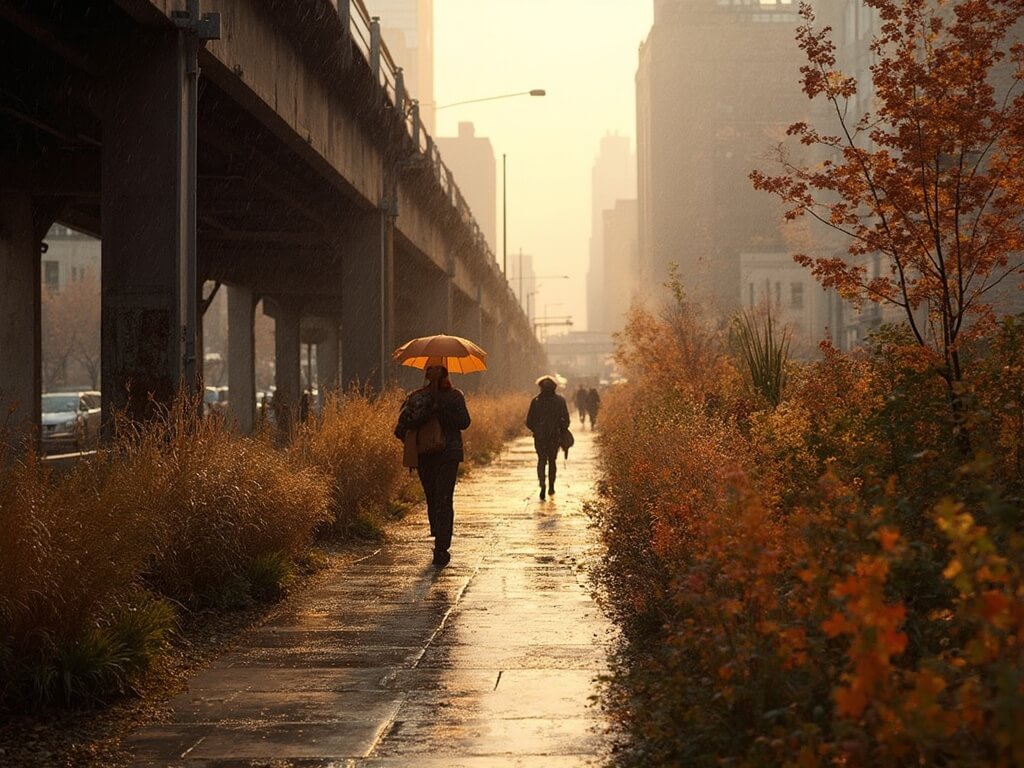
About two years ago, I visited the High Line on a drizzly Tuesday afternoon in late October, and I made the mistake of walking too quickly past the gardens.
I’d read that Piet Oudolf designed the planting scheme, but I didn’t truly understand what that meant until I actually stood amongst over five hundred species of plants and trees, realising they weren’t arranged in neat rows or ornamental patterns.
They looked wild.
They looked like something nature itself had created.
Later, I learned this was entirely intentional.
Oudolf designed the gardens specifically to evoke the wildflower growth that had spontaneously emerged on the abandoned railroad tracks after the last train stopped running in the 1980s.
He’d photographed those conditions and essentially curated a version of that natural succession.
The effect is genuinely unsettling in the best possible way.
You’re walking through a garden that’s pretending not to be a garden.
Here’s what actually happens seasonally:
Spring brings tulips and alliums.
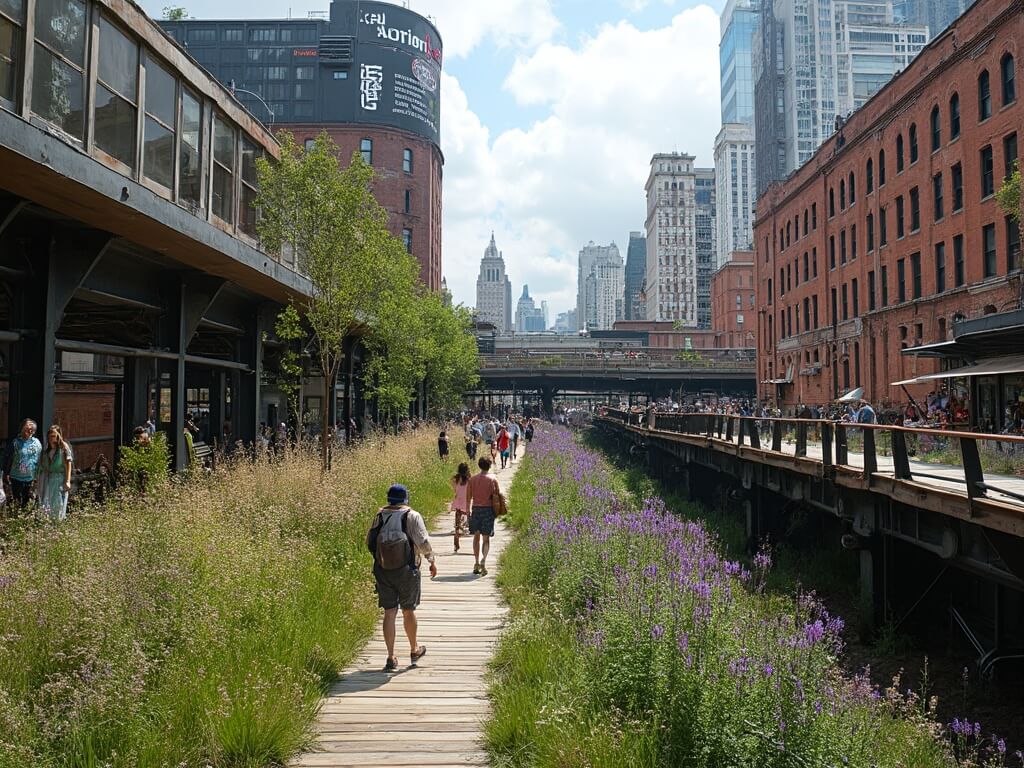
Summer explodes with height and colour—grasses reach waist level, perennials flower in waves, and the whole thing genuinely feels like a meadow suspended above Manhattan.
Autumn, when I visited, presents a completely different palette of browns, golds, and structural forms.
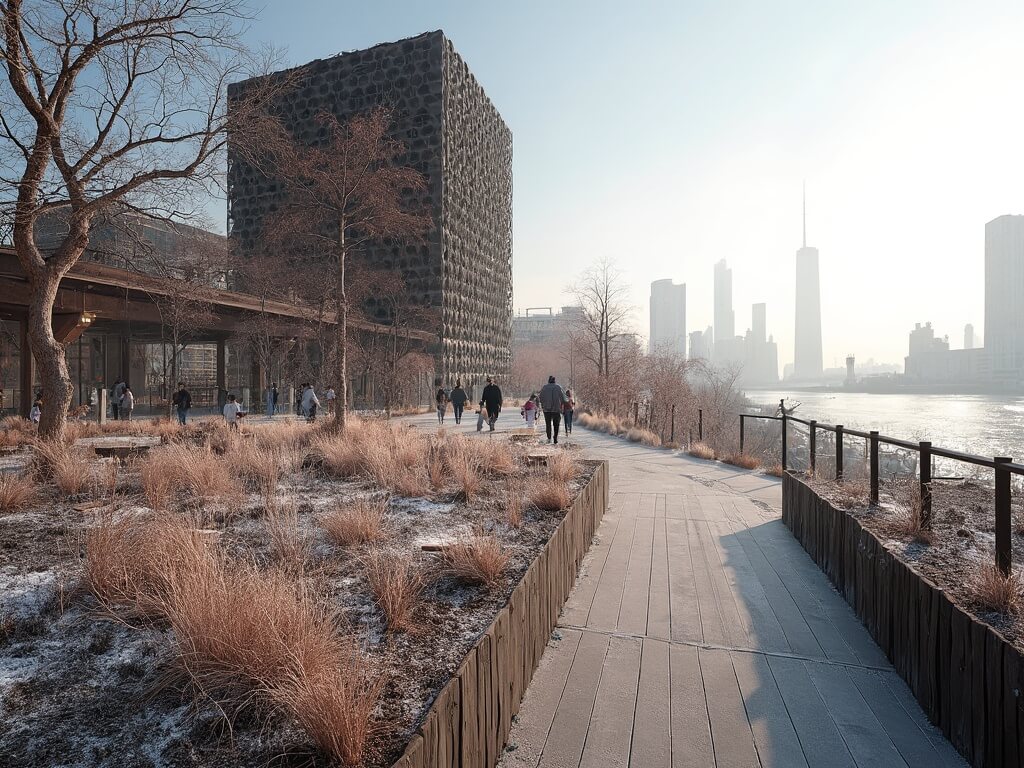
Winter appears sparse, but that’s when you notice the actual architecture of the plants and see the city views more clearly through the branches.
Every season demands a different visit strategy.
The horticultural truth:
Each January, the High Line undergoes what’s called the “Spring Cutback.”
Teams of professional gardeners and volunteers cut back the entire planting scheme to ground level, which feels destructive until you realise it’s essential maintenance that allows for new growth.
This happens because the garden isn’t static decoration—it’s a living system that requires genuine care.
This single fact tells you something important: the High Line is curated, maintained, and managed with the same intensity as any world-class botanical institution, except it’s completely free and open to the public.
What You’ll Actually Find Along the Way: Beyond the Plants
I’m going to be honest with you: if you visit the High Line expecting purely natural scenery, you’ll miss about seventy percent of what makes it genuinely remarkable.
Because alongside the gardens, there’s contemporary art.
There’s architecture.
There’s history.
There’s the Whitney Museum of American Art literally attached to the southern entrance, which means you could spend three hours inside, then emerge directly onto the park for a completely different experience.
The art component deserves real attention:
The High Line hosts rotating contemporary art installations and sculptures throughout the year.
These aren’t permanent fixtures—they change, which means return visits reveal completely different experiences.
The integration of art with the environment is deliberate; nothing feels imposed or separate from the landscape itself.
Then there’s Chelsea Market.
This historic Nabisco factory, built in 1894, sits directly adjacent to the park at 9th Avenue and 16th Street.
It’s been transformed into a sprawling collection of shops, eateries, and food stalls—basically a food hall meets market hall meets shopping experience.
The proximity matters because you can walk the High Line, then descend directly into an entirely different kind of urban experience.
Your architectural context:
Walking north, you’ll notice The Standard Hotel, which quite literally straddles the High Line with guest rooms overlooking the park.
Further north, Hudson Yards emerges with The Vessel—that distinctive honeycomb-like structure that became Instagram-famous (and then closed to the public due to safety concerns, but you can still appreciate it visually from the park).
Little Island, a floating park just east of the High Line, appeared more recently and offers another elevated public space experience.
What’s happening here architecturally is fascinating: the High Line didn’t just revitalise one space; it catalysed an entire neighbourhood’s transformation.
The neighbourhood layers:
The Meatpacking District, where the park begins, was historically an industrial area that evolved into nightlife and boutique shopping.
Chelsea, as you move north, carries entirely different cultural weight: it’s the historical centre of LGBTQ+ Manhattan, contains dozens of contemporary art galleries, and features repurposed warehouses that have become galleries, studios, and living spaces.
West Side Yards, the northernmost section, represents cutting-edge modern redevelopment.
Walking the High Line isn’t just about the park itself—it’s walking through distinct neighbourhoods, each with its own character, history, and commercial ecosystem.
Practical viewpoints worth noting:
There are several overlooks positioned above 10th Avenue that offer genuine panoramic vistas.
The Hudson River views aren’t incidental; they’re strategically framed throughout the park’s design.
The city views looking east reveal the density and vertical complexity of Manhattan in ways ground-level perspectives can’t capture.
The relationship between nature, architecture, and geography becomes genuinely clear from this vantage point.
Want more ideas for making the most of small city living?
Check out our tips and inspiration on small apartment ideas and studio apartment ideas.
The Crowds Problem: Why Timing Everything Changes Your Experience
Let me tell you about the worst day I’ve ever spent on the High Line.
It was a Saturday in late June, around 2 PM, when I decided to “quickly pop over” to see the summer plantings.
I arrived at Gansevoort Street to discover what can only be described as a human parking lot.
I’m not exaggerating.
The path ahead was so densely packed that forward movement required shuffling rather than walking.
Children were losing their parents. People were stopping abruptly to take photographs, creating bottleneck situations.
The entire experience transformed from meditative urban greenway into theme park queue.
I made it approximately four hundred metres before turning around entirely.
That day taught me something crucial: the High Line’s popularity is both its greatest strength and its most formidable challenge.
Here’s what the crowds actually look like:
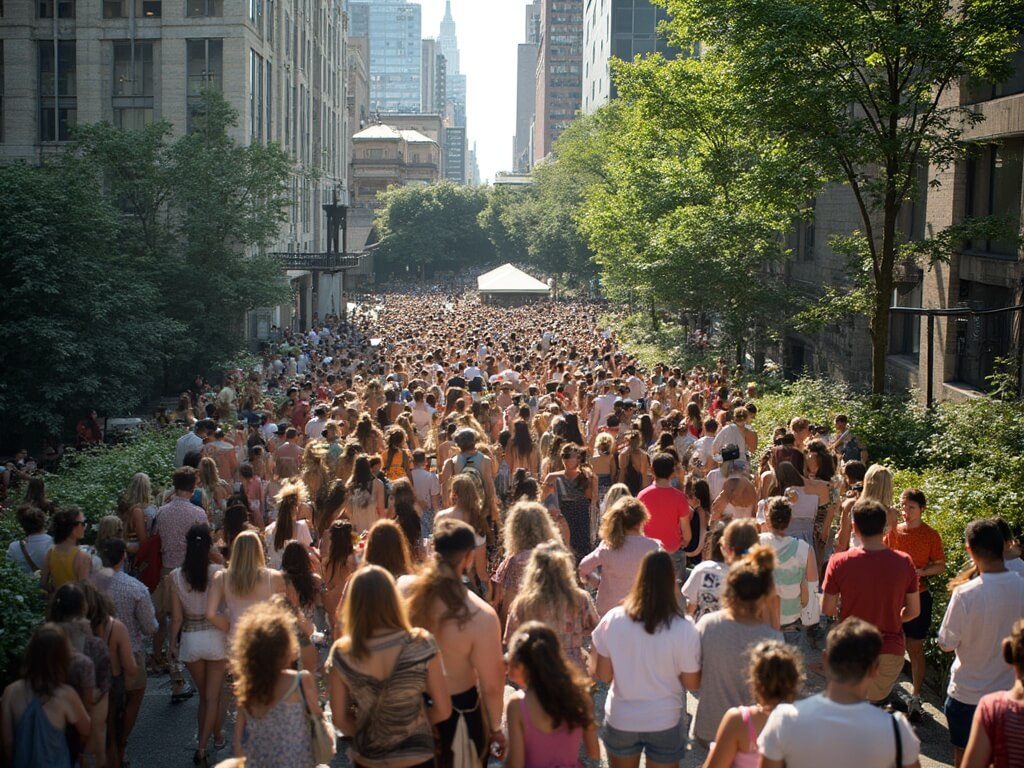
Weekends are basically unavoidable during daylight hours from May through September.
If you arrive between 10 AM and 5 PM on a Saturday or Sunday, expect to spend a significant portion of your time negotiating other people rather than experiencing the space itself.
Sunny days attract approximately three times the foot traffic of cloudy days. This isn’t speculation—the park’s management team monitors these patterns deliberately.
The best times to visit, according to staff I interviewed, are weekday mornings before 10 AM, weekday evenings after 6 PM, and essentially any time during October through April when the weather discourages casual tourism.
The counterintuitive reality:
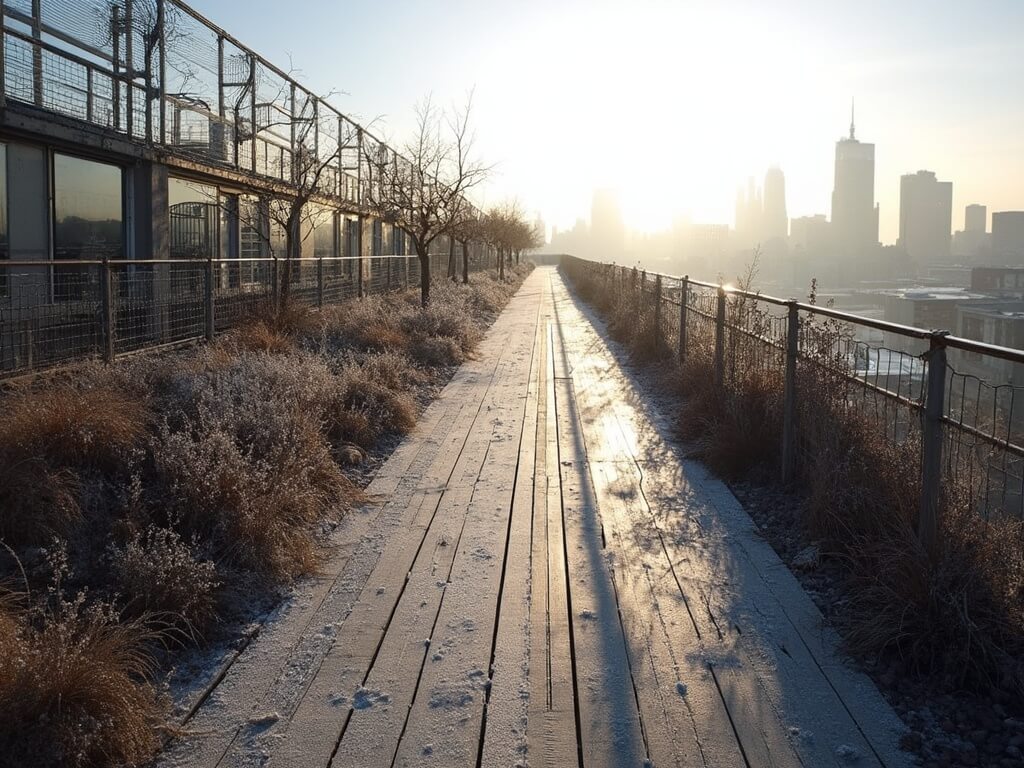
Winter visits reveal something most people miss. Without the dense foliage, the architectural composition becomes more visible. The city views sharpen. The structural bones of the landscape design emerge clearly.
Plus, you can actually walk at a normal pace and stop where you want without holding up an entire parade of people behind you.
Early morning visits in any season offer genuine solitude.
I’ve walked the entire length of the High Line at 7:30 AM on a Tuesday and encountered perhaps thirty other people across the entire 1.45 miles.
That’s not a park visit; that’s a genuine experience.
Evening hours present a different advantage:
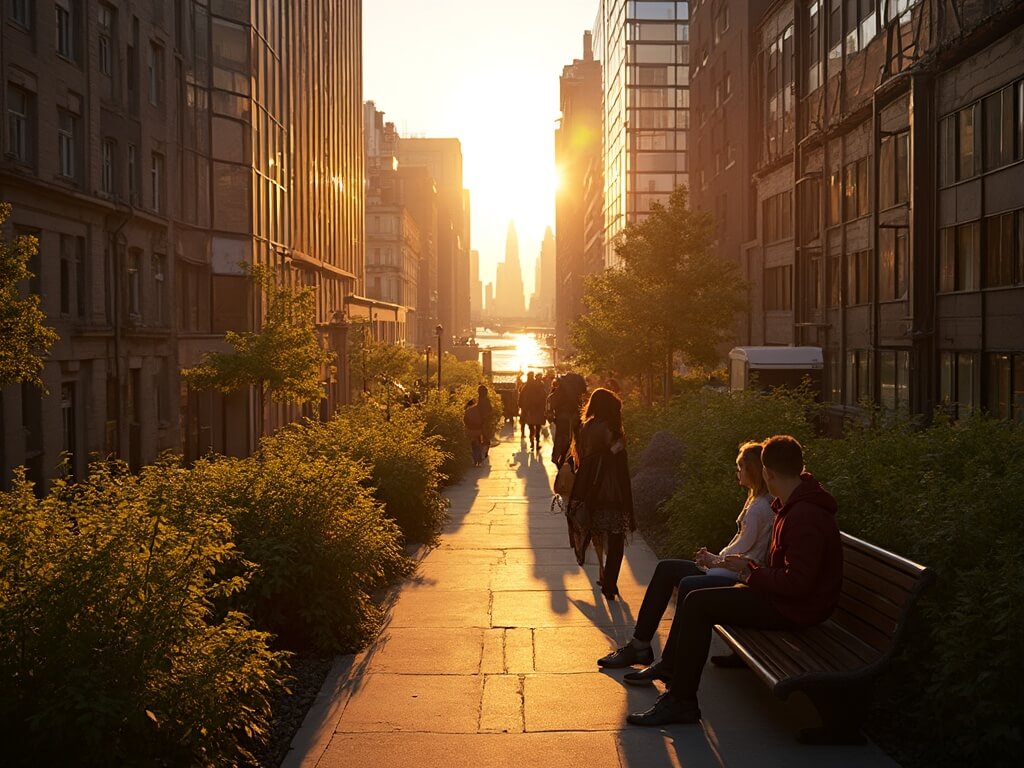
The light quality completely transforms the aesthetic experience. Golden hour—that period roughly one to two hours before sunset—creates genuinely striking conditions.
The gardens photograph differently. The city architecture glows. The river catches light in ways daytime simply cannot replicate.
Evening visits also attract a different demographic: fewer families with children, fewer tourists following guidebooks, more local residents treating the space as their actual neighbourhood park.
The social atmosphere fundamentally shifts.
My revised strategy after that disastrous Saturday:
I now visit the High Line either on weekday mornings before most people wake up, or on weekday evenings during shoulder seasons.
This completely changes how I experience the gardens, the art installations, and the general sense of possibility the space creates.
It’s the difference between visiting a tourist attraction and actually inhabiting a place.
official High Line visiting information and hours
The Tour Question: Should You Pay for Guidance, or Go It Alone?
Here’s something I initially dismissed as unnecessary: guided tours.
My assumption, shared by most independent travellers, was that I could navigate a 1.45-mile path perfectly well on my own.
What I didn’t anticipate was how much context actually enriches the experience.
The free option that actually exists:
The High Line offers free docent-led tours several times weekly. These aren’t marketing exercises or abbreviated versions designed to push you toward paid experiences.
They’re genuine, in-depth explorations of the park’s history, design philosophy, and transformation story.
A docent will explain the significance of specific plant selections, the architectural decisions that created particular sight lines, the industrial history embedded in the infrastructure, and the vision that transformed abandoned railroad into community asset.
These tours typically last ninety minutes and cover the entire length of the park at a contemplative pace.
I attended one on a Thursday morning and learned more about intentional landscape design in ninety minutes than I’d absorbed in three previous independent visits.
The paid specialty tour ecosystem:
Beyond the free options, various tour operators offer themed walks: Chelsea’s art gallery scene, LGBTQ+ history in the neighbourhood, architectural features, industrial history, neighbourhood gentrification effects.
These range from thirty to two hours, with prices typically between fifteen and forty-five dollars.
The Chelsea art gallery tours proved particularly valuable because they contextualize the visual culture surrounding the High Line.
You understand why Chelsea became the contemporary art epicentre, how that connects to industrial space conversion, and why artists initially moved into loft spaces in this neighbourhood.
The self-guided alternative that actually works:
If you prefer independence, the High Line’s official maps and several robust smartphone applications provide serious depth.
The park’s website offers curated thematic guides: seasonal highlights, architectural features, art installations, plant species identification.
These aren’t simplistic tourist materials; they’re substantive resources developed by landscape architects and horticulturists.
The honest assessment:
For your first visit, especially if you have time, a docent-led tour provides irreplaceable context.
For subsequent visits, you’ll find more value in independent exploration now that you understand the design’s underlying logic.
A hybrid approach works best: free docent tour first, then independent visits whenever you want to experience specific sections or seasons.
complete guide to visiting the High Line
What to Bring, What to Expect, and How to Actually Enjoy This
The essentials checklist that matters:
Comfortable walking shoes are non-negotiable. You’re walking 1.45 miles on a paved surface, often in direct sunlight with minimal shade.
Water is genuinely important, particularly in summer months. Sunscreen absolutely applies, even on cloudy days.
Layers based on season make enormous differences. The thirty-foot elevation means wind exposure that ground level doesn’t provide.
The technology question:
Bring your phone charged. The maps and audio guides require battery life, and Bluetooth headphones work well for audio guide experiences.
What the park itself provides:
Bathrooms exist along the route. Information booths staff several key locations during peak hours. Wheelchair rentals are available.
Benches positioned throughout the park allow rest without requiring you to leave the experience.
Realistic time allocation:
If you’re moving with purpose and not stopping much, thirty to forty-five minutes covers the entire length.
If you want to actually experience the space—sitting briefly, examining plantings, reading informational plaques—allocate two to three hours.
The no-pets policy that surprises people:
Dogs, bicycles, rollerblades, and skateboards are prohibited. Service animals are the sole exception.
Food, Drink, and Dining Strategy Around the High Line
Chelsea Market deserves serious attention here.
Located at 75 Ninth Avenue between 15th and 16th Streets, Chelsea Market sits directly adjacent to the High Line and represents a completely different food experience.
This isn’t a casual café situation; this is a sprawling food hall with approximately a hundred different vendors.
You can descend from the High Line, eat, and return to the park. The boundary between experiences creates an interesting rhythm to your day.
Little Spain, located in Hudson Yards near the northern terminus, offers another dining option.
This is high-end Spanish cuisine in a genuinely designed space, if you want something more refined than food hall dining.
The broader Chelsea and Meatpacking District restaurant ecosystem.
Hundreds of restaurants exist within five to ten-minute walks from various High Line access points. The High Line exists within one of Manhattan’s most vibrant restaurant neighbourhoods.
My practical recommendation:
Eat beforehand if you’re visiting on a crowded day. If you’re visiting on a quieter day, plan a Chelsea Market break as part of your experience.
Events, Programs, and Why You Should Check Before Visiting
The High Line isn’t static. Throughout the year, it hosts performances, workshops, and programming that transforms the park experience.
Performance events happen regularly.
Dance performances, live music, theatre works, and artistic interventions occur throughout the warmer months.
Educational workshops run consistently.
Horticulture classes, design seminars, artist talks, and neighborhood history sessions happen regularly.
Seasonal gardening volunteer opportunities exist.
If you want to participate rather than observe, the High Line occasionally opens volunteer positions.
Checking the official website before any visit ensures you’re not missing something significant.
Accessibility, Practical Concerns, and Who Should Actually Visit
The elevator situation:
Eight of fifteen access points have elevators or ramps. Advance knowledge prevents arriving at an inaccessible entrance.
Mobility and fatigue considerations:
1.45 miles is walkable for most, but not all. Plan frequent rest points or use wheelchair rentals if needed.
Sensory sensitivity:
Off-season or early morning visits are better for visitors with sensory processing sensitivities.
Vision impairment considerations:
Advance coordination with park staff is recommended. The terrain is flat and relatively straightforward.
Age considerations:
The High Line accommodates all ages, from young children to older adults, each experiencing the space differently.
The Gentrification Question: Beautiful Spaces and Complicated Consequences
The economic reality:
Since the High Line opened in 2009, surrounding property values increased dramatically. Long-established communities faced displacement.
The complicated truth:
The High Line didn’t cause gentrification—but it symbolized and accelerated it. It represents both public value and displacement consequences.
What thoughtful visitors should understand:
Support local businesses. Understand the transformation story. The High Line exists within a neighbourhood, not apart from it.
The Safety Question: What You Actually Need to Know
The straightforward answer:
The High Line is generally safe. It has lighting, staff presence, and reported incidents are rare.
The nuanced reality:
Safety perception varies. Earlier closure times in winter reduce late visits. Check park hours before arriving.
My genuine experience:
I’ve felt safe consistently, and I find daylight and golden hour are the best times to experience the park.
The Real Question: Is the High Line Actually Worth Your Time?
If you’re a first-time New York visitor:
Yes. It’s unique and inspiring urban design.
If you’re a returning New York visitor:
Yes, with preparation and off-peak timing.
If you’re a New York resident:
Yes, seasonally and for community programming.
If you’re visiting with limited time:
Maybe. Prioritize based on personal interests.
What I genuinely recommend:
Visit on a weekday morning in spring or fall. Plan 2–3 hours. Bring comfortable shoes, water, and curiosity. Combine with local neighbourhood exploration.
Final Perspective: What the High Line Actually Represents
The High Line represents visionary public investment, adaptive reuse, and the power of design to transform urban experience.
Its success inspired similar projects nationwide. It’s not just a park—it’s an argument for what cities can be when public space is prioritized.
The High Line rewards attention. Now go plan your walk through this extraordinary linear park in Manhattan.