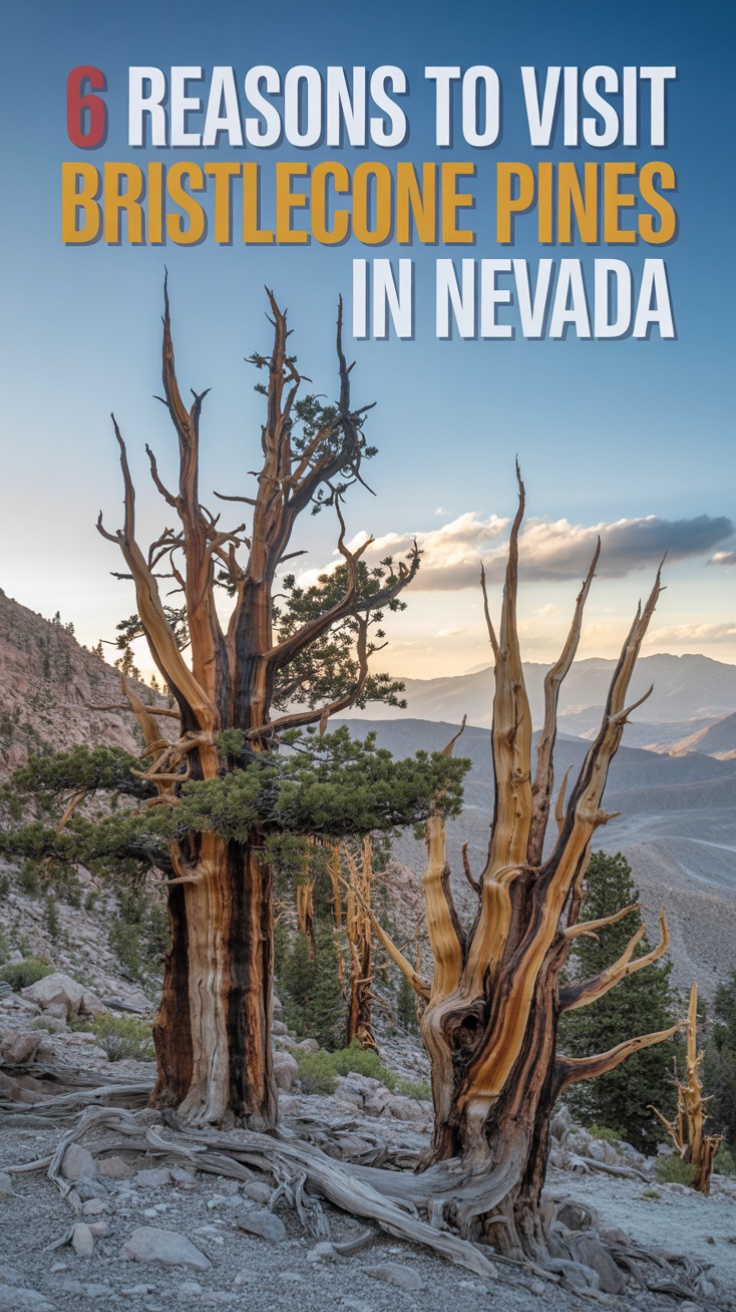
Here’s a question that stops most people in their tracks: what if you could stand next to a living organism that watched the Egyptian pyramids being built?
That’s not hyperbole.
Bristlecone pines in Nevada are among the oldest living things on Earth, with some specimens pushing past 4,800 years old.
These aren’t just trees you glance at and move on from.
They’re time machines made of wood and bark, standing impossibly gnarled and ancient on Nevada’s high-elevation slopes.
Most people have never heard of them.
Those who have often assume they’re only in California or somewhere equally remote and inaccessible.
The truth is far more interesting: Nevada sits right in the heart of Great Basin bristlecone country, home to some of the most accessible and stunning ancient groves in North America.
What Makes Bristlecone Pines So Impossibly Old (And Why You Should Care)
The Great Basin bristlecone pine—Pinus longaeva to botanists—doesn’t play by the rules most trees follow.
While oak trees might live 400 years and feel ancient, bristlecones are still in their adolescence at that age.
The secret isn’t magical.
It’s relentless, almost stubborn adaptation.
These trees grow in some of the harshest alpine environments on the continent.
Think high-elevation deserts with thin soil, screaming winds, extreme cold, and precious little water.
Most species would give up and die.
Bristlecones? They dig in deeper.
Their wood is incredibly dense and resists rot better than almost any other conifer.
They grow insanely slowly—sometimes adding just millimetres of growth per year.
This slow pace actually works in their favour because there’s less wood to maintain and fewer resources needed to stay alive.
Their twisted, gnarled appearance isn’t aesthetic choice—it’s survival strategy.
Sections of the tree die back during harsh winters, but other parts keep living.
You’ll see a bristlecone that looks half-dead but has been thriving for millennia, with just a strip of living bark keeping the organism going.
I experienced this firsthand a few years back when I hiked to Wheeler Peak Grove in Great Basin National Park.
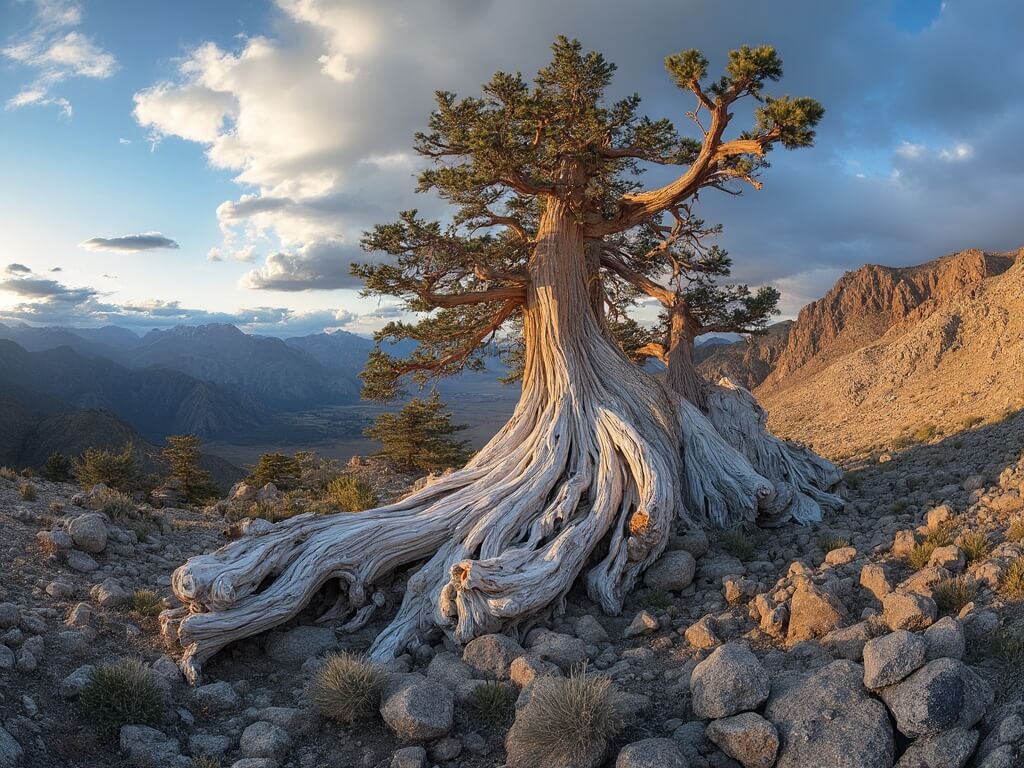
Standing in front of one particular specimen, weathered to silver-grey and carved by wind into something resembling abstract sculpture, I tried to wrap my head around the maths.
This tree was already 2,000 years old when Jesus was born.
It had survived millennia of droughts, fires, climate shifts, and the rise and fall of entire civilizations.
And there it stood, still photosynthesising, still alive, still growing—barely visible growth, but growth nonetheless.
That moment changed how I thought about resilience entirely.
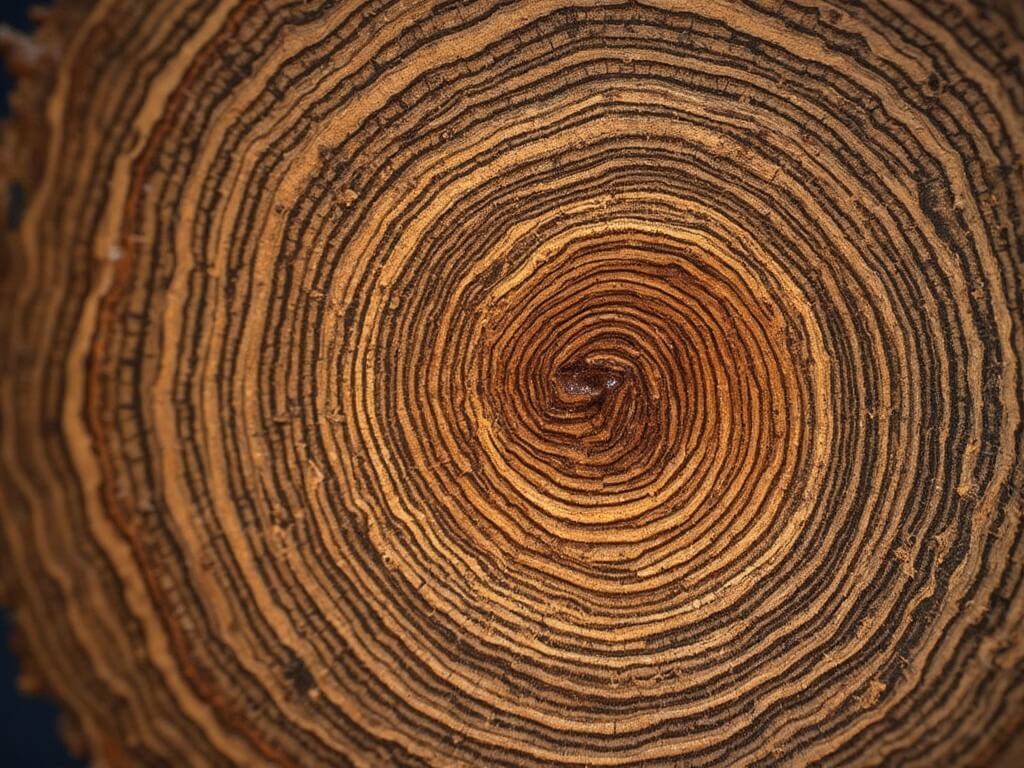
The growth rings inside these trees are so tightly packed that scientists use them as climate records stretching back thousands of years.
A single cross-section reveals wet years, dry years, volcanic eruptions affecting atmospheric clarity, even the impact of historical fires.
This practice, called dendrochronology, has revolutionised how we understand past climates.
A tree is essentially a living library written in wood.
Nevada’s Bristlecone Pine Hotspots: Where the Ancient Forests Actually Are
Nevada hosts several major bristlecone populations, and the good news is that some are surprisingly accessible for visitors.
The most famous location is Great Basin National Park, sitting in eastern Nevada between the towns of Baker and Ely.
This isn’t a remote backwater requiring serious mountaineering skills—it’s an actual national park with visitor facilities, ranger programs, and well-maintained trails.
Wheeler Peak Grove is the easiest entry point.
The main trail runs 2.8 miles roundtrip with moderate elevation gain, winding through landscapes that feel genuinely alien.
You’re walking through glacial moraine—essentially fields of ancient quartzite boulders—with bristlecones emerging from impossible angles, their roots wrapped around rock faces.
Interpretive signs along the way explain what you’re looking at.
Ranger-led walks happen regularly through summer months and honestly, they’re worth timing your visit around.
A ranger who knows these trees can point out details—a 500-year-old seedling struggling to take root, the architectural beauty of deadwood preserved perfectly by the dry climate—that you’d otherwise miss.
For experienced hikers willing to work harder, Mount Washington Grove offers a different experience.
It’s the largest bristlecone grove in the park, but getting there requires route-finding skills and GPS navigation.
There’s no marked trail, which means you’re genuinely hiking cross-country through high alpine terrain.
The trees here are notably taller than their counterparts in other groves, standing on limestone soils that apparently suit them differently.
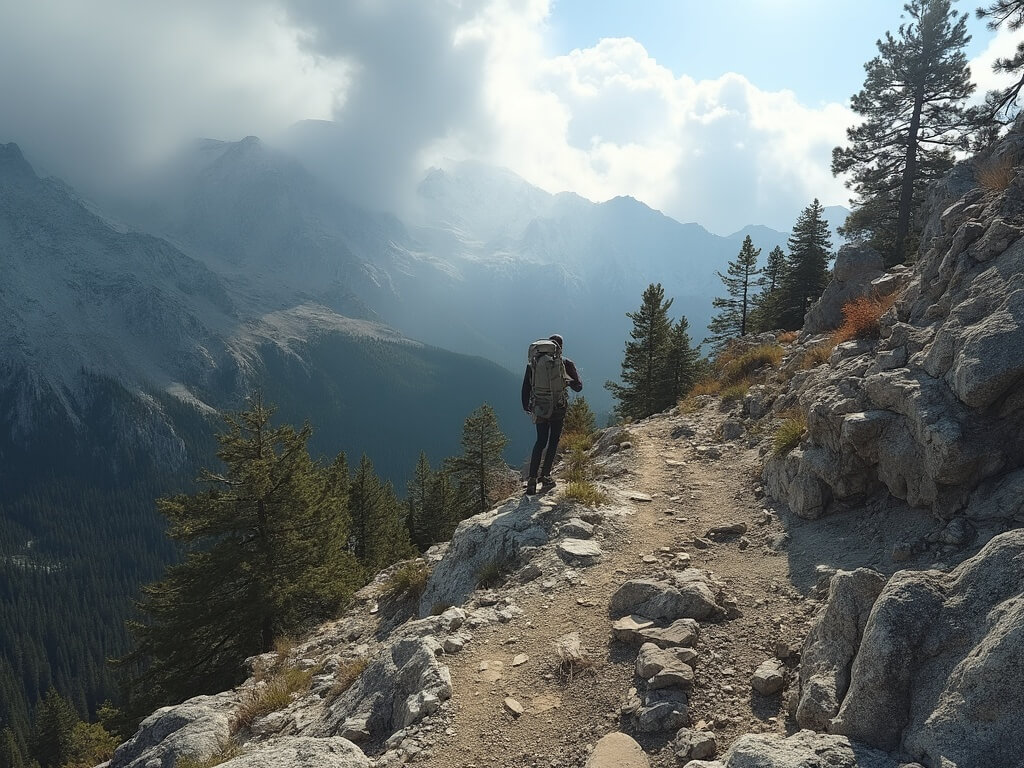
Eagle Peak Grove sits even further out, accessible only to serious hikers comfortable with steep, exposed terrain and self-navigation.
Beyond Great Basin National Park, Spring Mountains (near Las Vegas) host an isolated bristlecone population worth exploring if you’re in southern Nevada.
These trees are enormous by bristlecone standards and genuinely ancient.
Mount Moriah, further northeast in Nevada’s high country, represents another significant population that attracts botanists and dedicated hikers.
The specifics matter here because each location has a different character.
Wheeler Peak feels managed and accessible—you can see why families hike it.
Mount Washington requires commitment and skill but offers solitude most visitors never experience.
Spring Mountains feel almost hidden, sitting high above the Las Vegas sprawl, their age seemingly disconnected from the casinos and development below.
What Actually Happens When You Hike to See These Trees
Let me be direct: hiking to bristlecone groves isn’t like strolling through a typical nature trail.
These trees live at elevation—most Nevada groves sit between 9,800 and 11,000 feet above sea level.
That’s high enough that your lungs immediately know the difference.
The air is noticeably thinner.
Exertion feels harder than it should.
People who are fit at sea level sometimes struggle more than they expect, not because the distance is extreme but because oxygen availability is genuinely limited.
The weather changes fast at altitude.
I’ve seen trails go from sunny and pleasant to snowsquall in roughly 30 minutes, even during summer.
That’s not exaggeration—it’s how high-elevation weather works.
Clouds build rapidly, temperature drops, and suddenly you’re hiking in conditions completely different from what you started in.
This is why preparation matters massively.
Here’s what actually works:
- Start early in the day (trails should ideally be done before afternoon thunderstorms build in summer)
- Bring layers—multiple lightweight layers trump single thick layers for altitude hiking
- Bring far more water than you think you’ll need (at least 3 litres minimum, ideally more)
- Wear sun protection religiously (the sun hits harder at altitude and reflects off exposed rock)
- Don’t assume cell service exists (it mostly doesn’t, which means carry a map and compass or GPS unit you know how to use)
- Never hike these trails alone if possible
The Wheeler Peak trail handles crowds reasonably well because it’s accessible and popular.
You won’t be entirely alone, but you won’t feel overwhelmed either.
The more remote groves—Mount Washington, Eagle Peak, Spring Mountains trails—offer genuine solitude but demand more technical skill and self-sufficiency.
One detail many people miss: there’s no water along most trails.
You can’t refill from streams because at that elevation, wildlife impact has made many water sources risky.
This means you carry all water you’ll need, which adds weight, which matters when you’re already dealing with thin air and elevation gain.
The Biology That Makes These Trees Nearly Impossible to Kill
Understanding how bristlecone pines actually work helps explain why they’re so valuable and why they deserve protection.
These aren’t genetically identical across all specimens.
Individual trees have evolved specific strategies for survival in their particular microenvironments.
A bristlecone growing on windblown, exposed ridge develops differently from one sheltered in a basin with slightly more moisture and soil.
Over millennia, this creates populations of trees that have essentially fine-tuned their approach to survival in specific locations.
The disease resistance in bristlecone wood is genuinely remarkable.
Fungi and insects that devastate other conifers barely touch them.
Decay happens incredibly slowly.
Stand next to deadwood from a bristlecone that’s been dead for centuries—you’ll find it still looks almost fresh, preserved by the dry climate and the wood’s inherent resistance to rot.
Compare that to deadwood from other species and the difference is stark.
Growth rings in bristlecones can be microscopically thin in difficult years—sometimes measuring less than a millimetre—but never stopping entirely.
That’s the biological commitment these trees have made: survive, grow, persist, no matter how marginal the conditions become.
The key adaptive traits:
- Extremely dense wood that resists decay and pest damage
- Slow growth that minimises resource demands
- Ability to live with significant portions of the tree dead (called “sectoring”)
- Root systems adapted to extract moisture from minimal soil
- Resistance to extreme cold, wind, and aridity
Limber pines sometimes grow alongside bristlecones and can look superficially similar to untrained eyes.
The key difference: limber pines are notably shorter-lived and grow in slightly less extreme conditions.
Where you see limbers, bristlecones are usually higher up and more exposed.
Learning to tell them apart adds a layer to the hiking experience—you start reading the landscape like text, understanding which trees can survive where and why.
Why Nevada’s Bristlecone Groves Matter Right Now
These ancient trees aren’t just botanical curiosities or hiking destinations.
They’re actively involved in research that shapes how we understand climate history and future climate change impacts.
Scientists regularly collect core samples from bristlecones—a non-lethal process that uses a thin drill to extract a pencil-thin section of wood.
Those cores are then analysed ring by ring, creating detailed climate records stretching back thousands of years.
This research has revolutionised understanding of historical droughts, temperature patterns, and atmospheric conditions.
Climate scientists literally couldn’t do their work without dendrochronological data from ancient trees like these.
The conservation status is unambiguous: bristlecones are protected species in all managed locations.
You cannot remove wood, cones, or any plant material.
You cannot disturb the soil around them through trampling.
There are reasons these rules exist.
Bristlecone groves live in fragile alpine ecosystems where soil takes decades to form and recovery from damage is glacially slow.
Visitor impact is a genuine concern—not because park managers distrust visitors, but because thousands of feet walking off-trail in sensitive areas creates compaction and erosion that persists for generations.
This is why rangers and interpretive signs emphasise staying on marked trails and practising Leave No Trace principles.
Protected status also means ongoing scientific monitoring.
Researchers track how populations respond to climate shifts, fire risk, and environmental stressors.
Some studies suggest that rising temperatures might actually benefit bristlecones in some locations—more growing season at high elevation—while threatening them in others where drought stress increases.
The research remains active and ongoing because these trees represent our longest continuous record of terrestrial conditions.
You’re not just seeing old trees when you visit Nevada’s bristlecone groves.
You’re standing within an ecosystem that holds climatic secrets spanning millennia, and you’re participating in a landscape that scientists actively study to understand our planet’s past and predict its future.
Understanding what to expect before you visit, both logistically and emotionally, separates memorable trips from frustrating ones.
If you’re inspired by ancient landscapes, you might also be interested in taking a hike to delicate arch in arches national park or even take a lighthouse tour in maine.
The Actual Experience: What Hiking to Ancient Trees Teaches You That Photos Never Could
The Wheeler Peak trail hits different when you’re standing halfway through it.
The air feels thinner than when you started.
Your legs know it’s been a mile and a half uphill, but what strikes you most isn’t the physical effort—it’s the trees themselves.
They’re not grouped like a forest. They’re scattered across the landscape like they’re purposefully keeping distance from each other, each one claiming its own rocky territory, each one looking less like a tree and more like a sculpture someone carved from desperation and survival.
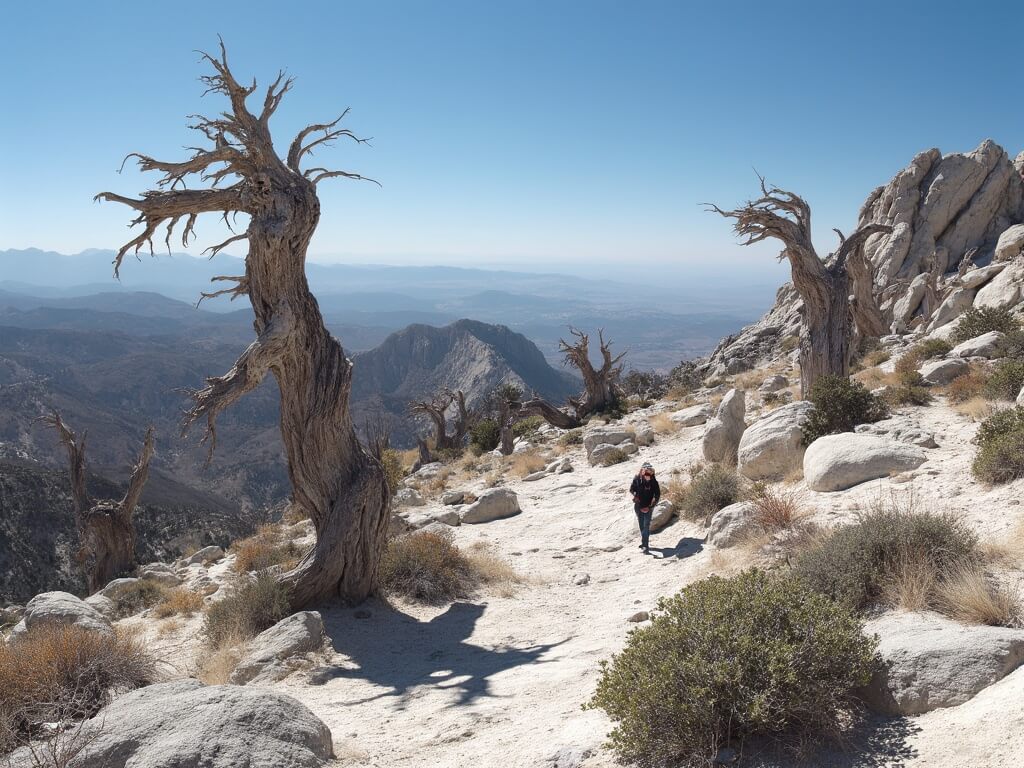
I brought a friend on my second trip to Wheeler Peak who’s used to hiking at sea level. She was fit—genuinely fit—but the altitude wrecked her confidence in the first 20 minutes. We slowed down, took more frequent breaks, focused on the pace rather than the destination.
Somewhere around mile one, after her breathing settled and her body adjusted, she stopped complaining about the elevation and started asking questions.
Why does that tree look like it’s growing backward?
How old do you think that one is?
That’s when the magic happens.
These aren’t passive sights you consume and move past. They demand engagement. They make you curious because they’re so visibly, undeniably old in a way that most natural features aren’t.
A canyon might be ancient, but it looks static. A bristlecone looks like it’s actively engaged in an impossible negotiation with its environment—and it’s winning.
Nevada’s bristlecone pines underscore this lesson: they’re not merely trees, they are enduring narratives etched in resin and wood.
The interpretive signs along the trail matter more than you’d expect. They’re not just informational. They point out specific features—a strip of living bark feeding wood that’s been dead for 500 years, a seedling struggling to root in quartzite boulder crevices, the way weather has carved patterns into bark like tree-specific hieroglyphics.
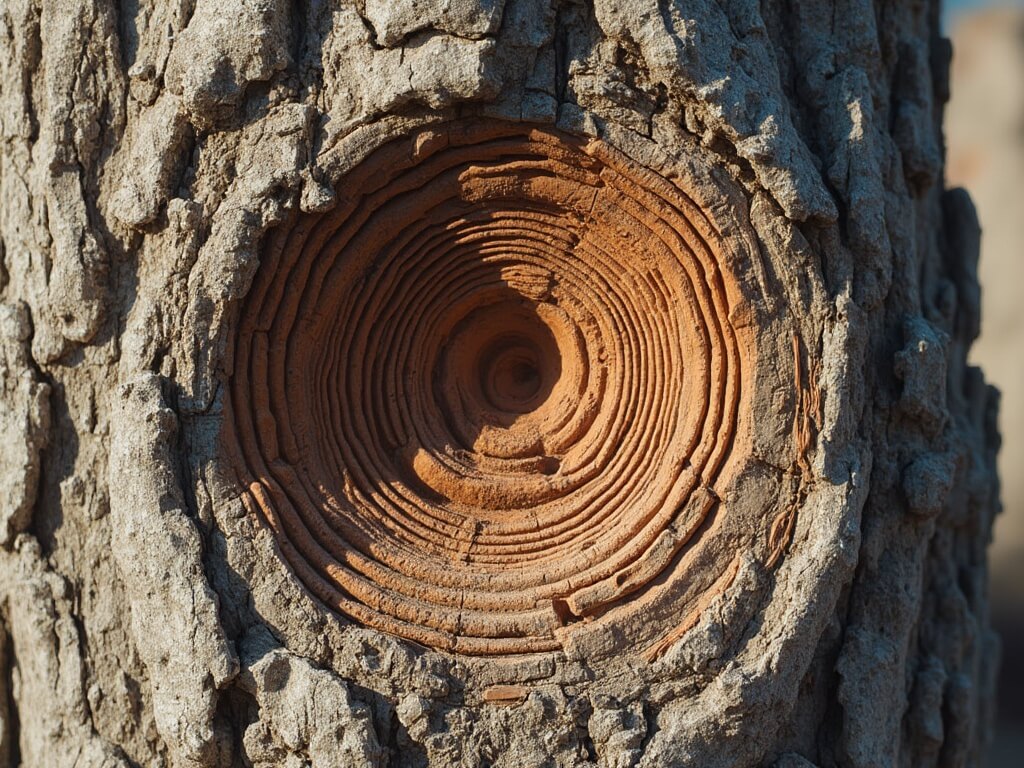
Once you know what you’re looking for, you see the strategy. You understand the sacrifice.
These trees have edited themselves down to absolute minimums.
What you’re looking at isn’t a tree thriving in the traditional sense. It’s a tree refusing to fail.
The Practical Reality: What Actually to Pack and Why It Matters
Let’s talk specifics because vague advice gets people in trouble at altitude.
Water: This isn’t negotiable. Bring 3-4 litres minimum. Altitude increases water loss through respiration. The dry climate accelerates dehydration.
Sun protection: Sunscreen SPF 50 minimum, reapply every 90 minutes. Sunglasses are non-optional. UV exposure at 10,000+ feet is real.
Layers: Moisture-wicking base layers. Insulating mid-layers. Windproof shell. No cotton. Wool or synthetics only.
Navigation: Wheeler Peak trail is marked. Others require detailed maps and GPS. No cell service. Offline skills matter.
First aid and emergency supplies: Ibuprofen helps. If symptoms worsen—descend. Don’t push it.
Timing: Start by 7 or 8 AM. Afternoon storms are dangerous.
Items that changed my experience:
- Trekking poles
- Wide-brimmed hat
- Energy food you’ll actually eat
- Notebook for observations
- Headlamp—even for day hikes
Preparation is what separates a memorable hike from a miserable one. Strength is secondary. Planning is primary.
Understanding the Rules So You Don’t Become the Hiker Everyone Resents
You cannot collect anything. No cones. No needles. No dead wood. Even fallen material supports the ecosystem.
You must stay on designated trails. High-altitude soils recover slowly—30-50 years for visible recovery.
Dogs on-leash only. No bikes. No camping in groves. Use nearby campgrounds like Grandview or those near Great Basin.
These rules exist to protect a fragile system. The trees are resilient. The ecosystem is not.
The ranger at Great Basin said it best: “These trees were ancient when your ancestors were building civilizations. The least we can do is make sure they’re here for your great-great-grandchildren to see.”
Read more about the gnarliest tree on earth on Travel Nevada.
The Science Part: Why Tree Rings Tell Stories Climate Scientists Can’t Live Without
Dendrochronology shows how trees grow faster in good years, slower in bad ones. Rings record climate history.
Bristlecones are perfect for this: they’re old (4,000+ years), dense, and grow in isolated climates where other data is lacking.
Methuselah—one of the oldest bristlecones—has helped scientists understand droughts, volcanic eruptions, even ancient civilization shifts.
Every ring is a data point in millennia-long studies. When you see a bristlecone, you’re seeing climate archaeology.
What’s Changing and Why It Matters: Bristlecones in a Warming World
Climate change affects bristlecones now. Some stands grow more due to longer seasons. But drought and fire risk are rising.
One high-severity fire could wipe out a grove that took millennia to grow.
Monitoring is ongoing. Bristlecones are early indicators of climate stress across ecosystems.
If they’re struggling, everything else is too.
Logistics Demystified: The Actual Steps for Planning and Executing Your Visit
Drive times: 5 hours from Las Vegas, 4 hours from Salt Lake City. Baker, NV is the gateway town—limited services, so plan ahead.
Suggested itinerary:
- Leave early morning
- Arrive by late morning
- Stop at visitor center
- Hike Wheeler Peak trail
- Return by early evening
Alternatively, make it a multi-day trip. Camp near the groves or stay in Ely, NV.
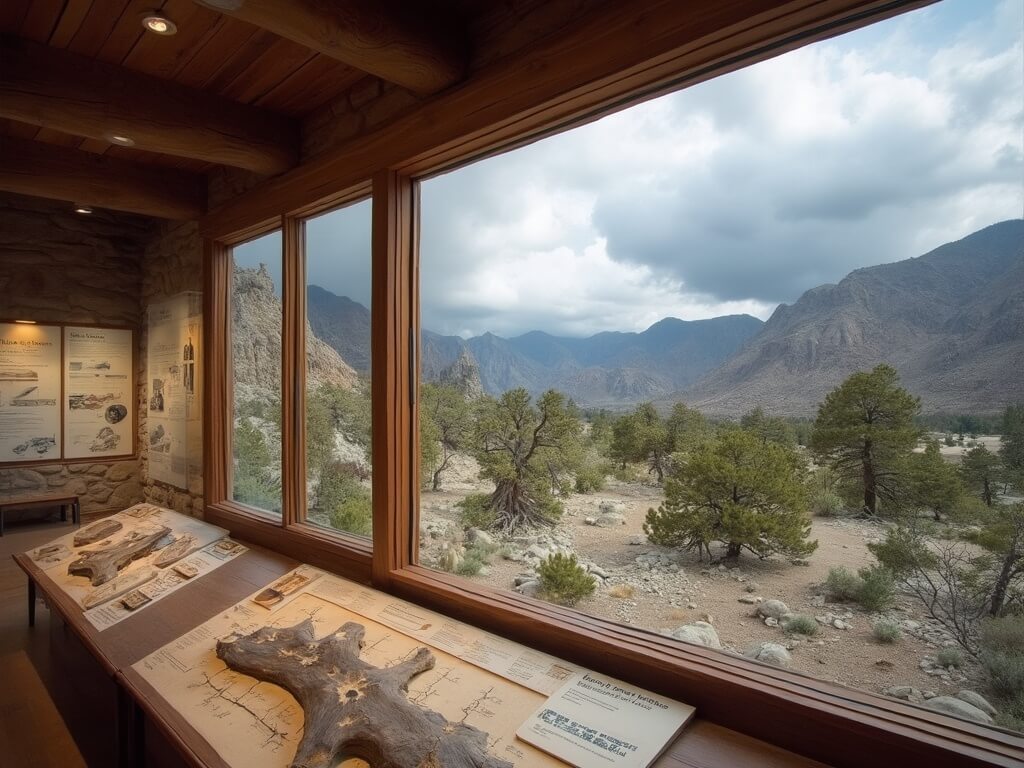
Visitor center: Don’t skip it. The dendrochronology displays add depth. Ranger walks provide context.
Explore other bristlecone hikes in the Spring Mountains via Mount Charleston trails.
The Moment Where Everything Clicks: Why These Trees Change How People Think
That moment of perspective happens slowly—and then all at once. You’re standing before a tree that predates Rome and you realize: this tree has endured more than any empire.
My friend’s realization: “This puts everything in perspective. This tree was dealing with existential stress 2,000 years ago… and it just kept going.”
That’s what bristlecones teach: resilience isn’t a metaphor. It’s real. Visible. Rooted in ancient wood.
Plan similar perspective-shifting trips like Delicate Arch or White Sands.
The Conservation Reality: What Actually Needs to Happen for These Groves to Survive the Next Century
Protection requires active stewardship: maintained trails, educational signage, scientific monitoring, and restricted access when needed.
Threats:
- Increased visitation
- Fires
- Invasive species
- Funding gaps
Every respectful visitor helps. Advocacy translates to funding and policy. You can make a difference.
The Photography Problem: Why Instagram Doesn’t Capture What Makes This Special
Bristlecones don’t photograph well. Not in a way that conveys what matters.
Their significance is temporal, not visual.
Take photos—but also take notes. Describe the wind, the bark texture, the feeling of standing before something thousands of years old.
Make a memory that no photo can replicate.
The Final Piece: What to Actually Take Home From This Experience
Bristlecones force you to reckon with deep time.
They make you reconsider what it means to endure. To persist. To adapt.
Every trip, every ranger-led walk, every respectful step is a contribution to protecting that legacy.
The practical takeaway:
- Visit between May and September
- Pack well
- Start early
- Follow the rules
- Engage deeply
Then go home and tell people. Share what you learned. Become an ambassador.
These trees are waiting. And they won’t wait forever.
More ways to explore the American wilderness:
Learn more from Nevada’s bristlecone pines: some of the oldest trees on earth.