My wabi sabi living room education started with a ceramic bowl I cracked and glued badly, visible seam and all, that a guest assumed was an intentional kintsugi piece. I stopped correcting people after the third compliment. Wabi sabi living rooms run on exactly that acceptance of the flawed thing.
1. Wooden Charm Accents
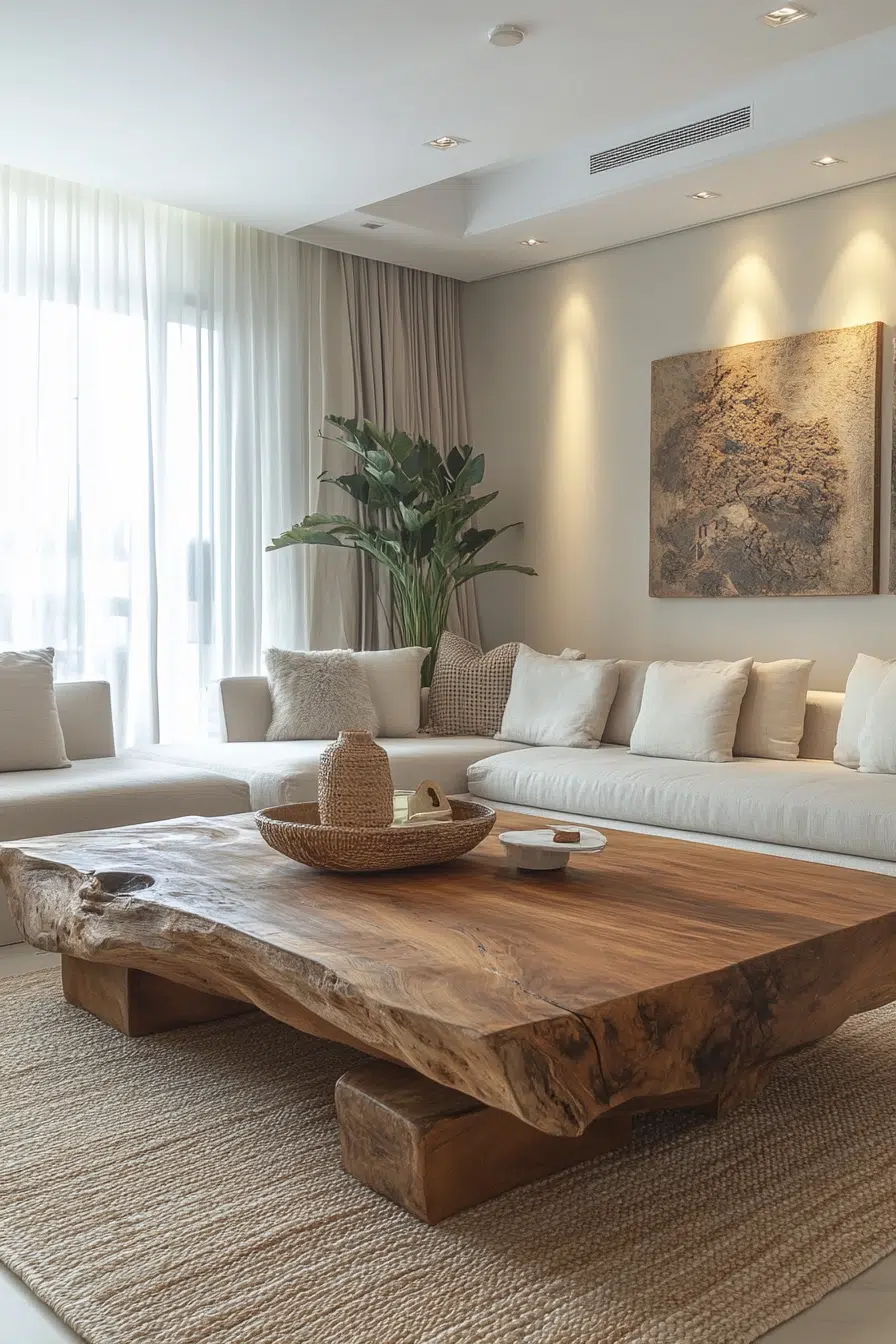
Elevate your wabi sabi living room with the rustic allure of natural wood accents that each have their own story to tell. The uniqueness of each piece, from knots to grain, infuses your space with warmth and a sense of history. Thrift shops and salvage yards are treasure troves for finding cost-effective, authentic wood pieces.
✎ Steal This Look
- Paint Color: Sherwin-Williams Accessible Beige SW 7036
- Furniture: reclaimed wood coffee table with live edge, vintage wooden bench with visible patina, hand-carved wooden side table
- Lighting: wooden pendant light with natural grain variation, paper-shaded floor lamp with wooden base
- Materials: unfinished oak, weathered teak, raw linen, hand-thrown ceramics, unbleached cotton
I once dragged home a water-damaged barn beam that became my favorite console table; its cracks and stains tell more stories than anything mass-produced ever could.
2. Ceramic Artistry Display
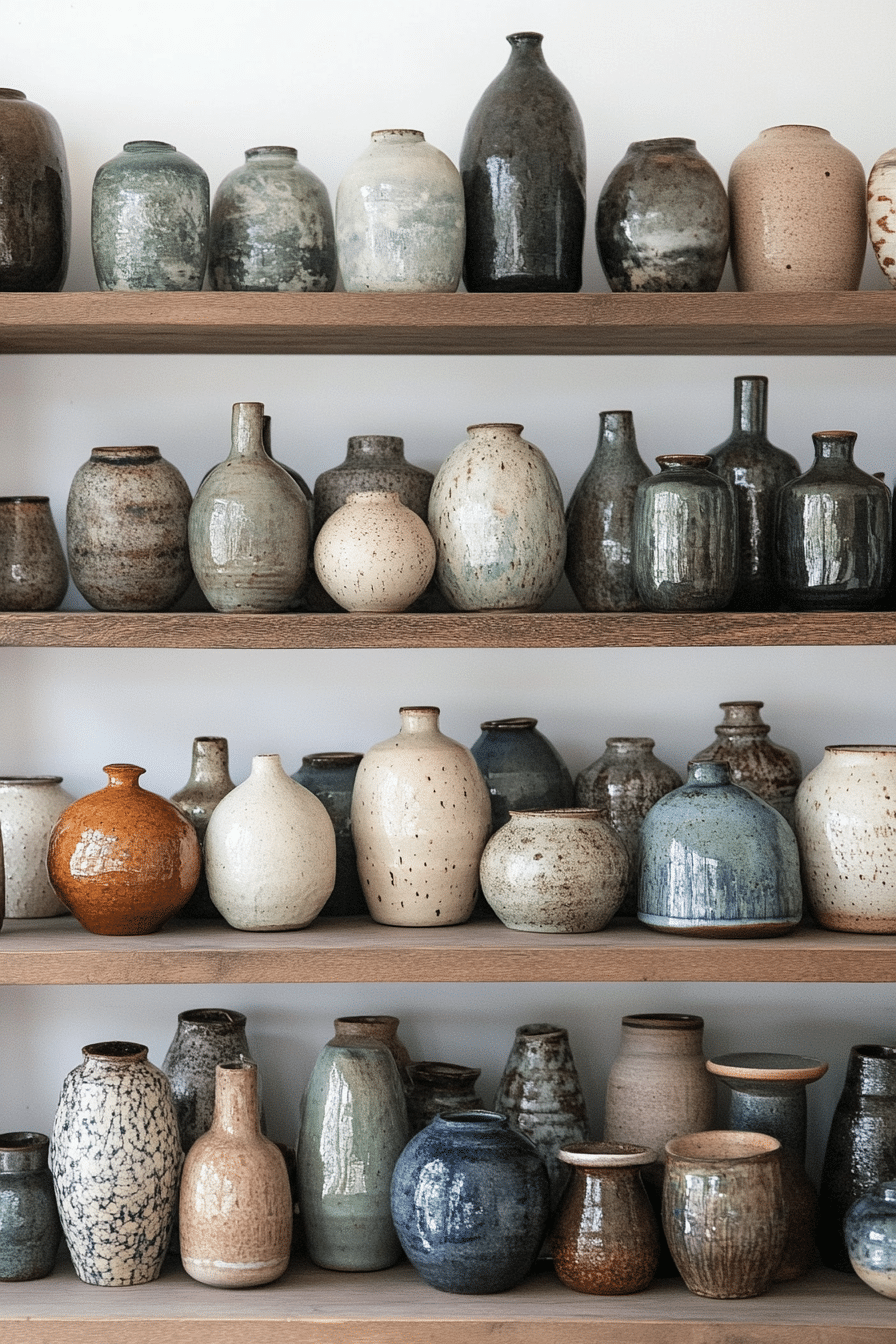
Craft a mesmerizing focal point in your wabi sabi living room with a curated selection of handmade ceramics that embody raw beauty. Each pottery item, with its individual flaws, contributes character and charm at a modest price. You can start your collection with just a few unique pieces from local art festivals or workshops where you’ll find affordable, artisanal work.
🎨 Steal This Look
- Paint Color: Benjamin Moore Edgecomb Gray HC-173
- Furniture: low-slung wooden credenza with visible grain and live edge details
- Lighting: pendant light with hand-formed ceramic shade in off-white glaze
- Materials: unglazed stoneware, raw linen, reclaimed wood, matte concrete
There’s something grounding about running your fingers over a bowl’s uneven rim—it’s a daily reminder that perfection is overrated and stories matter more than symmetry.
3. Earth Tone Serenity
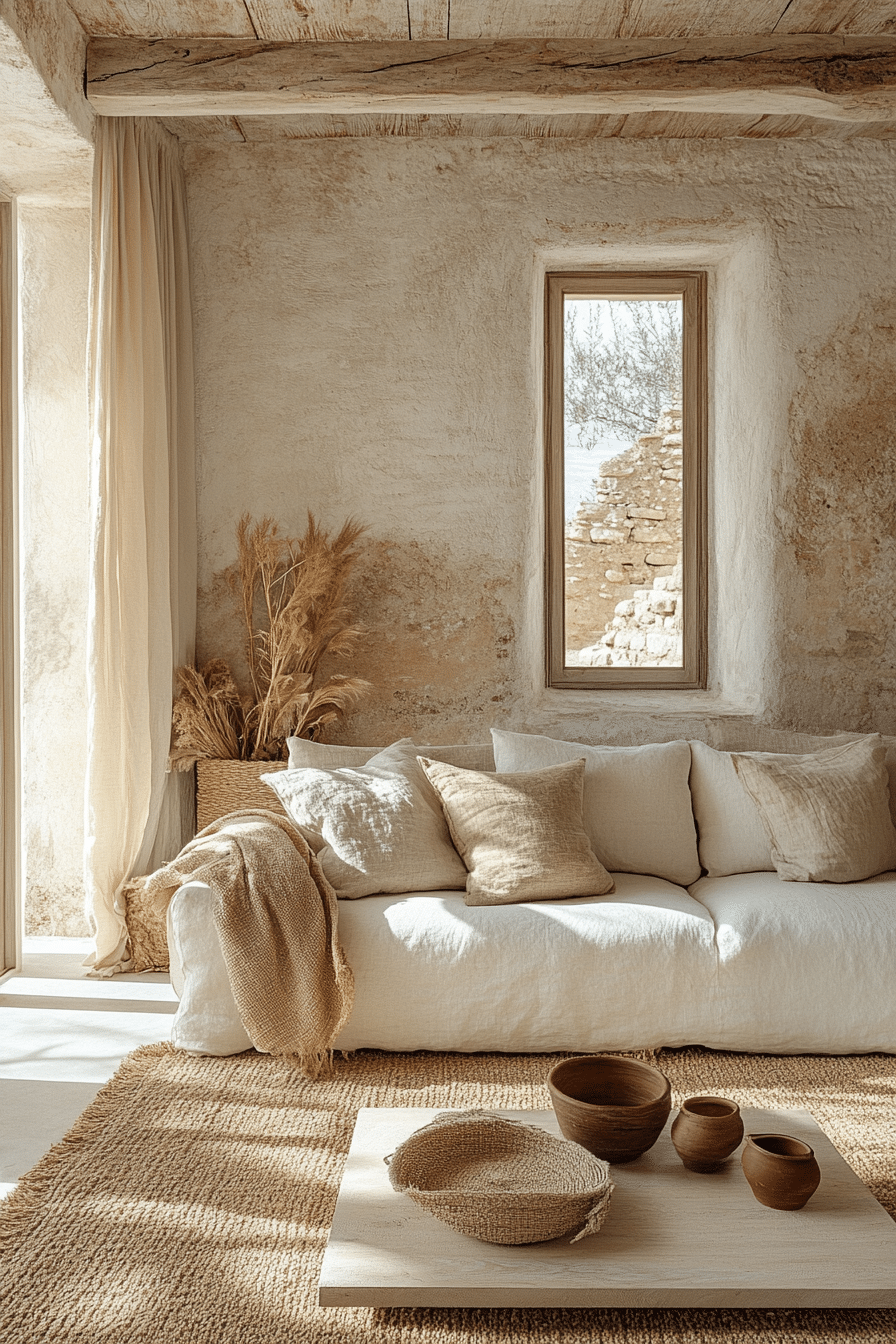
Infuse your wabi sabi living room with the calming hues of nature to create a serene, grounded environment. These earthy colors blend seamlessly with your existing decor, requiring minimal investment through simple additions like pillows or natural artifacts. Achieve this look without a full room renovation by adding elements piece by piece.
✎ Steal This Look
- Paint Color: Farrow & Ball Mouse’s Back 40
- Furniture: low-slung linen sofa in oatmeal, raw-edge walnut coffee table, woven jute pouf
- Lighting: oversized rice paper pendant with warm bulb
- Materials: unbleached linen, aged brass, terracotta, hand-thrown ceramics, unfinished wood
There’s something deeply restorative about a room that doesn’t try too hard—let the imperfections in your found objects and natural materials do the speaking.
4. Stone Essence Decor
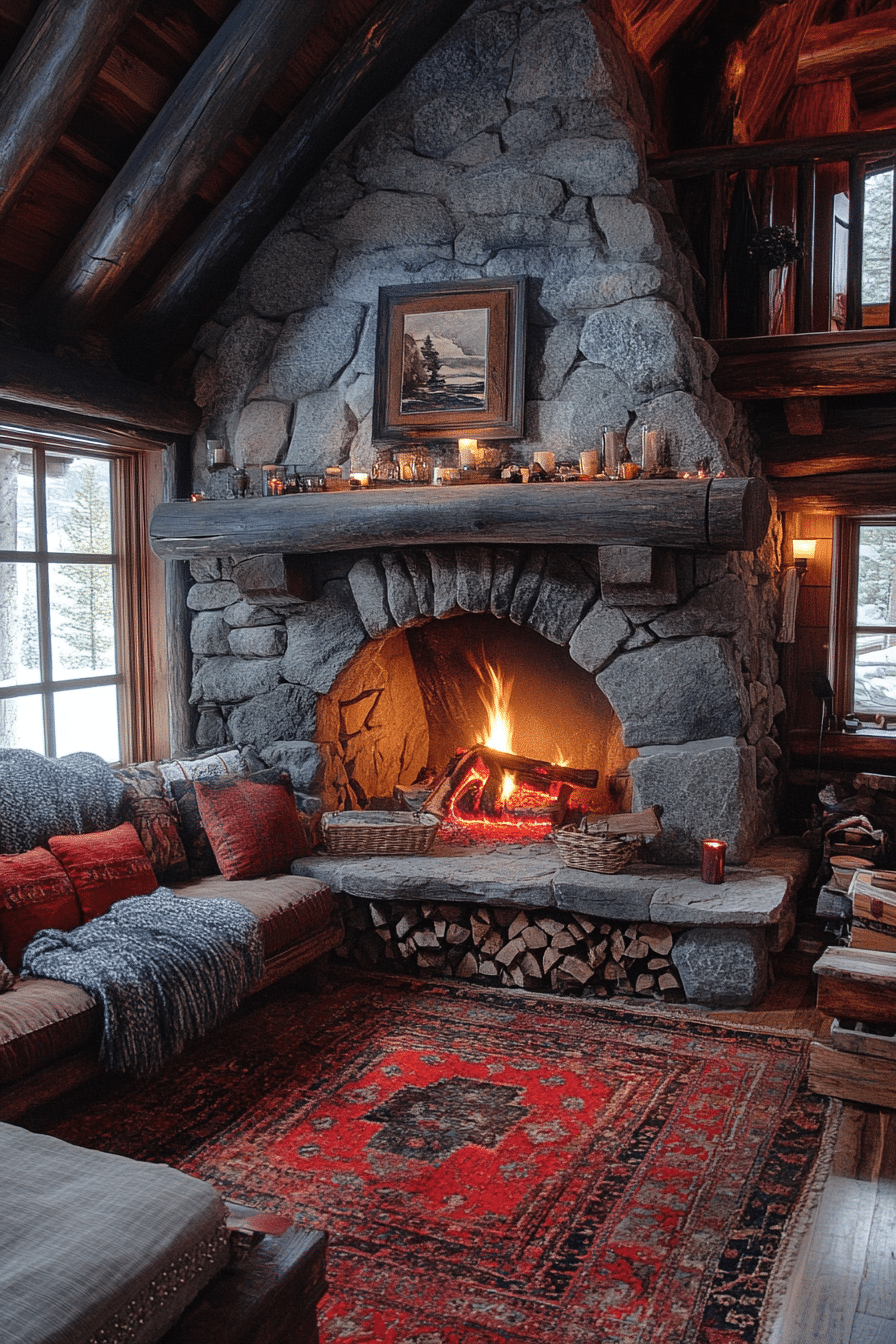
Bring the timeless beauty of stone into your wabi sabi living room to connect with the earth’s natural rhythms. Even without a large stone feature, small touches like rock collections or pebble bowls can evoke the same tranquil vibe at little cost. The organic textures and patterns of stone complement other natural materials beautifully.
★ Steal This Look
- Paint Color: Behr Burnished Clay PPU24-05
- Furniture: low-profile wooden coffee table with live edge, floor cushions in undyed linen, sculptural stone side table
- Lighting: paper lantern pendant with warm LED bulb, ceramic table lamp with irregular glaze
- Materials: raw limestone, unpolished river rock, rough-hewn timber, hand-thrown ceramics, slubby linen
I keep a shallow wooden bowl of smooth beach stones on my coffee table—running my fingers across their cooled surfaces instantly grounds me after a chaotic day.
5. Leather Legacy Pieces
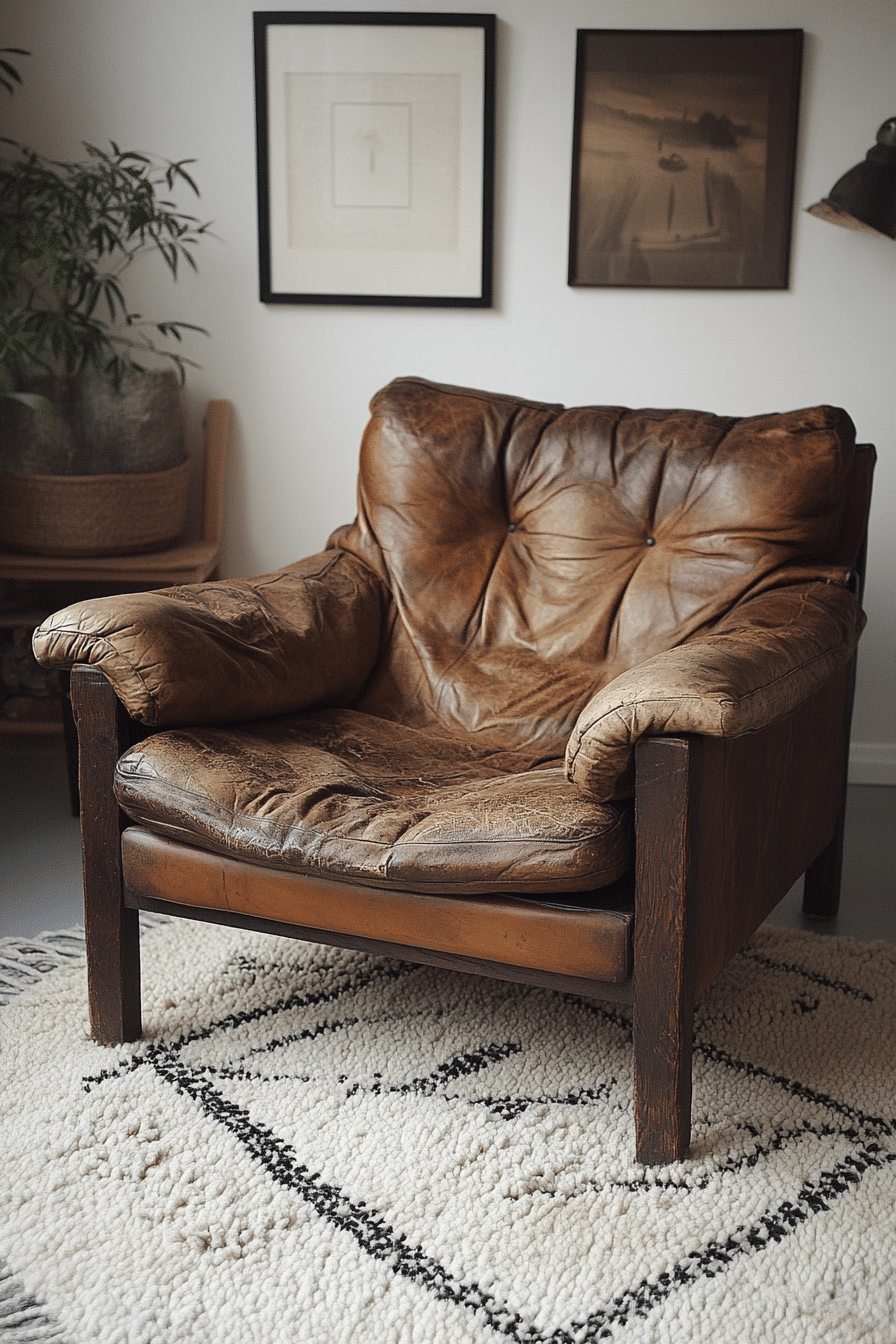
Let your wabi sabi living room narrate tales of time with aged leather furniture that gains charm as it wears. Thrifted leather items carry a natural patina, offering both authenticity and affordability. The wear and warmth of leather add a cozy, inviting atmosphere that improves with age.
🌟 Steal This Look
- Paint Color: Valspar Weathered Leather 3003-8B
- Furniture: distressed cognac leather sofa with visible wear marks, vintage leather club chair with cracked patina, aged leather ottoman with nailhead details
- Lighting: warm brass floor lamp with linen drum shade
- Materials: full-grain leather with natural imperfections, raw linen, unpolished brass, reclaimed wood with live edges
There’s something deeply honest about a leather sofa that’s seen decades of use—the creases tell stories no new furniture can fake. I always tell readers to run their hands across the surface and feel for that supple, lived-in texture.
6. Textile Tapestry Layers
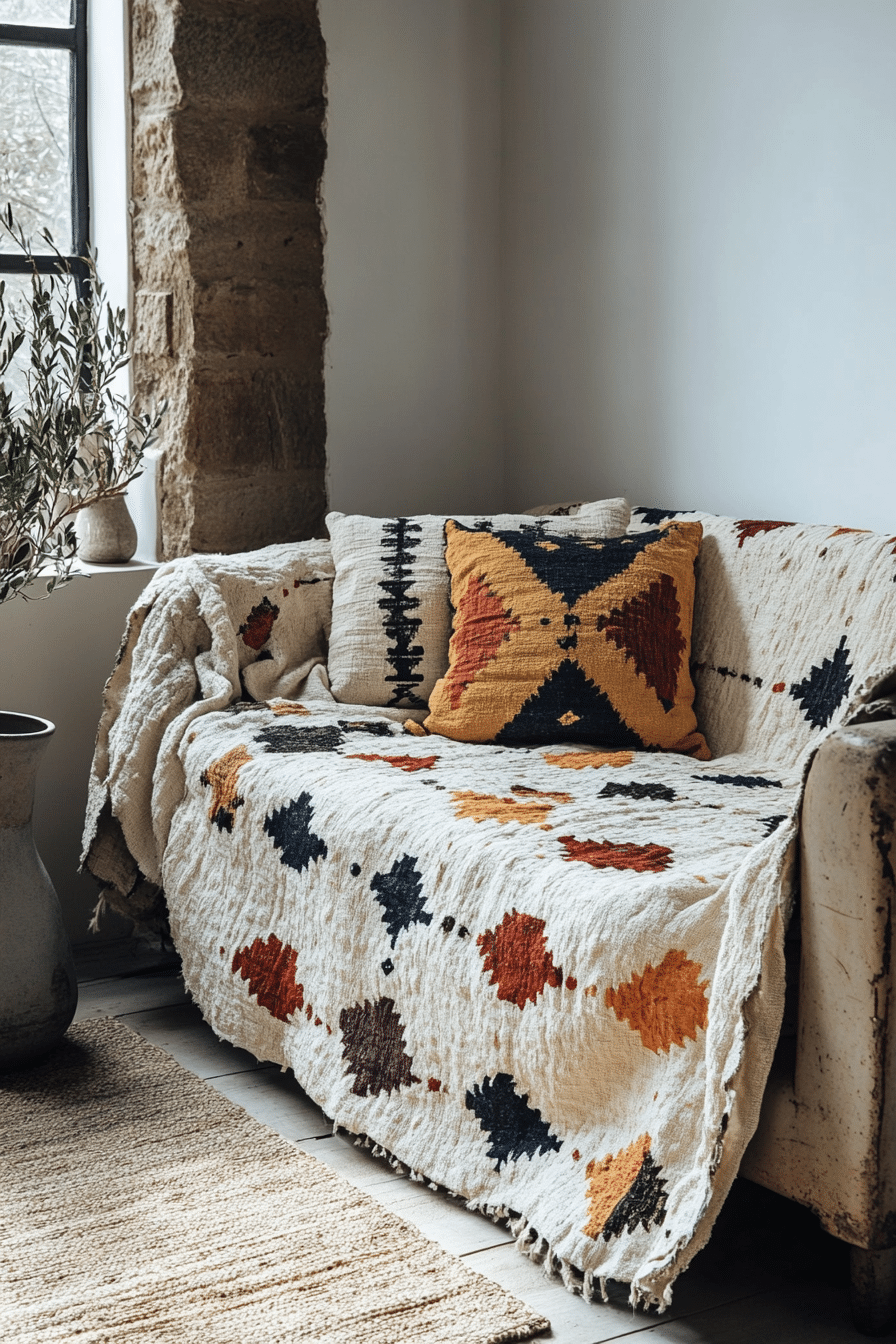
Enhance the texture of your wabi sabi living room with layers of artisanal textiles that bring warmth and interest. Affordable options like woven throws or simple cotton rugs can be found at local craft shows or ethnic markets. Each fabric piece adds its own story of imperfection, contributing to a layered, cozy aesthetic.
🌟 Steal This Look
- Paint Color: PPG Stonehenge Greige PPG1003-3
- Furniture: low-profile linen slipcovered sofa with visible wood legs, reclaimed wood coffee table with natural edge
- Lighting: paper rice lantern pendant with warm LED bulb
- Materials: handwoven hemp, raw cotton, unbleached linen, weathered jute, mud-dyed fabrics
There’s something deeply grounding about wrapping yourself in a textile that still holds the memory of the hands that made it—imperfections become conversation.
7. Aged Metal Accents
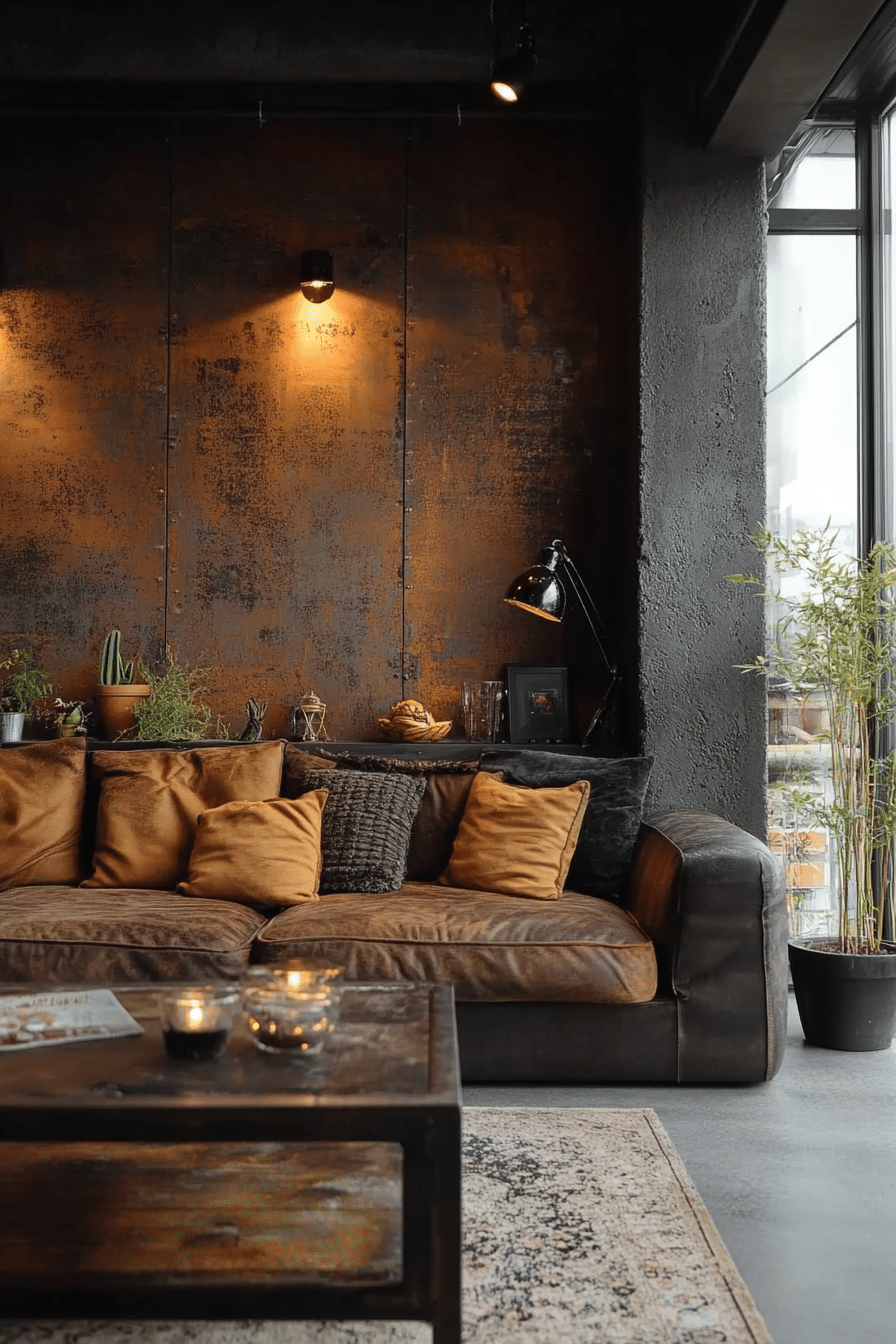
Add a touch of history to your wabi sabi living room with metal elements that naturally age into beautiful patinas. Scour flea markets or salvage yards for pieces that exhibit the beauty of natural wear at low prices. These elements add depth and a sense of time to your decor.
✎ Steal This Look
- Paint Color: Dunn-Edwards Weathered Stone DE6229
- Furniture: Low-slung linen sofa with visible wood frame, reclaimed wood coffee table with live edge
- Lighting: Vintage brass pendant with oxidized finish, possibly originally industrial
- Materials: Raw brass, oxidized copper, cast iron with rust patina, unlacquered bronze, hand-forged steel
The best aged brass lamp I own came from a barn sale with a dented shade and green oxidation spots I initially wanted to clean—now that patina is exactly what draws every compliment.
8. Linen Elegance Seating
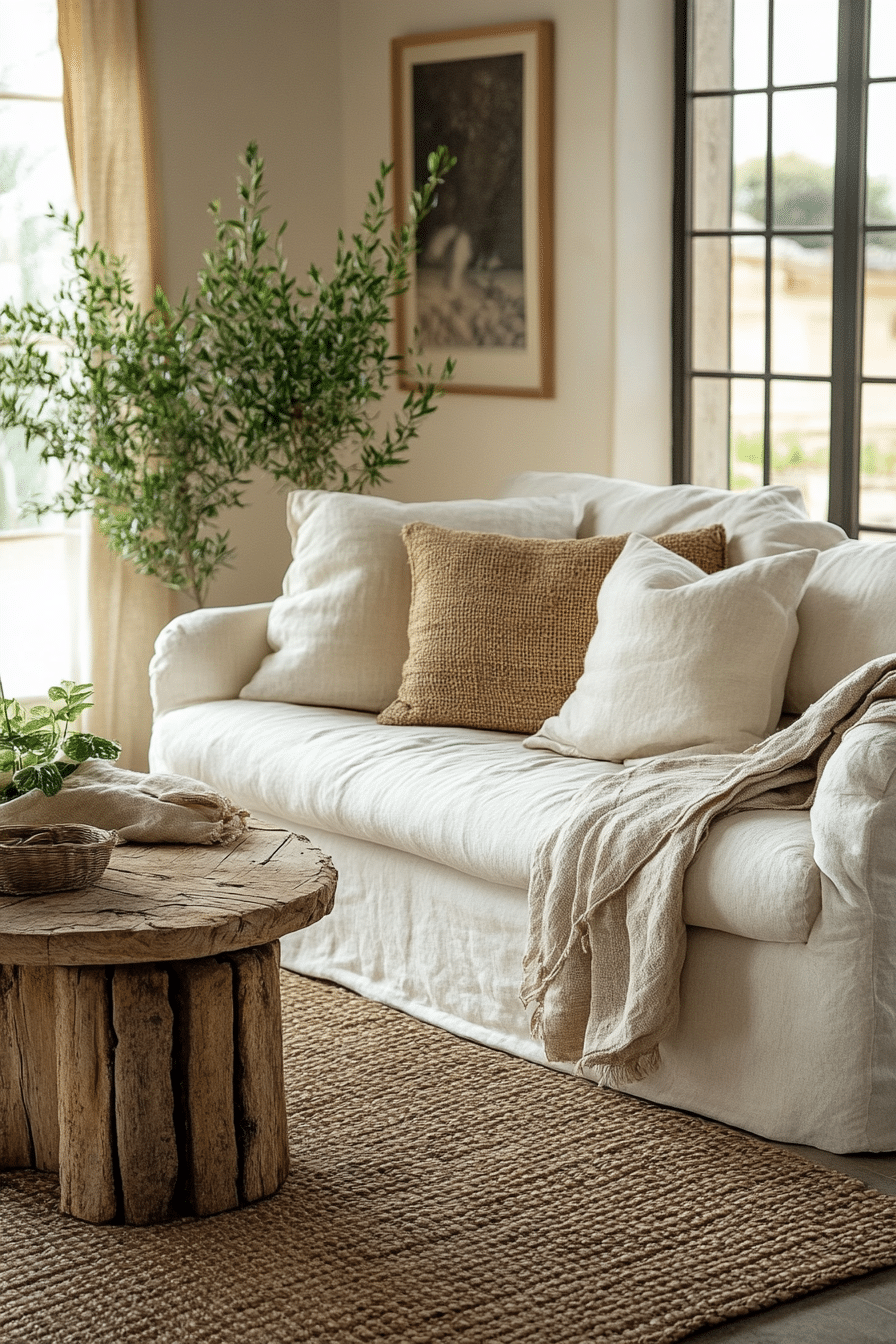
Achieve a peaceful wabi sabi living room with the subtle elegance of linen-upholstered furniture that matures gracefully. Easily update your current furniture with linen slipcovers, embracing the fabric’s natural creases for a relaxed look. Linen’s texture and simplicity promote calm and comfort.
★ Steal This Look
- Paint Color: Clare Paint Chalky White CW-01
- Furniture: Low-profile linen slipcovered sofa with relaxed, wrinkled drape; matching linen armchair with visible seam stitching
- Lighting: Oversized woven rattan pendant with warm amber bulb
- Materials: Raw Belgian linen, unbleached cotton, weathered oak, handmade ceramic
There’s something quietly luxurious about sinking into linen that looks like it’s been loved for years. It whispers rather than shouts.
9. Natural Fiber Floors
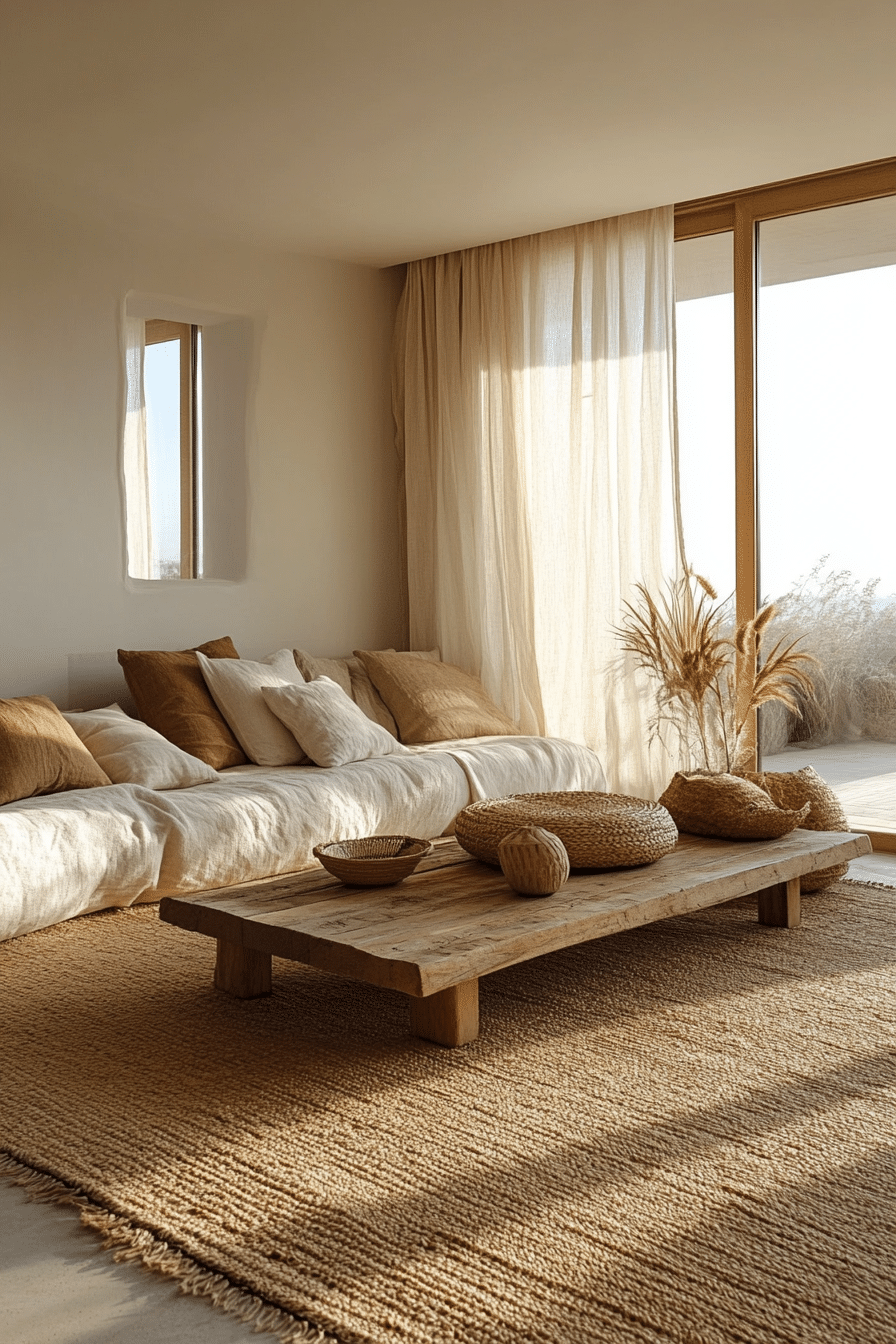
Anchor your wabi sabi living room with the tactile warmth of natural fiber rugs that bring the earth indoors. These sustainable, budget-friendly materials like sisal or jute add character and durability. Their natural variations create a perfect, unpretentious foundation.
🏠 Steal This Look
- Paint Color: Fine Paints of Europe Hollandlac Brilliant Off-White W1002
- Furniture: Low-profile oak coffee table with visible grain knots, linen slipcovered sofa in oatmeal, reclaimed wood side table with uneven edges
- Lighting: Woven rattan pendant with exposed bulb, ceramic table lamp with crackle glaze
- Materials: Raw jute and sisal rugs, unbleached linen, unfinished oak, hand-thrown ceramics, weathered brass
There’s something grounding about walking barefoot across rough jute—it reminds you that beauty lives in the unrefined, the slightly frayed, the honestly worn.
10. Historical Table Center
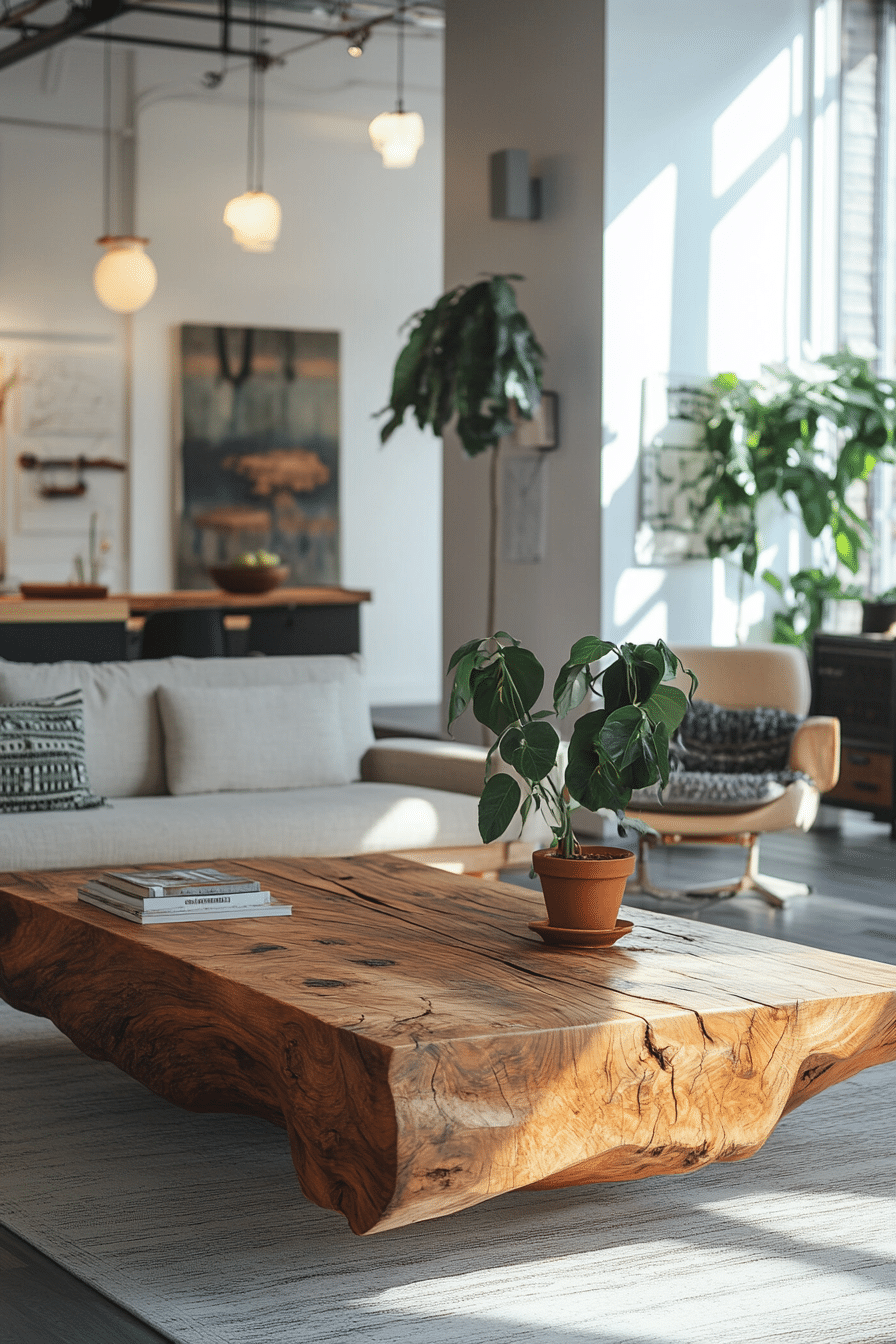
Make a reclaimed wood table the heart of your wabi sabi living room, where every scar tells a tale. Affordable options abound from local artisans or architectural salvage, adding unique character to your space. These tables not only serve as functional pieces but also as storytellers of past lives.
🌟 Steal This Look
- Paint Color: Backdrop Warm Mocha 04
- Furniture: reclaimed wood coffee table with visible joinery, live-edge detailing, and natural distress marks; pair with low-slung linen sofa in oatmeal
- Lighting: paper lantern pendant or hand-formed ceramic table lamp with visible glaze imperfections
- Materials: unfinished oak, raw linen, unglazed terracotta, hand-thrown ceramics, visible wood grain and knots
There’s something quietly grounding about running your palm over a century-old tabletop scarred by unknown hands—it’s furniture as memoir, not just function.
11. Mended Ceramic Beauty
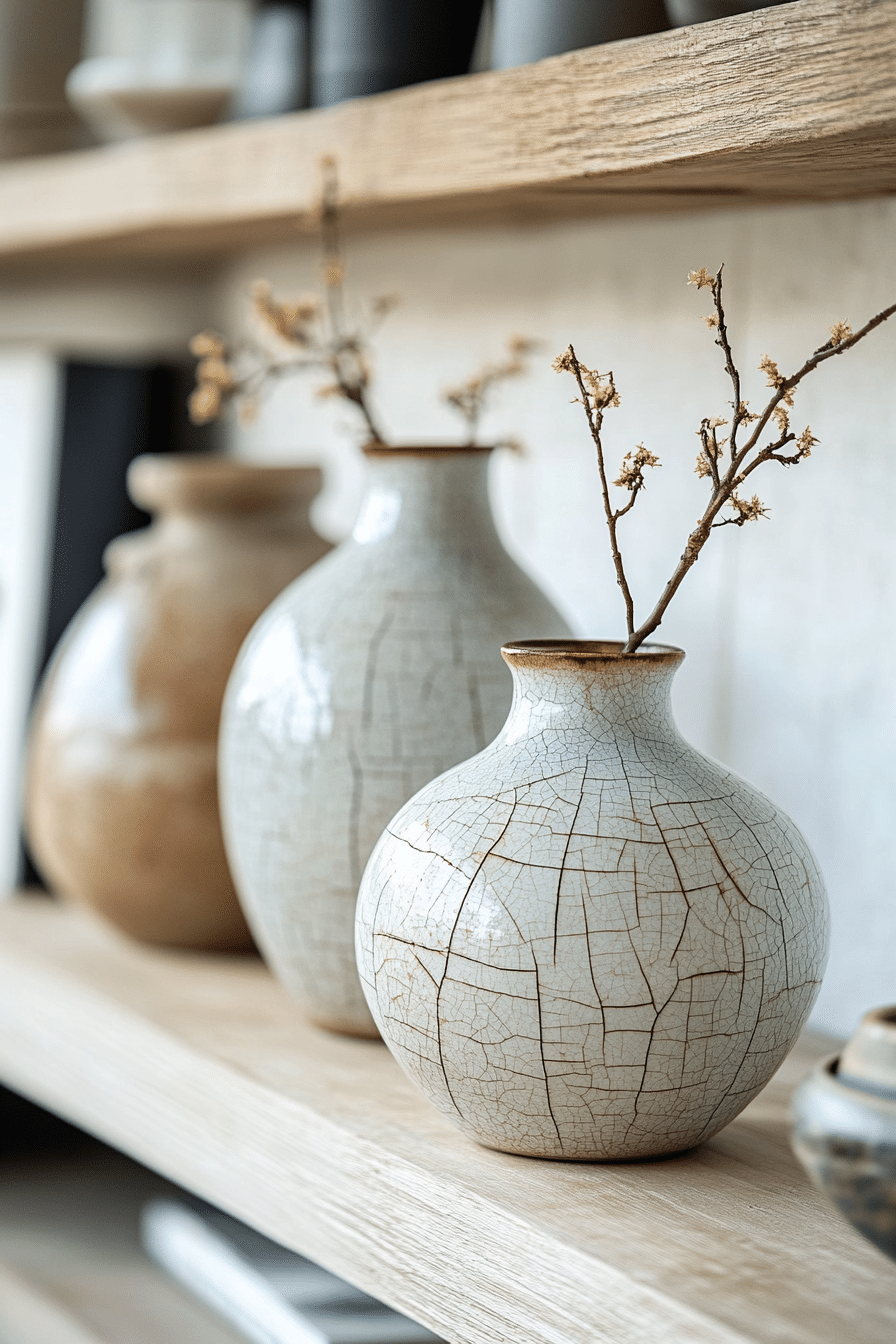
Celebrate the philosophy of imperfection in your wabi sabi living room with ceramics that embrace their repairs or age. Thrift shops are perfect for finding these treasures, which can be enhanced with simple fixes. The kintsugi art of mending with gold can make these pieces even more beautiful.
🎨 Steal This Look
- Paint Color: Sherwin-Williams Natural Linen SW 9109
- Furniture: Low-profile wooden coffee table with visible grain and wear, paired with a linen slipcovered sofa in undyed oatmeal
- Lighting: Hand-formed ceramic table lamp with uneven glaze and visible kiln marks
- Materials: Raw stoneware, unbleached linen, aged brass, cracked timber with live edges, handmade paper
There’s something deeply human about a bowl that’s been broken and lovingly put back together—it reminds us that beauty persists through damage.
12. Aged Art on Walls
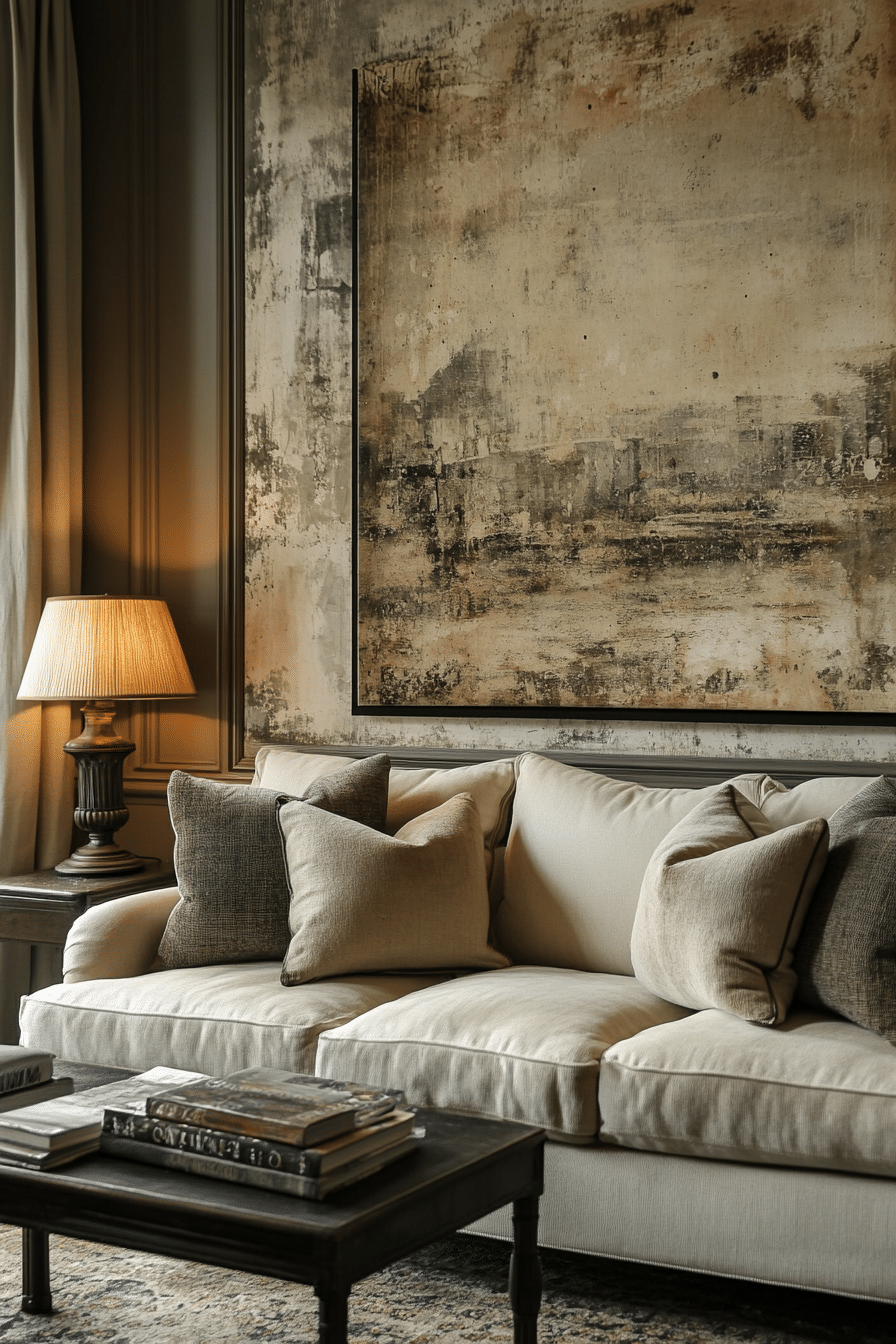
Infuse your wabi sabi living room with art that has aged gracefully, adding depth and narrative. Create your own pieces using materials that naturally weather over time or find aged art at second-hand stores. These pieces bring character to your walls without the expense of new art.
🖼 Steal This Look
- Paint Color: Benjamin Moore Pashmina AF-100
- Furniture: low-profile linen slipcovered sofa with visible wood frame, reclaimed wood coffee table with live edge
- Lighting: oversized woven rattan pendant with visible bulb, aged brass floor lamp with linen shade
- Materials: raw linen, unbleached cotton, weathered wood, handmade paper, oxidized metal, cracked gesso
There’s something quietly powerful about a foxed mirror or water-stained sketch—it’s lived, and that story becomes your room’s heartbeat.
13. Unfinished Shelving
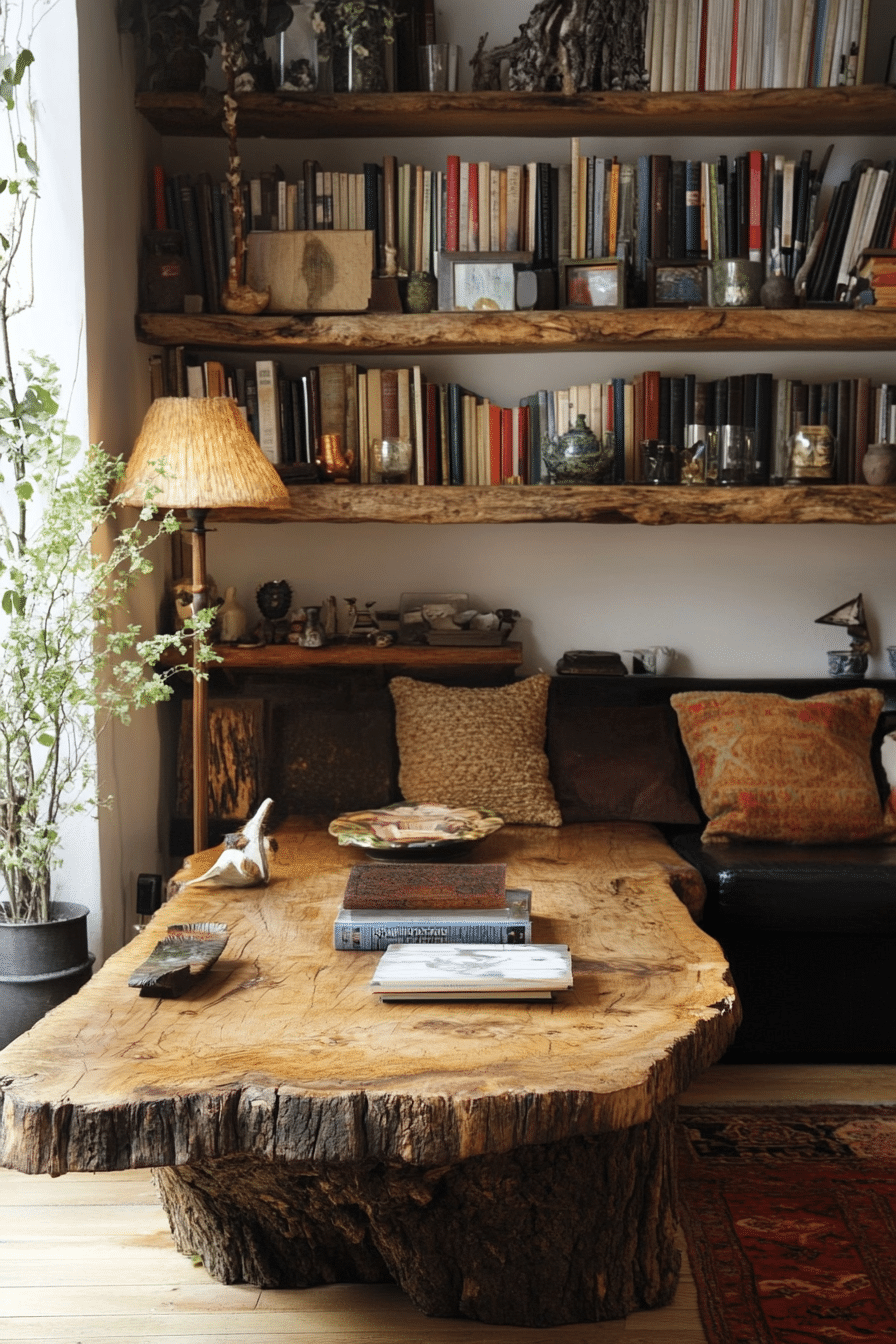
Introduce raw-edged, unfinished wood shelving into your wabi sabi living room for a natural, functional decor. With basic materials from any hardware store, you can craft storage that showcases wood’s beauty. These shelves blend practicality with aesthetic appeal.
🎨 Steal This Look
- Paint Color: Farrow & Ball Drop Cloth 283
- Furniture: low-profile linen sofa with visible wood frame, reclaimed wood coffee table with live edge
- Lighting: paper pendant lantern with visible bulb, brass floor lamp with patina
- Materials: raw cedar or pine planks, black iron brackets, hand-rubbed tung oil, visible wood grain and knots
There’s something grounding about running your hand over a shelf that still smells like the lumber yard—it’s permission to let things be imperfect.
14. Vintage Fabric Touches

Add warmth and character to your wabi sabi living room with vintage-style textile accents that provide comfort and charm. Even beginners can transform simple fabrics into cushions or throws. These homemade touches are personal, affordable, and eco-friendly.
🏠 Steal This Look
- Paint Color: Behr Weathered Moss N390-3
- Furniture: low-slung linen sofa with visible wood frame, reclaimed wood coffee table with live edge
- Lighting: paper lantern pendant with warm Edison bulb
- Materials: handwoven hemp, raw linen, unbleached cotton, visible mending, natural indigo dye
There’s something deeply grounding about wrapping yourself in a throw you’ve mended yourself—the loose threads and visible stitches become a quiet diary of slow living.
15. Material Symphony
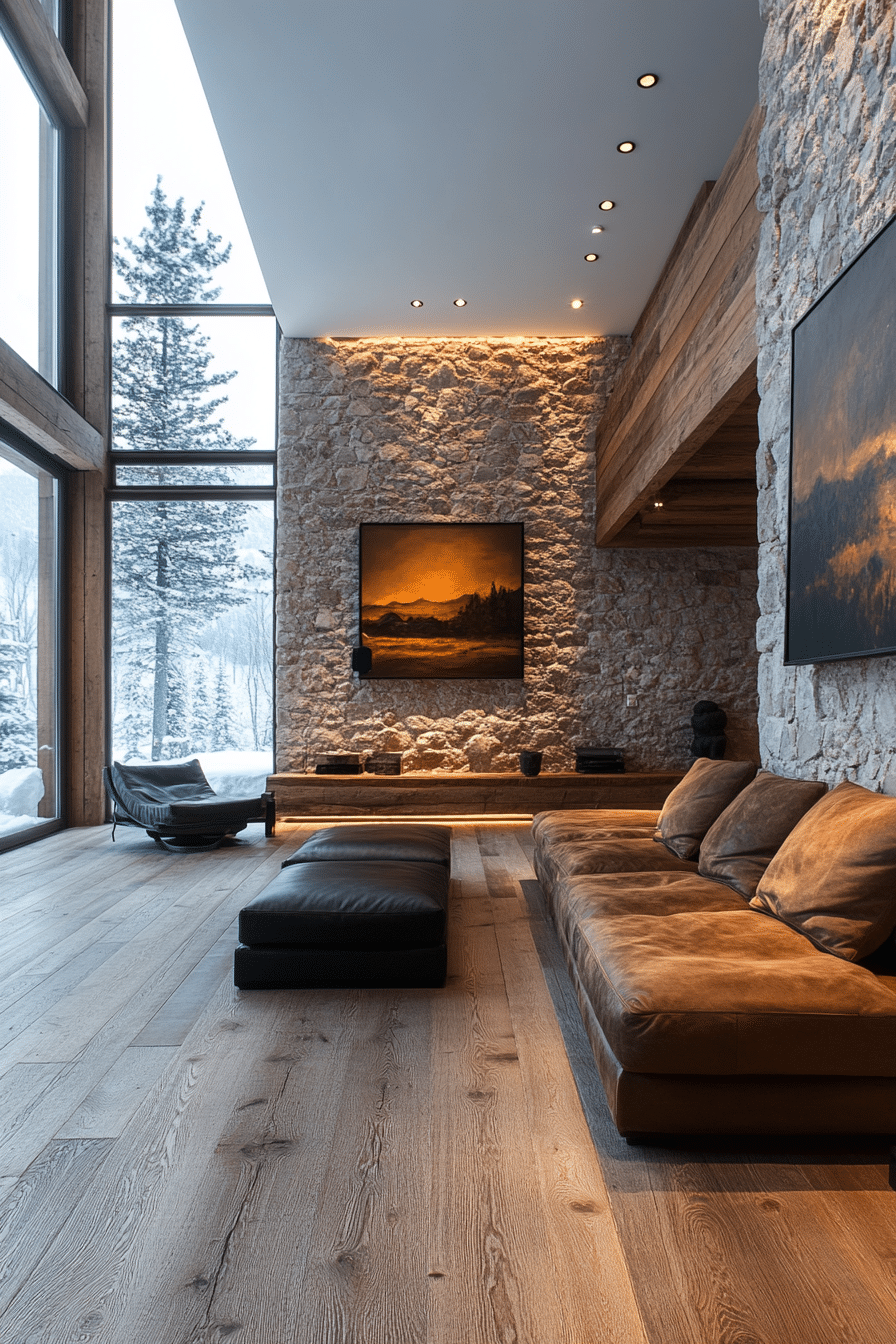
Craft harmony in your wabi sabi living room by combining various natural materials that age together beautifully. Use items like driftwood alongside local stones to create displays that are both free and meaningful. This approach fosters a tranquil environment while celebrating nature’s imperfections.
🏠 Steal This Look
- Paint Color: Valspar Linen White 7006-12
- Furniture: low-profile walnut coffee table with live edge, linen slipcovered sofa in natural oatmeal, hand-thrown ceramic side tables
- Lighting: washi paper pendant with visible bamboo ribbing, warm 2700K Edison bulbs
- Materials: unfinished oak flooring with visible grain knots, raw linen textiles, unglazed terracotta, weathered driftwood, river stones, hand-forged iron accents
I once spent an afternoon arranging beach stones on my grandmother’s old cutting board, and that unplanned vignette became the room’s anchor. Let your materials tell their own stories.
16. Natural Wall Textures
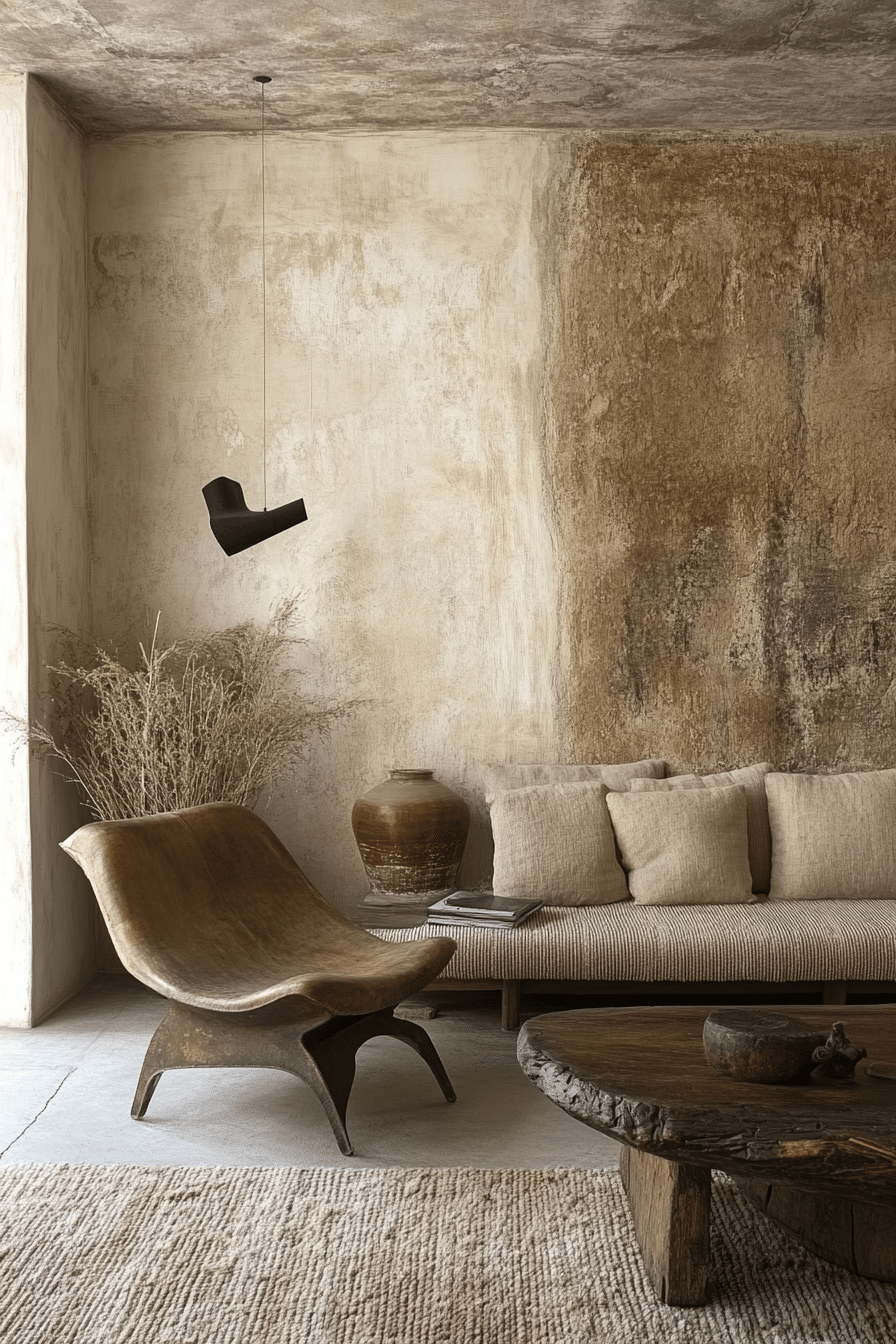
Transform your wabi sabi living room walls with simple, natural finishes that add depth and character. DIY plaster or clay treatments can be applied with just a bit of practice, offering a cost-effective way to achieve a unique look. These finishes age beautifully, enhancing the wabi sabi aesthetic.
💡 Steal This Look
- Paint Color: PPG Limestone Quarry PPG1003-3
- Furniture: low-profile linen sofa with visible wood frame, reclaimed teak coffee table with live edge
- Lighting: oversized hand-formed ceramic pendant with warm LED filament
- Materials: unfired clay plaster, raw hemp fabric, oxidized brass, rough-sawn oak
There’s something quietly grounding about walls you can actually touch—surfaces that shift with humidity and develop soft patina while you live alongside them, refusing to stay frozen in time.
17. Quiet Simplicity
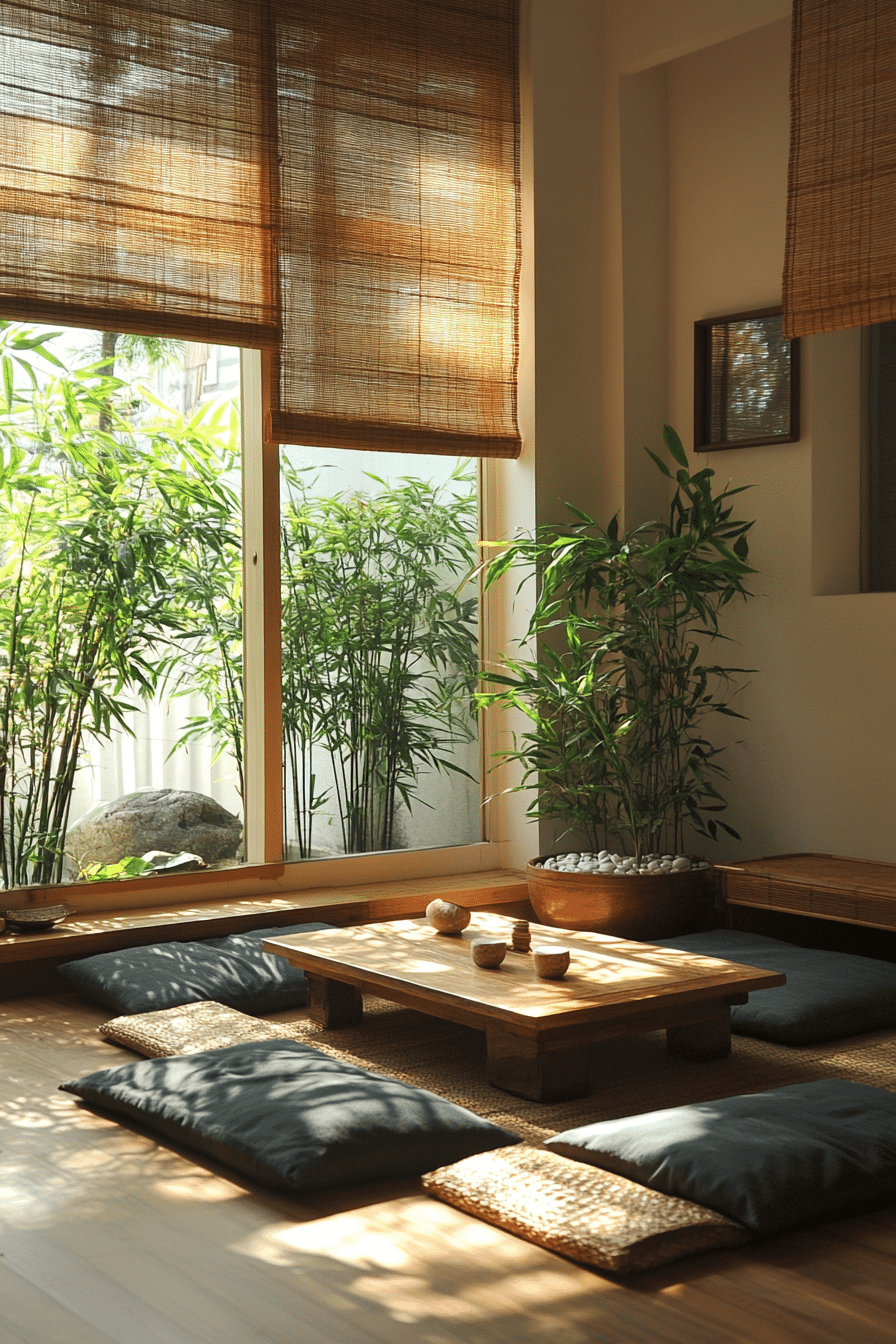
Promote tranquility in your wabi sabi living room with a minimalist approach that values each item’s significance. Nature’s gifts like leaves or stones can become poignant decor, adding value without cost. This philosophy encourages a focus on quality, making it budget-friendly.
🏠 Steal This Look
- Paint Color: Dunn-Edwards Droplets DEW381 — a warm, muted off-white that honors imperfection and quiet restraint
- Furniture: Low-profile linen sofa in natural oatmeal, raw-edge wooden coffee table with visible grain and knots, single sculptural floor cushion in undyed cotton
- Lighting: Paper-and-bamboo Noguchi-style pendant with soft, diffused glow; single brass wall sconce with patina finish
- Materials: Unbleached linen, unfinished oak, handmade ceramic, foraged branches, river stones, pressed botanicals in raw wood frames
This is the room that slows your breath. I’ve found that leaving one wall bare and one table empty creates the stillness that makes everything else matter more.
18. Nature’s Palette
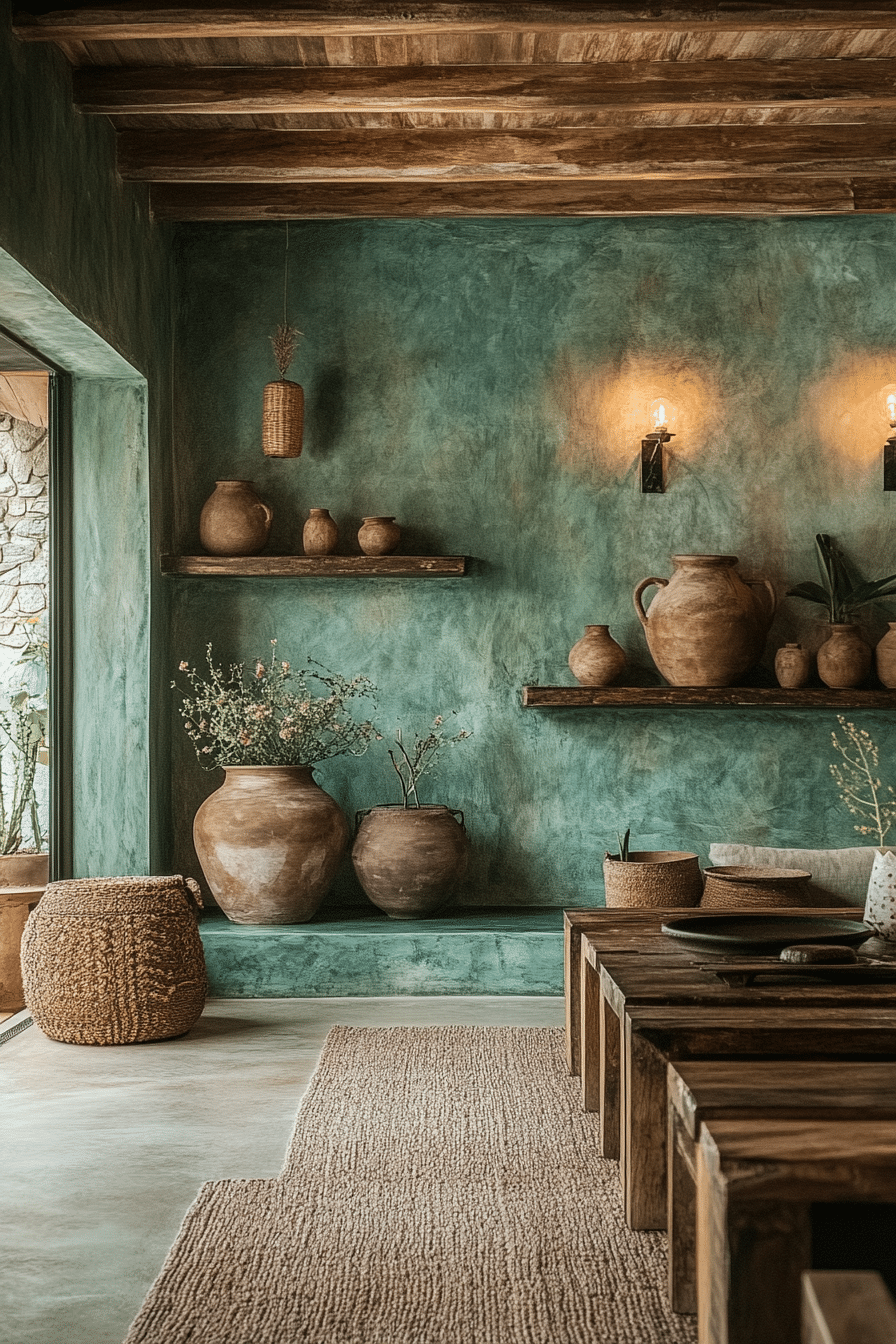
Base your wabi sabi living room design on the colors you find in nature, using them as a guide for your decor. Look for discounted or mis-tinted paints at hardware stores for an economical color solution. These natural tones create a backdrop that complements organic materials.
🎨 Steal This Look
- Paint Color: Clare Paint Olive Grove CW-10
- Furniture: low-slung linen sofa with visible wood frame, reclaimed teak coffee table with live edge
- Lighting: paper lantern pendant with warm LED bulb, brass floor lamp with linen shade
- Materials: raw linen, unbleached cotton, aged brass, unfinished oak, handmade ceramic, handwoven jute
There’s something quietly radical about building a room around a $7 quart of paint that was ‘wrong’ for someone else—your walls carry that story now.
19. Timeless Seating
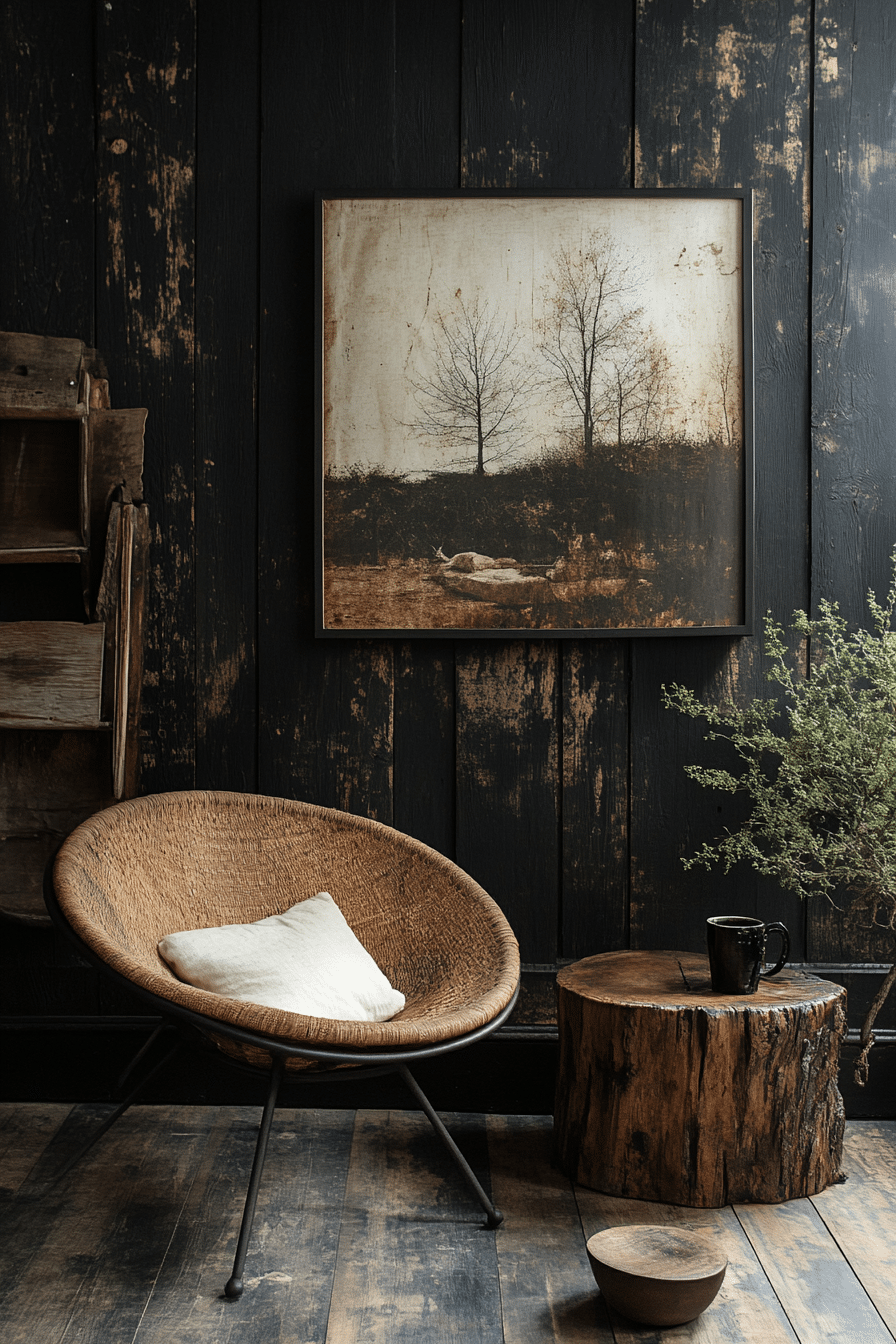
Incorporate seating in your wabi sabi living room that has been gently worn by time, adding a narrative to your space. Flea markets and yard sales are great places to find these pieces at low cost, bringing instant history into your home. Such chairs or stools offer both utility and beauty.
🌟 Steal This Look
- Paint Color: Fine Paints of Europe Hollandlac Brilliant Oyster White W1001
- Furniture: Distressed wooden bench with visible joinery, vintage spindle-back chair with worn finish, low-slung linen slipcovered sofa with relaxed cushions
- Lighting: Hand-formed ceramic pendant with uneven glaze, warm Edison bulb
- Materials: Raw linen, unbleached cotton, aged oak, hand-troweled plaster, visible wood grain, matte natural finishes
I once dragged home a split-seat farmhouse chair from a barn sale—wobbly, scarred, and perfect. It grounds my living room in a way nothing new ever could.
20. Patina Metal Elegance
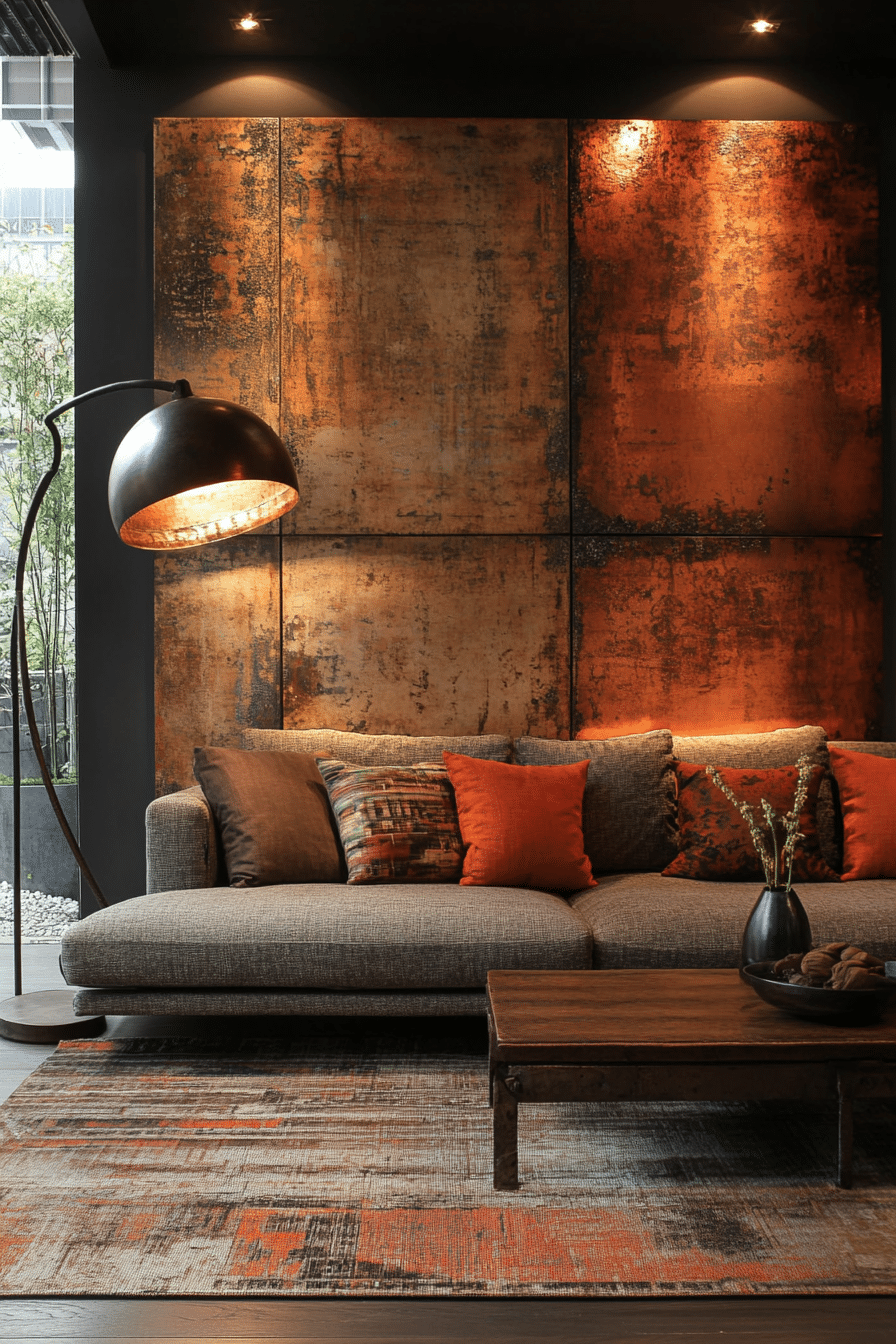
Finish your wabi sabi living room with metal decor that showcases the charm of natural rust and patina. Simple, used metal items can be transformed into stunning accents with thoughtful placement. They add an industrial edge while maintaining authenticity and low cost.
In conclusion, incorporating wabi sabi living room ideas into your home is a wonderful way to bring nature and harmony into your space. By embracing organic textures, earthy tones, and imperfect beauty, you can create a peaceful sanctuary that feels balanced and inviting. Whether through natural materials, minimalistic furniture, or thoughtful decor choices, a wabi sabi living room offers a serene environment that encourages relaxation and mindfulness. Let these ideas inspire you to design a living room that nurtures both your soul and your space with tranquility and timeless charm.
🎨 Steal This Look
- Paint Color: Backdrop Patina Green BA-45
- Furniture: low-slung linen sofa with visible wood frame, reclaimed wood coffee table with live edge, vintage metal locker cabinet as media console
- Lighting: oxidized brass pendant with hand-hammered texture, exposed filament bulb
- Materials: raw rusted steel, oxidized copper, unlacquered brass, rough linen, reclaimed teak, cast iron
I love how a single rusted metal vessel on a raw wood shelf tells decades of stories—it’s the antidote to mass-produced perfection that makes a living room feel genuinely lived-in.
The badly glued bowl now sits where guests can see the seam first, which is either wabi sabi or marketing. A wabi sabi living room lets the repaired thing be the point instead of the apology.