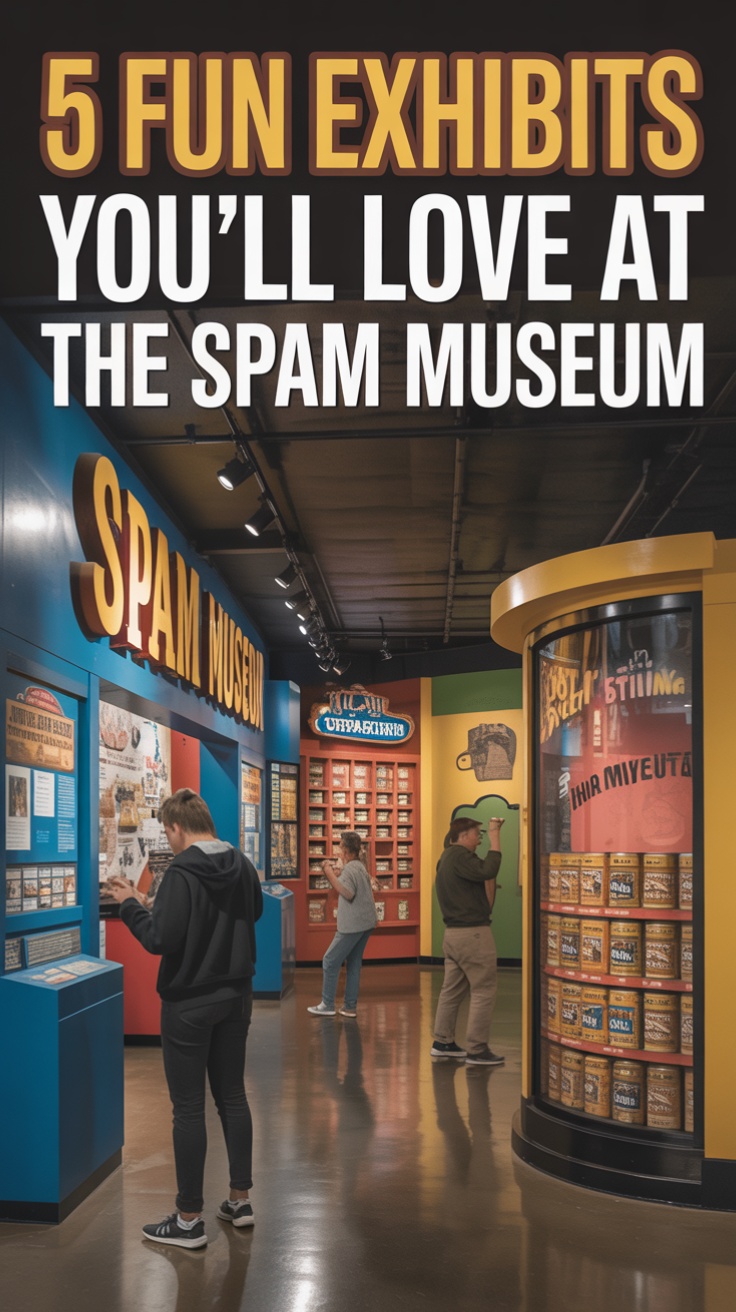
You’re planning a road trip through Minnesota, and someone mentions the SPAM Museum.
Your first thought?
That’s got to be a joke.
But here’s the thing: it’s not.
The SPAM Museum in Austin, Minnesota sits right at 101 3rd Avenue NE, and it’s one of those places that sounds absolutely ridiculous until you actually go.
Then it makes perfect sense.
I get it—your gut reaction is probably “why would I spend time looking at canned meat?”
That’s what I thought too, until I walked in and realised this wasn’t about SPAM at all.
It was about American ingenuity, wartime survival, global influence, and how a single product shaped international food culture.
The museum spans 14,000 square feet of modern exhibits and interactive displays that honestly punch above their weight.
And here’s the kicker: it costs absolutely nothing to get in.
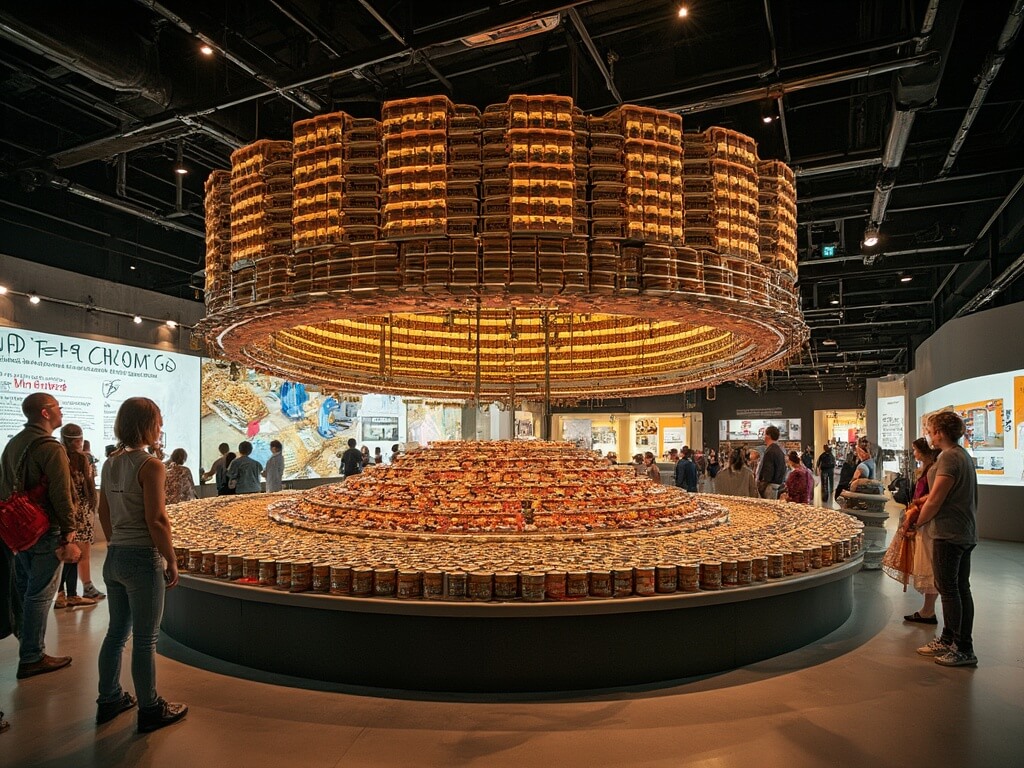
What You’re Actually Walking Into: The Real Story Behind SPAM Museum Austin
The SPAM Museum isn’t a corporate advertisement masquerading as culture.
It’s a genuine exploration of how Hormel Foods created something that fed soldiers in World War II, became a survival staple in Hawaii, and somehow ended up as a cultural icon spanning continents.
When you step through those doors, you’re not just looking at tins of meat.
You’re experiencing the history of food preservation, logistics during wartime, and how marketing shaped consumption habits for generations.
The museum dedicates itself to telling SPAM’s story honestly—the good, the weird, and everything in between.
It’s designed for families, road-trippers, history buffs, and anyone curious about how ordinary products become part of our collective memory.
I visited during a particularly rainy Tuesday morning last spring, expecting maybe 20 minutes of content stretched thin across empty corridors.
Instead, I found myself spending nearly two hours genuinely engaged with exhibits I didn’t anticipate enjoying.
One display showed SPAM’s role in Pacific theatre supply chains—soldiers receiving rations, families in Hawaii incorporating it into local cuisine, creating dishes that still exist today.
Another section featured the famous Monty Python sketch, not as mockery, but as evidence of cultural penetration so complete that a product became shorthand for spam mail itself.
That’s influence worth understanding.
Getting There, Getting In, and Actually Enjoying Yourself: The Practical Breakdown
Location and Hours
Austin, Minnesota is roughly 90 minutes south of Minneapolis, accessible via I-90.
The museum sits in downtown Austin with free street parking—no premium parking schemes or hidden fees.
Standard operating hours run Monday through Saturday from 10:00 AM to 5:00 PM, and Sunday from 10:00 AM to 4:00 PM.
Holiday hours vary, so check ahead if you’re visiting during peak seasons.
The building is fully wheelchair accessible.
Cost
This is where it gets genuinely difficult to complain.
Admission is completely free.
No suggested donations, no upsell at the entrance, no “but we hope you’ll consider…” statements.
You walk in, you explore, you leave.
A typical visit runs one to two hours depending on how deeply you engage with interactive elements.
What You Need to Know Before You Go
If you’re travelling as a group, call ahead at (507) 434-6401 to arrange guided tours.
Individual visitors don’t need reservations.
Parking is free and abundant.
The staff actually know their material and won’t bore you with corporate speak.
Nine Galleries of SPAMtastic History: What You’ll Actually See Inside
Here’s where the museum separates itself from typical corporate exhibitions.
The space organises itself into nine themed galleries, each addressing a different angle of SPAM’s story.
This isn’t random ordering.
It’s a deliberate narrative arc.
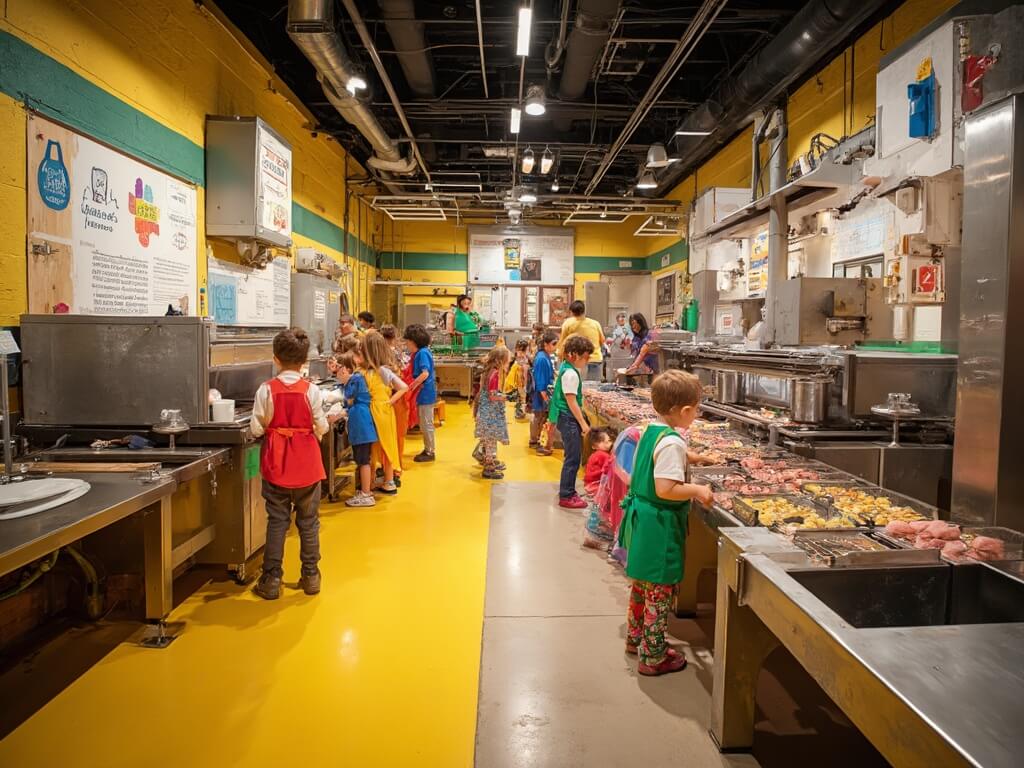
The Interactive Core
The centrepiece is arguably the most memorable: a conveyor belt carrying 380 SPAM cans representing 20 different varieties, circling continuously overhead.
It’s simultaneously ridiculous and oddly hypnotic.
Kids gravitate toward it immediately.
Adults find themselves staring up longer than they expect.
The psychological effect is intentional—it visualises SPAM’s sheer scale and variety in a way static displays cannot match.
The Factory Play Area
This section deserves specific attention because it’s genuinely clever design.
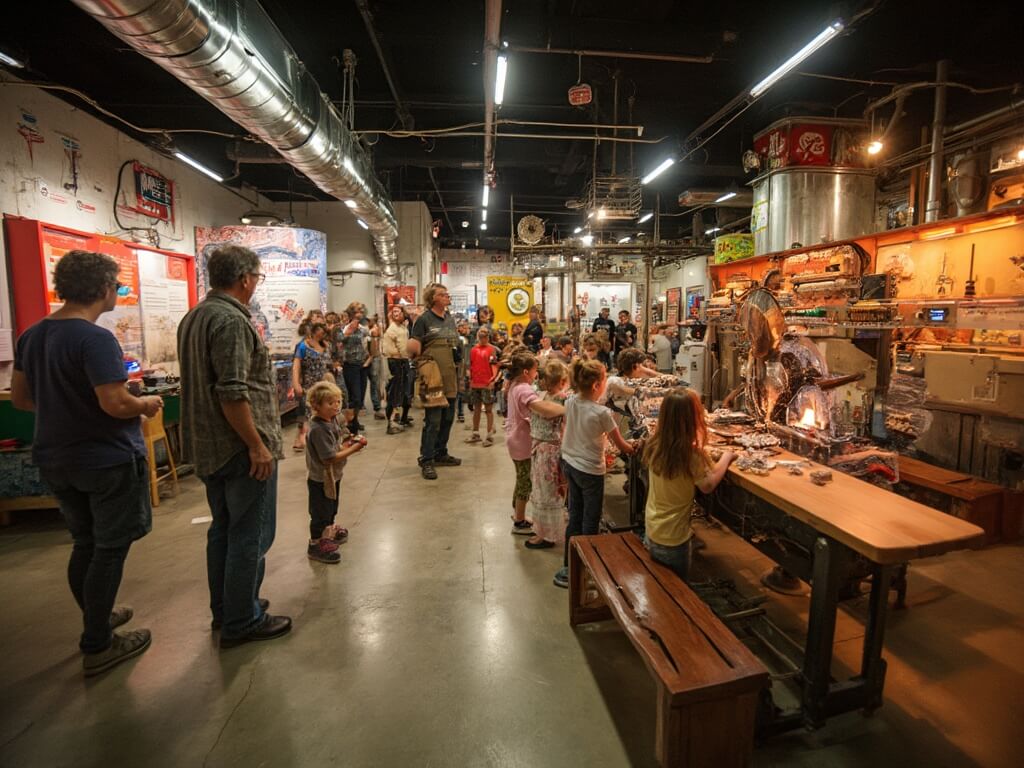
Children enter a mock SPAM production facility where they “work” on an assembly line, understanding production processes through play rather than lectures.
Parents often report their kids requesting return visits specifically for this section.
It accomplishes something museums struggle with: making industrial history engaging for people who haven’t developed patience for traditional exhibits yet.
Historical Context and Global Reach
Other galleries tackle SPAM’s role during World War II, its integration into Hawaiian cuisine, and its presence in Asian markets where it remains a premium product.
The wartime section provides specific context: soldiers received SPAM rations because the product solved genuine logistical challenges—shelf stability, caloric density, and ease of transport.
This transforms SPAM from “cheap processed meat” into “clever solution to complex supply chain problems.”
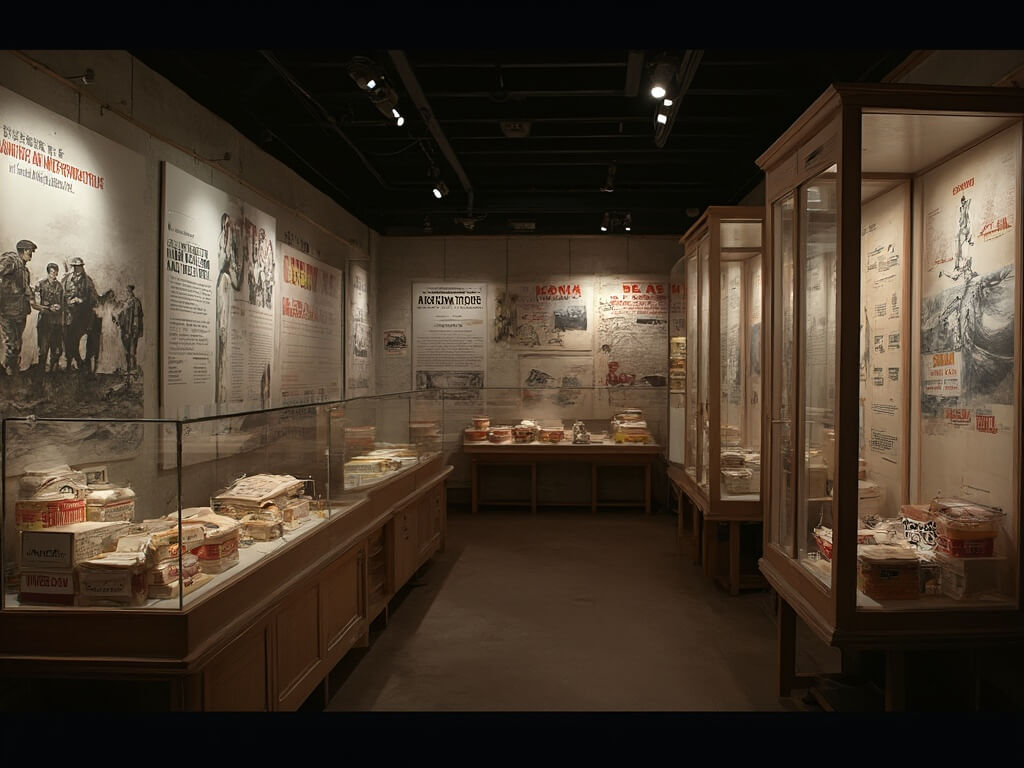
The international sections show how the same product acquired completely different cultural meanings across continents.
In Hawaii, SPAM became integrated into local identity—Spam musubi, fried rice, local specialities.
In South Korea and the Philippines, it carries different status altogether.
These aren’t just displays; they’re cultural anthropology presented accessibly.
Pop Culture and the Monty Python Connection
The museum doesn’t shy away from being the etymological origin of “spam” email.
The Monty Python sketch that originally broadcast in 1970 achieved such cultural saturation that the term itself became generic.
This section documents how a product name transcended its original meaning—a remarkable achievement in marketing history, whether intentional or not.
The museum presents this as genuine cultural artifact, not embarrassment.
Everything Beyond the Exhibits: Why People Actually Come Back
Free Samples and Tasting
You’ll receive complimentary SPAM samples during your visit.
This isn’t marketing manipulation—it’s acknowledging that understanding a product requires sensory engagement.
The classic variety tastes fundamentally different from what most people expect, especially those who’ve never actually tried it.
The flavour profile is saltier and less chemically intense than reputation suggests.
Limited-edition varieties rotate regularly: pumpkin spice SPAM appears seasonally, alongside bacon, jalapeño, and regional variants.
This sampling transforms abstract knowledge into concrete experience.
The Gift Shop That Actually Has Interesting Things
I expected the gift shop to push SPAM merchandise aggressively.
Instead, it balances genuine novelty items with practical merchandise.
SPAM-branded apparel exists, obviously, but the shop also stocks regional Minnesota products, local artwork, and items that make sense as gifts rather than kitsch.
You can purchase limited-edition flavours unavailable in regular grocery stores.
The novelty items exist but don’t dominate the space—it feels curated rather than chaotic.
Photo Opportunities That Don’t Feel Forced
SPAM-themed statuary and interactive photo backdrops exist throughout the museum and exterior spaces.
They’re present enough to capture memories without dominating the experience or feeling like Instagram bait.
This distinction matters more than it sounds—it’s the difference between a museum that respects your attention and one that demands it constantly.
The Practical Details That Actually Matter When Planning Your Visit
Group Visits and Advance Planning
Organised groups should telephone ahead.
Individual visitors simply show up.
The museum accommodates school groups and educational organisations regularly, with specific programming designed for different age groups.
Nearby Attractions and Dining
Downtown Austin features several restaurants, many incorporating SPAM into their menus intentionally.
This isn’t novelty dining; it’s restaurants understanding local heritage and adapting menus accordingly.
The proximity to I-90 means Austin functions as a natural stopping point for road-trippers heading between Minneapolis and Mall of America, Chicago, Milwaukee, or points further east.
Timeline Considerations
Plan for one to two hours minimum.
This gives you time to engage meaningfully with exhibits rather than rushing through.
If you’re spending a full day in Austin, additional attractions and local businesses fill out an itinerary comfortably.
The museum alone shouldn’t consume your entire visit, but it shouldn’t feel rushed either.
Most visitors report the duration feels appropriate—substantive without overstaying its welcome.
Whether you’re sceptical about SPAM itself or genuinely curious about industrial history and cultural phenomena, the museum delivers something worth experiencing firsthand.
The nine galleries, interactive elements, and historical context create a narrative that extends far beyond processed meat into broader territories of American manufacturing, wartime innovation, and global cultural exchange.
From here, understanding what makes the visitor experience truly special requires looking deeper into the specific ways the museum engages different audiences and what separates it from typical roadside attractions.
Also consider complementing your Midwest travels with coastal experiences like a lighthouse tour in Maine for a completely different cultural slice of Americana.
Why 70,000+ Annual Visitors Include This Museum in Their Travel Plans
Here’s something that caught me off guard during my research.
The SPAM Museum attracts over 70,000 visitors annually.
That’s not a typo.
Seventy thousand people deliberately choose to visit a museum dedicated to canned meat in rural Minnesota every single year.
That number alone tells you something beyond novelty appeal is happening here.
These aren’t exclusively SPAM enthusiasts or Hormel employees bringing relatives.
The demographic breakdown includes families road-tripping from Chicago, retirees exploring Minnesota, history buffs, food writers, and international tourists who’ve heard about this place and made it a specific destination.
The museum has become so established in Minnesota tourism that travel guides routinely feature it alongside genuinely prestigious attractions.
This isn’t condescension either—it’s genuine recognition that the museum delivers substantive educational content wrapped in an undeniably quirky package.
The economic impact extends beyond tourism dollars into Austin’s broader identity.
Local restaurants have built menu items around SPAM specifically because visitors now expect it.
Downtown businesses benefit from the foot traffic.
The city has successfully transformed what could have been a corporate liability into a legitimate cultural asset.
That transformation required something most museums never achieve: the ability to acknowledge your subject honestly without defensive corporate messaging.
Who Actually Visits This Place and Why They Return
My initial assumption was that visitors fell into predictable categories: tourists seeking quirky roadside attractions, people with ironically contrarian taste, maybe some actual SPAM enthusiasts.
The reality proves more nuanced.
Families with children consistently report bringing kids back multiple times.
The factory play area appeals to younger visitors genuinely.
The interactive conveyor belt display fascinates children in ways static museum exhibits rarely achieve.
Parents appreciate that their kids are learning something legitimate about production processes while having genuine fun—that intersection rarely happens in educational settings.
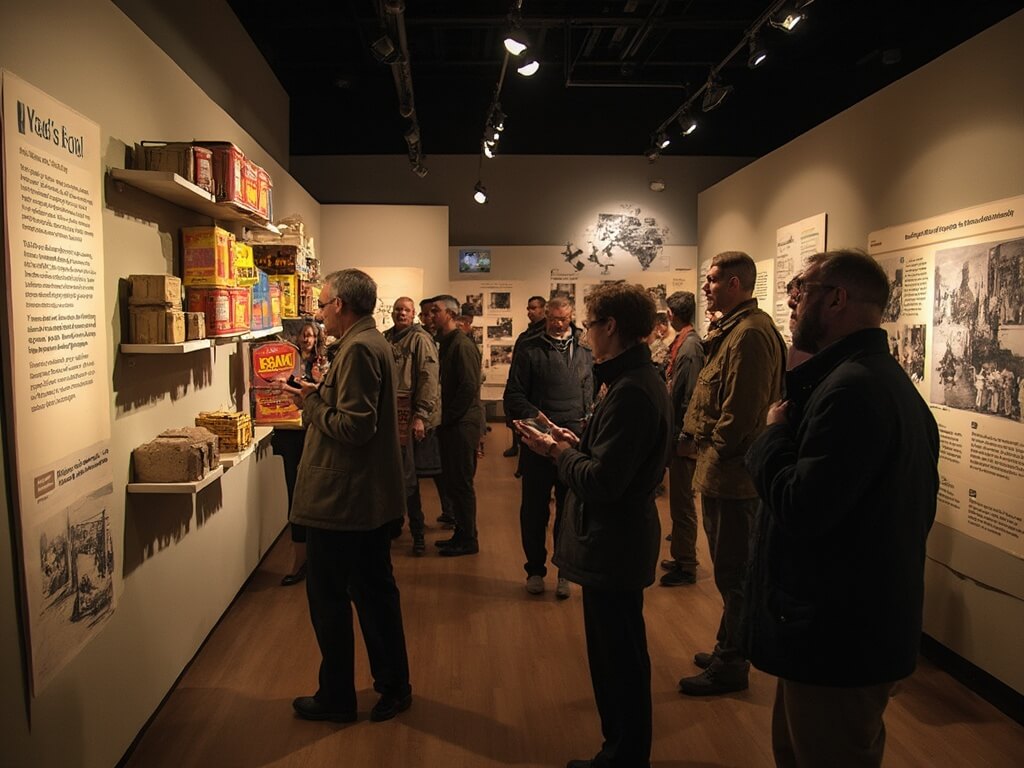
History enthusiasts engage with the wartime content deeply.
Teachers bring school groups specifically for the logistics and supply chain lessons buried within SPAM’s historical narrative.
The museum accomplishes something classroom instruction struggles with: making industrial history feel relevant and immediate rather than abstract and dated.
Food and culture writers have featured the museum repeatedly.
These aren’t listicles about “weird places to visit”—they’re substantive pieces exploring how a single product influenced global food culture, marketing history, and regional identity.
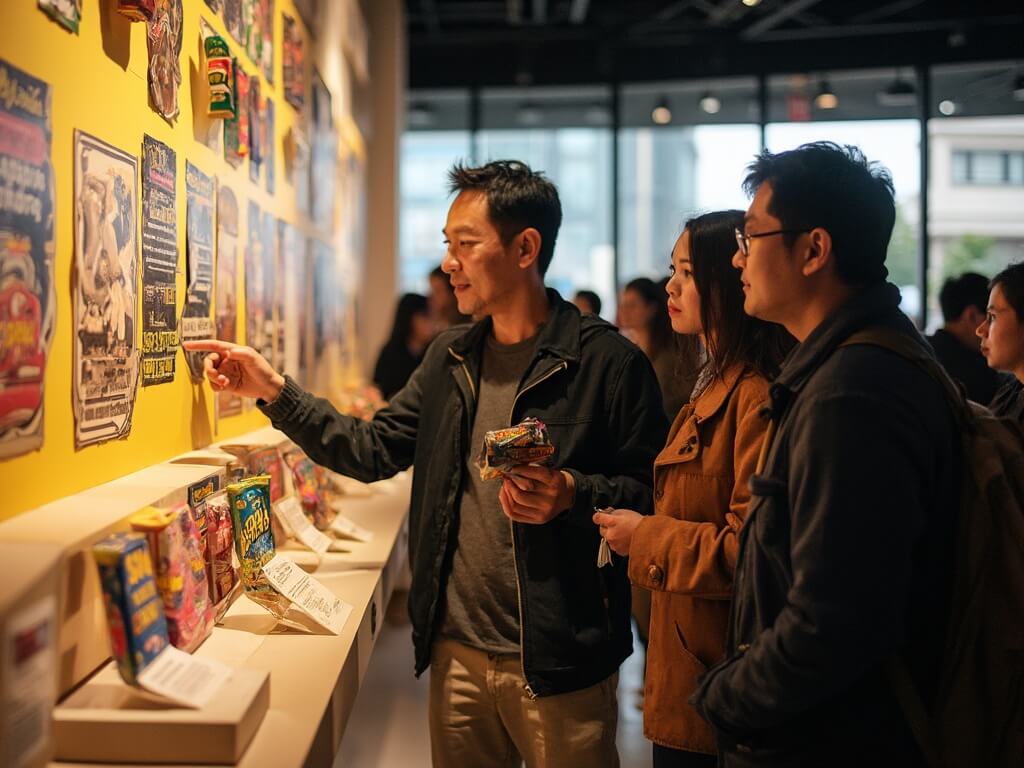
International visitors treat it as essential Minnesota tourism.
People from countries where SPAM carries different cultural meaning arrive with specific questions about American food manufacturing, marketing, and consumption patterns.
For these visitors, the museum functions as a window into aspects of American culture they want to understand.
Road-trippers use it as a strategic stopping point.
Austin sits on I-90, positioning it perfectly as a break from highway driving between major cities.
Visitors spend an afternoon here, grab lunch downtown, maybe purchase gifts, and continue their journey with a genuinely memorable experience rather than another forgettable rest stop.
The fact that people return—and that schools plan field trips here—suggests the experience transcends novelty into something more durable.
The Educational Value Most People Completely Overlook
This is where the conversation shifts from “unique tourist attraction” into “legitimate educational institution.”
The SPAM Museum partners regularly with regional schools and educational organisations.
This isn’t casual collaboration—it involves curriculum-aligned programming specifically designed to teach industrial history, supply chain logistics, marketing, and cultural adaptation.
World War II and supply chain management become tangible through SPAM’s role in military logistics.
Students understand why soldiers received specific rations not through abstract lessons but through examining how a shelf-stable, calorie-dense product solved genuine logistical challenges.
Marketing and cultural influence emerge naturally from SPAM’s global presence.
Students see how a product became so culturally significant that its name transformed into generic vocabulary for something completely different.
International culture and food adaptation provide concrete examples of cultural exchange.
Hawaiian Spam musubi, Korean Spam dishes, and Filipino uses demonstrate how identical products acquire different cultural meanings and statuses across regions.
Sustainability and manufacturing efficiency connect to modern environmental concerns.
The museum’s own practices—energy conservation, recycling initiatives, waste reduction—demonstrate commitment to sustainable operations.
Schools report that field trips here generate more follow-up questions and sustained interest than many traditional educational venues.
What Makes This Place Different From Generic Corporate Museums
Most company-sponsored museums function as extended marketing departments.
You arrive, see carefully curated narratives, purchase items at inflated prices, and leave feeling slightly manipulated.
The SPAM Museum operates differently.
The institution acknowledges criticism levelled against SPAM honestly.
Displays address the “processed meat” reputation without defensiveness or dismissal.
The narrative never becomes “SPAM is amazing and you’re wrong if you think otherwise.”
Instead, it says “here’s why this product existed, what problems it solved, how it became culturally significant, and how people adapted it across different contexts.”
That honesty builds credibility.
The free admission removes financial barrier to entry and eliminates the defensiveness that paying admission sometimes creates.
The gift shop doesn’t dominate the experience or serve as the real destination while exhibits feel like obstacles.
Virtual tours available by request acknowledge that not everyone can visit physically, expanding access without compromising the in-person experience.
Educational programs with area schools demonstrate commitment to community benefit rather than extraction.
The International Phenomenon: How One Canned Product Became Global
In Hawaii, SPAM achieved something remarkable: it became integrated into local identity so thoroughly that many Hawaiians don’t perceive it as foreign.
Spam musubi—SPAM wrapped with rice and nori—represents indigenous Hawaiian food culture now, despite SPAM arriving relatively recently.
In South Korea, SPAM carries different status entirely.
It functions as a luxury gift item, premium product, and central component in dishes that command respect and prices reflecting that status.
In the Philippines, SPAM exists in abundance because American military presence established long-term consumption patterns.
That history carries complex implications regarding colonialism, military influence, and cultural imposition—the museum addresses these tensions rather than ignoring them.
In Japan, SPAM Musubi restaurants have become tourist destinations and local favorites.
These contexts demonstrate that SPAM’s story isn’t simply American export narrative—it’s genuinely complex tale of cultural adaptation, commerce, identity, and agency.
The museum’s decision to present these stories prominently elevates it beyond corporate hagiography into legitimate cultural anthropology.
Practical Logistics That Determine Whether Your Visit Actually Works
Timing matters more than you might expect.
Weekday mornings in spring or fall offer more breathing room and personal attention from staff.
Check the SPAM Museum visitor information page before planning.
Accessibility for visitors with mobility limitations is genuinely comprehensive.
Parking requires no stress whatsoever.
Group visits require advance coordination, but the process works smoothly.
Nearby dining and retail exist but downtown Austin doesn’t rival major metropolitan options.
Weather considerations affect whether you’ll also visit outdoor statuary and photo opportunities.
Duration planning prevents the frustration of either rushing through or standing around bored.
What Visitors Actually Say When They Leave: Real Feedback Patterns
Families consistently report children asking to return.
History enthusiasts mention unexpected depth in wartime content.
First-time visitors expecting ironic kitsch discover genuine engagement instead.
Food writers emphasize the international angle.
Regular road-trippers treat it as standard stopping point now.
Occasionally visitors mention short duration as limitation.
Teachers report successful field trips and engaged follow-up.
The Current State and Future Direction: Where This Museum Heads Next
Virtual tours became available during pandemic closures and remain accessible by request.
Digital engagement initiatives continue expanding.
Educational programming continues expanding.
Limited edition SPAM flavours maintain public interest and media attention.
Austin’s downtown continues benefiting from museum-anchored tourism.
Sustainability initiatives demonstrate institutional values beyond profitability.
The Honest Take: Who Should Actually Visit and Why
This place is for you if:
- You’re genuinely curious about industrial history and food manufacturing
- You appreciate international food culture
- You’re road-tripping on I-90
- You have children who love interactive exhibits
- You enjoy quirky attractions with real substance
You may want to skip it if:
- You dislike corporate branding
- You expect Smithsonian-level scale
- You only have 30 minutes
Planning Your Visit: The Actual Checklist That Prevents Disappointment
- Check hours on the official SPAM Museum website.
- Confirm free parking downtown.
- Allow two hours minimum.
- Research dining options in advance.
- Call 507-437-5100 for group visits.
- Bring cash if needed.
- Check weather in colder months.
- Visit weekday mornings for fewer crowds.
- Know what else to do in Austin.
- Understand that admission is free without obligation.
Why This Matters More Than You Might Initially Realise
The SPAM Museum tells a complex story honestly. It provides free access. It educates. It respects your intelligence.
It shows how communities can turn products into cultural assets—and how museums can prioritize mission over marketing.
Whether you’re curious, skeptical, or just looking for a memorable detour, this place genuinely delivers.