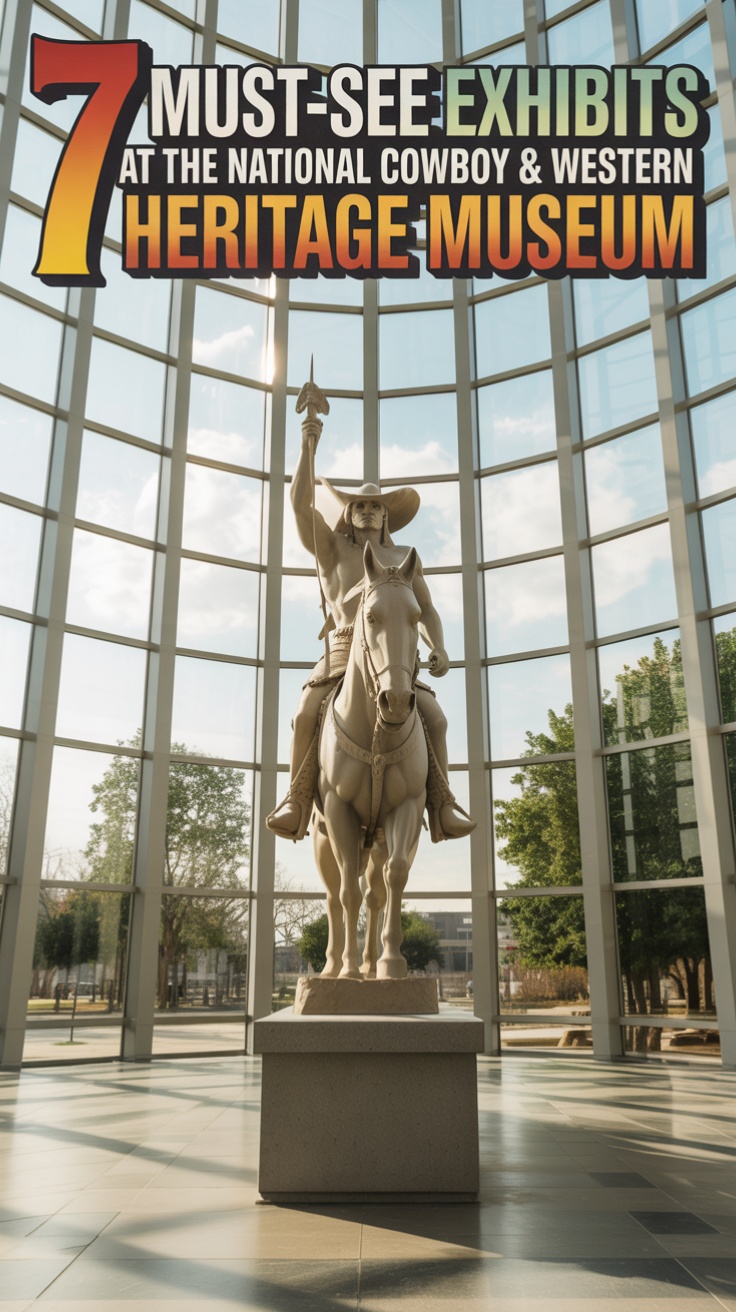
Most people think the National Cowboy & Western Heritage Museum is just another dusty repository of old saddles and faded photographs.
They’re wrong.
I discovered this the hard way during a visit to Oklahoma City that I’d almost skipped entirely.
What started as a reluctant afternoon detour turned into one of those rare museum experiences where you lose track of time completely.
Over 10 million visitors have walked through these doors since 1955, and once you understand what’s actually inside, you’ll see why the National Cowboy Museum in Oklahoma City has become far more than a regional curiosity—it’s become essential cultural infrastructure for understanding America itself.
The Real Story Behind Why This Museum Even Exists (And Why Chester A. Reynolds Couldn’t Let Western Heritage Die)
Here’s the thing nobody tells you: this museum was born from panic.
In the 1950s, Chester A. Reynolds looked around and saw something terrifying.
The American West was vanishing.
Not geographically—physically disappearing from our collective memory.
The stories, the artifacts, the lived experiences of the people who shaped an entire continent were being lost to time, neglect, and cultural amnesia.
So Reynolds did something radical.
He founded what became the Cowboy Hall of Fame and Museum in 1955 with a mission so straightforward it almost sounds naive: preserve and interpret the evolving history of the American West.
The word “evolving” matters here.
This wasn’t meant to be a frozen-in-time shrine to cowboys.
It was designed to be a living, breathing institution that would grow and change as our understanding of Western history grew and changed.
Oklahoma City won a nationwide competition to host the museum—a choice that made genuine sense given the state’s deep connection to frontier settlement, Native American heritage, and ranching culture.
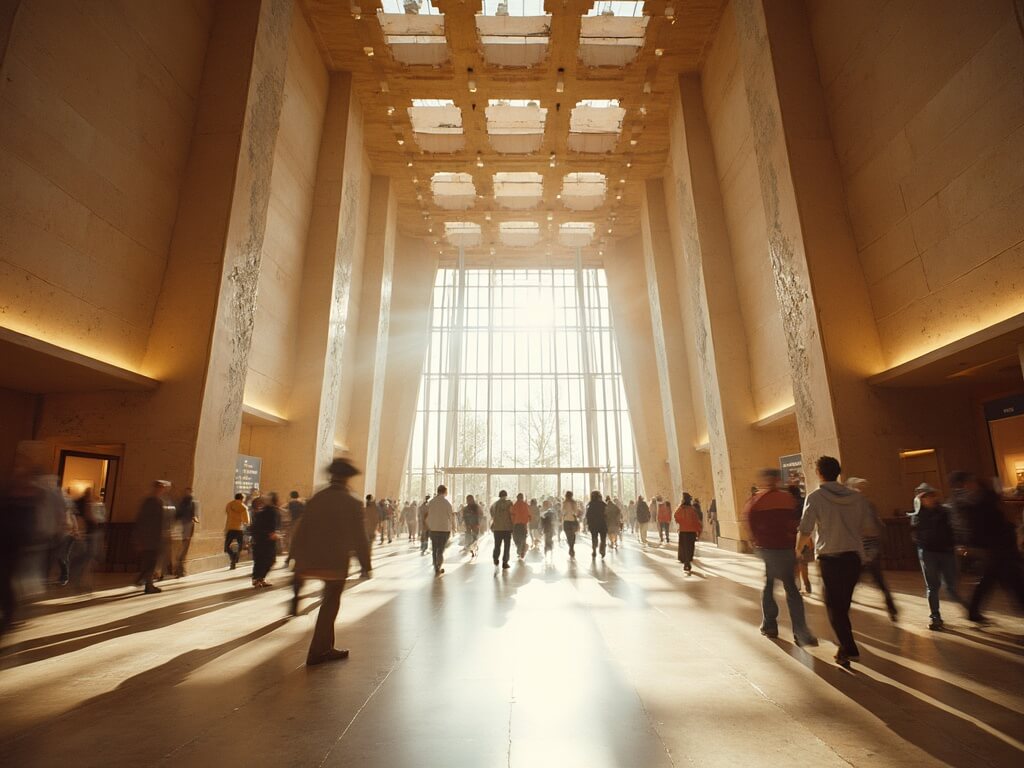
The building itself reflects this ambition.
Modernistic design meets prairie-inspired architecture, creating a structure that somehow feels both timeless and contemporary.
The moment you walk in, you sense you’re entering something intentionally built to last, to hold, to preserve.
I remember standing in the main hall during my first visit, looking up at the high ceilings and thinking: someone really believed in this project.
They still do.
Inside the Vaults: 28,000 Reasons This Museum Changed How We See the West
Let’s talk numbers for a second.
Over 28,000 works and artifacts.
That’s not hyperbole or marketing speak.
That’s a staggering accumulation of physical evidence spanning centuries of Western history.
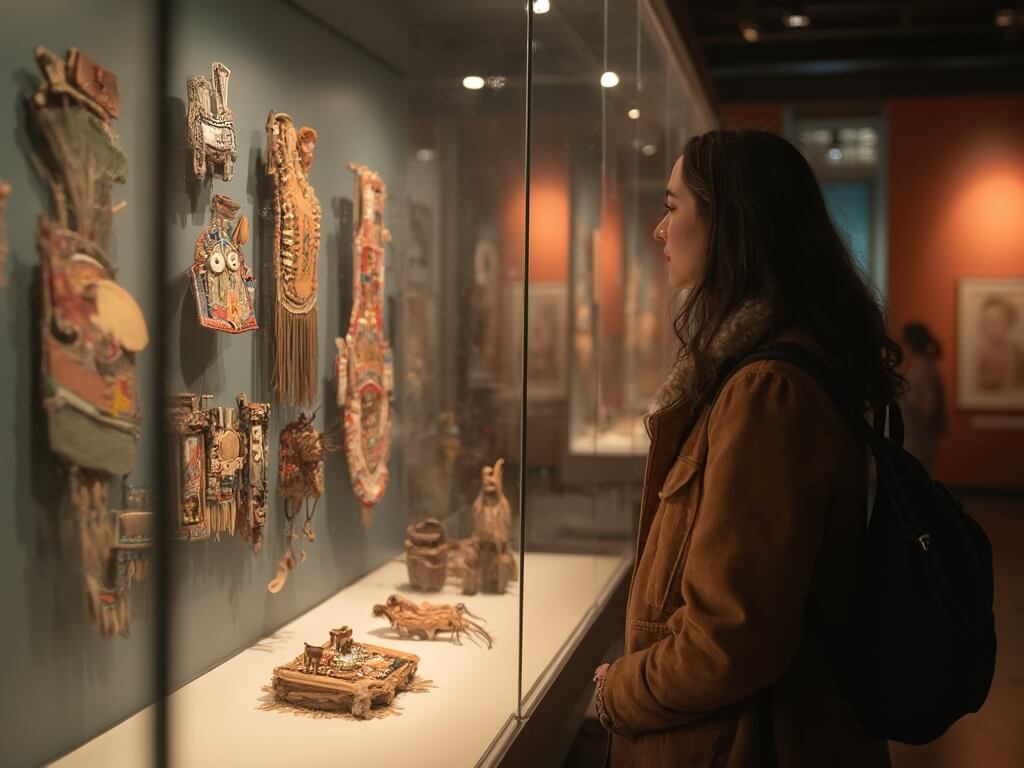
Walk through the Western Heritage Galleries and you’re moving through six distinct spaces, each exploring different threads of the American West story.
You’ve got cowboy galleries, military history sections, settler narratives, lawmen exhibits, and dedicated rodeo galleries.
But here’s what makes it different from generic history museums: the depth of curation feels personal rather than institutional.
The collection includes masterworks by Charles Marion Russell and Frederic Remington—artists who fundamentally shaped how Americans visualize the West.
These aren’t copies or reproductions.
They’re the actual paintings that influenced generations of people’s understanding of frontier life.
Every year, the museum hosts the Prix de West Invitational Art Exhibition and Sale—basically the Super Bowl of Western art events.
This isn’t some regional show that happens to have museum sponsorship.
This is where serious Western artists make their reputations, where collectors spend significant money, where contemporary artistry meets historical consciousness.
I watched a collector spend forty minutes studying a single landscape painting during my visit, asking the guard questions about the artist’s technique and historical accuracy.
That’s the energy this museum generates.
The Native American Heritage gallery deserves its own conversation entirely.
This space goes beyond the tokenistic “indigenous cultures” section you’d expect in a typical American history museum.
You’re looking at artifacts, art, and immersive storytelling that centre Native American contributions and lived experiences as essential—not peripheral—to Western history.
The outdoor exhibits showcase mock-ups of historic tribal living quarters and trading posts, creating spatial understanding that photographs simply can’t deliver.
Standing inside a replica structure while reading about the people who actually built and lived in similar spaces creates a completely different cognitive experience than reading text on a wall.
That matters.
The Cinematic Cowboy Gallery explores something wildly underrated: how Hollywood invented, distorted, and perpetually reinvented the cowboy mythology.
Western films and television shows shaped American consciousness more powerfully than historical fact ever could.
Understanding that gap—the distance between what actually happened and what Americans collectively believe happened—becomes crucial to genuinely understanding contemporary culture.
You can’t separate modern America from the Western mythology generated by film.
This gallery acknowledges that entanglement directly.
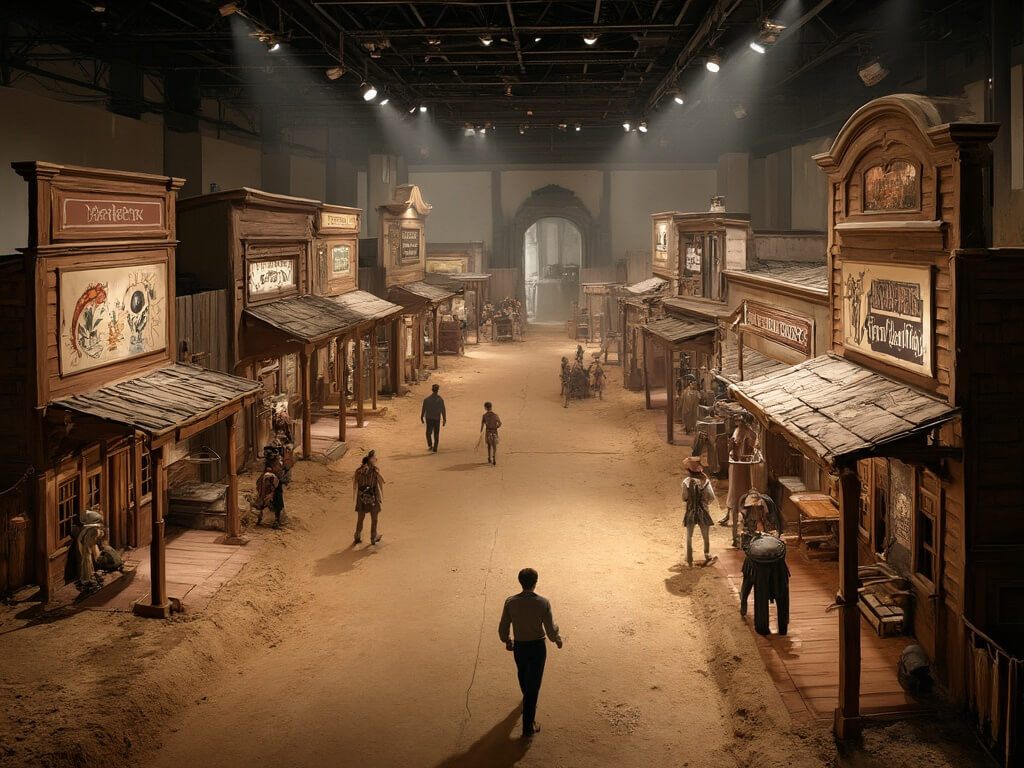
Then there’s the 13,000-square-foot replica of a turn-of-the-century Western town.
Walking through an indoor frontier settlement, complete with period-appropriate buildings and furnishings, creates an experiential understanding that flat exhibits cannot achieve.
Your brain processes spatial relationships, proportions, and scale in ways that fundamentally alter comprehension.
You understand why people made certain choices about architecture, settlement patterns, and community layout.
Key point here: the National Cowboy Museum doesn’t just display Western history—it creates environments where you can inhabit that history temporarily.
Educational Depth Most Visitors Never Discover (But Should)
Most people treat museums as entertainment—you show up, wander around for ninety minutes, grab a coffee, leave.
That’s fine.
But the National Cowboy & Western Heritage Museum offers something much deeper if you’re willing to engage with it.
The children’s museum section features interactive exhibits designed for genuine learning rather than simple amusement.
Kids aren’t just looking at displays—they’re handling artifacts (or replicas), solving historical problems, and participating in hands-on activities that create lasting neural pathways around Western history.
Parents who think they’re just entertaining their children for an afternoon sometimes stumble into actual education happening.
For adult visitors, the museum maintains an extensive library and archival research center.
This isn’t a gift-shop-adjacent photo opportunity.
Serious researchers come here.
Scholars use these resources.
The museum hosts lectures, workshops, and scholarly talks on Western heritage that attract academics and enthusiasts who want to go beyond surface-level understanding.
The grounds themselves deserve attention.
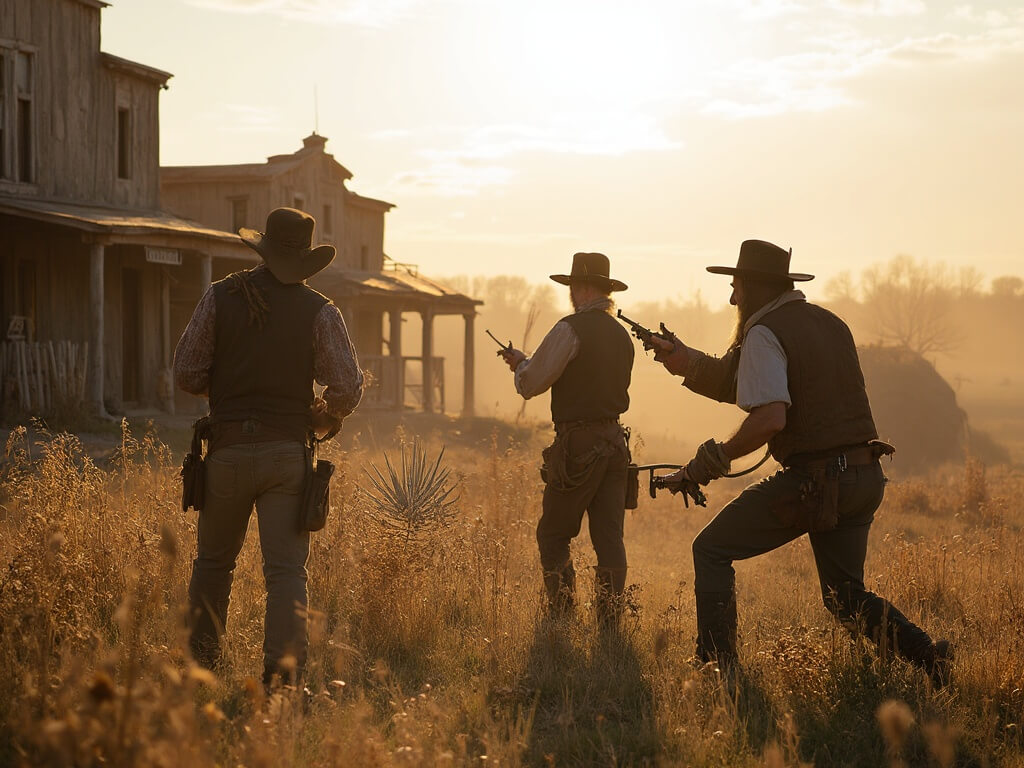
These aren’t just landscaped areas—they’re award-winning spaces planted with native flora that create ecological authenticity alongside aesthetic beauty.
Seasonal activities and reenactments happen on these grounds, connecting you physically and temporally to historical moments.
Watching costumed interpreters demonstrate period-appropriate skills or engage in historical reenactments creates a different kind of knowledge than passive observation ever could.
You see the physical demands of historical life, the practical problem-solving, the actual complexity of frontier existence.
The practical layer: Plan for 3 to 4 hours minimum if you want anything approaching a genuine experience.
Weekday mornings offer the clearest sightseeing without crowds crushing the intimacy of engagement.
The museum is genuinely family-friendly—facilities include a café, gift shop, and accessible wheelchairs for mobility challenges.
The Uncomfortable Truth Most Western History Museums Avoid Entirely
Here’s where things get interesting and, frankly, where this museum distinguishes itself from countless other heritage institutions across America.
The National Cowboy & Western Heritage Museum has moved deliberately—sometimes uncomfortably—beyond the simplified cowboy mythology most Americans inherited.
Real Western history included African American cowboys and cowgirls.
Lots of them.
Historical records show roughly one in four cowboys was Black, yet popular culture and standard history education erased this reality almost entirely.
This museum doesn’t erase it.
Women pioneers, rarely glamorized in Western mythology, receive dedicated attention and contextual storytelling that acknowledges their extraordinary labor and resilience.
Lesser-known Western figures—people who didn’t fit the tall-tale archetype—appear throughout the galleries with equal historical weight.
The representation of varied experiences and cultures within the West reflects genuine historiographical scholarship rather than Hollywood invention.
This matters because museums shape how people understand history.
When a major institution centres underrepresented groups, it validates their historical significance and disrupts convenient narratives.
I watched a school group move through the galleries, and the students asked questions about representation I doubt they would have asked without these deliberate curatorial choices.
The museum’s board draws representation from seventeen Western states, and the institution maintains strategic partnerships and educational outreach programs that extend influence far beyond Oklahoma City’s geographical boundaries.
The annual Chester A. Reynolds Memorial Award recognises contributions to Western heritage—but increasingly, that heritage is defined more inclusively, more accurately, and more complexly than it was in 1955.
This evolution isn’t accidental.
It reflects genuine commitment to historiographical accuracy rather than nostalgic fantasy.
The interactive and multimedia exhibits continue expanding, incorporating technology that brings historical contexts to life in ways static displays simply cannot match.
Digital access broadens educational reach, allowing remote engagement for people who’ll never visit Oklahoma City physically.
The bottom line: this museum takes seriously the responsibility that comes with cultural authority—the responsibility to tell more complete, more accurate, more inclusive stories about the American West.
The extensive collections, the thoughtful curation, and the commitment to evolving interpretation combine to create something genuinely significant.
But understanding what’s actually available to experience requires moving beyond casual visitation into deliberate engagement with the depth this institution has accumulated over nearly seven decades.
Explore More:
Why Most People Get the Museum Experience Completely Wrong (And How to Actually Do It Right)
Here’s what I noticed during my visit that changed how I think about museum strategy entirely.
Most visitors show up with a vague plan to “see the exhibits.”
They drift through galleries with no particular sequence, spend too long on displays that don’t interest them, miss entire sections because they didn’t realize those spaces existed, and leave feeling like they’ve “done” the museum.
They haven’t.
The National Cowboy & Western Heritage Museum‘s physical layout actually tells a story if you understand how to read it.
The 10,000-square-foot rotating exhibition space keeps the experience alive and prevents the stagnation that kills long-term museum engagement.
This means your visit in 2020 would have been fundamentally different from your visit in 2024.
Prestigious annual events, awards, and fundraisers happen throughout the year—which means the museum functions as both a static archive and a dynamic cultural gathering place.
I made the mistake of treating it purely as the former on my first visit.
After learning about the exhibition schedule and events calendar, I realized I’d missed the actual rhythm of how this institution operates.
The museum isn’t frozen.
It breathes.
It changes.
It evolves based on contemporary scholarship, visitor feedback, and curatorial vision.
That’s what separates truly significant cultural institutions from fancy storage facilities.
The Infrastructure Nobody Talks About: Why Research Access Matters More Than Display Cases
Let me introduce you to the part of the museum most casual visitors completely overlook: the archival research center.
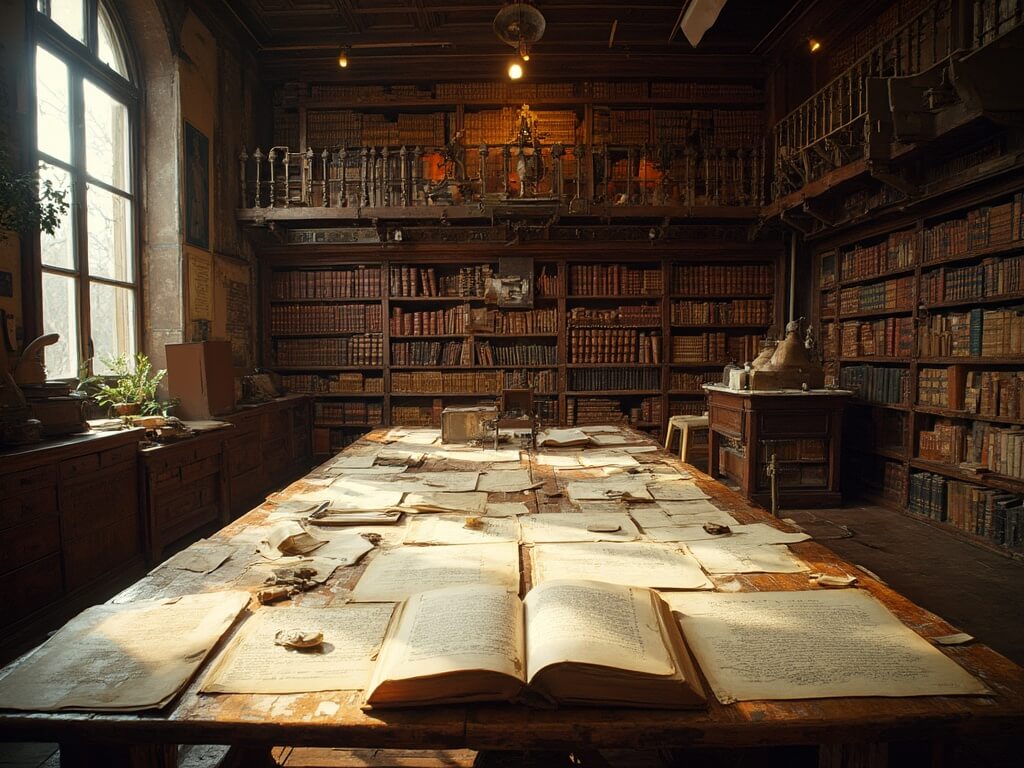
This isn’t a tourist attraction.
This is where serious scholarship happens.
The extensive library contains primary sources, secondary research, documented oral histories, and specialized collections that researchers travel to access deliberately.
Graduate students working on dissertations about frontier settlement patterns use these resources.
Academic historians cross-reference documents here.
Cultural preservation specialists consult archival materials for authentication and contextualization.
The museum maintains scholarly talks and lectures throughout the year—events that attract people far beyond Oklahoma City’s immediate radius because the intellectual weight justifies the travel.
I attended a lecture about overlooked women pioneers that featured a PhD-level researcher with genuine expertise, not a docent reading from prepared materials.
The distinction matters enormously.
When cultural institutions invest in serious scholarship rather than surface-level entertainment, they create different kinds of engagement.
Visitors who encounter rigorous intellectual work—even passively, just by being in proximity to it—absorb a different relationship to the subject matter.
You understand that Western history isn’t settled, isn’t complete, isn’t finalized.
Scholars are still discovering things, reinterpreting evidence, challenging conventional wisdom.
That’s the living, evolving definition of “history” that Chester Reynolds embedded in the museum’s founding mission.
The professional takeaway here: the research infrastructure matters as much as the public-facing displays because it ensures curatorial integrity.
Without serious scholarship backing up exhibition choices, museums become propaganda machines or entertainment venues rather than educational institutions.
This museum has chosen the harder path—the path that prioritizes accuracy and complexity over simplicity and comfort.
The Outdoor Living History Program: Why Your Physical Experience Changes Your Understanding Completely
Walk outside the main building and you encounter something most people don’t anticipate: a fully realized landscape program that functions as extended exhibition space.
Native flora plantings aren’t decorative flourishes.
They represent ecological authenticity—what the Western landscape actually looked like, what plants sustained both indigenous peoples and settlers, what environmental conditions shaped decision-making about where to settle and how to settle.
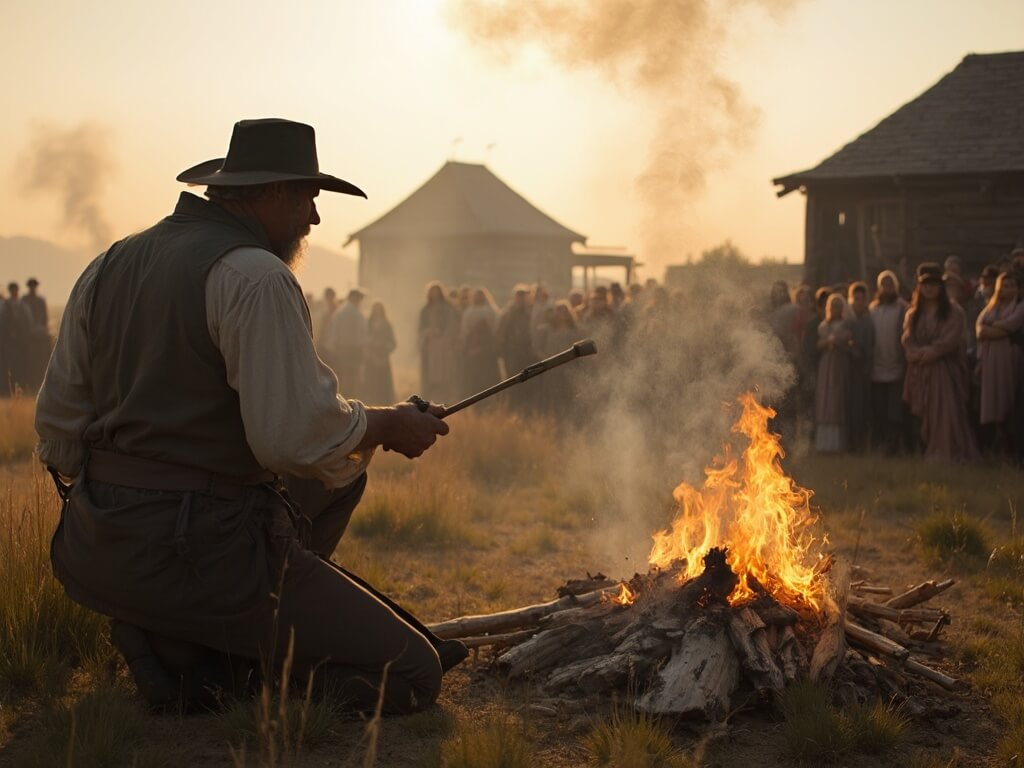
Seasonal activities and reenactments transform the grounds into active historical spaces.
Costumed interpreters don’t just perform—they demonstrate period-appropriate skills and engage visitors in dialogue about historical practice.
Watch someone actually start a fire using historical methods and your understanding of how difficult ordinary survival was fundamentally shifts.
You can’t unsee that.
The award-winning landscape design creates spaces that educate through spatial experience rather than textual explanation.
You understand scale, proportion, and community layout through inhabitation rather than through diagrams.
This approach reflects emerging scholarship in museum studies suggesting that embodied knowledge—understanding created through physical experience and spatial navigation—creates stronger memory retention and deeper comprehension than information consumed passively.
I remember standing in a reconstructed settlement area, noticing how buildings were positioned relative to water sources and natural shelter, understanding suddenly why certain locations became towns and others didn’t.
That realization came through experience, not explanation.
The experiential principle: museums that engage your entire body—not just your eyes and ears—create different neural pathways than traditional galleries can achieve.
The National Cowboy & Western Heritage Museum understands this and has built it deliberately into the visitor experience.
Digital Access: How This Museum Became Relevant for People Who’ll Never Visit Oklahoma City
Something shifted in how cultural institutions operate around 2020.
Physical visitation became one option among many rather than the only option.
The National Cowboy & Western Heritage Museum adapted faster than many competitors by developing sophisticated digital engagement infrastructure.
Online highlights allow remote viewers to explore major exhibits and collections through high-quality digital photography and contextual storytelling.
Virtual visits create genuine educational experiences rather than serving as promotional trailers for physical visits.
The active social media presence shares curatorial insights, behind-the-scenes stories, and historical connections that maintain engagement between visits or for people who can’t visit at all.
Digital storytelling extends the museum’s intellectual reach exponentially.
The accessibility reality: museums that ignore digital engagement are choosing to limit their influence and educational impact.
Why Accessibility Decisions Matter More Than You’d Think
Here’s something most people never consider when visiting a museum: the practical barriers between themselves and full engagement.
Mobility limitations, sensory disabilities, cognitive differences, language barriers—these aren’t edge cases or afterthoughts in genuinely thoughtful institutions.
They’re central design considerations.
The museum provides wheelchairs, multilingual signage, rest areas, and clear pathways throughout the galleries.
The inclusive design principle: accessibility isn’t a limitation you add to accommodate disabled people—it’s intelligent design that benefits everyone.
The Current State of Western History Scholarship: Why Museums Matter More Than Academic Journals
Academic history happens in peer-reviewed journals that maybe a few hundred scholars read.
Museum curation happens in public spaces where tens of thousands of people encounter ideas, interpretations, and perspectives shaped by contemporary scholarship.
Recent trends in Western history scholarship have emphasized previously marginalized experiences and voices—not out of political correctness but out of historical accuracy.
The historiographical reality: museums can either preserve obsolete interpretations or engage with living scholarship and continuously refine their understanding.
The Annual Awards and Recognition: Why Cultural Authority Matters
Every year, the museum presents the Chester A. Reynolds Memorial Award recognizing significant contributions to Western heritage preservation and interpretation.
This award and events like the Prix de West Invitational Art Exhibition and Sale build credibility and institutional influence over time.
The cultural infrastructure principle: major museums don’t just preserve history—they actively shape how societies understand themselves and their past.
Why Planning Your Visit Matters More Than Spontaneous Wandering
I made the mistake on my first visit of showing up without a plan, thinking I’d just see whatever caught my attention.
The practical optimization strategy: museum visits that generate transformative experiences require planning and intention rather than spontaneous wandering.
Check exhibits on the official site, prioritize based on your interests, and schedule weekday mornings for your visit.
Facing the Limitations Honestly: Where This Museum Falls Short (And Why Acknowledging Shortcomings Matters)
No institution is perfect.
Visitors can become overwhelmed, and the museum could offer better visitor guidance systems.
It could also engage more with current Western issues like climate change or sovereignty.
And while digital access helps, geography still limits full physical experience.
The honest assessment principle: institutions that acknowledge their limitations demonstrate more credibility than those claiming comprehensive perfection.
Future Trajectories: Where Western Heritage Interpretation is Heading
The museum is adapting—offering technology-enhanced exhibits, inclusive narratives, and investing in indigenous-led interpretation.
The trajectory principle: cultural institutions either actively adapt or gradually lose relevance as society evolves and new expectations emerge.
The Actual Return on Your Visit: Why Understanding the Real Value Matters
Visiting in person offers immersion, authenticity, and embodied understanding that no digital experience can fully replicate.
The value proposition: serious museum visits generate understanding, perspective shifts, and memory retention that other learning modalities simply don’t provide.
Your Next Move: What Actually Happens When You Visit Deliberately
Your next step? Plan your visit with purpose.
Use resources like the Oklahoma Historical Society’s National Cowboy Museum Guide to explore detailed maps, highlight interests, and align with events or talks.
You’re not just seeing history—you’re participating in how it’s understood and remembered.
Explore more related inspiration on rustic lifestyle and design through:
- Rustic Farmhouse Decor
- Rustic Bedroom Ideas
- Rustic Farmhouse Living Room
- Rustic Christmas Decor
- Rustic Farmhouse Bedroom