You’re planning a trip to Arizona, scrolling through endless lists of the same old desert hikes and resort recommendations.
Nothing feels fresh.
Nothing feels different.
Then you stumble across something called Butterfly Wonderland—the largest indoor butterfly conservatory in America—and you wonder: is it actually worth the trip, or just another overhyped tourist trap?
I get it.
The name alone sounds a bit twee.
But here’s what most people miss: this isn’t some gimmicky photo booth with a handful of butterflies pinned to a wall.
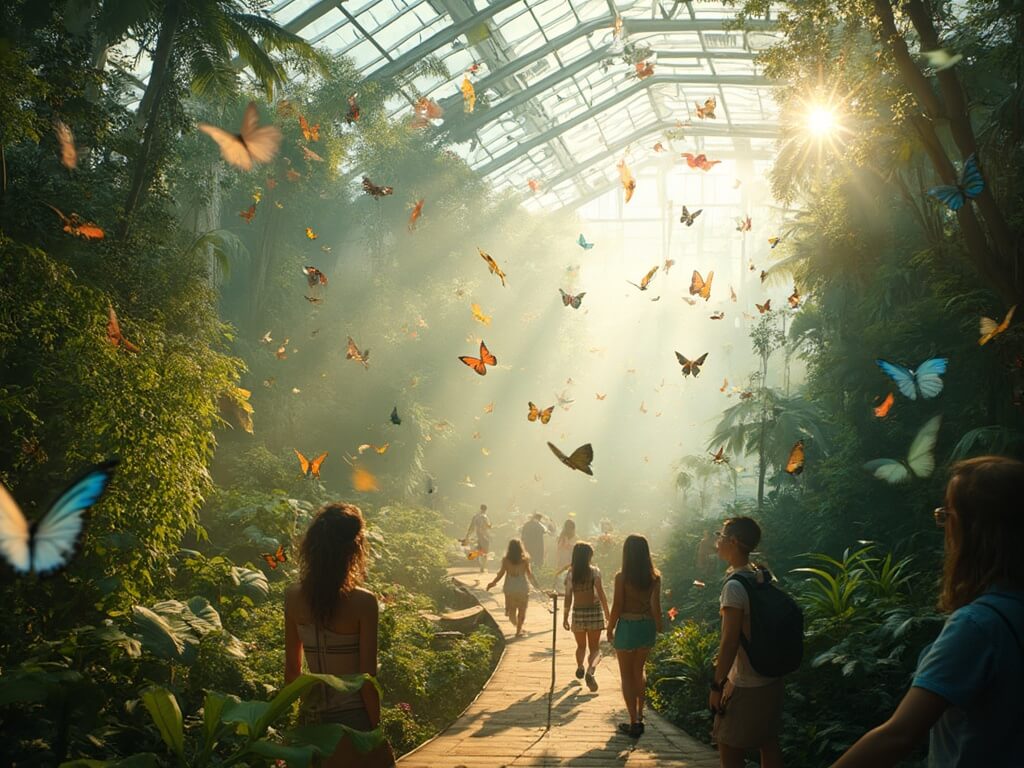
This is a 15,000-square-foot tropical rainforest ecosystem, completely climate-controlled and glass-enclosed, where thousands of live butterflies from around the world fly freely around your head.
What Makes This Butterfly Conservatory Different From Everything Else
Most attractions are designed to trap you indoors and squeeze you through quickly.
Butterfly Wonderland does the opposite.
It’s located at the Arizona Boardwalk in Scottsdale (9500 E. Via de Ventura, Scottsdale, AZ 85256), and it operates 365 days a year from 9:00 am to 5:00 pm—no seasonal closures, no surprise shutdowns.
The facility is fully wheelchair accessible, meaning your entire family can navigate it comfortably, and if you’re coming with very young children, strollers are allowed throughout most of the space (with minor restrictions in the conservatory itself).
What caught my attention most was the conservation angle.
Last year, I visited with my niece, who was obsessed with monarch butterflies after a school project.
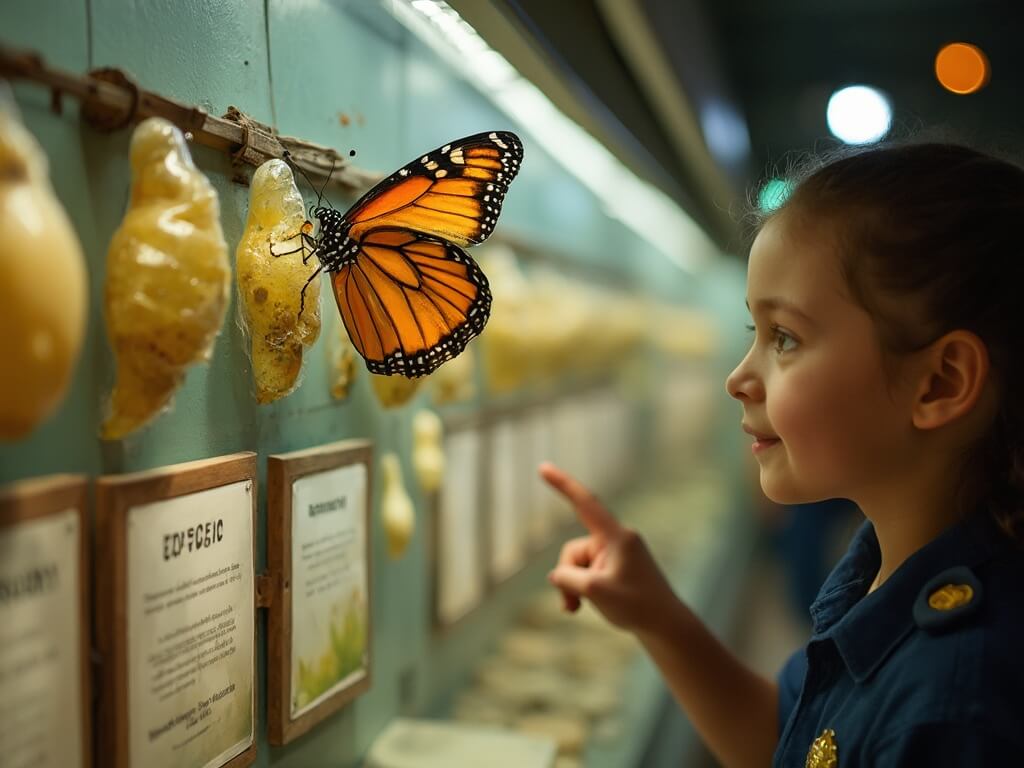
Walking through the emergence gallery and watching live chrysalises actually open in real time—seeing a butterfly unfold its wings for the first time—was genuinely moving.
My niece stood there for twenty minutes, completely silent, just observing.
That’s rare with kids nowadays.
What made it even better was learning that every ticket sold directly supports rainforest conservation projects and butterfly farms worldwide.
The facility isn’t just showing you beautiful insects; it’s actively working to preserve them.
Inside the Conservatory: What You’ll Actually See
The main draw is the tropical butterfly conservatory itself.
You walk through glass doors into a warm, humid space that genuinely feels like stepping into a rainforest.
The air hits you first—thick, tropical, almost dripping with humidity.
Then your eyes adjust and you see them everywhere.
Butterflies.
Hundreds of them.
Some land on your shoulder or hand if you’re patient.
Others swoop past your face with that distinctive flutter-and-glide motion.
The key rule here is simple: look, photograph, enjoy—but don’t touch or catch them.
If one decides to land on you, that’s a bonus moment you get to experience.
The Emergence Gallery
- Live chrysalises where butterflies are actively emerging (depending on the day and breeding cycle).
- Educational displays explaining the complete butterfly life cycle.
- Staff members who can explain what you’re witnessing in real time.
The 3D Movie Experience
- A 14-minute film about monarch butterfly migration.
- It’s surprisingly well-made and engaging even for sceptical adults.
- Kids typically sit mesmerised throughout.
Beyond the Main Conservatory
- The Spineless Giants Gallery, featuring insects and spiders that genuinely impress (even if you’re not typically an arachnophid fan).
- The Rainforest Reptiles Gallery with frogs, snakes, turtles, and other creatures.
- The Tropical Waters Aquarium with local and exotic fish species.
- The Edible Insects Experience—taste insects if you dare.
I didn’t participate in that one—some boundaries shouldn’t be crossed—but I watched other visitors try it and they seemed genuinely surprised at how unremarkable it tasted.
The Visitor Experience: What Actually Happens When You Arrive
Let me be honest about the logistics because they matter.
You arrive.
You buy your ticket either online or onsite (ticket windows close one hour before facility closing, so plan accordingly).
From there, you’re guided into a space that typically takes most families 1-2 hours to fully experience.
Some people rush through in 45 minutes.
Others spend three hours, stopping at every display and reading every educational sign.
Here’s the clever bit: the facility actively limits capacity during peak times.
This isn’t for profit—it’s specifically for guest comfort and animal welfare.
Overcrowding a conservatory stresses the butterflies and ruins your experience.
So on busy weekends or school holidays, you might find yourself waiting for entry slots, but that wait is worth it.
The space never feels cramped once you’re inside.
What to Actually Bring and Wear
- The conservatory maintains tropical temperatures year-round (roughly 75-80°F with high humidity).
- Wear light, breathable clothing.
- Bring a camera—seriously, the photo opportunities here are exceptional, and staff actively encourage it.
- Leave your phone on vibrate in your pocket because you’ll want to be present, not scrolling.
- Don’t bring outside food or drinks (though there are dining options both onsite and nearby).
- Don’t bring pets (service animals are the exception).
The Conservation Angle: Why Your Money Actually Matters
This is where Butterfly Wonderland moves beyond typical tourist attraction into something with genuine impact.
Every ticket purchase directly funds rainforest conservation projects and butterfly farms worldwide.
The facility partners with international conservation initiatives, meaning your family outing literally contributes to habitat preservation on multiple continents.
Educational programming is built into the visitor experience itself.
Staff educators are positioned throughout the facility.
Interpretive signage explains not just what you’re seeing, but why it matters.
School field trips and homeschool days are regular occurrences, and the facility clearly takes its educational mission seriously.
For families, this matters because you’re not just entertaining your kids—you’re introducing them to conservation concepts in an experiential way that actually sticks.
Integration With Arizona Boardwalk: The Bigger Picture
Butterfly Wonderland doesn’t exist in isolation.
It’s part of the Arizona Boardwalk, which means you can build an entire day around multiple attractions.
Within walking distance, you’ve got:
- OdySea Aquarium
- Museum of Illusions
- Laser + Mirror Maze
- Various restaurants, cafes, and year-round special events

This matters for planning purposes.
You could easily spend four to six hours exploring multiple attractions without feeling like you’re just hitting a theme park assembly line.
Each attraction stands alone, but they complement each other naturally.
The Boardwalk itself is open-access (free to walk around), but each individual attraction requires separate admission.
There’s a bundled ticket option where you can pick 2-4 attractions and save up to 20%, which makes financial sense if you’re planning a full day.
The real strategic advantage here is flexibility.
You’re not locked into one experience.
If your family gets tired, you can take a break at one of the restaurants, then move to another attraction without feeling like you’ve wasted money.
Re-entry is permitted on the same day, so you could conceivably visit Butterfly Wonderland in the morning, grab lunch at the Boardwalk, then return in the afternoon if you wanted to.
Parking is free throughout, which immediately eliminates one of the typical tourist destination frustrations.
Why This Actually Works For Families (And Why It Doesn’t Always)
Let me be straight about the pros first.
This is a genuinely unique, educational, and immersive experience that works for almost all age groups.
A three-year-old will be mesmerised by the butterflies.
A thirteen-year-old will appreciate the science and photography opportunities.
Adults find it genuinely interesting rather than something they’re just tolerating while kids have fun.
It’s indoors and climate-controlled, which makes it an ideal Arizona activity year-round (especially during summer when outdoor activities become logistically difficult).
The accessibility is legitimate—the entire facility is wheelchair accessible, and the thoughtful design means families with mobility challenges don’t feel like afterthoughts.
Now, the cons.
- The tropical climate can feel oppressive if you’re not expecting it.
- Some visitors find the heat and humidity uncomfortable after 30+ minutes.
- No strollers allowed in the conservatory itself (though baby carriers work fine) can be challenging if you’re managing multiple young children.
- During weekends and school holidays, the facility does get crowded, which impacts the experience.
Visitor reviews consistently praise the educational content and butterfly encounters, but they also consistently recommend arriving early or visiting on weekdays if you want a more relaxed experience.
The consistent recommendation from repeat visitors is straightforward: bring a camera, allow ample time, and expect to learn something you didn’t anticipate learning.
That brings us to the practical planning side of actually making this work for your schedule.
If you’re looking to combine your visit to Arizona with more exciting family-friendly activities, check out our guide on how to spend a day at Mall of America in Minnesota or explore a more reflective side of travel at the National Civil Rights Museum in Memphis.
Ticketing Strategy: How to Actually Save Money and Skip the Headaches
Here’s where most families leave money on the table.
They buy tickets on arrival without checking online pricing or bundle options. Or they visit during peak times and end up paying more for worse experiences.
Let me walk you through the actual strategy that works.
Online ticket purchases are cheaper than onsite purchases in almost every scenario.

Bundle packages exist that most casual tourists never discover. If you’re planning to visit multiple Arizona Boardwalk attractions—which, honestly, you should—you can pick 2-4 attractions and save up to 20%.
That’s not trivial savings for a family of four.
Here’s the math that actually matters: a single adult ticket to Butterfly Wonderland runs approximately $25–30. A child ticket is typically $5–10 less. If you’re bringing a family of four, you’re looking at roughly $100–120 for just this attraction.
Add OdySea Aquarium and the Museum of Illusions with individual tickets, and you’re pushing $250+. With a bundle pass covering three attractions, you’re paying roughly $150–180 total. That’s a legitimate $70–100 savings on a single day trip.
Tickets purchased online are also valid for one year, giving you flexibility if plans change.
The key takeaway here is simple: always check online pricing, always explore bundle options, and always confirm ticket validity before purchasing.
Accessibility and Real-World Logistics for Every Family Type
Wheelchair accessibility isn’t just a checkbox at Butterfly Wonderland.
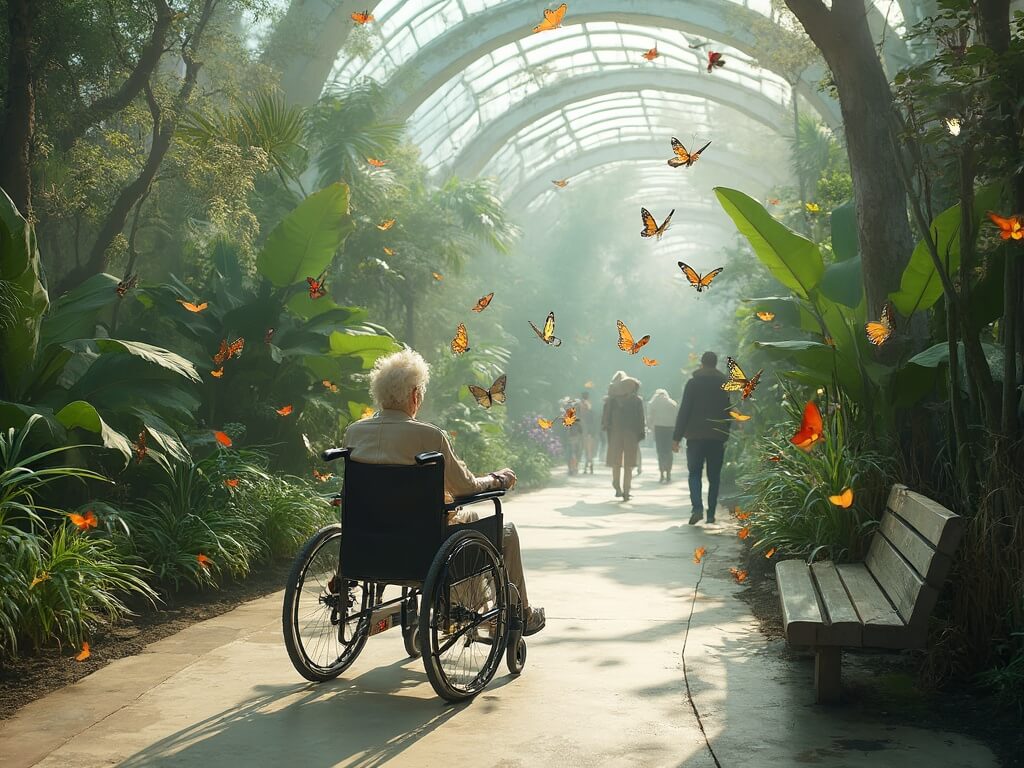
Pathways are wide, seating is strategically placed, and bathrooms are spacious and adaptive. Accessibility isn’t just about mobility—sensory needs are considered, too.
The stroller policy often confuses families. Strollers aren’t allowed inside the conservatory, but baby carriers work perfectly. If bringing a toddler, flexibility is key.
One family I spoke to split their visit creatively to accommodate a tired toddler. That kind of adaptive planning is essential for a successful visit.
Overall—accessibility is genuinely integrated into the facility’s design, not tacked on.
Educational Value: Why Teachers Keep Bringing Field Trip Groups
This facility doesn’t just display butterflies—it’s architected for learning.
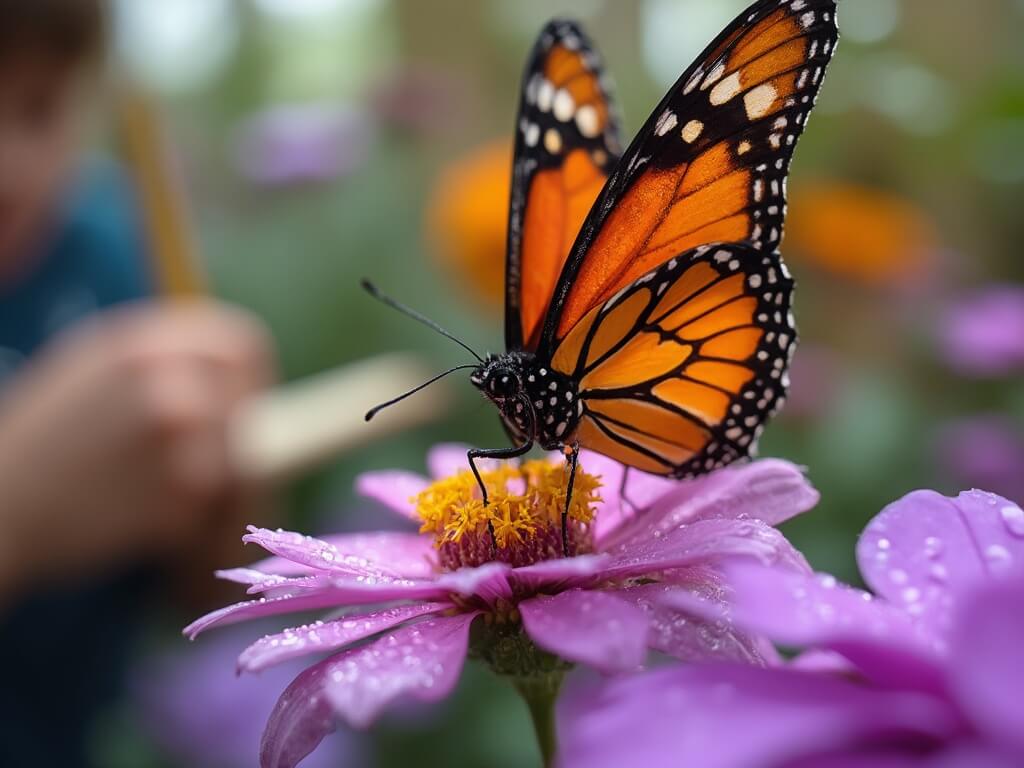
Interpretive signage explains everything from ecosystem design to survival strategies. Educational staff go further—engaging students, answering questions, and tying experiences into curriculum.
Homeschool and field trip programming is thoughtfully structured, not just filler. One fourth-grade class saw real results in understanding ecosystems and pollination thanks to this immersive approach.
Butterfly Wonderland Family Activities provides more info on how families can benefit educationally from a visit.
Conservation Impact: Where Your Money Actually Goes
I’m skeptical of vague conservation claims. But Butterfly Wonderland stands apart. Every ticket sold directly supports rainforest conservation and butterfly farms in developing countries.
They partner with specific, targeted programs in Central and South America. That includes economic alternatives to deforestation and restoring butterfly habitats. Your money funds real, tangible progress.
This isn’t just about butterflies—it’s about reversing a 75% decline in populations and safeguarding migratory paths, especially for Monarch butterflies.
Butterfly Wonderland Reviews on TripAdvisor echo these conservation themes with great visitor feedback.
Seasonal Considerations and Timing Your Visit for Maximum Experience
Arizona summer is hot, making Butterfly Wonderland’s indoor experience appealing—but also more crowded.
Spring and fall are the ideal seasons. Temperate weather outside + moderate indoor crowds = best of both worlds.
Weekdays (especially Mon–Thurs) are consistently better than weekends regardless of season.
Arrive right at opening (9:00 am) for the quietest experience. You’ll enjoy the conservatory more, read educational signage without elbows, and take better photos.
Real Logistics: What Actually Happens During a Typical Visit
You’ll enter through the Arizona Boardwalk (free parking!), check in or purchase tickets, and head directly to the conservatory.
Inside: warmth, humidity, and hundreds of butterflies. Staff are available but don’t rush you. Most families spend 20–45 minutes here.
Afterwards, you’ll flow through the emergence gallery (10–15 minutes), then watch the 3D monarch butterfly film (14 minutes).
Other optional galleries include spineless insects, rainforest reptiles, and tropical waters. The Edible Insects exhibit is a bonus for the adventurous.
Total visit time: 1–2 hours for most. More for science lovers, less for families with young kids.
Bring a backpack for water, camera, and essentials. Photography is encouraged, not restricted!
The Photography Angle: Why This Matters More Than You Think
Butterfly Wonderland is a photographer’s paradise.
Lighting is flattering, backgrounds are lush, and butterflies are stunning—but unpredictable.
Smartphones work well, but DSLRs shine. The key tip: patience beats equipment.
Move slowly, observe, and wait for butterflies to settle. The result? Incredible, share-worthy memories.
Why This Isn’t Just Another Tourist Trap (And How You Know)
Butterfly Wonderland avoids the “tourist trap” vibe through:
- Limited capacity for guest/animal well-being
- Deep educational content
- Real conservation commitments
- Engaged, informed staff
Families return year after year, and exhibits evolve. That’s a sign of an attraction that genuinely cares about quality and mission.
Current Trends and What’s Evolving at Butterfly Wonderland
Post-pandemic, visitors crave nature-based, immersive experiences. Butterfly Wonderland delivers.
They’ve added more STEM-focused educational programming, rotating exhibits, themed events, and interactive galleries to keep things fresh.
Partnerships with other Arizona Boardwalk attractions allow for bundle experiences and cross-promotion that benefits repeat visitors.
The Final Question: Is It Actually Worth Your Time and Money?
If you value nature, education, conservation, or photography, yes—it’s worth it.
If you’re seeking high-speed thrills or have zero patience for warm, humid environments, perhaps not.
But most families, especially with school-age children or curious adults, will find this to be a memorable and meaningful experience.
Explore indoor gardening ideas for a similar nature-themed experience at home.
Planning Your Actual Visit: The Practical Next Steps
Ready to go? Here’s your checklist:
- Check hours on the official Butterfly Wonderland page
- Choose a mid-week, shoulder season time slot
- Buy tickets online for discounts and flexibility
- Explore bundle packages if visiting other Arizona Boardwalk spots
- Plan 1.5–2.5 hours minimum
- Bring a camera and dress in light layers
- Eat on-site at Arizona Boardwalk to keep things low-stress
Butterfly Wonderland combines entertainment, education, and conservation in a fully realized, family-accessible experience. It’s not just another stop—it’s a rare find that delivers on its promise.
Continue planning your Arizona trip with inspiration like this hike to Delicate Arch or a scenic drive along Maui’s Hana Highway.