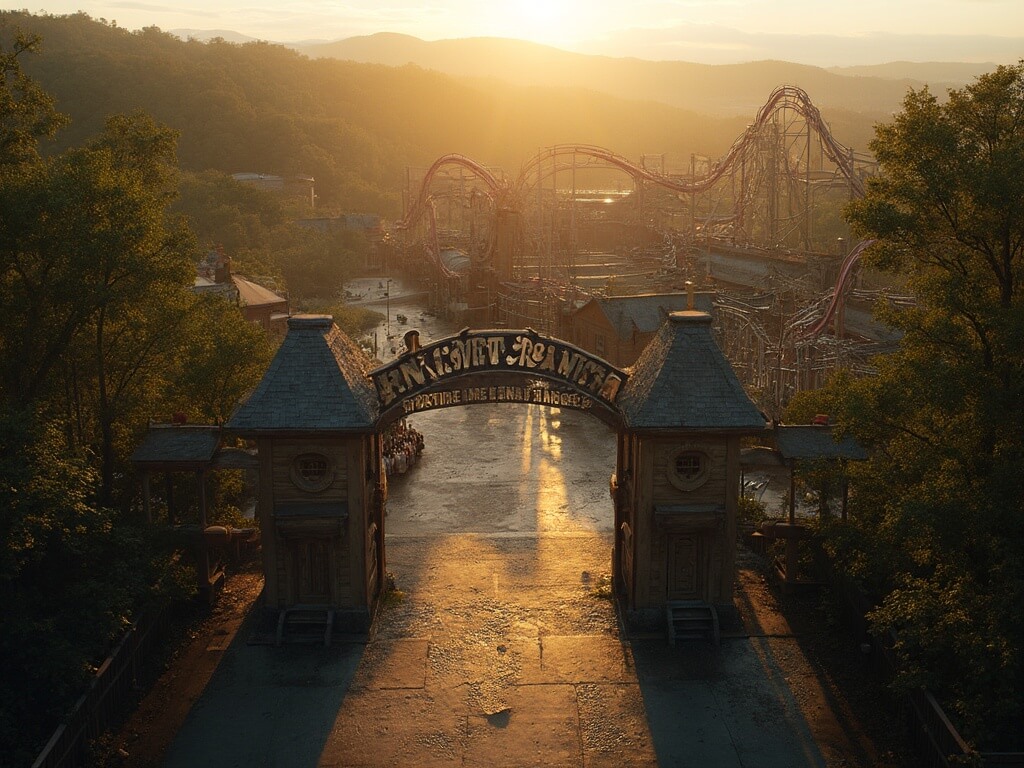
You’re Standing at the Park Gates. Here’s What You Need to Know Before Your Day Begins.
Most people arrive at Silver Dollar City with one question burning in their minds: which coaster should I hit first?
The answer isn’t as simple as grabbing the nearest ride operator and jumping on.
Silver Dollar City roller coasters aren’t just about speed and drops—they’re engineered experiences that blend cutting-edge technology with the natural beauty of the Ozark Mountains.
I learned this the hard way during my first visit about five years ago.
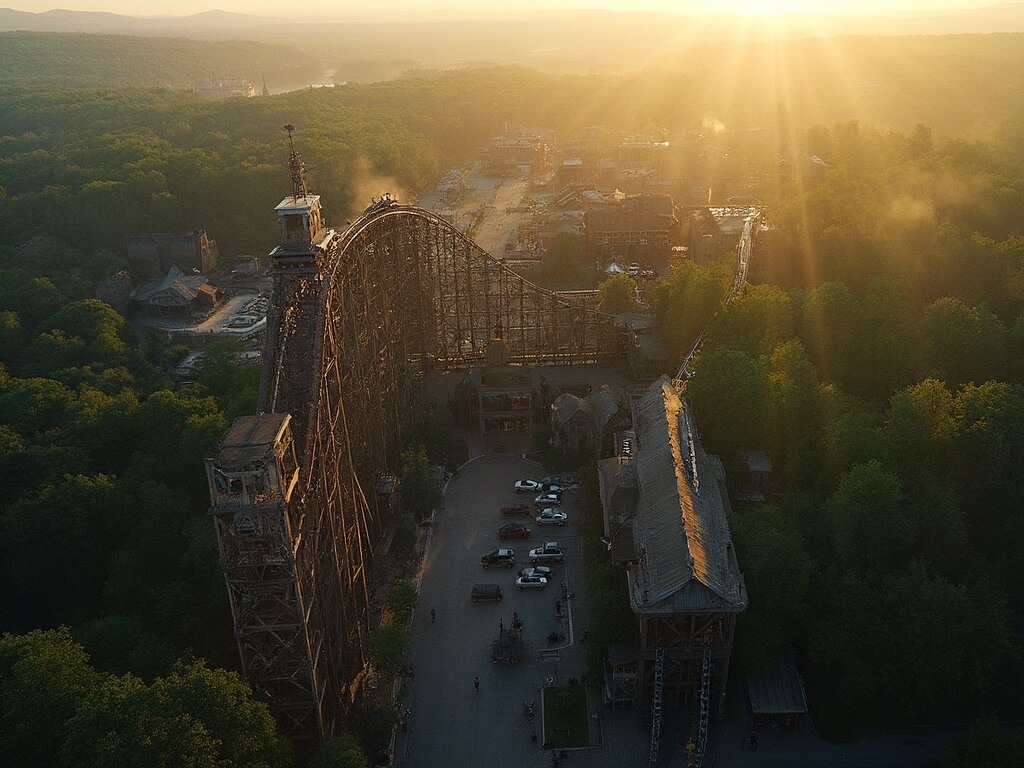
I walked in expecting a standard theme park experience and found myself face-to-face with something entirely different: a 1880s-themed entertainment complex built into actual mountainous terrain, where world-class coasters twist through forests and valleys rather than standing as isolated metal sculptures in parking lots.
What struck me most was how the park managed to thread seven major roller coasters through its landscape without the place feeling chaotic or overdone.
The park sits in Branson, Missouri, and it’s become the kind of destination where coaster enthusiasts actually plan trips specifically to experience the innovation happening here.
These aren’t throwaway rides at a regional park.
These are record-breaking machines that have earned genuine recognition from the amusement industry.
Why Silver Dollar City Roller Coasters Actually Matter (And Why You’re Probably Underestimating Them)
Here’s something most casual visitors don’t realise: this park doesn’t compete with Six Flags or Cedar Point by trying to be them.
Instead, Silver Dollar City roller coasters operate on a completely different philosophy.
The park’s designers made a deliberate choice to build rides that respect both the landscape and the visitor experience.
Each coaster here serves a specific purpose in your day.
Some are designed to push absolute limits.
Others exist to introduce younger riders or nervous adults to the thrill of coasters.
The result is something genuinely rare: a coaster lineup where literally everyone finds their place, from your grandmother enjoying a gentle spin to hardcore enthusiasts chasing the next adrenaline rush.
The variety here is what separates Silver Dollar City from countless other theme parks.
You don’t just get “the big scary coaster” and a bunch of filler rides.
You get a carefully curated progression of experiences, each with its own personality and purpose.
Meet the Monsters: The Seven Coasters That Define the Park
Time Traveler: The Coaster That Shouldn’t Be Possible (But Definitely Is)
If you want to understand why Silver Dollar City has gained legitimate industry recognition, start with Time Traveler.
This isn’t hyperbole: it holds three simultaneous world records.
It’s the fastest, steepest, and tallest spinning coaster on the planet.
The numbers alone sound insane.
A 90-degree vertical drop on a 100-foot-tall coaster that reaches 50.3 miles per hour while spinning through three inversions—all whilst moving backward at random moments.
But numbers don’t capture what actually makes this coaster special.
The genius lies in how it was custom-designed specifically for Silver Dollar City’s terrain.
Rather than forcing a standard coaster template onto the landscape, engineers created something that uses the natural hills and valleys of the Ozarks as part of the ride structure itself.
I spoke with a coaster enthusiast last year who’d ridden every major coaster in America.
His comment about Time Traveler stuck with me: “Most coasters feel like they’re fighting against the landscape. This one feels like it’s dancing with it.”
The high-tech magnetic launch system accelerates you from zero to speed with precision that older coaster technologies simply can’t match.
What this means for you:
Time Traveler isn’t for the faint-hearted, but it’s also not designed to be punishing.
The spinning element catches most riders off guard in the best possible way.
Motion sensitivity tends to be the real limiting factor here, not fear of heights or speed.
Outlaw Run: When Wooden Coasters Stopped Playing It Safe
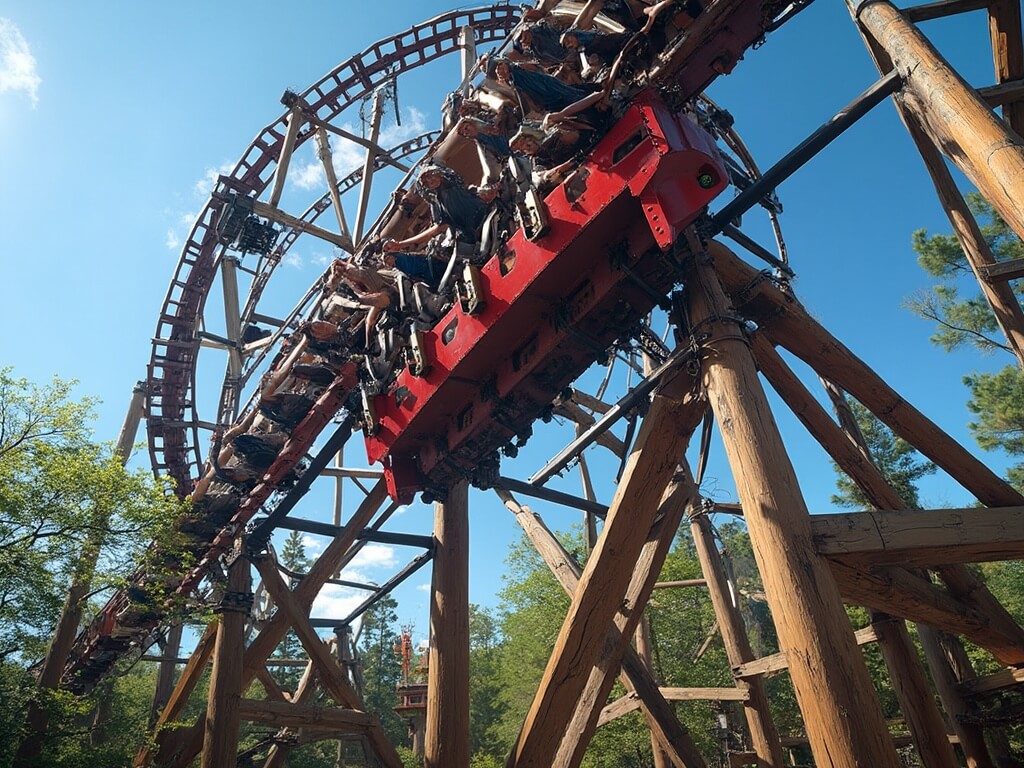
Wooden coasters traditionally follow a formula.
Outlaw Run ignored that rulebook entirely.
When it opened, it claimed the title of fastest wooden coaster in America at 68 miles per hour.
The 162-foot initial drop alone would have earned this coaster attention.
Add in three inversions and you’ve got something that shouldn’t theoretically work on a wooden structure.
Then the designers threw in their secret weapon: a 720-degree barrel roll.
I experienced something unexpected on Outlaw Run that most riders don’t anticipate: genuine airtime moments.
It’s simultaneously exhilarating and slightly terrifying in a way that’s hard to describe unless you’ve felt it.
What this means for you:
Outlaw Run is legitimately intense.
This isn’t a gateway coaster or a warm-up ride.
It’s a serious, world-class wooden coaster that demands respect.
WildFire: The Five-Inversion Beast That Demands Your Full Attention
Five inversions.
This is a steel coaster that attacks the problem of thrills with a direct, no-nonsense approach.
Loop, cobra roll, corkscrew, and two additional inversions combine to create 66 miles per hour of pure inversion-focused chaos.
There’s no downtime, no recovery moment, no chance to catch your breath between inversions.
What this means for you:
WildFire rewards confidence and punishes hesitation.
Front-row rides on WildFire are fundamentally different from back-row experiences—you get better sight lines to the inversions coming, which either increases your enjoyment or your anxiety depending on your personality type.
PowderKeg: Three Seconds That Redefine “Family Coaster”
Launched steel coasters work through a simple physics principle.
PowderKeg takes that principle and cranks it to eleven.
Zero to 53 miles per hour in under three seconds.
The 110-foot drop and 64-mile-per-hour maximum speed are secondary to that launch experience.
That launch absolutely humbles people who underestimate it.
What this means for you:
PowderKeg proves that “family coaster” doesn’t mean “tame coaster.”
This is the coaster that makes someone who claimed they “weren’t into roller coasters” come back asking for more.
Thunderation: The Mine Train That Actually Delivers
Thunderation represents something important: the acknowledgment that not every coaster needs to be extreme.
This mine-train-themed coaster runs at nearly 50 miles per hour down an 80-foot drop, moving through tunnels and around the actual Ozark scenery.
The mine setting is integral to understanding the experience.
What this means for you:
Thunderation is your coaster if you want genuine thrills without the extremity of WildFire or the disorientation of Time Traveler.
Grand Exposition Coaster and Fire In The Hole: The Entry Points Nobody Should Skip
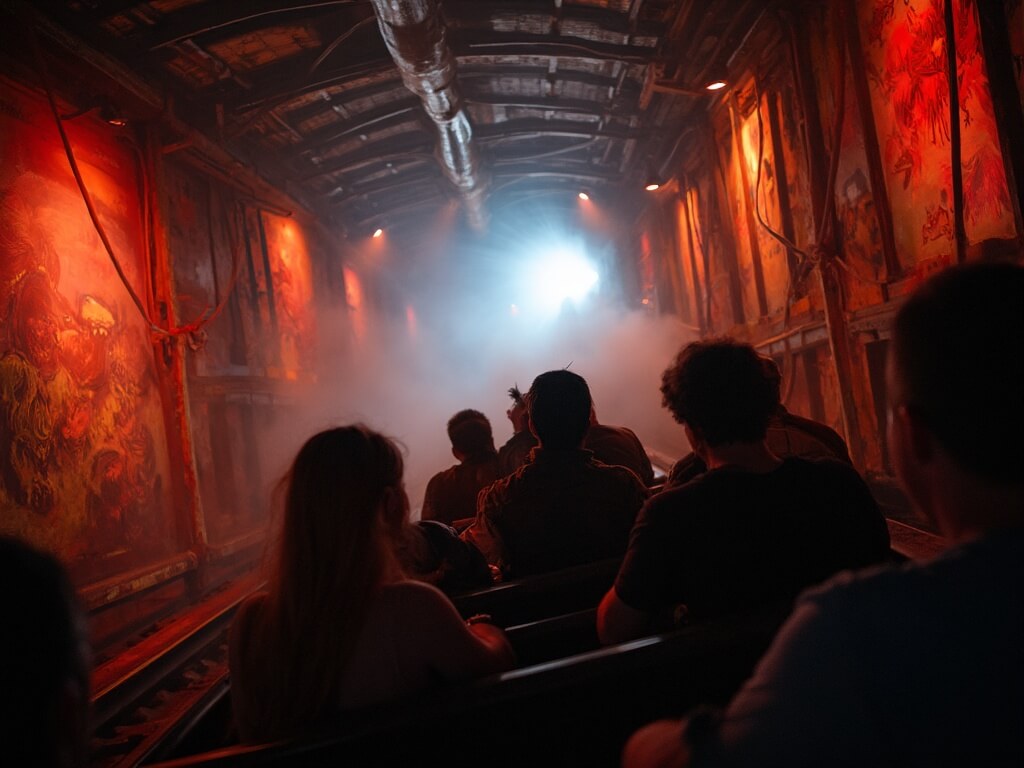
Grand Exposition Coaster sounds like a kids’ coaster.
It absolutely is.
But it’s a properly engineered, properly fun coaster that teaches young riders what coasters actually feel like.
Fire In The Hole operates differently: it’s a hybrid dark ride and coaster experience that combines storytelling with mechanical thrill.
What this means for you:
These two rides aren’t filler.
They serve genuine purposes in your day, whether you’re introducing a child to coasters or you want to experience something thematically different.
The Real Secret: How These Coasters Actually Work Together
Most theme parks build coasters independently.
Silver Dollar City approached this differently.
The seven coasters operate as a carefully calibrated system.
Each one builds on the previous experience, creating progression rather than random selections.
The historical 1880s theming isn’t just aesthetic window dressing—it connects all seven coasters into a cohesive narrative.
You’re not visiting a collection of coasters randomly placed in a theme park.
You’re experiencing a destination where coasters, scenery, history, and storytelling intertwine deliberately and meaningfully.
Beyond coasters, supporting attractions like Mystic River Falls and the Flooded Mine, plus live shows and craft demonstrations, maintain immersive quality all day.
The addition of White Water park and onsite resort lodging means you can structure entire vacations around this destination.
With world-class coaster innovation and thoughtful design, plan your next coaster experience with intention, not randomness.
Or, if you’re looking for more thrill-seeking fun, explore how to spend a day at Mall of America in Minnesota for a different twist on indoor coasters and family attractions.
Strategic Planning: Matching Coasters to Your Actual Comfort Level (Not Your Ego)
Here’s where most people mess up their Silver Dollar City visit.
They arrive with a predetermined hierarchy of coasters ranked by scariness, then they attempt them in that order regardless of whether it makes sense for their actual experience level or physical condition.
This approach almost always results in either regret, anxiety, or a genuinely miserable experience on a ride they weren’t ready for.
The smarter approach involves honest self-assessment before you even enter the park.
Ask yourself specific questions rather than vague ones.
Not “am I brave enough for this?” but rather “have I experienced sustained airtime before?” and “do I handle spinning sensations well?” and “what’s my actual tolerance for disorientation?”
These specifics matter infinitely more than generic bravery assessments.
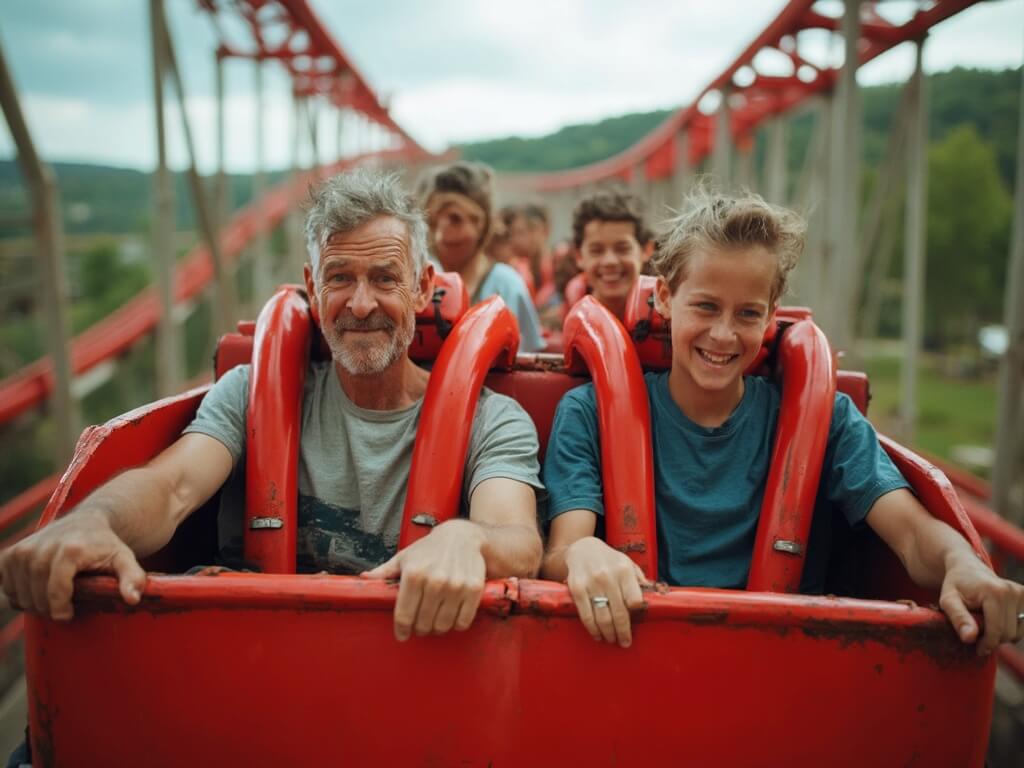
I watched a man in his sixties board Time Traveler after minimal coaster experience because his teenage grandson dared him to.
He lasted about forty seconds into the ride before his face went pale and he gripped the restraints with white-knuckled intensity for the remaining minute and twenty seconds.
He rode it, technically, but he spent the entire experience terrified rather than entertained.
This wasn’t a failure—he still got bragging rights—but it also wasn’t the optimal use of his day at Silver Dollar City.
Here’s a more rational framework:
If you’re a genuine coaster beginner: Start with Grand Exposition Coaster or Fire In The Hole. These aren’t concessions or participation trophies. They’re legitimate rides that teach your body and mind what coaster sensations actually feel like. You’ll move to Thunderation feeling confident rather than terrified.
If you have moderate coaster experience: PowderKeg and Thunderation are your warm-up rides. They deliver legitimate thrills without overwhelming complexity. Then move to Outlaw Run or WildFire depending on whether you prefer wooden or steel coasters. Time Traveler becomes a legitimate final challenge rather than an intimidating unknown.
If you’re an experienced coaster enthusiast: You probably already know you’ll hit all seven, but sequence matters even for veterans. Time Traveler’s disorientation gets worse if you’re already mentally fatigued. Hit it when you’re fresh and alert.
The height and health requirements exist for genuine safety reasons, not arbitrary limitations.
Ride operators have medical training and years of experience reading whether someone should actually board.
When they suggest an alternative or express concern, that’s expertise speaking, not caution.
Front Seat Versus Back Seat: Why Your Seat Position Actually Determines Your Experience
This detail separates casual riders from people who genuinely understand coasters.
Your seat position isn’t a trivial preference—it fundamentally changes which sensations you experience and how intensely you experience them.
Front-row seats offer:
- Complete sight lines to every element coming.
- You see inversions approaching, which increases anticipation and can amplify fear or excitement depending on personality.
- Maximum airtime on drops because you experience the full vertical distance before the track curves.
- Less whiplash and lateral force on turns because you’re at the pivot point.
- Less sensation of spinning on rides like Time Traveler because you can see the horizon.
Back-row seats deliver:
- Intensified airtime because you’re farthest from the pivot point.
- Amplified whipping sensations on sharp turns.
- Heightened spinning sensation on Time Traveler because the rear of the train rotates more dramatically.
- Less anticipation before inversions, which can increase the surprise factor.
- Different visual perspective that some riders find more immersive.
I learned this distinction the hard way by riding Outlaw Run in the front row first, then immediately getting back in line to experience the back row.
The airtime on the second drop was so dramatically different that I almost thought I was on a different coaster.
Back row: genuine moments of weightlessness where my lap bar was literally the only thing keeping me in my seat.
Front row: still thrilling, but controlled and predictable by comparison.
For Time Traveler specifically, back-row seats amplify the disorientation during spinning sections because you’re rotating more violently.
Strategic seat selection based on your goals:
- If you want to understand coaster engineering and structure, sit in front.
- If you want maximum physical sensation, sit in back.
- If you’re nervous, sit in front where you can see what’s happening.
- If you’re confident and want to be surprised, sit in back.
Wait Times: The Real Factor That Determines Your Day Success
Silver Dollar City rarely experiences the three-hour lines you’d find at Cedar Point or Disney World, which sounds positive until you realize what it actually means.
Most visitors arrive without a strategic plan, wandering randomly from coaster to coaster, hitting popular rides whenever they feel like it.
This creates unpredictable crowding patterns that can waste hours of your day even though the park isn’t technically packed.
The reality: Time Traveler and Outlaw Run draw lines immediately after the park opens and never truly empty.
These are the must-hit coasters for most visitors, which means they’re consistently the slowest rides to queue for.
Strategic timing for minimal wait:
- Arrive early and hit Time Traveler or Outlaw Run first thing.
- Most people spend their first hour exploring the park rather than immediately jumping into lines.
- Mid-afternoon (roughly 2 PM to 4 PM) is traditionally quieter.
- After rain or during off-season weekdays, the entire park experiences dramatically reduced lines.
I visited during a random Tuesday in May and experienced virtually no waits for any coaster.
Total time spent waiting: maybe thirty minutes across an entire day.
Compare that to an average Saturday where you’d spend multiple hours just standing in line.
The TrailBlazer Pass reality:
Silver Dollar City offers TrailBlazer passes for priority access to major coasters.
These passes genuinely work.
The calculation is simple: if you value your time at anything above minimum wage, the pass pays for itself by eliminating wait time you’d otherwise spend standing around.
For more depth, check out the Silver Dollar City Roller Coasters Guide and Ranking All Silver Dollar City Roller Coasters.
Also explore other adventures like hiking to Delicate Arch or walking the beaches of the Oregon Coast.