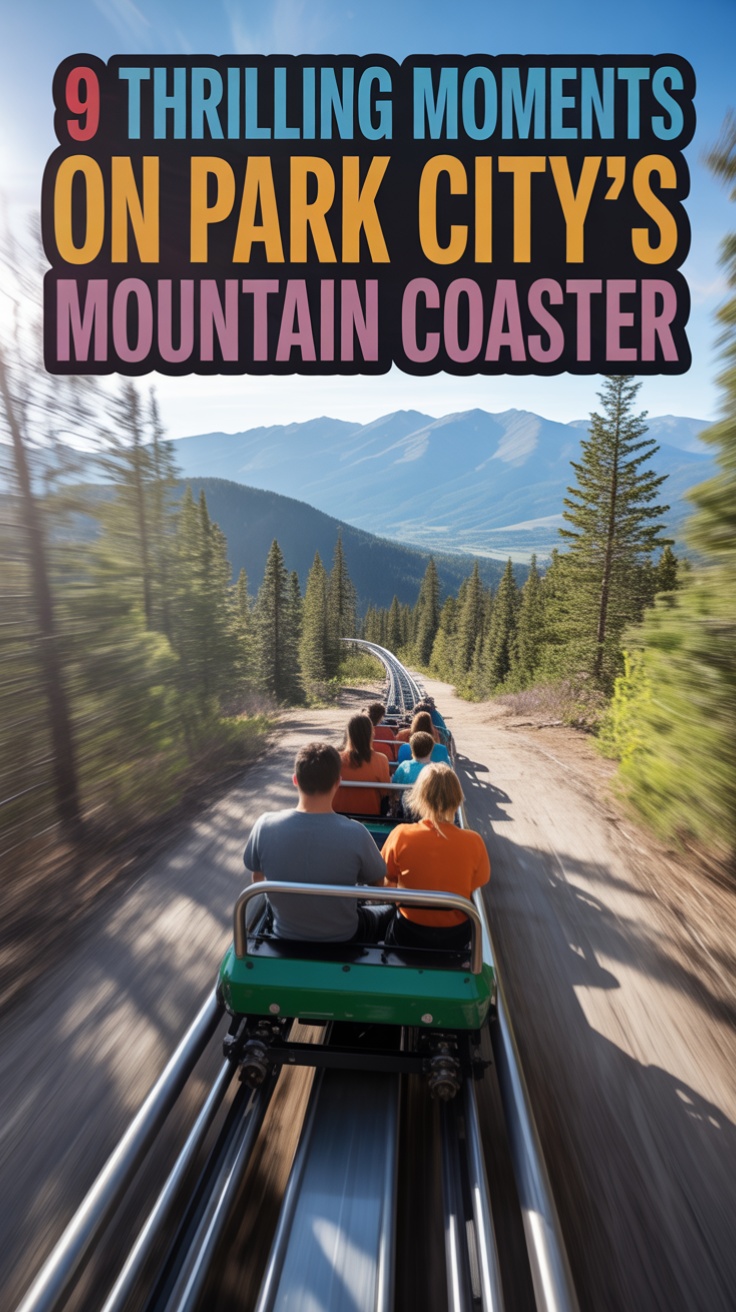
You’re standing at the base of Park City Mountain Resort on a June afternoon.
The Wasatch Mountains tower above you.
Your kids are buzzing with energy.
You’re wondering if this Park City alpine coaster is actually worth the hype, or if it’s just another tourist trap designed to drain your wallet.
Here’s the thing: it’s neither.
The Park City Mountain Coaster sits at the intersection of two things most people think are mutually exclusive—genuine thrills and genuine safety.
You get control over your own destiny here, which changes everything.
What Exactly Is This Coaster, and Why Should You Care?
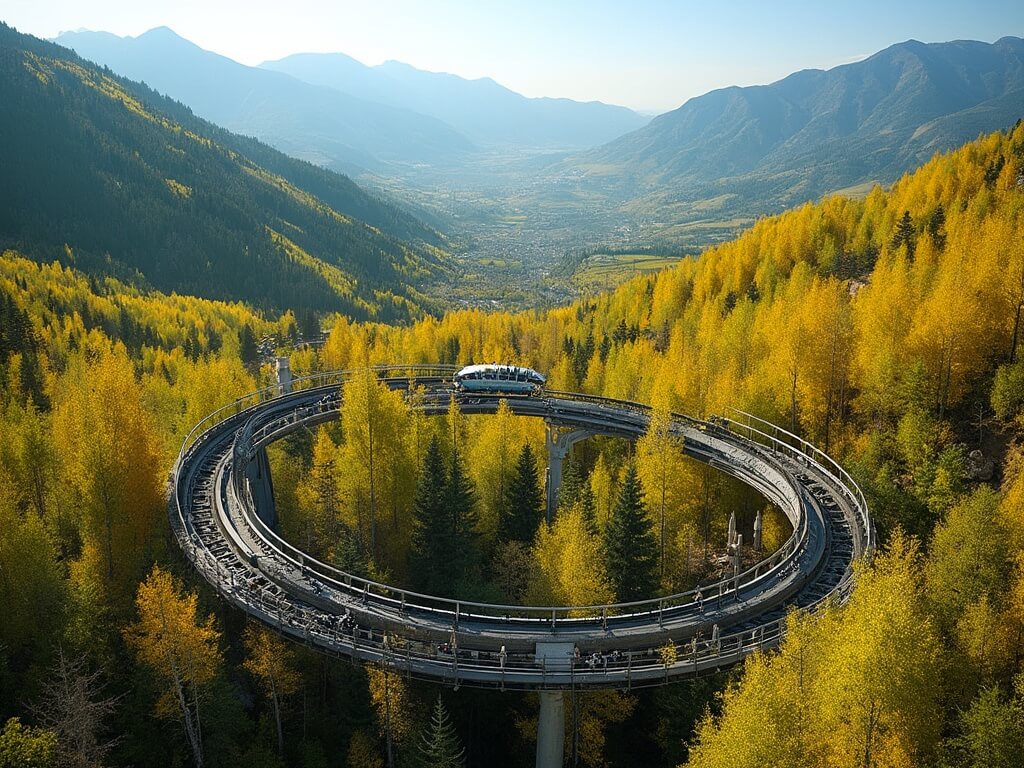
The mountain coaster in Park City is one of the longest alpine coasters in North America.
We’re talking about over 4,000 feet of elevated track—roughly a mile—that winds through dense aspen groves and opens up to panoramic views of the surrounding peaks.
It’s not your typical theme park roller coaster bolted to concrete in a parking lot.
This thing sits in the actual mountains.
The track winds through real forest.
You’re not screaming through a fabricated experience; you’re descending a genuine alpine pathway at speeds that feel fast without being reckless.
Maximum speed tops out around 25 to 30 mph depending on how much brake pressure you apply, which is the key distinction here.
You’re not a passive passenger strapped into a predetermined experience.
You’re an active participant controlling your own descent.
That fundamental difference matters more than you’d think.
It shifts the entire psychological dynamic of the ride from “hold on and hope” to “I’m making this happen.”
The Setup: How This Thing Actually Works
Let me walk you through the mechanics, because understanding how the coaster operates removes a lot of the anxiety people have about trying it.
The ride uses individual or tandem sleds attached to an elevated monorail-style track system.
Think of it like a ski lift in reverse—except you’re going down instead of up, and you control your speed.
Here’s the process:
Getting to the top:
You board a scenic chairlift or belt-driven conveyor system that carries you and your sled up the mountain.
This ascent alone is worth the price for the views.
The climb takes a few minutes, and you’re getting acclimated to altitude whilst soaking in vistas that stretch across multiple valleys.
The actual ride:
Once you reach the starting gate, a staff member gives you a safety briefing that’s quick but thorough.
They explain how the hand-operated brake works.
You control your descent by pulling the brake handle toward you—more pressure equals slower speed.
Release it, and gravity does the work.
The track features banked turns, hairpin curves, and dips that create genuine excitement without the bone-jarring intensity of a traditional coaster.
There’s a flow to it.
You accelerate through open sections, brake through technical turns, then release again on the straightaways.
The entire descent takes about 3 to 5 minutes depending on how aggressive or conservative you ride it.
I experienced this firsthand last summer when I took my nephew up for his first time.
He was terrified before the ride, convinced he’d crash or lose control.
Midway through, something clicked.
He realized the sled stayed locked to the track no matter what—there was no way to derail—and his fear transformed into pure exhilaration.
By the bottom, he was shouting about doing it again.
That moment crystallized why this attraction works so well.
The perceived control is real, but the safety is absolute.
Year-Round Mountain Coaster Experiences
Here’s where Park City’s alpine coaster gets interesting beyond summer.
It operates year-round, and each season fundamentally changes the experience.
Summer riding is what most people experience first.
Green aspen forests surround the track, cooler mountain air hits your face on the descent, and the views expand for miles.
The ride feels fast and adventurous.
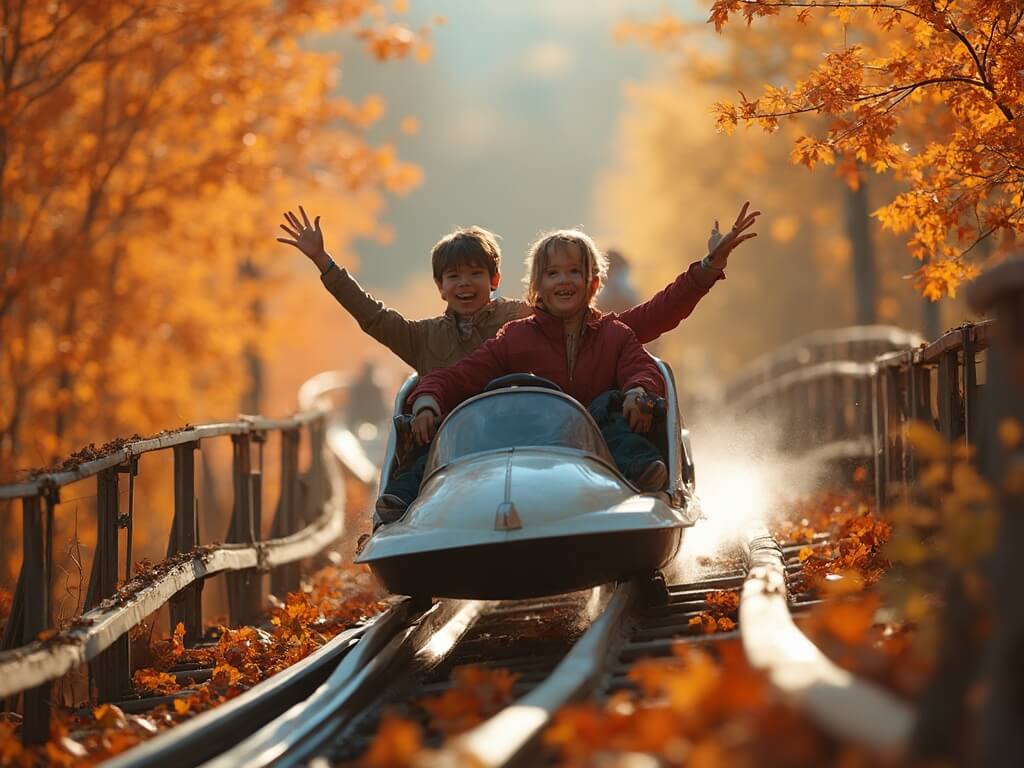
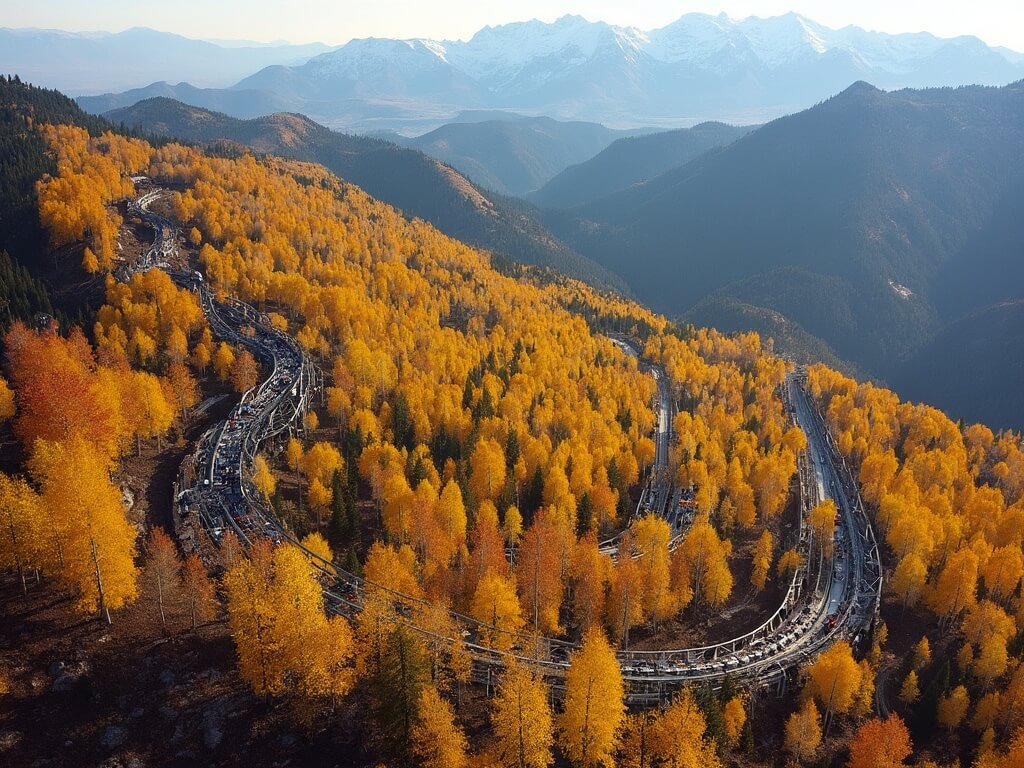
Fall transforms everything.
The aspens turn golden, then orange, then crimson.
The same track becomes a descent through a landscape that looks almost unreal.
Many regulars tell me they prefer autumn to summer, purely for the visual experience.
Winter is where things get genuinely different.
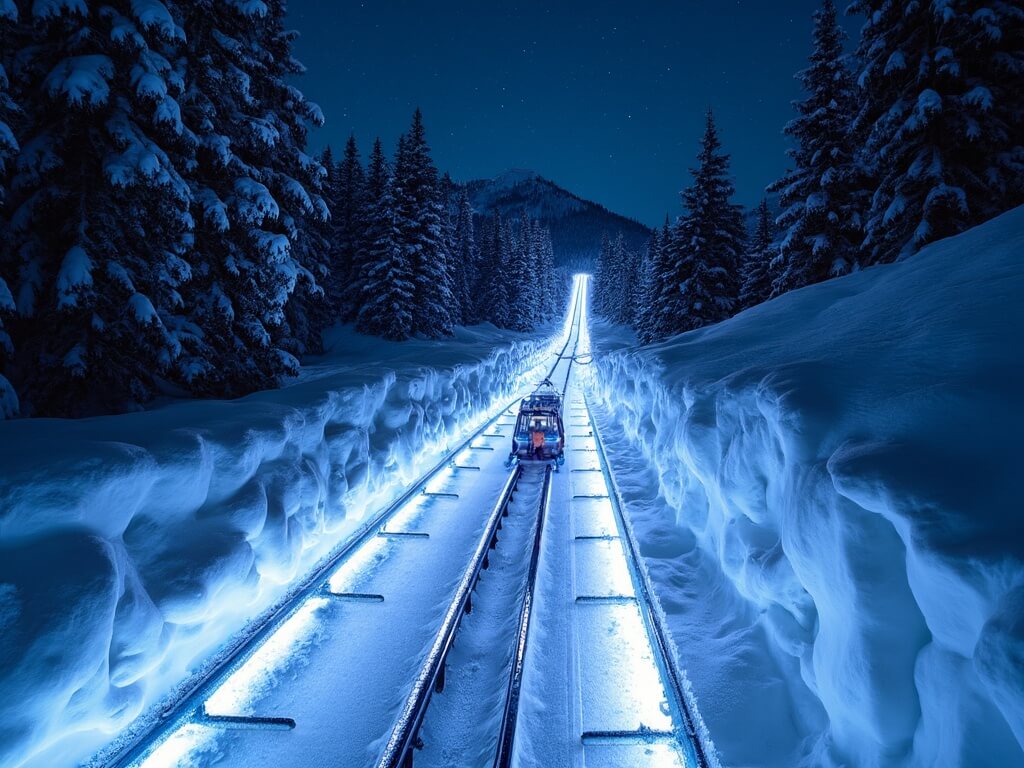
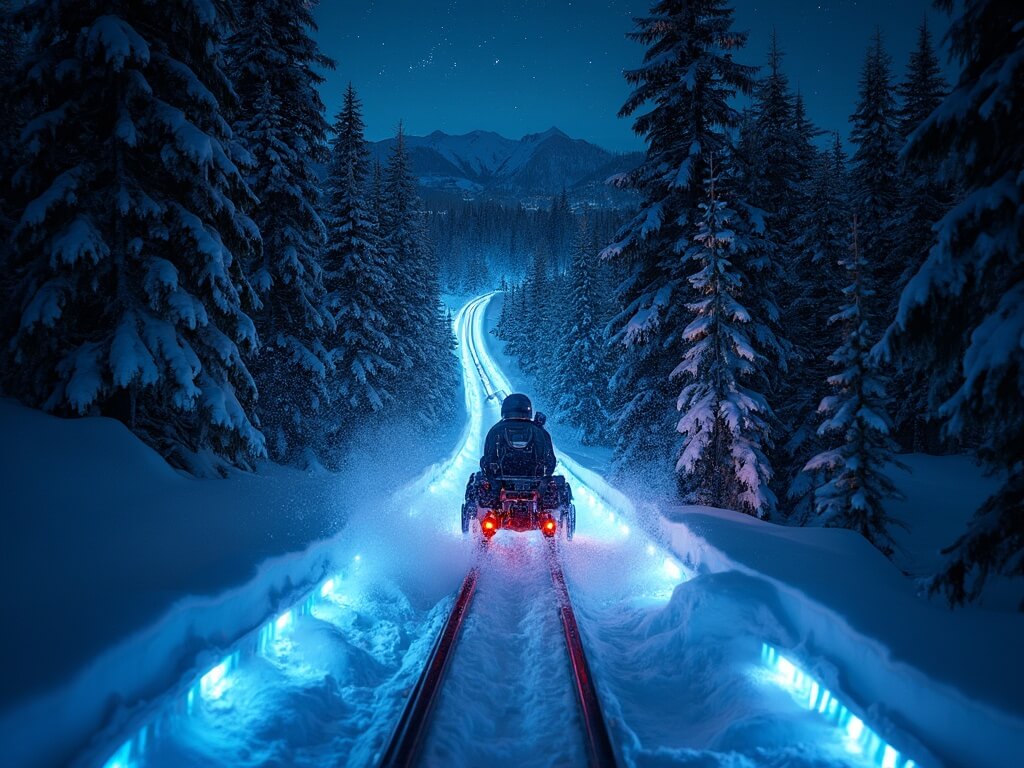
The resort illuminates the track for evening rides, turning the descent into something almost surreal.
Snow banks line the track, and riders descend through a glowing alpine corridor under the stars.
I haven’t experienced this personally yet, but friends who have describe it as utterly transformative—less like riding a coaster and more like navigating a winter wonderland on rails.
The point is this: the Park City Mountain Coaster isn’t a one-and-done attraction.
Each season justifies a return visit.
Who Can Actually Ride This Thing?
Before you get excited, let’s address the practical requirements because they matter.
The height restrictions are:
Minimum driver height: 54 inches
Passenger height: 38 to 53 inches
If you’re a passenger driver (meaning an adult controlling the sled with a smaller child as passenger), you need to be at least 16 years old and 54 inches tall
This isn’t arbitrary.
The height requirements exist because you need to reach the brake handle effectively and have enough body mass for safe sled operation.
Smaller riders can absolutely experience the coaster as passengers, but they need a capable operator managing the descent.
Safety features include:
Sleds are permanently fastened to the track system.
Hand brakes offer real-time speed control.
Staff provide thorough safety briefings before every ride.
Weather protocols shut down the coaster during lightning, heavy rain, or severe conditions.
That last point is important—you can’t ride during storms, which is actually a feature not a bug when you’re on an elevated metal track system.
Planning Your Visit to Park City’s Premier Alpine Coaster
Now let’s talk practical logistics because they directly impact your experience.
Operating hours typically run:
Summer: 10 AM to 8 PM on weekdays and Saturdays, with Sundays closing at 7 PM.
These hours flex seasonally, so check current schedules before planning your trip.
Ticketing works like this:
You can purchase single rides or bundled packages that combine the coaster with other Park City Mountain attractions like the alpine slide or zipline.
Buy tickets in advance online or same-day at the gate.
If you book online, bring the credit card used for your purchase.
Wait times are real during peak periods.
This is the trade-off with a genuinely popular attraction.
If you visit during school holidays, weekends, or the peak July-August window, expect queues of 30 minutes to over an hour during midday hours.
Strategic timing cuts wait times dramatically:
Early morning (right when they open at 10 AM) or late afternoon (after 5 PM) experience minimal lines.
Weekdays are quieter than weekends by a factor of three.
If you have flexibility in your schedule, ride before lunch or after dinner.
Pricing varies by package, but expect single ride costs in the $20 to $30 range depending on current rates and bundling options.
Group discounts exist for larger parties, and residents sometimes get local rates, so ask about what applies to you.
What Real People Say About This Ride
The mountain coaster in Park City consistently appears on “must-do” lists for both families and thrill-seekers, and the feedback pattern tells you something important.
People praise three things consistently:
The length and uniqueness of the experience.
Over a mile of track is genuinely long for an alpine coaster.
Most regional competitors run 800 to 1,200 feet.
Park City’s track feels substantial, not brief.
The combination of genuine thrills with stunning scenery.
You’re not riding through a strip mall parking lot like typical coasters.
The Wasatch Mountain views throughout the descent anchor the experience in something real and beautiful.
The feeling of control.
Riders repeatedly mention that controlling their own speed transforms the psychology of the ride.
It shifts from passive fear to active engagement.
The constructive criticism centers on two points:
Wait times during peak periods can genuinely frustrate families.
Some riders feel the descent ends too quickly despite its length, particularly if they ride aggressively and hit the bottom in under 3 minutes.
These aren’t flaws with the attraction itself—they’re just the reality of visiting a wildly popular park city mountain coaster during summer months.
The Real Strengths and Actual Limitations
Let me be straight about what works and what doesn’t with this attraction.
The genuine strengths:
The customizable thrill level means 6-year-olds and 60-year-olds can enjoy the same ride at appropriate intensities.
Year-round operation with seasonal variations gives it legitimate replay value.
The views alone justify the cost for photography enthusiasts.
The secure track attachment eliminates the psychological anxiety some people have about coasters.
It genuinely connects families and groups through a shared experience.
The real limitations:
Long wait times aren’t hypothetical—they’re regular occurrences during peak periods.
Certain physical conditions or mobility challenges make the ride inaccessible.
The cost adds up quickly for large families across multiple rides.
Bad weather closes the ride entirely, which matters if you’re visiting during Utah’s monsoonal summer storms.
Knowing these beforehand helps you set realistic expectations.
Now that you understand what the Park City alpine coaster actually is, how it operates, who can ride it, and what people actually experience when they get down from that first descent, the next layer of planning becomes essential—because showing up unprepared to a popular mountain attraction in high summer is how you waste an afternoon and drain your holiday budget.
If you’re interested in comparing this to other scenic coaster experiences, check out our guide on taking the Cog Railway to the top of Pikes Peak.
What to Bring, What to Skip, and What Actually Matters
You’ve now decided to visit.
You’re checking the calendar.
You’re thinking about logistics.
Here’s where most people get it wrong—they overthink what to pack and underthink what actually impacts their experience.
Sunscreen is non-negotiable.
You’re at elevation in the mountains with minimal shade during the descent.
Alpine UV exposure is no joke.
Apply it 15 minutes before riding, not at the gate.
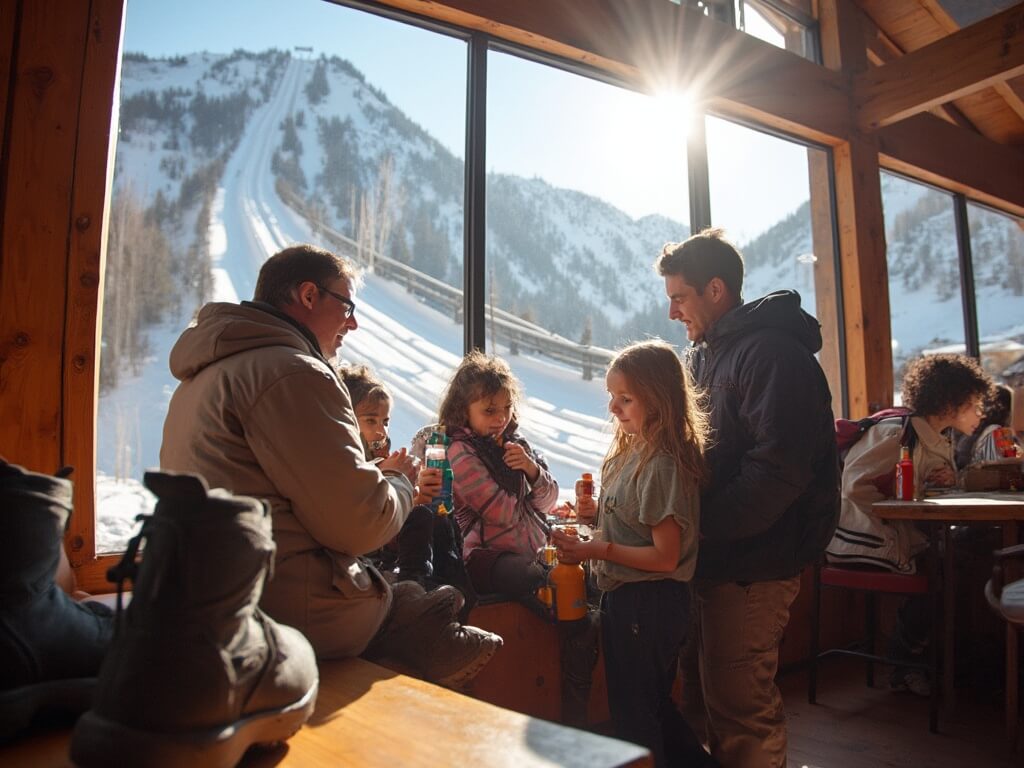
Water matters more than you think.
Altitude dehydration sneaks up on you at 9,000+ feet.
Drink before you ride, not just after.
The resort has water stations, but they’re not always convenient.
Loose items need to be secured or left behind.
Phones, keys, glasses—anything that might fall during the ride.
The resort provides secure lockers, but many people ignore them and regret it halfway down the mountain.
Wear appropriate seasonal clothing.
In summer, lighter layers work better than you’d expect.
In winter, waterproof outerwear becomes essential.
Shoes with actual grip matter.
Hiking boots or quality sneakers work.
Flip-flops and sandals don’t, and staff will turn you away.
Leave your expectations about photo quality at home.
Bring a GoPro or have someone photograph you from the bottom for scenic and personal keepsakes.
Bring less than you think you need, but pack the essentials before you arrive. Park City Mountain Alpine Coaster summer activities include more than just the ride.
Combining the Coaster With Other Park City Mountain Activities
The mountain coaster isn’t a standalone attraction—it’s the centerpiece of a broader ecosystem of summer activities at Park City Mountain Resort.
The Alpine Slide pairs perfectly with the coaster.
It delivers a bobsled-style descent through a concrete chute. The mechanics and feel are different enough not to feel repetitive.
The zipline experience complements both.
Zipping through the forest canopy adds horizontal velocity and another layer of thrill.
Timing these activities strategically prevents excessive waiting and fatigue.
Arrive at opening, ride the coaster, take a break, do the alpine slide midafternoon, and return to the coaster later.
Full-day packages offer genuine savings.
Bundled tickets often save 20 to 30 percent over individual rides.
Learn more from this Park City Mountain Coaster guide and tips for maximizing your experience.
Weather Considerations: When Nature Dictates Your Plans
Summer monsoon season (July–September) brings afternoon thunderstorms.
These close the coaster immediately due to lightning risk.
The timing pattern is predictable:
Ride in the morning for better weather reliability.
Winter weather enhances the ride.
Ride operates during snow, and night rides through fresh snow are magical.
Spring and fall offer the most reliable weather.
Less disruption, fewer crowds, and better track conditions.
Check real-time forecasts before heading up.
The resort’s weather predictions are accurate—trust them.
Understanding the Speed, Intensity, and How It Compares to Traditional Coasters
Compared to theme park coasters, it’s milder.
Max speed is around 25–30 mph—no inversions or flips.
But the thrill comes from interaction with terrain.
Open-air speed, self-controlled descent, and lateral g-forces keep your adrenaline engaged.
Park City’s coaster is among the longest in North America.
With over 4,000 feet of track, it’s more technical and immersive than others.
The intensity scales with your control.
Brake less for more speed or ride conservatively for scenery.
Night Rides and Seasonal Variations That Change Everything
Winter night rides are entirely different experiences.
The track is illuminated, and the darkness amplifies speed perception.
Fall offers breathtaking visual experiences.
Golden aspens turn the ride into a dreamlike journey.
Spring has the smoothest track and best weather reliability.
Early summer hits a sweet spot.
Clear weather, fresh conditions, and smaller crowds before school lets out.
Accessibility and Physical Considerations: Being Honest About Limitations
Physical requirements include:
Mobility to transfer, balance for the lift, and strength to operate brakes.
Sensory and cognitive concerns matter too.
Rapid directional changes and altitude exposure may be difficult for some.
Resort staff help assess suitability honestly and supportively.
Call ahead and describe your specific needs.
Budget Planning: What This Actually Costs and Where Your Money Goes
Coaster rides cost $25 to $35 per person.
Budget accordingly—this adds up for families.
Example scenario for family of four:
8 coaster rides + 4 alpine slides + lunch + parking = $375–$420.
Strategic savings tips:
- Book combo packages
- Use season passes or local discounts
- Visit on weekdays or shoulder seasons for lower wait times
Final Decisions: How to Know If This Is Actually Right for Your Situation
Ride the Park City Alpine Coaster if:
- You want a scenic and thrilling outdoor activity
- You’re flexible with weather timing
- You want to combine attractions into a full-day experience
Skip or reconsider if:
- You require extreme thrills only
- You have mobility or anxiety limitations without accommodations
- Your budget or schedule doesn’t allow flexibility
Making It Happen: Booking, Showing Up, and Maximizing Your Experience
Book early and online for discounts and guaranteed entry.
Use the same credit card you booked with for check-in.
Arrive 15 minutes before your reserved time.
Late arrivals may miss their slot.
Apply sunscreen early, use the lodge facilities, and listen to the safety briefing.
Ride conservatively the first time, then push your limits the second.
This balance creates the most enjoyable experience.
The Real Takeaway: Why This Matters Beyond Just a Ride
The ride offers more than thrills—it delivers connection, confidence, and lasting memories.
Whether it’s your child’s first adrenaline rush or your own rediscovery of adventure, you’ll remember the moment.
Whether you visit for the scenery, the speed, the seasons, or the sense of accomplishment, the Park City Mountain Coaster consistently offers something that matters.
It’s worth it.
Plan your trip, book your ticket, and enjoy one of the most memorable experiences in Utah.
Explore More Adventures Nearby:
- Hike to Delicate Arch in Arches National Park
- Visit the National Civil Rights Museum in Memphis
- Spend a Day at Mall of America in Minnesota
- Walk the Beaches of the Oregon Coast
- Drive the Hana Highway in Maui