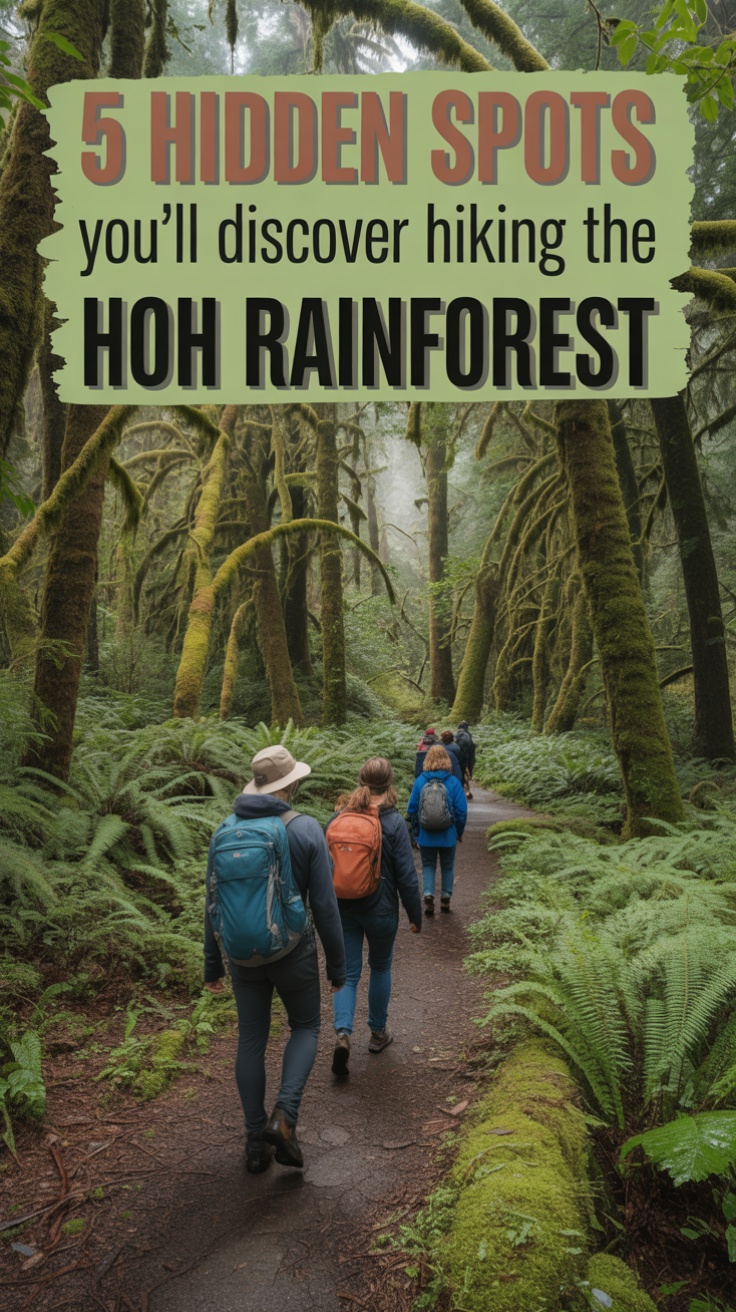
You’ve probably heard someone mention Olympic National Park’s Hoh Rainforest and thought: sounds magical, sounds wet, sounds complicated.
Let me cut through that.
The Hoh Rainforest hiking experience isn’t complicated at all—it’s just different from what most people expect.
This place receives 12 to 14 feet of rainfall annually, which makes it the wettest destination in the Lower 48 states.
That’s not hyperbole.
That’s not marketing speak.
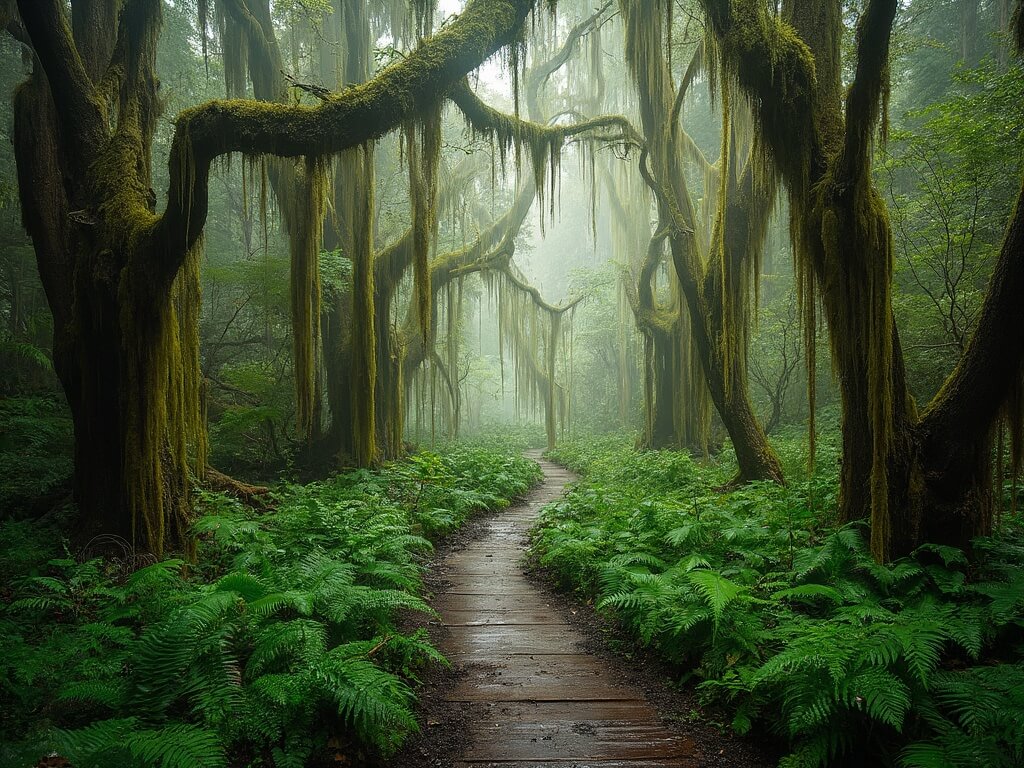
That’s moss so thick on trees it looks like something from a fairy tale, except it’s real and it’s waiting for you on the west side of Olympic National Park.
Why the Hoh Rainforest Matters More Than Just Being Pretty
Here’s the thing nobody tells you: the Hoh Rainforest isn’t just beautiful because it happens to be beautiful.
It’s a UNESCO World Heritage Site and an International Biosphere Reserve for a reason.
This temperate rainforest is one of the largest in the entire United States, and it’s home to old-growth Sitka spruce and bigleaf maple trees that reach 300 feet into the sky.
Some of these trees have been standing for centuries.
They’ve survived storms, droughts, and climate shifts that would have wiped out lesser forests.
The forest protects habitat for Roosevelt elk, black bears, mountain lions, and countless other species that exist nowhere else quite like this.
Beyond the ecology, this land holds deep cultural significance for Indigenous peoples who’ve lived on the Olympic Peninsula for millennia.
Understanding that context changes how you move through the forest.
You’re not just taking a walk.
You’re entering something ancient.
Getting There: It’s Closer Than You Think
I’ll be honest—I almost didn’t go because I thought it was too far.
I was staying in Port Angeles, and the drive felt daunting until I realized it’s only about two hours.
If you’re coming from Forks, you’re looking at under an hour.
That single moment—realizing how accessible this actually was—changed my weekend plans entirely.
The Hoh Rainforest Visitor Center sits at the end of Upper Hoh Road, and it’s open year-round, though the hours get limited between January and early March.
That’s worth knowing if you’re planning a winter visit.
The visitor center has parking, restrooms, and a picnic area, which sounds basic until you realise these facilities are your anchor point before heading into the forest.
Here’s what you need to know about access:
- Drive time from Port Angeles: approximately 2 hours
- Drive time from Forks: under 1 hour
- Entrance fee: $30 per vehicle per week (America the Beautiful Pass accepted)
- Year-round access, though reduced visitor center hours January–March
- Cell service is essentially non-existent near trailheads
The Trail System: Short Walks to Deep Immersion
This is where the Hoh Rainforest reveals its best secret: there’s something here for everyone.
You don’t need to be an experienced backpacker to experience this ecosystem.
You don’t need mountaineering skills or fancy gear.
What you do need is the right trail for your goals.
The Short Routes (Perfect for Families and First-Timers)
The Hall of Mosses Trail is the headline attraction, and for good reason.
It’s 0.8 to 1.1 miles in a loop, gains less than 100 feet of elevation, and takes most people between 30 and 60 minutes.
The trail winds through Maple Grove, where bigleaf maple trees draped in moss create a primeval atmosphere that honestly looks like someone Photoshopped it to be more beautiful than reality allows.
I remember standing in front of these trees thinking the photographs I’d seen online had somehow undersold them.
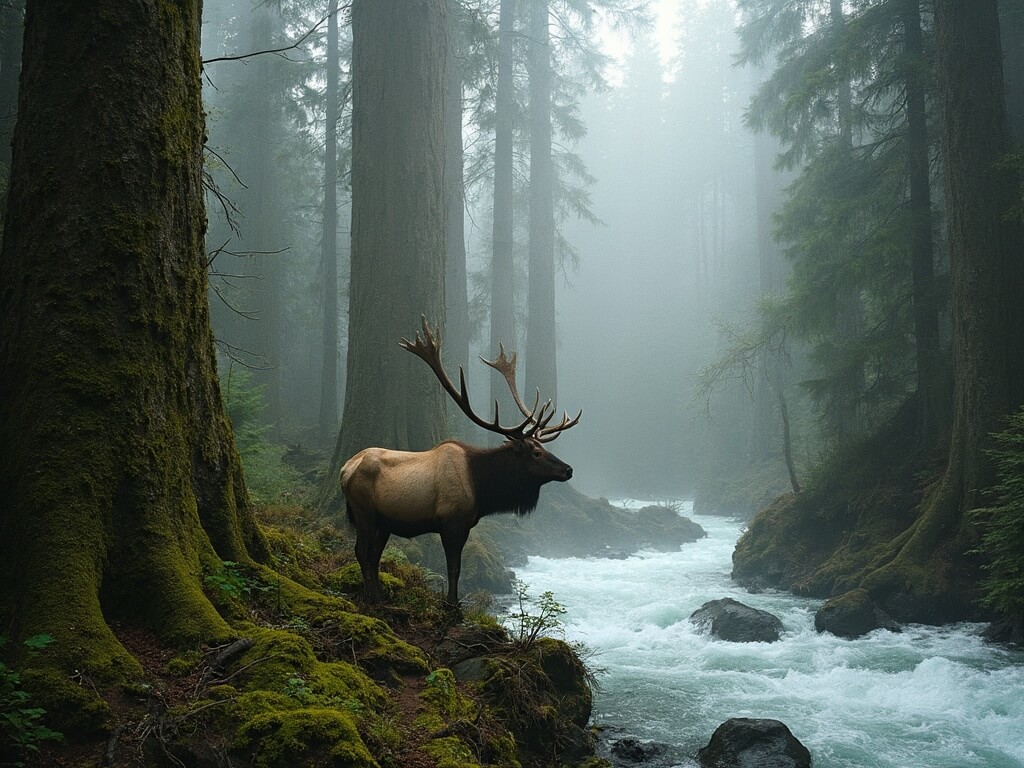
The moss doesn’t just coat the branches—it hangs like curtains, so thick you can barely see the bark underneath.
Streams run alongside the path, ferns crowd the forest floor, and everything smells like wet earth and growing things.
This trail pulls serious crowds, especially during summer and holidays.
I learned this the hard way by showing up mid-morning in July.
If you’re visiting during peak season, arrive early.
That’s not a suggestion—it’s the difference between a meditative walk and a crowded queue disguised as a nature trail.
The Spruce Nature Trail offers an alternative.
It’s 1.2 to 1.25 miles, loops through a mix of old and new forest, and offers river views without the same density of visitors.
You’ll still see moss-draped trees, but you’ll see them with breathing room.
There’s also a solid chance of spotting Roosevelt elk on this trail.
The Long Route (For People Who Want to Disappear)
The Hoh River Trail stretches 17 to 18 miles one way, which sounds intimidating until you realize you can customise your distance entirely.
You don’t have to hike the full length to get the experience.
Many people do 5 miles out and back.
Some do 10.
The dedicated few go all the way to Hoh Lake, where the forest opens up to alpine country.
Along the way, you hit specific landmarks:
- Mineral Creek Falls at 2.7 miles
- Cedar Grove at 4 miles
- 5-Mile Island at 5 miles
Each checkpoint offers a natural turnaround point if you’re doing a day hike, or a spot to camp if you’re backpacking.
I’ve walked sections of this trail multiple times, and the experience shifts dramatically depending on how far you venture.
At 2 miles, you feel like you’re still connected to civilization.
By 5 miles, the forest has completely absorbed you.
By 10 miles, you understand why this section of forest was chosen as part of the “One Square Inch of Silence” project—a research initiative studying soundscapes in the most pristine natural areas.
The deeper you go, the quieter it gets.
Not empty-quiet.
Alive-quiet.
Full of bird calls, rushing water, and wind through trees, but absent the hum of human infrastructure.
What Makes These Trails Feel Different From Anywhere Else
The temperate rainforest hike is a completely different sensory experience than hiking in, say, the Rockies or the desert Southwest.
The density of green is almost overwhelming at first.
Everything is damp.
Not just the ground—the air itself feels saturated with moisture.
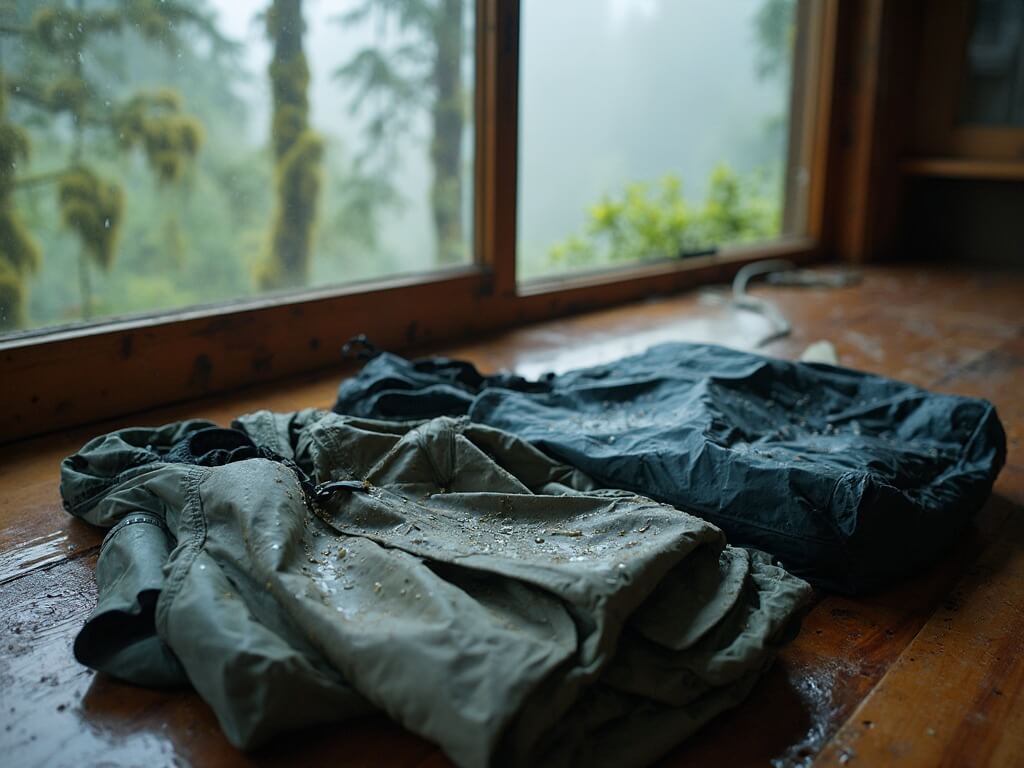
Your clothes don’t dry even when it’s not actively raining.
The smell is distinctive: rich, earthy, slightly sweet from decomposing vegetation.
Old-growth forests cycle nutrients differently than younger forests, and you can sense that difference immediately.
Visibility changes, too.
You’re not hiking through open vistas with dramatic distant views.
You’re hiking through layered forest where the view extends maybe 50 feet in any direction before trees and moss absorb the light.
This forces a different pace of travel and a different quality of attention.
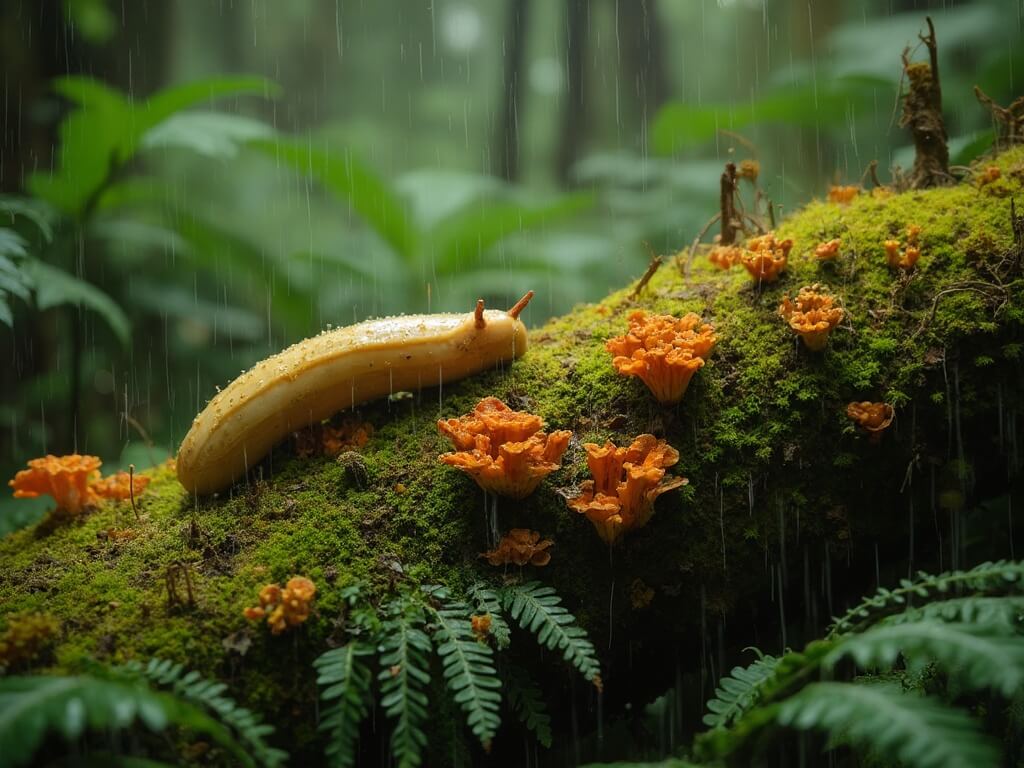
You notice smaller things: a slug the size of your hand, a fallen log completely colonized by ferns and fungi, the architecture of spider webs made visible by morning moisture.
Wildlife: What You’ll See (And What You Won’t)
Roosevelt elk live in this forest. Black bears hunt here. Mountain lions prowl the deeper sections.
Here’s what matters: on popular trails like Hall of Mosses, you’re unlikely to encounter anything larger than a banana slug.
The crowds keep most wildlife at a distance.
That’s not a bad thing—it’s actually a necessary trade-off in a place this popular.
If you do see elk, they’re usually docile but territorial during breeding season.
Park regulations require you to keep at least 100 feet away, which gives you a safety buffer and the animals space to exist undisturbed.
Never approach wildlife for photos. Never break the distance rule.
I watched someone ignore this advice once, and within minutes a herd of elk shifted from calm to agitated.
The moment didn’t end badly, but it easily could have.
Basic wildlife safety comes down to three things:
- Stay on established trails (they’re rugged, rooty, and muddy, so closed-toe shoes are non-negotiable)
- Keep distance from any animal you encounter
- Store food securely if camping, especially if you’re doing the Hoh River Trail backpacking route
Dogs are not permitted on any Hoh Rainforest trails, which protects both wildlife and human safety.
I know that disappoints people who want to bring their dogs, but it’s one of the few firm rules for good reason.
When to Visit: Rain Is the Feature, Not the Bug
Here’s the uncomfortable truth: you’re going to get wet.
Maybe not soaking wet if you time it perfectly, but damp at minimum.
The Hoh Rainforest receives rainfall especially October through April, but honestly, any month can surprise you.
The forest’s existence depends on consistent moisture year-round.
That moisture includes rain.
Raincoats are required gear regardless of season.
Waterproof pack covers matter.
Quick-dry clothing beats jeans.
But here’s the flip side: autumn is genuinely spectacular.
The changing foliage adds colour to all that green.
The visitor numbers drop significantly.
The weather is still cool and damp but less aggressively rainy than winter months.
If I could plan the perfect Hoh Rainforest hike, it would be late September through October.
Cool enough that exertion doesn’t leave you overheated inside a raincoat, dry enough that you’re not wading through ankle-deep mud, and quiet enough that you can actually hear the forest.
The trails remain open year-round, which is genuinely impressive given the rainfall.
Park maintenance crews work constantly to keep the paths passable.
You won’t encounter snow at lower elevations like the Hall of Mosses, but the trails are muddier in winter and early spring than any other season.
Spring (March through May) brings wildflowers and snowmelt rush in the rivers—beautiful but aggressive.
Summer draws crowds but offers the most reliable weather windows.
Winter offers solitude if you’re prepared for serious dampness and isolation.
Peak season reality:
- Summer and holidays bring heavy crowds, especially to Hall of Mosses
- Early morning visits (arrive before 9 AM) significantly improve the experience
- Visitor center reduced hours January through early March
- Autumn offers the best balance of weather, crowds, and scenery
The decision of when to visit ultimately depends on what you prioritize: solitude, weather reliability, or seasonal scenery.
Love coastal hikes too? You might also enjoy walking the beaches of the Oregon Coast.
Looking to bring that lush, mossy vibe home? Check out rustic backyard ideas for inspiration.
What to Pack: The Gear That Actually Matters
I made a mistake on my first Hoh Rainforest visit.
I packed light because I thought I was only doing the Hall of Mosses—a quick 45-minute walk, right?
By mile 0.5, I realized I’d underestimated how wet everything gets.
Not from rain, though that came later.
From the forest itself.
Moisture drips from trees, condenses on vegetation, clings to your clothes.
By the end, I was damp in a way that made me understand why gear matters here differently than other hikes.
Essential packing list for any Hoh Rainforest hike:
- Waterproof rain jacket (not just water-resistant—waterproof)
- Pack rain cover or waterproof pack liner
- Closed-toe hiking boots with good traction (the roots are slippery)
- Quick-dry clothing (merino wool layers work better than cotton)
- Extra socks (they will get damp)
- Waterproof bag for electronics and valuables
- Insect repellent (mosquitoes appreciate the moisture as much as the moss)
- Sunscreen (moss-filtered light still burns)
- Snacks and water (two litres minimum for half-day hikes)
For the Hoh River Trail backpacking trips, add a quality three-season tent with good ventilation (condensation is real), a sleeping pad that handles moisture, and a bear-proof food canister or hang system.
The park requires specific food storage methods in backcountry campsites.
Primitive campsites have bear boxes at some locations, but don’t assume—check with the visitor center before you go.
The difference between a miserable hike and an excellent one often comes down to one simple decision: did you bring the right rain gear?
I’ve seen hikers turn back in light drizzle wearing inadequate jackets.
I’ve seen others push through heavier rain in proper gear and have the time of their lives.
The forest doesn’t care about your comfort level.
It will be wet.
Proper gear transforms wet from punishment into atmosphere.
The Visitor Center: Your Real Starting Point
Most people treat the visitor center like an optional pit stop.
That’s a mistake.
The Hoh Rainforest Visitor Center sits at 578 feet elevation and functions as both a resource hub and a gateway to understanding what you’re about to experience.
Rangers staff it seasonally and can provide real-time trail conditions, wildlife updates, and detailed maps that extend beyond what’s available online.
I remember asking a ranger about recent elk activity on the Spruce Nature Trail, and she provided specific information about where a herd had been spotted that morning.
That single detail changed my hike from a generic walk to a focused wildlife observation opportunity.
The visitor center also displays exhibits on forest ecology, Indigenous history, and the science behind why this specific patch of Washington State receives more rain than almost anywhere else in the continental United States.
The exhibits are genuinely well done—they’re not just educational, they’re compelling.
Spending 20 minutes inside actually deepens your appreciation for what you’re about to walk through.
There’s also a small bookstore stocked with trail guides, natural history books, and other resources for people who want to dive deeper into rainforest ecology.
Key visitor center details:
- Open year-round with seasonal hour reductions January–early March
- Free entry beyond the park entrance fee
- Parking lot fills quickly during peak season (arrive early)
- Restrooms and water available
- Picnic area for before or after-hike meals
- Ranger talks scheduled seasonally
The visitor center closes by late afternoon, so plan accordingly if you’re arriving for an afternoon hike.
Missing the opportunity to talk with rangers who know the forest intimately is a genuine loss.
They’ve seen everything: unusual wildlife behaviour, seasonal patterns, rare plant sightings.
Their knowledge compounds your experience exponentially.
Beyond Hall of Mosses: Why Diversifying Your Visit Changes Everything
Hall of Mosses dominates the Hoh Rainforest narrative so completely that many visitors assume it’s the only worthwhile destination.
They hike it, cross it off their list, and leave feeling satisfied but somehow incomplete.
That’s because Hall of Mosses, while stunning, represents just a thin slice of what the rainforest offers.
The Spruce Nature Trail feels like a secret even though it’s well-marked and maintained.
Fewer people means more peace, which paradoxically makes the moss-draped trees more impactful.
Without crowds, you notice sounds you’d otherwise miss: the drip of water from high canopy, the rustle of Roosevelt elk in distant ferns, the chirp of varied thrushes.
The Hoh River Trail operates on an entirely different scale.
It’s not an alternative to Hall of Mosses.
It’s an alternative reality of the same forest.
Where Hall of Mosses is intimate and compressed, the Hoh River Trail is expansive and gradually revealing.
You start in dense old-growth forest and gradually understand its scale as you walk deeper.
At 2 miles, you’re still oriented toward the trailhead.
At 5 miles, the forest has fundamentally shifted your perspective.
At 10 miles, you’re not just visiting the rainforest—you’re inhabiting it.
This progression matters because most people never experience it.
Most people do Hall of Mosses and assume they’ve seen what the Hoh has to offer.
They haven’t.
They’ve seen the highlight reel of a film, but they haven’t watched the actual movie.
The question isn’t whether the longer trails are worth your time.
The question is whether you want the full experience or just the postcard version.
Backpacking the Hoh River Trail: When a Day Hike Isn’t Enough
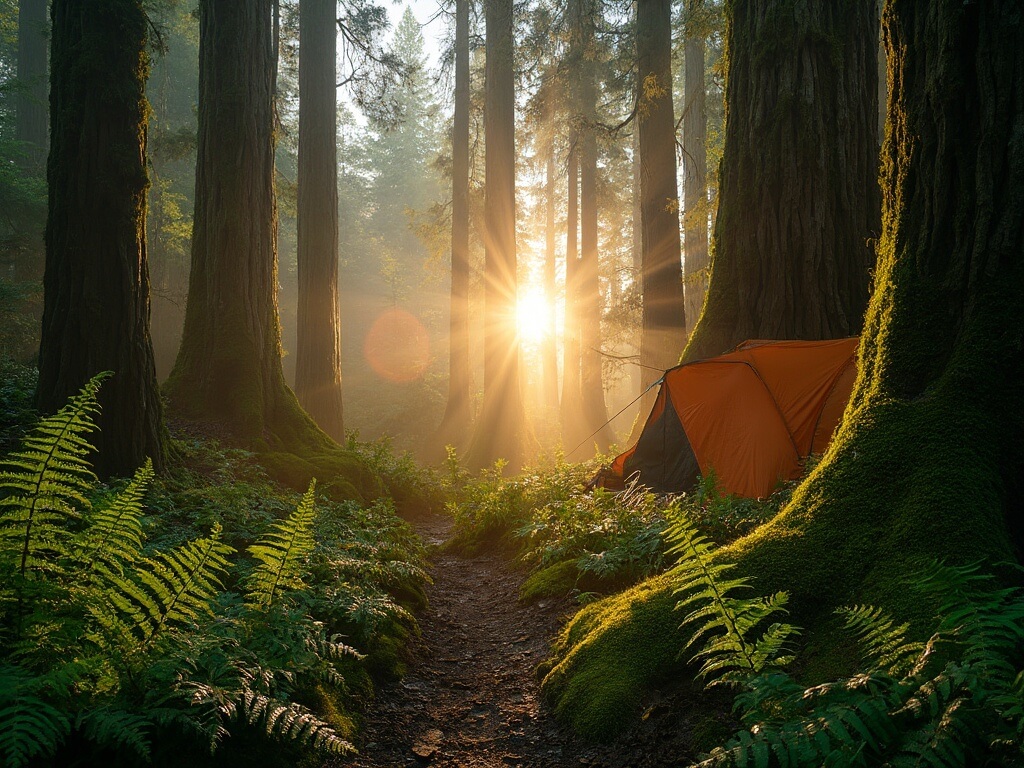
I remember standing at 10 miles on the Hoh River Trail at dusk, watching the light filter through moss-covered trees in shades of green I didn’t know existed, and thinking: this is what people mean when they talk about wilderness.
Not wilderness as absence of civilization.
Wilderness as a state of mind where human concerns fall away because the forest demands your complete attention.
That experience only happens if you stay long enough for the forest to work on you.
Day hikes don’t usually provide that window.
Backpacking does.
The Hoh River Trail offers primitive campsites at Mineral Creek Falls (2.7 miles), Cedar Grove (4 miles), 5-Mile Island (5 miles), and continuing further if you’re aiming for Hoh Lake or higher elevations.
These aren’t luxury accommodations.
There are no developed shelters, no running water taps, no established fire rings.
They’re flat sections of ground cleared by previous backpackers, sometimes marked by a single post.
They’re perfect.
The permit system requires advance planning—you can’t just show up and camp spontaneously.
Contact Olympic National Park’s wilderness reservation system at least several days in advance, ideally weeks during peak season.
Permits are $5 per person per night, and the daily quota prevents overcrowding even during summer.
I’ve stayed at Cedar Grove twice—once in early October and once in late August—and both experiences fundamentally changed how I understood rainforests.
The first night, I was hyperaware of every sound: the river rushing, branches creaking, distant animal calls.
By the second night, my nervous system had calibrated to the forest’s rhythm.
I slept deeply for the first time in months.
Backpacking considerations for the Hoh River Trail:
- Permits required; book in advance through Olympic National Park
- $5 per person per night for wilderness camping
- Primitive campsites with no developed infrastructure
- Bear boxes present at some locations; bear hang required at others
- Water available from rivers and streams (filter or treat before drinking)
- Trails muddy year-round but passable
- Daily quotas prevent overcrowding
- Three-season tents handle moisture best
- Food storage methods strictly enforced
The challenge of backpacking in a rainforest environment isn’t usually distance or elevation.
It’s humidity management and psychological adaptation.
Your gear will be damp.
You’ll wake with moisture on your tent interior.
Your sleeping bag might feel slightly clammy.
These aren’t problems if you expect them.
They’re catastrophes if you don’t.
Experienced rainforest backpackers bring extra insulation, quality tents with excellent ventilation, and sleeping pads with good R-values (which measure insulation).
They also bring patience with a capital P.
Weather windows close fast in this environment.
Hiking 10 miles in one day is reasonable on a trail without massive elevation gain, but only if you start early and move deliberately.
If you’re carrying a full pack for the first time, adjust your distance expectations downward.
Five miles with a pack is a legitimate full day.
Make that your target for your first Hoh backpacking trip.
You can always do more on subsequent visits.
The One Square Inch of Silence Project: Understanding Why This Matters
Somewhere along the Hoh River Trail, roughly 10 miles from the trailhead, exists a specific square inch of ground that’s part of an ongoing research project called “One Square Inch of Silence.”
The project began in 2005 when sound researcher Gordon Hempton identified the quietest location in the continental United States—a spot in the Hoh Rainforest where human-made noise is essentially absent.
He’s spent nearly two decades documenting the soundscape there, studying how silence (which isn’t actually silence but rather pure natural sound) affects both ecosystem health and human psychology.
This isn’t obscure academic work.
It’s revealing something fundamental about how modern humans have lost access to true quiet.
The average American experiences fewer than 15 minutes per month of absolute quiet—no traffic noise, no machinery, no human infrastructure sounds.
The Hoh Rainforest offers the opposite.
It offers acoustic space so complete that your ears experience something your brain has learned to crave but can’t name.
The first time you truly experience this, usually somewhere between 5 and 10 miles from the trailhead, your nervous system responds even if your conscious mind doesn’t notice.
Your breathing slows.
Your heart rate drops.
Your brain stops its constant background processing and engages with the actual present moment.
That’s not mystical pseudoscience.
That’s measurable physiology.
It’s why people return to wild places repeatedly, often unable to articulate exactly what they’re seeking.
They’re seeking that acoustic and sensory space that exists nowhere else in their daily lives.
Understanding the One Square Inch project context deepens your hike because it frames what you’re experiencing as scientifically valuable and culturally significant.
You’re not just taking a walk.
You’re participating in one of the last accessible refuges of natural quiet in North America.
Behaving accordingly—keeping noise to a minimum, respecting other hikers’ need for silence, leaving no trace—becomes less about rules and more about protecting something genuinely irreplaceable.
Conservation and Indigenous Connection: Why Your Visit Matters Beyond Personal Experience
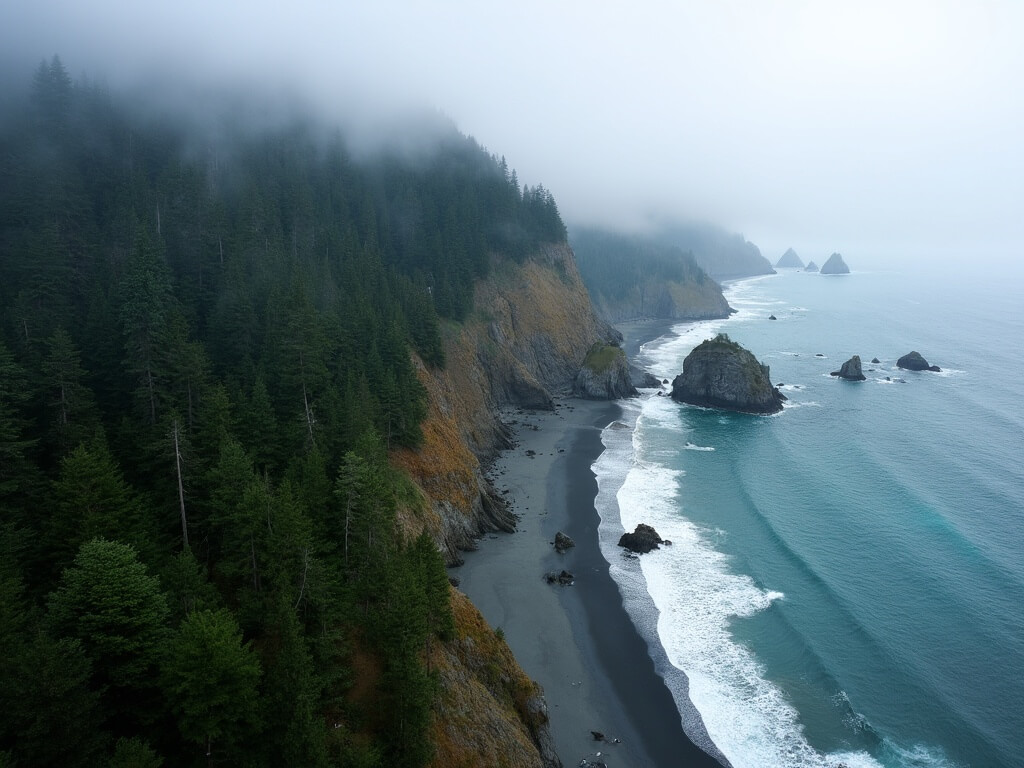
The Hoh Rainforest didn’t exist in its current form by accident.
It’s been shaped by millennia of Indigenous stewardship from the Hoh, Quilleute, and other tribes whose territories overlapped this region.
These tribes understood the forest’s rhythms and managed it accordingly—controlled burns, selective harvesting, deliberate landscape management—in ways that sustained both human communities and forest health.
Then European colonization happened, and fire suppression, clear-cutting, and industrial forestry nearly destroyed what had taken thousands of years to develop.
The Hoh Rainforest survived primarily because most of it lies within Olympic National Park boundaries, protected by park status established in 1938.
That protection isn’t permanent without active commitment.
Climate change is altering rainfall patterns and tree species distributions.
Increasing visitor numbers strain trails and facilities.
Invasive species introduce pathogens and disrupt native ecosystems.
The park doesn’t maintain itself.
It requires consistent funding, ranger presence, volunteer support, and visitor understanding of why conservation matters.
Every time you visit, you’re voting with your presence for continued protection.
More importantly, how you visit—whether you follow Leave No Trace principles, stay on established trails, respect wildlife, and pack out everything you pack in—directly impacts the forest’s long-term health.
This isn’t abstract environmental philosophy.
It’s practical resource management.
Trails erode from overuse.
Wildlife populations decline from harassment and displacement.
Invasive species spread on dirty boot soles and equipment.
Your individual choices, multiplied by thousands of annual visitors, either protect or degrade the ecosystem you came to experience.
That’s why the “no dogs” rule matters even if it inconveniences you.
That’s why staying on trails matters even when shortcuts through the forest look easier.
That’s why treating the forest as sacred rather than as a background for your selfies matters profoundly.
The Hoh Rainforest has survived centuries of exploitation.
It deserves better than casual disrespect from visitors who don’t understand what they’re actually walking through.
Understanding the Indigenous history and current conservation challenges transforms your visit from tourism into something more substantive.
You’re not just seeing ancient trees.
You’re witnessing the result of complex ecological and human relationships spanning thousands of years.
That awareness changes how you move through the space.
Interested in rustic outdoor vibes? Check these out: Rustic Backyard Ideas, Backyard Fire Pit Ideas, Backyard Decor, Backyard Patio Designs, Cabin Interiors.