You’ve probably scrolled past those vibrant photos of coral pink sand dunes on social media.
The impossibly vivid colours.
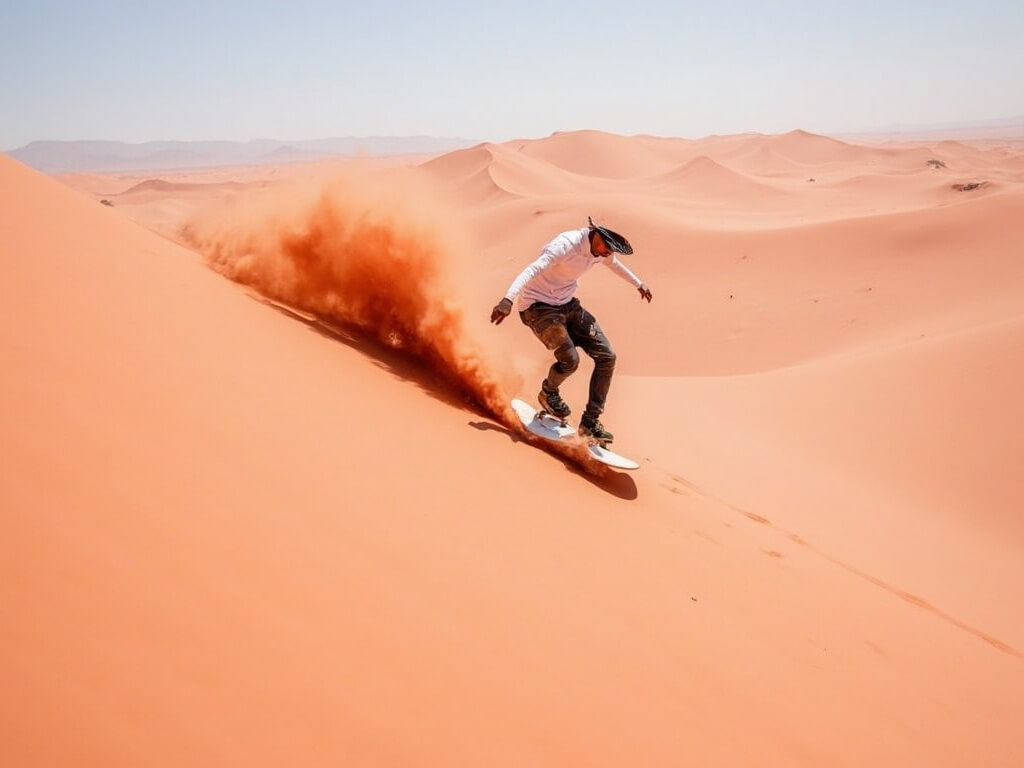
People gliding down massive slopes on boards that look like snowboards but feel completely different.
It all looks incredible.
But here’s what most people don’t realise: sandboarding in Coral Pink Sand Dunes isn’t just about strapping on a board and flying down a hill.
There’s strategy involved.
Timing matters.
What you bring can make or break the experience.
And honestly, most first-timers show up unprepared—which is why I’m writing this.
I’ve watched families arrive at the park around 11 AM on a Saturday, only to discover every single rental board is gone.
I’ve seen couples struggle up the dunes because they wore the wrong shoes.
I’ve also watched five-year-olds absolutely demolish beginners on the slopes because they understood one simple technique nobody mentioned to the adults.
So let’s fix that.
Where Exactly Are These Pink Sand Dunes, and Why Should You Care?
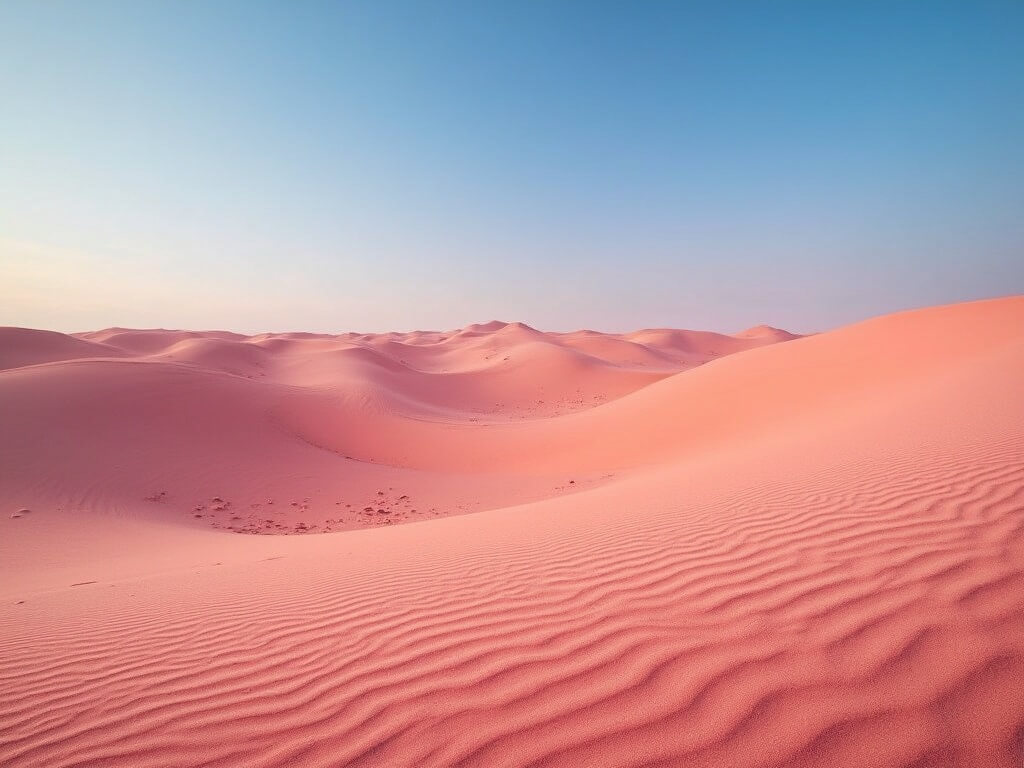
Coral Pink Sand Dunes State Park sits about 30 minutes west of Kanab, Utah, nestled between some of the most stunning landscape in America.
You’re looking at roughly three hours from Las Vegas if you’re flying into Harry Reid International.
But here’s what makes this place genuinely different from other sand dune parks: the colour isn’t accidental.
Over thousands of years, iron oxide in the sandstone has weathered down into fine particles that create this unmistakable coral-pink hue that photographs like nothing else on earth.
It’s not just Instagram bait either.
The dunes themselves are constantly shifting, which means the terrain changes season to season.
Fresh powder for your board every time you visit.
The park sits at a decent elevation, which keeps things cooler than you’d expect for a desert environment.
That matters more than you think when you’re climbing hills in the sun.
I first visited Coral Pink in late March about four years ago, and I made the rookie mistake of arriving at 2 PM on a Saturday thinking the midday heat would scare crowds away.
It didn’t.
What it did was create absolute madness at the visitor centre.
Every rental board was spoken for by 1:47 PM.
I ended up watching other people sandboard for two hours instead of participating—a decision that taught me everything I needed to know about planning this trip properly.
The park isn’t massive, either.
You can cover most of what makes it special in a single day.
But that doesn’t mean you should rush it.
Getting There Without The Headaches
Let’s be direct: getting to Coral Pink is straightforward, but details matter.
If you’re flying in, Harry Reid International in Las Vegas is your landing spot.
From there, it’s a three-hour drive northeast through some genuinely beautiful terrain.
The drive itself is worth doing during daylight because the landscape shifts dramatically as you approach Utah.
Once you hit Kanab, you’re essentially 30 minutes away from the park entrance.
The entrance fee is £11 per vehicle (that’s $15 USD).
Here’s what’s important: America the Beautiful annual passes don’t work here.
This is a state park, not a national park.
So don’t show up expecting your federal pass to save you money—it won’t.
Park hours run from dawn to dusk, seven days a week.
That’s straightforward, but it means summer visits require early starts if you want extended daylight.
In June, the sun rises around 5:30 AM.
In December, it rises around 7:30 AM.
Plan accordingly.
The park has a small visitor centre where you’ll sort out rentals, grab information, and buy snacks if you’ve forgotten to bring them.
Parking is ample for day visitors, with both shaded and unshaded spots available.
If you’re camping, that’s a different story entirely.
The Camping Question: Worth It or Not?
The park maintains 34 campsites suitable for tents and RVs.
Reservations are recommended, especially during spring and autumn when weather is optimal.
Without reservations, you’re rolling the dice on availability.
I’ve seen the campground completely full on warm weekends.
However, if camping isn’t your style, Kanab town—just 30 minutes away—offers hotels and lodging options.
Most visitors actually skip the campground and stay in Kanab, which gives you more restaurant options and slightly better facilities without the hassle of driving 30 minutes each morning.
That said, camping at the dunes does offer something special: sunrise sessions when the light is soft and temperatures are coolest.
No commute.
You’re already there when most people are still packing their cars.
Rentals, Equipment, and The Critical Timing Factor
Here’s where your experience gets determined before you even step on sand.
The park rents two types of equipment: sand boards and sand sleds.
Sand boards are essentially snowboards designed for sand—you stand on them and ride down slopes using your bodyweight for balance and steering.
Sand sleds are like snow sleds where you sit down and ride.
Both cost £19 to rent (roughly $25 USD).
Here’s the catch: there are only a limited number of each.
Once they’re gone, they’re gone.
No reservations.
No holds.
First-come, first-served only.
On weekends and holidays, this becomes critical.
I’ve documented peak times, and here’s what happens:
Peak demand hours on weekends:
- 10 AM to 2 PM: absolute chaos at the visitor centre
- Before 9 AM: boards still available, but crowds building
- After 3 PM: some availability returns, but afternoon heat is significant
- Weekdays: substantially less pressure until late afternoon
If you arrive after 11 AM on a Saturday during spring or autumn, expect the rental situation to be dicey.
Not impossible, but dicey.
The alternative is working with the Kanab Tour Company, which offers rental services and guided tours.
You’ll pay more, but you guarantee equipment access and you get professional guidance on technique.
Many families find this worth the premium price.
What To Actually Bring (Not What Retail Websites Tell You)
Most packing lists for sandboarding are either overly complicated or dangerously incomplete.
Here’s what genuinely matters:
Clothing and footwear:
- Closed-toe shoes—not negotiable
- Sand gets everywhere inside open-toe footwear
- Comfortable clothing that doesn’t restrict movement
- Lightweight layers if visiting during shoulder seasons
Sun and weather protection:
- Sunglasses designed for bright environments
- Sunscreen—aggressive application, reapply frequently
- A hat with actual brim coverage
- Consider a lightweight long-sleeve shirt for UV protection
Practical gear that changes everything:
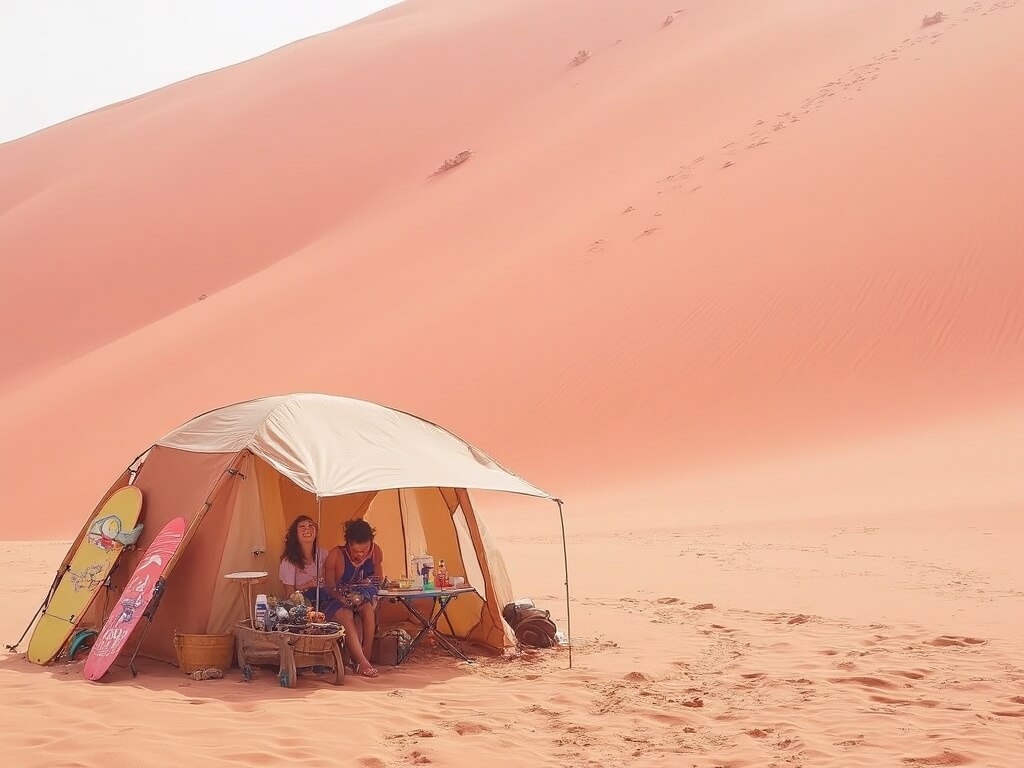
- A shade canopy or pop-up tent (this deserves emphasis—you need shade)
- Water bottle, at least two litres per person
- Snacks with actual calories (energy bars, nuts, fruit)
- A collapsible wagon if you’re bringing kids or multiple people
- Camera or phone for photos
The canopy thing deserves its own note: sand dunes have zero natural shade.
Zero.
The sun reflects off sand and intensifies the heat.
If you don’t bring shade, you’ll spend half your time uncomfortable instead of having fun.
A £30 pop-up canopy becomes the best money you’ll spend on this trip.
I watched a family with young children abandon their afternoon session because they had no shade and the kids were overheated by 1 PM.
They’d brought everything else perfectly but missed this one detail.
Why Sandboarding Here Actually Works For Beginners
This is important because most extreme sports scare off beginners.
Sandboarding doesn’t.
The sand itself is forgiving.
Falls don’t hurt like snow or pavement.
You sink slightly rather than slide across a hard surface.
The dunes have varied slopes, which means gradual learning is genuinely possible.
You can start on gentle, rolling hills and progress to steeper slopes without massive jumps in difficulty.
The park offers guided experiences during tours, meaning instructors can show you proper stance, weight distribution, and steering before you attempt anything solo.
No special fitness level is required, though climbing uphill in sand is legitimately strenuous.
Your legs will feel it.
But it’s the kind of workout that feels achievable rather than impossible.
Kids typically pick up sandboarding faster than adults because they’re lower to the ground and have less fear of falling.
I’ve watched four-year-olds ride sleds down slopes that intimidated their parents.
Lower centre of gravity changes everything.
The basic technique for standing on a sand board mirrors snowboarding: feet sideways, knees bent, weight shifted based on direction.
For sleds, it’s simpler—sit, lean, and steer with your body weight.
Both are intuitive enough that instruction takes minutes, not hours.
The Physical Reality of Climbing Dunes
Here’s what nobody adequately prepares you for: walking up sand dunes is genuinely difficult.
Your feet sink with each step.
Each uphill stride requires more effort than the same distance on solid ground.
Do this repeatedly in desert heat, and fatigue sets in faster than you’d expect.
This is where UTV tours become genuinely valuable rather than just a luxury option.
Off-road vehicles take you up the dunes and position you at the top without the exhausting climb.
You conserve energy for actually riding.
For families with young children or anyone concerned about physical demand, UTV tours aren’t overkill—they’re practical.
The guides know which slopes suit which skill levels.
They handle the driving.
You handle the fun.
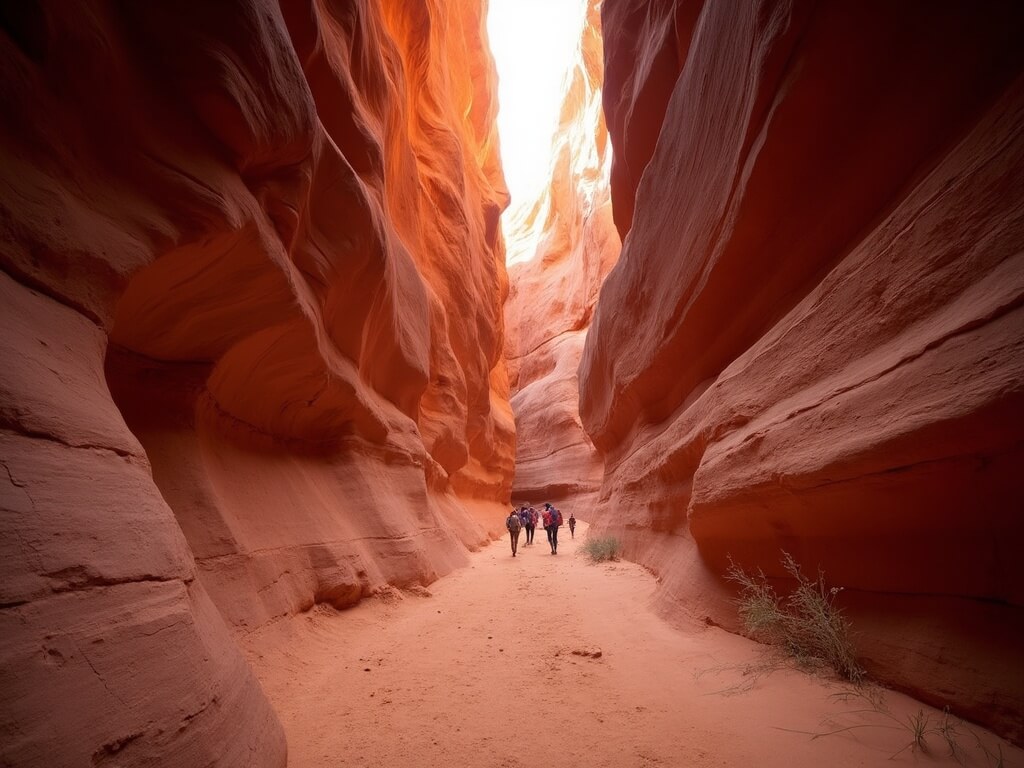
Some tours include slot canyon hikes, which add variety to your day and break up time on the dunes.
Self-guided exploration is absolutely possible, but it requires more physical commitment.
You’re making multiple climbs throughout the day.
Budget energy accordingly.
Before you book your trip or start gathering equipment, there’s one more critical layer to understand about timing, crowds, and weather that actually determines whether your day goes brilliantly or becomes forgettable.
Related Adventures You Might Like
Timing Your Visit: Weather, Seasons, and The Crowds Game
Spring and autumn are objectively the best times to visit Coral Pink Sand Dunes. Temperatures sit in a genuinely comfortable range—typically between 60-75°F (15-24°C)—where you can stay active without battling extreme heat.
Spring runs March through May, with wildflowers blooming around the lower elevations and relatively stable weather patterns. Autumn spans September through November, offering similar conditions with slightly less tourist congestion than spring.
Both seasons have something else working in their favour: sunrise and sunset tours become legitimately magical. The light hits the coral-pink sand at angles that photographs can’t quite capture.
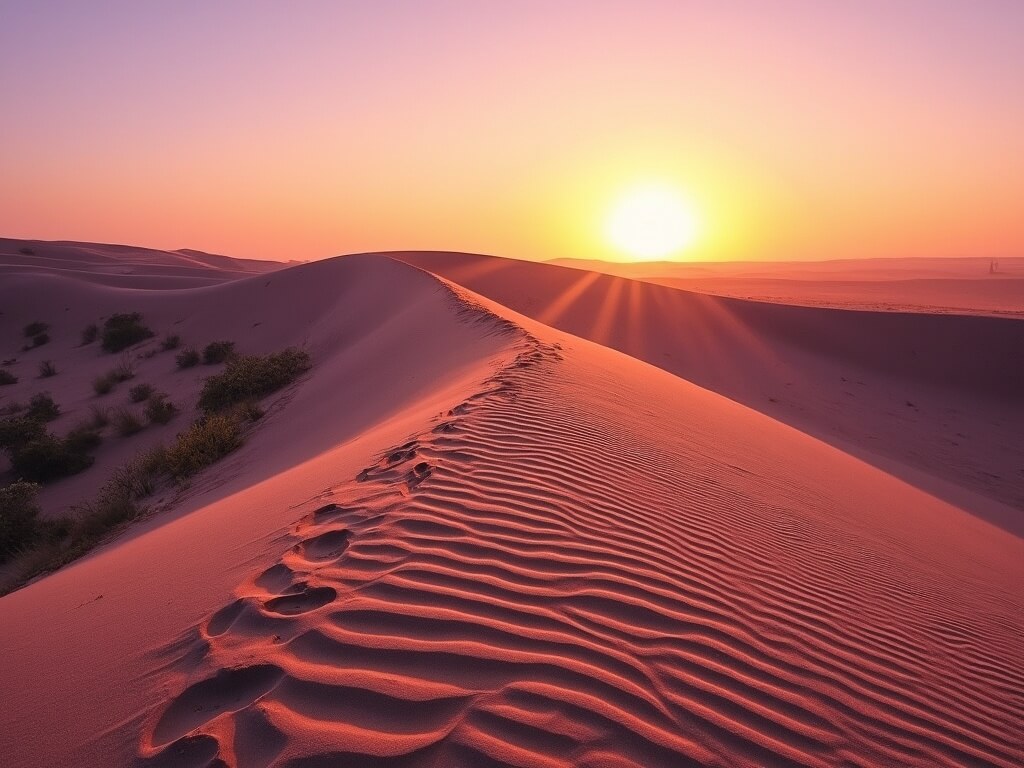
Summer is technically possible, but it requires mental preparation. June through August temperatures regularly exceed 90°F (32°C), with peak afternoons hitting 100°F (38°C) or higher. Walking barefoot on summer sand will burn your feet within seconds.
Winter is quieter but comes with its own challenges—short daylight hours and potentially empty-feeling parks. The upside: easy rental availability and peaceful surroundings.
The secret best days to visit? Weekday mornings in mid-April or late September. Tuesday through Thursday are substantially less busy than weekends. Complete Guide to Sandboarding at Coral Pink Sand Dunes dives deeper into choosing the right window.
Safety Considerations That Actually Matter
Sandboarding at Coral Pink isn’t inherently dangerous, but specific conditions deserve attention. Wind is an underestimated factor. Desert winds can blow sand into your face and eyes—wear sunglasses rated for dust and bring a bandana.
Dehydration sneaks up faster in dry desert environments. You’ll lose more water than you realize. Drink consistently, not just when you feel thirsty. Bring more water than you think you’ll need.
UV exposure is intense. Apply SPF 30+ sunscreen thickly every 90 minutes. Kids need extra care and supervision—especially on steep slopes. Start them slow and increase difficulty gradually.
The UTV Tour Advantage (And When It Genuinely Matters)
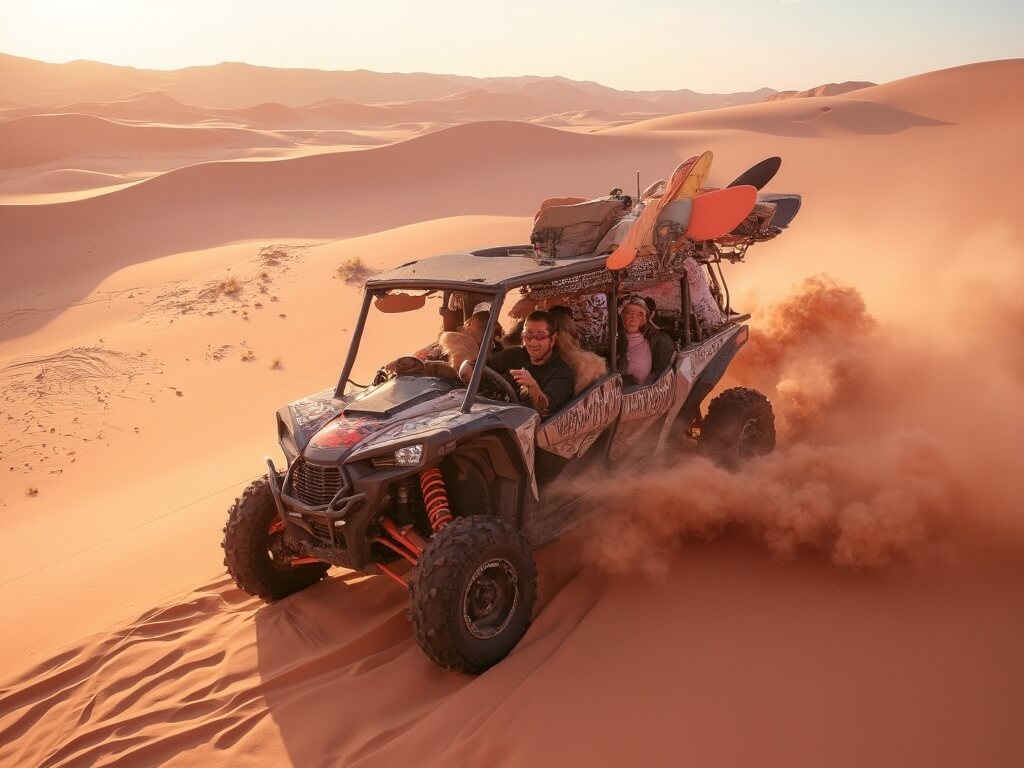
Guided UTV tours are a strategic option. They conserve energy, shuttle you to prime slopes, and often include slot canyon hikes for added variety. Tours cost £50–100 ($65–130 USD) per person based on tour length and inclusions.
For first-time visitors or families, the extra cost is worth it. For experienced folks, self-guided works fine. The ideal strategy? Combine both: start the day self-guided, move to a UTV tour for advanced terrain later. Learn more strategies from Tips for Sandboarding at Coral Pink Sand Dunes State Park.
Techniques That Actually Change Your Performance
Sandboarding differs from snowboarding. Sand creates more drag and less edge hold. Use smooth weight shifts; avoid aggressive carving. Balance your weight over the center of the board, lean shoulders to turn, and keep knees bent.
For sand sleds, sit evenly and use torso shifts to steer. Use feet as rudders. Don’t lock up—relaxation improves control and responsiveness. Focus on smooth speed management over bombing hills for better safety and enjoyment.
The Photography Opportunity That Nobody Fully Maximizes
Midday shots don’t do the dunes justice. Best photography happens during golden hour—the first hour after sunrise and last before sunset. Light enhances the coral-pink hue and adds gorgeous shadows.
If you want pro-level photos, arrive before 6:30 AM in spring or 7:00 AM in autumn. Capture images before crowds arrive, then transition smoothly into sandboarding as the day warms.
Protect your camera lens. Sand is abrasive. A soft cloth and bag keep your gear clean between shots. Phone cameras work—but only if you clean the lens frequently.
What Happens After Sandboarding: Recovery and Next Steps
Sandboarding works muscles you didn’t know existed—especially calves, thighs, and core. The soreness is like hiking: noticeable but manageable. Take a day off between sessions to recover and explore surrounding attractions.
Shower immediately to remove sand from all the places it hides. Bring extra clothes to avoid getting sand in your car or hotel room. Sand lingers for weeks otherwise.
Nearby Attractions That Justify Extended Trips
Coral Pink Sand Dunes pairs beautifully with southern Utah’s other marvels. Zion National Park is only 45 minutes away. Combine sandboarding with hiking there for a well-rounded desert trip.
Kanab offers dining and serves as a base for slot canyon tours. These tours often combine with dune access for a complete adventure day.
Other detours include Lake Powell (2 hours northwest) and Grand Staircase-Escalante (best for multi-day trips). The region is rich and varied—plan around it.
Costs, Budget Planning, and Value Assessment
Here’s what a Coral Pink trip actually costs:
- Park entrance: £11 ($15 USD) per vehicle
- Equipment rental: £19 ($25 USD) per item
- Camping: £18–25 ($24–33 USD) per night
- Hotel in Kanab: £60–150 ($80–200 USD)
- Food: variable, cheaper if self-catered
- Gas from Las Vegas: £30–50 ($40–65 USD)
Sample budget for a family of four:
- Gas: £40
- Park entrance: £11
- 4 rentals: £76
- Lunch/snacks: £30–40
- Hotel: £80–120
Total: £237–267 ($315–355 USD)
That’s around £60–67 ($80–90 USD) per person—a fair price for an adventure activity. If you’re already in Utah, the value jumps significantly.
Common Mistakes That Experienced People Skip
Informed visitors avoid these errors:
- No shade solution – makes the experience miserable.
- Insufficient water – desert dehydration is silent but fast.
- Bad footwear – ankle support matters. Wear hiking boots.
- Late arrivals without gear booked – risk missing out entirely.
- Ignoring wind forecasts – wind changes everything.
- Visiting mid-day in summer – start early or suffer.
- Overestimating slope skill level – don’t skip guidance.
Safety and enjoyment dramatically increase with proper prep. Read more tips from Tips for Sandboarding at Coral Pink Sand Dunes State Park.
Final Assessment: Is This Actually Worth Your Time?
Yes, Coral Pink is worth your time. The novelty, accessibility, and affordability make it a unique, worthwhile stop in your southwest USA adventure. Preparation is the key difference between a highlight moment and a frustrating day.
Allocate a full day, bring the right gear, and know what sandboarding actually feels like. You’ll be rewarded with stunning scenery, memorable photos, and the thrill of exploring a terrain unlike anywhere else.
Pair it with other adventures like driving the Hana Highway in Maui or walking the Oregon Coast for a diverse travel portfolio that makes your trip unforgettable.
And don’t forget to check out the Complete Guide to Sandboarding at Coral Pink Sand Dunes for more insider tips and insights.