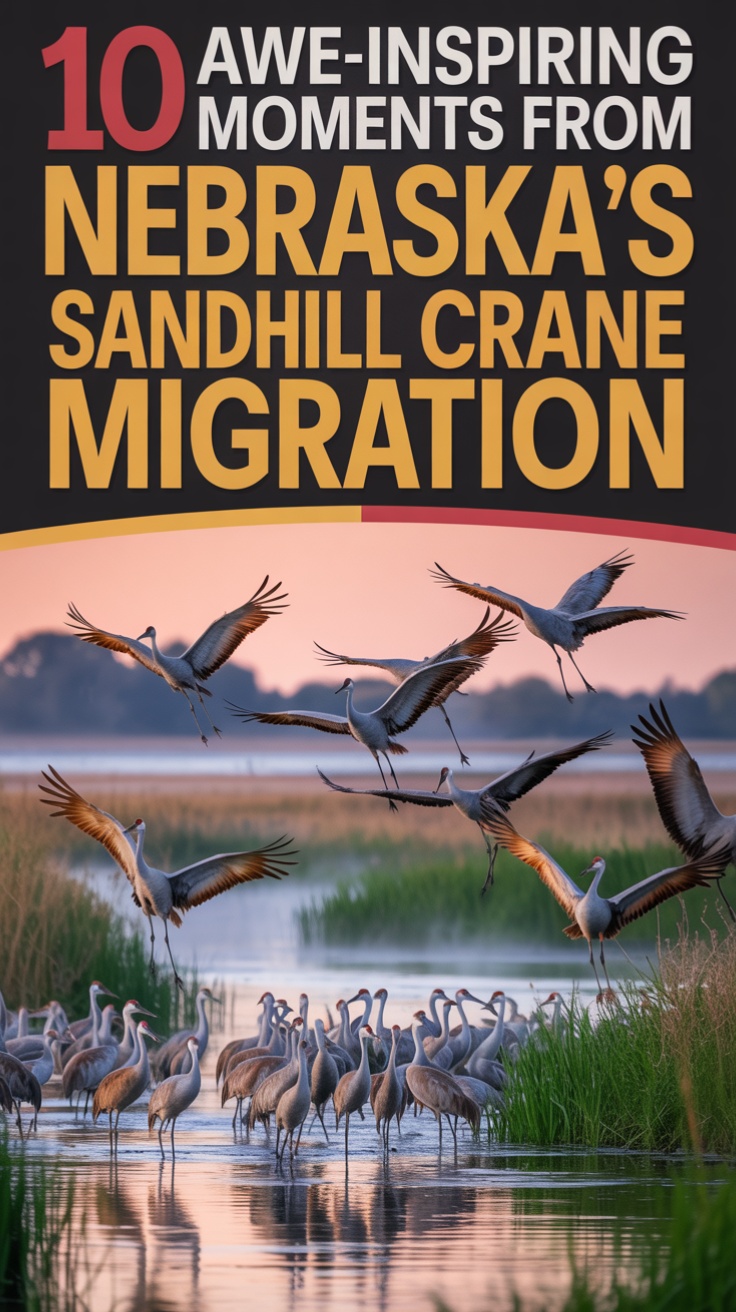
You’ve probably never heard the sound of a million birds lifting off at dawn.
It’s not a gentle flutter.
It’s chaos and precision wrapped into one unforgettable moment—a roar that shakes your chest and reminds you how small you really are.
Every spring, sandhill crane migration in Nebraska transforms the Platte River Valley into something resembling a natural wonder that most people walk past without ever realising it’s happening.
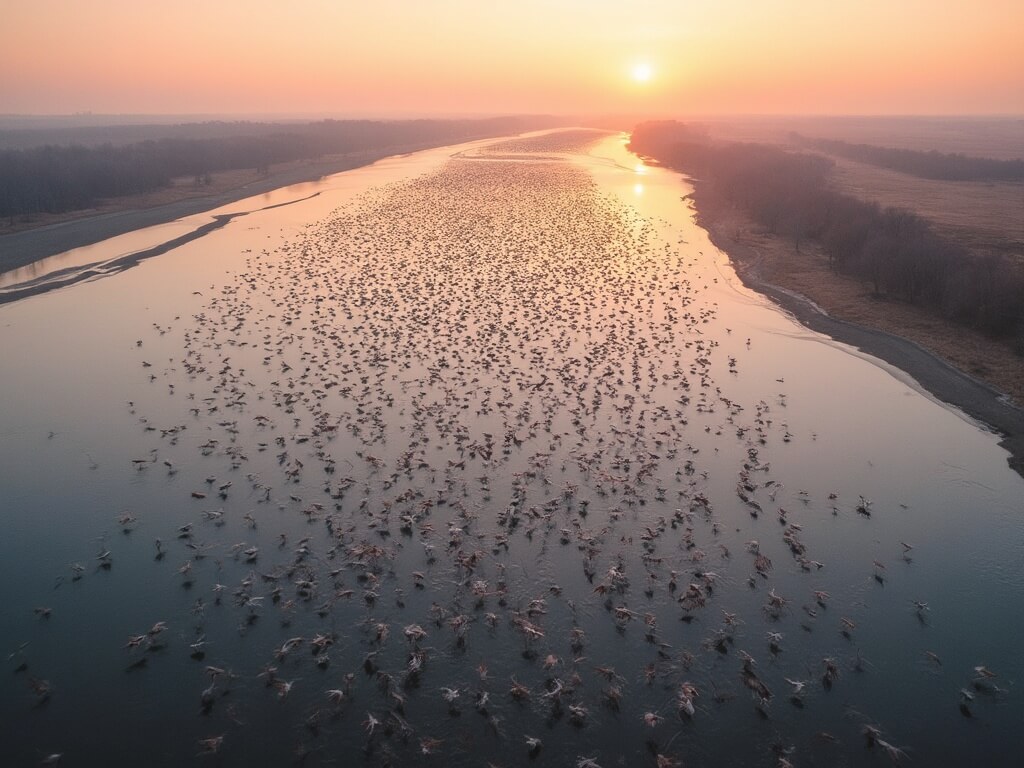
Over 80% of the world’s sandhill crane population—up to 1 million birds—stages along this single river valley during their northbound journey.
That’s not a footnote in nature documentaries.
That’s the largest gathering of sandhill cranes on the planet, and it’s happening in the American Midwest, a place most people associate with cornfields and highways, not global ecological significance.
Here’s the thing though: most travellers miss it entirely.
They drive through Nebraska without stopping, unaware that they’re passing through one of the most critical wildlife corridors in North America.
The cranes are there, yes, but unless you know what to look for and when to look, the spectacle remains invisible.
The Ancient Journey: Why These Birds Keep Coming Back to Nebraska
Sandhill cranes have been migrating through Nebraska for over 2 million years.
Let that sink in.
These birds were already making this same journey when woolly mammoths roamed the continent.
They predate the modern Platte River itself, which means their migratory instincts are older than the landscape they navigate.
The birds don’t choose Nebraska by accident.
The Platte River Valley provides something irreplaceable: a critical stopover where cranes can rest, feed, and rebuild their energy reserves before continuing their migration north to breeding grounds across Canada, Alaska, and even Siberia.
Without this valley, their entire migration system collapses.
I learned this firsthand about five years ago when I first visited Rowe Sanctuary during peak migration season in late March.
I arrived before dawn with a guide named Tom, who’d been studying crane behaviour for thirty years.
We stood in near-total darkness on an observation platform overlooking the river, and Tom was explaining the feeding patterns when suddenly, the air shifted.
The sound started as a whisper, then built into something overwhelming—thousands of birds waking simultaneously, preparing to leave their roosting sandbars.
Within seconds, the sky was filled with cranes lifting off the water in waves, their wings catching the first light of morning.
I remember Tom turning to me and saying, “Most people never see this.
They read about it online, but they never actually stand here and feel it.”
He was right.
No photograph captures what happens when 12,000 cranes per half-mile stretch of river decide to move at once.
The Migration Timeline: When to Actually See What’s Happening
This is where most visitors get it wrong.
They show up to Nebraska in February thinking they’ll see massive flocks, then leave disappointed because the main event hasn’t started yet.
The sandhill crane migration in Nebraska follows a strict schedule:
- Early arrivals start showing up in mid-February, but they’re scattered and sparse. You won’t be impressed.
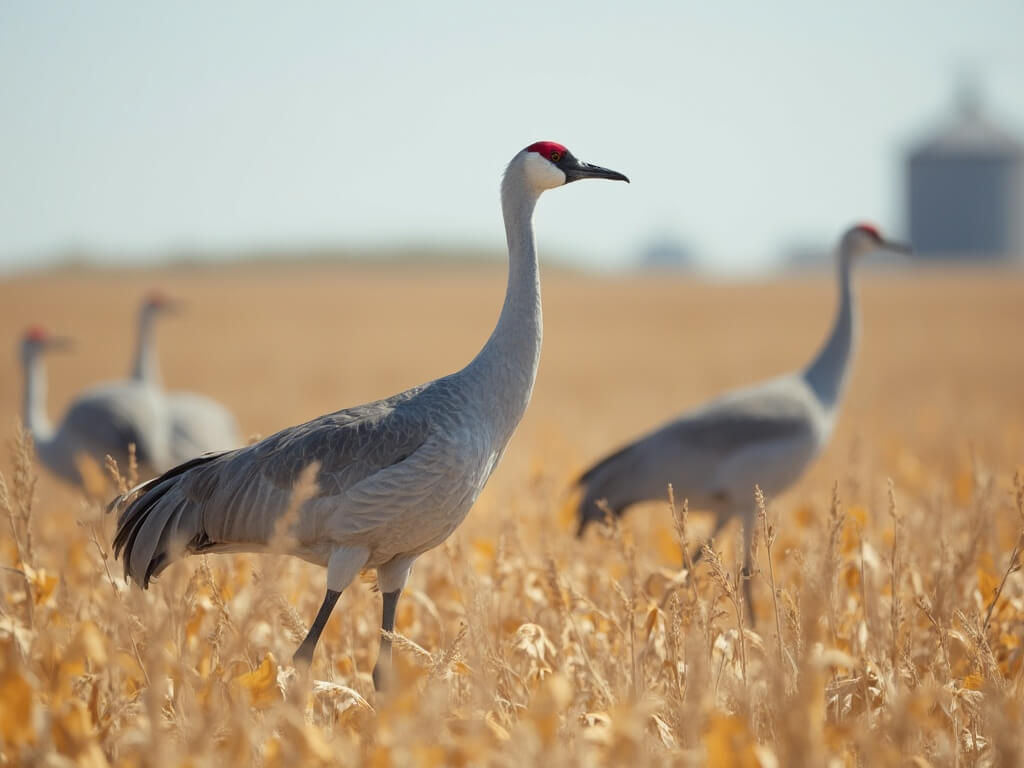
- Peak activity hits mid-to-late March. This is when the river valley looks like a feathered carpet stretching for miles in every direction.
- Stragglers continue passing through until early May, though by then most casual observers have already moved on to other springtime activities.
The entire process takes roughly three weeks per group.
Cranes don’t all arrive at once, and they don’t all leave at once.
Instead, waves of birds cycle through the valley in loose clusters, each group spending approximately three weeks recovering from the journey south and preparing for the journey north.
The birds themselves travel between 170 and 450 miles per day during migration.
The Platte River Valley is their pit stop—a place to downshift, refuel, and recalibrate before tackling the final push to northern breeding grounds in Canada, Alaska, and Siberia.
Understanding the Route: Where These Birds Actually Come From (and Where They’re Going)
The sandhill crane migration in Nebraska represents just one chapter in an epic continental journey.
These birds winter primarily in three locations:
- Texas panhandle regions
- New Mexico desert valleys
- Northern Mexico along the Rio Grande
From there, they stage northward through Nebraska, then continue to breeding territories spread across:
- Northern Great Plains states
- Canadian provinces (Alberta, Saskatchewan, Manitoba)
- Alaska interior
- Eastern Siberia
The entire journey covers thousands of miles, and Nebraska sits at the critical midpoint where birds restock their fat reserves before the final push.
Climate and weather massively influence migration timing.
A warmer spring accelerates arrival and pushes peak activity earlier.
Harsh winters delay the entire process because birds can’t depart their wintering grounds safely.
El Niño and La Niña patterns ripple through the system, shifting arrival dates by weeks in some years.
This creates a fascinating tension: the birds follow ancient migration schedules hardwired into their genetics, but modern climate variability keeps throwing unpredictable variables into their navigation system.
The Platte River Valley: Why This Specific Stretch of Water Matters So Much
You could drive past the Platte River on Interstate 80 without realising you’re looking at one of the most important ecological features in North America.
The river itself isn’t particularly impressive.
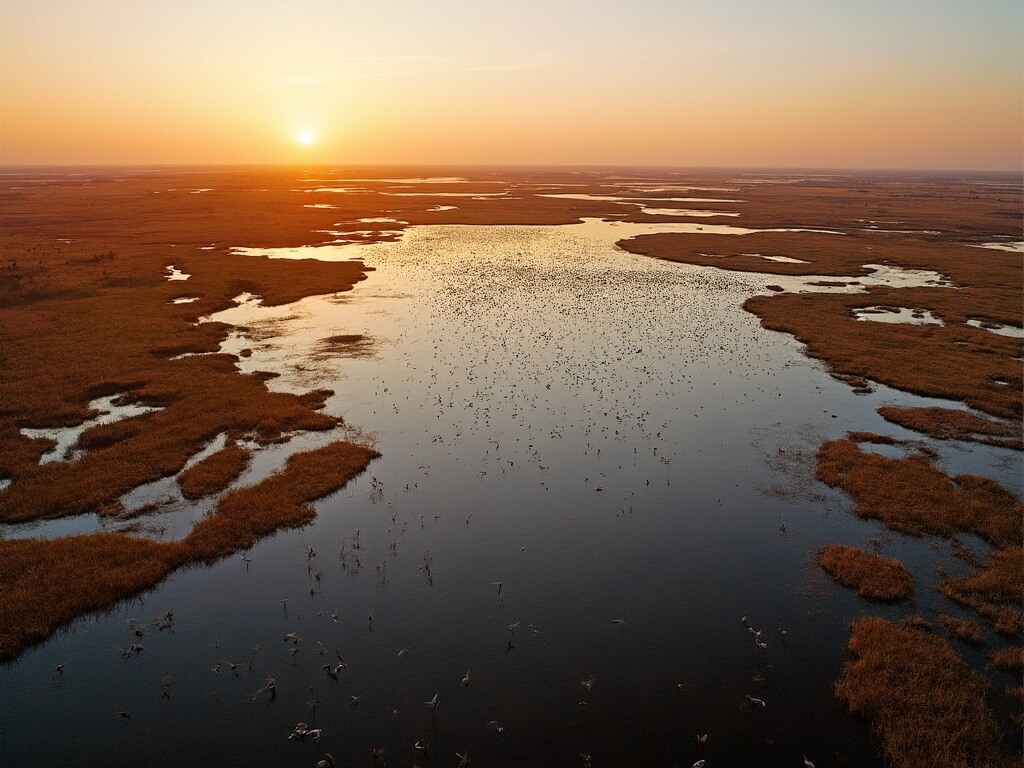
It’s shallow, wide, and interrupted by sandbars.
Most visitors expect something more dramatic—a rushing mountain river or a deep canyon waterway.
Instead, they see what looks like a glorified stream with occasional islands poking through.
That’s precisely what makes it perfect for sandhill cranes.
At peak migration, the Platte River Valley reaches densities exceeding 12,000 cranes per half-mile stretch.
Adjacent to the river, wet meadows and cornfields provide daytime feeding grounds.
Historically, sandhill cranes fed on tubers, aquatic plants, and aquatic invertebrates they foraged from wetland ecosystems.
Today, roughly 90% of their diet consists of waste corn left behind in agricultural fields after harvest.
The birds now consume an estimated 1,600 tons of corn per migration season.
The Cranes Themselves: What You’re Actually Looking At
Most people can’t tell the difference between sandhill crane species until someone points it out.
There are five recognised subspecies of sandhill cranes, though only two migratory subspecies pass through Nebraska in significant numbers:
- Lesser sandhill cranes make up approximately 80% of the Platte River population.
- Greater sandhill cranes comprise roughly 20% of the population.
Physically, sandhill cranes are distinctive:
- Height: 3 to 4 feet tall
- Wingspan: approximately 6 feet
- Weight: 8 to 12 pounds
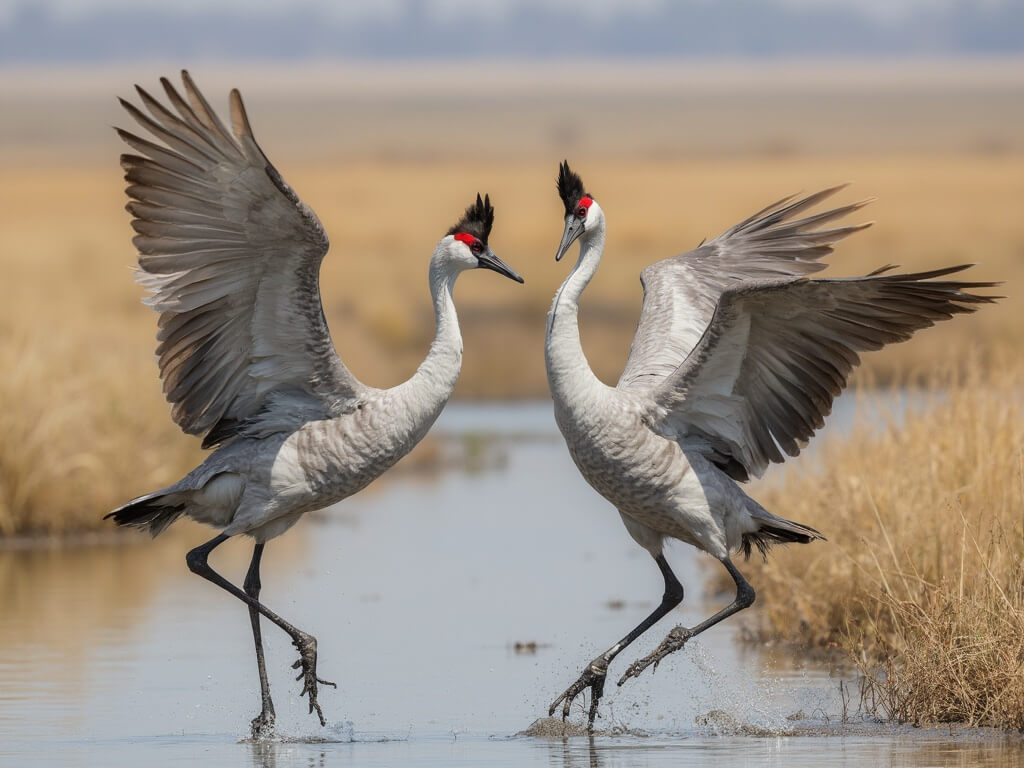
- Colouration: predominantly gray with distinctive red markings on the face
These birds are extraordinarily social, and their social hierarchies create visible patterns in how they move and interact.
They engage in elaborate courtship dances involving synchronized movements and vocalizations.
The morning liftoffs represent the most coordinated behaviour you’ll witness—thousands of birds lifting off in waves, as if following an unspoken signal.
Conservation Status: The Paradox of Success and Uncertainty
Here’s a puzzle: sandhill crane populations are stable and increasing, yet their habitat is disappearing.
The cranes you’ll see in Nebraska are thriving, which creates a complicated conservation narrative.
These birds have adapted to agricultural landscapes so thoroughly that they’ve become dependent on corn waste for survival.
Without cornfields providing abundant winter and spring food, the vast majority of sandhill cranes wouldn’t survive their migrations.
This creates genuine tension between conservation goals.
The Audubon Rowe Sanctuary and The Nature Conservancy follow a middle path—protecting existing wetland habitat while maintaining agricultural landscapes cranes currently depend on.
Eco-tourism plays a vital role.
When thousands of visitors come to Nebraska to watch cranes, it supports local communities and helps justify habitat protection investment.
Want to explore other natural wonders? Check out watching the sunrise from Cadillac Mountain or walking the beaches of the Oregon Coast for more unforgettable wildlife moments.
Ultimately, the sandhill crane migration in Nebraska remains robust, but it’s increasingly dependent on adaptive management and human intervention to maintain.
Whether that counts as conservation success or ecological failure depends on your perspective—and what you believe conservation should ultimately accomplish.
Where to Actually See the Cranes: Beyond Generic Tourist Advice
You can Google “sandhill crane viewing Nebraska” and get the same list that everyone else sees.
Rowe Sanctuary. Kearney. Rainwater Basin Visitor Center.
But that doesn’t tell you what it actually feels like to stand at these locations, what time of day matters most, or how to position yourself to witness the moments that make the trip worthwhile.
I’ve been to all three locations multiple times, and the experience is dramatically different depending on when you arrive and what you’re willing to do to get into position.
Rowe Sanctuary (Audubon Center) is the premier option if you want professional infrastructure and guided experiences.
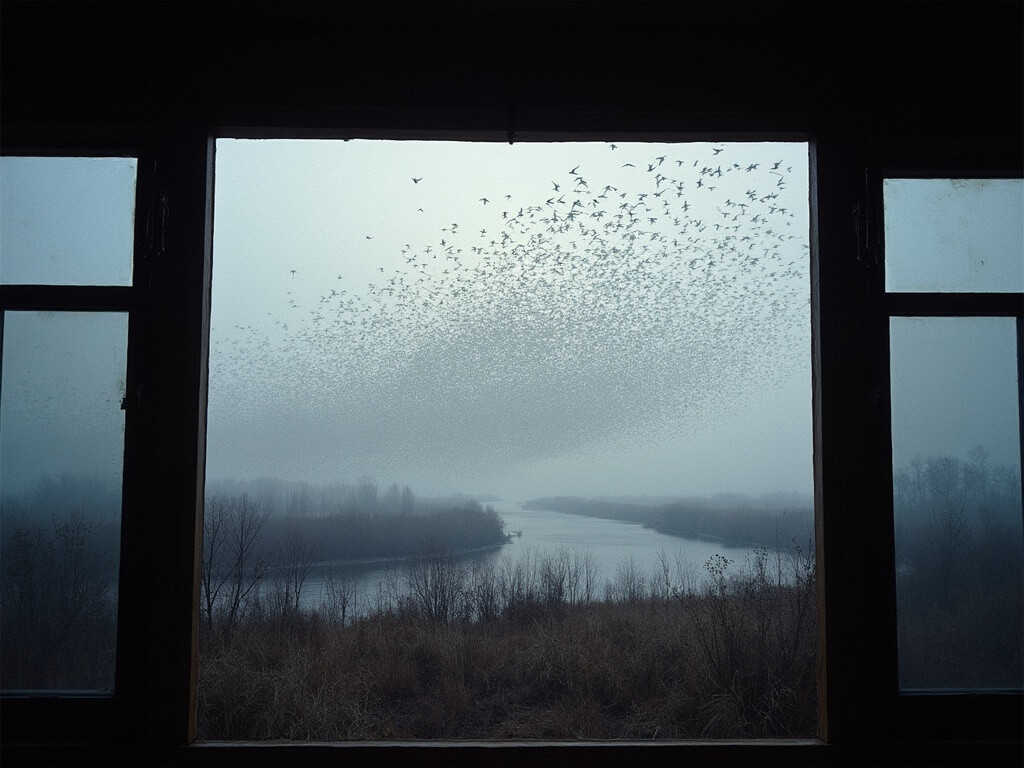
The sanctuary manages observation blinds strategically positioned along the river, which means you’re not scrambling to find decent sightlines or competing with dozens of other visitors for space.
They operate a live Crane Cam that streams directly online, which lets you scout conditions before you make the drive. The guided sunrise and sunset tours are staffed by people who’ve spent years studying these specific birds, and they can point out behavioural details that would take a casual observer weeks to notice.
The downside is that the guided experience means you’re moving on someone else’s schedule, which sometimes works perfectly and sometimes means you miss the exact moment when 50,000 birds decide to lift off simultaneously.
Kearney functions as the central hub for crane-watching infrastructure.
The city has capitalized on crane tourism by developing multiple observation stations, visitor centers, and hotel accommodations specifically designed for visiting birders. The Rowe Sanctuary and Audubon offices operate out of Kearney, which makes it the logical base for multi-day visits.
If you’re planning to spend 3-4 days exploring crane migration, Kearney gives you proximity to multiple viewing sites and the ability to chase peak activity as it shifts along the river valley.
Rainwater Basin Visitor Center serves the eastern section of the migration corridor and represents a more low-key alternative to the Rowe Sanctuary crowds.
The wetlands and basins in this region provide secondary feeding and roosting habitat that complements the main Platte River channel. You’ll see fewer cranes at Rainwater Basin compared to prime Platte River locations, but you’ll also encounter fewer tourists, which creates a different kind of experience.
The real secret to crane viewing that most visitors never discover is that timing matters far more than location.
The absolute best moments happen during what guides call the “liftoff period”—roughly 30-45 minutes after sunrise when roosting cranes begin departing the river for daytime feeding grounds.
If you arrive at an observation point at 8:00 AM expecting to see peak activity, you’ve already missed the main event. The cranes lifted off at 6:30 AM. You’re now watching scattered individuals and groups that haven’t joined the exodus yet.
I made this mistake my second year visiting. I figured I’d sleep in, have breakfast, then head to the sanctuary around 8:30 AM for a relaxed morning of birdwatching.
I arrived to find maybe a few thousand cranes scattered across the river—nothing close to the massive congregations I’d witnessed on earlier visits.
I was frustrated until Tom (my guide from five years prior, who I coincidentally ran into at the sanctuary) explained what I’d missed.
“You want to see the real show?” he asked. “You need to be standing in the blind at 5:45 AM when it’s still dark enough that you can barely see the water. That’s when you feel it coming—the vibration of 50,000 birds preparing to move. That’s what you drove here to experience.”
He was right.
The next morning, I dragged myself out of bed at 5:00 AM, drove to the sanctuary in near-total darkness, and positioned myself in an observation blind with exactly three other people.
At 6:15 AM, before any visible light touched the eastern sky, the sound started. It was quieter initially, more like a distant rumble—thousands of birds calling simultaneously, warming up, stretching wings.
Then, as the first gray light reached the horizon, the river literally emptied.
Cranes lifted off in overlapping waves. For someone standing 50 feet from the river, it felt like standing inside a tornado made of birds.
The Ecological Reason the Platte River Matters More Than You Think
Most people assume the Platte River is important because cranes like it.
That’s backwards.
The Platte River is important because it’s irreplaceable within North American migratory flyway systems.
Nebraska sits at the intersection of the Central Flyway—one of four major migration corridors that birds use to move between wintering grounds in the south and breeding grounds in the north.
Millions of ducks, geese, and other waterfowl species follow similar migration patterns through the same landscape that cranes depend on.
Remove the Platte River Valley and you don’t just eliminate crane migration. You collapse a critical link in continental bird migration systems.
The sandhill crane migration in Nebraska is part of a global phenomenon, not just a local spectacle.
The Tourism Infrastructure: How Visiting Actually Works in Practice
The crane-watching infrastructure has matured significantly over the past 15-20 years.
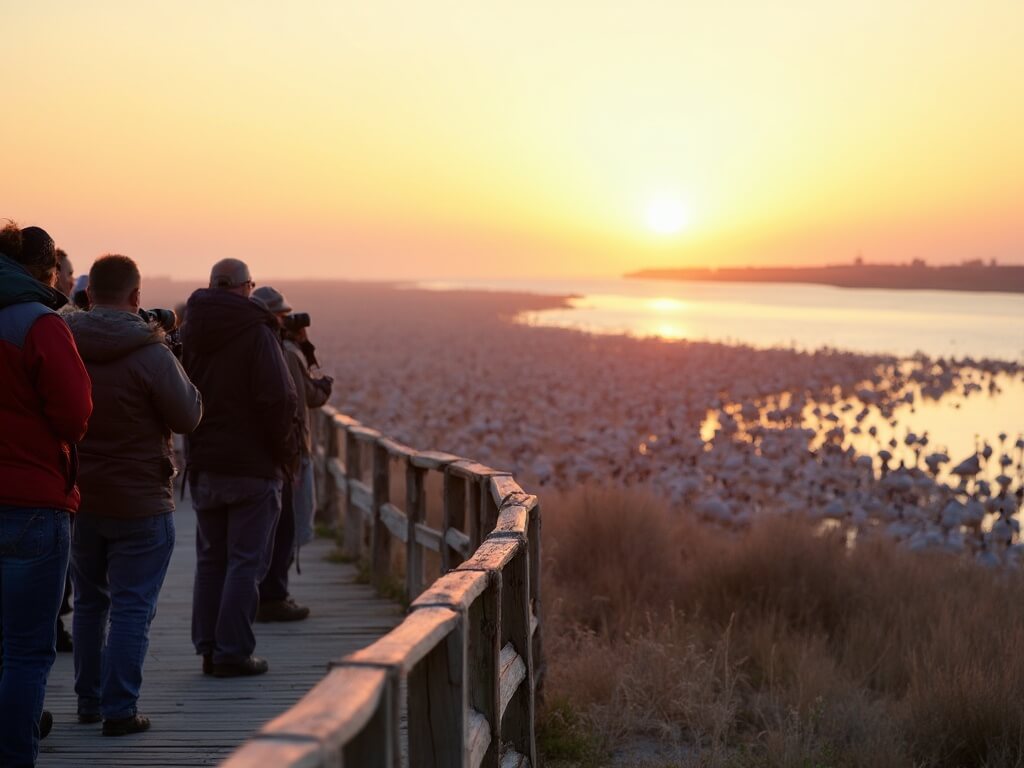
Accommodation options range from budget motels to boutique B&Bs. Expect to spend $100-200 per night in places like Kearney.
Guided tours range from $200-400 per day for professional guides. Group programs through the Audubon Society cost $50-150 per person.
Accessibility: Many observation blinds are wheelchair accessible. Contact sanctuary staff in advance to discuss options.
Photography: If you’re serious about it, a 400mm+ telephoto lens and pre-dawn positioning are musts. Workshops cost $800-1500 for 2-3 days.
The Conservation Debate You Haven’t Heard About
Debates rage between those advocating for ecological restoration and those pushing for adaptive management within agricultural landscapes.
Climate change, irrigation demands, and habitat fragmentation are all impacting the long-term viability of crane migration. But the crane economy—worth billions—helps fund ongoing conservation efforts.
Why Fall Migration Matters (And Why Almost Nobody Sees It)
Fall migration is less dramatic but ecologically crucial.
It allows scientists to monitor reproductive success and overall population health. While numbers are lower than spring, data from fall migration informs future management.
The Experience of Watching Thousands of Birds Move Together
It’s more than just a visual—it’s a full-body, sensory immersion in wildness.
The sound, the sight, the feel of 50,000 birds lifting off at once is unforgettable.
When and How to Plan Your Crane-Watching Trip
Plan for mid-March through early April.
Book accommodations and tours four to six weeks in advance. Kearney is your best base. Bring layered clothing, binoculars, and arrive before dawn.
Use tools like the Rowe Sanctuary Crane Cam and birding apps to optimize your experience.
Why Crane-Watching Reveals Truths About Conservation That Most Debates Miss
What you’re witnessing isn’t untouched wilderness—it’s managed coexistence between humans and nature.
This is what modern conservation looks like: cooperation, compromise, and community-led sustainability.
The Practical Reality Nobody Mentions About Eco-Tourism in Rural Nebraska
Crane tourism coexists with agricultural industries, sometimes harmoniously, sometimes tensely.
It works because economic incentives align with ecological preservation.
Beyond the Main River: Secondary Viewing Opportunities
The Rainwater Basin offers quieter, more diverse birding experiences—worth exploring on multi-day trips.
The Research That’s Actively Reshaping Our Understanding
Satellite tracking and climate data are revealing cranes’ remarkable adaptability and environmental intelligence.
Juvenile ratios remain strong, indicating resilient reproduction despite changing conditions.
Putting It All Together: Why This Matters Beyond Nebraska
This migration isn’t local—it’s hemispheric. The Platte River is an irreplaceable link in a continental system.
The Honest Truth About Future Uncertainty
Water scarcity, habitat loss, and climate change threaten the future of crane migration. Conservation decisions made now will determine the system’s longevity.
Why You Should Actually Go and What Happens When You Do
Nothing substitutes for being there. Stand in a blind at dawn. Watch 50,000 birds take flight. Feel what it’s like to be part of nature’s rhythm.
Afterward, you’ll carry that feeling into how you think about the world—and what’s worth protecting.
Explore More Experiences:
- Visit the National Civil Rights Museum in Memphis
- Spend a Day at Mall of America in Minnesota
- Take a Lighthouse Tour in Maine
- Drive the Hana Highway in Maui
- Hike to Delicate Arch in Arches National Park