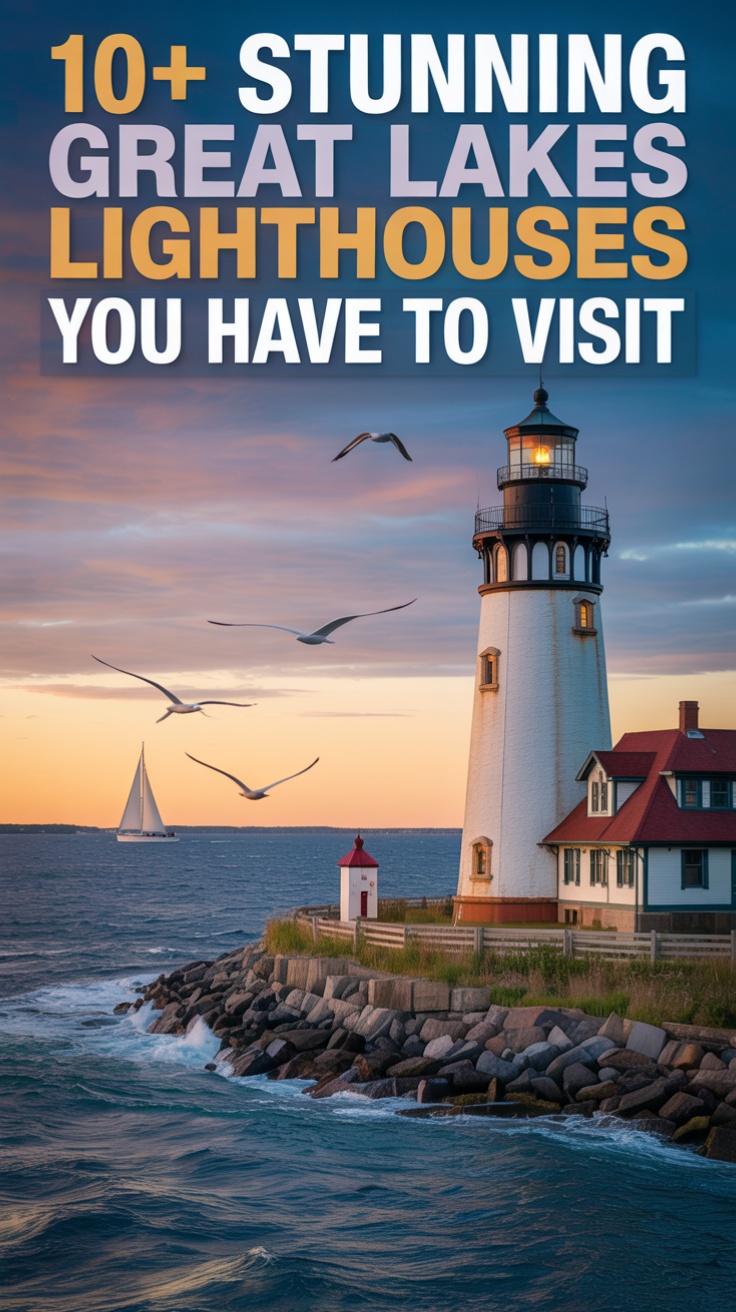
Over 200 active lighthouses dot the Great Lakes, yet most people drive past them without a second glance.
These aren’t just quaint buildings on postcards.
They’re monuments to human resilience, stories carved into stone and steel, sitting on some of the most dangerous water in North America.
The Great Lakes lighthouse map reveals something striking: Michigan alone hosts 144 lighthouses spread across its shoreline.
That’s more lighthouses per capita than almost anywhere else on Earth.
Yet ask the average person to name one, and you’ll likely get blank stares.
Why These Structures Exist, and Why They Matter More Than You Think
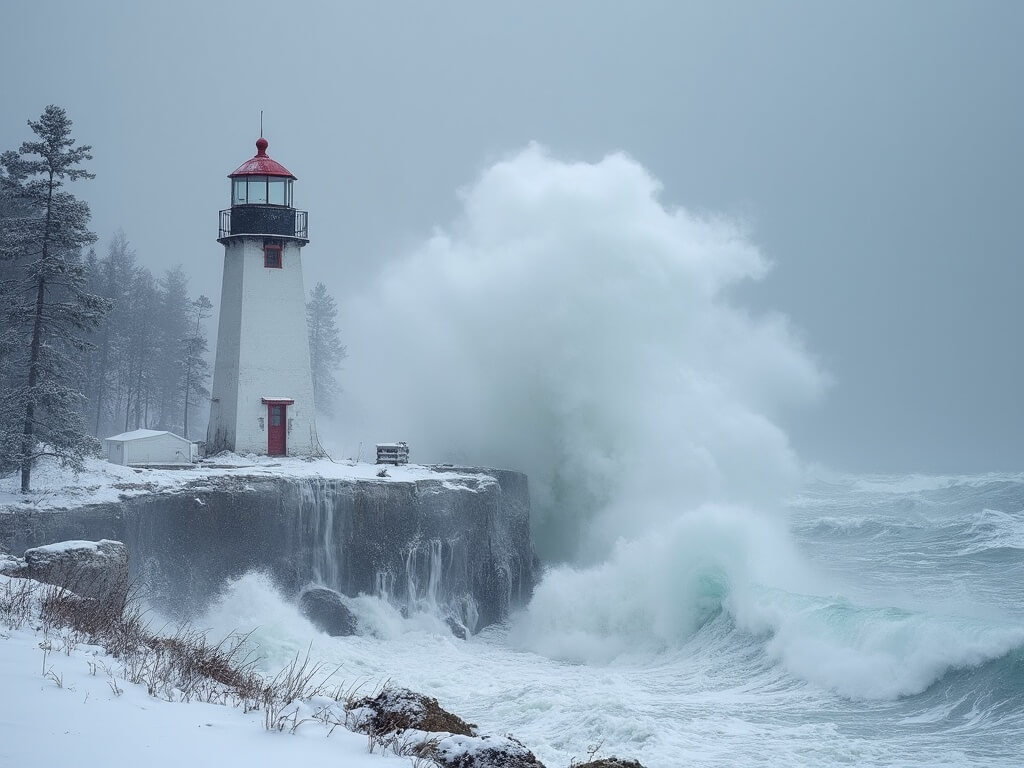
Picture this: it’s 1850, winter on Lake Superior.
A merchant vessel carrying cargo cuts through water so dark it looks like oil.
The captain can’t see more than fifty feet ahead.
Waves crash over the bow with enough force to splinter wood.
Without a lighthouse beam cutting through that darkness, the ship becomes nothing but wreckage and another entry in the Great Lakes’ graveyard of shipwrecks.
This is exactly why Great Lakes lighthouses were built.
Navigation on these five massive freshwater seas isn’t like ocean sailing.
The waters shift unpredictably.
Storms develop faster than anywhere else in North America.
Reefs hide just beneath the surface waiting to gut a hull.
Before modern GPS and radar, lighthouses weren’t luxuries—they were survival.
The earliest Great Lakes lighthouses appeared because commerce demanded it.
By the 1820s, ships carrying iron ore, timber, and grain needed safe passage.
The first permanent light station went up at Marblehead on Lake Erie in 1821, and it’s still operating today, making it the oldest continuously functioning lighthouse on the Great Lakes.
That’s over 200 years of unbroken service.
Imagine any building you know surviving that long without being replaced or fundamentally reconstructed.
The lighthouse keepers who staffed these towers weren’t romantic figures living out poetry.
They were workers doing brutal, dangerous jobs.
They climbed spiral stairs in pitch darkness carrying oil to fuel lamps that burned hot enough to hurt.
They polished Fresnel lenses—intricate glass mechanisms worth thousands of dollars—by candlelight.
They watched for wrecks through fog so thick it erased the world beyond twenty feet.
When ships went down, they launched rescue boats into conditions that seemed designed to kill.
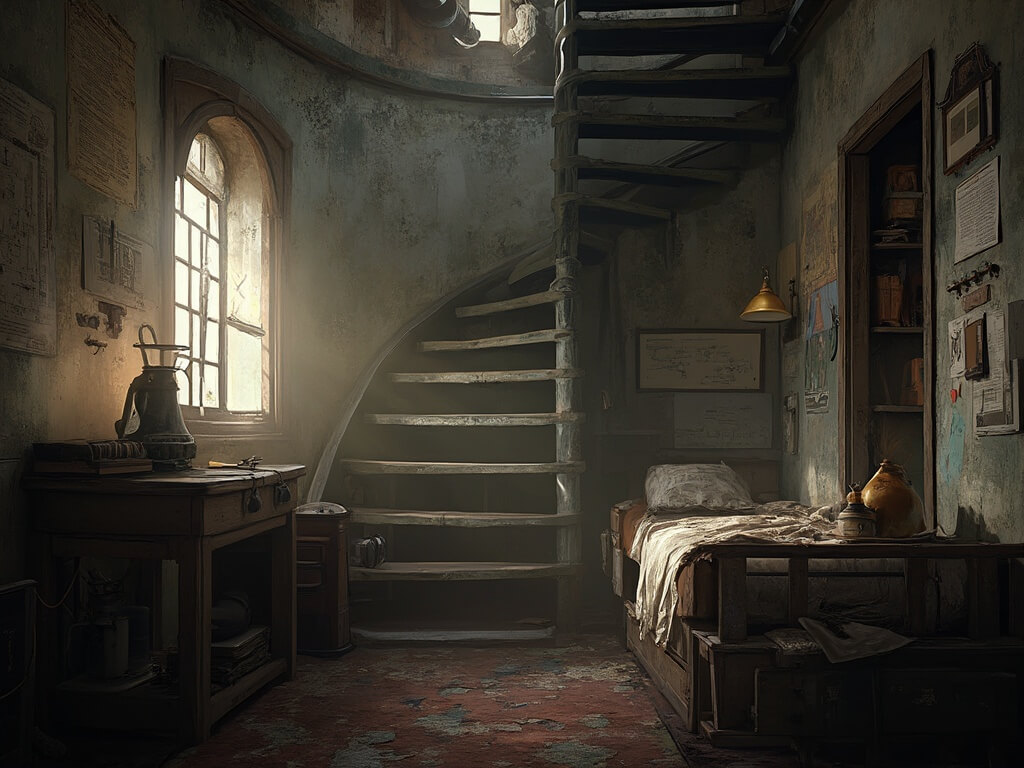
Rachel Wolcott, keeper of Marblehead Lighthouse in the 1830s, became one of America’s first female lighthouse keepers.
She didn’t get the job because of progressive thinking.
She got it because her husband died, and the government decided she could do the work just as well for half the pay.
She kept that light burning for years, saving lives without recognition or fanfare.
That’s the real story behind these structures—not romance, but necessity paired with quiet heroism.
The Five Lakes Hold Secrets in Their Lighthouses
The geography of Great Lakes lighthouses tells you everything about where danger lived on these waters.
Lake Superior demanded the most lighthouses.
This lake kills ships the way a mousetrap kills mice.
The Whitefish Point Light Station sits on Michigan’s Upper Peninsula, and it has earned a horrifying nickname: the “Graveyard of the Great Lakes.”
More vessels have gone down near Whitefish Point than anywhere else on these five lakes combined.
The Edmund Fitzgerald, one of the largest ships ever built on the Great Lakes, sank just seventeen miles from this lighthouse in 1975.
The captain had radioed: “We are holding our own.”
Two hours later, the ship was gone, taking all 29 crew members with it.
The lighthouse couldn’t save them, but it tried.
This is what Lake Superior demands: you either respect it completely, or it takes you.
Lake Michigan has a different character.
The water is still dangerous, but it’s more forgiving than Superior.
Michigan lighthouses tend to cluster around harbours and shipping routes rather than spreading across vast stretches of open water.
Grand Traverse Lighthouse near Traverse City, the Big Red at Holland, and Cana Island near Baileys Harbor represent a different breed—working lighthouses integrated into thriving port communities.
You can actually visit most of these and walk away understanding how people lived and worked in these places.
I spent a morning at Big Red in Holland about five years ago, climbing the narrow stairs with my teenage daughter.
The tower itself is only thirty feet tall, which surprised me.
I’d expected something massive and imposing.
Instead, it was intimate.
You could see how a single keeper lived in that space, ate meals, slept, and maintained a light that meant life or death to captains working in fog.
Standing at the top, you could see across Lake Michigan for miles.
On that particular morning, the water was calm and blue—nothing like the dangerous grey swell that had claimed ships two centuries earlier.
It was hard not to think about all the keepers who’d stood in that exact spot during storms, watching for disaster.
Lake Huron splits its lighthouses between Michigan and Canada, creating an international landscape of navigation aids.
Fort Gratiot Light, built in 1825, became the first lighthouse on Lake Huron.
It still stands on the shore near Port Huron, Michigan, and it’s one of the few Great Lakes lighthouses where you can actually climb to the lantern room.
The view across the water shows you why this location mattered so much—it guards the shipping lane where Lake Huron connects to the St. Clair River, a gateway to Lake Erie and the Erie Canal.
Missing this light meant potentially losing your entire cargo.
Lake Erie hosts Marblehead, which I mentioned earlier, but the lake also holds something else: evidence of how dramatically shipping patterns changed over two centuries.
Once, Lake Erie hummed with traffic.
Steamships burned coal and churned through waters thick with commerce.
Today, the lake is quieter.
Some lighthouses on Erie have been converted to private residences because they’re no longer needed for navigation.
Fairport Harbor lighthouse, built in the 1800s, now operates as a historic site and museum rather than an active navigational beacon.
This shift—from essential tool to heritage site—tells you something profound about progress.
We’ve replaced lighthouses with technology, but we can’t bring ourselves to tear them down.
Lake Ontario sits at the eastern edge, connecting the Great Lakes to the St. Lawrence River and eventually the Atlantic Ocean.
Fort Niagara Lighthouse has British colonial history embedded in its foundation, reaching back to the late 1700s.
The current tower is over 140 years old, and it still guides ships, though now it shares the job with electronic systems that never require a keeper.
The Evolution: How Lighthouses Changed from Essential to Icon
The oldest Great Lakes lighthouses were crude by today’s standards.
Early keepers used open flames—candles and oil lamps—to create light.
The fire hazard was enormous.
A keeper could burn to death faster than anyone could help him.
Then came the Fresnel lens in the 1800s, a revolutionary piece of engineering that concentrated light into a powerful beam.
Invented by Augustin-Jean Fresnel, a French physicist, these lenses transformed lighthouse efficiency.
A Fresnel lens could take a small flame and project it for miles across dark water.
They became the standard on Great Lakes lighthouses, and many of these original lenses are still in use today.

Some lighthouses still use the same Fresnel lenses installed over 150 years ago.
You can see them during tours at places like Marblehead or Big Red—massive, intricate glass mechanisms that look like something between scientific equipment and art installation.
They cost thousands of dollars in their time, which is why keepers treated them like precious gems.
Then electricity arrived, and everything changed again.
Electric lights replaced oil lamps.
Automation meant fewer keepers were needed.
By the 1990s, the U.S. Coast Guard had automated most Great Lakes lighthouses.
The last staffed lighthouse on the Great Lakes was automated in 2003.
No more keepers living in towers, maintaining lights, and watching for distress signals.
Now, modern LED technology is replacing even the automatic systems built decades ago.
Some lighthouses have been retrofitted so completely that the original architecture is all that remains.
The light inside might be a simple LED array powered by solar panels.
The beam works just as well as it ever did, perhaps better.
But something intangible has been lost—the sense that a human being made this place work.
That tension between progress and nostalgia runs through every lighthouse discussion today.
We want these places to survive, but we don’t want to keep paying for keepers.
We want the history preserved, but we want modern reliability.
We want to visit them as tourists, yet we’re uncomfortable admitting that we’re essentially visiting places that served no purpose anymore.
This contradiction has led to something unexpected: the repurposing of lighthouses into bed-and-breakfasts, museums, and hostels.
Some lighthouses now offer overnight stays.
You can actually sleep in a lighthouse tower on the Great Lakes, which would have been unthinkable fifty years ago when they were active working stations.
The Tibbetts Point Lighthouse on Lake Ontario converted its keeper’s quarters into a hostel where people can stay for under thirty dollars a night.
It’s strange and wonderful—you’re sleeping in a building designed for maritime safety, now serving as accommodation for tourists seeking novelty.
The shift from function to heritage tourism has become the only sustainable model for keeping these structures standing and maintained.
Which creates an interesting question: are we preserving history, or are we turning it into entertainment?
The answer, frustratingly, is both.
Heritage tourism pays for restoration work that keeps these lighthouses from crumbling into Lake Superior.
Without tourists paying to visit and stay overnight, most Great Lakes lighthouses would have been demolished decades ago.
The money generated from visitors funds the preservation that keeps the history alive.
So the Great Lakes lighthouse map has transformed from a chart of navigation aids into a tourism infrastructure that somehow preserves cultural heritage while monetizing it.
This might not be ideal, but it’s better than the alternative—losing these buildings entirely to erosion and neglect.
Interested in exploring more historic landmarks? Consider taking a lighthouse tour in Maine or visiting the National Civil Rights Museum in Memphis.
The Hidden Economy: How Lighthouses Drive Regional Tourism
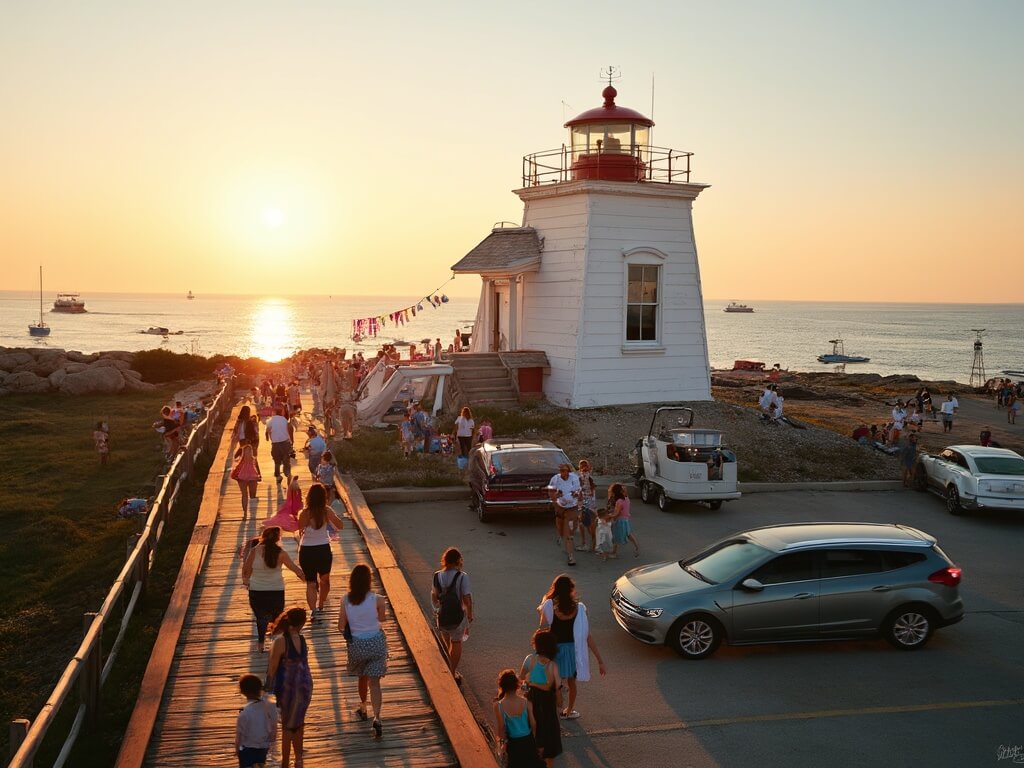
Most people don’t realize that Great Lakes lighthouse tourism generates measurable economic impact.
Michigan alone sees approximately 3 million lighthouse-related visits annually across its 144 lighthouses.
That’s not incidental foot traffic—that’s substantial revenue flowing into small coastal communities that would otherwise struggle.
The economics are straightforward: visitors need lodging, food, fuel, and souvenirs.
A family spending a weekend touring lighthouses typically spends between $800 and $1,200 in the local economy.
Multiply that across thousands of visitors, and you’re talking about tens of millions of dollars annually supporting small towns that would otherwise lose population to urban centers.
Towns like Traverse City, Holland, and Ludington have built their entire tourism strategies around lighthouse accessibility.
The Lighthouse Circle Tour concept—driving routes that connect multiple lighthouses in a region—has become a standard tourism product.
These aren’t random routes; they’re carefully designed to maximize economic impact by routing tourists through local restaurants, shops, and accommodations.
The Great Lakes Lighthouse Keepers Association tracks these numbers, and what they show is remarkable: lighthouse preservation has become financially self-sustaining through tourism, at least in developed regions.
However, this creates a tension.
Remote lighthouses—the truly isolated ones on Superior or the ones in less-developed areas of Huron—don’t generate tourism revenue.
They’re harder to reach, fewer visitors make the journey, and the economics don’t work.
These remote lighthouses depend entirely on grants, volunteer labor, and donations from preservation societies.
Whitefish Point Light Station receives funding from a shipwreck museum operated on the same property, which draws tourists interested in maritime disaster rather than lighthouse architecture specifically.
The economics of lighthouse preservation are unequal across the Great Lakes region.
Accessible lighthouses thrive; remote ones struggle.
This has created a preservation hierarchy where the most historically significant lighthouses—the ones that actually played the biggest role in maritime safety—sometimes receive less funding than more accessible ones with lower historical importance.
It’s not intentional, but it’s the inevitable result of connecting preservation to tourism dollars.
When Lighthouses Don’t Work: The Accessibility Problem Nobody Addresses
Here’s what the tourism boards won’t tell you: many Great Lakes lighthouses are far harder to visit than marketing materials suggest.
The beautiful lighthouse tour you see advertised might be closed when you actually plan your trip.
Seasonal closures are standard—most lighthouses operate tours from May through October only.
Try visiting in November, and you’ll find locked gates and “see you next year” signs.
Winter on the Great Lakes is brutal, and most lighthouse organizations shut down operations rather than pay staff to maintain facilities during the quiet season.
Some lighthouses are accessible only by water.
Copper Harbor Lighthouse on Lake Superior requires a ferry ride, and the ferry runs on a schedule that doesn’t always sync with tourist plans.
You can’t just show up and expect to visit—you need to coordinate with ferry schedules, check weather forecasts, and plan around the reality that Lake Superior doesn’t care about your vacation itinerary.
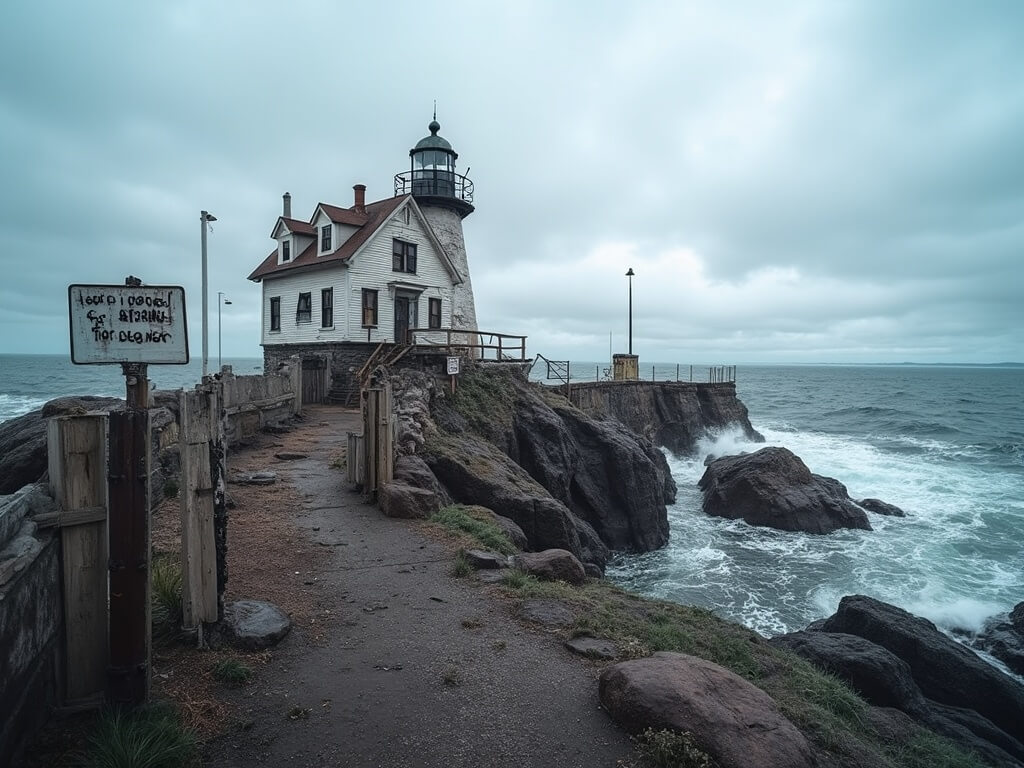
I learned this firsthand when I attempted to visit Copper Harbor Lighthouse with my family in 2019.
We drove six hours to the tip of Michigan’s Keweenaw Peninsula, only to find that the ferry to the lighthouse was booked solid for three days.
What You Actually Experience When You Visit: The Reality Behind the Romance
There’s a gap between lighthouse tourism marketing and the actual visitor experience.
The postcards show elegant towers silhouetted against sunset.
The reality involves parking lots, gift shops, and sometimes disappointed visitors wondering why they drove so far for a building they can see just fine from the parking area.
Let me be clear: many lighthouse visits are worthwhile.
But they’re worthwhile for different reasons than people expect.
The most valuable lighthouse visits seem to correlate directly with the presence of an adjacent museum or interpretive center.
Sand Point Lighthouse at Ludington State Park, for example, sits on beautiful grounds with museum facilities, walking trails, and ranger programs.
By contrast, a lighthouse you encounter on a random drive through a small town—pretty as it might be—offers little beyond photography.
For more in-depth lighthouse stories, explore Lighthouses of the Great Lakes.
The Real Danger: Climate Change and Erosion Are Coming for These Towers
Everything I’ve discussed about lighthouse preservation assumes these structures can be maintained indefinitely.
That assumption is increasingly questionable.
Climate change poses an existential threat to Great Lakes lighthouses, and most preservation organizations haven’t adequately communicated this to the public.
Rising water levels are the primary concern.
Some projections suggest lake levels could rise by another two feet by 2050.
Erosion itself is accelerating.
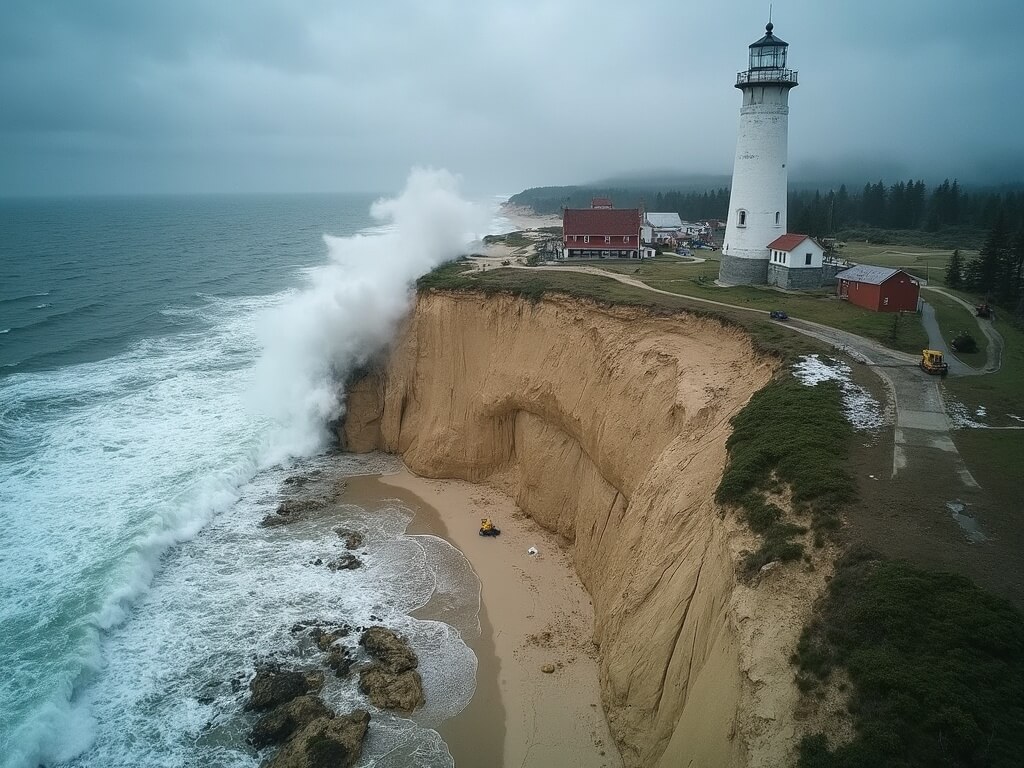
Marblehead Lighthouse, the oldest continuously operating light on the Great Lakes, is now threatened by erosion issues that weren’t concerning even ten years ago.
The broader problem is that climate-driven erosion threatens lighthouses faster than preservation organizations can fund protective measures.
Stories Worth Knowing: The Legends That Keep These Places Alive
Beyond the engineering and economics, lighthouses persist because of stories.
Human beings care about structures when they’re connected to narratives, and Great Lakes lighthouses have accumulated narratives across two centuries.
Seul Choix Point Lighthouse near Manistique, Michigan, has gained a reputation as one of the most haunted lighthouses.
The Edmund Fitzgerald sinking connects to Whitefish Point in ways that transcend normal historical documentation.
The Great Lakes Lighthouse Keepers Association has been collecting keeper stories for decades, and some of these narratives are extraordinary.
The Preservation Movement: Who’s Actually Keeping These Lighthouses Standing
Lighthouse preservation isn’t a unified, centralized effort.
It’s a patchwork of government agencies, nonprofit organizations, volunteer groups, and dedicated individuals working toward the same goal through wildly different methods.
The GLKA is the acknowledged expert organization coordinating efforts across the region.
Funding comes from state heritage grants, tourism revenue, and private donations. However, resource allocation varies widely.
Visit our other travel explorations like Mall of America in Minnesota or Beaches of the Oregon Coast.
Planning Your Visit: The Practical Guide Nobody Tells You
If you decide to visit Great Lakes lighthouses, certain practical realities will improve or ruin your experience.
Understand the seasons. May through October is the standard operating window.
Physically prepare for climbs. Lighthouse towers are reached via spiral staircases with narrow steps.
Consider overnight stays at lighthouse accommodations like Sand Point at Ludington State Park.
Document your visit thoughtfully. The sensory connection to history is more valuable than a photo.
Plan ahead. Websites may be outdated, and access may be limited or require reservations.
The Uncomfortable Truth: Preservation Has a Limit
The practical reality is this: most Great Lakes lighthouses will survive, but not all.
Some will be relocated, others abandoned. Some will be preserved but no longer publicly accessible.
This creates a preservation hierarchy that reflects economic and environmental realities more than historical merit.
The Unanswered Questions That Drive Future Decisions
How do we prioritize preservation when resources are limited?
Who should bear the cost of climate adaptation?
Can volunteer-based preservation scale as facilities age?
These questions will shape what happens to Great Lakes lighthouses over the next two decades.
The Reason You Should Actually Care (Beyond Tourism)
Lighthouses are monuments to human commitment to protecting strangers.
They represent persistence, reliability, humility—qualities increasingly rare today.
They remind us of a time when engineering and human dedication saved lives in quiet, thankless ways.
Why This Matters Now More Than Ever
The Great Lakes lighthouse network faces genuine threats from climate change, budget constraints, and cultural drift.
Organizations working to maintain lighthouses need funding, volunteer support, and sustained public interest.
You don’t need to become a lighthouse enthusiast to contribute. Just visit, support, and share what you learn.
Explore more adventures on the Hana Highway in Maui or hike to Delicate Arch in Utah.
The towers still stand, and the stories they contain are still worth the effort to reach them.
That’s the real reason to explore the lighthouses of the Great Lakes.