You’ve probably driven past volcanic landscapes before without really seeing them.
Most people do.
They glance out the window, think “that’s cool,” and move on.
But what if I told you there’s a place in northeastern California where you can literally crawl through frozen lava tunnels that formed tens of thousands of years ago?
Where ancient rock art still marks canyon walls?
Where a handful of Native Americans once held off the entire US military?
The Lava Beds National Monument is that place, and it’s one of the most underrated destinations in the western United States.
I’m not exaggerating when I say most people have no idea it exists.
Why Lava Beds National Monument Is Nothing Like Other Parks You’ve Visited
Here’s the thing about exploring lava tube caves and volcanic landscapes.
You can read about geology all day long, watch documentaries, study maps.
But nothing—and I mean nothing—compares to standing inside a cave that’s been sealed for thousands of years, shining your torch on lava formations that look like frozen waterfalls.
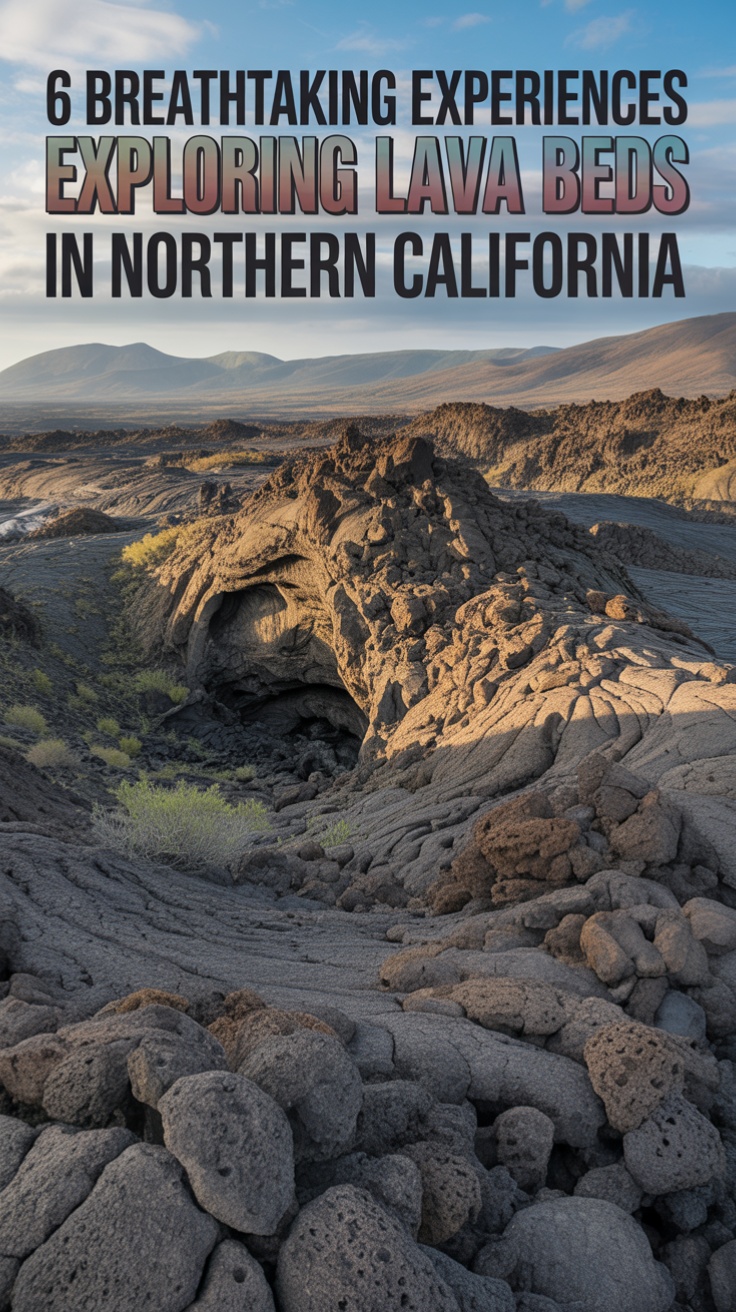
The Lava Beds National Monument sits on the northeastern flank of Medicine Lake Volcano, the largest volcano by area in the entire Cascade Range.
We’re talking about 46,000 acres of high desert landscape shaped entirely by volcanic eruptions spanning millennia.
The numbers alone tell you something extraordinary is happening here.
There are over 700 to 800 known lava tube caves within the monument.
That’s the largest concentration of lava tube caves in North America.
Of those, 27 are developed and accessible to the public.
Most formed between 10,500 and 65,000 years ago as lava flowed, cooled, and hardened in ways that created these incredible hollow passageways.
These aren’t tourist traps with paved walkways and gift shops.
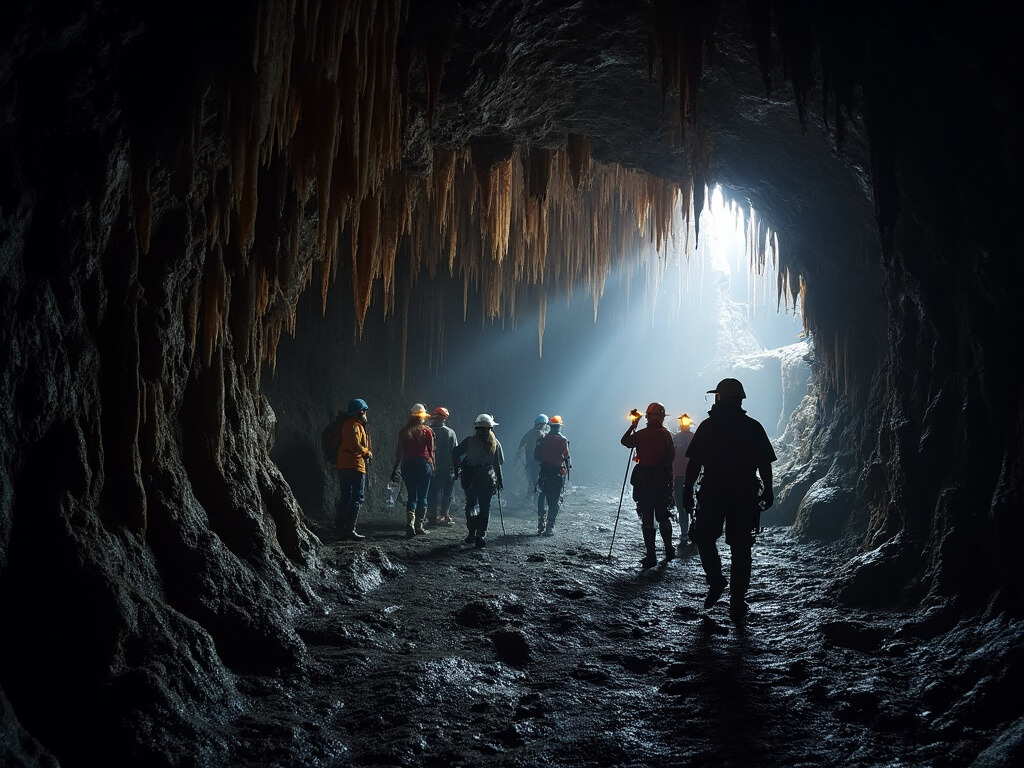
These are real caves where you need a headlamp, sturdy boots, and genuine willingness to squeeze through tight passages.
Most importantly, they tell a story that goes far deeper than geology alone.
The Landscape That Stops You in Your Tracks
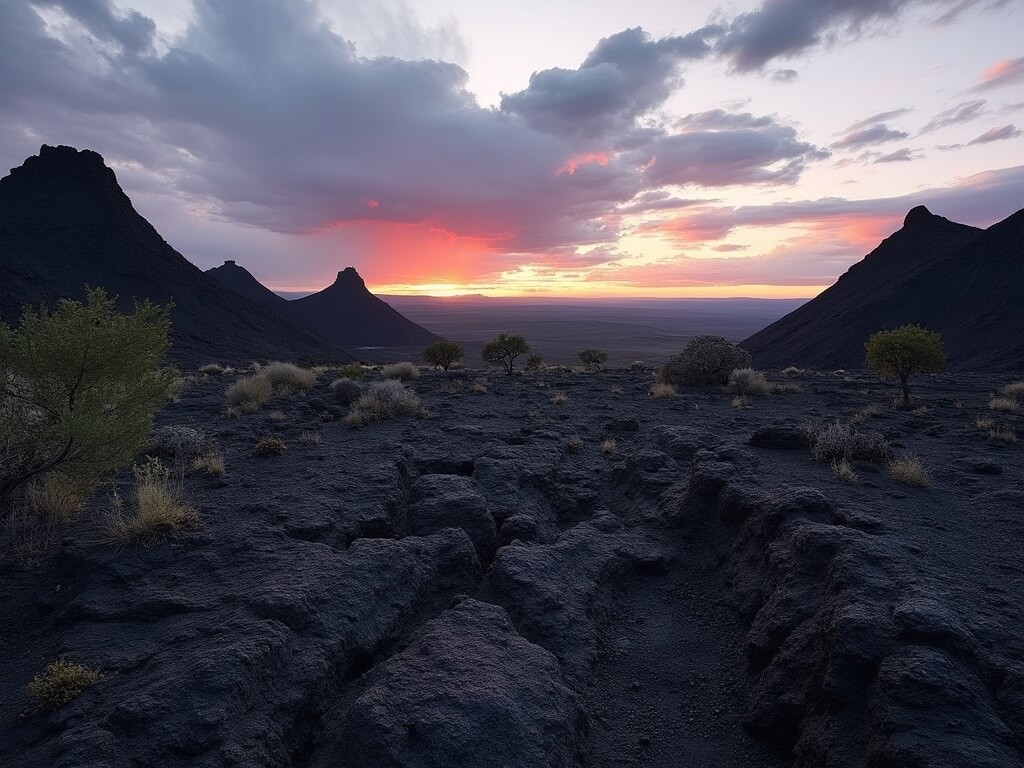
When you first drive into the Lava Beds, the terrain feels almost alien.
The high desert stretches endlessly, dotted with sagebrush, juniper, and mountain mahogany.
But it’s the volcanic formations that dominate.
Cinder cones rise like dark pyramids against the sky.
Spatter cones cluster together in strange formations.
Collapsed craters create sudden depressions in the earth.
Lava flows stretch across the landscape in dark, jagged patterns.
One feature in particular—the Big Crack—stands out as a prominent reminder of the tectonic and volcanic forces that continue shaping this region.
This isn’t a manicured park.
It feels raw, untamed, and honestly a bit intimidating in the best possible way.
I remember standing on the rim of one crater, looking out across what appeared to be an ocean of black rock, thinking about how much violence created this beauty.
Geological violence, sure, but violence nonetheless.
The landscape tells you immediately: you’re in a place shaped by forces far beyond human scale.
The high desert ecosystem supports more than just rocks and dirt, though.
Mule deer graze in the mornings and evenings.
Pronghorn antelope move through the sagebrush like ghosts.
Rabbits dart between rocks.
Bald eagles circle overhead, taking advantage of the open terrain.
The remoteness of the location means these animals haven’t grown accustomed to crowds, so spotting wildlife feels genuinely special.
Inside the Caves: What Makes Lava Tubes So Mesmerizing
Now, the caves are where things get properly interesting.
If you’ve been inside a limestone cave with stalactites and stalagmites, lava tubes are completely different beasts.
They’re essentially tunnels carved by flowing lava.
The lava moves through, cools on the outside, but the hotter interior keeps flowing, leaving behind these hollow tubes.
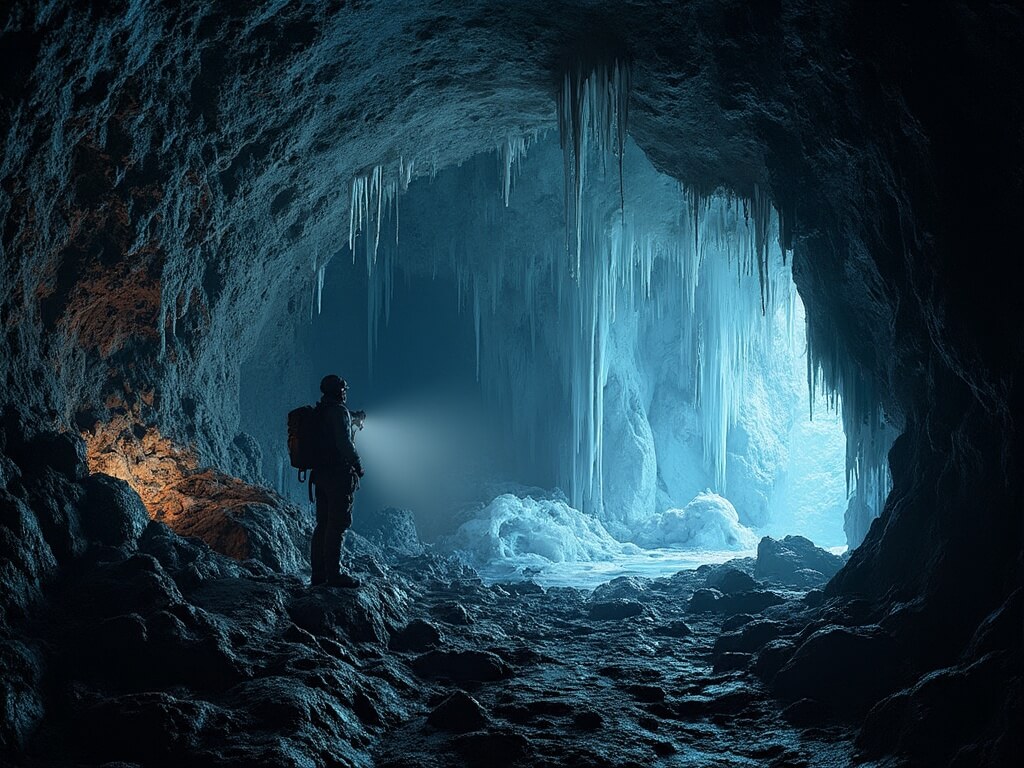
Inside these caves, you find formations that don’t exist anywhere else.
Lavacicles are what they sound like—lava icicles that form when molten rock drips from the ceiling like frozen water.
Dripstone formations and secondary speleothems appear as mineral deposits from water percolating through the rock after the lava cooled.
The cave walls often display fascinating textures—smooth in places where lava flowed rapidly, rough and jagged elsewhere.
Temperature inside stays cool year-round, and some caves even contain perennial ice, which creates surreal underground landscapes.
The caves vary dramatically in difficulty.
Mushpot Cave is lighted and straightforward—perfect for people who want the cave experience without genuine physical challenge.
Catacombs Cave is the opposite.
It’s labyrinthine, complex, demanding.
You’ll duck, twist, and crawl through passages that seem to go on endlessly.
Valentine Cave and Merrill Cave sit somewhere in between, offering genuine adventure without requiring technical climbing equipment.
When I first explored Catacombs Cave with a ranger years ago, I remember feeling genuinely disoriented about halfway through.
The passages twisted in directions I didn’t expect.
Light from my headlamp bounced off the lava walls in ways that made it hard to judge distance and direction.
For maybe thirty seconds, I felt a flutter of genuine claustrophobia.
Then the ranger pointed out these incredible lavacicle formations catching my light just right, and suddenly I wasn’t thinking about tight spaces anymore.
I was thinking about the fact that I was standing inside a tunnel carved by lava that flowed tens of thousands of years ago.
That shift in perspective—from physical discomfort to wonder—that’s what these caves do.
Here’s what you need to know about caving safely at Lava Beds:
- Bring a proper headlamp or flashlight (phones die fast in caves).
- Wear sturdy, closed-toe boots with good grip.
- Bring layers—caves stay cold even in summer.
- Tell someone where you’re going.
- Don’t rush through passages.
- Families with children can absolutely do this, but kids need to be reasonably comfortable in tight spaces.
The Hidden History: Who Lived Here First
The volcanic landscape at Lava Beds isn’t just geologically significant.
It’s archaeologically crucial too.
Evidence of Native American habitation stretches back thousands of years.
The Modoc people lived here, hunted here, and left permanent marks on the rock.
Petroglyph Point stands as a major archaeological site, with ancient rock art still visible on canyon walls.
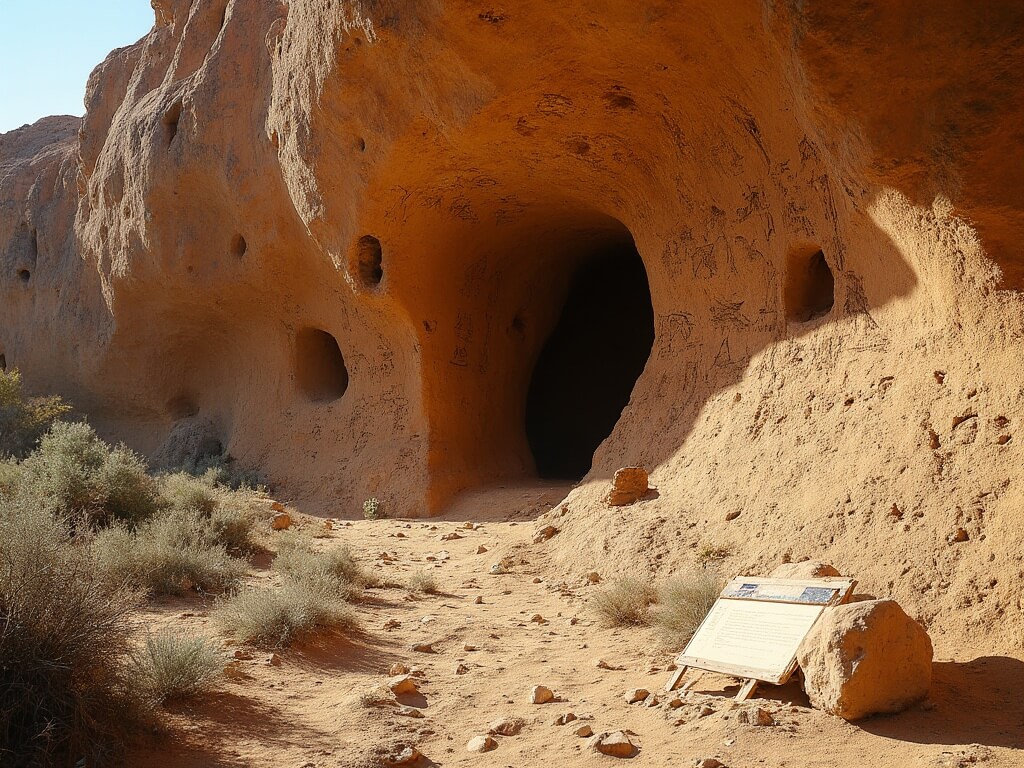
These aren’t random scratches.
They’re intentional marks left by people trying to communicate across time.
Walking past these petroglyphs, you’re looking at messages from centuries past.
The Modoc people also understood the caves in ways that would later prove historically significant.
Those complex, twisted passages I mentioned earlier in Catacombs Cave?
They became strategically important during the Modoc War (1872–1873), one of the most significant Native American conflicts of the 19th century.
When tensions between the Modoc tribe and the US military escalated, a group of Modoc fighters retreated into the lava beds.
Captain Jack’s Stronghold remains the most historically important site—the actual location where a small band of Modoc held off a much larger military force.
The US military had superior numbers, superior weapons, and superior resources.
The Modoc had something else: intimate knowledge of the landscape.
They knew these caves, these passages, these hidden routes through the lava fields.
That knowledge nearly won them the conflict.
The caves served as both shelter and fortress, making them nearly impossible to assault directly.
Today, interpretive signage and ranger programs explain this history in detail, making it impossible to visit without understanding both the geological and human significance of the place.
You’re not just looking at rocks and caves.
You’re standing in locations where major historical events unfolded.
The park actively protects Modoc rock art sites and artifacts, recognizing that these remain sacred to descendant communities.
If you’re fascinated by natural wonders like the Lava Beds, you might also want to hike to Delicate Arch in Arches National Park or take a lighthouse tour in Maine.
Planning Your Visit: What Most People Get Wrong
Here’s where most people stumble with Lava Beds.
They show up without preparation. They assume it’s like other national parks with clearly marked trails, visitor centers stocked with supplies, and cell service to call for help. That assumption costs them.
The monument sits in genuinely remote territory in northeastern California, near the Oregon border in Siskiyou and Modoc counties. The access roads wind through mountains and along rivers in ways that feel more isolated the closer you get.
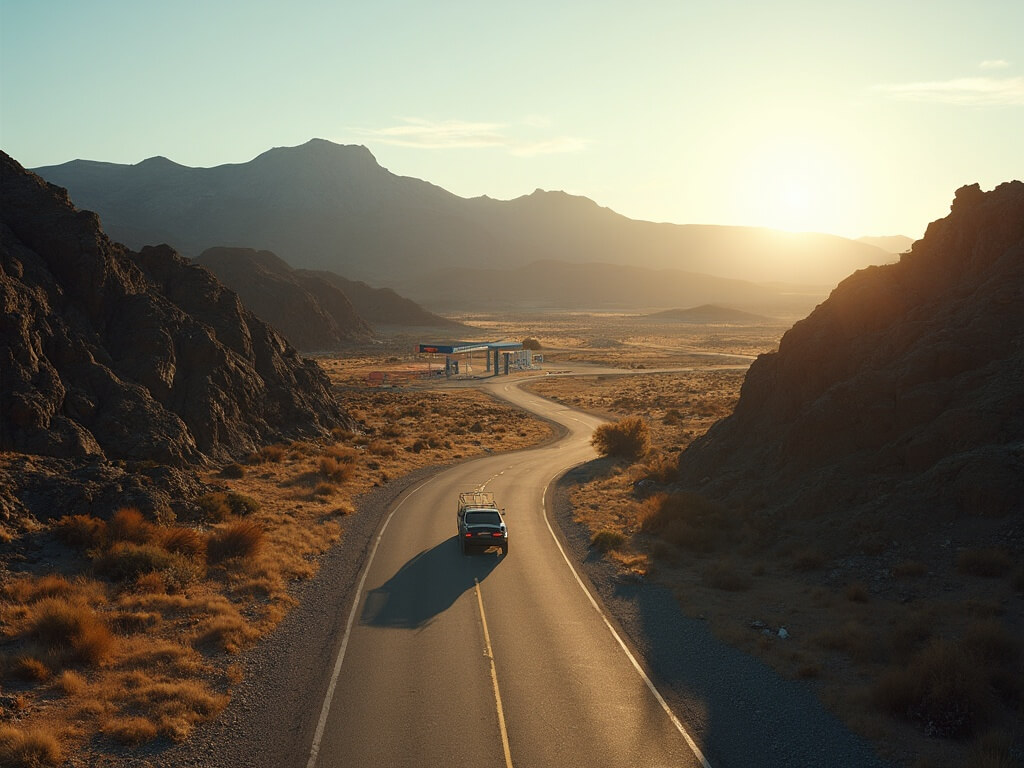
Your cell service will disappear. Convenience stores won’t exist for miles. Gas stations become memory. This remoteness is precisely why most people never visit, but it’s also why those who do experience something genuinely special.
The park stays open year-round, but services and ranger programs vary dramatically by season. Summer brings ranger-led tours, cave walks, and campfire talks—programs that genuinely enhance your understanding of what you’re seeing. Winter brings snow, reduced services, and fewer people. Spring and fall offer that middle ground of decent weather and moderate crowds.
Here’s what successful visitors pack:
- Plenty of water—more than you think you need.
- Snacks and food (nowhere to buy these nearby).
- A reliable flashlight or headlamp with extra batteries.
- Protective gear including knee pads if you’re claustrophobic about crawling.
- Binoculars for wildlife observation.
- A good map because you can’t rely on your phone.
- Sturdy hiking boots broken in before your trip.
- Layers of clothing because cave temperatures shock your system.
- First aid supplies.
- A physical guidebook to the caves.
The visitor center at the entrance provides exhibits, information, and guidance on which caves match your skill level and interests. Spend at least an hour here before heading out. The staff can save you from poor decisions.
Nearby lodging options like the St. Bernard Lodge provide basic but adequate accommodations, though booking well in advance is essential during peak season.
For official preparation tips, refer to the Plan Your Visit to Lava Beds National Monument page.
The Trails That Connect Everything Together
Beyond cave exploration, Lava Beds offers hiking trails that traverse the xeric shrubland and volcanic fields. These aren’t casual walks. The terrain is rough, the volcanic rock is sharp, and the desert sun reflects off the black stone in ways that drain your energy faster than you’d expect.
But that difficulty delivers something most parks can’t: genuine solitude.
The trails at Lava Beds often feel like they belong entirely to you. The morning and evening hours are prime for wildlife viewing. The animal activity picks up when temperatures drop—mule deer, pronghorns, rabbits all make appearances.
Photography enthusiasts will revel in the volcanic formations and dramatic contrasts, particularly along the Volcanic Legacy Scenic Byway—a route that connects Lava Beds with other volcanic sites like Lassen Volcanic National Park and Crater Lake in Oregon.
For a comprehensive overview of exploration options, visit the Complete Guide to Exploring Lava Beds National Monument.
Understanding What Makes This Geology Extraordinary
Most people think about volcanoes in terms of eruptions and lava flows. But Medicine Lake Volcano, which underpins Lava Beds, is the largest by area in the entire Cascade Range—surpassing the likes of Mount Rainier and Mount Shasta.
It’s a shield volcano, formed through thousands of years of low-viscosity lava flows. The lava tubes formed during these eruptions, leaving behind hollow channels once the flowing lava drained away.
These caves don’t resemble limestone formations. Instead of stalactites, you’ll see lavacicles—lava drips that cooled mid-air. The walls are etched with flow textures and, in some places, perennial ice remains even during summer.
Features like the Big Crack remind us that the region isn’t geologically dead—just dormant. Someday, Medicine Lake Volcano will erupt again.
The Archaeological Dimension: Layers of Human History
The Modoc people lived in and around Lava Beds for centuries. They utilized caves for shelter, tracked wildlife across seasons, and cultivated deep knowledge of flora in the high desert.
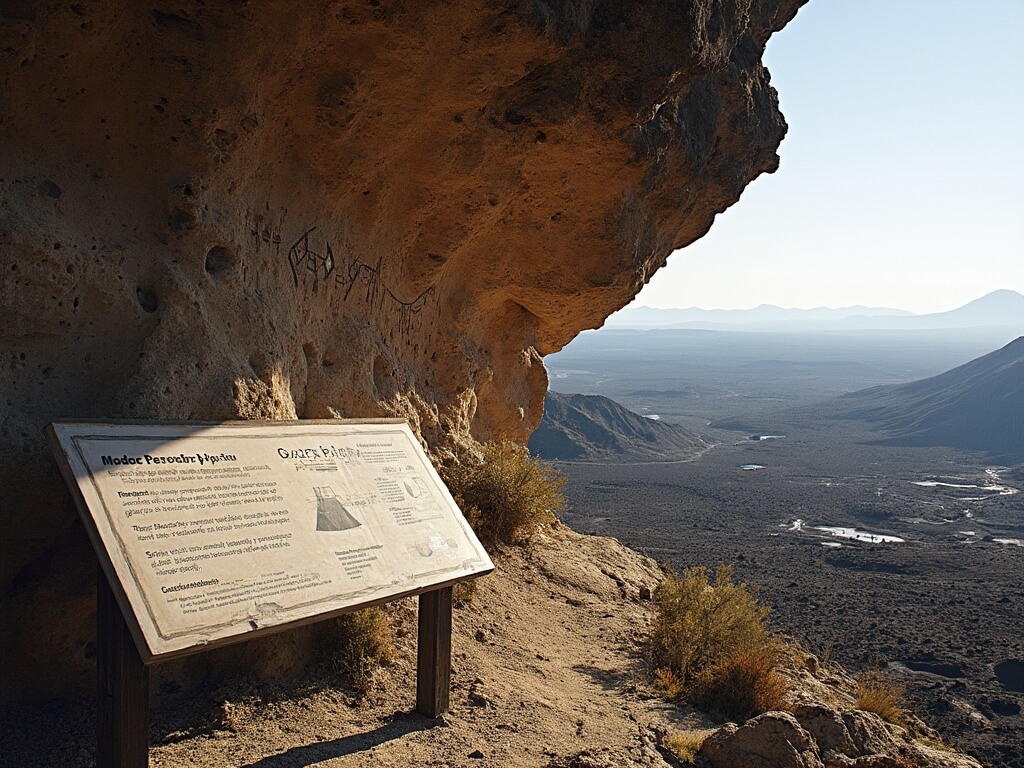
Petroglyph Point displays rock art with animal figures, geometric shapes, and handprints—evidence of long-standing cultural and spiritual practices.
The Modoc War (1872–1873) is a poignant chapter, where a small band of Modoc fighters led by Captain Jack used the lava beds’ rugged terrain to resist over 1,000 U.S. soldiers. Captain Jack’s Stronghold remains a powerful historical site that offers insight into tactical warfare rooted in geographical knowledge.
This is more than history—it’s living cultural heritage, actively protected by the park and descendant communities.
What Nobody Tells You About Cave Safety and Accessibility
The caves are spectacular—but not all are safe or accessible for everyone. Some require tight crawling, ladders, and sure-footedness. Injuries happen when people overestimate their abilities.
Bring:
- Sturdy footwear
- Multiple light sources
- Protective gear if necessary
Mushpot Cave, with its lighting and relative ease, is best for visitors with mobility limitations. Accessibility remains a challenge due to the rugged volcanic terrain, but knowing your limits helps avoid disappointment and danger.
The Environmental and Conservation Reality Check
More visitors means greater risk to delicate ecosystems. That’s why some caves are off-limits and others have visitor limits. Rare cave-dwelling species and fragile mineral formations need protection.
Ranger-led tours help minimize impact, and educational programs increase awareness while reducing physical strain on the environment.
When you visit, you’re part of the preservation effort.
Respect guidelines, stay on marked trails, and leave no trace. Sustainable tourism protects this incredible environment for future generations.
Why Lava Beds Matters More Than You Initially Realize
Lava Beds isn’t just a park—it’s a revelation. Standing inside a lava tube formed thousands of years ago, you feel the immensity of time. Seeing Modoc petroglyphs or standing in Captain Jack’s Stronghold transforms your understanding of history and geology.
This is a place where the Earth is still active—where geology, history, and human resilience intersect in profound ways.
It’s not just sightseeing. It’s learning and connecting.
Making Your Trip Actually Happen
The remoteness of Lava Beds keeps many away—but that’s the exact reason to go. The effort you invest multiplies the reward.
Tips:
- Start planning months in advance.
- Book lodging early.
- Check seasonal programs and weather.
- Prepare gear, supplies, and maps.
- Avoid solo cave exploration.
- Bring more water and food than you think you’ll need.
The experience will stay with you: emerging from a tight lava tube chamber, standing on a volcanic crater, or learning about the Modoc resistance.
Lava Beds rewards those who venture beyond the obvious.
Discover More Unique Adventures
- Drive the Hana Highway in Maui
- Walk the Beaches of the Oregon Coast
- Ride the Great Smoky Mountains Alpine Coaster
- Spend a Day at Mall of America in Minnesota
- Visit the National Civil Rights Museum in Memphis
Further Resources
For more information check out the Complete Guide to Exploring Lava Beds National Monument and the official Plan Your Visit to Lava Beds National Monument provided by the National Park Service.