You’ve probably heard that Gettysburg was important.
Most people know it as the turning point of the Civil War, the moment when everything shifted.
But what actually happened there?
Why did 51,000 soldiers end up dead or wounded in just seventy-two hours?
And how did a small Pennsylvania town become the place where the Confederacy’s hopes of victory died?
The truth is messier and more human than the textbook versions suggest.
I first visited the Gettysburg National Military Park when I was seventeen, dragged along by my grandfather who’d studied military history his entire life.
I expected boredom.
Instead, I found myself standing on Cemetery Ridge at sunset, and he walked me through what happened there—not the sanitised version, but the actual chaos.
Soldiers firing so rapidly their rifle barrels became too hot to touch.
Officers making split-second decisions that meant life or death for thousands.
Civilians fleeing their homes as the battle raged through their streets.
That day changed how I understood history.
Not as dates and names, but as the collision of human choice, geography, and sheer circumstance.
This is what the Battle of Gettysburg battlefield tells us when we actually pay attention.

Why This Particular Pennsylvania Crossroads Became the Civil War’s Deadliest Battle
Gettysburg wasn’t famous before July 1863.
It was just another small town in Adams County, Pennsylvania, sitting at the intersection of ten roads.
But that intersection mattered more than anyone anticipated.
General Robert E. Lee had invaded the North that summer with one clear goal: win a decisive victory on Union soil.
A major battle won in Pennsylvania or Maryland, he believed, would force the North to negotiate peace and recognise Confederate independence.
It would also relieve pressure on Virginia, where Union armies had been grinding away at Confederate defences for months.
Lee needed supplies.
His army was hungry and equipped with worn-out gear.
Pennsylvania had resources the South desperately lacked—horses, cattle, wagons, shoes.
The roads converging at Gettysburg made it a natural gathering point.
Neither commander intended to fight there.
Lee wanted to concentrate his forces somewhere strategically advantageous.
Union General George G. Meade was still learning his job—he’d only assumed command of the Army of the Potomac nine days before the battle started.
But when Confederate cavalry under J.E.B. Stuart went missing (he’d ridden off on an ambitious raid), Lee moved blind through Pennsylvania.
Union General John Buford, commanding a cavalry division, arrived at Gettysburg first on June 30th.
He recognised the ground’s strategic value immediately.
The terrain offered natural defensive advantages:
- High ground to the south (Cemetery Hill, Culp’s Hill, and Little Round Top).
- Open fields that would break up infantry charges.
- Interior lines that allowed defenders to shift reinforcements quickly.
Buford made a calculated decision: hold the town with his cavalry until Union infantry could arrive.
This single choice triggered a cascade that nobody could have predicted.
What started as a cavalry skirmish became the largest battle in North American history.
The First Day: When a Cavalry Officer’s Gamble Changed Everything
July 1st, 1863 dawned clear and hot in Adams County.
Lieutenant Marcellus Jones, commanding a Union cavalry picket west of Gettysburg, saw Confederate infantrymen approaching at dawn.
He fired what’s generally recognised as the battle’s first shot around 7:30 a.m.
No dramatic cavalry charge.
No massed formations.
Just a young officer recognising enemy soldiers and doing his job.
Within hours, thousands more soldiers began converging on Gettysburg from every direction.
The town became a vortex.
Buford’s cavalry—about 2,500 men armed with repeating carbines—fought a delaying action against Confederate General Henry Heth’s division.
They didn’t have the numbers to win, but they had terrain and firepower.
More importantly, they bought time.
General John Reynolds, commanding Union First Corps, arrived around 10 a.m.
His first order was brilliant and tragic: “The First Corps will engage the enemy.”
Reynolds knew what this meant.
His corps would suffer heavy casualties.
It was necessary anyway.
He rode forward to scout positions and was shot dead within the hour, but his corps arrived in time to stop the Confederate advance from rolling through Gettysburg entirely.
The fighting intensified.
Confederate divisions under A.P. Hill and Richard Ewell attacked from the west and north.
Union reinforcements kept arriving—not enough to hold indefinitely, but enough to trade space for time.
By mid-afternoon, Union lines were bending but hadn’t broken.
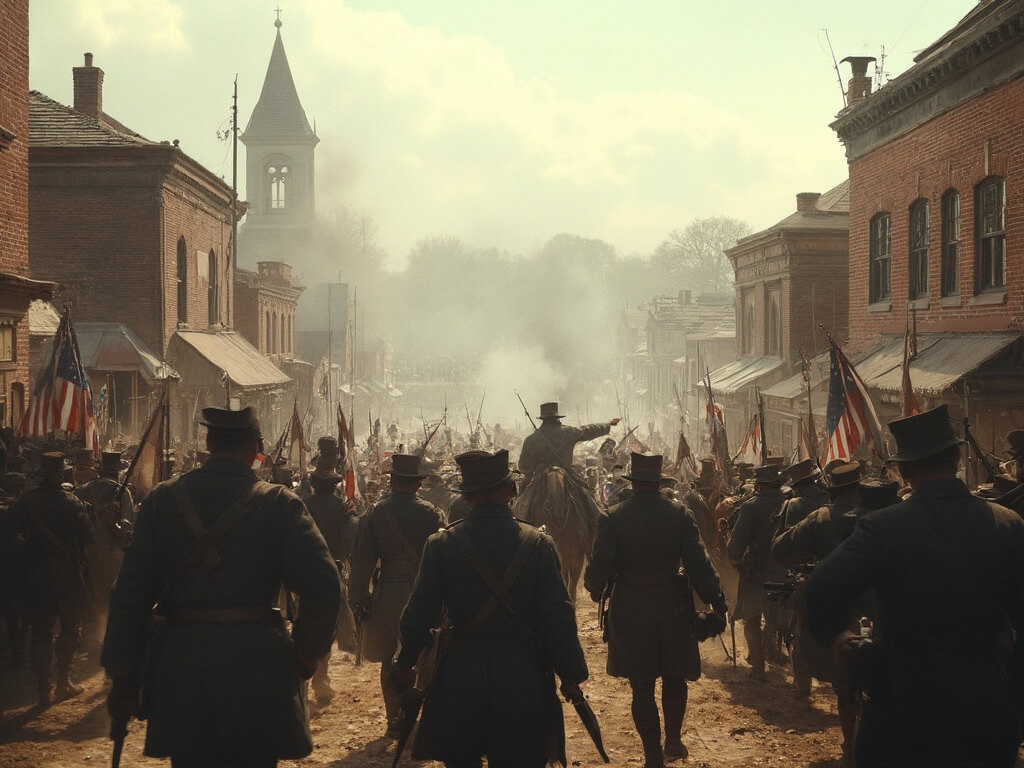
Then Ewell brought fresh divisions into the fight from the north.
The Union Eleventh Corps, defending the northern edge of the town, was caught in a crossfire.
Suddenly the collapse came.
Union regiments retreated through Gettysburg’s streets in disorder, pursued by Confederate soldiers.
Here’s what most people get wrong about the first day:
The Union didn’t lose.
They lost ground and suffered casualties, yes.
But they managed something far more important—they retreated to the high ground south of town rather than scattering.
Officers like General Winfield S. Hancock, who arrived in the afternoon, helped reorganise the troops on Cemetery Hill and Culp’s Hill.
By sunset on July 1st, the Union had established a strong defensive line.
Lee had won the ground but lost the advantage.
He controlled Gettysburg itself, but his enemy held the better defensive position.
As darkness fell, both armies received reinforcements and dug in.
Everyone understood: the real fighting would come tomorrow.
The Crucial Middle Day: When One Colonel’s Decision Might Have Changed the War’s Outcome
July 2nd is the day most Civil War historians obsess over.
It’s the day when everything could have gone differently.
By morning, General Meade had concentrated most of the Army of the Potomac on the ridges south of Gettysburg.
The Union defensive line formed a rough fishhook shape—Cemetery Hill as the shank, Culp’s Hill on the north, and Little Round Top anchoring the southern flank.
It was strong ground, but Lee believed he could break it.
He ordered James Longstreet, his most experienced lieutenant, to attack the Union left flank around Little Round Top.
The idea was sound: smash through the southern end of the Union line, roll up the defensive position, and force Meade to retreat.
Longstreet, however, disagreed with the entire plan.
He wanted to move around the Union army’s eastern flank instead of attacking head-on.
Lee overruled him.
The attack began in early afternoon, and what followed was some of the most vicious close-quarters fighting of the entire war.
Confederate brigades attacked through Devil’s Den and the Wheatfield, dense terrain that broke up formations and nullified numerical advantage.
Cannon fire and musket balls turned those rural landscapes into killing zones.
Men who were alive at breakfast were dead by dinner, their bodies left where they fell.
Union regiments rotated through the fighting, getting battered, then pulled back to reform.
Fresh brigades moved forward to replace them.
It was a grinding, brutal attrition of men and will.
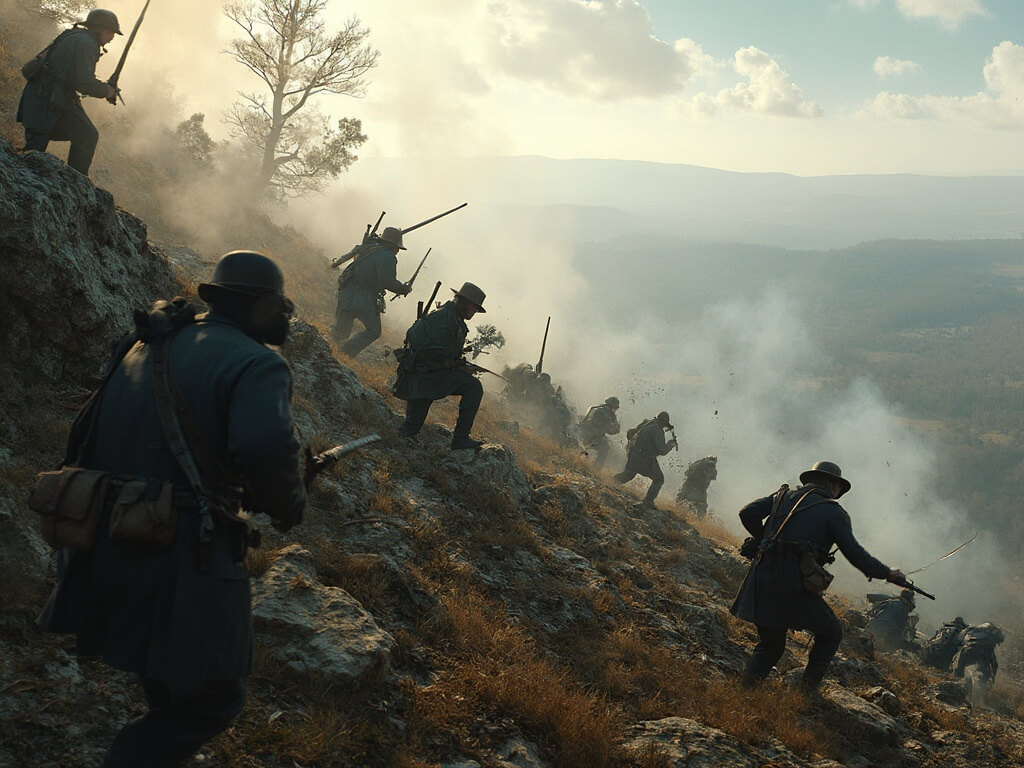
The critical moment came late in the afternoon around Little Round Top itself.
This steep rocky hill was the southern anchor of the Union position.
If the Confederates took it, the Union line could be rolled up from the south.
Confederate brigades attacked the slope repeatedly.
Joshua Chamberlain, a thirty-four-year-old college professor from Maine commanding the 20th Maine Regiment, held this position.
His regiment was running out of ammunition.
They’d fired thousands of rounds and had perhaps ten bullets per man remaining.
Confederate attackers were pushing up the slope for what might have been the final assault.
Chamberlain made the kind of decision that changes history.
He ordered his men to fix bayonets—an almost archaic weapon by 1863 standards.
Then he ordered a bayonet charge.
Men without ammunition charged downhill at Confederate soldiers coming uphill.
It shouldn’t have worked.
Raw military logic says it was insane.
But panic spreads faster than courage, and Confederate soldiers retreating downhill created confusion.
Other Union regiments nearby saw an opportunity and attacked.
The moment broke.
I’ve stood on that slope.
It’s steeper than you’d expect, rocky and overgrown now, but still recognisably the same ground where twenty-year-old farmboys and factory workers fought with the desperation of men who knew they were dying.
Chamberlain’s 20th Maine suffered 130 casualties that day—nearly half the regiment.
But they held the hill.
By nightfall on July 2nd, the Union position still stood intact.
Lee hadn’t broken through.
His attacks, though fierce and costly, had accomplished nothing except to fill field hospitals with the wounded.
Both armies were exhausted.
Both had suffered terrible casualties.
But the Union still held the high ground, and that meant everything.
—
Tomorrow would bring the final blow—an assault so desperate, so massive, and so doomed that it would earn a name that echoes through history.
Pickett’s Charge would be remembered as the moment the Confederacy reached its highest point and began its irreversible decline.
You might also enjoy exploring how other historic American moments shaped the country—like a visit to the National Civil Rights Museum in Memphis or planning to spend a day at the Mall of America in Minnesota to experience modern American culture.
The Third Day: When 12,500 Men Walked Into Certain Death

July 3rd started with a decision that haunts historians to this day.
Lee gathered his commanders in the pre-dawn darkness. He’d been defeated locally on both flanks the previous day. The Union still held the high ground. Every military principle suggested retreat. But Lee believed one more massive assault could break the Union center.
If he could punch through Cemetery Ridge, the entire Union position would collapse. At least, that’s what he told himself.
James Longstreet, who knew better, warned against it.
“I have been a soldier all my life,” he reportedly said. “I have been with soldiers engaged in fights by couples, by squads, companies, regiments, divisions, and armies, and should know as well as anyone what soldiers can do. It is my opinion that no 15,000 men ever arrayed for battle can take that position.”
Lee listened politely and rejected the advice.
The plan was to concentrate artillery fire on the Union center, break their line, then send infantry through the gap. It sounded perfect on paper. In reality, it was catastrophe dressed up as strategy.
Around 1 p.m., Confederate cannons opened fire—roughly 170 guns unleashing thunderous volleys toward Cemetery Ridge. The Union artillery responded. For two hours, the noise was apocalyptic. Soldiers described it as continuous thunder that never stopped. The ground itself seemed to shake.
When the bombardment finally ceased around 3 p.m., General George Pickett gave his famous order: “Up, men, to the colours.”
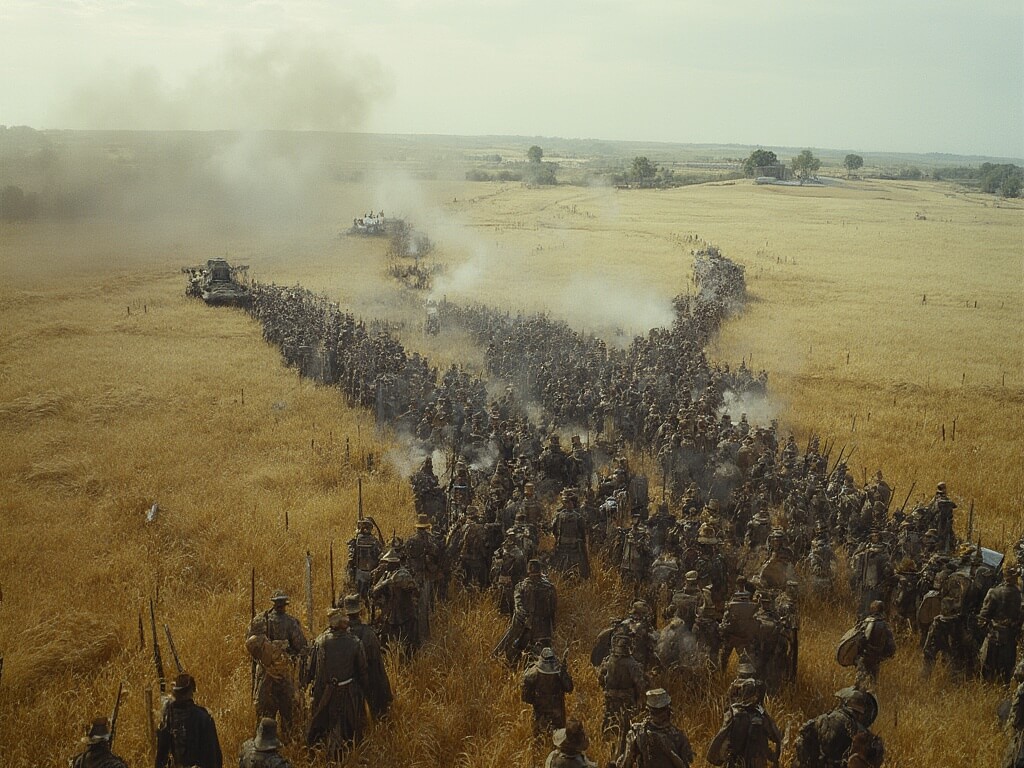
Approximately 12,500 Confederate soldiers emerged from the woods behind Seminary Ridge. They formed perfect lines, colors flying, and walked toward the Union position nearly a mile away.
It’s one of the most photographed moments in American history, yet photographs can’t capture the reality of it.
Imagine standing on open ground with nothing but your rifle and the men beside you. You’re walking toward an enemy you can’t yet see clearly, but you can see the ground where previous assaults have failed. You can see the bodies still lying there. You know the odds aren’t in your favor.
You walk anyway because your orders say to walk.
Union artillery observers watched them come. There was almost no one on Earth who didn’t know what was about to happen.
The Union guns opened fire when the Confederates were roughly 800 yards away. Whole ranks disappeared. Bodies fell in clusters where artillery rounds found their marks. Confederate soldiers closed ranks and kept marching. 400 yards away now. The Union infantry opened fire with muskets. The carnage became incomprehensible.
Men were being killed so fast that the living couldn’t step over the dead. They tripped on bodies of their friends and comrades. Some Confederate regiments lost 50 percent of their men before they even reached the Union lines.
Still they came.
At the stone wall marking the Union position, hand-to-hand fighting erupted. Confederate soldiers who’d survived the mile-long gauntlet of fire threw themselves at the wall. Union soldiers met them with bayonets and clubbed rifles. For maybe ten minutes, it was the closest the Confederates came to breaking through.
Then it collapsed.
The surviving Confederate soldiers, maybe 2,000 of the 12,500 who started, retreated. Some of Lee’s commanders watched from Seminary Ridge, seeing their assault die in real time.
General Richard B. Garnett, leading one of the divisions, was killed in the retreat. General Lewis Armistead, who’d made it nearly to the stone wall, fell mortally wounded. Pickett himself survived, but his division was shattered.
When he reported the results to Lee, he allegedly said: “General, I have no division now.”
Lee’s response was reportedly calm, almost detached: “Come, General, this has been my fight and upon my shoulders rests the blame.”
It’s a gracious response to catastrophe, but it doesn’t change the facts.
Approximately 6,000 Confederate casualties resulted from Pickett’s Charge. The Union suffered roughly 1,500. The ratio tells you everything you need to know about how badly this assault failed.
Here’s what’s crucial to understand:
Pickett’s Charge wasn’t the worst decision of the Civil War, but it might have been the most consequential.
In forty minutes, it destroyed Lee’s ability to continue the offensive. It killed or wounded so many officers and men that the Army of Northern Virginia would never fully recover. It proved definitively that the Confederacy couldn’t win through assault.
This is why historians call it the “High Water Mark of the Confederacy.” It’s not hyperbole.
From that moment forward, Confederate strategy had to shift to defense and attrition.
Lee would never again have an opportunity to invade the North. The war’s trajectory, already favoring the Union, became mathematically inevitable.
The Retreat and the Weight of Three Days
Lee ordered a retreat that night. Rain began falling around 7 p.m., turning roads to mud. The Confederate wagons carrying wounded—roughly 14,000 of them—stretched for miles. It was a nightmare journey back to Virginia.
Many wounded died on that road who might have survived with proper medical care. The wounded who survived spent the journey experiencing pain beyond description, jostled in wagons over mud roads, knowing they’d lost.
On July 4th, 1863, Lee formally withdrew from Gettysburg. The same day, across the country in Vicksburg, Mississippi, another Union army under Ulysses S. Grant accepted the surrender of a besieged Confederate garrison.
Two catastrophic Confederate defeats on the same day.
It wasn’t a coincidence—the Confederacy’s military situation was deteriorating across the board.
But Gettysburg had a weight that Vicksburg, despite its strategic importance, didn’t carry. Gettysburg was the North’s symbolic vindication. It proved the Union could stand against Lee and win. It proved the war could be won.
The total casualties from three days of fighting: somewhere between 46,000 and 51,000 soldiers killed, wounded, captured, or missing.
To put this in perspective, the U.S. military suffered roughly 58,000 total deaths in Vietnam across twenty years. Gettysburg did that in seventy-two hours.
One other casualty deserves mention: Mary Virginia “Jennie” Wade, a twenty-year-old local girl killed on July 3rd while making bread for Union soldiers.
She remains the only confirmed civilian casualty of the battle.
Why This Battle Mattered More Than Just Military Tactics
Here’s where most battlefield histories go wrong. They treat Gettysburg as a problem of military strategy and tactics.
Which general made the better decisions? Who positioned troops more effectively?
These questions matter, but they miss something larger.
Gettysburg mattered because of what it meant to the North psychologically.
For two years, the Civil War had been a grinding disappointment for Union supporters. Lee’s army seemed invincible. Every battle was followed by headlines about Union generals being outmaneuvered or defeated.
Then Gettysburg happened. Not just a tactical victory, but a repulse of an entire Confederate army’s offensive.
The Union didn’t just win the battle—it won the narrative.
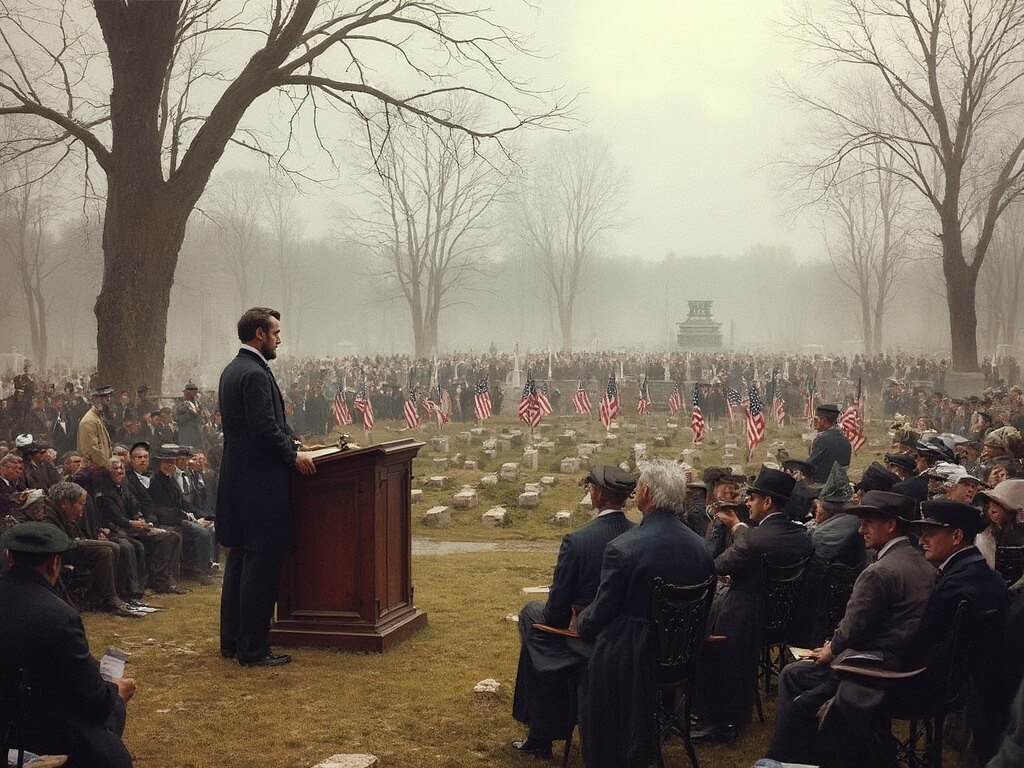
Lincoln understood this better than anyone. Four months later, at the dedication of the soldiers’ cemetery in Gettysburg, he delivered 272 words that became the most famous political speech in American history—how the Battle of Gettysburg changed America.
He was saying Gettysburg wasn’t important because we won a battle. It was important because it proved we could win, which meant the cause of human liberty itself could survive.
It was genius rhetoric, but it was also true.
Explore More:
- Take a Lighthouse Tour in Maine
- Walk the Beaches of the Oregon Coast
- Hike to Delicate Arch in Arches National Park
- Watch the Sunrise from Cadillac Mountain
- Drive the Hana Highway in Maui
Related Reading:
See the full Battle of Gettysburg timeline for a day-by-day breakdown of events.