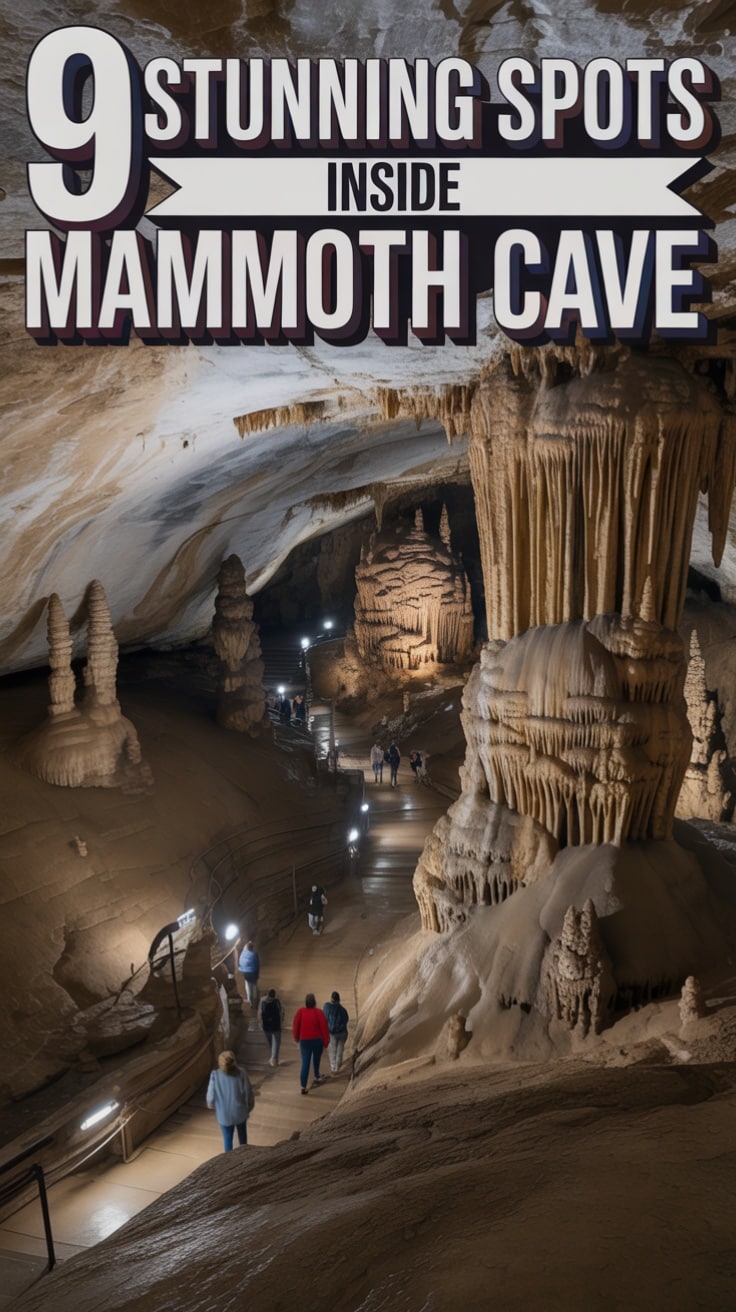
You’re probably wondering if visiting Mammoth Cave National Park is actually worth the drive.
Maybe you’ve heard the hype but can’t quite picture why a cave deserves all the fuss.
Or perhaps you’re standing there thinking: isn’t it just a hole in the ground?
Here’s what most people get wrong about Mammoth Cave in Kentucky.
It’s not just a single cave system.
It’s the longest known cave network on the entire planet—over 426 mapped miles of underground passages winding through the earth like some impossible labyrinth that still isn’t fully explored.
We’re talking about a place where new passages get discovered practically every few years, where scientists are still mapping sections that have existed for millions of years but remain unknown to us.
And I don’t mean “almost fully explored.”
I mean genuinely, actively unexplored.
The Sheer Scale of Mammoth Cave National Park Will Make Your Brain Hurt
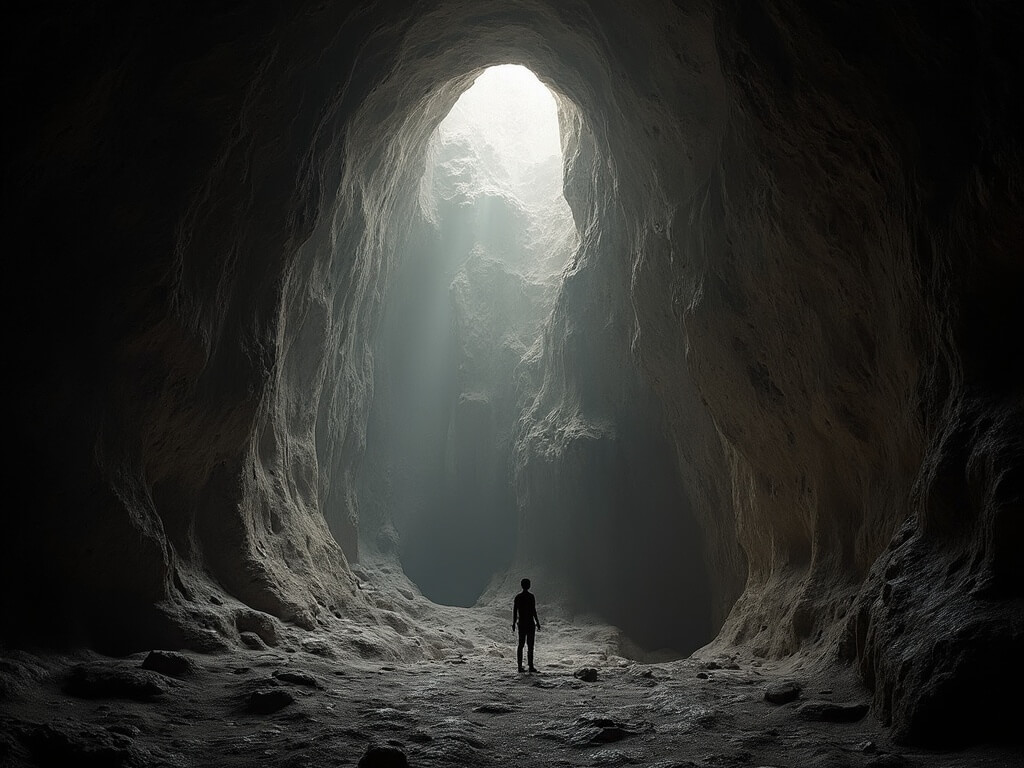
Imagine standing in a chamber so vast that you can’t see the opposite wall in the darkness.
Now imagine there are dozens of these chambers, connected by tunnels, flooded passages, and vertical shafts that plunge deeper than most people ever venture underground.
Mammoth Cave National Park sprawls across 52,007 acres in south-central Kentucky, nestled in Edmonson County with fingers reaching into Hart and Barren counties.
The actual cave system beneath this landscape is incomprehensibly large.
Since the park’s establishment in 1941, surveyors and cavers have mapped over 426 miles of passages.
To put that in perspective: the next longest cave system in the world is Shuanghe Cave in China at around 77 miles.
Mammoth Cave is more than five times longer.
It’s not even close.
What makes this truly mind-bending is that explorers believe they’ve only scratched the surface.
Literally.
New passages are still being discovered and mapped—as recently as 2021, fresh sections were found and added to the official surveys.
How Did This Underground City Get Created?
Here’s where the geology gets fascinating.
About 325 million years ago, this part of Kentucky was underwater.
Not a shallow pond, but a vast, ancient seabed teeming with marine life.
Over millions of years, those countless organisms died, their shells and remains piled up, and eventually compressed into thick layers of Mississippian limestone.
When the water eventually receded, something remarkable happened.
Slightly acidic rainwater and groundwater began filtering through that limestone, slowly dissolving it from the inside out.
Over hundreds of thousands of years, this patient, relentless process carved out massive empty spaces—hollows and voids that eventually became the passages we see today.
The limestone caverns themselves sit capped beneath a layer of Big Clifty Sandstone, which acts like a protective lid, keeping the cave system intact and preserved.
The geological structure is called a karst landscape, and it’s defined by sinkholes, underground rivers, springs, and massive cave networks.
The Chambers That Took My Breath Away
I’ll be honest: the first time I walked into Mammoth Dome, I nearly sat down right there on the cave floor.
The sheer vertical scale of it—a chamber that rises hundreds of feet into absolute darkness—does something to your sense of perspective.
You’re suddenly reminded how small you actually are.
The cave system features chambers with names that hint at their character:
- Snowball Room – exactly as unsettling as it sounds, where gypsum formations that look like snowballs litter the floor.
- Bottomless Pit – a vertical shaft so deep that early explorers couldn’t gauge its depth and assumed it truly was bottomless (it’s not, but it’s still impressively deep).
- Crystal Lake – an underground pool of clear, still water that reflects the cave formations above it like a mirror.
- Rainbow Dome – a chamber ceiling adorned with rainbow-coloured mineral deposits.
Beyond these named attractions, the cave is home to countless formations that most visitors never see: stalactites hanging from ceilings like mineral icicles, stalagmites building up from the floor, and delicate gypsum flowers—paper-thin crystalline formations that look almost fragile enough to break with a whisper.

These formations develop incredibly slowly, sometimes taking thousands of years to grow just a few inches.
The Landscape Above Ground Matters Just as Much
People often forget that Mammoth Cave National Park isn’t just about what’s below the surface.
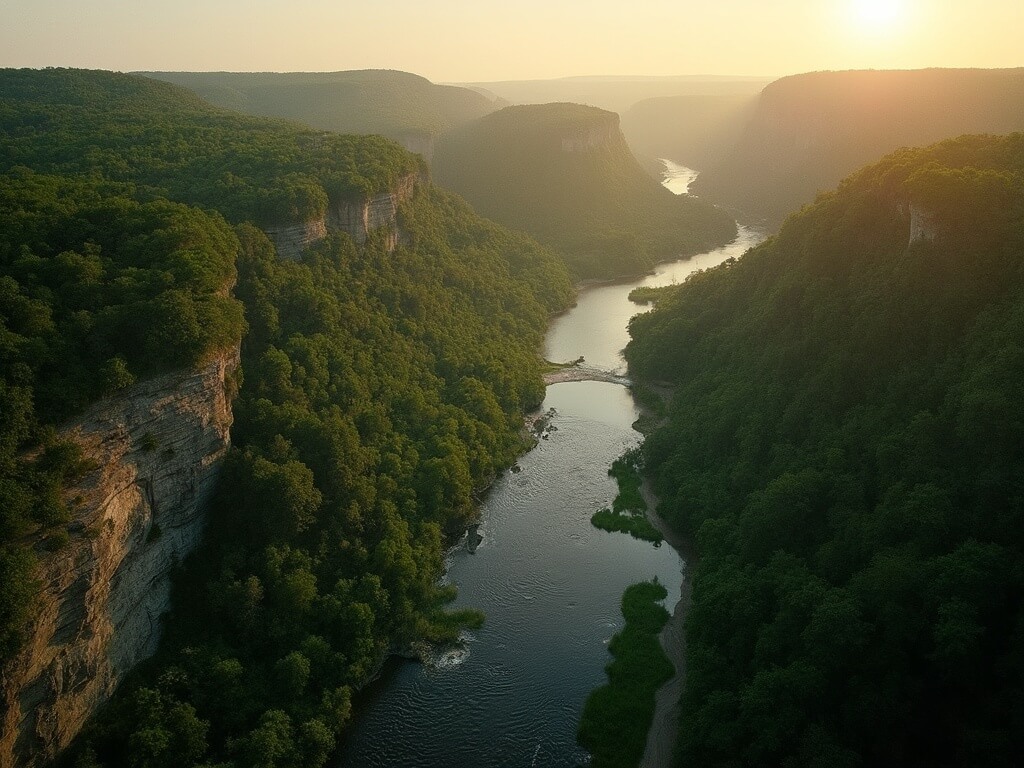
The 52,007-acre park encompasses forests, wetlands, and two major river systems: the Green River and the Nolin River.
This surface ecosystem supports a fascinating array of wildlife and plant life, creating a complete natural environment rather than just a cave tourist trap.
What’s particularly striking is the biodiversity split between the world above and below ground.
You’ll find typical forest creatures up here—deer, raccoons, various bird species—but descend into the cave, and you encounter something entirely different.
The cave system hosts rare and endemic species found nowhere else on Earth.
The Kentucky cave shrimp lives only in specific underground pools, completely blind and adapted to total darkness over millions of years of evolution.
Other species have similarly extreme adaptations: albino fish, specialised beetles, and organisms we’re still discovering and cataloguing.
This isn’t just interesting from a “hey, look at that weird creature” perspective.
It’s crucial for understanding how evolution works, how ecosystems function in extreme environments, and how fragile these underground habitats truly are.
A History That Spans 4,000 Years—And It’s More Complex Than You’d Think
The story of human interaction with Mammoth Cave doesn’t start with European explorers or modern tourism.
It goes back much, much further.
Archaeological evidence shows that Native Americans were exploring and using Mammoth Cave for at least 4,000 years.
They ventured deep underground, sometimes hundreds of metres into passages, using torches made from cane and reeds to light their way.
Why?
Minerals.
Saltpetre, gypsum, and other mineral deposits held value for tools, medicines, and ceremonial purposes.
Ancient torch stubs and artifacts have been discovered deep within the cave, telling silent stories of people navigating absolute darkness on intentional missions, not just stumbling in by accident.
When European settlement reached the Green River valley in the 1790s, attitudes toward the cave began shifting.
Tourism sparked up almost immediately—people were fascinated by this underground wonder, and the cave became a destination.
But the turning point came during the War of 1812.
Saltpetre is a crucial component of gunpowder, and with supplies cut off by the British blockade, the United States needed a domestic source.
Mammoth Cave became a saltpetre mining operation, with enslaved labourers hauling soil from the cave floor, leaching it in massive wooden vats, and processing it into useable saltpetre.
The cave was, quite literally, mined to support the war effort, and this happened on the backs of enslaved people.
That historical reality is uncomfortable, but it’s part of Mammoth Cave’s story—a reminder that this natural wonder was intertwined with human exploitation and the brutal economics of American history.
It took more than a century, but by 1926, the federal government authorised the establishment of Mammoth Cave as a national park, officially recognising its significance.
The park opened in 1941, and by 1981, UNESCO designated it a World Heritage Site, acknowledging both its natural and cultural value on a global scale.
Why Scientists Can’t Stop Exploring This Place
The scientific importance of Mammoth Cave goes far beyond its size or historical significance.
The cave system serves as an outdoor laboratory for studying karst geology, hydrology, and underground ecology.
Researchers investigate how water moves through limestone, how underground ecosystems sustain themselves without sunlight, and how rare species adapt to subterranean life.
The cave’s formation and structure offer insights into broader geological processes—understanding Mammoth Cave helps geologists understand karst systems worldwide.
New discoveries still happen regularly, which is remarkable given how much of the cave has already been explored and mapped.
When explorers find new passages, scientists analyse them to understand the cave’s developmental history and predict where other undiscovered sections might exist.
Conservation researchers focus on protecting the rare species that inhabit the underground ecosystem, studying how surface activities affect groundwater quality and cave conditions.
The work is meticulous, ongoing, and absolutely essential as visitation numbers continue to rise.
Now comes the practical question that actually matters to you: how do you experience Mammoth Cave yourself?
Explore more U.S. wonders:
The Tours That Actually Let You Experience the Underground
Here’s what most people get wrong about visiting Mammoth Cave.
They think they’ll show up, walk through a well-lit tunnel for 30 minutes, see some stalactites, and leave.
That’s one option, sure.
But the park offers a deliberately tiered system of experiences designed to match different comfort levels, fitness capabilities, and appetite for adventure.
The Historic Tour
This is the entry point for most visitors.
It covers roughly 2 miles of the cave system, focusing on the geological formations and the cave’s role in American history.
You’ll walk through passages that early explorers knew well, see the saltpetre mining infrastructure still visible in the cave walls, and get a solid grounding in what you’re actually looking at.
It’s not easy—you’re descending stairs, navigating uneven terrain, and climbing back up—but it’s manageable for people in reasonable health and without severe claustrophobia.
The Domes & Dripstones Tour
This tour takes you through more visually dramatic sections.
This is where you see the formations I mentioned earlier: stalactites, stalagmites, flowstone, and the famous Frozen Niagara formation that looks exactly like a frozen waterfall captured in stone.
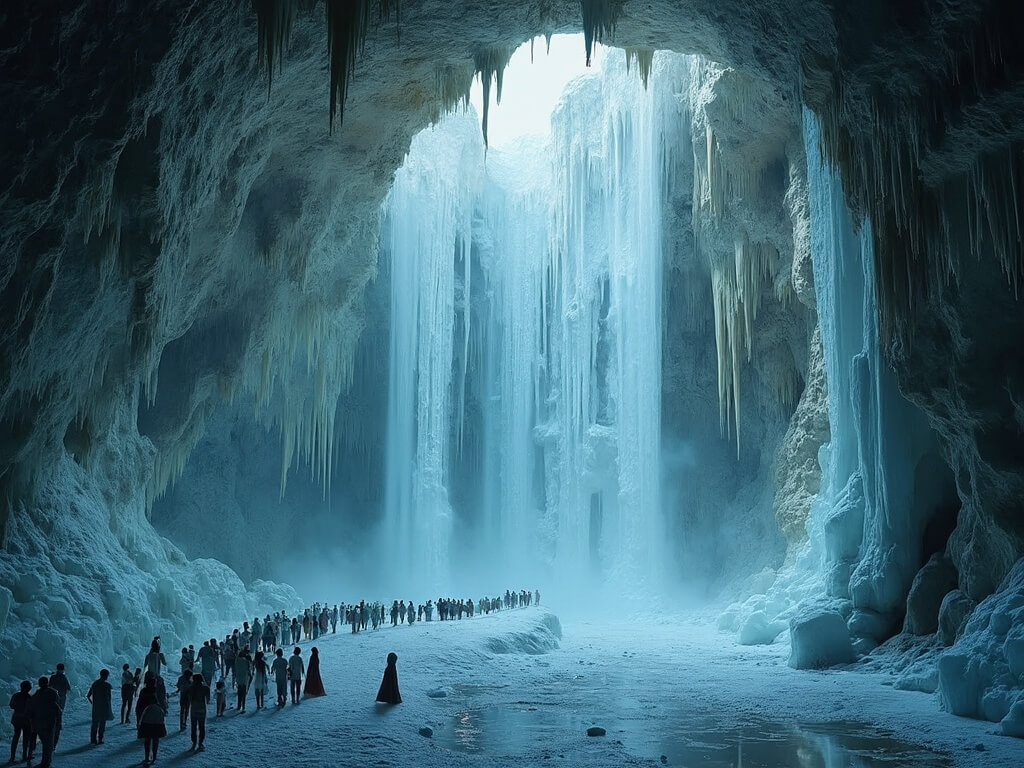
The formations on this tour are more delicate and intricate than what the Historic Tour shows you.
It’s longer and more strenuous, but the reward is seeing chambers decorated with mineral formations that took hundreds of thousands of years to develop.
The Wild Cave Tour
This is where things get real.
This is a 5+ hour spelunking adventure where you’re crawling through tight passages, rappelling down vertical shafts, and genuinely exploring parts of the cave that look nothing like a commercial tour route.
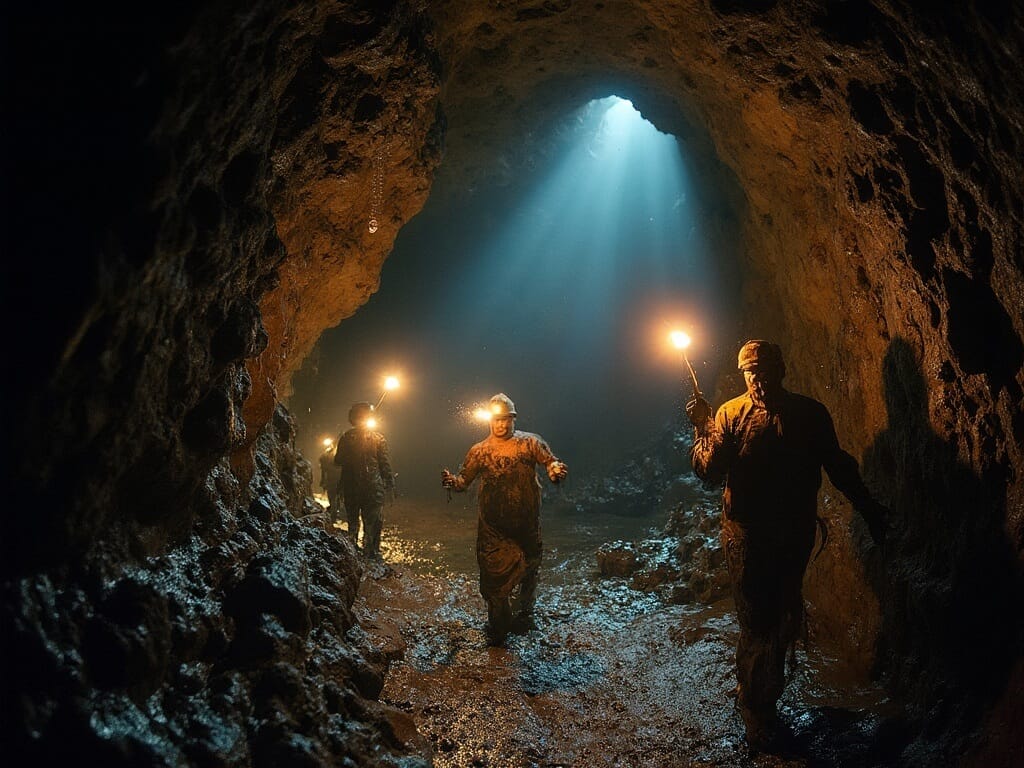
You’re wearing a headlamp, you’re getting mud on your clothes, and you’re going places where electric lights don’t exist.
I did this tour, and I’ll be honest: it’s claustrophobic as hell in some sections.
There’s a passage called the Tight Squeeze where you’re literally squeezing your shoulders through a gap that feels impossibly narrow.
But when you make it through and emerge into an unexpected cavern or passage that only a few hundred people a year ever see, the payoff is genuinely profound.
You feel like an explorer rather than a tourist.
The Frozen Niagara Tour
This is the easy option—gentle walking paths, accessible for most mobility levels, focuses on the beauty of the cave’s most photogenic formations.
It’s not less valuable than the other tours; it’s just different.
Many visitors, especially families with children or older adults, find this the perfect balance between accessibility and wonder.
Here’s the critical part: most tours require advance reservations.
Don’t show up and expect to book on-site.
During peak season (spring and fall), tours fill up days in advance.
You need to book through recreation.gov or the park’s website weeks ahead if you’re visiting during summer or weekends.
This isn’t bureaucratic nonsense—it’s because the park has made a deliberate decision to limit daily visitors underground to protect the cave ecosystem and preserve the formations from damage.
Above Ground: Where Hiking Trails and Rivers Reveal the Full Picture
Most people don’t realise that Mammoth Cave National Park has over 80 miles of above-ground trails.
The cave gets the spotlight, but the surface landscape tells equally compelling stories.
Cedar Sink Trail
This is a short walk (about 0.4 miles) that drops you into a sinkhole ecosystem—a natural collapse where the cave ceiling gave way centuries ago.
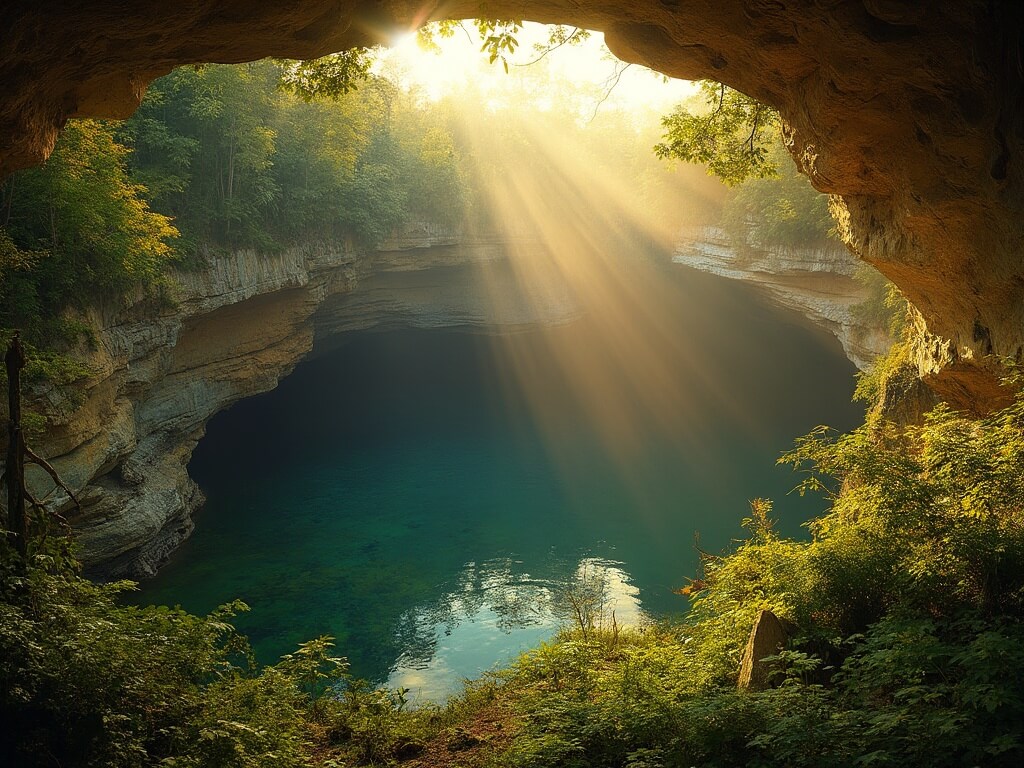
Trees grow in the depression, ferns cluster in the cooler microclimate, and the geology of how these sinkholes form becomes viscerally obvious when you’re standing in one.
Sand Cave Trail
It connects to a cave entrance that gained notoriety in 1925 when a man named Floyd Collins became trapped 55 feet underground.
His rescue attempt became a national news sensation—newspapers reported on his rescue for weeks, making him one of America’s first media celebrities.
Collins ultimately died in the cave, and his remains were eventually recovered and buried.
Standing at Sand Cave, knowing this history, changes how you perceive the cave system.
The Mammoth Cave Railroad Trail & Big Hollow Trail
These are mountain biking options if you prefer two wheels to hiking boots.
These trails follow the historical route of the Louisville and Nashville Railroad that once ran through the park, converted now into a multi-use path.
The Green River itself offers paddling opportunities for canoeists and kayakers.
Floating down the Green River, with limestone cliffs rising above you and knowing that beneath the water lies the massive cave system, creates a strange cognitive dissonance—you’re on the surface, but the underground labyrinth is directly below you.
Ranger-led surface programs happen throughout the year, focusing on ecology, geology, and the park’s natural history.
The Visitor Experience: What to Expect and How to Prepare
The cave maintains a constant temperature of approximately 54 degrees Fahrenheit (12 degrees Celsius) year-round.
It feels bone-deep cold after you’ve been walking for two hours. Bring a jacket, even if you’re visiting in July.
The cave is also perpetually damp. Wear shoes with good grip and avoid cotton clothing.
The Visitor Center should be your first stop. It has maps, interpretive exhibits, and helpful staff.
Lodging options range from basic campsites to cabins and a hotel. Book early during peak season.
Picnic areas and a concession stand are available—just know prices reflect national park norms.
Safety, Accessibility, and Some Honest Warnings
If you have claustrophobia—do not do the Wild Cave Tour.
Some people panic in Tight Squeeze. Know yourself.
The physically strenuous tours require reasonable cardiovascular fitness.
If you have mobility issues, choose the Frozen Niagara or parts of the Historic Tour.
The cave is a natural environment—some routes are inherently more challenging.
Contact the park at 270-758-2328 for accessibility guidance.
Being underground can be psychologically intense. Some find it meditative; others, unsettling. Be prepared.
The Conservation Reality: Why What Happens Here Actually Matters
Two million visitors a year impact the cave’s fragile ecosystem.
Do not touch formations. Oils from your skin cause permanent damage.
Stay on marked paths, pack out trash, and be mindful of your footprint.
The cave is part of a karst hydrology network—pollution from above affects water quality below.
Scientists continuously map passages and study geology, ecology, and rare species like the Kentucky cave shrimp.
The park must balance access with conservation. Your respectful behavior helps maintain that balance.
When to Visit: Timing Matters More Than You’d Think
Spring and fall are best, but also busiest. Book weeks in advance.
Winter offers solitude and a different atmosphere underground.
Summer is hot above, packed below. Plan accordingly.
If you want to explore independently, check for self-guided surface tours during peak seasons.
The Economic and Community Impact: Not Everything Is About the Experience
Mammoth Cave National Park significantly boosts the local economy.
However, its creation displaced families through eminent domain. That legacy persists.
Modern park management engages local communities through education and employment, acknowledging that history.
What’s Actually Happening Below the Surface Right Now
Exploration continues. In 2021, new passages were added to the map.
Scientists study hydrology, climate impact, and rare species.
Technology like 3D mapping and drones improves understanding and guides future access decisions.
Planning Your Visit: The Practical Checklist
1. Book your tour months in advance. Use recreation.gov.
2. Check accessibility options. Call 270-758-2328.
3. Pack appropriately. Jacket, grip shoes, extra socks, layers.
4. Arrive early. Be at the Visitor Center 30 minutes before your tour.
5. Coordinate surface activities. Don’t overbook your day.
6. Book lodging early. Options fill fast.
7. Bring water and snacks. Fuel makes a difference.
8. Tell someone your plans. Safety first, always.
The Digital Frontier: How Technology Is Changing Mammoth Cave Access
Virtual tours and online resources bring Mammoth Cave to a global audience.
Future possibilities include AR exhibits, live cave cameras, and interactive 3D maps.
It supplements, not replaces, the power of being underground—but expands access and education.
The Honest Truth About Whether It’s Worth Your Time
You don’t visit Mammoth Cave for selfies or quick thrills. You go to feel geological time, human history, and your own smallness in perspective.
It’s cold, dark, and sometimes uncomfortable—but profoundly worth it.
It’s not just a hole in the ground. It’s a gateway to deep time.
Related Adventures
- Hike to Delicate Arch in Arches National Park
- Take the Cog Railway to the Top of Pikes Peak
- Walk the Beaches of the Oregon Coast
- Explore White Sands National Park
- Drive the Hana Highway in Maui