Image Credit @Learn California
Why Most First-Time Visitors Get Joshua Tree Completely Wrong
Joshua Tree isn’t the kind of park you knock off in a quick afternoon drive, even though it looks that way from photos of twisted trees against a sunset. I spent a full day there once, expecting rocks and cacti, and left understanding why rock climbers and stargazers treat it as a serious destination instead of a drive-through stop.
That’s what this guide fixes.
Where Joshua Tree National Park Actually Is (And Why It Matters)
Joshua Tree National Park sits in Southern California, roughly two hours east of Los Angeles.
The park sprawls across 1,242 square miles of high desert landscape, straddling the Mojave Desert and the Colorado Desert—two distinct ecosystems that collide and create something genuinely unusual.
Three main entrances serve the park:
- West Entrance (Joshua Tree town) – closest to LA, usually the busiest option
- North Entrance (Twentynine Palms) – quieter, often your best bet for avoiding crowds
- South Entrance (Cottonwood Spring) – least trafficked, good if you’re coming from San Diego
The park stays open 24/7 year-round, though visitor centres keep regular hours.
Entry costs £20 per vehicle for a seven-day pass, valid for unlimited visits during that window.
Once you’re in, there’s no additional charge to explore.
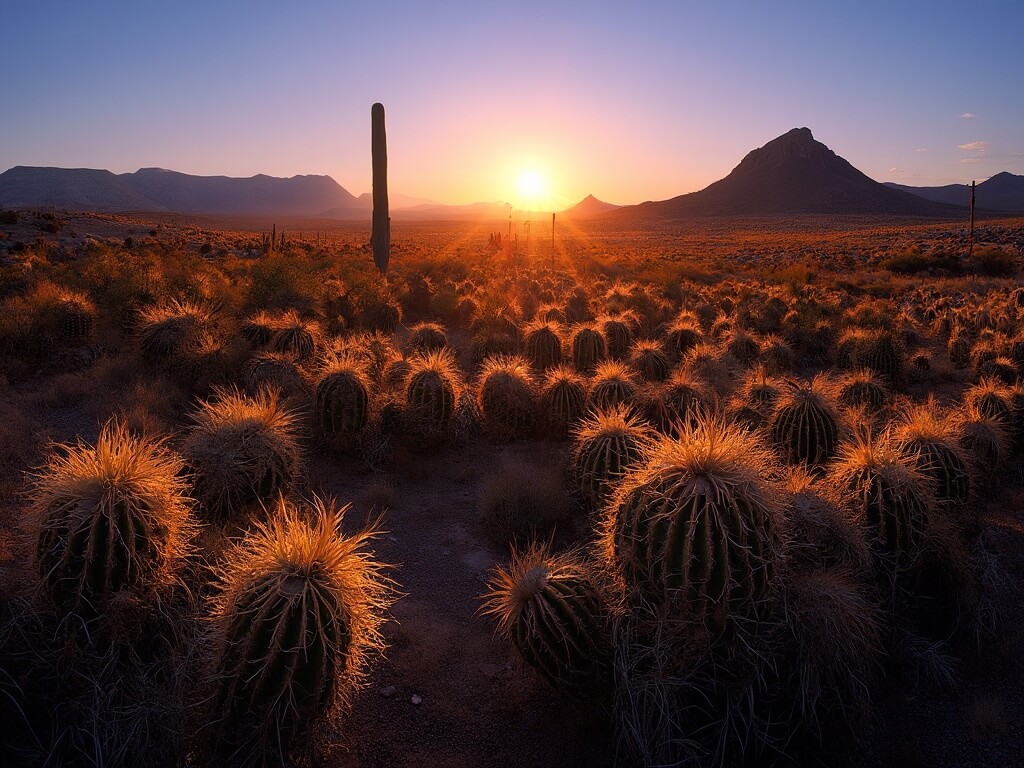
Image Credit @Learn California
The Climate Question Nobody Asks Until It’s Too Late
Here’s something I learned the hard way: timing your Joshua Tree visit matters far more than any specific trail or attraction.
October through May is paradise—expect daytime highs between 21-29°C and nights around 10°C.
You’ll actually want to be outdoors.
June through September?
The desert becomes a furnace.
Summer temperatures regularly exceed 37°C, often hitting 45°C or higher.
Water evaporates before you can drink it.
Metal burns your skin.
Car dashboards warp.
People still visit in summer (fewer crowds, cheaper hotels), but you’re essentially hiking in an oven.
If you must visit during hot months, plan everything for sunrise and early morning.
Abandon the park by noon.
Drink triple what you normally would.
The overwhelming majority of visitors arrive between November and April—peak season brings crowds, but the weather justifies every person there.
What Makes This Desert Actually Worth Visiting
The Mojave Desert—where most of Joshua Tree lives—belongs to a rare category of landscapes.
It’s neither lush nor completely barren.
Instead, it’s weirdly alive.
The Joshua Trees themselves are the headline act.
These twisted, architectural giants aren’t actually trees—they’re yuccas that evolved into something that looks like they came from another planet.
They don’t exist anywhere else on Earth.
The park protects thousands of them, and by law, you cannot touch them.
They’re fragile, endangered, and irreplaceable.
Beyond the Joshuas, you’ve got dense gardens of cholla cactus that glow gold in sunrise light.
Enormous boulder formations rise from the desert floor—thousands of them—creating a landscape that feels genuinely alien.
The two desert ecosystems create visible boundaries within the park.
The higher elevation Mojave Desert (where Joshua Trees thrive) looks different from the lower Colorado Desert (where creosote and palo verde dominate).
This variety means different experiences depending which part of the park you explore.
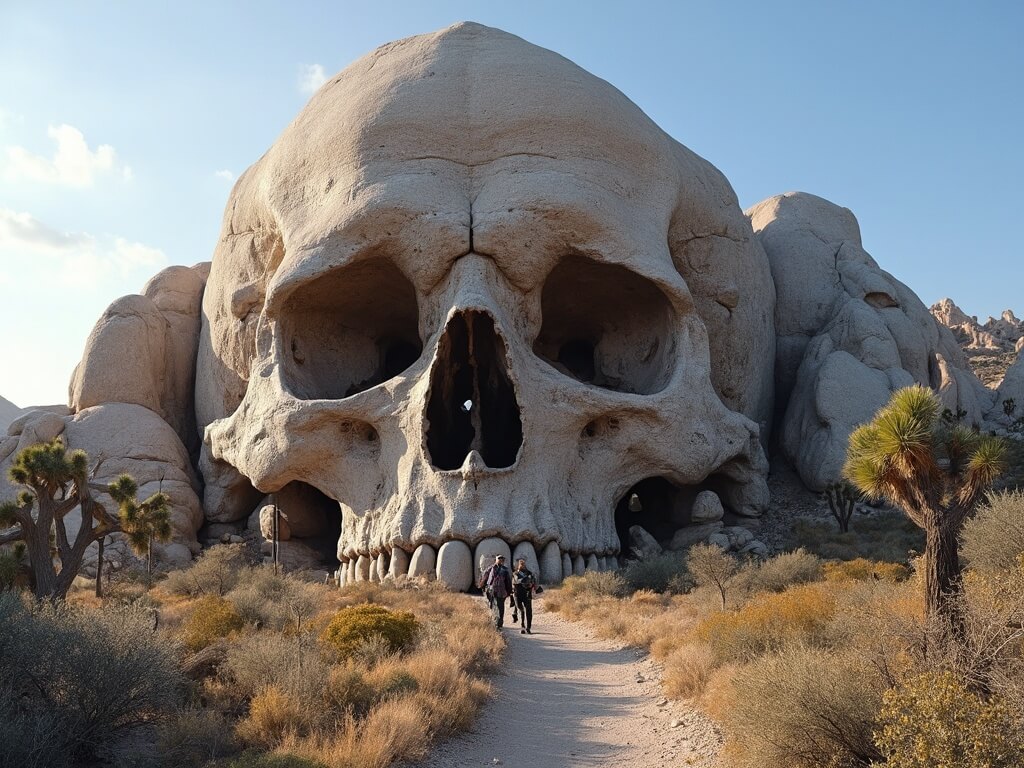
Image Credit @Learn California
Before You Step Foot in the Park, Get This Right
Most people pack for Joshua Tree like they’re visiting a normal national park.
They bring a water bottle, some snacks, maybe a hat.
Then they wonder why they feel like they’re dying.
I watched this happen to a family near Skull Rock last year.
They’d been hiking for forty minutes in 28°C heat, had already finished their one shared water bottle, and were starting to panic.
The nearest water source was an hour away.
Here’s what actually works:
Water: minimum 1 gallon (3.8 litres) per person per day
Seriously—that’s not conservative advice, that’s the bare minimum.
If you’re hiking or spending more than a few hours outside, bring 1.5-2 gallons.
Sun protection that actually protects:
- High-SPF sunscreen (reapply constantly)
- Wide-brimmed hat or cap
- Lightweight long sleeves (counterintuitively, these keep you cooler than exposed skin)
- Sunglasses
Navigation tools—paper maps and a compass, not just your phone:
Cell service exists in patches, mostly near entrances.
The moment you venture anywhere interesting, your phone becomes a dead weight.
I bring a physical park map and know the route before leaving my car.
Emergency kit basics:
- First aid supplies
- Headlamp or torch (if staying after dark)
- Extra food (energy bars, nuts)
- Fully charged power bank for your phone
Leave No Trace isn’t a suggestion—it’s a legal requirement:
Carry out everything you bring in.
Don’t disturb wildlife.
Don’t touch the Joshua Trees.
Don’t hack at plants or rocks.
The park gets 3 million visitors annually, and it’s showing signs of strain.
Your responsibility matters.
The Sights That Actually Justify the Drive
The park contains dozens of named attractions, but most visitors never venture beyond five or six.
Let me walk you through the ones that genuinely change how you experience the place.
Cholla Cactus Garden
Sits in the southern section, roughly a 20-minute drive from the main park road.
It’s dense—hundreds of cholla cacti packed into a relatively small area.
Visit at sunrise or sunset, and the light turns everything golden.
I made the mistake of visiting at midday once.
The garden looked bleached and lifeless.
Same location, completely different experience based on timing.
Skull Rock
Lives up to its name—it’s an enormous granite formation that genuinely resembles a skull when you approach from the right angle.
There’s a short loop trail around it, and the rock formations provide stunning photography angles.
More importantly, it’s legitimately accessible and requires zero climbing skills.
Hidden Valley
Represents what most people imagine when they picture Joshua Tree.
A one-mile loop trail winds through scattered Joshua Trees and impressive rock formations.
It’s popular enough that you won’t feel alone, but not so crowded that you can’t find quiet moments.
Climbers love this area—you’ll see people tackling boulders throughout the valley.
Barker Dam
Offers something different: history.
The trail loops past an old cattle dam and passes through terrain with native wildflowers (particularly stunning in spring).
This is your best spot for wildlife viewing—bighorn sheep, coyotes, and various birds frequent the area, especially early morning.
Key’s View
Provides the panoramic money shot: a vantage point overlooking the Coachella Valley, the San Andreas Fault line, and on clear days, the Salton Sea.
It’s a short drive to the viewpoint, no hiking required, but the scale of the landscape it reveals is staggering.
The view hits different at different times—golden light at sunset, sharp clarity at midday.
Arch Rock
Delivers exactly what the name promises, accessible via an easy 1-mile trail.
It’s also one of the park’s best stargazing spots because of minimal light pollution and clear sightlines.
I’ve watched the Milky Way from this location and immediately understood why ancient cultures created mythologies around the night sky.
It wasn’t superstition—it was a rational response to seeing something genuinely extraordinary.
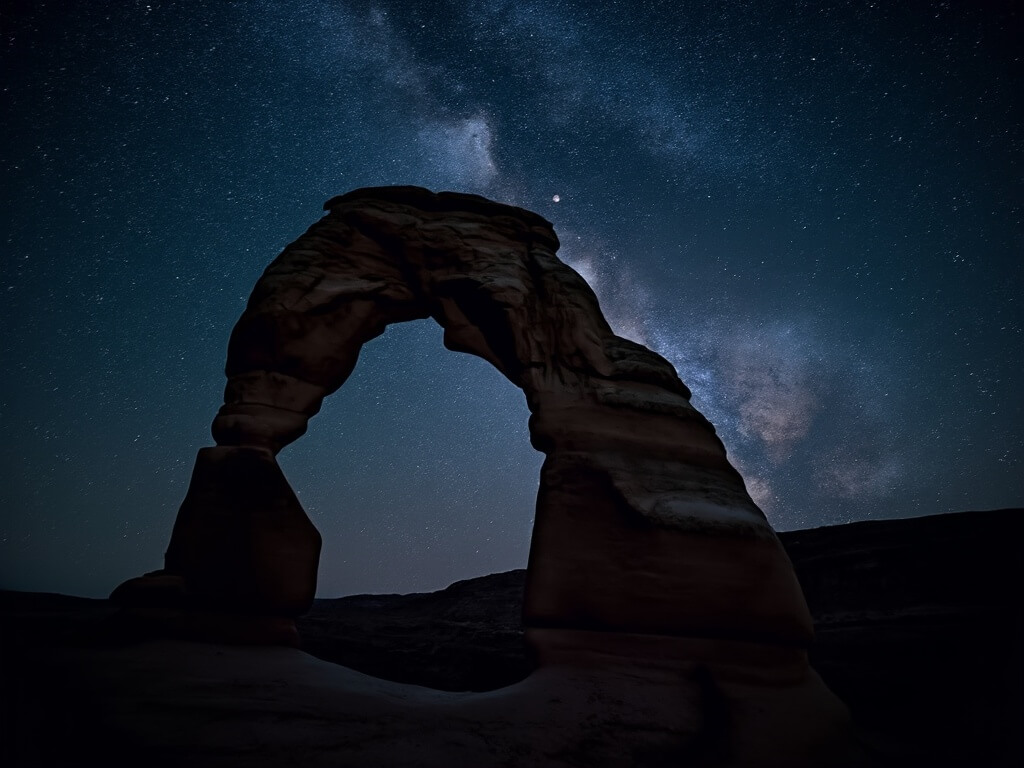
Image Credit @Learn California
These aren’t obscure hidden gems.
They’re the park’s most visited attractions for good reason—they work.
They deliver the experience people drive hours hoping to find.
The question becomes not which ones to visit, but how to experience them without joining the exact crowds you’re trying to escape.
The Hidden Question Nobody Addresses: When Should You Actually Visit?
Most travel guides tell you October through May is best, then move on.
That’s technically accurate but incomplete.
Within that six-month window, timing dramatically shifts your experience.
October and November bring pleasant temperatures and fewer crowds than winter.
December through February peak—hotels book solid months in advance, trails get congested, parking fills at popular spots.
But here’s the thing: crowds actually thin again in late February and March as people assume spring fever means heading elsewhere.
March through May are genuinely underrated—comfortable temperatures, still manageable crowds, and spring wildflowers start appearing in late March (particularly around Barker Dam).
I’ve visited in late March three times now, and each visit felt like discovering a secret the other seasons didn’t want to share.
If you’ve got flexibility with your schedule, aim for those shoulder months between peak seasons.
You get the benefits of optimal weather without peak-season madness.
Now that you understand what Joshua Tree actually is and why careful planning matters before you arrive, the real question becomes: what do you actually do once you’re there?
Explore more desert adventures like the hike to Delicate Arch in Arches National Park or coastal escapes like a lighthouse tour in Maine.
The One-Day Itinerary That Actually Works (Without Feeling Rushed)
Most people treat Joshua Tree like they’re checking boxes on a theme park map.
Hit this spot, photograph that spot, move to the next.
By the end of the day, they’ve seen the park without actually experiencing it.
Here’s the difference: a proper one-day visit focuses on depth over coverage.
You’ll visit fewer locations but spend real time at each one.
You’ll notice details.
You’ll actually feel the desert rather than just photographing it.
Start before sunrise—yes, I mean that literally.
Leave your accommodation at 5:00 AM if sunrise happens at 6:45 AM.
Drive directly to Cholla Cactus Garden.
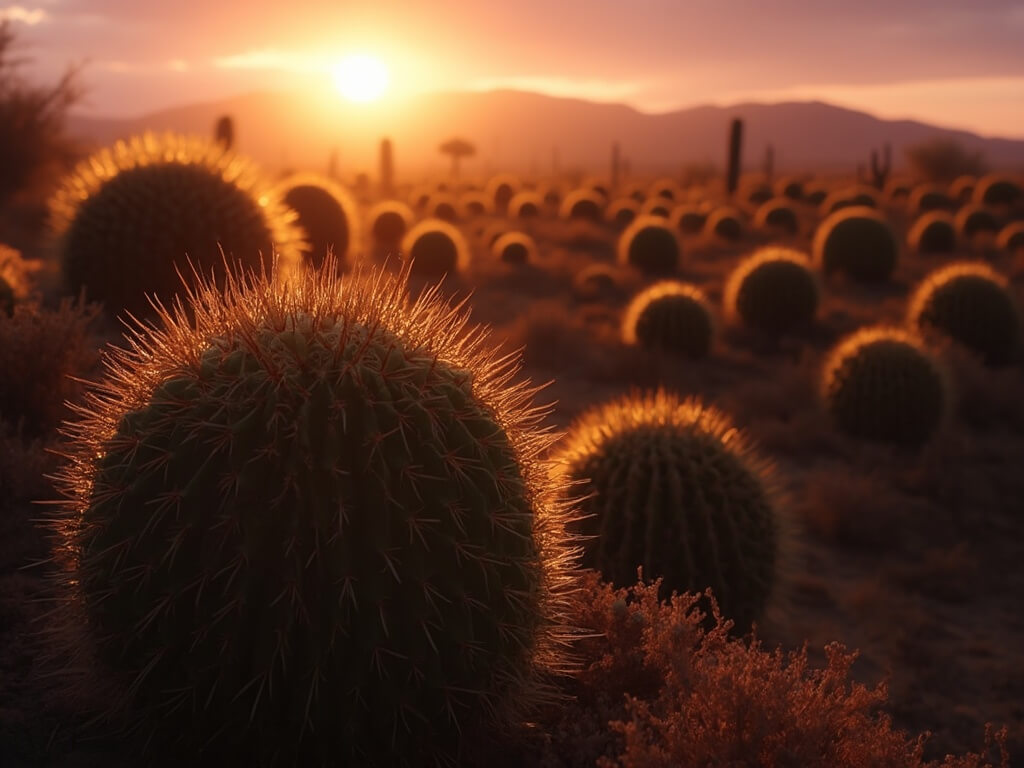
Image Credit @Learn California
The darkness makes navigation slower, but you’ll arrive when other visitors haven’t yet.
Watch the light transform the cacti from black silhouettes to glowing gold.
Spend 45 minutes here minimum.
Take your photos, yes, but also sit quietly and watch how the shadows shift as the sun climbs.
This is meditation disguised as sightseeing.
By 8:00 AM, drive north toward the park’s interior.
Stop at Cap Rock Nature Trail—it’s easy, takes 45 minutes maximum, and introduces you to native desert flora without demanding effort.
More importantly, it preps your body and mind for the day ahead.
Around 10:00 AM, tackle Hidden Valley.
This is where you invest serious time.
The one-mile loop takes 60-90 minutes if you’re moving at a normal pace and actually looking around.
Scramble on some rocks.
Sit under a Joshua Tree and observe how perfectly adapted these plants are to harsh conditions.
Notice the climbers working on boulders—they’re serious athletes, not casual tourists.
By midday, you’re ready to eat.
Pack a substantial lunch and eat it at one of the picnic areas rather than driving to a nearby town.
You’ll save an hour and stay properly fueled.
After lunch, drive to Key’s View.
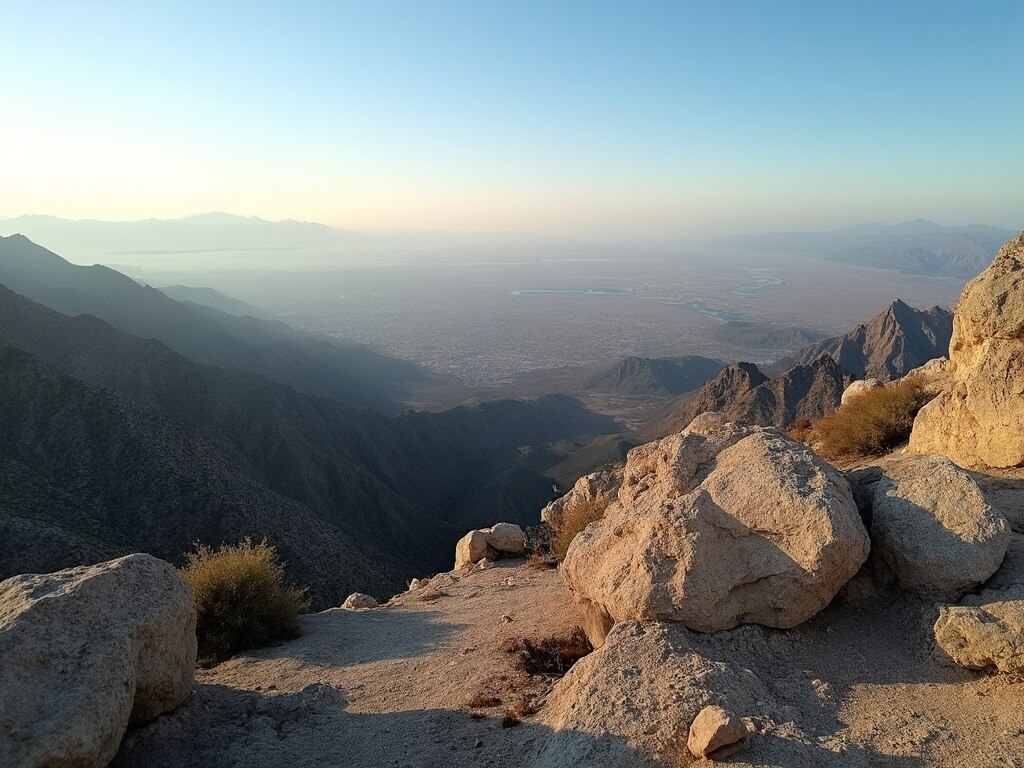
Image Credit @Learn California
This requires zero hiking, which matters because it’s now the hottest part of the day.
Spend 20 minutes absorbing the panoramic landscape.
Understand the geography—where you’ve been, where you haven’t, how vast the surrounding region actually is.
Late afternoon (around 4:00 PM), head to Arch Rock.
The angle of late-day light here is spectacular.
The one-mile trail is easy enough that you’re not exhausted, and the effort rewards you with solitude most visitors never find.
If you’ve got energy remaining and it’s still before dark, swing by Skull Rock for photography or casual scrambling.
Finally—and this is non-negotiable—stay until after dark and observe the stars.
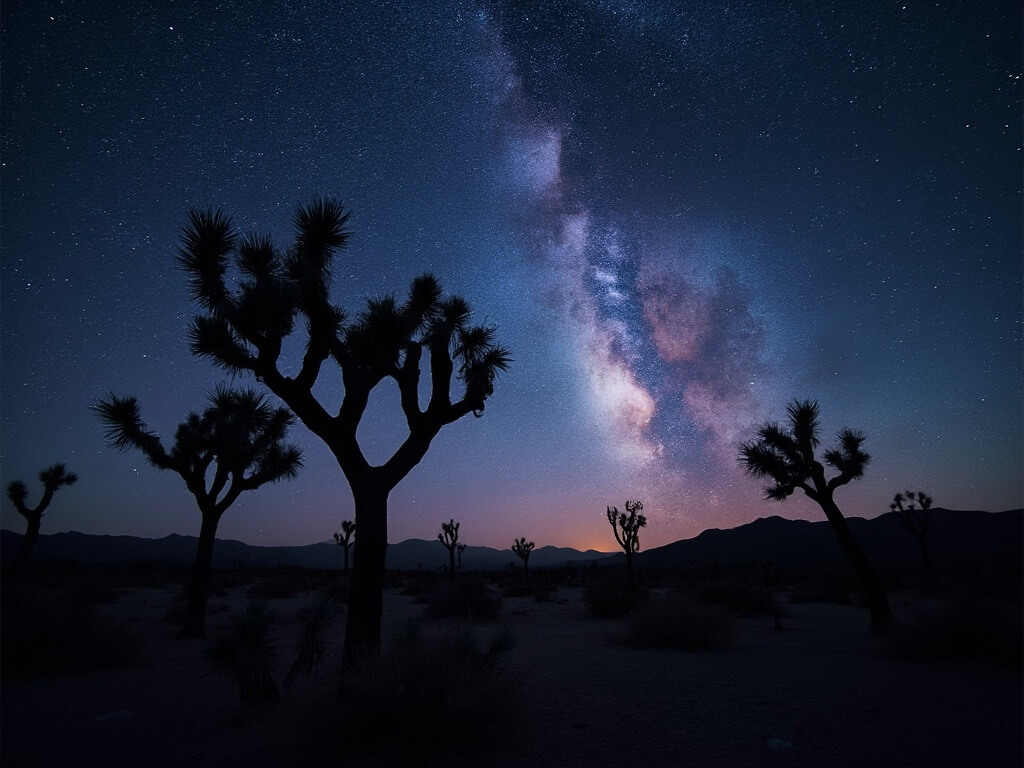
Image Credit @Learn California
Find a quiet pull-off or parking area.
Let your eyes adjust for 20 minutes.
The Milky Way at Joshua Tree isn’t a photo opportunity. It’s a perspective shifter.
Suddenly, all the social media posts and travel articles make sense.
You understand why ancient peoples wrote myths about the sky.
You realize how small you actually are in the context of the universe.
That’s the moment most people stop taking photos and start actually experiencing the park.
This itinerary covers roughly four major attractions plus stargazing, involves maybe two hours total of moderate hiking, and gives you genuine connection time rather than rushed box-checking.
You’ll return home exhausted but satisfied—not regretful that you missed something.
For more ideas on what to see, check out this best spots to visit in Joshua Tree National Park guide.
The Two-Day Visit: Where Real Joshua Tree Reveals Itself
From Tourist to Visitor
If one day teaches you what the park contains, two days teach you why it matters.
With extra time, you shift from tourist mode to visitor mode. The difference is patience.
Day one follows the itinerary above, minus stargazing.
Sleep in a campground or nearby hotel, then return to the park early on day two.
Start day two completely differently. Skip the crowded attractions.
Drive to Barker Dam—a moderate 3.3-mile loop that most day-trippers never reach.
The hike passes through diverse terrain, includes historical elements (the dam itself), and offers legitimate wildlife viewing opportunities.
Spring wildflowers (March-May) make this trail particularly worthwhile.
More importantly, you’ll encounter fewer people.
After Barker Dam, if you’re reasonably fit, tackle the 49 Palms Oasis hike.
This is a moderate 3-mile loop ascending 300 meters to a hidden desert spring surrounded by actual palm trees.
Bring extra water for this one. The trail gets hot, and dehydration happens fast on climbs.
Afternoon on day two, consider a guided experience if you’re interested.
The park offers Jeep tours, customized hiking experiences, and even educational programs through visitor centers.
Alternatively, explore some of the park’s lesser-known destinations like Jumbo Rocks or Wall Street Mill.
Evening on day two, return to your stargazing spot or find a new one. You’ve now got context—you understand the park’s geography, its ecology, its human history.
Rock Climbing Here Will Fundamentally Change Your Perspective
Joshua Tree is world-renowned in climbing circles, and with good reason.
Whether it’s bouldering, traditional climbing, or sport climbing, the variety and quality of routes are exceptional.
If you’re new, join a guided bouldering session. Even beginners can experience the meditative, problem-solving joy of climbing here.
Consider staying in the town of Joshua Tree—it functions as a climbing hub.
Just remember: climbing here demands respect. Know your limits and stay safe.
Learn more in this first-time visitors guide to Joshua Tree National Park.
Relevant Articles You May Enjoy
- Walk the Beaches of the Oregon Coast
- Explore White Sands National Park
- Take the Cog Railway to the Top of Pikes Peak
- Drive the Hana Highway in Maui
- Ride the Great Smoky Mountains Alpine Coaster
For a full park breakdown, read the first-time visitors guide to Joshua Tree National Park.
That first full day I spent there barely covered a third of what people who know the park recommend seeing. Exploring Joshua Tree National Park rewards the people willing to get out of the car more than the ones snapping photos through the windshield.