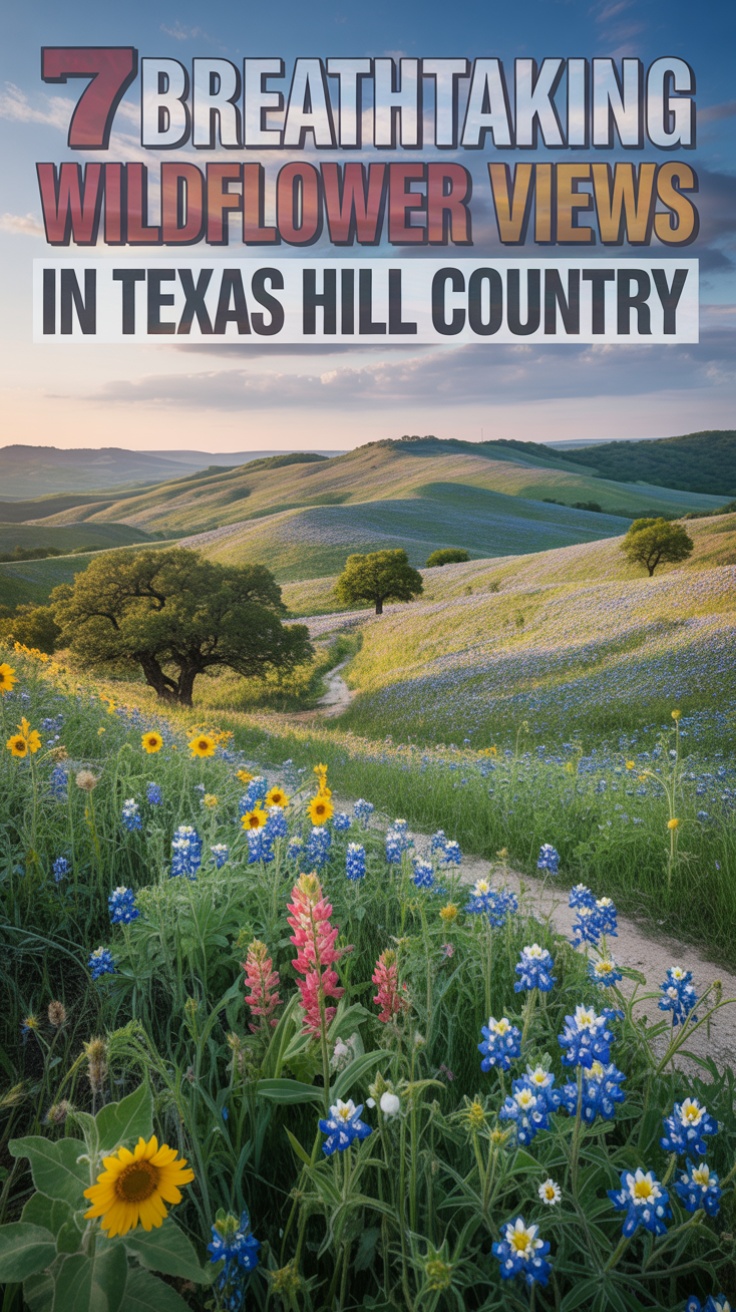
Every year, the same question lands in my inbox around February: “Is it too late to see the bluebonnets?”
People panic.
They think they’ve missed their window.
The truth is messier—and far more interesting.
Texas wildflowers don’t follow a script.
They follow rainfall, temperature swings, and the moods of a Texas spring that seems increasingly unpredictable.
If you’re planning a trip to the Hill Country right now, you need to understand what’s actually happening on the ground in 2025, not what happened in 2024.
What Makes Hill Country Wildflowers Worth Your Time (And Why This Year Feels Different)
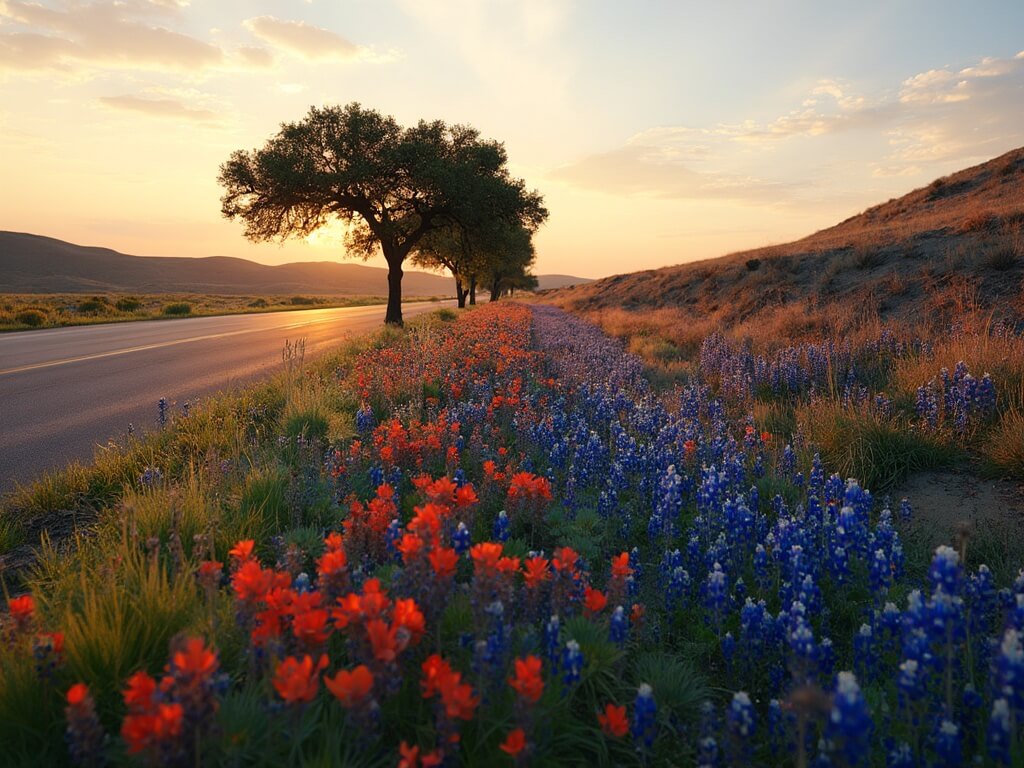
I grew up in Central Texas, and I can tell you honestly: nothing compares to driving Highway 290 in late March when the landscape shifts from brown scrubland into a living painting.
Bluebonnets, Indian paintbrush, coreopsis, and a dozen other native species create something that photographs can’t capture—a fullness, a sense that nature is genuinely celebrating.
But here’s what’s changed.
The Hill Country has always been Texas’s most reliable wildflower destination.
The region’s limestone soil, rolling terrain, and spring weather patterns create near-perfect conditions for native blooms.
Yet over the past five years, I’ve watched the season become less predictable.
Drought in western Hill Country has reduced bluebonnet and paintbrush density significantly.
Eastern sections—closer to Austin and around Marble Falls—are forecasted to deliver stronger displays in 2025.
Western zones near Fredericksburg? They’re looking thinner this year, which is worth knowing before you drive two hours only to find a disappointing show.
The cultural weight matters too.
Wildflowers aren’t just scenery in Texas.
They’re woven into our traditions.
Parents have photographed their kids among bluebonnets for generations.
Native wildflowers sustain monarch butterflies, native bees, and a whole ecosystem of pollinators that we’re increasingly recognising we need.
This isn’t just about aesthetics.
It’s about what we’re protecting—and what we stand to lose if we’re not intentional about it.
The 2025 Wildflower Forecast: What You Actually Need to Know
Let me cut through the noise.
Winter 2024–2025 brought variable weather patterns across the Hill Country.
Cold snaps hit some areas harder than others.
Above-average rainfall in parts of the region could extend bloom duration into late spring and potentially early summer—which is good news if early flowers disappoint.
The wild card?
Drought in the western Hill Country could suppress bloom density compared to historically strong years.
If you’re set on seeing dense fields of bluebonnets, aim for the eastern Hill Country or be flexible with your timeline.
One detail worth noting: Gregg’s mistflower earned 2025’s “Wildflower of the Year” designation specifically because it blooms from March through November.
If peak spring blooms underperform in your preferred area, summer wildflowers might carry the season.
It’s not a consolation prize—Gregg’s mistflower is genuinely beautiful—but it’s different from what most people expect.
Here’s the practical breakdown:
- Peak bloom typically runs mid-March through May.
- Some years stretch into June.
- Early wildflowers (bluebonnets and Indian paintbrush) usually appear in late March.
- Summer species like firewheel and horsemint follow later.
The timing matters because it shapes where you should go and when.
Where to Actually Go: Four Destinations That Deliver

Lady Bird Johnson Wildflower Center (Austin)
Nearly 300 acres of cultivated gardens, native plant trails, and educational exhibits sit just outside Austin.
This is the safest bet if reliability matters to you.
Unlike roadside wildflowers that depend entirely on rainfall and weather luck, the Center maintains its gardens year-round.
Even in dry years when bluebonnets struggle elsewhere, the LBJ Center usually shows strong bloom across diverse species.
You’ll find bluebonnets, of course, but also coreopsis, phlox, purple coneflower, and seasonal rotations designed to show what thrives in Texas.
The trails are accessible.
The staff are knowledgeable.
Visiting on a weekday morning cuts crowds dramatically—I’ve had nearly empty paths mid-week that would be packed solid on Saturday.
Cost: Around 14 dollars for adults.
Time investment: Two to four hours depending on how deep you go.
Wildseed Farms (Near Fredericksburg)
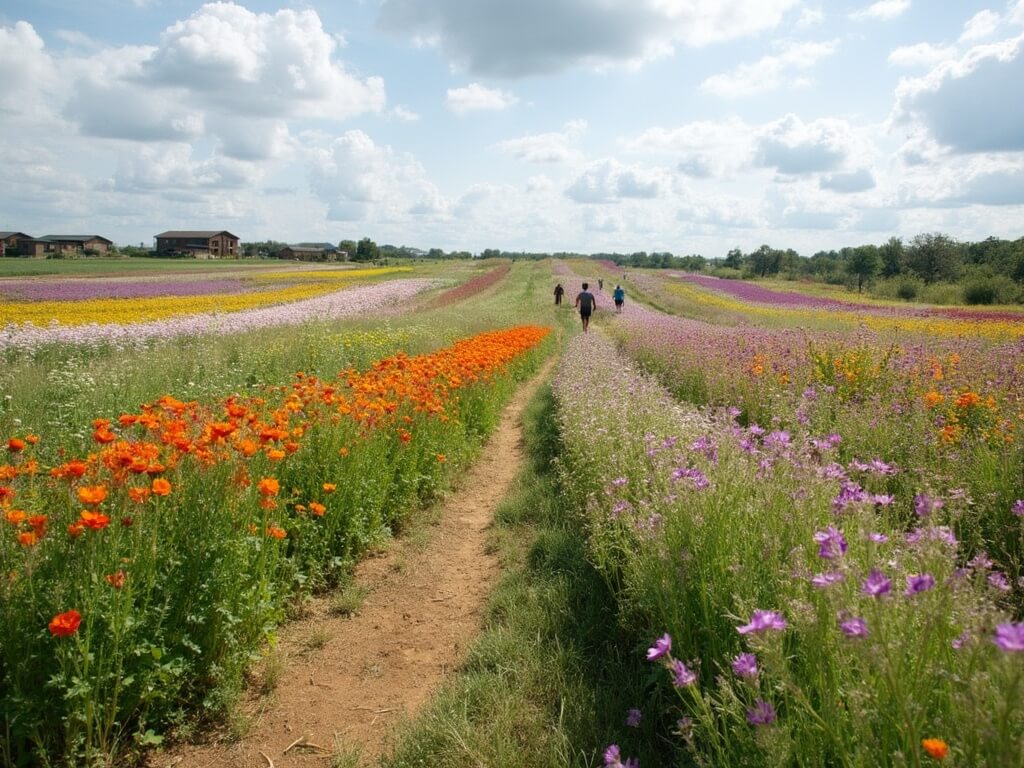
This is the largest working wildflower farm in the United States.
It’s not a natural meadow.
It’s a working operation—rows of wildflowers grown specifically for seed harvesting and sale.
What this means: You’re seeing deliberately planted, cultivated blooms from March through June.
You’re not gambling on whether the rains cooperated this year.
The fields are genuinely stunning to walk through.
There’s an onsite market where you can buy wildflower seeds and native plants to recreate pieces of what you’ve seen.
The walking trails are well-maintained.
Fair warning: It’s popular enough that weekend parking can get tight.
Weekday visits feel less chaotic.
Willow City Loop (Near Fredericksburg)
A 13-mile scenic drive loop that winds through genuine Hill Country landscape.
This is where you see wildflowers in their actual habitat—roadsides, fields, mixed with live oak and cedar.
When conditions are right (good spring rains), the density of bluebonnets here is genuinely remarkable.
The catch: It only works if conditions cooperate.
This year, with drought pressure in western Hill Country, you might find it less impressive than you’d hoped.
What makes it worthwhile regardless is the drive itself.
The limestone roads, the hill country architecture, the landscape between blooms—it’s worth the trip even if the wildflower show is moderate.
The loop is free.
You can drive it (about 45 minutes to an hour) or stop and walk.
Early morning visits avoid traffic and catch better light for photography.
Marble Falls
Known for picturesque wildflower fields with bluebonnets and Indian paintbrush mixed together.
The area has multiple viewing spots and parks where you can access wildflower displays without trespassing.
It’s slightly less crowded than the Willow City Loop whilst still delivering strong bloom when conditions support it.
Combine it with the town’s attractions (swimming hole, local restaurants, nearby state parks) for a fuller day.
The Species You’ll Actually See (And Why They Matter)
Most people come to Texas Hill Country for one flower: the bluebonnet.
The Texas bluebonnet (Lupinus texensis) is the state flower—deep blue, iconic, instantly recognisable.
Peak bloom usually hits early to mid-spring.
If you’re visiting in late March or early April, bluebonnets are your target.
But here’s what makes the wildflower season interesting beyond bluebonnets.
Indian paintbrush blooms alongside bluebonnets, creating that red-and-blue combination people photograph endlessly.
Coreopsis follows in late spring—bright yellow, cheerful, less dramatic but genuinely pretty.
Phlox adds texture and colour variation.
Purple coneflower shows up later.
Firewheel and horsemint extend the season into summer.
Each species fills a different ecological role.
Bluebonnets are nitrogen-fixers—they actively improve soil.
Wildflowers collectively sustain native bee populations that depend on pollen and nectar throughout spring and summer.
They’re critical for monarch butterfly migration.
Blue jays and hummingbirds rely on wildflower blooms.
Here’s the thing most visitors don’t realise: picking wildflowers damages this entire system.
It sounds obvious, but I’ve watched people strip entire patches whilst photographing their kids.
Each flower picked is a potential pollinator food source, a potential seed source for next year’s bloom.
Leave them in the ground.
Your photograph will be better anyway—wildflowers in context beat wildflowers in your hand.
Timing Your Visit: The Simple Math That Changes Everything
You want to know when to go.
The answer depends on three variables:
- Which year you’re visiting
- Which zone of the Hill Country you’re targeting
- What species you’re prioritising
The practical approach:
Don’t book a specific date months in advance.
Instead, book accommodations with flexible cancellation policies and monitor local wildflower reports in February and early March.
Multiple websites track bloom status—the Lady Bird Johnson Center posts weekly updates, local tourism boards release reports, and individual farms (like Wildseed) update their sites regularly.
Check these sources two weeks before your planned visit.
Adjust your timing based on what’s actually happening, not what happened last year.
This sounds inconvenient until you consider the alternative: driving six hours only to find blooms you weren’t expecting or missing peak conditions entirely.
People underestimate how much flexibility improves a wildflower trip.
The Photography Question Everyone Asks
I’m going to be direct: every person visiting the Hill Country during bloom season wants that perfect photo.
- Stay on established paths or shoulders.
- Go early or late.
- Don’t pick flowers.
Your phone camera or a modest DSLR captures the moment.
That’s enough.
The shift from “I need to possess this beauty” to “I’m documenting beauty I’m honoured to witness” actually improves your photos because you’re paying attention to light, composition, and context rather than just grabbing.
Quick Logistics Before You Head Out
What to bring:
Sun protection, water, good walking shoes, insect repellent, camera or phone.
Pet-friendly sites:
Most Hill Country parks and farms allow dogs on leashes.
Check ahead.
Examples: Lady Bird Johnson Center, Wildseed Farms.
Accessibility considerations:
LBJ Center has paved trails.
Wildseed Farms has accessible paths.
Willow City is drivable.
Check state parks individually.
Parking realities:
Arrive before 8 AM during peak season weekends.
Weekday visits are easier.
Willow City has limited roadside parking.
The Conservation Piece: Why This Actually Matters
I care about this partly because I grew up here and the Hill Country feels like home.
But I also care because wildflower populations are genuinely threatened—not just by drought and climate variability, but by habitat loss and over-visitation.
When hundreds of thousands of people visit wildflower sites annually, even responsible behaviour in aggregate creates pressure.
Established paths widen.
Roadside flowers get trampled.
Water stress from visitor use compounds drought stress.
The good news:
This is reversible through intentional effort.
Support wildflower-focused venues through admission and purchases.
Visit less-busy times.
Follow etiquette.
Plant native species at home.
When you visit with intention and respect, you’re participating in conservation.
When you don’t, you’re participating in decline.
It’s a sharper choice than most tourism scenarios force.
So far, I’ve walked you through what makes Hill Country wildflowers special, what to expect in 2025, where to actually go, and how to behave responsibly whilst you’re there.
But experiencing wildflowers fully means understanding them beyond logistics and destinations.
Combining Wildflowers With Everything Else Worth Doing in Hill Country
Here’s what most wildflower visitors miss.
They drive to Fredericksburg, see bluebonnets, take photos, and leave.
They don’t realise they’re in the middle of one of *Texas’s most interesting regions*—wine country, historic towns, outdoor recreation, art scenes—all overlapping the wildflower season.
Smart visitors treat wildflowers as the centerpiece of a larger experience, not the entire trip.
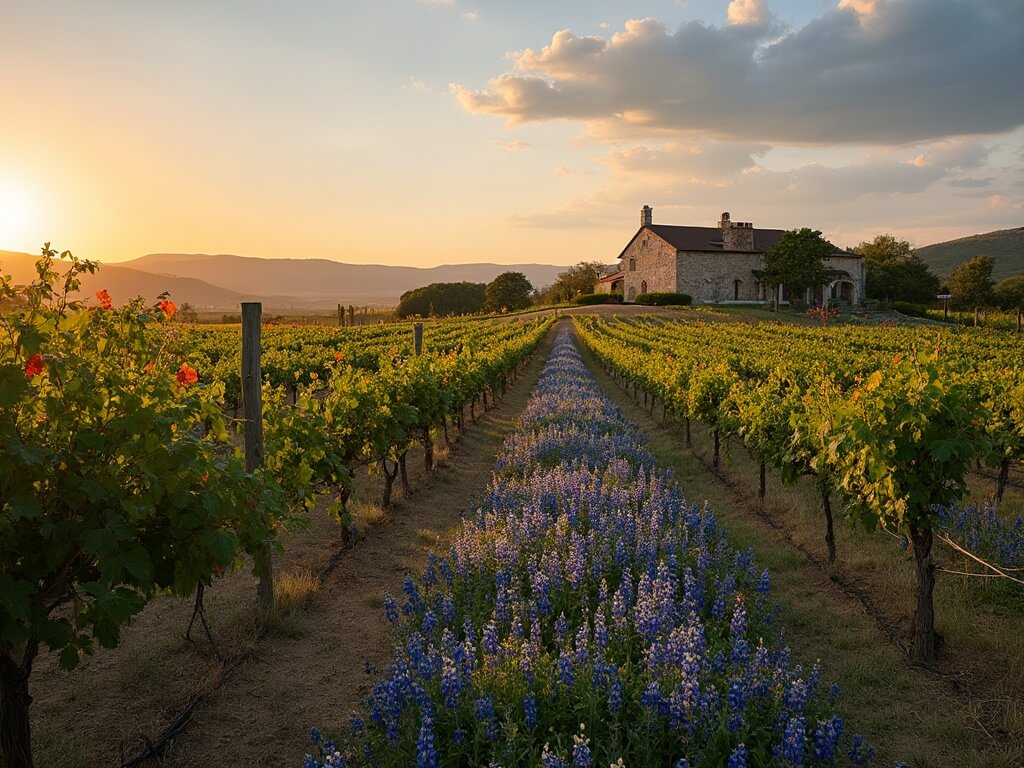
The Wine & Wildflower Journey Passport represents the best version of this integration. Running March through April, this program combines wildflower season with wine tastings across Hill Country vineyards. Participating wineries sync their tasting room hours with peak bloom timing. You’re photographing bluebonnets in the morning, tasting local wines in the afternoon, eating dinner in a 1920s building converted to a restaurant.
It’s not gimmicky. It works because both experiences—wildflowers and wine—peak at the same time and appeal to overlapping audiences.
Fredericksburg itself—the hill country’s hub town—deserves a full day or more. German heritage architecture, family-owned restaurants, local breweries, antique shops, art galleries. The town exists independent of wildflowers, which means you’re not losing anything if bloom conditions disappoint.
Johnson City, 30 minutes west, offers similar appeal at smaller scale with stronger emphasis on outdoor recreation. Blanco State Park sits minutes away—swimming hole, hiking trails, picnic areas, all accessible and all surrounding wildflower viewpoints.
What I’m describing is trip-stacking. You’re not traveling to Hill Country exclusively to see wildflowers. You’re traveling to experience the region, and wildflowers are the seasonal highlight that shapes your timing and route.
Related:
Check out 5 Tips for Enjoying Texas Hill Country Wildflowers and 12 Scenic Wildflower Drives for the Perfect Spring Road Trip.
The Real Wildflower Tracker Strategy: Because “Peak Bloom” Is Vague
Most tourism websites use language like “peak bloom expected mid-March to mid-April.”
This tells you almost nothing useful.
Peak bloom is a range, not a date. It varies by elevation, microclimate, rainfall patterns, and which species you’re tracking.
The Lady Bird Johnson Wildflower Center posts weekly updates from mid-February through May. These are real-time observations, not projections.

Here’s the system that actually works:
- Week 1 (Mid-Feb): Check early indicators to establish bloom trajectory.
- Week 2 (Late Feb – Early March): Monitor more closely. Adjust your planned date based on early reports.
- Week 3: One to two weeks before your visit, check again and refine travel dates.
- Week 4: Final check 3–4 days before leaving. Prioritize destinations accordingly.
You’re spending maybe 30 minutes total over six weeks monitoring. In exchange, you’re significantly increasing your odds of catching peak bloom.
What Happens When the Wildflowers Disappoint
You arrive at Willow City Loop on a Saturday in mid-April. The bluebonnets are sparse. Indian paintbrush is thinner than expected. The fields aren’t what you imagined.
This happens. Your emotional response: disappointment. Your practical response: flexibility.
- Option 1: Head to a different zone (e.g. Marble Falls).
- Option 2: Shift species focus to coreopsis or firewheel.
- Option 3: Lean into wine, hiking, and town exploration.
- Option 4: Visit the Lady Bird Johnson Center near Austin for cultivated but reliable blooms.
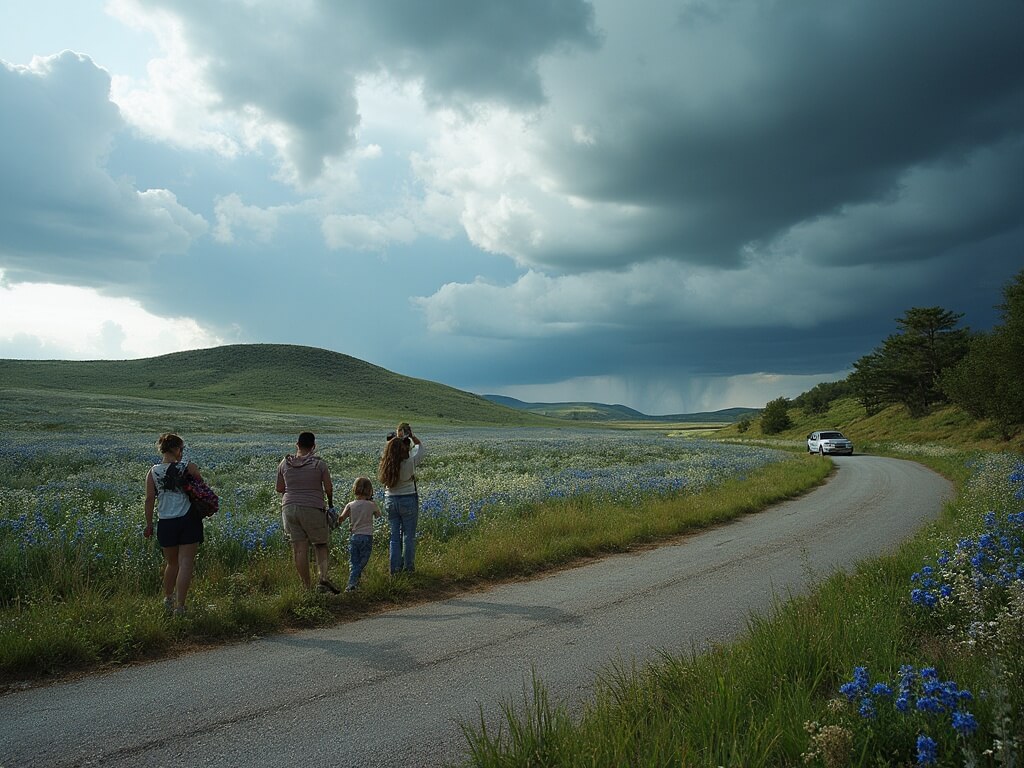
Ecotourism and the Future of Hill Country Wildflowers
Wildflower popularity could either destroy ecosystems or fund their protection. Hill Country chose the second path.
Institutions like the Lady Bird Johnson Wildflower Center use admissions to fund habitat restoration, native plant breeding, and education.
Agro-tourism (like Wildseed Farms) provides landowners with incentive to preserve habitats rather than develop them.
Visitor education = better behaviour. People pick fewer flowers, make conscious land-use decisions, and support conservation.
The Drought Reality: What Changing Climate Means for Future Seasons
Drought stress is becoming structural.
Species like Gregg’s mistflower thrive better under new conditions, which is why it was selected as the 2025 Wildflower of the Year.
Practical consequences:
- Expect year-to-year variation
- Species like firewheel and coreopsis may dominate more seasons
- Eastern Hill Country (more rainfall) will often outperform western parts
Restoration efforts are underway, but we’re managing decline, not maintaining the status quo.
The Species-By-Species Reality: What Actually Grows Where and When
Bluebonnets (Lupinus texensis)
Peak bloom: late March–mid April. Found across Hill Country. Nitrogen-fixing and iconic.
Indian Paintbrush (Castilleja indivisa)
Peaks with bluebonnets, semi-parasitic, rich red-orange color.
Coreopsis (Coreopsis tinctoria)
Late April–May bloomer. More drought tolerant, increasingly important.
Phlox
Mid-spring bloom, pollinator friendly, adds pink-purple-white diversity.
Purple Coneflower (Echinacea)
Mid-to-late spring, attracts specific pollinators, visually engaging structure.
Firewheel (Gaillardia pulchella)
May–Summer bloom. Heat-tolerant, vibrant red-yellow bicolor.
Gregg’s Mistflower (Conoclinium greggii)
March–November bloom. Chosen for 2025, resilient and extended season.
Winecups (Callirhoe involucrata)
Groundcover flowering red-cups. Spring/Summer bloom, often mixed with others.
Plan your trip based on what species bloom when. Each period offers a different visual experience.
The Photography Tips That Actually Change Your Results
Best wildflower photos are taken from roads and edges, not inside fields.
Golden hour is non-negotiable.
- Use morning or pre-sunset light
- Isolate subjects with shallow depth of field
- Use constraints: shoot through branches or frame the sky
- Include people to add emotion and scale
When Conditions Disappoint: The Pivot Strategies That Save Your Trip
Scenario 1: No bluebonnets? Track delayed bloom, change locations, or visit the LBJ Center.
Scenario 2: Crowds? Go early (before 8 AM), or visit lesser-known spots.
Scenario 3: Bad weather? Overcast light is great for photography. Rain enhances flower color.
Scenario 4: Something else underwhelms? Focus on what’s going well—wine, hikes, art, views.
The Etiquette Conversation Nobody Wants But Everyone Needs
Most visitors: respectful. Minority: damaging.
- Stay on paths
- Don’t pick flowers
- Pack trash out
- Don’t trespass
- Follow site-specific rules
Respect leads to future blooms. Entitlement leads to environmental degradation.
The Conservation Question: What You’re Actually Supporting With Your Visit
Your visit funds:
- Habitat restoration
- Native plant breeding
- Wildflower seed propagation
- Educational outreach
Ecotourism creates financial incentive for landowners to preserve and expand wildflower habitats.
Final Thoughts: What You’re Actually Doing When You Visit
Visiting Hill Country wildflowers means you’re participating in:
- Conservation economics
- Cultural tradition
- Ecological stewardship
Visiting respectfully, supporting restoration, and adjusting based on real-time data ensures these blooms continue.
Plan Your Trip:
- Check Lady Bird Johnson Wildflower Center for updates
- Book flexible accommodations
- Use apps and updates to adapt
- Visit on weekdays if possible
- Photograph in golden hour
Internal Resources:
- Indoor Gardening Ideas
- Wabi-Sabi Garden
- Backyard Patio Designs
- Backyard Fire Pit Ideas
- Whimsical Patio Ideas