Here’s what most people get wrong about the Tunnel of Trees in Michigan.
They think it’s just another scenic drive.
They imagine cruising down a highway with some nice trees overhead, snapping a few photos, and calling it a day.
Then they actually drive M-119 between Harbor Springs and Cross Village, and everything changes.
I discovered this twenty-mile stretch on a grey October afternoon when my GPS died and I refused to turn back.
What I found wasn’t a road with trees around it—it was something altogether different.
It was trees that had decided to become the road.
What Actually Makes the Tunnel of Trees Different From Every Other “Scenic Drive” in America
The Tunnel of Trees runs along M-119 in Northern Michigan, stretching from Harbor Springs in the south to Cross Village in the north.
But calling it a scenic drive undersells what’s happening here.
This isn’t a highway with pleasant views.
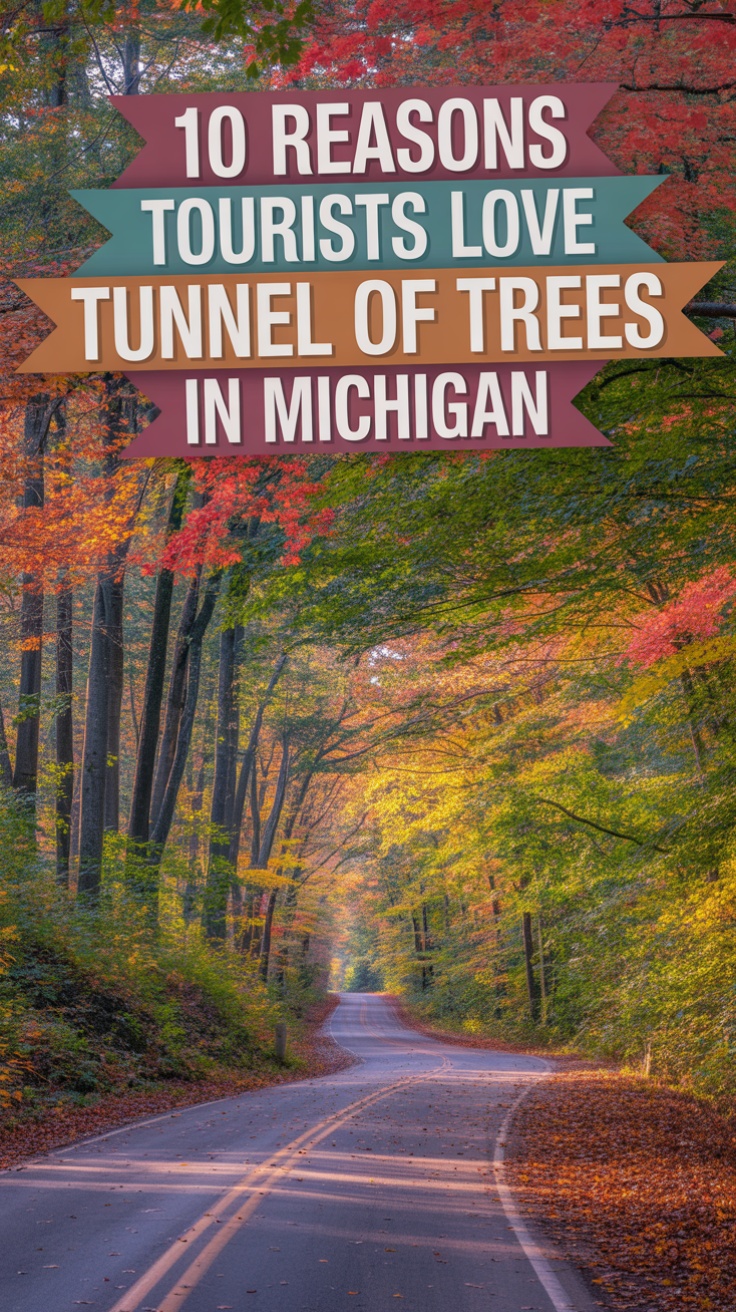
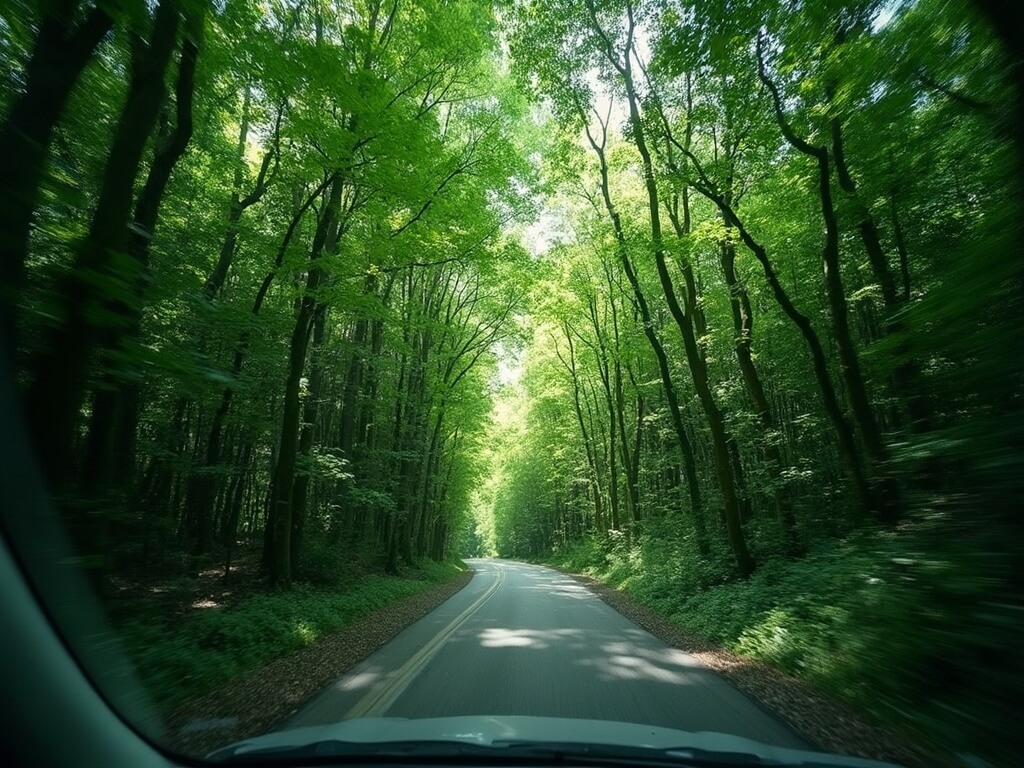
This is a narrow, winding two-lane road where towering maples, oaks, birches, and cedars have literally formed a canopy overhead.
The trees don’t line the route—they consume it.
Sunshine barely penetrates the canopy in summer.
Your windscreen becomes a frame for an ever-shifting tunnel of green, and occasionally, glimpses of Lake Michigan appear through the forest like secrets the road is telling you.
The road itself carries weight.
It’s only about twenty feet wide in most places.
There’s no centre line.
Oncoming traffic requires genuine attention and courtesy.
Your phone probably won’t work well here either, which is exactly the point.
This route has deeper roots than most American highways.
Native Americans walked these paths first, centuries before roads existed.
Early settlers followed the same route because the geography made sense—it hugged the shoreline and connected communities.
The towns you’ll pass through, like Good Hart and the eventual destination of Cross Village, still contain architecture from the 1800s.
You’re not driving through history—you’re driving on it.
Key characteristics that separate this from typical scenic drives:
- Narrow, winding two-lane road with no centre line (requires actual focus to drive safely)
- Dense tree canopy that blocks direct sunlight for most of the route
- Lake Michigan views that appear unexpectedly through the forest
- Towns and landmarks dating back to the 1800s built along the original Native American pathways
- Wildlife activity including deer, foxes, and seasonal migratory birds
- Limited vehicle traffic compared to major highways
When I drove this section on that October afternoon, I understood why people return here year after year.
It’s not nostalgia. It’s not Instagram aesthetics.
It’s the simple fact that you can’t find this kind of uninterrupted forest tunnel anywhere else in the United States.
Why the Tunnel of Trees Route Demands a Completely Different Approach to Driving
Most scenic drives reward speed.
You stay on the main highway, windows down, music up, and the landscape becomes wallpaper.
The Tunnel of Trees punishes this approach entirely.
The road width, curve radius, and traffic patterns make rushing impossible.
Even if you wanted to speed, the physical geometry of M-119 won’t allow it.
This creates an interesting psychological shift.
You stop thinking about getting from point A to point B.
You start actually experiencing the drive itself.
That might sound like travel writer cliché, but it’s mechanically true.
Your brain processes information differently when you’re moving at twenty-five miles per hour instead of sixty-five.
You notice details.
You see wildlife movement in the tree line.
You catch the exact moment where sunlight angles through branches.
You hear the road beneath your tyres change texture.
The driving experience becomes the destination rather than a means to one.
What you actually need to know about driving M-119:
- Drive slowly—this isn’t negotiable, it’s geometry
- Watch for oncoming traffic—people take corners tighter than they should
- Never assume the road ahead is clear until you actually see it
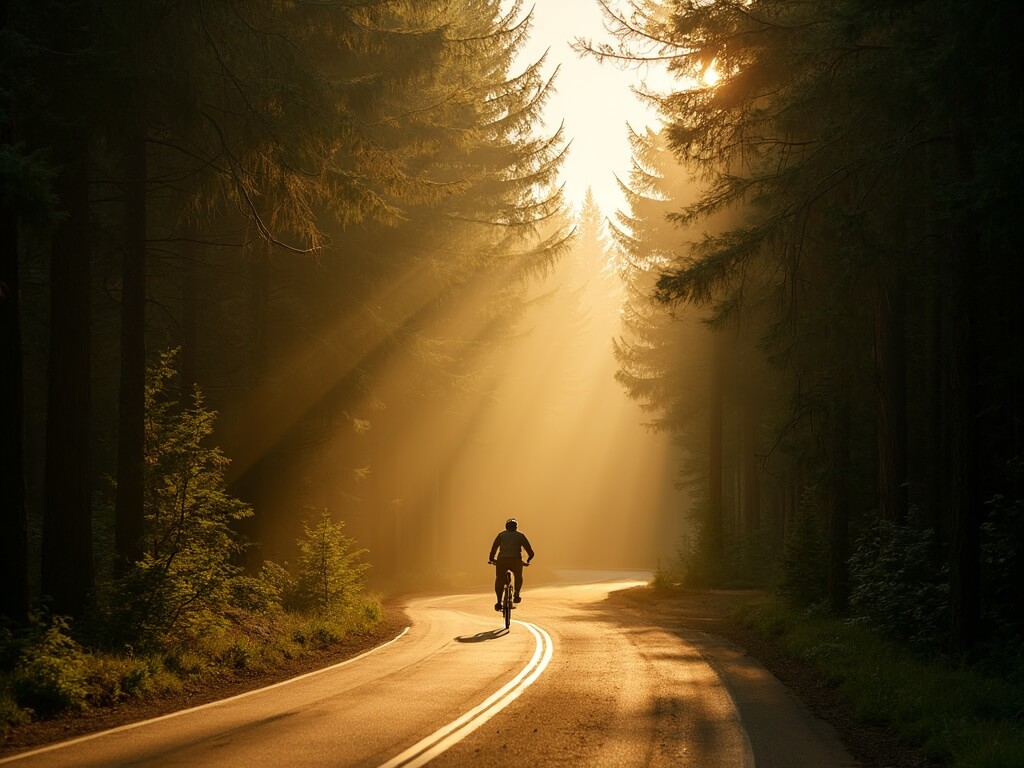
- Motorcycles and bicycles are surprisingly common here
- Pull over completely if you want to take photos or check a map
- The road has sharp curves at random intervals, not predictable ones
- Large vehicles and RVs struggle significantly, especially during peak seasons
- Winter conditions can make sections genuinely dangerous despite the speed restrictions
I learned this firsthand when a delivery truck came around a corner while I was distracted by a particularly dramatic sunset.
The truck’s driver had misjudged the curve—he was too wide and too fast.
We both braked hard, tyres gripped, and somehow we both fit through the bottleneck.
My heart rate didn’t return to normal for the next five miles.
That moment crystallised something important: the Tunnel of Trees isn’t a playground.
It’s a beautiful place that demands respect and attention.
It’s not dangerous in the cliff-road sense, but it does require you to actually drive rather than just occupy a vehicle.
The Seasonal Transformation: Why When You Visit Changes Everything
Here’s where I made my mistake as a first-time visitor.
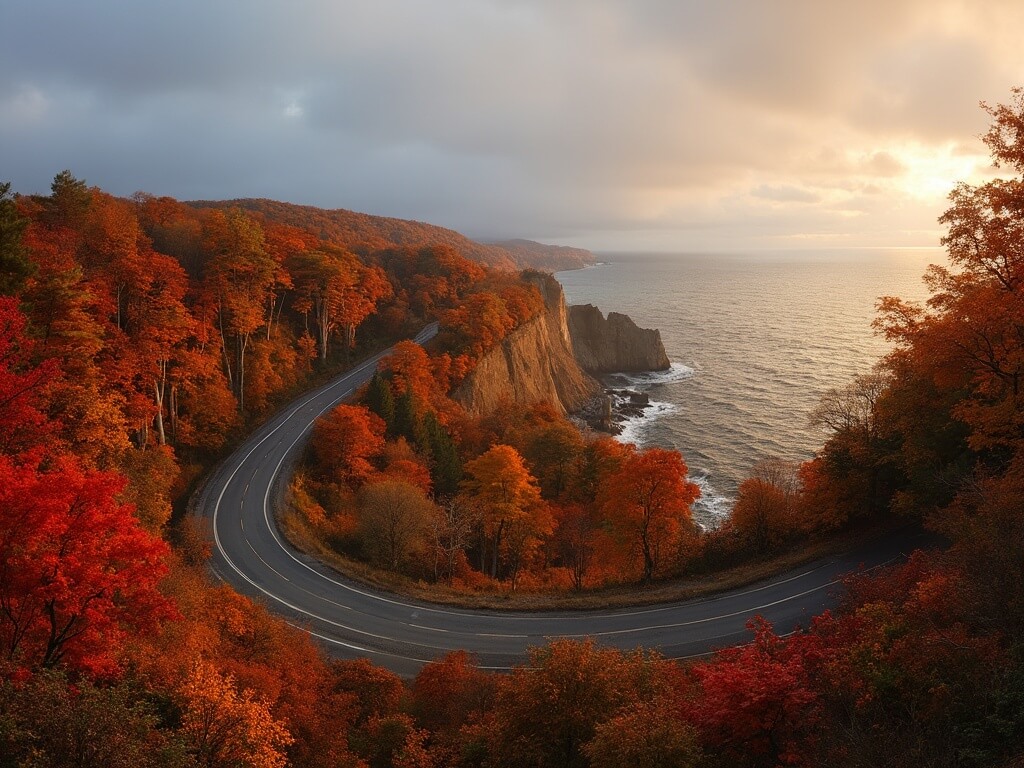
I drove the Tunnel of Trees in October because I’d heard about the fall colours.
I wasn’t prepared for what I actually encountered.
It wasn’t just a drive with coloured leaves.
The entire landscape had shifted into something almost unreal.
Fall (September through early November):
The peak season for Tunnel of Trees tourism arrives in September and peaks in October.
Maples turn crimson and orange.
Birches go golden.
Even the cedars seem to intensify.
The canopy becomes a spectrum rather than a monochrome green.
Photographers call this “leaf-peeping season,” and they arrive in volume.
Weekends become genuinely crowded.
A drive that usually takes ninety minutes can stretch to three hours when you factor in traffic and photo stops.
Weekday visits offer a dramatically different experience—calmer, slower, less congested.
Early morning or late afternoon drives feel almost private despite being peak season.
Spring (April through May):
Wildflowers explode along the forest floor and roadsides.
Wildlife activity reaches annual peaks as animals emerge from winter and begin breeding season.
Temperatures remain cool, making this ideal for motorcyclists and cyclists.
The canopy is fresher, less dense, allowing more diffused light through the trees.
Summer (June through August):
The canopy reaches full density.
Sunlight becomes rare along the road itself.
The dense green creates a cooling effect—you might exit the forest and immediately feel the temperature rise.
This season suits cyclists and motorcyclists specifically because the cooler temperature makes the ride more comfortable.
Tourist traffic remains steady but not overwhelming compared to autumn.
Winter (December through February):
The least visited season by far.
Snow coverage on the branches creates an entirely different aesthetic—less vibrant, more austere and clean.
Driving becomes genuinely risky during and immediately after snow events.
Visibility reduces dramatically.
The road surface, particularly on curves, becomes slippery with minimal warning.
This season isn’t recommended unless you have significant winter driving experience and genuine caution.
The lack of crowds becomes almost meditative rather than peaceful.
My October drive had pulled me into peak season madness without my realising it.
I’d arrived on a Saturday, assuming the crowds would be manageable.
Instead, I spent as much time in traffic as I did actually experiencing the drive.
I returned the following March on a random Wednesday morning.
Same road, same trees, completely different experience.
That second visit taught me that timing matters more than I’d considered.
The Tunnel of Trees in spring with minimal traffic felt like a private discovery rather than a tourist attraction.
What Actually Happens When You Pull Off the Road: Stops Worth Your Time
The temptation when driving M-119 is to maintain momentum, to see the entire twenty miles as one continuous experience.
But the real discoveries happen when you stop.
Several pull-offs dot the route, and a few specific stops justify getting out of your vehicle entirely.
Thorne Swift Nature Preserve
Sits along the route and offers boardwalk access to the Lake Michigan shoreline.
The boardwalk itself is surprisingly well-maintained, winding through restored native habitat before opening onto a beach view.
I spent forty minutes here watching the lake shift under changing light rather than the twenty minutes I’d allocated.
The boardwalk gives you ground-level perspective of the forest ecosystem rather than just the canopy view from driving.
Devil’s Elbow
Functions as the most popular overlook along the entire route.
It’s named for the sharp bend in the road combined with an elevated view point.
From here, you can see across the forest canopy and out to Lake Michigan simultaneously.
On clear days, the view extends for miles.
On overcast or hazy days, it becomes moody and atmospheric rather than panoramic.
This stop takes five minutes if you’re just stepping out for a photo or thirty minutes if you’re genuinely absorbing the landscape.
Good Hart General Store
Sits in the tiny community of Good Hart, positioned roughly midway along the drive.
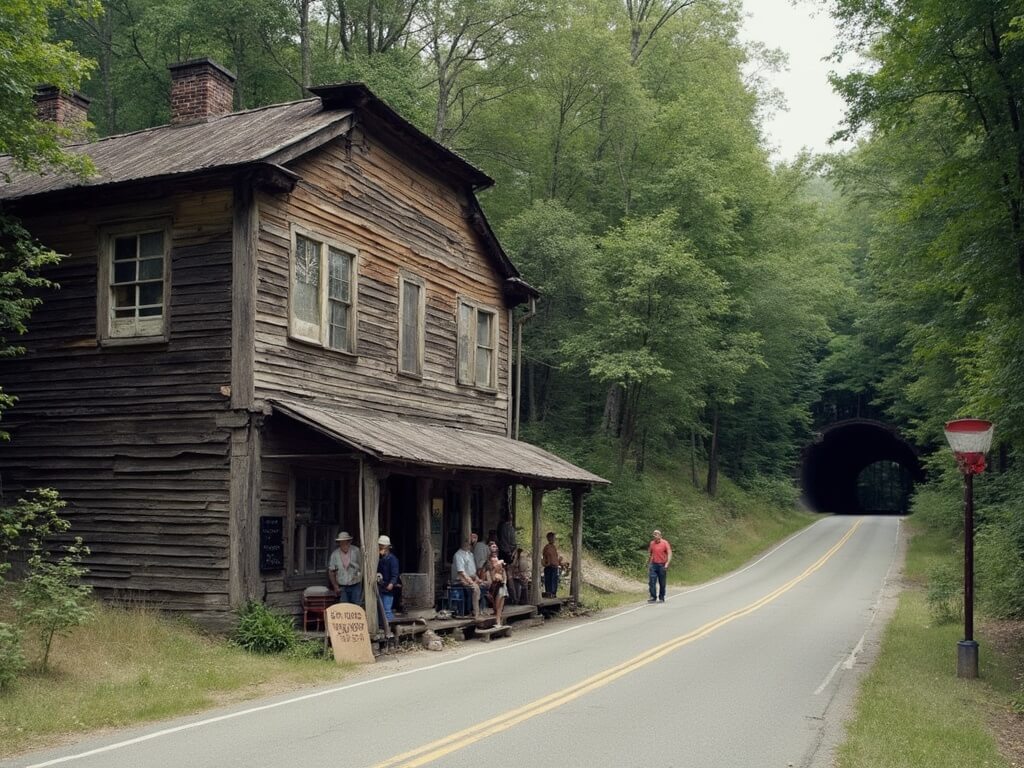
It’s a functioning general store that also sells local goods and provides historical context about the area.
The building itself dates to the 1800s and carries authentic character rather than affected rusticity.
Stopping here breaks up the drive psychologically and connects you to actual community rather than just tourist infrastructure.
Cross Village
Marks the northern terminus of the Tunnel of Trees drive.
The community itself is worth ten to twenty minutes of exploration beyond the driving experience.
Local restaurants, shops, and a marina create a genuine destination rather than just an endpoint.
The architecture reflects both Native American heritage and settler-era development.
Legs Inn sits here—a unique restaurant featuring Polish cuisine and interior folk art that probably deserves its own article about eccentric Northern Michigan dining.
These stops transform the experience from a single scenic drive into a more complete journey.
You’re not just moving through landscape—you’re actually engaging with place.
The route becomes about discovery rather than completion.
Related Reads
The Infrastructure Problem Nobody Talks About: Why Your Vehicle Choice Actually Matters
I learned this lesson the hard way when a couple in a thirty-foot motorhome pulled into a scenic overlook ahead of me during my October visit.
They’d clearly driven the entire route expecting a typical highway experience.
When they tried to navigate back onto M-119, the reality became apparent—their RV was too wide for the road margins, and the turn radius didn’t accommodate their vehicle’s length.
They had to reverse, maneuver twice, and ultimately backtrack to find a turnaround point.
The entire ordeal took fifteen minutes for a simple exit.

This scenario plays out regularly along M-119, particularly during peak season.
The Tunnel of Trees was built for vehicles from a different era—smaller, more nimble, less dependent on modern comfort features.
Vehicle types and their compatibility with M-119:
- Sedans and compact vehicles: Perfect fit, no issues whatsoever
- Standard SUVs: Generally fine, though wider models may feel snug
- Pickup trucks: Manageable but requires careful driving on curves
- Motorcycles and bicycles: Ideal—the slow pace and narrow road suit these vehicles perfectly
- RVs and motorhomes: Problematic, especially anything over twenty-five feet
- Full-size trucks and delivery vehicles: Genuinely risky, even for experienced drivers
- Trailers: Not recommended under any circumstances
The road width averages around twenty to twenty-two feet in most sections.
Add a modern full-size truck at eight feet wide, and you’ve consumed roughly a third of the available road space before accounting for safe driving margins.
Oncoming traffic becomes genuinely complicated.
During my March return visit, I traveled with a friend who insisted on taking his extended-cab pickup. He white-knuckled through the first three miles before turning around at the earliest opportunity.
The experience shifted from enjoyable to stressful. Your vehicle choice should influence your entire approach to the experience.
If you’re visiting from out of state and renting a vehicle, specifically request a compact or mid-size sedan. Skip the large SUV—even if it’s only marginally more expensive.
Read the complete guide to Michigan’s Tunnel of Trees on M-119 for additional planning insights.
Where to Actually Sleep: Lodging That Matches the Experience
Harbor Springs sits at the southern terminus of the drive and functions as the main lodging hub. It’s upscale and scenic, but prices reflect that.
Cross Village on the northern end offers charming, local options like B&Bs and cottages—less predictable, but more immersive.
Petoskey offers broader lodging types and better pricing, making it ideal for travelers seeking flexibility or on a moderate budget.
Budget-conscious travelers can look inland—towns like Boyne City or Grayling provide cheaper stays, though farther from M-119.
During my spring visit, I stayed at a bed-and-breakfast in Cross Village. The owner, Margaret, provided invaluable local advice that truly elevated the experience.
The Food Question: Where to Actually Eat (And What to Avoid)
The route has very few food options directly along it. Good Hart General Store offers grab-and-go essentials, while Legs Inn in Cross Village is the only full-service restaurant on the route.
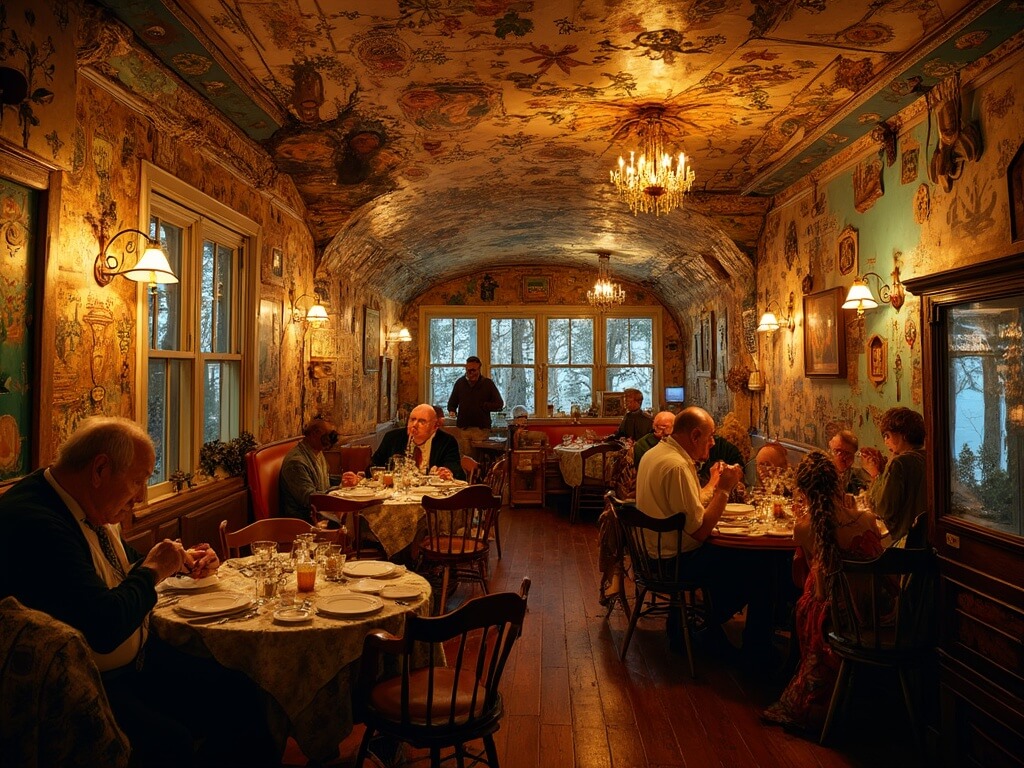
Legs Inn serves Polish cuisine in a surreal folk art setting. It’s seasonal, so check their hours before planning your stop.
Outside the route, eat in Harbor Springs, Petoskey, or Cross Village either before or after your drive.
Pro tip: Eat a solid breakfast and pack snacks to avoid ruining your experience with rushed or mediocre meals.
For a list of scenic stops along the M-119 Tunnel of Trees drive, this is a helpful companion resource.
Activities Beyond Just Driving: What Actually Fills a Full Day
The drive alone takes 90 minutes to 2 hours. But additional activities fill the day meaningfully:
- Thorne Swift Nature Preserve: Explore trails and the beach—worth 90 minutes to 2 hours.
- Photography and Birdwatching: Timing, light, and season offer dynamic experiences.
- Cycling: The full route is bikeable—cautious but immensely rewarding.
- Hiking: Several informal trails offer deeper forest immersion.
Sample full-day itinerary:
- Morning: Drive with scenic stops (2.5–3 hours)
- Lunch: Off-route or packed (1–1.5 hours)
- Afternoon: Nature preserve or cycling/hiking (1.5–2 hours)
- Late Afternoon: Return drive or wind-down activity (1.5–2 hours)
When You Shouldn’t Visit: The Honest Truth About Timing
Peak weekends in October spell disaster—traffic congestion kills the magic completely.
Winter driving is treacherous, particularly with lake-effect snow and winding curves.
Night driving is risky—limited lighting and tight corners don’t mix well.
Best timing:
- Mid-week (Tuesday–Thursday)
- Shoulder seasons (April, May, early September, late October)
- Daylight hours, particularly mid-morning to mid-afternoon
- Clear, dry weather only
The Conservation Reality: What Happens If We Don’t Care for This Place
The ecosystem is fragile. Road salt, erosion, and invasive species threaten its balance.
Leave No Trace is more than a slogan—it’s essential. Take out your trash, stick to pulloffs and trails, respect wildlife, and drive gently.
The Tunnel of Trees remains beautiful because people have respected it. That must continue.
The Real Cost of the Tunnel of Trees Experience
My October trip cost $300. My March one, $220. Not extravagant, but not free either.
What you’re paying for isn’t scenery—it’s presence. The kind of engaged travel few places still offer.
If you value depth over quantity, this is one of the best day trips you could ever take.
The Accessibility Question: Being Honest About Who Can Actually Experience This
Wheelchair access is limited, except at Thorne Swift Preserve. Roadside pulloffs are uneven and unpaved.
Visually impaired visitors can still experience temperature shifts, smells, and sounds—especially forest scent and birdsong.
Driving anxiety? This might not be the route for you. It’s tight, winding, and requires continuous focus.
Why You Should Visit (And When You Absolutely Shouldn’t)
You should visit if:
- You enjoy nature, slowness, and the act of driving
- You have flexible timing
- You want a full-day immersive experience
You should skip it if:
- You’re in a large RV or commercial vehicle
- You’re visiting only for a few rushed hours
- You need budget lodging and can’t find availability
Your Actual Next Steps: Making This Real Rather Than Just Planning
- Check fall color forecasts if visiting in autumn
- Book lodging early—especially for peak weeks
- Drive mid-week to avoid major traffic
- Download offline maps—cell service drops often
- Pack snacks and water regardless of plans
- Respect the road, forest, and locals
This place is sacred because previous visitors treated it that way. That tradition continues with you.
I made my second visit on a grey March Wednesday. Few cars. Birdsong. Solitude. That day taught me: The Tunnel of Trees isn’t a destination. It’s an experience you breathe in slowly.
Want more rustic lifestyle inspiration? Explore our articles on: