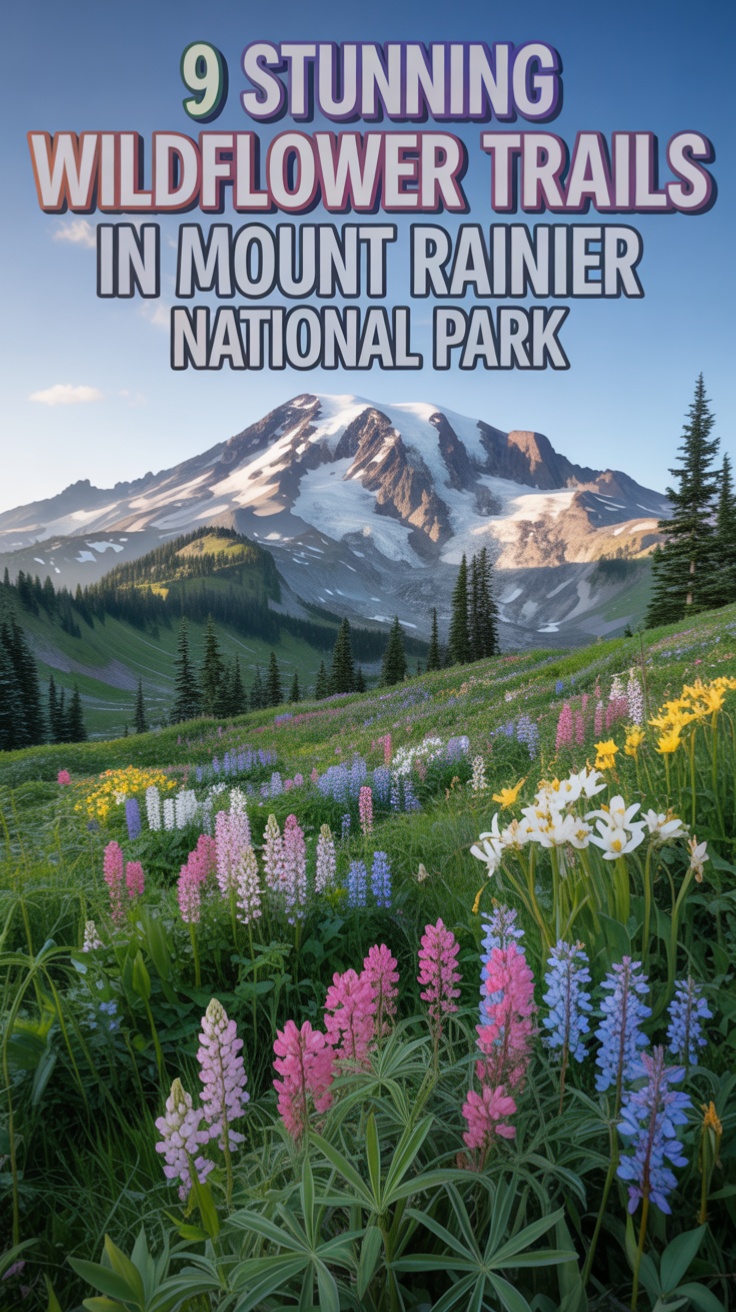
Most people visit Mount Rainier for the mountain itself.
They come for the iconic peak, the glaciers, the sense of standing in front of something genuinely massive.
But here’s what they miss: the reason Mount Rainier wildflowers are considered some of the best natural displays in the entire United States has nothing to do with luck.
It’s about timing, ecology, and the way this mountain creates the perfect conditions for flowers to absolutely explode across the landscape once a year.
I discovered this the hard way during a July visit about five years ago.
I’d planned to hike Skyline Trail as a standard alpine trek, expecting maybe a few scattered blooms.
Instead, I stepped out of my car at Paradise and genuinely stopped walking for a full thirty seconds.
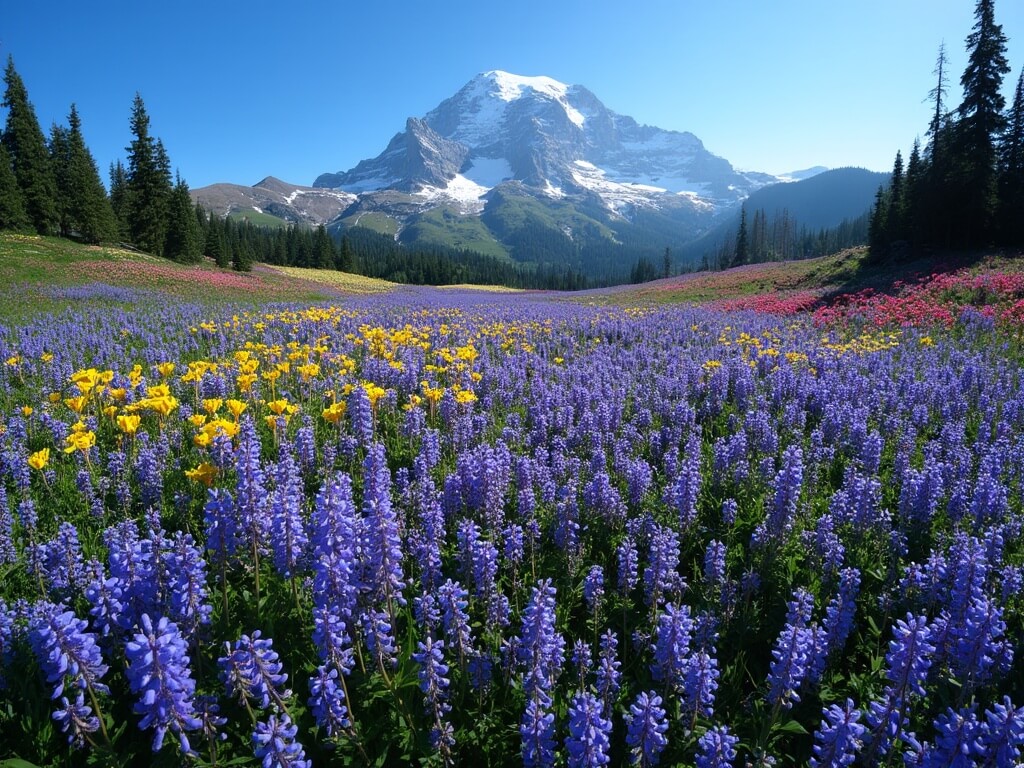
The meadow in front of me was a carpet of blue lupine so thick that I couldn’t see the ground.
Behind it, splashes of magenta paintbrush cut through the purple.
Avalanche lilies glowed yellow in the shaded patches.
I’d hiked before, photographed before, but I’d never seen anything like it.
That’s when I understood why people travel from around the world specifically to see Mount Rainier during wildflower season.
The Wildflowers That Make Mount Rainier Different From Every Other Mountain
Here’s what most people don’t realise about Mount Rainier wildflowers: they’re not distributed randomly across the peak.
They exist in distinct zones, each with its own ecosystem, its own species, and its own perfect moment to bloom.
The mountain sits at the intersection of three completely different wildflower worlds.
Low-elevation old-growth forests hold shade-tolerant species like coltsfoot and broadleaf arnica.
Mid-elevation subalpine meadows—the ones you actually see and remember—burst with lupine, glacier lilies, and paintbrush.
Higher alpine zones showcase hardy, miniature versions of flowers adapted to brutal conditions.
This diversity exists because Mount Rainier creates its own climate zones just by existing.
The mountain forces moist Pacific air upward, triggering precipitation and creating unique microclimates at different elevations.
The volcanic soil is rich.
The snowmelt provides consistent water through late summer.
The result: hundreds of wildflower species nowhere else in the Pacific Northwest grows with the same concentration and intensity.
Why the Timing of Mount Rainier’s Bloom Matters More Than You Think
Here’s the uncomfortable truth about planning a wildflower trip: the exact timing shifts every single year.
Late July through early August is your best bet statistically.
But “best bet” doesn’t mean guaranteed.
Early snowmelt in a warm spring pushes blooms forward by two or three weeks.
A late, cold spring delays them just as dramatically.
I’ve spoken with park rangers who’ve seen the bloom peak shift from early July one year to late August the next.
The park service releases a wildflower status report throughout the season specifically because visitors get it wrong so often.
Check that report before you book your trip.
Don’t assume.
The daily timing matters just as much as the calendar.
Between 9 am and 2 pm, the sun hits the meadows at an angle that makes colours genuinely pop.
The blues look deeper.
The reds glow.
Early morning and late afternoon light is softer but the flowers look washed out by comparison.
If you’re visiting purely for photography, this timing is critical.
If you’re visiting to stand in a meadow and feel small, any time the sun’s up works fine.
Where to Actually Stand When You Want to See the Best Mount Rainier Wildflowers
The Skyline Trail Loop near Paradise is, by a significant margin, the most photographed wildflower trail in the entire national park.
And for good reason.
The loop is roughly 5.4 miles, gains about 1,700 feet, and for roughly half of it you’re walking through meadows that look like someone threw paint at the landscape.
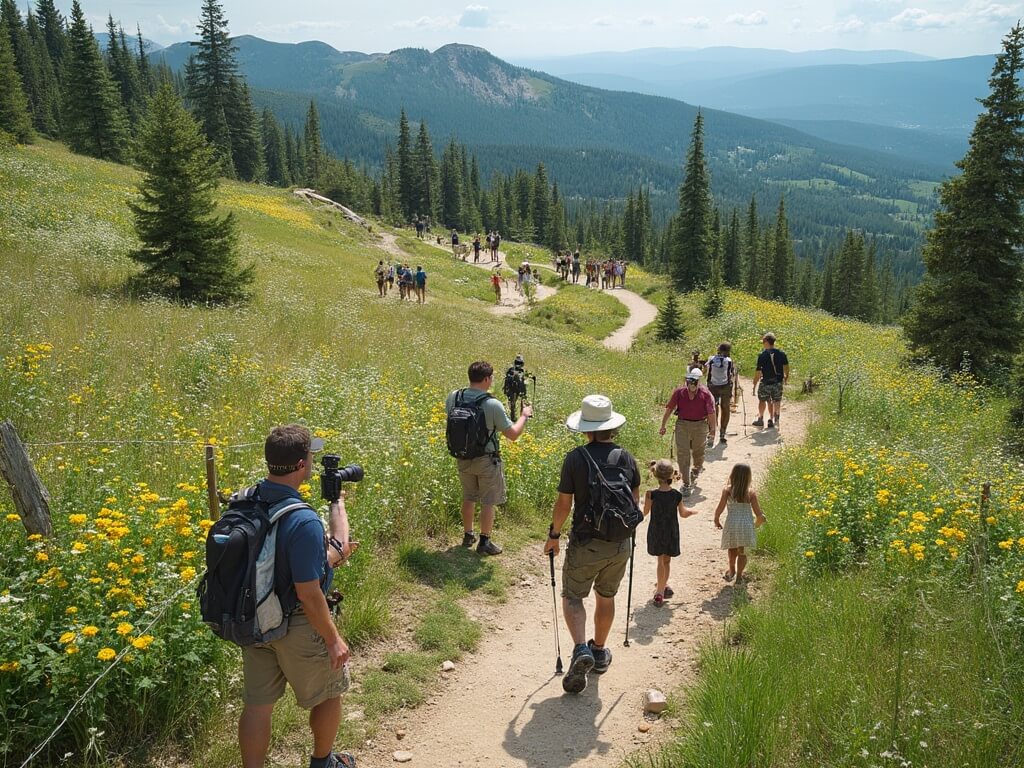
Late July and early August at Skyline is absolutely packed with visitors.
Hundreds of people on a single day isn’t unusual.
If you want a slightly less chaotic experience, the Nisqually Vista Trail is a revelation.
It’s only 1.2 miles, entirely accessible, and you still get legitimate wildflower displays without the crowds.
I sent my parents there when they visited last year—they’re both in their seventies and not particularly experienced hikers—and they spent two hours photographing flowers on what was supposed to be a thirty-minute walk.
The Sunrise area sits on the opposite side of the mountain and people often overlook it.
You get Sunrise Rim Trail, which delivers views of the mountain itself combined with wildflower meadows.
Dege Peak and the Naches Peak Loop are less crowded options that still deliver serious floral displays.
Here’s an important detail: driving the scenic roads themselves—Paradise Valley Road and Sunrise Road—frequently offers roadside wildflower viewing without the physical hiking commitment.
The meadows bloom right up to the asphalt.
You can stop, photograph, and move on without breaking a sweat.
The Specific Flowers That Actually Matter (And How to Spot Them)
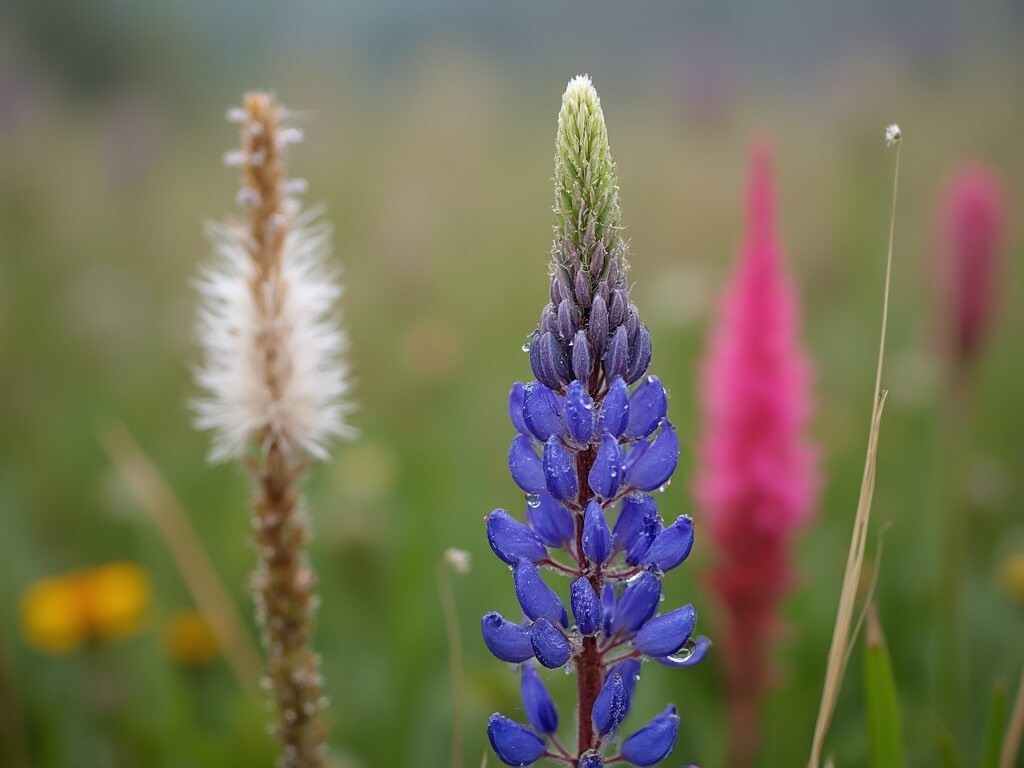
Lupine is the signature Mount Rainier wildflower.
It’s blue-violet, it grows in massive clusters, and it dominates the visual landscape during peak bloom.
When people picture Mount Rainier wildflowers, they’re picturing lupine fields.
It’s easy to identify: tall plants (sometimes two feet or more), dense flower spikes, that distinctive purple-blue colour that photographs beautifully.
Avalanche lilies signal the beginning of the bloom sequence.
They’re among the first flowers to emerge as snow melts.
These are yellow, delicate-looking but surprisingly tough, and they often appear in patches so thick they look like someone spilled yellow paint across a clearing.
Paintbrush comes in intense reds and magentas.
It’s a parasitic plant—it actually steals nutrients from grasses around it—but the visual impact is undeniable.
Photographers absolutely love paintbrush because of its colour intensity and texture.
Beargrass is tall, dramatic, and unmistakable: white flower spikes that can reach three feet high, looking almost like miniature pampas grass.
It doesn’t bloom every year at every location—plants have cycles—but when it blooms, it’s genuinely striking.
Pasqueflower blooms earlier than most subalpine species and produces a distinctive “bedhead” seedhead that’s weirdly photogenic.
Once you see one, you notice them everywhere.
The flowers themselves are cup-shaped and come in purple or white depending on the location.
If you struggle with on-site identification, the National Park Service provides a free wildflower guide as a PDF download on their website.
Locals and experienced hikers often carry printed field guides.
But honestly, in the middle of peak season, simply pointing a camera at anything that looks interesting and comparing photos later works perfectly fine.
The Uncomfortable Reality About Wildflower Meadows That Nobody Talks About
Here’s something I didn’t realise until a ranger explained it to me: the beautiful wildflower meadows at Mount Rainier are genuinely fragile.
Not fragile like “handle with care.”
Fragile like “one person stepping off-trail damages soil that takes years to recover.”
The vegetation is shallow-rooted.
The soil is thin.
Constant foot traffic compacts the earth, kills the plants, and prevents regeneration.
In high-traffic areas, you can see visible erosion paths through meadows where thousands of visitors have walked the same route over multiple seasons.
The park has actually had to close certain meadow areas temporarily to let them recover.
This isn’t theoretical damage.
It’s visible, measurable, and permanent in the short term.
The wildflower displays that look pristine are actually under real pressure.
Here’s the counterintuitive part: the best way to help preserve them is to actually use the trails and follow the rules, rather than avoiding them completely.
Designated trails concentrate foot traffic to manageable areas.
Staying on the trail prevents damage to surrounding meadows.
It seems backwards—wouldn’t less visitation be better?—but concentrated impact in one spot is better than dispersed damage across a larger area.
One step off the trail doesn’t seem significant.
But multiply that by hundreds or thousands of visitors over a season, and you get serious damage.
The park has implemented timed entry requirements during peak summer months specifically to manage visitor impact.
It’s annoying to plan around, but it works.
Fewer simultaneous visitors means less concentrated pressure on meadows.
Picking wildflowers is strictly prohibited, and I cannot overstate this: the “no picking” rule exists because people used to harvest flowers commercially and it genuinely damaged the ecosystem.
Take photographs. Take videos. Leave the flowers growing.
Every flower you leave behind contributes to next year’s display for someone else to enjoy.
This isn’t environmental righteousness—it’s basic resource management for a place you presumably want to return to.
How to Actually Plan a Wildflower Trip Without Getting It Wrong
The practical reality of visiting Mount Rainier for wildflowers requires more planning than you’d think.
Start by checking the current wildflower status report from the National Park Service.
They update it regularly during bloom season.
It tells you what’s currently blooming at specific locations, what’s peaked, and what’s still weeks away.
This single resource eliminates most of the guesswork.
Weather preparation is non-negotiable:
High-elevation weather changes rapidly and dramatically.
Bring layers even if it’s warm when you start.
Rain can arrive within minutes during summer afternoons.
Sunscreen and a hat are genuinely essential—there’s minimal shade on most wildflower trails and sun exposure at elevation is intense.
Sunburn at 5,000 feet happens faster than you’d expect.
Photography considerations matter if you’re planning to capture images:
A zoom lens is more useful than a wide-angle lens for wildflower photography.
Most flowers are small and detail-oriented.
Getting close looks better than pulling back and showing the whole meadow.
If you’re genuinely interested in photography, early morning or late afternoon light produces softer, more interesting results than midday harsh sun.
The paradox: the best light for photography is often when fewer people are around, which means better solitude regardless.
Accessibility and family-friendliness are legitimate factors:
Nisqually Vista Trail is wheelchair accessible for much of its length.
Paradise has accessible sections.
If you’re visiting with young children or elderly relatives, these aren’t consolation prizes—they’re legitimate wildflower experiences.
Timed entry requirements have reshaped visit planning:
During peak season (summer 2024 and beyond), you need a timed entry reservation to enter at main park entrances during busy hours.
This isn’t optional.
Plan accordingly and book in advance.
Early morning or late evening entries often have better availability and fewer crowds, which is genuinely helpful if you’re interested in photography or quiet appreciation.
Your next step is straightforward: check what’s currently blooming, book a timed entry, and decide which zone matches your fitness level and interests.
But understanding what to actually look for once you arrive—and why these flowers exist in the specific places they do—transforms a casual trip into something genuinely memorable.
Related Reads:
What Actually Happens to Mount Rainier’s Wildflowers When Nobody’s Looking
The meadows at Mount Rainier don’t stay vibrant by accident.
Behind the scenes, the park runs active restoration projects specifically designed to repair damage from decades of visitor impact and climate variation.
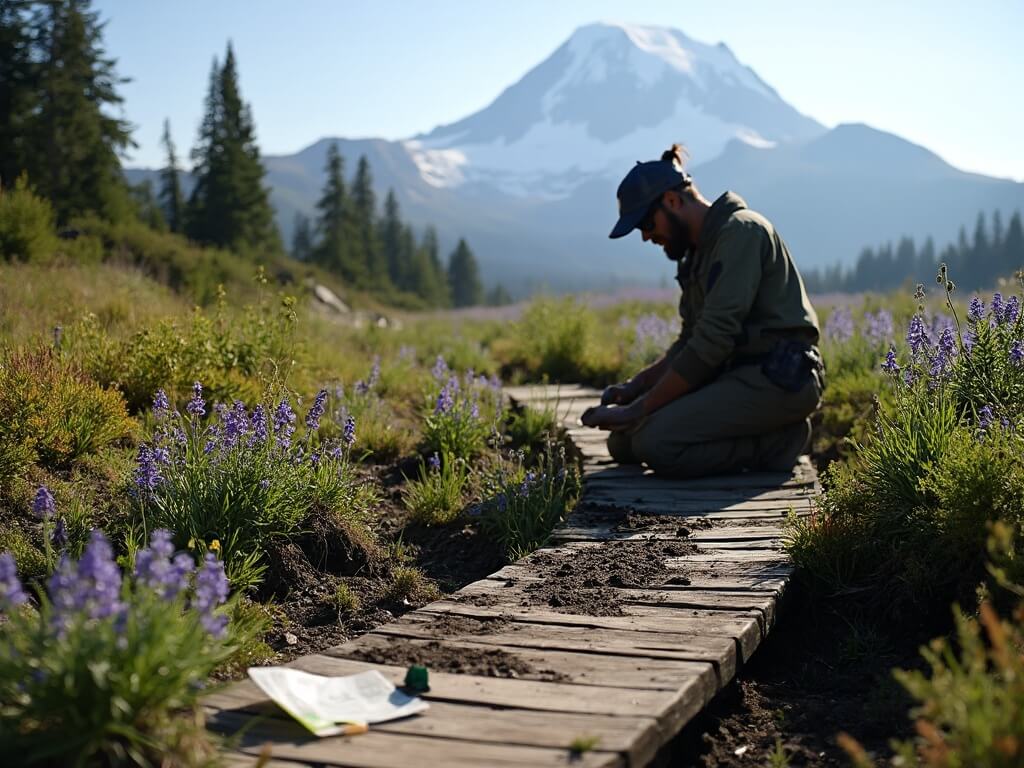
This is where the story gets interesting because it reveals something crucial: the wildflowers you see today are partially the result of deliberate ecological intervention.
In the 1990s and early 2000s, some of Mount Rainier’s most famous meadows had visible erosion problems. Trails were braided, vegetation coverage had dropped, and the park responded with replanting, improved infrastructure, and education.
Today, those efforts show measurable recovery—vegetation is returning, and native species are reestablishing. Understanding this context enhances your experience and highlights the importance of respecting trail rules and ecological stewardship.
The Wildflower Species You’ll Actually See (Beyond the Famous Ones)
Most visitors know about lupine, paintbrush, and beargrass. But Mount Rainier’s subalpine zone hosts over 100 species, each uniquely adapted.

In blue and purple hues:
Alpine aster, broadleaf lupine, mountain bog gentian, and spreading phlox add cool tones across diverse terrain.
In red and pink tones:
Look for magenta paintbrush, western columbine, rosie spirea, and pink mountain heather.
In white:
Beargrass dominates, but pearly everlasting and white mountain heather contribute delicate blooms.
In yellow and orange:
Glacier lily, avalanche lily, broadleaf arnica, and tiger lily brighten meadows and trail edges.
In lower elevation forest zones like Longmire, species like coltsfoot and foamflower thrive in shade and moisture.
Check out the official Mount Rainier wildflowers guide for bloom identification help and current photos.
The Climate Change Reality That’s Already Reshaping When Wildflowers Bloom
During a hike on Skyline Trail, a ranger named Sarah explained: “The blooms are shifting earlier, the season is compressing, and we’re seeing species at higher elevations that never used to be there.”
Climate change is already affecting bloom timing at Mount Rainier. Earlier snowmelt, hotter summers, and shifting temperature zones mean species bloom sooner or migrate upslope.
Helpful tip: Always consult the latest NPS wildflower report before visiting—it’s more accurate than blog posts or outdated guides.
These shifts offer a rare chance to observe ecological adaptation in real time. Some species are thriving, others are declining, and every visit offers a new glimpse into how ecosystems respond to change.
The Citizen Science Angle That Lets You Contribute While You’re Visiting
Mount Rainier invites visitors to help monitor wildflowers through citizen science. All it takes is a photo, location data, and a quick submission to the NPS wildflower monitoring program or relevant platforms.
This data helps track bloom timing, species range, and ecological trends. It also turns your visit into a contribution to ongoing research and stewardship efforts.
Ranger programs and interactive displays help you (and your kids!) learn how this data is used. It’s science you can participate in—not just observe from afar.
Why Your Mount Rainier Wildflower Experience Depends on Visitor Etiquette More Than You Think
Your actions matter. Stepping off trail, picking flowers, or trampling vegetation—even briefly—has long-term consequences.
Specific etiquette includes:
- Stay on trails or snow patches.
- Walk through muddy areas—not around them.
- Don’t pick flowers.
- Don’t model bad behavior—others will follow.
- Visit during off-peak hours when possible.
These small decisions, multiplied across thousands of visitors, determine whether future generations will enjoy these meadows.
The Photography Angle That Changes How You Experience the Meadows
Most photographers shoot wide-angle meadow shots, but the best images come from focusing on detail: individual petals, light patterns, flower textures.
Use your phone zoom or macro lens. Get low to the ground. Experiment with angles. Observe instead of just capturing.
This approach slows your hike and enhances your appreciation. You’ll see more, feel more, and end up with better photos.
For location tips, check out photo guides from professional photographers or visit this curated list of the best wildflower hikes at Mount Rainier.
The Accessibility Reality That Doesn’t Get Discussed Enough
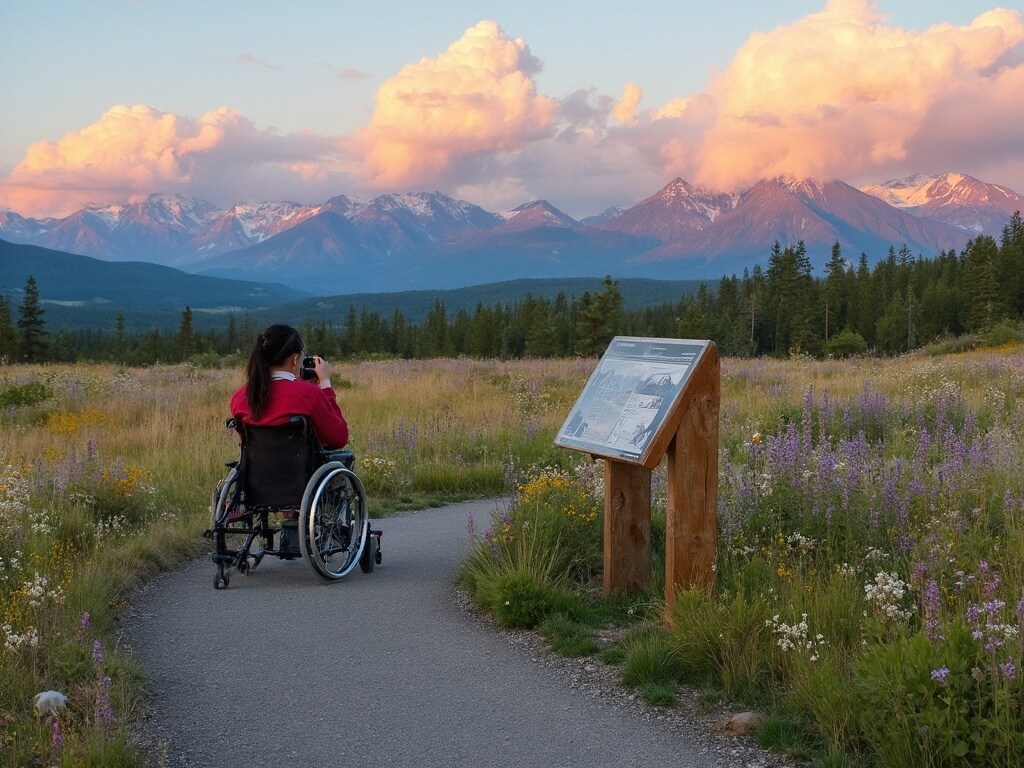
Not all wildflower experiences require strenuous hikes. Nisqually Vista Trail is just 1.2 miles and mostly wheelchair accessible. Roadside views, paved sections at Paradise, and visitor centers offer equally meaningful experiences.
These aren’t lesser alternatives—they’re equally valid ways to connect with the wildflowers, especially for families, seniors, or those with mobility limitations.
The Honest Assessment of Peak Season Crowding and When to Actually Visit
Yes, peak wildflower season is crowded. Skyline Trail in early August can be packed. Parking fills fast. But alternatives exist:
- Visit late June or early September for thinner crowds.
- Go early morning or late afternoon for better light and fewer people.
- Try lesser-known trails like Sunrise Rim and Dege Peak.
- Explore forest zones for quieter, less flashy blooms.
Recommendation: late July offers a great balance between blooms and crowds. Or choose quiet times and places for a more serene experience.
The Final Question: Is Peak Season Wildflower Season Actually Worth the Hassle?
Yes. Peak bloom is crowded and complex—but worth it. The sheer scale and beauty of tens of thousands of flowers blooming simultaneously creates an emotional and almost spiritual response.
That said, 60% of the blooms with 10% of the crowd is often more satisfying for many visitors. Determine your priorities and plan accordingly—you can’t go wrong either way.
What You Actually Need to Know Before You Go
- Check the current NPS wildflower report—not old blogs.
- Book timed entry at least two weeks early.
- Prepare for variable weather.
- Choose trails that match your fitness level.
- Learn a few flower names—it enhances the experience.
- Budget more time than you think.
- Follow all park regulations—your behavior matters.
The Deeper Meaning of Mount Rainier’s Wildflower Explosion
Visitors often describe wildflower season at Mount Rainier as overwhelming in a good way. The abundance, scale, and color create a unique emotional response that lingers for years.
It’s a rare moment where nature shows not scarcity but what thriving looks like. That’s why these meadows are more than a visual treat—they’re a reminder of what’s possible when ecosystems are supported and respected.
Plan your visit now, follow trail rules, check conditions, and prepare for one of the most unforgettable wildflower experiences in North America.
More Ideas and Inspiration
- Backyard Patio Designs
- Rustic Backyard Ideas
- Backyard Decor
- Outdoor Halloween Decor
- Whimsical Patio Ideas
Explore More
To deepen your understanding and make the most of your visit, explore the official Mount Rainier wildflowers guide and browse the best wildflower hikes at Mount Rainier for trail recommendations and seasonal tips.