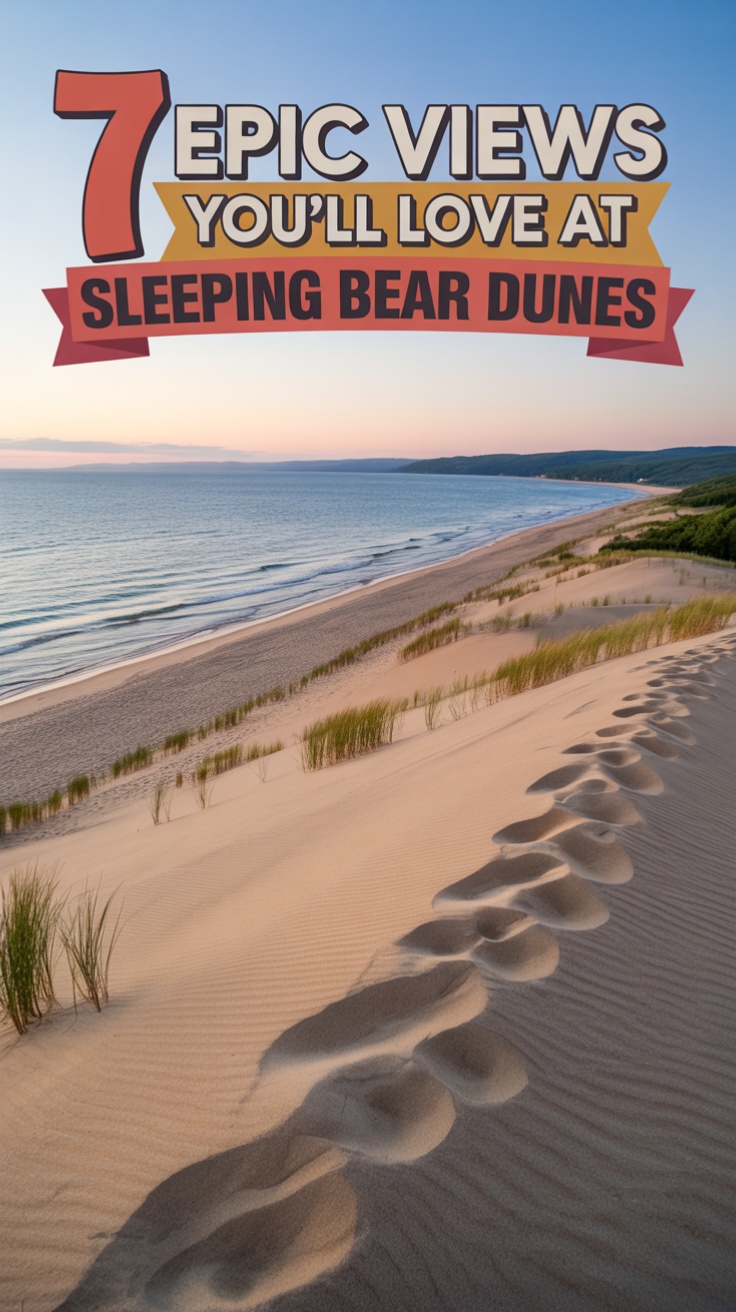
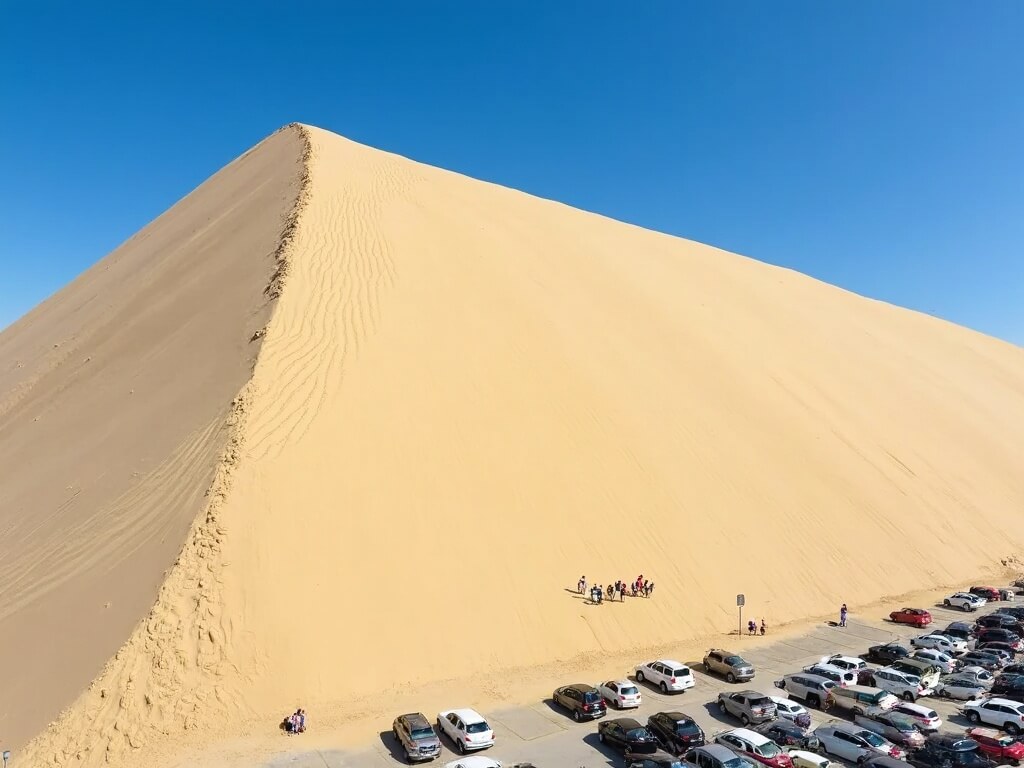
You’re standing at the base of a 284-foot mountain of sand.
Your legs already feel heavy.
You haven’t even started climbing yet.
If you’re planning a trip to Sleeping Bear Dunes National Lakeshore in northwest Michigan, you’ve probably heard about the Dune Climb.
Everyone talks about it.
Instagram is flooded with photos of people at the summit, grinning like they’ve just conquered Everest.
But here’s what most people don’t tell you: the climb is genuinely brutal.
Not dangerous, but brutal.
The sand shifts beneath your feet with every step.
Your calf muscles will burn.
You’ll question your life choices halfway up.
And then you’ll reach the top and forget all about it.
Why Sleeping Bear Dunes Became America’s Most Underrated Outdoor Destination
Sleeping Bear Dunes sits along Lake Michigan’s eastern shore, about an hour north of Traverse City.
The National Park Service manages it as a National Lakeshore, which basically means it’s protected land with serious geological and ecological importance.
Good Morning America named it one of the most beautiful places in the United States.
That’s not hype—it’s accurate.
The landscape here is genuinely strange and beautiful.
You’ve got massive sand dunes rising dramatically from the lake, forests that seem untouched, and water so clear it looks photoshopped.
But most visitors come for one reason: the Dune Climb.
It’s the iconic activity.
The thing you do when you visit.
Families do it.
Solo travellers do it.
Fitness enthusiasts do it to test themselves.
It sits on the bucket list of anyone who’s serious about Michigan hiking.
The real draw is this:
You’re not just walking up a hill.
You’re climbing an active, moving landform that’s literally shifting beneath your feet every single year.
It’s geology you can experience with your legs.
Here’s Where the Dune Climb Actually Is (And How to Find It Without Getting Lost)
The Dune Climb is located about 5 miles north of Empire, Michigan, on M-109.
You can’t miss it—there’s a massive parking area right at the base, and the dune itself rises so dramatically from the landscape that it’s visible from the road.
Pull in, park, and you’re basically there.
The National Park Service has set up a proper visitor area here.
What you’ll find at the base:
- A parking lot (which fills up fast during summer weekends).
- A picnic area if you want to grab lunch before or after.
- The Dune Center, which has restrooms, a small bookstore with trail maps and dune information, and staff who can answer questions.
- Port-o-johns in the parking lot for those times when nature calls during your climb.
I made the mistake of not stopping at the Dune Center the first time I visited.
I just saw the enormous wall of sand, got excited, and started climbing.
Thirty minutes later, absolutely drenched in sweat with sand in every crevice, I wished I’d grabbed a map and some information about what I was actually looking at.
The centre staff can tell you about the dune’s geology, current conditions, and help you plan your route depending on whether you want a quick challenge or a longer adventure.
Take five minutes and stop there.
It genuinely changes how you experience the climb.
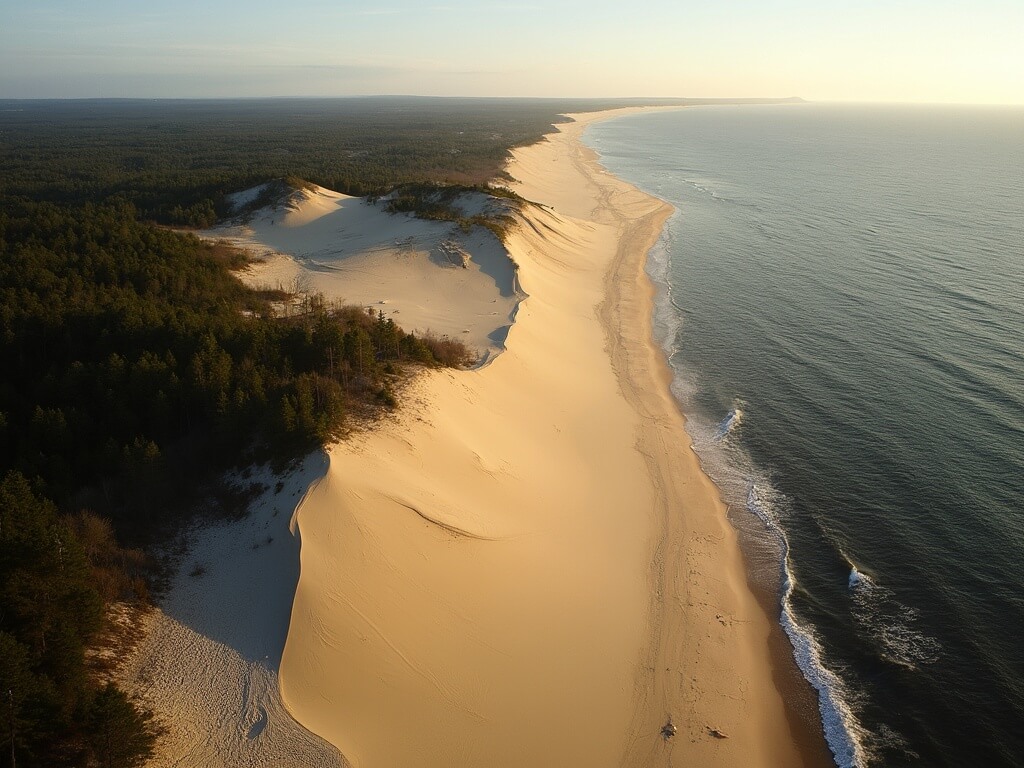
The Physical Beast You’re About to Face: Understanding What 284 Feet of Sand Actually Feels Like
The Dune Climb itself is a 284-foot wall of wind-blown sand.
To put that in perspective, that’s taller than the Statue of Liberty.
Except instead of marble steps, it’s loose sand that surrenders under your feet with every step.
It sits on the eastern edge of the Sleeping Bear Plateau, and here’s what makes it geologically unique: the sand isn’t coming from Lake Michigan’s beaches.
It’s moving down from higher dunes on the plateau above, pushed by wind across the landscape.
**That’s why it moves 2 to 4 feet per year toward the parking area.**
Every single year, the dune shifts.
There used to be a measuring stick at the base to track this movement, but it’s now buried under metres of sand.
The Park Service has documented this movement for decades, so it’s not speculation—it’s measured fact.
When you’re standing on that slope, you’re standing on a landform that’s literally migrating across the landscape.
The whole thing gets more interesting when you factor in the environment: there’s zero shade on the dune.
None.
You’re exposed to direct sun and wind the entire time.
On a hot summer day, this becomes a serious consideration.
What You’re Actually Getting Into: Distance, Time, and Difficulty
The Dune Climb Only (the classic experience):
- Round-trip distance: roughly 0.5 miles (up and down the main dune).
- Time commitment: 30 to 60 minutes depending on fitness level and sand conditions.
- Difficulty: Strenuous.
The Full Dunes Trail to Lake Michigan (the complete adventure):
- Round-trip distance: approximately 3.5 miles.
- Time commitment: 3 to 4 hours.
- Difficulty: Very strenuous with multiple dune climbs and descents.
The trail isn’t marked after you leave the main dune, which means you need to pay attention to where you’re going.
It’s easy to get disoriented in the dunes if you’re not careful.
Most people do the main Dune Climb and call it a day.
The descent is actually the tricky part—your legs are already tired, the sand is still shifting, and gravity is pulling you faster than your muscles want to cooperate.
What catches most people off guard:
You won’t see Lake Michigan from the top of the main Dune Climb.
This surprises visitors constantly.
If you want Lake Michigan views, you need to commit to the full Dunes Trail, which takes you through multiple dune systems and eventually down to the shoreline.
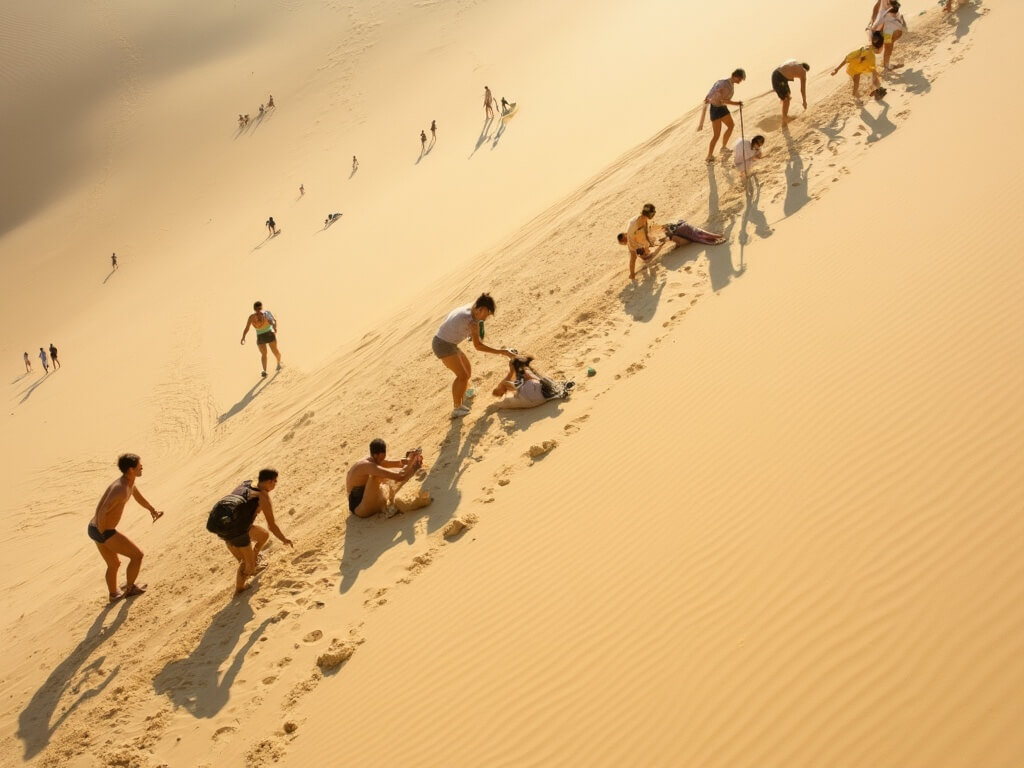
The Geological Plot Twist Nobody Sees Coming
Most people think sand dunes form the same way everywhere.
Wind blows sand into a pile.
Pile gets bigger.
You get a dune.
Sleeping Bear Dunes doesn’t follow that script.
The sand here is coming from the wrong direction.
During the last ice age, glaciers deposited massive amounts of sand and sediment across Michigan.
This is called a “deflation dune,” and it’s relatively rare to find them at this scale and activity level.
It’s like watching geological time-lapse photography in real time.
When you’re climbing that slope, you’re literally watching continental-scale processes happen in real-time, year after year.
Why Summer Crowds and Heat Make This Trickier Than You Think
Summer is peak season at Sleeping Bear Dunes.
**Summer creates genuine challenges for the Dune Climb:**
- No shade whatsoever on the dune.
- Sand heats up in the sun and becomes harder to walk on.
- Most people severely underestimate how much water they’ll need.
- Dehydration sneaks up on you.
- Heat exhaustion is a genuine risk.
The crowding also creates a strange dynamic.
I watched someone collapse near the summit during a July visit a few years ago.
They were fine—just dehydrated and overheated—but it was a wake-up call.
The Descent: Why Coming Down Is Somehow Harder Than Going Up
This is the part nobody adequately prepares for.
Your legs are already fatigued.
Most people end up half-walking, half-sliding down the slope.
The eccentric contractions required for descent are intense.
The key is accepting that you’re going to move differently coming down than going up, and that’s completely normal.
What You Actually Need to Bring (And Why That Casual Water Bottle Isn’t Enough)
Before you climb, pack these essentials:
- Water—significantly more than you think you need.
- Snacks with electrolytes and calories.
- Sunscreen—and reapply it.
- A hat or visor.
- Sunglasses.
- Sturdy footwear.
- A camera or phone for photos.
Optional but helpful additions:
- A lightweight backpack.
- A small first aid kit.
- Trekking poles.
- Insect repellent.
The Park Service Has Rules for a Reason: What You Need to Know
Here’s what matters for the Dune Climb:
- No dogs on the Dune Climb.
- No camping or fires.
- Stay on designated trails.
- There’s an entrance fee—currently $30 per vehicle per week.
Practical guidance:
- Keep children in sight at all times.
- Establish a meeting point.
- Respect other visitors.
Why This Matters More Than Just a Nice Hike
The Dune Climb at Sleeping Bear Dunes isn’t just about exercise or checking off a bucket list item.
It’s a direct encounter with geological processes.
You’re not reading about dune formation in a textbook—you’re experiencing it with your own legs.
The sand beneath your feet is moving.
The ecosystem here is fragile and worth protecting.
Every visitor who respects the rules and understands what they’re actually looking at contributes to preserving this place for future visitors.
The Dune Climb connects you to something larger than yourself—geological time, ecological systems, landscape dynamics.
Explore more epic hikes like the Delicate Arch trail or
walk the scenic beaches of the Oregon coast for more coastal adventure inspiration.
The Full Dunes Trail to Lake Michigan: When You Decide One Climb Isn’t Enough
Some people reach the summit of the main Dune Climb, catch their breath, take their photos, and head back to the parking area.
They’re satisfied.
They’ve accomplished something.
Then there are people who look at the panoramic views from the summit and think: “What’s beyond that?”
That’s when you commit to the Dunes Trail.
This is a different experience entirely.
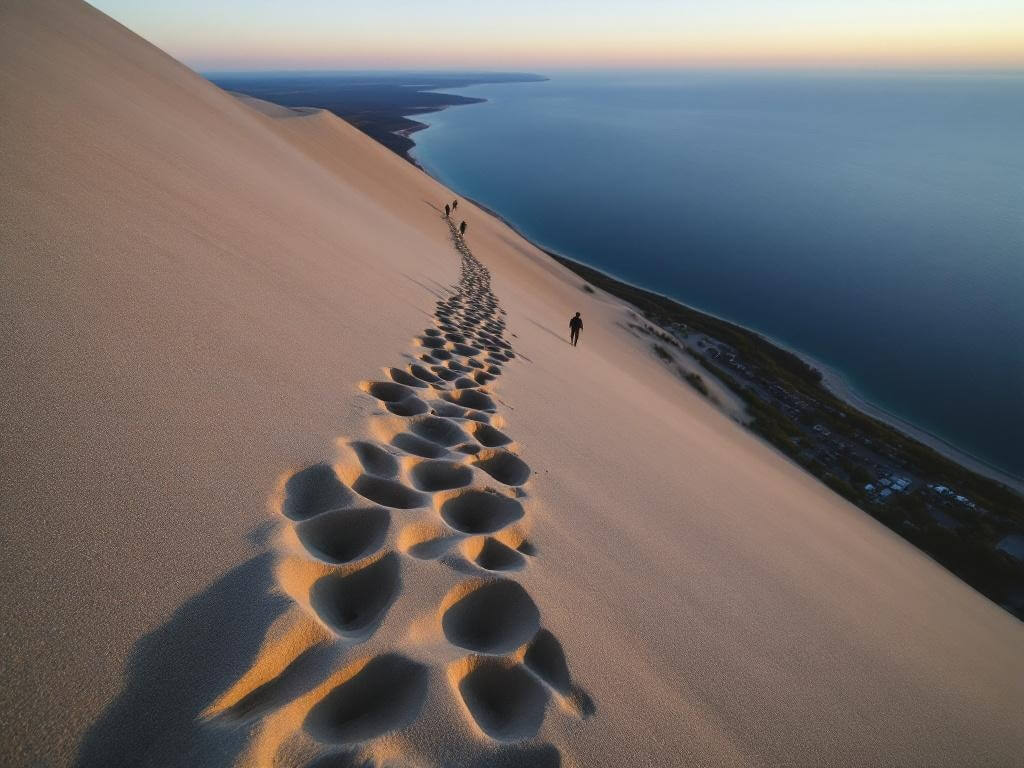
The Dunes Trail stretches approximately 1.75 miles from the summit of the main dune down to Lake Michigan. Round-trip from the parking area, you’re looking at 3.5 miles total.
On paper, that doesn’t sound intimidating. In reality, it’s a completely different undertaking.
Here’s why the numbers don’t tell the full story:
The trail descends steeply from the summit, crosses multiple dune systems, and requires navigating terrain that isn’t marked beyond the main dune.
You’re not following a groomed path. You’re reading the landscape and making decisions about which way maintains your intended direction.
The “trail” is basically a series of human footprints in the sand that may or may not be going exactly where you need to go.
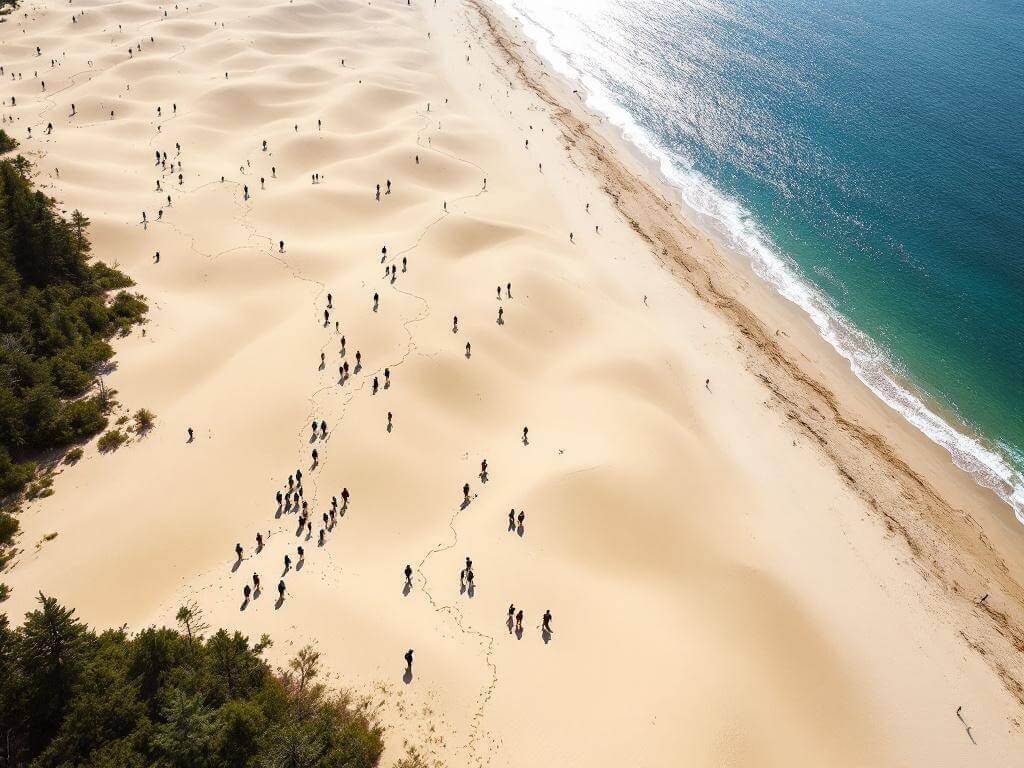
This matters because disorientation happens quickly in the dunes. Everything looks similar—sand, more sand, distant trees, then sand again.
Your sense of direction becomes unreliable.
I’ve watched experienced hikers second-guess themselves on the Dunes Trail, pulling out phones to verify they’re moving in the right direction.
It’s not dangerous—you’re surrounded by terrain, not wilderness—but it’s easy to waste energy going the wrong way.
Preparation That Actually Prevents Disaster: The Difference Between Fun and Miserable
If you’re serious about completing the Dunes Trail to Lake Michigan, preparation changes from “nice to have” to absolutely essential.
This is what separates success from a miserable experience:
- Water becomes non-negotiable. Two litres minimum, and if it’s above 75°F, consider three litres.
- Sturdy footwear transforms from helpful to critical. Your ankles need support on steep slopes.
- Sunscreen and a hat move from “probably a good idea” to absolutely mandatory.
- Agree on a destination and meeting point before you start. Emotional stress from separation adds unnecessary strain.
Check out the official guide to climbing the dunes at Sleeping Bear for more details on planning and safety.
The Safety Conversation Nobody Wants to Have (But Everybody Needs)
Safety on the Dunes Trail isn’t about obvious dangers. It’s subtler than that.
The real risks are these:
- Dehydration and heat exhaustion. Drink water consistently—don’t wait to feel thirsty.
- Rip currents if you’re swimming in Lake Michigan. Verify swimming conditions with Park Service staff.
- Disorientation. The Dunes Trail is unmarked after the main dune—maps and staff advice are critical.
- Injury far from help. Trekking poles reduce the risk. Carry them if you have joint issues.
Why Lake Michigan Demands Respect (And Why Some People Skip It Entirely)
Lake Michigan is beautiful—but don’t underestimate it. Water temperatures even in summer can cause cold-water shock. Rip currents are strong and deceptive.
The best hikes at Sleeping Bear Dunes can offer lake views without requiring a swim.
Many hikers choose to simply wade in briefly to cool off and skip swimming altogether.
Why Winter Changes Everything (And Why Some People Prefer It)
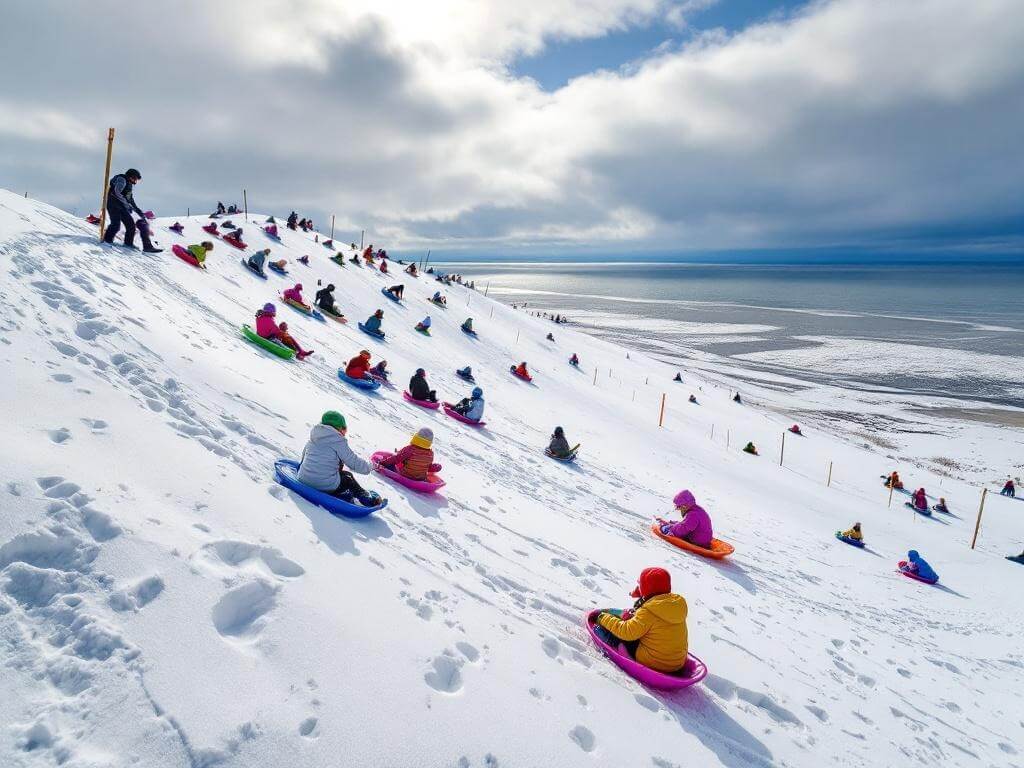
Winter at Sleeping Bear Dunes means sledding, solitude, and no heat stress.
The snow compacts differently than sand, making for fast descents and easier hiking in cooler conditions.
Best of all—fewer crowds and a peaceful, personal experience.
Spring and Fall: The Overlooked Sweet Spot Nobody Talks About
Spring and fall offer mild temperatures, lower crowds, and beautiful foliage.
Comfortable climbing weather and predictable fall conditions make these seasons ideal for first-time visitors.
The Facilities and Logistics: What’s Actually Available When You Need It
The Dune Center provides:
- Trail maps and guidebooks
- Flush toilets
- Knowledgeable staff
- Small parking area and picnic tables
Plan ahead—summer parking fills fast. Arrive before 9 AM if possible.
Accessibility Matters: Who Can Actually Do This Climb
The Dune Climb is not wheelchair accessible. Terrain is too steep and loose.
Visitors with other health considerations should consult a doctor and consider one of the alternative trails listed below.
The Dogs Question: Why Your Furry Friend Stays Behind
Dogs are not allowed on the Dune Climb due to heat stress risks and ecological disturbance.
Try Empire Bluff Trail instead—it’s dog-friendly and scenic.
Alternative Trails: When You Want the Experience Without Full-Commitment
- Empire Bluff Trail: 1.5–1.9 miles. Dog-friendly, gentle climb, excellent views.
- Alligator Hill Trail: 2.3–6 miles. Forest-to-lake views, moderate effort.
- Pyramid Point Trail: 2.7-mile loop. Wooded trail with view at top.
- Cottonwood Trail: 1.7 miles. Inland lake views, less crowded.
The Questions Everyone Actually Asks (And the Honest Answers)
- Children? Yes, with supervision and hydration. Under 8 may struggle.
- Time? Main climb: 30–60 mins. Full trail: 3–4 hours round trip.
- Bathrooms? Yes, at the Dune Center and parking lot. None on the trail.
- Fee? Yes, ~$30/vehicle for a 7-day pass.
- Dogs? Not on Dune Climb. Yes on other trails.
- Best time? Depends. Summer = crowds. Spring/fall = balance. Winter = solitude.
- Equipment? No special gear, but boots, water, poles recommended.
The Geology Story Nobody Fully Explains: What You’re Actually Standing On
The Dune Climb exists because of glaciers. 10,000 years ago, ice pulverized rock into sand and retreated, leaving deposits behind.
The twist? Wind moves sand away from Lake Michigan, not toward it. This is rare in dune systems.
Beneath the dune: clay and bedrock. The surface sand moves over this, constantly reshaping the landscape.
The buried measuring stick? Proof of movement—literal meters of change over decades.
The Ecosystem Thrives Because People (Usually) Respect the Rules
Rare species like Pitcher’s thistle and Lake Huron tansy depend on minimal disturbance.
Stay on trails to prevent erosion, protect roots, and preserve biodiversity.
Your actions directly affect whether this ecosystem remains viable.
What’s Changed and What’s Staying the Same: Recent Updates and Ongoing Preservation
Increased visitation brought by the pandemic led to infrastructure upgrades:
- Expanded parking
- Better signage and facilities
- Educational ranger programs
Behind the scenes, the Park Service fights invasive species, monitors dune movement, and partners with researchers to protect the park.
The Integration of Technology and Traditional Hiking: Staying Safe Without Getting Lost
GPS apps like AllTrails let you track your position—even on unmarked trails.
But: download maps offline, carry backups, and don’t rely solely on tech.
Use both your senses and your tools to navigate responsibly.
Personal Reality Check: What Happened When I Attempted the Full Trail Without Proper Preparation
A cautionary tale: one bottle of water, no boots, no plan. Result? Discomfort, disorientation, and regret.
Lesson: Respect the trail. Bring the essentials. Plan ahead. Hiking is supposed to be fun, not punishing.
The Conservation Story: How Visitor Decisions Affect the Park’s Future
Your choice to stay on trails and follow rules protects fragile ecosystems.
Every step matters.
Do your part to ensure this landscape remains remarkable for generations to come.
Planning Your Visit: The Checklist Nobody Expects to Need But Everyone Should Use
Before You Go:
- Check park conditions on NPS.gov
- Download offline maps
- Confirm gas and car readiness
- Honestly assess fitness level
- Tell someone your plan
What to Pack:
- 2–3 litres of water
- Snacks with calories/electrolytes
- Sunscreen and hat
- Hiking boots
- Charged phone and charger
- Camera and basic first aid
At the Park:
- Visit the Dune Center
- Use the restroom
- Confirm group plans
- Start early
The Reality of Progress: Why Sleeping Bear Dunes Remains Worth the Effort
It’s legitimately difficult. It’s genuinely rewarding.
The climb will challenge you physically and reward you mentally. The geological story underneath your feet, the panoramic views, and the sense of accomplishment make it worth every step.
Whether you’re climbing the main dune or hiking the full 3.5-mile Dunes Trail, you’re participating in a natural wonder that’s always changing.
For more outdoor adventures, check out:
- Take a Lighthouse Tour in Maine
- Drive the Hana Highway in Maui
- Ride the Great Smoky Mountains Alpine Coaster
- Spend a Day at Mall of America
- Rustic Backyard Ideas
The dunes will be there, moving imperceptibly across the landscape, waiting for the next person willing to challenge themselves on the Dune Climb at Sleeping Bear Dunes, Michigan.