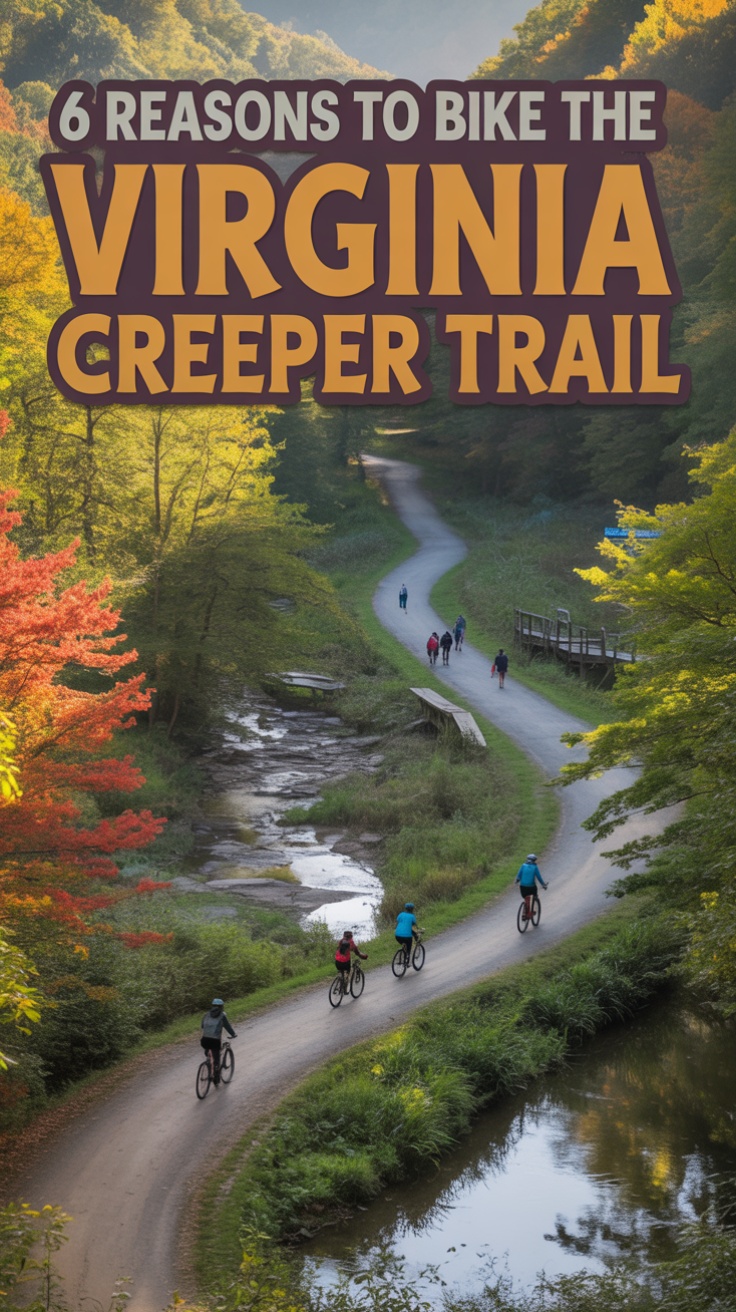
You’re staring at your calendar thinking about taking a day off work.
Your kids are bored.
Or maybe you’ve been cycling for years and want something genuinely different—not another flat, boring stretch of pavement that feels like commuting with scenery attached.
Here’s the thing: the Virginia Creeper Trail exists specifically for people like you.
This isn’t hype.
The Virginia Creeper Trail is a 34-mile rail-to-trails bike route carved through Southwest Virginia that’s quietly become one of America’s most beloved cycling destinations.
It runs from Whitetop Station near the North Carolina border, winds through Damascus, and ends in Abingdon.
And the best part?
You don’t need to be a serious cyclist to experience it.
How a Decommissioned Railway Became Your Next Favourite Weekend
Back in 1989, someone had a brilliant idea.
Instead of letting an old railway line decay into the Virginia mountains, they converted it into a recreational trail.
The name itself tells the story: Virginia Creeper.
It comes from two sources—the slow, methodical steam engine that used to crawl up these mountains, and the native Virginia Creeper vine that blankets the region’s hillsides.
The trail cuts through Mount Rogers National Recreation Area, which means you’re not just cycling—you’re moving through genuinely protected wilderness.
I learned this firsthand three years ago when I took my nephew on the Whitetop to Damascus section.
We’d rented bikes from a local outfitter, and I was nervous about his ability to handle 17 miles.
Halfway through, he wasn’t even thinking about the distance anymore.
He was too busy pointing out the trestle bridges arching over streams, asking about the wildflowers, and completely forgetting he was exercising.
That’s when it hit me: this trail is engineered for human experience, not just cardio metrics.
The elevation works in your favour, not against it.
Two Routes, Two Completely Different Experiences
Here’s where most people get confused about the Virginia Creeper Trail.
It’s not one monolithic ride.
It’s actually two distinct experiences stitched together.
The Upper Section: Whitetop Station to Damascus (17 miles)
This is the celebrity section.
The one everyone talks about.
It descends approximately 1,200 feet over crushed gravel with a gentle 5% grade—meaning downhill, minimal pedalling required.
You’re moving through high-elevation forest, past mountain laurel and rhododendron blooms (spring and early summer), crossing restored railroad trestles that feel like riding through history.
Most people complete this stretch in 3-4 hours, but that’s including photo stops and general gawking at the scenery.
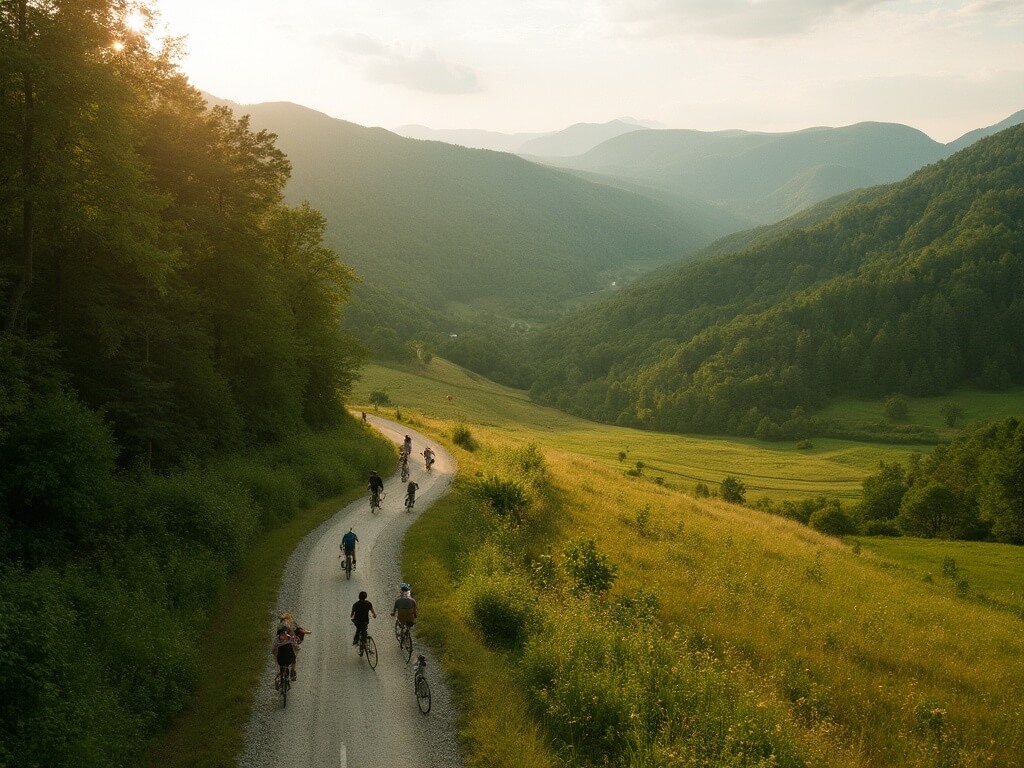
The surface is compacted crushed gravel—wide enough for two bikes to pass comfortably.
Not ideal for road bikes, but perfect for mountain bikes, hybrids, and increasingly, e-bikes.
This section is genuinely beginner-friendly.
I’ve seen children as young as eight complete it successfully, along with retirees in their seventies using e-bikes for assistance.
The Lower Section: Damascus to Abingdon (17 miles)
This is where the ride changes personality.
Flatter terrain. Rolling farmland. Rural countryside with meadows that open up suddenly as you crest small hills.
More pedalling required.
The rhythm shifts from “gravity is doing the work” to “you are doing the work.”
Experienced cyclists often prefer this section because it demands engagement.
It’s not a coast-and-cruise proposition.
It’s a genuine ride.
The Shuttle System That Makes Everything Work
Here’s what separates the Virginia Creeper Trail from frustrating point-to-point routes: the shuttle infrastructure.
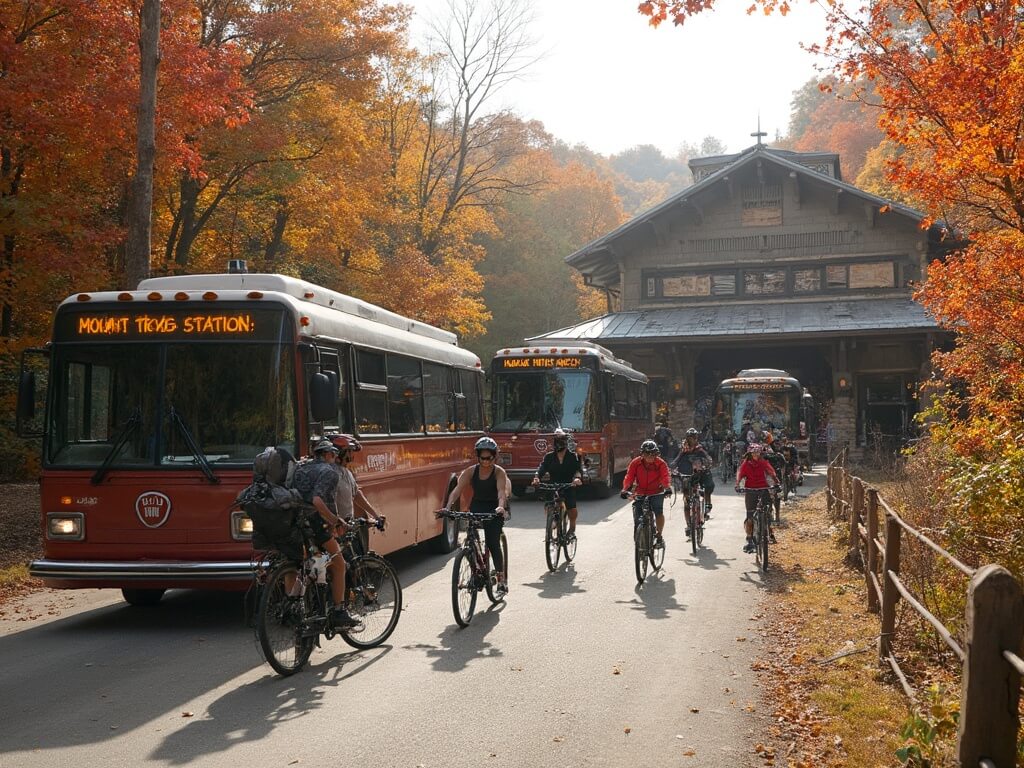
Multiple local outfitters operate shuttle services that handle the logistics problem most people dread—how do you get back to your car?
The standard approach (and the most popular):
Ride the shuttle UP to Whitetop Station, then cycle DOWN to Damascus or Abingdon.
This single decision changes everything about your experience.
You start at elevation. You finish downhill. Gravity becomes your companion instead of your obstacle.
The shuttles operate from Damascus and Abingdon, typically charging $10-20 per person to transport you and your bike to the trailhead.
Most outfitters rent bikes as part of package deals, so you show up, rent a bike, hop in a shuttle, and start pedalling within an hour.
No complicated logistics.
No second vehicle shuffling.
What Actually Happens When You Get on This Trail
The terrain changes as you move through it, and this is genuinely one of its best features.
You begin in high-elevation forest where the air feels different—cooler, denser, filled with the sound of water running through streams below the trestles.
The first few miles reveal why this was once a rail line: gentle grades, smooth curves designed for trains that can’t navigate sharp turns.
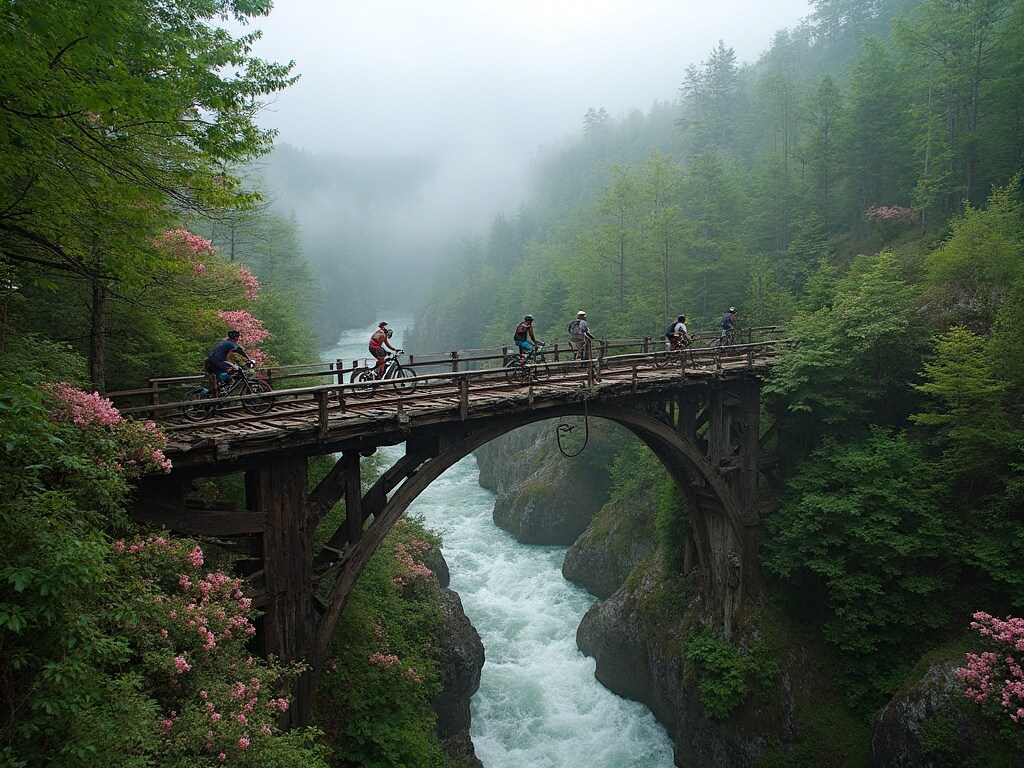
You’ll cross multiple trestle bridges, some original, some restored.
Riding across them—feeling the slight sway, seeing the ground below through the wooden slats—creates a moment that no flat urban trail can replicate.
Around mile 8-10, the forest opens up gradually.
You transition from dense woodland to mountain laurel thickets, then to the more open areas near Damascus.
Wildlife appears here too.
Bird-watching opportunities abound (various warbler species, eastern phoebe, common flicker).
Streams run alongside or cross the trail in several places, and anglers often wade in for trout fishing.
The entire upper section feels curated—like someone designed the ultimate beginner cycling experience and then let nature enhance it.
The Practicality Question Everyone Actually Cares About
What to bring:
- Helmet (usually provided by rental shops, but bring your own if you prefer)
- Multiple water bottles or a hydration pack
- Sunscreen and layers (weather changes at elevation)
- Snacks or energy bars
- Fully charged mobile phone
- Basic bike repair kit (though outfitters usually rent bikes in good condition)
When to go:
Peak season is October when fall foliage transforms the entire region into a corridor of red, orange, and gold.
But honestly?
Spring and summer are equally excellent.
Summer rides benefit from the shaded forest sections—some trails are exposed in afternoon heat; this one provides genuine relief.
The trail operates year-round, though conditions vary.
Winter rides are possible but less common, and recent weather events (including Hurricane Helene in late 2024) can cause temporary closures for repairs.
Always check trail status with local outfitters before committing your day.
Trail services and resupply:
This is crucial: the middle section of the trail offers minimal services.
Damascus and Abingdon have restaurants, shops, and rest areas, but if you’re riding the full 34 miles, you’re bridging a gap where facilities disappear mid-trail.
Plan accordingly.
Bring enough water and snacks for your chosen route.
Don’t rely on finding coffee shops at mile 12.
Who This Trail Actually Works For (And Who Might Find It Frustrating)
Perfect for families with kids who can brake:
Children often surprise parents on this route.
The downhill section removes the intimidation factor that flat-then-uphill trails create.
Kids don’t feel like they’re struggling.
They feel like they’re flying.
A seven-year-old on the Whitetop-Damascus section will probably enjoy the experience more than a fifteen-year-old on a boring local loop.
Beginner cyclists:
If you haven’t ridden in years, the upper section is genuinely forgiving.
You’re not fighting hills.
You’re managing descent—which is a learnable skill, not an inherent fitness requirement.
Experienced cyclists seeking challenge:
The full 34 miles, especially the Damascus-Abingdon section, provides legitimate cycling work.
The lower section also offers opportunities to push pace without the gear-grinding frustration of steep climbs.
People using e-bikes:
This is recent and worth noting—e-bikes are now permitted on the Virginia Creeper Trail, which fundamentally expands who can successfully ride it.
Seniors, people with joint issues, and those recovering from fitness gaps can now access the experience with motor assistance.
It’s not cheating; it’s smart trail design adapting to user needs.
The E-Bike Revolution That Changed Everything
Three years ago, this wouldn’t have mattered.
Today, it’s reshaping who gets to experience the Virginia Creeper Trail.
E-bikes handle the slight inclines and rolling sections with mechanical assistance, meaning riders who couldn’t manage 17 or 34 miles on regular bikes can now complete the route without exhaustion dominating the experience.
Local rental shops have caught up to this trend.
Most major outfitters now offer e-bike rentals alongside traditional bikes, and policies are evolving to ensure these riders integrate smoothly with foot traffic and horseback riders (yes, horses are permitted on sections of this trail—it’s genuinely multi-use).
The practical impact: a sixty-five-year-old with moderate arthritis, a parent with a chronic pain condition, and a recovering cyclist can all ride the same trail on the same day and have genuinely good experiences.
That’s not insignificant.
The current state of the trail itself matters before you book anything.
Looking for more outdoor inspiration? Check out our ideas for rustic backyard decor or create your own retreat with these backyard fire pit ideas.
The Reality Check: What Actually Happened After Hurricane Helene
Late 2024 threw a wrench into Virginia Creeper Trail planning.
Hurricane Helene devastated sections of Southwest Virginia, and the Whitetop-Damascus segment bore the brunt of it.
Trestle bridges sustained damage. Trail sections flooded. Debris accumulated.
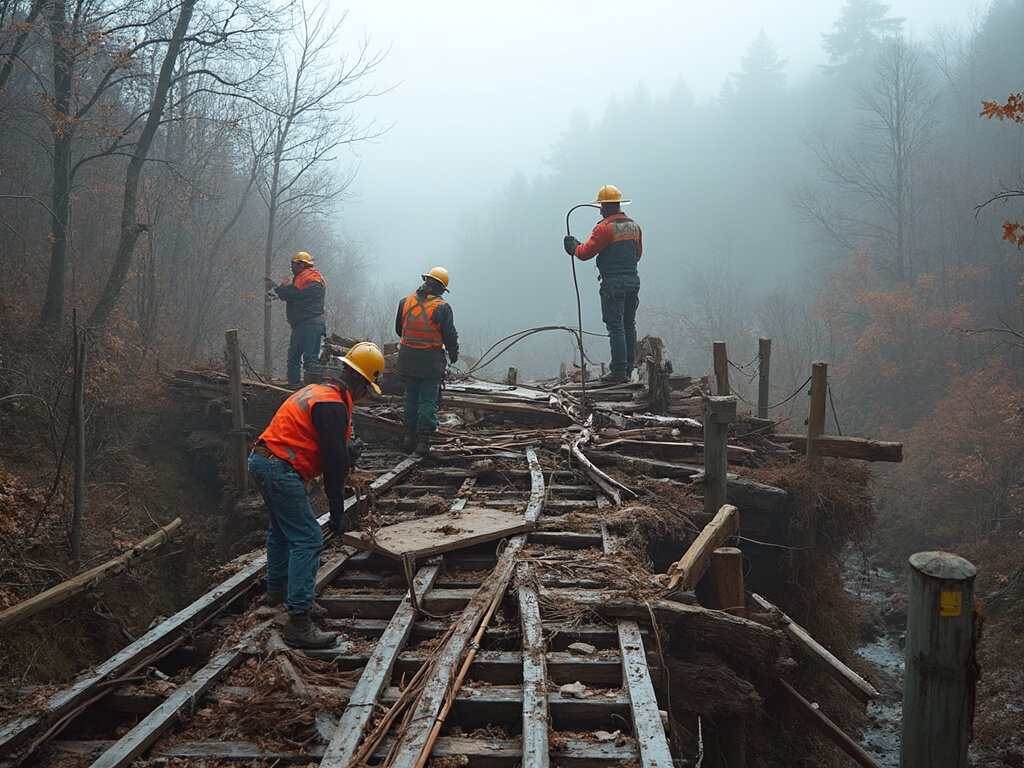
What does this mean for you?
It means checking trail status before booking isn’t a suggestion—it’s a requirement.
The Creeper Trail Conservancy, US Forest Service, and local outfitters maintain updated closure information, and conditions change monthly as repair crews work through the backlog.
Some portions open while others remain closed for safety assessment.
A ride that was uninterrupted last season might require alternate routing today.
This isn’t unique to the Virginia Creeper—it’s reality for any trail system that crosses through mountain terrain vulnerable to weather events.
The silver lining: the trail community mobilizes quickly after damage.
Local businesses, volunteer groups, and government agencies have demonstrated genuine commitment to restoration.
But the lesson is clear—call ahead, check websites, don’t assume 2024 conditions match 2025 accessibility.
The Seasonal Reality That Most Guides Gloss Over
Everyone talks about October foliage.
And yes, it’s stunning.
But that’s also when the trail experiences its heaviest crowding.
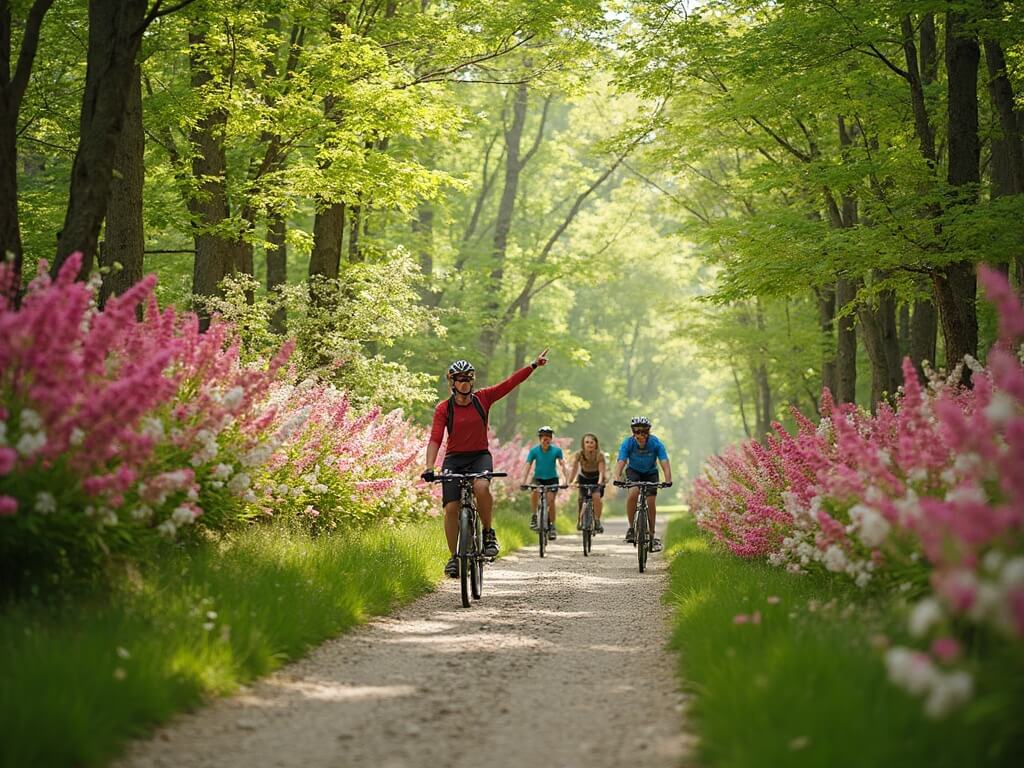
Peak autumn weekends see hundreds of cyclists queuing for shuttle spots, waiting for rentals, and navigating crowded sections where passing becomes an exercise in patience.
Here’s what most people don’t know:
Spring (April-May) offers comparable beauty with half the crowds.
Mountain laurel blooms transform the upper sections into pink and white corridors.
Temperatures are ideal—cool enough that you’re not drenched in sweat by mile 10, but warm enough that you don’t need heavy layers.
Summer sounds hot and less appealing until you actually ride it.
The dense forest canopy above the trail creates legitimate shade—you’re not baking like you would be on exposed trail systems.
Afternoon temperatures often run 10-15 degrees cooler on the trail than in nearby towns.
Bring water, apply sunscreen, and the experience is genuinely pleasant.
September can be your secret weapon—late summer heat breaks, fall colors are beginning to creep in, and back-to-school means fewer family groups dominating the trail.
Winter riding is sparse enough that you’ll see hardly another person, though mud and occasional ice patches require caution and appropriate tires.
The real insight: choose your season strategically rather than defaulting to October.
Your experience might be dramatically different—and dramatically less crowded.
Connecting the Dots: How the Virginia Creeper Fits Into Bigger Adventures
The Virginia Creeper Trail doesn’t exist in isolation.
It’s actually a gateway to a broader adventure ecosystem in Southwest Virginia.
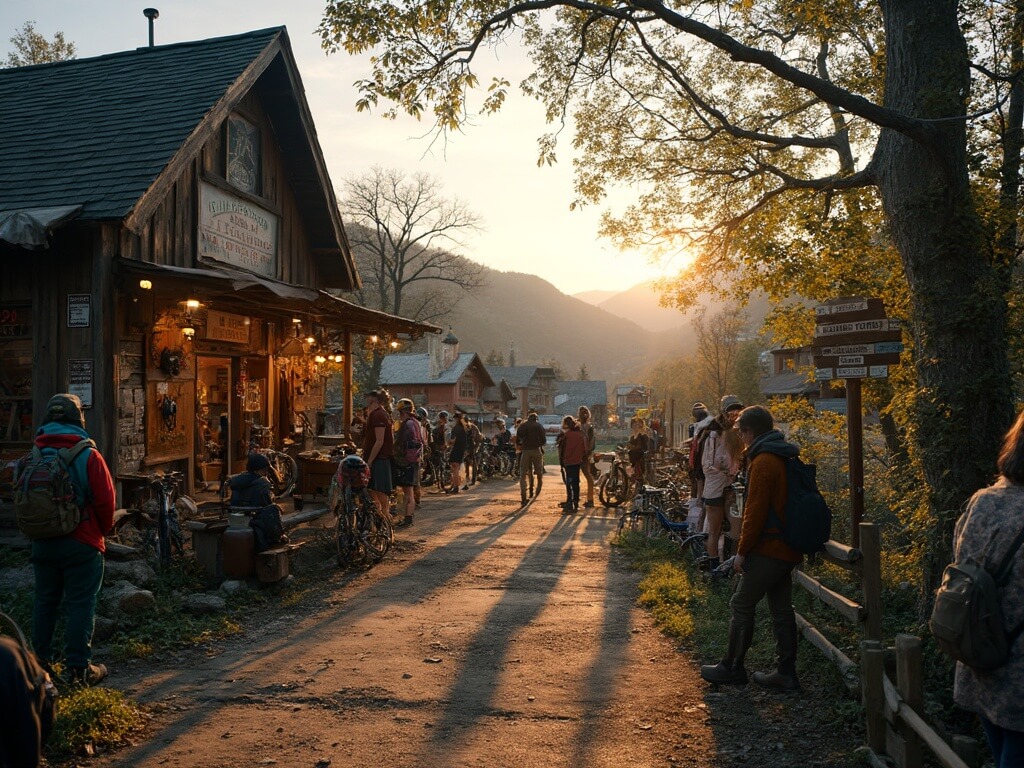
The most famous connection is Damascus itself—a small town that sits at the convergence of three major trails: the Virginia Creeper, the Appalachian Trail, and the Trans-America Bicycle Route.
Serious cyclists often plan multi-day trips combining different route segments.
You could spend a full day on the Virginia Creeper, then tackle a section of the Appalachian Trail as a hiking supplement the next day.
Or connect eastward to other rail-to-trails systems in the region.
Damascus functions as a natural hub for this kind of adventure sequencing.
Outfitters there understand multi-day planning and can coordinate shuttles, lodging recommendations, and gear needs across multiple activities.
The fishing opportunities also shouldn’t be underestimated.
Trout streams intersect the trail at multiple points—Whitetop Creek being the primary water corridor through the upper section.
Anglers often combine biking with fishing stops, turning the ride into something slower and more contemplative.
You bike to a good spot, set your bike down, spend an hour fishing, then continue.
Bird watchers similarly use the trail as a mobile platform for observation.
The gentle pace and varied habitats mean consistent sighting opportunities—warblers in spring, bluebirds and cardinals year-round, occasional raptors in open sections near Abingdon.
Serious ornithologists sometimes time rides to spring migration peaks (late April through May) when bird diversity reaches its maximum.
The point: the Virginia Creeper Trail is more than a bike route.
It’s an access point to a network of complementary outdoor pursuits.
Plan accordingly.
The Safety Stuff Nobody Wants to Talk About (But You Should)
Downhill sections create specific risks that deserve real discussion.
Brake control matters enormously on the Virginia Creeper, especially for families bringing inexperienced riders.
The sustained downhill from Whitetop to Damascus isn’t steep enough to create runaway speed—but it’s consistent enough that brakes are continuously engaged.
Kids who haven’t developed intuitive brake modulation sometimes lock up their wheels, creating skids.
Or they grip brakes so hard their hands cramp midway through.
Before committing to the full upper section with a child, practice brake control on a small hill.
Have them understand that smooth, steady pressure works better than panic-gripping.
The trestle bridges warrant specific attention too.
They’re structurally safe—these are maintained heritage structures.
But the psychological experience varies.
Some riders feel slight vertigo looking through wooden slats at ground far below.
Others find it thrilling.
Testing this on the first or second bridge (all relatively low) lets you gauge comfort before encountering the higher crossings later.
Rock and rut hazards increase after heavy rain.
The crushed gravel surface doesn’t drain evenly—moisture collects in low spots, creating minor obstacles that catch wheels and cause unexpected jolts.
Helmet use becomes genuinely important after rainfall.
Trail etiquette simplifies this: yield to horses (they spook easily), keep right for hikers, announce “passing” when moving around slower traffic.
Solo riding is generally safe in daytime hours, but solo evening rides invite risks—visibility decreases, and help becomes harder to access if something goes wrong.
Keep your phone charged, tell someone your route, and understand that you’re not on a controlled environment—you’re in wilderness.
This isn’t meant to scare you.
It’s meant to make you thoughtful.
The Virginia Creeper Trail has an exceptional safety record precisely because riders engage with it respectfully rather than recklessly.
The Money Question: What Does This Actually Cost?
Let’s break down realistic expenses for a Virginia Creeper Trail day:
Bike rental: $25-50 per bike for a full day (e-bikes $60-100).
Shuttle service: $10-20 per person round-trip or one-way.
Food and drinks: Snacks $10-20 or restaurant stops $15-30.
Parking: Usually free, some donation requests $3-5.
Accommodation: Budget $60-100/night; luxury $150-250+/night.
Example for a family of four:
- Four bikes at $35 each = $140
- Four shuttle seats at $15 each = $60
- Snacks = $20
- Parking donation = $5
Total: $225 — about $56 per person for 3-4 hours of guided outdoor experience.
Compare that to most paid activities (theme parks, guided tours), and the value becomes clear.
Why Local Communities Actually Need You to Come
Here’s something that rarely gets discussed: the trail’s success has economically transformed Damascus and Abingdon.
These towns faced the same rural decline challenges as much of Appalachia.
But the Virginia Creeper Trail changed that.
Today, Damascus hosts dozens of bike shops, outdoor retailers, restaurants, and lodges that wouldn’t exist without trail traffic.
Supporting the trail through visits and spending directly benefits local employment and infrastructure.
Your participation makes a difference.
The Controversy Nobody’s Talking About: Accessibility Versus Authenticity
As e-bikes become mainstream, a quiet tension has emerged.
Traditionalists worry they undermine the “purity” of the trail.
Accessibility advocates believe they democratize the experience.
The Virginia Creeper Trail community has sided with accessibility, allowing e-bikes with etiquette and speed guidelines.
Early data shows peaceful coexistence between all trail users.
What Actually Sets the Virginia Creeper Apart From Other Famous Bike Trails
You could ride others—the C&O Canal, Katy Trail, or Great Allegheny Passage.
But the Virginia Creeper Trail hits a unique sweet spot:
- Downhill and doable in a day
- Scenic but not overwhelming
- Beginner-friendly without being boring
- Accessible, affordable, and beautifully maintained
It turns casual cyclists into people who love biking again.
The One Thing Nobody Tells You Until You’re Already There
The psychological effect of downhill flow is real.
You’re not grinding—you’re gliding.
It removes the barrier many people feel about exercise.
The trail sells flow—not struggle.
That’s what makes it transformative for many riders.
Your Pre-Trip Checklist (Actually Useful Version)
Two weeks before:
Check trail status, book shuttle/rental if in peak season.
One week before:
Choose trail section, plan food/rest stops.
Day before:
Charge phone, prep layers, confirm pickup info.
Morning of:
Eat well, hydrate, arrive early for fitting.
At trailhead:
Check helmet, adjust water/snack access, apply sunscreen.
What Happens After You Finish
Your legs feel used, not broken.
Your mind feels refreshed, not drained.
You’ll reflect on the experience as more than just a ride.
You discovered you could do something substantial.
And that changes how you see yourself.
The Honest Reason to Go (Ignore the Instagram Version)
Fall foliage and trestle bridges are great, yes.
But the real reason?
It works.
It delivers without requiring you to be fit, experienced, or outdoorsy.
Just show up and ride.
Your Next Move
Check trail status. Contact local outfitters. Pick your season. Book your shuttle. Pack smart. Ride safely.
But most importantly: go.
Not next year. Now.
The Virginia Creeper Trail is waiting for you.
Explore more adventures:
- Hike to Delicate Arch
- Lighthouse Tour in Maine
- Walk Oregon Coast Beaches
- Smoky Mountains Alpine Coaster
- Drive the Hana Highway