Step into the world of neoclassical dining room design, where timeless elegance meets contemporary sophistication. Characterized by symmetrical proportions, ornate moldings, and refined architectural details, the neoclassical style offers endless possibilities for creating a truly stunning dining space. Whether you’re drawn to monochromatic drama, sculptural lighting statements, or the warmth of antique wood, these 27 inspiring ideas will help you transform your dining room into an elegant sanctuary perfect for memorable gatherings and everyday moments alike.
1. Monochrome Classical Drama
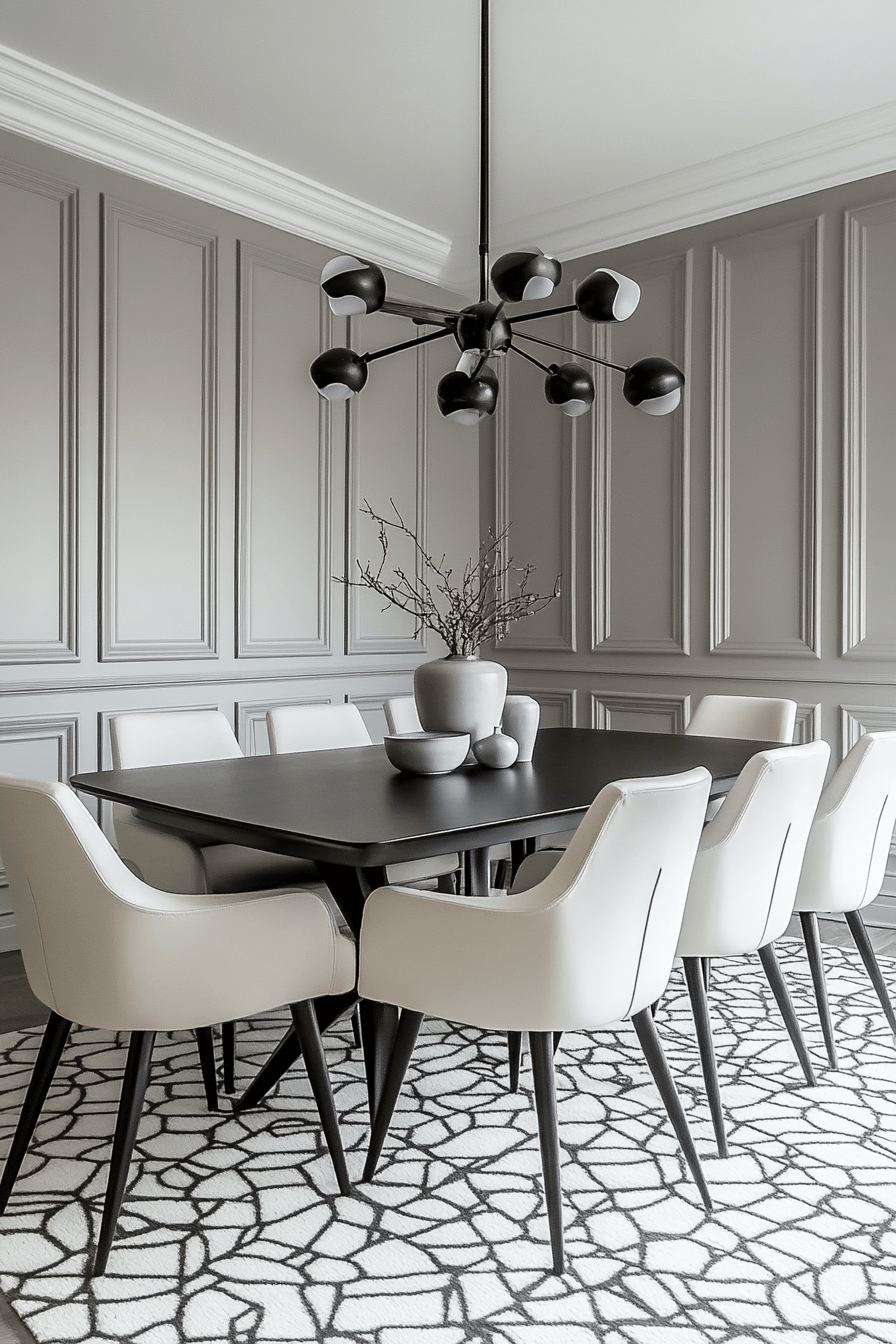
A refined monochromatic palette sharpens the architectural beauty of a neoclassical dining room, allowing symmetry and detailing to take center stage. Shades of black, ivory, or warm greige create a cohesive foundation that feels both bold and restrained. Decorative paneling and a sculptural chandelier add depth without overwhelming the space. Clean-lined furnishings balance ornate trim and ceiling medallions effortlessly. The result feels modern yet rooted in tradition. Tap to redefine your neoclassical dining room with striking monochrome elegance!
🎨 Steal This Look
- Paint Color: Sherwin-Williams Iron Ore SW 7069
- Furniture: Upholstered host chairs with nailhead trim, marble-topped sideboard with brass hardware
- Lighting: Crystal and brass tiered chandelier with candle-style bulbs
- Materials: High-gloss lacquered millwork, honed marble, antiqued brass, velvet upholstery
There’s something quietly powerful about walking into a dining room where every surface whispers the same color story—it forces your eye to appreciate the molding, the proportions, the way light hits crystal. This is restraint as luxury.
2. Sculptural Lighting Statement
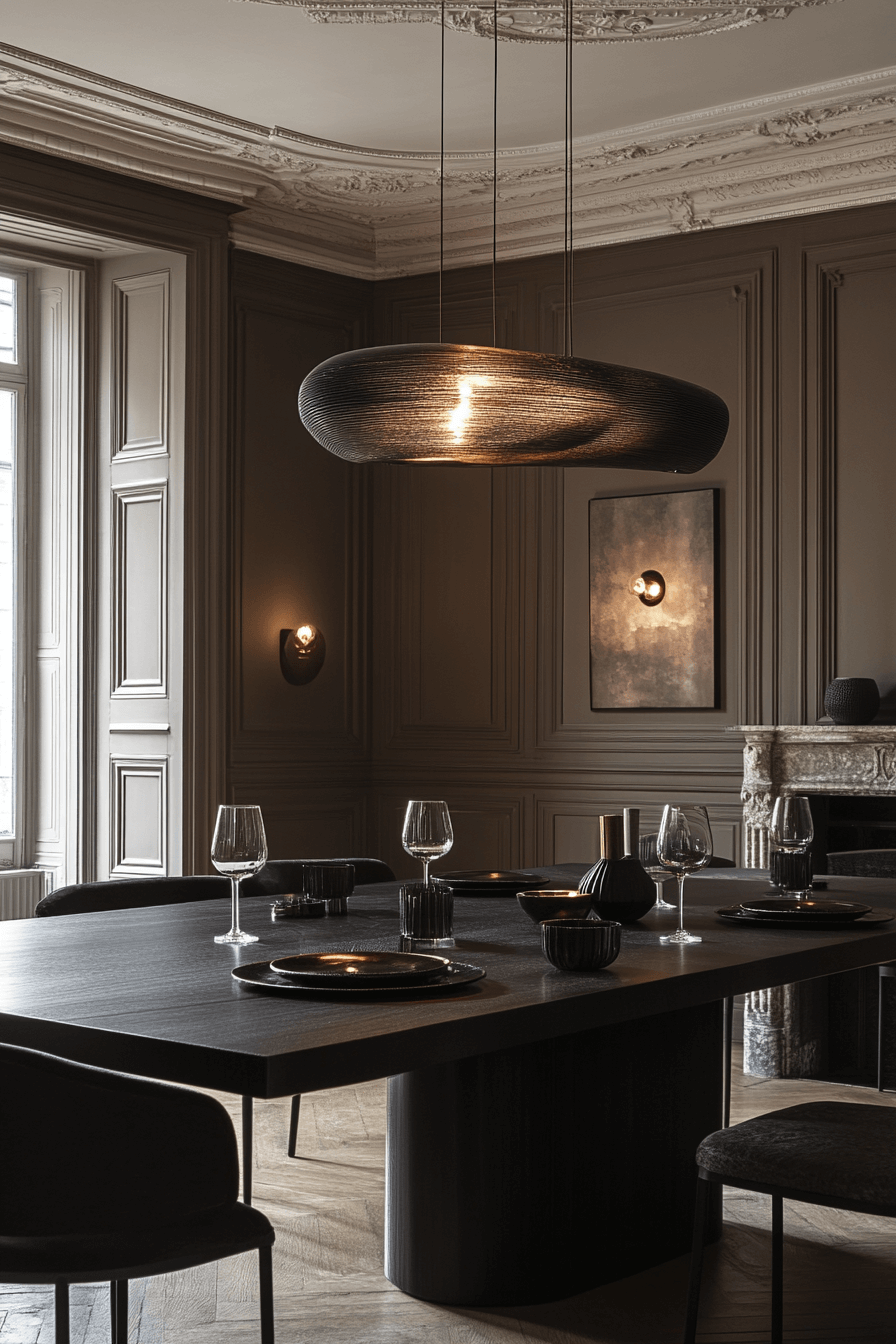
Statement lighting becomes a work of art in a neoclassical dining room, especially when sculptural forms meet classical architecture. An abstract chandelier in brass or matte black introduces contemporary contrast. Set against paneled walls and traditional trim, it feels curated rather than disruptive. The interplay between old and new enhances visual drama. Lighting transforms from functional necessity to centerpiece. Click to spotlight your neoclassical dining room with sculptural brilliance!
✎ Steal This Look
- Paint Color: Benjamin Moore White Dove OC-17
- Furniture: mahogany extension dining table with turned legs, cane-back dining chairs with navy velvet upholstery
- Lighting: abstract branching chandelier in aged brass with exposed bulbs
- Materials: glossy lacquered millwork, burnished brass, natural cane, deep navy velvet
There’s something electric about watching guests pause mid-conversation to trace the silhouette of an unexpected chandelier against traditional paneling—it turns every dinner into a gallery opening.
3. Elegant Oval Gathering
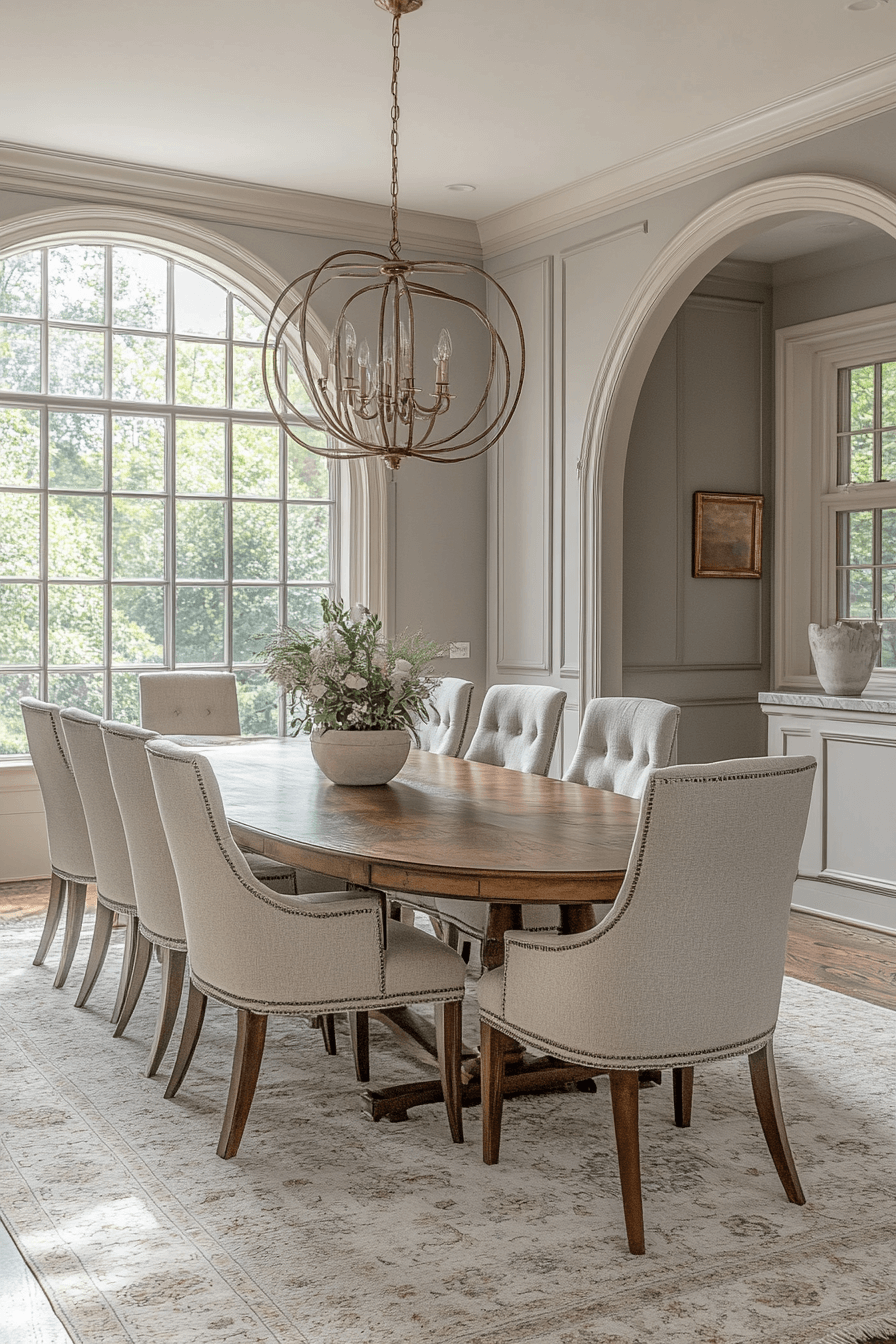
An oval dining table introduces graceful curves into a neoclassical dining room, softening its structured framework. The rounded silhouette encourages flow and conversation while preserving symmetry. Upholstered chairs and a classic area rug add warmth beneath a centered chandelier. The shape pairs beautifully with arched windows and curved ceiling details. The ambiance feels refined yet welcoming. Tap to refresh your neoclassical dining room with elegant oval charm!
🖼 Steal This Look
- Paint Color: Farrow & Ball Stiffkey Blue 281
- Furniture: oval mahogany dining table with reeded legs, upholstered bergère chairs in cream linen
- Lighting: crystal drum chandelier with aged brass finish
- Materials: polished walnut, silk damask, antiqued mirror, gilded picture frames
There’s something quietly revolutionary about an oval table in a neoclassical space—it honors the era’s love of geometry while admitting that conversation flows better without corners.
4. High Gloss Refinement
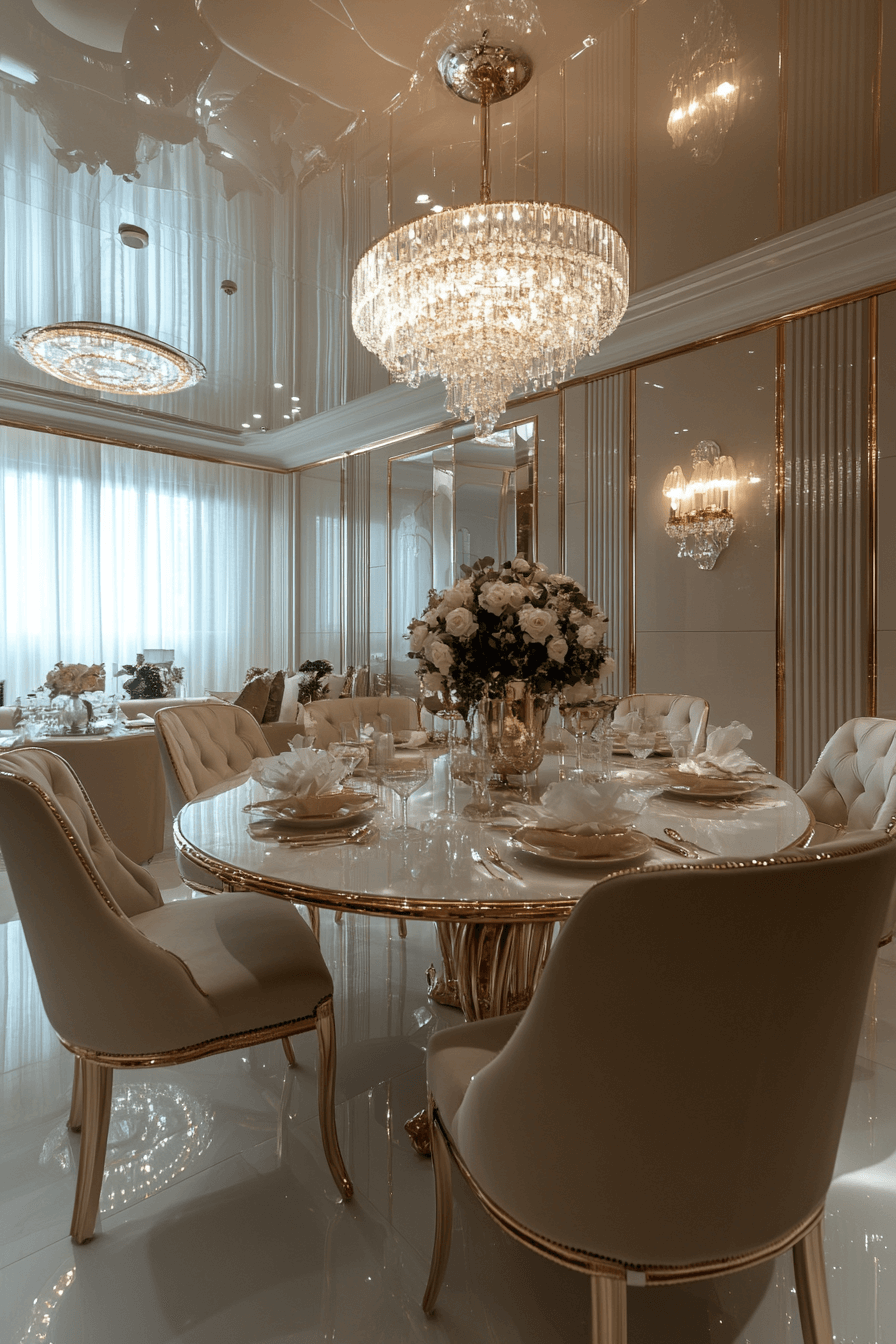
Glossy finishes add luminous drama to a neoclassical dining room, reflecting light and highlighting intricate molding. Lacquered walls or polished furnishings create dimension without overpowering classical detailing. Metallic accents enhance the sheen for a luxe effect. Balanced with sculptural decor and a statement chandelier, the room feels polished and bold. The shine elevates traditional architecture effortlessly. Click to introduce high-gloss glamour into your neoclassical dining room!
✎ Steal This Look
- Paint Color: Behr Black Mocha N140-7
- Furniture: Lacquered mahogany dining table with brass inlay, high-gloss sideboard with Greek key detailing
- Lighting: Crystal tiered chandelier with polished nickel finish
- Materials: Lacquered wood, polished brass, Venetian plaster, crystal, mirrored glass
There’s something undeniably seductive about a dining room that practically glows from within; the gloss catches candlelight and turns every dinner into an occasion.
5. Crowned Architectural Grace
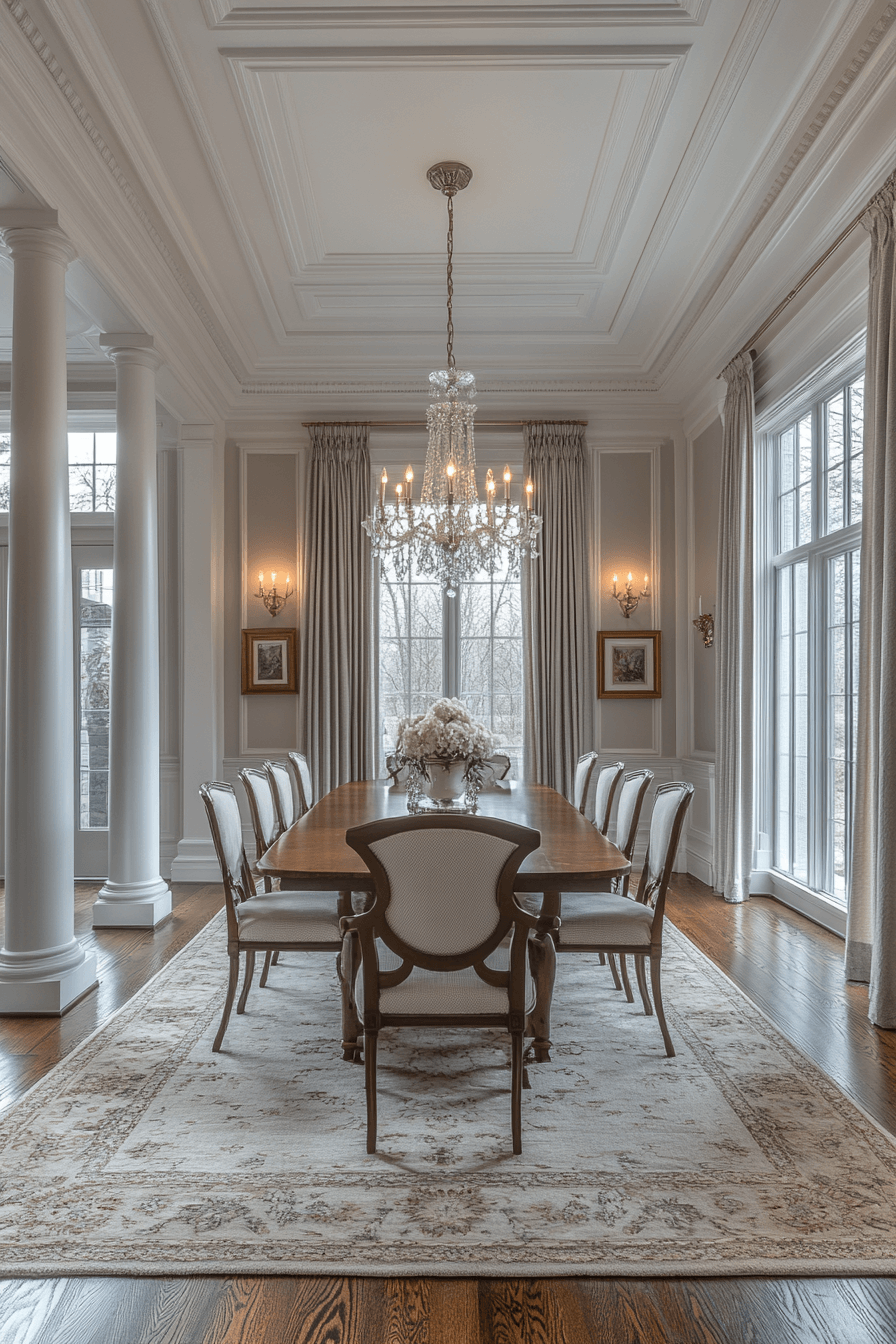
Crown molding defines the elegance of a neoclassical dining room, seamlessly connecting walls and ceiling. Whether ornate or understated, it frames chandeliers and enhances vertical height. Matching paint tones create cohesion, while contrasting finishes add subtle drama. This architectural detail reinforces symmetry and proportion. It’s a hallmark of timeless refinement. Tap to frame your neoclassical dining room with stately crown detail!
🌟 Steal This Look
- Paint Color: Valspar Cream in My Coffee 7002-8
- Furniture: mahogany pedestal dining table with carved apron, upholstered host chairs with nailhead trim, matching sideboard with fluted columns
- Lighting: brass or crystal chandelier with candle-style bulbs, picture lights above artwork
- Materials: plaster crown molding with dentil or egg-and-dart detail, silk wall coverings, gilded mirror frames, polished marble flooring
There’s something quietly powerful about walking into a dining room where the crown molding catches the chandelier glow; it feels like the architecture itself is welcoming you to linger.
6. Antique Wood Heritage
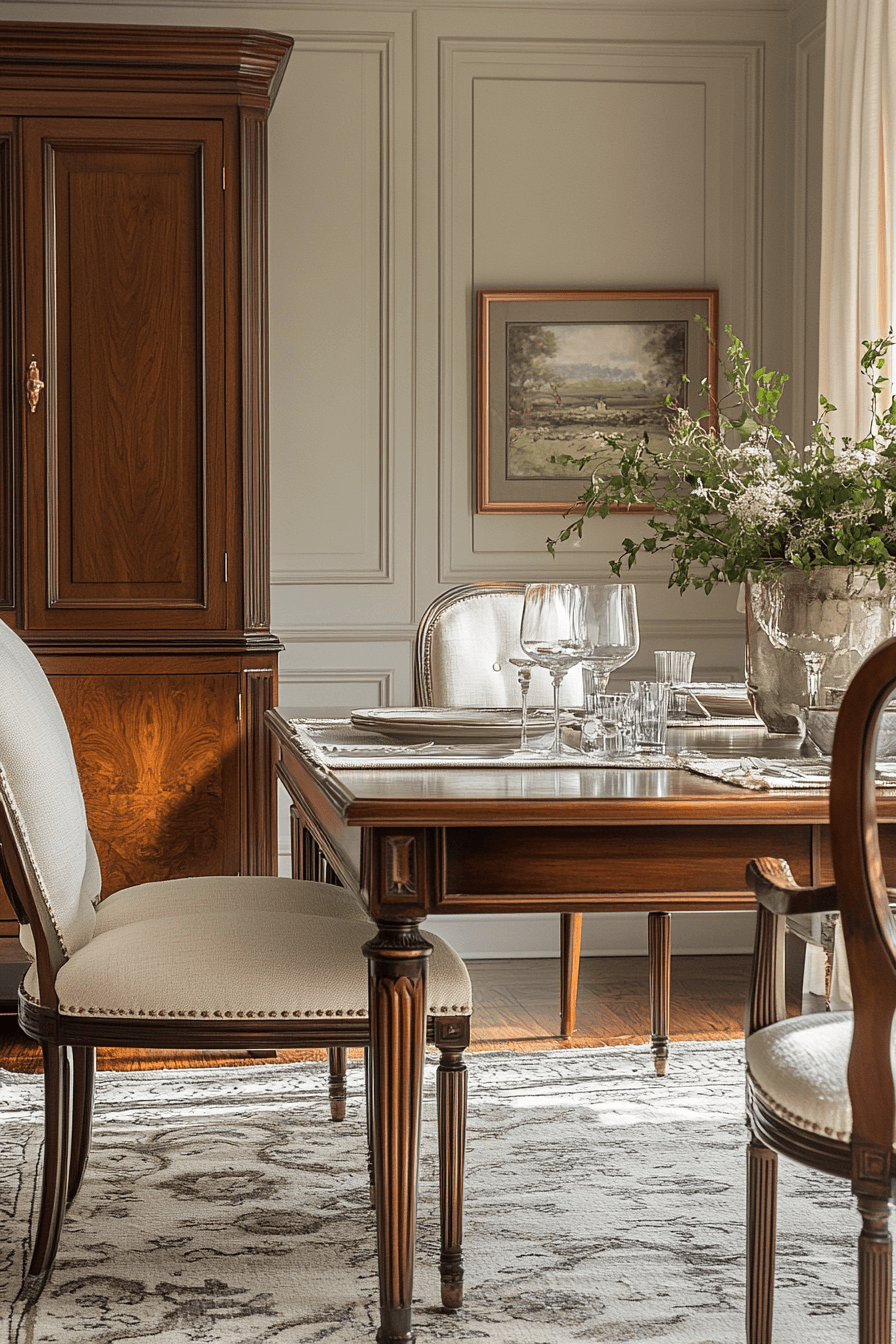
Aged wood furnishings bring heritage warmth into a neoclassical dining room, grounding its formal structure. A vintage table or carved sideboard introduces depth and character. Light paneled walls contrast beautifully with the rich patina. Warm metallic accents and ambient lighting balance textures. The overall mood feels storied and elegant. Click to infuse antique warmth into your neoclassical dining room!
✎ Steal This Look
- Paint Color: PPG Swiss Coffee 12-1
- Furniture: vintage trestle dining table with turned legs, carved oak sideboard with brass hardware, ladder-back dining chairs with rush seats
- Lighting: brass candle-style chandelier with fabric shades, wall-mounted sconces with aged bronze finish
- Materials: reclaimed oak with waxed patina, hand-forged brass, natural linen, distressed leather, aged mercury glass
There’s something quietly powerful about sitting at a table that carries decades of use—the water rings and softened edges become conversation starters, not flaws. This look honors the neoclassical love of history while keeping the room deeply livable.
7. Flowing Drapery Elegance
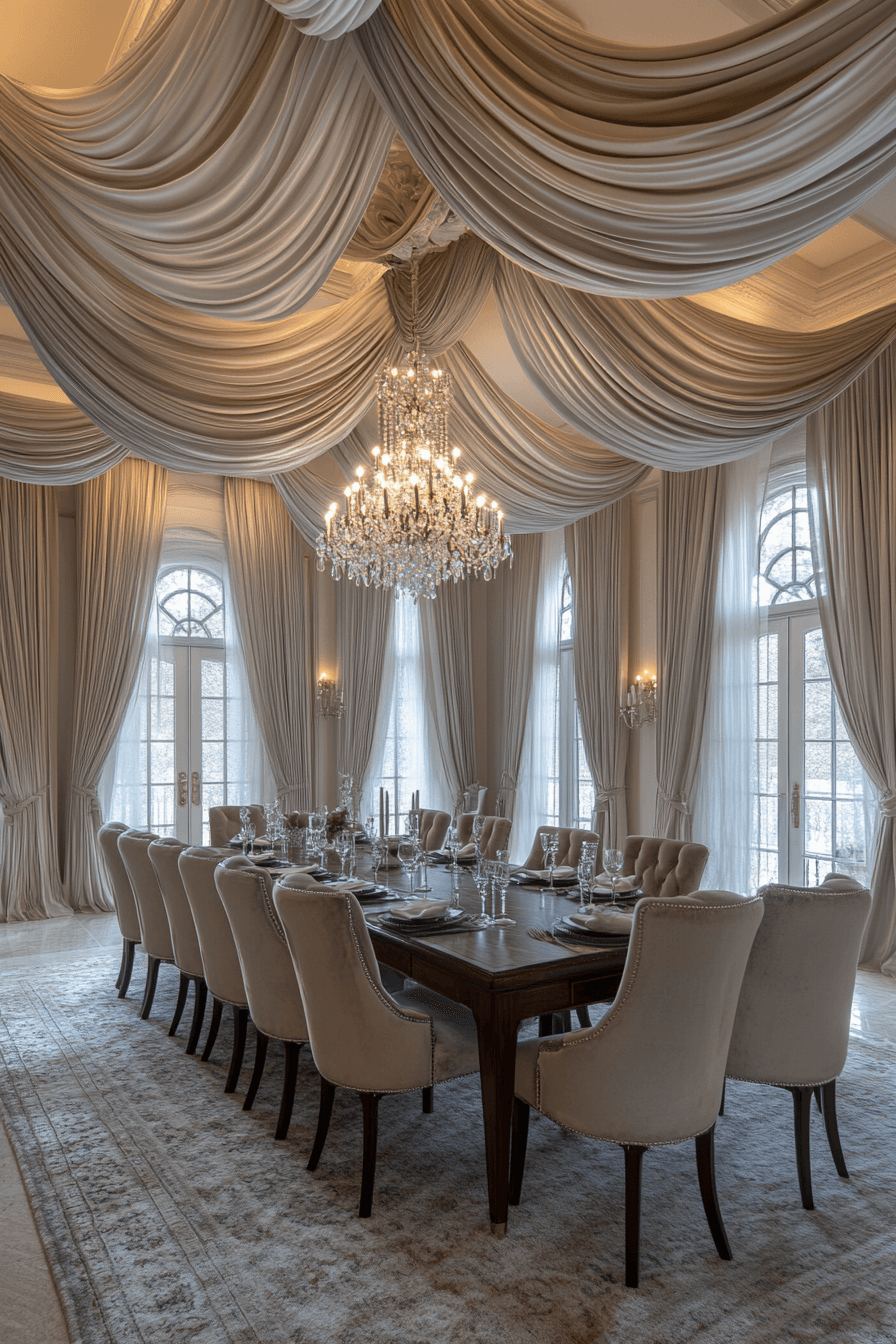
Flowing drapery enhances the vertical grace of a neoclassical dining room, adding softness to structured lines. Velvet, linen, or silk panels frame tall windows with sophistication. The fabric introduces movement and texture alongside crisp molding. Layered curtains also create acoustic comfort for intimate dinners. The space feels balanced between grandeur and warmth. Tap to soften your neoclassical dining room with luxurious drapery!
★ Steal This Look
- Paint Color: Dunn-Edwards Swiss Coffee DEW341
- Furniture: Mahogany pedestal dining table with fluted legs, upholstered host chairs with nailhead trim, marble-top sideboard with brass hardware
- Lighting: Crystal chandelier with candle-style arms, brass wall sconces flanking windows
- Materials: Heavy velvet or raw silk drapery in deep burgundy or forest green, brass curtain rods with finials, crown molding, herringbone hardwood floors
There’s something almost ceremonial about drawing heavy velvet panels at dusk—the way the room instantly coccoons into intimacy while still feeling undeniably grand. This is where neoclassical stops being museum-piece cold and becomes dinner-party magical.
8. Neutral Timeless Dining
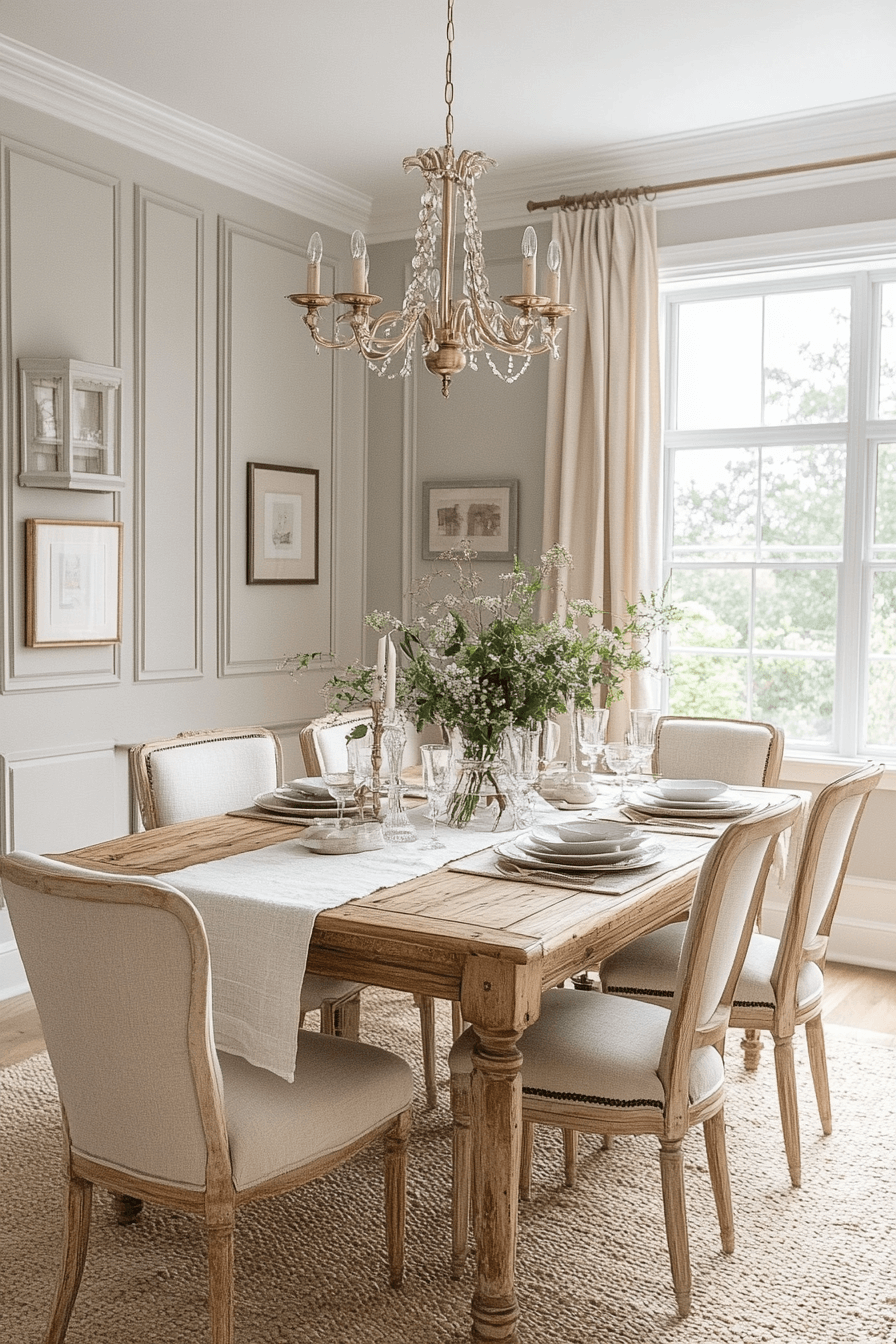
A serene neutral palette allows architectural elements to shine in a neoclassical dining room. Ivory, beige, and warm taupe tones establish calm elegance. Brass lighting and natural textures add gentle dimension. The subdued scheme complements both antique and modern furnishings. The result feels timeless and versatile. Click to embrace refined neutrals in your neoclassical dining room!
🎨 Steal This Look
- Paint Color: Clare Paint Fresh Kicks CW-01
- Furniture: Upholstered dining chairs with carved wood legs, pedestal-base dining table in warm walnut
- Lighting: Brass chandelier with candle-style lights and crystal accents
- Materials: Linen, aged brass, walnut wood, subtle damask or tone-on-tone wallpaper
There’s something quietly luxurious about a room that doesn’t shout—this palette lets your grandmother’s sideboard and that modern brass fixture coexist in perfect harmony.
9. Refined Grey Atmosphere
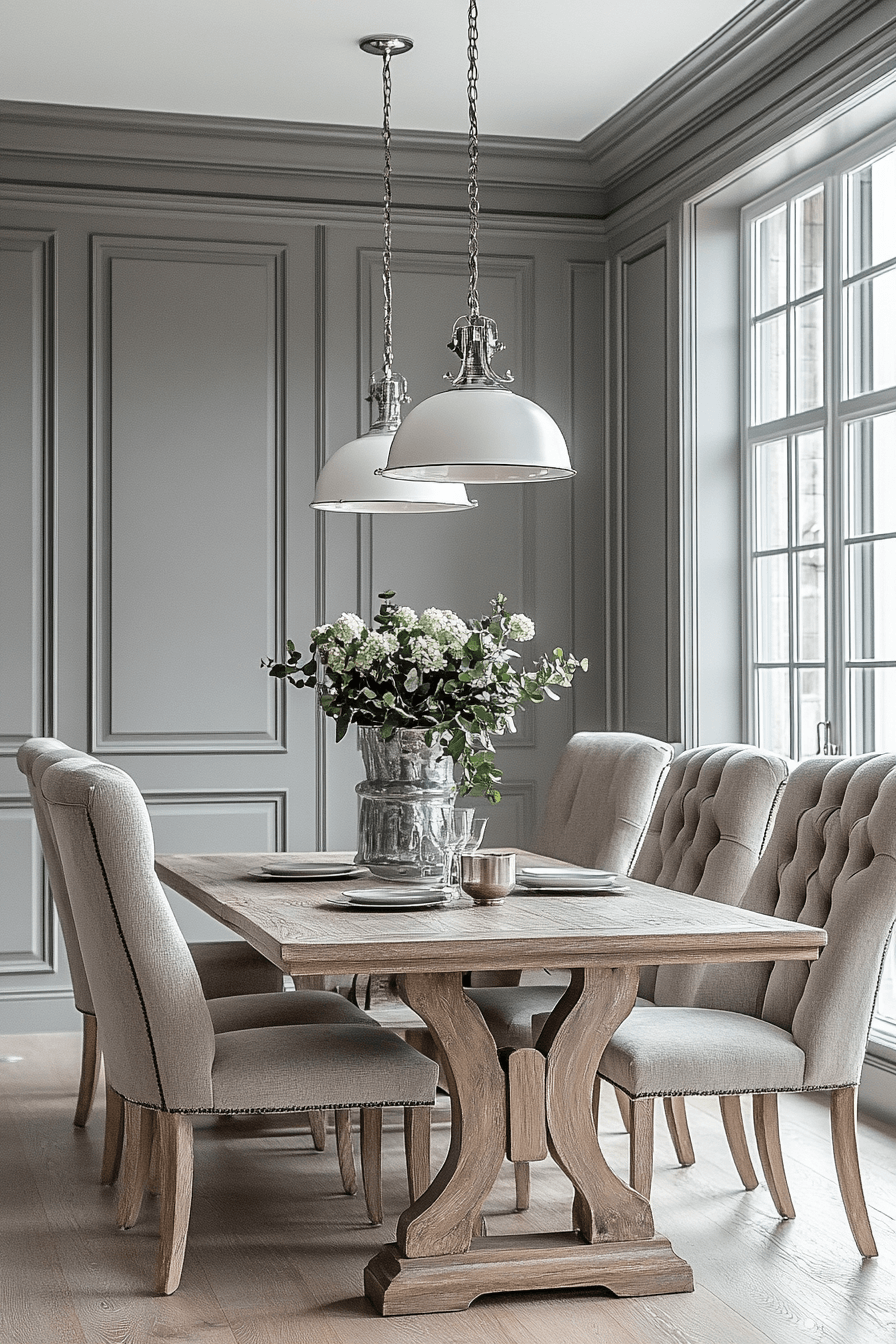
Cool grey tones introduce understated sophistication into a neoclassical dining room. Light grey walls paired with white molding feel crisp and tailored. Coordinated furnishings and subtle metallic accents maintain cohesion. The palette enhances both natural and artificial light beautifully. Grey brings contemporary calm while honoring tradition. Tap to create a refined grey neoclassical dining room atmosphere!
✎ Steal This Look
- Paint Color: Fine Paints of Europe Hollandlac Brilliant WIT 1001 (cool light grey)
- Furniture: Upholstered dining chairs with carved wood legs in grey linen, pedestal-base dining table with grey-washed oak finish
- Lighting: Crystal chandelier with aged brass frame and grey silk shades
- Materials: Polished marble tabletop, brushed nickel hardware, grey velvet upholstery, white plaster crown molding
There’s something quietly powerful about a grey neoclassical dining room—it feels like dining in a modern interpretation of a Parisian hôtel particulier, timeless yet utterly current.
10. Bronze Glow Accent
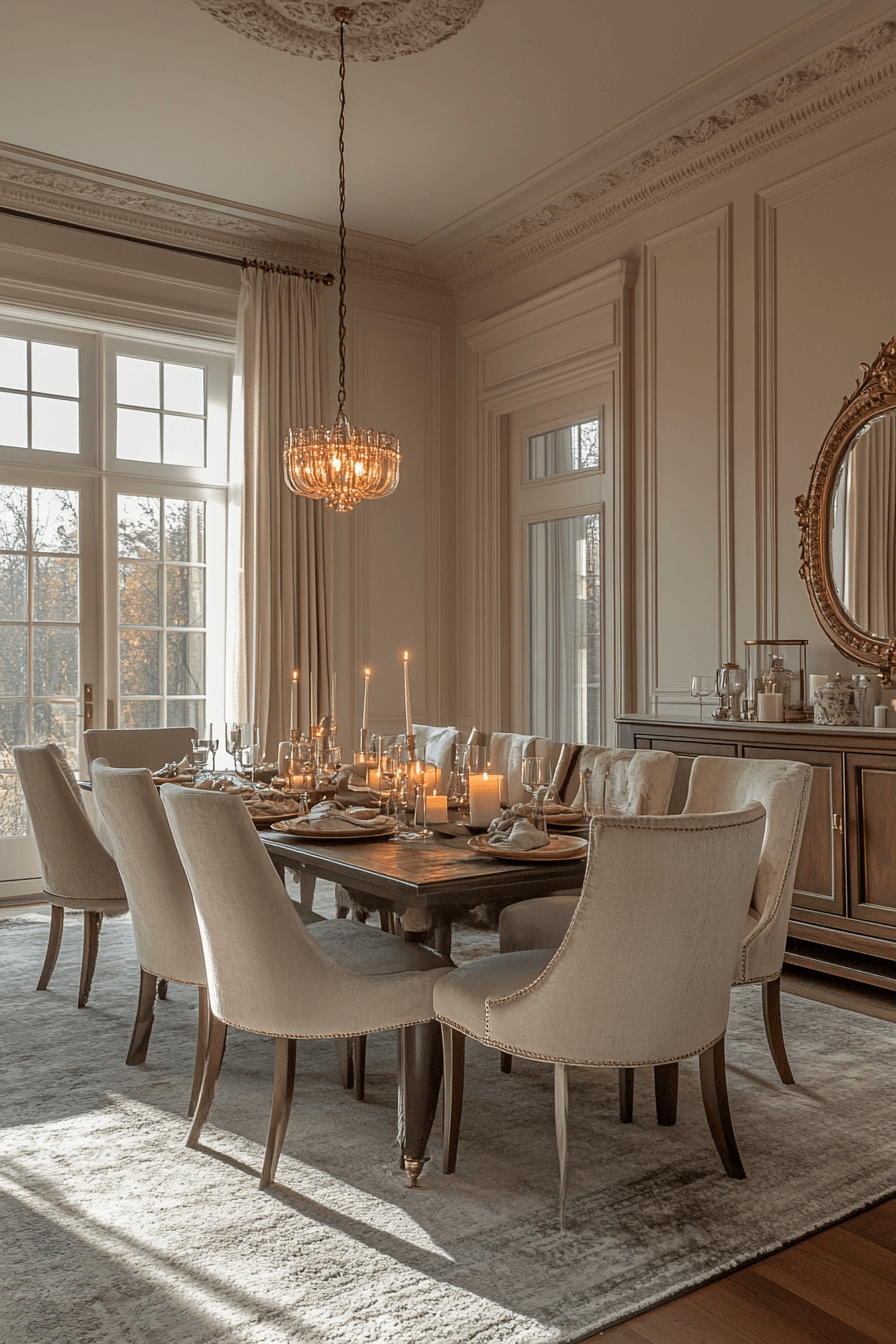
Bronze accents warm the elegance of a neoclassical dining room, adding subtle depth and glow. Incorporate bronze through lighting, mirror frames, or furniture hardware. Cream walls and paneling create a perfect contrast. Candlelight enhances the warmth for evening gatherings. The combination feels cozy yet refined. Click to explore bronze sophistication in your neoclassical dining room!
🖼 Steal This Look
- Paint Color: Backdrop Cardboard Mansion CA-36
- Furniture: mahogany dining table with carved pedestal base, upholstered dining chairs with bronze nailhead trim
- Lighting: bronze chandelier with candle-style bulbs and crystal droplets
- Materials: bronze metalwork, cream painted paneling, crystal accents, warm wood tones
There’s something quietly luxurious about bronze against cream paneling—it catches candlelight like liquid warmth and makes every dinner feel like an occasion without trying too hard.
11. Textured Seating Luxury
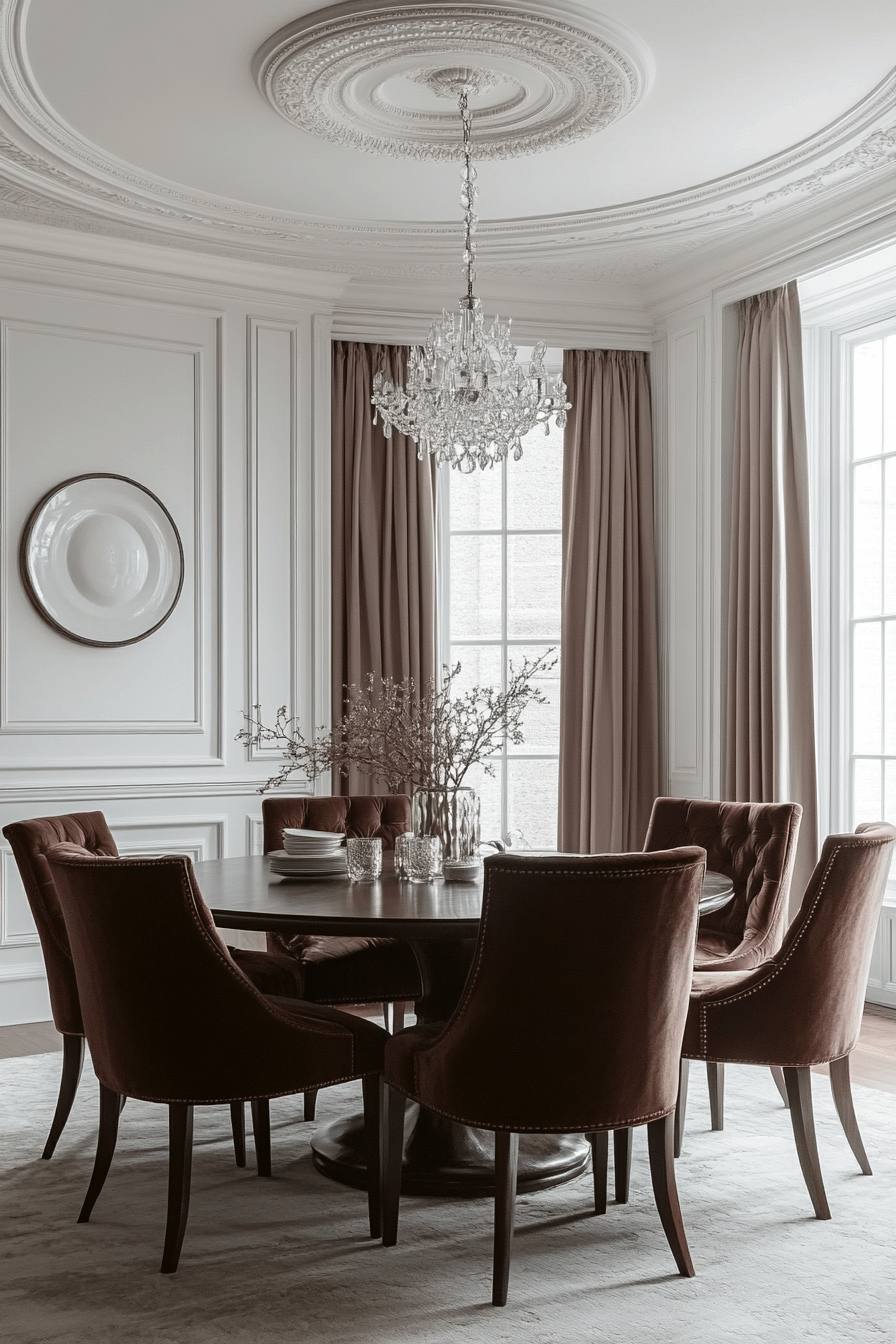
Textured upholstery adds tactile luxury to a neoclassical dining room, balancing structured architecture. Velvet, boucle, or linen chairs soften the formal setting. Coordinated fabrics create harmony across seating and window treatments. The contrast between plush textures and crisp molding feels inviting. Comfort meets refinement effortlessly. Tap to layer your neoclassical dining room with timeless texture!
💡 Steal This Look
- Paint Color: Sherwin-Williams Alabaster SW 7008
- Furniture: velvet-upholstered dining chairs with carved wood legs, tufted host chairs in boucle, matching linen-draped side chairs
- Lighting: crystal chandelier with aged brass arms, wall sconces with fabric shades
- Materials: velvet, boucle, linen, carved walnut, crystal, gilded accents
There’s something about running your hand across a velvet chair back before sitting down—it turns every dinner into an occasion, even on a Tuesday.
12. Medallion Ceiling Detail
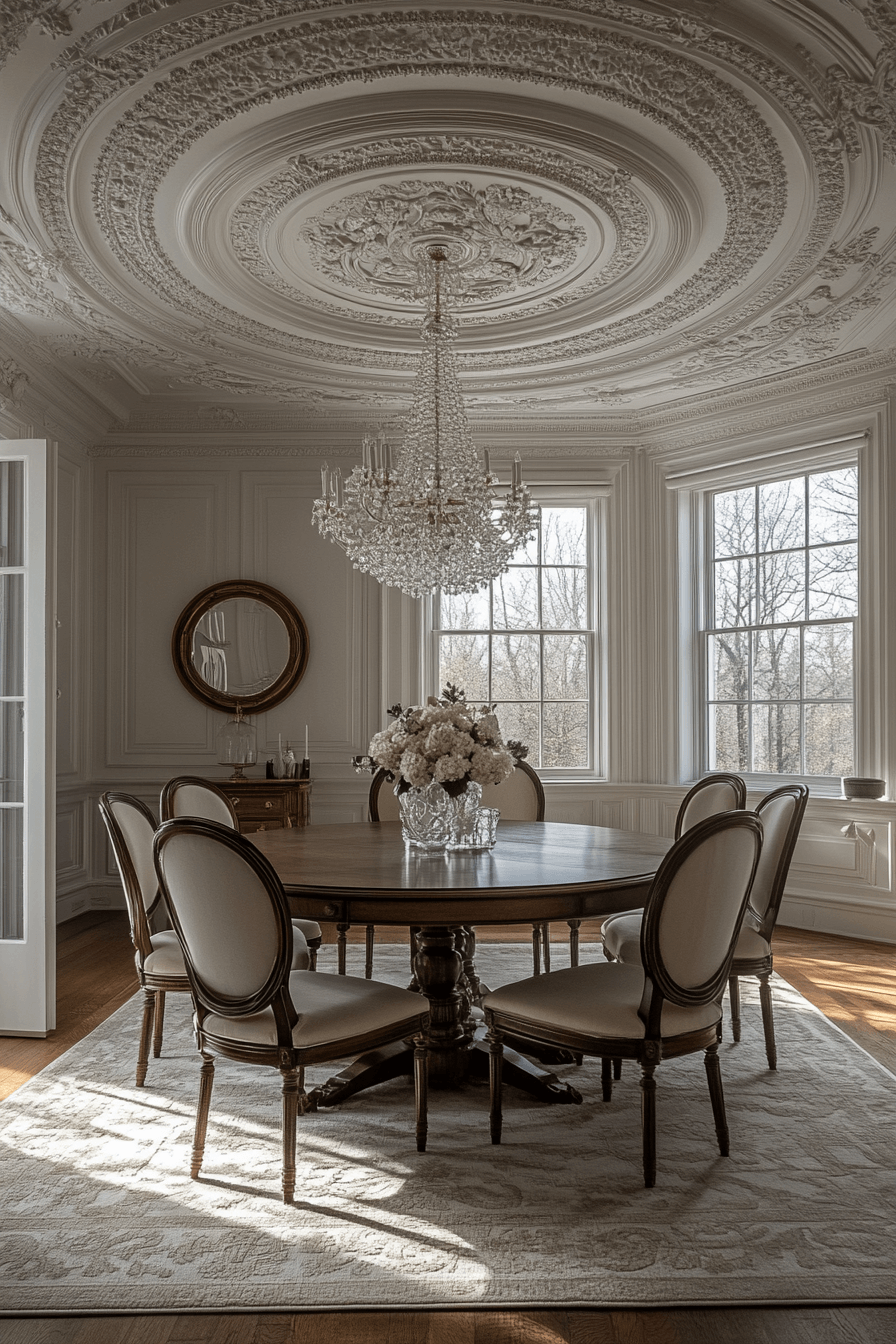
A decorative ceiling medallion elevates a chandelier within a neoclassical dining room, adding intricate charm overhead. Plaster or composite detailing frames lighting beautifully. The medallion enhances symmetry and proportion. Even subtle designs make a statement. This finishing touch reinforces heritage elegance. Click to crown your neoclassical dining room with architectural artistry!
🖼 Steal This Look
- Paint Color: Benjamin Moore Chantilly Lace OC-65
- Furniture: mahogany pedestal dining table with carved legs, upholstered dining chairs with nailhead trim, breakfront china cabinet with fluted pilasters
- Lighting: brass or bronze crystal chandelier with candle-style arms, centered in ornate ceiling medallion
- Materials: plaster or polyurethane ceiling medallion with acanthus leaf or rope detailing, crystal prisms, polished brass, rich wood tones, silk or velvet upholstery
There’s something quietly majestic about glancing up during dinner to catch light dancing off plaster leaves overhead—it transforms an ordinary meal into an occasion.
13. Layered Lighting Glow
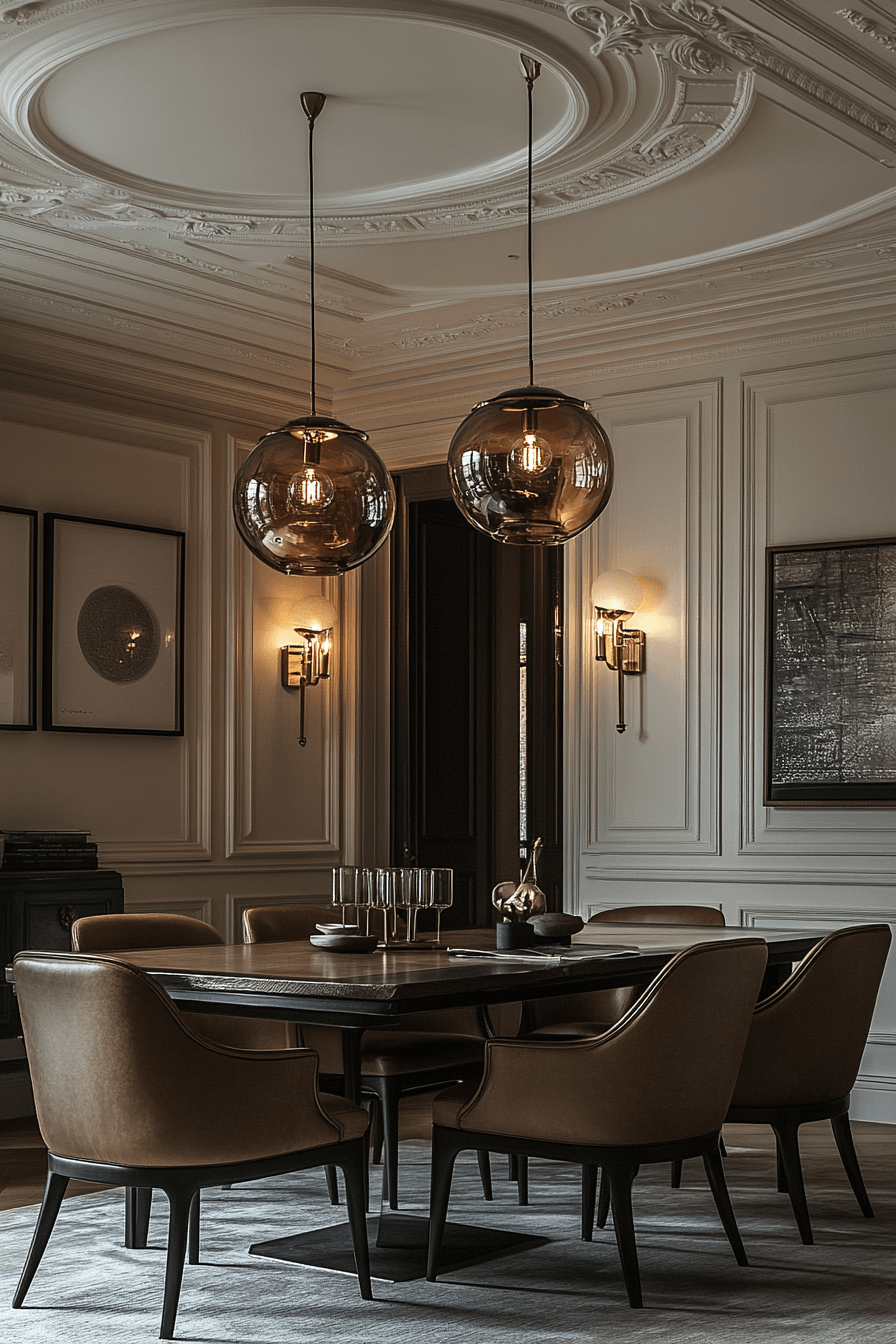
Layered lighting transforms ambiance in a neoclassical dining room, creating depth and flexibility. A central chandelier pairs with wall sconces and accent lights to highlight architectural detail. Warm bulbs enhance gold and neutral tones. The layered glow adapts effortlessly from formal dinners to relaxed evenings. Lighting becomes part of the decor narrative. Tap to illuminate your neoclassical dining room with intentional layering!
💡 Steal This Look
- Paint Color: Farrow & Ball All White 2005
- Furniture: oval mahogany dining table with carved pedestal base, upholstered dining chairs with nailhead trim
- Lighting: crystal chandelier with candle-style arms, brass wall sconces with fabric shades
- Materials: gilded mirror frames, silk drapery, polished wood, crystal accents
There’s something magical about watching a neoclassical dining room transform as the sconces flicker on and the chandelier dims—suddenly the gilded details come alive.
14. Carved Artistry Appeal
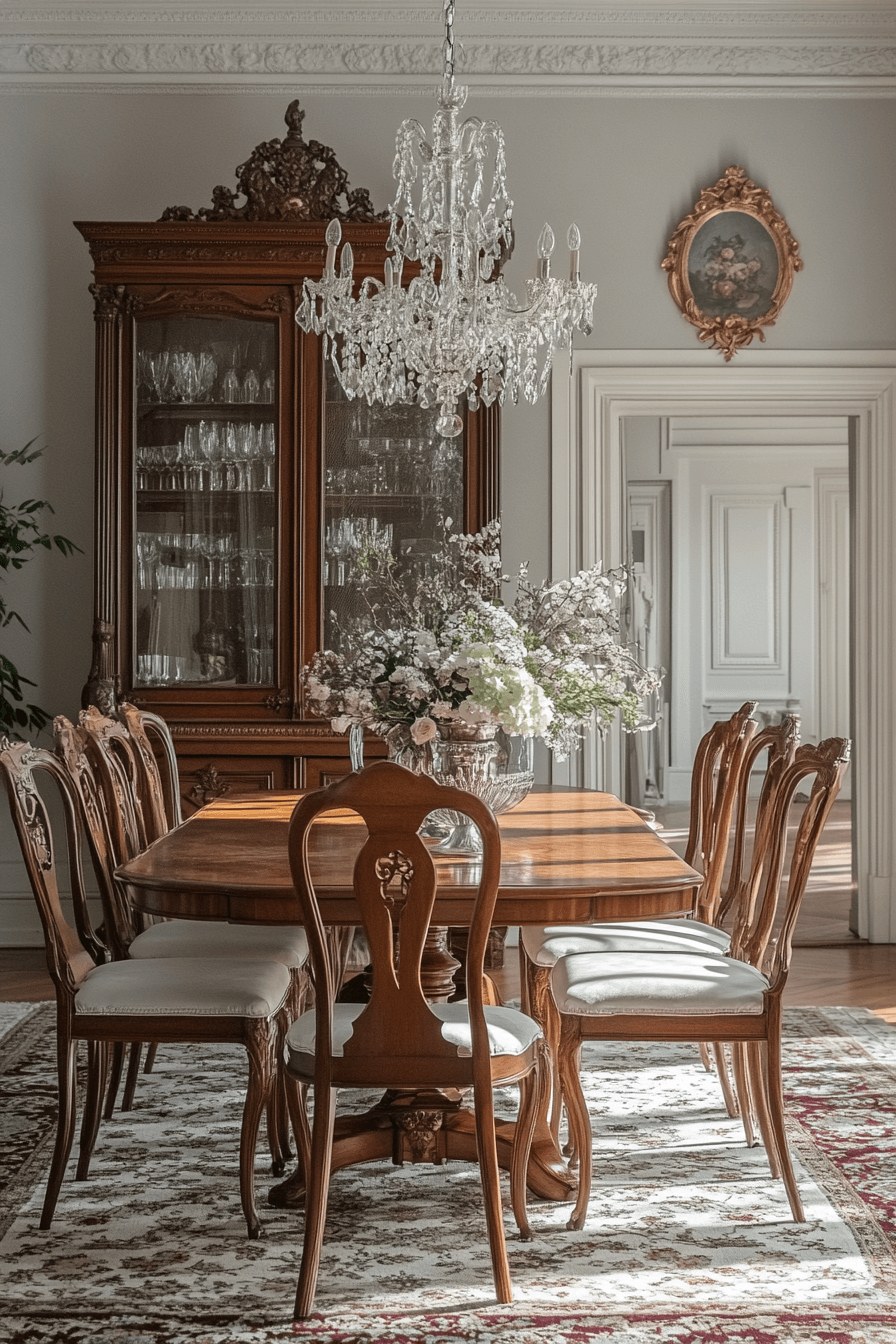
Hand-carved detailing introduces artisanal richness to a neoclassical dining room. Fluted legs, ornate sideboards, and rosette moldings highlight craftsmanship. A light color palette allows intricate work to stand out. These elements infuse heritage and character into the setting. Even subtle carvings elevate the entire space. Click to celebrate classic craftsmanship in your neoclassical dining room!
🖼 Steal This Look
- Paint Color: Behr Swiss Coffee 12
- Furniture: carved mahogany sideboard with fluted pilasters, turned-leg dining table, cane-back dining chairs with rosette detailing
- Lighting: crystal chandelier with brass arms and candle-style bulbs
- Materials: walnut and mahogany woods, plaster ceiling medallions, gilded mirror frames, linen upholstery
There’s something quietly luxurious about running your hand over fluted wood grain at dinner—it’s the kind of tactile heritage that makes guests linger longer at the table.
15. Curated Gallery Display
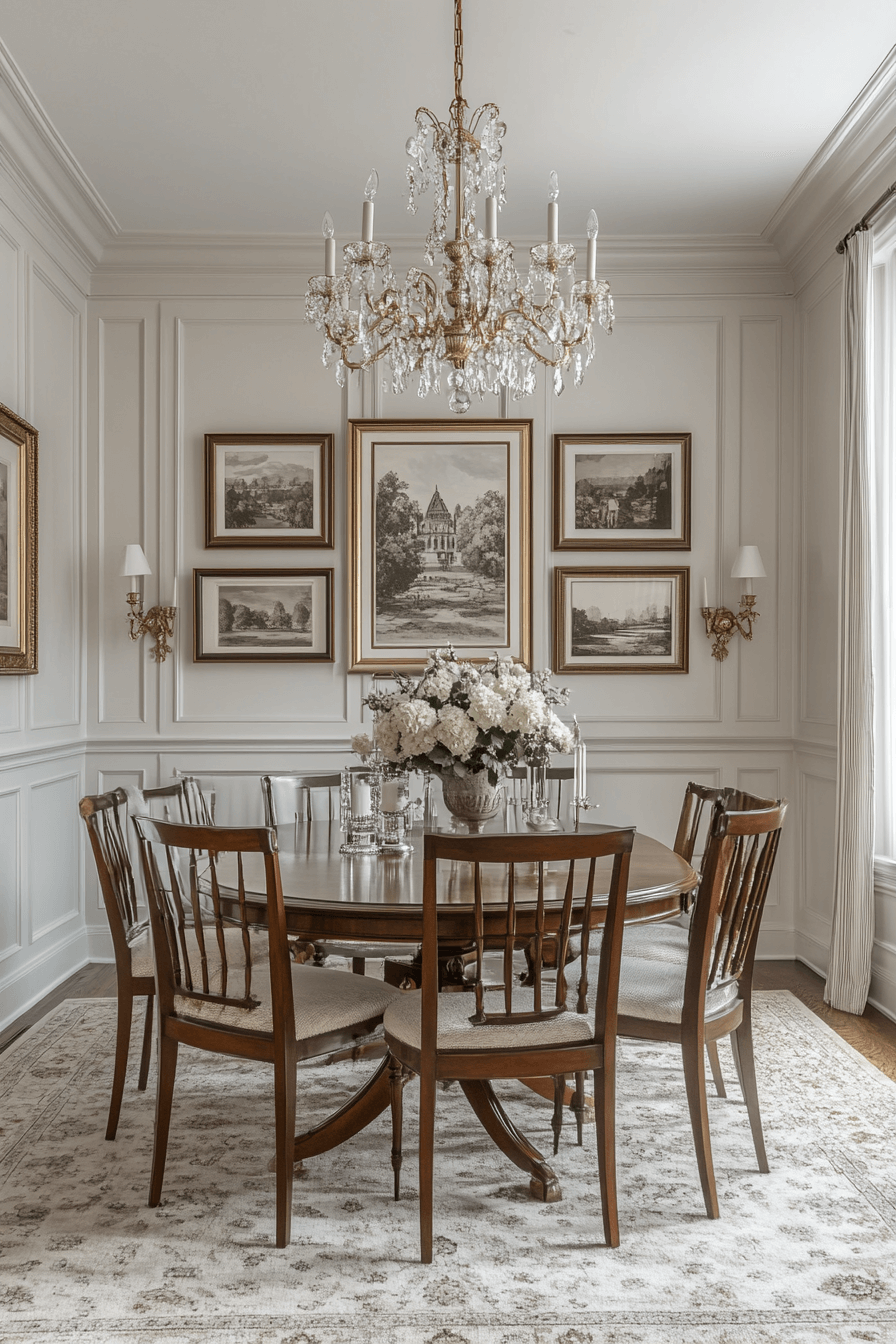
A curated gallery wall adds personality and refinement to a neoclassical dining room. Vintage frames and classical artwork align beautifully within paneled walls. Symmetrical arrangements maintain structure and polish. The display enhances depth while becoming a conversation piece. It blends curated style with architectural grace. Tap to personalize your neoclassical dining room with timeless art!
🎨 Steal This Look
- Paint Color: Valspar Gallery Gray 4003-1B
- Furniture: mahogany pedestal dining table with carved column base, set of six shield-back dining chairs with upholstered seats
- Lighting: brass chandelier with candle-style lights and crystal droplets
- Materials: gilded vintage frames, oil on canvas portraits, ornate picture rail molding, silk wall panels
There’s something quietly powerful about dining beneath ancestral gazes—this look turns every meal into a small ceremony.
16. Upholstered Wall Sophistication
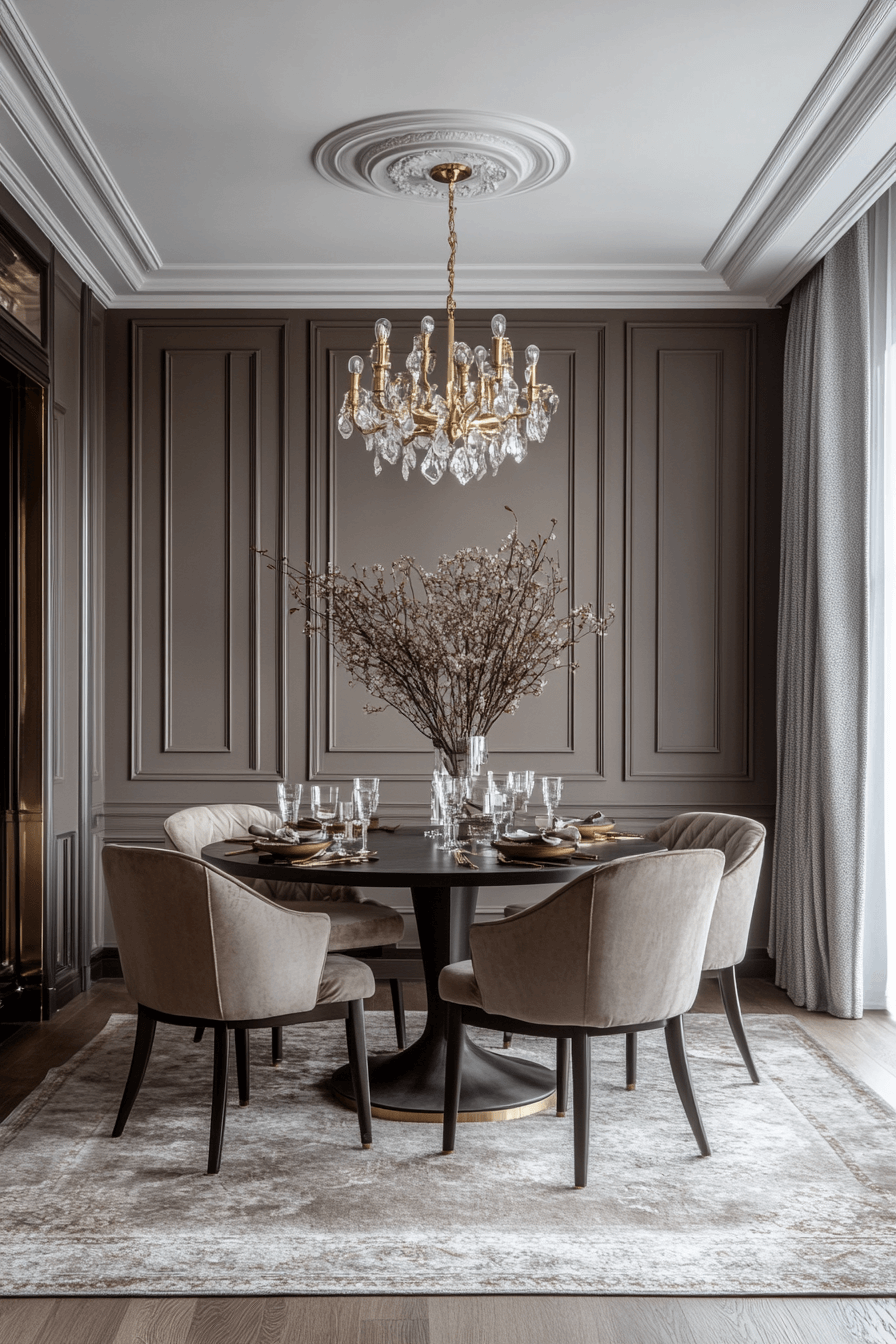
Upholstered wall panels introduce softness and acoustic comfort into a neoclassical dining room. Fabric framed by molding creates a luxurious layered effect. Rich or neutral tones both complement classical trim. Paired with marble or wood tables, the balance feels harmonious. The ambiance becomes intimate and elevated. Click to explore how fabric transforms your neoclassical dining room walls!
🖼 Steal This Look
- Paint Color: PPG Warm Mahogany PPG1060-7
- Furniture: Tufted velvet dining chairs with carved wood legs, oval marble-top dining table with turned pedestal base
- Lighting: Crystal chandelier with brass arms and fabric shades
- Materials: Velvet upholstery, silk wall panels, gilded wood molding, Calacatta marble, antique brass nailhead trim
There’s something undeniably indulgent about leaning back against a velvet wall during a long dinner party—it transforms the room from simply beautiful to truly enveloping.
17. Two Tone Balance
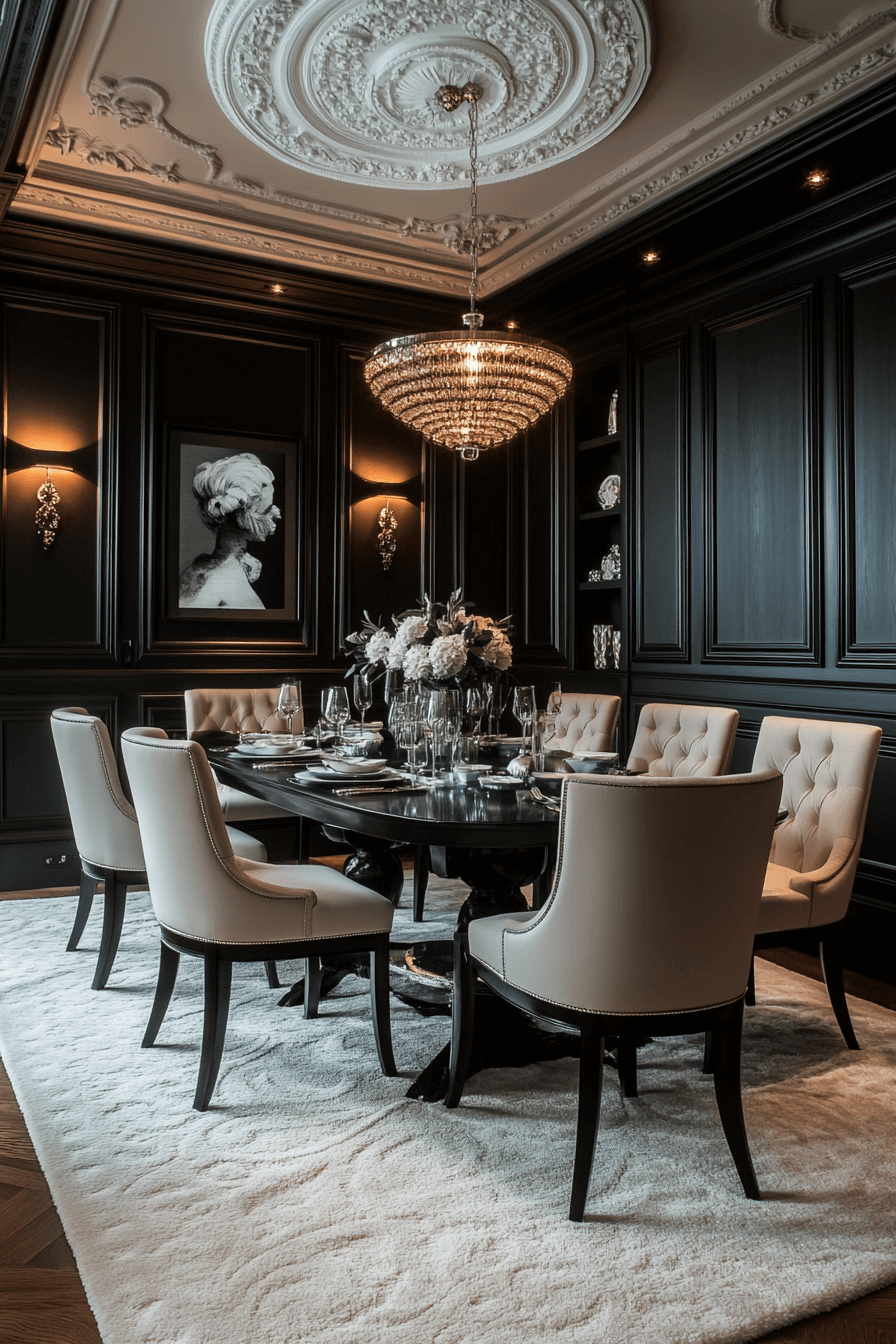
A two-tone wall treatment enhances proportion within a neoclassical dining room. Darker hues below a chair rail and lighter shades above reinforce classical balance. This technique accentuates molding and ceiling height. Coordinated furnishings keep the look cohesive. The result feels bold yet structured. Tap to master color-blocking in your neoclassical dining room!
🖼 Steal This Look
- Paint Color: Dunn-Edwards Black Spruce DET544 below chair rail, Dunn-Edwards Whisper White DET648 above chair rail
- Furniture: mahogany pedestal dining table with carved legs, upholstered dining chairs with nailhead trim, antique sideboard with marble top
- Lighting: crystal chandelier with candle-style bulbs, brass wall sconces flanking artwork
- Materials: deep wood tones, crisp white trim, polished brass hardware, velvet upholstery, marble accents
There’s something deeply satisfying about this old-world technique—it feels like the room itself has good posture. I love how the dark base makes furniture feel grounded while the light upper walls let the ceiling breathe.
18. Arched Entry Elegance
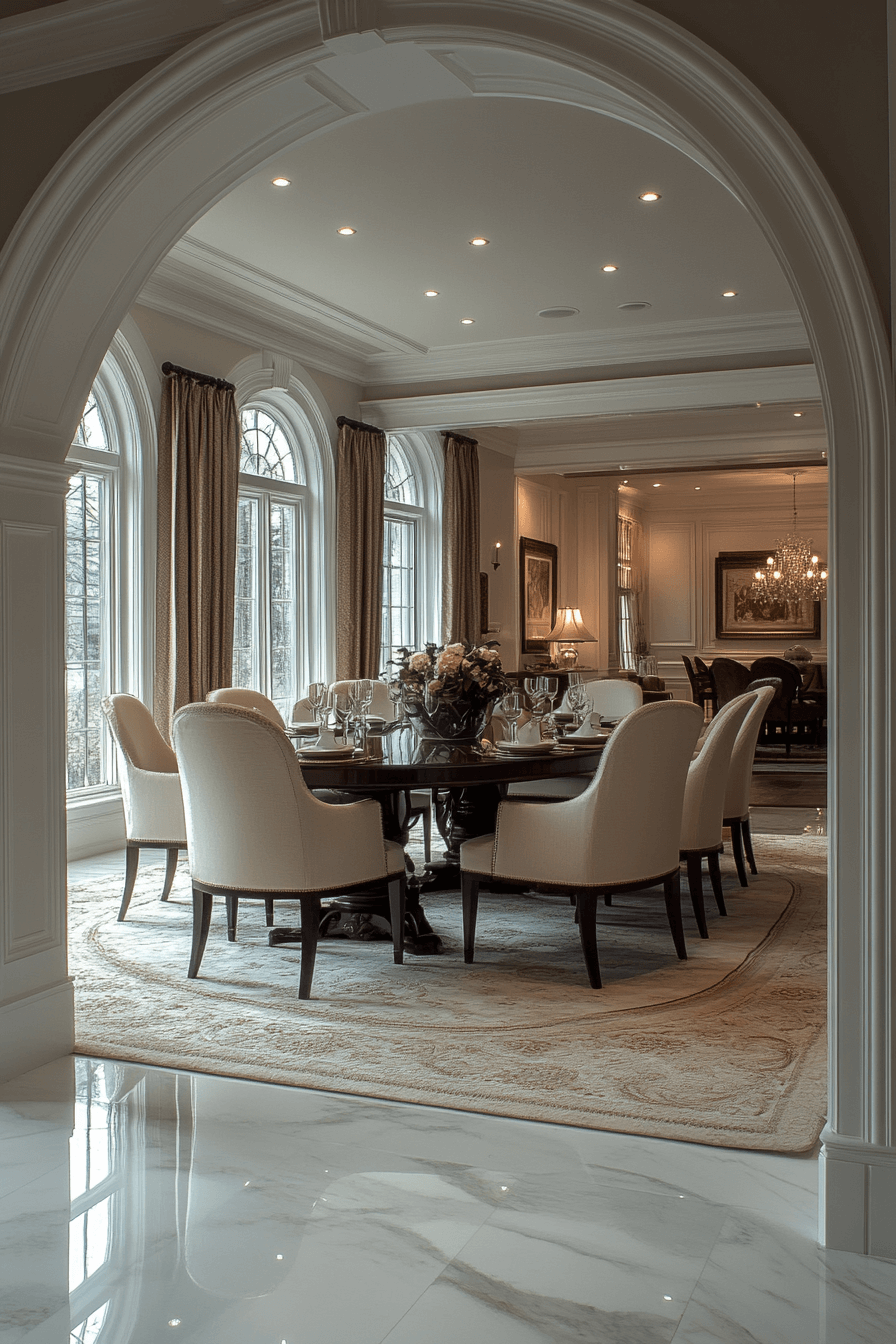
Arched doorways bring architectural poetry to a neoclassical dining room, softening transitions between spaces. The curves echo classical heritage while inviting flow. Paired with tall baseboards and layered lighting, the look feels graceful. Rich textures enhance the romantic mood. The effect is timeless and inviting. Click to frame your neoclassical dining room with elegant arches!
🖼 Steal This Look
- Paint Color: Clare Paint Timeless CC-01
- Furniture: oval pedestal dining table with turned legs, upholstered host chairs with nailhead trim, carved wood sideboard with marble top
- Lighting: crystal chandelier with candle-style arms, wall sconces flanking the archway
- Materials: plaster arch molding, polished marble, aged brass hardware, silk drapery, herringbone oak flooring
There’s something almost musical about walking through an arched doorway to dinner—the curve slows you down, makes the moment feel intentional. This is the kind of detail that turns eating into dining.
19. Ornamental Trim Layers
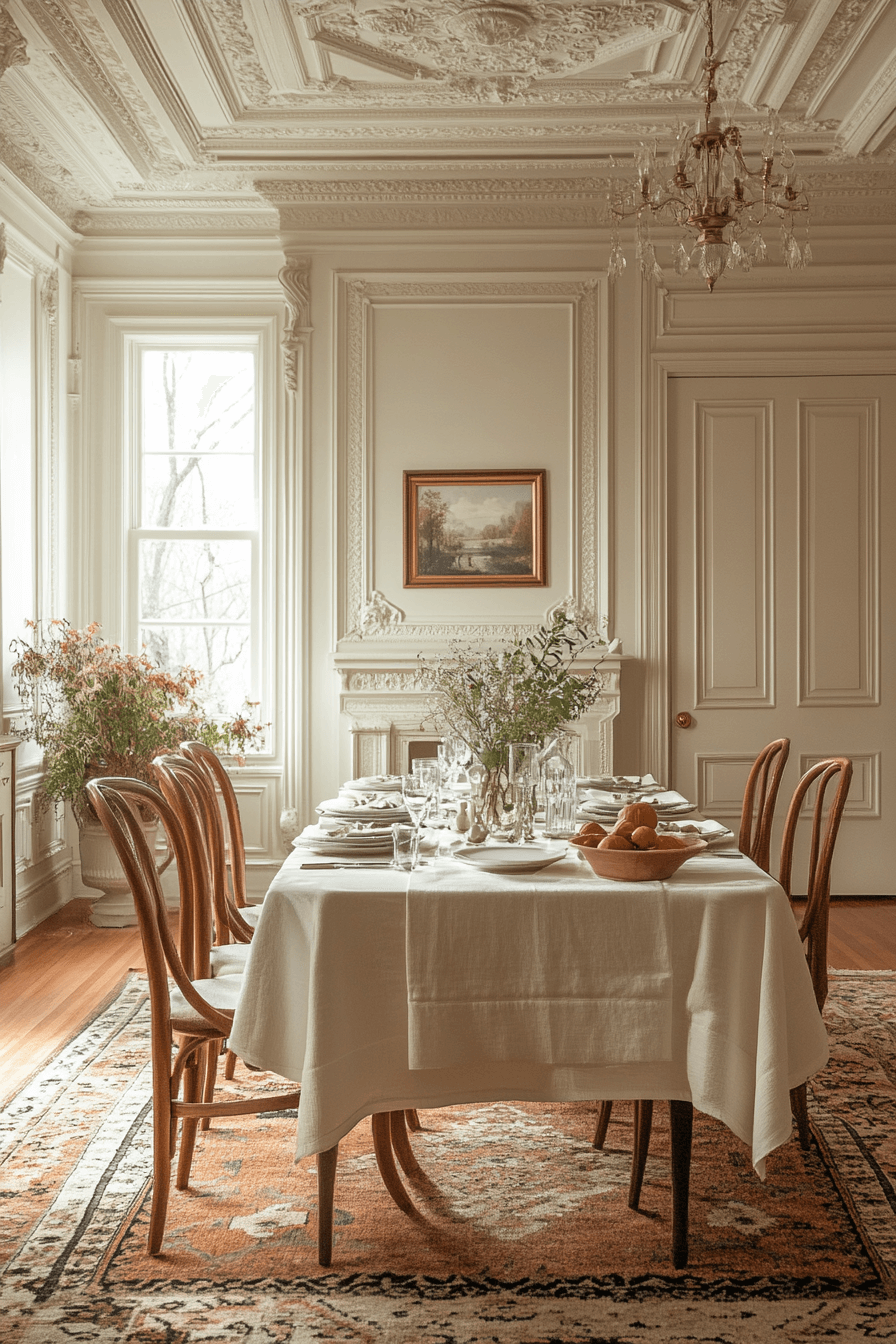
Decorative trim layers depth and dimension into a neoclassical dining room. Dentil molding, wainscoting, and crown profiles establish structure. Matching tones create subtle cohesion, while contrast adds emphasis. These details frame art and lighting beautifully. Even understated trim enhances refinement. Tap to explore ornamental depth in your neoclassical dining room!
🏠 Steal This Look
- Paint Color: Fine Paints of Europe Hollandlac Brilliant ECRU 1001 — warm ivory wall color with subtle cream undertone that complements ornate trim without competing
- Furniture: Mahogany pedestal dining table with carved apron, balloon-back dining chairs with cane seats, gilt-framed convex mirror above sideboard
- Lighting: Crystal chandelier with brass arms and bobeche, wall sconces with silk shades flanking wainscoting panels
- Materials: Plaster crown molding with dentil detail, raised panel wainscoting in satin lacquer finish, gilded picture rail, silk damask upholstery
There’s something quietly commanding about a room where every edge has intention; the trim becomes the architecture’s handwriting.
20. Console Table Charm
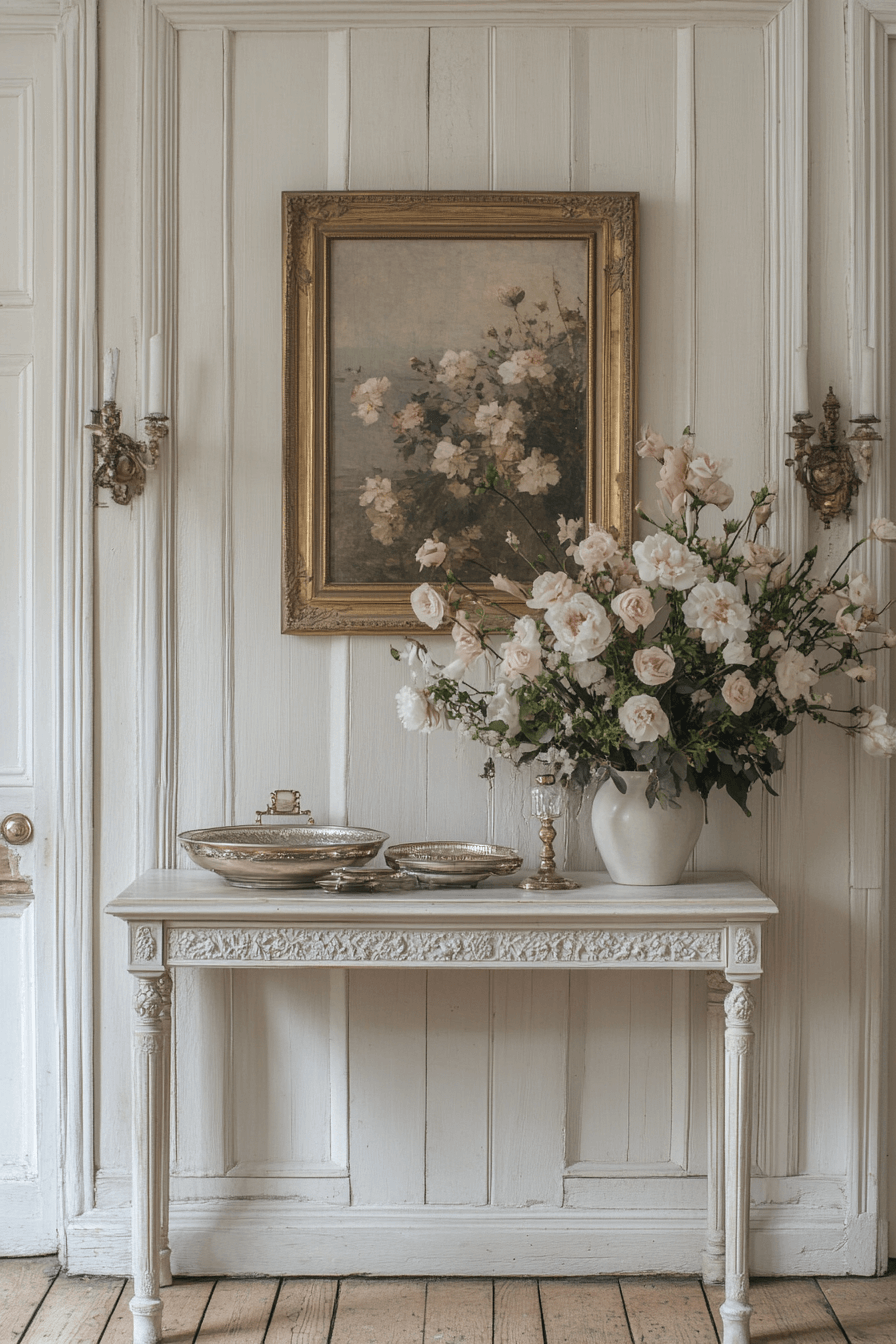
A carved console table adds elegance and functionality to a neoclassical dining room. Positioned beneath a mirror or artwork, it anchors unused wall space. Decorative accents or florals enhance symmetry. The proportions should align with the room’s architectural scale. The result feels graceful and purposeful. Click to incorporate classic console charm into your neoclassical dining room!
💡 Steal This Look
- Paint Color: Backdrop Palais Royal BP-05
- Furniture: carved mahogany console table with fluted legs and marble top
- Lighting: brass wall sconces with candle-style bulbs flanking mirror
- Materials: veined marble, carved wood, antiqued brass, gilded mirror frame
There’s something quietly powerful about a console table that knows its job—holding a single perfect orchid, catching candlelight, never competing with the room’s architecture.
21. Herringbone Heritage Floor
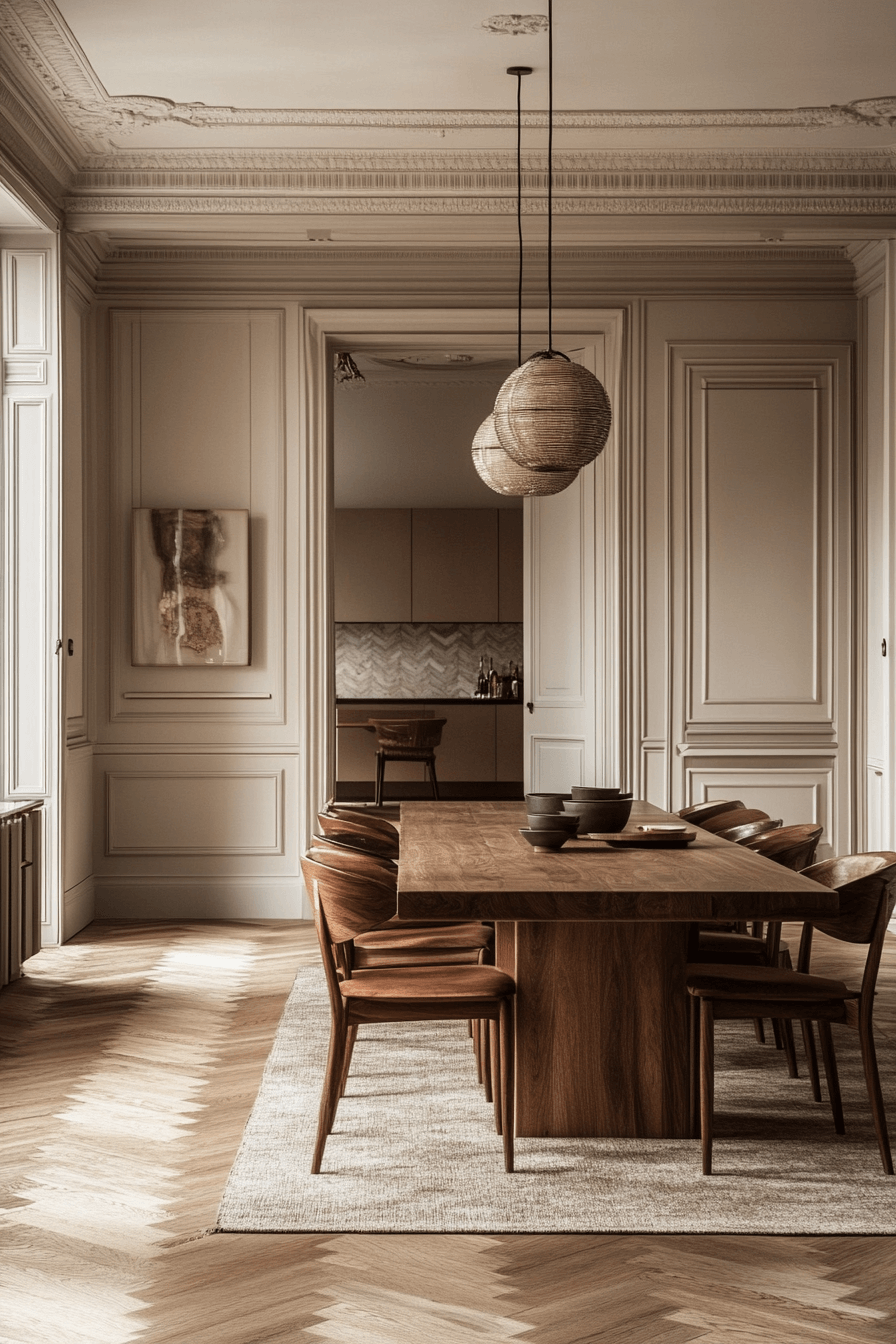
Herringbone wood flooring introduces classic movement into a neoclassical dining room. The angled pattern enhances depth underfoot. Light oak or walnut tones complement paneled walls beautifully. A subtle rug beneath the table softens the look. The flooring anchors the design with timeless appeal. Tap to step into heritage style in your neoclassical dining room!
★ Steal This Look
- Paint Color: Sherwin-Williams Alabaster SW 7008
- Furniture: oval mahogany dining table with turned legs, upholstered dining chairs with nailhead trim, carved sideboard with marble top
- Lighting: crystal chandelier with brass arms, candle-style bulbs
- Materials: herringbone oak flooring, walnut inlay accents, silk damask upholstery, gilded mirror frames, wainscoting paneling
There’s something undeniably grand about the rhythm of herringbone underfoot; it transforms even a simple dinner into an occasion worth lingering over.
22. Sculpted Chair Grace
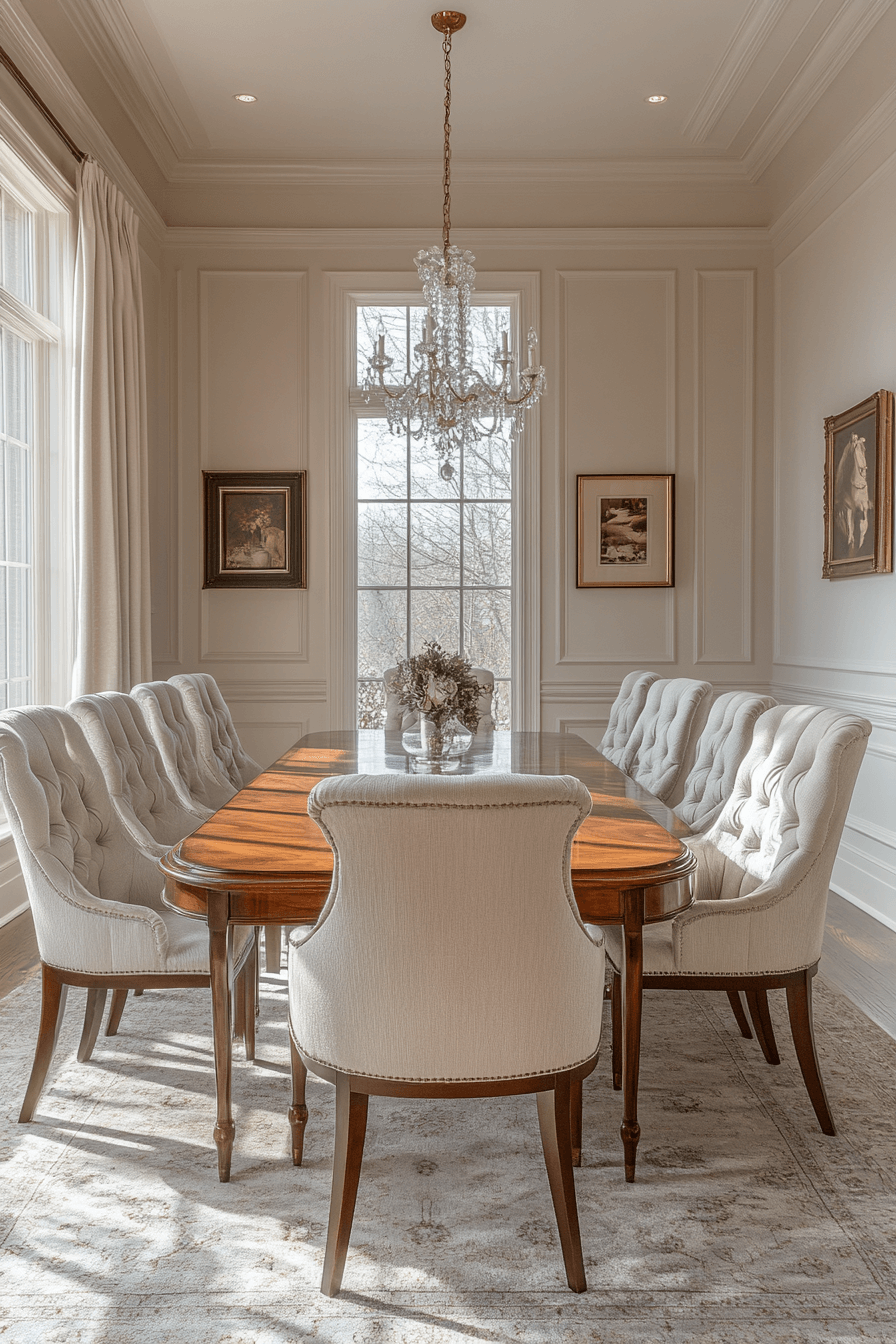
Sculpted dining chairs elevate posture and elegance in a neoclassical dining room. Cabriole legs, fluted backs, or upholstered seats add visual interest. Paired around a statement table, they create symmetry and refinement. Soft fabrics balance ornate detail. The seating becomes both functional and decorative. Click to shape your neoclassical dining room with graceful seating!
💡 Steal This Look
- Paint Color: Benjamin Moore White Dove OC-17
- Furniture: Sculpted dining chairs with cabriole legs and fluted backs in cream linen upholstery, paired with a substantial mahogany pedestal dining table
- Lighting: Crystal chandelier with candle-style arms and aged brass finish
- Materials: Mahogany wood, cream linen, crystal, aged brass, subtle gilded accents
There’s something timeless about settling into a chair that actually supports your posture while looking like sculpture—this is the room where Sunday dinners feel like occasions.
23. Candlelit Classical Glow
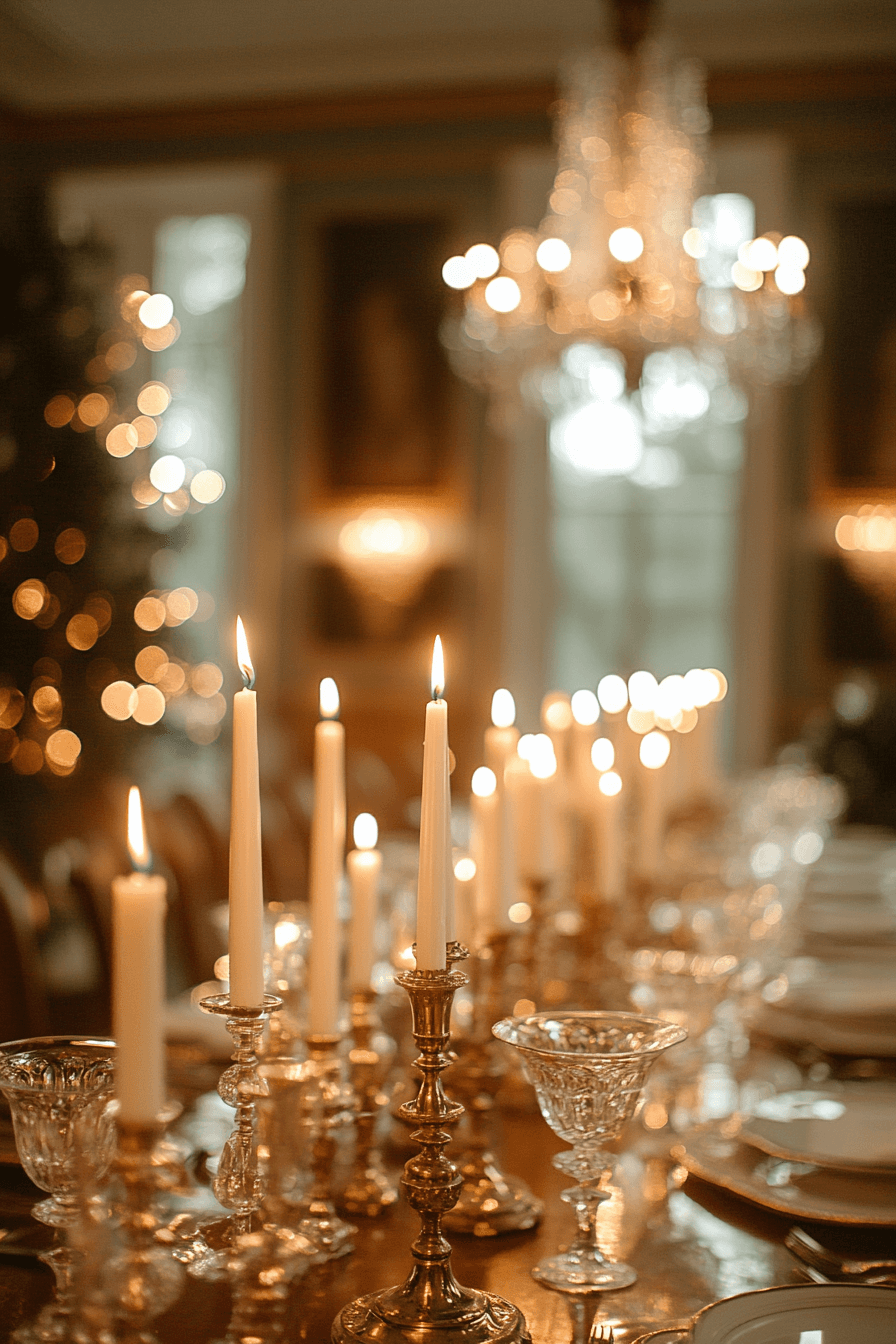
Slender taper candles introduce height and ambiance to a neoclassical dining room. Displayed in brass or crystal holders, they enhance formal settings. Positioned symmetrically, they reinforce balance. Their warm glow complements chandeliers and paneling. The flicker adds timeless charm. Tap to illuminate your neoclassical dining room with classic candlelight!
✎ Steal This Look
- Paint Color: Farrow & Ball Off-White No. 3
- Furniture: mahogany extension dining table with reeded legs, shield-back dining chairs with upholstered seats
- Lighting: crystal ormolu chandelier with candle-style bulbs
- Materials: brass, crystal, beeswax, damask linen, gilded mirror
There’s something almost ceremonial about lighting tapers before guests arrive—the room shifts from simply elegant to genuinely transportive, like stepping into a Sargent portrait.
24. Built In Niche
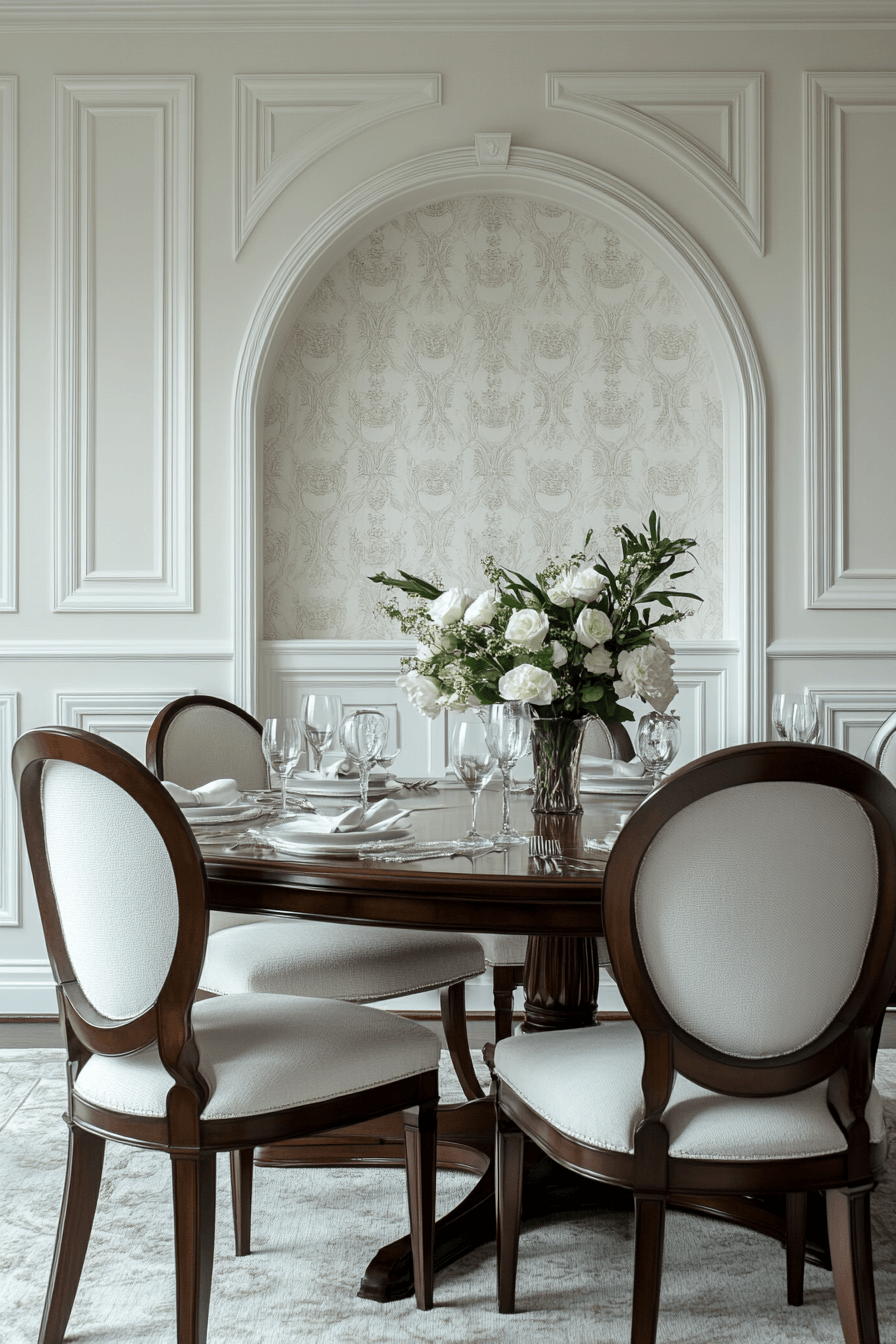
A built-in wall niche adds architectural intrigue to a neoclassical dining room. Framed with molding, it becomes a subtle focal feature. Wallpaper, marble, or painted contrast inside the niche adds depth. Styled with ceramics or florals, it enhances personality. The detail feels elegant and practical. Click to carve refined character into your neoclassical dining room walls!
★ Steal This Look
- Paint Color: Behr Burnished Clay PPU24-05
- Furniture: neoclassical dining table with turned legs, upholstered dining chairs with nailhead trim
- Lighting: crystal chandelier with candle-style bulbs
- Materials: plaster molding, marble niche backing, velvet upholstery, antique brass accents
There’s something quietly luxurious about a recessed niche that catches candlelight during dinner—it feels like a secret the room is keeping just for your guests.
25. Plaster Wall Warmth
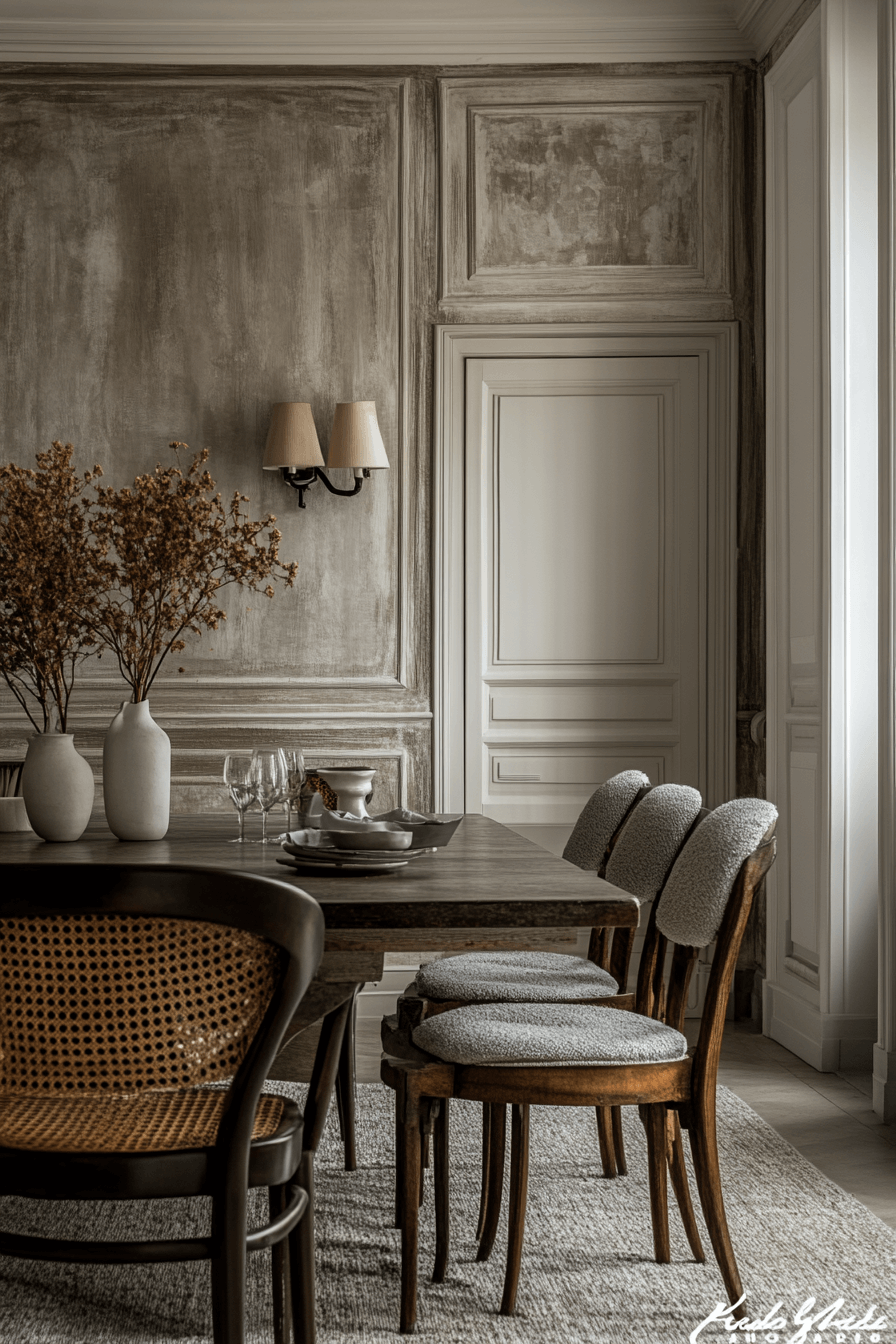
Textured plaster finishes bring artisanal softness to a neoclassical dining room. Limewashed or matte surfaces contrast beautifully with crisp molding. Warm lighting enhances the tactile quality. The blend of texture and trim bridges tradition and modernity. The walls glow with understated character. Tap to explore the beauty of plaster in your neoclassical dining room!
🌟 Steal This Look
- Paint Color: Valspar Plaster White 6009-1
- Furniture: oval pedestal dining table with turned legs, upholstered dining chairs with nailhead trim
- Lighting: crystal chandelier with aged brass finish
- Materials: raw plaster walls, mahogany wood trim, linen upholstery, antique brass hardware
There’s something quietly luxurious about running your hand along a plaster wall at dinner; it feels like eating in a centuries-old Italian palazzo, even if your home was built in 2005.
26. Floating Shelf Display
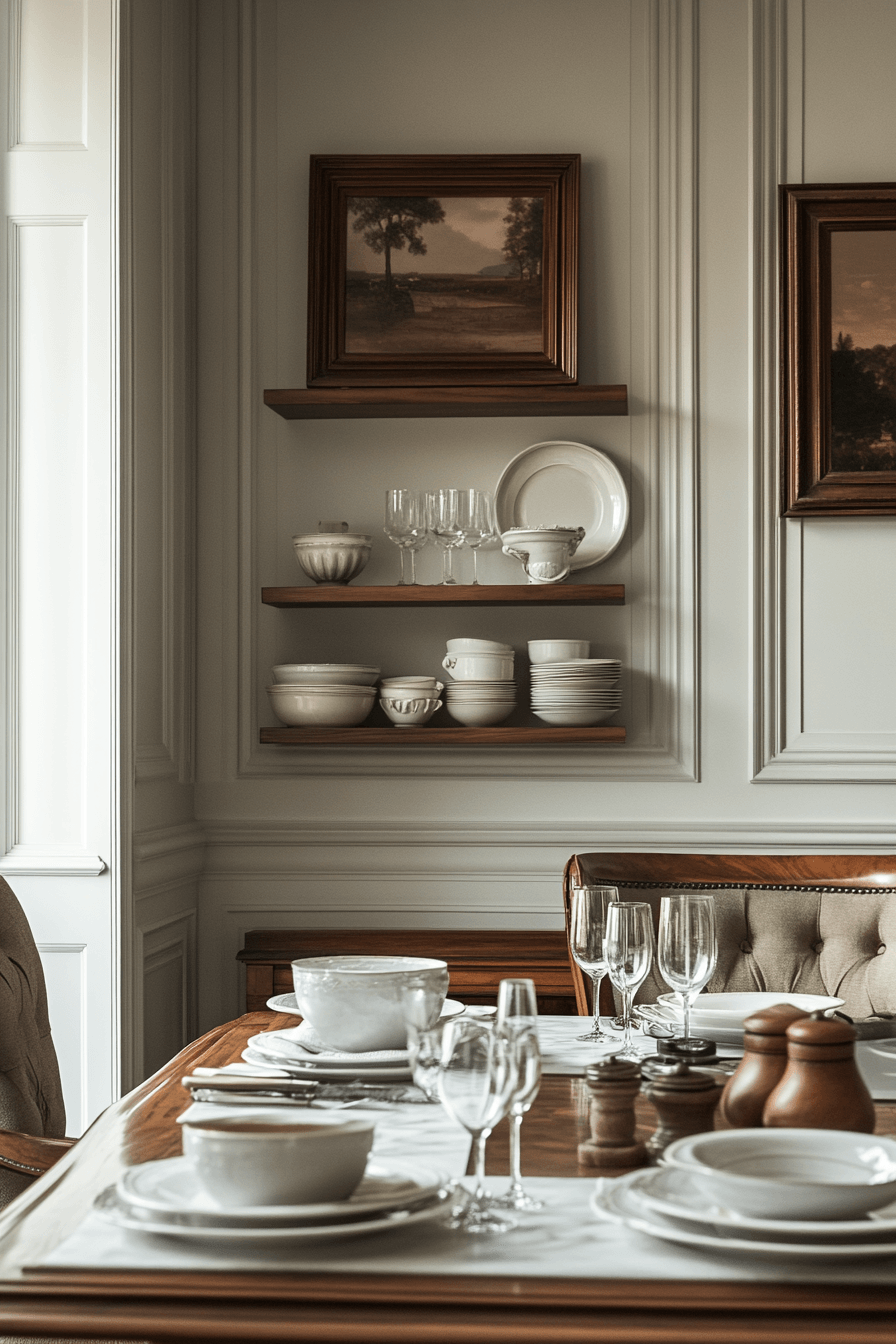
Floating shelves add airy practicality to a neoclassical dining room without disrupting symmetry. Mounted against paneled walls, they display curated decor or dinnerware. Coordinated finishes maintain cohesion. Minimal styling preserves elegance. The shelves introduce lightness to formal architecture. Click to style your neoclassical dining room with graceful display space!
🎨 Steal This Look
- Paint Color: PPG Delicate White PPG1001-1
- Furniture: mahogany dining table with turned legs, upholstered host chairs with nailhead trim
- Lighting: crystal chandelier with candle-style bulbs, brass picture lights above shelves
- Materials: painted wood paneling, polished brass hardware, marble shelf surfaces, gilded frames
There’s something quietly luxurious about floating shelves that seem to hover against formal paneling—they let your eye rest while still giving you space to rotate beloved objects.
27. Framed Fabric Luxury
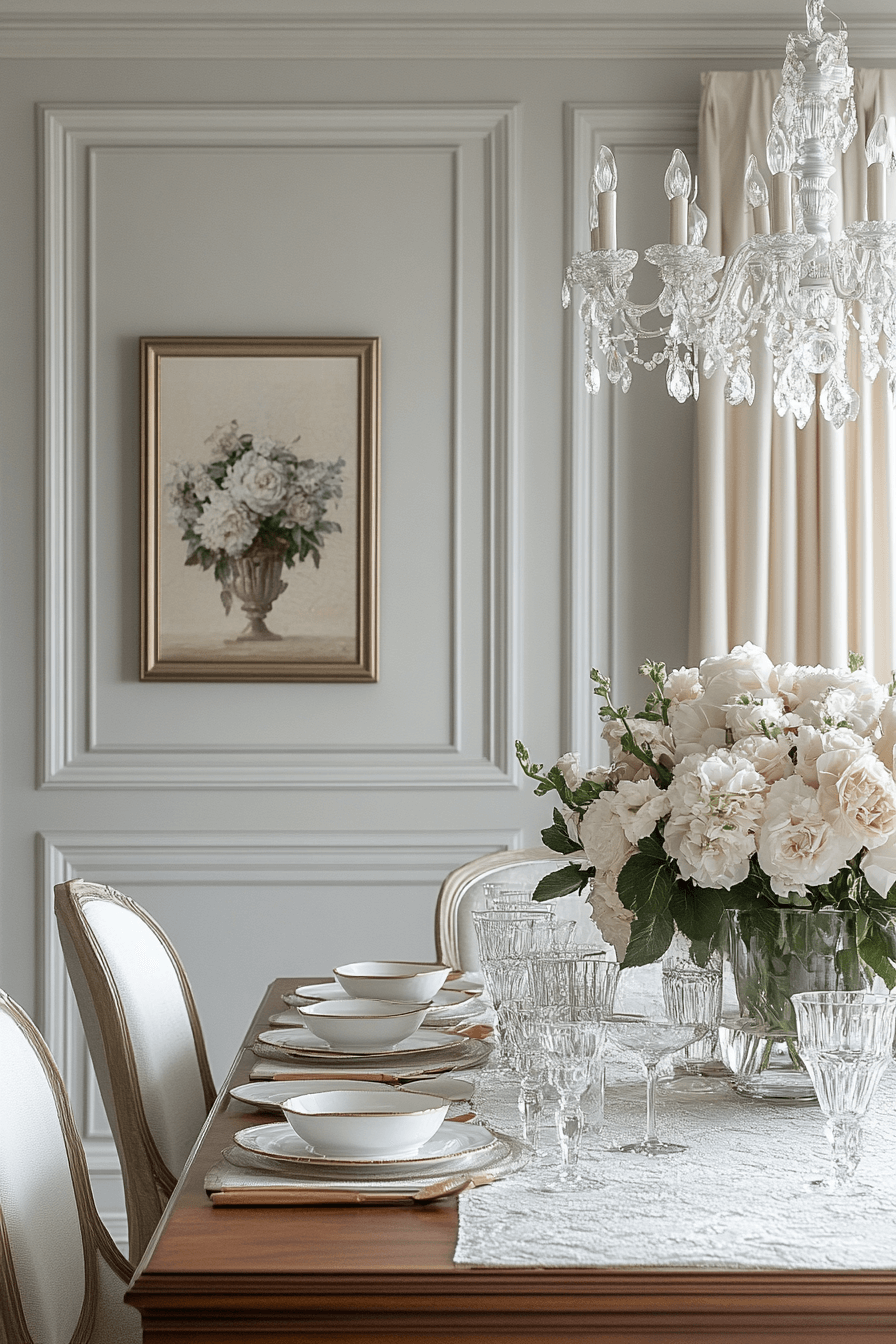
Framed fabric wall panels create layered softness in a neoclassical dining room. Silks, velvets, or woven linens mounted within molding enhance warmth. These panels add acoustic comfort and visual richness. Paired with crystal lighting and antique furniture, the room feels luxurious. The effect is intimate yet stately. Tap to drape your neoclassical dining room in quiet opulence!
🖼 Steal This Look
- Paint Color: Dunn-Edwards Swiss Coffee DEW 341
- Furniture: mahogany pedestal dining table with carved legs, upholstered host chairs in sage velvet, antique sideboard with brass hardware
- Lighting: cut crystal chandelier with candle-style bulbs, brass wall sconces flanking fabric panels
- Materials: silk and velvet wall panels in deep olive and gold, gilded picture molding, honed marble floors, antique brass accents
There’s something quietly decadent about walking into a dining room where the walls themselves are dressed for dinner. It feels like eating inside a jewel box.
Conclusion
A neoclassical dining room transforms every meal into an occasion worth savoring. With grand chandeliers, classical columns, ornate ceiling details, and formal table settings, these spaces combine architectural grandeur with warm hospitality. These 27 ideas demonstrate how neoclassical design creates dining rooms that are both breathtakingly beautiful and perfectly functional for gathering with loved ones. Let these inspirations guide you toward creating a dining room that makes every dinner feel like a royal feast.
Conclusion: Create Your Own Royal Dining Experience
Your neoclassical dining room is now ready to host meals that feel like grand royal banquets, where every dinner becomes a celebration of timeless elegance and refined taste. These 27 neoclassical dining room ideas have shown you how to transform an ordinary eating space into a palace-worthy setting that honors classical grandeur while embracing modern hospitality.
The beauty of neoclassical dining design lies in its ability to make every meal special, whether it’s an intimate family dinner or a grand celebration. From the moment you enter the room, the classical columns, crystal chandeliers, and marble surfaces create an atmosphere that elevates even the simplest meal to royal status.
Start your transformation with statement pieces that capture the essence of neoclassical grandeur—a magnificent chandelier, elegant dining chairs, or a marble-topped table that anchors the space. Your dining room awaits its transformation into a space where every meal feels like dining with royalty, and every gathering becomes a cherished memory of elegance and warmth.