Image Credit @Travel O Cafe
A Cape Cod beach bonfire sounds perfect until you show up with firewood and realize you need a permit.
Most people don’t know this until it’s too late.
You’re standing on the sand at sunset, your family’s excited, the temperature’s dropping, and then a ranger appears asking for paperwork you don’t have.
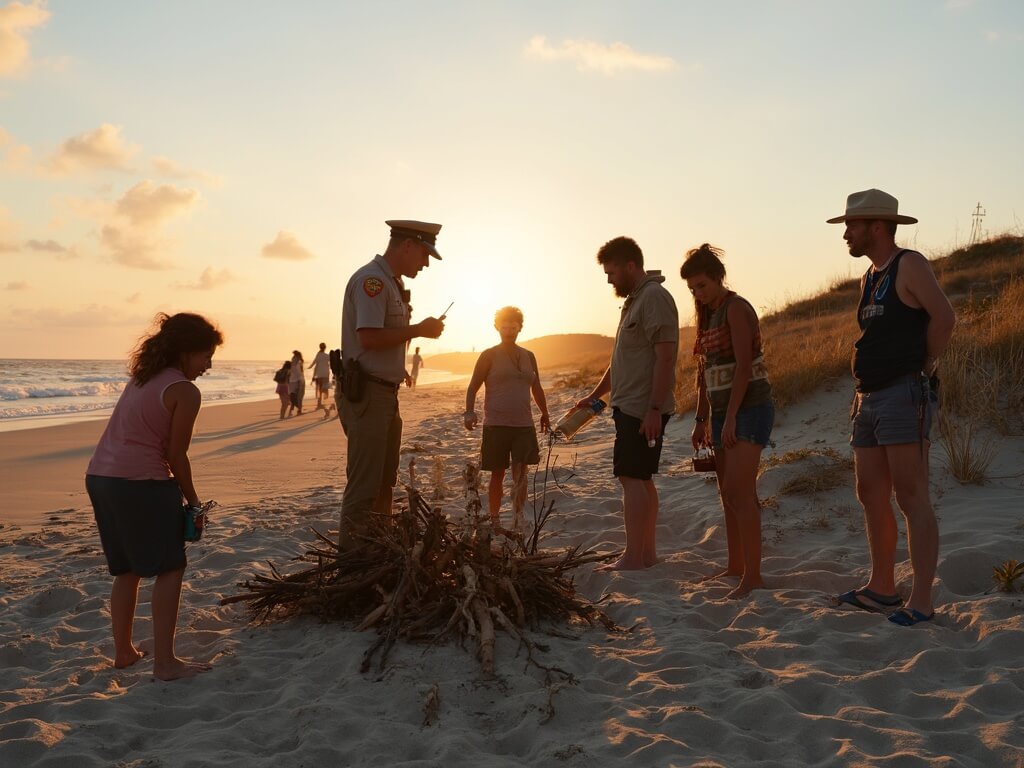
Image Credit @Travel O Cafe
This is where I stepped in two summers ago.
I’d driven four hours from Boston with my partner and three friends, convinced any beach would work for a fire.
We’d packed everything—wood, blankets, marshmallows, the works.
We arrived at Race Point in Provincetown around 5 PM, started gathering driftwood, and were basically told to stop immediately by a park official.
Turns out Race Point has strict permit requirements during peak season.
I was genuinely frustrated, but it taught me something valuable: Cape Cod takes beach bonfires seriously, and for good reasons.
That experience led me to understand the entire system, and honestly, once you know how it works, getting a permit is dead simple.
Why Cape Cod Cares So Much About Beach Bonfires (It’s Not Just Red Tape)
Cape Cod National Seashore protects over 43,000 acres of coastline.
That includes dunes, wildlife habitats, and nesting areas for threatened species like piping plovers.
An uncontrolled beach bonfire doesn’t just risk property damage or personal injury—it can destroy ecosystems that took decades to restore.
The regulations exist because the alternative is chaos.
Without rules, overcrowding on fragile beaches would become inevitable.
Fire safety matters too.
Wind patterns change quickly near water, and a 3-foot flame can become a problem in seconds.
Permit systems cap how many fires happen simultaneously on each beach, which keeps things manageable.
Environmental protection and public safety aren’t boring bureaucratic nonsense—they’re genuinely necessary.
But here’s the thing: getting a permit isn’t punishment.
It’s just a simple process you need to understand beforehand.
The Reality of Beach Bonfire Permits (They’re Easier Than You Think)
I wasted hours researching this unnecessarily.
The permit system sounds complicated when you’re reading through official documents, but it boils down to one fact: there are designated beaches where fires are allowed, and you need approval before you light one.
That’s it.
No mystery, no hidden tricks.
You have three main options depending on where you want to go.
Image Credit @Travel O Cafe
Option 1: Cape Cod National Seashore Beaches
These are the famous ones.
Race Point and Herring Cove in Provincetown get the most attention, but there are others too—Head of the Meadow in Truro, Lecount Hollow and Newcomb Hollow and White Crest in Wellfleet.
National Seashore beaches have limited permit availability each day.
During peak season (late June through Labor Day), permits are genuinely competitive.
I’ve heard from locals that Race Point and Herring Cove can sell out in the morning if you call.
The permit system works like this:
- Call or visit Salt Pond Visitor Center in Eastham (508-255-3421) or Province Lands Visitor Center in Provincetown (508-487-1256)
- Permits are issued up to three days in advance
- In-person requests get priority over phone calls
- You’ll need your vehicle license plate, local address, contact number, and group size
Option 2: Town-Managed Beaches
This is where things get different depending on which town you choose.
Wellfleet’s beaches (Newcomb Hollow, White Crest, Maguire Landing at Lecount Hollow) have their own system.
You must be a Wellfleet resident or have a valid Wellfleet parking permit, and you need to be 18 or older.
Permits are available online on a first-come, first-served basis.
The advantage here is simplicity—everything’s digital.
The disadvantage is you need proof of residency or the right parking permit beforehand.
Truro’s approach is slightly different.
Head of the Meadow requires you to be a Truro resident or staying in Truro (meaning you’ve booked accommodation there).
Permits cost just £10 per fire and don’t get refunded, but availability tends to be better than National Seashore beaches.
You apply in person or by phone.
Sandy Neck Beach Park in Barnstable is another option with its own gatehouse system.
Permits are required from April through October, and they handle both ORV and campfire permits.
Option 3: Private Resorts (The Luxury Route)
Ocean Edge Resort & Golf Club offers private beach fires for guests and club members.
You book 24 hours in advance through the concierge.
They set everything up—chairs, the fire itself, even s’mores ingredients—and fires run from 6 to 9 PM.
It’s not cheap, but if you’re already staying there or you value convenience over cost, it eliminates the permit uncertainty entirely.
The key takeaway here is simple: know which beach category you’re targeting before you plan anything else.
Are you committed to a National Seashore experience?
Or would a town beach work just as well?
That choice determines your entire approach.
Where Exactly Can You Light a Fire? (The Complete Beach List)
Here’s where confusion typically starts.
Not every beach on Cape Cod allows bonfires.
In fact, most don’t.
The permitted beaches are clustered in specific areas, and knowing this saves you wasted trips.
National Seashore Designated Beaches:
- Race Point (Provincetown)—the most famous, the most crowded, sunset views are genuinely spectacular
- Herring Cove (Provincetown)—equally famous, slightly less crowded than Race Point
- Head of the Meadow (Truro)—smaller, quieter, good if you prefer fewer people
- Lecount Hollow (Wellfleet)—bit further north, tends to have decent availability
- Newcomb Hollow (Wellfleet)—similar vibe to Lecount Hollow
- White Crest (Wellfleet)—the northernmost option, arguably the most natural feel
Town Beaches:
- Newcomb Hollow, White Crest, and Maguire Landing (all Wellfleet)
- Head of the Meadow (Truro)
- Sandy Neck Beach Park (Barnstable)
The reason I’m listing some beaches twice is important: some beaches fall under both National Seashore and town jurisdiction.
This means you technically have flexibility in which permit system you use.

Image Credit @Travel O Cafe
For Race Point and Herring Cove, you must use the National Seashore system—there’s no alternative.
But for places like Newcomb Hollow or White Crest, you could theoretically apply through either system.
In practice, locals tend to use their town system if they’re residents, since it’s often simpler.
Key Detail About Seasonal Availability:
Peak season (late June through Labor Day) is when permits matter most.
During off-season months, some beaches don’t require permits at all—it varies by location.
This means if you’re flexible on timing and want to avoid the permit hassle, visiting Cape Cod in May or September becomes genuinely appealing.
You get similar weather, fewer crowds, and potentially zero bureaucracy.
The Permit Application Process (Actually Straightforward Once You Know It)
Let me walk you through exactly what happens.
For National Seashore Permits:
- You contact either visitor centre by phone or show up in person.
- In-person requests get priority, which is why showing up early matters.
- You provide:
- Your vehicle’s license plate
- A local address (even if it’s a hotel or rental)
- Your contact number
- How many people are in your group
They check availability for your preferred date and beach.
If there’s space, you get a permit.
If not, they’ll suggest alternatives or other dates.
The permit itself is simple—basically a confirmation you can show if asked.
You can request up to three days in advance, so technically you could call Monday for a Wednesday fire.
For Town Permits (Wellfleet):
Everything’s online if you’re using their system.
You apply first-come, first-served, which means timing matters.
Sites often open at 8:30 AM for applications.
If you’re serious, you’d be ready right then.
Non-residents without a parking permit can’t access this system, so this option only works if you’ve got residency or the right paperwork.
For Town Permits (Truro):
You call or show up in person.
They verify you’re either a resident or staying in Truro (you’d need to show proof, like a hotel confirmation).
The £10 fee is nonrefundable—you’re committed once you pay.
For Private Resorts:
You contact the concierge, book your time slot, and show up.
No application drama.
The real friction point is National Seashore permits during peak season.
Availability genuinely runs out some days.
If you’re visiting in August and want Race Point specifically, you might need backup options ready.
The strategy I use now is calling first thing in the morning, having three preferred dates ready, and being willing to shift if one beach is full.
It works maybe 80% of the time.
Critical Rules You Must Follow (Or Face Real Consequences)
The moment I understood the actual rules, everything clicked into place.
These aren’t suggestions.
They’re enforced.
Time Restrictions:
Fires must happen between 6 PM and 11 PM on most beaches.
Race Point and Herring Cove specifically require fires to be extinguished by 11:30 PM.
Size Limits:
Flames cannot exceed 3 feet tall.
No portable fire pits allowed—everything must be built directly on open beach sand.
Location Requirements:
Fires must be on open beach sand, not in vegetated areas or at the base of dunes.
Fuel Rules:
Only clean, dry firewood is permitted.
No accelerants, no pressure-treated wood, no wood with nails, no construction materials.
Glass containers aren’t allowed on any beach—broken glass ruins everything.
Fireworks are explicitly banned (Massachusetts state law).
Extinguishing Requirements:
You must extinguish fires with water, not sand.
You stir the ashes thoroughly before leaving.
You don’t leave hot coals buried.
Penalties:
Initial violation fine is £50.
Fireworks violations carry additional fines.
These aren’t small fees designed to be ignored—they’re real consequences that go on records.
I watched someone get fined after attempting to keep a fire going past 11 PM (they claimed they didn’t see the time).
The ranger was sympathetic but unmovable.
The bottom line: these rules protect the environment, prevent disasters, and keep beaches usable for everyone.
Following them isn’t inconvenient—it’s basic respect.
—
Once you understand the permit landscape and safety rules, planning actually becomes straightforward instead of stressful.
If you’re looking for more memorable coastal adventures, consider checking out watching the sunrise from Cadillac Mountain or walking the beaches of the Oregon Coast.
What Most People Get Wrong About Timing (And How to Actually Plan a Bonfire)
The biggest mistake I see is people picking a beach first and then trying to fit a permit around it.
That backwards approach creates unnecessary frustration.
You should instead ask yourself: when do I actually want to have this fire?
That timing determines everything else.
Peak season runs late June through Labor Day.
During these months, permits are competitive, availability drops fast, and you’re competing with thousands of other visitors.
If you’re serious about Race Point or Herring Cove during August, you’re essentially playing a lottery you might lose.
Off-season visits (May, September, early October) flip this entirely.
Permits are plentiful or non-existent depending on the location.
Weather stays decent, and the beach experience is genuinely calmer.
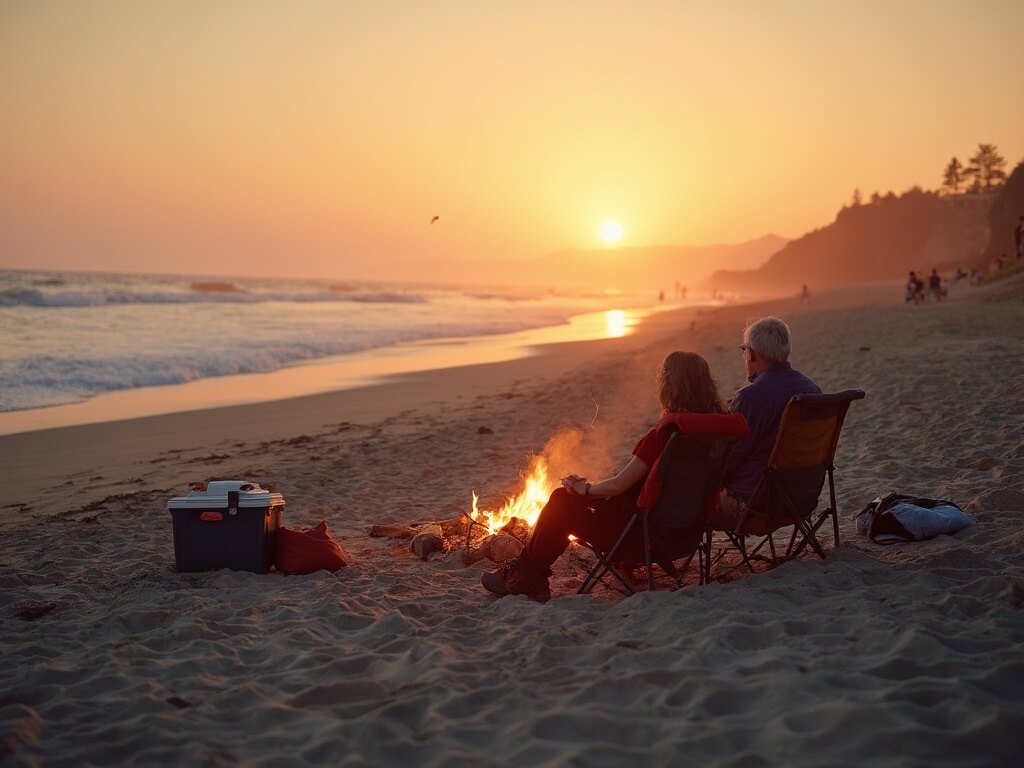
Image Credit @Travel O Cafe
I stumbled into this discovery by accident.
A work trip got postponed, and I ended up visiting Cape Cod in late May instead of my planned July dates.
I showed up at Race Point expecting the usual permit battle and learned they weren’t even requiring permits yet.
I had a fire that night with maybe five other groups on an entire 3-mile beach.
The sunset was identical to what I’d experienced in summer.
The temperature was comparable.
But the entire vibe was different—peaceful instead of crowded, accessible instead of stressful.
Here’s the practical timing strategy:
If you visit May through mid-June or mid-September through October, permits are significantly easier to obtain or unnecessary entirely.
Late June through early September means you’re working within peak-season constraints—permits disappear fast, beaches fill up, and you need backup plans.
Weekdays are always better than weekends during peak season.
Friday nights are contested.
Tuesday evenings are wide open.
The permit offices themselves maintain specific hours—Salt Pond Visitor Center and Province Lands Visitor Center both close by late afternoon, so morning calls matter.
Calling at 8:30 AM when things open beats calling at 3 PM when things are depleted.
Early July is paradoxically easier than mid-August because summer crowds haven’t fully arrived yet.
August is the genuine crunch period.
If you’re planning around school schedules, aim for early July if possible, or accept that mid-to-late August will require exceptional flexibility.
What You Actually Need to Bring (Beyond Just Firewood)
I made the mistake of showing up with only wood and matches once.
Turns out that’s barely half of what makes a bonfire actually enjoyable.
The essentials list looks like this:
- Firewood—Bring more than you think you’ll need. Avoid driftwood due to unhealthy smoke. Use local suppliers.
- Water for extinguishing—gallon jug or access to the ocean.
- Beach chairs or blankets—essential for comfort.
- Long-sleeve clothing and insect repellent—sand fleas are real.
- S’mores supplies—optional but delightful.
- Extra blankets—evenings cool down quickly.
- A flashlight or headlamp—helps with safety and navigation at night.
- Tide information—printed or digital to avoid getting stranded.
- Trash bags—pack out everything.
- Waterproof lighter or matches.
- Entertainment—music, games, cards.
- Sunscreen—still needed in the evening.
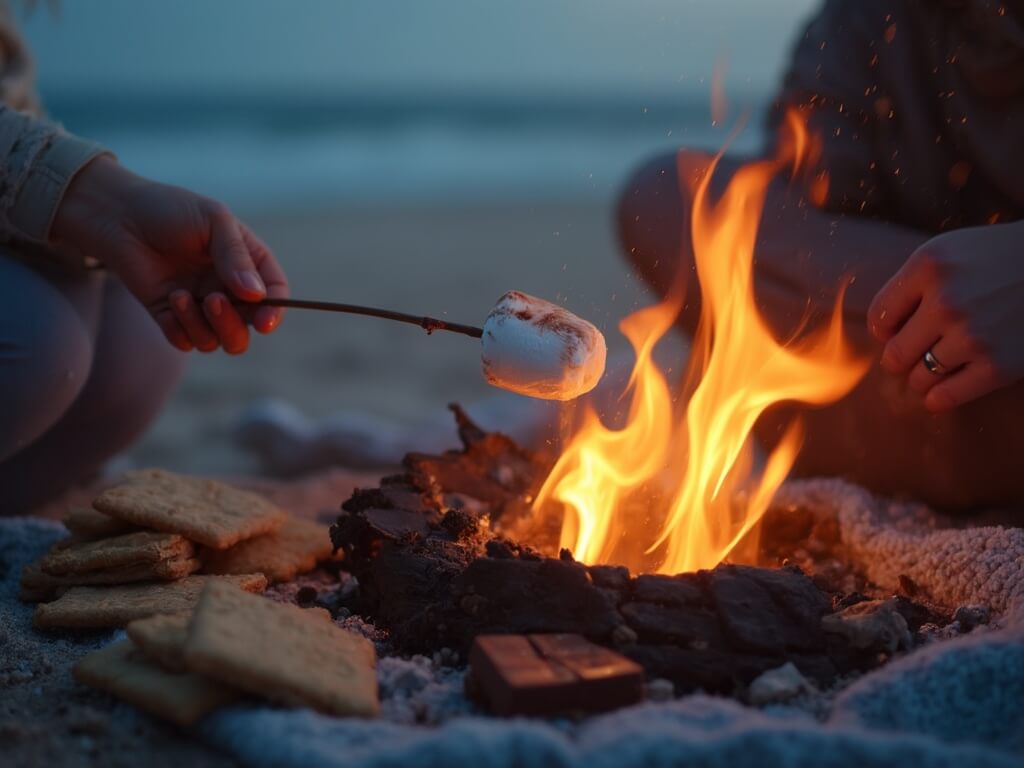
Image Credit @Travel O Cafe
What you don’t need: Portable fire pits, propane gear, or grills. Fires must be built on open sand per permit rules.
The S’Mores Reality Check (It’s Not Actually Perfect)
Marshmallows are surprisingly hard to roast well.
Hold them at a distance where you can barely stand the heat on your hand. Rotate constantly. Let cool before assembling.
Use good chocolate. Toast crackers if you want. But don’t let s’mores define your success.
They’re a bonus, not the main event.
Making This Experience Actually Memorable (Beyond the Obvious)
Here’s what separates forgettable from unforgettable bonfires:
- Conversation starters—bring printed cards with engaging prompts.
- Invest in the sunset—arrive early to experience the shift from light to dark.
- Stay later—post-9:30 PM magic when crowds disappear.
- Curate a playlist—low volume, ambient music enhances the mood.
- Stay for the stars—Cape Cod skies offer stunning constellations.
- Bring a first-timer—their enthusiasm enhances everyone’s vibe.

Image Credit @Travel O Cafe
Dog-Friendly Options (If Your Pet’s Coming Along)
Some beaches allow dogs during bonfire hours, including:
- Newcomb Hollow and White Crest (Wellfleet)
- Head of the Meadow (Truro)
Always check pet policies ahead, especially for Cape Cod National Seashore Permits and Reservations.
The Reality of Getting Rejected (And Your Backup Plans)
Rejections happen. Here’s what to do:
- Shift date by a day.
- Try nearby beaches—Race Point vs. Herring Cove.
- Use town-managed beaches like Wellfleet or Truro.
- Consider mid-week options.
- Explore private resort options like Ocean Edge Resort.
- Enjoy the beach anyway—sunsets still rock without fire.
What Environmental Responsibility Actually Means Here
Beaches are ecosystems first. Respect that:
- Leave no trace.
- Stay off vegetation.
- Give wildlife space.
- Follow fire size limits.
- Respect permit rules.
The End-of-Evening Reality (Cleanup Actually Matters)
The actual cleanup protocol:
- Extinguish with water, stir, repeat.
- Scatter ashes—don’t bury them.
- Pack out all debris.
- Leave no fire pit markers.
Cleanup takes 15–20 minutes. It’s your responsibility.
Alternatives If Bonfires Aren’t Working Out
- National Seashore storytelling fires—community-led, no permits.
- Sunset beach gatherings without fire.
- Picnic dinners.
- Sunset walks.
- Private resorts or rentals with fire pits.
Real Talk: When Bonfire Permits Save You Money and Hassle
Permits are not obstacles—they’re security.
Cost is minimal or free. Saves you from fines and stress.
Without permits, you’re gambling with your evening.
Final Preparation Checklist (So You Actually Remember Everything)
Two days before:
- Confirm permit, weather, group plans.
One day before:
- Buy firewood, prep food, pack non-perishables.
Morning of:
- Re-check weather, charge devices, fill water.
Two hours before:
- Apply sunscreen, gather final items, use bathroom.
At the beach:
- Note tides, set up, stay safe.
During fire:
- Engage your group. Monitor time. Keep it meaningful.
Cleanup:
- Start 45 minutes early. Extinguish, clean, restore.
What Happens If You Get Caught Without a Permit
Rangers are active.
Fines are real—£50 and up.
Repeat offenses escalate. Some lead to records or higher penalties.
Permits are protection, not bureaucracy.
Why This Matters Beyond Just Your Evening
If people skip permits, access gets revoked for everyone.
We protect the bonfire tradition by following basic rules.
Cape Cod National Seashore Permits and Reservations exist for ecosystem protection too.
The Actual Truth About Cape Cod Bonfire Permits
Cape Cod bonfire permits aren’t obstacles. They’re invitations.
They provide legal access, safety enforcement, and peace of mind.
When you treat permits as enablers and not limits, you get the experience you’re dreaming of.
Plan your bonfire with a permit. Respect the space. Enjoy the magic.
Learn more about Beach Fire Permit Information now.