Image Credit @Travels of Adam
You’ve probably heard the stories. Strange roadside attractions scattered across America that make you wonder who decided these things were worth building. The world’s largest ball of twine in Kansas falls into that category, except it’s nothing like you’d expect.
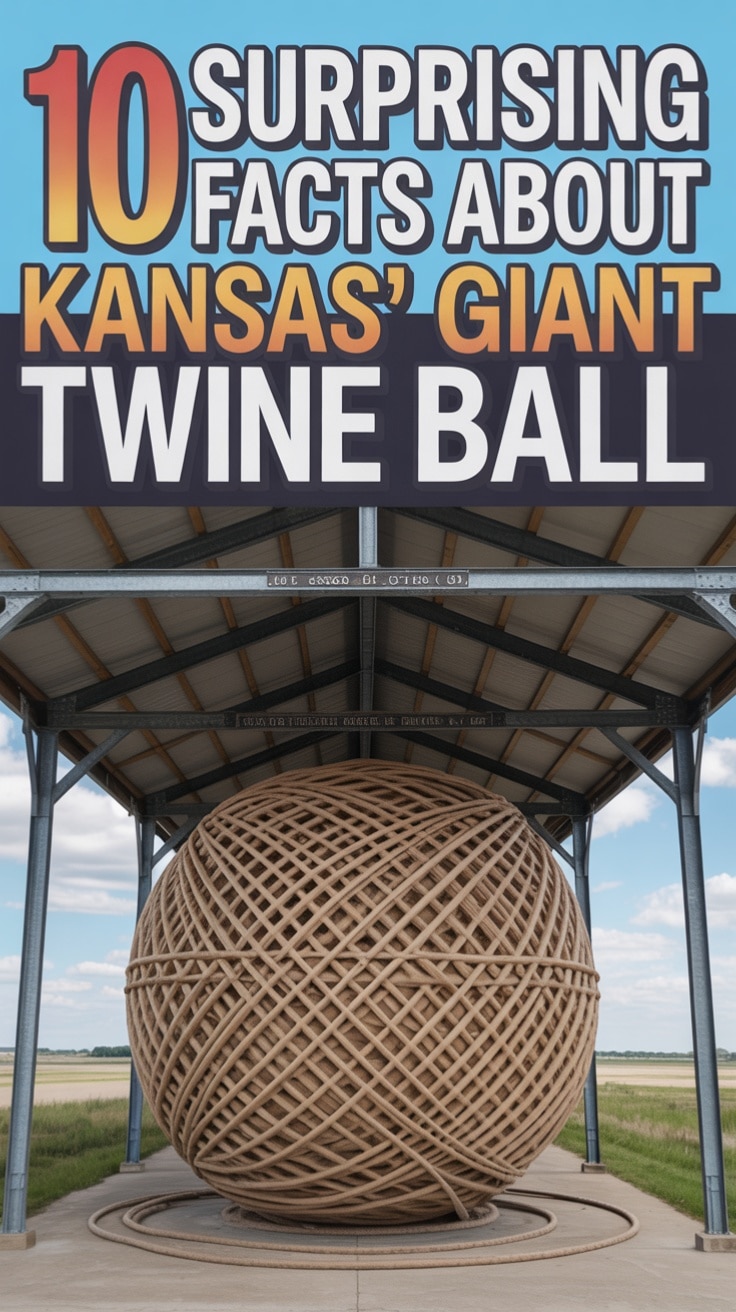
This isn’t some corporate theme park or polished tourist trap. It’s a 27,000-pound ball of sisal twine sitting under a modest pavilion in a town most people drive past without thinking twice about.
But here’s the thing: it’s been growing for over seventy years, and thousands of people actively make the detour to add to it. That’s not random. That’s community.
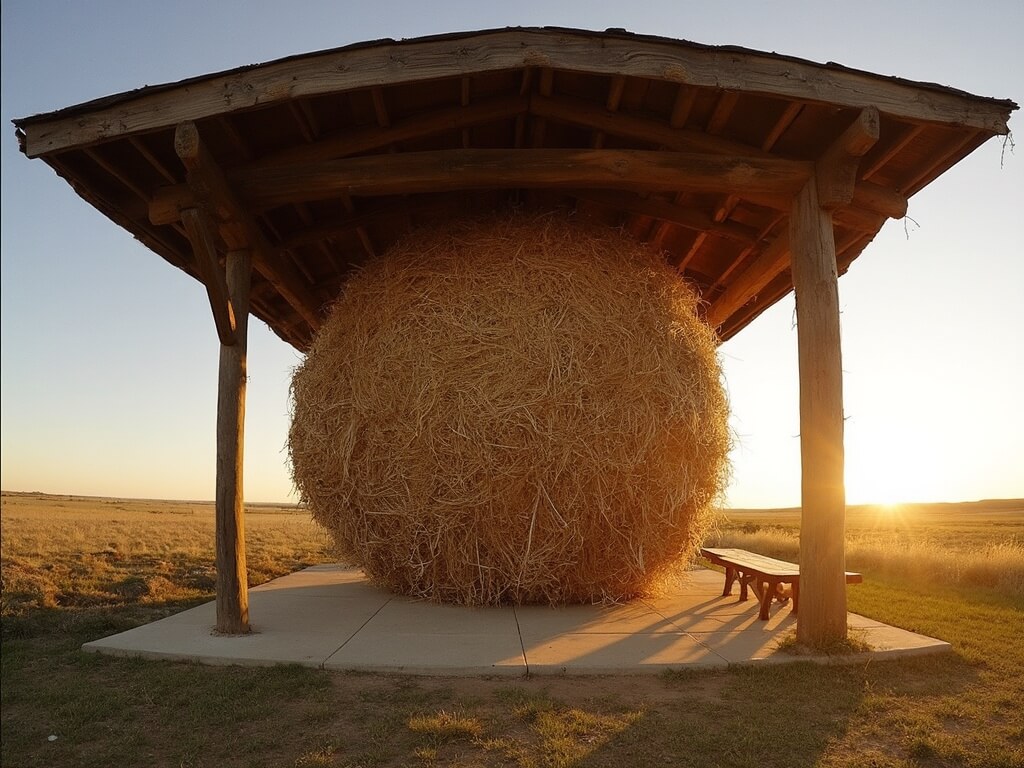
Image Credit @Travels of Adam
How a Farmer’s Christmas Eve Idea Became Kansas’s Most Unusual Landmark
Picture this: it’s Christmas Eve, 1953. Frank Stoeber, a local farmer in Cawker City, Kansas, decides to wind some twine into a ball. Nobody thought it would become the world’s largest ball of twine. He probably didn’t either.
What made Stoeber’s creation different from other oddball roadside attractions was never the novelty—it was the people. From the very beginning, neighbours helped him wind. Families gathered around to contribute. The ball grew not because one man obsessed over it in isolation, but because the entire town made it their collective project.
That community spirit stuck around. In 1961, they moved the ball to a public shelter right at 804 Locust Street so visitors could actually see it. They didn’t hide it away. They showcased it.
By 2025, the thing has reached epic proportions: 14.6 feet in diameter, 46 feet in circumference, and weighing over 27,000 pounds. All from sisal twine, wound by hundreds of hands over decades. The numbers alone don’t capture what makes this special. It’s the story behind them that matters.
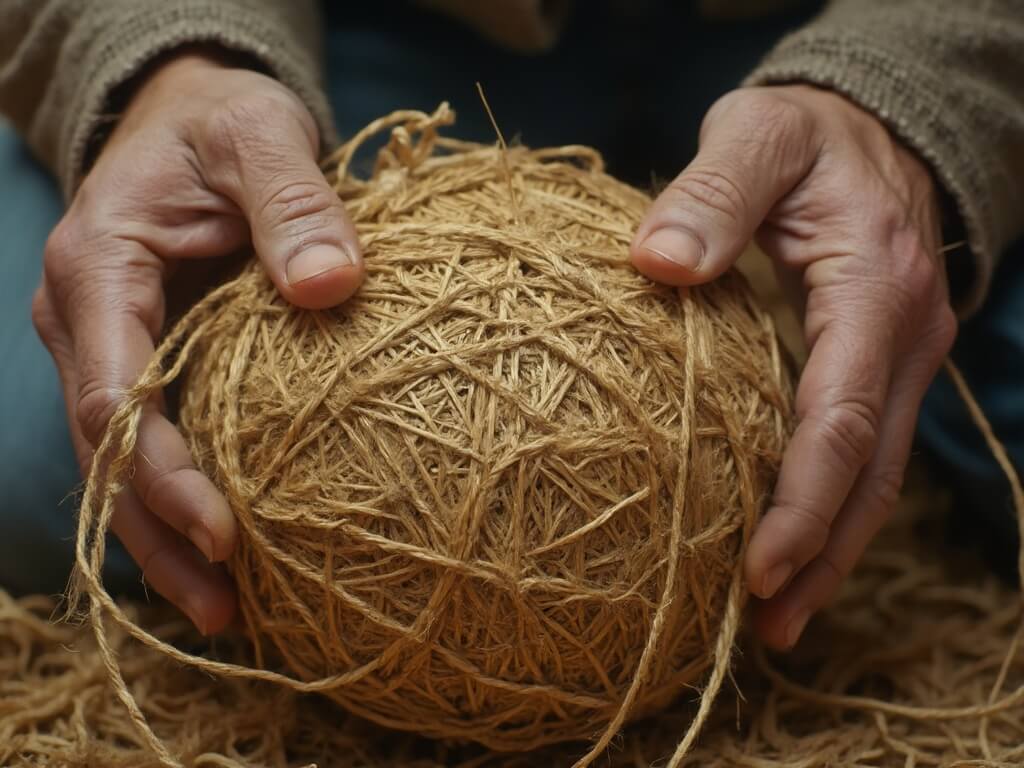
Image Credit @Travels of Adam
I’ve visited plenty of roadside attractions over the years, and most feel like museum exhibits—you observe from behind a rope. When I showed up at the Cawker City twine ball during the Twine-athon event in August 2019, I expected the same disconnect. Instead, I found locals standing next to tourists, actively helping visitors wind fresh twine onto the ball.
An elderly man who’d been involved since the 1970s spent forty minutes telling me about Frank Stoeber and how the project had changed their small town’s identity. That’s not something you can fake. That’s authentic community pride.
What Actually Makes This a Roadside Attraction Worth the Detour
Here’s where most people get confused about the Cawker City twine ball. They think it’s competing with other “world’s largest” claims like the one in Darwin, Minnesota. It is and it isn’t.
Darwin’s ball was built by one man, Francis Johnson, and hasn’t grown significantly since the 1970s. Branson, Missouri has a nylon version that’s lighter but still impressively massive. These are all technically true—they’re all real records in different categories.
But the Cawker City ball is unique because it’s still actively growing. Every year, through community events and visitor contributions, this thing gets bigger. It’s not a static monument. It’s a living, evolving symbol of how small towns can create something genuinely memorable without needing million-dollar budgets or corporate backing.
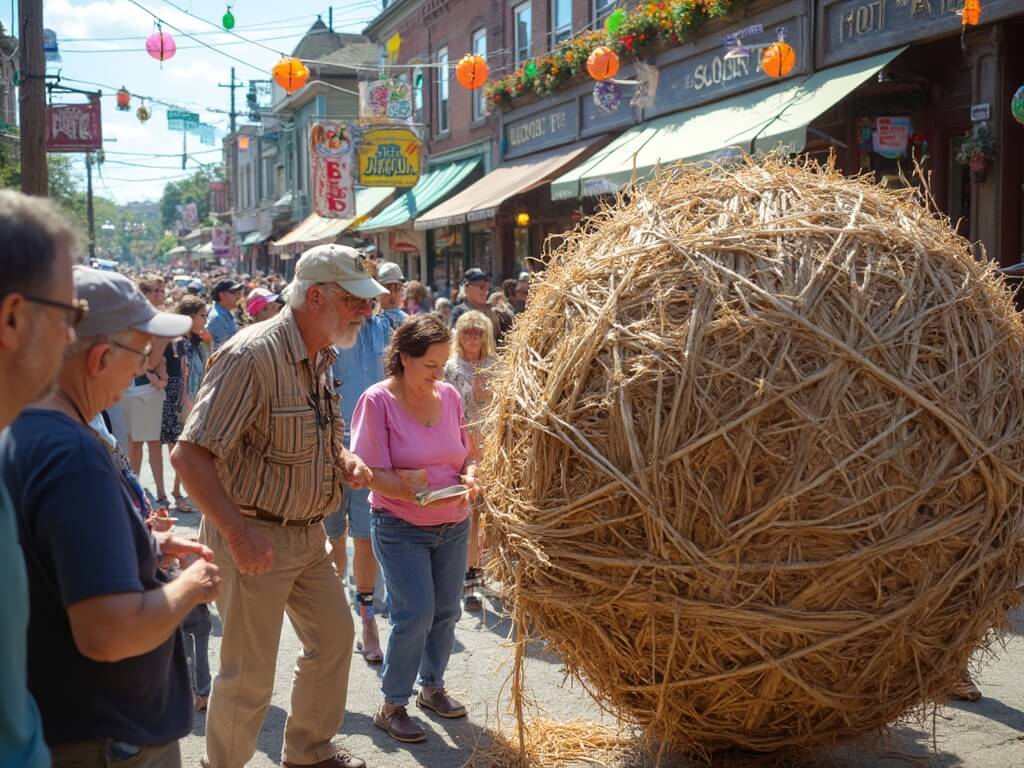
Image Credit @Travels of Adam
The attraction sits under a sheltered pavilion with bench seating, making it comfortable to spend time there without feeling rushed. The local businesses have embraced the identity fully—you’ll see twine ball imagery throughout town, from window displays to locally-made souvenirs. It’s become part of Cawker City’s DNA.
What makes it worth visiting:
- The pavilion shelter lets you view the ball comfortably, regardless of weather.
- You can actually interact with it during special events.
- The photo opportunities are genuinely good—this thing is massive and unusual enough that photos always turn heads.
- The surrounding area has other quirky attractions, so you can make it part of a broader road trip.
- The local charm feels real, not manufactured for tourists.
Where the experience falls short:
- It’s roughly 70 miles north of Interstate 70, which means a real detour off your main route.
- If you’re expecting high-tech exhibits or interactive displays, you’ll be disappointed.
- It’s fundamentally a giant ball of twine—the appeal is in its oddity and backstory, not cutting-edge entertainment.
- The town itself is genuinely small, so dining and lodging options are limited to what you’d find in rural Kansas.
The real question isn’t whether the ball itself is spectacular—it’s whether you appreciate what it represents. If you’re the type who finds meaning in community projects, Americana, and the strange beauty of small-town traditions, you’ll get it. If you need constant stimulation and Instagram-ready spectacle, this might feel underwhelming.
Why August Changes Everything: The Twine-athon Event
The real magic happens the third weekend in August when Cawker City throws the Twine-athon. This isn’t just locals winding a bit more twine—it’s an actual community celebration with parades, events, and the chance for visitors to actively contribute to the growing ball.
During the event, the city provides twine and helps visitors add to the official measurements. There’s something satisfying about physically participating in a seventy-year-old project. You’re not just observing history; you’re becoming part of it.
The event draws tourists from across the Midwest who want that interactive experience. For many visitors, this is what transforms the attraction from “weird thing I drove past” into “memory I’ll actually keep.”
If you’re planning a visit, timing it around Twine-athon makes a massive difference in what you’ll experience. The rest of the year, you can still view the ball and contribute through local city hall or nearby shops, but the community energy during the event is completely different.
This small-town celebration supports the local economy in ways that might not be obvious at first glance. Visitors spend money at local restaurants, buy souvenirs designed by residents, and stay at available lodging. For a town of roughly 500 people in rural Kansas, that economic activity matters.
The event also keeps the attraction relevant in an era where most tourism is concentrated around major cities and national parks. Cawker City has turned geographic isolation into an advantage by embracing the quirk.
Looking for more offbeat Americana adventures? Check out our guide to spending a day at Mall of America in Minnesota or taking a lighthouse tour in Maine.
Planning Your Trip: The Practical Guide to Visiting Cawker City
Getting to the twine ball isn’t complicated, but it does require intention.
The address is straightforward: 804 Locust Street, Cawker City, KS 67430.
If you’re coming from the south, take US Highway 81 north from Salina, then head west on US Highway 24.
The drive itself is unremarkable—flat Kansas plains, wide open sky, the kind of landscape that makes you understand why roadside attractions matter out here.
Most visitors approach from Interstate 70, which means roughly 70 miles of driving north from Wilson, Kansas.
That’s not insignificant, but it’s also not impossible for a weekend road trip.
The real question is whether you’re willing to make that detour, and honestly, that willingness separates tourists from travelers.
Once you arrive, the pavilion is obvious. You won’t miss it. Benches surround the massive ball, giving you comfortable spots to sit and process what you’re looking at. The shelter protects you from Kansas weather, which matters when summer temperatures hit the high 90s or when unexpected thunderstorms roll through the plains.
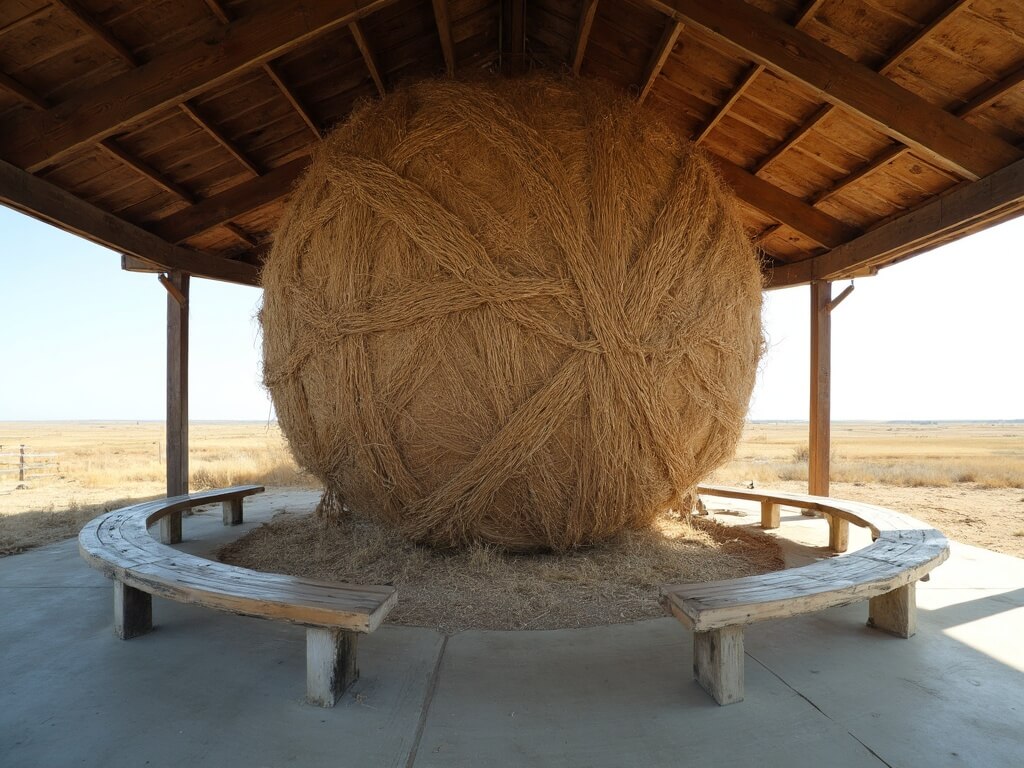
Image Credit @Travels of Adam
What surprised me during my visit was how accessible local guides were. City officials and long-time residents actually want to share the history. They’re not begrudging the attention—they’re proud of what their town has built. That hospitality extends to practical matters too: if you want to contribute twine outside of Twine-athon, you can contact city hall or local businesses to arrange it.
Where the Twine Ball Fits Into a Larger Road Trip
Here’s something most travel guides miss: the Cawker City twine ball doesn’t exist in isolation.
The surrounding region has developed its own quirky ecosystem of attractions, and smart travelers chain them together into a coherent experience.
About thirty miles south sits Lucas, Kansas, home to the Garden of Eden—a deliberately bizarre grassroots art installation built by educator S.P. Dinsmoor starting in 1906. It’s genuinely unsettling in ways that complement the twine ball’s charm. Where the twine ball represents community cooperation, the Garden of Eden represents one man’s uncompromising artistic vision.
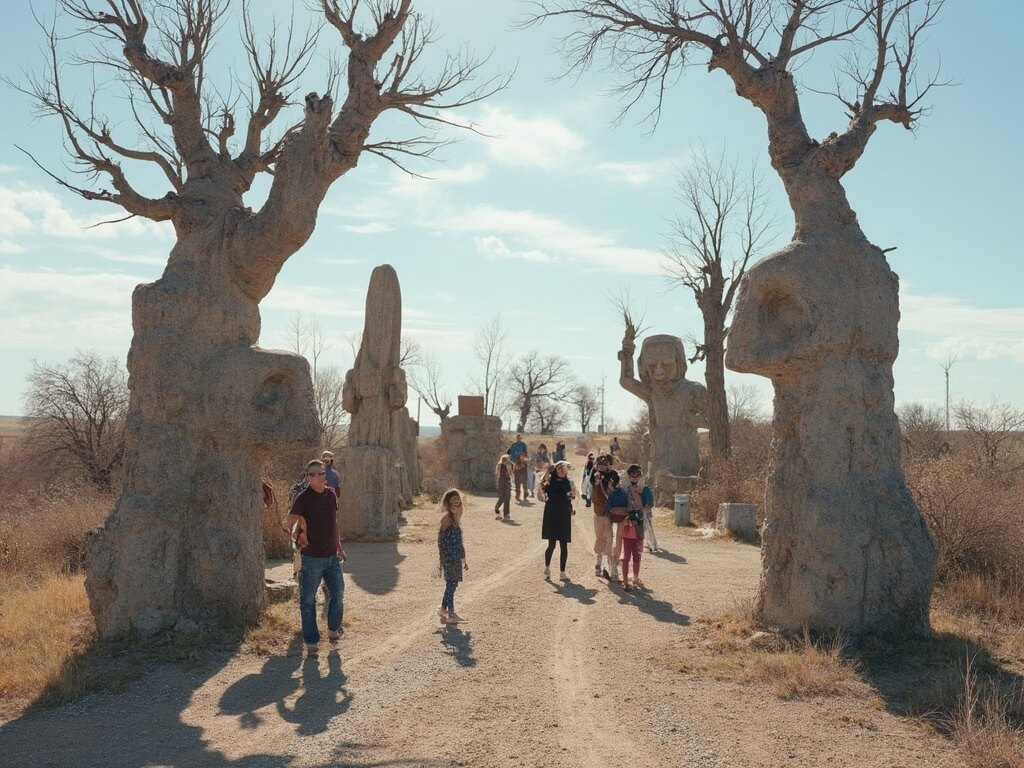
Image Credit @Travels of Adam
In the same general area, you’ll find attractions like the world’s largest toilet bowl (which sounds ridiculous until you see the craftsmanship involved). These aren’t accidents of geography—they’re the accumulated weirdness that happens when small Kansas towns decide to differentiate themselves through oddity.
A full road trip might look like this:
- Start in Salina or Manhattan for decent dining and lodging options.
- Drive north to Cawker City, spend a few hours at the twine ball, grab lunch at a local diner.
- Head south to Lucas for the Garden of Eden experience.
- Explore other micro-attractions in the region.
- Drive back to your starting point with stories that won’t make sense to anyone who wasn’t there.
That itinerary takes one weekend and creates memories that last years. I’ve found that road trips built around multiple quirky attractions work better than focusing on a single destination because each one provides context for the others. They collectively tell a story about American ingenuity, community identity, and the refusal to be forgotten by modernity.
The Infrastructure Question: What Cawker City Gets Right
Running a roadside attraction in a town of five hundred people requires practical thinking.
The pavilion shelter itself seems simple, but it solves multiple problems at once. It protects visitors from weather, provides gathering space, and creates a physical anchor for the community event. Without it, the twine ball would be vulnerable to the elements and the experience would suffer.
Beyond the shelter, local businesses have invested in complementary infrastructure. Souvenir shops offer twine ball-themed merchandise designed by residents, not mass-produced by third-party vendors. That distinction matters because the money stays in the community.
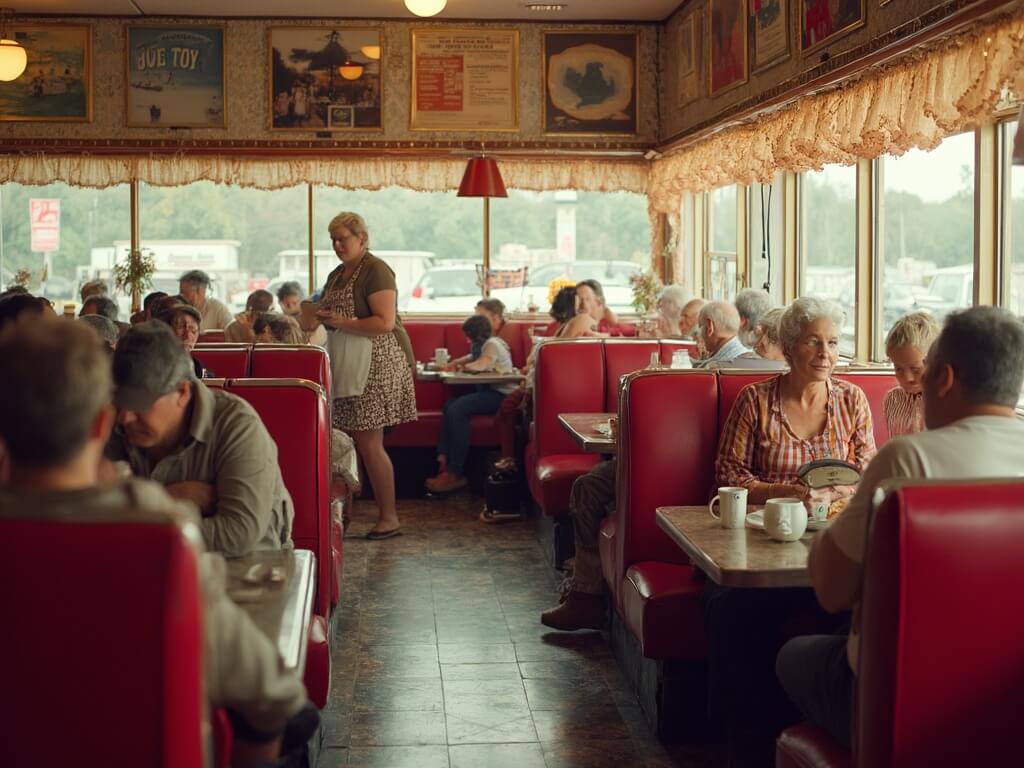
Image Credit @Travels of Adam
What’s interesting is that Cawker City hasn’t tried to over-develop the experience. They haven’t built a visitor center, an attraction museum, or parking structures. The restraint is intentional. Too much infrastructure might transform the appeal into something artificial.
That authenticity is what separates genuine community projects from manufactured tourist experiences. World’s Largest Ball of Twine in Kansas is a testament to minimalism done right.
Why Other Balls of Twine Miss the Point
The comparisons are inevitable, so let’s address them directly.
Francis Johnson’s ball in Darwin, Minnesota is technically larger in some measurements and was constructed by a single individual over decades. That’s genuinely impressive from a personal-dedication standpoint. But the Darwin ball stopped growing in the 1970s. It’s a monument now—something that happened, not something that’s happening.
The Branson, Missouri nylon ball represents a different material choice and construction philosophy. It’s a valid record in its category, but it lacks the community narrative that makes Cawker City special.
Here’s what separates the Cawker City ball from other “world’s largest” claims: it’s still alive.
It grows every year. New people participate. Each Twine-athon adds measurable inches to its circumference. The official measurements are documented and updated, creating a continuous record of growth.
A ball that stops growing becomes a museum exhibit. A ball that keeps growing remains a living project.
Understanding the Economics of Small-Town Attractions
You might assume a town of five hundred people in rural Kansas would struggle to maintain a major attraction.
The reality is more nuanced.
The Twine-athon event, held annually the third weekend in August, generates visitor traffic that has multiplier effects throughout the local economy. When tourists arrive, they spend money on food, lodging, and merchandise.
For a small town, that concentrated spending creates meaningful economic impact.
This isn’t life-changing money for the entire region, but it’s significant for individual businesses. For business owners, the difference between a slow summer month and a month with regular tourist traffic affects their ability to keep doors open.
The Digital Era and the Twine Ball’s Evolving Reach
Something unexpected happened in the last decade: the internet made the twine ball more popular, not less.
Travel blogs, YouTube channels, and social media accounts have featured the attraction extensively. Online searches for “world’s largest ball of twine” return results that mention Cawker City prominently. That digital visibility translates into real visitor numbers.
That organic promotion is worth more than traditional advertising. The challenge going forward is maintaining the authentic experience while managing increased visitor interest.
What the Future Holds for Cawker City’s Unusual Legacy
Projecting forward, the twine ball will likely continue growing incrementally while maintaining its core identity.
What’s notable is that the ball works because it emerged organically from community initiative, not because it was strategically planned as a tourism vehicle. You can’t manufacture the kind of community investment that makes the twine ball special.
The Practical Visitor’s Checklist
- Best time to visit: Third weekend in August during Twine-athon for maximum engagement, though you can visit year-round.
- What to bring: Camera, comfortable shoes, cash for local businesses.
- Physical accessibility: Pavilion has benches; contact city hall for accessibility needs.
- Weather preparation: Kansas summers are hot; check the forecast.
- Local dining: Diner-style food; reservations advised during Twine-athon.
- Lodging: Limited in Cawker City; book in nearby towns early.
- Contribution opportunities: Bring or purchase twine; contact city hall or businesses for off-season participation.
- Photography: Excellent during golden hour; social media sharing encouraged.
- Visit length: 1-2 hours average, more if combining with other attractions.
Why This Matters: The Deeper Story Beyond the Spectacle
The twine ball became a counterforce to the decline of rural coherence and relevance.
Thousands of people have visited specifically to see a community project that’s been growing for over seventy years. That validation justifies the existence of local businesses and sustains local pride.
When I visited during Twine-athon, I observed families making weekend trips specifically for this event. Kids participated in winding twine. That intergenerational transmission of local pride and participation is increasingly rare.
The Takeaway: Why You Should Make the Detour
The world’s largest ball of twine in Kansas isn’t a world-class destination in the traditional tourism sense.
What you will find is authenticity, community pride, and a living example of how ordinary people create something genuinely meaningful over time.
That’s worth the seventy-mile detour from I-70. That’s why thousands of people annually make the drive to Cawker City to see the world’s largest ball of twine.
Explore more offbeat travel experiences:
- Visit the National Civil Rights Museum
- Drive the Hana Highway in Maui
- Walk the Beaches of the Oregon Coast
- Hike to Delicate Arch
- Ride the Great Smoky Mountains Alpine Coaster