Image Credit @Nomadic Chick
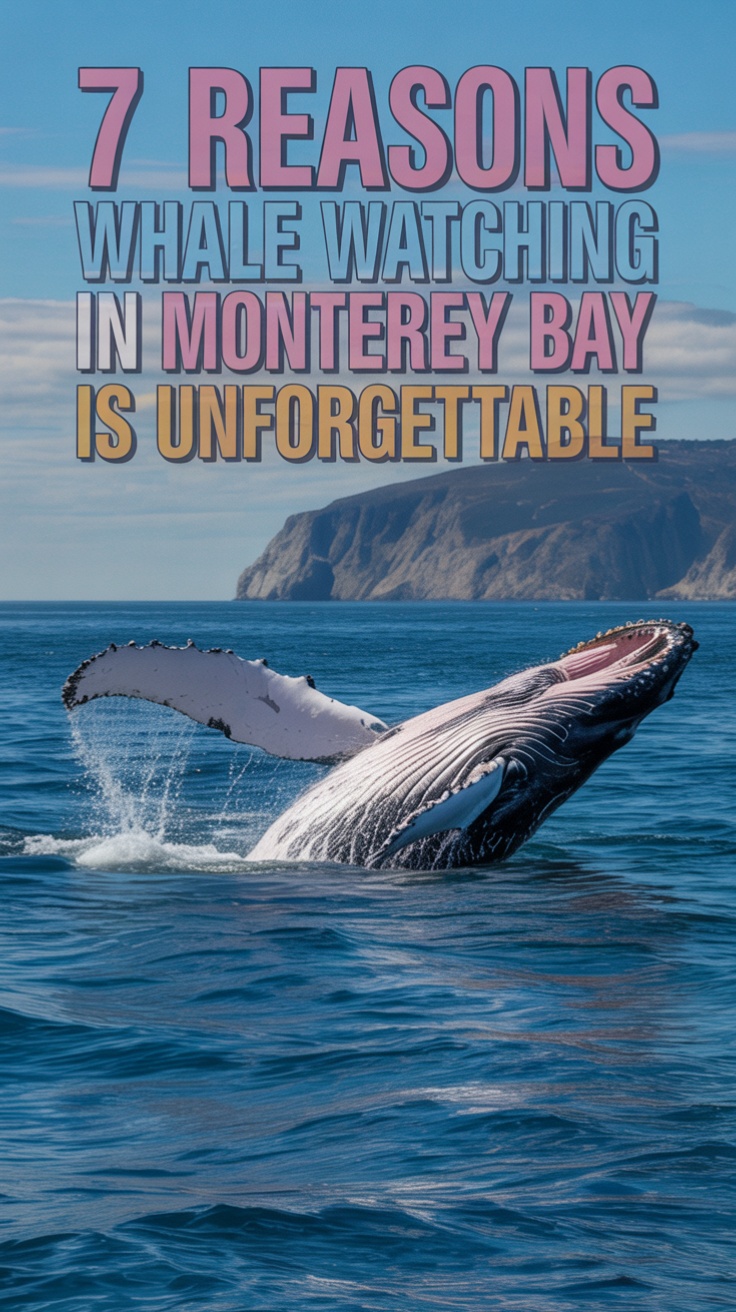
I was skeptical the first time I went whale watching in Monterey Bay, having already done a trip in California where we saw distant spouts and called it a win. About forty minutes into this one, the naturalist whispered something to the captain, the boat shifted direction, and a humpback surfaced less than a hundred meters away.
Why Monterey Bay Wins at Whale Watching (And Most Other Places Don’t)
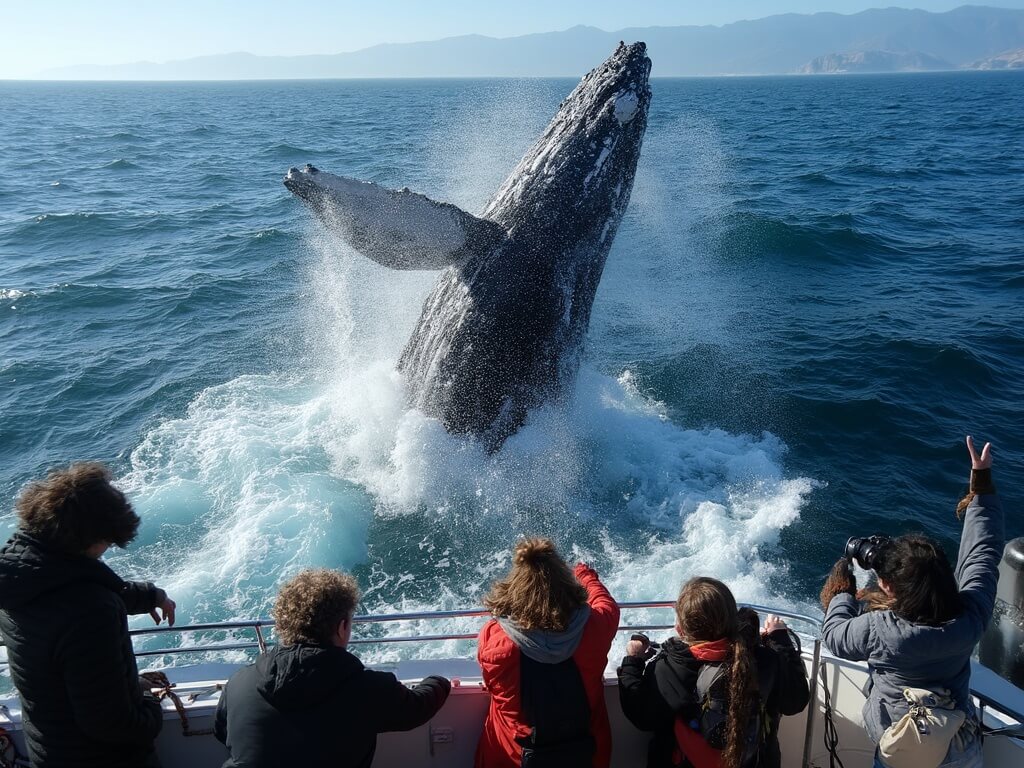
Image Credit @Nomadic Chick
You can watch whales almost anywhere. But you can’t watch them like this almost anywhere.
The Monterey Submarine Canyon creates conditions that are genuinely rare. The canyon funnels nutrient-rich water from the deep ocean toward the shore. This nutrient explosion feeds tiny organisms called krill. Whales follow the krill. It’s a food chain made visible, and it happens within sight of land.
Most whale watching destinations require you to travel 20, 30, sometimes 50 miles offshore to see anything. Not here. Tours rarely venture beyond 12 miles, and many sightings happen within 5 miles of the coast. That means shorter travel time, less time at sea, and better odds of multiple whale encounters in a single trip.
The biodiversity is staggering too. This isn’t just a whale watching destination. You’ll see dolphins, sea lions, sea otters, and seabirds that most people only read about in nature books. I’ve been on tours where we saw three different whale species in a single afternoon. That’s not hyperbole. That’s actually normal here during certain seasons.
Here’s the raw truth: according to reputable Monterey Bay operators, near-daily sightings are the standard, especially during peak migration periods. Not guaranteed—these are wild animals—but near-daily. There’s a meaningful difference between “we usually see whales” and “we usually see nothing.”
Which Whales Actually Show Up (And When They Actually Show Up)
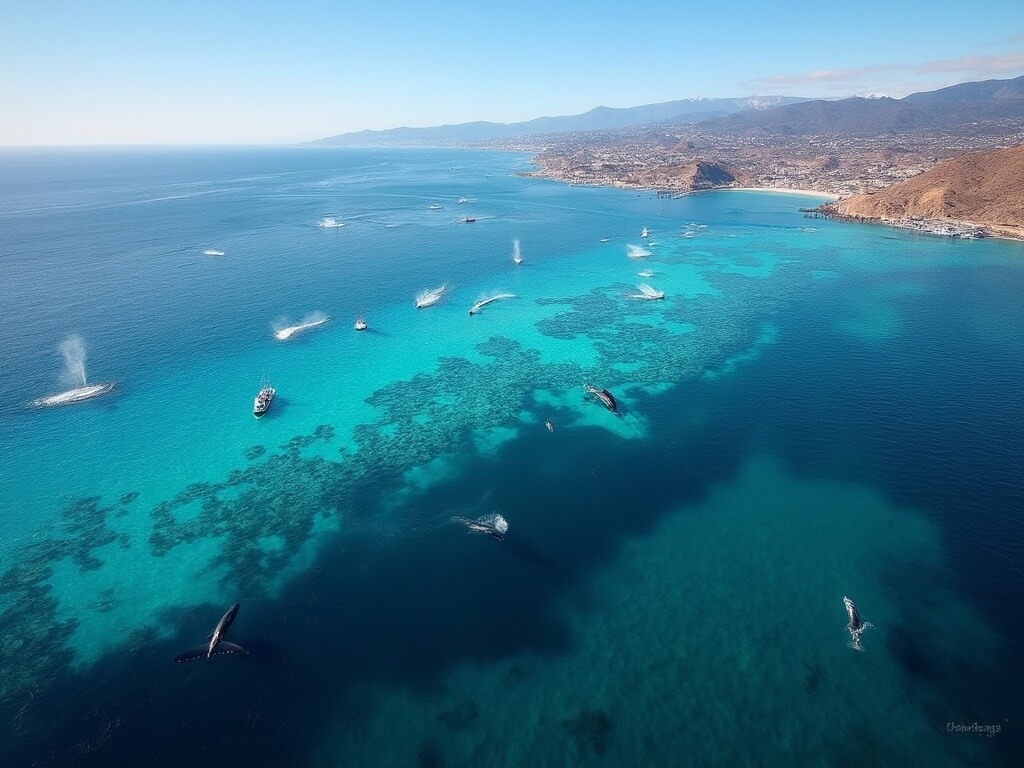
Image Credit @Nomadic Chick
This matters because timing changes everything.
If you show up in January, you’re potentially watching one of nature’s most dramatic events: the gray whale migration. Thousands of them. Mothers and calves moving south toward breeding grounds in Mexico. It’s brutal, it’s beautiful, and it’s worth planning your trip around. Peak months for gray whales are January and March, though they’re around from December through April.
Spring flips the script entirely. This is when humpback whales really show up in force, peaking from March through November. Humpbacks breach. They tail-slap. They’re dramatic. They’re what people imagine when they think of whale watching.
Summer and early autumn bring blue whales, the largest animals ever to exist. Seeing one isn’t just a wildlife moment—it’s a perspective shift. Your brain struggles to process something that massive. Blue whales are best observed from July through October.
Then there are orcas—killer whales—which show up in spring (April–May) and late summer through autumn (late August–October). Orcas are hunters. They’re intelligent. They’re also less predictable than other species, which makes spotting them feel like a genuine achievement.
Here’s the seasonal breakdown most people find useful:
Winter (December–February): Gray whale migration dominates. Fewer tourists. Cold ocean. Fewer crowds on boats.
Spring (March–May): Early humpbacks arrive. Orca season kicks in. You might see whale calves. Tourist numbers rise.
Summer (June–August): Blue whales feeding on krill. Abundant humpbacks. Peak tourist season. Pleasant weather. Most crowded.
Autumn (September–November): Humpbacks still around. Orcas return. Weather remains good. Slightly fewer tourists than summer.
Year-round, you’ll see dolphins and smaller cetaceans. Sea lions are present constantly. The ocean is never boring here.
The Whale Species You’ll Actually Encounter (Not Just Theory)
Humpback whales are the showstoppers.
These are the acrobats of the ocean. They breach—launch themselves completely out of the water—for reasons scientists still debate. Feeding? Communication? Showing off? Doesn’t matter. It’s jaw-dropping when it happens.
They’re present year-round in Monterey Bay, but March through November is prime time. Their feeding behaviour is intense. They create bubble nets—coordinated circles of bubbles that trap krill—and you can watch the entire process unfold. It’s strategic, it’s effective, and it’s mesmerising.
Gray whales are the travellers.
These animals migrate roughly 12,000 miles annually, from Arctic feeding grounds to Mexican breeding grounds and back. That’s the longest migration of any mammal on Earth.
Blue whales are the humbling experience.
A blue whale heart weighs as much as a car. Their tongue weighs as much as an elephant. They’re here primarily July through October, feeding on krill swarms.
Orcas are the apex predators.
They’re intelligent. They hunt strategically. Spotting them is less common than other species, but it’s more memorable when it happens.
You’ll also encounter smaller whales—fin whales, minke whales, sperm whales—but less frequently. The dolphins alone are worth the trip: Pacific white-sided dolphins, Risso’s dolphins, common dolphins.
How Most People Actually Book Their Tours (And Why It Matters)
You can’t just show up at the dock.
Tours sell out, especially during peak seasons. The major operators in Monterey Bay are worth knowing:
Monterey Bay Whale Watch:
Education-focused. Marine biologists as guides. Depart from downtown Monterey.
Princess Monterey Whale Watching:
Larger boats. Heated cabins. More comfort. Less intimacy.
Sanctuary Cruises:
Eco-friendly. Smaller groups. Naturalist staff. Sustainability-focused.
Others:
Discovery Whale Watch, Chris’ Whale Watching, and Sea Goddess Whale Watching—offering variations in departure point, boat size, and price.
During peak season (June–August and December–January), book 2–3 weeks in advance. Off-season, a few days out usually works.
What to Actually Wear (Because Getting This Wrong Ruins Everything)
Dress for the ocean, not the land.
Layers matter. Here’s what to wear:
- Base layers: Merino wool or synthetic. Not cotton.
- Middle layer: Fleece or sweater.
- Outer layer: Waterproof jacket with hood.
- Bottoms: Technical trousers or wool blend.
- Shoes: Rubber-soled, with grip.
- Accessories: Hat, sunglasses with strap, high SPF sunscreen.
- Optional: Motion sickness meds or ginger supplements.
Pack snacks, water, a camera with a strap, and secure everything in a small rucksack. Avoid large bags.
The Actual Experience: What Happens When You Get on the Boat
You arrive early. The crew gives a safety briefing. The boat leaves. The crew scans and shares intel via radio. Then… waiting.
When something happens, the energy spikes. Everyone rushes to one side. You might see a breach, a tail slap, or a distant spout. The narration helps you understand what you’re seeing.
After 3–4 hours, you return. You’re tired. You’re cold. You’re awestruck.
Seasonality and the Math Behind When to Actually Go
Want gray whales?
Go in January or March.
Want humpbacks?
March–November is your window.
Want blue whales?
July–October. Book early.
Orcas?
April–May or late August–October. Less predictable but unforgettable.
Year-round, dolphins and sea lions are present.
If you’re looking for other incredible coastal adventures, check out walking the beaches of the Oregon Coast or taking a lighthouse tour in Maine.
The whale watching boats in Monterey Bay have figured out something that most other destinations haven’t: how to make the geography work for visitors rather than against them.
What to Pack Beyond the Basics (Because These Details Actually Matter)
You’ve got your layers sorted.
Now let’s talk about the stuff that separates a mediocre experience from a genuinely good one.
Binoculars are underrated.
Most people don’t bring them. They rely on the naturalist pointing things out or their phone camera to zoom in. Binoculars change this entirely. You spot distant spouts before the crew does. You watch whale behaviour in detail. You see dolphins hunting from further away. A decent pair costs £50–100 and lasts for years. I use 8×42 binoculars—standard for marine use—and they’ve transformed how I experience these tours.
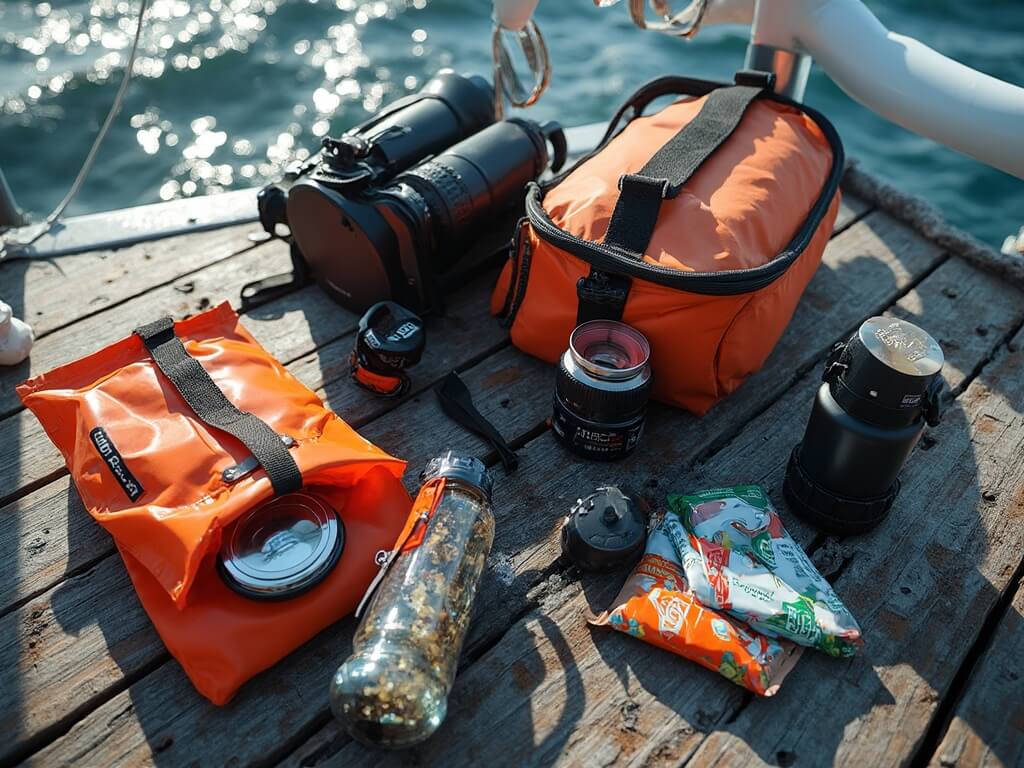
Image Credit @Nomadic Chick
A proper camera makes a difference if you care about photos.
Your phone camera is fine for record shots. But if you want actual photos of whales, you need optical zoom. A compact camera with 30x zoom or better works. A mirrorless camera with a telephoto lens is better, but it’s also heavier and more complex to manage on a moving boat. I’ve learned the hard way that fiddling with camera settings while a humpback is breaching 100 metres away means you miss the moment. A camera you can shoot on auto is sometimes better than one you need to think about.
Secure everything with a strap.
Boats move. Waves hit. People get excited and wave their arms around. Drop something overboard, and it’s gone. Most tour operators have stories about lost phones, lost cameras, lost hats. Wrist straps, neck straps, carabiners. Use them.
Bring a dry bag for electronics.
Spray gets everywhere. Salt water corrodes everything. A small waterproof dry bag for your phone, wallet, and car keys costs £15 and saves thousands in damage. Not optional, actually optional but you’ll regret it if you skip it.
Seasickness medication or preventative measures.
Here’s the honest truth: some people get motion sick on boats. Some don’t. If you’re prone to seasickness on any moving vessel, start preventative measures before boarding. Dramamine, Bonine, or ginger supplements taken 30 minutes before departure help. Staying on deck and focusing on the horizon helps. Staying below deck and reading your phone makes it worse. Know yourself. Plan accordingly.
Snacks and water you actually like.
Most tour operators sell overpriced snacks and water. Bring your own. Nuts, energy bars, fruit. Something that won’t go stale if it gets damp. Hydration matters when you’re outside for 3–4 hours. I’ve watched people get irritable and miserable not because of the experience but because they were hungry and thirsty. Avoid this. Pack snacks.
The whole packing strategy boils down to one principle: be comfortable enough that you forget about your body and focus on whales.
The Naturalist Guide Factor (Why This Matters More Than You Think)
Here’s something most whale watching in Monterey Bay websites don’t emphasise enough: the guide makes or breaks the experience.
A good naturalist transforms a boat ride into an education. They read whale behaviour in real time. They explain the ecology, the conservation challenges, the research happening. They answer questions without condescension. They create context around what you’re seeing.
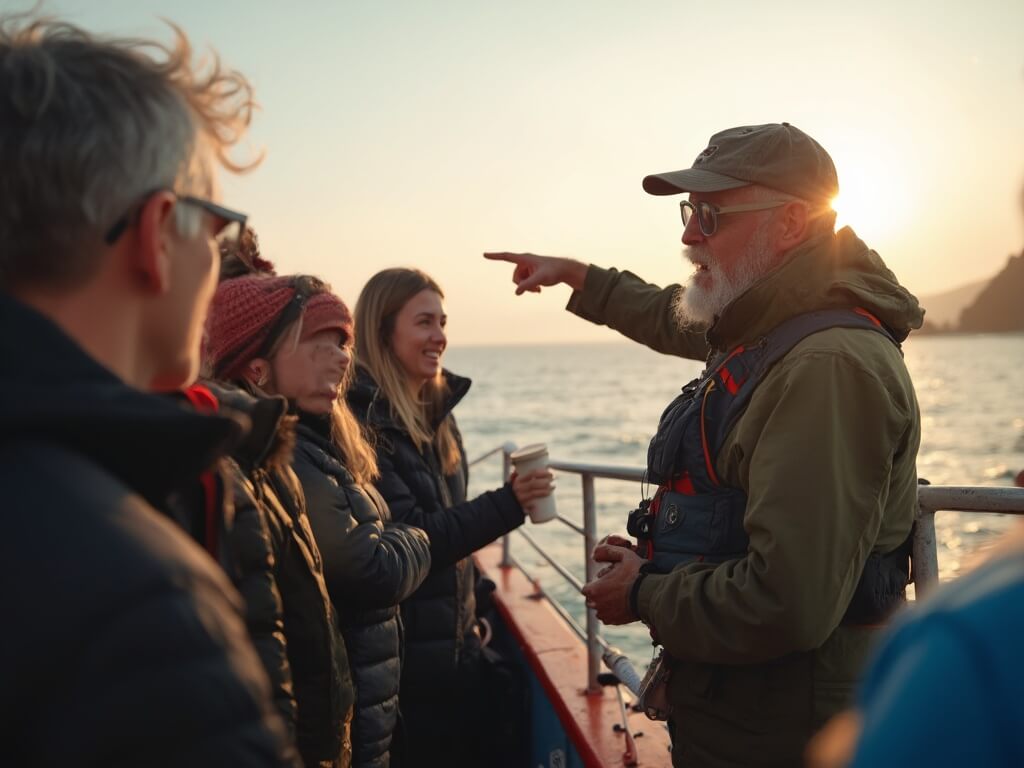
Image Credit @Nomadic Chick
Monterey Bay Whale Watch specifically hires marine biologists as guides. This isn’t accidental. It’s strategic. You’re paying for expertise, not just transportation.
They explain why whales are here. The Monterey Submarine Canyon creates upwelling that brings nutrients to the surface. Those nutrients feed krill. Whales follow krill. You’re watching an ecosystem in action, not just animals.
They interpret behaviour in real time. That humpback surfacing with its mouth open isn’t random. It’s bubble-net feeding. The whale is concentrating krill into a ball by swimming in circles and blowing bubbles. Then it launches upward through the centre, mouth open, filtering thousands of krill in seconds.
They discuss conservation. Whales face real threats: ship strikes, entanglement in fishing gear, climate change affecting food sources, noise pollution. Understanding these challenges makes you care about the animal rather than just observing it.
They integrate recent research. A good guide weaves current research into the narration. Check if your tour is with Monterey Bay whale watching tours that offer expert-led experiences.
The Photography Angle (If You Care About This)
Let’s be honest: most people want a photo.
Not for science. For their Instagram, their family group chat, their memory. Nothing wrong with that. But taking good whale photos on a moving boat with limited warning is a learned skill.
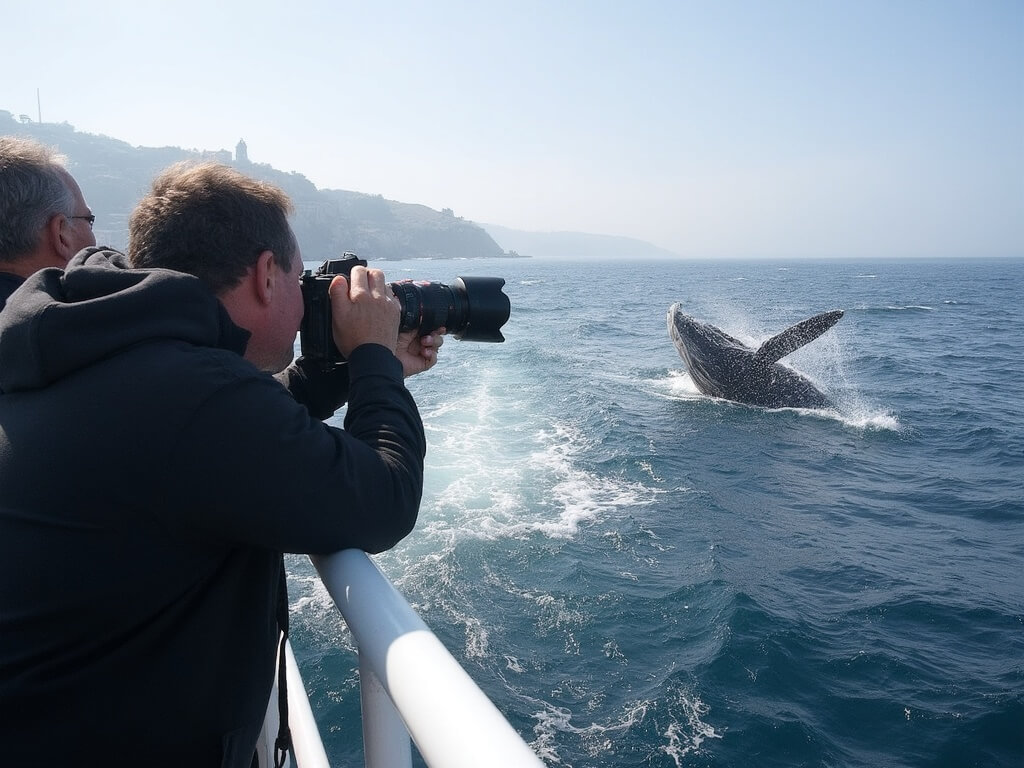
Image Credit @Nomadic Chick
Here’s what actually matters on the water:
Shutter speed. Fast enough to freeze movement. Minimum 1/1000 second for active whales.
ISO. Bright light and water glare require higher ISO than expected.
Autofocus. Continuous autofocus is key due to movement.
Composition. Use the rule of thirds. Don’t shoot directly into the sun. Include context.
Accept the moment. Spontaneity wins over perfection.
One tip: share your photos with the tour operator. It helps with research and conservation efforts.
Conservation and the Bigger Picture (Why This Matters)
Here’s the uncomfortable truth: whale watching only works if whales are healthy.
The Monterey Bay National Marine Sanctuary protects this ecosystem. Whale watching tourism generates more than £10 million annually. That financial impact fuels conservation efforts.
Operators like Monterey Bay Whale Watch partner with research institutions. These aren’t just gestures—they actively produce science that informs regulation and policy.
But there’s a balance. Too many boats stress whales. Climate change alters krill patterns. Responsible operators exceed legal standards to protect marine life.
Conservation isn’t optional—it’s what makes this entire experience possible.
What Happens When Things Go Wrong (And They Sometimes Do)
Tours get cancelled. Weather happens. Trust professionals who cancel for safety. Most offer rain checks or refunds.
Seasickness happens. Be prepared. Don’t push through if you’re prone. Know your limits and take meds early.
No whale sightings happen. Rare but possible. Check if your tour offers sighting guarantees.
Equipment failure happens. Uncommon, but possible. That’s why you listen to safety briefings.
Beyond Whale Watching (What Else Makes Monterey Bay Worth Your Time)
- Monterey Bay Aquarium: A world-class facility. Budget 3–4 hours.
- Cannery Row: Historic, charming, crowded in summer.
- Fisherman’s Wharf: Great for food, sea lion watching, and boat rentals.
- Point Lobos State Natural Reserve: Stunning cliffs and coastal hiking.
- Big Sur & Pfeiffer Beach: Extraordinary hiking and unique beaches.
- Downtown Monterey: Art galleries, local food, less touristy.
For more travel inspiration, check out:
- Drive the Hana Highway in Maui
- Walk the Beaches of the Oregon Coast
- Take a Lighthouse Tour in Maine
- Visit the National Civil Rights Museum in Memphis
- Spend a Day at Mall of America in Minnesota
The Local Economy and Why This Matters
Whale watching supports Monterey’s local economy—£10–15 million annually. That money supports jobs, infrastructure, and policy that protects whales and their habitat.
Supporting local, reputable operators means supporting conservation and science. You’re not just buying a tour. You’re becoming part of a system that values environmental sustainability.
User Concerns and Honest Answers
- Will I definitely see whales? Very likely, especially March–November. But not guaranteed.
- Is it safe? Yes. Modern boats and trained crews make it one of the safer wildlife experiences.
- Is it worth the cost? If you’re drawn to nature, yes. It’s unforgettable.
- Is it suitable for kids? Yes, ages 5+ typically love it. Very young might struggle.
- Is it suitable for elderly or mobility-limited visitors? Most boats accommodate accessibility. Call ahead.
- What if I get seasick? Preventative action helps. Open air and horizon focus help too.
- Do I need binoculars? No, but they significantly enhance your experience.
- Can I reschedule if weather cancels my tour? Yes—reputable operators always offer alternatives.
Future Trends and What’s Actually Changing
Technology, sustainability, community science, and regulation define the future:
- Live whale tracking apps and augmented guides are emerging.
- Biofuel adoption and noise-reduction upgrades are happening now.
- Photo submissions by guests contribute to real scientific databases.
- Stricter whale approach rules are under consideration in California.
Monterey Bay is evolving—responsibly. That’s why it’s still among the best in the world for whale watching.
The Practical Timeline: Book Now or Procrastinate?
- Peak season (June–August, Dec–Jan): Book 3–4 weeks early.
- Shoulder season (Mar–May, Sept–Nov): Book 2–3 weeks early.
- Off-season (Feb): 1–2 weeks is okay, but expect weather variability.
Check forecasts, pick flexible dates if you can, and remember: calm seas today beat booked chaos next week.
The Honest Final Thought
Whale watching in Monterey Bay isn’t just tourism.
It’s ecological immersion, education, and environmental advocacy. It’s also wildly fun.
Book your trip for March or April. Avoid the crowds. Maximise the sightings.
Show up prepared. Show up curious. Show up ready to be amazed.
This is not a gamble. This is a likely once-in-a-lifetime experience that you’ll want to repeat.
That whale surfacing that close is still the moment I measure every other wildlife trip against. Whale watching in Monterey Bay works because the naturalists actually know where to look, not just where the boat happens to be.