Image Credit @Migrationology
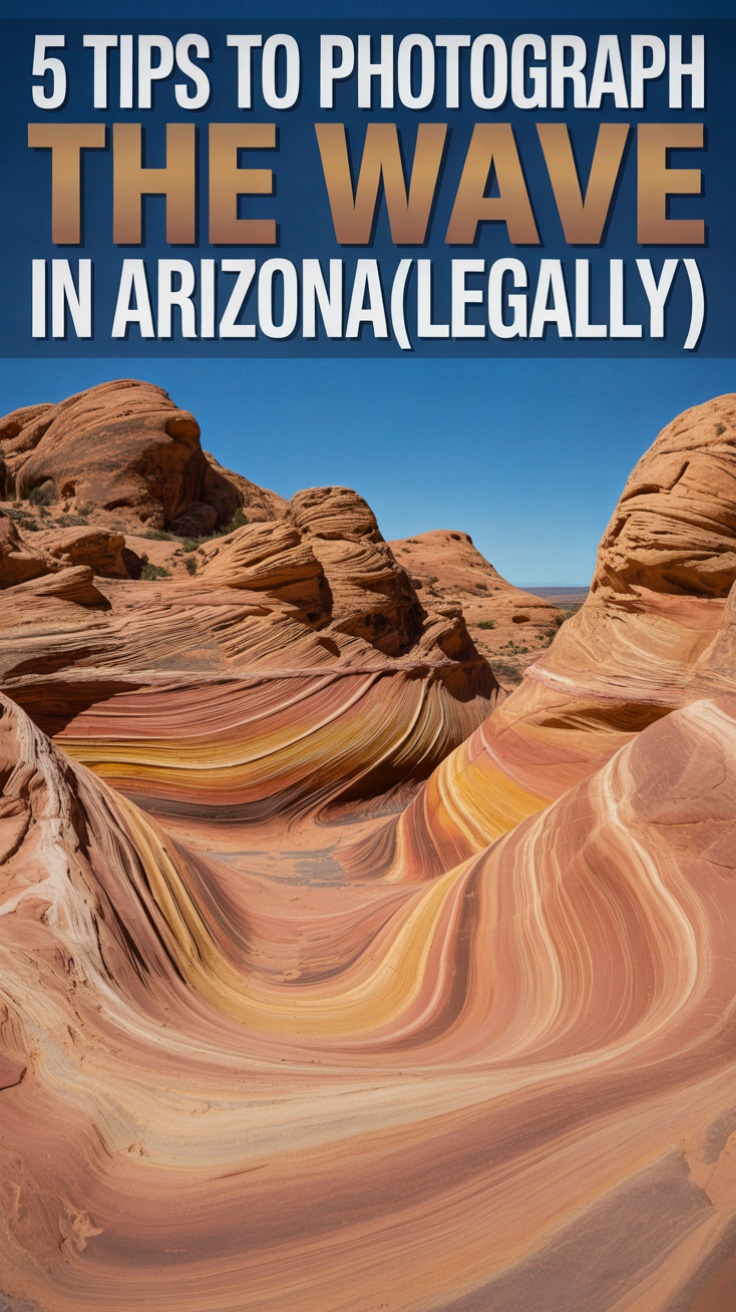
You’ve scrolled past those jaw-dropping photos of The Wave in Arizona.
The impossibly perfect sandstone ripples. The colours that seem almost photoshopped. That one shot where the light hits just right and you think, “I need to get there.”
Then reality hits: you can’t just show up.
There’s a permit system in place, and it’s ruthlessly competitive. I’m talking about a 1% win rate on the online lottery. I’m talking about fines reaching £8,000 if you get caught without paperwork. I’m talking about a location so fragile that the government literally caps daily visitors at 64 people.
This isn’t gatekeeping for gatekeeping’s sake.
The Wave, nestled in Coyote Buttes North near the Arizona-Utah border, sits on public land managed by the Bureau of Land Management. It’s a genuine geological marvel—those wave-like patterns in the sandstone took millions of years to form. One careless foot placement, one person climbing where they shouldn’t, and you damage something that can’t be repaired in your lifetime.
So the permit system exists to protect it.
But here’s what most people get wrong: they treat it like a lottery where you just cross your fingers and hope. That’s not a strategy—that’s wishful thinking.
The truth is, understanding how this system actually works separates people who get to The Wave from those who stare at photos and wonder what went wrong.
And that’s exactly what we’re covering today.
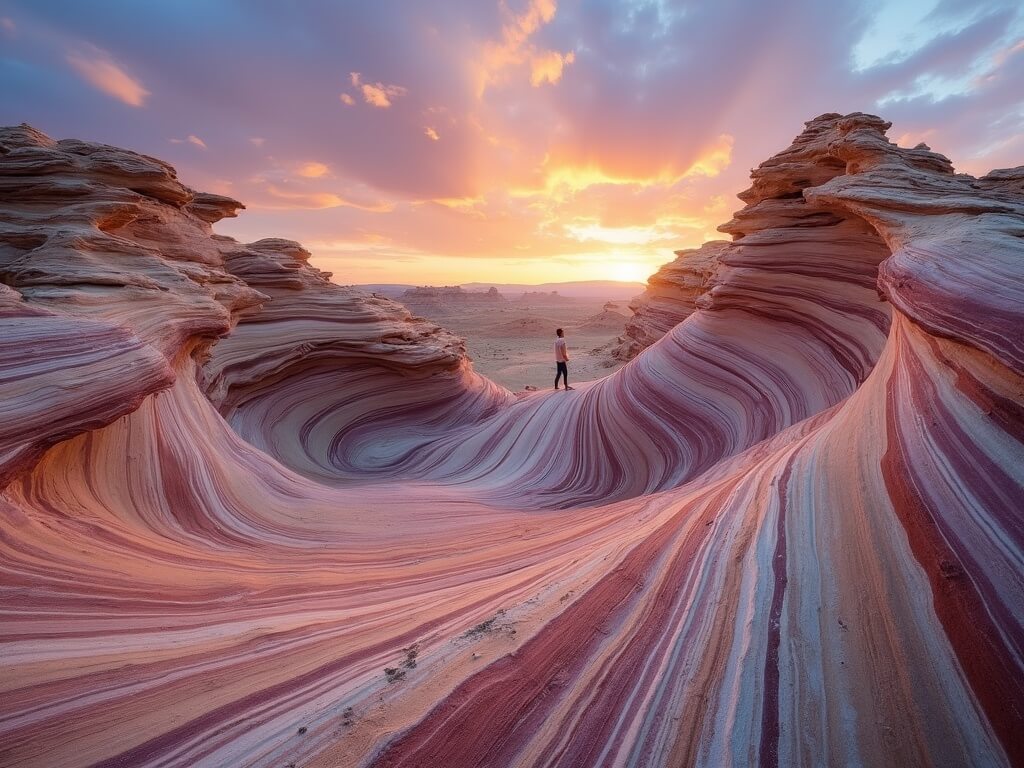
Image Credit @Migrationology
What Makes The Wave Worth All This Trouble (And Why It’s Locked Down)
I’ll be honest: the first time I saw The Wave in person, I didn’t take a single photo for the first fifteen minutes.
I just stood there.
The rock formations roll across the landscape like frozen water mid-crash, with stripes of cream, rust, purple, and grey bleeding into each other. The scale is disorienting—what looks intimate in photos is actually sprawling across a massive area. What appears gentle and delicate is genuinely dramatic when you’re standing in it.
This is exactly why it needs protection.
Before the permit system existed (which is relatively recent in the grand scheme of things), The Wave was being loved to death. Thousands of visitors a year, no restrictions, no guidance. People were climbing on the formations, standing on fragile rock layers, leaving trash, causing actual measurable erosion.
The Bureau of Land Management finally said enough.
In 2010, they implemented the lottery system you need to navigate today.
Here’s what they were trying to solve:
- The rock formations genuinely deteriorate with foot traffic.
- Overcrowding ruins the experience for everyone.
- The access road can only handle so much traffic before it deteriorates.
The permit system solved all three problems at once.
By capping daily visitors at 64 people, the BLM ensures the landscape stays intact, the experience remains meaningful, and the infrastructure doesn’t get hammered into oblivion.
Is it frustrating if you don’t win the lottery?
Absolutely.
Is it necessary?
Completely.
Image Credit @Migrationology
The Permit Lottery System: Two Paths, Two Different Odds
Here’s where most people get overwhelmed.
The permit system sounds complicated because it kind of is. But break it down into two separate lotteries, and suddenly it makes sense.
The Advanced Online Lottery: Your Best Planning Tool
You can apply up to four months in advance through Recreation.gov (and yes, it has to be that specific platform—there’s no alternative).
Here’s how it works:
- You pick up to three different dates you’d like to visit.
- You submit your application.
- You pay a non-refundable application fee (usually around £7 per person).
- On the first day of the following month, you find out if you won.
- If you win, you pay an additional permit fee and you’re locked in.
The daily allocation for advanced permits is 48 people (up to six per group).
That sounds decent until you do the maths.
If the BLM receives 4,000 online applications for a single day—which isn’t unusual during peak season—your odds sit at roughly 1%.
Not great.
But here’s the strategic element: most people apply for summer dates or weekends. If you’re willing to apply for October or March, or for mid-week dates, your odds improve significantly.
The Daily Geofence Lottery: The In-Person Gamble
This is where it gets interesting.
Two days before you want to hike, you can enter a separate lottery if you’re physically present within a geofenced radius around Kanab, Utah or Page, Arizona.
The window opens at 6 AM and closes at 6 PM. Results drop at 7:15 PM that same day. If you win, you pick up your permit the next morning and attend a mandatory orientation session before heading to the trailhead.
Only 16 permits are available through this daily lottery each day.
Your odds are better—roughly 5-10% if you’re submitting—but here’s the catch: you have to already be in the region.
Most people skip this option. But photographers and hikers who are willing to spend a weekend in Kanab as a backup plan often find success here because fewer people attempt it.
What Happens If You Don’t Win
This is the question everyone asks.
The penalties for hiking to The Wave without a permit are severe: up to £8,000 in fines or a year in jail (or both, theoretically). The BLM actually enforces this. They have rangers on the ground, and they check permits.
So here’s my honest take: don’t roll the dice on this one.
The permit system is the only legal way to access The Wave, and the BLM takes it seriously.
But that doesn’t mean you’re out of luck if you don’t win.
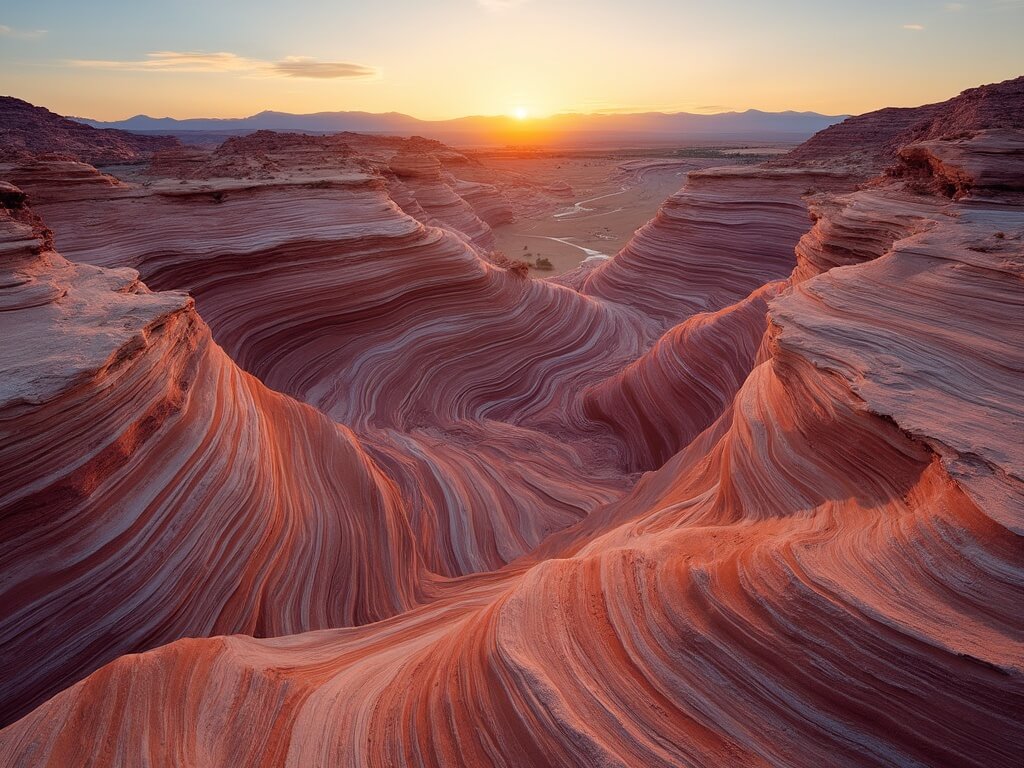
Image Credit @Migrationology
Why This Permit System Actually Changes Everything
I watched my partner spend three months applying for The Wave permits with a 1% success rate.
She applied five times across different seasons. Never won. On her sixth attempt, during a random Thursday in March (literally the least appealing time to visit), she got selected.
That’s when I realized something: people treat the permit system like buying a lottery ticket at a petrol station. They apply once, cross their fingers, and move on.
But there’s a completely different approach if you understand how the system actually operates.
The Numbers Are Smaller Than You Think
Total daily visitors: 64 people.
Advanced permits per day: 48 people.
Daily lottery permits: 16 people.
That sounds tiny because it is.
But here’s what it means strategically: if you’re willing to apply for dates that aren’t visually “ideal,” your odds shift dramatically.
Autumn is considered peak season for The Wave photography. Everyone applies for September, October, maybe early November. But March? April? January?
These months still offer excellent light, far fewer photographers competing, and considerably better permit odds.
The Geofence Lottery Is Less Crowded Than You’d Expect
Most photographers apply online months in advance. Fewer people are willing to gamble on the daily lottery—it requires being in Arizona already, and it’s a coin flip.
But here’s the thing: people who are genuinely in the region are often less competitive about permits than those flying in specifically for The Wave.
Recreation.gov Is Your Only Entry Point
Every single permit application—whether advanced or daily—goes through Recreation.gov.
There’s no alternative system. There’s no phone line. There’s no back-door process.
This is important because it means the system is transparent, fair, and completely digital.
The Brutal Truth About Permit Odds (And Why You Need a Backup Plan)
Let’s talk about what you’re actually up against here.
A 1% win rate means that out of every 100 advanced applications, one person gets selected.
If you apply five times, you’re statistically still more likely not to win than to win.
This is why backup planning isn’t optional; it’s essential.
Consider Nearby Alternatives Without Permits
Here’s something most people don’t know: The Wave is dramatic, but it’s not the only stunning photography location in the area.
- White Pocket sits roughly 30 minutes away from The Wave and requires no permit.
- South Coyote Buttes is another permit-free option with similar geological features.
- Buckskin Gulch—whilst requiring a different, easier permit process—offers slot canyon photography that’s genuinely incredible.
None of these are second-rate alternatives. They’re genuinely world-class photography locations that happen to be less famous.
If you’re planning a desert photography trip and The Wave doesn’t come through, you shouldn’t be disappointed. You should be pivoting to alternatives that might actually be better for your specific vision.
Guided Tours Are Your Actual Fallback
If you absolutely must photograph The Wave and can’t win the lottery, commercial photo tour operators in the area can take you there through special arrangements.
These operators have standing relationships with the BLM and access that individual photographers don’t. It costs more money—typically £200-400 per person—but it’s legitimate and it works.
What Actually Gets You to The Wave: The Application Reality
Step One: Head to Recreation.gov
Create an account, free and quick.
Step Two: Choose Your Dates
Pick up to three preferred dates, even spread across months.
Step Three: Indicate Group Size
Up to six people including photographers, friends, etc.
Step Four: Pay the Application Fee
£7 per person, non-refundable.
Step Five: Wait for Results
Find out on the first of the following month. Pay additional fee if you win. Try again if you don’t.
Why This Matters More Than You Think Right Now
Here’s what I want you to understand: the permit system isn’t a barrier designed to keep photographers out.
It’s a system designed to keep The Wave alive.
Every rule, every fee, every lottery draw exists because previous decades of unrestricted access nearly destroyed this place.
The irony is that by making it harder to access, the BLM has actually made it better for the people who do get there.
You show up to an uncrowded landscape. You have space to think about your composition. You’re not fighting 200 other photographers for the exact same angle. The rock formations are still intact.
Check out our Delicate Arch hiking guide for another iconic desert photo opportunity.
Need a change of pace? See how to spend a day at Mall of America.
Now, understanding the permit system is one thing—knowing what to actually pack, how to time your shoot, and what gear to bring is something entirely different.
The Gear Question: What Actually Works at The Wave
I learned something humbling my first time at The Wave.
I showed up with a full professional kit: a 24-70mm lens, a 70-200mm telephoto, a sturdy tripod, extra batteries, filters, cleaning supplies.
By the two-mile mark of the hike, I was reconsidering every decision.
The thing about The Wave is that it’s not just about getting there—it’s about what condition your gear is in when you arrive.
You’re hiking 6.4 miles roundtrip across sand and slickrock in a desert environment. Your camera bag is getting bounced around. Sand is infiltrating everything. The temperature fluctuates wildly. Your battery is draining faster than you expect because of the cold or the heat or just the general stress of the situation.
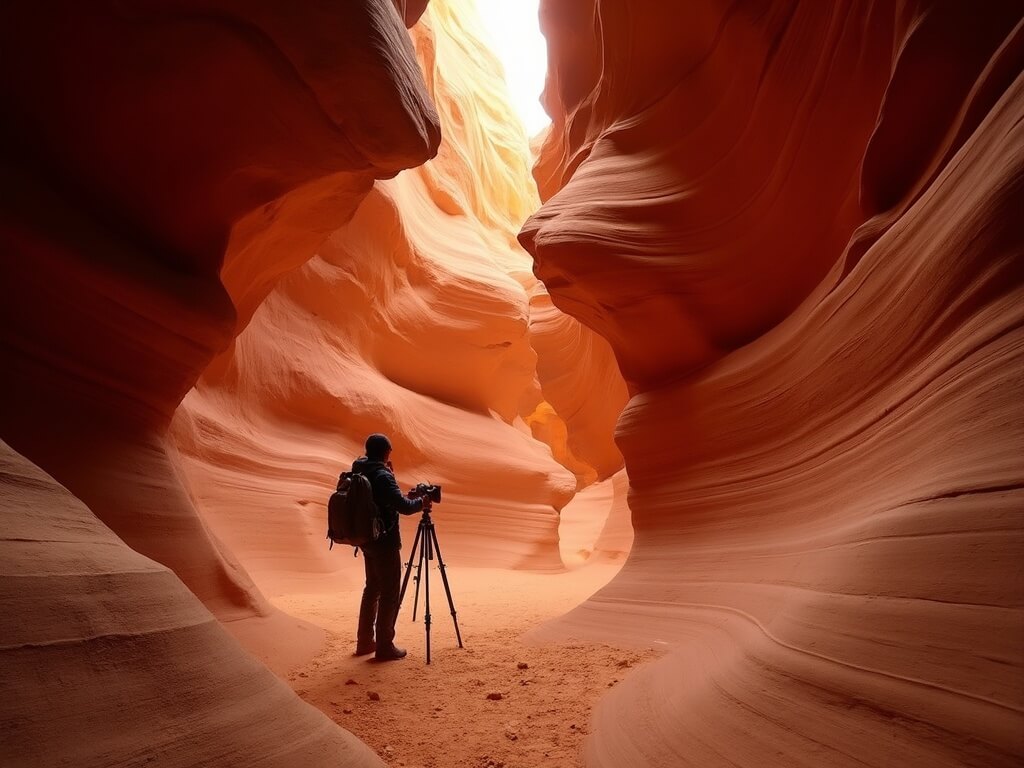
Image Credit @Migrationology
The Lens Strategy That Changes Everything
Most photographers think they need to bring every lens they own. They don’t.
A wide-angle lens—something in the 14-24mm range—is genuinely essential for The Wave. The formations are massive and spacious, and you need that expansive perspective to capture the scale and the flowing patterns of the rock.
A standard zoom covering 24-70mm gives you flexibility for medium compositions and details.
A telephoto (70-200mm) is actually useful more often than you’d think because it lets you compress the layers of rock, creating visual depth that makes the undulating formations feel even more dramatic.
But here’s the reality: you probably can’t comfortably carry all three for a 6.4-mile hike in desert heat. So choose two.
Most photographers I’ve talked to who’ve done multiple Wave shoots go with the wide-angle and either the standard zoom or telephoto, depending on whether they’re chasing grand landscape shots or detailed rock texture.
The Tripod Debate (And Why You Might Skip It)
Tripods are heavy. They’re bulky. They slow you down.
But night photography at The Wave—capturing the Milky Way above the rock formations—requires a tripod. It’s non-negotiable for those long exposures.
The question becomes: are you planning to shoot at night?
If yes, bring a lightweight carbon fibre tripod, not a heavy aluminium one.
If you’re shooting daylight only, you can probably skip it and use natural composition techniques, finding rock formations or natural ledges to steady your camera.
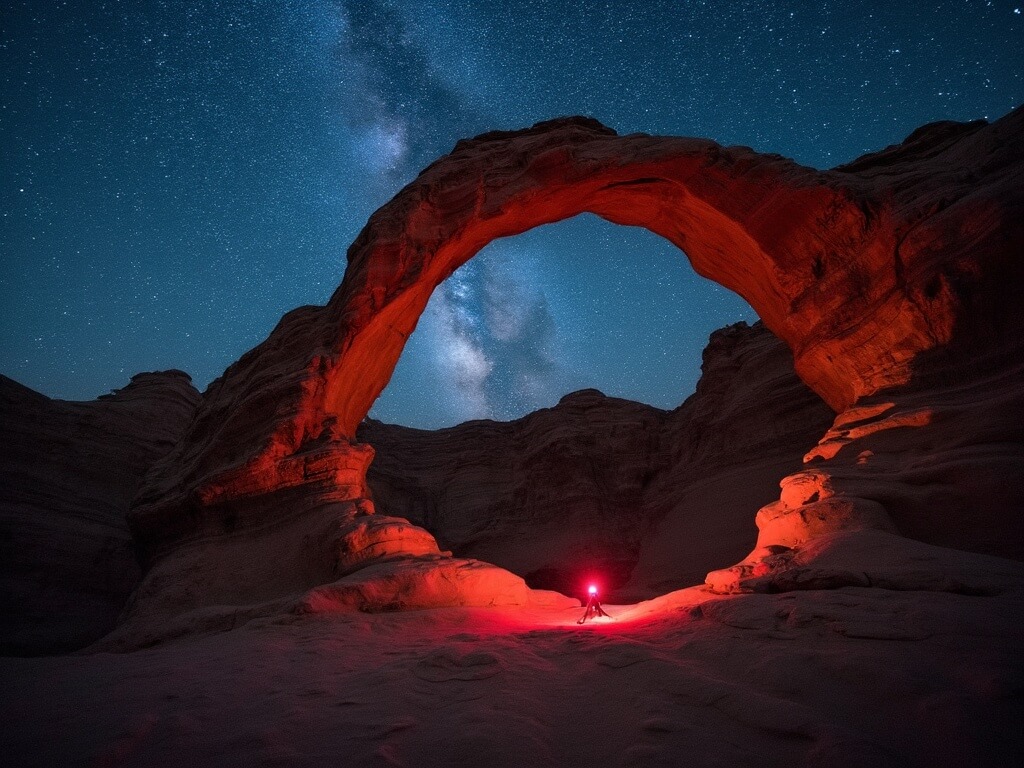
Image Credit @Migrationology
Dust and Sand Are Your Actual Enemy
This is the part nobody talks about enough.
Desert sand is fine—almost powder-like in texture. It gets into everything.
Bring a microfiber cloth, but more importantly, bring an air blower (one of those manual rubber bulbs). Use it constantly throughout your shoot.
Keep your gear in a proper camera bag with good sealing, not a generic backpack.
Lighting and Timing: Why These Matter More Than Gear
Midday delivers even, bright lighting. But the light is often too harsh. Early morning delivers soft, warm golden tones. Late afternoon creates entirely different shadow patterns. Night photography opens an entirely different dimension.
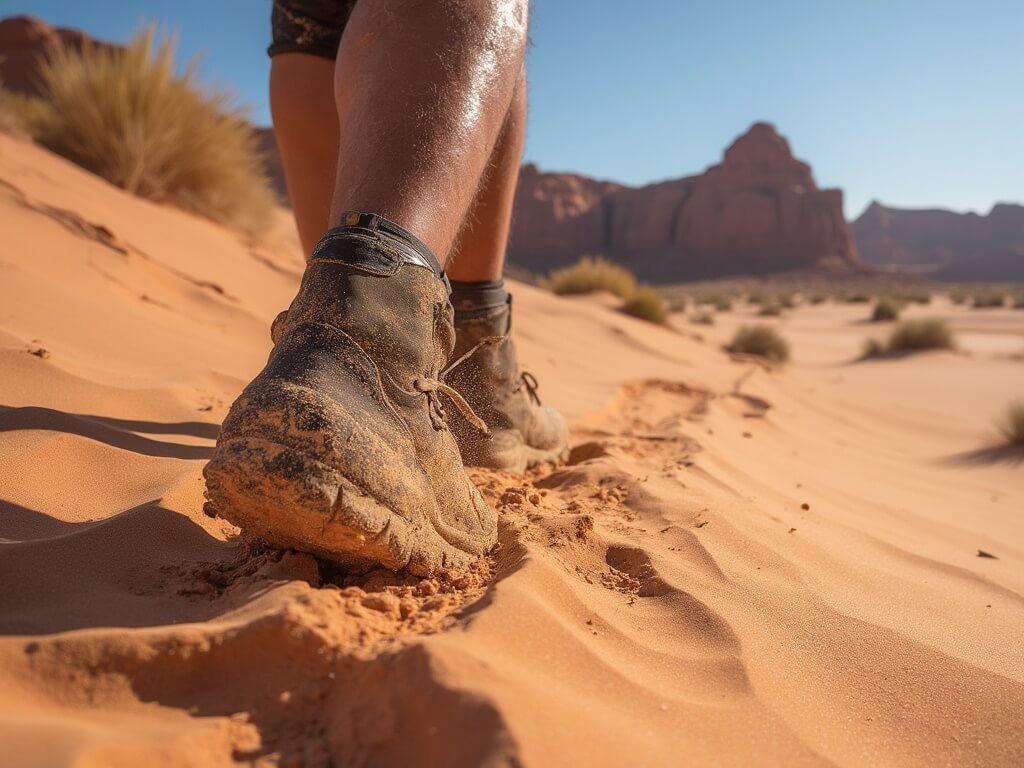
Image Credit @Migrationology
The Hike That Humbles Most People
Why 6.4 Miles Feels Longer Than It Should
The terrain switches between deep sand and slickrock. Deep sand is exhausting; slickrock demands constant attention.
Weather Becomes Your Primary Obstacle
Summer temperatures regularly exceed 35°C. Winter can bring snow or ice. Spring and autumn are the sweet spots.
Navigation: The Part That Actually Requires Skill
There is no established trail. GPS is essential. Use topographic maps and offline navigation apps.
Check out the The Wave permit guide for detailed navigation tips and permit application strategy.
What You Actually Need to Carry (And What You Can Leave)
Bring more water than you think. Pack energy-dense snacks. Wear sun protection and layered clothing. And be strategic about gear weight.
Timing Everything Right: The Seasonal Strategy
Spring: The Window Everyone Misses
Moderate temperatures, vivid light, and lower permit competition. Spring is ideal for photography.
Summer: The Season of Extremes
Hot, dangerous, but permit odds are excellent if you’re prepared for early shooting.
Autumn: The Famous Season
Perfect conditions, beautiful golden light, but very competitive permit odds.
Winter: The Risky Wild Card
Cold and uncertain, but low permit competition and sharp light. If weather cooperates, it’s magical.
The Permit Application Strategy That Actually Works
Apply for spring and winter dates. Avoid weekends. Use mid-week entries. If you lose, use the daily geofence lottery. Visit the official BLM permit information for full lottery details.
The Regulatory Cage: What You Can and Can’t Do
The Drone Prohibition
No drones allowed. Period. Preserve the experience for all visitors.
The Group Size Limit
Maximum six people. Pets count. Everyone must be named on the permit.
“Pack In, Pack Out” Rule
Bring a trash bag. Leave no trace—everything leaves with you.
Rock Formation Protection
Don’t climb on delicate formations. Foot traffic causes erosion and damages the photography for others.
The Dog Exception
Dogs are allowed with a fee and count toward your group. Be realistic about their endurance and needs.
The Backup Plan That Actually Matters
White Pocket: The Underrated Alternative
No permit needed. Stunning formations. Fewer crowds. Genuinely a viable alternative to The Wave.
Explore more photography options like White Sands National Park or Oregon Coast beaches.
South Coyote Buttes and Buckskin Gulch
Permit-free or easier permits. Visually distinct, excellent photography opportunities.
The Guided Tour Option
Guaranteed access at a premium. Valuable if you’re short on time or have struck out repeatedly.
The Reality Check: What Actual Visitors Experience
The Dissonance Between Expectation and Reality
Photos don’t fully convey the chaotic beauty and scale. Expect to explore before you shoot.
The Physical Reality of the Hike
It’s hard. Bring mental and physical endurance. The 6.4 miles will push you.
The Permit System Appreciation
After visiting, you’ll understand why the system exists. Preservation > access.
Making the Application Happen: Your Action Plan
Before You Apply
Assess your flexibility and hiking ability. Review weather and seasonal conditions.
Application Phase
Create a Recreation.gov account. Apply early each month. Prioritize spring, winter, and mid-week dates. Use both the advance and daily geofence lotteries.
If You Win
Book lodging. Attend orientation. Prep gear and maps. Celebrate.
If You Lose
Explore White Pocket or other scenic drives. Consider a guided tour. Try again next month.
The Final Word: This Is Worth the Effort
The Wave is extraordinary. The permit system protects it. The effort, the preparation, the lottery—all of it serves to keep this landscape wild, photogenic, and preserved.
For more photography destination guides, explore:
Sunrise from Cadillac Mountain,
Maine Lighthouse Tours,
and
Hana Highway in Maui.