Image Credit @Nomadic Chick
You’ve probably heard the name Fallingwater before.
Maybe in an architecture class.
Maybe scrolled past it on Instagram.
Maybe your design-obsessed friend won’t stop talking about it.
But here’s what most people don’t realise: Frank Lloyd Wright’s Fallingwater isn’t just another historic house museum you tick off a bucket list.
It’s the reason modern architecture exists at all.
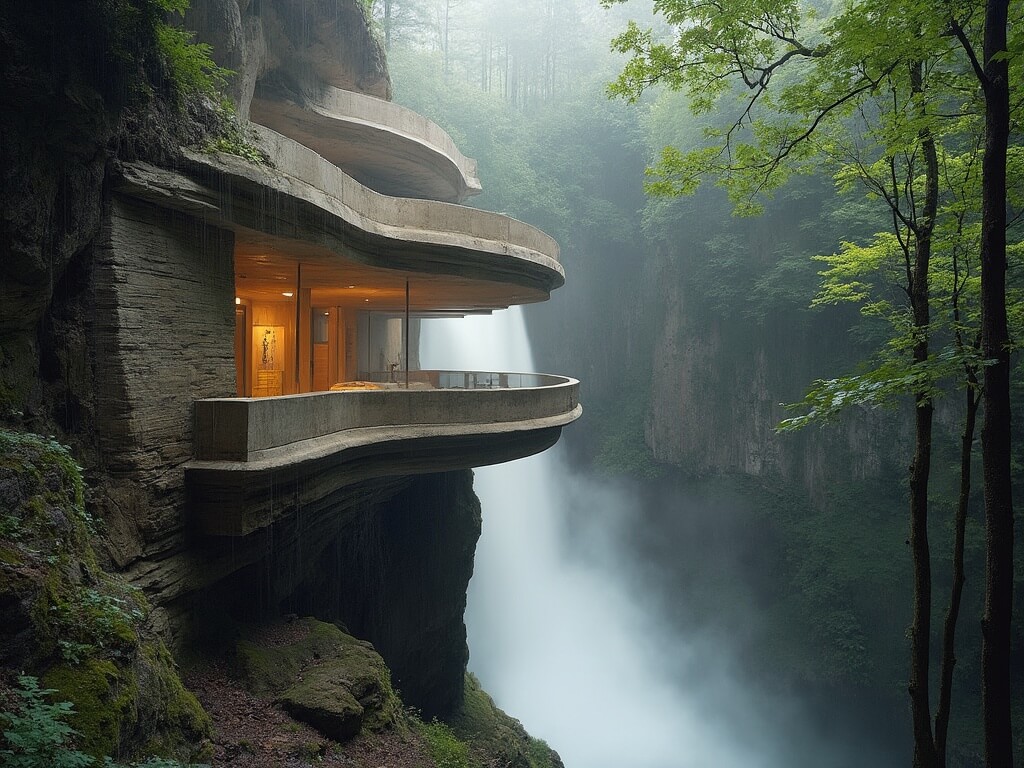
Image Credit @Nomadic Chick
What Makes This House the Most Important Building of the 20th Century
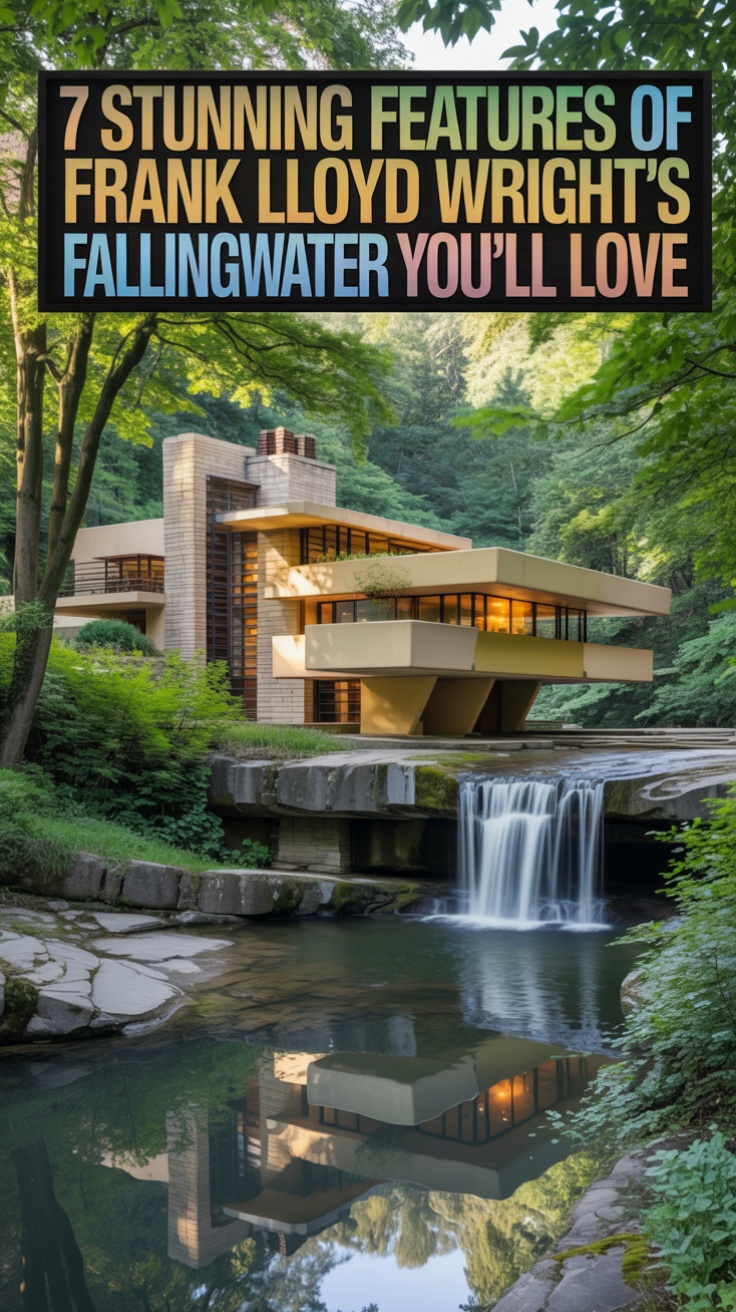
Frank Lloyd Wright designed Fallingwater in 1935 for the Kaufmann family as a summer retreat in Mill Run, Pennsylvania.
It was completed in 1937.
Simple enough, right?
Except nothing about this house is simple.
This isn’t a mansion perched near a waterfall.
This is a house that sits directly above one.
The structure doesn’t just view Bear Run’s cascading water—it cantilevers over it like an architect’s defiant middle finger to every conventional building rule that came before.
UNESCO recognised it as one of only 24 World Heritage Sites in the entire United States.
The American Institute of Architects called it “the most important building of the 20th century.”
Not the prettiest. Not the most expensive.
The most important.
That distinction exists because Wright did something revolutionary: he merged a building with its environment so completely that you can’t tell where architecture ends and nature begins.
The house doesn’t sit on the land. It breathes with it.
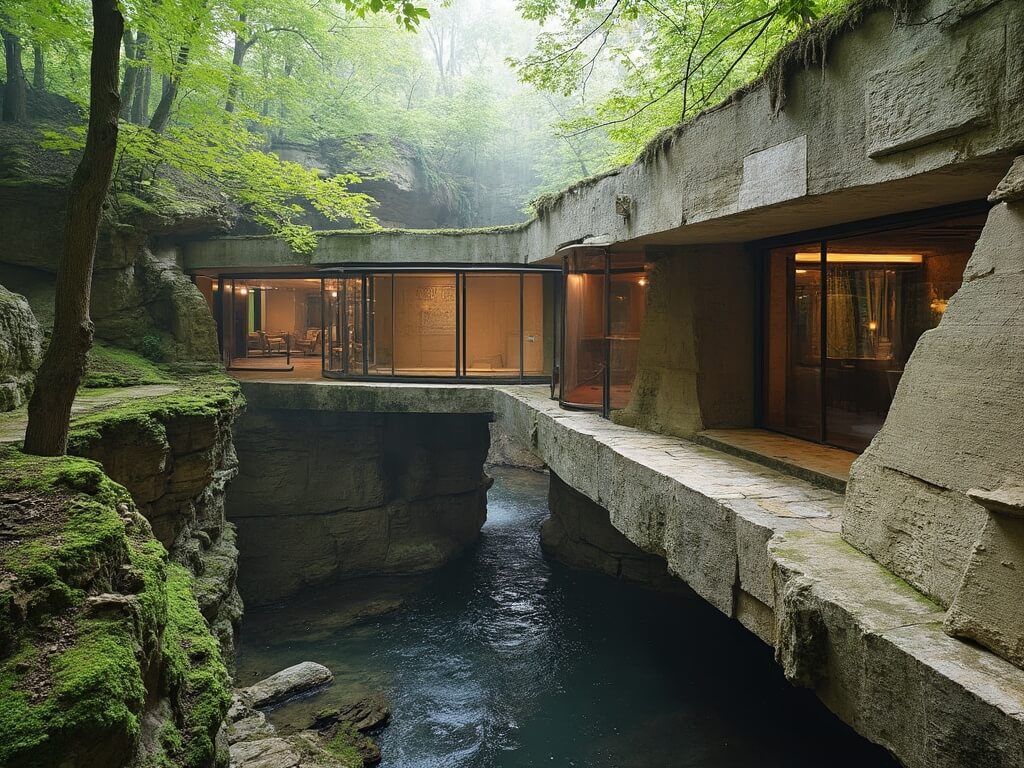
Image Credit @Nomadic Chick
Organic Architecture: The Philosophy That Still Doesn’t Make Sense Until You See It
Here’s the thing about organic architecture that sounds pretentious when you read it in books.
Then you actually visit Fallingwater and suddenly it clicks.
Wright’s philosophy was radical for 1935.
Most architects designed buildings that conquered nature—imposing rectangles and rigid structures that announced human dominance over the landscape.
Wright did the opposite.
He studied the waterfall, the rock formations, the surrounding trees, and the way light moved through the valleys.
Then he built a house that responded to all of it.
The terraces don’t jut out aggressively.
They cantilever horizontally, echoing the natural stratification of the surrounding stone.
Native sandstone, reinforced concrete, steel, and glass weave together without any pretentious separation between materials.
The floor-to-ceiling windows aren’t there for Instagram views (though they certainly deliver).
They’re there because Wright believed the waterfall’s sound and the forest’s movement should be as much part of your daily experience as the coffee in your kitchen.
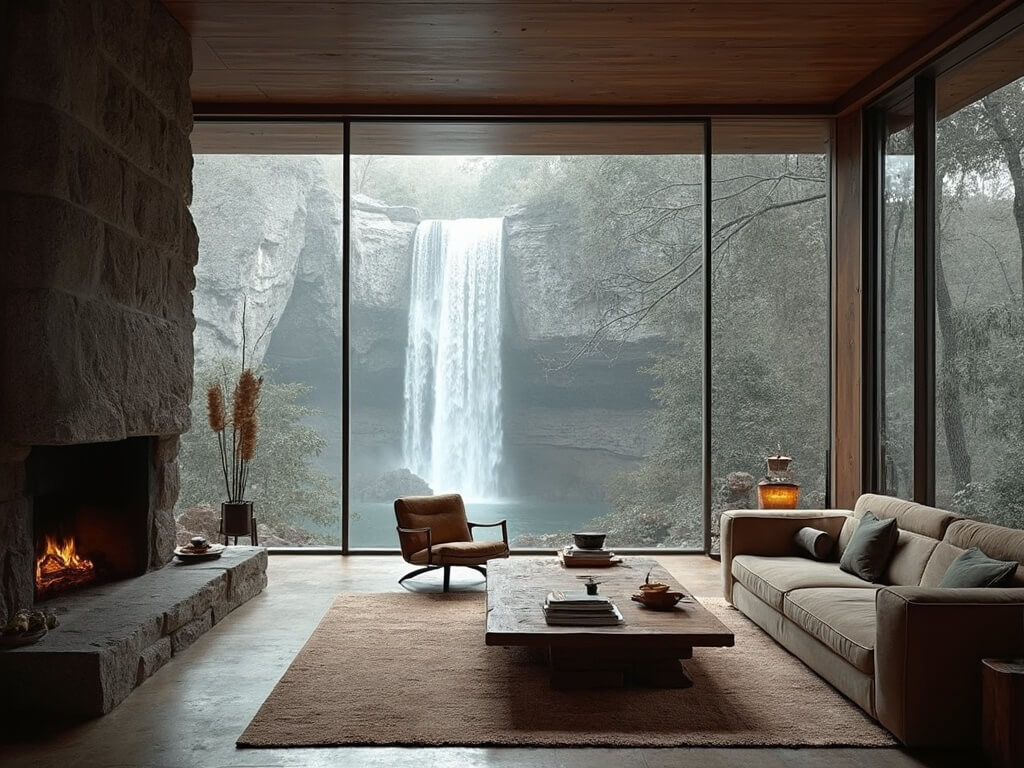
Image Credit @Nomadic Chick
I visited Fallingwater three years ago on a grey February morning.
The kind of day where everything looks slightly dampened and colourless.
I stepped into the main living room, and my perspective shifted instantly.
The windows framed the waterfall so precisely that it felt less like viewing a landscape and more like watching a carefully choreographed performance playing just for you.
The sound was everywhere—not intrusive, but present, like the house was listening to the same music as the forest outside.
One of the architects on my tour mentioned that visitors often sit in that room for hours without realising how much time has passed.
Time moves differently when you’re genuinely integrated with your surroundings.
That’s not accident. That’s intentional design.
A Quick Detour Through History: Why the Kaufmanns Mattered
The Kaufmann family wasn’t looking for a trophy house.
They were Pittsburgh department store owners who wanted a place to escape the city and entertain friends.
Edgar Kaufmann Sr. approached Wright in 1935 with a simple request: build something on our property.
What’s fascinating is that Kaufmann initially didn’t want the house directly over the waterfall.
He assumed it would be built downstream, with a nice view of the falls.
Wright took one look at the site and made a decision that would echo through architectural history.
He placed the house directly above the cascade.
Cantilevers would extend over the water.
The family would literally sleep above the sound of falling water.
Kaufmann Sr. was reportedly taken aback, but his son Edgar Jr. understood the vision immediately.
The house took two years to complete, longer than initially planned (Wright’s designs often did).
But in 1937, when the family moved in, they weren’t just getting a summer home.
They were stepping into a building that would define how architects thought about human space and nature for the next century.
When Edgar Jr. donated the property to the Western Pennsylvania Conservancy in 1963, he ensured the house would remain accessible to the public.
That single decision transformed Fallingwater from a private residence into a living classroom for anyone willing to make the pilgrimage.
The Geography: How to Actually Get There Without Losing Your Mind
Fallingwater isn’t hidden in some remote wilderness, but it’s not exactly on the way to anywhere either.
Mill Run sits in Pennsylvania’s Laurel Highlands, roughly 90 minutes south of Pittsburgh.
The address is 1491 Mill Run Road, Route 381 South, Mill Run, PA 15464.
The drive from Pittsburgh is genuinely scenic—rolling hills, dense forest, nothing that screams commercial development.
That remoteness is intentional (and protected).
The house sits on 69 acres of protected woodland.
Developers haven’t crawled all over the area because the Western Pennsylvania Conservancy owns most of the surrounding land.
Your visit experience starts before you even arrive at the gates.
The property opens daily at 8:00 am and closes at 4:00 pm, though times vary seasonally.
Wednesdays are closed year-round, and certain winter dates shut down as well.
Here’s the non-negotiable rule: you cannot simply walk up and buy a ticket.
No walk-ins whatsoever.
Every visit requires advance reservation.
Limited group sizes keep the experience intimate and protect the building’s integrity.
If you haven’t booked ahead, you’ll be turned away at the gate.
The nearest town with significant accommodation is about 15 minutes away, so factor that into your planning.
Tour Options: Not All Visits Are Created Equal
The Western Pennsylvania Conservancy offers several tour formats because different visitors want different things.
The Guided House Tour runs roughly one hour and gives you the architectural highlights plus historical context about the Kaufmanns and Wright’s design philosophy.
The In-Depth Tour stretches to two hours and goes deeper into materials, design decisions, and Wright’s organic architecture principles.
The Grounds Pass lets you explore the exterior on your own without entering the main house.
Specialty tours—including Brunch and Sunset experiences—combine the house tour with meals featuring local Pennsylvania specialties.
The Accessibility Tour focuses on the first floor with photographic presentations covering the upper levels, specially designed for visitors with mobility considerations.
A proper Visitor Centre handles orientation and ticketing.
The Museum Store stocks architecture books, Wright biographies, and design merchandise if you want to take the experience home.
Fallingwater Café serves lunch and snacks if you’re there for an extended visit.
Advanced reservation isn’t just recommended—it’s mandatory.
Popular times book 8-12 weeks ahead.
Even off-season weekends fill up.
You’re planning a trip to one of America’s most significant architectural landmarks, which means booking at the official Fallingwater website is your only genuine option.
What Makes This Building Actually Work: The Engineering Behind the Poetry
Here’s where most people’s understanding of Fallingwater stops: it’s beautiful.
The engineering side is where it gets genuinely fascinating.
Those famous cantilevered terraces hanging over Bear Run aren’t just architectural showmanship.
Wright used reinforced concrete in ways that genuinely pushed 1930s construction technology.
The main terrace extends 16 feet beyond its support point.
That’s not massive by modern standards, but in 1937, it was audacious.
Structural engineers initially doubted it would work.
Modern analysis has revealed that Wright’s design was actually genius—the terraces’ weight distribution, combined with the internal steel reinforcement, created a structure more stable than many conventional designs.
Native sandstone quarried nearby doesn’t just provide aesthetics.
It creates thermal mass that helps moderate the house’s temperature.
The thick stone walls keep the interior cooler in summer and retain heat in winter.
The windows are floor-to-ceiling not for vanity but because Wright understood how light and shadow move through Pennsylvania’s forest.
The building materials weren’t chosen for their expense or rarity.
They were chosen because they’re literally from the landscape surrounding the house.
The house generates its own electricity from a small hydroelectric system powered by Bear Run.
In the 1930s, that was extraordinary.
Today, it’s a reminder that sustainable design isn’t actually new—Wright understood resource efficiency before environmentalism became a marketing term.
Why This Matters More Than You Think
Fallingwater represents a philosophical shift that architects, designers, and builders still grapple with today.
Before Wright, the question was: how do we build something that controls nature?
After Fallingwater, the question became: how do we build something that cooperates with nature?
That distinction changed everything about how we think about habitation, sustainability, and human relationship with the environment.
Universities teach Fallingwater in architecture programmes worldwide.
Students from Japan, Germany, Australia, and every other continent make pilgrimages to Mill Run specifically to stand in those rooms and understand what Wright achieved.
It’s not just historical preservation—it’s active influence on contemporary design.
The Western Pennsylvania Conservancy has managed the property since 1963, balancing public access with structural preservation and environmental protection.
Recent conservation efforts, including ongoing structural assessment and restoration work, reflect the complexity of maintaining a 87-year-old building that’s also one of the world’s most important architectural sites.
The property isn’t frozen in time like some museums treat historic homes.
It’s lived-in.
Restored carefully but thoughtfully.
Opened to thousands of visitors annually who walk the same floors the Kaufmanns walked generations ago.
Now that you understand what Fallingwater actually is—not just a beautiful house, but a philosophical turning point in how humans build—the practical details of visiting start to make more sense.
Related Reads
The Other Frank Lloyd Wright Houses Nearby: Why One Weekend Isn’t Enough
Here’s what the tourism boards won’t tell you directly.
Fallingwater is incredible, but it’s not the only Wright masterpiece within driving distance.
The Laurel Highlands host several other significant Wright properties, which means if you’re making the pilgrimage from Pittsburgh, you could spend an entire weekend exploring his architectural philosophy across multiple buildings.
Kentuck Knob
Kentuck Knob sits just 10 minutes from Fallingwater.
This 1939 Usonian-style residence was designed for the Hagan family and represents Wright’s more modest, democratic approach to residential design. Unlike Fallingwater’s cantilevers and dramatic gestures, Kentuck Knob integrates into the landscape through horizontal lines that echo the surrounding hills.
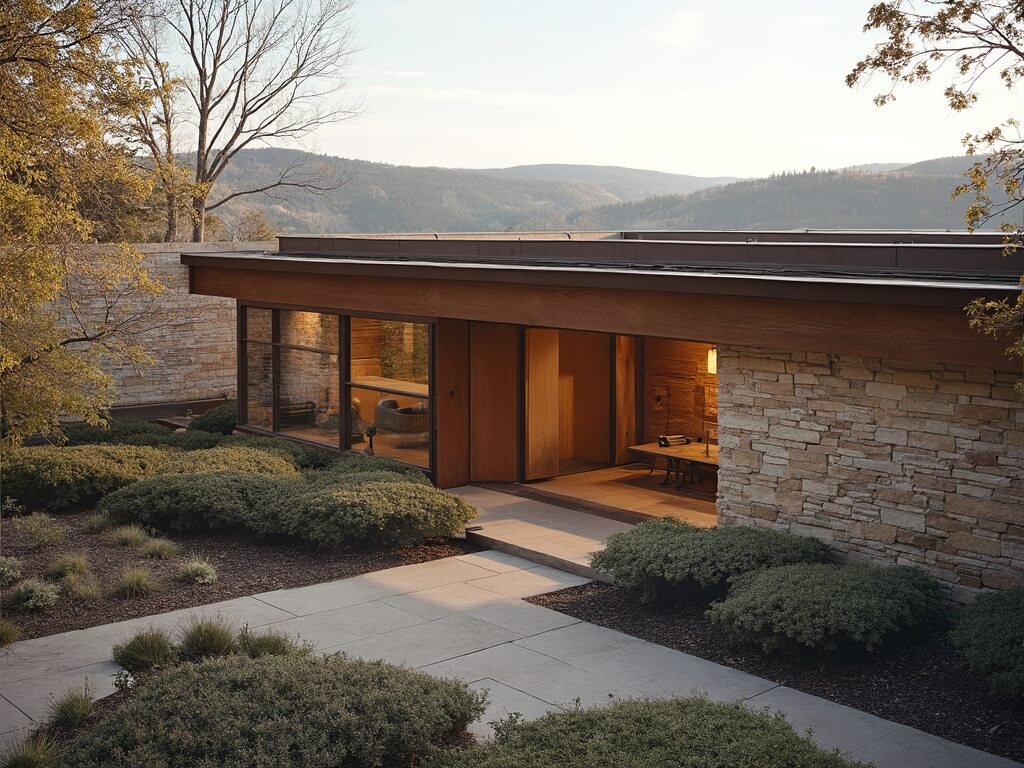
Image Credit @Nomadic Chick
The property includes a sculpture garden and café, so you can spend hours there without feeling rushed.
What’s striking about visiting both properties on the same day is how you begin to understand Wright’s range.
Fallingwater is revolutionary because it’s bold. Kentuck Knob is revolutionary because it proves organic architecture doesn’t require dramatic spectacle to succeed.
Polymath Park
Polymath Park, located 25 minutes away, operates differently than the other sites. It’s a residential community featuring multiple Wright and Wright-apprentice designs, combined with contemporary structures.
Unlike traditional museum houses, you can actually stay overnight at Polymath Park.
That matters because spending a night in a Wright structure changes your understanding of his work. You experience how the light shifts throughout the day, how temperature modulation works without modern HVAC systems, and you notice details that vanish in a one-hour guided tour.
If you’re serious about understanding Wright’s impact on American architecture, dedicate two days to this region.
Day one: Fallingwater’s in-depth tour in the morning, then Kentuck Knob in the afternoon.
Day two: A morning at Polymath Park, potentially staying overnight if your schedule permits.
This approach gives you a comprehensive understanding of how Wright’s philosophy evolved and adapted across different commissions.
The Visitor Experience: What Actually Happens When You Arrive
Let’s cut through the vague descriptions and talk about what a real visit actually feels like.
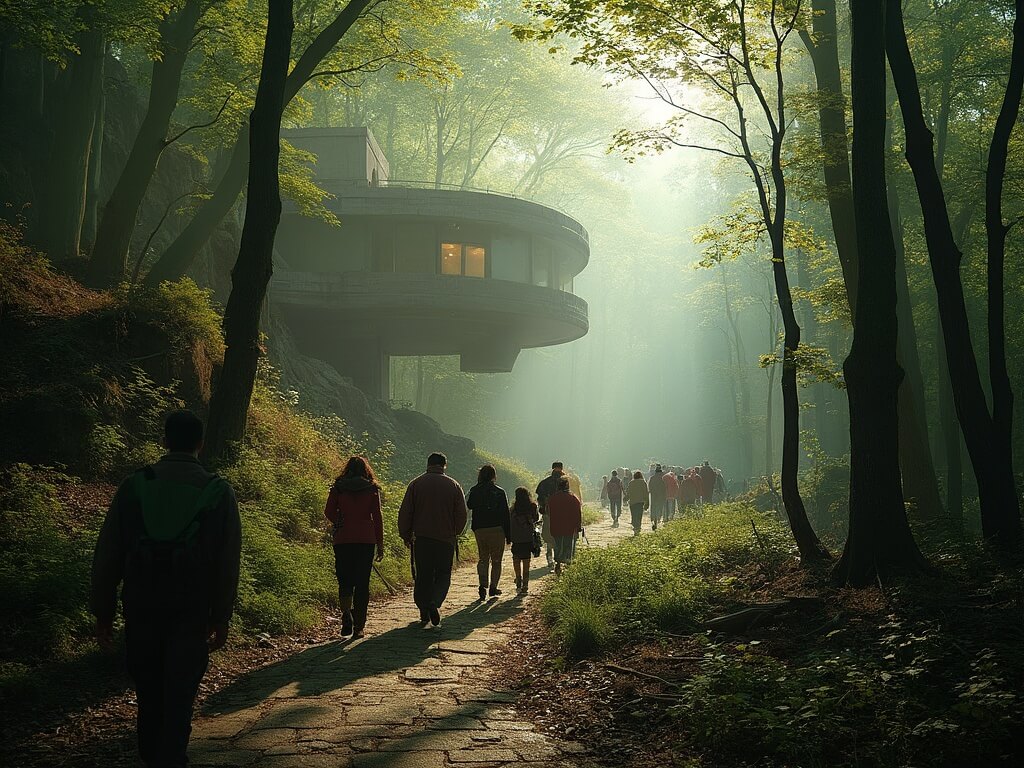
Image Credit @Nomadic Chick
You arrive at the gate around your scheduled time (being late forfeits your reservation entirely—the Conservancy takes scheduling seriously).
The parking area is modest, not a sprawling lot like most tourist attractions. That’s intentional. They’re limiting daily visitors to protect the structure and surrounding ecosystem.
You check in at the Visitor Centre, where staff members are genuinely knowledgeable rather than performing hospitality. Many have been trained specifically in Wright’s architectural philosophy.
The museum store isn’t an afterthought. It stocks remarkable books on Wright, organic architecture, and the Kaufmann family history.
From the Visitor Centre, your group walks through protected woodland to reach the house itself. That walk matters psychologically. You’re not rushed from parking lot to building. You’re transitioning through forest, slowly shifting your mindset from road-trip mentality to contemplative mode.
The approach to the house is carefully designed so you don’t see Fallingwater all at once. You glimpse it through trees. Then the vista opens gradually.
Inside, the experience depends entirely on your tour type. A standard guided tour moves efficiently through the main rooms. The in-depth tour lingers longer, asking you to consider why Wright chose specific materials.
One detail that strikes most visitors: there’s no obvious bathroom entrance in the main living areas. Pragmatism and philosophy coexist in every square inch of this building.
Practical Logistics: The Questions Everyone Actually Asks
Can you stay overnight at Fallingwater itself?
No. Fallingwater is a day-use museum. However, Polymath Park offers Wright-designed overnight stays.
What’s the actual cost?
Pricing ranges from $20 (grounds-only pass) to $70+ for in-depth tours. Visit the official site for current rates.
Is it accessible for visitors with mobility concerns?
Partially. The Visitor Centre is accessible. The home has stairs and uneven terrain. Contact the Conservancy with specific needs.
What about photography?
Exterior photography is unrestricted. Flash and tripods require permission.
Can you bring food or pets?
No to pets, except certified service animals. The café provides food.
What’s the actual weather situation?
Spring and fall are ideal. Winter closures can occur. Bring layers year-round.
Planning the Perfect Visit: A Strategy That Actually Works
Approach this trip with strategy—not spontaneity.
Step 1: Choose your tour type—standard or in-depth.
Step 2: Pick your season. Spring/fall is best. Summer books early.
Step 3: Build a regional itinerary including nearby Wright sites, hiking, and local dining.
Step 4: Book early via the official Fallingwater tours page.
Step 5: Physically and mentally prepare. This is an educational experience, not amusement park entertainment.
The Conservation Reality: What It Actually Takes to Preserve a Masterpiece
Maintaining an 87-year-old architectural treasure is no small feat.
Fallingwater’s original construction used experimental materials. The concrete terraces are structurally monitored and restored without compromising Wright’s vision.
The Western Pennsylvania Conservancy invests in structural engineering, materials science, and climate research. Every scaffolding you see represents ongoing stewardship—not neglect.
The building must cooperate with its environment to survive. That mirrors Wright’s own design philosophy.
Educational Impact: Why Architecture Students Treat This Like a Pilgrimage
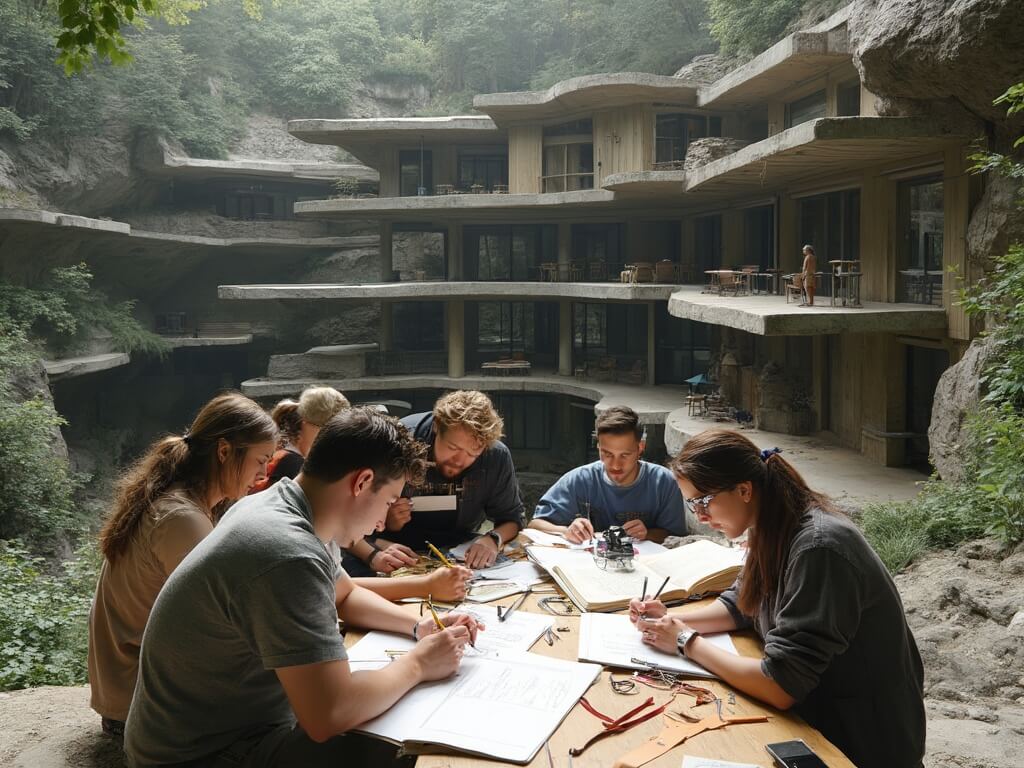
Image Credit @Nomadic Chick
Architecture students visit Fallingwater as a rite of passage. Universities worldwide teach it as a paradigm of organic architecture.
The Western Pennsylvania Conservancy runs workshops, virtual tours, and educational programming for all ages and disciplines—from engineering to art history.
This building is a living classroom that integrates art, engineering, and environmental stewardship.
The Kaufmann Legacy: Why This Family’s Story Matters
Fallingwater exists because Edgar Kaufmann Sr. commissioned it. His son, Edgar Jr., understood Wright’s vision and ensured the house became public property—democratizing architectural access.
Without this donation in 1963, public access would not exist.
Special Experiences: Beyond the Standard Tour
- Brunch tours: Combine architectural discussion with locally-sourced meals.
- Sunset tours: Experience how natural light transforms each room.
- Photography workshops: Learn to capture Wright’s design complexity.
- Family tours: Tailored for younger visitors.
- Group experiences: Customized for different disciplines.
When to Actually Visit: Seasonal Considerations Beyond Weather
- Spring: Wildflowers and lush greenery, but occasional rain.
- Summer: Long days, full foliage, but fully booked weekends.
- Fall: Vibrant colors. October weekdays offer best experiences.
- Winter: Stark beauty, fewer visitors, but potential closures.
Making the Regional Commitment: Why a Day Trip Isn’t Enough
This region offers more than buildings. Experience Laurel Highlands hiking, regional cuisine, and pre-industrial history.
Staying overnight in this landscape reveals why Wright was so inspired by it. The architecture exists in dialogue with its surroundings.
Common Misconceptions: What Guides Don’t Always Correct
- Wright didn’t live here—he designed many homes.
- One-hour tours offer highlights—not depth.
- The house is actively preserved—not frozen in time.
- The cantilevers are structurally sound—not reckless.
- You don’t need an architecture degree to appreciate it.
The Broader Significance: Why This Matters Beyond Tourism
Fallingwater anticipated modern sustainability principles—passive climate control, local materials, design responsiveness.
It demonstrates that elegant architecture can be ecologically intelligent. Today’s challenges make its lessons even more relevant.
Your Actual Next Steps: Making This Real
- Pick your season (October is ideal).
- Book your tour early via the official site.
- Select your tour type based on your curiosity level.
- Plan your itinerary including nearby Wright sites and regional experiences.
- Prepare your mindset—this is active learning, not passive tourism.
The Final Insight: What Fallingwater Teaches About Life Beyond Architecture
Fallingwater isn’t just a house. It’s a philosophical statement about cooperation with nature.
What if you designed your life like Wright designed Fallingwater? Listening to your environment. Responding to real conditions. Creating harmony instead of conflict.
That’s not just smart architecture. That’s smart living.
Explore More
- Cabin Interiors
- Small Cabin Interior
- Little Cabin Living Room
- Modern Fireplace Ideas
- Wabi Sabi Architecture
Also check out the Guide to Frank Lloyd Wright’s Fallingwater for more regional insights.