I remember standing on the summit of Cadillac Mountain on a crisp October morning, watching the horizon shift from deep indigo to amber while millions of people across the country were still in darkness. From October 7th through March 6th, this is the first place in the United States to see the sunrise, and standing there while the rest of the map is still dark is what makes the early alarm worth it.
Why Cadillac Mountain Sunrise Isn’t Just Another View
Cadillac Mountain sits 1,530 feet above sea level.
That makes it the highest point on the entire U.S. Atlantic seaboard.
But the real magic happens in the timing.
From October 7 through March 6, Cadillac Mountain is the first place in the United States to see the sunrise.
Not almost first.
Actually first.
That’s not a marketing gimmick—it’s geography and latitude working in your favour.
I remember standing on the summit during a crisp October morning a few years back, watching the horizon shift from deep indigo to amber while I knew millions of people across the country were still in darkness.
The sun hadn’t even touched the mainland yet, but it was already painting the sky from the ocean.
There’s something genuinely humbling about that.
The views from the top include the Atlantic Ocean stretching endlessly, rocky islands dotting the coastline, and on clear mornings, visibility that stretches for miles.
The colours aren’t subtle either—deep reds give way to brilliant oranges and pinks that seem to glow from within the sky itself.
Beyond the visual spectacle, Cadillac Mountain sits on land that’s been sacred to the Wabanaki people for generations.
It’s also served as a historical reference point for European cartographers for centuries.
So you’re not just watching a sunrise; you’re standing on a place that carries real cultural and historical weight.
Acadia National Park received 3.9 million visitors in 2022 alone.
A significant portion of those people came specifically for this sunrise experience.
It’s become the bucket-list item for anyone visiting Maine.
That popularity creates both opportunity and challenge—more reasons why preparation matters.
The Sunrise Experience: What You’re Actually Walking Into
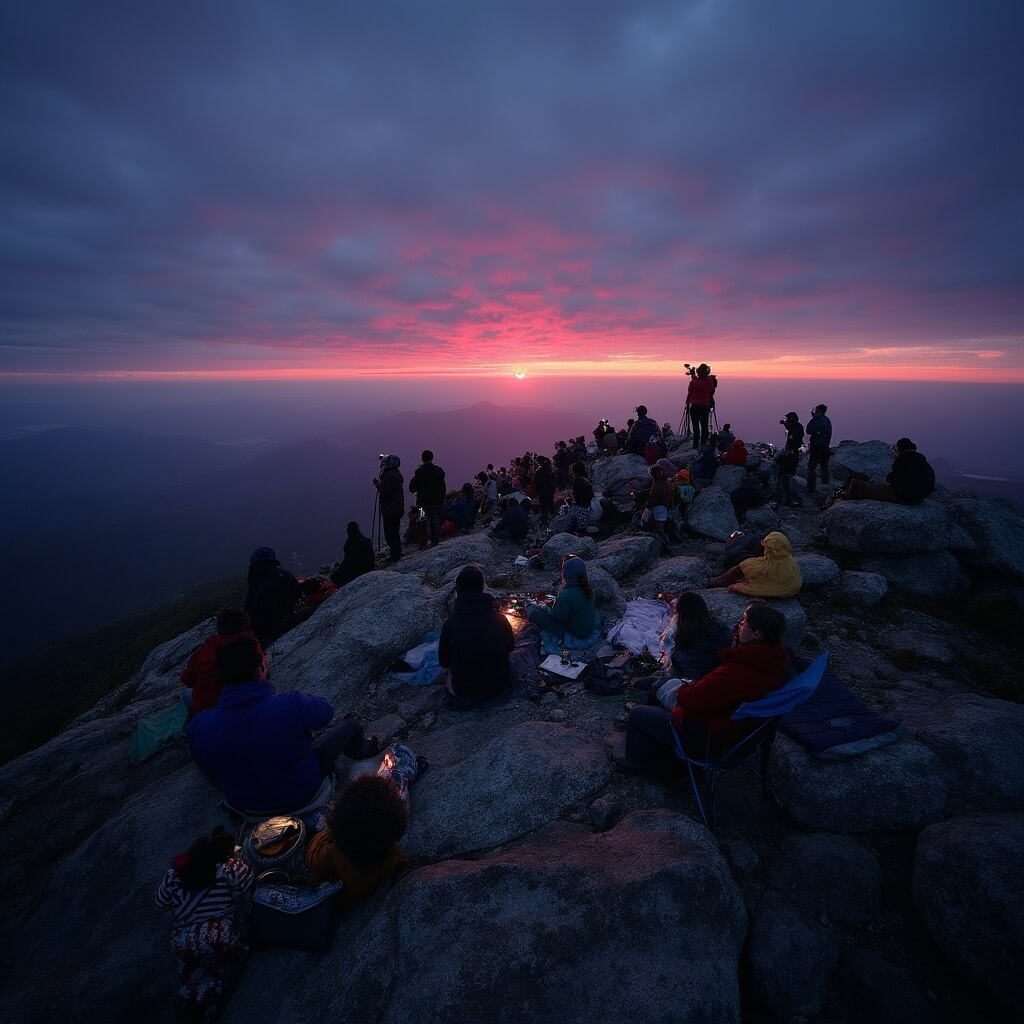
The atmosphere on Cadillac Mountain at sunrise is unlike anywhere else I’ve experienced.
It’s not crowded in an obnoxious way if you arrive early enough.
Instead, you’re surrounded by people who’ve made the same deliberate choice to wake up before dawn and travel to this exact spot.
There’s a shared sense of purpose.
The visual payoff is substantial, but it changes dramatically depending on the season and weather conditions.
On a perfect morning, the sky transforms through a spectrum of colours in rapid succession.
You get roughly ten to fifteen minutes of genuine visual drama before the sun fully clears the horizon and the intensity mellows out.
That window is short.
It’s compressed.
Which is why timing matters so much.
The experience also depends heavily on atmospheric conditions.
A clear, crisp morning delivers those postcard-worthy colours.
But Maine weather is famously unpredictable.
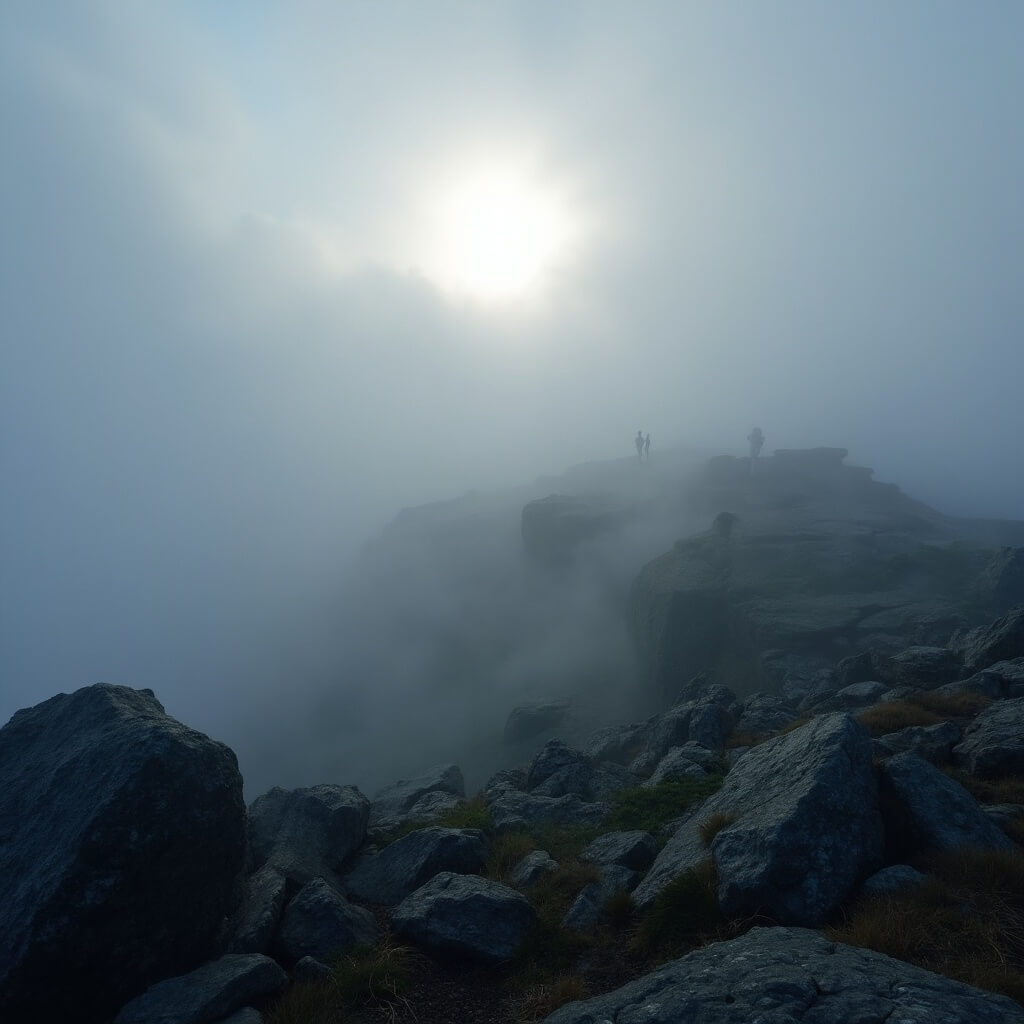
Fog rolls in from the Atlantic regularly.
Rain happens.
Wind can be intense at that elevation.
If visibility is poor, the experience becomes far more subtle—more atmospheric than spectacular.
Some people find that equally moving; others feel disappointed.
The point is, you’re not guaranteed perfect conditions, which is worth knowing upfront.
From a practical standpoint, the experience is also busier than most sunrise watching locations.
Acadia’s popularity means the summit can fill up quickly during peak season.
If you haven’t planned properly, you might arrive to find limited parking or spots already claimed.
That’s not doom and gloom—it just means strategy matters.
When to Go: Timing Your Cadillac Mountain Sunrise
The season you choose completely changes the equation.
Summer offers the most reliable weather and mild temperatures.
Sunrise happens between 4:45 and 5:30 AM depending on the exact date.
The trade-off is that everyone else has the same idea.
Summer mornings at Cadillac Mountain are crowded.
Genuinely crowded.
You’ll share the experience with dozens, sometimes hundreds of other people.
For many, that’s fine—part of the shared energy adds to the moment.
For others, it’s frustrating.
Fall is the sweet spot for most visitors.
The autumn foliage surrounding Acadia becomes genuinely stunning, and the crowds thin slightly compared to summer.
Temperatures are cooler in the mornings but still manageable with proper layers.
The light has a particular quality in autumn—softer, more golden—that photographs beautifully.
Spring brings wildflowers blooming across the park and chilly mornings that feel fresh rather than harsh.
It’s less crowded than summer and offers a genuine sense of renewal.
Winter is genuinely different.
Temperatures drop significantly.
The road to the summit often closes due to snow and ice.
Extreme cold becomes a real factor—we’re talking below freezing, potentially dangerously so.
The upside is solitude.
If you’re hardy enough and the conditions allow access, winter sunrise at Cadillac Mountain becomes something entirely different: raw, isolated, and memorable in a completely different way.
Here’s the critical detail most people miss:
Sunrise times vary significantly by date and season.
In summer, sunrise happens much earlier than in winter.
The difference isn’t minor—we’re talking hours across the full year.
You must check the exact sunrise time for your specific date before planning your arrival.
Weather services, park apps, and basic online searches all provide this information.
Not checking is how people end up arriving too late or sitting in darkness far longer than expected.
Getting There: Your Realistic Options
The Drive: Reservations, Parking, and the Reality Check
The Cadillac Mountain summit road is only accessible by vehicle from mid-May through late October.
During this peak season, a reservation system is mandatory.
You can’t just show up and hope for the best.
The reservation system works through Recreation.gov, and here’s the booking structure:
30% of available spots release 90 days in advance.
70% of spots release just 2 days in advance at 10 AM Eastern Time.
This means you have two booking windows.
The first requires genuine planning—marking your calendar three months out.
The second offers a last-minute option if you’re flexible and watching carefully.
Both require you to book a park entrance pass and a separate summit reservation.
That’s two separate transactions, which catches people off-guard.
You need both to legally drive up the mountain.
Once you’ve secured your reservation, you get a specific time slot for entry.
The summit road is closed at night, which means sunrise viewing requires either an extremely early reservation or the road not being formally open yet—which does happen during the seasonal transition.
Outside of May through October, the road closes entirely.
No reservations available.
No driving up.
Full stop.
During those months, hiking becomes your only option.
The parking situation at the summit deserves specific mention.
It’s limited.
During reservation season, parking is strictly enforced.
If you don’t have a reservation, you won’t be able to park.
If you arrive outside your designated time slot, you might find yourself unable to access parking even with a reservation.
The system is tight for good reason—overcrowding would destroy both the experience and the environment.
The Hike: Multiple Routes, Different Difficulties
If you’re visiting outside of May through October, or if you prefer getting there on foot, several established trails lead to the summit.
The North Ridge Trail is the most popular.
It’s 4.4 miles roundtrip and rates as moderate difficulty.
Most reasonably fit people complete it in two to three hours.
The trail is well-maintained and offers steady climbing without extreme technical challenge.
The South Ridge Trail is longer—7.1 miles roundtrip—but follows a more gradual ascent.
If you have more time and prefer a gentler approach, this route works well.
The scenery is genuinely scenic, and you’re less likely to feel rushed.
The Gorge Path to Summit Loop is the shortest option at 2.5 miles roundtrip.
However, it includes steep sections that demand more effort compressed into less distance.
This route is better for experienced hikers.
Preparing for Reality: What Actually Works
Here’s what I learned from showing up unprepared once and swearing I’d never do it again.
Arrive earlier than you think is necessary.
Genuinely earlier.
Most guidance suggests arriving 30 to 60 minutes before sunrise.
That’s the bare minimum for securing decent positioning and feeling relatively calm.
If you arrive at that window during peak season, you might find parking already tight.
You’ll be navigating crowds.
You’ll feel pressure.
Arriving ninety minutes or even two hours before sunrise eliminates that stress entirely.
Yes, you’re waiting longer in the cold.
But you’re waiting with a good spot, calm energy, and certainty that you’re going to see what you came for.
That’s worth the extra time.
Related Adventures
Making Your Reservation Actually Work: The Booking Strategy
Let’s be direct: the Recreation.gov system is designed efficiently, but it’s not forgiving.
People miss out on spots because they don’t understand the mechanics. That’s fixable.
Here’s what actually happens.
Three months before your intended date, set a calendar reminder for exactly ninety days prior. At that moment, 30% of available sunrise slots become bookable.

These slots fill quickly—we’re talking hours, not days. If you want peak season access (June through October), you need to be ready at that moment.
Have your Acadia National Park entrance reservation already figured out before booking the summit slot. You need both.
The second wave of bookings happens 48 hours before your intended date at 10 AM ET. This is ideal for last-minute planners.
Remember, your reservation gives you a specific time window. Arriving outside this window means you lose your spot.
If missed, don’t panic—hiking trails remain open. You can still reach the summit via North Ridge Trail, among others.
ADA Access and Accessibility Considerations
The summit road is paved—essential for accessibility.
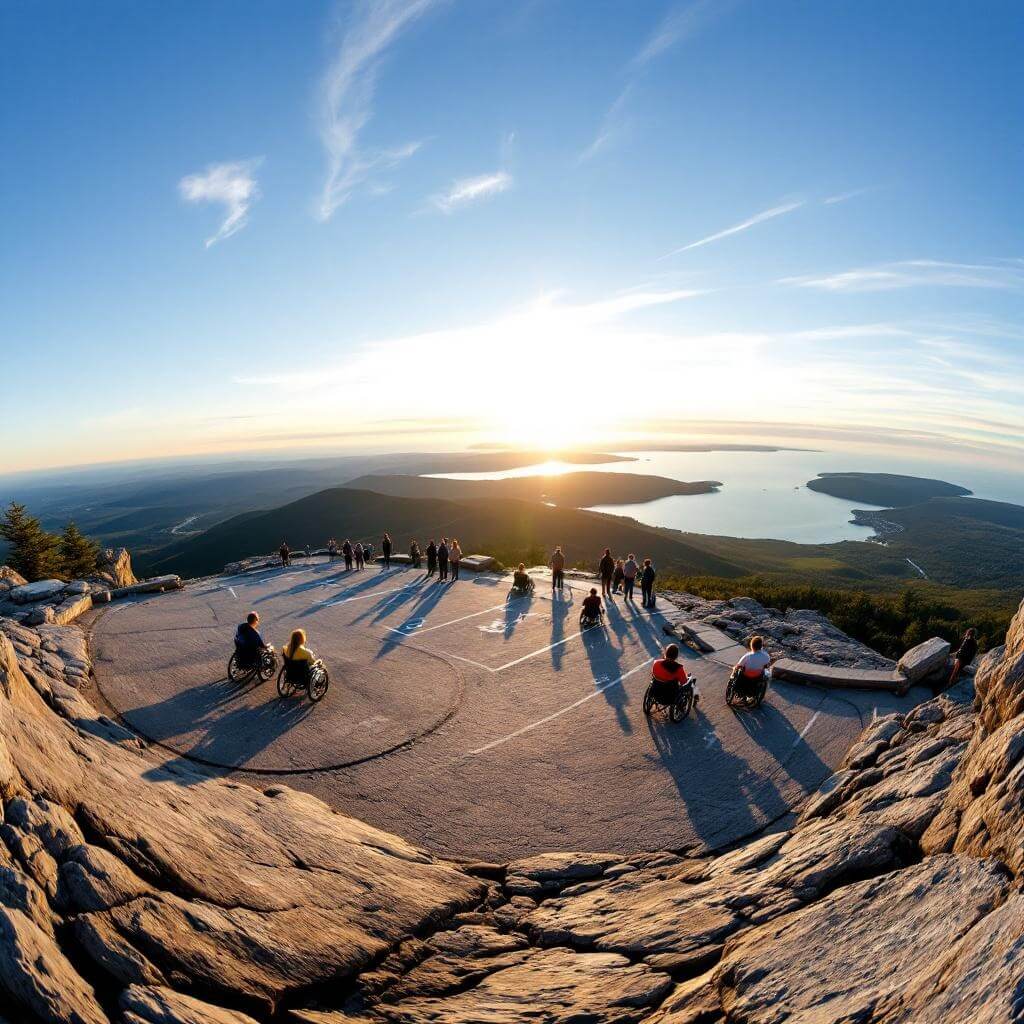
Cadillac Mountain offers designated accessible parking and well-constructed paths. This accessibility is crucial for people with mobility limitations.
Not all trails are equal—North Ridge and Gorge Path involve rugged terrain. Use official resources to verify what’s appropriate for your group.
What Happens When Conditions Turn Bad
Fog can ruin visibility—even during a reserved sunrise slot.
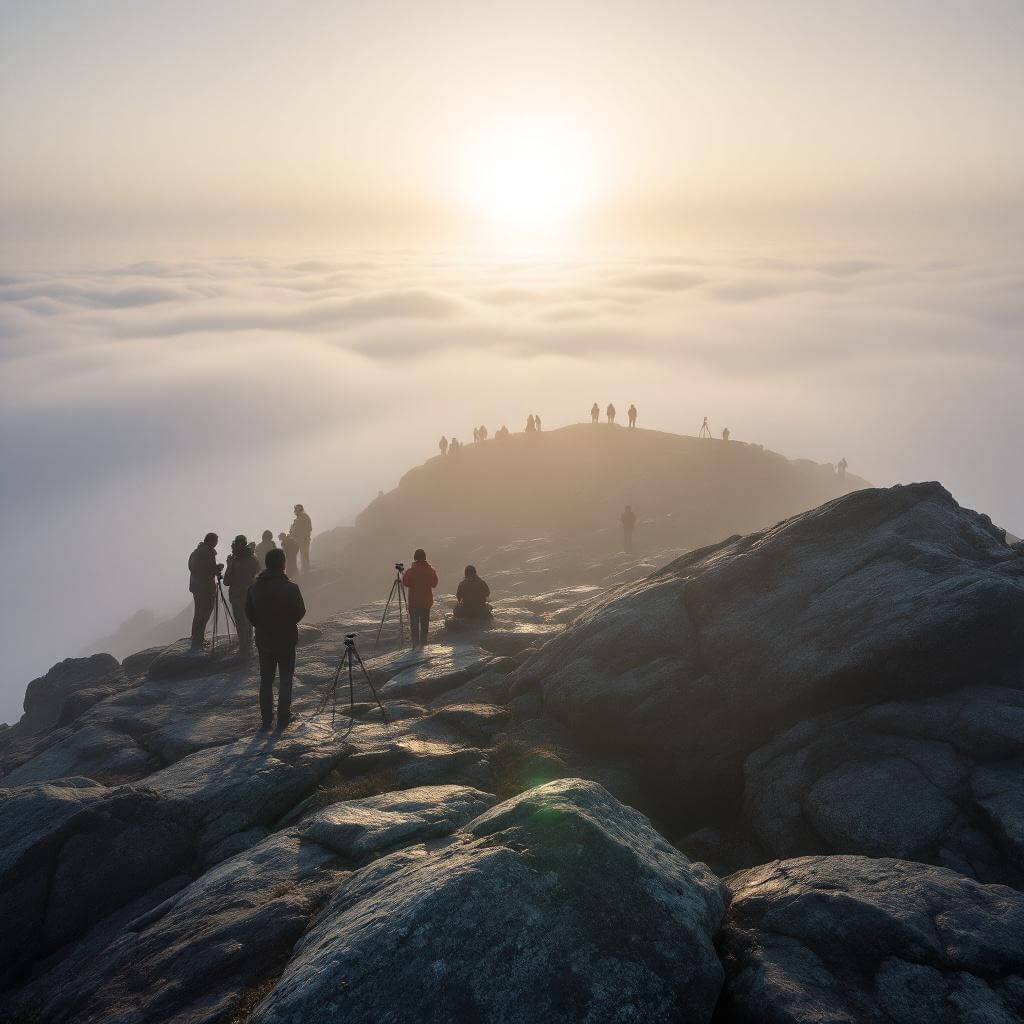
Still, people stay in hopes it lifts. Sometimes it does. Sometimes it doesn’t.
Use alternative sunrise locations like Jordan Pond, Sand Beach, and Bubble Rock. These offer beautiful and less crowded experiences.
Explore more sunrise advice in the Ultimate Guide to Sunrise on Cadillac Mountain.
Photography Without the Frustration
Bring a tripod. It stabilizes your shots during rapidly changing light.
Arrive early to scout your position. Use manual or bracketed exposure to capture the sky’s full range of colors.
Shoot in RAW for richer post-processing. Don’t forget: experience the moment beyond the lens.
Why Crowds Happen and How to Handle Them
Acadia sees 3.9 million visitors annually. Cadillac Mountain sunrise is a major draw.
Expect crowds in summer—even 90 minutes early. If solitude is your goal, try fall or early spring. Or, shift to secondary viewpoints in the park.
The Wabanaki Heritage and Deeper Context
Cadillac Mountain is culturally significant to the Wabanaki people—Passamaquoddy, Penobscot, Maliseet, and Micmac nations.
Understanding this adds depth. You’re standing on ancestral land. Ask about ranger programs that explore this heritage for a more meaningful experience.
Environmental Protection and Your Role in It
The quota system exists to protect fragile alpine ecosystems. Stick to trails. Leave No Trace isn’t a suggestion—it’s essential.
Your behavior influences others. Respect the environment, and others likely will too.
Star Gazing and Other Summit Activities Beyond Sunrise
Sunrise isn’t the only show. Try stargazing or sunset visits.
Fewer people visit at sunset, and the light is equally stunning. Stay after sunrise to explore the summit’s granite formations and expansive views.
Seasonal Breakdown: What You’re Actually Getting Into
Summer (June–August)
Warm, crowded, and early sunrises (~4:45–5:00 AM).
Fall (September–October)
Cooler, colorful foliage, fewer crowds. Ideal lighting for photography.
Spring (April–May)
Quiet, blooming wildflowers. Sunrise around 5:15–5:30 AM late-May.
Winter (November–March)
Snowy, peaceful, and physically demanding. Trail access only. Sunrise around 7 AM in December.
Practical Gear: The Checklist That Actually Matters
- Headlamp or flashlight
- Layers: thermal base, fleece, windproof shell
- Gloves and Hat
- Warm socks
- Water and snacks
- Blanket or sitting pad
- Tripod and camera
- Backup batteries
- Comfortable hiking boots
- Sunscreen and bug spray (seasonal)
- Toilet paper and trowel if hiking
Most fits in a medium backpack. Being prepared makes the sunrise far more enjoyable.
The Transportation and Logistics Reality
Most visitors arrive via Bar Harbor, Maine. It’s about four hours from Boston, two from Portland.
Cadillac Mountain Planning Information is crucial for route details.
If flying, use Bangor International Airport and rent a car. Once in Bar Harbor, the Park Loop Road leads you to the summit.
Driving? Arrive 1 to 1.5 hours before sunrise.
Hiking? North Ridge Trail takes 2–3 hours. For a 5:15 AM sunrise, begin around 2:15 AM—headlamp required!
The Last-Minute Pivots and Flexibility
Weather or technical failures happen. If your summit reservation fails, try Jordan Pond, Ocean Path, Bubble Rock, or Sand Beach.
Sunset is also a valid and beautiful alternative—often with fewer people.
Have an extra day? Stay. Maine’s weather can shift quickly and reward patience.
Addressing the Skepticism: Is It Actually Worth It?
Cadillac Mountain sunrise is extraordinary—but it’s not a Hollywood movie. It’s a natural event. The value comes from your intention and presence.
If you’re drawn to natural beauty and reflection, it’s worth it. If you’re only doing it for the checklist, it might feel hollow.
The Sustainable Visitor: Your Role in Preservation
Respect the park. Stay on marked trails. Pack out trash. Be quiet and considerate.
You’re part of a larger story—past and future visitors included. Act with that in mind.
The Experience Beyond the Sunrise
Don’t leave the moment the sun rises. Stay. Watch the light evolve across the landscape.
The summit becomes quieter. This is when true reflection happens—it feels personal, not performative.
Planning Your Return Visit
Each season offers distinct experiences. If you’re moved by your visit, consider returning in another season. You’ll see Cadillac Mountain differently each time.
The Final Takeaway: Why This Matters
Watching the sunrise here is about deliberate presence. You’re choosing to witness something beautiful that happens every day but often goes unnoticed.
It’s not just about being first in America to see the sun. It’s about showing up at all—choosing intention over inertia.
That’s what transforms a sunrise into a memory that lasts.
Related Adventures:
- Hike to Delicate Arch in Arches National Park
- Walk the Beaches of the Oregon Coast
- Visit the National Civil Rights Museum in Memphis
- Spend a Day at Mall of America in Minnesota
- Take the Cog Railway to the Top of Pikes Peak
Also explore: Ultimate Guide to Sunrise on Cadillac Mountain
That gap between the sky lighting up over Cadillac Mountain and the rest of the mainland still catching up is the part I think about most. Watching the sunrise from Cadillac Mountain means the app on your phone still says sunrise is an hour away everywhere else you know.